
Showing 1358 items matching "common names"
-
 Wheen Bee Foundation
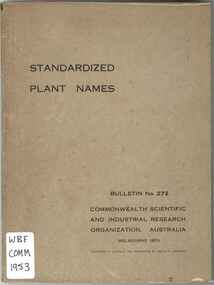
Publication, CSIRO, Standardized plant names: a revised list of standard common names... (CSIRO), Melbourne, 1953, 1953
... Standardized plant names: a revised list of standard common names... (CSIRO), Melbourne, 1953...Standardized plant names: a revised list of standard common names... (CSIRO), Melbourne, 1953 Publication CSIRO ... -
 University of Melbourne, Burnley Campus Archives
Book - Register, List of Shrubs, c.1917-1958
... ...common names...Burnley School of Primary Agriculture and Horticulture table of shrubs with Latin name, common name, brief description, height and position in Gardens in alphabetical order. ...burnley school of primary agriculture and horticulture bspah shrubs latin names common names description gardens t.h. kneen Burnley School of Primary Agriculture and Horticulture table of shrubs with Latin name, common name, brief description, height and position in Gardens in alphabetical order. ...Burnley School of Primary Agriculture and Horticulture table of shrubs with Latin name, common name, brief description, height and position in Gardens in alphabetical order. From T.H. Kneen file marked: May.burnley school of primary agriculture and horticulture, bspah, shrubs, latin names, common names, description, gardens, t.h. kneen -
University of Melbourne, Burnley Campus Archives
Book, CSIRO, Standardized Plant Names, 1953
... Botanical Names Indes: Botanical Name, Approved Botanical name, Standard Common Name. Common Names Indes: Common Name, Standard Common Name, Scientific Name....Botanical Names Indes: Botanical Name, Approved Botanical name, Standard Common Name. Common Names Indes: Common Name, Standard Common Name, Scientific Name. ...Book with light cardboard cover. Bulletin No. 272 Commonwealth Scientific and Industrial Research Organization, Australia Melbourne 1953. "A Revised List of Standard Common Names for the More Important Australian Grasses, Other Pasture Plants, and Weeds. (Superseded Bulletin No. 156). Botanical Names Indes: Botanical Name, Approved Botanical name, Standard Common Name. Common Names Indes: Common Name, Standard Common Name, Scientific Name.plant names, scientific names, csiro, australian plants -
University of Melbourne, Burnley Campus Archives
Document - Plant List, Dept. of Sustainability and Environment, Advisory List of Rare or Threatened Plants in Victoria 2005, 2005
... Produced by the Department of Sustainability and Environment. Listed with Common Name, Latin Name and Conservation Status....plants plant list victoria endangered plants conservation Produced by the Department of Sustainability and Environment. Listed with Common Name, Latin Name and Conservation Status. ...plants, plant list, victoria, endangered plants, conservation -
 Victorian Aboriginal Corporation for Languages
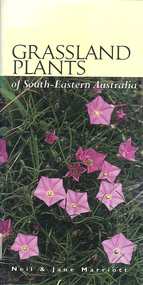
Book, Neil Marriott et al, Grassland plants of South-Eastern Australia : a field guide to native grassland and grassy woodland plants of South-Eastern Australia, 1998
... Alphabetical listing according to botanical name, with common names provided....Alphabetical listing according to botanical name, with common names provided. Grassland plants of South-Eastern Australia : a field guide to native grassland and grassy woodland plants of South-Eastern Australia Book Neil Marriott Jane Marriott ...Detailed description of plants, one plant per page. Alphabetical listing according to botanical name, with common names provided.Maps, colour photographs, pronunciation guide, glossarygrassland, plants, south-eastern australia, botany, ecology -
 Kiewa Valley Historical Society
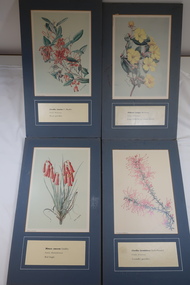
Illustrations of Wildflowers
... 32 illustrated wild flowers each mounted on blue/grey particle board with Botanical and Family name and common name printed underneath...Ashby flora illustrations 32 illustrated wild flowers each mounted on blue/grey particle board with Botanical and Family name and common name printed underneath Illustrations of Wildflowers ...The Bogong High Plains have many Alpine wild flowers unique to the area.The SECV appointed artists to draw the wild flowers in the Victorian Alps where they were constructing the Kiewa Hydro Electric Scheme.32 illustrated wild flowers each mounted on blue/grey particle board with Botanical and Family name and common name printed underneathalpine wildflowers, alison m. ashby, flora illustrations -
Friends of Ballarat Botanical Gardens History Group
Work on paper - Trees in the Ballarat Botanical Gardens, Classification and Description, Unknown
... 6 pages of grey photocopy, 5 1/2 typed pages, with the classification of trees underlined, the common name given and details about each tree. ...John Garner Collection Gardens Ballarat None. 6 pages of grey photocopy, 5 1/2 typed pages, with the classification of trees underlined, the common name given and details about each tree. ...A detailed list of the trees in the Ballarat Botanical Gardens giving valuable information for the researcher, gardener and tourist.There is a wide variety of trees in the BBG, both rare and common that are of botanical and historical interest.6 pages of grey photocopy, 5 1/2 typed pages, with the classification of trees underlined, the common name given and details about each tree. None.doctor, ballarat botanical gardens, trees, classification of trees in the bbg, information about various trees in the bbg., list of trees in the bbg., john garner collection, gardens, ballarat -
University of Melbourne, Burnley Campus Archives
Document - Laminated pages, Plants, UInknown
... One side - Latin name and Common name, other side - one or two coloured photographs of the plant. ...One side - Latin name and Common name, other side - one or two coloured photographs of the plant. ...plants, plant identification, teaching material -
 Victorian Aboriginal Corporation for Languages
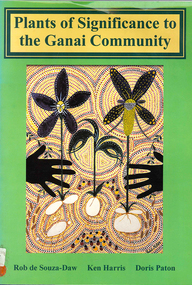
Book, Rob de Souza-Daw et al, Plants of significance to the Ganai Community, 2000
... The scientific name, common name and the Ganai name, where known, is given for each plant....The scientific name, common name and the Ganai name, where known, is given for each plant. ...This publication identifies the plants which are known to have been used by the Ganai community. A photograph is provided for each plants and is accompanied by an explanation of the plant's usage. The scientific name, common name and the Ganai name, where known, is given for each plant.Maps, colour illustrations, colour photographs, glossaryganai, nulit, brayakaulung, brataualung, tatungalung, muk-thang, brabralung, thangquai, krauatungalung -
 Bendigo Historical Society Inc.
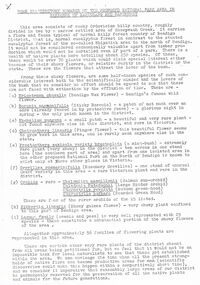
Document - PETER ELLIS COLLECTION: REMARKS ON PROPOSED NATIONAL PARK AREA
... It lists grasses and reeds with their common names and scientific names....It lists grasses and reeds with their common names and scientific names. Document PETER ELLIS COLLECTION: REMARKS ON PROPOSED NATIONAL PARK AREA ...Some Introductory Remarks on the Proposed national Park Area in Parishes of Mandurang and Sandhurst printed on white A4 paper. Same as 8626.446 b with two front pages and the bottoms of some pages missing. An extra page at the end is titled POACEAE of the Bendigo Area. It lists grasses and reeds with their common names and scientific names.bendigo, parks and gardens, national parks, peter ellis collection, wild flowers -
 Bendigo Historical Society Inc.
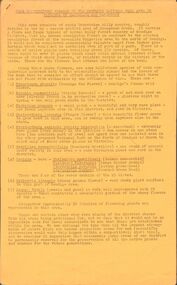
Document - PETER ELLIS COLLECTION: REMARKS ON PROPOSED NATIONAL PARK AREA
... Short description of the area. Common names and scientific names of many plants that grow in the area. ...Short description of the area. Common names and scientific names of many plants that grow in the area. ...Some Introductory Remarks on the Proposed National Park Area in Parishes of Mandurang and Sandhurst printed on yellow foolscap paper. Short description of the area. Common names and scientific names of many plants that grow in the area. Some descriptions and localities mentioned. 4 1/2 pages of species (249) and families (56) mentioned.bendigo, parks and gardens, national parks, peter ellis collection, wild flowers -
 Department of Energy, Environment and Climate Action
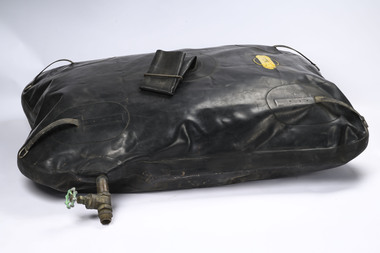
"Pig"
... It wallowed badly when the vehicle was moving, hence the common name of "Pig". When the bag was full it made driving dangerous...It wallowed badly when the vehicle was moving, hence the common name of "Pig". When the bag was full it made driving dangerous "Pig" ...Early water carrying bladder A number of accidents with these rubber tanks occurred on the fireline, particularly on tracks with steep side grades. The movement of the water sloshing and accumulating on the lower tank wall created an imbalance in the vehicle. The frayed anchor ropes, under strain due to constant rubbing on the high side wall of the vehicle, would snap, and the whole assembly of tank, pump and hose would break away from the vehicle and bounce down through the bushLarge rubber bag which held 80 gallons of water. Developed in the 1960s. It was strapped down in the back tray of Utes and attached to a small fire pump with a control valve. It was filled by a top tube that was clamped closed. It wallowed badly when the vehicle was moving, hence the common name of "Pig". When the bag was full it made driving dangerousDunlopforests commission victoria (fcv), bushfire, fire pump -
 University of Melbourne, Burnley Campus Archives
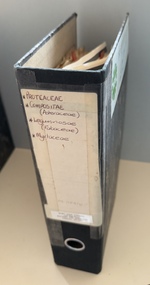
Plant specimen - Pressed Plant Collection, Mary Connors (née Lee), Burnley College student pressed and hand decorated plant collection of 13 Families, 1952-1953
... Latin identification and Labels for 13 Plant families, Genus, Species, Common Name, Locality, Collector and Remarks. ...Her daughter has rearranged the pages into 2 A4 lever arch ring binders. plant specimen mary connors (née lee) 1953 Student assignments Burnley College Certificate of Comptency Latin identification and Labels for 13 Plant families, Genus, Species, Common Name, Locality, Collector and Remarks. ...Plant specimens collected and pressed by Mary Connors (née Lee) who graduated in 1953 with Certificate of Competency. Her daughter has rearranged the pages into 2 A4 lever arch ring binders. Collection depicting 13 families. 2 A4 Lever arch files with 25.5 x 20.5 cm plain paper sheets 1 pressed plant to a page arranged by families. Title page for each family with hand drawn and coloured examples. Specimens (faded) attached with cellotape. Some photocopied information sheets about certain families added after 1950's. Latin identification and Labels for 13 Plant families, Genus, Species, Common Name, Locality, Collector and Remarks. Some photocopied information sheets of plant families. A Proteaceae, Compositae, Leguminosae, Myrtaceae and B Orchidaceae, Graminaeae, Liliaceae, Amaryllidaceae, Iridaceae, Cruciferae, Rosaceae, Solanaceae, Scrophulariaceae plant specimen, mary connors (née lee), 1953, student assignments, burnley college, certificate of comptency -
 Orbost & District Historical Society
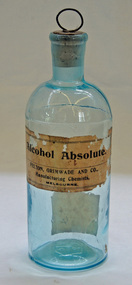
bottle
... Absolute alcohol is a common name for the chemical compound ethanol. ...Absolute alcohol is a common name for the chemical compound ethanol. ...Absolute alcohol is a common name for the chemical compound ethanol. Ethanol is a colorless liquid (C2H2OH). It is the alcohol found in alcoholic beverages.a clear glass bottle which has a cork stopper embedded with a metal loop. It has two labels -Alcohol Absolute and a hand-written Absolute Alcohol with number 4 and net weight.On base of bottle - Hexagon with Y C Coalcohol york-glass-company bottle -
 Bendigo Military Museum
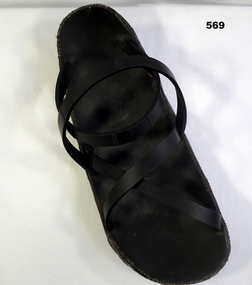
Footwear - VC SANDAL, C. 1969
... Ho Chi Minh was the common name given to these sandals worn by the Viet Cong....Ho Chi Minh was the common name given to these sandals worn by the Viet Cong. ...Item brought home from Vietnam in 1970 by Geoff Hopper. Refer 596.3. Ho Chi Minh was the common name given to these sandals worn by the Viet Cong.Ho Chi Mihn sandal made from black tyres (car and truck), cross over strap and heel strap.ho chi minh, footwear, vietnam, viet cong -
University of Melbourne, Burnley Campus Archives
Book - Register, Burnley College: Plant Inventory with Planting Dates, c.1958-1983
... No date of compilation printed. Latin name, Common name, Date planted, Origin. All trees planted 1850 - 1900. ...No date of compilation printed. Latin name, Common name, Date planted, Origin. All trees planted 1850 - 1900. ...Photocopy of the book "Trees and plants: Lists" - Department of Agriculture. No date of compilation printed. Latin name, Common name, Date planted, Origin. All trees planted 1850 - 1900. It is not printed that this is a list of Burnley Trees - however handwritten on front sheet " Burnley College Plant inventory with planting dates". 9 x A4 pages. There is no indication when this list was compiled or if the trees still exist in the garden.trees, plants, department of agriculture, burnley trees -
University of Melbourne, Burnley Campus Archives
Booklet - Register, Lists of Trees and Plants, 1850-1918
... (1a) Original (1) Typed photocopied list of trees, when planted, Latin and common name, country or state of origin, 1850-1900. ...trees peter esdale pears cross fertilization mr. wallis flowers dahlias burnley school of horticulture (1a) Original (1) Typed photocopied list of trees, when planted, Latin and common name, country or state of origin, 1850-1900. ...(1a) Original (1) Typed photocopied list of trees, when planted, Latin and common name, country or state of origin, 1850-1900. "Copied from Original" 30 August 1990 by Peter Esdale. (2) School of Horticulture, Burnley, 1 November 1918 List of Pears for Cross Fertilization. Revised List. Mr. Wallis. (3) List of Good Dahlias. (4) Dahlias. Burnley School of Horticulture. 25 November 1918.trees, peter esdale, pears, cross fertilization, mr. wallis, flowers, dahlias, burnley school of horticulture -
 Emerald Museum & Nobelius Heritage Park
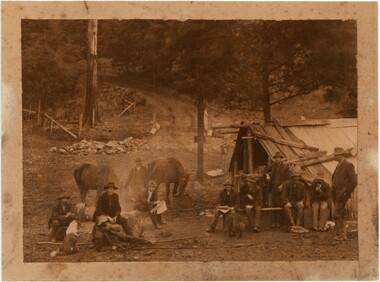
Photograph - Jack Moore Monbulk, c. early 20th century
... There was a Jack Moore who was a hotel proprietor in Kangaroo Ground from 1910, but this is also a very common name so realistically it could have been anyone. ...There was a Jack Moore who was a hotel proprietor in Kangaroo Ground from 1910, but this is also a very common name so realistically it could have been anyone. ...It is unclear who the Jack Moore in this photograph was or where it came from. There was a Jack Moore who was a hotel proprietor in Kangaroo Ground from 1910, but this is also a very common name so realistically it could have been anyone. It was most likely taken in the early 20th century, judging by the sepia colour but clear photography.This photograph depicts Monbulk in the late 19th or early 20th century, showing ways of life, travel, and accommodation at the time.This item is a sepia photograph with particularly heavy red tinting, printed on white card paper. The reverse has a small handwritten annotation and accession number, both in pencil. It depicts ten men with several animals including horses and dogs. To the right of the frame, six of the men sit in front of a triangular hut structure of wood and corrugated metal. To the left, the other four are near the road, which continues up a hill in the background. The background also contains several trees and a wood-and-wire fence.Reverse, Handwritten Annotation: "[Jack Moore Monbulk] P272" Attached Note: "JACK MOORE IN THIS PHOTO - NOT KNOWN WHERE IT WAS TAKEN / P272"monbulk -
 Orbost & District Historical Society
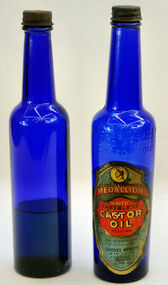
bottles, first half 20th century
... Castor oil is a vegetable oil obtained by pressing the seeds of the castor oil plant (Ricinus communis). The common name "castor oil", from which the plant gets its name, probably comes from its use as a replacement for castoreum, a perfume base. ...Castor oil is a vegetable oil obtained by pressing the seeds of the castor oil plant (Ricinus communis). The common name "castor oil", from which the plant gets its name, probably comes from its use as a replacement for castoreum, a perfume base. ...Castor oil is a vegetable oil obtained by pressing the seeds of the castor oil plant (Ricinus communis). The common name "castor oil", from which the plant gets its name, probably comes from its use as a replacement for castoreum, a perfume base. Castor oil was a common remedy for various ailments in the early 20th century.These bottles reflect the developments in health care during the first half of the 20th century. There is also an aesthetic element, the shapes, colour and textures of the bottles are visually appealing. Two castor oil bottles. Both tall and blue. 246.2 has a label. Both have screw tops and both still have castor oil in them.246.2 front - medallion label - Groves McVitty & Co Pty Ltd castor oil. 246.1 front Burnsides Castor oil. Bottom -J443castor-oil bottle groves-mcvitty burnside medicine glass -
 Department of Energy, Environment and Climate Action
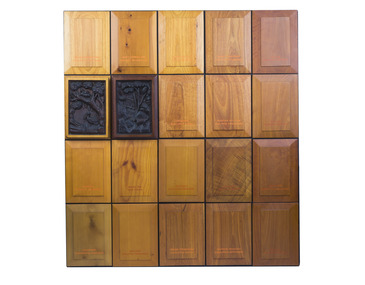
Display panel featuring different Victorian timbers, Forestry House - 601 Bourke Street
... They were on display in the Forests Commission's head office on the fourth floor of 1 Treasury Place in the 1970s The original panel comprised 76 individual samples of Victorian timbers, each with its botanical and common name identified, and four wood carvings of flora and fauna The material for the plaques was assembled in carpenters shop in FCV districts throughout the State. ...They were on display in the Forests Commission's head office on the fourth floor of 1 Treasury Place in the 1970s The original panel comprised 76 individual samples of Victorian timbers, each with its botanical and common name identified, and four wood carvings of flora and fauna The material for the plaques was assembled in carpenters shop in FCV districts throughout the State. ...Timber panels salvaged from the foyer of Forestry House 601 Bourke Street in late1980s. They were on display in the Forests Commission's head office on the fourth floor of 1 Treasury Place in the 1970s The original panel comprised 76 individual samples of Victorian timbers, each with its botanical and common name identified, and four wood carvings of flora and fauna The material for the plaques was assembled in carpenters shop in FCV districts throughout the State. Timber was kiln dried by M. Feiglin & Sons at Nunawading and erected by Peter Danby Pty. Ltd. Closely linked to FCV Forestry House in MelbourneTimber Display PanelThe highly carved panels were possibly made by Robert Prenzel in about 1908. Alternatively, in about 1994, forester Norm Endacott took them to the National Gallery for inspection by an expert in Australian wood carvers of early 20th Century who thought they may have been by Lewis John Godfrey (1836 - 1919).forests commission victoria (fcv) -
 Warrnambool and District Historical Society Inc.
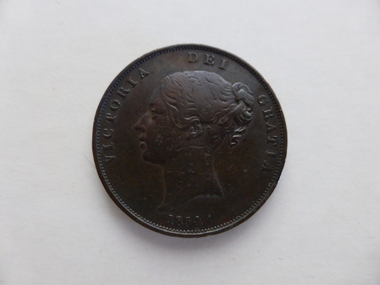
Coin, English Penny Victoria Det Gratia 1854, 1854
... Most coins had a variety of common names such as a " bob" for a shilling a "quid for a pound and a tanner for a sixpence. ...Most coins had a variety of common names such as a " bob" for a shilling a "quid for a pound and a tanner for a sixpence. ...English currency before decimalisation in the 1970's consisted of pounds, shillings and pence with twelve pennies to the shilling and twenty shillings to the pound.Coins ranged from farthings which were one quarter of a penny through to pennies, threepence, sixpence, shillings ,half crowns and crowns. Most coins had a variety of common names such as a " bob" for a shilling a "quid for a pound and a tanner for a sixpence. This coin is the equivalent of five shillings and is known as a crown. The text around the obverse, "Victoria Dei Gratia 1844". On the reverse the text of Reg Fid Def"Britanniar translates as Queen of Britain and defender of the faith. This coin is one of the smaller denominations.A common currency coin which has social and historical significance.Round copper coin with flat edge. The The obverse has an image of the young Victoria with text around the edge.The reverse has an image of Brittania in a chariot.Dotted edge around the inside rim of both sides.BRITTANNIAR REG FID DEFon the reverse and Victoria Dei gratia on the obverse.english penny, 1854 penny -
 Flagstaff Hill Maritime Museum and Village
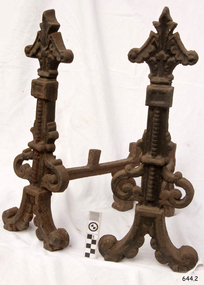
Domestic object - Firedogs
... Firedogs is the common name for andirons and Chenets and have been in use since ancient Greek times. ...Firedogs is the common name for andirons and Chenets and have been in use since ancient Greek times. ...Firedogs is the common name for andirons and Chenets and have been in use since ancient Greek times. Firedogs are the decorative metal supports or stands that hold logs in a fireplace, allowing air to circulate around the fire to keep it burning, and preventing logs from rolling out of the fireplace. They are usually made of metal, cast iron or steel, but are sometimes ceramic. They have two feet joined across the front and one at the back. Some firedogs, mainly for kitchen use, were plain with forked uprights so that a bar could rest between them on which a cooking pot or a roasting spit could hang. Some firedogs are made in the likeness of animals, shields, crosses, figures and keys. This pair of firedogs are representative of the firedogs that were common to domestic use in previous centuries when home heating and cooking were only possible with open fires. Firedogs or andirons, pair of two decorative cast iron log supports for use in a fireplace hearth. flagstaff hill, warrnambool, shipwrecked-coast, flagstaff-hill, flagstaff-hill-maritime-museum, maritime-museum, shipwreck-coast, flagstaff-hill-maritime-village, fire dogs, firedogs, fire grates, log stands, domestic furniture, open fireplace equipment, andirons, chenets, domestic heating -
Warrnambool and District Historical Society Inc.
Numismatics, Coin :English Crown 1844, 1844
... Most coins had a variety of common names such as a " bob" for a shilling a "quid for a pound and a tanner for a sixpence. ...Most coins had a variety of common names such as a " bob" for a shilling a "quid for a pound and a tanner for a sixpence. ...English currency before decimalisation in the 1970's consisted of pounds, shillings and pence with twelve pennies to the shilling and twenty shillings to the pound.Coins ranged from farthings which were one quarter of a penny through to pennies, threepence, sixpence, shillings ,half crowns and crowns. Most coins had a variety of common names such as a " bob" for a shilling a "quid for a pound and a tanner for a sixpence. This coin is the equivalent of five shillings and is known as a crown. The text around the obverse, "Victoria Dei Gratia 1844". On the reverse the text of Regina Fid Def"Britanniarum translates as Queen of Britain and defender of the faith.The text around the edge, DECUS ET TUTAMEN ANNO REGNI VIII translates as " an ornament and a safeguard. Coins were thus stamped in an effort to reduce the incidence of penny pinching whereby small amounts of precious metal were shaved from the edge of coins and still passed as full value coins.This coin was minted in the eighth year of the reign of one of England's longest ruling monarchs.It is of historical and social significance with the study of coins having considerable interest for many people. Large silver coin with image of Queen Victoria on the obverse or heads side of the coin and a coat of arms with crown at the top surrounded by a wreath of leaves is on the reverse. Text is around the edge of both sides with text also stamped into the edge of the coin as well. Obverse " Victoria Dei Gratia 1844." Reverse "Regina Fid Def"Britanniarum"On edge of coin is "DECUS ET TUTAMEN ANNO REGNI VIII english coins, coin half crown, english coin crown, warrnambool -
Whitehorse Historical Society Inc.
Document, History of Burwood East State School No. 454, 1969
... First School Established 1861, a non vested school Harkaway No. 184 on the present school site opened with twenty pupils who paid a fee of 6d a week. Changed name to Common School No. 454 in 1864 and became No. 454 Burwood East State School on 1902....First School Established 1861, a non vested school Harkaway No. 184 on the present school site opened with twenty pupils who paid a fee of 6d a week. Changed name to Common School No. 454 in 1864 and became No. 454 Burwood East State School on 1902. ...First School Established 1861, a non vested school Harkaway No. 184 on the present school site opened with twenty pupils who paid a fee of 6d a week. Changed name to Common School No. 454 in 1864 and became No. 454 Burwood East State School on 1902.burwood east state school no. 454, harkaway school, tally ho, wood, helen e., bennett, r.h. -
 The Beechworth Burke Museum
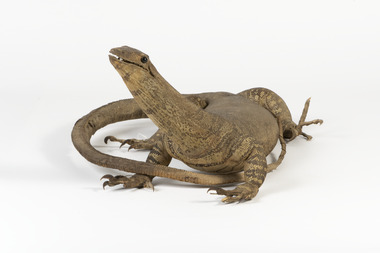
Animal specimen - Sand Goanna, Trustees of the Australian Museum, 1860-1880
... They can grow up to 160cm in length and can weigh as much as 6kg. Their common name is derived from "iguana", since early European bush settlers in Australia likened goannas to the South American lizards. ...They can grow up to 160cm in length and can weigh as much as 6kg. Their common name is derived from "iguana", since early European bush settlers in Australia likened goannas to the South American lizards. ...Sand goannas are the second largest species of carnivorous lizards found across mainland Australia. They can grow up to 160cm in length and can weigh as much as 6kg. Their common name is derived from "iguana", since early European bush settlers in Australia likened goannas to the South American lizards. Goannas retain special cultural and historic significance within Australian folklore and Indigenous culture. They were an important traditional native food source and are commonly represented in Aboriginal Dreamtime stories. In some Aboriginal languages, the sand goanna is called "bungarra"; a term also commonly used by non-Aboriginal people in Western Australia. In Pitjantjatjara and other central Australian languages, goannas are called "tingka". This specimen is part of a collection of almost 200 animal specimens that were originally acquired as skins from various institutions across Australia, including the Australian Museum and the National Museum of Victoria, as well as individuals such amateur anthropologist Reynell Eveleigh Johns between 1860-1880. These skins were then mounted by members of the Burke Museum Committee and put-on display in the formal space of the Museum’s original exhibition hall where they continue to be on display. This display of taxidermy mounts initially served to instruct visitors to the Burke Museum of the natural world around them, today it serves as an insight into the collecting habits of the 19th century. This specimen is part of a significant and rare taxidermy mount collection in the Burke Museum. This collection is scientifically and culturally important for reminding us of how science continues to shape our understanding of the modern world. They demonstrate a capacity to hold evidence of how Australia’s fauna history existed in the past and are potentially important for future environmental research. This collection continues to be on display in the Museum and has become a key part to interpreting the collecting habits of the 19th century.Small goanna with a streamlined body and textured scaly skin in different shades of olive and brown. It has a long neck and a long tail which narrows towards the tip. The goanna has four short, stocky legs which meet with large, curled claws. Its mouth is slightly slightly open, and it has two black glass eyes.On tag: BMM / 5892 /taxidermy mount, taxidermy, animalia, burke museum, beechworth, australian museum, skin, reynell eveleigh johns, lizard, goanna, sand goanna, monitor lizard, various gouldii -
 Eltham District Historical Society Inc
Document - Property Binder, 875 Main Road, Eltham
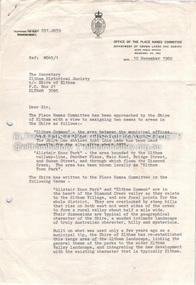
... Letter Shire of Eltham Historical Society to Place Names Committee, 30 April1981, No objection to name Eltham Common but considered Eltham Town Park more appropriate, providing a history of area. ...Letter Shire of Eltham Historical Society to Place Names Committee, 30 April1981, No objection to name Eltham Common but considered Eltham Town Park more appropriate, providing a history of area. ...Letter Office of the Place Names Committee to Eltham Historical Society, 10 November 1980: Seeking Society's opinion of naming of Eltham Common and Alistair Knox Park. Letter Office of the Place Names Committee to Eltham Historical Society, 7 April 1981, seeking response to letter 10 November 1980 re naming proposal. Letter Shire of Eltham Historical Society to Place Names Committee, 30 April1981, No objection to name Eltham Common but considered Eltham Town Park more appropriate, providing a history of area. Letter Office of the Place Names Committee to Eltham Historical Society, 9 July 1981: Resolved to assign name Eltham Common. Letter Office of the Place Names Committee to Eltham Historical Society, 23 October 1981: No objections to Government Gazette notice re naming of Eltham Common. Newspaper article: Diamond Valley News, 12 November 1991, Correction, restaurant review of Shillinglaw Cottage in Diamond Valley News, 5 November 1991, said founder was Grant Phelan, correctly Martin Brown.main road, eltham, property, houses, businesses, j m hjolloway, alistair knox, john hicks petty, eltham common, shillinglaw cottage, grant phelan, martin brown -
 Wangaratta RSL Sub Branch
Souvenir - Japanese Water Canteen, C1930
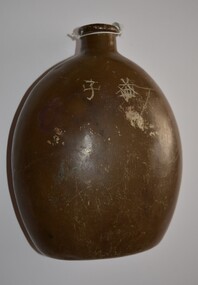
... Since the canteen was such an integral part of a Japanese soldiers kit, it is common to find their name written or sewn into the harness, or scratched into the canteens body. ...Since the canteen was such an integral part of a Japanese soldiers kit, it is common to find their name written or sewn into the harness, or scratched into the canteens body. ...In 1930, the Japanese army received a slew of new field and uniform items in an effort to keep the Imperial Japanese army a modern fighting force. Included in the equipment package was a new canteen known as Sho-5 and holds 1 litre of water. Since the canteen was such an integral part of a Japanese soldiers kit, it is common to find their name written or sewn into the harness, or scratched into the canteens body. Allied troops fighting in the Pacific routinely collected Japanese field gear as combat trophies. The item has no known history but there appears to be a name scratched on the canteen together with a Japanese maker’s stamp impressed on the base. Brown painted aluminium kidney shaped water canteen.ww2, japanese canteen, sho-5 -
Glen Eira Historical Society
Book - Local Government Act First Report of the Assistant Commissioner of Roads and Bridges
... In the Glen Eira area this includes: separating electoral subdivisions of single districts (Moorabbin), adding detached portions of territory to road districts and shires (Caulfield), appointing of and altering in polling places, appointing of polling places for ridings of shires and subdivisions of road districts (Moorabbin), preparing and transmitting of forms of books also of pro forma accounts for guidance of local bodies in keeping their accounts, appointment of main roads, construction of a main road, ‘Dandenong’, in the Caulfield and Gardiner districts, proclaiming of Common Toll Roads, names of and security given by Managers of Common Toll Roads. ...In the Glen Eira area this includes: separating electoral subdivisions of single districts (Moorabbin), adding detached portions of territory to road districts and shires (Caulfield), appointing of and altering in polling places, appointing of polling places for ridings of shires and subdivisions of road districts (Moorabbin), preparing and transmitting of forms of books also of pro forma accounts for guidance of local bodies in keeping their accounts, appointment of main roads, construction of a main road, ‘Dandenong’, in the Caulfield and Gardiner districts, proclaiming of Common Toll Roads, names of and security given by Managers of Common Toll Roads. ...This file contains 1 item: 1/The Local Government Act, First Report of the Assistant Commissioner of Roads and Bridges, printed by order of the Victorian Legislative Assembly on 08/03/1865. The document is the first annual report of John Steavenson, Assistant Commissioner of Roads and Bridges under s330 of the Local Government Act no. 176 (1863), and relates to transactions which took place from 02/09/1863 to 31/12/1864. The report outlines operations carried out by the Department of Roads and Bridges in this period. In the Glen Eira area this includes: separating electoral subdivisions of single districts (Moorabbin), adding detached portions of territory to road districts and shires (Caulfield), appointing of and altering in polling places, appointing of polling places for ridings of shires and subdivisions of road districts (Moorabbin), preparing and transmitting of forms of books also of pro forma accounts for guidance of local bodies in keeping their accounts, appointment of main roads, construction of a main road, ‘Dandenong’, in the Caulfield and Gardiner districts, proclaiming of Common Toll Roads, names of and security given by Managers of Common Toll Roads. The report also gives some information about the Shire of Caulfield, which contained 24 road districts and 340 rate payers in 8¼ square miles, and the Shire of Moorabbin, which contained 62 road districts and 713 rate payers in 30 square miles.local government act, assistant commissioner of roads and bridges, legislative council, caulfield historical soceity, steavenson john, sullivan j. f. the honourable, caulfield, moorabbin, road districts, point nepean road, nepean highway, dandenong road, princes highway, brown edwin, osher joseph, cosgrove john, ferres john, roads and bridges offices, caulfield roads district, moorabbin roads district, road construction and maintenance, roads and streets, acts of parliament -
 Wangaratta RSL Sub Branch
Souvenir - Japanese Water Canteen, C1930
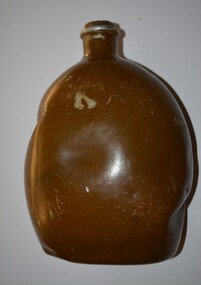
... Since the canteen was such an integral part of a Japanese soldiers kit, it is common to find their name written or sewn into the harness, or scratched into the canteens body. ...Since the canteen was such an integral part of a Japanese soldiers kit, it is common to find their name written or sewn into the harness, or scratched into the canteens body. ...In 1930, the Japanese army received a slew of new field and uniform items in an effort to keep the Imperial Japanese army a modern fighting force. Included in the equipment package was a new canteen known as Sho-5 and holds 1 litre of water. Since the canteen was such an integral part of a Japanese soldiers kit, it is common to find their name written or sewn into the harness, or scratched into the canteens body. Allied troops fighting in the Pacific routinely collected Japanese field gear as combat trophies. The item has Japanese maker’s stamp impressed on the base but no known history and was likely souvenired by Capt.Frederick Roy Phillips VX102776/V148225 born 9/12/1907 at Yackandandah. Known as Dr Roy Phillips OAM he was assigned to the 7th Aust CCS/AAMC as a Medical Practitioner. He served with the AMF 6/6/42-25/8/42 and AIF from 26/8/42 until his appointment was terminated on 26/2/1946. In 1945 he was deployed overseas to Milne Bay, New Guinea and Moratai, Borneo with the Plastic Surgery Unit. Following WW2 he was a general medical practitioner in Wangaratta and died on the 4/9/2006. Brown painted aluminium kidney shaped water canteen with stopperJapanese marking impressed on baseww2, japanese canteen, sho-5 -
 The Beechworth Burke Museum
Photograph
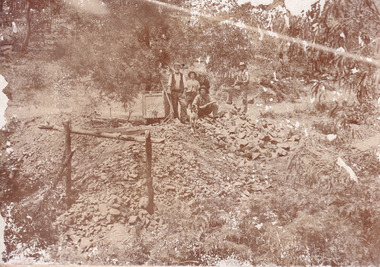
... The names of mines were often repeated at different locations throughout the Victorian Goldfields. For example, there is a Mopoke Gully heritage mine near Fryers Creek, Victoria. 'Mopoke' is a common...The names of mines were often repeated at different locations throughout the Victorian Goldfields. For example, there is a Mopoke Gully heritage mine near Fryers Creek, Victoria. 'Mopoke' is a common ...This image is a reproduction of an 1899 original depicting the 'Williams Good Luck Mine' on the Mopoke Reef (also called 'Morepork Gully') in the Dingle Ranges, approximately three miles from Beechworth. A large opening to a mine can be seen behind the men in the photograph, with a wheeled cart on a track leading to the men's position, where the soil and rocks have been hauled away. This photograph interestingly contains dogs alongside the miners. While dogs have been recorded as deterrents to thieves in the Victorian goldfields, these dogs appear as companions to these men. Following the discovery of gold at Beechworth in 1852, rushes quickly followed at surrounding creeks and gullies in the district. In the late nineteenth and early twentieth centuries, small syndicates of miners continued to work old or abandoned quartz reefs, often persisting without the assistance of heavy machinery to remove the large amounts of rock, in order to obtain yields at ever greater depths. The group of miners in this photograph are Mr. Roger Williams and Sons, who revived operations at the ‘Old Good Luck’ mine on the Mopoke Reef in the Dingle Range near Beechworth around 1892, working the site for more than two decades. An emigrant from Cornwall with experience in the tin mining industry, 19 year old Roger Williams senior sailed to New Zealand in 1840, then to Australia where he spent time in the Bendigo Gold Fields before settling in Beechworth in the early 1860s. Mr Williams senior worked on various mining activities in the district, including the Rocky Mountain Tunnel project. Conversant with the character of gold-bearing reefs in the area, the syndicate dug an eight hundred foot tunnel, digging down as far down as two hundred feet with little capital save their labour, to connect and provide better working access to the mass of reefs and veins in the vicinity. Progress was hampered by poor air quality charged with fumes from dynamite and large quantities of rock had to be crushed to obtain payable yields. The Victorian Goldfields are filled with ruins and remnants of the area's rich mining history, ranging from small alluvial diggings to the remains of huge mining companies. Site names often changed several times throughout the nineteenth and twentieth centuries. Some sites were abandoned and forgotten, others were worked continuously over many decades. The names of mines were often repeated at different locations throughout the Victorian Goldfields. For example, there is a Mopoke Gully heritage mine near Fryers Creek, Victoria. 'Mopoke' is a common onomatopoeic name for Morepork and Australian Boobook owls.This image has historical, social and research significance for patterns of emigration during of the Victorian Gold Rush, and the historical, social and environmental impacts of mining at Beechworth at the turn of the nineteenth and twentieth centuries. As gold became scarce and government support and large company investment waned, poor hard-working miners laboured intensively to make a living through periods of high unemployment. This image can be compared and studied alongside other historical mining photographs and objects in the Burke Museum Collection. It has potential to improve our understanding of miners working conditions and the shifting character of mining in the Beechworth district.Sepia coloured rectangular photograph printed on gloss photographic paper mounted on card. Obverse: Williams/ Good/ Luck Reverse: A02498/ 1997. 2498/ Good Luck/ Mine/ 1899/ Mopoke. burke museum, beechworth museum, beechworth, gold fields, gold rush, victorian gold rush, gold ming history, colonial australia, australian gold rushes, mining technology, beechworth historic district, indigo gold trail, migration, indigo shire, good luck gold mine, victorian goldfields, mining syndicates, gold fever, quartz-mining, small-scale mining, old good luck mine, mopoke gully, quartz reefs beechworth
