
Showing 39 items matching "cricket pitch"
-
 Federation University Historical Collection
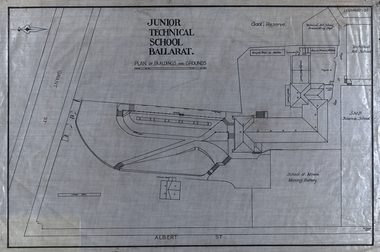
Plan, Plan of the Ballarat Junior Technical School Buildings and Grounds, 1923
... ...cricket pitch...Plan of the Ballarat Junior Technical School, a division of the Ballarat School of Mines, The plan shows the Gaol Research, School of Mines Mining Battery, Common room, rifle range and cricket pitch. The school and grounds fronted Albert Street and Grant Street. ...The Ballarat Junior Technical School was a division of the Ballarat School of Mines. gaol reserve ballarat school of mines mining battery model mine. mining battery common room rifle range cricket pitch albert street grant street ballarat school of mines buildings bicycle shed ballarat technical art school dressmaking quoit court architectural plans Plan of the Ballarat Junior Technical School, a division of the Ballarat School of Mines, The plan shows the Gaol Research, School of Mines Mining Battery, Common room, rifle range and cricket pitch. ...The Ballarat Junior Technical School was a division of the Ballarat School of Mines. Plan of the Ballarat Junior Technical School, a division of the Ballarat School of Mines, The plan shows the Gaol Research, School of Mines Mining Battery, Common room, rifle range and cricket pitch. The school and grounds fronted Albert Street and Grant Street. gaol reserve, ballarat school of mines mining battery, model mine., mining battery, common room, rifle range, cricket pitch, albert street, grant street, ballarat school of mines, buildings, bicycle shed, ballarat technical art school, dressmaking, quoit court, architectural plans -
 Federation University Historical Collection
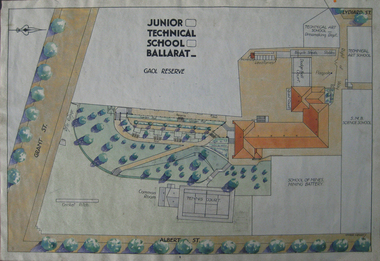
Plan, Ballarat Junior Technical School Plan - Ballarat Gaol Reserve, 1934, 1934
... ballarat junior technical school cricket pitch...ballarat gaol ballarat gaol reserve ballarat junior technical school plans dodge ball court ballarat school of mines battery model mine ballarat school of mines model mine ballarat junior technical school rifle range ballarat junior technical school cricket pitch ballarat junior technical school tennis court rifle range albert street grant street mining battery tennis court Ballarat Gaol Wall bicycle shed Ballarat School of Mines Mining Battery Coloured plan of the Ballarat Junior Technical School and where is was situated in relation to the Ballarat Gaol and its walls, and the Ballarat School of MInes grounds, battery and tennis courts. ...Coloured plan of the Ballarat Junior Technical School and where is was situated in relation to the Ballarat Gaol and its walls, and the Ballarat School of MInes grounds, battery and tennis courts.ballarat gaol, ballarat gaol reserve, ballarat junior technical school, plans, dodge ball court, ballarat school of mines battery, model mine, ballarat school of mines model mine, ballarat junior technical school rifle range, ballarat junior technical school cricket pitch, ballarat junior technical school tennis court, rifle range, albert street, grant street, mining battery, tennis court, ballarat gaol wall, bicycle shed, ballarat school of mines mining battery -
 Glen Eira Historical Society
Article - Packer Park
... ... Cricket Pitch...Packer Park Parks Reserves Murrumbeena Caulfield Caulfield East Leila Road Carnegie Packer John Thomas Caulfield Council Mayor of the City Velodromes Sportsgrounds Sports Recreations Entertainment Leisure Clubs Associations Sporting Clubs Cultural Structures Cultural Establishments Sportspeople Football Oval Cricket Pitch Tennis Wall Playgrounds Barbecues Spencer David Evans Doug D’Zilva Rod Football Clubs Cricket Clubs Community News Caulfield Port Phillip Leader St. ...This file contains two items. An article from the Caulfield Port Phillip Leader on the reopening of Packer Park Cricket Oval, dated 11/01/2011. An article from the Caulfield Contact regarding the facilities and uses of Packer Park dated March 1992.packer park, parks, reserves, murrumbeena, caulfield, caulfield east, leila road, carnegie, packer john thomas, caulfield council, mayor of the city, velodromes, sportsgrounds, sports, recreations, entertainment, leisure, clubs, associations, sporting clubs, cultural structures, cultural establishments, sportspeople, football oval, cricket pitch, tennis wall, playgrounds, barbecues, spencer david, evans doug, d’zilva rod, football clubs, cricket clubs, community news, caulfield port phillip leader, st. kilda south caulfield amateur football club, washington park cricket club, st. patrick’s college old boys cricket club, st. peter’s college old boys cricket club, carnegie/caulfield cycle club, caulfield district horse and pony club, murrumbeena primary school, murrumbeena park, cricket oval, washington park cricket club, washington park sharks, dellora graeme, glen eira council, carnegie, tucker ward, magee tim, caulfield east ward -
Tatura Irrigation & Wartime Camps Museum
Book, From Paddock to Park, 2003
... Tree representing paddock and cricket pitch representing park....Tree representing paddock and cricket pitch representing park. From Paddock to Park Book ...Produced by Tatura Cricket Club to include the years 1880-2003 on the occasion of a reunion. Foreword by visiting celebrity, Max Walker.Green covered with white lettering. Tree representing paddock and cricket pitch representing park.from paddock to park, tatura cricket club, tatura, show grounds, premiership winners, books, history, local -
 Orbost & District Historical Society
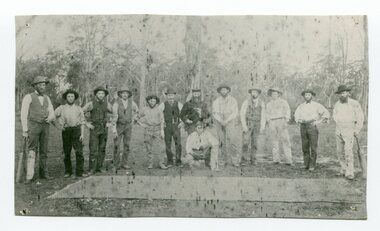
black and white photograph, C 1880
... A black / white photograph of a group of men standing in front of a cricket pitch. Two men are holding cricket bats and are wearing pads. ...This photograph is a pictorial record of an Orbost cricket team in the nineteenth century. sport-cricket recreation-cricket A black / white photograph of a group of men standing in front of a cricket pitch. Two men are holding cricket bats and are wearing pads. ...This photograph shows Orbost's first cricket team in the Lochiel paddock - C 1880's.Included are: Alec Cameron; Harry Richardson; Jo Swallow; Matt Lynch; Joe Roderick; ? Hatton; Alf Richardson; Janes Cameron; John Cameron;John FarquharSport is often regarded as an important part of life in rural Australia. Cricket is one of the most popular sports in Australia at international, domestic and local levels. It has been played in Australia for more than 200 years. This photograph is a pictorial record of an Orbost cricket team in the nineteenth century.A black / white photograph of a group of men standing in front of a cricket pitch. Two men are holding cricket bats and are wearing pads. One man is crouching.sport-cricket recreation-cricket -
 Bendigo Historical Society Inc.
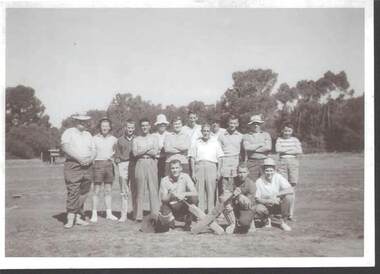
Photograph - RAILWAYS COLLECTION: A TEAM OF CRICKET PLAYERS
... RAILWAYS COLLECTION Black and white photo of - a team of 15 Cricket players on a cricket pitch with trees in the background two players are kneeling with two crossed cricket bats....PHOTOGRAPH Person RAILWAYS COLLECTION Black and white photo of - a team of 15 Cricket players on a cricket pitch with trees in the background two players are kneeling with two crossed cricket bats. ...RAILWAYS COLLECTION Black and white photo of - a team of 15 Cricket players on a cricket pitch with trees in the background two players are kneeling with two crossed cricket bats.photograph, person -
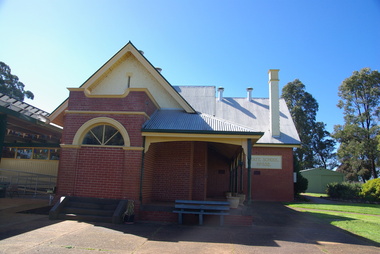 Victorian Interpretive Projects Inc.
Photograph - Colour, Smeaton Primary School
... .1) Red brick building .2) Smeaton Primary School logo .3) Smeaton Primary School Bell .4) Smeaton Primary School pakyground, including concrete cricket pitch....Smeaton school education bell cricket State School No. 552 .1) Red brick building .2) Smeaton Primary School logo .3) Smeaton Primary School Bell .4) Smeaton Primary School pakyground, including concrete cricket pitch. Smeaton Primary School Photograph - Colour ...In 1860 Smeaton residents appealed for funds to establish a school. Patrick Curtain, and his co-workers raised more than £150 plus a land grant (Allot A, Sect 2, Township of Smeaton). Head Teacher John Forbes, with assistant Zillah North, opened a timber school building which measured 36ftx18ft (11.0x5.5m) on 1 September 1861 with 44 children. Rising enrolment to 65 in 1868 made building alterations necessary. During 1870-1 a residence of four rooms was supplied and in October 1882 a 20ftx18ft (6.1x5.5m) classroom. In 1907 a new brick building accommodated 122 children. Among notable ex-pupils are Major-General Bridgeford, Frank Wright ( Musical Director of the London County Council), Alex Wright, (AKA singer Andre Navarre), and Les Brooks. (Visions and Realisations) In 2013 it was announced that Smeaton Primary School would close. The Hepburn advocate reported: "A Department of Education spokesman has confirmed the Smeaton Primary School council recently voted unanimously to recommend the school close at the end of the year. The school currently has 12 students with enrollments dwindling during the past few years and no prep students to its boost numbers or its future. The school’s imminent closure comes as the Smeaton community gears up for the town’s 175th anniversary which will be celebrated later this year. School council member Kristi Pedretti said it had not been a decision made lightly. “There are 12 students – only one in grade 6, about eight in grade 5, two in grade 3, and one in grade 1 – and there’s only one girl in the school,” she said. “So it was a combination of everything – having that big group through in grade 5, but no preps coming through, and only one girl. “It’s hard for parents to see a future in the school.” Ms Pedretti has a son in grade 6, Jack, and is herself a former Smeaton Primary School student." .1) Red brick building .2) Smeaton Primary School logo .3) Smeaton Primary School Bell .4) Smeaton Primary School pakyground, including concrete cricket pitch.smeaton, school, education, bell, cricket, state school no. 552 -
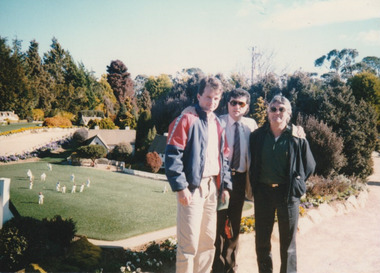 Port Melbourne Historical & Preservation Society
Photograph - Cr Perce White and Tony De Fazio, 30 Aug 1989
... Port Melbourne Mayor, Cr Perce WHITE (right), with Deputy Town Clerk, Tony DE FAZIO (centre) and an unknown person (left) standing in front of a model village with a cricket pitch....Tony DE FAZIO Local Government - City of Port Melbourne Perce WHITE Perce McGuire WHITE Port Melbourne Mayor, Cr Perce WHITE (right), with Deputy Town Clerk, Tony DE FAZIO (centre) and an unknown person (left) standing in front of a model village with a cricket pitch. Photograph Cr Perce White and Tony De Fazio ...The model village in the background suggests a location in Britain.Port Melbourne Mayor, Cr Perce WHITE (right), with Deputy Town Clerk, Tony DE FAZIO (centre) and an unknown person (left) standing in front of a model village with a cricket pitch.tony de fazio, local government - city of port melbourne, perce white, perce mcguire white -
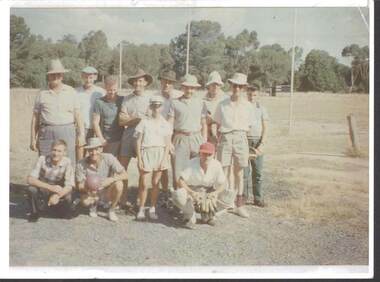 Bendigo Historical Society Inc.
Photograph - RAILWAYS COLLECTION: A TEAM OF 13 CRICKET PLAYERS
... RAILWAYS COLLECTION colour photo of -a team of 13 Cricket players on a cricket pitch with trees in the background. Appears to have been taken at, White Hills Oval C1960 - see 6895/6894, 6869....PHOTOGRAPH Cricket RAILWAYS COLLECTION colour photo of -a team of 13 Cricket players on a cricket pitch with trees in the background. Appears to have been taken at, White Hills Oval C1960 - see 6895/6894, 6869. ...RAILWAYS COLLECTION colour photo of -a team of 13 Cricket players on a cricket pitch with trees in the background. Appears to have been taken at, White Hills Oval C1960 - see 6895/6894, 6869.photograph, cricket -
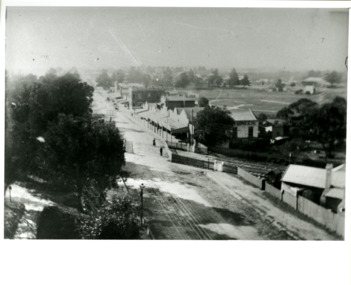 City of Kingston
Photograph - Black and white, Percy Fairlam, c. 1910
... What appears to be a cricket pitch is located behind the shops....What appears to be a cricket pitch is located behind the shops. Photograph Black and white Percy Fairlam ...Black and white image of Cheltenham in the early 20th Century depicts an almost idyllic life. This photo was taken by Percy Fairlam, who climbed a tall pine tree to achieve the aerial view. The tree was a well recognised feature of the Cheltenham skyline but was cut down some time before World War II.Cheltenham was established as a rural market gardening community. The development of the railway was crucial to the ongoing development of the area. Community life sprung up around the railway line which is evident in the proximity of shopping and leisure.Black and white image depicting aerial view down Charman Road, Cheltenham, including the unsealed road, level crossing and shopping centre. What appears to be a cricket pitch is located behind the shops.Handwritten in black ink on a red round sticker adhered to the reverse, and then crossed out: X14 Handwritten in blue ink on reverse: A8 Handwritten in red ink on reverse: 85%cheltenham, railway crossing, roads, housing, shopping strip -
 Vision Australia
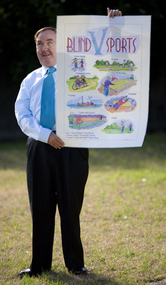
Photograph - Image, Foto Group, 2008 Maurice Gleeson, 13/2/2008
... Maurice Gleeson holds an audible ball used in blind cricket, whilst standing at Kooyong and near a cricket pitch....Maurice Gleeson holds an audible ball used in blind cricket, whilst standing at Kooyong and near a cricket pitch. Vision Australia Blind Sports Victoria Maurice Gleeson 7 digital images of Maurice Gleeson at Kooyong 2008 Maurice Gleeson Photograph Image Foto Group ...Maurice Gleeson holds an audible ball used in blind cricket, whilst standing at Kooyong and near a cricket pitch.7 digital images of Maurice Gleeson at Kooyongvision australia, blind sports victoria, maurice gleeson -
 Stawell Historical Society Inc
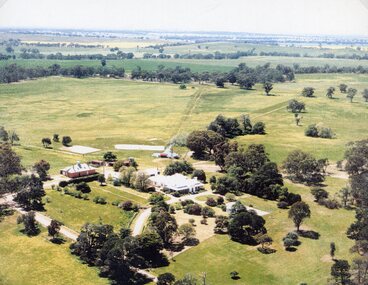
Photograph, "Kirkella" Homestead 2001 -- Aerial Photo
... Aerial photograph of Kirkella homestead taken in 2001. Shows Cricket pitch on Right Hand Side of photo partly surrounded by trees....Aerial photograph of Kirkella homestead taken in 2001. Shows Cricket pitch on Right Hand Side of photo partly surrounded by trees. stawell sport "Kirkella" Homestead 2001 -- Aerial Photo Photograph ...Aerial photograph of Kirkella homestead taken in 2001. Shows Cricket pitch on Right Hand Side of photo partly surrounded by trees.stawell sport -
 Port of Echuca
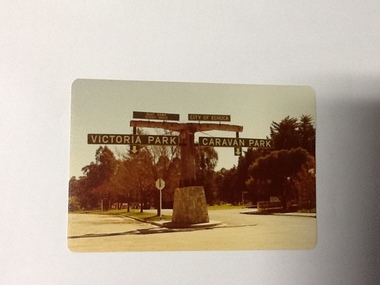
Colour Photograph, Approx.1979
... In 1869 the Council moved to name this park "Victoria Park. The cricket pitch construction began in 1873 and major improvements to the ground were undertaken in 1881. ...In 1869 the Council moved to name this park "Victoria Park. The cricket pitch construction began in 1873 and major improvements to the ground were undertaken in 1881. ...In 1869 the Council moved to name this park "Victoria Park. The cricket pitch construction began in 1873 and major improvements to the ground were undertaken in 1881. It is still the primary sporting ground in Echuca, offering AFL football oval, cricket pitch and nets, athletics and entry to the Echuca boat ramp and the natural bush land of the scenic drive. It also houses Echuca Council caravan park. The signage in this photograph is no longer there and the enterance to the caravan park has moved.This area of Echuca has historically been a major recreational area for the town. Being the primary sporting ground since its establishment in 1869., the area has a number of sporting and recreational facilities for the people of Campaspe Shire, from natural bush walks in and along the Murray river to more formal facilities such as AFL football ground, firefighting training area, netball courts, cricket pitch and nets, and grass tennis courts. Colour photograph (post-card size) of directory signs to entrance of Victoria Park, Echuca taken facing north. Two driveways are shown, to the east "Caravan Park" and to the west , "Victoria Park", "Boat ramp", " Scenic drive"Printed in black on the reverse:"this paper manufactured by Kodak"echuca, port of, echuca council caravan park, victoria park, echuca, echuca-tourist attraction -
 Bendigo Historical Society Inc.
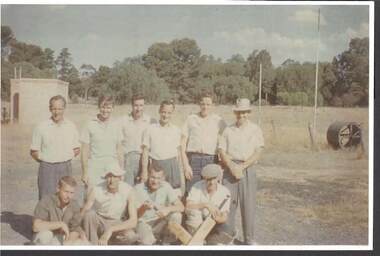
Photograph - RAILWAYS COLLECTION: A TEAM OF 10 CRICKET PLAYERS
... RAILWAYS COLLECTION colour photo of -a team of 10 Cricket players on a cricket pitch with trees in the background two players are kneeling with two crossed cricket bats. ...PHOTOGRAPH Cricket 1960 RAILWAYS COLLECTION colour photo of -a team of 10 Cricket players on a cricket pitch with trees in the background two players are kneeling with two crossed cricket bats. ...RAILWAYS COLLECTION colour photo of -a team of 10 Cricket players on a cricket pitch with trees in the background two players are kneeling with two crossed cricket bats. Note on the back of the photo says Copper Shop Cricket match, White Hills Oval 1960photograph, cricket, 1960 -
Federation University Historical Collection
Document - Document - Letter, Ballarat Junior Technical School: Letter from the Education Department re subsidy funds, 1952
... Subsidy for construction of cricket pitches would come under approved site works grant. ...Subsidy for construction of cricket pitches would come under approved site works grant. ballarat junior technical school headmaster l garner education department secretary d w wheeler subsidy funds fully committed cricket pitches work site grant Letterhead Signature of Secretary D W Wheeler Cream sheet of paper, typed Ballarat Junior Technical School: Letter from the Education Department re subsidy funds, 1952 Document Document - Letter ...Letter from the Education Department stating all available subsidy funds for 1951/52 were fully committed. Grants will have to be made from the current financial year. Subsidy for construction of cricket pitches would come under approved site works grant. Cream sheet of paper, typed Letterhead Signature of Secretary D W Wheelerballarat junior technical school, headmaster, l garner, education department, secretary, d w wheeler, subsidy funds fully committed, cricket pitches, work site grant -
 Warrnambool and District Historical Society Inc.
Chain link measure, Gunter, Early 20th century
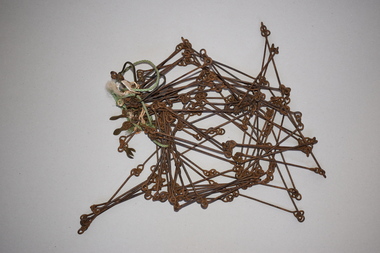
... The traditional cricket pitch is 22 yards or one chain long. ...The traditional cricket pitch is 22 yards or one chain long. This Gunter’s Chain is of considerable significance because: 1. ...This Gunter’s Chain, an old land surveying instrument, is named after its inventor, Edmund Gunter (1581-1626), an English mathematician and astronomer. It was first produced in 1620. The tool has 100 links and is 66 feet or one chain long. The links are marked off in groups of ten by metal rings or tags. A quarter chain (25 links) is called a rod or pole and ten chains make a furlong and 80 chains make a mile. The traditional cricket pitch is 22 yards or one chain long. This Gunter’s Chain is of considerable significance because: 1. It is an early land measuring tool that was used for over 250 years and has great historical and mathematical significance. A Gunter’s Chain would have been used when forming and building local roads from the earliest days of settlement. 2. It has a possible local connection as it was given to the Historical Society by a local person in 1965 and possibly came from the property of ‘Rosehill’ This is a metal tool which consists of 100 metal pieces or links joined together by loops at each end with two metal loops in between each link. The links joined together form a chain. The two ends of the chain have small metal handles attached At intervals along the chain there are additional rings or metal pieces attached. Some white and green rope material has been used to bundle up the chain. The metal is somewhat rusted. gunter’s chain, land measurement tools, history of warrnambool -
 Sunbury Family History and Heritage Society Inc.
Photograph, Astra Studios, Sunbury United Sporting Club Ltd. 1981, 1981
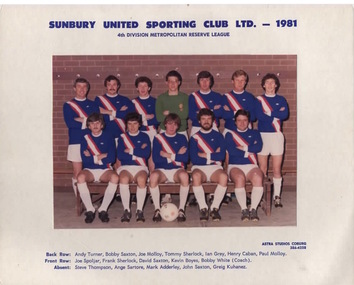
... Since that date, the club has grown and today there are 3 senior and 2 junior pitches as well as 2 cricket pitches and comfortable clubrooms on the area....Since that date, the club has grown and today there are 3 senior and 2 junior pitches as well as 2 cricket pitches and comfortable clubrooms on the area. ...As a result of a group of European expatriates settling in Sunbury in the 1970s and wanting to play soccer, the Sunbury United Sporting Club was formed in 1972 with the first games played on the Aussies Rules ground in Evans Street (now the Sunbury Shopping Square). After cooperation between Shire of Bulla Council to acquire an open area of land in Michells Lane, the club moved to their own ground, Langama Park in 1975. Since that date, the club has grown and today there are 3 senior and 2 junior pitches as well as 2 cricket pitches and comfortable clubrooms on the area.Sunbury United Sporting Club was one of the first Soccer Clubs to be established in the district.A scanned non-digital coloured photograph of the Sunbury United Football Club. There is a white border around the photograph and the names of the players are listed under the image. The players are wearing navy blue guernseys with a diagonal red and white stripe across the front.sunbury united sporting club., langhama park, soccer, mitchells lane -
 Kiewa Valley Historical Society
Surveyors Chain - Steel Band
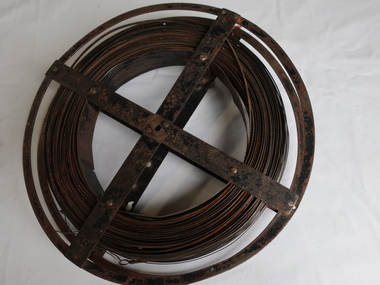
... The chain also survives as the length of a cricket pitch, being the distance between the stumps. ...The chain also survives as the length of a cricket pitch, being the distance between the stumps. ...A chain is a unit of length equal to 66 feet or 22 yards. This is a statute measure in the United Kingdom. One link is 100th part of a chain, which is 7.92 inches (20.1 cm). The chain and link became standard surveyors' units of length and crossed to the colonies from the United Kingdom. The chain is the unit of linear measurement for the survey of the public lands as prescribed by law. In Australia most building lots in the past were a quarter of an acre, measuring one chain by two and a half chains. Also street frontages, roads, laneways. The chain also survives as the length of a cricket pitch, being the distance between the stumps. Surveyors and residents of the Kiewa Valley used the Steel Band Surveyors Chain to measure distances when developing the land.Surveyors' steel band measuring tape, known as a 'standard band', or a 'steel band chain'.This chain consists of a long narrow strip of steel of uniform width of 3 mm and thickness of 0.3 to 0.6 mm. The chain itself is between 20 m and 30 m long.surveyors, surveyors chain, measurement of distance -
 Sunbury Family History and Heritage Society Inc.
Photograph, Lamgama Park - Soccer Pitch, C 1970s
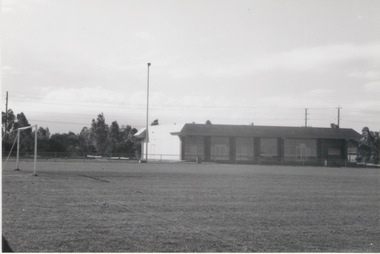
... Over the years that area has developed and there are now three senior, and two junior soccer pitches with two cricket pitches and practice nets. Although there is still room for improvement to the floodlighting on the main pitch, the night games have proven successful. ...Over the years that area has developed and there are now three senior, and two junior soccer pitches with two cricket pitches and practice nets. Although there is still room for improvement to the floodlighting on the main pitch, the night games have proven successful. ...Sunbury United Soccer Club was established in 1973 by a group of expatriate Europeans who wanted to play the game they grew up with. Their first games were played on the recreation reserve in Evans Street on the ground designed for AFL football. (Now the site of a shopping complex). In August 1975, Sunbury United moved to its present home on seven and a half acres of sporting ground at Langama Park in Mitchells Lane . Over the years that area has developed and there are now three senior, and two junior soccer pitches with two cricket pitches and practice nets. Although there is still room for improvement to the floodlighting on the main pitch, the night games have proven successful. The Sunbury United Soccer Club has played an important roll in district competition and is one of the many sporting clubs in Sunbury.A non-digital black and white photograph of a soccer ground showing a set of goal posts with the clubrooms and change rooms in the background.soccer, sunbury united soccer club, football, langama park, mitchells lane -
 Greensborough Historical Society
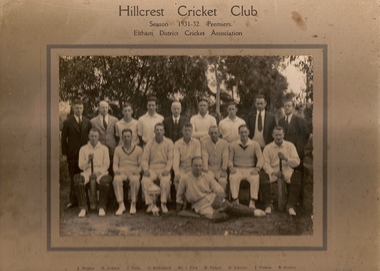
Photograph (copy), Hillcrest Cricket Club: photograph and article, 1931-1932
... The land was owned by Mr J Ellis (senior) who allowed the local men to make a cricket pitch so they could form a cricket team and enter in the Eltham District Cricket Association (1925-1930). ...The land was owned by Mr J Ellis (senior) who allowed the local men to make a cricket pitch so they could form a cricket team and enter in the Eltham District Cricket Association (1925-1930). ...The Hillcrest Cricket Club is shown in the 1931-32 season. The photograph is named. The photo is accompanied by a handwritten short history of the club by Ray Hooper: "Hillcrest C.C.- Hillcrest Cricket Club was situated between Mountainview Road and … Street at the top of the hill. Where it became flat more or less where River Street met Mountainview Road (straight up). The land was owned by Mr J Ellis (senior) who allowed the local men to make a cricket pitch so they could form a cricket team and enter in the Eltham District Cricket Association (1925-1930). As you can see Mr Ellis Senior (by photo) became president and both his sons played for Hillcrest C.C. My father also played and I can just remember W Mills (Captain), H.Padget, H.Johnson, J.Parks and H.Weidlich (as I got older). Ray Hooper." Copy of group photograph and handwritten article.Group photograph is named.hillcrest cricket club, ray hooper -
 Sunshine and District Historical Society Incorporated
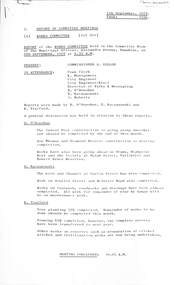
Administrative record - City of Sunshine - Commissioner Mr Alexander Alex George Gillon Collection 1976 - 1982 - Report on Committee Meetings 5th September 1978, City of Sunshine, 5th September 1978
... Report on Committee Meetings 5th September 1978 Report of Works Committee Meeting Indoor Swimming Pool Construction Going Smoothly Bon Thomas Reserve and Diamond Reserve Construction Nearly Completion Orama Street, Highpoint West, Ralph Street, Talintyre Road & Robert Bruce Reserve Toilet Block Going Ahead Works on Footpath, Roadworks and Drainage Almost Completed Curtin Street Kerb & Channel Completed Scullin Street and McIntyre Road Works Completed Tree Planting 57% Complete Pruning 69% Complete Preparation of Cricket Pitches and Fertilisation Works Are Being Undertaken Report of the Finance Committee Deferred Payment Contracts & Financing Problems Report of the Agenda and Forward Planning Committee Nil...City of Sunshine Alexander "Alex" George Gillon Bon Thomas Reserve Quinn Street Deer Park Diamond Reserve Diamond Avenue Albanvale Orama Street Highpoint West Rosamond Road Maribyrnong Ralph Street Talintyre Road Sunshine West Robert Bruce Reserve Station Road Curtin Street Maidstone Scullin Street McIntyre Road Sunshine North Report on Committee Meetings 5th September 1978 Report of Works Committee Meeting Indoor Swimming Pool Construction Going Smoothly Bon Thomas Reserve and Diamond Reserve Construction Nearly Completion Orama Street, Highpoint West, Ralph Street, Talintyre Road & Robert Bruce Reserve Toilet Block Going Ahead Works on Footpath, Roadworks and Drainage Almost Completed Curtin Street Kerb & Channel Completed Scullin Street and McIntyre Road Works Completed Tree Planting 57% Complete Pruning 69% Complete Preparation of Cricket Pitches and Fertilisation Works Are Being Undertaken Report of the Finance Committee Deferred Payment Contracts & Financing Problems Report of the Agenda and Forward Planning Committee Nil Foolscap sized document. ...Report on Committee Meetings 5th September 1978 Report of Works Committee Meeting Indoor Swimming Pool Construction Going Smoothly Bon Thomas Reserve and Diamond Reserve Construction Nearly Completion Orama Street, Highpoint West, Ralph Street, Talintyre Road & Robert Bruce Reserve Toilet Block Going Ahead Works on Footpath, Roadworks and Drainage Almost Completed Curtin Street Kerb & Channel Completed Scullin Street and McIntyre Road Works Completed Tree Planting 57% Complete Pruning 69% Complete Preparation of Cricket Pitches and Fertilisation Works Are Being Undertaken Report of the Finance Committee Deferred Payment Contracts & Financing Problems Report of the Agenda and Forward Planning Committee Nil city of sunshine, alexander "alex" george gillon, bon thomas reserve, quinn street, deer park, diamond reserve, diamond avenue, albanvale, orama street, highpoint west, rosamond road, maribyrnong, ralph street, talintyre road, sunshine west, robert bruce reserve, station road, curtin street, maidstone, scullin street, mcintyre road, sunshine north -
 Warrnambool and District Historical Society Inc.
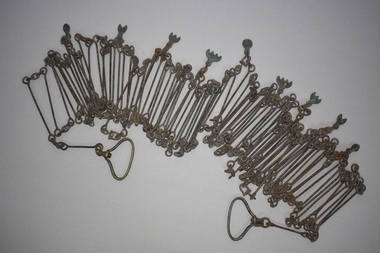
Chain link measure, Gunter's Chain, 19th Century
... The traditional cricket pitch is 22 yards or one chain long. This chain is said to have been used by Gilbert Nicol when the Warrnambool to Hamilton Road was constructed in the 19th century. ...The traditional cricket pitch is 22 yards or one chain long. This chain is said to have been used by Gilbert Nicol when the Warrnambool to Hamilton Road was constructed in the 19th century. ...A Gunter’s Chain, an old land surveying instrument, is named after its inventor, Edmund Gunter (1581-1626), an English mathematician and astronomer. It was first produced in 1620. The tool has 100 links and is 66 feet or one chain long. The links are marked off in groups of ten by metal tags or rings. A quarter chain (25 links) is called a rod or pole and ten chains make a furlong and 80 chains a mile. The traditional cricket pitch is 22 yards or one chain long. This chain is said to have been used by Gilbert Nicol when the Warrnambool to Hamilton Road was constructed in the 19th century. Gilbert Nicol was an early settler in Warrnambool who, with John Craig, established the first hotel (and the first building) in Warrnambool in 1847. Nicol later owned the property ‘Rosehill’ in the Warrnambool area. As the chain was given to the Warrnambool and District Historical Society by the Town Clerk, Keith Arnel, it is likely that the chain was one of the items in the old Warrnambool MuseumThis Gunter’s Chain is of importance because it is an early land measuring device that was used for over 250 years and has great historical and mathematical significance. If it is correct that it was used by Gilbert Nicol when the Warrnambool to Hamilton Road was built then it has considerable local significance and dates back to the 19th century. This is a metal tool which consists of 100 metal pieces or links joined together by loops at each end with two metal loops in between each link. The links joined together form a chain. The two ends of the chain have small metal handles attached. At intervals along the chain there are additional rings or metal pieces attached. The metal is very rusted.gunter’s chain, land measurement tools, history of warrnambool -
 Wodonga & District Historical Society Inc
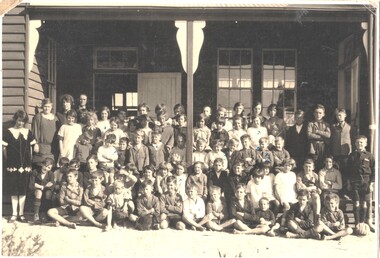
Photograph - Mitta Junction Township
... It included houses, private and government boarding houses, a shop, hall and school as well as tennis courts and a cricket pitch. Mitta Junction was a thriving community with many activities, including Balls and Euchre Nights, held at the Hall which opened in February 1922. ...It included houses, private and government boarding houses, a shop, hall and school as well as tennis courts and a cricket pitch. Mitta Junction was a thriving community with many activities, including Balls and Euchre Nights, held at the Hall which opened in February 1922. ...Mitta Junction which was established about 1920 on the Victorian side of the Hume Dam construction site (originally called the Mitta Junction Reservoir). The town was built to house workers and their families. It included houses, private and government boarding houses, a shop, hall and school as well as tennis courts and a cricket pitch. Mitta Junction was a thriving community with many activities, including Balls and Euchre Nights, held at the Hall which opened in February 1922. The community also fielded a very successful football team in the local competition. After the completion of the Dam, the village and all its contents were sold at auction in June 1936 for £7,000. Individual houses sold at about £40 for removal to nearby towns. The Mitta Junction School which opened in 1922 continued to operate with very small numbers after the village was moved. Its numbers were boosted in the early 1980s by the children of Army staff at the nearby Latchford Barracks Army Apprenticeship School. It finally closed in December 1985.These images are significant because they capture the history of an important vanished town whose residents played a vital role in the construction of the Hume Dam.A collection of black and white images and a sketch map featuring the village of Mitta Junction, built to house workers on the construction of the Hume Dam. Some of the photographs have been mounted on heavy card.mitta junction township, hume dam construction, hume dam history -
 Vision Australia
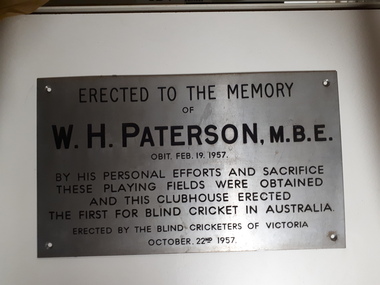
Photograph - Image, W.H. Paterson - Blind Cricketers of Australia, 1957
... When the Victorian Blind Cricket Association approached Mr Paterson for assistance in gaining access to a permanent cricket pitch upon which games could be played, it set in chain a series of events that remain in place today. ...When the Victorian Blind Cricket Association approached Mr Paterson for assistance in gaining access to a permanent cricket pitch upon which games could be played, it set in chain a series of events that remain in place today. ...When the Victorian Blind Cricket Association approached Mr Paterson for assistance in gaining access to a permanent cricket pitch upon which games could be played, it set in chain a series of events that remain in place today. Mr Paterson had been heavily involved in the formation of the Association for the Blind and saw this as a problem to be solved. Raising money through public donation and door knocking, Mr Paterson arranged the purchase of land on the banks of Gardiner's Creek, and adjacent to the tram and train lines. The land was raised, to avoid flooding, and a surface prepared. The sportsground was adjacent to the AAB, however due to the interest of Malvern Council in the land and knowing that the AAB at that time was in financial difficulties, a Trust was set up to handle the management with Mr Paterson, Mr Gould the Malvern Council Town Clerk and George Maxwell as trustees. A clubhouse was also needed to allow players to take shelter during matches and once again, Mr Paterson came to the rescue. Using their personal funds, Mr and Mrs Paterson loaned the Trust the monies required for the building. This plaque recognises the dedication and support that Mr Paterson gave to help establish the first blind cricket playing ground in Australia.Digital image of metal plaqueErected to the Memory of W.H. Paterson, M.B.E. Obit. Feb. 19 1957 By his personal efforts and sacrifice these playing fields were obtained and this clubhouse erected The first for blind cricket in Australia Erected by the Blind Cricketers of Victoria October 22nd 1957william paterson, victorian blind cricket association -
 Bendigo Historical Society Inc.
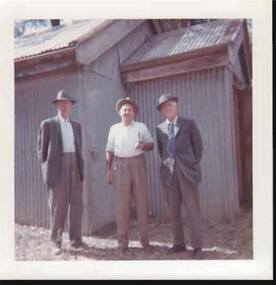
Photograph - MAGAZINE - BETWEEN BOTANICAL GARDENS AND SIMPSON'S ROAD
... A good metal road ran right to magazine ( gravel) In front of the magazine building is botanical gardens area ( between it and Simpsons Road ). A cricket pitch also in the area more to the rear of Fitzpatrick's Hotel. ...A good metal road ran right to magazine ( gravel) In front of the magazine building is botanical gardens area ( between it and Simpsons Road ). A cricket pitch also in the area more to the rear of Fitzpatrick's Hotel. ...Photo: Note on back of photo states Öutside the Magazine '- coloured photo of three men standing in front of corrugated iron shed. Description attached reads' all the explosives for the mines in this area were stored here. A formed track runs to the door with earthworks all around to guard against blast. A trolley ran from each building on a wooden track. Wheels were copper. Two buildings formed the magazine, one in front of the other. This was to store caps and other explosives. Inside the magazine are numerous racks. Externally buildings were provided with copper lighting arrestors, later removed by vandals. Still to be seen are tracks in asphalt where woollen ( wooden ? ) rails ran. A good metal road ran right to magazine ( gravel) In front of the magazine building is botanical gardens area ( between it and Simpsons Road ). A cricket pitch also in the area more to the rear of Fitzpatrick's Hotel. Eaglehawk's first golf course is said to be in this area. Magazine keepers house still stands next to McLelland ( water bailiff )eaglehawk, powder magazine, eaglehawk, powder magazine, magazine, simpsons road, botanical gardens. -
 Eltham District Historical Society Inc
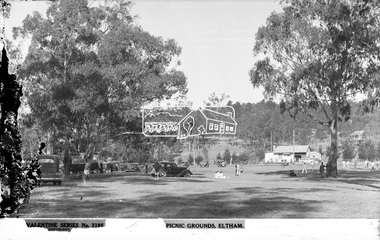
Photograph, The Rose Stereograph Company, Picnic Grounds. Eltham, Vic, c.1939
... In those days Eltham Park consisted of a single oval with a cricket pitch running north south in much the same position as today’s oval closest to Main Road. ...In those days Eltham Park consisted of a single oval with a cricket pitch running north south in much the same position as today’s oval closest to Main Road. ...View looking north parallel to present-day Hohnes Road in Eltham Park (Eltham Lower Park) towards the intersection of Old Eltham Road and Main Road. In those days Eltham Park consisted of a single oval with a cricket pitch running north south in much the same position as today’s oval closest to Main Road. An unsealed track ran around the perimeter of park, essentially bisecting today’ rear oval and horse paddock. Picnickers have pulled up in their cars and are enjoying a game of cricket being played on the oval. This glass plate negative was used to manufacture postcards (1:1 printing) for commercial sale by the Rose Stereograph Company and its subsidiaries. George Rose founded the Rose Stereograph Company in 1880 and was joined by Herbert (Bert) Cutts in the early 20th Century. The pair formed a lifetime working partnership and strong personal friendship. Assisted by George’s two sons, Herbert George and Walter, and later by Neil Cutts, the Rose Stereograph Company continued its operations for more than 140 years. The company was initially built on stereographs, but as cinema took over and stereographs fell out of fashion, the Rose Stereograph Company developed Australia’s first commercially viable photographic postcard business. Specialising in postcards of iconic historical moments and significant landmarks, The Rose Stereograph Company became a staple of the Australian travel industry.This remarkable collection of glass plate negatives, transparencies, and postcards – arguably Australia’s most significant photography collection outside of public hands – has been passed down through the generations, surviving war, relocation, and the harsh Victorian climate. The historic Rose Stereograph collection is the culmination of George Rose’s dream of capturing and preserving precious moments in time and remains the legacy of the Rose and Cutts families. It is with great sadness that the Cutts family says goodbye to a collection that spans five generations and 140 years. The Cutts family understands that for these historically important pieces to rest with one family is to deny others the pleasure of their custodianship.Glass Plate Negative Size: 9.2 x 13.9 cmPicnic Grounds, Eltham, Valentine Series No. 3195, Copyrighteltham lower park, cricket, cars, buildings, electricity lines, lower plenty, eltham, postcard, travel, picnic ground, rose stereograph company, valentine series postcard, glass plate negative, peter and elizabeth pidgeon collection -
 Sunshine and District Historical Society Incorporated
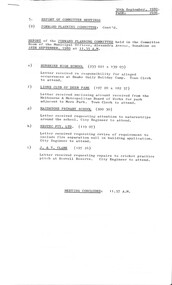
Administrative record - City of Sunshine - Commissioner Mr Alexander Alex George Gillon Collection 1976 - 1982 - Report of committee meetings 18th September 1980, City of Sunshine, 30th September 1980
... Report of Committee Meetings 18th September 1980 Report of the Forward Planning Committee Meeting Sunshine High School Snake Valley Holiday Camp Deer Park Lions Club Maidstone Primary School Naturestrips Neotec Pty Ltd Fire Separation Wall in Building Application Repairs to Cricket Practice Pitch Scovell Reserve ICI Oval Development Bon Thomas Reserve sprinklers Acquisition of Property 88 Station Road Removal of house South Road Intersection Beautification Main Road East and St. ...Albans Sunshine Swimming and Life Saving Club Report of Committee Meetings 18th September 1980 Report of the Forward Planning Committee Meeting Sunshine High School Snake Valley Holiday Camp Deer Park Lions Club Maidstone Primary School Naturestrips Neotec Pty Ltd Fire Separation Wall in Building Application Repairs to Cricket Practice Pitch Scovell Reserve ICI Oval Development Bon Thomas Reserve sprinklers Acquisition of Property 88 Station Road Removal of house South Road Intersection Beautification Main Road East and St. ...Report of Committee Meetings 18th September 1980 Report of the Forward Planning Committee Meeting Sunshine High School Snake Valley Holiday Camp Deer Park Lions Club Maidstone Primary School Naturestrips Neotec Pty Ltd Fire Separation Wall in Building Application Repairs to Cricket Practice Pitch Scovell Reserve ICI Oval Development Bon Thomas Reserve sprinklers Acquisition of Property 88 Station Road Removal of house South Road Intersection Beautification Main Road East and St. Albans Road Sunshine Swimming and Life Saving Clubsunshine high school, ballarat road, sunshine north, deer park lions club, maidstone primary school, scovell reserve, scovell crescent, maidstone, ici oval, john mcleod reserve, station road, south road, braybrook, main road east, st. albans road, st. albans, sunshine swimming and life saving club -
 Sunshine and District Historical Society Incorporated
Negative - Sunshine Technical School Negatives 1982 - 1984
... |Lee Cormack, 21/5/1984|Ski Trip, Jul. 1984|Cricket Pitch Lapping, 25/2/1984|Student/Teachers Display|New Guinea Display|Alice's Farewell|Uniform Day, 17/8/1984|Sunshine Technical School TAFE, 26/9/1984...|Lee Cormack, 21/5/1984|Ski Trip, Jul. 1984|Cricket Pitch Lapping, 25/2/1984|Student/Teachers Display|New Guinea Display|Alice's Farewell|Uniform Day, 17/8/1984|Sunshine Technical School TAFE, 26/9/1984 Negaitves from Sunshine Technical School and Marian College Negative Sunshine Technical School Negatives 1982 - 1984 ...Peter Gerrard Camp, 1983|Teacher Sloshing, 1983|Zoo Trip, 1983|Roller Skating, 1983|Year 7 Williamstown, 1983|"Fair Go" Week|Radio Club|Woodwork, 1982|Year 11 Media Band Recording, 1983|Studio Production Marian Collge|Alison's Year 11 English|Norm's Bird and Platypus|Mary and Cathy Swimming Sports, 10/3/1983|Class 8TB Camp, ?/11/?|Class 9RS Camp, 9/11/1982|Swimming Sports Wednesday PM Group, 10/3/1983|Footy Day|Year 8 Cricket|Year 11 Term 1 Gem Science, 1983|Year 10 Home for Aged Sunshine, 6/4/1983|Year 9 Zoo Trip, 20/4/1982|Class 7TB Camp, 22/4/1982|Class 9GS|End of Year, 1983|Year 8 Cherry Lake, Mar. 1984|M. Willaton Camp|Footy Match, 1984?|Lee Cormack, 21/5/1984|Ski Trip, Jul. 1984|Cricket Pitch Lapping, 25/2/1984|Student/Teachers Display|New Guinea Display|Alice's Farewell|Uniform Day, 17/8/1984|Sunshine Technical School TAFE, 26/9/1984sunshine technical school, technical school -
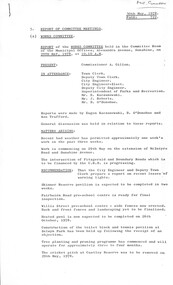 Sunshine and District Historical Society Incorporated
Administrative record - City of Sunshine - Commissioner Mr Alexander Alex George Gillon Collection 1976 - 1982 - Report of committee meetings 29th May 1978, City of Sunshine, 30th May 1978
... Report of Committee Meetings 29th May 1978 Report of the Works Committee Recent Bad Weather has Permitted Approximately Of Week's Work in the Past Three Weeks Work Is Commencing on 29th May 1978 on the Extension of McIntyre Road The Intersection of Fitzgerald Road and Boundary Road Which Is to be Financed by the C.R.B. is progressing Skinner Reserve Pavilion is expected to be completed in two weeks Fairbairn Pre-School Centre is ready for final inspection Willis Street Pre-School Centre Side Fences Installed and Front Fence and Landscaping yet to be Finalised Heated Pool is now expected to be completed 26th October 1978 Construction of the Toilet Block and Tennis Pavilion Delayed Due to Receipt of an Objection Tree Planting and pruning Programme commenced and will operate for three to four months The Cricket Pitch at Castley Reserve was removed on 29th May 1978 Turf Squares are to be used to provide instant lawn at Fairbairn Pre-School Centre & Willis Street Pre-School Centre Report of the Finance Committee Report of the Town Clerk Deputy Town Clerk Introduced and Explained the New Form of Reporting to the Committee City of Sunshine Financial Reports for the Period Ended 8th May 1978 City of Sunshine General Account The Hub Statement of Receipts and Payment for the Period Ended 8th May 1978 The Municipal Sunshine Tip Statement of Receipts and Payment for the Period Ended 8th May 1978 Report of the City Engineer Park Rangers Security Inspections Engineering Depot and Sunshine Tip...City of Sunshine Alexander "Alex" George Gillon Report of Committee Meetings 29th May 1978 Report of the Works Committee Recent Bad Weather has Permitted Approximately Of Week's Work in the Past Three Weeks Work Is Commencing on 29th May 1978 on the Extension of McIntyre Road The Intersection of Fitzgerald Road and Boundary Road Which Is to be Financed by the C.R.B. is progressing Skinner Reserve Pavilion is expected to be completed in two weeks Fairbairn Pre-School Centre is ready for final inspection Willis Street Pre-School Centre Side Fences Installed and Front Fence and Landscaping yet to be Finalised Heated Pool is now expected to be completed 26th October 1978 Construction of the Toilet Block and Tennis Pavilion Delayed Due to Receipt of an Objection Tree Planting and pruning Programme commenced and will operate for three to four months The Cricket Pitch at Castley Reserve was removed on 29th May 1978 Turf Squares are to be used to provide instant lawn at Fairbairn Pre-School Centre & Willis Street Pre-School Centre Report of the Finance Committee Report of the Town Clerk Deputy Town Clerk Introduced and Explained the New Form of Reporting to the Committee City of Sunshine Financial Reports for the Period Ended 8th May 1978 City of Sunshine General Account The Hub Statement of Receipts and Payment for the Period Ended 8th May 1978 The Municipal Sunshine Tip Statement of Receipts and Payment for the Period Ended 8th May 1978 Report of the City Engineer Park Rangers Security Inspections Engineering Depot and Sunshine Tip Foolscap sized document. ...Report of Committee Meetings 29th May 1978 Report of the Works Committee Recent Bad Weather has Permitted Approximately Of Week's Work in the Past Three Weeks Work Is Commencing on 29th May 1978 on the Extension of McIntyre Road The Intersection of Fitzgerald Road and Boundary Road Which Is to be Financed by the C.R.B. is progressing Skinner Reserve Pavilion is expected to be completed in two weeks Fairbairn Pre-School Centre is ready for final inspection Willis Street Pre-School Centre Side Fences Installed and Front Fence and Landscaping yet to be Finalised Heated Pool is now expected to be completed 26th October 1978 Construction of the Toilet Block and Tennis Pavilion Delayed Due to Receipt of an Objection Tree Planting and pruning Programme commenced and will operate for three to four months The Cricket Pitch at Castley Reserve was removed on 29th May 1978 Turf Squares are to be used to provide instant lawn at Fairbairn Pre-School Centre & Willis Street Pre-School Centre Report of the Finance Committee Report of the Town Clerk Deputy Town Clerk Introduced and Explained the New Form of Reporting to the Committee City of Sunshine Financial Reports for the Period Ended 8th May 1978 City of Sunshine General Account The Hub Statement of Receipts and Payment for the Period Ended 8th May 1978 The Municipal Sunshine Tip Statement of Receipts and Payment for the Period Ended 8th May 1978 Report of the City Engineer Park Rangers Security Inspections Engineering Depot and Sunshine Tip city of sunshine, alexander "alex" george gillon -
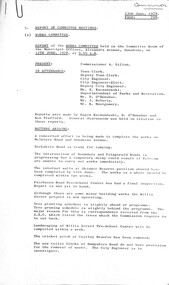 Sunshine and District Historical Society Incorporated
Administrative record - City of Sunshine - Commissioner Mr Alexander Alex George Gillon Collection 1976 - 1982 - Report of Committee Meetings 12th June 1978, City of Sunshine, 13th June 1978
... Report of Committee Meetings 12th June 1978 Works Committee Concerted Effort to Complete Works McIntyre Road and Sunshine Avenue Berkshire Road Ready for Tamping Boundary Road and Fitzgerald Road by Possible Temporary Delay Skinner Reserve Internal Walls Soon to be Completed Fairbairn Road Pre-School Centre Final Inspection Willis Street Pre-School Centre Operating Tree Planting Schedule Slightly Ahead of Programm Willis Street Pre-School Centre Landscaping to be Completed Within a Week Cricket Pitch at Castley Reserve has been Removed New Toilet Blocks at Hampshire Road do not have provision for the removal of waste. ...Albans Road Main Road East East Esplanade Errington Reserve Robert Bruce Reserve Station Road Deer Park Scovell Reserve Scovell Crescent Maidstone Junior Sporting Club Van Ness Avenue Maribyrnong Bon Thomas Reserve Quinn Street Diamond Reserve Diamond Avenue Albanvale Orama Street Highpoint West Rosamond Road Report of Committee Meetings 12th June 1978 Works Committee Concerted Effort to Complete Works McIntyre Road and Sunshine Avenue Berkshire Road Ready for Tamping Boundary Road and Fitzgerald Road by Possible Temporary Delay Skinner Reserve Internal Walls Soon to be Completed Fairbairn Road Pre-School Centre Final Inspection Willis Street Pre-School Centre Operating Tree Planting Schedule Slightly Ahead of Programm Willis Street Pre-School Centre Landscaping to be Completed Within a Week Cricket Pitch at Castley Reserve has been Removed New Toilet Blocks at Hampshire Road do not have provision for the removal of waste. ...Report of Committee Meetings 12th June 1978 Works Committee Concerted Effort to Complete Works McIntyre Road and Sunshine Avenue Berkshire Road Ready for Tamping Boundary Road and Fitzgerald Road by Possible Temporary Delay Skinner Reserve Internal Walls Soon to be Completed Fairbairn Road Pre-School Centre Final Inspection Willis Street Pre-School Centre Operating Tree Planting Schedule Slightly Ahead of Programm Willis Street Pre-School Centre Landscaping to be Completed Within a Week Cricket Pitch at Castley Reserve has been Removed New Toilet Blocks at Hampshire Road do not have provision for the removal of waste. Withers Street Playground Equipment Needs Attention and Alternative Location to be Investigated Dempster Park Toilets Complaints Kororoit Creek Tree Planting Hole Dug at Jones Creek by M.M.B.W. Losses of Warning Lights Report of the City Librarian Second Bookmobile Report of the City Engineer Somerville Road Outfall Drain Proposed Intersection Signals St. Albans Road / Main Road East / East Esplanade Relocation of Steel Framed Steel Clad Sheds to Errington Reserve and Robert Bruce Reserve Toilet Blocks Various Reserves Scovell Reserve Proposal by Maidstone Junior Sporting Club to Construct a Recreation Hall Report of the Acting Building Surveyor Dangerous and Ruinous Building Van Ness Avenue (Former Rock Crushing Plant) Report of the Director Parks & Recreation House McKay Gardens Demolition Extraordinary Business Child Care Buildings Bon Thomas Reserve, Diamond Reserve, Orama Street & Highpoint West city of sunshine, alexander "alex" george gillon, mcintyre road, sunshine avenue, sunshine north, berkshire road, sunshine, boundary road, fitzgerald road, brooklyn, skinner reserve, churchill avenue, braybrook, fairbairn road pre-school centre, willis street pre-school centre, willis street, castley reserve, simmie street, sunshine west, hampshire road, withers street, dempster park, phoenix street, kororoit creek, jones creek, somerville road, st. albans road, main road east, east esplanade, errington reserve, robert bruce reserve, station road, deer park, scovell reserve, scovell crescent, maidstone junior sporting club, van ness avenue, maribyrnong, bon thomas reserve, quinn street, diamond reserve, diamond avenue, albanvale, orama street, highpoint west, rosamond road
