
Showing 1064 items matching "early horses"
-
 Kiewa Valley Historical Society
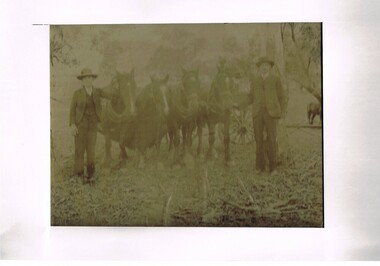
Photograph (Digital) Harnessing Horses, Harnessing Working Horses early 1900, early 1900s
... Harnessing Working Horses early 1900...This copy of an original photograph created in the early 1900s details the "horse and cart" era when the normal transportation of the day was, in this rural setting, exclusively by horse and cart. ...Harnessing Working Horses early 1900 Photograph (Digital) Harnessing Horses Cooper family ...This copy of an original photograph created in the early 1900s details the "horse and cart" era when the normal transportation of the day was, in this rural setting, exclusively by horse and cart. The importance of this particular photograph to the subjects can be seen by the formal suits worn by both subjects.The natural bush and grassed backdrop have not been "touched up". The dray behind the horses is barely visible (fog like aperture). The lad , John Cooper was 14 years old when this photograph was taken. Both were in the process of harnessing four horses to "hook up" on the dray behind them. From their attire it looks like a trip to town or "the church".This photograph of life on a rural property in the early 1900 shows the rough and hard (physically) life in rural areas before great mechanical revolution/evolution post World War II. This was a time in the Kiewa Valley when most transportation was by horse drawn carriages and transportation routes where dirt roads with potholes. The significance of a local pioneer "family" encapsulated by this photograph cannot be reproduced as effectively in any other form. This digitised scanned copy of an original photograph of four work horses is on 200gms Fujicolor (Fujifilm) Crystal Archive paper has a silver side on which the image has been printed and a matt reverse side.The darker slightly "blurred" image has had a white frame placed over it at the time of encapsulation to provide the finished photo with a frame. This method highlights and focuses the view into the photograph. It is a clever way to permit the eyes to focus into the image to give it a greater third dimensional aspect. on the reverse side hand written(in pencil) "John Cooper & Paddy Cullen (itinerant worker) on grandfathers place (opposite Nesta Drews place) (orange Grove). "Grandfather emigrated from England with Ryders""orange grove " property, early tawonga life style, john cooper, paddy cullen, harnessing working horses -
 Kiewa Valley Historical Society
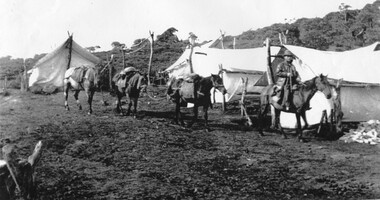
Photographs and copies of photographs of the pack horses and early horsemen who transported supplies to outposts in the Bogong High Plains, via cattle tracks before access roads were made
... Photographs and copies of photographs of the pack horses and early horsemen who transported supplies to outposts in the Bogong High Plains, via cattle tracks before access roads were made....early stages of the Kiewa Hydro Electric System for the SECV in the Bogong High Plains. Before any roads were built, the old cattleman’s tracks were used with packhorses to deliver supplies, wages and mail and collect timesheets and correspondence from the workmen and dam builders living in canvas tents and at the outlying survey posts. The trip up the mountain was long and hard and dangerous for both horse...: Set of 21 black and white photographs and copies of photographs depicting the pack horses and the men who handled them, transporting supplies and correspondence to the outlying camps and survey posts in the Bogong High Plains, via the rough cattlemen’s tracks. Photographs also show the early...Some photos enlarged to A3 poster size for display Photographs and copies of photographs of the pack horses and early horsemen who transported supplies to outposts in the Bogong High Plains, via cattle tracks before access roads were made. ...In the mid to late 1930’s survey outposts were established to plot the early stages of the Kiewa Hydro Electric System for the SECV in the Bogong High Plains. Before any roads were built, the old cattleman’s tracks were used with packhorses to deliver supplies, wages and mail and collect timesheets and correspondence from the workmen and dam builders living in canvas tents and at the outlying survey posts. The trip up the mountain was long and hard and dangerous for both horse and man Most of the men of the survey teams were not bush-men and were often ill equipped for the harsh weather and living conditions of bush camping, often arriving in their city clothes ready for work. The tent city at Bogong was destroyed by bush fires in 1939 after which an access road was built from Mt Beauty to transport building materials for more permanent dwellings for workmen. Pack horses continued to be used for transporting goods etc. to workers further up the mountain.Without the work of horsemen and their pack horses providing supplies and communications for outlying outposts, surveying and early planning for the Kiewa Valley Hydro Electric scheme could not have gone ahead and the dams and power stations which support the system could not have been constructed. The Hydro-electric scheme, and the workers who planned and built it play a major part in the early history of the Kiewa Valley and many original families still remain living, or have ties with the local area.: Set of 21 black and white photographs and copies of photographs depicting the pack horses and the men who handled them, transporting supplies and correspondence to the outlying camps and survey posts in the Bogong High Plains, via the rough cattlemen’s tracks. Photographs also show the early tent camps of the workers. Some photos mounted on A4 white paper. Some photos enlarged to A3 poster size for display1. Handwritten on back – Max Lawrence 2. -8 No inscriptions 9. Handwritten on back- Packing in supplies for early workers of the Kiewa Hydro scheme. There were no roads in the early days of the scheme 10. Printed on bottom of photo- Roper’s cattle on road below Howman’s Gap 11. Handwritten on back – Roper’s et al about to leave for the high plains 12. Printed under photo- Syd Ryder at the Pretty Valley Cut-Out (JBR) 13-16. No markings 17. Printed under photo- Gwen Talbot visits the Camp area. 1937 18. Handwritten on back- 14/1 Barbara Talbot 19. No markings 20-21. No markings 22. Printed under photo- STATE ELECTRICITY COMMISSION OF VICTORIA. Date: 15-3-45 Time: 8.0pm No: K 1838 Kiewa Hydro-Electric Works, Investigations 1944-1945 – Survey Camp at Young’s Hut pack horses; bogong high plains; survey posts; supplies delivery -
 Ballaarat Mechanics' Institute (BMI Ballarat)
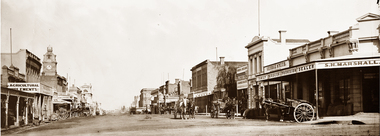
Looking South down Armstrong st from Mair St
... early...horses...Ballarat Armstrong st looking south early horses Town Hall Looking South down Armstrong st from Mair St ...This photograph is from the Max Harris Collection held by the Ballaraat Mechanics' Institute. Please contact BMI for all print and usage inquiries.ballarat, armstrong st, looking south, early, horses, town hall -
 Canterbury History Group
Article - Canterbury's oldest living resident, Canterbury Courier, 18/05/1949
... ...Early horses...The Late Mr William Griffiths, blacksmith Miss Alice Camm Canterbury Courier Robertsons Butrcher Redmans Bakery Early horses Crosbie Morrison Margaret Street Typed article with black and white photography Article Canterbury's oldest living resident Canterbury Courier ...The Late Mr William Griffiths, blacksmithTyped article with black and white photographymiss alice camm, canterbury courier, robertsons butrcher, redmans bakery, early horses, crosbie morrison, margaret street -
 Ballarat Heritage Services
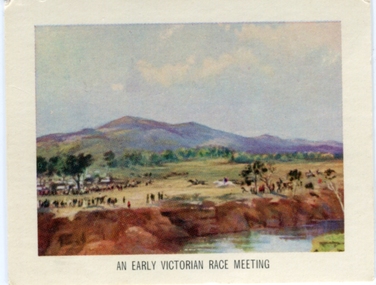
Image - Colour, An Early Victorian Race Meeting
... Colour cigerette card depictingan early horse racing meeting.....race meeting horse racing Colour cigerette card depictingan early horse racing meeting.. An Early Victorian Race Meeting Image - Colour ...Colour cigerette card depictingan early horse racing meeting..race meeting, horse racing -
 Bendigo Historical Society Inc.
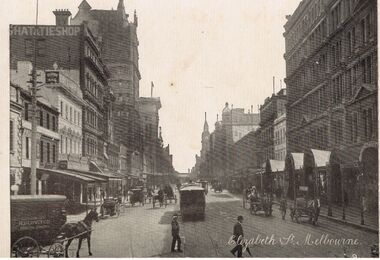
Postcard - POSTCARD BLACK AND WHITE: ELIZABETH STREET MELBOURNE EARLY 1900'S
... ELIZABETH STREET MELBOURNE EARLY 1900'S Elizabeth St Melbourne early 1900's horses and carts and cable trams / looking from Flinders st towards the GPO...POSTCARD black and white photo ELIZABETH STREET MELBOURNE EARLY 1900'S Elizabeth St Melbourne early 1900's horses and carts and cable trams / looking from Flinders st towards the GPO / addressed to miss D Ashley...POSTCARD Photograph various themes ELIZABETH STREET MELBOURNE EARLY 1900'S Elizabeth St Melbourne early 1900's horses and carts and cable trams / looking from Flinders st towards the GPO POSTCARD black and white photo ELIZABETH STREET MELBOURNE EARLY 1900'S Elizabeth St Melbourne early 1900's horses and carts and cable trams / looking from Flinders st towards the GPO / addressed to miss D Ashley Postcard POSTCARD BLACK AND WHITE: ELIZABETH STREET MELBOURNE EARLY 1900'S ...POSTCARD black and white photo ELIZABETH STREET MELBOURNE EARLY 1900'S Elizabeth St Melbourne early 1900's horses and carts and cable trams / looking from Flinders st towards the GPO / addressed to miss D Ashleypostcard, photograph, various themes, elizabeth street melbourne early 1900's elizabeth st melbourne early 1900's horses and carts and cable trams / looking from flinders st towards the gpo -
 Mont De Lancey
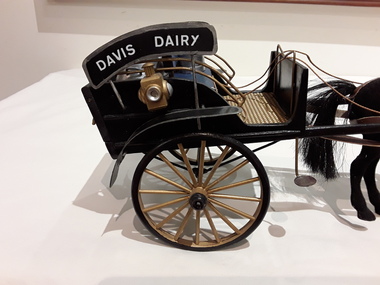
Decorative object - Horse Dairy Buggy Model, Chas W Davis
... ...Horse drawn vehicles...Toy horses...Early...This model of a horse drawn Dairy Cart replicates the vehicle that enjoyed respect from the public during the 1880 and early 1900's. ...Replicas Models Scale models Vehicles Carriages Horse drawn vehicles Toy horses Early Commercial Vehicles Milk Cart DAVIS DAIRY painted in white lettering on each side of the cart. ...The collection of thirteen model horse drawn vehicles were carefully handmade by Mr Chas W Davis 1925 - 2002. He was a talented artist and saw doctor. This model of a horse drawn Dairy Cart replicates the vehicle that enjoyed respect from the public during the 1880 and early 1900's. A model of a horse drawn black open Davis Dairy Buggy or Cart which is a lightweight two wheeled one passenger open horse drawn carriage where the driver sits behind. It has two large gold painted spoked wheels with black rims and mudguards, blue painted seating and gold painted armrests, two gold coach lamps and gold patterned footrest in front of the driver. At the rear are three silver milk cans with two taps to dispense the milk. There are two long brown wooden shafts on each side to surround the horse. It has a model of a brown coloured horse with a black tail and mane, which has the necessary horse tack for carriage use to help the driver communicate with the horse. These carrier carts or vans were two wheeled medium weight Commercial Vehicles.DAVIS DAIRY painted in white lettering on each side of the cart.replicas, models, scale models, vehicles, carriages, horse drawn vehicles, toy horses, early commercial vehicles, milk cart -
 Mont De Lancey
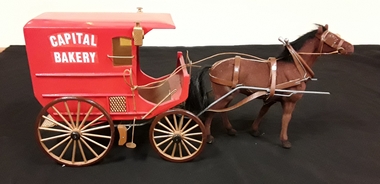
Decorative object - Baker's Cart Model, Chas W Davis
... ...Horse drawn vehicles...Toy horses...Early...This model of a horse drawn Baker's Cart replicates the vehicle that enjoyed respect from the public during the 1880 and early 1900's. ...Replicas Models Scale models Vehicles Carriages Horse drawn vehicles Toy horses Early Commercial Vehicles Bread Cart CAPITAL BAKERY is painted in white lettering on each side of the cart. ...The collection of thirteen model horse drawn vehicles were carefully handmade by Mr Chas W Davis 1925 - 2002. He was a talented artist and saw doctor. This model of a horse drawn Baker's Cart replicates the vehicle that enjoyed respect from the public during the 1880 and early 1900's. A model of a single horse drawn red enclosed Capital Bakery Cart which is a lightweight four wheeled one passenger horse drawn carriage where the driver sits behind. It has two large and two smaller gold painted spoked wheels with brown rims, grey and black painted seating two gold coach lamps and a sloped red and tan footrest for the driver. There is a brake lever on the right side of the cart which activates the brake on the back wheel. At the rear are two ventilated gold doors and cupboards underneath the seat. There are two silver metal tubular shafts on each side to surround the brown horse which has a black tail and mane. It has the necessary horse tack for cart use to help the driver communicate with the horse. These carrier carts or vans were four wheeled medium weight Commercial Vehicles which were a very familiar sight in the horse drawn era. Every kid 'whipped behind' bread carts. The first models were imported from England around 1870 and later the local coachworks built many models. The biggest producer was Flood in St Kilda Road until 1926.CAPITAL BAKERY is painted in white lettering on each side of the cart.replicas, models, scale models, vehicles, carriages, horse drawn vehicles, toy horses, early commercial vehicles, bread cart -
 Lake Bolac & District Historical Society
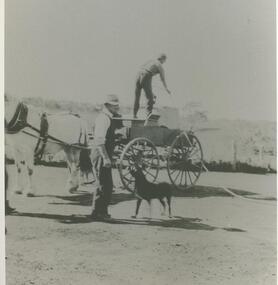
Black and white photograph, Fire-fighting Equipment, circa 1910
... Early horse-drawn fire-fighting cart with hand pump at "Eilyer", Austin's property at Lake Bolac, circa 1910....Early horse-drawn fire-fighting cart with hand pump at "Eilyer", Austin's property at Lake Bolac, circa 1910. ...Early horse-drawn fire-fighting cart with hand pump at "Eilyer", Austin's property at Lake Bolac, circa 1910.lake bolac, "eilyer", fire-fighting equipment, austin -
 Melbourne Tram Museum
Magazine, Glen Eira Historical Society, "Glen Eira Historical Society Newsletter", 2015
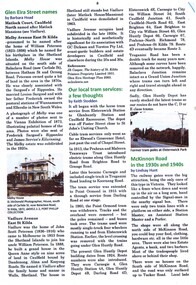
... Parts of the Glen Eira Historical Society Newsletter" for an issue during 2015 containing an item written by Keith Stodden, titled "Our local tram services: a few thoughts" covering early horse tram services, cable trams, PMTT, Point Ormond, Glen Huntly depot, Elsternwick, routes and Truganini Road. ...Trams tramways Caulfield Horse Trams Glen Eira Glenhuntly Tram Depot Point Ormond Tram Routes PMTT Truganini Rd Parts of the Glen Eira Historical Society Newsletter" for an issue during 2015 containing an item written by Keith Stodden, titled "Our local tram services: a few thoughts" covering early horse tram services, cable trams, PMTT, Point Ormond, Glen Huntly depot, Elsternwick, routes and Truganini Road. ...Parts of the Glen Eira Historical Society Newsletter" for an issue during 2015 containing an item written by Keith Stodden, titled "Our local tram services: a few thoughts" covering early horse tram services, cable trams, PMTT, Point Ormond, Glen Huntly depot, Elsternwick, routes and Truganini Road. Has a photo showing the former tramway poles at Elsternwick Park.trams, tramways, caulfield, horse trams, glen eira, glenhuntly tram depot, point ormond, tram routes, pmtt, truganini rd -
 City of Moorabbin Historical Society (Operating the Box Cottage Museum)
Tool - Farm Machinery, Horse-drawn Plough Potato Digger, c1900
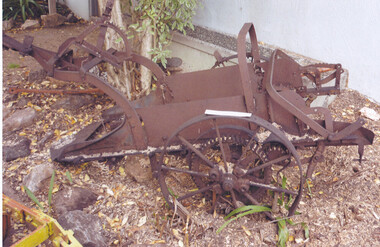
... Circa late 1800s early 1900s a horse-drawn plough, potato digger, is one example of the implements that were widely used by early market gardeners in the Shire of Moorabbin. ...Circa late 1800s early 1900s. A horse-drawn plough potato digger is an example of the machines used by early market gardeners in Moorabbin Shire...Circa late 1800s early 1900s a horse-drawn plough, potato digger, is one example of the implements that were widely used by early market gardeners in the Shire of Moorabbin. ...Circa late 1800s early 1900s a horse-drawn plough, potato digger, is one example of the implements that were widely used by early market gardeners in the Shire of Moorabbin. The flat plate, seen to the right of the photo, dug down into the ground below the potatoes and "scooped" them up. Behind the plate, two driving chains on cogs, (these chains are missing from our exhibit), then "rocked' the dug potatoes to loosen the soil from the "spuds". The potatoes were then harvested by hand. Very large tracts of land in the Shire of Moorabbin were planted with potatoes. Harvesting commenced in October, into November and on into December. Potatoes were a necessary food staple. The market gardeners were always in a rush to be first to get their potatoes to market, and hence the best price. Some market gardeners were so keen to be the first to market, (and get the most money), that they dug their potatoes "green" (or new). The only downside of this practice was that these early potatoes had to be handled with extreme care as their skins were very loose, and came off easily - so decreasing their profits.As well as taking their produce to the Melbourne and St Kilda markets, they also sent produce off to Sydney markets. It is interesting to note that a group of Chinese market gardeners were the first to access the Sydney market. .Following the 'Dendy's Special Survey' 1841 and the Crown Land Sale of 1852, land allotments were sold to pioneer settlers who established market gardens in the area of Moorabbin Shire. During the 1850s gold-rush population boom the number of market gardeners increased significantly spreading throughout the Moorabbin Shire. Potatoes were considered a staple foodstuff, so crops were regularly sown throughout the whole Moorabbin area. Circa late 1800s early 1900s. A horse-drawn plough potato digger is an example of the machines used by early market gardeners in Moorabbin Shiremelbourne, sydney, markets, vegetables, potato, dendy henry, st kilda, market gardeners, gold rush, moorabin, chinese gardeners, ploughs -
 Melbourne Tram Museum
Document - Radio Transcript, Melbourne & Metropolitan Tramways Board (MMTB), "Wireless Report -- Mr. J. D. Barton Staff Officer MMTB", late 1920's
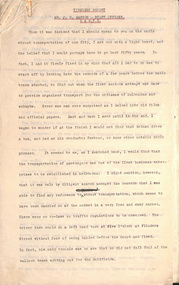
... Looks at the history of public transport in Melbourne, in particular early transport problems, crossing the Yarra, the formation of the Melbourne Omnibus Co, the directors, early horse buses, the formation of the Melbourne Tramway and Omnibus Co and running issues with some stories. ... transport problems, crossing the Yarra, the formation of the Melbourne Omnibus Co, the directors, early horse buses, the formation of the Melbourne Tramway and Omnibus Co and running issues with some stories. ...Radio Transcript or script, 13 foolscap typed pages, double spaced titled "Wireless Report -- Mr. J. D. Barton Staff Officer MMTB". Looks at the history of public transport in Melbourne, in particular early transport problems, crossing the Yarra, the formation of the Melbourne Omnibus Co, the directors, early horse buses, the formation of the Melbourne Tramway and Omnibus Co and running issues with some stories. Item noted dated, presumed late 1920's.trams, tramways, public transport, radio stations, horse buses, mto co, melbourne, cable trams -
 Phillip Island and District Historical Society Inc.
Photograph, early 1900's
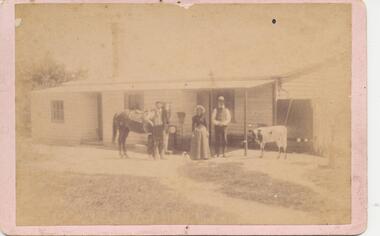
... Three people standing outside early dwelling. Horse, cow and dog in photo....Three people standing outside early dwelling. Horse, cow and dog in photo. group photograph early dwelling Photograph of group of 3 people in front of farmhouse? ...Three people standing outside early dwelling. Horse, cow and dog in photo.Photograph of group of 3 people in front of farmhouse? with a horse, dog and cow. Very tall Chimney.group photograph, early dwelling -
 Numurkah & District Historical Society
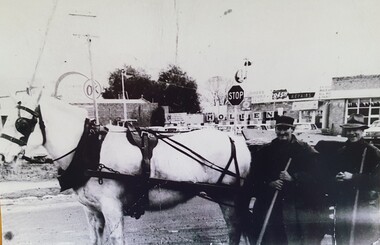
Photograph - Photo-Street cleaners, 1970's
... Horse & Cart was used by Council Workers up until the early 1970's to clean street gutters....B&W photo of Shire cleaners with horse & cart, early 1970's. On the back: names of the two council workers...Horse & Cart was used by Council Workers up until the early 1970's to clean street gutters. horse, cart, shire workers, street cleaners, 1970's, photo see photo B&W photo of Shire cleaners with horse & cart, early 1970's. ...Horse & Cart was used by Council Workers up until the early 1970's to clean street gutters.B&W photo of Shire cleaners with horse & cart, early 1970's. On the back: names of the two council workerssee photohorse, cart, shire workers, street cleaners, 1970's, photo -
 City of Moorabbin Historical Society (Operating the Box Cottage Museum)
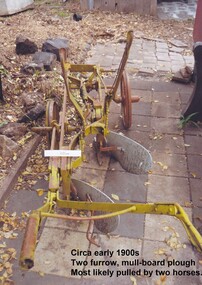
Tool - Farm Machinery, Horse-drawn Furrow Plough, Early 20th Century
... Late 1800s-early 1900s A horse-drawn furrow plough is an example of the type of farm implement widely used by pioneer market gardeners in the Moorabbin Shire following 'Dendy's Special Survey' of 1841 and the Crown Land Sale in 1852. ...Circa late 1800's to early 1900s. A horse-drawn furrow plough was the most common type of agricultural implement used by the pioneers of the 1800s and continued on into the 1940s when motorised tractors came into use. ...Late 1800s-early 1900s A horse-drawn furrow plough is an example of the type of farm implement widely used by pioneer market gardeners in the Moorabbin Shire following 'Dendy's Special Survey' of 1841 and the Crown Land Sale in 1852. ...Late 1800s-early 1900s A horse-drawn furrow plough is an example of the type of farm implement widely used by pioneer market gardeners in the Moorabbin Shire following 'Dendy's Special Survey' of 1841 and the Crown Land Sale in 1852. Land allotments were bought by pioneer settlers who established or rented allotments for market gardens in the area. They supplied produce to the markets in St Kilda and Melbourne. During the gold-rush of the 1850s the rapidly increasing population of Melbourne saw a huge demand and a rise in prices for all foodstuffs, including the vegetables and fruit grown in the Shire of Moorabbin. This heralded a time of prosperity for market gardeners, and an equally rapid expansion of the numbers of vegetable and produce growers in the area. The 'knock-on effect" resulted in an increased interest and development of the community in the Shire of Moorabbin.Following 'Dendy's Special Survey' of 1841 and the Crown Land Sale in 1852, land allotments were bought by pioneer settlers who established or rented allotments for market gardens in the area and they supplied produce to the markets in St Kilda and Melbourne. During the gold-rush of the 1850s the rapidly increasing population of Melbourne saw a huge demand and a rise in prices for all foodstuffs, including the vegetables and fruit grown in the Shire of Moorabbin. Circa late 1800's to early 1900s. A horse-drawn furrow plough was the most common type of agricultural implement used by the pioneers of the 1800s and continued on into the 1940s when motorised tractors came into use. This plough is an example of a two furrow, mullboard plough which would most likely have been pulled by two horses. The long handle was used to lower the silver plates, (mullboards), to the chosen depth of soil. Painted yellow. Although this Box Cottage museum plough is unbranded, the most widely used plough in the Shire of Moorabbin was made by Oliver. This plough appears to be identical to that brand. brighton, moorabbin, pioneers, fruit, bentleigh, vineyards, vegetables, plough, market gardens, plow -
 Trafalgar Holden Museum
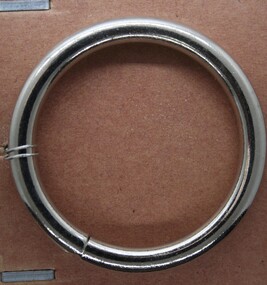
Accessory - Steel ring bright steel
... used on Horse tackle during the late 1800's and early 1900's on horse equipment...used on Horse tackle during the late 1800's and early 1900's on horse equipment Imported and used in manufacture by Holden and Frost Equine Agricultural Civilian Military Ca1900 Ring Nickle plated steel ring used on Horse accessories by Holden and Frost Accessory Steel ring bright steel ...used on Horse tackle during the late 1800's and early 1900's on horse equipmentImported and used in manufacture by Holden and FrostNickle plated steel ring used on Horse accessories by Holden and Frostequine agricultural, civilian, military ca1900, ring -
 Orbost & District Historical Society
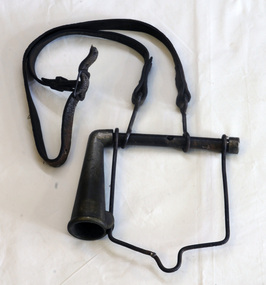
horse drencher, Early 20th century- 1950
... This early draught-horse drenching bit was used by the early vets to administer paraffin oil and perhaps castor oil or epsom salts to a colicky horse. ...This early draught-horse drenching bit was used by the early vets to administer paraffin oil and perhaps castor oil or epsom salts to a colicky horse. ...This early draught-horse drenching bit was used by the early vets to administer paraffin oil and perhaps castor oil or epsom salts to a colicky horse. The bit was fitted to the horses mouth like a normal bit. A rope attached to the top of the bit pulled the head of the horse up. The drench was tipped into the funnel.This trickled through the hollow bit and down the throat of the horse. In the 1950's and beyond vets used a stomach tube, passed via the horse's nostril to administer drenches, which was much more effective and safe. This procedure spelt the end of drenching bits which are now only museum pieces.A brass horse drencher. It has a leather strap with a brass funnel. This one was probably used for larger horses.7668 Denyer ECLIPSEdrench horses denyer transport -
 Stawell Historical Society Inc
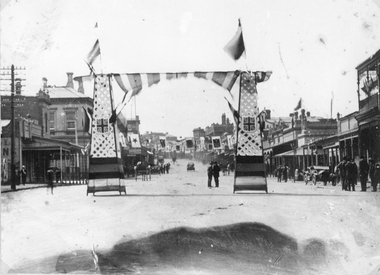
Photograph, Main Street Stawell Celebrations for an unknown occasion 1900-1910
... Main Street Celebrations for unknown occasion . Early model cars and horse drawn transport possibly 1900-1910....Main Street Celebrations for unknown occasion . Early model cars and horse drawn transport possibly 1900-1910. ...Main Street Celebrations for unknown occasion . Early model cars and horse drawn transport possibly 1900-1910.stawell streetscape -
 Clunes Museum
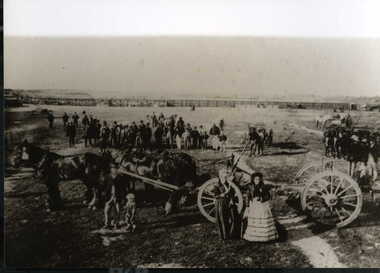
Photograph
... SEPIA PHOTOCOPY OF VERY EARLY CLUNES SHOW - DRAUGHT HORSES PULLING A FOUR WHEELED VEHICLE. ...JOHN PHILLIPS WAS MAYOR OF BOROUGH 1892 - 93. 1902 - 03 1906 - 07 1913 - 14 1918 - 19. photographs events and celebrations clunes show SEPIA PHOTOCOPY OF VERY EARLY CLUNES SHOW - DRAUGHT HORSES PULLING A FOUR WHEELED VEHICLE. ...EARLY PHOTOGRAPH OF CLUNES SHOW. CLUNES AGRICULTURAL SHOW C1875 SHOWING JOHN FRANCIS PHILLIPS AND PROBABLY SON JOHN FRANCIS PHILLIPS. JOHN PHILLIPS WAS MAYOR OF BOROUGH 1892 - 93. 1902 - 03 1906 - 07 1913 - 14 1918 - 19.SEPIA PHOTOCOPY OF VERY EARLY CLUNES SHOW - DRAUGHT HORSES PULLING A FOUR WHEELED VEHICLE. TWO LADIES IN FOREGROUND, MAN AND SMALL BOY ALSO IN FOREGROUND IN EARLY COSTUMES, MANY PEOPLE IN BACKGROUND.photographs, events and celebrations, clunes show -
 City of Moorabbin Historical Society (Operating the Box Cottage Museum)
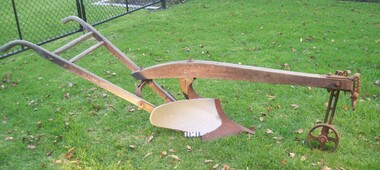
Machine - Farm Machinery, Plough, single mull-board, c1900
... Circa late 1800's to early 1900s. A horse-drawn furrow plough was the most common type of agricultural implement used by the pioneer market gardeners, in Moorabbin Shire, of the 1800s and continued on into the 1940s when motorised tractors came into use. ...Circa late 1800's to early 1900s. A horse-drawn furrow plough was the most common type of agricultural implement used by the pioneer market gardeners, in Moorabbin Shire, of the 1800s and continued on into the 1940s when motorised tractors came into use. ...Circa late 1800's to early 1900s. A horse-drawn furrow plough was the most common type of agricultural implement used by the pioneer market gardeners, in Moorabbin Shire, of the 1800s and continued on into the 1940s when motorised tractors came into use. This plough is an example of a single-mullboard plough which would have been pulled by horse. The long handle was used to lower the silver plate, (mullboard), to the chosen depth of soil. Following 'Dendy's Special Survey' of 1841 and the Crown Land Sale in 1852, land allotments were bought by pioneer settlers who established or rented allotments for market gardens in the area and they supplied produce to the markets in St Kilda and Melbourne. During the gold-rush of the 1850s the rapidly increasing population of Melbourne saw a huge demand and a rise in prices for all foodstuffs, including the vegetables and fruit grown in the Shire of Moorabbin. An "Oliver" single mull-board plough in good condition with faded manufactures markings on shaftsPainted on shaft "MANF'D BY/OLIVER CHILLED PLOW WORKS/Southend Ind. USA/" Engraved on blade " 13 OLIVER"brighton, moorabbin, plough, dendy henry, east bentleigh, market gardens, horse drawn plough, plow, mullboard -
 Wycheproof & District Historical Society Inc.
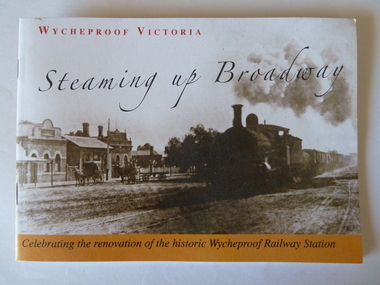
Railway Booklet, Steaming Up Broadway, 31/10/2010
... Sepia front cover photo depicts steam train hauling rail trucks up Broadway, Wycheproof, with early buildings and horse- drawn carriages showing. Back cover: Wycheproof Railway Station in its early beginnings - undated. ...Sepia front cover photo depicts steam train hauling rail trucks up Broadway, Wycheproof, with early buildings and horse- drawn carriages showing. Back cover: Wycheproof Railway Station in its early beginnings - undated. ...Celebrating 125 years of Railway in WycheproofThe 28-09-1883 was a memorable date for Wycheproof for on that day the long-awaited official opening of the railway took place. It has been serving the district since then. In this booklet individual rail workers are acknowledged in a listing.Booklet of 14 pages - size A5. Sepia front cover photo depicts steam train hauling rail trucks up Broadway, Wycheproof, with early buildings and horse- drawn carriages showing. Back cover: Wycheproof Railway Station in its early beginnings - undated. Booklet celebrates the renovation of the historic Wycheproof Railway Station and 125 Years of Rail in Wycheproof. Chapters include: The Early Days, The Arrival of Rail, The New Century, Bulk Wheat and Million Bushell Silos, Railway Families and Workers, The Last Chapter , A new Era Begins. rail-wycheproof, bulk-wheat, railway-workers, station-renovation, steam-train -
 Eltham District Historical Society Inc
Film - Video (VHS), Dynavision Video Production, 1994 Eltham Festival, 11 Nov 1994
... The Grand Parade focussing on the theme "Echoes of Eltham - Celebrating the visions of Eltrham from the past and into the future" was headed by Jock Read on his horse Lofty who had been filmed in an Anzac Day Parade on an earlier horse which had featured in the television show Matlock. ...The Grand Parade focussing on the theme "Echoes of Eltham - Celebrating the visions of Eltrham from the past and into the future" was headed by Jock Read on his horse Lofty who had been filmed in an Anzac Day Parade on an earlier horse which had featured in the television show Matlock. ...20th Eltham Community Festival and last under the auspices of the Shire of Eltham. The Grand Parade focussing on the theme "Echoes of Eltham - Celebrating the visions of Eltrham from the past and into the future" was headed by Jock Read on his horse Lofty who had been filmed in an Anzac Day Parade on an earlier horse which had featured in the television show Matlock. The parade travelled north along Main Street to just past the Post Office then back south to Panther Place. Parade participants included 1st Eltham Brownies, 1st Eltham Venturers, 2nd Eltham Sea Scouts, 2nd Eltham Venturers, 3rd Eltham Brownies, Australian Democrats, Briar Hill Primary School, Circus Chaos, Country Fire Authority, Diamond Valley People for Disarmament, Diamond Valley Railway, Eltham Community Health Centre, Eltham District Horse and Pony Club, Eltham East Primary School, Eltham Fire Brigade, Eltham Junior Football Club (Panthers), Eltham Little Theatre, Eltham North Primary School, Eltham Playhouse Co-op, Eltham Pre-school, Eltham Roller Skating Club, Eltham South Pre-School Centre, Eltham Steam and Stationary Engine Society, Greenhills Neighbourhood House, Heidelberg Municipal Band, Hurstbridge Learning Co-op, Jocklebeary Farm, Kangaroo Ground Primary School, Learning Co-op Primary School, Lower Plenty Primary School, Main Road, Montmorency Gardening Club, Montmorency South Primary School, North Warrandyte Fire Brigade, Plenty Valley 88.6 FM, Research Pre-school, Research Primary School, Ron Sampson, Salvation Army Band (Briar Hill), Sherbourne Primary School, Shire of Eltham, State Emergency Service (Eltham) and Woodridge Pre-school. The parade commentary was provided by Plenty Valley FM 88.6 with guest commentator, Shire President Cr. John Graves. Following the parade is video footage from a helicopter of Alistair Knox Park, displays along Main Road and activities in Alistair Knox Park and the Rugby oval along with stationary engines, helicopter joyrides, Eltham People's Choir, music entertainment. Scenes also from the Diamond Valley Railway at Eltham Lower Park and finishing with the fireworks display. At the end of the video is a promotional video for Dynavision Video Production, a local video production company that produced the video and Diamond Photos (Kodak Express). One of the highlights of the festival was a tree planting ceremony in Alistair Knox Park to celebrate 123 years of the Shire of Eltham led by Shire President Cr. John Graves and representatives of the Wurrundjeri, traditional land owners of the area.VHS Video cassette (poor quality) Converted to MP4 file format 45:01, 535MB DVD copy of VHS cassette (better quality)1st eltham brownies, 1st eltham venturers, 2nd eltham sea scouts, 2nd eltham venturers, 3rd eltham brownies, 1994, aerial photographs, alistair knox park, arthur street, australian democrats, briar hill primary school, circus chaos, country fire authority, diamond valley people for disarmament, diamond valley railway, eltham community health centre, eltham district horse and pony club, eltham east primary school, eltham festival, eltham fire brigade, eltham junior football club (panthers), eltham little theatre, eltham lower park, eltham north primary school, eltham people's choir, eltham playhouse co-op, eltham pre-school, eltham roller skating club, eltham south pre-school centre, eltham steam and stationary engine society, grand parade, greenhills neighbourhood house, heidelberg municipal band, hurstbridge learning co-op, jock read, jocklebeary farm, john graves, kangaroo ground primary school, learning co-op primary school, lofty (horse), lower plenty primary school, main road, matlock police (tv show), montmorency gardening club, montmorency south primary school, nicholaus lauder estate, north warrandyte fire brigade, plenty valley 88.6 fm, research pre-school, research primary school, ron sampson, salvation army band (briar hill), sherbourne primary school, shire of eltham, state emergency service (eltham), video recording, woodridge pre-school -
 Kew Historical Society Inc
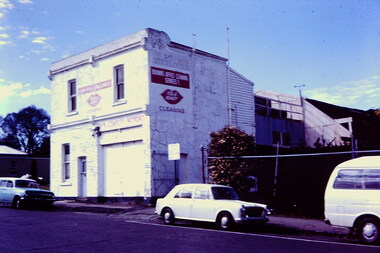
Slide - Former Livery Stables, Walpole Street, 1980
... The ground floor facing Walpole Street includes a window and door on the left and a wide opening on the right to allow vehicular access; and earlier access by horses and carts when it was a livery stable. ...The ground floor facing Walpole Street includes a window and door on the left and a wide opening on the right to allow vehicular access; and earlier access by horses and carts when it was a livery stable. ...One of a group of slides taken by Mrs C Dickins, the mother of Joy Stewart, of built heritage in Kew. 35mm colour transparency (slide) of a rendered brick commercial building at 6 Walpole Street, Kew, taken in 1980 (now demolished). The double-fronted, two-storey building has a street frontage. Behind the formal rendered front, there is a wooden rear section then an extensive building with a pitched roof made of what appears to be galvanised iron sheeting. The ground floor facing Walpole Street includes a window and door on the left and a wide opening on the right to allow vehicular access; and earlier access by horses and carts when it was a livery stable. The second floor has two sash windows. Painted advertising signage includes: Brown's Office Cleaning Service, and Coakley Motors which would indicate the probable tenancy of the building at this or an earlier period. The building was located across the street from the (former) Kew Library and (former) Kew Town Hall. "Walpole Street"coakley motors -- kew (vic.), livery stables -- kew (vic.), walpole street -- kew (vic.) -
 Kiewa Valley Historical Society
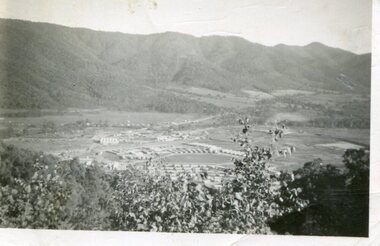
Photograph - Mount Beauty from Bogong Hill, 1950
... The new State Electricity Commission construction camp at the head of the Kiewa Valley was for workmen on the second power station in the project expected to be the most modern and best equipped in Australia… In contrast to the early Kiewa days of horses and canvas tents, the new camp, with its modern amenities, compared favourably with any country town. ...The new State Electricity Commission construction camp at the head of the Kiewa Valley was for workmen on the second power station in the project expected to be the most modern and best equipped in Australia… In contrast to the early Kiewa days of horses and canvas tents, the new camp, with its modern amenities, compared favourably with any country town. ...The new State Electricity Commission construction camp at the head of the Kiewa Valley was for workmen on the second power station in the project expected to be the most modern and best equipped in Australia… In contrast to the early Kiewa days of horses and canvas tents, the new camp, with its modern amenities, compared favourably with any country town. Administration of the Kiewa Scheme was moved from Tawonga to Mount Beauty in 1946. The first house in Mount Beauty, in Hollonds Street, was occupied by the co-op store manager from November 1946. The new Mess Hall at Mt Beauty was opened with much ceremony in early November 1946. The houses up to Nelse street were erected from 1946 onward and then the township was extended beyond Nelse Street in 1950. The workmen's camp was enlarged in 1950 to the extent of providing accommodation for a total of 1,200.Shows early construction of the town of Mt. Beauty surrounded by farmland taken in 1950 during the early stages of construction of the Kiewa Hydro electric SystemBlack and white photograph - aerial view of Mt Beauty taken from Bogong Hill. Photograph framed by 6mm white boarder.Handwritten on back of photograph in black ink - Mt Beauty from Bogong Hill 1950 Printed on rear Volox 2428mt beauty, bogong hill, secv -
 Kiewa Valley Historical Society
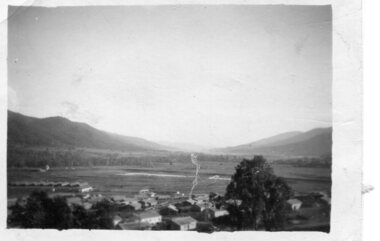
Photograph - Mount Beauty from second gate. View down Kiewa Valley, 1950
... The new State Electricity Commission construction camp at the head of the Kiewa Valley was for workmen on the second power station in the project expected to be the most modern and best equipped in Australia… In contrast to the early Kiewa days of horses and canvas tents, the new camp, with its modern amenities, compared favourably with any country town. ...The new State Electricity Commission construction camp at the head of the Kiewa Valley was for workmen on the second power station in the project expected to be the most modern and best equipped in Australia… In contrast to the early Kiewa days of horses and canvas tents, the new camp, with its modern amenities, compared favourably with any country town. ...The new State Electricity Commission construction camp at the head of the Kiewa Valley was for workmen on the second power station in the project expected to be the most modern and best equipped in Australia… In contrast to the early Kiewa days of horses and canvas tents, the new camp, with its modern amenities, compared favourably with any country town. Administration of the Kiewa Scheme was moved from Tawonga to Mount Beauty in 1946. The first house in Mount Beauty, in Hollonds Street, was occupied by the co-op store manager from November 1946. The new Mess Hall at Mt Beauty was opened with much ceremony in early November 1946. The houses up to Nelse street were erected from 1946 onward and then the township was extended beyond Nelse Street in 1950. The workmen's camp was enlarged in 1950 to the extent of providing accommodation for a total of 1,200.Shows early construction of the town of Mt. Beauty surrounded by farmland taken in 1950 during the early stages of construction of the Kiewa Hydro electric SystemBlack and white photograph - View from second gate down Kiewa Valley showing early buildings. Photograph framed by 6mm white boarderHandwritten in back of photo in blue ink - View from second gate down Kiewa Valley 1950mt beauty, kiewa valley, secv -
 Kiewa Valley Historical Society
Photograph - Mount Beauty SEC Camp and Town, 1950
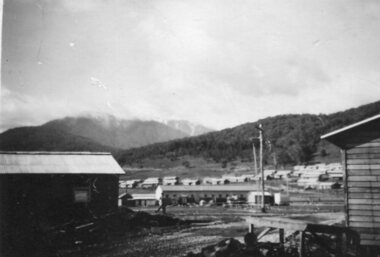
... The new State Electricity Commission construction camp at the head of the Kiewa Valley was for workmen on the second power station in the project expected to be the most modern and best equipped in Australia… In contrast to the early Kiewa days of horses and canvas tents, the new camp, with its modern amenities, compared favourably with any country town. ...The new State Electricity Commission construction camp at the head of the Kiewa Valley was for workmen on the second power station in the project expected to be the most modern and best equipped in Australia… In contrast to the early Kiewa days of horses and canvas tents, the new camp, with its modern amenities, compared favourably with any country town. ...The new State Electricity Commission construction camp at the head of the Kiewa Valley was for workmen on the second power station in the project expected to be the most modern and best equipped in Australia… In contrast to the early Kiewa days of horses and canvas tents, the new camp, with its modern amenities, compared favourably with any country town. Administration of the Kiewa Scheme was moved from Tawonga to Mount Beauty in 1946. The first house in Mount Beauty, in Hollonds Street, was occupied by the co-op store manager from November 1946. The new Mess Hall at Mt Beauty was opened with much ceremony in early November 1946. The houses up to Nelse street were erected from 1946 onward and then the township was extended beyond Nelse Street in 1950. The workmen's camp was enlarged in 1950 to the extent of providing accommodation for a total of 1,200.Shows early construction in the town of Mt. Beauty surrounded by hills and farmland, with Mt Bogong in the background. Photo was taken in 1950 during the early stages of construction of the Kiewa Hydro electric SystemBlack and white photograph of Mt Beauty township in 1950 showing original workers buildings. Photograph has a .5cm white border around the photo.Handwritten on back of photograph in blue ink - SEC Camp and Town Mt Beauty 1950mt beauty, secv, mt beauty workmen's camp -
 Kiewa Valley Historical Society
Photograph - Mt Beauty Camp
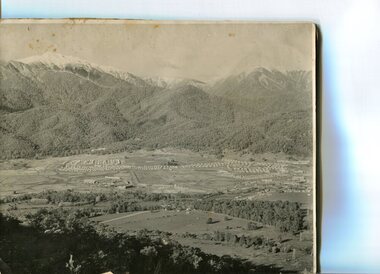
... The new State Electricity Commission construction camp at the head of the Kiewa Valley was for workmen on the second power station in the project expected to be the most modern and best equipped in Australia… In contrast to the early Kiewa days of horses and canvas tents, the new camp, with its modern amenities, compared favourably with any country town. ...The new State Electricity Commission construction camp at the head of the Kiewa Valley was for workmen on the second power station in the project expected to be the most modern and best equipped in Australia… In contrast to the early Kiewa days of horses and canvas tents, the new camp, with its modern amenities, compared favourably with any country town. ...The new State Electricity Commission construction camp at the head of the Kiewa Valley was for workmen on the second power station in the project expected to be the most modern and best equipped in Australia… In contrast to the early Kiewa days of horses and canvas tents, the new camp, with its modern amenities, compared favourably with any country town. Administration of the Kiewa Scheme was moved from Tawonga to Mount Beauty in 1946. The first house in Mount Beauty, in Hollonds Street, was occupied by the co-op store manager from November 1946. The new Mess Hall at Mt Beauty was opened with much ceremony in early November 1946. The houses up to Nelse street were erected from 1946 onward and then the township was extended beyond Nelse Street in 1950. The workmen's camp was enlarged in 1950 to the extent of providing accommodation for a total of 1,200.Shows early construction in the town of Mt. Beauty surrounded by hills and farmland, with a snow capped Mt Bogong in the background. Photo was taken in approximately 1950 during the early stages of construction of the Kiewa Hydro-electric SystemBlack and white photograph, mounted on corrugated cardboard. Photograph of Mt Beauty townshipHandwritten on back of photograph in blue pen - Permanent loan from Adrian Campan April 96 057-544043mt beauty camp, secv -
 Melton City Libraries
Pamphlet, Thoroughbred Country, c.1985
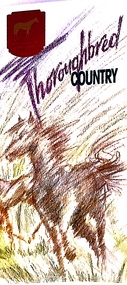
... Ernest Clarke was another important figure in the early horse racing industry in Melton. He established the Melton Stud in 1902, which bred numerous successful racehorses. ...Ernest Clarke was another important figure in the early horse racing industry in Melton. He established the Melton Stud in 1902, which bred numerous successful racehorses. ..."Melton has a long and celebrated history of horse breeding and racing. Draught horses were a crucial aspect of life in the early days of European settlement, and were heavily depended upon for both transport and agricultural labour. Peppercorn trees at the corner of Station and Brooklyn roads have been associated with a horse trough installed there to provide a drink to workhorses carting produce to the chaff mills and railway station south of Melton.20 Breeders, trainers and harness drivers in the area later became such an influential force in the equine industry that this came to be a defining aspect of the district’s identity and reputation.Pioneer of the Victorian horse racing industry and early Rockbank squatter William Cross Yuille was one of the earliest importers of stud racehorses in the district in the 1850s. A leading sports editor and writer, Yuille established bloodstock auctioning agency W. C. Yuille & Co. and was involved in the compilation of the first Australian Stud Book, which ensures the integrity of thoroughbred breeding in Australia. According to early Melton chronicler Alexander Cameron, horse races were first organised in the area by Rockbank farmer William Keating. Keating owned racehorses of his own, and many brought horses from Melbourne for the events, which ‘drew large gatherings’.22 Melton Racing Club meetings were held on the Exford Estate with the permission of H. W. Staughton, who built a small wooden grandstand in 1882. Other early races and sports meetings are said to have been held in the vicinity of the current-day Melton golf course.23 An 1884 article reported that Melton’s ‘race programme … equals any put forth by country towns of far greater size’. Ernest Clarke was another important figure in the early horse racing industry in Melton. He established the Melton Stud in 1902, which bred numerous successful racehorses. Perhaps most notably The Welkin, one of the most famous stallions in Australian horse racing in the early twentieth century. The Welkin sired Gloaming, bred by Clarke at the Melton stud in 1915 and one of Australia’s greatest champion racehorses. During a long and prestigious career in both Australia and New Zealand, Gloaming achieved a triumphant 57 wins out of 67 starts and won a record amount of prize money. Ken Cox purchased the Stockwell Stud in Diggers Rest in 1957 and developed it into one of the largest and most renowned thoroughbred breeders in Australia. With its top-class facilities, international design standards and scientific methods, Stockwell became ‘the flagship of the Victorian breeding industry’.26 As well as racing studs, numerous trotting tracks were established on the flat plains around Melton in the 1960s.27 Other studs to play a leading role in the development of Melton as thoroughbred country were Cornwall Park and Merrywood at Toolern Vale, St John’s Lane Stud at Diggers Rest and Birchwood, Teppo Park and Dreelburn in the far north-east of the shire, near Sunbury. By 1985, thoroughbred horse breeding was such big business in Melton that the shire council adopted the slogan ‘The Heart of Thoroughbred Country’, which was used throughout its promotional material.29 But the slogan contained deeper meaning and was not just about Melton’s great equine industry and thoroughbred champions, the council explained: ‘“Thoroughbred Country” should be seen as a new concept of Melton, as a place where people can achieve the “Thoroughbred” ideal, excellence in all aspects of life’. The aim of the council in promoting ‘The Heart of Thoroughbred Country’, was ‘to instil in present and future residents the feeling that this is a place that is better than others. A place to be proud of’. In 1988, Melton’s champion reinsman Gavin Lang won his 176th race of the season, claiming the national harness racing record for the most wins in a single season.The following year, the first Melton Plate was held at Moonee Valley Racecourse, cementing the district’s importance in the harness racing industry. The inaugural winner was Victorys Phil, owned by local Danny Mullan. By the 1990s, Melton had earned the title of the ‘Home of Harness Racing in Victoria’. State-of-the-art, world-class harness racing facility and entertainment complex Tabcorp Park opened in Melton in 2009. In 2011, the Shire of Melton was home to over 140 registered trainers and over 1,200 horses. The municipality’s continuing leadership and influence in the industry today is a testament to the skills, talents and leadership of the local community over its history".Shire of Melton pamphlet of a map and information of the equine industry in Meltoncouncil -
 Kiewa Valley Historical Society
Photographs x 2 - 1. Mt Beauty Camp 2. Bogong Camp, Photo 1 - September 1950
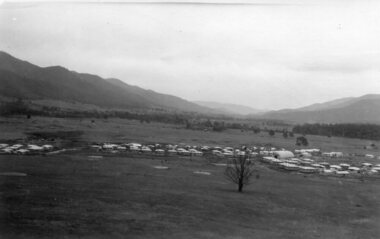
... Mt Beauty Camp- The new State Electricity Commission construction camp at the head of the Kiewa Valley was for workmen on the second power station in the project expected to be the most modern and best equipped in Australia… In contrast to the early Kiewa days of horses and canvas tents, the new camp, with its modern amenities, compared favourably with any country town. ...Mt Beauty Camp- The new State Electricity Commission construction camp at the head of the Kiewa Valley was for workmen on the second power station in the project expected to be the most modern and best equipped in Australia… In contrast to the early Kiewa days of horses and canvas tents, the new camp, with its modern amenities, compared favourably with any country town. ...Mt Beauty Camp- The new State Electricity Commission construction camp at the head of the Kiewa Valley was for workmen on the second power station in the project expected to be the most modern and best equipped in Australia… In contrast to the early Kiewa days of horses and canvas tents, the new camp, with its modern amenities, compared favourably with any country town. Administration of the Kiewa Scheme was moved from Tawonga to Mount Beauty in 1946. The first house in Mount Beauty, in Hollonds Street, was occupied by the co-op store manager from November 1946. The new Mess Hall at Mt Beauty was opened with much ceremony in early November 1946. The houses up to Nelse street were erected from 1946 onward and then the township was extended beyond Nelse Street in 1950. The workmen's camp was enlarged in 1950 to the extent of providing accommodation for a total of 1,200. Bogong Camp - In 1940 Field Headquarters for the Kiewa Scheme were established at Bogong with office, workshop facilities and accommodation for workmen, staff and some families constructed. (There had been a 'tent camp' on this site in 1939 but was destroyed by bushfires) Construction of accommodation continued until 1947. A total of 40 houses plus a hostel for single staff, post office, police station, medical centre and primary school all with water and sewerage and electricity supply. The staff hostel was known as Kiewa House and is now occupied by the Education Department. Lake Guy was named after Mr. L.T. Guy who was the Resident Engineer in charge of construction work and associated activities on the Kiewa area. He held this position from 1939 to November 1946 when he was transferred to Head Office. Both Bogong Village and Mt Beauty were developed to accommodate workmen on the Kiewa Hydro Electric Scheme but have since become centres for tourism and a range of outdoor activities.1. Black and white photograph of Mount Beauty Camp taken in September 1950 2. Black and white photograph of Bogong Village Camp1. Written on the back in grey lead - Sept 1950. Mt Beauty Camp. HT Cooper own taking 2. Stamped on back of photograph - Copyright. Not for reproduction. Herald Sun feature Service. Melbourne Australiamt beauty camp, bogong camp, secv -
 Melton City Libraries
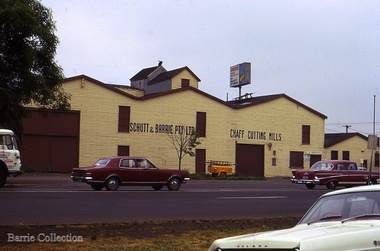
Photograph, Schutt and Barrie Pty Ltd Chaff Cutting Mills, Unknown
... Two full 8 horse teams were used to work the land, which meant early rising for the horses to be fed and harnessed ready for the men to commence the days work. ...Two full 8 horse teams were used to work the land, which meant early rising for the horses to be fed and harnessed ready for the men to commence the days work. ...Mary nee Barrie Robinson (1907 –1999) writes c1980 about her father Charles Ernest Barrie of Darlingsford Melton (1871 – 1931) Extract copied from her handwritten story - My father was born in Ballarat in 1871. … commenced his working life with a team of bullocks and a chaffcutter in the St Arnaud district, a work the he became most success at and would continue in to the end of his life. He eventually became the owner of a chaff mill at Melton station with an access line to the railway. [1900] The Schutt & Barrie partnership Dad later became involved in a Chaff mill at West Footscray run by John Ralph Schutt who when he met Dad was a very sick man and had begged Dad to come into the business and help him. That began a very happy association, the business was put on its feet. An empty quarry across Geelong Road opposite the mill was purchased, the chaffcutters were set up in the quarry and that was the start of a very busy and prosperous period. A branch line was run into the mill. Dad spent some afternoons at the mill going by train, and spending some hours there at night, at the same time running the farm with full time help. Two full 8 horse teams were used to work the land, which meant early rising for the horses to be fed and harnessed ready for the men to commence the days work. Charlie Lowe and Murdock Davey were two of the men who worked for Dad in those years. The firm purchased a mill at Parwan and Dad spent a lot of time and energy getting it running to their satisfaction. Monday was the day he spent time there also round the district of Parwan and Balliang. He came to know many of the their names were well known in our household for many years. [1920] Later a flour mill was built beside the Chaff mill at West Footscray but it never thrived like the mill. The chaff mill had many loyal and good men employed there and there was never any trouble between men and management. Willie Walters and Miss Renyolds were some I remember, other names me, Joyce would be able to name them. [Sister of Mary born 1920] Schutt and Barrie Pty Ltd Chaff Cutting Mills Melton South sitelocal architecture, local identities, agriculture
