
Showing 76 items matching "edwardian homes"
-
 Sunbury Family History and Heritage Society Inc.
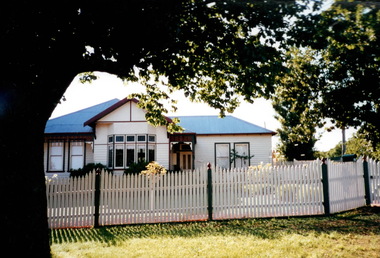
Photograph, Marilyn Bray, cEarly 2000s
... ...Edwardian Homes...O'Shanassy Street Edwardian Homes John McKerrow Houses A non-digital coloured photograph of an Edwardian style weatherboard house with a corrugated iron roof. ...The Edwardian style house, built in the early years of the 20th century, is at 181 O'Shanassy Street, Sunbury and for a time it was the residence of former Shire of Bulla, Shire Engineer, John McKerrow. Over the years it has a number of owners and has been well maintained. A non-digital coloured photograph of an Edwardian style weatherboard house with a corrugated iron roof. It was originally a double fronted house but an addition was built on the right side of the house at a later date. The middle section of the house extends with a bay window. The house is painted cream with brown trim. Across the front is a picket fence.o'shanassy street, edwardian homes, john mckerrow, houses -
 Surrey Hills Historical Society Collection
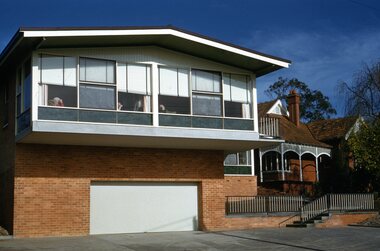
Photograph - Digital photograph, George L Coop, 692-694 Whitehorse Road Mont Albert, 1958, c1958
... Home for the Aged at 692-694 Whitehorse Road. It was originally a Methodist, later a Uniting Church facility. The new section in the photo was part of an extension built in 1958. The Queen Anne / Edwardian... A new brick veneer 2 storey building sits adjacent to a red brick Edwardian home. Elderly-looking people can be seen sitting behind the window of the new section....Home for the Aged at 692-694 Whitehorse Road. It was originally a Methodist, later a Uniting Church facility. The new section in the photo was part of an extension built in 1958. The Queen Anne / Edwardian ...The donor George Lister Coop was about 21 years of age when he took this photo in 1958. This photo is of Annesley Home for the Aged at 692-694 Whitehorse Road. It was originally a Methodist, later a Uniting Church facility. The new section in the photo was part of an extension built in 1958. The Queen Anne / Edwardian brick attic home was built in c1908 for William Pilkington, a manufacturer and was called 'St Martins'. Ownership stayed in this family until c1950. A new brick veneer 2 storey building sits adjacent to a red brick Edwardian home. Elderly-looking people can be seen sitting behind the window of the new section.george l coop, whitehorse road, mont albert, annesley home for the aged, uniting church, st martins, pilkington family -
 Whitehorse Historical Society Inc.
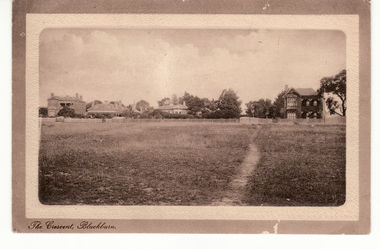
Postcard - Black and white postcard, The Crescent Blackburn (Now Gordon Crescent)
... Picture shows Victorian and Edwardian homes.|Probably these homes were part of the land boom of the 1890s....Picture shows Victorian and Edwardian homes.|Probably these homes were part of the land boom of the 1890s. ...Sepia postcard entitled 'The Crescent, Blackburn'.ow Gordon Crescent, Blackburn. Picture shows Victorian and Edwardian homes.|Probably these homes were part of the land boom of the 1890s.hooke, janet emily, albert arthur, the crescent, blackburn, gordon crescent -
 Glenelg Shire Council Cultural Collection
Negative - Glass Plate Negative - A early Edwardian home, 1890-1910
... Glass Plate Negative - A early Edwardian home...Showing an early Edwardian home - steeply sloped, wide eaves, front facing gable ends, square edged weatherboards, return L-shaped verandah, corrugated iron roofing. ...Negative Glass Plate Negative - A early Edwardian home ...Glass plate negative. Showing an early Edwardian home - steeply sloped, wide eaves, front facing gable ends, square edged weatherboards, return L-shaped verandah, corrugated iron roofing. Also has iron lacework. -
 Surrey Hills Historical Society Collection
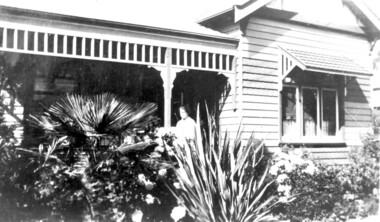
Photograph, Falconer family home, 'Legerton' at 15 Albert Crescent, 1920
... It is a timber Edwardian home with simple fretwork on the verandah and a mature garden which partially obscures the entrance....It is a timber Edwardian home with simple fretwork on the verandah and a mature garden which partially obscures the entrance. ...Date is approximate. House was built in 1910 and has been demolished. The woman on the verandah is probably Mrs P Falconer, Ron Falconer's mother. Her full name was Emily Victoria Aird (1884-1957), daughter of James Bromich Aird and Sarah Ann (nee Edwards). She married Patrick Henry Falconer on 11 December 1907 in Blackburn. The Falconer family lived in Albert Crescent for many years. Listed in electoral rolls in 1916 through to the 1950s. By 1963 the family were at 33 Weybridge Street, Surrey Hills. Emily and Patrick Henry Falconer had 4 children: Ronald Keith (b1908); Hilda Irene (b 1910); Harold Leslie (b 1913) and Hilah (b 1915). James and Sarah Aird are buried in Box Hill Cemetery.Black and white photo showing a close-up view of the Falconer family home, 'Legerton' at 15 Albert Crescent, Surrey Hills with a woman at the entrance. It is a timber Edwardian home with simple fretwork on the verandah and a mature garden which partially obscures the entrance.edwardian style, legerton, albert crescent, miss emily victoria aird, mrs emily victoria falconer, patrick henry falconer, ronald keith falconer, miss hilda irene falconer, harold leslie falconer, hilah falconer -
 Surrey Hills Historical Society Collection
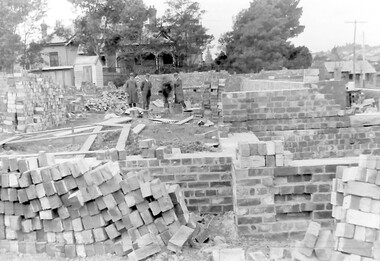
Photograph, Holy Trinity Church of England, Surrey Hills during construction, 1922, 1922
... In the background is a small timber shed and beyond that a timber Edwardian home partly hidden by foliage....In the background is a small timber shed and beyond that a timber Edwardian home partly hidden by foliage. Holy Trinity Church of England, Surrey Hills during construction, 1922 Photograph Norman Carter ...St George's Church of England, Mont Albert was built in 1886 and from 1904 until 1907 was known as Holy Trinity, Surrey Hills. As the population increased there was a need for a church in Surrey Hills. This brick church was consecrated in 1922 and replaced the earlier one built in 1907 on the adjacent site in Union Road. The house behind the church at 1 Montrose Street belonged to Mr W B Vine. There are 2 copies: the original donated print and an enlargement. The original is mounted on card with photo mounts along with 884, 885, 886 and 512. It measures 13 cm x 9 cm. Norman Carter took many photos of Surrey Hills and Mont Albert in the 1920s; many were associated with events and activities of the Church of England.Black and white photo of 3 men inspecting the construction site of the Holy Trinity Church of England in Union Road, Surrey Hills. The foundations are surrounded by piles of bricks. In the background is a small timber shed and beyond that a timber Edwardian home partly hidden by foliage.churches, holy trinity church, anglican church, building construction, montrose street, w b vine -
 Surrey Hills Historical Society Collection
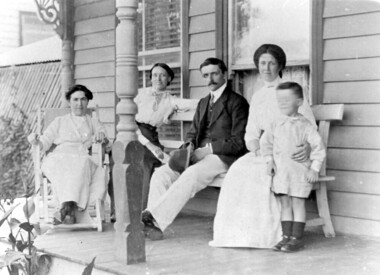
Photograph, Mr and Mrs P Falconer and son, Ron at Aird family home, 1913
... Black and white photo of a family group of 3 women, a man and a young boy on the verandah of an Edwardian timber home. ...Possible identification of the 2 other women in the photo would be Sarah Aird on the left on the deck chair and Hilda Aird on the bench with the Falconer family. edwardian style clothing and dress Ronald keith falconer patrick henry falconer miss emily victoria aird mrs emily victoria aird miss hilda lillian aird james bromich aird mrs emily victoria falconer miss sarah ann edwards mrs sarah ann aird stratford croydon road box hill cemetery Black and white photo of a family group of 3 women, a man and a young boy on the verandah of an Edwardian timber home. Mr and Mrs P Falconer and son, Ron at Aird family home Photograph ...It is identified as the home of J B Aird. The 2 women on the left are not identified. On the right are Mr & Mrs P Falconer and son Ron. Mrs Falconer was nee Aird. Research: 1917 electoral roll lists James Bromich Aird (optician), Sarah Ann Aird (HD) and Hilda Lillian Aird (tailoress) at 'Stratford', Croydon Road, Surrey Hills. Earlier electoral roll lists him in Ringwood and later ones at Wandin North. James Bromich Aird (1854-1938) and Sarah Ann Edwards (1858-1930) had 7 children. Emily Victoria Aird (1884-1957) and Hilda Lillian Aird were 2 of their daughters. Emily married Patrick Henry Falconer (1879-1964). Their son Ronald Keith Falconer (1908-1983) was born and died in Surrey Hills. James and Sarah Aird are buried in Box Hill Cemetery. Given the collecting focus adopted by Jocelyn Hall it can be assumed that this was taken at 'Stratford' in Croydon Road, Surrey Hills. Possible identification of the 2 other women in the photo would be Sarah Aird on the left on the deck chair and Hilda Aird on the bench with the Falconer family.Black and white photo of a family group of 3 women, a man and a young boy on the verandah of an Edwardian timber home. edwardian style, clothing and dress, ronald keith falconer, patrick henry falconer, miss emily victoria aird, mrs emily victoria aird, miss hilda lillian aird, james bromich aird, mrs emily victoria falconer, miss sarah ann edwards, mrs sarah ann aird, stratford, croydon road, box hill cemetery -
 Surrey Hills Historical Society Collection
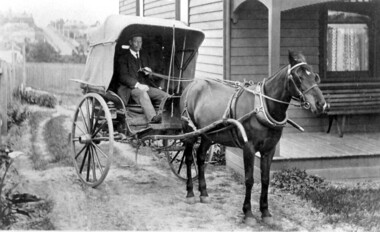
Photograph, Horse and buggy at 44 Guildford Road Surrey Hills, 1913
... dark-stained timber Edwardian home at 44 Guildford Road, Surrey Hills. ...dark-stained timber Edwardian home at 44 Guildford Road, Surrey Hills. ...Jocelyn Hall indicated in notes that the gentleman could possibly be an estate agent. This was confirmed by a grandson of the original owners. (REF: Email 1/8/2020) The original photos is thought to have been a publicity photo for the real estate agency. Carl Theodore Offszanka (1874-1944) was born in Germany. He is listed in electoral rolls at 44 Guildford Road from 1915, occupation furrier, with his wife Ida (nee Schade, 1882-1963), also born in Germany. They were married in Victoria in 1908. In later electoral rolls at the same address are Erna Helena (b 1913; d 1996) and Maria Eliese (b 1910; m Benedict Francis Rieusset in 1936). Both daughters are listed as typists. Also listed is Bernard George (b 1914; d 1987) who in later electoral rolls is described as a process worker. He served in the AIF in the Second World War. Not listed is Carl Bernard b 1909. The Offszanka family lived at 44 Guildford Road from 1913 until post-1980; they came to Surrey Hills from Richmond. Their home was called 'Westfalia' (ref: 1919 electoral roll), presumably after the region in NW Germany. It is not known when Carl and Ida migrated from Germany. This home has had a 2nd storey added to it in late 1990s. According to a family descendant (REF: Email 1/8/20 from grandson) Carl Theodor Offszanka purchased the home in 1913 for £616. He also purchased the adjoining vacant block of land at 42 Guildford Road and ran a large orchard on it before later selling it. This appears to have been between 1920-1930. The family continued to occupy the house until after 1980 when Erna Helena and Bernard George are listed in the electoral rolls. Our property register lists Erna Helena Offszanka as the last member there. She died on 5 May 1996. The Offszanka family occupied this home from its beginning for over 70 years. Such long-term occupancy by one family is unusual.Black and white photo of a ? dark-stained timber Edwardian home at 44 Guildford Road, Surrey Hills. A hooded buggy is located in the rough driveway at the side of the house. A gentleman in a hat and with a moustache is seated in the buggy. A tall building can be seen in the far distance and a street leading up the hill from Canterbury Road.edwardian style, houses, guildford road, horse drawn vehicle, carl theordore offszanka, miss ida schade, mrs ida offszanka, miss edna helena offszanka, miss marie elsie offszanka, mr bernard george offszanka, estate agent, mr carl bernard offszanka, westfalia -
 Surrey Hills Historical Society Collection
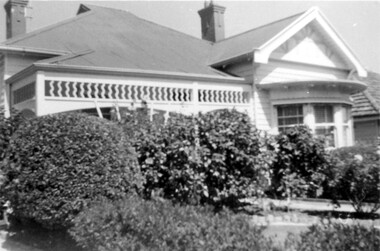
Photograph, 44 Guildford Road Surrey Hills, 1940, 1940
... Black and white photo of a timber Edwardian home at 44 Guildford Road Surrey Hills. ... style guildford road offszanka family carl theodor offszanka ida schade (miss) carl bernard offszanka bernard george offszanka westfalia ida offszanka (mrs) erna helena offszanka (miss) marie eliese offszanka (miss) Black and white photo of a timber Edwardian home at 44 Guildford Road Surrey Hills. ...This was the home of the Offszanka family from 1913; they came to Surrey Hills from Richmond. Carl Theodore Offszanka (1874-1944) was a furrier. Both he and his wife Ida, nee Schade, (1882-1963) were born in Germany. They married in Victoria in 1908. Their home was called 'Westfalia' (ref: 1919 electoral roll), presumably after the region in NW Germany. They had at least 4 children: Carl Bernard - b 1909 Marie Eliese - b 1910 Erna Helena - b 1913; d 1996 - listed at Guildford Road in electoral rolls. Bernard George - b 1914; d 1987 (Surrey Hills) - listed at Guildford Road in electoral rolls. The family were associated with Our Holy Redeemer Church and school and also donated class photos of the school to the collection. Carl and Ida are buried in Box Hill Cemetery (RC 032-0034). The semi-circular bay window is not original to the house. This home has had a 2nd storey added to it in late 1990s. According to a family descendant (REF: Email 1/8/20 from grandson) Carl Theodor Offszanka purchased the home in 1913 for £616. He also purchased the adjoining vacant block of land at 42 Guildford Road and ran a large orchard on it before later selling it. This appears to have been between 1920-1930. The family continued to occupy the house until after 1980 when Erna Helena and Bernard George are listed in the electoral rolls. Our property register lists Erna Helena Offszanka as the last member there. She died on 5 May 1996. Members of the Offszanka family lived in this property from its beginnings for more than 70 years. Such longstanding tenancy is unusual.Black and white photo of a timber Edwardian home at 44 Guildford Road Surrey Hills. The home has 2 bricks chimneys, a corrugated iron roof, timber fretwork to the verandah and a semi-circular bay window. The facade of the house is partially obscured by mature garden, possibly including large camellias, with rock-edged garden beds and a central path. The front fence is not visible.edwardian style, guildford road, offszanka family, carl theodor offszanka, ida schade (miss), carl bernard offszanka, bernard george offszanka, westfalia, ida offszanka (mrs), erna helena offszanka (miss), marie eliese offszanka (miss) -
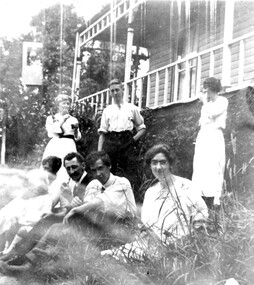 Surrey Hills Historical Society Collection
Photograph, Pye and Stamford family members at 'Tanglewood', 12 Loch Street, Surrey Hills, c1916-1918, 1916-1918
... The group is seated and standing in front of a verandah of a timber Edwardian style home....The group is seated and standing in front of a verandah of a timber Edwardian style home. Pye and Stamford family members at 'Tanglewood', 12 Loch Street, Surrey Hills, c1916-1918 Photograph ...Both Hazel and Mabel Pye were artists and their father built a studio at the back of the 12 Loch Street home. The family were also associated with the amateur theatre group 'The Benwerrin Players'. Information from Frank Stamford (via Surrey Hills History Facebook page), March 2017: "This photograph was taken around 1918. It is a family occasion. The four people sitting down, from left to right, are Clara (Dolly) Stamford nee Noar (my grandmother), Frank Stamford (my grandfather), Laurence Stamford (my father, who was born in 1904), and Hazel Pye (a cousin of my father). The three people standing, from left to right, are Alice Pye (nee Noar) - mother of Mabel and Hazel, and sister of Clara, Reg Stamford (brother of Laurence, and born in 1900), and Mabel Pye." Dorothy Stamford was a cousin of Hazel and Mabel Pye.Black and white photo including Misses Mabel and Hazel Pye with other family members. The group is seated and standing in front of a verandah of a timber Edwardian style home.loch street, artists, 'tanglewood', mrs clara ellen stamford, miss clara ellen noar, frank stamford, laurence stamford, hazel pye, miss alice elanor noar, mrs alice eleanor pye, reg stamford, mabel pye -
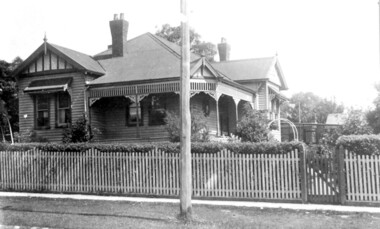 Surrey Hills Historical Society Collection
Photograph, Kiora, 16 Albert Crescent, Surrey Hills (demolished)
... Black and white photo taken from the street of a timber Edwardian home with 2 double brick chimneys and a galvanised iron roof. ...It was the home of Mr and Mrs Tom Bulmer for many years. It has been demolished. edwardian style houses kiora rothwell bulmer family (mr) tom bulmer albany crescent surrey hills Black and white photo taken from the street of a timber Edwardian home with 2 double brick chimneys and a galvanised iron roof. ...The house was known as Rothwell and later as Kiora. It was the home of Mr and Mrs Tom Bulmer for many years. It has been demolished.Black and white photo taken from the street of a timber Edwardian home with 2 double brick chimneys and a galvanised iron roof. It has a verandah on 2 sides with wooden fretwork and the pathway leading towards the house has an archway over it. There is a similar archway on the LHS of the photo. The backyard is divided off with lattice fencing and the property has a simple front picket fence with gate behind which is a privet hedge.edwardian style, houses, kiora, rothwell, bulmer family, (mr) tom bulmer, albany crescent, surrey hills -
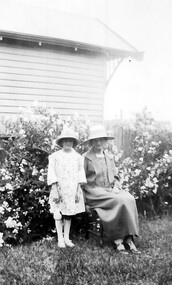 Surrey Hills Historical Society Collection
Photograph, Mary Sneddon with daughter Jean
... Part of the house next door can be seen in the background. It is an Edwardian timber home...Part of the house next door can be seen in the background. It is an Edwardian timber home Mary Sneddon with daughter Jean Photograph ...The photo was taken in the garden of of 'Cliburn', 14 Suffolk Avenue, Surrey Hills, the home of William and Mary (nee Bird) Sneddon. It was named after Cliburn, Westmorland (later Cumbria) where Mary's mother was born and the name was given to all their homes. Mary Bird, daughter of John Bird and Mary Coulston, b 1878 Bethanga, Victoria; died 1948, Surrey Hills. They were married on 12/11/1903 in Surrey Hills at the home of James Sneddon. William Sneddon was a postman in Surrey Hills for many years. His father James had an estate agency in Surrey Hills from the 1880s. Born in1875, Sandhurst (Bendigo); died in 1957, Deepdene. Buried Box Hill Cemetery: P-061-0033. They had the following children: Jim (James 3rd) b 1905, Balwyn Jack (John William) b. 1908, Camberwell Norman Alexander b 1910, Camberwell Alan Coulson b 1914 Surrey Hills Jean Isabel b 1916, Surrey Hills Douglas Haig b 1918, Surrey Hills. Additional information from Robin da Costa-Adams, who is related to the Sneddon family through her first marriage. Sepia photo of Mary Sneddon with daughter Jean wearing hats and taken in a garden. Mary is seated and Jean stands beside her. Part of the house next door can be seen in the background. It is an Edwardian timber home"Jean Sneddon / Mary Sneddon/ (in grey lead pencil by Robin da Costa-Adams. 1050 in blue biro crossed out in top RH corner. KODAK PRINT - black stamp in centre. "Jean dau of Mary - / Will. Sneddon" in black ink in Jocelyn Hall's hand. cliburn, suffolk road, (miss) jean sneddon, william sneddon, (mrs) mary sneddon, (miss) mary bird -
Glen Eira Historical Society
Document - Shoobra Road, 22, Elsternwick
... Gives detailed description of the late Edwardian home, interior features, carved timber archway, leadlighted doors, wall panelling and mouldings; includes room descriptions and family living area. 2/Handwritten notes on occupier of 22 Shoobra Road from 1910, 1913, 1923, 1942, 1948 and 1960 taken from Sands and McDougall by Claire Barton...Gives detailed description of the late Edwardian home, interior features, carved timber archway, leadlighted doors, wall panelling and mouldings; includes room descriptions and family living area. 2/Handwritten notes on occupier of 22 Shoobra Road from 1910, 1913, 1923, 1942, 1948 and 1960 taken from Sands and McDougall by Claire Barton Elsternwick Shoobra Rd Real estate agents Edwardian style Rowan Street Arches Architectural features Lead lights Hocking Stuart Parsons Rea Mdm Music teacher Bricks Flats Cooper Montague The Bungalow Document Shoobra Road, 22, Elsternwick ...Two articles on 22 Shoobra Road Elsternwick: 1/Newspaper article from Residential Property Weekly dated 26/05/2000; includes photo. Gives detailed description of the late Edwardian home, interior features, carved timber archway, leadlighted doors, wall panelling and mouldings; includes room descriptions and family living area. 2/Handwritten notes on occupier of 22 Shoobra Road from 1910, 1913, 1923, 1942, 1948 and 1960 taken from Sands and McDougall by Claire Bartonelsternwick, shoobra rd, real estate agents, edwardian style, rowan street, arches, architectural features, lead lights, hocking stuart, parsons rea mdm, music teacher, bricks, flats, cooper montague, the bungalow -
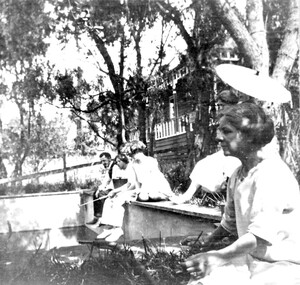 Surrey Hills Historical Society Collection
Work on paper - Photograph, Misses Mabel and Hazel Pye with family and friends, pre-1920, 1916
... Black and white photo of a group comprised of one man and 5 ladies, seated and standing in front of a verandah of a timber Edwardian style home and on the edge of a rectangular pool. ...home. The family were also associated with the amateur theatre group ' The Benwerrin Players'. noar family loch street artists hazel pye mabel pye benwerrin players Black and white photo of a group comprised of one man and 5 ladies, seated and standing in front of a verandah of a timber Edwardian style home and on the edge of a rectangular pool. ...The group includes Misses Mabel and Hazel Pye with family and friends taken pre-1920 at their home at 12 Loch Street, Surrey Hills. Both Hazel and Mabel Pye were artists and their father built a studio at the back of the Loch Street home. The family were also associated with the amateur theatre group ' The Benwerrin Players'. Black and white photo of a group comprised of one man and 5 ladies, seated and standing in front of a verandah of a timber Edwardian style home and on the edge of a rectangular pool. One lady holds a fishing rod. There are mature eucalypt trees around them. One lady holds a sunshade.noar family, loch street, artists, hazel pye, mabel pye, benwerrin players -
 Surrey Hills Historical Society Collection
Photograph, 44 Guildford Road, Surrey Hills, c1915, 1913-1915
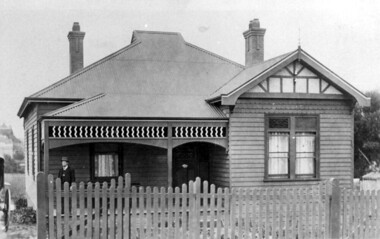
... dark-stained timber Edwardian home at 44 Guildford Road, Surrey Hills. ...dark-stained timber Edwardian home at 44 Guildford Road, Surrey Hills. ...The gentleman in the photo is an estate agent. According to a grandson (REF: Email 1/8/2020) the original photos is thought to have been a publicity photo for the real estate agency. Carl Theodore Offszanka (1874-1944) was born in Germany. He is listed in electoral rolls at 44 Guildford Road from 1915, occupation furrier, with his wife Ida (nee Schade, 1882-1963), also born in Germany. They were married in Victoria in 1908. In later electoral rolls at the same address are Erna Helena (b 1913; d 1996) and Maria Eliese (b 1910; m Benedict Francis Rieusset in 1936). Both daughters are listed as typists. Also listed is Bernard George (b 1914; d 1987) who in later electoral rolls is described as a process worker. He served in the AIF in the Second World War. Not listed is Carl Bernard b 1909. The Offszanka family lived at 44 Guildford Road from 1913 until post-1980; they came to Surrey Hills from Richmond. Their home was called 'Westfalia' (ref: 1919 electoral roll), presumably after the region in NW Germany. It is not known when Carl and Ida migrated from Germany. This home has had a 2nd storey added to it in late 1990s. According to a family descendant (REF: Email 1/8/20 from grandson) Carl Theodor Offszanka purchased the home in 1913 for £616. He also purchased the adjoining vacant block of land at 42 Guildford Road and ran a large orchard on it before later selling it. This appears to have been between 1920-1930. The family continued to occupy the house until after 1980 when Erna Helena and Bernard George are listed in the electoral rolls. Our property register lists Erna Helena Offszanka as the last member there. She died on 5 May 1996. Black and white photo of a ? dark-stained timber Edwardian home at 44 Guildford Road, Surrey Hills. It has 2 brick chimneys, a corrugated iron roof and timber fretwork to the veranda. There is a single window to the veranda, 2 single windows down the LHS (facing) side of the house and a double window to the RHS (facing) side of the house. This appears to have coloured glass to the top section. The gable is decorated with timber and stucco and has a simple finial. The house has a simple timber picket fence and a driveway down the LHS (facing), in which a carriage is located. A gentleman in a hat stands on the veranda. A tall Victorian building can be seen in the far distance, on Canterbury Road.edwardian architecture, houses, guildford road, mr bernard george offszanka, mrs ida offszanka, miss ida schade, miss erna helena offszanka, miss marie eliese offszanker, furriers, mr carl theodor offszanka, westfalia, mr carl bernard offszanka -
 Surrey Hills Historical Society Collection
Photograph, Douglas and Jean Sneddon with Alice Keane, 14 Suffolk Road, Surrey Hills
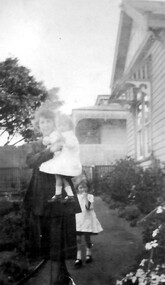
... home of their parents William and Mary Sneddon. With them is with Alice Keane. Part of the house is seen on the RHS of the photo. It is an Edwardian...home of their parents William and Mary Sneddon. With them is with Alice Keane. Part of the house is seen on the RHS of the photo. It is an Edwardian ...The property was named 'Cliburn' after Cliburn in Westmorland (later Cumbria) where Mary Sneddon's mother, Mary Bird (nee Coulston) came from. According to the donor all their houses were given this name. William Sneddon (b.1875, Sandhurst - d. 1957, Deepdene) was a postman in Surrey Hills for many years. His father James (1833 - 1901) ran an estate agency in Surrey Hills started in the 1880s by his father, also James. William's wife was Mary Sneddon, nee Bird, (b. 1878 Bethunga; d. 1948, Surrey Hills); they married in Surrey Hills in James Sneddon's house on 12 November 1903. They had 5 sons and 1 daughter: John William 'Jack' Sneddon (b.1908 - d. 1957); married Mabel Creek. Norman Alexander Sneddon (b. 1910 - d 1989); married Eva Pearl Sampson. Alan Coulston Sneddon (b. 1914 - d. 1985); married Netta May Clow in 1941. Jean Isobel Sneddon (b. 1916 - d. 1976); married Clifford James Jenkin. Douglas Haig Sneddon (b.1918, Surrey Hills - d. 1973, Blackburn); married Myra Marjorie Clewett in 1945. Relationship with Alice Keane: According to the donor, Alice Ruby Dore married Herbert Keane. She was born 21/9/1901 and died 14/4/1926. Her entries in the Victorian BDM index give that her father was Henry Dore and her mother Sarah Ann Bird and that she was born in Neerim. She married Herbert Henry Keane in 1922; her death at the age of 24 years was registered in Heidelberg. According to the donor her young children Wallace and Phyllis were embraced by William and Mary Sneddon. William and Mary Sneddon are buried in Box Hill Cemetery. The donor Robin da Costa-Adams is related by her first marriage to the Sneddon family. Relationship with Bird family: Netta Sneddon was correct in that Alice Keane was likely a relative. The exact relationship is yet to be fully established. Alice's mother's name is given as Sarah Ann Bird (1873-1952) with birth at Tarrawingee; father John Bird and mother Sarah Ann Coburn (REF: Victorian BDM index). Her notice of marriage in The Age in 1894 states she is "the eldest dau of John Bird of Drouin, late of Box Hill and Talgarno." Has her mother's surname been misspelt? Is it Coulston? Sepia photo of Douglas Sneddon and his sister Jean Sneddon taken in the garden of 'Cliburn', the home of their parents William and Mary Sneddon. With them is with Alice Keane. Part of the house is seen on the RHS of the photo. It is an Edwardian timber home. The profile of the house next door can also be seen in the background."Alice Keane / at / Doug & Jean Sneddon / taken at Sneddons / Surrey Hills" in grey lead pencil in Robin da Costa-Adams' writing. "Children of Mary & / William" "An Alice Keane may be an Aunt (crossing out) - Netta / was not sure" in ink in Jocelyn Hall's hand.suffolk road, 'cliburn', jean isobel sneddon, mrs jean isobel jenkin, douglas haig sneddon, william sneddon, miss mary bird, mrs mary sneddon, box hill cemetery, children, clothing and dress, mrs alice keane, mrs alice ruby keane, miss alice ruby dore -
Glen Eira Historical Society
Document - PRENTICE STREET, 14, ELSTERNWICK
... Brief details stated for architect-transformed Edwardian home....Brief details stated for architect-transformed Edwardian home. Prentice Street Verandahs Godridge John Elsternwick Timber houses Edwardian Styles Caulfield Stefanis Angelos Glenhuntly Road Stavraki s Bill Newton Todd Ashton Daniel Real estate agents Document PRENTICE STREET, 14, ELSTERNWICK ...Four real estate campaigns for this property: 1/Newspaper ad dated 08/10/2003, includes one coloured photograph, and gives brief details on house features. 2/Newspaper ad dated 01/09/2006, includes two coloured photographs. Ad gives brief details on house features. 3/Newspaper real estate ads Melbourne Weekly Bayside dated 17/11/2010 and 24/11/2010 with similar front exterior colour photo and different rear exterior and interior photos. Details of property identical. 4/Real estate ad hand-dated 26/11/2016 with colour photos of front and rear plus 2 interior photos. Brief details stated for architect-transformed Edwardian home.prentice street, verandahs, godridge john, elsternwick, timber houses, edwardian styles, caulfield, stefanis angelos, glenhuntly road, stavraki s bill, newton todd, ashton daniel, real estate agents -
Glen Eira Historical Society
Article - PRENTICE STREET, 47, ELSTERNWICK
... Included are 2 colour exterior (front and rear) plus 2 colour interior photos for this Edwardian home....Included are 2 colour exterior (front and rear) plus 2 colour interior photos for this Edwardian home. Prentice Street Elsternwick Peer Gary Estate Agents Timber Houses Stefanis Angelos Stavrakis Bill Kelly Juanita BigginScott Edwardian style Article PRENTICE STREET, 47, ELSTERNWICK ...Three sets of real estate campaigns for this property: 1/Property Review Weekly newspaper article date 13/12/2002 includes one coloured photograph. The article gives details of renovations done ten years previously and modern features for efficient energy. Also notes suburban locality features. 2/Newspaper article 03/02/2003 gives brief detail on home features both this and above include similar coloured photograph. 3/Newspaper article dated March 2009 gives detail on home features and garden amenities. 4/Real estage agent A4 flyer plus small newspaper ad (Domain 19/04/2013) for auction of 11/05/2013. Included are 2 colour exterior (front and rear) plus 2 colour interior photos for this Edwardian home.prentice street, elsternwick, peer gary, estate agents, timber houses, stefanis angelos, stavrakis bill, kelly juanita, bigginscott, edwardian style -
Surrey Hills Historical Society Collection
Work on paper - Black and White Photograph, 11 Durham Road, Surrey Hills c 1950, 1950
... Black & white photo of an Edwardian timber home with a terracotta-tiled roof, two chimneys and simple fretwork around a return vernanda. ...Black & white photo of an Edwardian timber home with a terracotta-tiled roof, two chimneys and simple fretwork around a return vernanda. ...Garth and Dulcie Hammet were the owners from 1949-1974. They were married on 16 January 1943 at the Gardiner Presbyterian Church. Garth was born 24 October 1919; died 5 December 2009. His parents were Ivy Read and Norman Hammet. He had an older sibling Holmayne Hammet. He served in WW2. He was an insurance clerk with T & G Mutual Life Assurance Society. Dulcie (nee Burnet) was born 1 May 1919; died 5 May 1997. Her parents were Charlotte Curtis and Harold Burnet and she had a younger sister Marjorie. She was a WRAN during WW2. At the time of her marriage she was living at 38 Mangarra Road, Canterbury (later 40 Mangarra Road). Her father was manager of the Melbourne Steamship Company. Prior to her marriage, Dulcie was a typist / secretary at T & G Mutual Life Assurance Society. The couple had 3 children: Ian (B 1945), Peter (B 1946) and Elizabeth (B 1950). After the Hammets sold 11 Durham Road, they moved to 29 Hill Street, Hawthorn.Black & white photo of an Edwardian timber home with a terracotta-tiled roof, two chimneys and simple fretwork around a return vernanda. It is on a sloping black and has wooden lattice to the underside of the veranda and a woven wire fence. Bluestone guttering along the street frontage. Two established deciduous trees frame the photo. They are bare of leaves. It is unclear if these are street trees or within the property."11 Durham Rd / Circa 1950" - written in grey lead by the donor.durham road, garth hammet, dulcie burnet, dulcie hammet, t & g mutual life assurance society, peter hammet, ian hammet, elizabeth hammet, elizabeth love -
 Surrey Hills Historical Society Collection
Photograph, 33 Clyde Street, Surrey Hills
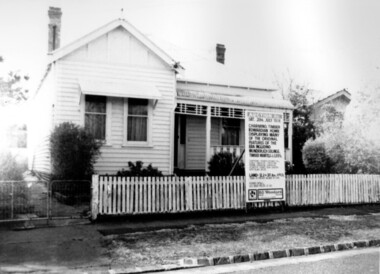
... A black and white photo of an Edwardian style timber home. The home has the popular bullnose verandah roof and Federation style fretwork. ... style federation style (mr) henry haeffner clyde street surrey hills 1910-1920 A black and white photo of an Edwardian style timber home. The home has the popular bullnose verandah roof and Federation style fretwork. ...Home of Mr and Mrs Henry Haeffner and family from about 1920 until 1980s. Built in about 1910, the house retained the popular Victorian bullnose verandah roof but added timber Federation style fretwork and the verandah had become shortened. The chimneys are slim in Federation style. A sale notice for the property was donated by Marj Higgins (nee Haeffner); it is filed with other information relating to the property. A black and white photo of an Edwardian style timber home. The home has the popular bullnose verandah roof and Federation style fretwork. The chimneys are slim in Federation style. A low picket fence runs across the front of the property. A "For Sale" sign is at the front advertising the auction on 28 Julyedwardian style, federation style, (mr) henry haeffner, clyde street, surrey hills, 1910-1920 -
 Surrey Hills Historical Society Collection
Photograph, Wedding photo of Minnie Beckett with her parents, 1934
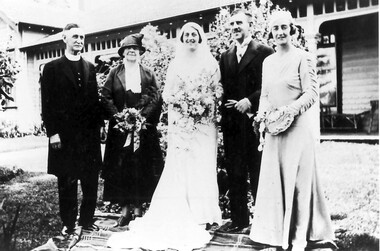
... The family group is standing on a picnic rug in front of an Edwardian style timber home with simple verandah fretwork. ...home 'Deloraine' in Union Road. The donor Wendy McLellan is the daughter of Minnie Caroline Beckett (1907-1998). Peter Renkin (formerly of 59 Guildford Road, Surrey Hills, now Shoreham) is her brother. weddings balwyn union road miss minnie beckett rev walter beckett mrs clara beckett kenneth beckett miss maude beckett 'deloraine' 1930-1940 Black and white wedding photo taken of Minnie Beckett with her parents, Rev Walter and Mrs Clara Beckett, her brother Kenneth and her sister Maude, the bridesmaid. The family group is standing on a picnic rug in front of an Edwardian ...Minnie was born in 11 Sep 1907 in Campbelltown, Tasmania, the daughter of Rev Walter Beckett and his wife Clara Gertrude Haywood. Minnie married Francis James Renkin on 13 March 1934. The photo was taken in the front garden of her parents home 'Deloraine' in Union Road. The donor Wendy McLellan is the daughter of Minnie Caroline Beckett (1907-1998). Peter Renkin (formerly of 59 Guildford Road, Surrey Hills, now Shoreham) is her brother.Black and white wedding photo taken of Minnie Beckett with her parents, Rev Walter and Mrs Clara Beckett, her brother Kenneth and her sister Maude, the bridesmaid. The family group is standing on a picnic rug in front of an Edwardian style timber home with simple verandah fretwork. The house is 'Deloraine', 268 Union Road, Balwyn.weddings, balwyn, union road, miss minnie beckett, rev walter beckett, mrs clara beckett, kenneth beckett, miss maude beckett, 'deloraine', 1930-1940 -
Glen Eira Historical Society
Article - Prentice Street, 32, Elsternwick
... Three items about sales of this property: 1/Property Review Weekly article dated 14/07/2006 on newly built, neo classical Edwardian style weatherboard home called Khya. Home includes period style elements to maintain Edward Style of home. ...Three items about sales of this property: 1/Property Review Weekly article dated 14/07/2006 on newly built, neo classical Edwardian style weatherboard home called Khya. Home includes period style elements to maintain Edward Style of home. ...Three items about sales of this property: 1/Property Review Weekly article dated 14/07/2006 on newly built, neo classical Edwardian style weatherboard home called Khya. Home includes period style elements to maintain Edward Style of home. Includes four coloured photographs. 2/Advertising dated 19/07/2006 giving brief details of house features. Includes one coloured photograph of exterior. 3/Advertisement hand-dated as 08/08/2012 with one colour exterior photo. Described as modern period home.prentice street, elsternwick, edwardian style, khya, plaster moulds, harleston park, peer gary, bricker glenn, krongold darren, orrong road, caulfield north, estate agents, timber houses, house names, biggin scott -
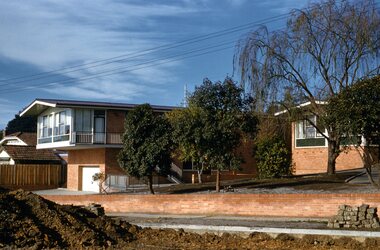 Surrey Hills Historical Society Collection
Photograph - Digital photograph, George L Coop, 692-694 Whitehorse Road Mont Albert, 1958, 1958
... Home for the Aged at 692-694 Whitehorse Road. It was originally a Methodist, later a Uniting Church facility. The new sections in the photo was part of an extension built in 1958. A further extension encompassing 21 beds occurred in 1971. A Queen Anne / Edwardian...Home for the Aged at 692-694 Whitehorse Road. It was originally a Methodist, later a Uniting Church facility. The new sections in the photo was part of an extension built in 1958. A further extension encompassing 21 beds occurred in 1971. A Queen Anne / Edwardian ...The donor George Lister Coop was about 21 years of age when he took this photo in 1958. This photo is of Annesley Home for the Aged at 692-694 Whitehorse Road. It was originally a Methodist, later a Uniting Church facility. The new sections in the photo was part of an extension built in 1958. A further extension encompassing 21 beds occurred in 1971. A Queen Anne / Edwardian brick attic home was built on No 694 in 1908 for William Pilkington, a manufacturer and was called 'St Martins'. Ownership stayed in this family until c1950. It was retained as part of the facility. Alan Holt's register of 3127 properties list 34 residents in 1980, of which all but 3 were female. The property was replaced by apartments in c2018 but had ceased function as a nursing home quite a number of years prior to this and in the interim appeared to be used for temporary accommodation. A street view of new brick veneer 2 storey extensions to Annesley Home for the Aged. It does not show the original home 'St Martin's' that the facility was built around. In the foreground the pile of soil relates to the excavation works undertaken in widening Whitehorse Road.george l coop, whitehorse road, mont albert, annesley home for the aged, uniting church, st martins, pilkington family -
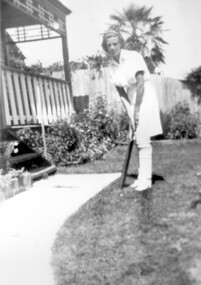 Surrey Hills Historical Society Collection
Photograph, Marjorie Haeffner, c1938
... In 2019 this Edwardian timber home still stands. Marj was an enthusiastic member of a women's cricket club in the 1940s and 1950s. ...In 2019 this Edwardian timber home still stands. Marj was an enthusiastic member of a women's cricket club in the 1940s and 1950s. ...Marjorie Joyce Haeffner informed that she was born at Mosgiel Hospital in Mont Albert Road, Surrey Hills in 1924, soon after it opened. According to electoral rolls, her parents Henry Norman Neil and Mabel Haeffner were living at 22 Wharton Street, Surrey Hills at this time. Henry's parents Henry Thomas Haeffner (1858-1935) and Eliza Jane (ms Chesney - 1868-1940) were farmers in the Tallangatta area. Their farm was called 'Ferndale'. Another farm in the area - 'Spring Creek' - was the address of Marj's parents in 1922 before they moved to Melbourne. Some time after 1926 and by 1931 Marj's parents had moved back to Tallangatta to help out on his parents' farm. This was lost during the Depression. Marj's family moved back to Melbourne; her grandparents stayed in the North Albury area until they died. Electoral roll entries show that there was considerable movement of extended family members between town and country. Marj's parents moved back to Surrey Hills; the electoral roll lists them at 33 Clyde Street in 1936 but Chatham Primary School's list of students records that Marj was there from 1932-1937. She had siblings Jack (enrolled in 1933) and Donald (enrolled in 1934). In 2019 this Edwardian timber home still stands. Marj was an enthusiastic member of a women's cricket club in the 1940s and 1950s. According to Jocelyn Hall's photo register, this photo was taken at the Haeffner home in Clyde Street. After she married Marj did not moved far from her childhood home in Clyde Street. She and her husband Brian Lindsay (known as Lindsay) Higgins bought 31 Langford Street, Surrey Hills, a Californian bungalow on a wide block, and between 1961 and 1970 Marj's children Margaret, Wendy, Deborah, Robyn, Adam and Christopher Higgins were also enrolled at Chatham. Marj's home in Langford Street was sold in April 2019 for $2.08M.A black and white photograph of a lady dressed in white cricket gear standing in front of a house.cricket, women's cricket, (miss) marjorie haeffner, (mrs) marjorie higgins, clyde street -
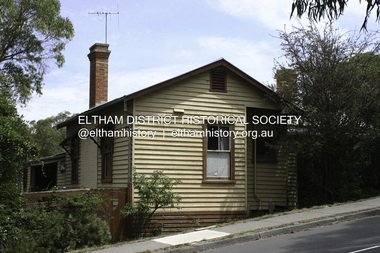 Eltham District Historical Society Inc
Photograph - Digital Photograph, Alan King, Southernwood, cnr Bolton and Brougham Street, Eltham, 30 January 2008
... Withers added a studio to the Queen Anne/Edwardian style seven-bedroom home, which had been built in 1891. ...Withers added a studio to the Queen Anne/Edwardian style seven-bedroom home, which had been built in 1891. ...Walter Withers once lived at the corner of Bolton and Brougham Streets, Eltham. Covered under Heritage Overlay, Nillumbik Planning Scheme. Published: Nillumbik Now and Then / Marguerite Marshall 2008; photographs Alan King with Marguerite Marshall.; p105 Walter Withers, one of Australia’s most famous artists, once lived in Southernwood, the weatherboard house at the corner of Bolton and Brougham Streets, Eltham. Withers, one of the first prominent artists to live in Eltham, was known for his lyrical paintings of the Australian bush and is associated with the Heidelberg School of artists. Withers was born in 1854 at Handsworth, Warwickshire, England, the grandson of an artist. He studied art at the Royal Academy of Arts, London. But in 1882 his father, opposing an artistic career for Withers, ordered him to go to Australia. However, after working as a jackaroo on several country properties for 18 months, Withers resumed painting in Melbourne, where he enrolled in evening art classes at the Melbourne National Gallery school of painting under G F Folingsby. Employed as a draughtsman by William Inglis & Co, then by Ferguson & Mitchell, lithographic printers, Withers produced portraits in black-and-white for several periodicals. His work was exhibited in the Old Academy, Melbourne. At this time he met and became life-long friends with artists Frederick McCubbin, Tom Roberts and Louis Abrahams. In 1887 Withers went to England and married Fanny Finn. They lived in Paris for awhile, where Withers studied at the Academie Julian. After his return to Melbourne in 1889, Withers lived at the artist camp at Eaglemont, then moved close to the Charterisville mansion, where he established a studio and sub-let cottages to other artists. Around 1892 Withers opened a Collins Street studio, had his first exhibition, and started giving painting classes. One of his pupils was Norman Lindsay, also to become a prominent artist. Withers had long been attracted to Eltham, but had to wait until 1903 to live there, after the railway line was extended to Eltham in 1902. He could then commute to the painting classes he gave in Melbourne. Withers lived on the two and a half acres (1.0ha) Bolton Street property with his wife and five children. They were joined for a short time by prominent painter Sir Hans Heyson who took lessons from Withers. Withers added a studio to the Queen Anne/Edwardian style seven-bedroom home, which had been built in 1891. Each bedroom included a fireplace and most rooms had 12 foot high (3.6m) ceilings. The house retains several fine leadlight windows. Withers painted his largest canvas The Return from the Harvest in 1905, at his Eltham studio. He is represented in national, state and regional galleries, and in many private collections in Australia and abroad. In 1904-05 Withers was president of the Victorian Artists’ Society. Withers at times stayed during the week at his studio in Oxford Chambers, Melbourne, and on weekends and holidays with his family at Eltham. Withers lived in Eltham until his death in 1914, aged 60 years. He had been plagued by rheumatism and in later life by heart and lung disease. It is said he died of a stroke peacefully in a rocking chair in front of the lounge-room fire. He is buried at St Helena in the St Katherine’s Anglican Church cemetery. In 1983, the auction of the house sparked fears that it would be pulled down, or substantially altered. Fortunately the new owners decided to retain the house. Some security was given to the house’s future when it was later included in the Heritage Overlay to the Nillumbik Planning Scheme. The property is also important because it is one of only a few left in the district, which were once owned by noted artists. These include three in Warrandyte: one formerly owned by Penleigh Boyd, another by Frank Crozier, and the other by Danila Vassilieff; and two in Eltham: Percy Leason’s in Lavender Park Road and Justus Jörgensen’s Montsalvat. A small park at the corner of Bible and Arthur Streets, Eltham is named in Walter Withers’ honour.This collection of almost 130 photos about places and people within the Shire of Nillumbik, an urban and rural municipality in Melbourne's north, contributes to an understanding of the history of the Shire. Published in 2008 immediately prior to the Black Saturday bushfires of February 7, 2009, it documents sites that were impacted, and in some cases destroyed by the fires. It includes photographs taken especially for the publication, creating a unique time capsule representing the Shire in the early 21st century. It remains the most recent comprehenesive publication devoted to the Shire's history connecting local residents to the past. nillumbik now and then (marshall-king) collection, bolton steet, brougham steet, eltham, southernwood, walter withers house -
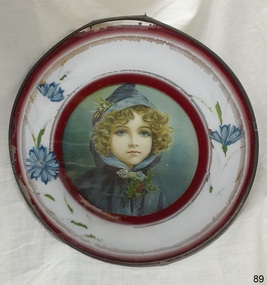 Flagstaff Hill Maritime Museum and Village
Decorative object - Flue Cover Art, 1890s to 1930s
... This pretty flue cover is significant for representing a common domestic wall decoration from the late Victorian to the Edwardian eras, when solid fuel heaters were used in low to high income homes. ...In the late 19th and early-20th centuries household heaters burned wood and coal for heating. In winter the warm air from the fireplace would flow into the room through a round flue in the face of the chimney. In the warmer months the unnecessary heater and flue was removed and the chimney cleaned. Homemakers then covered the circular flue hole with a decorative and usually inexpensive wall hanging to prevent draughts and dust. The practice was especially popular in France and Germany where a lot of the artwork originated. The covers were no longer needed after households changed over to more modern designs of heaters. The flue covers were known as Wall Art or Flue Cover Art. They were usually round and illustrated with a lithograph or chromograph print. The picture was then mounted on card, covered with glass, and framed with a brass or tin rim. The border was commonly gilt with a black stripe around the centre. There were numerous illustrations, many with a European appearance, and were easily bought through local merchants for a small price.This pretty flue cover is significant for representing a common domestic wall decoration from the late Victorian to the Edwardian eras, when solid fuel heaters were used in low to high income homes. The picture is similar to many other flue cover images, apart from the holly clutched in the girl’s hand, which gives the cover a Christmas theme. This flue cover is the only one in our collection and appears to have a unique design; the hand painted floral decoration on the glass and the two crimson rings around the edges of the frame’s white border haven’t been seen on other flue covers. Flue cover, metal and glass. Print of a young girl with blue eyes and curly blonde hair, a hooded blue cape, a silver clasp with blue stones, and a sprig of holly in her hand. The round metal frame forms a deep, white-painted, crimson-edged border for the illustration. The hand-painted blue flowers on the glass front form add to the border and give a 3-dimensional effect. The picture is between the cardboard backing and the glass front, with the metal frame holding them together. There is a metal chain attached for hanging the cover.warrnambool, flagstaff hill maritime museum, picture, handpainted, portrait, girl in blue cape, metal frame, round picture, illustration, print, holly, christmas, child in blue cape, silver and blue clasp, holly sprig, late 19th century, early 20th century, 1890s-1930s, victorain, edwardian, flue cover, flue cover art, wall art, chimney flue cover, chimney hole cover, stove pipe cover, fireplace flue cover, antique, victorian, glass frame, chromograph, lithograph, tin, brass, lithograph print, chromo print, christmas girl, blue cape, blonde girl -
 Flagstaff Hill Maritime Museum and Village
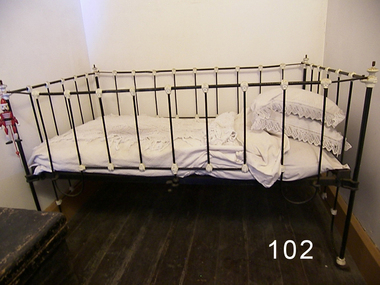
Furniture - Cot, Late 19th to early 20th century
... Edwardian era cast iron beds and cots had much less decoration and were quite plain . An relatively early domestic piece of furniture used as a babies cot giving a snapshot into domestic life around the end of the 19th century and beginning of the 20th. The item is not associated with a significant event, person or place and would have been common place in most homes ...Iron beds made from metal or wrought iron have been around since the late 18th century when they were hand made by craftsmen and artisans. The iron castings were always hand poured and originated from sand cast molds, more ornate beds are associated with the Victorian period. Later in the Edwardian era cast iron beds and cots had much less decoration and were quite plain .An relatively early domestic piece of furniture used as a babies cot giving a snapshot into domestic life around the end of the 19th century and beginning of the 20th. The item is not associated with a significant event, person or place and would have been common place in most homes of the time made by many different manufactures.Cot, metal, with chrome knobs and removable sides. Has wheelsNoneflagstaff hill, warrnambool, flagstaff hill maritime museum, maritime museum, shipwreck coast, flagstaff hill maritime village, great ocean road, cot, metal cot, iron bed -
 Flagstaff Hill Maritime Museum and Village
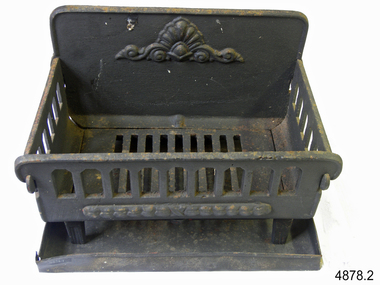
Functional object - Fire Box, Late 19th to early 20th century
... Item used in the late Victorian to early Edwardian period as an insert into a house fireplace allowing the burning of coal or wood as fuel to heat a home....Item used in the late Victorian to early Edwardian period as an insert into a house fireplace allowing the burning of coal or wood as fuel to heat a home. ...Item used in the late Victorian to early Edwardian period as an insert into a house fireplace allowing the burning of coal or wood as fuel to heat a home.An item that is significant as it gives an insight into daily domestic life in the home regards heating.Fire box insert & tray black metal Embossed design to casting at back of box flagstaff hill, warrnambool, shipwrecked-coast, flagstaff-hill, flagstaff-hill-maritime-museum, maritime-museum, shipwreck-coast, flagstaff-hill-maritime-village -
 Flagstaff Hill Maritime Museum and Village
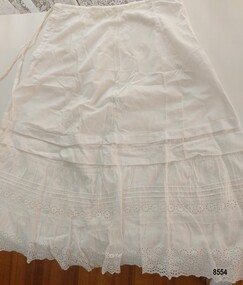
Clothing - Petticoat, late 19th century to early 20th century
... Edwardian petticoats - when the lace at the bottom became worn, it could be cut off and the tucks released. This extended the life of the petticoat. This petticoat features an intricate trim of broderie anglaise. Although broderie anglaise was a lace that could be made by hand, it was very time consuming to make. St Gallen was a city in Switzerland that had become known for producing quality textiles. At the beginning of the 19th century, the first embroidery machines were developed in St Gallen. Factories used embroidery machines but people also had them in their homes...Edwardian petticoats - when the lace at the bottom became worn, it could be cut off and the tucks released. This extended the life of the petticoat. This petticoat features an intricate trim of broderie anglaise. Although broderie anglaise was a lace that could be made by hand, it was very time consuming to make. St Gallen was a city in Switzerland that had become known for producing quality textiles. At the beginning of the 19th century, the first embroidery machines were developed in St Gallen. Factories used embroidery machines but people also had them in their homes ...This petticoat was one of several items donated from the estate of Susan Henry OAM nee Vedmore (1944 - 2021). It is in very good condition and appears to be from the Edwardian era - early 20th century. A petticoat is a lady's undergarment - worn under a skirt or dress. They provided warmth, modesty and shape to the dress. In the middle of the 19th century, petticoats were worn over hoops, bustles or in layers. Petticoats varied according to the style of the outside skirt or dress. Plain petticoats tended to be worn with everyday wear whilst better dresses (party dresses or silk gowns) were worn with petticoats that often had more trim and embellishments. Edwardian petticoats had less volume than Victorian era petticoats and they had a "dust ruffle" or lining under a lace flounce. The "dust ruffle" protected the lace flounce and gave the petticoat more flare at the bottom, greater freedom when walking as well as saving the flounce (which was often made of finer material) from everyday wear and tear. Tucks are another feature of Edwardian petticoats - when the lace at the bottom became worn, it could be cut off and the tucks released. This extended the life of the petticoat. This petticoat features an intricate trim of broderie anglaise. Although broderie anglaise was a lace that could be made by hand, it was very time consuming to make. St Gallen was a city in Switzerland that had become known for producing quality textiles. At the beginning of the 19th century, the first embroidery machines were developed in St Gallen. Factories used embroidery machines but people also had them in their homes. They were able to produce broderie anglaise for export. By the early 20th century, machine made lace, fabric, ribbons etc. were being sold in drapers shops all over England and Wales to women who were making clothes and furnishings for their families. It is highly likely that the lady who made this petticoat brought the lengths of broderie anglaise already made to embellish and personalise her petticoat. Susan's family (Harold and Gladys Vedmore) immigrated to Australia from Wales in 1955 and settled in Warrnambool. Susan was well known in the Warrnambool community for her work supporting children and families across the district - particular those with disabilities, or those who were homeless, unemployed or isolated. Susan was the founding trustee of the "Vedmore Foundation" - a Warrnambool philanthropic trust set up in 2010 to support a range of charitable and not-for-profit causes by providing grant assistance. In 2021, she was awarded a Medal of the Order of Australia for services to the community.This item is an example of the needlework skills of women in the late 19th century - creating pintucks and adding lace to personalise and embellish a practical item of clothing. It is also significant as an example of a practical solution to the difficulties that women of this era faced with regard to the washing of clothes and household linens.A white lawn petticoat with a 22.5 cm opening that fastens with 2 small buttons and a drawstring tie. It is decorated with two wide pintucks followed by two gathered frills (or flounces) - one decorated with three rows of narrow pintucks and a single row of broderie anglaise and the bottom frilled hem finished with 3 rows of broderie anglaise in a flower design. The two bottom frills are lined with plain white cotton fabric.flagstaff hill maritime museum and village, great ocean road, petticoat, lady's petticoat, undergarment, lady's undergarment, lingerie, edwardian petticoat, broderie anglaise, lace, machine made lace, hand sewn, machine sewn, draper's shop, susan henry oam, vedmore foundation -
 Flagstaff Hill Maritime Museum and Village
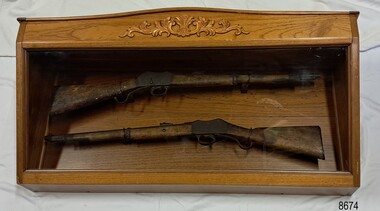
Weapon - Historic Rifles, Royal Small Arms Factory, 1877-1900
... Edwardian-style building with the stables and lock-up behind it and the old police station at the rear. The police continued to have a presence in Woodford until it was closed by the Police Commissioner in July 1917 for economic reasons. The residence was used for government housing until 1923, when it was taken over by the Education Department for the school teacher’s home...Edwardian-style building with the stables and lock-up behind it and the old police station at the rear. The police continued to have a presence in Woodford until it was closed by the Police Commissioner in July 1917 for economic reasons. The residence was used for government housing until 1923, when it was taken over by the Education Department for the school teacher’s home ...Martini-Henry Artillery Carbin rifles were made by the Royal Small Arms Factory at Enfield, Britain, from 1877 until 1900. Many were distributed to the British Colonies, including this pair, which was allocated to the Woodford Police, Victoria Police District of Warrnambool, Southwest Victoria. The Carbine model rifles were shorter than the standard rifles and more suited to mounted police and troopers. It is likely that in the early 20th century, Victoria Police replaced the two carbines with more modern firearms, and the outdated guns were stored in the stables. The rifles were left there and likely forgotten about due to changes in police staff. In 1915, police authorities announced that they would be replacing patrol horses with bicycles and would also close some smaller police stations. This affected Woodford Police Station, which closed in 1917. The forgotten firearms remained in the stables and were noticed by schoolboy Robert Jellie in 1940 and seen again in 1946. In 1995, the property was sold by the Education Department to a private owner. The Woodford Community donated the pair of Martini-Henry Carbines to the Victoria Police Museum in the late 1990s for mounting and display, which was funded by the Victoria Police Historical Society Inc. The decorative wood and glass display case and frame were designed to preserve the significant history of the guns. On November 1st 1999, the display was presented to Warrnambool Police and the local community due to the historical significance of the Woodford Police Station. In 2025, these items were formally deaccessioned by the Victoria Police Museum, and ownership was transferred to the Warrnambool Police Station. On March 10th, 2025, the display was transferred to Flagstaff Hill Maritime Museum and Village, where the historical story of the Martini-Henry Carbines could continue to be preserved and accessed by local families, the community, visitors to the area, and online visitors. WOODFORD POLICE: - The small settlement at Woodford was established in the 1840s around the Merri River where there was a ford across the water and a bridge from 1848 to 1851. The area was settled very early in Victoria’s history, and the river crossing provided travellers with access to the early route between Port Fairy (named Belfast at that time), Warrnambool and Melbourne. Occasionally, a Warrnambool police trooper would ride through Woodford and the district. In December 1854, Woodford Police barracks and stables were built on the hill by the Merri River on Bridge Road east, where Jubilee Park now stands. A local mounted trooper kept law and order in the area. In 1856, a lock-up was installed, and the first Woodford Police Station was in action in 1857. By 1871, the police station had been moved from the hill to land across the Merri River bridge, on the southern side of Bridge Road west, near Mill Street. In 1890, the police residence there was replaced by a stone Edwardian-style building with the stables and lock-up behind it and the old police station at the rear. The police continued to have a presence in Woodford until it was closed by the Police Commissioner in July 1917 for economic reasons. The residence was used for government housing until 1923, when it was taken over by the Education Department for the school teacher’s home. In 1995, it became privately owned. THE MARTINI-HENRY ARTILLERY CARBINE: - The Martini-Henry rifles were made in Britain from 1871 at the Royal Small Arms factory at Enfield and were stamped with the symbol of the Royal Cipher (Crown over VR) over ENFIELD to identify their origin. They were named after two of several people who helped design this method: Swiss Friederich von Martini and Scotsman Alexander Henry. The design was breech-loaded, and the inner barrel was rifled. A thumb rest was incorporated into the top right of the bullet receiver’s chamber. The small teardrop lever on the right side of the rifle showed whether the rifle was ready to be shot. In 1877, the shorter, lighter-weight Carbine version of the firearm was produced for mounted troops and artillery. Its official name was “Carbine, B.L., Rifled, Martini-Henry.” The bullets were slightly lighter in weight than those used for the longer rifle. The sight position was adjusted for the shorter gun, and wings were added to the sight on the tip, making it easier to slide the rifle back into a saddle bag. Some of the later Carbines also had leather sight covers screwed to the stock to prevent them from catching on the saddle bags. The Carbines had accessories available, such as barrel extensions with bayonets and swivels for adding slings. The Martini-Henry Carbine designs were later modified to fire the British .303 ammunition. Eventually, by 1900, the Martini-Henry Carbines were replaced by the Lee Enfield gun design. The pair of Martini-Henry Carbine firearms represents policing in the early pre-1900 days of colonial settlement; Woodford was one of the first townships settled in Victoria, and it had a police presence from 1854 until 1917. The rifles and display provide a historic connection between the location of Woodford and relatives and associates. The carbine rifles show a stage in the evolution of weapon design, adapted to suit mounted troops, and adding features to streamline use and storage. The ammunition was also improved during this progression. The carbines are important for their connection to policing law and order in a remote area. They are significant for their association with the township of Woodford, which was important to travel in the southwest Victoria district, providing access across a river for a road between Port Fairy and Melbourne, and later Warrnambool, and supplying food, goods and accommodation for the travellers. A pair of mounted rifles is mounted behind glass in a timer case, accompanied by a framed display of two photographs and an account of the rifles’ history. The case and display each have a horizontal board with a gently curved edge and carved decorations added. The identical firearms are British-made Martini Henry Carbine breach-loaded rifled guns, supplied by Britain to its Colonial troops from around 1877. The rifles are lever-action, single-shot .500 calibre weapons. They have a teardrop lever on their right side. They were used by Victoria Police mounted troops at the Woodford Police Station, Victoria. The black and white photographs were taken in 1946. The left photograph has a circled area; the right photograph is an enlarged view of the circled area, showing the Woodford Police Station in detail. The printed text is on textured paper with the Victoria Police watermark. It gives a summary of the rifle’s history. There is an inscription on the left photograph. Left photograph, handwritten in white pen: “WOODFORD” Document’s print: “During the late 1840s the small town of Woodford grew around the crossing of the Merri River on the Melbourne/Port Fairy Rad. Woodford was proclaimed a township in 1854 and a police quarters was established there in 1857. The police station remained until 1917 when it was closed and police service from then on was provided from Warrnambool. The building was then used as a school residence and is now privately owned. In !940 Robert JELLIE, then a schoolboy, observed two rifles mounted on the wall of the disused stable at the rear of the old police building. Following the devastating flood of 1946 (see photograph above) the rifles were again seen in the room next to the stable but were not seen again until the building was sold by the Education Department many years later. It was a recognition of the historical value of the rifles which led to their donation to the Warrnambool Police Complex. The rifles have been authenticated by the Victoria Police Armoury as being Victoria Police issue some time before 1900. The rifles are an identical pair of the famous British-made Martini Henry, a .500 inch calibre military weapon widely used by British Colonial troops. Victoria Police and the wider community of Warrnambool are indebted to the members of the Woodford community for their fine gesture in donating the rifles for mounting so that their historical importance can be preserved and they can be displayed for generations to come. This display was funded by the Victoria Police Historical Society Incorporated, and presented on the first day of November, 1999.”flagstaff hill maritime museum and village, great ocean road, shipwreck coast, martini henry, victoria police, woodford police station, rifle, carbine, display case, british, martini henry carbine, breech-loaded, rifled, colonial, single-shot, .500 calibre, weapon, gun, 1877, troops, mounted troops, merri river, victoria police woodford, victoria police warrnambool, victoria police melbourne, police quarters, robert jellie, school residence, stable, 1946 flood, victoria police armoury, identical pair, british colonial troops, victoria police historical society incorporated, woodford, bicycles, found by a schoolboy, edwardian-style building, victoria police museum, warrnambool police station
