
Showing 531 items matching "equator"
-
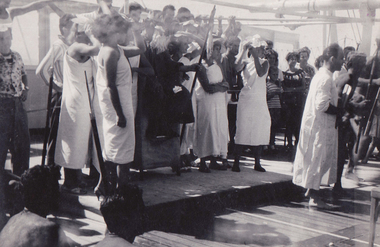 Slovenian Association Melbourne
Crossing the Equator, 1960, photo, Crossing the Equator, 1960, 4th October 2014
... Crossing the Equator, 1960...Crossing the Equator...Aboard ship Flaminia crossing Equator, International waters...Crossing the Equator Ceremony held aboard the ship crossing the equator immigration ceremony Black and white photo Crossing the Equator, 1960 Crossing the Equator, 1960, photo ...Crossing the EquatorCeremony held aboard the ship crossing the equatorBlack and white photoimmigration, ceremony -
 Moorabbin Air Museum
Certificate (item) - Pan Am "Jupiter Rex" certificate for having crossed the Equator circa 1955 and 1957
... Pan Am "Jupiter Rex" certificate for having crossed the Equator circa 1955 and 1957...Certificates for crossing the Equator...two - Mr GM Hosking 1955 - ///- one - Mrs GM Hosking 1957 Certificates for crossing the Equator Pan Am "Jupiter Rex" certificate for having crossed the Equator circa 1955 and 1957 Certificate Pan Am "Jupiter Rex" certificate for having crossed the Equator circa 1955 and 1957 ...two - Mr GM Hosking 1955 - ///- one - Mrs GM Hosking 1957 -
 Mission to Seafarers Victoria
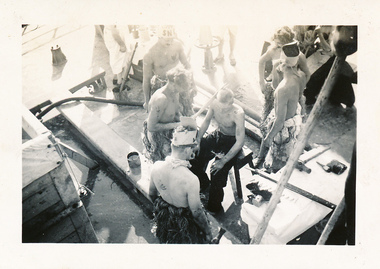
Photograph - Photograph, Black and white, Allan Charles Quinn, Crossing the line on the Ariston, 10 September 1946
... ...equator..."Crossing the line" ceremonies were routinely conducted when a crew member made their first crossing of the equator. This photograph depicts aspects of that ceremony and, as Allan Charles Quinn is the photographer, it is obviously not his first crossing. ...This ceremony was performed to mark a person's first crossing of the equator....Black ink on reverse: Crossing the equator 10.9.46..."Crossing the line" ceremonies were routinely conducted when a crew member made their first crossing of the equator. This photograph depicts aspects of that ceremony and, as Allan Charles Quinn is the photographer, it is obviously not his first crossing. ..."Crossing the line" ceremonies were routinely conducted when a crew member made their first crossing of the equator. This photograph depicts aspects of that ceremony and, as Allan Charles Quinn is the photographer, it is obviously not his first crossing. This photograph was exhibited by the Mission to Seafarers as part of the exhibition "Letters from Abroad" in 2012.This photograph is from the Allan Charles Quinn collection which is a collection of letters and photographs depicting aspects of the life of a young man who went to sea in the period immediately following World War II.Black and white photograph depicting aspect of the "crossing the line" ceremony performed at sea on the Ariston. This ceremony was performed to mark a person's first crossing of the equator.Black ink on reverse: Crossing the equator 10.9.46allan-charles-quinn, crossing-the-line, sweden, central-america, north-west-indies, south-america, equator, ariston, letters-from-abroad -
 Tatura Irrigation & Wartime Camps Museum
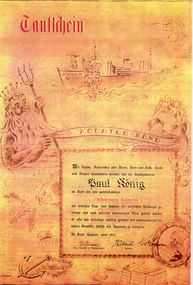
Photograph, Kormoran Certificate on crossing Equator, 1940
... Kormoran Certificate on crossing Equator, 1940...Kormoran Certificate on crossing Equator, 1940.|Paul Koenig....Kormoran Certificate on crossing Equator, 1940.|Paul Koenig. photograph people Kormoran Certificate on crossing Equator, 1940 Photograph ...Kormoran Certificate on crossing Equator, 1940.|Paul Koenig.photograph, people -
 Mission to Seafarers Victoria
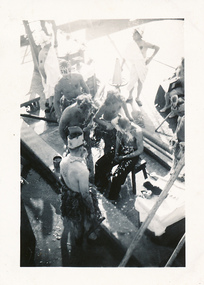
Photograph - Photograph, Black and white, Allan Charles Quinn, Crossing the line on the Ariston, 10 September 1946
... ...equator...The crossing the ceremony was an important part of maritime lore and marked a sailor's first crossing of the equator. This photograph was taken by Allan Charles Quinn and therefore it is presumably not his first crossing but the photograph does depict aspects of the ceremony....Black ink on reverse: Crossing the equator/ on Ariston/ 10.9.46...The crossing the ceremony was an important part of maritime lore and marked a sailor's first crossing of the equator. This photograph was taken by Allan Charles Quinn and therefore it is presumably not his first crossing but the photograph does depict aspects of the ceremony. ...The crossing the ceremony was an important part of maritime lore and marked a sailor's first crossing of the equator. This photograph was taken by Allan Charles Quinn and therefore it is presumably not his first crossing but the photograph does depict aspects of the ceremony.This photograph is from the Allan Charles Quinn collection which is a collection of letters and photographs depicting life at sea for a young man in the period immediately after World War II.Black and white photograph of various members of the crew of the Ariston participating in the "crossing the line" ceremony in 1946.Black ink on reverse: Crossing the equator/ on Ariston/ 10.9.46allan-charles-quinn, crossing-the-line, sweden, central-america, north-west-indies, south-america, equator, ariston -
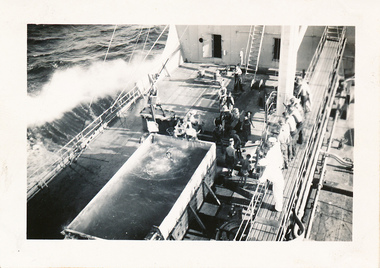 Mission to Seafarers Victoria
Photograph - Photograph, Black and white, Allan Charles Quinn, Crossing the line on the Ariston, 10 September 1946
... ...equator...This photograph depicts the ritual of "crossing the line" which marks the point at which a sailor first crosses the equator. Allan worked aboard the M.T. Ariston during 1946 and worked between Sweden, Central America, North West Indies and South America....Black ink on reverse: Crossing the equator on Ariston/ 10.9.46...This photograph depicts the ritual of "crossing the line" which marks the point at which a sailor first crosses the equator. Allan worked aboard the M.T. Ariston during 1946 and worked between Sweden, Central America, North West Indies and South America. ...This photograph depicts the ritual of "crossing the line" which marks the point at which a sailor first crosses the equator. Allan worked aboard the M.T. Ariston during 1946 and worked between Sweden, Central America, North West Indies and South America.This photograph is from the Allan Charles Quinn collection which is a collection of letters and photographs depicting life at sea for a young man in the period immediately following World War II.Black and white photograph of the "crossing the line" ceremony aboard the Ariston.Black ink on reverse: Crossing the equator on Ariston/ 10.9.46allan-charles-quinn, crossing-the-line, sweden, central-america, north-west-indies, south-america, equator, ariston -
 Mission to Seafarers Victoria
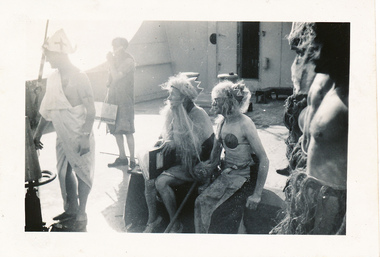
Photograph - Photograph, Black and white, Allan Charles Quinn, Crossing the line on the Ariston, 10 September 1946
... ...equator..."Crossing the line" was an important maritime ritual and denoted the first crossing of the equator by a sailor. This photograph has been taken by Allan Charles Quinn and obviously is not his first crossing but depicts aspects of the ceremony, in particular the way in which crew members would dress up to represent King and Queen Neptune. ...Black ink on reverse: Crossing the equator/ 10.9.46...This is a photograph from the Allan Charles Quinn collection which is a collection of letters and photograph depicting aspects of life at sea for a young man in the era immediately following World War II. allan-charles-quinn crossing-the-line sweden central-america north-west-indies south-america equator ariston letters-from-abroad Black ink on reverse: Crossing the equator/ 10.9.46 Black and white photograph of the "crossing the line" ceremony aboard the Ariston in 1946. ..."Crossing the line" was an important maritime ritual and denoted the first crossing of the equator by a sailor. This photograph has been taken by Allan Charles Quinn and obviously is not his first crossing but depicts aspects of the ceremony, in particular the way in which crew members would dress up to represent King and Queen Neptune. This photograph was exhibited by the Mission to Seafarers as part of the exhibition "Letters from Abroad" in 2012.This is a photograph from the Allan Charles Quinn collection which is a collection of letters and photograph depicting aspects of life at sea for a young man in the era immediately following World War II.Black and white photograph of the "crossing the line" ceremony aboard the Ariston in 1946. Crew members are dressed as King and Queen Neptune.Black ink on reverse: Crossing the equator/ 10.9.46allan-charles-quinn, crossing-the-line, sweden, central-america, north-west-indies, south-america, equator, ariston, letters-from-abroad -
 Slovenian Association Melbourne
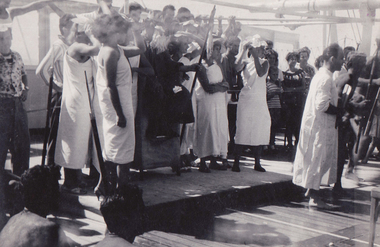
Crossing the Equator, 1960, photo, Crossing the Equator, 1960
... Crossing the Equator, 1960...Crossing the Equator, 1960 Crossing the Equator, 1960, photo ... -
 Highett RSL Sub Branch Inc
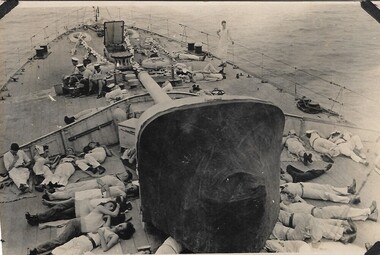
Photograph:, Crossing Equator RN ship WW2
... Crossing Equator RN ship WW2...Crossing Equator RN ship WW2 Photograph: ... -
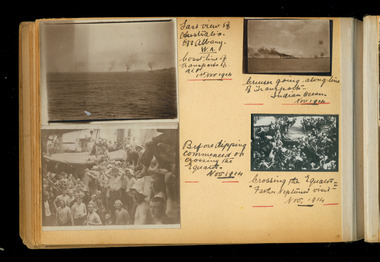 Magnet Galleries Melbourne Inc
view on board ships leaving Australia, red cliffs00156.tif
... ...equator...Last view of Australia off Albany W.A. coast line of transport of a.i.f. 1st nov 1914 ... going along line of transport indian ocean nov 1914 crossing the equator - " ... neptune visit" nov 1914 Before dipping commenced on crossing the equator nov 1914...ww1 world war 1 a.i.f. albany western australia 1914 ship indian ocean equator Last view of Australia off Albany W.A. coast line of transport of a.i.f. 1st nov 1914 ... going along line of transport indian ocean nov 1914 crossing the equator - " ... neptune visit" nov 1914 Before dipping commenced on crossing the equator nov 1914 Four photos on a page from an album red cliffs00156.tif view on board ships leaving Australia ...Four photos on a page from an albumLast view of Australia off Albany W.A. coast line of transport of a.i.f. 1st nov 1914 ... going along line of transport indian ocean nov 1914 crossing the equator - " ... neptune visit" nov 1914 Before dipping commenced on crossing the equator nov 1914ww1, world war 1, a.i.f., albany, western australia, 1914, ship, indian ocean, equator -
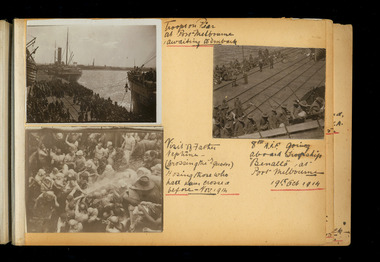 Magnet Galleries Melbourne Inc
Troops waiting to board / aboard ships, red cliffs00157.tif
... ...equator...Troops on pier at port Melbourne awaiting to embark 8th A.I.F. going aboard torp ship 'benalla" at port melbourne sep 1914 visit of father neptune (crossing the equator) hosing those who had never crossed before nov 1914...ww1 a.i.f. world war 1 ship port melbourne equator 8th a.i.f 1914 Troops on pier at port Melbourne awaiting to embark 8th A.I.F. going aboard torp ship 'benalla" at port melbourne sep 1914 visit of father neptune (crossing the equator) hosing those who had never crossed before nov 1914 Three photos on a page from an album red cliffs00157.tif Troops waiting to board / aboard ships ...Three photos on a page from an albumTroops on pier at port Melbourne awaiting to embark 8th A.I.F. going aboard torp ship 'benalla" at port melbourne sep 1914 visit of father neptune (crossing the equator) hosing those who had never crossed before nov 1914ww1, a.i.f., world war 1, ship, port melbourne, equator, 8th a.i.f, 1914 -
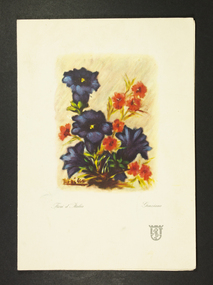 Mission to Seafarers Victoria
Souvenir - Menu, MV Neptunia Crossing the Line Menu
... ...equator...MV Neptunia ship's menu for the February 1959 equator crossing. Extra historical context by the addition of ship's passengers and crew signing their names and providing contact details. ...MV Neptunia ship's menu for the February 1959 equator crossing. Extra historical context by the addition of ship's passengers and crew signing their names and providing contact details. ...MV Neptunia ship's menu for the February 1959 equator crossing. Extra historical context by the addition of ship's passengers and crew signing their names and providing contact details. Representative cruise ship paraphernalia of the period, showing the significance and tradition of celebrating a ship's crossing of the equator. Ship's restaurant menu consisting of single folded light card, with vivid watercolour painting of flowers of orange and purple on the front cover. On opening the card, printed menu selection in Spanish is on the left and is in English on the right. Guests and crew have signed randomly over and around the menu listings. menu, crossing-the-line, equator, neptunia, nick garlick -
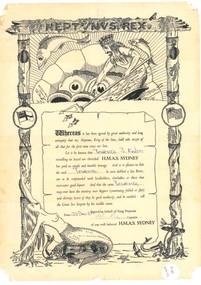 National Vietnam Veterans Museum (NVVM)
Certificate, "Crossing the Line"
... ...equator...These equator-crossing ceremonies typically involve an initiation using water, carried out by King Neptune. ...These equator-crossing ceremonies typically involve an initiation using water, carried out by King Neptune. ...The “Crossing the Line” ceremony is a tradition in the Royal Australian Navy when a vessel crosses the equator. It is an initiation ceremony to commemorate a sailor's first crossing of the Equator, but during the war in Vietnam it was done for the soldiers on board the HMAS Sydney (also known as the Vung Tau Ferry because it did 25 trips transporting soldiers between Sydney and Vung Tau or vice-versa). These equator-crossing ceremonies typically involve an initiation using water, carried out by King Neptune. Those who have yet to cross the equator are known as 'Pollywogs' or 'Tadpoles', while those who have been initiated are referred to as 'Shellbacks'. Yellowed page with line-drawing in black of King Neptune riding three fish at the top and a mermaid at the bottom. Text is in old fashioned font with details written in blue ink.Heading - Nept V NVS Rex/ Text/ Terence J Kevlin travelled on board HMAS Sydney/ Signed 23rd Dec 1967 by Captain of HMAS Sydney on behalf of King Neptune.crossing the line, hmas sydney, terence j kevlin., kevlin, vung tau ferry, equator, neptune -
 Bendigo Historical Society Inc.
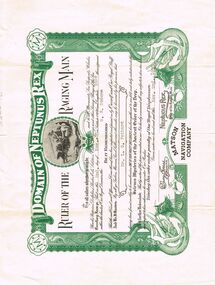
Document - LYDIA CHANCELLOR COLLECTION; CROSSING THE EQUATOR CERTIFICATE
... ... Equator...It is a Crossing of the Equator Certificate which occurred on the 2nd Nov. 1930 in Latitude 000 '00' and Longitude 165 W on S.S. ...DOCUMENT Certificate crossing the equator Lydia Chancellor collection Mr. L.G. ...A certificate with green and black ink with the heading 'Domain of Neptunus Rex.' It is a Crossing of the Equator Certificate which occurred on the 2nd Nov. 1930 in Latitude 000 '00' and Longitude 165 W on S.S. Sonoma. Initiation of Mr. L.G. Pethard, ' having been found worthy to be remembered as one of our trusty shellbacks has been gathered to our fold and duly initiated into the 'Solemn Mysteries of the Ancient Order of the Deep.' 'Davy Jones His Majesty's Scribe.' 'Neptunus Rex Order of the Raging Main.' Matson Navigation Company.document, certificate, crossing the equator, lydia chancellor, collection, mr. l.g. pethard, person, equator -
 Bendigo Military Museum
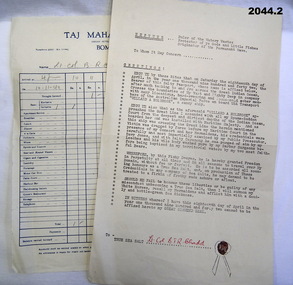
Memorabilia - TRAVEL DOCUMENTS WW2, 1939 - 1940
... .1) Ceremony of crossing the line (equator). Humorous certificate. .2) Receipt from Taj Mahal Hotel, Bombay. ...CHADD, Date 10 Nov 40” .1) Ceremony of crossing the line (equator). Humorous certificate. .2) Receipt from Taj Mahal Hotel, Bombay. ...the items belonged to Benjanin Thomas Roy Chadd No's 10594, VX20311, 1st and 2nd AIF. Refer Cat No 2039 for his service history..1) Ceremony of crossing the line (equator). Humorous certificate. .2) Receipt from Taj Mahal Hotel, Bombay. Both in name of Lt. Col. B. R. CHADD2044.1) Name at bottom “Lt. Col. B. T. R. CHADD” 2044.2) Name at top: “Lt. Col. B. R. CHADD, Date 10 Nov 40”documents - certificates, personal effects-travel goods -
Emerald Museum & Nobelius Heritage Park
Domestic object - World Globe, Chad Valley, 1950s
... The globe consists of two pressed tinplate hemispheres, seamed together at the Equator. The globe was made by prestigious toymakers, Chad Valley....The globe consists of two pressed tinplate hemispheres, seamed together at the Equator. The globe was made by prestigious toymakers, Chad Valley. ...A World Globe which was received as a gift in 1951.The chief interest and significance of this globe is the historical story that it tells of a pre-World War II world with different countries and boundaries. Although the globe was given as a present in 1951, the cartography is clearly pre-war. For example, 'Central Australian Territory' is depicted on the map of Australia when this Territory only existed between 1927 and 1931. Thailand became known as Thailand from 1939 but on this globe, it is identified by its previous name of Siam.Tin globe on metal arc and metal wood effect base. The globe consists of two pressed tinplate hemispheres, seamed together at the Equator. The globe was made by prestigious toymakers, Chad Valley.One side of base: 'A Royal Insignia accompanied by 'BY APPOINTMENT / TOY MAKERS. Underneath at the bottom: CHAD VALLEY MADE IN ENGLAND On other side of base: CLOCK / SETTING / SET THE HOUR / GRADUATION ON THE / GREENWICH LINE OF LONGITUDE / THE TIME AT ANY PARTICULAR PLACE / CAN THEN BE READ AT THE POINT / WHERE ITS LONGITUDE LINE MEETS THE CLOCKglobe, pre-world war ii cartography -
 Bendigo Military Museum
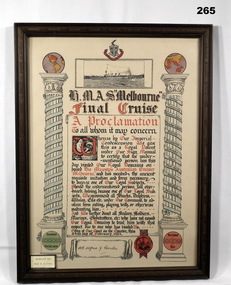
Certificate - CERTIFICATE, FRAMED, HOOK, RAY, HMAS Melbourne Final Cruise, Frame 1.3.1938
... The certificate is, A proclamation given at our Court on the Equator, this 28th day of February 1928”...The certificate is, A proclamation given at our Court on the Equator, this 28th day of February 1928” documents - certificates military history - navy frames At bottom of certificate in scroll, “AB Alfred J Carter” Framed Certificate, timber with decorative edge, brown colour, glass front, certificate, red and black print with ornate pillars each side topped with globes of the world, framing label on back HMAS Melbourne Final Cruise Certificate CERTIFICATE, FRAMED HOOK, RAY ...The certificate is, A proclamation given at our Court on the Equator, this 28th day of February 1928”Framed Certificate, timber with decorative edge, brown colour, glass front, certificate, red and black print with ornate pillars each side topped with globes of the world, framing label on backAt bottom of certificate in scroll, “AB Alfred J Carter”documents - certificates, military history - navy, frames -
 Magnet Galleries Melbourne Inc
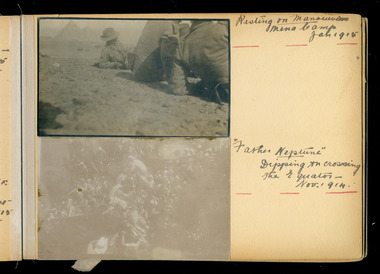
resting mena camp / crossing equator, red cliffs00140.tif
... ...equator...mena camp cairo resting A.I.F aif ww1 world war 1 equator Two photographs on page from an album red cliffs00140.tif resting mena camp / crossing equator ...Two photographs on page from an albummena camp, cairo, resting, a.i.f, aif, ww1, world war 1, equator -
 Bendigo Military Museum
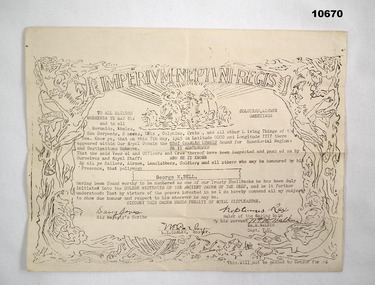
Souvenir - CERTIFICATE, CROSSING EQUATOR, USAT Charles Lummis, c.1945
... Certificate given to crew and passengers for the first time they cross the equator by ship, supposedly from "Neptune" and "Davy Jones". ...Certificate given to crew and passengers for the first time they cross the equator by ship, supposedly from "Neptune" and "Davy Jones". ...Certificate given to crew and passengers for the first time they cross the equator by ship, supposedly from "Neptune" and "Davy Jones". Known as Crossing the Line. This certificate was given to Corporal "George W. Bell". Refer Cat No. 10663.2 for his service details and collection.White single page sheet with stylistic images of a mermaid swimming around edges in black. In centre is a message to sailors and soldiers who are crossing the equatorial line giving them authority to do so. A common souvenir of the time.Signed by "Neptune", "Davy Jones" and Captain W.E. Carley, Ships Master. Inserted name is "George W. Bell". At top "Imperivm-Neptuni-Regis".ceritifcate, souvenir, crossing the line, george w. bell, usat charles lummis -
 Vision Australia
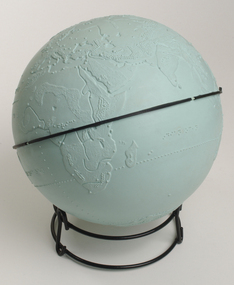
Model - Object, Tactile globe, 1950-1965 approx
... Used to teach geographical information, this tactile globe was most likely produced by the RNIB and used at the RVIB Burwood School. Equator is raised and marked in black rubber. ...Used to teach geographical information, this tactile globe was most likely produced by the RNIB and used at the RVIB Burwood School. Equator is raised and marked in black rubber. ...Used to teach geographical information, this tactile globe was most likely produced by the RNIB and used at the RVIB Burwood School. Equator is raised and marked in black rubber. Topography land masses and meridians are tactically represented, and includes place names in Braille. A different shade of green is used to represent land masses, and major rivers are shown as well.Green plastic tactile globe with metal stand.Variouseducation aids and devices, rvib burwood school -
 Sunshine and District Historical Society Incorporated
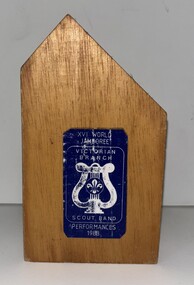
Ephemera - Scouting XVI World Jamboree 1988 Performances Victorian Branch Scout Band Trophy
... - First in the Southern Hemisphere: This was the first World Scout Jamboree held south of the equator, and the first to shift from the traditional August schedule to January to align with the Australian summer... - First in the Southern Hemisphere: This was the first World Scout Jamboree held south of the equator, and the first to shift from the traditional August schedule to January to align with the Australian summer ...Scouts from around the world gather for cultural exchange, outdoor activities, leadership development, and global friendship. The first jamboree was held in London in 1921, and they held in different counties every four years. This trophy is from XVI (16th) Jamboree, which was held from 30 December 1987 to 7 January 1988 at Cataract Scout Park, near Sydney, Australia. Key highlights from this jamboree include. - First in the Southern Hemisphere: This was the first World Scout Jamboree held south of the equator, and the first to shift from the traditional August schedule to January to align with the Australian summer. - Theme: Bringing the World Together — a fitting motto for an event that welcomed 14,434 Scouts from 84 countries, plus 13,000 visitors on Visiting Day. - Opening Ceremony: Held at midnight on 31 December 1987, it was the first official event of Australia’s Bicentenary celebrations, adding national significance to the global gathering Wooden trophy with blue stick-on plaque on frontXVI World Jamboree 1988 Performances Victorian Branch Scout Bandscouting, scouts, cataract scout park, jamboree -
 Melbourne Legacy
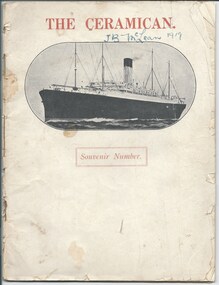
Magazine, The Ceramican. Souvenir Number, 1920
... Notable events such as crossing the equator, a baby competition and stopping in Bombay were some of the photos. ...Notable events such as crossing the equator, a baby competition and stopping in Bombay were some of the photos. ...A commemorative publication from the voyage back to Australia aboard the ship The Ceramic in 1920. It departed Tillbury, UK 12th March and docked in Freemantle on 27th April 1920 and then went onto Adelaide, Melbourne and Sydney. The Ceramic was a transport vessel built in Belfast in 1913 for the White Star Line to transport frozen produce and apples from Australia to UK. It was taken over by the Australian Government for troop transport in October 1914 and could carry over 3,000 troops. This trip in 1920 there were 1467 on board, there were women and children as well as 439 soldiers returning home. The publication has articles of life on the voyage as well as poems, stories, photos and drawings compiled on-board. Notable events such as crossing the equator, a baby competition and stopping in Bombay were some of the photos. Was with other World War 1 memorabilia that has come from Private John Basil McLean, 2nd Reinforcements, 37th Battalion, A.I.F. J.B. McLean (Service No. 13824) was from near Maffra, Victoria and enlisted on 22 January 1916. He embarked on 16 December 1916 for Europe. His full war record is available from AWM. He spent time with the Australian Field Artillery (Pack Section). At the end of the war he worked for a year at the A.I.F. Headquarters in London before returning to Australia on the 'Ceramic', arriving Portsea in 1920.A record of a soldier's journey home after World War 1.An onboard publication x 28 pages, to record the journey home from World War 1.On the cover in blue ink 'J.B. McLean 1919'.world war one, souvenir -
 Melbourne Legacy
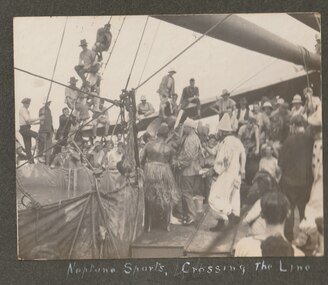
Photograph, Ceramic, 1920
... The photos are of the sports on board when the ship crossed the equator. From the caption it was called Neptune sports and there are people dressed in different costumes. ...The photos are of the sports on board when the ship crossed the equator. From the caption it was called Neptune sports and there are people dressed in different costumes. ...Two photos from an album belonging to JB McLean, of his voyage home from World War 1 in 1920 on the Ceramic. The photos are of the sports on board when the ship crossed the equator. From the caption it was called Neptune sports and there are people dressed in different costumes. The Ceramic departed Tillbury, UK 12th March and docked in Freemantle on 27th April 1920 and then went onto Adelaide, Melbourne and Sydney. The Ceramic was a transport vessel built in Belfast in 1913 for the White Star Line to transport frozen produce and apples from Australia to UK. It was taken over by the Australian Government for troop transport in October 1914 and could carry over 3,000 troops. This trip in 1920 there were 1467 on board, there were women and children as well as 439 soldiers returning home, one of whom was John 'Basil' McLean. Was with other World War 1 memorabilia that has come from Private John Basil McLean, 2nd Reinforcements, 37th Battalion, A.I.F. There was a large collection of postcards so he may have been collecting them as souvenirs. J.B. McLean (Service No. 13824) was from near Maffra, Victoria and enlisted on 22 January 1916. He embarked on 16 December 1916 for Europe. His full war record is available from AWM. He spent time with the Australian Field Artillery (Pack Section). At the end of the war he worked for a year at the A.I.F. Headquarters in London before returning to Australia on the 'Ceramic', arriving Portsea in 1920.A collection of items from John Basil McLean is in the archive. Kept as an indication of what founding legatees experienced in World War One and what they saw on the way home.Sepia photo x 2 of Neptune sports on the Ceramic glued to black cardboard in an album of photos from 1920.Handwritten caption 'Neptune Sports, Crossing the Line' in white ink.souvenir, world war one, jb mclean, ship, ceramic -
 Mission to Seafarers Victoria
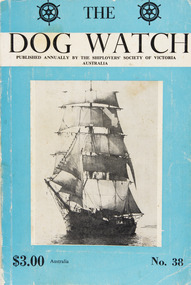
Journal (item) - Periodicals-Annual, Shiplovers' Society of Victoria, The Annual Dog Watch
... Thiele - 50 Crossing the Equator in a Ship's Boat - Captain Yuri Shemansky - 56 "Going Down the Bay" K. ...Thiele - 50 Crossing the Equator in a Ship's Boat - Captain Yuri Shemansky - 56 "Going Down the Bay" K. ...This journal provides the reader with glimpses of the adventures and hardships of a seaman's life. Many of the stories are of sailing ships.Contributes to our knowledge of the importance of shipping and places on record those stories of the sea which would otherwise be lost.Contents Foreword - D. Baillieu - 5 Editorial - S. A. E. Strom - 7 Figureheads - Captain G. Heyen - 13 The Polly Woodside - C. E. Bonwick - 15 The Sinking of A.U.S.N. Steamer "Macumba" - Captain J. D. V. Young - 16 The Real Hero of Quebec The Last Voyage of "Unicorn" Under the American Flag - D. Hannaford - 23 My Mother and Eva Carmichael - A. A. McArthur-Campbell - 30 The "Lauristan" -- Taltal to the Horn - R. W. Rudd - 34 A Sea-Water Mystery - Captain Leif Asklund - 38 Walking Backwards - T. Devaney - 40 Encounter With a Rum-Runner - Captain G. Chapman - 46 The Bosun - R. N. Thiele - 50 Crossing the Equator in a Ship's Boat - Captain Yuri Shemansky - 56 "Going Down the Bay" K. Bull - 59 Voyage in the Clipper "Yorkshire" in 1968 - R. Duruz - 62 A Dream Come True - W. P. Shemmeld - 64 The Mahogany Ship Mystery - J. M. Mackenzie - 68 Things Drake Never Did - E. Harper - 74 "Desdemona" - Captain D. Cowling - 76 A Naval Ploy - Revd. G. H. P. Karney - 90 Echoes of the Travelling Past - S. A. E. Strom - 91 Sail Training For Australia -- Now A Reality - R. Carter - 94 Northern Adventure -- The "Japan" - Captain H. O'May - 98 The Sea - Sire Robert Garran - 100 Voyage of the "Tillicum" - Captain H. W. Watson - 101 Sheepwash - Captain W. Eglen - 103 The Wreck of the "City of York" - E. M. Christie - 104 Wreck of the Barque "Eleanor Lancaster" - C. Dickson Gregory - 109 The Legend of Campbell Island - Captain H. O'May - 110 Book Reviews - 112sailing ships, steamships, shipping, seafaring life, shiplovers' society of victoria, dog watch -
 Flagstaff Hill Maritime Museum and Village
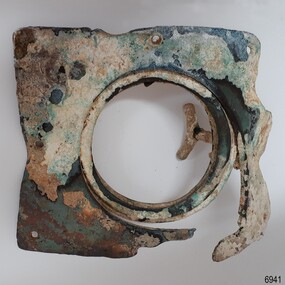
Functional object - Porthole Frame, Alexander Hall and Son, ca. 1855
... The poor winds slowed Schomberg’s sail across the equator. She was 78 days out of Liverpool when she ran aground on a sand spit near Peterborough, Victoria, on 27 December; the sand spit and currents were not marked on Forbes’s map. ...The poor winds slowed Schomberg’s sail across the equator. She was 78 days out of Liverpool when she ran aground on a sand spit near Peterborough, Victoria, on 27 December; the sand spit and currents were not marked on Forbes’s map. ...The porthole was recovered from the wreck of the clipper ship Schomberg. ABOUT THE SCHOMBERG (October 6 to December 27, 1855)- When the ship Schomberg was launched in 1855, she was considered the most perfect clipper ship ever to be built. James Baines Black Ball Line had commissioned her for their fleet of passenger liners. The Aberdeen builders designed her to sail faster than the clippers designed the three-masted wooden clipper ship to be fast. The timber used for the diagonal planking was British oak with layers of Scottish larch. This luxury emigrant vessel was designed for superior comfort. She had ventilation ducts to provide air to the lower decks and a dining saloon, smoking room, library and bathrooms for the first-class passengers. The master for Schomberg’s maiden voyage was Captain ‘Bully’ Forbes. He drunkenly predicted at her launch that he would make the journey between Liverpool and Melbourne in 60 days. Schomberg departed Liverpool on 6 October 1855 with 430 passengers and 3000 tons of cargo including iron rails and equipment intended the build the Geelong Railway and a bridge over the Yarra from Melbourne to Hawthorn. The poor winds slowed Schomberg’s sail across the equator. She was 78 days out of Liverpool when she ran aground on a sand spit near Peterborough, Victoria, on 27 December; the sand spit and currents were not marked on Forbes’s map. The ship’s Chief Officer spotted the coastal steamer SS Queen at dawn and sent a signal. The master of the SS Queen approached the stranded vessel and all of Schomberg’s passengers safely disembarked. In 1975, 120 years after the Schomberg was wrecked, divers from Flagstaff Hill found an ornate communion set at the wreck site along with many other artefacts. In 1978 a diamond ring was discovered under the concretion in the lid of the communion set, which is currently on display. Former Director of Flagstaff Hill, Peter Ronald, had salvaged most of the artefacts from the wreck. This porthole is significant as an example of an ship's fitting in common use in the mid-19th century. The Schomberg collection as a whole is of historical and archaeological significance at a State level. Flagstaff Hill’s collection of artefacts from the Schomberg is also significant for its association with the Victorian Heritage Registered shipwreck (VHR S 612). The collection is of prime significance because of the relationship between the objects salvaged, as together they help us to interpret the story of the Schomberg. The collection as a whole is historically significant for representing aspects of Victoria's maritime history and its potential to interpret social and historical themes.Porthole frame. Square thick metal plate with formed holes for fixing. Central round opening in the plate is fitted with a hinged round frame with a handle opposite the hinge. Bolts are embedded in the inner frame. The surface is encrusted and the plate is broken near one corner. The frame was recovered from the wreck of the Schomberg.flagstaff hill, flagstaff hill maritime museum and village, warrnambool, maritime museum, maritime village, great ocean road, shipwreck coast, schomberg, 1855, clipper ship, black ball line, luxury ship, emigrant ship, captain forbes, bully forbes, ss queen, james baines & co, porthole frame -
 Flagstaff Hill Maritime Museum and Village
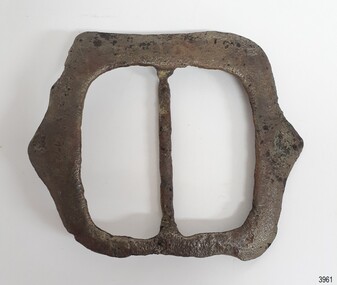
Equipment - Harness Buckle, Ca. 1855
... The poor winds slowed Schomberg’s sail across the equator. She was 78 days out of Liverpool when she ran aground on a sand spit near Peterborough, Victoria, on 27 December; the sand spit and currents were not marked on Forbes’s map. ...The poor winds slowed Schomberg’s sail across the equator. She was 78 days out of Liverpool when she ran aground on a sand spit near Peterborough, Victoria, on 27 December; the sand spit and currents were not marked on Forbes’s map. ...Harness fittings like this buckle were amongst the cargo on the sailing ship Schomberg. ABOUT THE SCHOMBERG (October 6 to December 27, 1855)- When the ship Schomberg was launched in 1855, she was considered the most perfect clipper ship ever to be built. James Baine’s Black Ball Line had commissioned her for their fleet of passenger liners. The Aberdeen builders designed her to sail faster than the clippers designed the three-masted wooden clipper ship to be fast. The timber used for the diagonal planking was British oak with layers of Scottish larch. This luxury emigrant vessel was designed for superior comfort. She had ventilation ducts to provide air to the lower decks and a dining saloon, smoking room, library and bathrooms for the first-class passengers. The master for Schomberg’s maiden voyage was Captain ‘Bully’ Forbes. He drunkenly predicted at her launch that he would make the journey between Liverpool and Melbourne in 60 days. Schomberg departed Liverpool on 6 October 1855 with 430 passengers and 3000 tons of cargo including iron rails and equipment intended the build the Geelong Railway and a bridge over the Yarra from Melbourne to Hawthorn. The poor winds slowed Schomberg’s sail across the equator. She was 78 days out of Liverpool when she ran aground on a sand spit near Peterborough, Victoria, on 27 December; the sand spit and currents were not marked on Forbes’s map. The ship’s Chief Officer spotted the coastal steamer SS Queen at dawn and sent a signal. The master of the SS Queen approached the stranded vessel and all of Schomberg’s passengers safely disembarked. In 1975, 120 years after the Schomberg was wrecked, divers from Flagstaff Hill found an ornate communion set at the wreck site along with many other artefacts. In 1978 a diamond ring was discovered under the concretion in the lid of the communion set, which is currently on display. Former Director of Flagstaff Hill, Peter Ronald, had salvaged most of the artefacts from the wreck.This object is significant as an example of an item in common use in the mid-19th century. The Schomberg collection as a whole is of historical and archaeological significance at a State level. Flagstaff Hill’s collection of artefacts from the Schomberg is also significant for its association with the Victorian Heritage Registered shipwreck (VHR S 612). The collection is of prime significance because of the relationship between the objects salvaged, as together they help us to interpret the story of the Schomberg. The collection as a whole is historically significant for representing aspects of Victoria's maritime history and its potential to interpret social and historical themes.Buckle, square, large, for a horse harness. The silver-plated surface has damage from exposure to the sea. It has been lacquered since its recovery from the wreck of the Schomberg.flagstaff hill, flagstaff hill maritime museum and village, warrnambool, maritime museum, maritime village, great ocean road, shipwreck coast, schomberg, 1855, clipper ship, james baines & co, black ball line, luxury ship, emigrant ship, captain forbes, bully forbes, ss queen, peterborough shipwreck, harnes fitting, horse brass, buckle, horse harness, horse harness buckle -
 Flagstaff Hill Maritime Museum and Village
Equipment - Harness Buckle, Ca. 1855
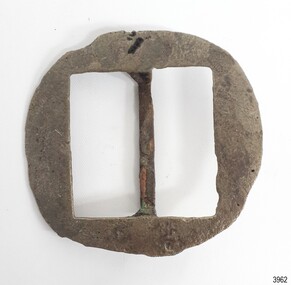
... The poor winds slowed Schomberg’s sail across the equator. She was 78 days out of Liverpool when she ran aground on a sand spit near Peterborough, Victoria, on 27 December; the sand spit and currents were not marked on Forbes’s map. ...The poor winds slowed Schomberg’s sail across the equator. She was 78 days out of Liverpool when she ran aground on a sand spit near Peterborough, Victoria, on 27 December; the sand spit and currents were not marked on Forbes’s map. ...Harness fittings like this buckle were amongst the cargo on the sailing ship Schomberg. ABOUT THE SCHOMBERG (October 6 to December 27, 1855)- When the ship Schomberg was launched in 1855, she was considered the most perfect clipper ship ever to be built. James Baine’s Black Ball Line had commissioned her for their fleet of passenger liners. The Aberdeen builders designed her to sail faster than the clippers designed the three-masted wooden clipper ship to be fast. The timber used for the diagonal planking was British oak with layers of Scottish larch. This luxury emigrant vessel was designed for superior comfort. She had ventilation ducts to provide air to the lower decks and a dining saloon, smoking room, library and bathrooms for the first-class passengers. The master for Schomberg’s maiden voyage was Captain ‘Bully’ Forbes. He drunkenly predicted at her launch that he would make the journey between Liverpool and Melbourne in 60 days. Schomberg departed Liverpool on 6 October 1855 with 430 passengers and 3000 tons of cargo including iron rails and equipment intended the build the Geelong Railway and a bridge over the Yarra from Melbourne to Hawthorn. The poor winds slowed Schomberg’s sail across the equator. She was 78 days out of Liverpool when she ran aground on a sand spit near Peterborough, Victoria, on 27 December; the sand spit and currents were not marked on Forbes’s map. The ship’s Chief Officer spotted the coastal steamer SS Queen at dawn and sent a signal. The master of the SS Queen approached the stranded vessel and all of Schomberg’s passengers safely disembarked. In 1975, 120 years after the Schomberg was wrecked, divers from Flagstaff Hill found an ornate communion set at the wreck site along with many other artefacts. In 1978 a diamond ring was discovered under the concretion in the lid of the communion set, which is currently on display. Former Director of Flagstaff Hill, Peter Ronald, had salvaged most of the artefacts from the wreck.This object is significant as an example of an item in common use in the mid-19th century. The Schomberg collection as a whole is of historical and archaeological significance at a State level. Flagstaff Hill’s collection of artefacts from the Schomberg is also significant for its association with the Victorian Heritage Registered shipwreck (VHR S 612). The collection is of prime significance because of the relationship between the objects salvaged, as together they help us to interpret the story of the Schomberg. The collection as a whole is historically significant for representing aspects of Victoria's maritime history and its potential to interpret social and historical themes.Buckle for a horse harness. The silver-plated surface has been damaged from exposure to the sea. It has been lacquered since its recovery from the wreck of the Schomberg.flagstaff hill, flagstaff hill maritime museum and village, warrnambool, maritime museum, maritime village, great ocean road, shipwreck coast, schomberg, 1855, clipper ship, james baines & co, black ball line, luxury ship, emigrant ship, captain forbes, bully forbes, ss queen, peterborough shipwreck, harnes fitting, horse brass, buckle, horse harness, horse harness buckle -
 Flagstaff Hill Maritime Museum and Village
Equipment - Harness Buckle, Ca. 1855
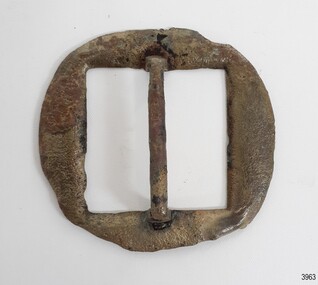
... The poor winds slowed Schomberg’s sail across the equator. She was 78 days out of Liverpool when she ran aground on a sand spit near Peterborough, Victoria, on 27 December; the sand spit and currents were not marked on Forbes’s map. ...The poor winds slowed Schomberg’s sail across the equator. She was 78 days out of Liverpool when she ran aground on a sand spit near Peterborough, Victoria, on 27 December; the sand spit and currents were not marked on Forbes’s map. ...Harness fittings like this buckle were amongst the cargo on the sailing ship Schomberg. ABOUT THE SCHOMBERG (October 6 to December 27, 1855)- When the ship Schomberg was launched in 1855, she was considered the most perfect clipper ship ever to be built. James Baine’s Black Ball Line had commissioned her for their fleet of passenger liners. The Aberdeen builders designed her to sail faster than the clippers designed the three-masted wooden clipper ship to be fast. The timber used for the diagonal planking was British oak with layers of Scottish larch. This luxury emigrant vessel was designed for superior comfort. She had ventilation ducts to provide air to the lower decks and a dining saloon, smoking room, library and bathrooms for the first-class passengers. The master for Schomberg’s maiden voyage was Captain ‘Bully’ Forbes. He drunkenly predicted at her launch that he would make the journey between Liverpool and Melbourne in 60 days. Schomberg departed Liverpool on 6 October 1855 with 430 passengers and 3000 tons of cargo including iron rails and equipment intended the build the Geelong Railway and a bridge over the Yarra from Melbourne to Hawthorn. The poor winds slowed Schomberg’s sail across the equator. She was 78 days out of Liverpool when she ran aground on a sand spit near Peterborough, Victoria, on 27 December; the sand spit and currents were not marked on Forbes’s map. The ship’s Chief Officer spotted the coastal steamer SS Queen at dawn and sent a signal. The master of the SS Queen approached the stranded vessel and all of Schomberg’s passengers safely disembarked. In 1975, 120 years after the Schomberg was wrecked, divers from Flagstaff Hill found an ornate communion set at the wreck site along with many other artefacts. In 1978 a diamond ring was discovered under the concretion in the lid of the communion set, which is currently on display. Former Director of Flagstaff Hill, Peter Ronald, had salvaged most of the artefacts from the wreck.This object is significant as an example of an item in common use in the mid-19th century. The Schomberg collection as a whole is of historical and archaeological significance at a State level. Flagstaff Hill’s collection of artefacts from the Schomberg is also significant for its association with the Victorian Heritage Registered shipwreck (VHR S 612). The collection is of prime significance because of the relationship between the objects salvaged, as together they help us to interpret the story of the Schomberg. The collection as a whole is historically significant for representing aspects of Victoria's maritime history and its potential to interpret social and historical themes.Buckle for a horse harness, square. The silver-plated surface has damage from exposure to the sea. It has been lacquered since its recovery from the wreck of the Schomberg.flagstaff hill, flagstaff hill maritime museum and village, warrnambool, maritime museum, maritime village, great ocean road, shipwreck coast, schomberg, 1855, clipper ship, james baines & co, black ball line, luxury ship, emigrant ship, captain forbes, bully forbes, ss queen, peterborough shipwreck, harnes fitting, horse brass, buckle, horse harness, horse harness buckle -
 Flagstaff Hill Maritime Museum and Village
Equipment - Harness Buckle, Ca. 1855
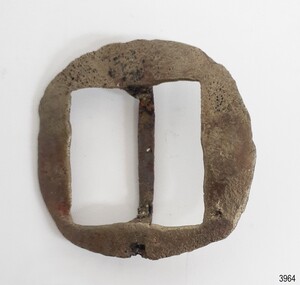
... The poor winds slowed Schomberg’s sail across the equator. She was 78 days out of Liverpool when she ran aground on a sand spit near Peterborough, Victoria, on 27 December; the sand spit and currents were not marked on Forbes’s map. ...The poor winds slowed Schomberg’s sail across the equator. She was 78 days out of Liverpool when she ran aground on a sand spit near Peterborough, Victoria, on 27 December; the sand spit and currents were not marked on Forbes’s map. ...Harness fittings like this buckle were amongst the cargo on the sailing ship Schomberg. ABOUT THE SCHOMBERG (October 6 to December 27, 1855)- When the ship Schomberg was launched in 1855, she was considered the most perfect clipper ship ever to be built. James Baine’s Black Ball Line had commissioned her for their fleet of passenger liners. The Aberdeen builders designed her to sail faster than the clippers designed the three-masted wooden clipper ship to be fast. The timber used for the diagonal planking was British oak with layers of Scottish larch. This luxury emigrant vessel was designed for superior comfort. She had ventilation ducts to provide air to the lower decks and a dining saloon, smoking room, library and bathrooms for the first-class passengers. The master for Schomberg’s maiden voyage was Captain ‘Bully’ Forbes. He drunkenly predicted at her launch that he would make the journey between Liverpool and Melbourne in 60 days. Schomberg departed Liverpool on 6 October 1855 with 430 passengers and 3000 tons of cargo including iron rails and equipment intended the build the Geelong Railway and a bridge over the Yarra from Melbourne to Hawthorn. The poor winds slowed Schomberg’s sail across the equator. She was 78 days out of Liverpool when she ran aground on a sand spit near Peterborough, Victoria, on 27 December; the sand spit and currents were not marked on Forbes’s map. The ship’s Chief Officer spotted the coastal steamer SS Queen at dawn and sent a signal. The master of the SS Queen approached the stranded vessel and all of Schomberg’s passengers safely disembarked. In 1975, 120 years after the Schomberg was wrecked, divers from Flagstaff Hill found an ornate communion set at the wreck site along with many other artefacts. In 1978 a diamond ring was discovered under the concretion in the lid of the communion set, which is currently on display. Former Director of Flagstaff Hill, Peter Ronald, had salvaged most of the artefacts from the wreck.This object is significant as an example of an item in common use in the mid-19th century. The Schomberg collection as a whole is of historical and archaeological significance at a State level. Flagstaff Hill’s collection of artefacts from the Schomberg is also significant for its association with the Victorian Heritage Registered shipwreck (VHR S 612). The collection is of prime significance because of the relationship between the objects salvaged, as together they help us to interpret the story of the Schomberg. The collection as a whole is historically significant for representing aspects of Victoria's maritime history and its potential to interpret social and historical themes.Buckle for a horse harness, square. The silver-plated surface has damage from exposure to the sea. It has been lacquered since its recovery from the wreck of the Schomberg.flagstaff hill, flagstaff hill maritime museum and village, warrnambool, maritime museum, maritime village, great ocean road, shipwreck coast, schomberg, 1855, clipper ship, james baines & co, black ball line, luxury ship, emigrant ship, captain forbes, bully forbes, ss queen, peterborough shipwreck, harnes fitting, horse brass, buckle, horse harness, horse harness buckle -
 Flagstaff Hill Maritime Museum and Village
Equipment - Harness Buckle, Alexander Hall and Son, Ca. 1855
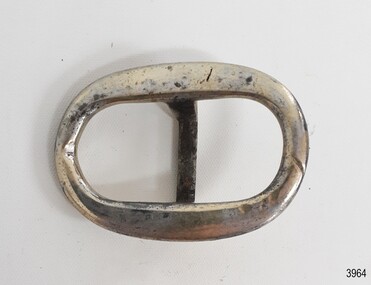
... The poor winds slowed Schomberg’s sail across the equator. She was 78 days out of Liverpool when she ran aground on a sand spit near Peterborough, Victoria, on 27 December; the sand spit and currents were not marked on Forbes’s map. ...The poor winds slowed Schomberg’s sail across the equator. She was 78 days out of Liverpool when she ran aground on a sand spit near Peterborough, Victoria, on 27 December; the sand spit and currents were not marked on Forbes’s map. ...Harness fittings like this buckle were amongst the cargo on the sailing ship Schomberg. ABOUT THE SCHOMBERG (October 6 to December 27, 1855)- When the ship Schomberg was launched in 1855, she was considered the most perfect clipper ship ever to be built. James Baine’s Black Ball Line had commissioned her for their fleet of passenger liners. The Aberdeen builders designed her to sail faster than the clippers designed the three-masted wooden clipper ship to be fast. The timber used for the diagonal planking was British oak with layers of Scottish larch. This luxury emigrant vessel was designed for superior comfort. She had ventilation ducts to provide air to the lower decks and a dining saloon, smoking room, library and bathrooms for the first-class passengers. The master for Schomberg’s maiden voyage was Captain ‘Bully’ Forbes. He drunkenly predicted at her launch that he would make the journey between Liverpool and Melbourne in 60 days. Schomberg departed Liverpool on 6 October 1855 with 430 passengers and 3000 tons of cargo including iron rails and equipment intended the build the Geelong Railway and a bridge over the Yarra from Melbourne to Hawthorn. The poor winds slowed Schomberg’s sail across the equator. She was 78 days out of Liverpool when she ran aground on a sand spit near Peterborough, Victoria, on 27 December; the sand spit and currents were not marked on Forbes’s map. The ship’s Chief Officer spotted the coastal steamer SS Queen at dawn and sent a signal. The master of the SS Queen approached the stranded vessel and all of Schomberg’s passengers safely disembarked. In 1975, 120 years after the Schomberg was wrecked, divers from Flagstaff Hill found an ornate communion set at the wreck site along with many other artefacts. In 1978 a diamond ring was discovered under the concretion in the lid of the communion set, which is currently on display. Former Director of Flagstaff Hill, Peter Ronald, had salvaged most of the artefacts from the wreck.This object is significant as an example of an item in common use in the mid-19th century. The Schomberg collection as a whole is of historical and archaeological significance at a State level. Flagstaff Hill’s collection of artefacts from the Schomberg is also significant for its association with the Victorian Heritage Registered shipwreck (VHR S 612). The collection is of prime significance because of the relationship between the objects salvaged, as together they help us to interpret the story of the Schomberg. The collection as a whole is historically significant for representing aspects of Victoria's maritime history and its potential to interpret social and historical themes.Buckle for a horse harness, oval. The silver-plated surface has damage from exposure to the sea. It has been lacquered since its recovery from the wreck of the Schomberg.flagstaff hill, flagstaff hill maritime museum and village, warrnambool, maritime museum, maritime village, great ocean road, shipwreck coast, schomberg, 1855, clipper ship, james baines & co, black ball line, luxury ship, emigrant ship, captain forbes, bully forbes, ss queen, peterborough shipwreck, harnes fitting, horse brass, buckle, horse harness, horse harness buckle
