
Showing 23 items matching "evacuation of school"
-
 University of Melbourne, Burnley Campus Archives
Photograph - Black and white and colour negatives, AGFA, Burnley Gas Scare April 1991, April 1991
... ...evacuation of school...A gas leak meant the whole school was evacuated to the Oval nearby. Probably taken by a staff member....gas leak staff students evacuation of school 2 packets of black and white and colour photographs with negatives labelled, "Burnley Gas Scare." ...gas leak, staff, students, evacuation of school -
 Whitehorse Historical Society Inc.
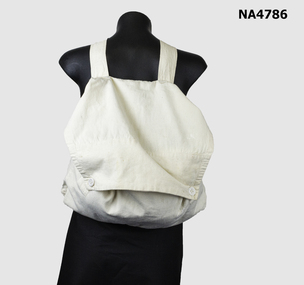
Functional object - Evacuation bag, c1940
... Evacuation bag for school children during WW2 to take their necessary clothes. ...Evacuation bag for school children during WW2 to take their necessary clothes. ...Evacuation bag for school children during WW2 to take their necessary clothes. Made by their mothers from Hartwell Primary SchoolCalico bag was made in approx. 1940 for use as an evacuation bag which could be used to take necessary clothes and nightwear.A calico rectangle bag made for evacuations during WW2, with a front flap with 2 buttons. On back is 2 cross over straps for wearing on back.handcrafts, dressmaking, domestic items, sewing, personal effects, travel goods -
 St Catherine's School
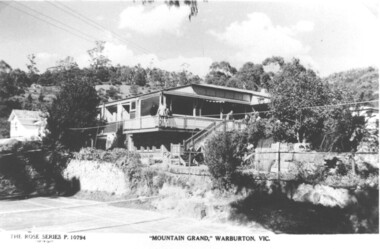
Photograph, Warburton Chalet
... St Catherine's School, Toorak were ordered to evacuate and the whole school relocated to the Warburton Chalet in February 1942 - November 1942...St Catherine's School, Toorak were ordered to evacuate and the whole school relocated to the Warburton Chalet in February 1942 - November 1942 Warburton Chalet Photograph ...St Catherine's School, Toorak were ordered to evacuate and the whole school relocated to the Warburton Chalet in February 1942 - November 1942 -
 Queenscliffe Maritime Museum
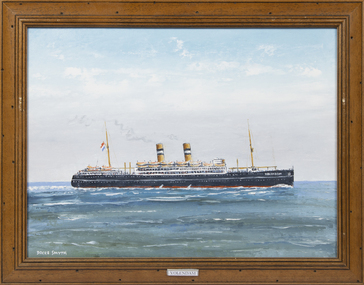
Painting - MV Volendam, Volendam
... Volendam was assigned to the Children's Overseas Reception Board, a British Government scheme introduced in 1940 to evacuate UK school children overseas. She sailed from Liverpool on Thursday 29 August 1940 as one of 33 ships in Convoy OB 205. ...Volendam was assigned to the Children's Overseas Reception Board, a British Government scheme introduced in 1940 to evacuate UK school children overseas. She sailed from Liverpool on Thursday 29 August 1940 as one of 33 ships in Convoy OB 205. ...She was among many Allied merchant ships who escaped to Britain rather than be interned in occupied countries in World War II. Together with Holland America Line's Nieuw Amsterdam she served in the Allied cause. She was then chartered to the British Ministry of War Transport and put into service. Under the terms of the charter the flag and crew would remain Dutch. Volendam was assigned to the Children's Overseas Reception Board, a British Government scheme introduced in 1940 to evacuate UK school children overseas. She sailed from Liverpool on Thursday 29 August 1940 as one of 33 ships in Convoy OB 205. On 30 August 1940 whilst several hundred miles off Malin Head, Northern Ireland and heading into the Atlantic, she was attacked about 2300 hrs by the German submarine U-60, firing two torpedoes that hit No. 1 hold and damaged and caused flooding in No. 2 hold. Captain Wepster then gave the order to abandon ship, and despite rough seas all 18 lifeboats got away safely.In 1947 she was used in the Australia emigrant service and in June 1948 made her first Rotterdam – Quebec sailing for the Netherlands government with capacity for 1,500 single class passengers. On Tuesday October 17, 1950 she departed Rotterdam for Sydney, arriving 6-weeks and 1 day later at her destination on Wednesday November 29, 1950. She brought with her a ship-load of (mainly Dutch) immigrants, all eager to forge new lives in Australia. In September 1948 she started her first Rotterdam – New York sailing and commenced her last voyage on this route in February 1951.A framed oil painting of the MV Volenda,Volendammv volendam, migrant ships, troop ships, u boat attack -
 Bendigo Military Museum
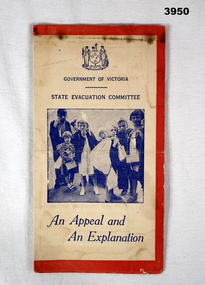
Document - DOCUMENT, EVACUATION, Possibly WW2
... Details the evacuation procedure for all school children from aged between 6 - 15 years & mother or guardian. ...Details the evacuation procedure for all school children from aged between 6 - 15 years & mother or guardian. ...Coloured document, red / white / blue. Document folds out 4 times. Front shows a group of children with hand luggage. Details the evacuation procedure for all school children from aged between 6 - 15 years & mother or guardian. The document is for householders who may be implicated in this procedure during the war.“GOVERNMENT OF VICTORIA STATE EVACUATION COMMITTEE” “An Appeal and An Explanation”document, evacuation, families -
 Bendigo Military Museum
photograph - Fortuna - 1st Year of Army Occupation in Bendigo, 1942
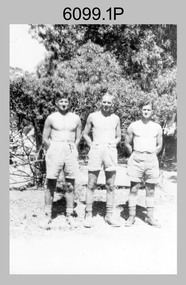
... Major General Rowell quickly approved the selection of Fortuna before other authorities, which were investigating the evacuation of school children, could get in ahead of the Cartographic Company. ...Major General Rowell quickly approved the selection of Fortuna before other authorities, which were investigating the evacuation of school children, could get in ahead of the Cartographic Company. ...This is a set of 17 photographs taken during the first year of Army occupation at Fortuna, Bendigo in 1942. The photos provide an insight into the preparatory work performed on the Fortuna Villa and surrounding buildings, by the Working Party 5th Army Troop and Ordnance Training Depot, before its occupation by personnel from LHQ Cartographic Company, Royal Australian Survey Corps. The annotation on the back of Photos .9P and .10P is misspelt. The correct spelling is ‘Nell Gwynne’. The poppet head of the Central Nell Gwynne mine is still an iconic landmark in Bendigo, lying just down the road from the poppet head lookout at Victoria Hill. The Central Nell Gwynne was the premier mine of Bendigo's 1930s mining revival and is of high historical value, due to the extensive and relatively intact features which remain at the site. The annotation on the back of Photo .17P is incorrect. The location of HQ 5th Army Troop was ‘Reynard St, Coburg.’ By late 1941 as Japan extended its control throughout Indo-China, resolving the accommodation problem of AHQ Cartographic Company located in Melbourne became more urgent. The steady Japanese advance made the bombing of Melbourne no longer a remote possibility, and in accordance with a general policy of dispersion, the Deputy Chief of the General Staff, Major General Sidney Rowell instructed Major William Sarll, in the interests of security of plant and to provide against possible damage of air attack, to investigate suitable safer inland accommodation for AHQ Cartographic Company. Major Sarll inspected many properties before finding one that would meet the requirements of the Cartographic Company. In late 1941, he came to inspect Fortuna, a rambling old mansion with about fifteen acres of ground in central Bendigo. Initially there was no intention to occupy the site beyond the end of the war, although Major Sarll's report to the Director of Survey noted many advantages in moving the Company to Bendigo. Major General Rowell quickly approved the selection of Fortuna before other authorities, which were investigating the evacuation of school children, could get in ahead of the Cartographic Company. On 23 March 1942, the Commonwealth of Australia, under the provisions of the National Security Act of 1939, took possession of the house, the old battery buildings and the fifteen acres of grounds. Under Warrant Officer J. Trist’s direction, over fifty Parks and Works tradesmen completed building works necessary to accommodate the Survey Corps’ military, map making and printing requirements. The building program was still under way when the first officer, Lieutenant Ralph Westgarth, arrived in May 1942 with the advance party which received and positioned all equipment as it came up from Melbourne in semi-trailers. Once the equipment was installed the rest of the Cartographic Company completed its shift to Bendigo by 11th June 1942. The first year of the Survey Corps’ occupation of Fortuna is covered in more detail with additional historic photographs, in pages 17-22 of Valerie Lovejoy’s book 'Mapmakers of Fortuna – A history of the Army Survey Regiment’ ISBN: 0-646-42120-4.This is a set of 17 photographs taken during the first year of Army Occupation at Fortuna, Bendigo in 1942. The black and white photographs were printed on photographic paper and are part of the Army Survey Regiment’s Collection. The photographs were scanned at 300 dpi. .1) - Photo, black & white, 1942. Bendigo Parks and Works tradesmen at Fortuna. L to R: Cliff Day, Ernie Arnold, Norm? .2) - Photo, black & white, 1942. “Don” - possibly SGT Don Sutcliffe. Fortuna, Bendigo. .3) - Photo, black & white, 1942. Parks and Works tradesmen in garden at Fortuna, Bendigo. L to R: Fred & Ernie. .4) - Photo, black & white, 1942. Benny Jack Williams at Fortuna, Bendigo. Accommodation tents were erected above the lake, which later became the parade ground. .5) - Photo, black & white, 1942. Working dress - Giggle suits. Parks and Works tradesmen at Fortuna, Bendigo. L to R: Cliff and Harry on big roof. .6) - Photo, black & white, 1942. Parks and Works tradesmen at Fortuna, Bendigo. Ted on big roof. .7) - Photo, black & white, 1942. Gold crusher battery just behind Fortuna. .8) - Photo, black & white, 1942. Scene of Bendigo from Fortuna. .9) - Photo, black & white, 1942. Nell Gwynne Mine from mullock heap at Victoria Hill near Fortuna, Bendigo. .10) - Photo, black & white, 1942. Nell Gwynne Mine and crusher near Fortuna, Bendigo. .11) - Photo, black & white, 1942. Sluicing for gold at Eaglehawk. .12) - Photo, black & white, 1942. Fortuna, Bendigo taken from the far side of tennis courts. .13) - Photo, black & white, 1942. Fortuna, Bendigo & its reflection from across the lake. .14) - Photo, black & white, 1942. Fortuna, Bendigo from the fishpond. .15) - Photo, black & white, 1942. Fortuna, Bendigo. .16) - Photo, black & white, 1942. First Fortuna Football Team at unknown location. L to R: 5th Bob Wright, 11th SGT Don Sutcliffe. .17) - Photo, black & white, 1942. Working Party from 5th Army Troop and Ordnance Training Depot at Fortuna, Bendigo.Some personnel are identified. Annotated with date within photos. .1) – Annotated on back ‘Cliff, Ernie, Norm, Dec ‘42. Cliff Day - dairy farmer, plasterers’ labourer. Ernie Arnold – hard plasterer. Norm? - QM Store for tools etc. QM Store was the Stables.’ .2) - Annotated on back ‘Don. Fortuna 1942’ .3) - Annotated on back ‘Fred & Ernie. Dec 1942. Carpenters. Note the state of the gardens.’ .4) - Annotated on back ‘Benny Jack Williams Fortuna Bendigo. Tents were erected where present day parade ground is above the lake.’ .5) - Annotated on back ‘Working dress - Giggle suits. June 42. Cliff and Harry on big roof. This photo was taken as the ventilating ridge was being installed on the building housing the printing machines. The machines were installed later by civilian labour when building was complete.’ .6) - Annotated on back ‘Ted on big roof Fortuna Bendigo.’ .7) - Annotated on back ‘Gold crusher battery – Bendigo for slay heap – 1942. 12 stamp battery. Just behind Fortuna. Was working at night when the “Army” came to Bendigo. Later removed to “Coolgardie - WA. Present site of Southern Cross TV.’ .8) - Annotated on back ‘Scene of Bendigo from Fortuna. June 1942.’ .9) - Annotated on back ‘Nell Gwyne Mine from mullock heap (Victoria Hill) Sept 1942.’ .10) - Annotated on back ‘Nell Gwyne Mine and crusher September 1942.’ .11) - Annotated on back ‘Sluicing for gold at Eaglehawk. August 1942.’ .12) - Annotated on back ‘Fortuna Bendigo 1942. Taken from far side of tennis courts.’ .13) - Annotated on back ‘ “Fortuna” across the lake & reflection.’ .14) - Annotated on back ‘Fortuna from fishpond June 1942.’ .15) - Annotated on back ‘Fortuna Dec 1942.’ .16) - Annotated on front ‘X’ x2. Annotated on back First Fortuna Football Team 1942‘Bob Wright’, ‘SGT Don Sutcliffe’. .17) - Annotated ‘Working Party at Fortuna before one of the drafts’, Working Party 5th Army Troop and Ordnance Training Depot Showgrounds, now the Sportsground Bendigo’, ‘HQ of 5th Army Troop was Reynards Rd, Coburg.’royal australian survey corps, rasvy, army survey regiment, army svy regt, fortuna, asr -
 Marysville & District Historical Society
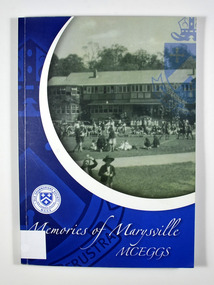
Book, Memories of Marysville-MCEGGS, 2012
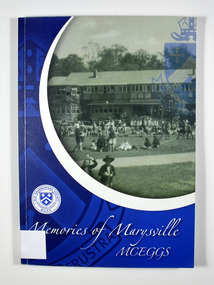
... The story of the evacuation during World War II to various guest houses in Marysville of the students of Melbourne's Church of England Girls' Grammar School ...The story of the evacuation during World War II to various guest houses in Marysville of the students of Melbourne's Church of England Girls' Grammar School marysville victoria wartime guest houses evacuation Stamp of Marysville & District / Historical Society Inc / P.O. ...The story of the evacuation during World War II to various guest houses in Marysville of the students of Melbourne's Church of England Girls' Grammar School Paperback. The front cover has a black and white photograph named 'Field Day at Marylands'. Back cover has a black and white photograph of 'Girls in the main street after church one winter's morning.Stamp of Marysville & District / Historical Society Inc / P.O. Box 22 / Marysville 3779marysville, victoria, wartime, guest houses, evacuation -
 Marysville & District Historical Society
Book, Memories of Marysville-MCEGGS, 2012
... The story of the evacuation during World War II to various guest houses in Marysville of the students of Melbourne's Church of England Girls' Grammar School ...The story of the evacuation during World War II to various guest houses in Marysville of the students of Melbourne's Church of England Girls' Grammar School marysville victoria wartime guest houses evacuation Stamp of Marysville & District / Historical Society Inc / P.O. ...The story of the evacuation during World War II to various guest houses in Marysville of the students of Melbourne's Church of England Girls' Grammar School Paperback. The front cover has a black and white photograph named 'Field Day at Marylands'. Back cover has a black and white photograph of 'Girls in the main street after church one winter's morning.Stamp of Marysville & District / Historical Society Inc / P.O. Box 22 / Marysville 3779 marysville, victoria, wartime, guest houses, evacuation -
 Federation University Historical Collection
Document - Document - Correspondence, ZILLES COLLECTION: Letter paper and cards - Defence Forces, Portsea and Queenscliff
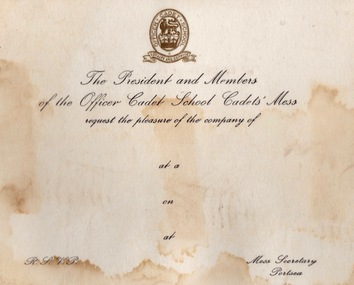
... School. The quarantine station still operated and the Army had to be prepared to evacuated in an emergency. ...School. The quarantine station still operated and the Army had to be prepared to evacuated in an emergency. ...Zilles Printers was begun by Lewis Zilles in the early 1930s. It was in McKenzie Street Ballarat. His son Jeffrey also became a printer - letterpress, offset and screen printer. The business became Zilles Printers/Graphics and was in Armstrong Street and later Bell Street Ballarat. Items are work done for the Australian Defence Force bases at Portsea and Queenscliff. They were training bases - Officer Cadet School and Australian Staff College. Originally the base at Portsea was the Quarantine Station established in the late 1800s. International protocols required captains of arriving ships to provide a clean bill of health from the last port of call. If this was not possible all on board would be transferred to the Quarantine Station by boat for observations. This was to stop the spread of diseases such as cholera, small pox, typhoid fever, influenza and the plague. In 1952 it became a military training base - Officer Cadet School. The quarantine station still operated and the Army had to be prepared to evacuated in an emergency. This occurred in 1954 when 113 passengers on board the Strathaird were quarantined with smallpox. Cadets and staff came with their families and was a small township. Training for the Vietnam War was here, Now gone the remnants of the quarantine station and army activites can be seen. Under Point Nepean Community Trust. Fort Queenscliff dates from 1860 when it was an open battery known as Shortlands Bluff. The Garrison included volunteer artillery, engineers and infantry. It was a Coastal Defence Installation from 1883-1946. The base on Swan Island was part of this and soldiers from the Fort would go on detail to the Island each day. A permanent group with their families were housed there. The children would attend the local school in Queenscliff. It eventually became and still is a restricted area. In 1946 the Fort became home of the Army Command and Staff College. Officers came from overseas to train. Families would come with them and be accommodated in the main officers residence "Maytone" or private housing rented by the Army. Their children would attend local schools. Staff Colleges were all moved to Canberra. The Fort is now the Army Soldiers Career Management Agency and houses all historical documents related to the Army. .1 Off-white card with gold badge and black writing. .2 White card with separate page held together with blue and red ribbon. Badge in gold on front. Two Officer Cadet School flags - crossed and Christmas Greeting in blue inside card. .3 Off-white paper with Australian Staff College emblem. Blue print.2 Officer Cadet School emblem - lion and crown in centre. Flags - British and Australian .3 Emblem - crossed swords, owl and crownzilles printers, australian defence force, quarantine station portsea, officer cadet school, fort queenscliff, open battery, swan island, staff college, army command, zilles collection -
 Ringwood and District Historical Society
Manual, Southwood Primary School, Ringwood - Evacuation Procedure Manual (undated - circa - post 1983)
... evacuation and emergency procedures. Includes Action Plan, Staff members, Instructions, Types of Threats and school building plan...evacuation and emergency procedures. Includes Action Plan, Staff members, Instructions, Types of Threats and school building plan Southwood Primary School, Ringwood - Evacuation Procedure Manual (undated - circa - post 1983) Manual Manual ...Bound Manual describing evacuation and emergency procedures. Includes Action Plan, Staff members, Instructions, Types of Threats and school building plan -
 Ringwood and District Historical Society
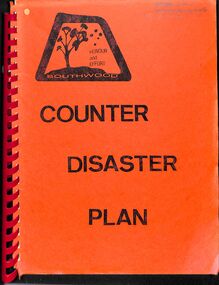
Manual, Southwood Primary School, Ringwood - Counter Disaster Plan Manual (undated - circa - post 1983) (Later version than 11626)
... evacuation and emergency procedures. Includes Action Plan, Staff members, Instructions, Types of Threats and school building plan. ...evacuation and emergency procedures. Includes Action Plan, Staff members, Instructions, Types of Threats and school building plan. ...Bound Manual describing evacuation and emergency procedures. Includes Action Plan, Staff members, Instructions, Types of Threats and school building plan. Similar content (but later version) to VC 11626 -
Ringwood and District Historical Society
Booklet, Southwood Primary School Evacuation Proceedure
... Southwood Primary School Evacuation Proceedure Booklet ... -
Ringwood and District Historical Society
Document, Ringwood Technical School, 1982 - Policies, Structures, Roles, SRC, Camp Duncan Rules etc
... The Index pdf lists the contents of each part but is repeated here: Part 1 • General Educational Policy • Procedures Adopted By The Curriculum Board In Order To Implement The Educational Policy Part 2 • School Administrative Structure o Operational Structure - Operations Committee o Curriculum Board o Org Chart • Role of the Senior Teacher • Role of Head of Department • Role of Assistant with Responsibility • Role of Year Level Coordinator • Role of Section Leader Part 3 • Role of the Welfare Officer • Bell Times 1983 • School Layout • Evacuation Procedure and Diagram • Recording of Students’ Attendance • Staff Absences • Concerning School Rules Part 4 - SRC • Students; Representative Council – Constitution and Rules Part 5 – Camp Duncan, Excursion etc • Camp Duncan Disposition of Duties 1983 • Receipts/forms pro-forma • Some Facts About Camp Duncan • Camp Duncan Date 1983 • Student Checklist and Luggage Requirements for Camps and excursions • Confidential Medical Report for School Camps • Parental Permission Form Part 6 • Education Department Victoria o Pay Advice and Allowance Table o Subject Coding o Leave o General Advice on Transfers o Excursion procedure, Approval Form • Student Assembly Points ...The Index pdf lists the contents of each part but is repeated here: Part 1 • General Educational Policy • Procedures Adopted By The Curriculum Board In Order To Implement The Educational Policy Part 2 • School Administrative Structure o Operational Structure - Operations Committee o Curriculum Board o Org Chart • Role of the Senior Teacher • Role of Head of Department • Role of Assistant with Responsibility • Role of Year Level Coordinator • Role of Section Leader Part 3 • Role of the Welfare Officer • Bell Times 1983 • School Layout • Evacuation Procedure and Diagram • Recording of Students’ Attendance • Staff Absences • Concerning School Rules Part 4 - SRC • Students; Representative Council – Constitution and Rules Part 5 – Camp Duncan, Excursion etc • Camp Duncan Disposition of Duties 1983 • Receipts/forms pro-forma • Some Facts About Camp Duncan • Camp Duncan Date 1983 • Student Checklist and Luggage Requirements for Camps and excursions • Confidential Medical Report for School Camps • Parental Permission Form Part 6 • Education Department Victoria o Pay Advice and Allowance Table o Subject Coding o Leave o General Advice on Transfers o Excursion procedure, Approval Form • Student Assembly Points Ringwood Technical School, 1982 - Policies, Structures, Roles, SRC, Camp Duncan Rules etc Document ...Set of Documents describing school policies, structure, roles, SRC, Camp Duncan, subject coding, emergency procedures etc. Scanned in 6 parts due to volume of pages. Most pages are not numbered. Donated by Joan Pickford (nee Dear) 2022. (Prefect 1970-71). The Index pdf lists the contents of each part but is repeated here: Part 1 • General Educational Policy • Procedures Adopted By The Curriculum Board In Order To Implement The Educational Policy Part 2 • School Administrative Structure o Operational Structure - Operations Committee o Curriculum Board o Org Chart • Role of the Senior Teacher • Role of Head of Department • Role of Assistant with Responsibility • Role of Year Level Coordinator • Role of Section Leader Part 3 • Role of the Welfare Officer • Bell Times 1983 • School Layout • Evacuation Procedure and Diagram • Recording of Students’ Attendance • Staff Absences • Concerning School Rules Part 4 - SRC • Students; Representative Council – Constitution and Rules Part 5 – Camp Duncan, Excursion etc • Camp Duncan Disposition of Duties 1983 • Receipts/forms pro-forma • Some Facts About Camp Duncan • Camp Duncan Date 1983 • Student Checklist and Luggage Requirements for Camps and excursions • Confidential Medical Report for School Camps • Parental Permission Form Part 6 • Education Department Victoria o Pay Advice and Allowance Table o Subject Coding o Leave o General Advice on Transfers o Excursion procedure, Approval Form • Student Assembly Points rts, ringwood tech -
 Eltham District Historical Society Inc
Newspaper - News Clipping, Herald, He died at Eltham. Herald, March 4, p3, 4 Mar 1965
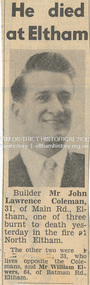
... Students at North Eltham State School had to be evacuated when the blaze threatened the building. ...Students at North Eltham State School had to be evacuated when the blaze threatened the building. ...John Lawrence Coleman (1934-1965) born January 10, was the son of Raymond John Coleman and Hanna May (Gillet) Coleman. He married Margaret Frances Dare in 1955 and was the father of two children. He died whilst attempting to rescue an older man trapped in the bushfire at North Eltham on March 3, 1965 He died at Eltham (Herald, 4 March 1965, p3) [Picture of John Lawrence Coleman] Builder Mr John Lawrence Coleman, 31, of Main Rd., Eltham, one of three men burnt to death yesterday in the fire at North Eltham. The other two were XXXXX, 33 who lives opposite the Colemans and Mr William Elwers, 64 of Batman Rd., Eltham. * * * Frank Martin was a volunteer with the Eltham rural fire brigade at the time of the 1965 bushfires which burnt Eltham North and Research. Frank was asked to assist with the removal of three bodies from the back gully (now Orchard Avenue). They were badly burnt and one was found stuck under a fence as though trying to escape. Volunteers John Coleman Jnr, William Elwers and George Crowe were killed trying to protect Eltham from bushfire – they were local heroes. At the time, John Coleman Jnr was survived by his wife Margaret and two young children – John 11 and Vicky 2. Margaret Coleman lived in the family home until 1992 when she sold it and moved to Tasmania to be close to her son. She died in 1997 aged 65 years. 75 yr old Ken Gaston grew up on Edendale farm, which was originally a poultry farm but is now owned and run by the Shire of Nillumbik as an educational farm for schools and visitors. He was Captain of the Eltham rural fire brigade in 1965 when John Coleman Jnr was burnt to death in the Eltham North bushfires serving as an unofficial volunteer. He was able to draw where the original Wattletree Road was and at the time was verified with the location of some remaining bitumen and a post from the original bridge over the Diamond Creek located near the junction of the Diamond Creek and another small creek which is further down from Research or Christmas Creek as locals refer to it. The original Main Road ran behind Colemans before the railway line was built beyond Eltham in 1912. (Information recorded by Harry Gilham, President EDHS c.2011) * * * Bushfires rage in Victoria, Snowy: Three dead (1965, March 4). The Canberra Times (ACT : 1926 - 1995), p. 1. Retrieved May 19, 2022, from http://nla.gov.au/nla.news-article131758981 Includes two photos of the fire in North Eltham “Firemen make for safety as fire rages in Upper Glen Park Road, North Eltham, Victoria. The smoke hides a house.” and “A house explodes into flames at North Eltham, Victoria. Firemen said bottled gas went up.” Canberra Times (ACT : 1926 - 1995), Thursday 4 March 1965, page 1 ________________________________________ Firemen make for safety as fire rages in Upper Glen Park Road. North Eltham. Victoria. The smoke hides a house. A house explodes into flames at North Eltham. Victoria. Firemen said bottled gas went up. Bushfires rage in Victoria, Snowy: Three dead MELBOURNE, Wednesday.—Three people died today in a bush» fire which raged through North Eltham, about 15 miles from Melbourne. The victims were three men. A fourth man is feared to be dead. Another bushfire. sparked off by the heatwave sizzling over south-eastern Australia, is burning out of control in the Kosciusko State Park, in the Snowy Mountains. Firefighters fear that if it reaches pine forests up the Yarrangobilly River, they will be powerless to stop it. The three victims of the North Eltbam fire were trapped by flames in a valley. Their bodies were found only a few yards apart. They were named by police tonight as Mr. George Crowe, 78, of North Eltham, William John Ewers, 64, and John Laurence Coleman, 31, both of Eltham. The other two have not been identified. They are believed to be a man aged about 40 and an 18-year-old youth. At least 12 homes were destroyed by the fire, the worst in Victoria since 1962, when eight lives were lost and hundreds of homes burnt down at Warrandyte. At one time the township of Eltham was threatened, but a cool change swept in from the south and held back the wall of flames. More than 100 dogs, worth about £4,000, died when the fire raced through two kennels in Short Street, Eltham. and Upper Glen Park Road, North Eltham. A trickle of water Residents ran into the streets as the blaze raced towards their houses. Others frantically dug firebreaks around their homes. Mrs. Sue Recourt wept when firemen arrived while she was vainly trying to stop the flames with a trickle of water from the garden hose. A stack of firewood was blazing, but the firemen managed to save the house and rescue four goats. Many homes in Eltham were saved after flames had crept to within feet of their fences. Students at North Eltham State School had to be evacuated when the blaze threatened the building. Fire fighters were severely hampered by lack of water and narrow roads. The blaze, which began in above century heat, turned toward Wattle Glen, where two houses were gutted. Then the flames raced towards Hurstbridge to the north. Firemen battling desperately, controlled the fire late this afternoon. Five forest fires were still burning in Victoria tonight. IN VICTORIA THIS WEEK Tragic lack of central fire authority (1965, March 9). The Canberra Times (ACT : 1926 - 1995), p. 2. Retrieved May 19, 2022, from http://nla.gov.au/nla.news-article131759928 Canberra Times (ACT : 1926 - 1995), Tuesday 9 March 1965, page 2 ________________________________________ IN VICTORIA THIS WEEK Tragic lack of central fire authority From Rohan Rivett It was the worst week for Victorian fire fighters since Black Friday 27 years ago. On that day one pilot up in a spotter plane said afterwards: "It seemed at times that half the State was on fire." This time, for three days on end, Gippsland men, women and children had moments of conviction that their towns would have blackened into anonymity before the weekend was out. The week began with horror at Eltham on the North-eastern edge of Melbourne. Eltham today is something of an artists' colony. Oil painters, water colourists, potters and sculptors proliferate. A number of University folk have emulated the example of Professor MacMahon Ball who pioneered the way by moving to Eltham and carving a home out of the bush in the thirties. Innermost Eltham is barely 14 miles from the G.P.O. Farthest Eltham stretches miles beyond. It served to illustrate the tragi-ludicrous truncation of Victoria's fire control. Part of Eltham is under the protection of the Melbourne Fire Brigade. But this responsibility ceases at some invisible and incomprehensible line — apparently determined by the meanderings of the water mains. At this point everybody's property throughout the rest of Eltham is dependent on the Country Fire Authority. Half an hour before midday on Wednesday, a fire suddenly started on the West side of Upper Glen road on the edge of Eltham. Before the fire brigade could arrive, it was burning on a widening front through timber and high grass north of Eltham. Two wind changes in rapid succession saw the fire leaping Diamond Creek. With a freshening wind it struck home after home in three streets. More than one of them exploded suddenly as if hit by an incendiary bomb. There is no piped gas in the Eltham area, hence many housewives use bottle gas. The flames outside caused the bottles to explode. Altogether twelve homes were completely incinerated and four more were badly damaged. Thirty prize dogs perished. About three hours after the fire started it raced suddenly down a gully hillside trapping an elderly man. Two other men apparently raced to the rescue. Flames caught the three men within yards of each other, not 200 yards off the Upper Glen Park Road where safety lay. They were burned to death. Next evening an angry and convincing secretary of the Fire Brigade Union, Mr. W. M. Webber, came on television and appealed to the people of Victoria to end the ridiculous and dangerous dualism in fire-fighting control. The Eltham fire, he said, had precisely illustrated the situation. The Metropolitan Fire Brigade area touched Eltham, but where the fire had gutted and killed, was just outside its area. Mr. Webber said his union had constantly urged one authority for the State with a complete reorganisation of fire protection. On Wednesday the union had repeated its call for an inquiry into fire protection in Victoria to the Chief Secretary, Mr Rylah. "No matter how close the liaison between the two organisations, there are always divided sections of thinking," Mr. Webber told viewers. "I don't know how much tragedy the com-munity can take before it demands that it is properly protected." Rumours that differences in gauge between taps and hose nozzles (as between the two authorities) accentuated the damage were denied by fire chiefs who said that all appliances were now carrying adaptors so that hoses could be linked to mains everywhere. But there is grave concern in the Metropolitan Fire Brigade's higher councils at the action of several Federal authorities with projects in and around Melbourne. They are installing non-standard equipment without reference to the State authorities or any dovetailing of appliances and equipment. Public alarm was not diminished by the publication on Friday and Saturday of a heart tearing letter from the young widow of John Lawrence Coleman, 31 year old father of two, who had died in the flames apparently trying to rescue the old man trapped in the gully. By that time, a Vast area of Gippsland was in flames and the troops had been sent in to back up the overworked and often helpless fire-fighters. By Saturday, the Leader of the Opposition, Mr. Stoneham, who has previously demanded a Royal Commission into fire-fighting arrangements, repeated his demand. To add to the Chief Secretary's worries he was publicly rebuked for allegedly implying on television that lives had been lost at Eltham because people went to the wrong place at the wrong time. In a letter to the Press, Professor MacMahon Ball pointed out that two of the men involved were experienced bushmen who had gone "to help an old man in great danger fully aware of the danger to themselves". As Victoria faced its sixth day of total State-wide fire ban, it looked likely that even official resistance was not going to silence the demand for one central authority to control the fire fiend. At the moment, the 400 square miles where two million Victorians live in Greater Melbourne are divorced from the rest of the State in planning, communications, equipment and control of personnel. No one doubts the whole-hearted co-operation and willingness to back each other up of the M.F.B. and the C.F.A., both at top-level and among the firemen themselves. However, when a city straggles so deeply into the country side, the absence of a single authority, to oversee and analyse the fire threat as a whole, suggests suicidal policy of divide and fuel. Emphasis of the tragic loss of a member of a pioneering family who died whilst helping others in his communitybushfire, cfa, country fire authority, fire brigrade, glen park road, heroes, john lawrence coleman, north eltham, victorian bushfires - 1965, volunteers, william john elwers, fire fighter, frank martin, george john crowe, ken gaston, orchard avenue -
 Kiewa Valley Historical Society
Evacuation Plans for children during WWII, 1941
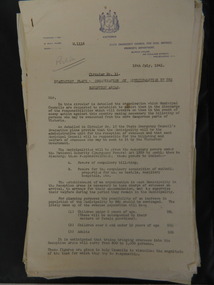
... evacuation of their own children if necessary. The documents list householders living in the Kiewa Valley including Gundowring giving an insight into the families (size, age, religion, sex), the homes (size, number and type of rooms), Water supply, Conveyance (motor or horse drawn), distance from railway station and school. ...During World War 2 the State Emergency Council for Civil Defence (Victoria) sent out forms to Municipal Councils requesting a survey to be carried out regarding the suitability of householders to accommodate persons, especially children, in the more dangerous parts of Victoria. Also, surveying parents as to their wishes regarding the evacuation of their own children if necessary. The documents list householders living in the Kiewa Valley including Gundowring giving an insight into the families (size, age, religion, sex), the homes (size, number and type of rooms), Water supply, Conveyance (motor or horse drawn), distance from railway station and school. Papers created by the State Emergency Council for Civil Defence, Premier's Department 1941 requesting Municipal Councils to survey people in case of the billeting of persons who may be evacuated from the more dangerous parts of Victoria. The Accommodation Survey lists the householder, details of the house, how many people living there and how many could be accommodated.There are also forms asking householders if they wish their children to be evacuated if necessary.Forms filled out in ink. world war ii; evacuation plans; kiewa valley; gundowring -
 Eltham District Historical Society Inc
Newspaper - News Clipping, Herald, The big Eltham clean-up gets under way, Herald, 4 March, p3, 1965
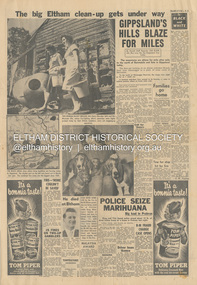
... Students at North Eltham State School had to be evacuated when the blaze threatened the building. ...Students at North Eltham State School had to be evacuated when the blaze threatened the building. ...Full page newspaper clipping featuring the March 1965 Victorian bushfires. Items include: Photograph - TWO-WOMAN BUCKET BRIGADE, Mrs Henry Marsden (left) and Mrs Moureen Ellis, whose fire-fighting efforts yesterday were highly praised today by their Eltham neighbours, carry out mopping-up operations Photograph - DOGS MADE HOMELESS by the fire in North Eltham yesterday are being cared for at First-Constable Doug. Mummery's kennels at Eltham and here is kennel maid Helen Oliver, 17, with some of them today. The two basset hounds are owned by Mr Bill Guy who lost about 100 daschund and basset hound puppies and dogs in the fire. Photograph - He died at Eltham [Picture of John Lawrence Coleman] Builder Mr John Lawrence Coleman, 31, of Main Rd., Eltham, one of three men burnt to death yesterday in the fire at North Eltham. The other two were XXXXX, 33 who lives opposite the Colemans and Mr William Elwers, 64 of Batman Rd., Eltham. John Lawrence Coleman (1934-1965) born January 10, was the son of Raymond John Coleman and Hanna May (Gillet) Coleman. He married Margaret Frances Dare in 1955 and was the father of two children. He died whilst attempting to rescue an older man trapped in the bushfire at North Eltham on March 3, 1965 Other news stories of the day: Bushfires rage in Victoria, Snowy: Three dead (1965, March 4). The Canberra Times (ACT : 1926 - 1995), p. 1. Retrieved May 19, 2022, from http://nla.gov.au/nla.news-article131758981 Includes two photos of the fire in North Eltham “Firemen make for safety as fire rages in Upper Glen Park Road, North Eltham, Victoria. The smoke hides a house.” and “A house explodes into flames at North Eltham, Victoria. Firemen said bottled gas went up.” Canberra Times (ACT : 1926 - 1995), Thursday 4 March 1965, page 1 ________________________________________ Firemen make for safety as fire rages in Upper Glen Park Road. North Eltham. Victoria. The smoke hides a house. A house explodes into flames at North Eltham. Victoria. Firemen said bottled gas went up. Bushfires rage in Victoria, Snowy: Three dead MELBOURNE, Wednesday.—Three people died today in a bush» fire which raged through North Eltham, about 15 miles from Melbourne. The victims were three men. A fourth man is feared to be dead. Another bushfire. sparked off by the heatwave sizzling over south-eastern Australia, is burning out of control in the Kosciusko State Park, in the Snowy Mountains. Firefighters fear that if it reaches pine forests up the Yarrangobilly River, they will be powerless to stop it. The three victims of the North Eltbam fire were trapped by flames in a valley. Their bodies were found only a few yards apart. They were named by police tonight as Mr. George Crowe, 78, of North Eltham, William John Ewers, 64, and John Laurence Coleman, 31, both of Eltham. The other two have not been identified. They are believed to be a man aged about 40 and an 18-year-old youth. At least 12 homes were destroyed by the fire, the worst in Victoria since 1962, when eight lives were lost and hundreds of homes burnt down at Warrandyte. At one time the township of Eltham was threatened, but a cool change swept in from the south and held back the wall of flames. More than 100 dogs, worth about £4,000, died when the fire raced through two kennels in Short Street, Eltham. and Upper Glen Park Road, North Eltham. A trickle of water Residents ran into the streets as the blaze raced towards their houses. Others frantically dug firebreaks around their homes. Mrs. Sue Recourt wept when firemen arrived while she was vainly trying to stop the flames with a trickle of water from the garden hose. A stack of firewood was blazing, but the firemen managed to save the house and rescue four goats. Many homes in Eltham were saved after flames had crept to within feet of their fences. Students at North Eltham State School had to be evacuated when the blaze threatened the building. Fire fighters were severely hampered by lack of water and narrow roads. The blaze, which began in above century heat, turned toward Wattle Glen, where two houses were gutted. Then the flames raced towards Hurstbridge to the north. Firemen battling desperately, controlled the fire late this afternoon. Five forest fires were still burning in Victoria tonight. IN VICTORIA THIS WEEK Tragic lack of central fire authority (1965, March 9). The Canberra Times (ACT : 1926 - 1995), p. 2. Retrieved May 19, 2022, from http://nla.gov.au/nla.news-article131759928 Canberra Times (ACT : 1926 - 1995), Tuesday 9 March 1965, page 2 ________________________________________ IN VICTORIA THIS WEEK Tragic lack of central fire authority From Rohan Rivett It was the worst week for Victorian fire fighters since Black Friday 27 years ago. On that day one pilot up in a spotter plane said afterwards: "It seemed at times that half the State was on fire." This time, for three days on end, Gippsland men, women and children had moments of conviction that their towns would have blackened into anonymity before the weekend was out. The week began with horror at Eltham on the North-eastern edge of Melbourne. Eltham today is something of an artists' colony. Oil painters, water colourists, potters and sculptors proliferate. A number of University folk have emulated the example of Professor MacMahon Ball who pioneered the way by moving to Eltham and carving a home out of the bush in the thirties. Innermost Eltham is barely 14 miles from the G.P.O. Farthest Eltham stretches miles beyond. It served to illustrate the tragi-ludicrous truncation of Victoria's fire control. Part of Eltham is under the protection of the Melbourne Fire Brigade. But this responsibility ceases at some invisible and incomprehensible line — apparently determined by the meanderings of the water mains. At this point everybody's property throughout the rest of Eltham is dependent on the Country Fire Authority. Half an hour before midday on Wednesday, a fire suddenly started on the West side of Upper Glen road on the edge of Eltham. Before the fire brigade could arrive, it was burning on a widening front through timber and high grass north of Eltham. Two wind changes in rapid succession saw the fire leaping Diamond Creek. With a freshening wind it struck home after home in three streets. More than one of them exploded suddenly as if hit by an incendiary bomb. There is no piped gas in the Eltham area, hence many housewives use bottle gas. The flames outside caused the bottles to explode. Altogether twelve homes were completely incinerated and four more were badly damaged. Thirty prize dogs perished. About three hours after the fire started it raced suddenly down a gully hillside trapping an elderly man. Two other men apparently raced to the rescue. Flames caught the three men within yards of each other, not 200 yards off the Upper Glen Park Road where safety lay. They were burned to death. Next evening an angry and convincing secretary of the Fire Brigade Union, Mr. W. M. Webber, came on television and appealed to the people of Victoria to end the ridiculous and dangerous dualism in fire-fighting control. The Eltham fire, he said, had precisely illustrated the situation. The Metropolitan Fire Brigade area touched Eltham, but where the fire had gutted and killed, was just outside its area. Mr. Webber said his union had constantly urged one authority for the State with a complete reorganisation of fire protection. On Wednesday the union had repeated its call for an inquiry into fire protection in Victoria to the Chief Secretary, Mr Rylah. "No matter how close the liaison between the two organisations, there are always divided sections of thinking," Mr. Webber told viewers. "I don't know how much tragedy the com-munity can take before it demands that it is properly protected." Rumours that differences in gauge between taps and hose nozzles (as between the two authorities) accentuated the damage were denied by fire chiefs who said that all appliances were now carrying adaptors so that hoses could be linked to mains everywhere. But there is grave concern in the Metropolitan Fire Brigade's higher councils at the action of several Federal authorities with projects in and around Melbourne. They are installing non-standard equipment without reference to the State authorities or any dovetailing of appliances and equipment. Public alarm was not diminished by the publication on Friday and Saturday of a heart tearing letter from the young widow of John Lawrence Coleman, 31 year old father of two, who had died in the flames apparently trying to rescue the old man trapped in the gully. By that time, a Vast area of Gippsland was in flames and the troops had been sent in to back up the overworked and often helpless fire-fighters. By Saturday, the Leader of the Opposition, Mr. Stoneham, who has previously demanded a Royal Commission into fire-fighting arrangements, repeated his demand. To add to the Chief Secretary's worries he was publicly rebuked for allegedly implying on television that lives had been lost at Eltham because people went to the wrong place at the wrong time. In a letter to the Press, Professor MacMahon Ball pointed out that two of the men involved were experienced bushmen who had gone "to help an old man in great danger fully aware of the danger to themselves". As Victoria faced its sixth day of total State-wide fire ban, it looked likely that even official resistance was not going to silence the demand for one central authority to control the fire fiend. At the moment, the 400 square miles where two million Victorians live in Greater Melbourne are divorced from the rest of the State in planning, communications, equipment and control of personnel. No one doubts the whole-hearted co-operation and willingness to back each other up of the M.F.B. and the C.F.A., both at top-level and among the firemen themselves. However, when a city straggles so deeply into the country side, the absence of a single authority, to oversee and analyse the fire threat as a whole, suggests suicidal policy of divide and fuel. Emphasis of the tragic loss of a member of a pioneering family who died whilst helping others in his communitybushfire, cfa, country fire authority, fire brigrade, glen park road, heroes, john lawrence coleman, north eltham, victorian bushfires - 1965, volunteers, william john elwers, fire fighter, frank martin, george john crowe, ken gaston, orchard avenue, doug mummery, helen oliver, mrs henry marsden, mrs moureen ellis -
 Wangaratta RSL Sub Branch
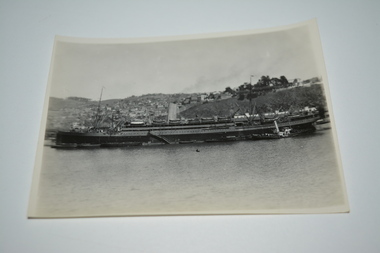
Photograph, SS Orduna
... On 12 August 1940, SS Orduna sailed from Liverpool with a privately organised party of 16 children from Belmont Preparatory school, Hassocks Sussex to Nassau. It was part of a wider British Government children's evacuation program during World War II, when the prospect of imminent invasion threatened Britain. ...On 12 August 1940, SS Orduna sailed from Liverpool with a privately organised party of 16 children from Belmont Preparatory school, Hassocks Sussex to Nassau. It was part of a wider British Government children's evacuation program during World War II, when the prospect of imminent invasion threatened Britain. ...On 12 August 1940, SS Orduna sailed from Liverpool with a privately organised party of 16 children from Belmont Preparatory school, Hassocks Sussex to Nassau. It was part of a wider British Government children's evacuation program during World War II, when the prospect of imminent invasion threatened Britain. In 1941 with the need for military transport in the Second World War, she was put into service by the British government as a troopship. Another task during the Second World War was that of an evacuation transport. In 1945 the Orduna brought back Prisoners of War and internees from the Far East. A memorial to the ships involved in the repatriation was unveiled on the Liverpool waterfront on 15 October 2011. Black and white photograph of ship at sea alongside populated coastline.In pencil on rear - SS Orduna - We escorted her from Panama to Valparaisoss orduna, ww2 -
 Surrey Hills Historical Society Collection
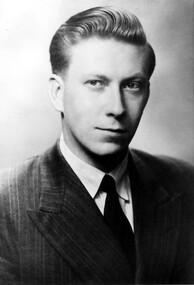
Photograph, Dr John Willmott Bennett
... The family moved to England shortly before WW2 and he completed his schooling at Mill Hill in Uxbridge (and at St Bees School in Cumberland to which Mill Hill was evacuated). He entered St Bartholomew's Hospital Medical College in 1946. ...The family moved to England shortly before WW2 and he completed his schooling at Mill Hill in Uxbridge (and at St Bees School in Cumberland to which Mill Hill was evacuated). He entered St Bartholomew's Hospital Medical College in 1946. ...John was the eldest son of Dr Jack (Frederick John) and Mrs Doris Bennett (nee Willmott). His paternal grandfather, John Henry Bennett, was also a doctor who practiced in St Arnaud and Hawthorn. John was born in Melbourne on 23 October 1924 and attended Scotch College for his early education. The family moved to England shortly before WW2 and he completed his schooling at Mill Hill in Uxbridge (and at St Bees School in Cumberland to which Mill Hill was evacuated). He entered St Bartholomew's Hospital Medical College in 1946. He married Christina Hudson in Cambridge in 1946 and they followed the rest of the family back to Australia in 1948. John was Resident Medical Officer at the Repatriation Hospital in Heidelberg from 1948-1953. He was an Honorary Clinical Assistant at the Royal Melbourne Hospital from 1950-1965 and became a member of the Royal Australasian College of Physicians in 1953. He joined Drs W Langley Carrington, William (Bill) Vorath and Norman Rose at the Surrey Hills Medical Centre in 1953. He lived in Camberwell and had 2 sons and 1 daughter; one son also qualified as a doctor, working in Hobart. His brother Robert, a radiologist, lived in Mont Albert and one of his 4 daughters, Dr Penny Bennett, also worked at Surrey Hills Medical Centre at a later period. Ref: Article in Chiron - Medical Genes: The Bennett Family written by Dr WRC (Robert) Bennett, 1989. The donor was a niece of John Bennett.The Surrey Hills Medical Centre was one of the first, if not the first, general practice to include specialists as partners soon after WW2. Black and white formal head and shoulders photo of Dr John Willmott Bennett who was a general practitioner in the 1950s and 1960s at the Surrey Hills Medical Centre. doctors, surrey hills medical centre, dr john willmott bennett -
 Northern District School of Nursing. Managed by Bendigo Historical Society Inc.
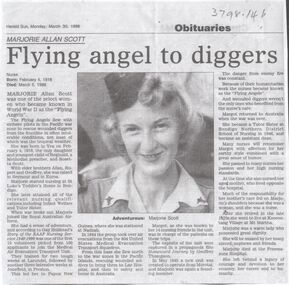
Document - Obituary for Marjorie Allan Scott 1918 - 1988
... School 53 February 1962. Marjorie flew with Airforce pilots in the Pacific accompanying rescued wounded diggers. She started nursing at St Luke's Toddler's Home in Bendigo and joined the Royal Australian Airforce in 1940 to join the Medical Air Evacuation Transport Unit. ...Memories compiled by Peter Rosewall; who attended the last NDSN school PTS 108 between 1986 - 89. Memoir Nursing tutor NDSN RAAF Medical Air Evacuation Transport Unit St Lukes Toddler's Home Assistant Dean Two copies of newspaper cutting titled "Flying Angel to Diggers" Marjorie Allan Scott from Herald Sun March 30, 1998. ...The Northern District School of Nursing opened in 1950 in to address the issues around nurse recruitment, training and education that had previously been hospital based. The residential school was to provide theoretical and in-house education and practical training over three years. The students would also receive practical hands-on training in the wards of associated hospitals. The Northern District School of Nursing operated from Lister House, Rowan Street, Bendigo. It was the first independent school of nursing in Victoria and continued until it closed in 1989. The book "The First of its Kind" was published in 2015. Printed in Bendigo by "Bendigo Modern Press". Memories compiled by Peter Rosewall; who attended the last NDSN school PTS 108 between 1986 - 89.Two copies of newspaper cutting titled "Flying Angel to Diggers" Marjorie Allan Scott from Herald Sun March 30, 1998. Provided by Janene Mcnamara School 53 February 1962. Marjorie flew with Airforce pilots in the Pacific accompanying rescued wounded diggers. She started nursing at St Luke's Toddler's Home in Bendigo and joined the Royal Australian Airforce in 1940 to join the Medical Air Evacuation Transport Unit. After the war in 1946, she became a tutor sister at NDSN then became assistant Dean. memoir, nursing, tutor ndsn, raaf medical air evacuation transport unit, st lukes toddler's home, assistant dean -
 Melbourne Legacy
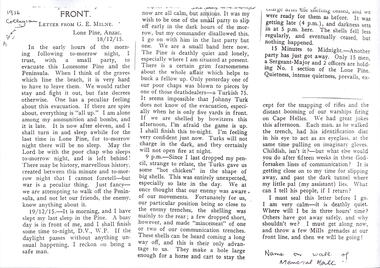
Document, Letter from GE Milne, Lone Pine ANZAC 18/12/1915, 1915
... evacuation. The other papers with this letter show that Legatee Don S (probably Simonson) had attended a planting of a Lone Pine seedling at Scotch College and the Head had read the letter out as part of the service. George Milne had attended school...evacuation. The other papers with this letter show that Legatee Don S (probably Simonson) had attended a planting of a Lone Pine seedling at Scotch College and the Head had read the letter out as part of the service. George Milne had attended school ...Black and white photocopy of a typed letter written by Company Sergeant Major (later Captain) George Eric Milne on the second last night at Lone Pine, Gallipoli. The letter to his parents show that he was scheduled to be in the second last party to leave the area during the evacuation. The other papers with this letter show that Legatee Don S (probably Simonson) had attended a planting of a Lone Pine seedling at Scotch College and the Head had read the letter out as part of the service. George Milne had attended school at Scotch College and is commemorated with his name on the wall of the Memorial Hall. From NAA his record shows that he had left Australia as part of the 24th Battalion (on the same ship as Legacy founder Stan Savige), he served at Gallipoli. Later with the 46th Battalion he was wounded in action and died in France on 5 April 1918, and is buried at Gezaincourt Communal Cemetery. Full text of the letter is transcribed and attached.A first hand account of the evacuation of Lone Pine from someone in the same battalion as Stan Savige.Black and white A4 photocopy x 5 pages of a typed letter written by GE Milne and associated research.gallipoli, world war one, george milne, evacuation -
 Wodonga & District Historical Society Inc
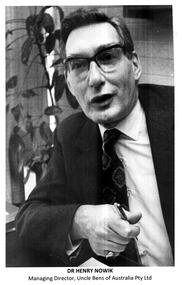
Mixed media - Dr Henry Nowik and Uncle Bens at Wodonga
... evacuated to London where he was appointed RAF Aide-de-Camp to General Charles de Gaulle. He was later awarded the French Croix de Guerre. After the war Dr Nowik received a PhD in Political Science and Law from American Beirut University before moving to London to teach at the London School of Economics. ...evacuated to London where he was appointed RAF Aide-de-Camp to General Charles de Gaulle. He was later awarded the French Croix de Guerre. After the war Dr Nowik received a PhD in Political Science and Law from American Beirut University before moving to London to teach at the London School of Economics. ...Dr Henry Nowik played a critical role in the development of industry in Wodonga, through his management and leadership of Uncle Bens Wodonga from 1965 until 1979. Born in Poznan, Poland in 1917, Henry was studying medicine in Paris when World War II broke out and he enlisted in the Royal Air Force, serving with distinction as a Bomber Pilot. He was imprisoned in Russia when his plane ditched, escaped through Kazakhstan and was eventually evacuated to London where he was appointed RAF Aide-de-Camp to General Charles de Gaulle. He was later awarded the French Croix de Guerre. After the war Dr Nowik received a PhD in Political Science and Law from American Beirut University before moving to London to teach at the London School of Economics. He then moved into industry occupying a number of senior positions in marketing and market research. In 1964, Dr Nowik, then Market Research Manager for Pedigree Petfoods, the British arm of Mars Inc., came to Australia to research the prospects for establishing a petfood business. Dr Nowik was a passionate believer in the need for decentralisation of Australian industry. In 1965 Uncle Bens of Australia began building their first Australian factory in Wodonga, Victoria, from humble beginnings in a small house in Hovell Street. It became fully operational in 1967. Dr Nowik became the Marketing and Sales Director and in 1970 the Managing Director. Dr Nowik's work as a member of the Albury-Wodonga Consultative Committee was recognized in 1975 with the Order of the British Empire and in 1977 he was appointed Chairman of the Commonwealth Government's Decentralisation Advisory Board. He participated in a number of trade missions to Malaysia, China and Japan and was a Member of the Executive Committee of the Trade Development Council and the Victorian Promotion Committee. These contributions were recognised in 1982 when he was made an Officer of the Order of Australia. In 1979, Dr Nowik left Wodonga and moved to the United States to become Vice-President, Marketing for Mars, becoming Global Product Group President in 1980. Following his retirement in 1985 he continued to act as Senior Advisor to a number of Mars' businesses. Albury-Wodonga retained a special place in Dr Nowik's heart and he kept a close interest in Charles Sturt University, sharing his time, experience and expertise with staff and students. The University made him an honorary Doctor of Letters in 1993 when the Henry Nowik Lecture Theatre officially opened at the University's Albury campus. Later the City of Wodonga named a park in his honour. Dr Nowik and his wife returned to Australia in 2004, first living in Brisbane then moving to Maleny in Queensland. Henry Nowik died on 12th March 2015 aged 98. These items are significant because they demonstrate the contribution made to the Wodonga community and the Australian economy by Dr Henry Nowik AO OBE.A collection of items briefly documenting the contribution of Dr Henry Nowik to Wodonga, Victoria. Included are photos of Dr Nowik, newspaper items, a photo of the first office of Uncle Bens in Wodonga and a farewell card from Dr Nowik.dr henry nowik, uncle bens wodonga -
 Department of Energy, Environment and Climate Action
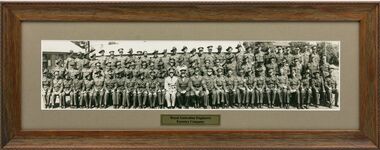
Photo - Royal Australian Engineers - Forestry Company
... School of Forestry in 1922. Both Forestry Companies sailed from Fremantle on the Stratheden in late May 1940 and landed in England not long after the evacuation of Dunkirk. ...School of Forestry in 1922. Both Forestry Companies sailed from Fremantle on the Stratheden in late May 1940 and landed in England not long after the evacuation of Dunkirk. ...Soon after the outbreak of World War Two, the British Government requested experienced forestry soldiers from Australia, New Zealand and Canada to be deployed in France as part of the British Expeditionary Force. The first Forestry Company (2/1) was based in Sydney with men from NSW, Queensland and South Australia, led by Captain Cyril Richard Cole, a professional forester from the Australian Capital Territory. The second Forestry Company (2/2) included many Forests Commission staff, local sawmillers and experienced bushmen from Victoria, WA and Tasmania including veterans of the First World War. They were led by Captain Andrew Leonard (Ben) Benallack, a graduate from the Victorian School of Forestry in 1922. Both Forestry Companies sailed from Fremantle on the Stratheden in late May 1940 and landed in England not long after the evacuation of Dunkirk. The foresters were recalled to Australia at the insistence of Prime Minister John Curtin in late 1943 because of the War in the Pacific. After reequipping and some refresher training in jungle warfare at Kapooka the 2/2 Forestry Company was deployed to Lae in Papua New Guinea in May 1944. This photograph was probably taken in Australia before deployment to PNG.Photo in wooden frame of Royal Australian Engineers Forestry Company -
 Vision Australia
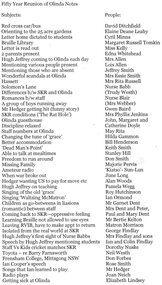
Audio - Sound recording, Olinda reunion 1992: 50 years on, 1992
... In 1942, the children who attended the RVIB School were evacuated to Olinda as the Armed Services took over the most of the site until 1945. ...In 1942, the children who attended the RVIB School were evacuated to Olinda as the Armed Services took over the most of the site until 1945. ...In 1942, the children who attended the RVIB School were evacuated to Olinda as the Armed Services took over the most of the site until 1945. Remembering the first day at the Georgian House at Olinda, all the children were asked to write home to their family to advise them of their evacuation. As many parents could not read Braille, these letters were taken first to the Braille Library then to the home of a former student, who had to advise them of their child's relocation. At this reunion, 50 years later, the days at Olinda are remembered by the students, two parents and some staff members in various recordings.2 audio recordings of the reunion of Olinda attendeesroyal victorian institute for the blind, oral history, cyril minns, margaret tompkins, hugh jeffrey, trudi westh, gwen baird, phyllis jenkins, dorothy hamilton, joan morice, bryan sitlington, ray betson, ron best, elaine leahy, essie smith, glenys jay, david ditchfield, edna whitehead, olinda, john doyle, margaret doyle, catherine doyle, may rita, hilda gammon, bill henderson, keith smith, stanley hill, don drummond, frank wills, don smith, marjorie pivus, sun-lun, june long, alan woods, pamela wegg, roy hutchinson, garnett dent, bert kelton, matron jessie morrison, george findlay, ian findlay, colin findlay, rvib school, rose forbes (nee smith), joe berriman, monty james, ray bettsen, ron bestwood, ormond hall, fred sutcliffe, nurse blair, ben hewitt, heather stewart, peg sitlington, margaret russell, allan crotty, vivian glover, ray bedser, bertie glenister, harry parsons, jimmy schultz, helen hall, professor ron mccallum, ian cooper, geoffrey green, arthur mckay, harry foster, neil westh, betty de hugard
