
Showing 176 items matching "family relationships"
-
 National Vietnam Veterans Museum (NVVM)
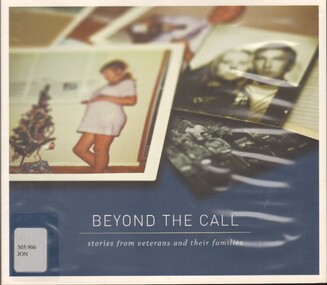
Book, Sayer-Jones, Moya, Beyond The Call: Stories From Veterans And Their Families
... Veterans - Australia - Family relationships...Veterans - Australia - Interviews Veterans - Australia - Family relationships Post-traumatic stress disorder - Patents - Family relationships These stories have been created directly from my conversations with veterans and their families. ...These stories have been created directly from my conversations with veterans and their families. They are in their own words.These stories have been created directly from my conversations with veterans and their families. They are in their own words.veterans - australia - interviews, veterans - australia - family relationships, post-traumatic stress disorder - patents - family relationships -
 National Vietnam Veterans Museum (NVVM)
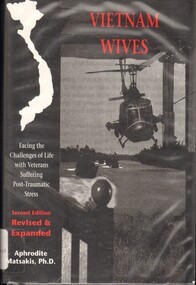
Book, Matsakis, Aphrodite, Vietnam Wives: Facing the Challenges of Life with Veterans Suffering Post-Traumatic Stress. (Copy 1)
... Post-traumatic stress disorder - Patients - Family relationships...Post-traumatic stress disorder - Patients - Family relationships Veterans - United States - mental health Vietnamese Conflict 1961-1975 - Psychological aspects Vietnam Wives is a profoundly moving book on the phycological and social consequences of war for families; a "must read" for anyone interested in the realities of war. ...Vietnam Wives is a profoundly moving book on the phycological and social consequences of war for families; a "must read" for anyone interested in the realities of war. It should be required reading for all politicians. There are lots of helpful suggestions for wives at the endVietnam Wives is a profoundly moving book on the phycological and social consequences of war for families; a "must read" for anyone interested in the realities of war. It should be required reading for all politicians. There are lots of helpful suggestions for wives at the end post-traumatic stress disorder - patients - family relationships, veterans - united states - mental health, vietnamese conflict, 1961-1975 - psychological aspects -
 National Vietnam Veterans Museum (NVVM)
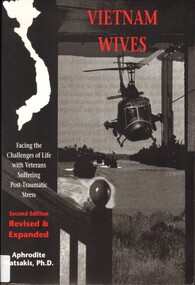
Book, Matsakis, Aphrodite, Vietnam Wives: Facing The Challenges Of Life With Veterans Suffering Post-Traumatic Stress (Copy 3), 1996
... Post-traumatic stress disorder - Patients - Family relationships...Post-traumatic stress disorder - Patients - Family relationships Veterans - United States - mental health Vietnamese Conflict 1961-1975 - Psychological aspects Vietnam Wives is a profoundlly moving book on the phychological and social consequences of war for families; a "must read" for anyone interested in the realities of war. ...Vietnam Wives is a profoundlly moving book on the phychological and social consequences of war for families; a "must read" for anyone interested in the realities of war. It should be required reading for all politicans. There are lots of helpful suggestions for wives at the end.Vietnam Wives is a profoundlly moving book on the phychological and social consequences of war for families; a "must read" for anyone interested in the realities of war. It should be required reading for all politicans. There are lots of helpful suggestions for wives at the end.post-traumatic stress disorder - patients - family relationships, veterans - united states - mental health, vietnamese conflict, 1961-1975 - psychological aspects -
 National Vietnam Veterans Museum (NVVM)
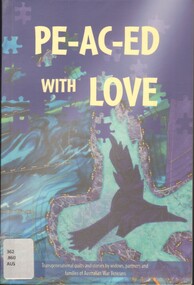
Book, Australian Partners and Families of Veterans, Pe-ac-ed with Love: transgenerational quilts and by widows, partners, and families of Australian War Veterans
... Veterans - Australia - Family relationships...Veterans - Australia - Family relationships War widows - Australia Veterans - Care - Australia Children of military personnel - Australia The special theme of the Australian Partners and Families of Veterans National Quilt Project, this worthiest of enterprises, is Unity - Love - Peace. ...The special theme of the Australian Partners and Families of Veterans National Quilt Project, this worthiest of enterprises, is Unity - Love - Peace.The special theme of the Australian Partners and Families of Veterans National Quilt Project, this worthiest of enterprises, is Unity - Love - Peace.veterans - australia - family relationships, war widows - australia, veterans - care - australia, children of military personnel - australia -
 National Vietnam Veterans Museum (NVVM)
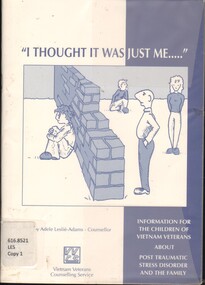
Book, Leslie-Adams, Adele, I thought it was just me: information for the children (Copy 1)
... Post-traumatic stress disorder - Patients - Family relationships...Post-traumatic stress disorder - Patients - Family relationships Children This book has been written specifically for older children of Vietnam veterans. ...This book has been written specifically for older children of Vietnam veterans.This book has been written specifically for older children of Vietnam veterans. post-traumatic stress disorder - patients - family relationships, children -
 National Vietnam Veterans Museum (NVVM)
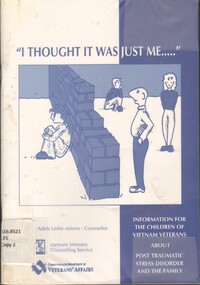
Book, Leslie-Adams, Adele, I Thought It was Just Me: Information for the Children (Copy 2)
... Post-traumatic stress disorder - Patients - Family relationships...Post-traumatic stress disorder - Patients - Family relationships Children of military personnel This book has been written specifically for older children of Vietnam veterans. ...This book has been written specifically for older children of Vietnam veterans.This book has been written specifically for older children of Vietnam veterans. post-traumatic stress disorder - patients - family relationships, children of military personnel -
 National Vietnam Veterans Museum (NVVM)
Film - Film, DVD, Peaced with love: story quilts by war veteran families
... Veterans -- Australia -- Family relationships...Veterans -- Australia -- Family relationships War widows -- Australia Peaced with love: story quilts by war veteran families Film Film, DVD Australian Partners and Families of Veterans National Quilt Project ...veterans -- australia -- family relationships, war widows -- australia -
 Sunshine and District Historical Society Incorporated
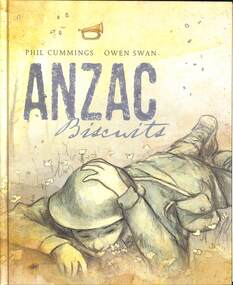
Book - Anzac Biscuits, Scholstic Australia et al, 2013
... ...family relationships and emotional bonds...Signed copy by the Author World War 1914 - 1918 Cooking family relationships and emotional bonds The ANZAC spirit and Australian wartime history A childrens illustrated book which tells a story of a young girl who connects with her soldier father by baking ANZAC biscuits. ...A childrens illustrated book which tells a story of a young girl who connects with her soldier father by baking ANZAC biscuits.Hard covered book with an illustration of a soldier on the frontfictionA childrens illustrated book which tells a story of a young girl who connects with her soldier father by baking ANZAC biscuits. world war 1914 - 1918, cooking, family relationships and emotional bonds, the anzac spirit and australian wartime history -
 Nhill and District Historical Society Inc.
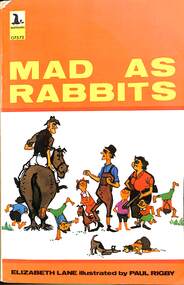
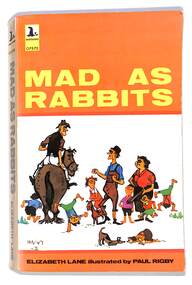
Book - Mad as Rabbits, Elizabeth Lane Illustrated by Paul Rigby
... ...family relationships...Country life family relationships Short story growing up Biographies & True Stories Humour--Comedy Rural life Autobiographies Story of the author's childhood years as one of 12 children on a farm in the Victorian Wimmera district during the 1920s and 1930s. ...Story of the author's childhood years as one of 12 children on a farm in the Victorian Wimmera district during the 1920s and 1930s.18cm tall paperback book with ogrange strip from top to 7cm down the cover with the Title in Bold capital Yellow font, then a cream strip of approx 9cms picturing cartoon farm charaters - a man on a horse back view a farmer with his fists raised, his wife next to him with a rifle and seven children and two dogs scattered across the scene in several different poses., and othe orange strip 1.5 cm to the bottom of the cover with the author and lillustrators names in bold black font.non-fictionStory of the author's childhood years as one of 12 children on a farm in the Victorian Wimmera district during the 1920s and 1930s.farm life -- victoria -- wimmera -- history., country life, family relationships, short story, growing up, biographies & true stories, humour--comedy, rural life, autobiographies -
 Nhill and District Historical Society Inc.
Book - Mad as Rabbits, Elizabeth Lane Illustrated by Paul Rigby
... ...family relationships...Country life family relationships Short story growing up Biographies & True Stories Humour--Comedy Rural life Autobiographies Story of the author's childhood years as one of 12 children on a farm in the Victorian Wimmera district during the 1920s and 1930s. ...Story of the author's childhood years as one of 12 children on a farm in the Victorian Wimmera district during the 1920s and 1930s.18cm tall paperback book with ogrange strip from top to 7cm down the cover with the Title in Bold capital Yellow font, then a cream strip of approx 9cms picturing cartoon farm charaters - a man on a horse back view a farmer with his fists raised, his wife next to him with a rifle and seven children and two dogs scattered across the scene in several different poses., and othe orange strip 1.5 cm to the bottom of the cover with the author and lillustrators names in bold black font.non-fictionStory of the author's childhood years as one of 12 children on a farm in the Victorian Wimmera district during the 1920s and 1930s.farm life -- victoria -- wimmera -- history., country life, family relationships, short story, growing up, biographies & true stories, humour--comedy, rural life, autobiographies -
Canterbury History Group
Book, Adrian Peniston-Bird, Time flies, 1994
... ...Family relationships...Canterbury Primary School Family relationships Girls School life The novel is set at and around Canterbury Primary School in the suburbs of Melbourne. ...The novel is set at and around Canterbury Primary School in the suburbs of Melbourne. The central adult character is based on the real Major Patrick Maloney, the first headmaster of the school when it opened in 1908.115 pages. Includes Appendix with recollections from a studentfictionThe novel is set at and around Canterbury Primary School in the suburbs of Melbourne. The central adult character is based on the real Major Patrick Maloney, the first headmaster of the school when it opened in 1908. canterbury primary school, family relationships, girls, school life -
 Returned Nurses RSL Sub-branch
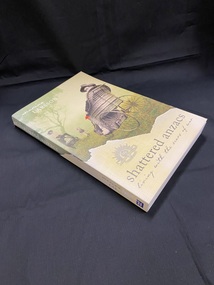
Book - Paperback book, University of New South Wales Press, Shattered ANZACs: living with the scars of war, 2009
... ...soldiers-family relationships...Australian and New Zealand Army Corps War veterans disabled veterans Australia soldiers-family relationships post-traumatic stress disorder social aspects of war psycholgical aspects of war WW1 WWI First World War World War 1914-1918 Living with the Scars of War tells the untold story of thousands of Australian families who welcomed home disabled soldiers after the First World War. ...Living with the Scars of War tells the untold story of thousands of Australian families who welcomed home disabled soldiers after the First World War. It offers a poignant account of the impact of physical injury and shell shock upon returned soldiers, and explores the profound and lasting consequences of disablement for their kin in the 1920s and 1930s. Drawing the reader into the emotional interior of family life, it evocatively brings to light the daily struggles of Australia's 90,000 'changed men', and reveals the significant burdens carried by their family members--Provided by publisher.Cover design wraps around the spine and both covers. Lower section is a pale yellow/white colour with silver text. The higher section is a torn green image of a grassed field and tree with black and white images of a lady and pram, a young boy, and a man in a wheelchair with one red poppy. The back cover image is a welcome home sign with a gathering of people beneath it.non-fictionLiving with the Scars of War tells the untold story of thousands of Australian families who welcomed home disabled soldiers after the First World War. It offers a poignant account of the impact of physical injury and shell shock upon returned soldiers, and explores the profound and lasting consequences of disablement for their kin in the 1920s and 1930s. Drawing the reader into the emotional interior of family life, it evocatively brings to light the daily struggles of Australia's 90,000 'changed men', and reveals the significant burdens carried by their family members--Provided by publisher.australian and new zealand army corps, war veterans, disabled veterans australia, soldiers-family relationships, post-traumatic stress disorder, social aspects of war, psycholgical aspects of war, ww1, wwi, first world war, world war 1914-1918 -
Broadmeadows Historical Society & Museum
Document - Letter, Roby, 9 June 1964
... ...family relationships...Personal correspondence family relationships engagement announcements social customs mid 20th century daily life suburban Australia international travel plans Japan travel Hong Kong travel civic roles mayoral identity handwritten letters 1960s Australia Envelope Front / Address side: PLEASE POST EARLY AUSTRALIA BEFORE LUNCH BEFORE FOUR O'CLOCK/9 JUN 1964/Miss Kath Fletcher/14 Wembley Road/Fawkner / Vic Letter text: 64 Fisher Drive/Mile End/South Australia/9-6-1964/Dear Kath/Many thanks for your kind/ thoughts and the Ticket for my Birthday I/think Kath this ticket should show results/as the whole thing seems to be wrapped up/in such great occasions/ Vally & I was / terribly thrilled with the great news of your/engagement to Keith (ARC) I am sure that it/will mean great happiness to you both because/what we saw of ARC he is a very fine/gentleman and yourself you Know our/Thoughts so once again luck to you both/ also Mum:/ As you know we have our name down/for Japan & Hong Kong next July 1965 and passing/through Melbourne we will certainly look up the/ Mayor & Mayoress/ Will Vally is scribbling something/so will conclude this note with our Deepest & Sincere/wishes to you both and may God Grant you all the/happiness that is due to you/(A Kiss for / Kiss for Mum/ Roby)/Yours sweetly/Roby Single page handwritten letter, ink on paper. ...The letter was written from Mile End, South Australia, and references anticipated overseas travel to Japan and Hong Kong in July 1965, as well as civic roles (“Mayor & Mayoress”), situating the item in mid 20th century Australian social and family networks.This item is a well documented example of everyday Australian correspondence in the 1960s, notable for its clear geographic origin, personal engagement announcement, and references to international travel and civic identity, enhancing its social and historic interpretive value.Single page handwritten letter, ink on paper. Envelope Front / Address side: PLEASE POST EARLY AUSTRALIA BEFORE LUNCH BEFORE FOUR O'CLOCK/9 JUN 1964/Miss Kath Fletcher/14 Wembley Road/Fawkner / Vic Letter text: 64 Fisher Drive/Mile End/South Australia/9-6-1964/Dear Kath/Many thanks for your kind/ thoughts and the Ticket for my Birthday I/think Kath this ticket should show results/as the whole thing seems to be wrapped up/in such great occasions/ Vally & I was / terribly thrilled with the great news of your/engagement to Keith (ARC) I am sure that it/will mean great happiness to you both because/what we saw of ARC he is a very fine/gentleman and yourself you Know our/Thoughts so once again luck to you both/ also Mum:/ As you know we have our name down/for Japan & Hong Kong next July 1965 and passing/through Melbourne we will certainly look up the/ Mayor & Mayoress/ Will Vally is scribbling something/so will conclude this note with our Deepest & Sincere/wishes to you both and may God Grant you all the/happiness that is due to you/(A Kiss for / Kiss for Mum/ Roby)/Yours sweetly/Roby personal correspondence, family relationships, engagement announcements, social customs, mid 20th century daily life, suburban australia, international travel plans, japan travel, hong kong travel, civic roles, mayoral identity, handwritten letters, 1960s australia -
 Greensborough Historical Society
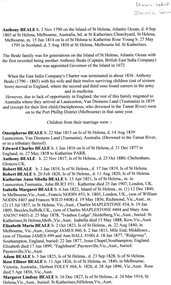
Document - Genealogical Document, Anthony Beale and family, 1808o
... 2 typed pages with family names and relationships....St Katherine's Church was named after his wife. anthony beale rose chapel st katherine's church st helena 2 typed pages with family names and relationships. Anthony Beale and family Document Genealogical Document ...A family chart of Anthony Beale and Katherine Rose Young. Major Anthony Beale was an early settler in the St Helena area, which he named after the island of St Helena in the Atlantic Ocean. St Katherine's Church was named after his wife.2 typed pages with family names and relationships.anthony beale, rose chapel, st katherine's church st helena -
 Alfred Hospital Nurses League - Nursing History Collection
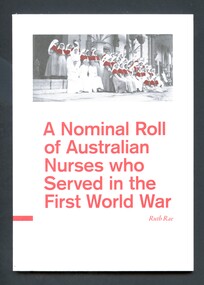
Book, Ruth Rae 1957, A nominal roll of Australian nurses who served in the First World War, 2015
... includes honours/medals, family relationships with other nurses...includes honours/medals, family relationships with other nurses Of significance to the AHNL as there are Alfred nurses listed. ...Unlike the Australian War Memorial nominal roll, the Australian College of nursing nominal roll includes the names of those nurses who served in India, with other allied services and those who died on home service while caring for returned soldiers during the 1918-1919 influenza pandemic.Illustrated book with white front and back covers and red spine. The front cover has a red, black and white photograph of a group of nurses: Nursing staff of the 2nd AGH, Ghizerah, Egypt. Title and author's name are printed in red below this photo. Abbreviated title and author's name printed in white on the spine. Back cover has abbreviated title printed in red and a summary of the book printed in blacknon-fictionUnlike the Australian War Memorial nominal roll, the Australian College of nursing nominal roll includes the names of those nurses who served in India, with other allied services and those who died on home service while caring for returned soldiers during the 1918-1919 influenza pandemic.world war 1914-1918-nominal roll-nurses, nurses, australian army nurses -
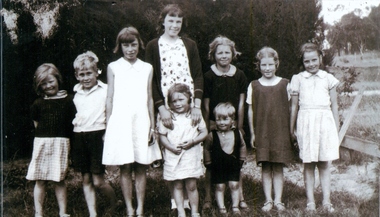 Greensborough Historical Society
Photograph - Digital image, Uncle Bill's kids, 1935, 1935c
... Members of the Coventry and McDowell family, with some family relationships in the notes....Members of the Coventry and McDowell family, with some family relationships in the notes. mcdowell family coventry family Names and relationships of the nine subjects 1p., sepia photograph and notes Uncle Bill's kids, 1935 Photograph - Digital image ...Members of the Coventry and McDowell family, with some family relationships in the notes.1p., sepia photograph and notesNames and relationships of the nine subjectsmcdowell family, coventry family -
Glen Eira Historical Society
Document - BRIGHTON GENERAL CEMETERY
... Details include names and date of death, with some entries also stating date of birth, family relationships, the mason of the tombstone and other significant details relating to the internment. ...Details include names and date of death, with some entries also stating date of birth, family relationships, the mason of the tombstone and other significant details relating to the internment. ...This file contains a six-page handwritten list of tombstone inscriptions from a select number of graves at the Brighton General Cemetery, dated August 1973 and 10 11 1973, author unknown. Details include names and date of death, with some entries also stating date of birth, family relationships, the mason of the tombstone and other significant details relating to the internment. A short handwritten note is attached to the end of the list, of what appears to be details of four internments in the INDEPENDENT section of the cemetery, including crossed-out details previously mentioned in the list.cemeteries, brighton cemetery, ricketson sophia, ricketson henry joseph, ricketson georgina sherbourne, ricketson olive elaine, a and c ballantyne, ballantyne a, ballantyne c, stonemasons, grimwade edward norton, grimwade phelia maude, casey james joseph, tope h., 4 tope and co., dempsey. isabella, dempsey william james, caulfield, huxley parker and co., liddiard henry w.w., liddiard anna susanna, stark robert m., ford sarah, ford henry, ford elizabeth, bent thomas, bent elizabeth, bent gertrude huntley, bleazby elizabeth h., people by circumstance, huntley john jnr., shand mary, kentucky, irving william, irving winter, noorilim, dandenong road, irving frances amelia, miller septimus, miller clara johnstone, miller gwendoline, stone robert, pearson william, pearson eliza laura, craigellachie, pearson hugh, pearson henry travers, pearson alexander buchanen, pearson hugh boyd, pearson alex l., webb charles, webb emma, webb ethel mary, the poet gordon, gorden annie lindsay, langdon william, langdon constance annie, langdon h.j., langdon ell, langdon john barry, langdon george rupert webb, langdon frank harry webb, langdon w.f., langdon s.s.a., langdon dottie, langdon william farquhar, croton hurst, higginbotham george, higginbotham edith, morris edith, morris edward e., reade maude, sproule george, elsternwick, st. clements, sproule mary elizabeth, sproule may, sinnatt farley, stanley henry, stanley mary elizabeth, todman madge brown, todman charles, long john, fox e. phillip, trott harry, plaques, boyd pamela, boyd theodore penleigh, artists, clarke alice lovell, bishops court, bevan ann, bevan philip, bevan margaret maybery, bevan richard, bevan amy constance, bevan laurie adelaide, ormond -
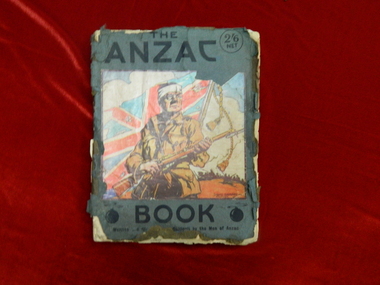 Ballarat Clarendon College
Albert Telfer White (1918) collection
... Collections of items including: Bayonet, Carl Eickhorn, Solingen, (29.A.159 engraved on handle) Trench shovel The ANZAC book 1916 (flyleaf inscribed: No 2012 / Pte A T White / H Quarters / 22nd Battalion / 6th Inf Brigade / France) Gallipoli medal with documentation First World War Mothers’ and Widows’ Badge Next of Kin Memorial Plaque (Death Penny) and accompanying letter from King George V Imperial War Graves Commission documentation and photograph Australia Graves Services In Memory card and photograph Documentation relating to Australian War Memorial Roll of Honour, Learmonth Memorial Wall, Ballarat and Learmonth Avenues of Honours Documentation from the Australian Army Records office Documentation relating to Military Medal, 1914/15 Star, British War Medal and Victory Medal (whereabouts unknown, November 2016) Portraiture of Albert Telfer White as a child, as a young adult (civilian dress), in full kit (A I E F formal), and at camp 1915 Portraiture of sisters Cis, Addie, Bessie, Evelyn (with personal inscriptions) Four postcards (one with letter from Albert ‘at sea’ to his mother - undated) Death notice (unreferenced newspaper clipping) Biographical and family relationship details Photocopy of The White Family 1906 showing (standing) Adeline, Leslie, Harold (father), Muriel (mother), William; (seated) Albert, John (Grandfather), Elizabeth, Allan, Elizabeth (Grandmother), Evelyn (baby) and Benjamin ...Collections of items including: Bayonet, Carl Eickhorn, Solingen, (29.A.159 engraved on handle) Trench shovel The ANZAC book 1916 (flyleaf inscribed: No 2012 / Pte A T White / H Quarters / 22nd Battalion / 6th Inf Brigade / France) Gallipoli medal with documentation First World War Mothers’ and Widows’ Badge Next of Kin Memorial Plaque (Death Penny) and accompanying letter from King George V Imperial War Graves Commission documentation and photograph Australia Graves Services In Memory card and photograph Documentation relating to Australian War Memorial Roll of Honour, Learmonth Memorial Wall, Ballarat and Learmonth Avenues of Honours Documentation from the Australian Army Records office Documentation relating to Military Medal, 1914/15 Star, British War Medal and Victory Medal (whereabouts unknown, November 2016) Portraiture of Albert Telfer White as a child, as a young adult (civilian dress), in full kit (A I E F formal), and at camp 1915 Portraiture of sisters Cis, Addie, Bessie, Evelyn (with personal inscriptions) Four postcards (one with letter from Albert ‘at sea’ to his mother - undated) Death notice (unreferenced newspaper clipping) Biographical and family relationship details Photocopy of The White Family 1906 showing (standing) Adeline, Leslie, Harold (father), Muriel (mother), William; (seated) Albert, John (Grandfather), Elizabeth, Allan, Elizabeth (Grandmother), Evelyn (baby) and Benjamin Albert Telfer White (1918) collection ...Significant items relating to Albert Telfer White who entered Ballarat College April 1912 and left December 1918. Albert was born 29 June 1897 at his home 'Ashford Vale" farm, Cuthbert's Road, Cardigan. Albert, a second generation Australian, was the fourth son and sixth of eleven children born to dairy farmer John White and his wife Elizabeth, nee Douglas. Albert attended Bunker's Hill State School prior to enrolling at Ballarat College. After College he obtained employment with the engineering firm Ronaldson and Tippett in Ballarat. Following his eighteenth birthday Albert enlisted in the AIF in Ballarat with the rank of Private, No 2012. He embarked for the Middle East with 23rd Battalion on 26 August 1915 and was 'taken on strength at the Gallipoli Peninsular 25 October 1915". On 10 January 1916 Albert was posted to Alexandria, Egypt and during this time he was able to meet with his aunt Rose Douglas, an Australian Army Nursing Sister. This was a great comfort to his family. Albert was sent to France 19 March 1916 and transferred to the 22nd Battalion. He was mentioned in dispatches for 'good and gallant conduct' 5 August (1917?). Albert was hospitalised 30 March 1918, rejoined 22nd Battalion 3 June 1918, wounded in action 3 October 1918 but died of wounds at Rouen 10 October 1918. news of his death was received by his family n Australia just prior to the armistice. Albert Telfer White's sacrifice is commemorated at Ballarat College, Avenue of Honour Ballarat (Tree 1214), Ballarat Shire Honour Avenue Learmonth (Tree 163) and the Australian War Memorial Canberra. (These notes provided by family November 2016)Collections of items including: Bayonet, Carl Eickhorn, Solingen, (29.A.159 engraved on handle) Trench shovel The ANZAC book 1916 (flyleaf inscribed: No 2012 / Pte A T White / H Quarters / 22nd Battalion / 6th Inf Brigade / France) Gallipoli medal with documentation First World War Mothers’ and Widows’ Badge Next of Kin Memorial Plaque (Death Penny) and accompanying letter from King George V Imperial War Graves Commission documentation and photograph Australia Graves Services In Memory card and photograph Documentation relating to Australian War Memorial Roll of Honour, Learmonth Memorial Wall, Ballarat and Learmonth Avenues of Honours Documentation from the Australian Army Records office Documentation relating to Military Medal, 1914/15 Star, British War Medal and Victory Medal (whereabouts unknown, November 2016) Portraiture of Albert Telfer White as a child, as a young adult (civilian dress), in full kit (A I E F formal), and at camp 1915 Portraiture of sisters Cis, Addie, Bessie, Evelyn (with personal inscriptions) Four postcards (one with letter from Albert ‘at sea’ to his mother - undated) Death notice (unreferenced newspaper clipping) Biographical and family relationship details Photocopy of The White Family 1906 showing (standing) Adeline, Leslie, Harold (father), Muriel (mother), William; (seated) Albert, John (Grandfather), Elizabeth, Allan, Elizabeth (Grandmother), Evelyn (baby) and Benjamin The ANZAC book 1916 (flyleaf inscribed: No 2012 / Pte A T White / H Quarters / 22nd Battalion / 6th Inf Brigade / France) Gallipoli medal: engraved on reverse: A T WHITE Embossed lettering on death penny: ALBERT TELFER WHITE Handwritten on reverse of portraits: Lovingly yours / Cis / 21/11/17; your / loving sister / Addie; your loving / sister / Evelyn; Yours lovingly / Bessie Handwritten on back of postcard of ship H M A T 'Anchisis' 14.3.16: Dear Mother, I am sending you a card / of the boat we are on. Our deck is right / on the back. I have marked it with an X. / We are not allowed to put the date on or / where we are. I am sitting on the deck now / holding the card in my hand so it is hard / to write. We are together yet haven't been / separated Bill, Matt and myself. Haven't / had anything to do. I will write a couple / of letters now. Albert Handwritten on back of postcard photograph of Albert at camp: 30th September 1915 / Dear Mother / There is a studio at the / camp so Matt and I got our Photos / taken yesterday morning, & got them/ this morning. I am sending / Ciss one of Matt.albert-telfer-white, ballarat college, world-war-one, avenue-of-honour -
 Sunshine and District Historical Society Incorporated
Film - James Hazewinkel Celebrating His 80th Birthday 1987 Video, 25th July 1987
... . - Full name: James Munro Hazewinkel - Born: 26 July 1907 - Died: 15 August 1999, aged 92 - Place of death: St Vincent’s Hospital, Melbourne - Burial: Melton Cemetery, Section 12, Compartment 5A, Grave 27 Family and Relationships. - Father of: Faye (and father‑in‑law of Kerry) - Grandfather of: Julie, Shayne, Belinda, Rebecca - Great‑grandfather of: Six great‑grandsons - Siblings: Albert, Adelaide, Harold (all deceased by 1999), and Emily - Close companion: Noel Nicholls, who cared for him for 20 years.... - Full name: James Munro Hazewinkel - Born: 26 July 1907 - Died: 15 August 1999, aged 92 - Place of death: St Vincent’s Hospital, Melbourne - Burial: Melton Cemetery, Section 12, Compartment 5A, Grave 27 Family and Relationships. - Father of: Faye (and father‑in‑law of Kerry) - Grandfather of: Julie, Shayne, Belinda, Rebecca - Great‑grandfather of: Six great‑grandsons - Siblings: Albert, Adelaide, Harold (all deceased by 1999), and Emily - Close companion: Noel Nicholls, who cared for him for 20 years James Hazewinkel Hewson Street Melton Mr James Hazewinkel Born 26/7/1907 Celebrating his 80th Birthday at home 7 Hewson Street Melton on Saturday 25/7/1987 Catered by Mrs Larson and Noel Nicholls VHS Video Tape This tape has been digitaised. ...The video of Mr. James Hazewinkel celebrating his 80th birthday at his home, 7 Hewson Street, Melton. Identity and Life. - Full name: James Munro Hazewinkel - Born: 26 July 1907 - Died: 15 August 1999, aged 92 - Place of death: St Vincent’s Hospital, Melbourne - Burial: Melton Cemetery, Section 12, Compartment 5A, Grave 27 Family and Relationships. - Father of: Faye (and father‑in‑law of Kerry) - Grandfather of: Julie, Shayne, Belinda, Rebecca - Great‑grandfather of: Six great‑grandsons - Siblings: Albert, Adelaide, Harold (all deceased by 1999), and Emily - Close companion: Noel Nicholls, who cared for him for 20 yearsMr James Hazewinkel Born 26/7/1907 Celebrating his 80th Birthday at home 7 Hewson Street Melton on Saturday 25/7/1987 Catered by Mrs Larson and Noel Nichollsjames hazewinkel, hewson street, melton -
Northern District School of Nursing. Managed by Bendigo Historical Society Inc.
Administrative record - Northern District School of Nursing List of Clerical, Domestic and Maintenance Staff, 1950s-1989
... Some entries include family relationships or additional notes (e.g., "Like father").Occasional mention of staff studying or having moved to other locations....Some entries include family relationships or additional notes (e.g., "Like father").Occasional mention of staff studying or having moved to other locations. ...Managed by a committee including hospital administrators, medical professionals, and nursing leaders from several regional hospitals. Associated with major hospitals in the Northern District, including Bendigo Base, Mildura Base, Castlemaine, Echuca, Swan Hill, St. Arnaud, and Kyneton District Hospitals. Provide high-quality theoretical and practical nursing training. Raise the standard of nursing education in the region. Maintain the highest principles of nursing practice. Applicants must be at least 17 years old and hold a Proficiency Certificate or higher educational qualification. Application involves submitting forms, certificates, an interview, an aptitude test, and a medical examination. A three-month probationary period follows initial acceptance. Preliminary Training School: Four-week introductory course covering basic nursing, anatomy, hygiene, and practical skills. Practical experience in various hospital departments, guided by senior staff. Study Block Plan: Includes several blocks of theoretical and practical instruction throughout the three-year program. Regular school exams and two state exams (First Professional and Final State) are required for progression and graduation. Nurses work a 40-hour week with at least one or two days off per week and three weeks of annual leave. Accommodation is provided in comfortable hostels with good facilities. Uniforms are supplied free; nurses provide their own shoes and stockings. Salaries and allowances are regulated, with deductions for board and free medical care. Additional Information Post-Graduate Opportunities. Senior positions require further experience and additional certificates (e.g., Midwifery, Infant Welfare).Diploma courses available in administration, teaching, and specialized nursing fields. Bursaries are available for advanced study.Career Prospects: Graduates can pursue roles in administration, teaching, ward and departmental leadership, district and visiting nursing, industrial and school nursing, and more. Opportunities exist both within hospitals and in community or specialized settings.FAQs and Practical Details. Minimal training costs (mainly exam fees and personal items).Living out allowances and travel expenses are covered. Four training intakes per year; waiting periods are short if qualifications are met.Northern District School of Nursing List of Clerical Staff - two pages, and List of Domestic and Maintenance Staff, three pages This item contains the following documents: 3791.4a This document is a comprehensive listing of clerical staff and alumni associated with N.D.S.N. The document provides names, addresses, and sometimes additional notes for a large group of people, including both staff and possibly members or affiliates. Many entries include full addresses, indicating the document's use for contact or organizational purposes. Some individuals are identified with specific roles, such as clerical staff, or are listed as being 'C/-N.D.S.N.' There are references to both current and possibly former members (e.g., 'deceased' noted for one individual). Most addresses are located in Bendigo and surrounding areas in Victoria, Australia, indicating a regional focus. 3791.4b This document is a comprehensive roster of domestic and maintenance staff, including both current employees and recent retirees as of early 1989. Staff Listings:Contains names, addresses, and roles of staff members.Includes both domestic (D) and maintenance (M) staff, as well as specialized roles such as night porters (N.P.), residence supervisors (R.S.), cooks, chefs, gardeners, and carpenters. Some entries note if the staff member is retired or deceased. Employment status is indicated (e.g., current, retired, deceased).Some entries include years of service or employment periods.Roles are sometimes abbreviated (e.g., D for Domestic, M for Maintenance, N.P. for Night Porter, H.K. for Housekeeper, Gdnr for Gardener). Most staff entries include home addresses, often with town or suburb and postal codes. Locations are primarily in Bendigo and surrounding areas. Some entries include family relationships or additional notes (e.g., "Like father").Occasional mention of staff studying or having moved to other locations.nurse training, lister house, northern district school of nursing, domestic and maintenance staff, clerical staff -
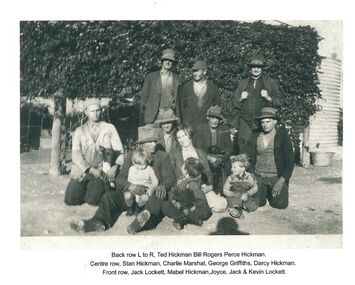 Bendigo Historical Society Inc.
Photograph - Jack Lockett Collection: 'Group portrait which includes Jack Lockett and three of his children', 1920s
... The endurance and perseverance of the Mallee farmers is a testament to family and neighbour relationships that helped build communities....The endurance and perseverance of the Mallee farmers is a testament to family and neighbour relationships that helped build communities. ...The Mallee was first settled by Europeans settlers in the 1870s. Aboriginal people had inhabited the region for thousands of years prior to the Europeans, but their numbers were small due to the arid climate and lack of permanent water. Economic downturns and drought conditions delayed significant development, and it was during the 1920s that saw most land clearing for the growing of cereal crops. Subsequent droughts and economic hardship have seen once prosperous small towns lose their population. The endurance and perseverance of the Mallee farmers is a testament to family and neighbour relationships that helped build communities.Scan of photograph of a group portrait that includes Jack Lockett and three of his four children. The other people are probably friends and neighbours of the Lockett family. Their clothing and appearance attested to the hard life these people faced in the harsh Mallee conditions when trying to farm dry country.'Back row L to R, Ted Hickman, Bill Rogers, Perce Hickman. Centre row, Stan Hickman, Charlie Marshal, George Griffiths, Darcy Hickman. Front row, Jack Lockett, Mabel Hickman, Joyce, Jack & Kevin Lockett.'jack lockett, linga, farm, mallee -
 Surrey Hills Historical Society Collection
Photograph, Douglas and Jean Sneddon with Alice Keane, 14 Suffolk Road, Surrey Hills
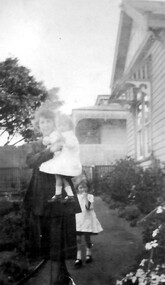
... The donor Robin da Costa-Adams is related by her first marriage to the Sneddon family. Relationship with Bird family: Netta Sneddon was correct in that Alice Keane was likely a relative. ...The donor Robin da Costa-Adams is related by her first marriage to the Sneddon family. Relationship with Bird family: Netta Sneddon was correct in that Alice Keane was likely a relative. ...The property was named 'Cliburn' after Cliburn in Westmorland (later Cumbria) where Mary Sneddon's mother, Mary Bird (nee Coulston) came from. According to the donor all their houses were given this name. William Sneddon (b.1875, Sandhurst - d. 1957, Deepdene) was a postman in Surrey Hills for many years. His father James (1833 - 1901) ran an estate agency in Surrey Hills started in the 1880s by his father, also James. William's wife was Mary Sneddon, nee Bird, (b. 1878 Bethunga; d. 1948, Surrey Hills); they married in Surrey Hills in James Sneddon's house on 12 November 1903. They had 5 sons and 1 daughter: John William 'Jack' Sneddon (b.1908 - d. 1957); married Mabel Creek. Norman Alexander Sneddon (b. 1910 - d 1989); married Eva Pearl Sampson. Alan Coulston Sneddon (b. 1914 - d. 1985); married Netta May Clow in 1941. Jean Isobel Sneddon (b. 1916 - d. 1976); married Clifford James Jenkin. Douglas Haig Sneddon (b.1918, Surrey Hills - d. 1973, Blackburn); married Myra Marjorie Clewett in 1945. Relationship with Alice Keane: According to the donor, Alice Ruby Dore married Herbert Keane. She was born 21/9/1901 and died 14/4/1926. Her entries in the Victorian BDM index give that her father was Henry Dore and her mother Sarah Ann Bird and that she was born in Neerim. She married Herbert Henry Keane in 1922; her death at the age of 24 years was registered in Heidelberg. According to the donor her young children Wallace and Phyllis were embraced by William and Mary Sneddon. William and Mary Sneddon are buried in Box Hill Cemetery. The donor Robin da Costa-Adams is related by her first marriage to the Sneddon family. Relationship with Bird family: Netta Sneddon was correct in that Alice Keane was likely a relative. The exact relationship is yet to be fully established. Alice's mother's name is given as Sarah Ann Bird (1873-1952) with birth at Tarrawingee; father John Bird and mother Sarah Ann Coburn (REF: Victorian BDM index). Her notice of marriage in The Age in 1894 states she is "the eldest dau of John Bird of Drouin, late of Box Hill and Talgarno." Has her mother's surname been misspelt? Is it Coulston? Sepia photo of Douglas Sneddon and his sister Jean Sneddon taken in the garden of 'Cliburn', the home of their parents William and Mary Sneddon. With them is with Alice Keane. Part of the house is seen on the RHS of the photo. It is an Edwardian timber home. The profile of the house next door can also be seen in the background."Alice Keane / at / Doug & Jean Sneddon / taken at Sneddons / Surrey Hills" in grey lead pencil in Robin da Costa-Adams' writing. "Children of Mary & / William" "An Alice Keane may be an Aunt (crossing out) - Netta / was not sure" in ink in Jocelyn Hall's hand.suffolk road, 'cliburn', jean isobel sneddon, mrs jean isobel jenkin, douglas haig sneddon, william sneddon, miss mary bird, mrs mary sneddon, box hill cemetery, children, clothing and dress, mrs alice keane, mrs alice ruby keane, miss alice ruby dore -
 Flagstaff Hill Maritime Museum and Village
Functional object - Crucible, The Patent Plumbago Crucible Company, circa 1878
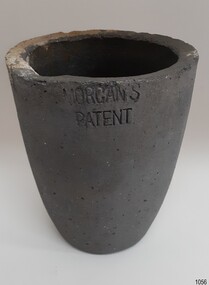
... family in the tragedy. The shipwreck of the LOCH ARD is of State significance ― Victorian Heritage Register S417. Flagstaff Hill’s collection of artefacts from LOCH ARD is significant for being one of the largest collections of artefacts from this shipwreck in Victoria. It is significant for its association with the shipwreck, which is on the Victorian Heritage Register (VHR S417). The collection is significant because of the relationship ...This crucible was raised from the wreck of the LOCH ARD. It is one of six similar relics, in a range of sizes, now in the Flagstaff Hill collection. All bear markings to indicate their manufacture by the Morgan brothers of Battersea, trading as the Patent Plumbago Crucible Co. A crucible is a container used for purifying and melting metals so that they can be cast in a mould to a predetermined shape and use. They must withstand extremely high temperatures, and abrupt cooling, and shed their contents with minimal adherence. The addition of graphite to the traditional firing clays greatly enhanced the durability of industrial crucibles in mid-Victorian Britain, a significant technological advance at a time of great activity in foundries and expansion of demand for refined metals. The Morgans first noticed the advantages of graphite crucibles at the Great Exhibition held in London in 1851. Initially, they contracted to be sole selling agents for the American-made products of Joseph Dixon and Co. from New Jersey, but in 1856 they obtained that firm’s manufacturing rights and began producing their own graphite crucibles from the South London site. The Morgans imported crystalline graphite in 4-5 cwt casks from the British colony of Ceylon (now Sri Lanka) and mixed it with conventional English (Stourbridge) clays to be fired in kilns. Their products were purchased by the Royal Mints in London and India, and exported to official mints in France and Germany. They were successful exhibitors of their crucibles and furnaces at the London Exhibition held in 1861 (Class 1, Mining, quarrying, metallurgy and mineral products, Exhibit 265, Patent Plumbago Crucible Co). The range of sizes represented by the six crucibles retrieved from the LOCH ARD, suggests they may have been part of a sample shipment intended for similar promotion in the Australian colonies ― at Melbourne’s International Exhibition to be held in 1880. The summary of the LOCH ARD cargo manifest, by Don Charlwood in ‘Wrecks and Reputations’, does not mention any crucibles, implying that they were not a large consignment of uniform items. A newspaper account of an 1864 tour of the Morgan brothers’ ‘Black Potteries’ at Battersea indicates: “All the pots were numbered according to their contents, each number standing for one kilogram, or a little over two pounds; a No. 2 crucible contains two kilogrammes; a No. 3, three kilogrammes, and so on.” These numbers are obscured by marine sediment on three of the crucibles in the Flagstaff Hill collection, but those legible on the remaining three are 5, 6, and 8. None of the six is of the same size from a visual appraisal. A brief history of the Loch Ard (1873-1878): - The sailing ship Loch Ard was one of the famous Loch Line of ships that sailed the long voyage from England to Australia. Barclay, Curdle and Co. built the three-masted iron vessel in Glasgow in 1873. It had sailed three trips to Australia and one trip to Calcutta before its fateful voyage. Loch Ard left England on March 2, 1878, under the command of recently married, 29-year-old Captain Gibbs. It was bound for Melbourne with a crew of 37, plus 17 passengers. The general cargo reflected the affluence of Melbourne at the time. Onboard were straw hats, umbrellas, perfumes, clay pipes, pianos, clocks, confectionery, linen and candles, and a heavier load of railway irons, cement, lead and copper. Other cargo included items intended for display in the Melbourne International Exhibition of 1880. The Loch Ard had been sailing for three months and was close to its destination on June 1, 1878. Captain Gibbs had expected to see land at about 3 am but the Loch Ard ran into a fog that greatly reduced visibility and there was no sign of land or the Cape Otway lighthouse. The fog lifted at 4 am and the sheer cliffs of Victoria's west coast were much closer to them than Captain Gibbs expected. He tried to manage the vessel but failed and the ship struck a reef at the base of Mutton Bird Island, near Port Campbell. The top deck loosened from the hull, and the masts and rigging crashed down, knocking passengers and crew overboard. The lifeboat was launched by Tom Pearce but crashed into the side of Loch Ard and capsized. He clung onto its overturned hull and sheltered under it. He drifted out to sea and the tide brought him back to what is now called Loch Ard Gorge. He swam to shore and found a cave for shelter. A passenger, Eva Carmichael, had raced onto the deck to find out what was happening and was confronted by towering cliffs above the ship. She was soon swept off the ship by a huge wave. Eva saw Tom Pearce on a small rocky beach and yelled to attract his attention. He swam out and dragged her to the shelter of the cave. He revived her with a bottle of brandy from a case that had washed up on the beach. Tom scaled a cliff in search of help and followed some horse hoof prints. He came from two men from Glenample Station, three and a half miles away. He told the men of the tragedy and then returned to the gorge while the two men rode back to the station to get help. They reached Loch Ard Gorge and took the two shipwreck survivors to Glenample Station to recover. Eva stayed at the station for six weeks before returning to Ireland by steamship. In Melbourne, Tom Pearce received a hero's welcome and was presented with a medal and some money. Of the 54 crew members and passengers on board, only two survived: the apprentice, Tom Pearce and the young woman passenger, Eva Carmichael, who lost her family in the tragedy. The shipwreck of the LOCH ARD is of State significance ― Victorian Heritage Register S417. Flagstaff Hill’s collection of artefacts from LOCH ARD is significant for being one of the largest collections of artefacts from this shipwreck in Victoria. It is significant for its association with the shipwreck, which is on the Victorian Heritage Register (VHR S417). The collection is significant because of the relationship between the objects, as together they have a high potential to interpret the story of the LOCH ARD. The LOCH ARD collection is archaeologically significant as the remains of a large international passenger and cargo ship. The LOCH ARD collection is historically significant for representing aspects of Victoria’s shipping history and its potential to interpret sub-theme 1.5 of Victoria’s Framework of Historical Themes (living with natural processes). The collection is also historically significant for its association with the LOCH ARD, which was one of the worst and best-known shipwrecks in Victoria’s history.A Morgan’s Patent graphite crucible No.8 (i.e. 8kgs capacity), one of a set. It was recovered from the wreck of the LOCH ARD. It is in its original grey colouring with minimal sediment accretion on the top rim. It rises in a slight curve from a flat circular base to a wider rim with a pouring lip. Maker’s marks on the side of the container clearly identify the manufacturer. The maker's details are stamped into the base around and within a circle. A white sticker is attached. Made by the Patent Plumbago Crucible Company at the Battersea Works in London. Number “8”. Letters “MORGAN’S PATENT”. Details on the base "MORGAN'S PATENT" "THE PATENT PLUMBAGO CRUCIBLE COMPANY" Symbol [8] above "BATTERSEA WORKS LONDON" Handwritten on a white sticker in black pen "LA/89"flagstaff hill, warrnambool, maritime museum, shipwreck coast, great ocean road, loch line, loch ard, captain gibbs, eva carmichael, tom pearce, glenample station, mutton bird island, loch ard gorge, graphite crucible, plumbago crucible, morgans crucible company, flagstaff hill maritime museum and village, fluxing pots, crucible, morgan’s patent, morgan brothers, patent plumbago crucible co, battersea works, london, port campbell -
![Ceramic doll]s leg, cream and beige, with shape of shoe on the end](/media/collectors/4f729f6597f83e03086016ea/items/521602bb19403a17c4b9fa5a/item-media/52a7cc472162ef1d94e8449b/item-fit-380x285.jpg?cb=6) Flagstaff Hill Maritime Museum and Village
Flagstaff Hill Maritime Museum and VillageLeisure object - Doll's Leg, ca 1878/
... family in the tragedy. Flagstaff Hill’s collection of artefacts from LOCH ARD is significant for being one of the largest collections of artefacts from this shipwreck in Victoria. It is significant for its association with the shipwreck, which is on the Victorian Heritage Register (VHR S417). The collection is significant because of the relationship ...This is part of a child's toy, a doll with ceramic legs. It was recovered from the wreck of the Loch Ard. A brief history of the Loch Ard (1873-1878): - The sailing ship Loch Ard was one of the famous Loch Line ships that sailed from England to Australia. Barclay, Curdle and Co. built the three-masted iron vessel in Glasgow in 1873. It had sailed three trips to Australia and one trip to Calcutta before its fateful voyage. Loch Ard left England on March 2, 1878, under the command of recently married, 29-year-old Captain Gibbs. It was bound for Melbourne with a crew of 37, plus 17 passengers. The general cargo reflected the affluence of Melbourne at the time. Onboard were straw hats, umbrellas, perfumes, clay pipes, pianos, clocks, confectionery, linen and candles, and a heavier load of railway irons, cement, lead and copper. Other cargo included items intended for display in the Melbourne International Exhibition of 1880. The Loch Ard had been sailing for three months and was close to its destination on June 1, 1878. Captain Gibbs had expected to see land at about 3 am but the Loch Ard ran into a fog that greatly reduced visibility and there was no sign of land or the Cape Otway lighthouse. The fog lifted at 4 am and the sheer cliffs of Victoria's west coast were much closer to them than Captain Gibbs expected. He tried to manage the vessel but failed and the ship struck a reef at the base of Mutton Bird Island, near Port Campbell. The top deck loosened from the hull, and the masts and rigging crashed down, knocking passengers and crew overboard. The lifeboat was launched by Tom Pearce but crashed into the side of Loch Ard and capsized. He clung onto its overturned hull and sheltered under it. He drifted out to sea and the tide brought him back to what is now called Loch Ard Gorge. He swam to shore and found a cave for shelter. A passenger, Eva Carmichael, had raced onto the deck to find out what was happening and was confronted by towering cliffs above the ship. She was soon swept off the ship by a huge wave. Eva saw Tom Pearce on a small rocky beach and yelled to attract his attention. He swam out and dragged her to the shelter of the cave. He revived her with a bottle of brandy from a case that had washed up on the beach. Tom scaled a cliff in search of help and followed some horse hoof prints. He came from two men from Glenample Station, three and a half miles away. He told the men of the tragedy and then returned to the gorge while the two men rode back to the station to get help. They reached Loch Ard Gorge and took the two shipwreck survivors to Glenample Station to recover. Eva stayed at the station for six weeks before returning to Ireland by steamship. In Melbourne, Tom Pearce received a hero's welcome and was presented with a medal and some money. Of the 54 crew members and passengers on board, only two survived: the apprentice, Tom Pearce and the young woman passenger, Eva Carmichael, who lost her family in the tragedy. Flagstaff Hill’s collection of artefacts from LOCH ARD is significant for being one of the largest collections of artefacts from this shipwreck in Victoria. It is significant for its association with the shipwreck, which is on the Victorian Heritage Register (VHR S417). The collection is significant because of the relationship between the objects, as together they have a high potential to interpret the story of the LOCH ARD. The LOCH ARD collection is archaeologically significant as the remains of a large international passenger and cargo ship. The LOCH ARD collection is historically significant for representing aspects of Victoria’s shipping history and its potential to interpret sub-theme 1.5 of Victoria’s Framework of Historical Themes (living with natural processes). The collection is also historically significant for its association with the LOCH ARD, which was one of the worst and best known shipwrecks in Victoria’s history. China doll's leg, cream and beige ceramic, foot shaped at the end of the leg. Recovered from the wreck of the Loch Ard. flagstaff hill, warrnambool, shipwrecked coast, flagstaff hill maritime museum, maritime museum, shipwreck coast, flagstaff hill maritime village, great ocean road, loch line, loch ard, captain gibbs, eva carmichael, tom pearce, glenample station, mutton bird island, loch ard gorge, china dolls leg, doll's leg, china doll's leg, doll's limb, ceramic doll -
 Flagstaff Hill Maritime Museum and Village
Leisure object - Doll's Leg, ca 1878
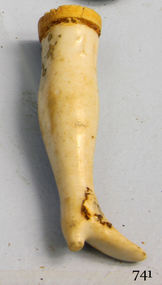
... family in the tragedy. Flagstaff Hill’s collection of artefacts from LOCH ARD is significant for being one of the largest collections of artefacts from this shipwreck in Victoria. It is significant for its association with the shipwreck, which is on the Victorian Heritage Register (VHR S417). The collection is significant because of the relationship ...This ceramic leg is part of a child's doll. It was recovered from the wreck of the Loch Ard. A brief history of the Loch Ard (1873-1878): - The sailing ship Loch Ard was one of the famous Loch Line ships that sailed from England to Australia. Barclay, Curdle and Co. built the three-masted iron vessel in Glasgow in 1873. It had sailed three trips to Australia and one trip to Calcutta before its fateful voyage. Loch Ard left England on March 2, 1878, under the command of recently married, 29-year-old Captain Gibbs. It was bound for Melbourne with a crew of 37, plus 17 passengers. The general cargo reflected the affluence of Melbourne at the time. Onboard were straw hats, umbrellas, perfumes, clay pipes, pianos, clocks, confectionery, linen and candles, and a heavier load of railway irons, cement, lead and copper. Other cargo included items intended for display in the Melbourne International Exhibition of 1880. The Loch Ard had been sailing for three months and was close to its destination on June 1, 1878. Captain Gibbs had expected to see land at about 3 am but the Loch Ard ran into a fog that greatly reduced visibility and there was no sign of land or the Cape Otway lighthouse. The fog lifted at 4 am and the sheer cliffs of Victoria's west coast were much closer to them than Captain Gibbs expected. He tried to manage the vessel but failed and the ship struck a reef at the base of Mutton Bird Island, near Port Campbell. The top deck loosened from the hull, and the masts and rigging crashed down, knocking passengers and crew overboard. The lifeboat was launched by Tom Pearce but crashed into the side of Loch Ard and capsized. He clung onto its overturned hull and sheltered under it. He drifted out to sea and the tide brought him back to what is now called Loch Ard Gorge. He swam to shore and found a cave for shelter. A passenger, Eva Carmichael, had raced onto the deck to find out what was happening and was confronted by towering cliffs above the ship. She was soon swept off the ship by a huge wave. Eva saw Tom Pearce on a small rocky beach and yelled to attract his attention. He swam out and dragged her to the shelter of the cave. He revived her with a bottle of brandy from a case that had washed up on the beach. Tom scaled a cliff in search of help and followed some horse hoof prints. He came from two men from Glenample Station, three and a half miles away. He told the men of the tragedy and then returned to the gorge while the two men rode back to the station to get help. They reached Loch Ard Gorge and took the two shipwreck survivors to Glenample Station to recover. Eva stayed at the station for six weeks before returning to Ireland by steamship. In Melbourne, Tom Pearce received a hero's welcome and was presented with a medal and some money. Of the 54 crew members and passengers on board, only two survived: the apprentice, Tom Pearce and the young woman passenger, Eva Carmichael, who lost her family in the tragedy. Flagstaff Hill’s collection of artefacts from LOCH ARD is significant for being one of the largest collections of artefacts from this shipwreck in Victoria. It is significant for its association with the shipwreck, which is on the Victorian Heritage Register (VHR S417). The collection is significant because of the relationship between the objects, as together they have a high potential to interpret the story of the LOCH ARD. The LOCH ARD collection is archaeologically significant as the remains of a large international passenger and cargo ship. The LOCH ARD collection is historically significant for representing aspects of Victoria’s shipping history and its potential to interpret sub-theme 1.5 of Victoria’s Framework of Historical Themes (living with natural processes). The collection is also historically significant for its association with the LOCH ARD, which was one of the worst and best known shipwrecks in Victoria’s history. China doll's leg, cream colour with beige top. Shoe shape is formed at the end of the leg. .Recovered from the wreck of the Loch Ard.flagstaff hill, warrnambool, shipwrecked coast, flagstaff hill maritime museum, maritime museum, shipwreck coast, flagstaff hill maritime village, great ocean road, loch line, loch ard, captain gibbs, eva carmichael, tom pearce, glenample station, mutton bird island, loch ard gorge, china dolls leg, doll's leg, ceramic doll leg, porcelain doll's leg -
 Federation University Historical Collection
Medal - Numismatics, ANZAC Commemorative Medal for R.M. Serjeant, 1967
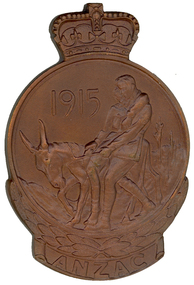
... relationship to Robert M. Serjeant who died on 28 April 2015 at Gallipoli of wounds received in Action. serjeant r.m. serjeant robert m. sergeant anzac medal numismatics Engraved: "1238 R.M. Serjeant" Bronze commemorative medal in black presentation case showing Simpson and his donkey carrying a wounded soldier to safety. A crown is situated on top of the medal, and the word ANZAC beneath the medal. The opposite side depicts Australia, New Zealand and the Southern Cross Constellation. The lower half is bordered with New Zealand Fern leaves. The commemorative medal was presented to the family ...Robert M. Serjeant was the only son of Theo and Alice Serjeant, and grandson of famed mine manager Robert Malachy Serjeant (1829-1902). Robert Serjeant was a past student of the Ballarat School of Mines (SMB), and at the time of his World War One enlistment he had just finished an electrical course, and was working as a junior member of the SMB Department of Electricity. Robert Serjeant enlisted in December 1914. Corporal Serjeant (2138) of the 8th Battalion, died of wounds received in action at Gallipoli on 28 April 1915, aged 20. He was buried at sea and his name is listed at the Lone Pine Memorial. A brown paper parcel of Robert Serjeant's belongings was returned to his parents. It contained his discs, wrist-watch (damaged), notebook, hymn book and letters. [1] The Ballarat Courier reported: 'He was of quiet disposition, and a great student, devoting himself closely to his work.' Further information on R.M. Serjeant can be found at https://bih.federation.edu.au/index.php/Robert_M._Serjeant_Jnr The following statement on the ANZAC Commemorative Medallion and Badge was made by by Prime Minister Holt in 16 March 1967 when the Minister for Defence announced that it had been decided by the Australian Government, in consultation with the New Zealand Government, to issue a medallion and lapel badge to the veterans of the Gallipoli Campaign. "Last March, the Minister for Defence announced that it had been decided by the Australian Government, in consultation with the New Zealand Government, to issue a medallion and lapel badge to the veterans of the Gallipoli Campaign. I am glad to be able to announce that arrangements have now been completed for the production of the medallion and the badge. The Minister for the Army will be arranging distribution to those wishing to receive them as soon as possible. The Government hopes that production of the medallion and lapel badge will be sufficiently advanced to permit at least some of them to be distributed by ANZAC Day. The medallion (with the name of the recipient inscribed) will be issued to the surviving members of the Australian Defence Force who served on the Gallipoli Peninsula, or in direct support of the operations from close off-shore, at any time during the period from the first ANZAC Day in April, 1915 to the date of final evacuation in January, 1916. Next of kin or other entitled persons will be entitled to receive the medallion on behalf of their relatives, if the relative died on active service or has since died. For surviving members, a lapel badge will also be available for wearing. This will be a replica of the obverse (or front) of the medallion and will be about 1 inch high and 2/3 inch wide - the same size as the RSL badge. The medallion is the work of Mr. Raymond Ewers, the well-known Australian artist, based on a suggestion by Mr. Eric Garrett, a staff artist with the Department of the Army. It has been endorsed by both the Government of New Zealand and ourselves. It will be approximately 3 inches high and 2 inches wide. The obverse of the medallion depicts Simpson and his donkey carrying a wounded soldier to safety. It will be bordered on the lower half by a laurel wreath above the word ANZAC. The reverse (the back) shows a relief map of Australian and New Zealand superimposed by the Southern Cross. The lower half will be bordered by New Zealand fern leaves. The medallion will be cast in bronze and the lapel badge will be metal of a bronze colour. For the information of the honourable members I present also a brief statement setting out the conditions of eligibility which will apply to the medallion and badge and the manner in which those desiring to receive them should apply."(https://www.awm.gov.au/encyclopedia/anzac/medallion/doc.asp, accessed 26/02/2014) Conditions of eligibility. All members of the Australian Defence Force who served during the Gallipoli Campaign are entitled to receive the ANZAC Commemorative medallion. The campaign lasted from April 25, 1915 to January 8, 1916. The award will be made for service on the Gallipoli Peninsula and service in support of the operations in an area off-shore eastward of a line drawn from Yukyeri Point (lat 39 50' 40'' N long 26 9' 45'' E) through a point in lat 39 53' N long 26 0' E thence to Cape Gremea (lat 40 35' N long 26 6' E). The award will also be available to members of philanthropic organisations and the Press who were accredited to the AIF, and to Australian members of the crews of merchant ships or hospital ships which operated in direct support within the defined area. Note: The boundary line would run just off-shore from the land masses north and south of the Dardanelles, and is estimated to be within about 5 miles from the beach at ANZAC Cove. (https://www.awm.gov.au/encyclopedia/anzac/medallion/doc.asp, accessed 26/02/2014) This Item is significance because is was only issued to members of the Australian and New Zealand Defence Force who served at Gallipoli. This Medallion is significant because of its relationship to Robert M. Serjeant who died on 28 April 2015 at Gallipoli of wounds received in Action. Bronze commemorative medal in black presentation case showing Simpson and his donkey carrying a wounded soldier to safety. A crown is situated on top of the medal, and the word ANZAC beneath the medal. The opposite side depicts Australia, New Zealand and the Southern Cross Constellation. The lower half is bordered with New Zealand Fern leaves. The commemorative medal was presented to the family of Robert M. Serjeant. Gift of David Stevens, 2014.Engraved: "1238 R.M. Serjeant"serjeant, r.m. serjeant, robert m. sergeant, anzac, medal, numismatics -
 Flagstaff Hill Maritime Museum and Village
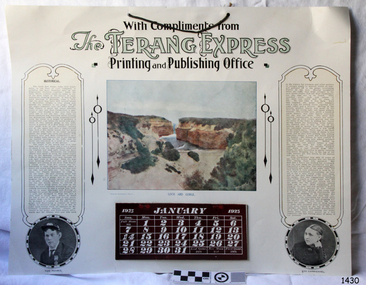
Book - Calendar, T.S. McInnes, The Terang Express: August 1923, 1923
... family in the tragedy. The calendar records the wreck of the Loch Ard, showing that the event was significant locally and thought worthy of publishing on a local calendar. The calendar is significant for its connection to the wreck of the Loch Flagstaff Hill’s collection of artefacts from LOCH ARD is significant for being one of the largest collections of artefacts from this shipwreck in Victoria. It is significant for its association with the shipwreck, which is on the Victorian Heritage Register (VHR S417). The collection is significant because of the relationship ...The calendar has an account of the event of the wreck of the Loch Ard and the only survivors, Tom Pearce and Eva Carmichael. It was printed by the local firm, The Terang Express. HISTORY OF THE LOCH ARD: - The LOCH ARD belonged to the famous Loch Line, which sailed many ships from England to Australia. Built in Glasgow by Barclay, Curdle and Co. in 1873, the LOCH ARD was a three-masted square-rigged iron sailing ship. The LOCH ARD made three trips to Australia and one trip to Calcutta before its final voyage. LOCH ARD left England on March 2, 1878, under the command of Captain Gibbs, a newly married, 29-year-old, bound for Melbourne with a crew of 37, plus 17 passengers and a load of cargo. There were items included in the cargo that were intended for display in the Melbourne International Exhibition in 1880. The voyage to Port Phillip was long but uneventful. At 3 am on June 1, 1878, the LOCH ARD was running into a fog that greatly reduced visibility. Captain Gibbs was becoming anxious as there was no sign of land or the Cape Otway lighthouse. The lifteed about an hour later, and the sheer cliffs of Victoria's west coast came into view. Captain Gibbs realised that the ship was much closer to them than expected. Soon after, just half a mile from the coast, the ship's bow was suddenly pulled around by the anchor. The captain tried to tack out to sea, but the ship struck a reef at the base of Mutton Bird Island, near Port Campbell. Waves broke over the ship, and the top deck was loosened from the hull. The masts and rigging came crashing down, knocking passengers and crew overboard. When a lifeboat was finally launched, it crashed into the side of LOCH ARD and capsized. Tom Pearce drifted out to sea and then, on the flood tide, came into what is now known as LOCH ARD Gorge. He swam to shore, bruised and dazed, and found a cave in which to shelter. Eva Carmichael had raced onto the deck to find out what was happening, only to be confronted by towering cliffs looming above the stricken ship. In all the chaos, she was swept into the sea. Eva saw Tom Pearce on a small rocky beach and yelled to attract his attention. He dived in and swam to the exhausted woman and dragged her to shore. He took her to the cave and broke open a case of brandy which had washed up on the beach. He opened a bottle to revive the unconscious woman. Later, Tom scaled a cliff in search of help. He eventually came by chance upon two men from nearby Glenample Station. Eventually, the two shipwreck survivors were taken to Glenample Station to recover. Eva stayed at the station for six weeks before returning to Ireland, this time by steamship. Of the 54 crew members and passengers on board, only two survived: the apprentice, Tom Pearce and the young woman passenger, Eva Carmichael, who lost all of her family in the tragedy.The calendar records the wreck of the Loch Ard, showing that the event was significant locally and thought worthy of publishing on a local calendar. The calendar is significant for its connection to the wreck of the Loch Flagstaff Hill’s collection of artefacts from LOCH ARD is significant for being one of the largest collections of artefacts from this shipwreck in Victoria. It is significant for its association with the shipwreck, which is on the Victorian Heritage Register (VHR S417). The collection is significant because of the relationship between the objects, as together they have a high potential to interpret the story of the LOCH ARD. The LOCH ARD collection is archaeologically significant as the remains of a large international passenger and cargo ship. The LOCH ARD collection is historically significant for representing aspects of Victoria’s shipping history and its potential to interpret sub-theme 1.5 of Victoria’s Framework of Historical Themes (living with natural processes). The collection is also historically significant for its association with the LOCH ARD, which was one of the worst and best known shipwrecks in Victoria’s history.Calendar printed by Terang Express for August 1923 with a Coloured picture of Loch Ard Gorge and portraits of the survivors of the wreck, Tom Pearce and Eva Carmichael, and a brief story of the episode of the wreck. There is a piece of string for hanging the calendar on a wall."With Compliments from The Terang Express Printing and Publishing Office" "December1923" "Historical" "Tom Pearce" "Eva Carmichael"flagstaff hill, warrnambool, shipwrecked coast, flagstaff hill maritime museum, maritime museum, shipwreck coast, flagstaff hill maritime village, great ocean road, loch line, loch ard, captain gibbs, eva carmichael, tom pearce, glenample station, mutton bird island, terang express, calendar, 1923, calendar 1923, printer, newspaper, loch ard gorge, 50th anniversary, flagstaff hill maritime museum and village, maritime village, august 1923 -
 Flagstaff Hill Maritime Museum and Village
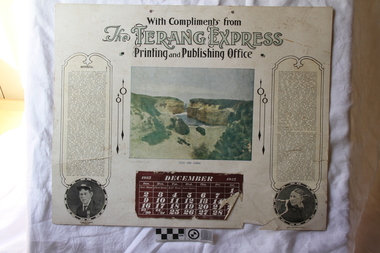
Book - Calendar, Terang Express, The Terang Express: December 1923, 1923
... family in the tragedy. The calendar records the wreck of the Loch Ard, showing that the event was significant locally and thought worthy of publishing on a local calendar. The calendar is significant for its connection to the wreck of the Loch Flagstaff Hill’s collection of artefacts from LOCH ARD is significant for being one of the largest collections of artefacts from this shipwreck in Victoria. It is significant for its association with the shipwreck, which is on the Victorian Heritage Register (VHR S417). The collection is significant because of the relationship ...The calendar has an account of the event of the wreck of the Loch Ard and the only survivors, Tom Pearce and Eva Carmichael. It was printed by the local firm, The Terang Express. HISTORY OF THE LOCH ARD: - The LOCH ARD belonged to the famous Loch Line, which sailed many ships from England to Australia. Built in Glasgow by Barclay, Curdle and Co. in 1873, the LOCH ARD was a three-masted square-rigged iron sailing ship. The LOCH ARD made three trips to Australia and one trip to Calcutta before its final voyage. LOCH ARD left England on March 2, 1878, under the command of Captain Gibbs, a newly married, 29-year-old, bound for Melbourne with a crew of 37, plus 17 passengers and a load of cargo. There were items included in the cargo that were intended for display in the Melbourne International Exhibition in 1880. The voyage to Port Phillip was long but uneventful. At 3 am on June 1, 1878, the LOCH ARD was running into a fog that greatly reduced visibility. Captain Gibbs was becoming anxious as there was no sign of land or the Cape Otway lighthouse. The lifteed about an hour later, and the sheer cliffs of Victoria's west coast came into view. Captain Gibbs realised that the ship was much closer to them than expected. Soon after, just half a mile from the coast, the ship's bow was suddenly pulled around by the anchor. The captain tried to tack out to sea, but the ship struck a reef at the base of Mutton Bird Island, near Port Campbell. Waves broke over the ship, and the top deck was loosened from the hull. The masts and rigging came crashing down, knocking passengers and crew overboard. When a lifeboat was finally launched, it crashed into the side of LOCH ARD and capsized. Tom Pearce drifted out to sea and then, on the flood tide, came into what is now known as LOCH ARD Gorge. He swam to shore, bruised and dazed, and found a cave in which to shelter. Eva Carmichael had raced onto the deck to find out what was happening, only to be confronted by towering cliffs looming above the stricken ship. In all the chaos, she was swept into the sea. Eva saw Tom Pearce on a small rocky beach and yelled to attract his attention. He dived in and swam to the exhausted woman and dragged her to shore. He took her to the cave and broke open a case of brandy which had washed up on the beach. He opened a bottle to revive the unconscious woman. Later, Tom scaled a cliff in search of help. He eventually came by chance upon two men from nearby Glenample Station. Eventually, the two shipwreck survivors were taken to Glenample Station to recover. Eva stayed at the station for six weeks before returning to Ireland, this time by steamship. Of the 54 crew members and passengers on board, only two survived: the apprentice, Tom Pearce and the young woman passenger, Eva Carmichael, who lost all of her family in the tragedy.The calendar records the wreck of the Loch Ard, showing that the event was significant locally and thought worthy of publishing on a local calendar. The calendar is significant for its connection to the wreck of the Loch Flagstaff Hill’s collection of artefacts from LOCH ARD is significant for being one of the largest collections of artefacts from this shipwreck in Victoria. It is significant for its association with the shipwreck, which is on the Victorian Heritage Register (VHR S417). The collection is significant because of the relationship between the objects, as together they have a high potential to interpret the story of the LOCH ARD. The LOCH ARD collection is archaeologically significant as the remains of a large international passenger and cargo ship. The LOCH ARD collection is historically significant for representing aspects of Victoria’s shipping history and its potential to interpret sub-theme 1.5 of Victoria’s Framework of Historical Themes (living with natural processes). The collection is also historically significant for its association with the LOCH ARD, which was one of the worst and best known shipwrecks in Victoria’s history. Calendar printed by Terang Express for December 1923 with a Coloured picture of Loch Ard Gorge and portraits of the survivors of the wreck, Tom Pearce and Eva Carmichael, and a brief story of the episode of the wreck. "With Compliments from The Terang Express Printing and Publishing Office" "December1923" "Historical" "Tom Pearce" "Eva Carmichael"flagstaff hill, warrnambool, shipwrecked coast, flagstaff hill maritime museum, maritime museum, shipwreck coast, flagstaff hill maritime village, great ocean road, loch line, loch ard, captain gibbs, eva carmichael, tom pearce, glenample station, mutton bird island, loch ard gorge, calendar, terang express, 1923, 50th anniversary, flagstaff hill maritime museum and village, maritime village, august 1923 -
 Flagstaff Hill Maritime Museum and Village
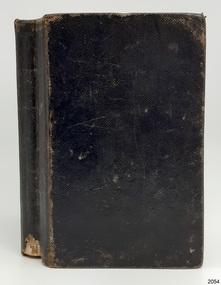
Book - Religious Book, Oxford University Press, The Holy Bible, 1859
... Families and Single Men, including Henry and Joseph, had to stay onboard until Thursday. This Holy Bible is significant for its age, as it was published in 1859. The inscriptions within this small Bible are significant as they show that during a ship's voyage passengers had the opportunity to teach and to learn. They also show a relationship ...Young Henry Pitts sailed from Liverpool, England, in about October 1860, on a ship called the 'British Trident'. About three months later, on January 7th 1861, he arrived in Sydney, Australia. While he travelled from one side of the world to the other, Henry attended lessons on the ship with his onboard teacher, Joseph Benton. On the day before the ship arrived at Sydney, Henry was given a Holy Bible by his teacher. The small black book had a hardcover and many printed pages of very thin paper. Henry must have felt special when he read his teacher’s beautifully written message that said the gift was a ‘mark of respect’ towards Henry. Maybe Mr Benton taught Henry to write with a pen and ink because Henry wrote his name several times inside the front of the book and again below his teacher’s message. Henry may have even learned to read from a Bible, which many passengers included in their luggage. The immigrants on board the British Trident were mostly new arrivals to Australia. Like Henry, they planned to make Australia their new home. Many also hoped to find work in this new country. Some passengers had family and friends waiting for them, people who deposited money towards their trip. Henry’s relative, Charles Pitts, had helped him pay for the ship’s passage, and William Oberthan paid money towards Joseph Benton’s fare. He may have planned for Joseph to work as a teacher in Australia. The Single Females were allowed to leave the ship the day after it docked at Sydney, but the Families and Single Men, including Henry and Joseph, had to stay onboard until Thursday. This Holy Bible is significant for its age, as it was published in 1859. The inscriptions within this small Bible are significant as they show that during a ship's voyage passengers had the opportunity to teach and to learn. They also show a relationship of encouragement had been built between the teacher and pupil. The Holy Bible containing the Old and New Testaments: Translated out of the original tongues: and with the former translations diligently compared and revised by His Majesty's Special Command. approved to be read in churches. Publisher and printed at the Oxford University Press, Sold by E. Gardner and Son, at the Oxford Bible Warehouse, Paternoster Row, London; and by J. and C. Mozley, Derby. Date: 1859 (in Roman Numerals) Handwritten black ink inscriptions are inside the front and back covers. The book once belonged to Henry Pitts and was presented to him by Joseph Benton in 1861.Front left side: " H Pitts H Pitts / - - - - - - of this Book / C - - - - - - - - -K " Front right side: "Given / to / Henry Pitts / As / A Mark of Respect / From / His Teacher on Board / the / British Trident / January 6th 1861 / Joseph Benton" "Henry" Back left: (indecipherable character)warrnambool, flagstaff hill maritime museum, holy bible, henry pitts, joseph benton, immigrant ship, 1861, single male, single female, charles pitts, william oberthan, british trident, hyde partk -
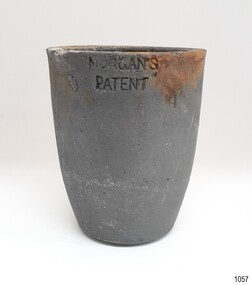 Flagstaff Hill Maritime Museum and Village
Functional object - Crucible, The Patent Plumbago Crucible Company, circa 1878
... family in the tragedy. The shipwreck of the LOCH ARD is of State significance ― Victorian Heritage Register S417 Flagstaff Hill’s collection of artefacts from LOCH ARD is significant for being one of the largest collections of artefacts from this shipwreck in Victoria. It is significant for its association with the shipwreck, which is on the Victorian Heritage Register (VHR S417). The collection is significant because of the relationship ...This crucible was raised from the wreck of the LOCH ARD. It is one of six similar relics, in a range of sizes, now in the Flagstaff Hill collection. All bear markings to indicate their manufacture by the Morgan brothers of Battersea, trading as the Patent Plumbago Crucible Co. A crucible is a container used for purifying and melting metals so that they can be cast in a mould to a predetermined shape and use. They must withstand extremely high temperatures, and abrupt cooling, and shed their contents with minimal adherence. The addition of graphite to the traditional firing clays greatly enhanced the durability of industrial crucibles in mid-Victorian Britain, a significant technological advance at a time of great activity in foundries and expansion of demand for refined metals. The Morgans first noticed the advantages of graphite crucibles at the Great Exhibition held in London in 1851. Initially, they contracted to be sole selling agents for the American-made products of Joseph Dixon and Co. from New Jersey, but in 1856 they obtained that firm’s manufacturing rights and began producing their own graphite crucibles from the South London site. The Morgans imported crystalline graphite in 4-5 cwt casks from the British colony of Ceylon (now Sri Lanka) and mixed it with conventional English (Stourbridge) clays to be fired in kilns. Their products were purchased by the Royal Mints in London and India, and exported to official mints in France and Germany. They were successful exhibitors of their crucibles and furnaces at the London Exhibition held in 1861 (Class 1, Mining, quarrying, metallurgy and mineral products, Exhibit 265, Patent Plumbago Crucible Co). The range of sizes represented by the six crucibles retrieved from the LOCH ARD, suggests they may have been part of a sample shipment intended for similar promotion in the Australian colonies ― at Melbourne’s International Exhibition to be held in 1880. The summary of the LOCH ARD cargo manifest, by Don Charlwood in ‘Wrecks and Reputations’, does not mention any crucibles, implying that they were not a large consignment of uniform items. A newspaper account of an 1864 tour of the Morgan brothers’ ‘Black Potteries’ at Battersea indicates: “All the pots were numbered according to their contents, each number standing for one kilogram, or a little over two pounds; a No. 2 crucible contains two kilogrammes; a No. 3, three kilogrammes, and so on.” These numbers are obscured by marine sediment on three of the crucibles in the Flagstaff Hill collection, but those legible on the remaining three are 5, 6, and 8. None of the six is of the same size from a visual appraisal. A brief history of the Loch Ard (1873-1878): - The sailing ship Loch Ard was one of the famous Loch Line of ships that sailed the long voyage from England to Australia. Barclay, Curdle and Co. built the three-masted iron vessel in Glasgow in 1873. It had sailed three trips to Australia and one trip to Calcutta before its fateful voyage. Loch Ard left England on March 2, 1878, under the command of recently married, 29-year-old Captain Gibbs. It was bound for Melbourne with a crew of 37, plus 17 passengers. The general cargo reflected the affluence of Melbourne at the time. Onboard were straw hats, umbrellas, perfumes, clay pipes, pianos, clocks, confectionery, linen and candles, and a heavier load of railway irons, cement, lead and copper. Other cargo included items intended for display in the Melbourne International Exhibition of 1880. The Loch Ard had been sailing for three months and was close to its destination on June 1, 1878. Captain Gibbs had expected to see land at about 3 am but the Loch Ard ran into a fog that greatly reduced visibility and there was no sign of land or the Cape Otway lighthouse. The fog lifted at 4 am and the sheer cliffs of Victoria's west coast were much closer to them than Captain Gibbs expected. He tried to manage the vessel but failed and the ship struck a reef at the base of Mutton Bird Island, near Port Campbell. The top deck loosened from the hull, and the masts and rigging crashed down, knocking passengers and crew overboard. The lifeboat was launched by Tom Pearce but crashed into the side of Loch Ard and capsized. He clung onto its overturned hull and sheltered under it. He drifted out to sea and the tide brought him back to what is now called Loch Ard Gorge. He swam to shore and found a cave for shelter. A passenger, Eva Carmichael, had raced onto the deck to find out what was happening and was confronted by towering cliffs above the ship. She was soon swept off the ship by a huge wave. Eva saw Tom Pearce on a small rocky beach and yelled to attract his attention. He swam out and dragged her to the shelter of the cave. He revived her with a bottle of brandy from a case that had washed up on the beach. Tom scaled a cliff in search of help and followed some horse hoof prints. He came from two men from Glenample Station, three and a half miles away. He told the men of the tragedy and then returned to the gorge while the two men rode back to the station to get help. They reached Loch Ard Gorge and took the two shipwreck survivors to Glenample Station to recover. Eva stayed at the station for six weeks before returning to Ireland by steamship. In Melbourne, Tom Pearce received a hero's welcome and was presented with a medal and some money. Of the 54 crew members and passengers on board, only two survived: the apprentice, Tom Pearce and the young woman passenger, Eva Carmichael, who lost her family in the tragedy. The shipwreck of the LOCH ARD is of State significance ― Victorian Heritage Register S417 Flagstaff Hill’s collection of artefacts from LOCH ARD is significant for being one of the largest collections of artefacts from this shipwreck in Victoria. It is significant for its association with the shipwreck, which is on the Victorian Heritage Register (VHR S417). The collection is significant because of the relationship between the objects, as together they have a high potential to interpret the story of the LOCH ARD. The LOCH ARD collection is archaeologically significant as the remains of a large international passenger and cargo ship. The LOCH ARD collection is historically significant for representing aspects of Victoria’s shipping history and its potential to interpret sub-theme 1.5 of Victoria’s Framework of Historical Themes (living with natural processes). The collection is also historically significant for its association with the LOCH ARD, which was one of the worst and best-known ahipwrecks in Victoria’s history.A Morgan’s Patent graphite crucible No.4 (i.e. 4kgs capacity), one of a set of three. It was recovered from the wreck of the LOCH ARD. It is in its original grey colouring with minimal sediment accretion on the top rim. It rises in a slight curve from a flat circular base to a wider rim with a pouring lip. Maker’s marks on the side of the container clearly identify the manufacturer. The maker's details are stamped into the base around and within a circle. A white sticker is attached. Made by the Patent Plumbago Crucible Company at the Battersea Works in London.Number or. Letters “MORGAN’S PATENT”. Details on the base "MORGAN'S PATENT" "THE PATENT PLUMBAGO CRUCIBLE COMPANY" Symbol [4] above "BATTERSEA WORKS LONDON" Handwritten on a white sticker in black pen "L89"flagstaff hill, warrnambool, flagstaff hill maritime museum, maritime museum, shipwreck coast, flagstaff hill maritime village, great ocean road, loch line, loch ard, captain gibbs, eva carmichael, tom pearce, glenample station, mutton bird island, loch ard gorge, graphite crucible, plumbago crucible, morgan's crucible company, flagstaff hill maritime museum and village, fluxing pots, crucible, morgan’s patent, morgan brothers, patent plumbago crucible co, battersea works, london, port campbell
