
Showing 17 items matching "farming households"
-
 Friends of Westgarthtown
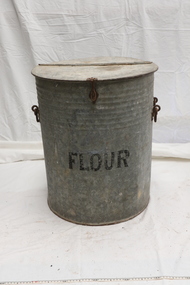
Domestic object - Metal flour tin, c. 1920-1950
... household management...bulk food storage...farming...Flour tin food storage kitchen equipment domestic life household management bulk food storage farming households Westgarthtown Ziebell family. Large metal storage tin with hand-painted black lettering reading 'Flour'. ...This metal flour storage tin belonged to the Ziebell family and was originally used at their farm at Westgarthtown, Thomastown, Victoria. Henry Ziebell recalled the tin being used by the family during his childhood and its continued presence in the family home in Thomastown. He explained that flour was traditionally purchased in large 70-pound (approximately 32 kg) bags and transferred into the tin for everyday domestic use. Large storage tins such as this were commonly used in rural households throughout the nineteenth and twentieth centuries, particularly when staple ingredients were purchased in bulk. These containers were an essential part of household management, allowing families to store substantial quantities of food for regular use. The tin provides a tangible connection to the domestic routines, food preparation and household practices of successive generations of the Ziebell family, reflecting the practical nature of everyday life at Westgarthtown. The tin was donated to Ziebell's Farmhouse Museum by Lyn and James Ziebell.Large metal storage tin with hand-painted black lettering reading 'Flour'. Used for storing bulk quantities of flour, the tin provided a practical means of keeping dry goods contained and protected from moisture, pests and contamination.flour tin, food storage, kitchen equipment, domestic life, household management, bulk food storage, farming households, westgarthtown, ziebell family. -
 Whitehorse Historical Society Inc.
Book, Approx 1898
... Book contains recipes, household hints, farming tips etc, also many ads included....Book contains recipes, household hints, farming tips etc, also many ads included. ...Used by Margaret Graham's grandmotherRed covered book 'The Australian Enquiry Book''. Refer to the 2/6 By Mrs Lance Rawson printed published by J. W. Knapton & Co. Ltd Collins Street Melbourne. 'The best in World Silver Star Starch' 'One Pound Makes 250 cups Empire Cocoa' Back cover of book very hard to read. Book contains recipes, household hints, farming tips etc, also many ads included.As abovebooks, reference -
 Mont De Lancey
Functional object - Tea Caddy, Bushells Tea, c1920's
... The empty tins would have been used for storing other foods, household or farming items....The empty tins would have been used for storing other foods, household or farming items. Metal Tea caddies Tea accessories Containers Food containers There is indecipherable print at the bottom of each side, however, some details can be read - No. 144 (of a series) Net 1lb. ...For generations, Bushells Coffee has been a part of everyday Australian life. It is an iconic household brand name that generations of families have grown up enjoying. These tea and coffee tins or caddies were commonly purchased from suppliers selling the well-known products of Bushels or Robur. The empty tins would have been used for storing other foods, household or farming items.A badly damaged square, Bushells Ltd 'Barley' tea canister or tea caddy with a rusted on lid and faded mountain scenes depicted around the four sides of the tin. There is indecipherable print at the bottom of each side, however, some details can be read - No. 144 (of a series) Net 1lb. Weight and other words not clearly read. The lid has a picture of the Bushells man with a long beard. This canister is from c.1920's and is very rare. There is indecipherable print at the bottom of each side, however, some details can be read - No. 144 (of a series) Net 1lb. Weight and other words not clearly read. The lid has a picture of the Bushells man with a long beard. The pictures on each side are very worn, but are of a female tea picker in traditional clothing working on a mountainside, standing near a shed with a cow and another one of her standing near an ox driven cart. metal, tea caddies, tea accessories, containers, food containers -
 Bendigo Historical Society Inc.
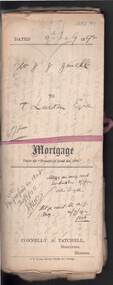
Document - CONNELLY, TATCHELL, DUNLOP COLLECTION: MORTGAGE MR. J.J. JEWELL TO T. LUXTON ESQ
... Jewell, farming implements, machinery, household effects at 'The Hill' Mitiamo.. ...Jewell, farming implements, machinery, household effects at 'The Hill' Mitiamo.. ...Documents relating to mortgage between Mr. Joshua James Jewell of Mitiamo, farmer, and Mr. T. Luxton , The Exchange, Collins St., Melbourne for land at Parish of Terrick Terrick West, County of Gunbower, mortgage document dated 4th. July 1892. Contains 3 Conditions of Sale documents, newspaper clipping re clearing sale of 2600 acres of land on behalf of Mr. J.J. Jewell, farming implements, machinery, household effects at 'The Hill' Mitiamo.. Letters relating to transactions re above mortgage enclosed, including discharge of mortgage handwritten document between Sarah Berges and Joshua J. Jewell. Note name change from Connelly & Tatchell, to Connelly, Tatchell & Paling. Letter enclosed in file from Mr. Joshua Jewell, 'The Hill' Mitiamo, Oct 4th., 1893 to Mr. T, Luxton, requesting ' waiting another (?) for money I will be able to pay it before the month is up but at present I cannot meet it. I have just commenced to shear and of course money will be coming in now'cottage, miners, joshua james jewell, thomas luxton, terrick terrick west, gunbower, mortgage, connelly, tatchell & paling, s. berges, connelly, tatchell & dunlop, paling. -
 Marysville & District Historical Society
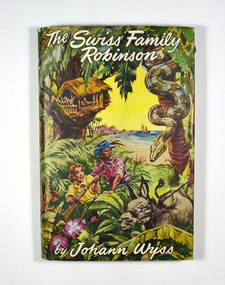
Book, The Swiss Family Robinson
... Their first home, a tree-house, is later abandoned in favour of a cave which they convert into a permanent residence. their New Switzerland abounds in wild life and useful trees and plants, and they are able to lead a happy and diligent life farming, hunting, fishing and devising means of supplying all their household needs. ...The Swiss Family Robinson-father, mother and four young sons - are callously abandoned on a sinking ship near the rocky shore of an unknown land. the father, a man of unbounded energy and resourcefulness, makes a raft by means of which they ferry themselves and many useful goods to the shore. They establish a camp and are later able to salvage much of the cargo. Their first home, a tree-house, is later abandoned in favour of a cave which they convert into a permanent residence. their New Switzerland abounds in wild life and useful trees and plants, and they are able to lead a happy and diligent life farming, hunting, fishing and devising means of supplying all their household needs. Many years pass and the lads grow up strong and adventurous. At last the discovery of another castaway and the eventual arrival of a rescue ship set them the problem - to return to Europe or to remain in New Switzerland?Front cover has an illustration showing two people, one carrying a rifle, a donkey and a large boa constrictor. In the background is a tree-house and a bay of water with a small boat floating in the water. The back cover has a list of Hamly Classic books and the details of the publisher of the book.fictionThe Swiss Family Robinson-father, mother and four young sons - are callously abandoned on a sinking ship near the rocky shore of an unknown land. the father, a man of unbounded energy and resourcefulness, makes a raft by means of which they ferry themselves and many useful goods to the shore. They establish a camp and are later able to salvage much of the cargo. Their first home, a tree-house, is later abandoned in favour of a cave which they convert into a permanent residence. their New Switzerland abounds in wild life and useful trees and plants, and they are able to lead a happy and diligent life farming, hunting, fishing and devising means of supplying all their household needs. Many years pass and the lads grow up strong and adventurous. At last the discovery of another castaway and the eventual arrival of a rescue ship set them the problem - to return to Europe or to remain in New Switzerland?swiss family robinson, shipwreck, switzerland, johann r. wyss, fiction -
 Flagstaff Hill Maritime Museum and Village
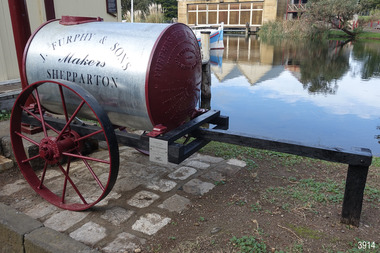
Vehicle - Furphy Water Cart, J. Furphy & Sons, c. 1942
... Furphy invented many farming tools and machines including a patented grain-stripper, and won awards at the 1888-89 Melbourne International Exhibition. His most famous invention is the Furphy Farm Water Cart, designed in the 1880s, at a time when water for most households and farms was carted on wagons in wooden barrels. ...Furphy invented many farming tools and machines including a patented grain-stripper, and won awards at the 1888-89 Melbourne International Exhibition. His most famous invention is the Furphy Farm Water Cart, designed in the 1880s, at a time when water for most households and farms was carted on wagons in wooden barrels. ...This horse-drawn, two-wheeled cart with a tank, is known as a Furphy Farm Water Cart that was made in Shepparton, northern Victoria, c. 1942. John Furphy (1842-1920) was born in Moonee Ponds, in 1842 to Irish immigrant parents and subsequently raised in the Yarra Valley before the family moved to Kyneton in central Victoria, where he completed an apprenticeship with the firm Hutcheson and Walker. Murphy began operations of his own at a site on Piper Street in Kyneton in 1864. He relocated for a business opportunity and founded the first blacksmiths and wheelwrights shop in the newly surveyed town of Shepparton in 1873. Furphy invented many farming tools and machines including a patented grain-stripper, and won awards at the 1888-89 Melbourne International Exhibition. His most famous invention is the Furphy Farm Water Cart, designed in the 1880s, at a time when water for most households and farms was carted on wagons in wooden barrels. The Furphy’s water cart is a single item that combines a water metal tank and a cart. The design of the cart was simple yet effective, and became popular very quickly and established itself as a vital piece of farming equipment. The water cart has had a number of words cast into its ends over many years. References to the foundry’s location in Shepparton, as well as advertising of other products also manufactured by J. Furphy & Sons were present on the ends. However, the most significant set of words to feature on the tank, was a poem encouraging continual improvement: ‘Good Better Best, Never Let it Rest, Until your Good is Better, And your Better Best’. During The Great War (1914-1918), the water cart was used by the Australian militarily at a large AIF (Australian Imperial Force) camp in Broadmeadows (Melbourne) where thousands of men were camped for months, before being transported aboard. Furphy Water Carts provided water to the troops, and were usually placed near the camp latrines, which was one of the few places the troops could share gossip and tall tales away from the prying eyes and ears of their officers. The water cart drivers were also notorious sources of information, despite most of their news being hearsay, or totally unreliable. By the time the men of the AIF were in engaged in combat on the Gallipoli Peninsula and the Western Front, the carts used for water supply had no markings and became simply referred to as Furphys. This owed as much to the coining of the term ‘Furphy’, Australian slang for suspect information or rumour. After a number of decades as principally a soldier’s word, 'Furphy' entered the broader Australian vernacular and was used mainly by the political class until recently when the term was taken up by a Australian brewer as a beer brand. This Furphy Water Cart was purchased by Friends of Flagstaff Hill in 2014. The support of local individuals, organisations and businesses enabled its restoration and later its installation alongside the existing late-19th century water pipe stand and 1940s hand pump The Furphy Farm Water Cart is of historical significance as it represents a famous Australian time-saving and energy-saving invention of the 1880s, replacing the labour intensive activity of collecting and dispensing water from barrels and casks on the back of carts. The water cart’s connection with manufacturing companies J. Furphy & Sons and Furphy Foundry are significant for being early Australian businesses that are still in operation today. Furphy carts are of military significance for the role they played during The Great War (1914-1918) in Australian army camps, and theatres of war in Europe and the Middle East, to supply the AIF troops with fresh water. A wooden framed, two-wheeled, horse-drawn cart, fitted with a horizontally mounted, cylindrical metal tank. The tank is made of rolled, sheet steel with a riveted seam, and cast iron ends with cast iron ends. The spoked metal wheels have fitted flat iron tyres and metal hubs. A metal pipe is joined to the outlet. The tank is silver coloured, the ends, wheels and trims are crimson, and the script lettering on tank sides is black. There are inscriptions on the tank, ends, and hubs. The water tank was made in 1942 in Shepparton, Australia, by J. Furphy & Sons and has a capacity of 180 gallons (848 litres). Hub perimeter, embossed “J. FURPHY & SONS” “KEEP THE / BOLTS TIGHT” Hub centre embossed [indecipherable] Tank, each side, painted “J. FURPHY & SONS / Makers / SHEPPARTON” Tank ends, embossed – “FURPHY’S FARM WATER CART” “BORN ABOUT 1880 – STILL ‘GOING STRONG’ 1942” “j. FURPHY & SONS / MAKERS / SHEPPARTON - VIC “ “S - - - - - L MANUFACTURERS” [SPECIAL] “SPIKE ROLLERS” “SINGLE TREES” “PLOUGH WHEELS” “IRON CASTINGS” “LAND GRADERS” “STEEL DELVERS” “CAST IRON PIG” “CHAIN YOKES” “GOOD – BETTER – BEST / NEVER LET IT REST / TILL YOUR GOOD IS BETTER / AND YOUR BETTER – BEST” Image [Stork carrying a baby] above shorthand, transcribed "Produce and populate or perish" Image [Furphy Pig Feeder] beside ‘Cast Iron Pig’ Shorthand, transcribed “"Water is the gift of God but beer and whiskey are concoctions of the Devil, come and have a drink of water"warrnambool, flagstaff hill maritime museum, water cart, furphy cart, furphy tank, furphy farm water cart, furphy, john furphy, john furphy & sons, furphy foundry, kyneton, shepparton, mobile water tank, jinker, hutchinson & walker, blacksmith, farm equipment, implement maker, tool maker, horse drawn, stork and baby, good, better, best, barrel, tank, first world war, wwi, eastern front, gallipoli, j furphy & sons -
 Orbost & District Historical Society
bill file, early 20th century
... farming. This item is an example of a commonly used item in the late 19th -early 20th century. It reflects a time when accounts were made of paper and retained as records by households. bill-file ornaments-metal green-ossie mckeown Black cast iron billfile. ...Ossie Green was a retired primary school principal living in Marlo. He wrote many historical books including Marlo The Township; The Plains The Cape. Mrs Green was a McKeown from Marlo. McKeowns had large land holdings around Marlo for farming.This item is an example of a commonly used item in the late 19th -early 20th century. It reflects a time when accounts were made of paper and retained as records by households. Black cast iron billfile. Ornate design with large spike.bill-file ornaments-metal green-ossie mckeown -
 Flagstaff Hill Maritime Museum and Village
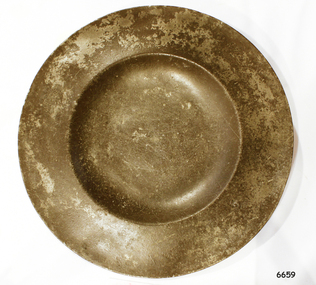
Domestic object - Plate, c. 1850's
... A few years later they set up a home on a small farming property in Wangoom, Warrnambool with the possessions they had brought with them from the village of Thriplow, Cambridgeshire, England. Amongst those household...A few years later they set up a home on a small farming property in Wangoom, Warrnambool with the possessions they had brought with them from the village of Thriplow, Cambridgeshire, England. Amongst those household ...In the words of the donor, Betty Stone, "This pewter plate belonged to Joshua and Susan Chamberlain. They, with their family, arrived in Australia as assisted migrants in January 1855. Our Chamberlain family was among those chosen to participate in a Bounty Scheme and on 24 October 1854 embarked on SS Shand to begin their journey. A few years later they set up a home on a small farming property in Wangoom, Warrnambool with the possessions they had brought with them from the village of Thriplow, Cambridgeshire, England. Amongst those household possessions was this plate. During the first half of the nineteenth century, a Bounty scheme was introduced to encourage migrants to Australia to work on properties granted or sold to settlers. Agents in England were engaged to select suitable emigrants; applicants had to be "sober, industrious and of good moral character....and married men over the age of forty-eight were only eligible to receive the bounty if they had five or more children over the age of ten years'. The successful applicant also had to pay one pound sterling for each adult, and ten shillings for each child between the ages of one and fourteen years. This payment covered the cost of a mattress, bolster, blanket, small box, knife and fork, two spoons, metal plate, and drinking mug, all of which became the emigrant's property on arrival in the colony. The pewter plate, handed down from one generation to the next, was always valued by members of the family as an important artefact. The plate has a mark stamped on the back which is almost indecipherable." (Reference- Brown Martyn- Australia Bound! The story of West Country connections 1688- 1888 Bradford on Avon Wiltshire Ex Libris Press 1988 p 112.) (Note: For additional information please refer to Betty Stone’s book “Pioneers and Places - A History of three Warrnambool Pioneering Families” ie. Chamberlain, Dale and Lees Families)This item is associated with the families of Chamberlain, Dale and Lees. These families are listed in the "Pioneers' Register" for Warrnambool Township and Shire, 1835-1900, published by A.I.G.S. Warrnambool Branch. The plate is an example of the goods emigrants brought to Australia under the Bounty Scheme in the 1850s.Pewter plate: metal plate with a wide rim and shallow bowl. The top has a gold-brown colour, underside is grey with a red-brown mark. Made c. 1850. The plate has an Inscription stamped on the back and front.It is part of the 'Chamberlain, Dale and Lees Collection' Maker's Mark on back: 'rectangle with rounded corners / T H all within a circle' almost indecipherable. Mark heavily stamped on front: 'L / T M'flagstaff hill, warrnambool, shipwrecked coast, flagstaff hill maritime museum, maritime museum, shipwreck coast, flagstaff hill maritime village, great ocean road, chamberlain, dale, lees, stone, betty stone, warrnambool pioneers, pewter plate, emigration, bountey system, dinner ware, joshua chamberlain, susan chamberlain, 1855, emigrant, assisted migrant, ss shand, wangoom, triplow, cambridgeshire -
 Warrnambool and District Historical Society Inc.
Album - Bonnett Family Scrapbook
... household recipes and hints from " Women's Sphere" and the "Australian Journal" in the time period of 1906 to 1935. There are also cuttings from the " Australian Dairy Farmer" from 1940. There are also a number of handwritten recipes for baking and medicinal purposes. It was collected by a member of the Bonnett family , who farmed at Mepunga over a number of years. The Historical Society has another exercise book of cuttings from the local paper which printed letters from the front by soldiers from WW1. This is an interesting collection of items which sparked the interest of a farming ...This is a collection of newspaper cuttings many of which relate to district soldiers who enlisted in World War 1. There are also a number of household recipes and hints from " Women's Sphere" and the "Australian Journal" in the time period of 1906 to 1935. There are also cuttings from the " Australian Dairy Farmer" from 1940. There are also a number of handwritten recipes for baking and medicinal purposes. It was collected by a member of the Bonnett family , who farmed at Mepunga over a number of years. The Historical Society has another exercise book of cuttings from the local paper which printed letters from the front by soldiers from WW1.This is an interesting collection of items which sparked the interest of a farming family in early 20th century.White two ring bantex folder of 37 plastic sleeves containing white A4 pages with newspaper cuttings. There are some handwritten pages at the rear.Early 20thC. newspaper cuttings. (kept by Bonnett family - Mepunga East)bonnett family, mepunga east, scrapbook, gall, chambers, morgan, moloney, jenkins, mclean, rev samuel fraser, spence, adams, bennett, robisson, sheedy, patrick maher, w j freckleton, j j buckley, john steel, f j hennessy, thomas gordon scott, william r jackway, c c williams, c w cooke, henry w frich, leo p gartlan, w f heazlewood, william k o'dowd, ralph j levings, w ewart murnane, t d donovan, j w connolly, arthur butler, george white, jim g davidson, a roberts, jack keith, w. allwood, voutier, edward somerville, harold wright, w a egan, p macnamara, carl d fisher, p morgan, david watson, cecil h fox, james tinker, gordon patterson -
 Warrnambool and District Historical Society Inc.
Document - Ledger 1883-1892 repurposed
... farming property including numbers of sheep shorn, chaff cut, fencing contracted and people employed. One envelope within the ledger is addressed to Mrs J Edwards, Morven via Branxholme. The Edwards family, lived on the MORVEN property situated about 11 kilometres west of Branxholme in the Western District of Victoria. This property was sub divided in 1911 into 25 farms. The not fully used ledger has later been repurposed as a recipe book with a collection of newspaper cuttings (1924-1929) inserted and recipes handwritten on 16 pages at the rear. The pages also include some household...farming property including numbers of sheep shorn, chaff cut, fencing contracted and people employed. One envelope within the ledger is addressed to Mrs J Edwards, Morven via Branxholme. The Edwards family, lived on the MORVEN property situated about 11 kilometres west of Branxholme in the Western District of Victoria. This property was sub divided in 1911 into 25 farms. The not fully used ledger has later been repurposed as a recipe book with a collection of newspaper cuttings (1924-1929) inserted and recipes handwritten on 16 pages at the rear. The pages also include some household ...This ledger was used between 1883 and 1892 to record returns and activities on a farming property including numbers of sheep shorn, chaff cut, fencing contracted and people employed. One envelope within the ledger is addressed to Mrs J Edwards, Morven via Branxholme. The Edwards family, lived on the MORVEN property situated about 11 kilometres west of Branxholme in the Western District of Victoria. This property was sub divided in 1911 into 25 farms. The not fully used ledger has later been repurposed as a recipe book with a collection of newspaper cuttings (1924-1929) inserted and recipes handwritten on 16 pages at the rear. The pages also include some household hints including instructions on how "To prepare sheep skins for mats"This ledger is typical of farming records kept in the period 1883 to 1892. The repurposing of the ledger as a recipe book was a common practice. This ledger has cardboard patterned covers. The paper pages are bound with cotton. Some pages are handwritten in ink. There are loose newspaper cuttings within the ledger as well as two addressed envelopes and a small red recipe booklet.ledger, farming records, recipes, morven, edwards family morven, canvassing department of the australian dried fruits association -
 Kiewa Valley Historical Society
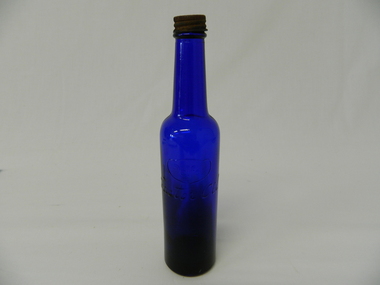
Bottle - Castor Oil, Circa 1920's to 1900's
... households had a "first aid" box full of items such as this bottle of castor oil. Home based remedies for non life threatening injuries and illnesses were a part of life in a semi remote rural region. True and trusted family "health" remedies were passed from generation to generation. This Castor Oil bottle is very significant to the Kiewa Valley as it demonstrates the self reliance of the early farming ...This bottle of castor oil was used during the mid to late 1900's when there was a Hospital in the Kiewa Valley, but regarded as only for serious injuries and near death situation. For this reason many households had a "first aid" box full of items such as this bottle of castor oil. Home based remedies for non life threatening injuries and illnesses were a part of life in a semi remote rural region. True and trusted family "health" remedies were passed from generation to generation.This Castor Oil bottle is very significant to the Kiewa Valley as it demonstrates the self reliance of the early farming and grazing pioneer families. Knowledge of "first aid" was uppermost to the survival of families before the late 1900's. Naturopathic remedies such as connected with the castor oil contained in this bottle, although may not be sanctioned by medical research, does not take into account of the positive "self healing" of the human mind (if you think it is doing you good it creates a positive action). Such preservation techniques were handed down through the generations.Medical Reference material was limited to books available and read and not not from "the internet" in the latter part of the 1900's. The availability of General Practitioners increased because of the boost in the population growth (SEC Vic Hydro Electricity Scheme) in the Kiewa Valley from 1940's onward. This small indigo coloured glass bottle has a narrow neck and a screw on lid.It has an embossed manufacturer's name and contents (Castor Oil) on one side and identification marks embossed on the underside base.medicine bottles, home first aid remedies, indigo glass medicine bottles -
 Kiewa Valley Historical Society
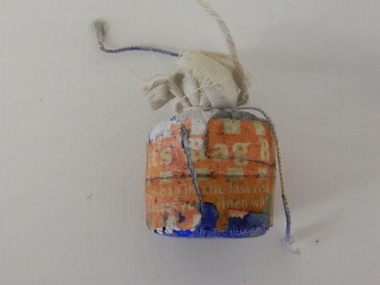
Bag Whitening Agent Reckitts, circa early 1900s
... household domestic "chore" of washing white clothes to a "social" standard of cleanliness. White shirts were the mark cleanliness that those outside of the family judged the family unit by. The best clothes were worn to church on Sundays. Hard and mostly rural activities/work in the Kiewa Valley encompassing farming ...This little bag of "whitener" additive for the washing of white clothes was manufactured in Hull in the United Kingdom mid and later 1900's. The Manufacturer, Ricketts, was one of the first manufacturers to employ women in equal proportions with males (a rarity before 1914). This product was used to improve the appearance of white fabrics. This ability to use a product that would "whiten" clothes chemically rather than the "hard boiling" of clothes was a time saver and a lot easier on the fabrics. This is a boon to rural families where time was of the essence (boiling took time). The blue coloring was introduced because the white colour perception is enhanced by the blue (fadeable and not permanent). The "washing machine industry" of the late 1900's emphasised "whitening" agents that were not so haphazard in producing blue stains, and allowed a "gentle" washing action. This item is very significant in detailing the early 1900's rural household domestic "chore" of washing white clothes to a "social" standard of cleanliness. White shirts were the mark cleanliness that those outside of the family judged the family unit by. The best clothes were worn to church on Sundays. Hard and mostly rural activities/work in the Kiewa Valley encompassing farming, crop cultivation, cattle/sheep and "field work" to do with the SEC Vic Hydro Scheme involved provided a stain prone environment. As appearances, of clothing, was on the whole not significant it was a different scenario at social and religious scenes. The ability to attain "brilliant" white shirts, dresses and bonnets by a less drastic method to that of "boiling" of clothes in vats, was a boon of that "era". The anti establishment revolt came later in the 1950's onward took longer to migrate from the cities and larger rural townships to eventually sneak into the Kiewa valley.This "blue bag" is a whitening agent wrapped in flannel or muslin, or sold ready bagged (1 ounce).It was used in the final rinse to "whiten white coloured clothes" The string was used to facilitate finger grip onto the "bag" after the wash had finished for easy removal to stop the hand and other surfaces from being stained by the blue colour residue drips.domestic and commercial laundries, starch and whitening additive, washing brightener -
 Narre Warren and District Family History Group
Book, Mary Karney, No rugged landscape, 1991
... Her diaries describe vividly her large family's daily household chores, farming activities, squabbles and passing love affairs. ...In dog-eared school exercise books, Georgina Oswin, a mother of seven, recorded the simple pleasures and struggles of life in rural Australia in the 1880s. Her diaries describe vividly her large family's daily household chores, farming activities, squabbles and passing love affairs. This is a record of colonial social history which has been brought together by a kinswoman of the pioneer Oswins, Mary Karney.non-fictionIn dog-eared school exercise books, Georgina Oswin, a mother of seven, recorded the simple pleasures and struggles of life in rural Australia in the 1880s. Her diaries describe vividly her large family's daily household chores, farming activities, squabbles and passing love affairs. This is a record of colonial social history which has been brought together by a kinswoman of the pioneer Oswins, Mary Karney. oswin family, mornington peninsula -- family history -
 Warrnambool and District Historical Society Inc.
China, Cup & Saucer, Eary 20th century
... household china that was in use 100 years ago and was still being used for many decades after that time. They are attractive items and will be useful for display. History of Warrnambool Porridge bowls ‘In God is Our Trust’ ‘The Farmers Arms’ These two items are a large cup and saucer made of china and used for porridge. The cup has colour floral and leaf scroll decorations inside the top rim, a piece of verse extolling the farmer and surrounded by black and white patterns, including farming ...This is a porridge set which probably dates from the early years of the 20th century. Porridge bowls and cups were particularly popular in Scotland at that time and would have been used in households in Australia throughout the 19th and early 20th centuries. These items have no known local provenance but are of interest as an example of the household china that was in use 100 years ago and was still being used for many decades after that time. They are attractive items and will be useful for display. These two items are a large cup and saucer made of china and used for porridge. The cup has colour floral and leaf scroll decorations inside the top rim, a piece of verse extolling the farmer and surrounded by black and white patterns, including farming implements, on one side of the cup and coloured farming implements in circles with the same verses in larger circles with a colour wheat sheaf in the centre on the other side of the cup. The saucer, more in the shape of a soup bowl, has the same colour floral and leaf decorations around the rim and the same farming patterns and verses in the centre. The handle has a black and white floral decoration The maker’s mark and name are on the bottom of the cup and saucer. ‘In God is Our Trust’ ‘The Farmers Arms’ history of warrnambool, porridge bowls -
 Warrnambool and District Historical Society Inc.
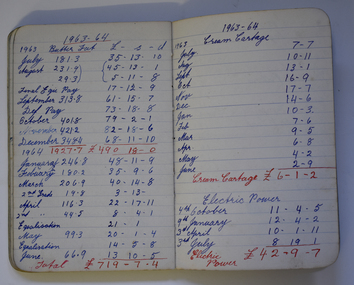
Financial record - Bonnett Farm Account Notebook, George Bonnett, Mepunga, 1920 to 1981
... household goods etc. This notebook is an interesting memento of Westen District farm finances over a period of sixty years in the 20th century Mepunga Farming Bonnett Family of Mepunga This is a small note book with a black cover. ...This is a notebook used to keep some of the farm accounts of the Bonnett farm in Mepunga. As the handwriting is the same throughout, most of the entries appear to have been made by George Bonnett, the son of Frederick and Charity Bonnett. The accounts date from 1920 to 1981 and commence with the sale of stock (pigs, sheep and cattle) in 1920 and go on to record purchases as well as sales in a variety of goods and services - cartage costs, electricity bills, garage repairs, stock feed, household goods etc. This notebook is an interesting memento of Westen District farm finances over a period of sixty years in the 20th centuryThis is a small note book with a black cover. It contains pages with ruled lines and handwritten entries in red, blue and black ink. Some pages have been cut out at the back of the book.mepunga farming, bonnett family of mepunga -
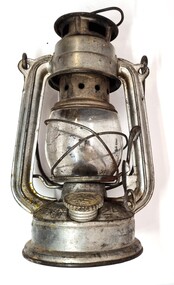 Wodonga & District Historical Society Inc
Domestic object - Kerosene Lantern
... They also rented lands and established themselves in the hops and tobacco farming industries. Items of Chinese origin made their way into many households. ...They also rented lands and established themselves in the hops and tobacco farming industries. Items of Chinese origin made their way into many households. ...During the Victorian goldrushes of the 1850s thousands of Chinese migrants arrived to seek their fortunes. At that time many came to the lucrative gold fields of Northeast Victoria. After the Gold rush, many Chinese migrants returned home. However, a number settled in the area as merchants, hawkers and market gardeners in surrounding towns including Wodonga, the Ovens, King, Buffalo River and Kiewa Valleys. They also rented lands and established themselves in the hops and tobacco farming industries. Items of Chinese origin made their way into many households. Importation of Chinese mass produced items such as this lantern continued well into the 20th century and were common domestic items across Australia before households were connected to electricity.This item is representation of kerosene / paraffin lamps used throughout Australia to provide lighting inside and outdoors prior to the widespread availability of electricity.A small hurricane lamp with a rounded tank and small carry handle attached to the top. A larger handle is also attached at the top of the frame. It has a lever to open the glass tank. It has a metal base which is filled with kerosene. It has a screw knob to open the kerosene receptacle. The metal hood also has vents. The Chinese characters around the base translate to "Shanghai Guanghuaheng".Around base : Chinese characters. On top : "Made in China KWANG HWA"kerosene lamp, domestic appliances, chinese artefacts -
Emerald Museum & Nobelius Heritage Park
Equipment - Butter Churn, Unknown maker
... households and dairy farms before the process became mechanized. These insights facilitate a better understanding of the agricultural history of the Emerald region, as well as the social history of food production in a domestic setting. dairy industry dairy farm and equipment Farm machinery Farming farm domestic Butter churn Crank: 47797 / Wooden, cube-shaped box with a metal crank affixed to one side and a removable wooden lid on top. ...A butter churn is used to convert cream into butter. This particular type of churn uses a crank to turn a series of paddles to create the required movement to churn the cream into butter. Butter churns such as this were used in domestic houses as well as farms until around the early to mid-20th century. The paddle butter churn was used in farms and domestic settings until the early to mid twentieth century. After a cow was milked, the milk would be left in a cool setting for up to a week until the cream rose to the top. The cream would then be put into the churn to separate the fat of the cream from the buttermilk. The crank-operated paddles would create the necessary movement required to separate the fat. Salt was then added and the butter was kneaded and cleaned. Patting the butter with butter pats into one pound or half pound blocks would complete the process.This object is of historic significance as it offers an insight into how butter was produced in households and dairy farms before the process became mechanized. These insights facilitate a better understanding of the agricultural history of the Emerald region, as well as the social history of food production in a domestic setting.Wooden, cube-shaped box with a metal crank affixed to one side and a removable wooden lid on top. Interior of the box contains wooden paddles which are connected to the metal crank.Crank: 47797 /dairy industry, dairy, farm and equipment, farm machinery, farming, farm, domestic, butter churn
