
Showing 117 items matching "geelong gardens"
-
 Ballarat Heritage Services
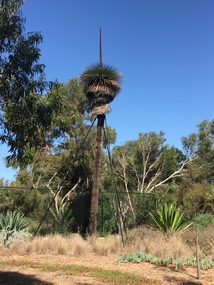
Colour Photograph, Clare Gervasoni, Grass Tree, Geelong Botanical Gardens, 2019, 23/03/2019
... Grass Tree, Geelong Botanical Gardens, 2019...geelong botanical gardens...Photographs from a very tall grass tree at Geelong Botanical Gardens...geelong botanical gardens grass tree Photographs from a very tall grass tree at Geelong Botanical Gardens Grass Tree, Geelong Botanical Gardens, 2019 Colour Photograph Clare Gervasoni ...Photographs from a very tall grass tree at Geelong Botanical Gardensgeelong botanical gardens, grass tree -
 Ballarat Heritage Services
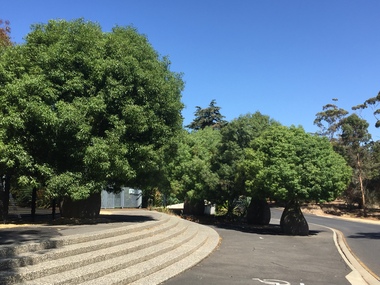
Colour Photograph, Clare Gervasoni, Boab Trees, Geelong Botanical Gardens, 2019, 23/03/2019
... Boab Trees, Geelong Botanical Gardens, 2019...geelong botanical gardens...Photographs from a very tall grass tree at Geelong Botanical Gardens...geelong botanical gardens Photographs from a very tall grass tree at Geelong Botanical Gardens Boab Trees, Geelong Botanical Gardens, 2019 Colour Photograph Clare Gervasoni ...Photographs from a very tall grass tree at Geelong Botanical Gardensgeelong botanical gardens -
 Ballarat Heritage Services
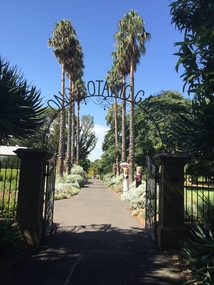
Colour Photograph, Clare Gervasoni, Geelong Botanical Gardens, 2019, 23/03/2019
... Geelong Botanical Gardens, 2019...geelong botanical gardens...Photographs from a very tall grass tree at Geelong Botanical Gardens...geelong botanical gardens Photographs from a very tall grass tree at Geelong Botanical Gardens Geelong Botanical Gardens, 2019 Colour Photograph Clare Gervasoni ...Photographs from a very tall grass tree at Geelong Botanical Gardensgeelong botanical gardens -
 Federation University Historical Collection
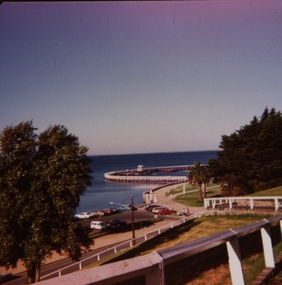
Photograph, Geelong Foreshore and Botanical Gardens
... Geelong Foreshore and Botanical Gardens......Geelong Botanical Gardens....1 Coloured photograph showing a vista of the Geelong foreshore with the baths in the distance c 1970's .2 Coloured photograph showing vista of garden beds, lawn and trees in the Geelong Botanical Gardens c1970's...Geelong Geelong baths Geelong Botanical Gardens Verso - Geelong .1 Coloured photograph showing a vista of the Geelong foreshore with the baths in the distance c 1970's .2 Coloured photograph showing vista of garden beds, lawn and trees in the Geelong Botanical Gardens c1970's Geelong Foreshore and Botanical Gardens Photograph ....1 Coloured photograph showing a vista of the Geelong foreshore with the baths in the distance c 1970's .2 Coloured photograph showing vista of garden beds, lawn and trees in the Geelong Botanical Gardens c1970'sVerso - Geelonggeelong, geelong baths, geelong botanical gardens -
 University of Melbourne, Burnley Campus Archives
Article, George Jones, Growing together; Supplementary Volume, 1988
... geelong...gardens...Geelong's Garden Scene 1838 - 1988, by George Jones (second vol. of history of the Geelong Botanic Gardens}, 64 pp....geelong gardens george jones Geelong's Garden Scene 1838 - 1988, by George Jones (second vol. of history of the Geelong Botanic Gardens}, 64 pp. ...Geelong's Garden Scene 1838 - 1988, by George Jones (second vol. of history of the Geelong Botanic Gardens}, 64 pp.geelong, gardens, george jones -
 National Wool Museum
Acorn
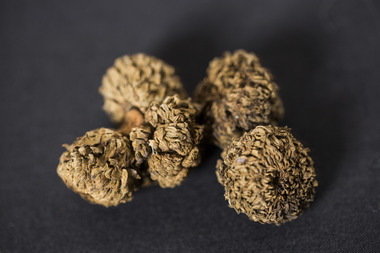
... geelong botanic gardens dennys...The tree was planted in the Geelong Botanic Gardens by the first curator, Daniel Bunce, from an acorn shipped to Charles Ibbotson from Southern Europe in 1861. ...Five immature acorn caps from a Valonia oak, first planted in the Geelong Botanic Gardens in 1861 from acorns forwarded by Charles Ibbotson. ...Five immature acorn caps from a Valonia oak, first planted in the Geelong Botanic Gardens in 1861 from acorns forwarded by Charles Ibbotson. ...Acorn and caps are from a 15 metre high Valonia oak tree (Quercus ithaburensis macrolepis) which was uprooted during a storm on Tuesday, 1st December 1987. The tree was planted in the Geelong Botanic Gardens by the first curator, Daniel Bunce, from an acorn shipped to Charles Ibbotson from Southern Europe in 1861. Ibbotson was the Chairman of the Management Committee of the Gardens and a woolbroker and merchant who founded the company Dalgety, Ibbotson and Co. with F.G. Dalgety in 1852. The acorns arrived in poor condition, but later established well. Very few Valonia Oaks were successfully propagated in Australia. Valonia oak caps were an important species which were used in the European tanning industry and Australian tanners were eager to grow the oak here.Five immature acorn caps from a Valonia oak, first planted in the Geelong Botanic Gardens in 1861 from acorns forwarded by Charles Ibbotson. Acorn and cap from a Valonia oak, first planted in the Geelong Botanic Gardens in 1861 from acorns provided by Charles Ibbotson. geelong botanic gardens dennys, lascelles limited city of greater geelong, tanning, valonia oak, ibbotson, mr a. charles, the heights, newtown, geelong. -
Friends of Ballarat Botanical Gardens History Group
Work on paper - A Traveller's Notes, James Herbert Veitch, A Tour Through Parts of Asia, the Australian Colonies and New Zealand 1891-1893, 1896
... ...Geelong Gardens...John Garner Doctor John Garner Collection James Herbert Veitch Traveller's Notes Royal Exotic Nursery Chelsea Ballarat Botanical Gardens Melbourne Botanic Gardens Geelong Gardens Broken Hill Botanist Note in the righthand margin of the 3rd page and some underlining of the 4th page. ...It is interesting to read of Veitch's description and views of Ballarat in 1891-1893 and other places and gardens visited in Australia.These pages selected from James Veitch's work add to an understanding of the development of Ballarat's Gardens and history.11 pages selected and a brief note on City of Ballarat notepaper.Note in the righthand margin of the 3rd page and some underlining of the 4th page. With this extract, there is a note in biro Philip Clingin, the Town Clerk to Roy Mosman, member of the Friends' History Group.john garner, doctor, john garner collection, james herbert veitch, traveller's notes, royal exotic nursery chelsea, ballarat botanical gardens, melbourne botanic gardens, geelong gardens, broken hill, botanist -
 University of Melbourne, Burnley Campus Archives
Album - Colour prints, Sandra Pullman, Diploma and Degree Excursions, 1996-2001
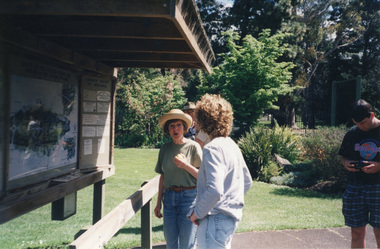
... Parks and Gardens Tour October 1996 for Diploma of Horticulture to Geelong Botanic Gardens 1-6,Turkeith 7-15, Glenormiston 16-20, Boortkoi 21-25 and Mooramong 26-33. ...Parks and Gardens Tour October 1996 for Diploma of Horticulture to Geelong Botanic Gardens 1-6,Turkeith 7-15, Glenormiston 16-20, Boortkoi 21-25 and Mooramong 26-33. ...Photograph Album containing 42 colour photographs. Parks and Gardens Tour October 1996 for Diploma of Horticulture to Geelong Botanic Gardens 1-6,Turkeith 7-15, Glenormiston 16-20, Boortkoi 21-25 and Mooramong 26-33. Landscape Study Trip August 2001 for Horticulture Degree to Arrandoorong. Landscape Study Trip November 2001 to Brimank - Taylor's Creek shrubland.parks, gardens, 1996, diploma of horticulture, turkeith, glenormiston, mooramong, landscape study trip, arrandoorong, brimank, taylor's creek, shrubland, boortkoi -
 Warrnambool and District Historical Society Inc.
Book, Language of the Aborigines of the colony of Victoria, 1859
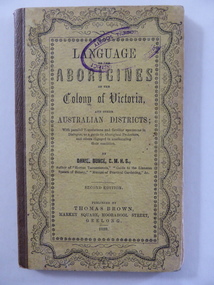
... In 1858 Bunce became the Director of the Geelong Botanic Gardens and designed and planted out the gardens. ...In 1858 Bunce became the Director of the Geelong Botanic Gardens and designed and planted out the gardens. ...This is the second edition of a book published originally in 1851. It is an early work concerned with the recording of aboriginal languages and was published in Geelong. The author, Daniel Bunce (1813-1872) was a botanist who went on journeys with aborigines in Victoria in 1839 and later in 1846 joined Ludwig Leichhardt’s second expedition in his attempt to cross Australia from east to west. This was unsuccessful. Bunce’s experiences in 1839 and in 1846 enabled him to write his book on aboriginal languages. In 1858 Bunce became the Director of the Geelong Botanic Gardens and designed and planted out the gardens. No information has been found on Noel Hallowill. This book is of antiquarian interest as an early dictionary of aboriginal languages and as a book written by the botanist, Daniel Bunce. This is a hard cover book of 60 pages. The cover is yellow with black lettering. There is an ornamental border around the printing. There are two blue stamps of the Warrnambool and District Historical Society on the front cover and on the first page. The book is bound with brown tape. The book has a Preface, an Introduction and sections on the aboriginal languages in areas of Victoria and beyond. A copy of a letter from the explorer, Ludwig Leichhardt, is included at the end of the book. Stamp of ‘Noel Hallowill’ (name unclear) daniel bunce, aboriginal languages, ludwig leichhardt -
 University of Melbourne, Burnley Campus Archives
Plan, Hilda Marriott ( Dance), Garden Plans by Hilda Marriott (Dance), 1947-1981
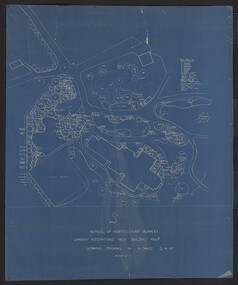
... Hilda Dance, Designer 26/4/47, Scale ⅛"=1'. (6) Blueprint Garden House - Sketch. (7) Tracing paper and paper copies Ararat Medical Centre Courtyard Garden, Landscape Architect - Hilda Marriott, Scale - 1:25, Date 8.5.79. (8) Tracing paper copy National Trust of Australia (Victoria) The Heights, Newtown, Geelong Garden Plan, Scale 1:250, Drawn by - Hilda Marriott, Date 12.10.79....Hilda Dance, Designer 26/4/47, Scale ⅛"=1'. (6) Blueprint Garden House - Sketch. (7) Tracing paper and paper copies Ararat Medical Centre Courtyard Garden, Landscape Architect - Hilda Marriott, Scale - 1:25, Date 8.5.79. (8) Tracing paper copy National Trust of Australia (Victoria) The Heights, Newtown, Geelong Garden Plan, Scale 1:250, Drawn by - Hilda Marriott, Date 12.10.79. ...Set of 8 plans, including blue-prints, of various gardens, dated c. 1947 - 1981. See paper catalogue for complete list.Plans by Hilda Marriott Dance (1) Sketch plan and 2 blueprint copies of School of Horticulture Burnley. Garden Alterations New Building Area, Working Drawing by H. Dance, Scale ⅟₂₀"=1', 2/4/47, on reverse handwritten,"Proposed Garden Lay-out for New School Building (H. Dance-plan)." (NB Emily Gibson was also involved in the planning of this site.) (2) Tracing paper, paper and blueprint copies of Ararat & District Hospital Garden Plan - MacDonald Memorial & Court, Landscape Architect - H. Dance, Scale 1 inch=8 feet. Includes handwritten note, "Replacement for Ararat Hospital Nov. 1979," list of plants. (3) Blueprint Proposed Design for Garden Watermill Farm, Newbury for Norman Gadsden Esq., Scale ⅟₄₀"=1 ft. (4) Sketch Plan for Garden, Barcombe, Buangor - January 1981 by Hilda Marriott, Scale - Approximate Only - 1:40. (5) Tracing paper copy of plan of Garden at Plumhill, Templestowe, for Mr. & Mrs. Colin Smith. Hilda Dance, Designer 26/4/47, Scale ⅛"=1'. (6) Blueprint Garden House - Sketch. (7) Tracing paper and paper copies Ararat Medical Centre Courtyard Garden, Landscape Architect - Hilda Marriott, Scale - 1:25, Date 8.5.79. (8) Tracing paper copy National Trust of Australia (Victoria) The Heights, Newtown, Geelong Garden Plan, Scale 1:250, Drawn by - Hilda Marriott, Date 12.10.79.(1 B): on reverse handwritten, "Proposed Garden Lay-out for New School Building (H. Dance - plan)." (2): Includes separate handwritten note, "Replacement for Ararat Hospital Nov. 1979," list of plants.hilda marriott ( dance), burnley school of horticulture, students, ararat & district hospital, newbury, norman gadsden, barcombe, buanguor, plumhill, templestowe, the heights, newtown (geelong) -
 Ballarat Tramway Museum
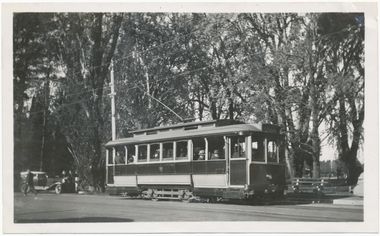
Photograph - SECV No. 12 in 1930's colours at Gardens Loop, Wal Jack, 6/10/1940
... Photograph of SEC No. 12 in 1930's colours at Gardens Loop, in loop facing south. On rear in ink 'T39, Ballarat No. 12, ex Geelong No. 28, at Gardens, Ballarat, 6-10-40'. ...Photograph of SEC No. 12 in 1930's colours at Gardens Loop, in loop facing south. On rear in ink 'T39, Ballarat No. 12, ex Geelong No. 28, at Gardens, Ballarat, 6-10-40'. ...Photograph of SEC No. 12 in 1930's colours at Gardens Loop, in loop facing south. On rear in ink 'T39, Ballarat No. 12, ex Geelong No. 28, at Gardens, Ballarat, 6-10-40'. Kodak photo paper and machine stamp '4928' Set of two almost identical photographs. See image i2 for rear of photograph. N772 - 120 Negative see image i4 - the better photograph. N1126 - 512 Negative - see image i3. Also see Digital Image. Yields information about SECV Ballarat tram 12 and the colour scheme at the time.Black & white photo with notes on rear of print.See abovetrams, tramways, gardens, wendouree parade , tram 12 -
 Ballarat Tramway Museum
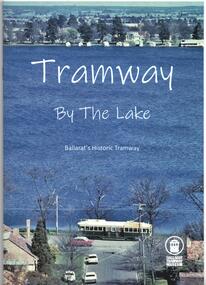
Book, Ballarat Tramway Museum (BTM), "Tramway by the Lake - Ballarat's Historic Tramway", Oct. 2019
... Looks at the history of the various operators, tramcar types, and the Gardens. Includes Geelong 2 and W7 1029. Front cover photo by Ray Marsh, rear by Peter Kervarec. 1000 copies printed by Waller and Chester of Ballarat two copies held....Looks at the history of the various operators, tramcar types, and the Gardens. Includes Geelong 2 and W7 1029. Front cover photo by Ray Marsh, rear by Peter Kervarec. 1000 copies printed by Waller and Chester of Ballarat two copies held. ...Book - 28 pages centre stapled, card cover printed on gloss paper, A5, titled "Tramway by the Lake - Ballarat's Historic Tramway", a brief history of the Ballarat Tramway and the Ballarat Tramway Museum. Published Oct. 2019. Written by Chris Phillips, Edited by Peter Waugh with some photographs from the collection. Looks at the history of the various operators, tramcar types, and the Gardens. Includes Geelong 2 and W7 1029. Front cover photo by Ray Marsh, rear by Peter Kervarec. 1000 copies printed by Waller and Chester of Ballarat two copies held.trams, tramways, btm, souvenirs, history, tramcar preservation, ballarat -
Warrnambool and District Historical Society Inc.
Book - Language of the Aborigines of the Colony of Victoria and other Australian Districts, 1851
... gardener and botanist, and emigrated to Hobart Town on Tasmania in 1833. In 1839 he went to Port Phillip, immediately joined a party of Aboriginals on a journey to Western Port, and made an intensive study of their spoken language. He established a nursery at St Kilda. In 1846 Bunce joined Ludwig Leichhardt on his second attempt to cross Australia from east to west. Bunce's study of Aboriginal languages on his journeys in 1839 and 1846 led to the publication in Melbourne in 1851 of his Language of the Aborigines. In 1858 he became director of the Geelong...gardener and botanist, and emigrated to Hobart Town on Tasmania in 1833. In 1839 he went to Port Phillip, immediately joined a party of Aboriginals on a journey to Western Port, and made an intensive study of their spoken language. He established a nursery at St Kilda. In 1846 Bunce joined Ludwig Leichhardt on his second attempt to cross Australia from east to west. Bunce's study of Aboriginal languages on his journeys in 1839 and 1846 led to the publication in Melbourne in 1851 of his Language of the Aborigines. In 1858 he became director of the Geelong ...This volume is a compilation by the author, botanist, Daniel Bunce of language of the Aborigines of the Colony of Victoria. It was prepared as a guide to Aboriginal protectors and others who were engaging with First Nations people of the time. The loose leaf documents found within the book contain handwritten lists of aboriginal words.This is a slender red covered volume with black print. There is a rectangle of white paper glued to the inside cover with a printed name. The inside cover has an inscription in black ink as does the frontice page. The front and rear covers have had paper tape applied to them. Inside the book were found two sheets of paper [.2 &.3] with handwritten notes in black ink. [.4] There is also a small white envelope with red postmarks, a typewritten address and blue printing in the bottom left hand corner which originally contained the smaller sheet of paper.non-fictionThis volume is a compilation by the author, botanist, Daniel Bunce of language of the Aborigines of the Colony of Victoria. It was prepared as a guide to Aboriginal protectors and others who were engaging with First Nations people of the time. The loose leaf documents found within the book contain handwritten lists of aboriginal words.daniel bunce, aboriginal language, first nation language, alexander ingram, reynell eveleigh johns -
 Ballarat Tramway Museum
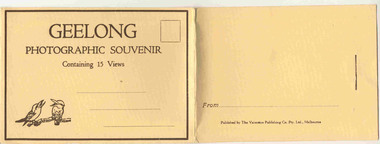
Postcard - Folder set, Valentine & Sons Publishing Co, "Geelong Photographic Souvenir", early 1920's
... Panorama of Eastern Beach Geelong 2. Eastern Beach Gardens 3. Eastern Beach 4. ...Panorama of Eastern Beach Geelong 2. Eastern Beach Gardens 3. Eastern Beach 4. Ryrie St with centre poles and a tram in the distance. 5. ...Shows views of the Geelong CBD and beach area in the 1930's including one tram photo and two other photos of trams in the street and the centre poles which were later removed. Demonstrates production of souvenirs of the era - folded postcards. The photos could also be used for individual postcards.Set of 15 black and white views of Geelong printed on a folded strip, glued within a manila colour cardboard folder, titled "Geelong Photographic Souvenir". Booklet printed with an address area with title and kookaburras and on the rear, an area where the sender could write their name. Produced by The Valentine Publishing Co. Pty Ltd Melbourne. The rear has a slit on the rear cover that allowed the folder to be secured. Pictures are: 1. Panorama of Eastern Beach Geelong 2. Eastern Beach Gardens 3. Eastern Beach 4. Ryrie St with centre poles and a tram in the distance. 5. Botanic Gardens 6. Johnstone Park 7. Gordon Technical College 8. Moorabool St. - with poles in street, single line track and tram in far distance. 9. Eastern Beach and Wharves 10 T and G Building 11 The Fountain, Eastern Beach 12 Town Hall and Post Office 13 Baron bridge - just prior to opening - roadway construction appears to be underway. 14 Malop St with tram (10?) in foreground 15 View of Johnstone Park. Made during 1930's given motor cars in the photo. trams, tramways, geelong, postcards, malop st, town hall, post office, gardens -
 Federation University Historical Collection
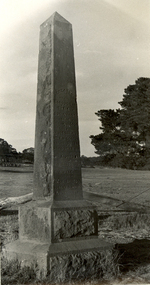
Photograph - Photograph - Black and White, Photographs of Ballarat Buildings by Geoff Biddington, 1967, 1967
... Geelong Road, Mount Clear 3. Water Hydrant 4. Former Police Station, Camp Street 5. Cast Iron Drinking Fountain, Eureka Stockade 6. Buninyong Gold Discovery Monument 7. Ballarat Old Cemetery Gates 8. Ballarat East Post office 9. Carriers Arms, Doveton Street North 10. North Star Hotel, Lydiard Street North 11.Lake View Hotel 12. Former Ballarat Gaol, Gate Two 13. Beaufort House 14. Smythesdale Post Office 15. Ballan Timber Building 16. National Mutual Building, Sturt Street 17. Craig's Hotel Doors 18. Her Majesty's Theatre Stage 19 & 20. Ballarat Botanical Gardens...Geelong Road, Mount Clear 3. Water Hydrant 4. Former Police Station, Camp Street 5. Cast Iron Drinking Fountain, Eureka Stockade 6. Buninyong Gold Discovery Monument 7. Ballarat Old Cemetery Gates 8. Ballarat East Post office 9. Carriers Arms, Doveton Street North 10. North Star Hotel, Lydiard Street North 11.Lake View Hotel 12. Former Ballarat Gaol, Gate Two 13. Beaufort House 14. Smythesdale Post Office 15. Ballan Timber Building 16. National Mutual Building, Sturt Street 17. Craig's Hotel Doors 18. Her Majesty's Theatre Stage 19 & 20. Ballarat Botanical Gardens ...Geoff Biddington took numerous photos around Ballarat and District. He was an active member of the Ballarat Branch of the National Trust. 48 black and white photographs of Ballarat buildings. 1. National Bank, Buninyong 2. Gas Light Standard, Geelong Road, Mount Clear 3. Water Hydrant 4. Former Police Station, Camp Street 5. Cast Iron Drinking Fountain, Eureka Stockade 6. Buninyong Gold Discovery Monument 7. Ballarat Old Cemetery Gates 8. Ballarat East Post office 9. Carriers Arms, Doveton Street North 10. North Star Hotel, Lydiard Street North 11.Lake View Hotel 12. Former Ballarat Gaol, Gate Two 13. Beaufort House 14. Smythesdale Post Office 15. Ballan Timber Building 16. National Mutual Building, Sturt Street 17. Craig's Hotel Doors 18. Her Majesty's Theatre Stage 19 & 20. Ballarat Botanical Gardens Statuary House 21 & 22. Stonemason at work 23. Methodist Church School (1867) Humffray Street 24 & 25. Methodist Church, Brown Hill 26. Queen St Statue,Sturt Street 27-29. Sturt Street Fountain 30. Moore Statue, Sturt Street 31. Hede Statue, Sturt Street 32. George V Statue (Victor Greenhalgh), Sturt Street 33-35. Peter Lalor Statue, Sturt Street 36. Art Deco Statue, Sturt Street 37. Beaufort Bandstand 38. Ranger Barracks, Curtis Street, Ballarat 39. Smeaton Mill and Bridge 40. Hepburn Graveyard, Smeaton 41-45 - Ballarat Tram Ride (possibly last) 46-48. Taking up the Ballarat Tram Tracks, 1967 .49. Melbourne House, Sebastopolgeoff biddington, biddington, buninyong, mount clear, police, gold, cemetery, hotels, ballarat gaol, beaufort house, smythesdale, ballan, theatre, statue, statues, statuary, peter lalor, ranger barracks, smeaton mill, smeaton bridge, hepburn, tram, sebastopol, craig's, her majesty's theatre, smeaton, hepburn graveyard, gold monument, queen victoria statue, ballarat, foodland, ballarat, ballarat buildings, former eagle hotel, former ballarat police station, gold discovery, craig's hotel, buninyong gold discovery obelisk -
 Federation University Historical Collection
Photograph, Ballarat photographs by Geoff Biddington, 1967, 1967
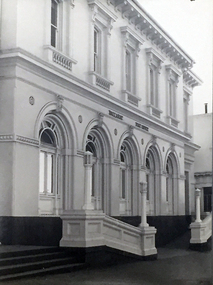
... gardens of Carn Brea, formerly the property of Cornish miner Cyrus Retallack. The property includes a two-storey mansion, which he built as his family home in 1881. Carn Brea, a castle in Cornwall, was built in the 1500s. After the Queen's Church of England Girls' Grammar School acquired the property in 1919, the mansion was renamed Manifold House. Manifold House now accommodates administrative facilities of the campus and staff offices. (http://www.acu.edu.au/about_acu/campuses/ballarat/history_of_ballarat_campus, accesses 21 August 2014) geoff biddington ballarat ballarat post office geelong ....6) Australian Catholic University Ballarat Campus (Aquinas) is set in the historic gardens of Carn Brea, formerly the property of Cornish miner Cyrus Retallack. The property includes a two-storey mansion, which he built as his family home in 1881. Carn Brea, a castle in Cornwall, was built in the 1500s. After the Queen's Church of England Girls' Grammar School acquired the property in 1919, the mansion was renamed Manifold House. Manifold House now accommodates administrative facilities of the campus and staff offices. (http://www.acu.edu.au/about_acu/campuses/ballarat/history_of_ballarat_campus, accesses 21 August 2014)Nine black and white images by Geoff Biddington. .1) Burke and Wills Monument, corner Sturt Street and Lydiard Street, with the MLS Building and Allan Brothers in the background. .2) Former Ballarat Post Office (later Federation University Post Office Gallery) .3) Tram in Sturt Street .4) Geelong ? shopping centre .5) Geelong Waterworks and Sewerage Trust .6) Carn Brae / Retallacks / Queen's / Australian Catholic University, 1200 Mair Street .7) Former Ballarat Post OFfice, Lydiard Street .8) Perseus Statue, Camp Street (removed for conservation in 2008) .9 McDonald Printer, 48 Lydiard Stgeoff biddington, ballarat, ballarat post office, geelong waterworks, perseus, mcdonald, acu, carn brae, australian catholic university ballarat, burk and wills monument, mlc building ballarat, allan brothers ballarat, lydiard street, sturt street -
 Federation University Historical Collection
Plan, Ballaarat East Town Allotments, 1891, 18/09/1891
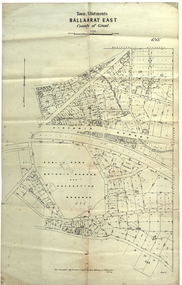
... It shows Victoria Street, Clifford Street, Finlay Street, Ryan Street, Bradbury Street, Elford Street, Fussell Street, Jones Street, Park Parade, Ballarat -Geelong Railway, Eureka Street, Ballarat East Public Park Botanic Garden and Recreation Reserve. ...Elford Street now appears to be the continuation of Eureka Street. ballarat east ballaarat east victoria street ballarat east botanical gardens richard squire squire ryan street jones street bradbury street humffray steet fussell street elford street Plan of Town Allotments for a portion of Ballarat East in the County of Grant. It shows Victoria Street, Clifford Street, Finlay Street, Ryan Street, Bradbury Street, Elford Street, Fussell Street, Jones Street, Park Parade, Ballarat -Geelong Railway, Eureka Street, Ballarat East Public Park Botanic Garden and Recreation Reserve. ...Ballarat East was historically a separate municipality than Ballaarat. The streets developed along gold leads and early tracks. The Public Park Botanic Gardens and Recreation Reserve is now Mount Xavier Golf Course, and Ballarat Secondary College Eastern Campus. The section with Bettle's Private Property is now Saint Francis Xavier Primary School. Elford Street now appears to be the continuation of Eureka Street.Plan of Town Allotments for a portion of Ballarat East in the County of Grant. It shows Victoria Street, Clifford Street, Finlay Street, Ryan Street, Bradbury Street, Elford Street, Fussell Street, Jones Street, Park Parade, Ballarat -Geelong Railway, Eureka Street, Ballarat East Public Park Botanic Garden and Recreation Reserve. The only allotment names is Bettle's Private Property. Gift of the Squire Family, 2014ballarat east, ballaarat east, victoria street, ballarat east botanical gardens, richard squire, squire, ryan street, jones street, bradbury street, humffray steet, fussell street, elford street -
 Federation University Historical Collection
Book - Programme, South Street Eisteddfod Official Guide, 1907, 1907
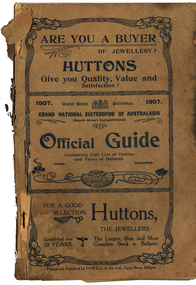
... Gardens, Lake Wendouree Ferry, W.E. Swenson, S.B. Swenson, J.G.M. Swenson, Rev. T. Flynn, Edwards' Pyrites, Lestor's Hotel, Sunshine Sheild, W to W Shield, Frank Herman, W.F. Coultman, Marks' Trophy, Lighthouse Port Fairy, R. Correll Music Seller, James Smith, Isaac Pitman, Arthur Brumfield, Hugh Leschen, John Robson, St Augustine's Band Geelong...Gardens, Lake Wendouree Ferry, W.E. Swenson, S.B. Swenson, J.G.M. Swenson, Rev. T. Flynn, Edwards' Pyrites, Lestor's Hotel, Sunshine Sheild, W to W Shield, Frank Herman, W.F. Coultman, Marks' Trophy, Lighthouse Port Fairy, R. Correll Music Seller, James Smith, Isaac Pitman, Arthur Brumfield, Hugh Leschen, John Robson, St Augustine's Band Geelong ...South Street competitions have been held in Ballarat since 1991.Official guide to the 1907 South Street competitions. Images include: Prince of Wales, Lord Northcote, W.D. Thomas, South Street Competition Executive Committee (W.H. Pearson, W.H. Chandler, A. Prichard, W.H. Richards, W.D. Hill, Col. Williams, W.D. Thomas, F. Besemeres, F.J. Martell, J.T. Morris. F.J. Williams, R. Maddern, R.J. Gribble), Sir John Madden, Lord Tennyson, W.D. Hill, Frederick Bevan, Ballarat (Sturt Street), Lake Wendouree (Yachts), J.W. Beswick, Lawrence Campbell, City of Ballarat Mayor and Councillor (Mayor Brawn, E. Williams, E. Morey. Cr Brokenshire, J. Whykes, J.M. Barker, G. Crocker, W.D. Hill, R. Pearse, T. Hollway), Ballarat East Mayor and Councillors (J. Gent, Cr Glendenning, J.N. Dunn, I. Pearce, C. Bunting, A. Levy, J. Ritchie, J. McNeil, A. McKenzie, Cr Penhalluriak), Sturt Street Looking West, Old Curiosity House, Entrance to the Ballarat Fine Art Gallery, Interior of the Ballarat Fine Art Gallery, Ballarat East Town Hall and Gardens, Lake Wendouree Ferry, W.E. Swenson, S.B. Swenson, J.G.M. Swenson, Rev. T. Flynn, Edwards' Pyrites, Lestor's Hotel, Sunshine Sheild, W to W Shield, Frank Herman, W.F. Coultman, Marks' Trophy, Lighthouse Port Fairy, R. Correll Music Seller, James Smith, Isaac Pitman, Arthur Brumfield, Hugh Leschen, John Robson, St Augustine's Band Geelong, Moorabool Falls, Kirks Dam, Ballarat Choral Society, Alfred Deakin, James Long, Hugh McKay Advertisements include: Huttons the Jewellers, Sam Jamieson, Sun Foundry, City Saw Mills, Blomeley Bros Iron and Brass Founders, G. Bongiorno- Railway Fruit Palace, Henry Brind & Co., Andrew Cant, Harrison's Foundry, Umbrella and Sunshade Emporium, Ballarat City Baths, Ballarat Coffee Palace, Irwin's Provincial Hotel, Victa Studio; D. Lem Chinese Medical Practitioner, Bosisto's Eucalyptus Oil, Ronaldson Bros & Tippett, Unicorn HOtel, Mrs F. Allen Caterer, Coles & Pullum, J.C. Dillon & Co., Surrey Tannery, Coulthard's Ballarat Business College, George Farmer, MrBride's Boots, L.J. Austin, Dyason's, Ballarat Brewing Company, Phoenix Brewery, Royal Standard Brewery, Edwards' Pyrites, Lestor's Hotel, Robson's College of Music, James A. Gear, Williams Shoemen, Tekardo Brothers, Powell & Co.south street competitions, eisteddfod, chinese herbalist, south street, r.b. lemmon, g. bongiorno, w.d. thomas, john madden, lord tennyson, w.d. hill, frederick bevan, j.w. beswick, lawrence campbell, boer war memorial, queen victoria statue, curiosity shop, m.b. john foundry, ballarat east town hall and gardens, sunshine shield, hugh victor mckay, w to w shield, w.j. coltman, frank herman, j. hutton-jones, t. downer, j. marks, hutton and co trophy, marks trophy, hugh leschen, john robson, st augustine's band, geelong, downer trophy, trekardo brothers, moorabool falls, kirks dam, ballarat choral society, alfred deakin, challenge cup, james long, grand national eisteddfod of australasia, ballarat east gardens, ballarat east town hall -
 Federation University Historical Collection
Book, Victoria Education Gazette and Teachers' Aid, 1911-1919, 1910-1919
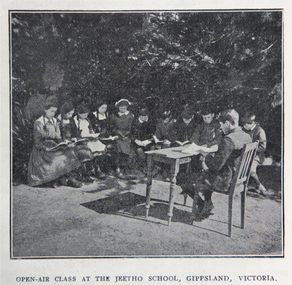
... Black hard covered book with red spine, holding Victorian Education Gazettes for one calendar year. .1) 1910 .2) 1912 .3) 1911 .4) 1914 .5) 1918 Images: Open Air Classroom Black Rock; Open Air Classroom, Jeetho, Gippsland; Open Air Nurses bedroom, Mildura; Gym at Canterbury School ; Babies and Nurses at Melbourne Foundling Hospital; Camp at Portland; Alexander Peacock Opens a Melbourne School; Unveiling Major Mitchell Memorial at Mt Arapiles; Agricultural Plot; School Interior; Swimming Drill; Graham Dux Prize Board; Bathing Place; Classroom with blackboard and pictures; Major Mitchell's Map; Melbourne, Derbyshire; Market Place Melbourne; The Blackwood; World War One Send-off at The Athenaeum; Scarsdale Old Boy's logo; Sloyd articles for the Field Hospital; World War One; Gifts for Transport to the Wharf; soldiers; ANZAC Day; ANZAC Day Medalion .5) 1915: Education Department's War Relief Fund, William Park obituary, Closer Settlement Act 1912, Agriculture, needlework, Swimming and Life Saving, explorers, Gregory Blaxland, Matthew Flinders, Composition, Geography, potatoes, onions, gardens, Needlework for Infants, Iona and Staffa, Trained Primary Teacher's Course, Electricity, Electrical Technology, hygiene, Arbour Day, Horticulture, Wattle Day, Bird Day, Technical Schools, Landing at Gaba Tepe, Evils of Alcohol, Old Boys of Scarsdale, Belgium, Teachers' College Images: The British at War, The Sonnet, History and Patriotism, Male Swimming Teachers Summer School at Geelong, Women Swimming Teachers at Port Fairy, Buln Buln State School, Burwood East State School, needlework plans, methods of Rescue and Resucitation. plan of the journey of Gregory Blaxland, Macquarie House, teachers killed (William Ross Hoggart, Stanley Robert Close, William Roy Hodgson, Campbell McDiarmid Peter, William Henry Dawkins, William Hugh Hamilton, Frederick McRae Neal, Vernon Brookes, Frank J. ...Bailey Black hard covered book with red spine, holding Victorian Education Gazettes for one calendar year. .1) 1910 .2) 1912 .3) 1911 .4) 1914 .5) 1918 Images: Open Air Classroom Black Rock; Open Air Classroom, Jeetho, Gippsland; Open Air Nurses bedroom, Mildura; Gym at Canterbury School ; Babies and Nurses at Melbourne Foundling Hospital; Camp at Portland; Alexander Peacock Opens a Melbourne School; Unveiling Major Mitchell Memorial at Mt Arapiles; Agricultural Plot; School Interior; Swimming Drill; Graham Dux Prize Board; Bathing Place; Classroom with blackboard and pictures; Major Mitchell's Map; Melbourne, Derbyshire; Market Place Melbourne; The Blackwood; World War One Send-off at The Athenaeum; Scarsdale Old Boy's logo; Sloyd articles for the Field Hospital; World War One; Gifts for Transport to the Wharf; soldiers; ANZAC Day; ANZAC Day Medalion .5) 1915: Education Department's War Relief Fund, William Park obituary, Closer Settlement Act 1912, Agriculture, needlework, Swimming and Life Saving, explorers, Gregory Blaxland, Matthew Flinders, Composition, Geography, potatoes, onions, gardens, Needlework for Infants, Iona and Staffa, Trained Primary Teacher's Course, Electricity, Electrical Technology, hygiene, Arbour Day, Horticulture, Wattle Day, Bird Day, Technical Schools, Landing at Gaba Tepe, Evils of Alcohol, Old Boys of Scarsdale, Belgium, Teachers' College Images: The British at War, The Sonnet, History and Patriotism, Male Swimming Teachers Summer School at Geelong, Women Swimming Teachers at Port Fairy, Buln Buln State School, Burwood East State School, needlework plans, methods of Rescue and Resucitation. plan of the journey of Gregory Blaxland, Macquarie House, teachers killed (William Ross Hoggart, Stanley Robert Close, William Roy Hodgson, Campbell McDiarmid Peter, William Henry Dawkins, William Hugh Hamilton, Frederick McRae Neal, Vernon Brookes, Frank J. ...Black hard covered book with red spine, holding Victorian Education Gazettes for one calendar year. .1) 1910 .2) 1912 .3) 1911 .4) 1914 .5) 1918 Images: Open Air Classroom Black Rock; Open Air Classroom, Jeetho, Gippsland; Open Air Nurses bedroom, Mildura; Gym at Canterbury School ; Babies and Nurses at Melbourne Foundling Hospital; Camp at Portland; Alexander Peacock Opens a Melbourne School; Unveiling Major Mitchell Memorial at Mt Arapiles; Agricultural Plot; School Interior; Swimming Drill; Graham Dux Prize Board; Bathing Place; Classroom with blackboard and pictures; Major Mitchell's Map; Melbourne, Derbyshire; Market Place Melbourne; The Blackwood; World War One Send-off at The Athenaeum; Scarsdale Old Boy's logo; Sloyd articles for the Field Hospital; World War One; Gifts for Transport to the Wharf; soldiers; ANZAC Day; ANZAC Day Medalion .5) 1915: Education Department's War Relief Fund, William Park obituary, Closer Settlement Act 1912, Agriculture, needlework, Swimming and Life Saving, explorers, Gregory Blaxland, Matthew Flinders, Composition, Geography, potatoes, onions, gardens, Needlework for Infants, Iona and Staffa, Trained Primary Teacher's Course, Electricity, Electrical Technology, hygiene, Arbour Day, Horticulture, Wattle Day, Bird Day, Technical Schools, Landing at Gaba Tepe, Evils of Alcohol, Old Boys of Scarsdale, Belgium, Teachers' College Images: The British at War, The Sonnet, History and Patriotism, Male Swimming Teachers Summer School at Geelong, Women Swimming Teachers at Port Fairy, Buln Buln State School, Burwood East State School, needlework plans, methods of Rescue and Resucitation. plan of the journey of Gregory Blaxland, Macquarie House, teachers killed (William Ross Hoggart, Stanley Robert Close, William Roy Hodgson, Campbell McDiarmid Peter, William Henry Dawkins, William Hugh Hamilton, Frederick McRae Neal, Vernon Brookes, Frank J. Olle, Alfred J. Collins, Ernest R. Fairlie, William J. McLaren, A.E. Smith, Thomas Patton, Francis W. Kemp, Frederick G. Hall, Rupert O. Hepburn, Woolston J. Govan), Frederick Harold Tubb VC, Botanic Gardens Red Gum, Shelter Pavillions, Head of Wheat, Australian Commonwealth Flag, Iona Cathedral, Drawing exercises, ANZAC Madallion, School Rolls of Honor .6) 1916 - Nature Study, war relief, school gardening, horticulture, singing class, geography of the war, School Rolls of Honour, Ponsonby Carew-Smyth, Astronomy, ANZAC Day, Empire Day, Arbor Day, "Some Suul of Goodness in Things Evil" by Frank Tate, War Relief Gardeners' League, ANZAC Day medallion, Solar System, Abolition of German Schools in Victoria, ANZAC Avenues, avenues of honour, Geography of the War: The West, War relief and handwork, Victorian State Schools Horticultural Society, Patrick Maloney obituary, formalin lamps, Victoria League of Victoria, Wonwondah East Roll of Honor Images - Teachers killed (John Clarke, A.C.H. Jackson, Alexander Robertson, Noel Gambetta, Ralp E. Leyland, Laurance J. Woodruff, Walter E. Cass, Percy D. Moncur, Thomas M. Carmichael, Edward G. Brain, Reginald N.F. Woods, George E. James, William Colvin, David Dobson, Stanley L. Robinson, Charles Allen, G.E. James, H.F. Curnow, Franl L. Cousins, James R. Thompson, Henry H. Campbell, George E. Read, Ernest D. Morshead, Wilfred S. Merlin, Henry R. Wright, George B. Webb, Noel Nicholas, David H. Thomas, Charles A. Levens, Thomas R. Fenner, John M. Daniell, P.J. Larkin, Ralph Smith, Philip Ormsby), school rolls of honour, Swimming Instructors at Queenscliff, The Southern Sky, Map of the North Sea and its Littorals, Easter School of Horticulture at Oakleigh, Map of the Eastern Front, Map of Mesopotamia, Map of the War Area in the Egyptian Campaign, leeches for the Melbourne Hospital .7) 1917 - Swimming and Life-Saving, Childre's FLower Day, Education Department's War Relief Fund, State War Council, Horticulture, Bird Day, Swimming, Growing Chicory at Cowes Images - Teachers killed during World War One (G.M. Nicholas, William C.W. Spencer, J.W.C. Profitt, Ivon C. Bromilow, John Colwell, Robert W. Campbell, Arthur P. Bourchier, Francid G. Houston, Claude N. Harrison, Edgar Williams, Leslie A. Stevens, Charles E. W. Chester, Stanley R. Green, Walter Baker, Arthur G. Scott, Harry L. Swinburne, Horace W. Brown, Arnold Bretherton, Edward W. Jenkins Aubrey Liddelow, Ewen A. Cameron, Edmund R. Lyall, John H. Martin, Harry Bell, Frank L. Nicholls, Melville R. Hughes, Edwin W. Hauser, Walter S. Filmer, Walter G. Barlow, Henry A. Donaldson, Edward H. Jones, Walter W. Raw, Alfred W. Dean, Wiliam Lea, Frederick G. Drury, J.T. Richards, Norman G. Pelton, Lance-Corporal Doran, Kenneth F. McKenzie, William F. Robertson, Wiliam Jarrott, Norman Graham, George G. Paul, Victor Green, Arthur William Rennie, Alfred J. Glendinning, Robert B. Liston, Eward P. Toll, George Jones, Errol E. Rodda, Christian P. Christensen, Charles F. Sydes, H.G. Clements, Norman C. Fricker, J.M. Romeo. Eric N. Lear, Thomas J. Bartley, Norval Birrell, Frederick H. Tubb. J.T. Hamilton Aram, Arthur Wilcock, William M. Conroy, Alex. H. Miller, Patrick J. Cunningham, Charles S. Mitchell, John R. Maddern, James Roadknight, Harry Arundel, Jack C. McKellar, duncan M. McKellar, George S. Manfield, Edgar C. Holmes, George A. Young, Raymond A. Gardiner, William B. Bell, William Opie, George R. Scott, Richard V.B. Vine, Herbery S. Marshall, Hugh St Omer Dentry, George B. Fullerton, Harry Oulton, Iva F. Morieson), School Honor Books, Drawing, Presentation of 30,000 pounds to the British Red Cross at Melbourne Town Hall .8) 1918 .9) 1919 - Photographs of World War One soldiers from the Education Department, Margaret Montgomery Memorial, 1918 Act relating to State School Teachers, State Scolarships, Victorian State Schools' Horticultural Society, Pneumonic Influenza, Spanish Flu, epedemic, swimming and life savinfJunior cadet training, vacancies in Fiji, School Committees, Arbor Day, Arbour Day, Henry Harding of Yinnar, Planting Trees and Shrubs, Juvenile Crime, The use of 'Get', Soldier-Teachers from Overseas in Congress London, Australia's Effort in the War, Military, Working Bees, Tree Planting, fence building, Welcoming Home a Returned Soldier, Avenue of Honour planting, Discipline, Unveiling an Honor Board, School gymnasium, school tennis court, E. E. Crogger grave at Aldershot, The School Honor Book. War Relief Fund, Commonwealth War Record, Caulfield Military Hosptial, ANZAC Day Pilgrimage, Jimmie Panikin, Donald Fraser, Arthur Mee, Card Sun Dial, Balboa Day in Honolulu, William Hamilton, Alfred Jackson, The Backward Child, Flies, Language Teaching and Learning, Spelling, The Education of the Adolescent, victorian education gazette, education gazette and teachers' aid, sloyd, william a. cavanagh, james i froebel, school, education, world war one, memorials, alfred williams, exploration and settlement, cadets, australian naval college, bernard o;dowd, birds, swimming, drawingempire league, eucalypts, paper in history, forestry, arbor day, identification of trees, forestrey museums, fiji, gravel hill school band, horticulture, hygiene, gould league of bird lovers, life saving, la perouse, bandin, j. holland, w. hamilton, charles sturt, principles of archimedes, james holland, william hamilton, scarsdale old boys' reunion, foundling home melbourne, montessori education, open air schools, james hughes, marie corelli, flinders sydney harbour, major mitchell's map, tooth brushing, r.h.s. bailey -
Federation University Historical Collection
Magazine - Booklet, S. L. Vale, Printer, Ballarat School of Mines Students' Magazine, 1927, 1927
... Geelong, The Duke and Duchess Visit the School, A glimpse of Rabaul. Advertisements include: Maclurkin Motors (Morris) T.J. Haymes, C. Marks & Co., Ballarat Gas Company, Fred. A. Reed (Tobacconist), Wallace Butter Factory, Richards & Co. Studio, Neptune Radio Co, Golden City Vulcanising Co., H. Wardle and Son, J.A. Holland Cycles, Ballarat Radio Co, Drew & Wood, Isaac Abraham, Stansfield and Smith, C.P.A. Taylor, Thornton Studios, Wattle Tea Rooms, Black Cat Tea Rooms. Images include: John N. Rowell, Ballarat School of Mines Procession, sketcj of the Ballarat School of Mines Gardens...Geelong, The Duke and Duchess Visit the School, A glimpse of Rabaul. Advertisements include: Maclurkin Motors (Morris) T.J. Haymes, C. Marks & Co., Ballarat Gas Company, Fred. A. Reed (Tobacconist), Wallace Butter Factory, Richards & Co. Studio, Neptune Radio Co, Golden City Vulcanising Co., H. Wardle and Son, J.A. Holland Cycles, Ballarat Radio Co, Drew & Wood, Isaac Abraham, Stansfield and Smith, C.P.A. Taylor, Thornton Studios, Wattle Tea Rooms, Black Cat Tea Rooms. Images include: John N. Rowell, Ballarat School of Mines Procession, sketcj of the Ballarat School of Mines Gardens ...Editorial, Fumes from the lab, A trip to Geelong, Arts & Crafts gossip, The Duke and Duchess visit the school, Echoes of the past, A brief description of the rubber industry, Sport, The Junior Techs, A Brief Description of the Rubber Industry, The Troubles of a Wireman, Herald ShieldGreen soft covered magazine. Articles include J.N Rowell, Procession, Rare Metals, Excursion to Geelong, The Duke and Duchess Visit the School, A glimpse of Rabaul. Advertisements include: Maclurkin Motors (Morris) T.J. Haymes, C. Marks & Co., Ballarat Gas Company, Fred. A. Reed (Tobacconist), Wallace Butter Factory, Richards & Co. Studio, Neptune Radio Co, Golden City Vulcanising Co., H. Wardle and Son, J.A. Holland Cycles, Ballarat Radio Co, Drew & Wood, Isaac Abraham, Stansfield and Smith, C.P.A. Taylor, Thornton Studios, Wattle Tea Rooms, Black Cat Tea Rooms. Images include: John N. Rowell, Ballarat School of Mines Procession, sketcj of the Ballarat School of Mines Gardens by Graham Hopwood)Signed on first page by " Harold Jolly".ballarat school of mines, magazine, j. n. rowell, w. g. mchutchison, colin hunt, f. waistcoates, f. v. middleton, c. a. schache, ernest h. schache., rowell, mchutchison, c.a. schache, erenst schache, harold jolly, j.r. pound, n. nicholls, rabaul, new guinea, mica smith scholarship, past students' association, port arthur, mount lyell, queenstown, paper-making, rubber industry, wireman, ernest schache, e. van beek, australian football, thompson shield, graham hopwood, a. t. morrison, e. van beck, g. dimsey, g. inglis, l. hillman, j. nuir, j. johnson, b. saunders, dr. j. r. pound, h. jolly, a. proctor, j. walters, h. wardle and son, john rowell, j.n. rowell, w.g. mchutchison, colin hunt, f. waistcoates, f.v. middleton, ernest h. schache -
 Ballarat Clarendon College
Book, The watches of the trails
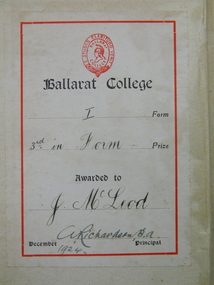
... Geelong on the Hornet in 1857 as an 11 year old child with his 60 year old father John and mother Mary aged 37 years and 5 brothers and one sister. He grew up on the corner of Drummond Street and Mair Streets, opposite what became St John of God hospital, at his parents house of Dunvegan. John entered Ballarat College as a junior student in 1923. He received 3rd in Form prizes in both 1924 and 1925. His sister Margaret, attended Clarendon Ladies College. The household employed a chauffeur, a cook, a gardener...Geelong on the Hornet in 1857 as an 11 year old child with his 60 year old father John and mother Mary aged 37 years and 5 brothers and one sister. He grew up on the corner of Drummond Street and Mair Streets, opposite what became St John of God hospital, at his parents house of Dunvegan. John entered Ballarat College as a junior student in 1923. He received 3rd in Form prizes in both 1924 and 1925. His sister Margaret, attended Clarendon Ladies College. The household employed a chauffeur, a cook, a gardener ...John Anning MacLeod John was born in Ballarat as the second generation of Ballarat MacLeod’s, with his grandfather arriving in Geelong on the Hornet in 1857 as an 11 year old child with his 60 year old father John and mother Mary aged 37 years and 5 brothers and one sister. He grew up on the corner of Drummond Street and Mair Streets, opposite what became St John of God hospital, at his parents house of Dunvegan. John entered Ballarat College as a junior student in 1923. He received 3rd in Form prizes in both 1924 and 1925. His sister Margaret, attended Clarendon Ladies College. The household employed a chauffeur, a cook, a gardener and a ladies maid to care for them. In the 1930’s his father lost his fortune in the collapse of the jute future’s market so the staff were dismissed and he left Ballarat to go to Geelong College as a boarder. He was an officer in the Geelong College cadet corps and joined the Army as a private and rose to the permanent rank of Major after meritorious performance in the intelligence area of operations. He served in North Africa, in Palestine, Egypt, Moratai, the Philippines, Java and New Guinea. He was awarded his Military MBE by King George VI for exceptional devotion to duty and for brilliant coordination work amongst the allied intelligence team. During the war he met Mary Monica Carrol Bateman, a lietenant in the 2/4th Army General Hospital at a dinner party in Brisbane. The couple had four children, Hamish John Torquil born in 1945, Rory Hugh Alexander born in 1947 and twins Ian Donald and Katriona Margaret born in 1948. After the Second World War he worked for Lumley’s Insurance Brokers in London for a couple of years to follow up his accountancy training and then returned to Ballarat due to his father’s failing health and took over the management of John MacLeod and Co, Wholesale grocers and Merchants in Lydiard Street, Ballarat. The business had been started by his great grandfather and they produced the famous Sirdar brand of products and a special tea blend called Afternoon Cup. There was a spice mill in nearby Market Street and there they roasted peanuts, coffee and ground spices for packaging and distribution to the small corner shops who were the mainstay of commercial grocery. In the 1950’s John MacLeod and Co merged with James McKay and Sons to form McKay MacLeod Pty Ltd., wholesale tobacco, wine and spirits and grocery merchants who also manufactured the Sunny South brand of sweet mustard pickles, brewed vinegar and tomato sauce. He introduced the semi-automated system for extensions and financial records on the Bradma plates that saved staff the problems of sorting out the calculations for sales tax, miscellaneous charges etc. that greatly sped up the transactions at the checkout points. A new warehouse and office complex was built in Mair Street east up near Humffray Street, with the manufacturing factory on the opposite side of the street. They had a shop in St Arnaud and one in Geelong which was the local wholesaler for supplying to the corner shops of the greater Geelong area. With the development of supermarkets the demise of the corner store began and so the sales profiles began to diminish. He unsuccessfully stood for Liberal Party pre-selection for the seat of Ballarat in 1948 and served on the Liberal state finance and executive team for many years before resigning over the issue of conscripts being sent to Vietnam. He was instrumental in leading a group of Ballarat academics in opposition to the Vietnam war and publicly resigned from the Liberal Party over their foreign policy. John MacLeod saw the writing on the wall of the business in the early 1970’s and suggested that the firm restructured with focusing on tobacco, wine and spirits. His partners did not agree and so he sold out and retired to Barwon Heads. After a few years of golfing and surfing he became frustrated and joined SCORE, the Service Corp of Retired Executives. In this role he worked for ten years in the Geelong area solving accounting problems for Geelong small businesses and so helped Beaumont’s bakery back onto its feet. He worked gentlemen’s hours of 10 am to 3 pm which allowed him to have time for a round of 9 holes on the golf course at the end of the day and to have a surf before breakfast. He fully retired at the age of 65 and had ten years of voluminous reading of local library books before dying of burns at the age of 75. His war record has been documented in other archives at the College. He was a member of the Naval and Military Club and of the Barwon Heads Golf Club. He had good crafting skills and built a series of steam driven boats for his four children that used to be sailed at home on Lake Wendouree, Lake Learmonth and on the sheltered waters of the Barwon River. The boats are now being restored to operational order to be sailed by his great grandson Grayson Girardi. Red cloth bound book with title printed in gold lettering on spine, embossed publisher's mark centre of front cover and school crest in gold relief on front cover; book plate inside front cover. Book plate inside front cover: School crest / Ballarat College / I form / 3rd in form Prize / Awarded to / J MacLeod / December 1924 A Richardson B A Principaljohn-macleod, ballarat-college, book-prize, 1924 -
 Ballarat Clarendon College
Book, The school across the road
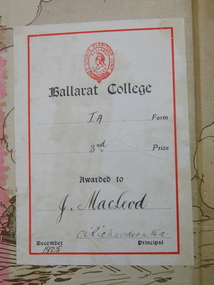
... Geelong on the Hornet in 1857 as an 11 year old child with his 60 year old father John and mother Mary aged 37 years and 5 brothers and one sister. He grew up on the corner of Drummond Street and Mair Streets, opposite what became St John of God hospital, at his parents house of Dunvegan. John entered Ballarat College as a junior student in 1923. He received 3rd in Form prizes in both 1924 and 1925. His sister Margaret, attended Clarendon Ladies College. The household employed a chauffeur, a cook, a gardener...Geelong on the Hornet in 1857 as an 11 year old child with his 60 year old father John and mother Mary aged 37 years and 5 brothers and one sister. He grew up on the corner of Drummond Street and Mair Streets, opposite what became St John of God hospital, at his parents house of Dunvegan. John entered Ballarat College as a junior student in 1923. He received 3rd in Form prizes in both 1924 and 1925. His sister Margaret, attended Clarendon Ladies College. The household employed a chauffeur, a cook, a gardener ...John Anning MacLeod John was born in Ballarat as the second generation of Ballarat MacLeod’s, with his grandfather arriving in Geelong on the Hornet in 1857 as an 11 year old child with his 60 year old father John and mother Mary aged 37 years and 5 brothers and one sister. He grew up on the corner of Drummond Street and Mair Streets, opposite what became St John of God hospital, at his parents house of Dunvegan. John entered Ballarat College as a junior student in 1923. He received 3rd in Form prizes in both 1924 and 1925. His sister Margaret, attended Clarendon Ladies College. The household employed a chauffeur, a cook, a gardener and a ladies maid to care for them. In the 1930’s his father lost his fortune in the collapse of the jute future’s market so the staff were dismissed and he left Ballarat to go to Geelong College as a boarder. He was an officer in the Geelong College cadet corps and joined the Army as a private and rose to the permanent rank of Major after meritorious performance in the intelligence area of operations. He served in North Africa, in Palestine, Egypt, Moratai, the Philippines, Java and New Guinea. He was awarded his Military MBE by King George VI for exceptional devotion to duty and for brilliant coordination work amongst the allied intelligence team. During the war he met Mary Monica Carrol Bateman, a lietenant in the 2/4th Army General Hospital at a dinner party in Brisbane. The couple had four children, Hamish John Torquil born in 1945, Rory Hugh Alexander born in 1947 and twins Ian Donald and Katriona Margaret born in 1948. After the Second World War he worked for Lumley’s Insurance Brokers in London for a couple of years to follow up his accountancy training and then returned to Ballarat due to his father’s failing health and took over the management of John MacLeod and Co, Wholesale grocers and Merchants in Lydiard Street, Ballarat. The business had been started by his great grandfather and they produced the famous Sirdar brand of products and a special tea blend called Afternoon Cup. There was a spice mill in nearby Market Street and there they roasted peanuts, coffee and ground spices for packaging and distribution to the small corner shops who were the mainstay of commercial grocery. In the 1950’s John MacLeod and Co merged with James McKay and Sons to form McKay MacLeod Pty Ltd., wholesale tobacco, wine and spirits and grocery merchants who also manufactured the Sunny South brand of sweet mustard pickles, brewed vinegar and tomato sauce. He introduced the semi-automated system for extensions and financial records on the Bradma plates that saved staff the problems of sorting out the calculations for sales tax, miscellaneous charges etc. that greatly sped up the transactions at the checkout points. A new warehouse and office complex was built in Mair Street east up near Humffray Street, with the manufacturing factory on the opposite side of the street. They had a shop in St Arnaud and one in Geelong which was the local wholesaler for supplying to the corner shops of the greater Geelong area. With the development of supermarkets the demise of the corner store began and so the sales profiles began to diminish. He unsuccessfully stood for Liberal Party pre-selection for the seat of Ballarat in 1948 and served on the Liberal state finance and executive team for many years before resigning over the issue of conscripts being sent to Vietnam. He was instrumental in leading a group of Ballarat academics in opposition to the Vietnam war and publicly resigned from the Liberal Party over their foreign policy. John MacLeod saw the writing on the wall of the business in the early 1970’s and suggested that the firm restructured with focusing on tobacco, wine and spirits. His partners did not agree and so he sold out and retired to Barwon Heads. After a few years of golfing and surfing he became frustrated and joined SCORE, the Service Corp of Retired Executives. In this role he worked for ten years in the Geelong area solving accounting problems for Geelong small businesses and so helped Beaumont’s bakery back onto its feet. He worked gentlemen’s hours of 10 am to 3 pm which allowed him to have time for a round of 9 holes on the golf course at the end of the day and to have a surf before breakfast. He fully retired at the age of 65 and had ten years of voluminous reading of local library books before dying of burns at the age of 75. His war record has been documented in other archives at the College. He was a member of the Naval and Military Club and of the Barwon Heads Golf Club. He had good crafting skills and built a series of steam driven boats for his four children that used to be sailed at home on Lake Wendouree, Lake Learmonth and on the sheltered waters of the Barwon River. The boats are now being restored to operational order to be sailed by his great grandson Grayson Girardi. john-macleod, ballarat-college, 1925, book-prize -
 Federation University Historical Collection
Magazine - Book, St Patrick's College Annual Magazine, 1930-31, 1930-1931
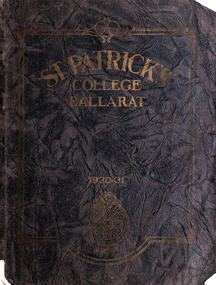
... Gardens, Ballarat, dining rooom, Christian Brothers' Novitate and Training College, Strathfield, N.S.W. Advertisements: Ballarat Trustees, Heinz Brothers Butchers, Middleton and Morris, National Trustees, F. Cannon Hairdresser, G. Werner & Co, Clegg, Miller and Morrow, Rowlands, Gordon Brothers, Loreto Convent, St Alysius Junior Boys' School Portland, Coghlan Boase and Co, Briant's Red Shop Tea Rooms, Ballarat Supply Stores, Stephen Wellington furnishing undertaker, W. Cornell, Eden Photographs, W.E. Longhurst Bread, Sacred Heart Boarding School, St Anes' Ladies' College Geelong...Gardens, Ballarat, dining rooom, Christian Brothers' Novitate and Training College, Strathfield, N.S.W. Advertisements: Ballarat Trustees, Heinz Brothers Butchers, Middleton and Morris, National Trustees, F. Cannon Hairdresser, G. Werner & Co, Clegg, Miller and Morrow, Rowlands, Gordon Brothers, Loreto Convent, St Alysius Junior Boys' School Portland, Coghlan Boase and Co, Briant's Red Shop Tea Rooms, Ballarat Supply Stores, Stephen Wellington furnishing undertaker, W. Cornell, Eden Photographs, W.E. Longhurst Bread, Sacred Heart Boarding School, St Anes' Ladies' College Geelong ...School Magazine of St Patrick's College, Ballarat. Includes a boarders' Roll Call. Articles include: Ballarat Still a Golden City, What Shall I Be? Images:S.P.C. From the Air, Senior Dormitory, A Scene in the Botanical Gardens, Ballarat, dining rooom, Christian Brothers' Novitate and Training College, Strathfield, N.S.W. Advertisements: Ballarat Trustees, Heinz Brothers Butchers, Middleton and Morris, National Trustees, F. Cannon Hairdresser, G. Werner & Co, Clegg, Miller and Morrow, Rowlands, Gordon Brothers, Loreto Convent, St Alysius Junior Boys' School Portland, Coghlan Boase and Co, Briant's Red Shop Tea Rooms, Ballarat Supply Stores, Stephen Wellington furnishing undertaker, W. Cornell, Eden Photographs, W.E. Longhurst Bread, Sacred Heart Boarding School, St Anes' Ladies' College Geelong, Ballarat Brewing Company, J.S. Young Suit Builders, George Smithm, Kearns Brothers Fish and Oyster Saloon, T.G. Skewes Pharmacy, J.A. Reynolds Wal paper Wahehouse, Walter Gude Music Teacher, Snows, Auldana Wines, J. Ewins Book Store, Cowdell, Tonner and Ellis, Richards and Co, Kruse's Fluid Magnesia, Jago's Ballarat Boot Palace, R.J. Miller Undertaker, W.C. Thomas and Sons Flour Millers, Broadbent Bros, W.E. Thomas American Dentist, Harry Davies and Co., Permewan Wright, William P. Linehan, Tyler's Clothing Arcadem C. Marks and Co, Coad and Hewitson Chaff Cutters.Written on first page Walsh, Vectis South, Horsham.st patrick's college ballarat, rev. dr. foley, rev. dr higgins, br keniry, thomas walsh, j. guinane, irish national forresters, gerald o'day, p. ryan, frank keys, l. bartels, g. hickey, t. keys, o. daly, j. wolf, a. mckean, t.h. jenkins, dr devine, j. sowersby, gerard little, rev. j. mchugh, andrew mulquiney, bernard heinz, ballarat trustees, heinz brothers butchers, middleton and morris, national trustees, f. cannon hairdresser, g. werner & co, clegg, miller and morrow, gordon brothers, loreto convent, st alysius junior boys' school portland, coghlan boase and co, briant's red shop tea rooms, ballarat supply stores, stephen wellington furnishing undertaker, w. cornell, eden photographs, w.e. longhurst bread, sacred heart boarding school, st anes' ladies' college geelong, ballarat brewing company, j.s. young suit builders, george smith, kearns brothers fish and oyster saloon, t.g. skewes pharmacy, j.a. reynolds wal paper warehouse, walter gude music teacher, snows, auldana wines, j. ewins book store, cowdell, tonner and ellis, richards and co, kruse's fluid magnesia, jago's ballarat boot palace, r.j. miller undertaker, w.c. thomas and sons flour millers, broadbent bros, w.e. thomas american dentist, harry davies and co., permewan wright, william p. linehan, tyler's clothing arcade, c. marks and co, coad and hewitson chaff cutters, loreto convent portland -
 City of Moorabbin Historical Society (Operating the Box Cottage Museum)
Functional object - Kitchen Equipment, Coolgardie Safe, c1900
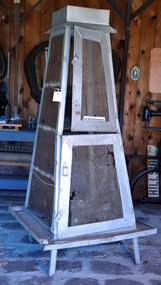
... (MAV website) The early settlers of Moorabbin Shire depended on this type of Food Safe to protect their food from flies and vermin as they established market gardens in the fertile area around the notorious Elster Creek elster creek moorabbin brighton dendy's special survey 1841 market gardens infant mortality disease cemeteries fruit vegetables pioneers coolgardie safe mccormick arthur patrick dendy henry vaccination jones martha jones ethel may '...IN.....GEELONG' A manufacturer's oval metal plate is embossed on one side of Safe but it is illegible. ...The invention of the Coolgardie Safe is credited to Arthur Patrick McCormick, a contractor in Coolgardie, and later the Mayor of Narrogin. Coolgardie is in the Eastern Goldfields region of Western Australia. Gold was first discovered there in 1892; the townsite became a municipality in 1894, and by 1898 its population of 15,000 made it the third largest town in Western Australia after Perth and Fremantle. In the last decade of the 19th century, Coolgardie was the capital of the West Australian goldfields. Being 180 kilometres from the nearest civilisation, food supplies were initially scarce and expensive. As fresh food was a valuable commodity there was incentive to preserve it, and keep it out of reach of scavengers such as birds, dingos, dogs, ants, and flies. It was in an effort to do this, in the extreme heat of the Australian Interior, that McCormick came up with his design for the Coolgardie Safe. McCormick noticed that a wet bag placed over a bottle cooled its contents. He further noted that if this bottle was placed in a breeze, the bag would dry out more quickly, but the bottle would get colder. What McCormick had discovered was the principle of evaporation: ‘to change any liquid into a gaseous state requires energy. This energy is taken in the form of heat from its surroundings.’ Employing this principle, McCormick made a box for his provisions which he covered with a wet hessian bag. He then placed a tray on top, into which he poured water twice daily. He hung strips of flannel from the tray so that water would drip down onto the hessian bag, keeping it damp. As the water evaporated, the heat dissipated, keeping the food stored inside cool and fresh. The success of McCormick’s invention would not have worked without a steady supply of water. Fresh water was scarce in the eastern goldfields at this time but the demand for water from a steadily growing population encouraged innovation. The solution was to condense salt water. Heating salt water in tanks produced steam that was condensed in tall cylinders, cooled and then collected in catchment trays. By 1898 there were six companies supplying condensed water to the goldfields, the largest company producing 100,000 gallons of water a day. In the early 20th century, Coolgardie Safes were also manufactured commercially. These safes incorporated shelving and a door, had metal or wooden frames and hessian bodies. The feet of the safe were usually placed in a tray of water to keep ants away. (MAV website) The early settlers of Moorabbin Shire depended on this type of Food Safe to protect their food from flies and vermin as they established market gardens in the fertile area around the notorious Elster Creek A metal framed, 4 sided structure standing on 4 legs with 2 hinged doors on one side, a metal tray at base of food safe and a metal cover over top. Ridges on which to rest trays carrying food are inside safe. The Safe is enclosed by fly-wire mesh.'...IN.....GEELONG' A manufacturer's oval metal plate is embossed on one side of Safe but it is illegible.elster creek, moorabbin, brighton, dendy's special survey 1841, market gardens, infant mortality, disease, cemeteries, fruit, vegetables, pioneers, coolgardie safe, mccormick arthur patrick, dendy henry, vaccination, jones martha, jones ethel may -
 City of Moorabbin Historical Society (Operating the Box Cottage Museum)
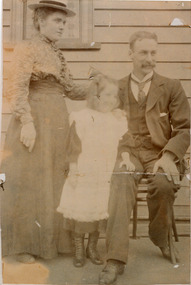
Photograph, Black & White, Adelaide Bleazby, Frank Box, Daisy c1900, c1900
... Frank Box was descendant of the Box family who migrated from Sussex England c 1850 and established market gardens in the area of Henry Dendy's Special Survey 1841 Brighton', Parish of Moorabbin, County of Bourke. Frank married Adelaide Bleazby in 1873 and they are shown here with their daughter, Daisy , at Kilgour Street Geelong Victoria c1900...Frank Box was descendant of the Box family who migrated from Sussex England c 1850 and established market gardens in the area of Henry Dendy's Special Survey 1841 Brighton', Parish of Moorabbin, County of Bourke. Frank married Adelaide Bleazby in 1873 and they are shown here with their daughter, Daisy , at Kilgour Street Geelong Victoria c1900 The Box family were pioneer settlers in the Parish of Moorabbin, County of Bourke c 1850 in the area of Henry Dendy's 'Special Survey Brighton 1841'. ...Frank Box was descendant of the Box family who migrated from Sussex England c 1850 and established market gardens in the area of Henry Dendy's Special Survey 1841 Brighton', Parish of Moorabbin, County of Bourke. Frank married Adelaide Bleazby in 1873 and they are shown here with their daughter, Daisy , at Kilgour Street Geelong Victoria c1900The Box family were pioneer settlers in the Parish of Moorabbin, County of Bourke c 1850 in the area of Henry Dendy's 'Special Survey Brighton 1841'. They established market gardens and raised their children.Faded Black & White photograph of Adelaide Bleazby, Frank Box and daughter Daisy at Geelong c1900Back handwritten information unsignedbox george, box william, box elizabeth, box francis, box cottage museum ormond, city of moorabbin historical society, bleazby adelaide 1873, box frank smith j l; smith mary ann, stanley helen, smith vic, chaff cutter, horse drawn carts, toll gates brighton, motor cars 1900, steam engines, early settlers, bentleigh, mckinnon, parish of moorabbin, city of moorabbin, county of bourke, moorabbin roads board, shire of moorabbin, henry dendy's special survey 1841, were j.b.; bent thomas, o'shannassy john, king richard, charman stephen, highett william, ormond francis, maynard dennis, market gardeners, vineyards, orchards -
 City of Moorabbin Historical Society (Operating the Box Cottage Museum)
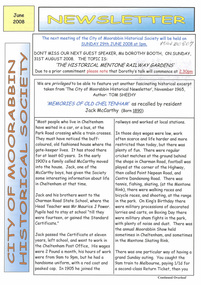
Newsletter, City of Moorabbin Historical Society Jun 2008, June 2008
... Gardens’. Another excerpt from the CMHS Newsletter November 1965, by Tom Sheehy, President, called ‘Memories of Old Cheltenham’ This is the story ‘as told’ to Tom Sheehy by Jack McCarthy b 1890, a member of CMHS, and includes a photocopied photograph of passengers on SS Hygeia c 1900 on a trip across the Bay to the Geelong area. ...Gardens’. Another excerpt from the CMHS Newsletter November 1965, by Tom Sheehy, President, called ‘Memories of Old Cheltenham’ This is the story ‘as told’ to Tom Sheehy by Jack McCarthy b 1890, a member of CMHS, and includes a photocopied photograph of passengers on SS Hygeia c 1900 on a trip across the Bay to the Geelong area. ...The City of Moorabbin Historical Society was formed c 1960 by a group of Moorabbin residents who were concerned that the history of the area should be preserved. A good response to a call for items related to the historical area of Moorabbin Shire brought donations of a wide variety of artefacts which are now preserved by the current members of CMHS at Box Cottage Museum . Helen Stanley, Secretary of CMHS, began producing a Newsletter for members in April 2007 to provide current information and well researched items of historical interest.Helen Stanley has produced a bi-monthly Newsletter, 2007 - 2013, for the members of the City of Moorabbin Historical Society that contains well researched interesting historical items, notification of upcoming events, current advice from Royal Australian Historical Society , Museums Australia Victoria and activities of Local Historical Societies. The Newsletter is an important record of the activities of the CMHS. Tom Sheehy, past President of CMHS, was an Historian and Author of ‘Battlers Tamed the Sandbelt’. A4 paper printed both sides x1. Issue 7 of the bi-monthly, City of Moorabbin Historical Society Newsletter produced by Society member and Secretary, Mrs Helen Stanley in June 2008. Notice for meeting June 29th and August 31st at which Ms Dorothy Booth’s topic will be ‘The Historical Mentone Railway Gardens’. Another excerpt from the CMHS Newsletter November 1965, by Tom Sheehy, President, called ‘Memories of Old Cheltenham’ This is the story ‘as told’ to Tom Sheehy by Jack McCarthy b 1890, a member of CMHS, and includes a photocopied photograph of passengers on SS Hygeia c 1900 on a trip across the Bay to the Geelong area. CITY of MOORABBIN HISTORICAL SOCIETY / JUNE 2008 NEWSLETTERcity of moorabbin historical society, stanley helen, melbourne, moorabbin, brighton, chelsea, cheltenham, ormond, bentleigh, market gardeners, pioneers, early settlers, moorabbin shire, sheehy tom, box cottage museum, highett, cheltenham railway station victoria, mccarthy jack, power maurice j., charman road state school, standard certificate education, cheltenham post office, point nepean road, sports, moorabbin show, processions, parades, mentone ice skating rink, sheperd’s café, bourke street, horse tram, sandringham, beach road, ss hygeia, ss courier, ss edina, mechanics hall, memorial hall, magic lantern shows, crooks mr., engine drivers strike 1903, park road cheltenham, booth dorothy, mentone railway station gardens -
 Phillip Island and District Historical Society Inc.
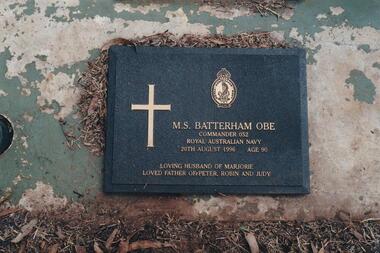
Photograph Album, Kodak, Phillip Island Cemetery, c 1990
... Garden of Memories" and extensive knowledge of Phillip Island. The Cemetery lies back from the road and is surrounded by Manna Gums, rare Peppermint Gums, Blackwoods and other native trees. In all 25 acres of land were set aside as Crown Land in the land settlement of 1868. There are 6.2 acres of wetlands near the cemetery entrance. Phillip Island Cemetery Nancy McHaffie Edith Jeffrey Lt. Commander M Batterham OBE RANVR was born in 1906 and later attended Geelong ...The Album was compiled by Nancy McHaffie late 1990's, with the assistance of Edith Jeffery's, with her book "Garden of Memories" and extensive knowledge of Phillip Island. The Cemetery lies back from the road and is surrounded by Manna Gums, rare Peppermint Gums, Blackwoods and other native trees. In all 25 acres of land were set aside as Crown Land in the land settlement of 1868. There are 6.2 acres of wetlands near the cemetery entrance.Lt. Commander M Batterham OBE RANVR was born in 1906 and later attended Geelong Grammar School. First attempt to join RAN was unsuccessful, due to health reasons. In 1942 he joined the Naval Volunteer Reserve. This was the beginning of a naval career which extended to peace-time in Canberra. He was awarded the OBE in 1952 for courage and devotion to duty. Maurice was laid to rest in the lawn section of the cenetery, August 1996 aged 90 years old.phillip island cemetery, nancy mchaffie, edith jeffrey -
 Warrnambool and District Historical Society Inc.
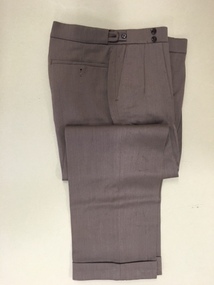
Pants, Fletcher Jones, Mid 20th century
... Geelong company. By 2011 all Fletcher Jones shops had closed. These trousers are of great interest as they are a product of a Warrnambool business that was nationally and internationally known in the 20th century for its quality men’s wear, especially the Coverdine brand trousers. The Fletcher Jones business remains one of the most important businesses, (if not the most important), that ever existed in Warrnambool. It employed a great number of local people in the second half of the 20th century, and is remembered with great fondness by many people in the city and surrounds today. The Fletcher Jones Gardens ...These trousers have been made by Fletcher Jones and Staff. This business was established by David Fletcher Jones (1895-1977) in 1924 when he leased three shops in Liebig Street, Warrnambool. In 1928 he moved his business to the main retailing area near the Liebig Street/Koroit Street intersection. In 1931 a shop built to Fletcher Jones’ requirements was erected and by 1938 he had a staff of 40. By 1945 FJ trousers were sold in 123 stores in Victoria and in 1948 the Fletcher Jones factory was established in Flaxman Street Warrnambool, officially named Pleasant Hill. In 1951 the company became Fletcher Jones and Staff and by the mid 1970s the staff had 75% ownership. By this time FJ and Staff had become one of the largest clothing manufacturers in Australia with 55 shops and almost 3000 employees. The range of clothing was enlarged to include both men’s and women’s wear. In the 1980s, after the death of Fletcher Jones, the abolition of import tariffs and the availability of cheap imported clothing caused the Fletcher Jones Company to decline and to be sold to a Geelong company. By 2011 all Fletcher Jones shops had closed. These trousers are of great interest as they are a product of a Warrnambool business that was nationally and internationally known in the 20th century for its quality men’s wear, especially the Coverdine brand trousers. The Fletcher Jones business remains one of the most important businesses, (if not the most important), that ever existed in Warrnambool. It employed a great number of local people in the second half of the 20th century, and is remembered with great fondness by many people in the city and surrounds today. The Fletcher Jones Gardens at the Factory site are still maintained today and are a tourist attraction in the city. These are a pair of brown Fletcher Jones trousers made of Coverdine material (87.5% wool with nylon). There is some lining around the waist area and the legs are turned up at the end with some leather binding inside the bottom legs. The waist band is stiffened and is fastened with a metal clip and two buttons. The waist band has two adjustable areas using tabs and two buttons each side. The back pockets also have buttons.fletcher jones and staff, coverdine fletcher jones trousers, history of warrnambool, david fletcher jones -
 Warrnambool and District Historical Society Inc.
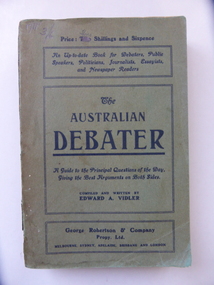
Book, George Robertson & Company Pty. Ltd, The Australian Debater, Early 20th century
... Geelong in the 1880s where he produced a commemorative volume on that city. He was living in Warrnambool in the early years of the 20th century and was the Secretary of the Warrnambool and District Progress League and the Warrnambool Chamber of Commerce and Industry. He later lived in Melbourne where he edited magazines and published his own and other writings. He was especially interested in the promotion of the arts and was a keen naturalist. He was a foundation member of the group that established the Maranoa Native Gardens...Geelong in the 1880s where he produced a commemorative volume on that city. He was living in Warrnambool in the early years of the 20th century and was the Secretary of the Warrnambool and District Progress League and the Warrnambool Chamber of Commerce and Industry. He later lived in Melbourne where he edited magazines and published his own and other writings. He was especially interested in the promotion of the arts and was a keen naturalist. He was a foundation member of the group that established the Maranoa Native Gardens ...This book has been written by Edward Vidler (1863-1942), a publisher, editor, writer and journalist. He was born in England and was in Geelong in the 1880s where he produced a commemorative volume on that city. He was living in Warrnambool in the early years of the 20th century and was the Secretary of the Warrnambool and District Progress League and the Warrnambool Chamber of Commerce and Industry. He later lived in Melbourne where he edited magazines and published his own and other writings. He was especially interested in the promotion of the arts and was a keen naturalist. He was a foundation member of the group that established the Maranoa Native Gardens in Balwyn, Melbourne. The writer of this book, Edward Vidler, was important in the history of Warrnambool for two main reasons:- 1. In 1907 he initiated and organized the establishment of the Warrnambool Pioneer Honour Board featuring portraits of 204 pioneer men. This board still exists. 2. In 1907 he produced a publication called ‘Warrnambool Past and Present – Sixty Years of Progress’. It celebrated the 60th anniversary of the founding of Warrnambool and contained 88 pages, 120 illustrations and photographs and many advertisements. The publication is noted for its historical accuracy, the way it complements and adds to Richard Osburne’s 1887 history of Warrnambool and its presentation of historical material that may otherwise have been lost. Both of Vidler’s initiatives described above are of the utmost importance in Warrnambool’s history. This is a soft cover book of 270 pages. The cover is green with black printed material on the covers and the spine. The book has a Preface, 24 chapters of text and a Bibliography. There are advertisements for other books on the last page and the back cover. The cover is stained and faded and partly torn in places and some of the inside pages are stained. The Australian Debateredward vidler, history of warrnambool -
 Eltham District Historical Society Inc
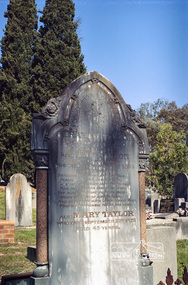
Negative - Photograph, Harry Gilham, Grave of Abraham and Ann Taylor, also Mary Taylor, Eltham Cemetery, Victoria, Sep 2009
... Geelong aboard the Ann Thompson on Christmas Day, 1852. His younger sisters Mary and Martha and brother William John all having separately preceded them in 1851 and 1852. Abraham and Ann settled in Little Eltham, Abraham was recorded as being 40 years of age and Ann, 36. They made their home and living as an orchardist and gardener...Geelong aboard the Ann Thompson on Christmas Day, 1852. His younger sisters Mary and Martha and brother William John all having separately preceded them in 1851 and 1852. Abraham and Ann settled in Little Eltham, Abraham was recorded as being 40 years of age and Ann, 36. They made their home and living as an orchardist and gardener ...Abraham Taylor was born 20 October 1811 in Derrycarn, Drumcree Parish, County Armagh, Ireland, the son of Richard William Taylor and Annie Abraham. He married Ann McClelland on 19 February 1852 in Dumcree. They emigrated to Australia arriving in Geelong aboard the Ann Thompson on Christmas Day, 1852. His younger sisters Mary and Martha and brother William John all having separately preceded them in 1851 and 1852. Abraham and Ann settled in Little Eltham, Abraham was recorded as being 40 years of age and Ann, 36. They made their home and living as an orchardist and gardener where they had three sons, William John (1853 Little Eltham), Richard (1855 Eltham) and Robert David (1857 Eltham), tow of whom became Councillors of the Shire of Eltham; William (1890-1911) and Robert David (1911-1920). In June 1871, Abraham Taylor, Eltham gardener, applied for a 120-acre allotment half a mile northeast of the Research Gully Hotel on June 30, 1871. A license was issued to him January 30, 1872, for 114 acres, being Allotment 8, Section 18, the balance of 6 acres being retained for reserve. He built on the land a two roomed dwelling of slabs and palings. He and his family lived there or at their 6 ½ acre Eltham property, which was used for orchard and garden as a residence. In January 1875 a lease issued to Abraham Taylor for the land one chain wide each side at the gully named ‘Wet Gully’ was excluded. In August 1881 Abraham Taylor paid up all fees and applied for a Crown grant. He vainly requested that the grant be issued to his son, Robert David Taylor, Eltham however the grant was in fact issued to Abraham Taylor, Eltham, gardener. Abraham died at home on June 1, 1890. He was greatly respected by all who knew him. His sister Mary predeceased him 1873and is also buried at Eltham cemetery. Wife Ann died at home 1 September, 1893 and was buried with him. In Loving Remembrance of Abraham Taylor Who died June 1st 1890 Aged 80 years Also Ann Taylor Wife of the above Who died September 1st 1893 Aged 75 years Also Mary Taylor Who died September 22nd 1873 Aged 45 yearsRoll of 35mm colour negative film, 6 stripsKodak GC 400-9eltham cemetery, gravestones, abraham taylor, ann taylor, mary taylor
