
Showing 29 items matching "geelong technical college"
-
 Federation University Historical Collection
Booklet - Booklet - Prospectus, Henwood & Dandey, The Geelong Junior Technical College, Gordon Technical School, Prospectus , 1913, 1913
... The Geelong Junior Technical College, Gordon Technical School, Prospectus , 1913...geelong...junior technical college..."The Junior Technical School is provided for the purpose of supplying the universally recognised requirement for a satisfactory Technical Education system, namely, continuity of study between the primary stage of education and the subsequent period of study at a Technical School." The Geelong Gordon Technical College obtained information from Melbourne Junior Technical School that was in its second year of operations. ...Brown cover with red, green and blue print The Geelong Junior Technical College, Gordon Technical School, Prospectus , 1913 Booklet Booklet - Prospectus Henwood & Dandey ...Used in Ballarat School of Mines. "The Junior Technical School is provided for the purpose of supplying the universally recognised requirement for a satisfactory Technical Education system, namely, continuity of study between the primary stage of education and the subsequent period of study at a Technical School." The Geelong Gordon Technical College obtained information from Melbourne Junior Technical School that was in its second year of operations. Due to limited space at the College, provision will be for only 50 students. Staff will comprise a Head Master, who will teach English, Civics (History) and Geography. A Mathematical and Science Master who will also have the assistance of the Gordon College Science Master. The Art Master from the Gordon College will take Modelling, Geometry and Drawing. The Crafts Master will take Sheet Metal and Woodwork. The person will be chosen from recently trained teachers by the Education Department.Brown cover with red, green and blue print A.W. Steane written on the front cover.geelong, junior technical college, gordon technical college, prospectus, a.a billson, f. tate, donald clark, a. rutter, andrew anderson, p. mccormack, melbourne junior technical school, 50 students, head master, english, civics, geography, mathematics, science, art master, modelling, geometry, drawing, crafts master, sheetmetal, woodwork -
Federation University Historical Collection
Letter, Ballarat School of Mines Correspondence, 1895, 1895
... ...Geelong Technical College...Bickford, Daylesford * Geelong Technical College * Library of Victoria * Australian Museum Letterhead from S. ...Hornsby Ballarat School of Mines letter card J.A> Bickford Daylesford South Central Gold Mining Company Mining Geelong Technical College Geelong Technical School State Library of Victoria Library of Victoria E.F. ...A number of letters clipped together with a brass split in. * Rock Specimen from J. Hornsby, Clunes * Bendigo School of Mines Letterhead from G. A. Thomas * J.A. Bickford, Daylesford * Geelong Technical College * Library of Victoria * Australian Museum Letterhead from S. Sinclair * University of Sydney Letterhead from H.L. Barff, Librarian * Library, Museum and Art Gallery of South Australia letterhead * Library, Museum and National Gallery and Victoria * Central Gold Mining Company by John Dunlop * SMB Students asking the Council to strenuously attempt to retain the services of Professor Krause ( Signed by about 70 students) * SMB staffmembers asking the Council to strenuously attempt to retain the services of Professor Krause ( Signed by Dawbarn, Dawson, Daniel Walker. W.E. Bennett, Kerr, Henry J. Hall) * Correspondence from Ferdinand Krause * Telegram from R.T. Vale * Queensland Museum letterhead * Stawell Technical College and School of Mines from W. Matthews j. hornsby, ballarat school of mines, letter card, j.a> bickford, daylesford, south central gold mining company, mining, geelong technical college, geelong technical school, state library of victoria, library of victoria, e.f. pittman, australian museum, alfred meller, e. whatman, university of sydney, richard benham, art gallery of south australia, national gallery of victoria, j.j. lanigan, ferdinand krause, j. flegeltaub, william reid, j.h. crittenden, james gibson, c.j. sayle, f.h. hollway, theo willaims, j. sutherland, p. flegeltaub, maurice hamburger, s. marrow, f. kittelty, a. don, a. bell, james a. gilchrist, j. ronaldson, e. stuck, w.j. whyte, ernest leggo, percy learmonth, kaboonga mining company, smeaton, g. alec thornsol, alex gilfillan, geologist, thomas j. hart, alfred hodgkinson, george t. clarke, a.w. pratt, walter fieder, w. macdonald, queensland museum, r.h. walcoth, stawell school of mines, stawell technical college, stephen richards, martin ford, b. herold, george w. gallagher, broomfield, j. money, smythesdale, john law, great western, mordaunt hall, eight hour procession, model locomotive, arthur kildahl, g. seymour, mt lyell, e.h. parry, d. grassy, aurora gold mining co, j. broomfield, burbury, dawburn, eustace m. weston, english and austrakuab copper co, martin gardiner, william little, david gracey -
Federation University Historical Collection
Booklet - Program, Booklet, Newspaper Cuttings, Map, Quad Sports B.T.C., S.M.B., F.S 1961 and magazine, 4 October 1961
... college...school of mines ballarat...ballarat school of mines...quad sports...1961...philip lockyer...michael whiteside...judith christensen...sports program...program...sports...lake relays...city oval...stewart house...barry house...track events...bob norton...technical schools' regatta...lake wendouree...geelong...The Diploma Course at the Ballarat School of Mines usually took four years to complete hence the title of the booklet "Your Four Years with Us". ballarat teachers' college school of mines ballarat ballarat school of mines quad sports 1961 philip lockyer michael whiteside judith christensen sports program program sports lake relays city oval stewart house barry house track events bob norton technical schools' regatta lake wendouree geelong technical college gordon institute of technology Program: Front: 1961, "Quad" Sports, B.T.C, S.M.B., F.S. printed in black ink. ...The Diploma Course at the Ballarat School of Mines usually took four years to complete hence the title of the booklet "Your Four Years with Us".Program: Cream card, A4 size, folded in half to make 4 page program. Booklet: 8 cream pages plus cover with image of Ballarat School of Mines on front 7 small newspaper articles Map of SMB in black ink on cream paperProgram: Front: 1961, "Quad" Sports, B.T.C, S.M.B., F.S. printed in black ink. "Michael Whiteside SMB" handwritten on top right hand corner. Inside: Starting time, Event, Records, First, Second, Third, Time or Distance typed with three handwritten names, Michael Whiteside SMB, Philip Lockyer SMB, Judith Christensen BTC and time handwritten 2 Min 8.2 Sec for Men, 880 yards event. Back: Signatures handwritten on back. A KING & Sons Ballarat logo bottom at back Booklet: Michael N Whiteside SMB signature in blue ink on top right hand corner of cover. Inside cover: "This book was stolen from Michael N Whiteside handwritten in blue ink Map has lines drawn from building 3 to 10 to 15 to 14 to 7 with various numbers in circles hand drawn. ballarat teachers' college, school of mines ballarat, ballarat school of mines, quad sports, 1961, philip lockyer, michael whiteside, judith christensen, sports program, program, sports, lake relays, city oval, stewart house, barry house, track events, bob norton, technical schools' regatta, lake wendouree, geelong technical college, gordon institute of technology -
 City of Greater Geelong
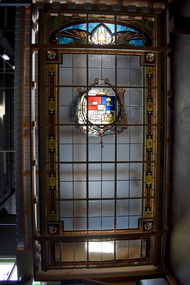
Decorative object - Geelong Crest Stained Glass Window, Arthur S Pittock, 1916
... Geelong Council...Gordon Technical College...The Geelong Council involved the staff and former students of the Gordon Technical College in designing the artwork and aesthetic of the building. ...The surviving City Hall window is the most elaborate, known surviving stained glass window by Pittock. stained glass geelong history Geelong Town Hall Geelong Council Gordon Technical College Glazier Geelong Crest Conservation Stained glass window featuring the geelong crest with a decorative border, in a wooden frame. ...This stained glass was originally installed at Geelong Town Hall following its expansion in 1917. The Geelong Council involved the staff and former students of the Gordon Technical College in designing the artwork and aesthetic of the building. Arthur S. Pittock, former student and local glazier, was responsible for the design and construction of the large stained glass window in the stair hall. The window was described as “a special feature” in the new building with the leaded glass work using “the motif throughout in Greek form, of admirable colour”. The window showcases the City of Geelong’s original coat of arms, featuring images of Geelong’s early industries: sailing, wool, wine and wheat production, and a kangaroo as an inescutcheon. During the redevelopment of City Hall in the late 1960's the stained glass window was removed from the building and placed in the basement carpark. The National Wool Museum has taken responsibility of the window and removed it from the car park to be conserved and housed safely. The surviving City Hall window is the most elaborate, known surviving stained glass window by Pittock.Stained glass window featuring the geelong crest with a decorative border, in a wooden frame. stained glass, geelong, history, geelong town hall, geelong council, gordon technical college, glazier, geelong crest, conservation -
 Federation University Historical Collection
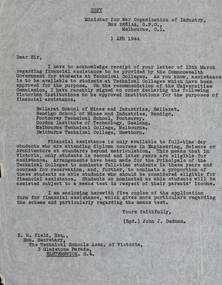
Correspondence, Letter from the Minister for War Organization of Industry, 1944, 01/04/1944
... Technical Colleges. On the recommendation of the Universities Commission the following Victorian institutions are approved institutions for the purposes of financial assistance:- * Ballarat SChool of Mines and Industries, Ballarat * Bendigo School of Mines and INdustries, Bendigo * Footscray Technical School, Footscray Gordon Institute of Technology, Geelong * Melbourne Technical College, Melbourne * Swinburne Technical College, Hawthorn Financial assistance was made available to full-time day students attending diploma courses in Engineering, Science o r Architecture. ...Technical Colleges. On the recommendation of the Universities Commission the following Victorian institutions are approved institutions for the purposes of financial assistance:- * Ballarat SChool of Mines and Industries, Ballarat * Bendigo School of Mines and INdustries, Bendigo * Footscray Technical School, Footscray Gordon Institute of Technology, Geelong * Melbourne Technical College, Melbourne * Swinburne Technical College, Hawthorn Financial assistance was made available to full-time day students attending diploma courses in Engineering, Science o r Architecture. ...Copy of a typed letter addressed to E.R. Field of the Technical Schools Association of Victoria regarding financial assistance to students at Technical Colleges. On the recommendation of the Universities Commission the following Victorian institutions are approved institutions for the purposes of financial assistance:- * Ballarat SChool of Mines and Industries, Ballarat * Bendigo School of Mines and INdustries, Bendigo * Footscray Technical School, Footscray Gordon Institute of Technology, Geelong * Melbourne Technical College, Melbourne * Swinburne Technical College, Hawthorn Financial assistance was made available to full-time day students attending diploma courses in Engineering, Science o r Architecture. war organization of industry, ballarat school of mines, john dedman, e.r. field, technical schools association of victoria -
 Federation University Art Collection
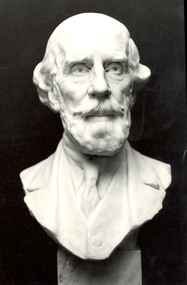
Sculpture - Marble sculpture, 'Professor Alfred Mica Smith' by Paul Montford, 1924
... In 1924 he was teaching at Geelong Technical College. Professor Alfred Mica Smith was a long term lecturer at the Ballarat School of Mines. ...In 1924 he was teaching at Geelong Technical College. Professor Alfred Mica Smith was a long term lecturer at the Ballarat School of Mines. ...Paul Raphael MONTFORD (1868 - 1938) Paul Montford moved to Australia to carve four buttress groups in granite for the Melbourne Shrine of Remembrance. In 1924 he was teaching at Geelong Technical College. Professor Alfred Mica Smith was a long term lecturer at the Ballarat School of Mines. The sculpture was commissioned by former Students of the Ballarat School of Mines working in Western Australia. One of those former students, William Corbould, remembered his first encounter with the professor fondly:- 'From the Registrar's Office I was led to be introduced to the Professor of Chemistry, one Mica Smith. The initial encounter gave me little encouragement - his large laboratory was filled with hundreds of bottles bearing strange labels with queer symbols on them. My heart sank. At the first opportunity I grabbed my hat and made for the door, but the good professor called me back. I pointed out that I was never any good at school ... so it was no use pretending to be clever enough to understand all those weird symbols! The Professor told me not to worry about that and took me to one of the benches where he found a blowpipe and a charcoal block. Mixing together two powders from bottles on the shelf he transferred a sample to the charcoal and directed the bunsen flame onto it. Soon it began to melt and a white bead appeared in front of my eyes. He then took a test tube and added a little colourless liquid from each of two bottles. A beautiful dark blue colour appeared. My interest was won.' Alfred Mica Smith was the well-loved Professor of Chemistry and Metallurgy at the Ballarat School of Mines between 1881 and 1922. Upon reaching the age of 78 Mica Smith retired having influenced generations of miners. At the time of his death Ballarat School of Mines Students’ Magazine reported: "In the annals of the School, the year 1922 will be noted chiefly as the last year in which Professor Mica Smith taught here. With his retirement, a memorable epoch closed. The Professor has served the School for 42 years with a service, the length and thoroughness of which are unique. … It is not quite realised in this city how famous the School became throughout the world, nor to what extent the Professor was responsible for its high position in the mining and metallurgical world. … This item is part of the Federation University Art Collection. The Art Collection features over 2000 works and was listed as a 'Ballarat Treasure' in 2007.Marble bust of Ballarat School of Mines Professor Alfred Mica Smith by Paul Montford. The bust is mounted on a jarrah pedestal made from timber donated by the Millar Timber and Trading Company. The bust was formally presented to the Ballarat School of Mines on Saturday 13 December1924 in front of Alfred Mica Smith and a large gathering. It is signed 'Paul R. Montford, Sc, 1924' at the back.Professor A. Mica Smith, 1924, Presented by His Old Students Associated with Western Australia as a Token of Affectionate Esteemart, artwork, ballarat school of mines, montford, paul montford, alfred mica smith, mica smith, marble, bust, sculpture -
 Federation University Historical Collection
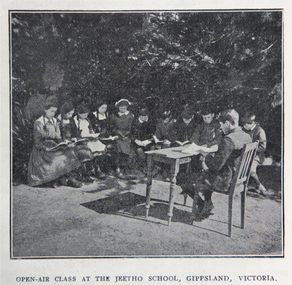
Book, Victoria Education Gazette and Teachers' Aid, 1911-1919, 1910-1919
... Black hard covered book with red spine, holding Victorian Education Gazettes for one calendar year. .1) 1910 .2) 1912 .3) 1911 .4) 1914 .5) 1918 Images: Open Air Classroom Black Rock; Open Air Classroom, Jeetho, Gippsland; Open Air Nurses bedroom, Mildura; Gym at Canterbury School ; Babies and Nurses at Melbourne Foundling Hospital; Camp at Portland; Alexander Peacock Opens a Melbourne School; Unveiling Major Mitchell Memorial at Mt Arapiles; Agricultural Plot; School Interior; Swimming Drill; Graham Dux Prize Board; Bathing Place; Classroom with blackboard and pictures; Major Mitchell's Map; Melbourne, Derbyshire; Market Place Melbourne; The Blackwood; World War One Send-off at The Athenaeum; Scarsdale Old Boy's logo; Sloyd articles for the Field Hospital; World War One; Gifts for Transport to the Wharf; soldiers; ANZAC Day; ANZAC Day Medalion .5) 1915: Education Department's War Relief Fund, William Park obituary, Closer Settlement Act 1912, Agriculture, needlework, Swimming and Life Saving, explorers, Gregory Blaxland, Matthew Flinders, Composition, Geography, potatoes, onions, gardens, Needlework for Infants, Iona and Staffa, Trained Primary Teacher's Course, Electricity, Electrical Technology, hygiene, Arbour Day, Horticulture, Wattle Day, Bird Day, Technical Schools, Landing at Gaba Tepe, Evils of Alcohol, Old Boys of Scarsdale, Belgium, Teachers' College Images: The British at War, The Sonnet, History and Patriotism, Male Swimming Teachers Summer School at Geelong, Women Swimming Teachers at Port Fairy, Buln Buln State School, Burwood East State School, needlework plans, methods of Rescue and Resucitation. plan of the journey of Gregory Blaxland, Macquarie House, teachers killed (William Ross Hoggart, Stanley Robert Close, William Roy Hodgson, Campbell McDiarmid Peter, William Henry Dawkins, William Hugh Hamilton, Frederick McRae Neal, Vernon Brookes, Frank J. ...Bailey Black hard covered book with red spine, holding Victorian Education Gazettes for one calendar year. .1) 1910 .2) 1912 .3) 1911 .4) 1914 .5) 1918 Images: Open Air Classroom Black Rock; Open Air Classroom, Jeetho, Gippsland; Open Air Nurses bedroom, Mildura; Gym at Canterbury School ; Babies and Nurses at Melbourne Foundling Hospital; Camp at Portland; Alexander Peacock Opens a Melbourne School; Unveiling Major Mitchell Memorial at Mt Arapiles; Agricultural Plot; School Interior; Swimming Drill; Graham Dux Prize Board; Bathing Place; Classroom with blackboard and pictures; Major Mitchell's Map; Melbourne, Derbyshire; Market Place Melbourne; The Blackwood; World War One Send-off at The Athenaeum; Scarsdale Old Boy's logo; Sloyd articles for the Field Hospital; World War One; Gifts for Transport to the Wharf; soldiers; ANZAC Day; ANZAC Day Medalion .5) 1915: Education Department's War Relief Fund, William Park obituary, Closer Settlement Act 1912, Agriculture, needlework, Swimming and Life Saving, explorers, Gregory Blaxland, Matthew Flinders, Composition, Geography, potatoes, onions, gardens, Needlework for Infants, Iona and Staffa, Trained Primary Teacher's Course, Electricity, Electrical Technology, hygiene, Arbour Day, Horticulture, Wattle Day, Bird Day, Technical Schools, Landing at Gaba Tepe, Evils of Alcohol, Old Boys of Scarsdale, Belgium, Teachers' College Images: The British at War, The Sonnet, History and Patriotism, Male Swimming Teachers Summer School at Geelong, Women Swimming Teachers at Port Fairy, Buln Buln State School, Burwood East State School, needlework plans, methods of Rescue and Resucitation. plan of the journey of Gregory Blaxland, Macquarie House, teachers killed (William Ross Hoggart, Stanley Robert Close, William Roy Hodgson, Campbell McDiarmid Peter, William Henry Dawkins, William Hugh Hamilton, Frederick McRae Neal, Vernon Brookes, Frank J. ...Black hard covered book with red spine, holding Victorian Education Gazettes for one calendar year. .1) 1910 .2) 1912 .3) 1911 .4) 1914 .5) 1918 Images: Open Air Classroom Black Rock; Open Air Classroom, Jeetho, Gippsland; Open Air Nurses bedroom, Mildura; Gym at Canterbury School ; Babies and Nurses at Melbourne Foundling Hospital; Camp at Portland; Alexander Peacock Opens a Melbourne School; Unveiling Major Mitchell Memorial at Mt Arapiles; Agricultural Plot; School Interior; Swimming Drill; Graham Dux Prize Board; Bathing Place; Classroom with blackboard and pictures; Major Mitchell's Map; Melbourne, Derbyshire; Market Place Melbourne; The Blackwood; World War One Send-off at The Athenaeum; Scarsdale Old Boy's logo; Sloyd articles for the Field Hospital; World War One; Gifts for Transport to the Wharf; soldiers; ANZAC Day; ANZAC Day Medalion .5) 1915: Education Department's War Relief Fund, William Park obituary, Closer Settlement Act 1912, Agriculture, needlework, Swimming and Life Saving, explorers, Gregory Blaxland, Matthew Flinders, Composition, Geography, potatoes, onions, gardens, Needlework for Infants, Iona and Staffa, Trained Primary Teacher's Course, Electricity, Electrical Technology, hygiene, Arbour Day, Horticulture, Wattle Day, Bird Day, Technical Schools, Landing at Gaba Tepe, Evils of Alcohol, Old Boys of Scarsdale, Belgium, Teachers' College Images: The British at War, The Sonnet, History and Patriotism, Male Swimming Teachers Summer School at Geelong, Women Swimming Teachers at Port Fairy, Buln Buln State School, Burwood East State School, needlework plans, methods of Rescue and Resucitation. plan of the journey of Gregory Blaxland, Macquarie House, teachers killed (William Ross Hoggart, Stanley Robert Close, William Roy Hodgson, Campbell McDiarmid Peter, William Henry Dawkins, William Hugh Hamilton, Frederick McRae Neal, Vernon Brookes, Frank J. Olle, Alfred J. Collins, Ernest R. Fairlie, William J. McLaren, A.E. Smith, Thomas Patton, Francis W. Kemp, Frederick G. Hall, Rupert O. Hepburn, Woolston J. Govan), Frederick Harold Tubb VC, Botanic Gardens Red Gum, Shelter Pavillions, Head of Wheat, Australian Commonwealth Flag, Iona Cathedral, Drawing exercises, ANZAC Madallion, School Rolls of Honor .6) 1916 - Nature Study, war relief, school gardening, horticulture, singing class, geography of the war, School Rolls of Honour, Ponsonby Carew-Smyth, Astronomy, ANZAC Day, Empire Day, Arbor Day, "Some Suul of Goodness in Things Evil" by Frank Tate, War Relief Gardeners' League, ANZAC Day medallion, Solar System, Abolition of German Schools in Victoria, ANZAC Avenues, avenues of honour, Geography of the War: The West, War relief and handwork, Victorian State Schools Horticultural Society, Patrick Maloney obituary, formalin lamps, Victoria League of Victoria, Wonwondah East Roll of Honor Images - Teachers killed (John Clarke, A.C.H. Jackson, Alexander Robertson, Noel Gambetta, Ralp E. Leyland, Laurance J. Woodruff, Walter E. Cass, Percy D. Moncur, Thomas M. Carmichael, Edward G. Brain, Reginald N.F. Woods, George E. James, William Colvin, David Dobson, Stanley L. Robinson, Charles Allen, G.E. James, H.F. Curnow, Franl L. Cousins, James R. Thompson, Henry H. Campbell, George E. Read, Ernest D. Morshead, Wilfred S. Merlin, Henry R. Wright, George B. Webb, Noel Nicholas, David H. Thomas, Charles A. Levens, Thomas R. Fenner, John M. Daniell, P.J. Larkin, Ralph Smith, Philip Ormsby), school rolls of honour, Swimming Instructors at Queenscliff, The Southern Sky, Map of the North Sea and its Littorals, Easter School of Horticulture at Oakleigh, Map of the Eastern Front, Map of Mesopotamia, Map of the War Area in the Egyptian Campaign, leeches for the Melbourne Hospital .7) 1917 - Swimming and Life-Saving, Childre's FLower Day, Education Department's War Relief Fund, State War Council, Horticulture, Bird Day, Swimming, Growing Chicory at Cowes Images - Teachers killed during World War One (G.M. Nicholas, William C.W. Spencer, J.W.C. Profitt, Ivon C. Bromilow, John Colwell, Robert W. Campbell, Arthur P. Bourchier, Francid G. Houston, Claude N. Harrison, Edgar Williams, Leslie A. Stevens, Charles E. W. Chester, Stanley R. Green, Walter Baker, Arthur G. Scott, Harry L. Swinburne, Horace W. Brown, Arnold Bretherton, Edward W. Jenkins Aubrey Liddelow, Ewen A. Cameron, Edmund R. Lyall, John H. Martin, Harry Bell, Frank L. Nicholls, Melville R. Hughes, Edwin W. Hauser, Walter S. Filmer, Walter G. Barlow, Henry A. Donaldson, Edward H. Jones, Walter W. Raw, Alfred W. Dean, Wiliam Lea, Frederick G. Drury, J.T. Richards, Norman G. Pelton, Lance-Corporal Doran, Kenneth F. McKenzie, William F. Robertson, Wiliam Jarrott, Norman Graham, George G. Paul, Victor Green, Arthur William Rennie, Alfred J. Glendinning, Robert B. Liston, Eward P. Toll, George Jones, Errol E. Rodda, Christian P. Christensen, Charles F. Sydes, H.G. Clements, Norman C. Fricker, J.M. Romeo. Eric N. Lear, Thomas J. Bartley, Norval Birrell, Frederick H. Tubb. J.T. Hamilton Aram, Arthur Wilcock, William M. Conroy, Alex. H. Miller, Patrick J. Cunningham, Charles S. Mitchell, John R. Maddern, James Roadknight, Harry Arundel, Jack C. McKellar, duncan M. McKellar, George S. Manfield, Edgar C. Holmes, George A. Young, Raymond A. Gardiner, William B. Bell, William Opie, George R. Scott, Richard V.B. Vine, Herbery S. Marshall, Hugh St Omer Dentry, George B. Fullerton, Harry Oulton, Iva F. Morieson), School Honor Books, Drawing, Presentation of 30,000 pounds to the British Red Cross at Melbourne Town Hall .8) 1918 .9) 1919 - Photographs of World War One soldiers from the Education Department, Margaret Montgomery Memorial, 1918 Act relating to State School Teachers, State Scolarships, Victorian State Schools' Horticultural Society, Pneumonic Influenza, Spanish Flu, epedemic, swimming and life savinfJunior cadet training, vacancies in Fiji, School Committees, Arbor Day, Arbour Day, Henry Harding of Yinnar, Planting Trees and Shrubs, Juvenile Crime, The use of 'Get', Soldier-Teachers from Overseas in Congress London, Australia's Effort in the War, Military, Working Bees, Tree Planting, fence building, Welcoming Home a Returned Soldier, Avenue of Honour planting, Discipline, Unveiling an Honor Board, School gymnasium, school tennis court, E. E. Crogger grave at Aldershot, The School Honor Book. War Relief Fund, Commonwealth War Record, Caulfield Military Hosptial, ANZAC Day Pilgrimage, Jimmie Panikin, Donald Fraser, Arthur Mee, Card Sun Dial, Balboa Day in Honolulu, William Hamilton, Alfred Jackson, The Backward Child, Flies, Language Teaching and Learning, Spelling, The Education of the Adolescent, victorian education gazette, education gazette and teachers' aid, sloyd, william a. cavanagh, james i froebel, school, education, world war one, memorials, alfred williams, exploration and settlement, cadets, australian naval college, bernard o;dowd, birds, swimming, drawingempire league, eucalypts, paper in history, forestry, arbor day, identification of trees, forestrey museums, fiji, gravel hill school band, horticulture, hygiene, gould league of bird lovers, life saving, la perouse, bandin, j. holland, w. hamilton, charles sturt, principles of archimedes, james holland, william hamilton, scarsdale old boys' reunion, foundling home melbourne, montessori education, open air schools, james hughes, marie corelli, flinders sydney harbour, major mitchell's map, tooth brushing, r.h.s. bailey -
Federation University Historical Collection
Photograph - Black and White, Frederick Martell, 1907
... ...Gordon Technical College, Geelong...Frederick Martell Gordon Technical College, Geelong Puple card from Gordon Techncial College Geelong requesting the presence of Mr Fred. ...Puple card from Gordon Techncial College Geelong requesting the presence of Mr Fred. Martell at the annual demonstration in the Mechanics; Institute.frederick martell, gordon technical college, geelong -
 Federation University Historical Collection
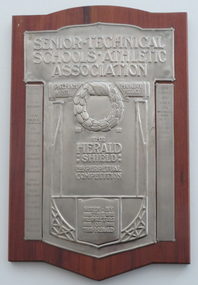
Award - Shield, Senior Technical Schools Athletics Association Herald Shield, 1918-1940, c1918
... The shield was given by the proprietors of The Herald. herald shield athletics working mans college rmit ballarat school of mines trophy commission art metal repousse ballarat technical art school Wilfred Kenneth Above list engraved into metal Timber and metal repousse shield listing winning teams from 1918-1940. 1918 - Ballarat 1919 - Ballarat 1920 - Working Men's College Melbourne (now RMIT) 1921 - No contest 1922 - Swinburne 1923 - Ballarat 1924 - Ballarat 1925 - Ballarat 1926 - Ballarat 1927 - Geelong 1928 - Maryborough 1929 - Bendigo 1930 - Bendigo 1931 - Working Man's College 1932 - Wonthaggi 1933 - M.T.C. 1934 - Ballarat 1935 - Ballarat 1936 - Ballarat 1937 - No Contest 1938 - Ballarat 1939 - Ballarat 1940 - Geelong Senior Technical Schools Athletics Association Herald Shield, 1918-1940 Award Shield ...The Senior Technical Schools Athletics Association ‘Herald Shield’ is one of many timber and metal repoussé commissions undertaken by students and staff at the Ballarat Technical Art School. The School was known for the quality of its art metal work which was applied to product, interior and commemorative designs. Between 1915 and 1936 Wilfred Kenneth (c1883-1957) taught boys and girls at preparatory and senior levels, including the ‘Art Metal Work and Repoussé’ industrial design specialisation. During World War I, Kenneth oversaw the training of repatriated soldiers which catalysed into a new, a successful art metal business, the Decorative Metal Craft Company in Chancery Lane, Ballarat. The shield was given by the proprietors of The Herald.Timber and metal repousse shield listing winning teams from 1918-1940. 1918 - Ballarat 1919 - Ballarat 1920 - Working Men's College Melbourne (now RMIT) 1921 - No contest 1922 - Swinburne 1923 - Ballarat 1924 - Ballarat 1925 - Ballarat 1926 - Ballarat 1927 - Geelong 1928 - Maryborough 1929 - Bendigo 1930 - Bendigo 1931 - Working Man's College 1932 - Wonthaggi 1933 - M.T.C. 1934 - Ballarat 1935 - Ballarat 1936 - Ballarat 1937 - No Contest 1938 - Ballarat 1939 - Ballarat 1940 - Geelong Above list engraved into metalherald shield, athletics, working mans college, rmit, ballarat school of mines, trophy, commission, art metal, repousse, ballarat technical art school, wilfred kenneth -
 NMIT (Northern Melbourne Institute of TAFE)
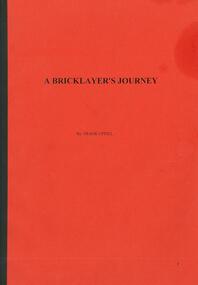
Book: A Bricklayer's journey by Frank Upfill, Book: A Bricklayer's journey by Frank Upfill, 2003
... Technical College which later became Preston College of TAFE. Preston Techinical School Preston College of TAFE Bricklaying study and teaching 1970s-1980s Frank Upfill Staff 1970s-1980s iNMIT Book of 37 pages with photos and bibiliography. Bricklayers--Victoria--Biography. Bricklaying -- Study and teaching. Geelong ...Book published in 2003 by the author spanning years in the 1970s and 1980s when he taught Bricklaying at Preston Technical College which later became Preston College of TAFE.Book of 37 pages with photos and bibiliography. Bricklayers--Victoria--Biography. Bricklaying -- Study and teaching. Geelong (Vic.) -- Biography preston techinical school, preston college of tafe, bricklaying study and teaching 1970s-1980s, frank upfill, staff 1970s-1980s, inmit -
 Warrnambool and District Historical Society Inc.
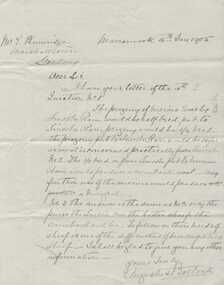
Letter, Augustus Bostock to E Plumridge, 1905
... E Plumridge is mentioned on Trove as holding classes in wool classing at Gordon technical College at Geelong. ...E Plumridge is mentioned on Trove as holding classes in wool classing at Gordon technical College at Geelong. This is one of a number of documents which relate to the Bostock family who were one of the most important pioneering families of the Western District. ...Augustus Bostock was the 9th child of Robert & Rachael Bostock of Vaucluse Epping Forest, Van Diemen’s Land. He was only 4 years old when his mother died. He was inspired by his father to seek his fortune in the Western District of Victoria. He arrived around 1850. He married Margaret Aitkin in July 1865. Augustus owned several properties in the district and leased others. He sat on the court of Warrnambool, Mortlake or Hexham as required. He resided at Marramook in Hawkesdale and later moved to Vaucluse in Hopetoun Road Warrnambool, where he died in 1920 at the age of 87. This letter relates to crossing sheep and answers three questions posed by Mr. E Plumridge in relation to the breeding of comeback sheep. E Plumridge is mentioned on Trove as holding classes in wool classing at Gordon technical College at Geelong. This is one of a number of documents which relate to the Bostock family who were one of the most important pioneering families of the Western District. They owned and leased various properties around Warrnambool and were involved in many aspects of social and business life. This letter reflects the knowledge and experience of Augustus Bostock in the breeding of sheep and also his willingness to share this knowledge. It therefore has social and historical significance.Cream lined paper with wide margin on left hand side. One page written in black ink.Addressed from Marramook 16th Jan 1905 to Mr. E Plumridge of Marshalltown. Signed Augustus Bostock.augustus bostock, plumridge geelong, marramook, warrnambool -
 Newcomb Secondary College Archives
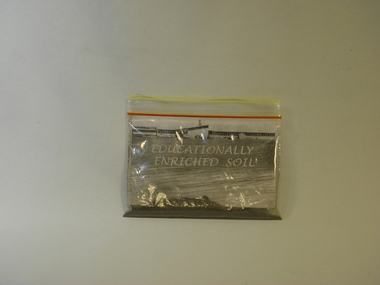
Curio - 2001 Bag of Educationally Enriched Soil, August 2006
... Geelong East Technical School...James Harrison College...Soil collected for the 2006 Staff reunion of Geelong East Technical School/James Harrison College. The College merged with Newcomb Secondary College in 2001. ...Soil collected for the 2006 Staff reunion of Geelong East Technical School/James Harrison College. The College merged with Newcomb Secondary College in 2001. ...Soil collected for the 2006 Staff reunion of Geelong East Technical School/James Harrison College. The College merged with Newcomb Secondary College in 2001. The old site became part of The Gordon TAFE. The Reunion Committee wanted a memento of the school to give to the staff who attended.Clear Ziploc bag containing soil, organic material (Leaf) and paper.Side A Titled "Educationally Enriched Soil". Side B "Certificate of Authenticity./School/No.1765/geelong east technical school, james harrison college, 2006 -
 National Wool Museum
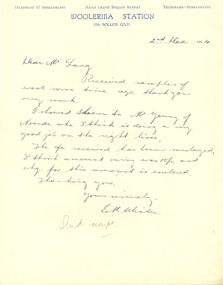
Letter
... Lang, Gordon Institute of Technology, Geelong re: wool samples Sheep stations - management Wool - testing Warrnambool Woollen Mill Gordon Technical College Lang Dr W. ...Letter from E M Winter, Woolerina Station, Quensland, 1944 to W.R. Lang, Gordon Institute of Technology, Geelong re: wool samplesSend receiptsheep stations - management wool - testing, warrnambool woollen mill gordon technical college, lang, dr w. roy, woolerina station, queensland, sheep stations - management, wool - testing -
 National Wool Museum
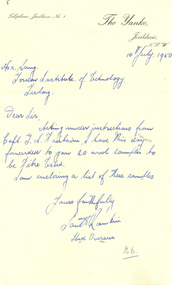
Letter
... Lang, Gordon Institute of Technology, Geelong re: wool samples Sheep stations - management Wool - testing Gordon Technical College Lang Dr W. ...Letter from Ian [?]Rankin, "The Yanko", Jerilderie, NSW 1950 to W.R. Lang, Gordon Institute of Technology, Geelong re: wool samplessheep stations - management wool - testing, gordon technical college, lang, dr w. roy, the yanko, nsw, sheep stations - management, wool - testing -
 National Wool Museum
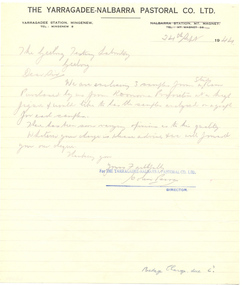
Letter
... Lang, Gordon Institute of Technology, Geelong re: wool samples Sheep stations - management Wool - testing Gordon Technical College The Yarragadee-Nalbarra Pastoral Co Lang Dr W. ...Letter from Colin Perry, The Yarragadee-Nalbarra Pastoral Co 1944 to W.R. Lang, Gordon Institute of Technology, Geelong re: wool samplesPostage Charge 6dsheep stations - management wool - testing, gordon technical college the yarragadee-nalbarra pastoral co, lang, dr w. roy, sheep stations - management, wool - testing -
 National Wool Museum
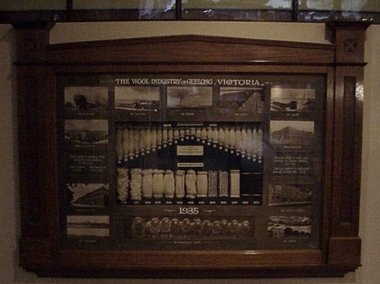
Photographic Display, The Wool Industry of Geelong 1935
... Geelong. Textile Mills Wool Stores Gordon Technical College - Woolclassing Department Textile Mills Wool Stores THE WOOL INDUSTRY OF GEELONG 1935 The Wool Industry of Geelong 1935 Photographic Display ...Wool samples prepared at the School of Wool Sorting, Gordon Institute of Technology, Geelong. This object hung in the Wool Exchange Building until 1985 and is now displayed in the National Wool Museum using copy prints of photographs. Wool samples were prepared at the School of Wool Sorting, the Gordon Institute of Technology, Geelong.THE WOOL INDUSTRY OF GEELONG 1935textile mills wool stores, gordon technical college - woolclassing department, textile mills, wool stores -
 National Wool Museum
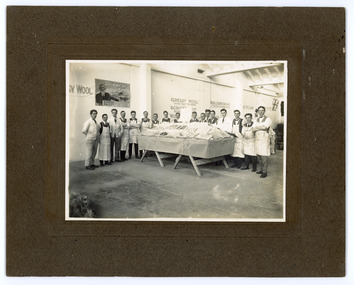
Photograph - Wool Classing Students, Gordon Technical College, Mr Geoffrey S. Wood, 1920
... Woolclassing Royal Visits Gordon Technical College - Woolclassing Department Cameron Mr Cyril Dennys Lascelles Wool Store Woolclassing Royal Visits GEOFFREY S. WOOD, PHOTO, GEELONG ...Photo depicts a final year woolclassing class from the Gordon Institute in Geelong. They have prepared a display re: woolclassing for the visit of the Prince of Wales to Geelong in 1920. They are on the top floor of the Dennys Lascelles woolstore. The donor's father, Mr Cyril Cameron, can be seen in the photo at sixth from the right. Cyril Cameron (known as 'Cam') came from the family property 'Burnside' near Glenthompson in the Western District. He joined Strachan & Co. as an office boy in Aug. 1914 and then joined the 8th Battalion, 1st AIF in January 1915. He returned to Australia in early 1920 and started work at Strachan's again. He did the wool classing course (one year, evening?) at the Gordon in 1920-21. He became Head Wool Valuer at Strachan's in 1938 and retired in 1970. His office at Strachan's was on the top floor, directly overlooking what is now the entrance to the National Wool Museum (formerly Dennys Lascelles woolstore). He died in 1983. Interestingly, within the photo, can be seen a poster on the wall advertising the RSS or Diggers' Mill. The mill opened in 1922 but had been advertising for investors since the end of the war.Sepia photograph mounted on a dark brown mat. The photo depicts a group of 17 men in ties and shirtsleeves with white coats or aprons. They are standing behind a trestle table which is heavily laden with wool and open scrap books containing wool samples. The photo has been taken in a large, light room with signs on the walls and a Union Jack flag in the background.GEOFFREY S. WOOD, PHOTO, GEELONG Dennys Lascelles Show Floor 1920 / Visit of Prince of Waleswoolclassing royal visits, gordon technical college - woolclassing department, cameron, mr cyril, dennys lascelles wool store, woolclassing, royal visits -
 National Wool Museum
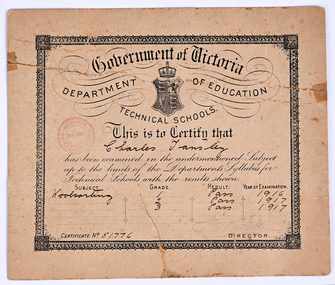
Certificate - Education Certificate, Woolsorting, Charles Tansley, Victorian Department of Education, c.1917
... Geelong. Charles was born in Melbourne in 1898 and was educated in England at Bedford Modern College. He was sent home from England due to WW1 and was not enlisted due to health reasons. Charles married Mary Brownjohn in 1924, and together they moved to Geelong in the late 1920s. This certificate shows qualifications gained by Charles in Woolsorting from the Victorian Department of Education. Charles Tansley Woolclassing Wool Classer Farming Sheep Wool Agricultural Industry Estates Tasmania New South Wales Pastoral Industry Textile Industry Education Reference Letters Working Life Geelong Training Mary Brownjohn Front [printed]: Government of Victoria / DEPARTMENT OF EDUCATION / TECHNICAL ...This certificate is part of a collection of archival documents including letters and certificates that relate to Charles Tansley. Charles Tansley was a wool classer mainly in Victoria, but also worked in Tasmania and New South Wales. In his career, he also worked as a wool valuer with Elders in Geelong. Charles was born in Melbourne in 1898 and was educated in England at Bedford Modern College. He was sent home from England due to WW1 and was not enlisted due to health reasons. Charles married Mary Brownjohn in 1924, and together they moved to Geelong in the late 1920s. This certificate shows qualifications gained by Charles in Woolsorting from the Victorian Department of Education.Cream certificate with black printed text and black handwritten text. Certificate has been repaired with sticky tape at the back.Front [printed]: Government of Victoria / DEPARTMENT OF EDUCATION / TECHNICAL SCHOOLScharles tansley, woolclassing, wool classer, farming, sheep, wool, agricultural industry, estates, tasmania, new south wales, pastoral industry, textile industry, education, reference letters, working life, geelong, training, mary brownjohn -
 National Wool Museum
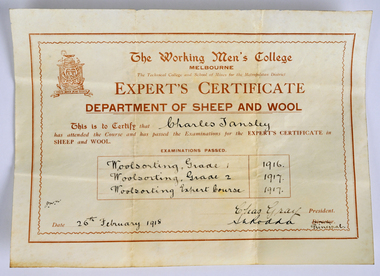
Certificate - Expert's Certificate, Woolsorting, Charles Tansley, The Working Men's College, 26 February 1918
... College. He was sent home from England due to WW1 and was not enlisted due to health reasons. Charles married Mary Brownjohn in 1924, and together they moved to Geelong in the late 1920s. This certificate, dated 1918, shows qualifications gained by Charles in Woolsorting from the Working Men's College in Melbourne. Charles Tansley Woolclassing Wool Classer Farming Sheep Wool Agricultural Industry Estates Tasmania New South Wales Pastoral Industry Textile Industry Education Reference Letters Working Life Geelong Training Mary Brownjohn Front [printed]: The Working Men's College / MELBOURNE / The Technical College and School of Mines for the Metropolitan District / EXPERT'S CERTIFICATE / DEPARTMENT OF SHEEP AND WOOL Cream certificate with brown printed text and black handwritten text. ...This certificate is part of a collection of archival documents including letters and certificates that relate to Charles Tansley. Charles Tansley was a wool classer mainly in Victoria, but also worked in Tasmania and New South Wales. In his career, he also worked as a wool valuer with Elders in Geelong. Charles was born in Melbourne in 1898 and was educated in England at Bedford Modern College. He was sent home from England due to WW1 and was not enlisted due to health reasons. Charles married Mary Brownjohn in 1924, and together they moved to Geelong in the late 1920s. This certificate, dated 1918, shows qualifications gained by Charles in Woolsorting from the Working Men's College in Melbourne.Cream certificate with brown printed text and black handwritten text.Front [printed]: The Working Men's College / MELBOURNE / The Technical College and School of Mines for the Metropolitan District / EXPERT'S CERTIFICATE / DEPARTMENT OF SHEEP AND WOOLcharles tansley, woolclassing, wool classer, farming, sheep, wool, agricultural industry, estates, tasmania, new south wales, pastoral industry, textile industry, education, reference letters, working life, geelong, training, mary brownjohn -
 National Wool Museum
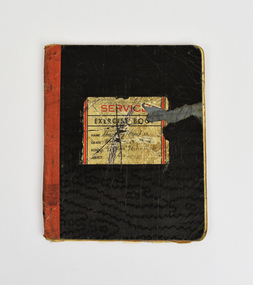
Book - Wool Classing Exercise Book, 1936-38
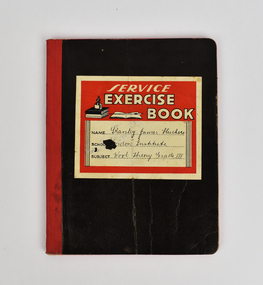
... Geelong Wool Classing 1930s Sheep Farming 90 years wool classing between father & son Front Cover. Wording, printed and handwritten “SERVICE / EXERCISE BOOK / NAME Stanley Hucker / GRADE wool classing / SCHOOL Gordon Technical / SUBJECT Veterinary” This is the first in a series of 5 wool classing exercise books. They were written by Stanley Hucker in his time at the Gordon Technical College ...The story of 90 years of wool classing between father & son begins in 1936, when a young boy by the name of Stanley James Hucker walked through the doors of the Gordon Technical School in Geelong. Born in 1921, Stanley was 15 years of age when he began his 3-year course in Wool Classing. 30 years later, Stanley’s second son Denis completed the same 3-year wool classing course. Beginning in 1966, Denis attended the same Gordon Technical School and walked the same halls as his father before him. Stanley finished his course in 1938. He went back to the family farm in Lake Bolac for a brief period before enrolling in the Second World War. At the completion of the war, Stanley returned home and married before gaining a soldier settler allotment, north of Willaura. This enabled Stan to use his wool classing knowledge. He ran between 1,500 and 2,000 sheep for many years, while his wool classer stencil also allowed him to go out and class at various sheds around the area. He held his stencil from 1938 until he retired at the age of 60 in 1981. On retirement, his second son Denis was working in the district, managing a local property while also leasing land himself. Upon his father’s retirement, Denis had the opportunity to lease his father’s farm, an opportunity he could not refuse. Denis had finished his wool classing course at the Gordon Technical School in 1968, graduating dux of his class. He began working with a local contractor and started classing wool in his team. Denis gained a great deal of experience working as part of this team in big sheds of up to 8 stands servicing between 10 & 20,000 sheep. It was not all smooth sailing for Denis however, and he soon learnt an important lesson. Class wool the way you’re taught, don’t listen to the owner standing over your shoulder. At a clip of Corriedales near Casterton, Denis was pushing too many fleeces into the line of fine wool. This resulted in a notice from the Australian Wool Exchange (AWEX) “mixing counts too much, submit three clips for inspection”. Denis was able to submit 3 clips with no further complaints, however, this proved a valuable lesson he would never forget over his long career classing wool. In the early 1980s, when Denis was leasing two properties including his father’s, things were going well until drought struck. February 1983 was the date of the Ash Wednesday bushfires, and saw Melbourne have three days over 40 °C for only the second time on record. This period saw Denis give away farming, turning towards contracting work instead. After the difficult times of the early 1980s, the next two decades were a good time for the sheep industry. 15 micron wool was selling for prices between 4 to 5,000 cents per kilo, double what you’d expect for the same wool in 2022. In 1995 a single bale of wool sold for a million dollars. This was a good time for Denis too. His contracting work saw him employing local shearers and shed staff. His team was involved with the shearing and classing of more than 130,000 sheep. After 20 years of contracting, it was time for Denis to transition into the next phase of his life. He gave up independent contracting, preferring instead to return to being a member of someone else’s team. In 2018, having completed 50 years of wool classing, it was time to call it a day and retire completely. At the annual Gordon Wool School Old Students Association dinner held in 2018, Denis was presented with his 50 years as a registered wool classer stencil awarded by the Australian Wool Exchange (AWEX). This is a rare honour achieved by few. As of February 2020, a total of 430 wool classers had achieved this 50-year milestone. For Denis however, his proudest achievement is achieving 90 years of wool classing with his father. The National Wool Museum is proud to share the collection of objects gained from 90 years in the wool classing industry by Stanley and Denis. This ranges from Stanley’s first stencil and Wool Sample book, started when he first attended the Gordon in 1936. The collection concludes 90 years later with Denis’ 50 years of wool classing Stencil. The collection contains many more objects, all telling the story of these 90 years, and the hard work invested by this dedicated father and son duo. This is the first in a series of 5 wool classing exercise books. They were written by Stanley Hucker in his time at the Gordon Technical College from 1936-1938. This book begins in a cover of black vinyl with a strip of red tape on the spine to give added support. Some of the vinyl has been removed on the cover, revealing blue card beneath. A sticker label is also found on the front cover. It has been damaged. Part of the sticker has been removed, while blue ink can also be found obscuring the text below. Internally, the book is handwritten on yellowed pages with blue lines for the assistance in clarity of handwriting. The pages are also surrounded by a margin of red pen. The exercise book’s content is about veterinary studies relating to the diseases, injuries, and treatment of sheep. It is handwritten and accompanied by an occasional hand drawn diagram. A selection of pages have been photographed to give an impression of the information taught in classes, 90 years ago. This includes information about a sheep’s heart, hind limbs, and reproduction system in ewes. Front Cover. Wording, printed and handwritten “SERVICE / EXERCISE BOOK / NAME Stanley Hucker / GRADE wool classing / SCHOOL Gordon Technical / SUBJECT Veterinary”gordon institute geelong, wool classing, 1930s sheep farming, 90 years wool classing between father & son -
 National Wool Museum
Book - Wool Classing Exercise Book, 1936-38
... The collection contains many more objects, all telling the story of these 90 years, and the hard work invested by this dedicated father and son duo. gordon institute geelong wool classing 1930s sheep farming 90 years wool classing between father & son This is the second in a series of 5 wool classing exercise books. They were written by Stanley Hucker in his time at the Gordon Technical College from 1936-1938. ...The story of 90 years of wool classing between father & son begins in 1936, when a young boy by the name of Stanley James Hucker walked through the doors of the Gordon Technical School in Geelong. Born in 1921, Stanley was 15 years of age when he began his 3-year course in Wool Classing. 30 years later, Stanley’s second son Denis completed the same 3-year wool classing course. Beginning in 1966, Denis attended the same Gordon Technical School and walked the same halls as his father before him. Stanley finished his course in 1938. He went back to the family farm in Lake Bolac for a brief period before enrolling in the Second World War. At the completion of the war, Stanley returned home and married before gaining a soldier settler allotment, north of Willaura. This enabled Stan to use his wool classing knowledge. He ran between 1,500 and 2,000 sheep for many years, while his wool classer stencil also allowed him to go out and class at various sheds around the area. He held his stencil from 1938 until he retired at the age of 60 in 1981. On retirement, his second son Denis was working in the district, managing a local property while also leasing land himself. Upon his father’s retirement, Denis had the opportunity to lease his father’s farm, an opportunity he could not refuse. Denis had finished his wool classing course at the Gordon Technical School in 1968, graduating dux of his class. He began working with a local contractor and started classing wool in his team. Denis gained a great deal of experience working as part of this team in big sheds of up to 8 stands servicing between 10 & 20,000 sheep. It was not all smooth sailing for Denis however, and he soon learnt an important lesson. Class wool the way you’re taught, don’t listen to the owner standing over your shoulder. At a clip of Corriedales near Casterton, Denis was pushing too many fleeces into the line of fine wool. This resulted in a notice from the Australian Wool Exchange (AWEX) “mixing counts too much, submit three clips for inspection”. Denis was able to submit 3 clips with no further complaints, however, this proved a valuable lesson he would never forget over his long career classing wool. In the early 1980s, when Denis was leasing two properties including his father’s, things were going well until drought struck. February 1983 was the date of the Ash Wednesday bushfires, and saw Melbourne have three days over 40 °C for only the second time on record. This period saw Denis give away farming, turning towards contracting work instead. After the difficult times of the early 1980s, the next two decades were a good time for the sheep industry. 15 micron wool was selling for prices between 4 to 5,000 cents per kilo, double what you’d expect for the same wool in 2022. In 1995 a single bale of wool sold for a million dollars. This was a good time for Denis too. His contracting work saw him employing local shearers and shed staff. His team was involved with the shearing and classing of more than 130,000 sheep. After 20 years of contracting, it was time for Denis to transition into the next phase of his life. He gave up independent contracting, preferring instead to return to being a member of someone else’s team. In 2018, having completed 50 years of wool classing, it was time to call it a day and retire completely. At the annual Gordon Wool School Old Students Association dinner held in 2018, Denis was presented with his 50 years as a registered wool classer stencil awarded by the Australian Wool Exchange (AWEX). This is a rare honour achieved by few. As of February 2020, a total of 430 wool classers had achieved this 50-year milestone. For Denis however, his proudest achievement is achieving 90 years of wool classing with his father. The National Wool Museum is proud to share the collection of objects gained from 90 years in the wool classing industry by Stanley and Denis. This ranges from Stanley’s first stencil and Wool Sample book, started when he first attended the Gordon in 1936. The collection concludes 90 years later with Denis’ 50 years of wool classing Stencil. The collection contains many more objects, all telling the story of these 90 years, and the hard work invested by this dedicated father and son duo. This is the second in a series of 5 wool classing exercise books. They were written by Stanley Hucker in his time at the Gordon Technical College from 1936-1938. This book begins in a cover of black vinyl with a strip of red tape on the spine. A sticker label is also found on the front cover. It has been damaged with part of the sticker removed. Internally, the book is handwritten on yellowed pages with blue lines for the assistance in clarity of handwriting. The pages are also surrounded by a margin of red pen. The exercise book’s content is about the wool industry. It is handwritten and accompanied by an occasional hand drawn table. A selection of pages have been photographed to give an impression of the information taught in classes, 90 years ago. This includes information about: - Matching wool terminologies in different countries i.e. England, USA, France, and Germany - Charges deducted in the selling of wool i.e. insurance & commission - The duties of a Wool Classer - The history of Merino Sheep - Wool Selling figures from 1925-1932 - Statistics on the breed of sheep in Australia (as of 31st December 1929) - Australia’s portion of the global wool clip in 1934 gordon institute geelong, wool classing, 1930s sheep farming, 90 years wool classing between father & son -
 National Wool Museum
Book - Wool Classing Exercise Book, 1936-38
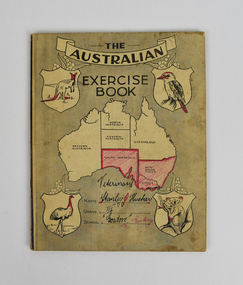
... Geelong” Front Cover. Illustrations, printed. Kangaroo, kookaburra / Map of Australia with state names / Emu, Koala This is the third in a series of 5 wool classing exercise books. They were written by Stanley Hucker in his time at the Gordon Technical College ...The story of 90 years of wool classing between father & son begins in 1936, when a young boy by the name of Stanley James Hucker walked through the doors of the Gordon Technical School in Geelong. Born in 1921, Stanley was 15 years of age when he began his 3-year course in Wool Classing. 30 years later, Stanley’s second son Denis completed the same 3-year wool classing course. Beginning in 1966, Denis attended the same Gordon Technical School and walked the same halls as his father before him. Stanley finished his course in 1938. He went back to the family farm in Lake Bolac for a brief period before enrolling in the Second World War. At the completion of the war, Stanley returned home and married before gaining a soldier settler allotment, north of Willaura. This enabled Stan to use his wool classing knowledge. He ran between 1,500 and 2,000 sheep for many years, while his wool classer stencil also allowed him to go out and class at various sheds around the area. He held his stencil from 1938 until he retired at the age of 60 in 1981. On retirement, his second son Denis was working in the district, managing a local property while also leasing land himself. Upon his father’s retirement, Denis had the opportunity to lease his father’s farm, an opportunity he could not refuse. Denis had finished his wool classing course at the Gordon Technical School in 1968, graduating dux of his class. He began working with a local contractor and started classing wool in his team. Denis gained a great deal of experience working as part of this team in big sheds of up to 8 stands servicing between 10 & 20,000 sheep. It was not all smooth sailing for Denis however, and he soon learnt an important lesson. Class wool the way you’re taught, don’t listen to the owner standing over your shoulder. At a clip of Corriedales near Casterton, Denis was pushing too many fleeces into the line of fine wool. This resulted in a notice from the Australian Wool Exchange (AWEX) “mixing counts too much, submit three clips for inspection”. Denis was able to submit 3 clips with no further complaints, however, this proved a valuable lesson he would never forget over his long career classing wool. In the early 1980s, when Denis was leasing two properties including his father’s, things were going well until drought struck. February 1983 was the date of the Ash Wednesday bushfires, and saw Melbourne have three days over 40 °C for only the second time on record. This period saw Denis give away farming, turning towards contracting work instead. After the difficult times of the early 1980s, the next two decades were a good time for the sheep industry. 15 micron wool was selling for prices between 4 to 5,000 cents per kilo, double what you’d expect for the same wool in 2022. In 1995 a single bale of wool sold for a million dollars. This was a good time for Denis too. His contracting work saw him employing local shearers and shed staff. His team was involved with the shearing and classing of more than 130,000 sheep. After 20 years of contracting, it was time for Denis to transition into the next phase of his life. He gave up independent contracting, preferring instead to return to being a member of someone else’s team. In 2018, having completed 50 years of wool classing, it was time to call it a day and retire completely. At the annual Gordon Wool School Old Students Association dinner held in 2018, Denis was presented with his 50 years as a registered wool classer stencil awarded by the Australian Wool Exchange (AWEX). This is a rare honour achieved by few. As of February 2020, a total of 430 wool classers had achieved this 50-year milestone. For Denis however, his proudest achievement is achieving 90 years of wool classing with his father. The National Wool Museum is proud to share the collection of objects gained from 90 years in the wool classing industry by Stanley and Denis. This ranges from Stanley’s first stencil and Wool Sample book, started when he first attended the Gordon in 1936. The collection concludes 90 years later with Denis’ 50 years of wool classing Stencil. The collection contains many more objects, all telling the story of these 90 years, and the hard work invested by this dedicated father and son duo. This is the third in a series of 5 wool classing exercise books. They were written by Stanley Hucker in his time at the Gordon Technical College from 1936-1938. This book begins in a white cover with black ink illustrations and writing. These illustrations have been added to with Pink ink. Internally, the book is handwritten on yellowed pages with blue lines for the assistance in clarity of handwriting. The pages are also surrounded by a margin of red pen. The exercise book’s content is about veterinary studies relating to the diseases, injuries, and treatment of sheep. It is handwritten. A selection of pages have been photographed to give an impression of the information taught in classes, 90 years ago. This includes information about blow fly and bacterial diseases.Front Cover. Wording, printed and handwritten “THE / AUSTRALIAN / EXERCISE / BOOK / Veterinary / NAME Stanley J Hucker / GRADE III / School “Gordon” Geelong” Front Cover. Illustrations, printed. Kangaroo, kookaburra / Map of Australia with state names / Emu, Koalagordon institute geelong, wool classing, 1930s sheep farming, 90 years wool classing between father & son -
 National Wool Museum
Book - Wool Classing Exercise Book, 1937-38
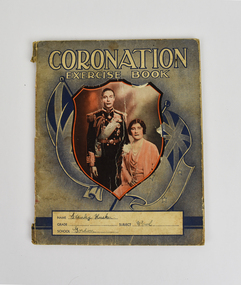
... geelong wool classing 1930s sheep farming 90 years wool classing between father & son Front Cover. Wording, printed and handwritten. “CORONATION / EXERCISE BOOK / NAME Stanley Hucker / GRADE SUBJECT Wool / SCHOOL Gordon Front Cover. Illustration’s colour, printed. King George VI & Queen Elizabeth with flags of the Union Jack & Australia in background. This is the fourth in a series of 5 wool classing exercise books. They were written by Stanley Hucker in his time at the Gordon Technical College ...The story of 90 years of wool classing between father & son begins in 1936, when a young boy by the name of Stanley James Hucker walked through the doors of the Gordon Technical School in Geelong. Born in 1921, Stanley was 15 years of age when he began his 3-year course in Wool Classing. 30 years later, Stanley’s second son Denis completed the same 3-year wool classing course. Beginning in 1966, Denis attended the same Gordon Technical School and walked the same halls as his father before him. Stanley finished his course in 1938. He went back to the family farm in Lake Bolac for a brief period before enrolling in the Second World War. At the completion of the war, Stanley returned home and married before gaining a soldier settler allotment, north of Willaura. This enabled Stan to use his wool classing knowledge. He ran between 1,500 and 2,000 sheep for many years, while his wool classer stencil also allowed him to go out and class at various sheds around the area. He held his stencil from 1938 until he retired at the age of 60 in 1981. On retirement, his second son Denis was working in the district, managing a local property while also leasing land himself. Upon his father’s retirement, Denis had the opportunity to lease his father’s farm, an opportunity he could not refuse. Denis had finished his wool classing course at the Gordon Technical School in 1968, graduating dux of his class. He began working with a local contractor and started classing wool in his team. Denis gained a great deal of experience working as part of this team in big sheds of up to 8 stands servicing between 10 & 20,000 sheep. It was not all smooth sailing for Denis however, and he soon learnt an important lesson. Class wool the way you’re taught, don’t listen to the owner standing over your shoulder. At a clip of Corriedales near Casterton, Denis was pushing too many fleeces into the line of fine wool. This resulted in a notice from the Australian Wool Exchange (AWEX) “mixing counts too much, submit three clips for inspection”. Denis was able to submit 3 clips with no further complaints, however, this proved a valuable lesson he would never forget over his long career classing wool. In the early 1980s, when Denis was leasing two properties including his father’s, things were going well until drought struck. February 1983 was the date of the Ash Wednesday bushfires, and saw Melbourne have three days over 40 °C for only the second time on record. This period saw Denis give away farming, turning towards contracting work instead. After the difficult times of the early 1980s, the next two decades were a good time for the sheep industry. 15 micron wool was selling for prices between 4 to 5,000 cents per kilo, double what you’d expect for the same wool in 2022. In 1995 a single bale of wool sold for a million dollars. This was a good time for Denis too. His contracting work saw him employing local shearers and shed staff. His team was involved with the shearing and classing of more than 130,000 sheep. After 20 years of contracting, it was time for Denis to transition into the next phase of his life. He gave up independent contracting, preferring instead to return to being a member of someone else’s team. In 2018, having completed 50 years of wool classing, it was time to call it a day and retire completely. At the annual Gordon Wool School Old Students Association dinner held in 2018, Denis was presented with his 50 years as a registered wool classer stencil awarded by the Australian Wool Exchange (AWEX). This is a rare honour achieved by few. As of February 2020, a total of 430 wool classers had achieved this 50-year milestone. For Denis however, his proudest achievement is achieving 90 years of wool classing with his father. The National Wool Museum is proud to share the collection of objects gained from 90 years in the wool classing industry by Stanley and Denis. This ranges from Stanley’s first stencil and Wool Sample book, started when he first attended the Gordon in 1936. The collection concludes 90 years later with Denis’ 50 years of wool classing Stencil. The collection contains many more objects, all telling the story of these 90 years, and the hard work invested by this dedicated father and son duo. This is the fourth in a series of 5 wool classing exercise books. They were written by Stanley Hucker in his time at the Gordon Technical College from 1936-1938. This book begins in a white cover with blue ink illustrations and writing. It has a centrepiece-coloured emblem of King George VI & Queen Elizabeth with flags of the Union Jack & Australia in background. Internally, the book is handwritten on yellowed pages with blue lines for the assistance in clarity of handwriting. The pages are also surrounded by a margin of red pen. The exercise book’s content is about wool studies relating to the health and productivity of wool sheep. It is handwritten. A selection of pages have been photographed to give an impression of the information taught in classes, 90 years ago. This includes information about: - Wool scouring - Shearing - Lamb marking - Breeding - Fellmongering - Comparison between wool and artificial fibres - Characteristics of good wool - Wool selling methods - Established studs in Victoria - Award rates (1937-38)Front Cover. Wording, printed and handwritten. “CORONATION / EXERCISE BOOK / NAME Stanley Hucker / GRADE SUBJECT Wool / SCHOOL Gordon Front Cover. Illustration’s colour, printed. King George VI & Queen Elizabeth with flags of the Union Jack & Australia in background.gordon institute geelong, wool classing, 1930s sheep farming, 90 years wool classing between father & son -
 National Wool Museum
Book - Wool Classing Exercise Book, 1936-38
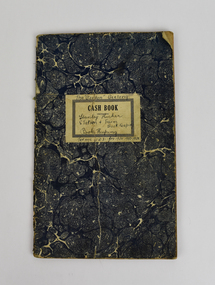
... “The “Gordon Geelong / CASH BOOK / Stanley Hucker / Station + Farm / Bookkeeping / Bookkeeping / Terms 1.2.3 for 1936. 1937. 1938” This is the fifth in a series of 5 wool classing exercise books. They were written by Stanley Hucker in his time at the Gordon Technical College ...The story of 90 years of wool classing between father & son begins in 1936, when a young boy by the name of Stanley James Hucker walked through the doors of the Gordon Technical School in Geelong. Born in 1921, Stanley was 15 years of age when he began his 3-year course in Wool Classing. 30 years later, Stanley’s second son Denis completed the same 3-year wool classing course. Beginning in 1966, Denis attended the same Gordon Technical School and walked the same halls as his father before him. Stanley finished his course in 1938. He went back to the family farm in Lake Bolac for a brief period before enrolling in the Second World War. At the completion of the war, Stanley returned home and married before gaining a soldier settler allotment, north of Willaura. This enabled Stan to use his wool classing knowledge. He ran between 1,500 and 2,000 sheep for many years, while his wool classer stencil also allowed him to go out and class at various sheds around the area. He held his stencil from 1938 until he retired at the age of 60 in 1981. On retirement, his second son Denis was working in the district, managing a local property while also leasing land himself. Upon his father’s retirement, Denis had the opportunity to lease his father’s farm, an opportunity he could not refuse. Denis had finished his wool classing course at the Gordon Technical School in 1968, graduating dux of his class. He began working with a local contractor and started classing wool in his team. Denis gained a great deal of experience working as part of this team in big sheds of up to 8 stands servicing between 10 & 20,000 sheep. It was not all smooth sailing for Denis however, and he soon learnt an important lesson. Class wool the way you’re taught, don’t listen to the owner standing over your shoulder. At a clip of Corriedales near Casterton, Denis was pushing too many fleeces into the line of fine wool. This resulted in a notice from the Australian Wool Exchange (AWEX) “mixing counts too much, submit three clips for inspection”. Denis was able to submit 3 clips with no further complaints, however, this proved a valuable lesson he would never forget over his long career classing wool. In the early 1980s, when Denis was leasing two properties including his father’s, things were going well until drought struck. February 1983 was the date of the Ash Wednesday bushfires, and saw Melbourne have three days over 40 °C for only the second time on record. This period saw Denis give away farming, turning towards contracting work instead. After the difficult times of the early 1980s, the next two decades were a good time for the sheep industry. 15 micron wool was selling for prices between 4 to 5,000 cents per kilo, double what you’d expect for the same wool in 2022. In 1995 a single bale of wool sold for a million dollars. This was a good time for Denis too. His contracting work saw him employing local shearers and shed staff. His team was involved with the shearing and classing of more than 130,000 sheep. After 20 years of contracting, it was time for Denis to transition into the next phase of his life. He gave up independent contracting, preferring instead to return to being a member of someone else’s team. In 2018, having completed 50 years of wool classing, it was time to call it a day and retire completely. At the annual Gordon Wool School Old Students Association dinner held in 2018, Denis was presented with his 50 years as a registered wool classer stencil awarded by the Australian Wool Exchange (AWEX). This is a rare honour achieved by few. As of February 2020, a total of 430 wool classers had achieved this 50-year milestone. For Denis however, his proudest achievement is achieving 90 years of wool classing with his father. The National Wool Museum is proud to share the collection of objects gained from 90 years in the wool classing industry by Stanley and Denis. This ranges from Stanley’s first stencil and Wool Sample book, started when he first attended the Gordon in 1936. The collection concludes 90 years later with Denis’ 50 years of wool classing Stencil. The collection contains many more objects, all telling the story of these 90 years, and the hard work invested by this dedicated father and son duo. This is the fifth in a series of 5 wool classing exercise books. They were written by Stanley Hucker in his time at the Gordon Technical College from 1936-1938. This book begins in a white cover with blue ink swirls covering its entirety. It has a central sticker label. Internally, the book is handwritten on yellowed pages with blue lines for the assistance in clarity of handwriting. The pages are also surrounded by a margin of red pen. The exercise book’s content is about recording and tracking the financial transactions of Sheep Stations and Wool Classers. It is handwritten. A selection of pages have been photographed to give an impression of the information taught in classes, 90 years ago. This includes information about: - General bookkeeping terms and definitions - Practise invoices - Larger multiple page definition of bookkeeping - Assets liabilities - Practise bale bookFront Cover. Wording, printed and handwritten. “The “Gordon Geelong / CASH BOOK / Stanley Hucker / Station + Farm / Bookkeeping / Bookkeeping / Terms 1.2.3 for 1936. 1937. 1938”gordon institute geelong, wool classing, 1930s sheep farming, 90 years wool classing between father & son -
National Wool Museum
Book, Wool: the Gordon's contribution
... Geelong Historical Society, vol. 22 no. 3, Sept. 1987. Examines the history of subjects such as wool classing as they were taught at the Gordon Institute. Woolclassing Woolclassing - objective measurement Gordon Technical College ..."Wool: the Gordon's contribution" - Bryan Wardle, 1987. Reprinted article originally published in "The Investigator", the Journal of the Geelong Historical Society, vol. 22 no. 3, Sept. 1987. Examines the history of subjects such as wool classing as they were taught at the Gordon Institute.woolclassing woolclassing - objective measurement, gordon technical college - woolclassing department, woolclassing, woolclassing - objective measurement -
 National Wool Museum
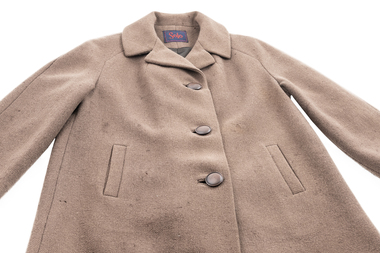
Coat, Lindsay and McKenzie, The Fleece That Would Not Die, 1968
... Geelong and presented to Mrs Groves in July 1968 by the South Australian manager of Elder Smith Goldsbrough Mort Ltd. It is not know how the coat came to Elders from the Groves family, but Elders displayed the coat under the heading "The Fleece That Would Not Die" before donating it to the National Wool Museum in 1997. A video giving the history of the coat and a text panel used by Elders were also donated at the same time. fashion wool - characteristics wool processing textile mills textile mills lindsay and mckenzie elders limited gordon technical college royal adelaide show - exhibition (31/08/2001 - 08/09/2001) groves mr mal groves mrs dutchman station south australia fashion wool - characteristics wool processing textile mills Wording: Solo;Method: Embroidered;Location: Label at base of collar, inside coat Wording: PURE WOOL;Method: Printed;Location: Label on side seam, inside coat Coat, brown wool. ...This coat was produced from wool first shorn in c.1928. In 1928 Mr Mal Groves took over the Dutchman Station near Port Augusta in South Australia. Whilst out riding in some rough country he came across a sheep that had been left by the previous owner of the station. As he carried shears with him, he sheared the sheep and left the fleece rolled up and partially covered by rocks and wood, as he had no bag to carry it back with him. He intended to come back for the fleece, but forgot about it until he came across it some forty years later. It was still in good condition (despite having experienced extreme temperatures and rainfall whilst in the open), so he showed it to Elders who arranged to display it at agricultural shows in Adelaide, Melbourne and Geelong. The Gordon Institute of Technology, Geelong, offered to spin the fleece into a fabric and make a coat for Mrs Groves. The fabric was tailored into a coat by Lindsay and McKenzie of Geelong and presented to Mrs Groves in July 1968 by the South Australian manager of Elder Smith Goldsbrough Mort Ltd. It is not know how the coat came to Elders from the Groves family, but Elders displayed the coat under the heading "The Fleece That Would Not Die" before donating it to the National Wool Museum in 1997. A video giving the history of the coat and a text panel used by Elders were also donated at the same time.Coat, brown wool. Long sleeves, knee length with three circular brown buttons and two external pockets. Lined in brown satin, with a blue and red label at the base of the collar.Wording: Solo;Method: Embroidered;Location: Label at base of collar, inside coat Wording: PURE WOOL;Method: Printed;Location: Label on side seam, inside coatfashion wool - characteristics wool processing textile mills textile mills, lindsay and mckenzie elders limited gordon technical college, royal adelaide show - exhibition (31/08/2001 - 08/09/2001), groves, mr mal groves, mrs, dutchman station, south australia, fashion, wool - characteristics, wool processing, textile mills -
 National Wool Museum
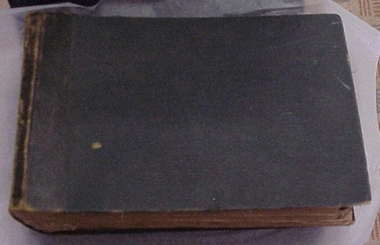
Book
... DORRON GORDON TECHNICAL COLLEGE GEELONG JUNE 10 1922...Woolclassing Gordon Technical College - Woolclassing Department Dorron Mr V V. DORRON GORDON TECHNICAL COLLEGE GEELONG JUNE 10 1922 Bound book of wool samples in the grease and throughout the various processing stages, produced by Mr V. ...Bound book of wool samples in the grease and throughout the various processing stages, produced by Mr V. Dorron.Bound book of wool samples in the grease and throughout the various processing stages, produced by Mr V. Dorron. Bound book of wool samples in the grease and throughout the various processing stages, produced by Mr V. Dorron.V. DORRON GORDON TECHNICAL COLLEGE GEELONG JUNE 10 1922woolclassing, gordon technical college - woolclassing department, dorron, mr v -
 National Wool Museum
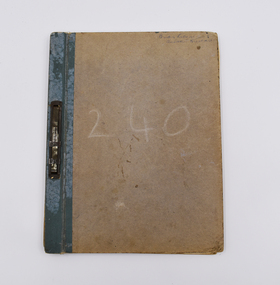
Book, Wool Classing Exercise Book, 1960-62
... Technical College from 1960-62. Brian studied Wool Classing and worked for a decade in this profession before moving to Melbourne which required him to change careers. Gordon Institute Geelong ...The National Wool Museum accepted a donation from Brian Licence in 2022 of several mementoes relating to his career in the wool industry. This Wool Classing Exercise Book was written by Brian in his time at the Gordon Technical College from 1960-62. Brian studied Wool Classing and worked for a decade in this profession before moving to Melbourne which required him to change careers.This Wool Classing Exercise book begins with a grey cover and a blue and silver metal binder. It has the number “240” handwritten in white pencil at the centre of the cover and “Brian Licence Animal Husbandry” written in blue ink on the top right corner. Internally, the book is handwritten with occasional hand drawn images. This work is completed on yellowed pages with faint blue lines, for assistance in clarity of handwriting. The pages are surrounded by a margin of red pen. The exercise book’s content is about basic animal husbandry for sheep that a Wool Classer may need to know while in a shearing shed. It is handwritten. A selection of pages have been photographed to give an impression of the information taught in classes 60 years ago. This includes information about: - Dentistry - Skeletal - Blood Circulation - Breathing - Internal parasites The book has 50 completed pages of handwriting on both front and back. Handwritten, white pencil. Centre of cover. “240” Handwritten, blue ink. Top right corner of cover. “Brian Licence. / Animal Husbandry” gordon institute geelong, 1960s sheep farming, wool classing, sheep dentistry, sheep skeletal, sheep blood circulation, sheep breathing, sheep internal parasites -
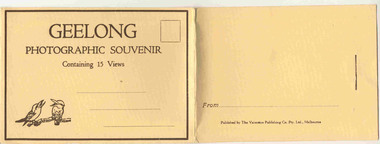 Ballarat Tramway Museum
Postcard - Folder set, Valentine & Sons Publishing Co, "Geelong Photographic Souvenir", early 1920's
... Geelong 2. Eastern Beach Gardens 3. Eastern Beach 4. Ryrie St with centre poles and a tram in the distance. 5. Botanic Gardens 6. Johnstone Park 7. Gordon Technical College...Geelong 2. Eastern Beach Gardens 3. Eastern Beach 4. Ryrie St with centre poles and a tram in the distance. 5. Botanic Gardens 6. Johnstone Park 7. Gordon Technical College ...Shows views of the Geelong CBD and beach area in the 1930's including one tram photo and two other photos of trams in the street and the centre poles which were later removed. Demonstrates production of souvenirs of the era - folded postcards. The photos could also be used for individual postcards.Set of 15 black and white views of Geelong printed on a folded strip, glued within a manila colour cardboard folder, titled "Geelong Photographic Souvenir". Booklet printed with an address area with title and kookaburras and on the rear, an area where the sender could write their name. Produced by The Valentine Publishing Co. Pty Ltd Melbourne. The rear has a slit on the rear cover that allowed the folder to be secured. Pictures are: 1. Panorama of Eastern Beach Geelong 2. Eastern Beach Gardens 3. Eastern Beach 4. Ryrie St with centre poles and a tram in the distance. 5. Botanic Gardens 6. Johnstone Park 7. Gordon Technical College 8. Moorabool St. - with poles in street, single line track and tram in far distance. 9. Eastern Beach and Wharves 10 T and G Building 11 The Fountain, Eastern Beach 12 Town Hall and Post Office 13 Baron bridge - just prior to opening - roadway construction appears to be underway. 14 Malop St with tram (10?) in foreground 15 View of Johnstone Park. Made during 1930's given motor cars in the photo. trams, tramways, geelong, postcards, malop st, town hall, post office, gardens
