
Showing 8 items matching "grassy woodland"
-
 Victorian Aboriginal Corporation for Languages
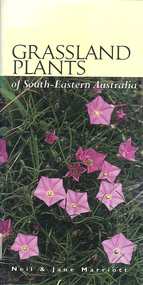
Book, Neil Marriott et al, Grassland plants of South-Eastern Australia : a field guide to native grassland and grassy woodland plants of South-Eastern Australia, 1998
... Grassland plants of South-Eastern Australia : a field guide to native grassland and grassy woodland plants of South-Eastern Australia...Grassland plants of South-Eastern Australia : a field guide to native grassland and grassy woodland plants of South-Eastern Australia Book Neil Marriott Jane Marriott ...Detailed description of plants, one plant per page. Alphabetical listing according to botanical name, with common names provided.Maps, colour photographs, pronunciation guide, glossarygrassland, plants, south-eastern australia, botany, ecology -
 University of Melbourne, Burnley Campus Archives
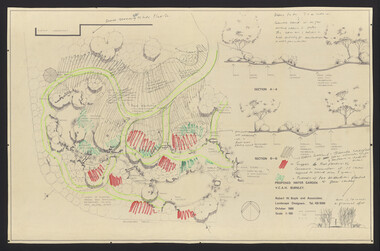
Plan, Water Garden & Grassy woodland, 1987-1995
... Water Garden & Grassy woodland...Water Garden & Grassy woodland Plan ...(1) Water Garden V.C.A.H Burnley Irrigation Plan, drawn by M.D. 12.11.87. (2) Tracing paper copy, Proposed Pool Development Native Garden V.C.A.H. Burnley -Survey of approximate dimensions showing fall and depth of pools. Drawn by J.H.K. 9.9.88. (3) Rough coloured plan, Water Garden Planting Plan. (4) Proposed Water Garden V.C.A.H. Burnley by Robert W. Boyle and Associates October 1988, with handwritten annotations by James Hitchmough. (5) Coloured final version. (6) Tracing paper copy, Planting Scheme Native Garden VCAH Burnley. Design by James Hitchmough. Drawing J.K. 13.8.90. (7) Section Native Grassland Burnley Campus - Larger Tree Cover by Marika Kocsis & Martin Hopkins. Drawn by Leigh Stone 25.9.95. Survey Plan, no key to numbers. (8) Section Native Grassland by Marika Kocsis & Martin Hopkins. Drawn by Leigh Stone 20.9.95. No key to numbers. (9) Tracing paper copy Native Garden by Paul Eaves 6.9.90. Scale 1:100. Also 2 plant lists (11.0478/1 and /2). Also see 11.0478 List of plants. (11) Letter to P. Tulk from Robert Boyle dated 07.10.1988 "Re: Cost Estimates for Construction of Proposed Water Garden."water garden, vcah, robert w. boyle, james hitchmough, jill kellow, marika kocsis, martin hopkins, leigh stone, paul eaves -
 University of Melbourne, Burnley Campus Archives
Document - Register, University of Melbourne (Burnley Campus)-Grassy Woodland Plant List, c.1990
... University of Melbourne (Burnley Campus)-Grassy Woodland Plant List...plants grassland chris findlay phil tulk native grassland (1) List of plants established in the grassland (by number but no plan) compiled by Chris Findlay and Phil Tulk (2 copies). (2) Burnley Native Grassland Plant List, numerical order (no plan) and alphabetical order University of Melbourne (Burnley Campus)-Grassy Woodland Plant List Document Register ...(1) List of plants established in the grassland (by number but no plan) compiled by Chris Findlay and Phil Tulk (2 copies). (2) Burnley Native Grassland Plant List, numerical order (no plan) and alphabetical order plants, grassland, chris findlay, phil tulk, native grassland -
 University of Melbourne, Burnley Campus Archives
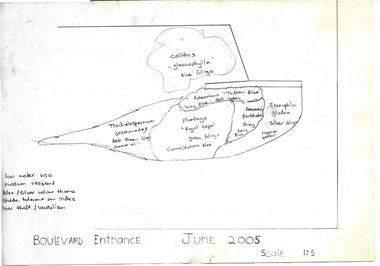
Document - Personal files, Andrew Smith's Files, 1981-2022
... ...grassy woodland...University of Melbourne (Burnley Campus) - Grassy Woodland Plant List - Chris Findlay and Phil Tulk. ...University of Melbourne (Burnley Campus) - Grassy Woodland Plant List - Chris Findlay and Phil Tulk. ...cactus, cacti, clematis, orchard redevelopment, r. hall, geoff olive, pruning garden, field station, vcah, university of melbourne, burnley, jill kellow, field station redevelopment, field nursery, student gardens, turfgrass, grassy woodland, chris findlay, phil tulk, grasslands, herbaceous border, car park, native garden, restoration native garden, john rayner, hilda kirkhope rockery, herb garden, rainforest garden redevelopment, plant lists, shady walk, salvia, trees, tai-haku cherry, tree management, tree lists, david aldous, grey border -
 Bendigo Historical Society Inc.
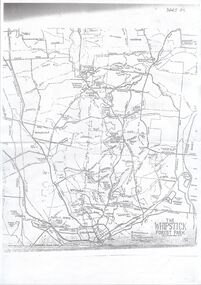
Map - Whipstick Southern Section, Unknown
... The park protects an area of high-quality Box-Ironbark forest, as well as broombush mallee, grassy woodlands and Kamarooka mallee. The park comes alive with native wildflowers in Spring, and is home to an array of wildlife including Swift Parrots and other bushland birds. ...The park protects an area of high-quality Box-Ironbark forest, as well as broombush mallee, grassy woodlands and Kamarooka mallee. The park comes alive with native wildflowers in Spring, and is home to an array of wildlife including Swift Parrots and other bushland birds. ...The Whipstick forest is now part of the Greater Bendigo National Park. During the goldrush era it was heavily mined with many remnants of the former mines evident. The park protects an area of high-quality Box-Ironbark forest, as well as broombush mallee, grassy woodlands and Kamarooka mallee. The park comes alive with native wildflowers in Spring, and is home to an array of wildlife including Swift Parrots and other bushland birds. Parks Vic: https://www.parks.vic.gov.au/places-to-see/parks/Greater-Bendigo-National-Park Photocopy of maps: 1. 'The Whipstick Forest Park, southern section'. Map shows gullies - Beezlebub, Napoleon, Whitehorse, Opossum, Wellington, Red Jacket, Blackhorse, and Centipede. Mine sites and other significant features are marked including the Whipstick Diggings Settlement near Shadbolt Reserve. Mine sites are identified. 2. Huntly map showing allotments and gullies - Snowball Gully, Deadhorse Gully Nuggety Gully, and Scotchmans Gully are printed in large text on the map. whipstick forest, whipstick, gullies, gold mining, gold -
Lakes Entrance Historical Society
Map - Forest of Victoria
... Shows Mountain Forest, Alpine woodlands and grassy lands, Alpine Ash Forest, Mountain Ash and Gum Forest, Stringybark, Ironbark, Redgum Forest all Victoria...Forest Grassy Land Shows Mountain Forest, Alpine woodlands and grassy lands, Alpine Ash Forest, Mountain Ash and Gum Forest, Stringybark, Ironbark, Redgum Forest all Victoria Map Forest of Victoria ...Shows Mountain Forest, Alpine woodlands and grassy lands, Alpine Ash Forest, Mountain Ash and Gum Forest, Stringybark, Ironbark, Redgum Forest all Victoriaforest, grassy land -
 The Beechworth Burke Museum
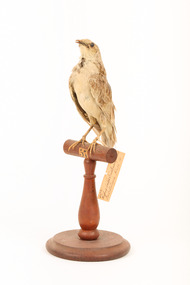
Animal specimen - Rufous Songlark, Trustees of the Australian Museum, 1860-1880
... This species reside in open grass areas, grassy woodlands, farms and mulgas (an Australian plant). ...This species reside in open grass areas, grassy woodlands, farms and mulgas (an Australian plant). ...The Rufous Songlark is not a social bird and can only be seen and heard during breeding season. They have a brown appearance with a pale underbody. This species reside in open grass areas, grassy woodlands, farms and mulgas (an Australian plant). Although the Rufous Songlark can be seen all around Australia, they are most commonly found in Queensland, New South Wales, and Western Australia. Since this is a taxidermy mount, there are some inconsistencies to the real life bird. The main inconsistency being that the colour of the bird's wings, back, head and tail should be a darker brown. This specimen is part of a collection of almost 200 animal specimens that were originally acquired as skins from various institutions across Australia, including the Australian Museum in Sydney and the National Museum of Victoria (known as Museums Victoria since 1983), as well as individuals such as amateur anthropologist Reynell Eveleigh Johns between 1860-1880. These skins were then mounted by members of the Burke Museum Committee and put-on display in the formal space of the Museum’s original exhibition hall where they continue to be on display. This display of taxidermy mounts initially served to instruct visitors to the Burke Museum of the natural world around them, today it serves as an insight into the collecting habits of the 19th century.This specimen is part of a significant and rare taxidermy mount collection in the Burke Museum. This collection is scientifically and culturally important for reminding us of how science continues to shape our understanding of the modern world. They demonstrate a capacity to hold evidence of how Australia’s fauna history existed in the past and are potentially important for future environmental research. This collection continues to be on display in the Museum and has become a key part to interpreting the collecting habits of the 19th century.This Rufous Songlark has a beige belly and neck. The wings, back, head and tail are a dark brown colour. Near the tips of the wings are there are some spots of grey and light brown. On the throat, under the beak, there is a patch of dark brown. This specimen stands upon a wooden perch and has an identification tag ties around its leg.Swing-tag: 40a / Rufous-Tinted Cincloramphus/ See catalogue page 14 Wooden perch: 57taxidermy, taxidermy mount, animalia, burke museum, beechworth, australian museum, skin, reynell eveleigh jones, bird, rufous songlark, rufous, australian birds -
 Emerald Museum & Nobelius Heritage Park
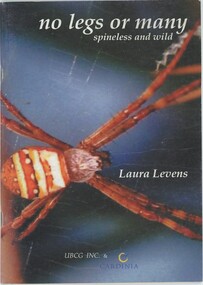
Book, Laura Levens, No Legs or Many: Spineless and Wild, 2007
... It contains colour photographs of dozens of arthropods identified "in grassy woodland on a steep hillside near Upper Beaconsfield." ...This book was published in 2007 by the Upper Beaconsfield Conservation Group, with support from Cardinia Shire. It contains colour photographs of dozens of arthropods identified "in grassy woodland on a steep hillside near Upper Beaconsfield." It sorts arthropods from 'no legs' - e.g. flatworms and slugs - to millipedes with 'how many legs'. Each image is accompanied by scientific, observed, and conmtextual information, such as the creature's scientific name and family, and its native or introduced status.This item is a short 45-page paperback book mostly containing colour images of a wide variety of arthropods local to and observed in Upper Beaconsfield, in order of their number of legs. On page 40, a printed and glued insert contains errata. The final numbered page is printed on the inside rear cover. There is a colour photograph of an Argiope keyserlingi spider on the cover, accompanied by miscellaneous detail insets of other creatures. The front inset cover has a black and white photograph of a Tenodera australasiae praying mantis.non-fictionThis book was published in 2007 by the Upper Beaconsfield Conservation Group, with support from Cardinia Shire. It contains colour photographs of dozens of arthropods identified "in grassy woodland on a steep hillside near Upper Beaconsfield." It sorts arthropods from 'no legs' - e.g. flatworms and slugs - to millipedes with 'how many legs'. Each image is accompanied by scientific, observed, and conmtextual information, such as the creature's scientific name and family, and its native or introduced status.upper beaconsfield, animals
