
Showing 96 items matching "hand-made bricks"
-
 Greensborough Historical Society
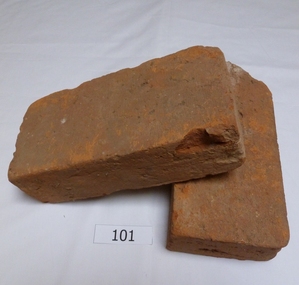
Functional object - Bricks, Hand made bricks from Partington house (Willis Vale) Greensborough, 1840c
... Hand made bricks from Partington house (Willis Vale) Greensborough...Hand made clay bricks, light red in colour. All faces are flat.. ...Accompanying note: Hand made bricks from Partington house in Greensborough. ...Donated by Alan Partington. Hand made clay bricks, light red in colour. All faces are flat.. ...Bricks from "Willis Vale' home of the Partington family of Greensborough. Built in 1840, Willis Vale was owned by the Partington family from 1878 to 1947. It was a 2 storey house overlooking the Plenty River and set in 150 acres of farmland. The Partingtons moved out in 1947 and the house was vandalised shortly after. It was destroyed by fire in the 1960s.The bricks are a link to pioneer homes and farms in the area.Hand made clay bricks, light red in colour. All faces are flat.. One brick is chipped. Accompanying note: Hand made bricks from Partington house in Greensborough. Donated by Alan Partington.willis vale, partington family, greensborough, alan partington, bricks -
 Eltham District Historical Society Inc
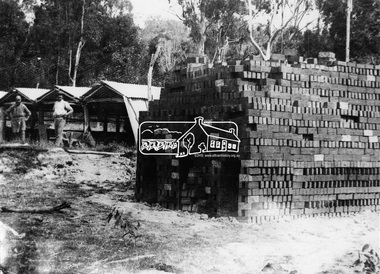
Photograph, Hand made bricks at Hurstbridge
... Hand made bricks at Hurstbridge...It is significant in being the first community sourced collection representing the places and people of the Shire's first one hundred years. sepp shire of eltham pioneers photograph collection hurstbridge brick making Adobe brick bricks Digital image Hand made bricks at Hurstbridge Photograph Photograph ...The exceptional building clay of Hurstbridge and throughout the Shire of Eltham and present day Shire of Nillumbik has been a factor in the popularity of manufacture of and use of mud bricks in local architecture. This photo forms part of a collection of photographs gathered by the Shire of Eltham for their centenary project book, "Pioneers and Painters: 100 years of the Shire of Eltham" by Alan Marshall (1971). The collection of over 500 images is held in partnership between Eltham District Historical Society and Yarra Plenty Regional Library (Eltham Library) and is now formally known as 'The Shire of Eltham Pioneers Photograph Collection.' It is significant in being the first community sourced collection representing the places and people of the Shire's first one hundred years.Digital imagesepp, shire of eltham pioneers photograph collection, hurstbridge, brick making, adobe brick, bricks -
 Stawell Historical Society Inc
Realia, Hand Made Bricks from Carrs Plains Homestead c1860
... Hand Made Bricks from Carrs Plains Homestead c1860...Bricks made c1860 for Carrs Plains from local clay. House was to be double story but contractor built piles of bricks that were hollow and left after being paid. The house could only be single Storey. House flooded in 1974 but was lived in to 1983 by Ian Taylor & family. Homestead Three handmade bricks redish orange in colour Hand ...Bricks made c1860 for Carrs Plains from local clay. House was to be double story but contractor built piles of bricks that were hollow and left after being paid. The house could only be single Storey. House flooded in 1974 but was lived in to 1983 by Ian Taylor & family.Three handmade bricks redish orange in colourhomestead -
 Federation University Historical Collection
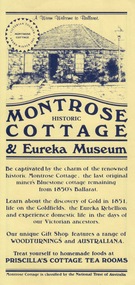
Card - Card - Advertising, ZILLES COLLECTION: Advertising Card for Historic Montrose Cottage and Eureka Museum
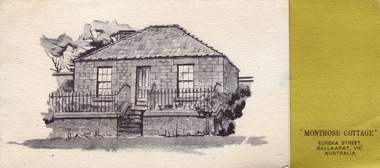
... ...hand-made bricks...It was built with bluestone and hand-made bricks. It is on the Historic Buildings Register, National Trust (Victoria). ...It was built with bluestone and hand-made bricks. It is on the Historic Buildings Register, National Trust (Victoria). ...Zilles Printers was begun by Lewis Zilles in the early 1930s. It was in McKenzie Street Ballarat. His son Jeffrey also became a printer - letterpress, offset and screen printer. The business became Zilles Printers/Graphics and was in Armstrong Street and later Bell Street Ballarat. Montrose Cottage was build c1856 by John Alexander, builder. He was a Scottish stone mason. It was built with bluestone and hand-made bricks. It is on the Historic Buildings Register, National Trust (Victoria). It is important as a substantial and very early stone cottage. The house is now open to the public. It also provides short term accommodation - self contained apartments.Yellow card with dark blue printDrawing of cottage and on reverse side map.zilles printers, montrose cottage, john alexander, scottish stone mason, bluestone, hand-made bricks, historic buildings register, short term accommodation, national trust, apartments -
 Kiewa Valley Historical Society
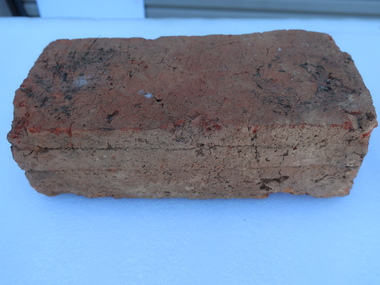
Brick - Hand-made Tawonga Brick Factory
... Brick - Hand-made Tawonga Brick Factory...hand-made brick...Hand-made at the Tawonga Brick factory...Formerly KV 106 Rough surface of a hand made brick used for building eg. houses...Hand-made at the Tawonga Brick factory Made at the Tawonga brick factory. hand-made brick Tawonga brick factory Formerly KV 106 Rough surface of a hand made brick used for building eg. houses Brick - Hand-made Tawonga Brick Factory ...Hand-made at the Tawonga Brick factoryMade at the Tawonga brick factory.Formerly KV 106 Rough surface of a hand made brick used for building eg. houseshand-made brick, tawonga brick factory -
 Ballarat Heritage Services
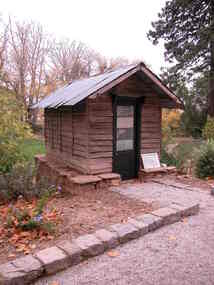
Image - Colour, The First House at Ercildoun, 2008, 10/05/2008
... The First House learmonth Bros (built 1837) made from hand split ? and hand made bricks. ?...The photograph was taken during an opening on Ballarat Heritage Weekend. garden ballarat heritage weekend ercildoun ercildoune architecture The First House learmonth Bros (built 1837) made from hand split ? and hand made bricks. ? Colour image of stone and weatherboard building which was the initial shelter of the Learmonth Brothers who squatted at Ercildoun. ...The photograph was taken during an opening on Ballarat Heritage Weekend. Colour image of stone and weatherboard building which was the initial shelter of the Learmonth Brothers who squatted at Ercildoun.The First House learmonth Bros (built 1837) made from hand split ? and hand made bricks. ?garden, ballarat heritage weekend, ercildoun, ercildoune, architecture -
 Ballarat Heritage Services
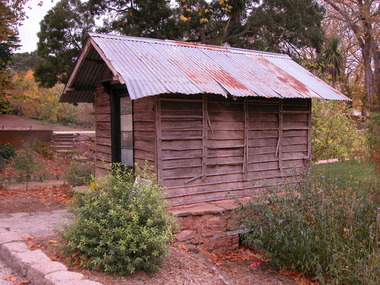
Image - Colour, The First House at Ercildoun, 2008, 10/05/2008
... The First House learmonth Bros (built 1837) made from hand split ? and hand made bricks. ?...The photograph was taken during an opening on Ballarat Heritage Weekend. garden ballarat heritage weekend ercildoun ercildoune architecture The First House learmonth Bros (built 1837) made from hand split ? and hand made bricks. ? Colour image of stone and weatherboard building which was the initial shelter of the Learmonth Brothers who squatted at Ercildoun. ...The photograph was taken during an opening on Ballarat Heritage Weekend. Colour image of stone and weatherboard building which was the initial shelter of the Learmonth Brothers who squatted at Ercildoun.The First House learmonth Bros (built 1837) made from hand split ? and hand made bricks. ?garden, ballarat heritage weekend, ercildoun, ercildoune, architecture -
 Ballarat Heritage Services
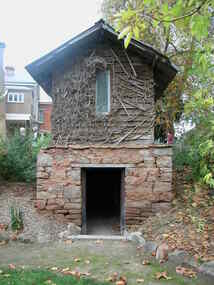
Photograph - Image - Colour, Clare Gervasoni, The First House at Ercildoun, 2008, 10/05/2008
... The First House Learmonth Bros (built 1837) made from hand split ? and hand made bricks. ?...The photograph was taken during an opening of the Ercildoun property during Ballarat Heritage Weekend. garden ballarat heritage weekend ercildoun ercildoune architecture squatter settlement The First House Learmonth Bros (built 1837) made from hand split ? and hand made bricks. ? Colour image of stone and weatherboard building which was the initial shelter of the Learmonth Brothers who squatted at Ercildoun. ...The photograph was taken during an opening of the Ercildoun property during Ballarat Heritage Weekend. Colour image of stone and weatherboard building which was the initial shelter of the Learmonth Brothers who squatted at Ercildoun.The First House Learmonth Bros (built 1837) made from hand split ? and hand made bricks. ?garden, ballarat heritage weekend, ercildoun, ercildoune, architecture, squatter, settlement -
Phillip Island and District Historical Society Inc.
Photograph, 1983
... This kiln was built in 1872 from hand-made bricks, made on Phillip Island....This kiln was built in 1872 from hand-made bricks, made on Phillip Island. Photograph ...This photograph was taken from an early postcard, date unknown. West's store can be seen next door.First brick chicory kiln, situated in Thompson Avenue near The Esplanade. This kiln was built in 1872 from hand-made bricks, made on Phillip Island.local history, photography, photographs, slides, film, chicory industry, black & white photograph, audrey mcfee, west store, phillip island -
 Orbost & District Historical Society
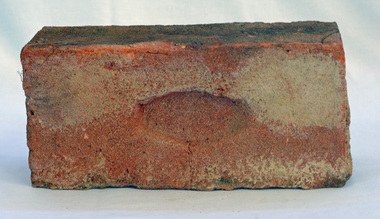
brick
... A hand-made brick. There is a slight ridge along the top side where it has been pushed up between the bricks as they dried. ...This centre helps the bricks to adhere in construction. brick building construction A hand-made brick. There is a slight ridge along the top side where it has been pushed up between the bricks as they dried. ...There is a slight ridge ridge along the side where the wet clay has been pushed up between the bricks as they have been stacked. Wooden press moulds were used to form the brick and lead shaped markers were used to brand a frog in the brick. The frog is the hollow in the centre of the face of the brick. This centre helps the bricks to adhere in construction.A hand-made brick. There is a slight ridge along the top side where it has been pushed up between the bricks as they dried. The frog (hollow in the centre) is an unusual elliptical shape. brick building construction -
Emerald Museum & Nobelius Heritage Park
Equipment - Hand Made Brick, Caring for Our Children
... Hand Made Brick...Hand made organge coloured brick...Found at site of Hunt Family Bakehouse Macclesfield by George Davidovs 30th April 1982 Emerald Victoria Australia hunt family Hand made organge coloured brick Caring for Our Children Equipment Hand Made Brick ...Found at site of Hunt Family Bakehouse Macclesfield by George Davidovs 30th April 1982Hand made organge coloured brickemerald, victoria, australia, hunt family -
 Federation University Historical Collection
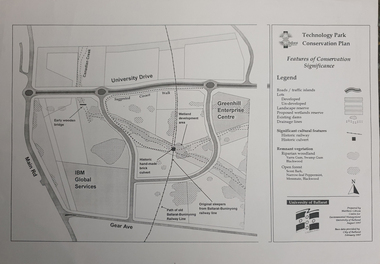
Map, Matthew Cibson, University of Ballarat Centre for Environmental Management, Ballarat Technology Park Conservation Plan, 1997, 02/1997
... Map showing the Ballarat Technlogy Camp, Greenhill Enterprise Centre, Canadian Wetlands. hand-made brick culvert sleepers, Ballarat-Buninyong Railway Line, IBM Global Services, early wooden bridge, Canadian Creek, Gear Avenue. ...The Ballarat Technology Park is on the Federation University Mount Helen Campus ballarat technology park canadian wetlands greenhill enterprise centre brick cultert railway ballarat-buninyong railway Map showing the Ballarat Technlogy Camp, Greenhill Enterprise Centre, Canadian Wetlands. hand-made brick culvert sleepers, Ballarat-Buninyong Railway Line, IBM Global Services, early wooden bridge, Canadian Creek, Gear Avenue. ...The Ballarat Technology Park is on the Federation University Mount Helen CampusMap showing the Ballarat Technlogy Camp, Greenhill Enterprise Centre, Canadian Wetlands. hand-made brick culvert sleepers, Ballarat-Buninyong Railway Line, IBM Global Services, early wooden bridge, Canadian Creek, Gear Avenue. ballarat technology park, canadian wetlands, greenhill enterprise centre, brick cultert, railway, ballarat-buninyong railway -
 Federation University Historical Collection
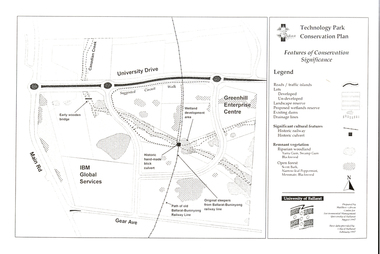
Document - Plan, Mathew Gibson, Centre for Environmental Management, Ballarat Technology Park Conservation Plan, 1997, 1997
... The plan includes the Canadian Creek, an historic hand-made brick culvert, Canadian Wetland Development, early wooden bridge, old path of the Ballarat-Buninyong Railway line, Greenhill Enterprise Centre and IBM Global Services....The plan includes the Canadian Creek, an historic hand-made brick culvert, Canadian Wetland Development, early wooden bridge, old path of the Ballarat-Buninyong Railway line, Greenhill Enterprise Centre and IBM Global Services. ...The Ballarat Technology Park is on the Mount Helen Campus.A4 photocopy of a plan of the Ballarat Technology Park showing features of conservation significance. The plan includes the Canadian Creek, an historic hand-made brick culvert, Canadian Wetland Development, early wooden bridge, old path of the Ballarat-Buninyong Railway line, Greenhill Enterprise Centre and IBM Global Services.ballarat technology park, greenhill enterprise centre, ibm global enterprises, ballarat-buninyong railway line, canadian wetlands, brick railway culvert, canadian creek, riparian woodland, yarra gum, swamp gum, blackwood, remnant vegetation, scent bark, narrow-leaf peppermint, messmate, centre for environmental management, mount helen campus -
 Southern Sherbrooke Historical Society Inc.
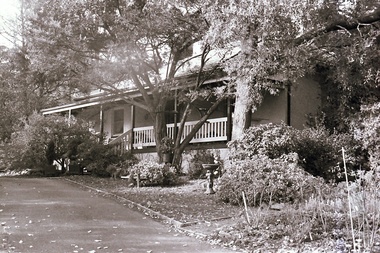
Photograph, Visit to Mt Heatherly, early 2000s
... It was made of hand-made bricks made on site, and a foundation of rock and stone. ...It was made of hand-made bricks made on site, and a foundation of rock and stone. ...Photos of Mt Heatherly, an historical building in Belgrave, opposite Belgrave Lake Park. Address is Park Drive, on the corner of Waratah Ave. The house is now owned by Mrs Elizabeth Schneider, and was first constructed around 1881 by the first owner of the selection, Ormond Smith. It was made of hand-made bricks made on site, and a foundation of rock and stone. The original house may have had a corrugated iron roof. The original house forms part of the modern house. Photos taken in early 2000s by Susan Heywood-Downard. -
 Eltham District Historical Society Inc
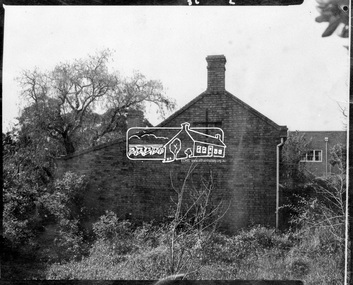
Photograph, Side view of Shillinglaw Cottage
... The cottage was built by George Stebbings about 1859 and is made from hand made bricks laid in a Flemish bond pattern. ...The cottage was built by George Stebbings about 1859 and is made from hand made bricks laid in a Flemish bond pattern. ...Side view of 'Shillllinglaw Cottage' in its original location on Main Road Eltham, 1964. The cottage was built by George Stebbings about 1859 and is made from hand made bricks laid in a Flemish bond pattern. In the 1960s it was marked for demolition to make way for the construction of new council buildings but a community campaign saved the cottage and it was re-located.Shillinglaw Cottage is itself historically, aesthetically and socially significant to the Shire of Nillumbik and is registered on the Victorian Heritage Database. This photo forms part of a collection of photographs gathered by the Shire of Eltham for their centenary project book, "Pioneers and Painters: 100 years of the Shire of Eltham" by Alan Marshall (1971). The collection of over 500 images is held in partnership between Eltham District Historical Society and Yarra Plenty Regional Library (Eltham Library) and is now formally known as 'The Shire of Eltham Pioneers Photograph Collection.' It is significant in being the first community sourced collection representing the places and people of the Shire's first one hundred years.Digital imagesepp, shire of eltham pioneers photograph collection, eltham, shillinglaw cottage -
 Orbost & District Historical Society
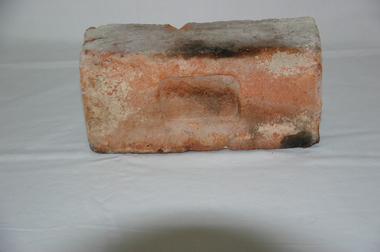
Functional object - brick with handprint, early 1900s
... ...hand-made brick...This hand-made brick came from a fireplace which was being demolished in Orbost in 2023. ...This hand-made brick came from a fireplace which was being demolished in Orbost in 2023. ...This hand-made brick came from a fireplace which was being demolished in Orbost in 2023. The house is located cnr. Lyndall and Gladstone Streets, Orbost and was built c. early 1900s. The brick is almost certainly made from a local clay-pit at Orbost. At that time, the Orbost district was very isolated, with poor transport links to Melbourne. As a result, the town was very self-sufficient, and bricks were made locally. This item is significant because it indicates the self-sufficiency needed by Orbost in the early 1900s when it was very isolated with poor transport with the rest of Victoria. This is a building brick, brown colour. One side of the brick has an indent, and the other side has an imprint of a hand with fingers. brick, hand-made brick, orbost -
 Whitehorse Historical Society Inc.
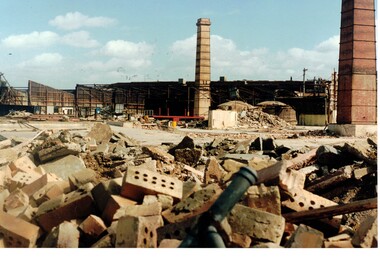
Photograph, Vitclay Pipes Pty Ltd, 1995
... First owners, Whites of England - hand made bricks, coffee jugs, hand made agricultural pipes and garden edgings. 1911 Commonwealth Insulator Co run by Gee Brothers - stone ginger bottles, insulators for PMG. 1920 Parker & Strangwood. ...First owners, Whites of England - hand made bricks, coffee jugs, hand made agricultural pipes and garden edgings. 1911 Commonwealth Insulator Co run by Gee Brothers - stone ginger bottles, insulators for PMG. 1920 Parker & Strangwood. ...First owners, Whites of England - hand made bricks, coffee jugs, hand made agricultural pipes and garden edgings. 1911 Commonwealth Insulator Co run by Gee Brothers - stone ginger bottles, insulators for PMG. 1920 Parker & Strangwood. Closed for a short while. 1931 Descendants of Gee Brothers. 1936 Commonwealth Art Tiles, Bricks & Pottery Works. 1961 Brick and Pipe Industries. 1971 Amalgamation leading to Vitclay.Four coloured photos ( a-d ) of the dismantling of Vitclay buildings in 1995 and subsequent vacant land for housingvitclay pipes pty ltd, pipeworks, commonwealth potteries pty ltd, clay industries, gee family, commercial insulators, brick and pipe industries, commonwealth art, tile, brick and pottery works -
 Southern Sherbrooke Historical Society Inc.
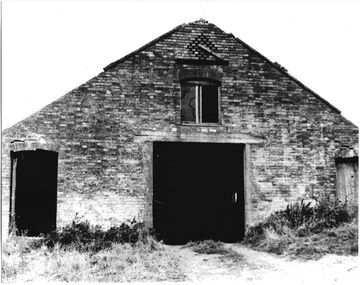
Photograph, Cheese factory, Lysterfield
... Photograph of a cowshed constructed of hand-made bricks. The photo shows a large gabled building. ...Photograph of a cowshed constructed of hand-made bricks. The photo shows a large gabled building. ...Photograph of a cowshed constructed of hand-made bricks. The photo shows a large gabled building. A track leads to open double doors and on either side of these doors there is a single door. The left door is open. The right door. made of vertical timbers, is closed. The building no longer exists. The shed was on the property of William Saurin Lyster in the Lysterfield Valley off Lysterfield Rd. Lyster’s pure bred Shorthorns were milked in the shed, and the milk was piped underground to a stone cheese factory about 50 yards away. -
 Federation University Historical Collection
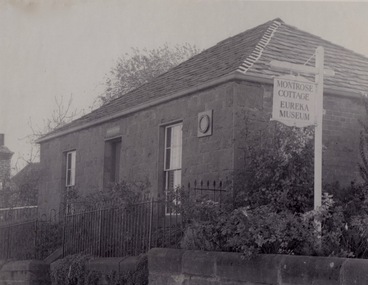
Photograph - Photograph - black and white, ZILLES: Photographs of Montrose Cottage and Eureka Museum
... It was built with bluestone and hand-made bricks. It is on the Historic Buildings Register, National Trust (Victoria). ...It was built with bluestone and hand-made bricks. It is on the Historic Buildings Register, National Trust (Victoria). ...Zilles Printers was begun by Lewis Zilles in the early 1930s. It was in McKenzie Street Ballarat. His son Jeffrey also became a printer - letterpress, offset and screen printer. The business became Zilles Printers/Graphics and was in Armstrong Street and later Bell Street Ballarat. Montrose Cottage was build c1856 by John Alexander, builder. He was a Scottish stone mason. It was built with bluestone and hand-made bricks. It is on the Historic Buildings Register, National Trust (Victoria). It is important as a substantial and very early stone cottage. The house is now open to the public. It also provides short term accommodation - self contained apartments.Three black and white photographszilles printers, montrose cottage, eureka museum, ballarat -
 Federation University Historical Collection
Card - Card - Greetings, ZILLES COLLECTION: Montrose Cottage Christmas Card
... It was built with bluestone and hand-made bricks. It is on the Historic Buildings Register, National Trust (Victoria). ...It was built with bluestone and hand-made bricks. It is on the Historic Buildings Register, National Trust (Victoria). ...Zilles Printers was begun by Lewis Zilles in the early 1930s. It was in McKenzie Street Ballarat. His son Jeffrey also became a printer - letterpress, offset and screen printer. The business became Zilles Printers/Graphics and was in Armstrong Street and later Bell Street Ballarat. Montrose Cottage was build c1856 by John Alexander, builder. He was a Scottish stone mason. It was built with bluestone and hand-made bricks. It is on the Historic Buildings Register, National Trust (Victoria). It is important as a substantial and very early stone cottage. The house is now open to the public. It also provides short term accommodation - self contained apartments. Card produced for Christmas. It has a brief history of the Cottage inside.Thick textured paper, folded. Mustard section with black print. Black and white drawing of cottage."Best Wishes for Christmas and the New Year"zilles printers, ballarat, christmas card, montrose cottage -
 Federation University Historical Collection
Document - Document - Article, ZILLES COLLECTION: Montrose Cottage and Eureka Military Museum; Historical Information of Restoration, 1977
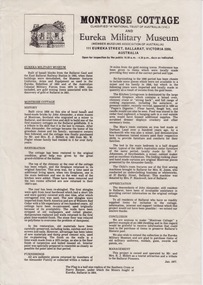
... It was built with bluestone and hand-made bricks. It is on the Historic Buildings Register, National Trust (Victoria). ...It was built with bluestone and hand-made bricks. It is on the Historic Buildings Register, National Trust (Victoria). ...Zilles Printers was begun by Lewis Zilles in the early 1930s. It was in McKenzie Street Ballarat. His son Jeffrey also became a printer - letterpress, offset and screen printer. The business became Zilles Printers/Graphics and was in Armstrong Street and later Bell Street Ballarat. Montrose Cottage was build c1856 by John Alexander, builder. He was a Scottish stone mason. It was built with bluestone and hand-made bricks. It is on the Historic Buildings Register, National Trust (Victoria). It is important as a substantial and very early stone cottage. The house is now open to the public. It also provides short term accommodation - self contained apartments. Printed sheet gives information of the project and restoration of the cottage. Mention given to people who donated item to decorate the rooms.Typed sheet with small drawing in top left of page.Printed Jan. 1977zilles printers, montrose cottage, restoration project, ballarat -
 Federation University Historical Collection
Document - Document - Advertising Cards, ZILLES COLLECTION: Advertising Card for Historic Montrose Cottage and Eureka Museum
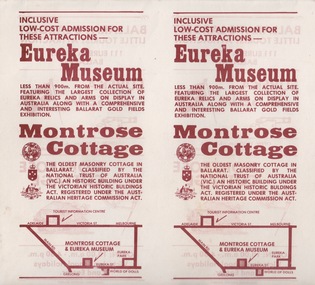
... It was built with bluestone and hand-made bricks. It is on the Historic Buildings Register, National Trust (Victoria). ...It was built with bluestone and hand-made bricks. It is on the Historic Buildings Register, National Trust (Victoria). ...Zilles Printers was begun by Lewis Zilles in the early 1930s. It was in McKenzie Street Ballarat. His son Jeffrey also became a printer - letterpress, offset and screen printer. The business became Zilles Printers/Graphics and was in Armstrong Street and later Bell Street Ballarat. Montrose Cottage was build c1856 by John Alexander, builder. He was a Scottish stone mason. It was built with bluestone and hand-made bricks. It is on the Historic Buildings Register, National Trust (Victoria). It is important as a substantial and very early stone cottage. The house is now open to the public. It also provides short term accommodation - self contained apartments. Double sided cards advertising Montrose Cottage and Eureka Museum. Printed by Zilles Graphic Industries, Ballarat. White card with russet colour print. Printed on both sides. Each side has Eureka Museum and Montrose CottageEureka Flag and Cannon. Drawing of Montrose Cottage and flag with Lion. Symbol of National Trust Australia. Coat of Arms. Location map.zilles graphic industries, montrose cottage, eureka musuem -
 Federation University Historical Collection
Article - Article: Newspaper item, ZILLES COLLECTION: Newspaper article re Montrose's win fromTourism Victoria for third time, 1996
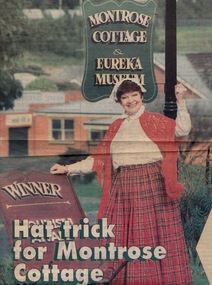
... It was built with bluestone and hand-made bricks. It is on the Historic Buildings Register, National Trust (Victoria). ...It was built with bluestone and hand-made bricks. It is on the Historic Buildings Register, National Trust (Victoria). ...Zilles Printers was begun by Lewis Zilles in the early 1930s. It was in McKenzie Street Ballarat. His son Jeffrey also became a printer - letterpress, offset and screen printer. The business became Zilles Printers/Graphics and was in Armstrong Street and later Bell Street Ballarat. Montrose Cottage was build c1856 by John Alexander, builder. He was a Scottish stone mason. It was built with bluestone and hand-made bricks. It is on the Historic Buildings Register, National Trust (Victoria). It is important as a substantial and very early stone cottage. The house is now open to the public. It also provides short term accommodation - self contained apartments. Montrose Cottage and the Eureka Museum were winners for the third time of the Tourism Victoria Award. Article was published in Ballarat News, July 31, 1996Front page article from Ballarat NewsWednesday july 1996zilles printers, montrose cottage, eureka museum, tourism victoria, award, ballarat news, laurel johnson -
Whitehorse Historical Society Inc.
Document, The 'Mullens House', n.d
... Story of the 'Mullens House', originally small dwelling made of hand made bricks by Mrs Mullens' father, Mr Forbes of Glen Waverley. ...Hugh Forbes Tainton R (Mrs) Stocks (Mrs) Melbourne and Metropolitan Board of Works Highbury Road Mullen's Story of the 'Mullens House', originally small dwelling made of hand made bricks by Mrs Mullens' father, Mr Forbes of Glen Waverley. ...Story of the 'Mullens House', originally small dwelling made of hand made bricks by Mrs Mullens' father, Mr Forbes of Glen Waverley. Came from Scotland 93 years ago. As the family increased more rooms were added. Hugh Mullens was a woodcutter and later an orchardist and later still a road contractor. Mrs Tainton, a daughter, still lives in part of the original property. Another daughter, Mrs Stocks who was a widow stayed on with her mother at the old home. It is now the property of Melbourne & Metropolitan Board of Works. Mr & Mrs Hugh Mullen's had 12 children. Mr Mullen's parents lived in Highbury Road, near East Burwood Primary School and were pioneers of East Burwood.hugh, forbes, tainton, r (mrs), stocks, (mrs), melbourne and metropolitan board of works, highbury road, mullen's -
 Bayside Gallery - Bayside City Council Art & Heritage Collection
Work on paper - ink and watercolour, Annette Meikle, Sandringham Club, 1977
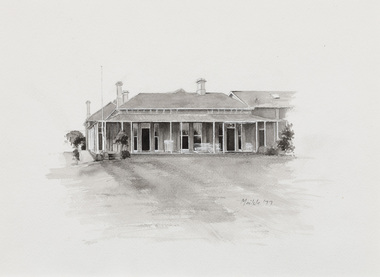
... It featured rare Hawthorn Blacks – hand-made bricks of brown-red with streaks of charcoal black. ...It featured rare Hawthorn Blacks – hand-made bricks of brown-red with streaks of charcoal black. ...In 1977, artist Annette Meikle undertook a commission to illustrate a book recording stories of places and people in the Bayside area. It was published in 1978 as Sandringham Sketchbook, with text by Elizabeth Waters. The sketches were intended to record remaining examples of Bayside’s early architecture and environment, as well as reflect newer architectural changes. Meikle went on to donate 22 of these sketches to Bayside City Council in 2003. In the mid 1870s wealthy solicitor David Abbot bought a large block on the corner of Bamfield Street and Beach Road and built an imposing family home with a stately tower. It featured rare Hawthorn Blacks – hand-made bricks of brown-red with streaks of charcoal black. For many years the home was the most prominent in the district. In 1922 ‘Coggeshall’ was subdivided, and the house was sold to the Sandringham Club, a gentleman’s club that had formed in 1913 and required more space for its growing membership. Members enjoyed lawn tennis courts, a bowling green and a cricket green, as well as a large billiard room. The Sandringham Club still owns ‘Coggeshall’.Annette Meikle, Sandringham Club 1977, ink and watercolour, 25.7 x 35.7 cm. Bayside City Council Art and Heritage Collection. Donated by the artist, 2003annette meikle, sandringham sketchbook, elizabeth waters, sandringham, sandringham club, gentleman’s club, coggeshall, david abbot, historic house -
 Ringwood and District Historical Society
Photograph, Four stages of Brick Making at Ringwood East
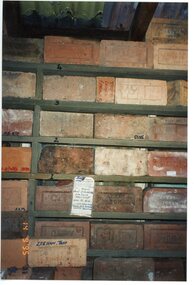
... "written on back of photograph" Photo from collection of Mr Allan Bruce -2 Bona Street ,Ringwood east. 1,2,3,4 = the four stages of brickmaking at Ringwood East. Stage 1. Hand made large brick Stage 2. Same size as above -wire cut Stage 3. ..."written on back of photograph" Photo from collection of Mr Allan Bruce -2 Bona Street ,Ringwood east. 1,2,3,4 = the four stages of brickmaking at Ringwood East. Stage 1. Hand made large brick Stage 2. Same size as above -wire cut Stage 3. ...Coloured photo showing different types of bricks stored in racks"written on back of photograph" Photo from collection of Mr Allan Bruce -2 Bona Street ,Ringwood east. 1,2,3,4 = the four stages of brickmaking at Ringwood East. Stage 1. Hand made large brick Stage 2. Same size as above -wire cut Stage 3. Almost a machine made brick Stage 4. Machine made - Ringwood stamp -
 Bendigo Historical Society Inc.
Document - GOLD SALE NOTES FOR NICHOLAS BOLLE, 1868 - 1887
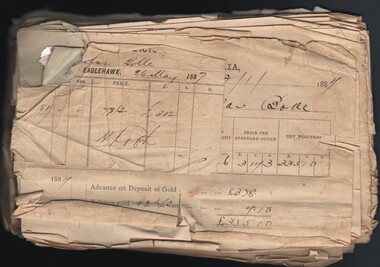
... Battery site On the eastern side of the open-cut is a small mullock paddock, below which is a spread of hand-made red bricks and fire bricks. Near this rubble is a dry dam, with traces of battery sand nearby. ...Battery site On the eastern side of the open-cut is a small mullock paddock, below which is a spread of hand-made red bricks and fire bricks. Near this rubble is a dry dam, with traces of battery sand nearby. ...Nicholas John Bolle was born in Dorstadt, Germany in 1836 to parents Heinrich (Johannes Heinrich Wilhelm) and Friederike Hartmann (Anne Marie Friedericke). Around the age of 20 he immigrated to Australia and made his way, most likely on foot, 150km in a northerly direction to the Bendigo goldfields. In March 1863 Nicholas registered his first mining claim, naming it Bolle’s Reef. Having worked this reef until it no longer paid, he went on a prospecting tour of the area and found another gold reef towards Elysian Flat, staked a claim and registered it under the name of his beloved wife ‘Rosanna’. Sadly, as was often the case, the cost of hiring men to get the gold out of the ground, and removing it from the clay and quartz, outweighed the amount of profit he was making from his discoveries. In November 1863 while living and working at Old Tom Gully, Nicholas appeared in the Government Gazette as insolvent. Nicholas continued to struggle on, scoping out the surrounding area in the Whipstick Forest, and having some little success and by 1869 he was given a government reward of 25 pounds for discovering a new area of gold in the Whipstick. The Government Gazette records this reward – 'for the discovery of the Whipstick, 25 pounds' (Government Gazette 1869) By 1872 Nicholas had established a quartz crushing plant at his mine in Old Tom Gully, (the Old Tom mine) a remote place in the middle of the Whipstick. Mining was a dangerous business, and in 1875 Nicholas was called as a witness in a coroner’s inquest into the death of a John Bashton who was accidentally killed in a mining accident at nearby Easter Claim in December. In 1881, he was again called to give evidence when one of his employees Mr Thomas Garrett was killed while working at his claim at Old Tom Reef. So we are fortunate to have Nicholas describing his day’s work in his own words. Reference: Michelle Dennis Family History http://www.michelledennis.com.au/?page_id=1067) The Old Tom Mine site is situated between Old Tom Road, Scotsman Road, Eaglehawk-Neilborough Road and an unnamed road, Whipstick VIC 3556. The Marong Heritage Study, Mining Sites ( City of Greater Bendigo) describes the former mine site as follows: '40 metre-long mullock heap with one dumping line running north from a filled shaft. The heap has been partially quarried. 20 metres south is a scatter of red hand-made bricks and rough concrete rubble. Further south there are smaller mullock dumps and a line of shallow reef workings Surface workings 30 metres west of the mullock dump, running north, is a line of small mullock paddocks, terminating in a shallow open cut. On the same line to the south, in an area north and west of the most southerly section of reef workings there is an area of hydraulic sluicing. West of the cyanide works and along Scotchman Gully there are patches of shallow alluvial workings. Battery site On the eastern side of the open-cut is a small mullock paddock, below which is a spread of hand-made red bricks and fire bricks. Near this rubble is a dry dam, with traces of battery sand nearby. Puddling machine site 10 metres north of the water race is the outline of a 20 foot diameter puddling machine. The central mound retains its wooden post and fragments of timber side-boarding are still present in the puddling trench. Water was fed to the puddling machine from the race by a pipe, now largely buried. The dumps are weathered and partially quarried, but the puddling machine is in good con 40 metre-long mullock heap with one dumping line running north from a filled shaft. The heap has been partially quarried. 20 metres south is a scatter of red hand-made bricks and rough concrete rubble. Further south there are smaller mullock dumps and a line of shallow reef workings Surface workings 30 metres west of the mullock dump, running north, is a line of small mullock paddocks, terminating in a shallow open cut. On the same line to the south, in an area north and west of the most southerly section of reef workings there is an area of hydraulic sluicing. West of the cyanide works and along Scotchman Gully there are patches of shallow alluvial workings'. Reference: https://www.goldfieldsguide.com.au/explore-location/553/old-tom-mine/ Document. Gold Sale notes for Nicholas Bolle. Papers pinned together covering the years 1868 - 1887 being statement of gold melted and assayed for Nicholas Bolle from the Eaglehawk branch of the Bank of Victoria. A few of the papers are from the Bank of New South Wales - Eaglehawk Branch, Bank of Australasia, Bank of Australasia Gold Office. The earliest statement dated 3 Jul 1868 is for Messrs Harrison & Bashton. Other early ones are for Derbyshire Reef. The Bank of Victoria cards mention R. H. Andrews, Agent on the back. The Bank of Australasia Gold Office statement contains an ink picture of the building on the back.gold sale notes for nicholas bolle, bank of victoria - eaglehawk branch, bank of new south wales, bank of australasia, bank of australasia gold office, messrs harrison & bashton, derbyshire reef, r. h. andrews -
 Eltham District Historical Society Inc
Photograph, John Collins, Shillinglaw Cottage on its original site, 17 Oct. 1963
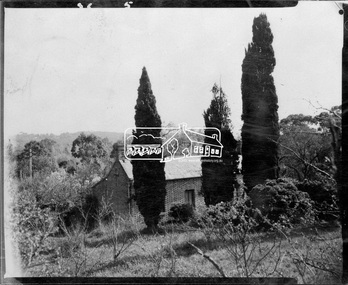
... It is made from hand made bricks laid in a Flemish bond pattern. ...It is made from hand made bricks laid in a Flemish bond pattern. ...Shilinglaw Cottage in its original location on Main Road Eltham with the “Shillllinglaw trees”. This image was taken shortly before its relocation. Believed to be have been taken by John Collins, 17 Oct 1963 as per other images held by the State Library of Victoria Author / Creator: John T Collins 1907-2001 , photographer. J.T. Collins Collection, La Trobe Picture Collection, State Library of Victoria. Shillinglaw Cottage is significant to Eltham’s local history. It is one of the earliest known buildings still in existence. Records suggest that the cottage was built circa 1859 by a man named Cochrane, believed to be Thomas Cochrane, in conjunction with George Stebbings though it is not known what Stebbings’s contribution was. It is made from hand made bricks laid in a Flemish bond pattern. In the 1960s it was marked for demolition to make way for the construction of new council buildings but a community campaign saved the cottage and it was re-located. It is believed Stebbings owned the cottage between 1874 and 1888. According to Margaret Ball’s (2017) book Shillinglaw Family of Eltham 1660-2007, Thomas Cochrane and family lived there from 1867 to 1874 however this is contrary to the records of assessable rates levied by the Eltham District Road Board, established in 1858, which shows Cochrane was the owner occupier (in Little Eltham) of approximately 25 acres of cultivated land and 25 acres of pastureland upon which a hut was sited in 1860. It is suspected that George Stebbings may have acquired the property from Cochrane in 1874 as it is noted that he had a tenant for a period, James Rossiter, who was the editor for the Evelyn Observer in Kangaroo Ground in 1874 (LATE SHIRE OFFICE AT KANGAROO GROUND (1934, February 16). Advertiser (Hurstbridge, Vic. : 1922 - 1939), p. 5. Retrieved February 25, 2022, from http://nla.gov.au/nla.news-article56743657). In 1881 Phillip Shillinglaw became the ratepayer for the cottage though Stebbings retained ownership until 1888 at which time it was transferred to Shillinglaw. This photo forms part of a collection of photographs gathered by the Shire of Eltham for their centenary project book, "Pioneers and Painters: 100 years of the Shire of Eltham" by Alan Marshall (1971). The collection of over 500 images is held in partnership between Eltham District Historical Society and Yarra Plenty Regional Library (Eltham Library) and is now formally known as 'The Shire of Eltham Pioneers Photograph Collection.' It is significant in being the first community sourced collection representing the places and people of the Shire's first one hundred years.Digital image 4 x 5 inch B&W Negsepp, shire of eltham pioneers photograph collection, eltham, shillinglaw cottage, shillinglaw trees, significant tree -
 Eltham District Historical Society Inc
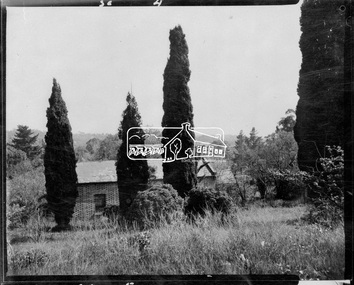
Negative - Photograph, Shillinglaw Cottage, 17 Oct. 1963
... It is made from hand made bricks laid in a Flemish bond pattern. ...It is made from hand made bricks laid in a Flemish bond pattern. ...Shilinglaw Cottage in its original location on Main Road Eltham with the three Mediterranean Cypress trees (“Shillllinglaw trees”) in the garden. Note a fourth pine to the right. This image was taken shortly before its relocation. Believed to be have been taken by John Collins, 17 Oct 1963 as per other images held by the State Library of Victoria Author / Creator: John T Collins 1907-2001 , photographer. J.T. Collins Collection, La Trobe Picture Collection, State Library of Victoria. Shillinglaw Cottage is significant to Eltham’s local history. It is one of the earliest known buildings still in existence. Records suggest that the cottage was built circa 1859 by a man named Cochrane, believed to be Thomas Cochrane, in conjunction with George Stebbings though it is not known what Stebbings’s contribution was. It is made from hand made bricks laid in a Flemish bond pattern. In the 1960s it was marked for demolition to make way for the construction of new council buildings but a community campaign saved the cottage and it was re-located. It is believed Stebbings owned the cottage between 1874 and 1888. According to Margaret Ball’s (2017) book Shillinglaw Family of Eltham 1660-2007, Thomas Cochrane and family lived there from 1867 to 1874 however this is contrary to the records of assessable rates levied by the Eltham District Road Board, established in 1858, which shows Cochrane was the owner occupier (in Little Eltham) of approximately 25 acres of cultivated land and 25 acres of pastureland upon which a hut was sited in 1860. It is suspected that George Stebbings may have acquired the property from Cochrane in 1874 as it is noted that he had a tenant for a period, James Rossiter, who was the editor for the Evelyn Observer in Kangaroo Ground in 1874 (LATE SHIRE OFFICE AT KANGAROO GROUND (1934, February 16). Advertiser (Hurstbridge, Vic. : 1922 - 1939), p. 5. Retrieved February 25, 2022, from http://nla.gov.au/nla.news-article56743657). In 1881 Phillip Shillinglaw became the ratepayer for the cottage though Stebbings retained ownership until 1888 at which time it was transferred to Shillinglaw.Shillinglaw Cottage is itself historically, aesthetically and socially significant to the Shire of Nillumbik and is registered on the Victorian Heritage Database. This photo forms part of a collection of photographs gathered by the Shire of Eltham for their centenary project book, "Pioneers and Painters: 100 years of the Shire of Eltham" by Alan Marshall (1971). The collection of over 500 images is held in partnership between Eltham District Historical Society and Yarra Plenty Regional Library (Eltham Library) and is now formally known as 'The Shire of Eltham Pioneers Photograph Collection.' It is significant in being the first community sourced collection representing the places and people of the Shire's first one hundred years.Digital image 4 x 5 inch B&W Negsepp, shire of eltham pioneers photograph collection, eltham, shillinglaw cottage, significant tree -
 Bendigo Historical Society Inc.
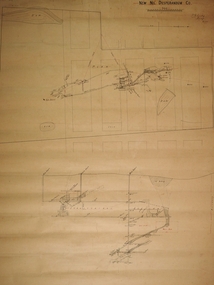
Plan - New Nil Desperandum Co. Gold Mine, W.H. Cundy, Mining Engineer, 1908
... Constructed of hand-made bricks set in a concrete mortar, this foundation has been modified or repaired with concrete at its northern end. ...Constructed of hand-made bricks set in a concrete mortar, this foundation has been modified or repaired with concrete at its northern end. ...NIL DESPERANDUM MINE and NEW NIL DESPERANDUM CO. Other Names Location Parcel No. P130635, mine site on both Crown - Gravel Reserve (mullock heap and filled shaft) and Freehold Land (machinery site), north side of Raywood-Elmore main road, east of road to Neilborough, Raywood Map Reference Raywood, 1:25,000 - BV501.527 Victorian Heritage Register National Estate Register Planning Scheme No Description Just inside the boundary fence of a private property is a large brick winding engine foundation, 25 feet by 10 feet and 4 feet high. Constructed of hand-made bricks set in a concrete mortar, this foundation has been modified or repaired with concrete at its northern end. The upper course of bricks has been removed, exposing long sections of 2-inch diameter mounting bolts. Small brick foundations lie either side of the large foundation, the western one capped with thick concrete. Two boiler depressions are visible to the west of the engine foundations. 5 metres east, at ground-level, is a concrete engine foundation with protruding 1¼ inch mounting bolts. Running east from this foundation is a line of timber battery stumps set in rough concrete footings. The stumps are grouped in four sets, representing the site of a 20-head battery. A remnant of a large mullock heap lies south of the engine foundations, on Crown land. The foundations have been modified and are partially hidden by trees. Access is also restricted by boundary fences. History Period of activity: 1865-1916 consisting of three companies Nil Desperandum (1865-1873), Nil (1882-1890+) and New Nil Desperandum (1906-1916) Line of reef: Welbourne Maximum recorded annual production: 3746zs obtained from 6158 tons in 1868 (Nil Desperandum) 2599ozs obtained from 7356 tons in 1908 (New Nil Desperandum) Total production: 16,367ozs obtained from 58,992 tons Dividends: £16,000 (Nil Desperandum), £3000 (New Nil Desperandum) Deepest working level: 780 feet Deepest shaft: unknown, but below water level http://images.heritage.vic.gov.au › attachment (City of Greater Bendigo: Marong Heritage Study Mining Sites) Plan of New Nil Desperandum Co. gold mine, Bendigo. Plan has longitudinal section of mine. Written on outside of plan in black pen" New Nil Desperandum Co'. Mine plan is part of the Margaret Roberts Collection. gold mining, gold, margaret roberts collection, mccoll rankin and stanistreet, commonweatlth bank chambers, nil desperandum co., marong
