
Showing 55 items matching "hard drive"
-
 The Ed Muirhead Physics Museum
Vertex V170 Hard Drive, 20th Century
... Vertex V170 Hard Drive......hard drive...Computer hard drive with exposed power board, circuits and interfaces. ...Model V.170. Vertex V170 Hard Drive ...Computer hard drive with exposed power board, circuits and interfaces. Model V.170.Label on back: 'VERTEX PERIPHERALS / MILPITAS, CA. USA / WARNING / HANDLING PROCEDURE'vertex, hard drive, v 170, computer peripherals, computer equipment, hardware, california -
 City of Greater Bendigo - Civic Collection
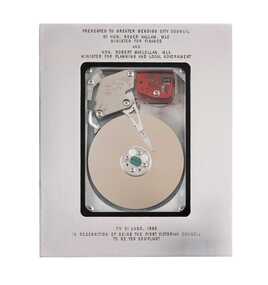
Equipment - Y2K Hard drive, Australian Government, 1999
... Y2K Hard drive...Hard drive mounted in an alaminium case with glass window front and back....Equipment Y2K Hard drive Australian Government ...Y2K / the year 2000 / The millennium bug / was commonly used to refer to a widespread computer programming shortcut that was expected to cause extensive havoc as the year changed from 1999 to 2000. Instead of allowing four digits for the year, many computer programs only allowed two digits (e.g., 99 instead of 1999). As a result, there was immense panic that computers would be unable to operate at the turn of the millennium when the date descended from "99" to "00". The Bug presented a formidable challenge to the problem-solving skills of local government officials. Lacking a cure-all that will work for every municipality, local officials must develop their own solutions to meet their community's unique needs. At the same time, the Y2K bug provided a once-in-a-millennium leadership opportunity for local officials who understood that they are the key to preparing their communities for any issues.Hard drive mounted in an alaminium case with glass window front and back.Presented to Greater Bendigo City Council / by Hon, Roger Hallam. MLC / Minister for Finance / and / Hon, Robert Maclellan. MLA / Minister for Planning and Local Government / on 21 June. 1999 / In recognition of being the first Victorian Council / to be Y2k compliantmillennium bug -
 Bendigo Military Museum
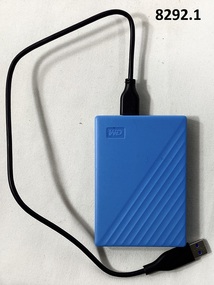
Mixed media - HARD DRIVE, DVD
... HARD DRIVE, DVD....1) Hard Drive, the following items are stored on this device. 1. ....1) My Passport Hard drive 2 TB, Blue colour one side, black the other, USB cord attached, contains 14 items re, a video, photos, stories, diaries, slide shows. .2) DVD in its paper cover with details on the DVD.....1) Hard Drive, the following items are stored on this device. 1. ....1) Hard Drive, the following items are stored on this device. 1. BRSL/SMIMM/BMM Museum History photographs, 885 images as a slide show with text added 1998 - 2018. 2. BRSL/SMIMM/BMM Museum History photographs, 241 images as a slide show with text added 2019 - current (ongoing). 3. Video, 7.30 report 23 April 2009 re the discovery of the Somme photographs, the Grinton collection. 4. 38th Bn AIF brief history 9 pages follows the movements of the Battalion by page No & date from "Eric Fairey's History of the 38th Bn", from inception on 1.3 1916 to when the 1st Draft leaves for home on 17.2.1919. (Hard copy, Cat No 9717) 5. The Anzac day Rum & Coffee story Bendigo RSL Dawn Service from 1996 to 2024. Follows the changes that began with the Museum expanding, 4 pages with photos, 33 other images as well taken over time. 6. BRSL/SMIMM/BMM Brief History in two folder sections 1993 to current (Ongoing) a. Text with images attached. b. Photographs, scans, drawings, sketch's, newsletters used in the publication. (Hard copy, Cat No 8274.2) 7. Photographs. (a) Photographs B & W, 403 as a slide show with text added. Covers 9 collections re WW2. (b) Photographs B & W, 473 as a slide show with text added. Covers 3 collections re WW2 & 1 by Korea. (c) Photographs B & W, 887 as a slide show with text added, covers 1 collection "Grinton". (d) Photographs B & W, 196 as a slide show with text added, covers 8 collections re WW1. (e) Photographs B & W, 443 as a slide show with text added, covers 8 collections re WW2. (g) Photographs colour, 648 as a slide show with text added, covers 1 collection re Vietnam. (h) Photographs colour, 831 as a slide show with text added, covers 2 collections combing (g & h) re Vietnam. 8.Museum Muster stories. Contains 18 stories relating to the Museum collection and the RSL history in the building. Many of these stories were published in the Museum Muster Newsletters. Others were ready to use but in 2020 Covid struck and the Newsletter came to an end and there were no more Newsletters after that. 9. Diary. Transcribed from the original. Arthur George Holley No PM13556 RAN. Joined the RAN age 15 in 1922 and goes through to 1945. 10. Diary. Transcribed from the original. Colin (Snowy) Odlum VX45898 2/23rd Bn 2nd AIF. Begins when he sailed from Melbourne on Nov 16th 1940 to July 10th 1942, he was KIA at El Alamein on 12.7.1942. (These are the only two left in digital form, others that were done on a Museum Computer or transferred to were lost on the Museum computers) 11. Museum Musters. There were a total of 84 "Musters" produced from 2003 to beginning 2020 just before Covid. Vol's No 39, 45 - 76 are the only remaining in digital format. The rest were lost on Computer. (Vol's 1 - 84 are in Hard Copy) 12. Born Bendigo, enlisted Bendigo WW1. A listing of approx 6,000 names. This information was supplied by Denis Connor, Paul Dalgleish and Staff of the National Archives Canberra to the Museum. (A printed copy is in the Museum Library) 13. Diary. Jack Grinton No 1043 C Coy 38th BN WW1. Transcribed from his note book. Begins on 1.3.1916 on enlistment to 16.11.1916 prior to movement to France. Also photographs, research notes, documents, list of items donated to the Museum, time lines. (Diary, a hard copy is in the Museum Library) (The above items were compiled by Peter Ball in his capacity as either Curator, Chairman Museum Sub Committee, Sub Committee member, Cataloguing Co Ordinator from 1998 to current. All were done on home computer, items listed as missing were at some point transferred to a Museum Computer and subsequently lost at a later date during Covid) 14. Video. Channel 9. The launch of the Soldiers Memorial Institute Digital Honour roll in 2017. The filming took place in the Vietnam Veterans shed at the Bendigo District RSL Havilah Road. The work relates to the 2,972 names on the Honour Roll of the building and the 499 identified who did not come back. The research and putting together was done by Bendigo RSL Historian Murray Poustie, interviews on the video are with Murray and Museum Volunteer Peter. The Boer War, WW2, Korea and Vietnam was added in 2019. .2) DVD in paper cover. 7.30 Report 23.4.2009, The discovery of the Some photographs. (Grinton collection) Collection re Peter Ball, refer Cat No 4704 for service details & RSL service. .1) My Passport Hard drive 2 TB, Blue colour one side, black the other, USB cord attached, contains 14 items re, a video, photos, stories, diaries, slide shows. .2) DVD in its paper cover with details on the DVD..2) "Discovery of the Somme photographs - The 7.30 Report - 23 April 2009".brsl, smirsl, 7.30, mixed media, somme, museum -
Vision Australia
Audio - Sound recording, Brian Crozier International, Steps in the Right Direction: Jenny Scown - move to Coorparoo, 12/7/2010
... 1 wmv file stored on hard drive...Vision Australia Jenny Scown Coorparoo Oral history 1 wmv file stored on hard drive Steps in the Right Direction: Jenny Scown - move to Coorparoo Audio Sound recording Brian Crozier International ...Jenny Scown, team leader at Business Enterprises at Coorparoo, talks about she became blind and her journey through life including the move to the new office at Coorparoo.1 wmv file stored on hard drivevision australia, jenny scown, coorparoo, oral history -
Vision Australia
Audio - Sound recording, Steps in the right direction: Gerard Menses - move to Coorparoo, 2010
... 1 wmv file audio recording on hard drive...Vision Australia Gerard Menses Coorparoo 1 wmv file audio recording on hard drive Steps in the right direction: Gerard Menses - move to Coorparoo Audio Sound recording ...Gerard Menses, Vision Australia's CEO, discusses the movement of Vision Australia (formerly Vision QLD and RBFQ) from Kent Street to Coorparoo.1 wmv file audio recording on hard drivevision australia, gerard menses, coorparoo -
Vision Australia
Audio - Sound recording, Brian Crozier International, Steps in the right direction: Karen Knight - move to Coorparoo, 12/7/2010
... 1 wmv file audio recording on hard drive...Vision Australia Karen Knight Coorparoo Oral history 1 wmv file audio recording on hard drive Steps in the right direction: Karen Knight - move to Coorparoo Audio Sound recording Brian Crozier International ...Karen Knight, Regional Manager for QLD/NT for Independent Living Services at Vision Australia, talks about she became blind and her journey through life including the move to the new office at Coorparoo.1 wmv file audio recording on hard drivevision australia, karen knight, coorparoo, oral history -
Vision Australia
Audio - Sound recording, Brian Crozier International, Steps in the right direction: Merv Matthews - move to Coorparoo, 12/7/2010
... 1 wmv file of audio recording on hard drive...Vision Australia Coorparoo Oral history Merv Matthews 1 wmv file of audio recording on hard drive Steps in the right direction: Merv Matthews - move to Coorparoo Audio Sound recording Brian Crozier International ...Merv Mathews, who works at Vision Australia, talks about he became blind and his journey through life including the move to the new office at Coorparoo.1 wmv file of audio recording on hard drivevision australia, coorparoo, oral history, merv matthews -
Vision Australia
Audio - Sound recording, Brian Crozier International, Steps in the right direction: Sean Quinn - move to Coorparoo, 12/7/2010
... 1 wmv file audio recording on hard drive...Vision Australia Sean Quinn Coorparoo Oral history 1 wmv file audio recording on hard drive Steps in the right direction: Sean Quinn - move to Coorparoo Audio Sound recording Brian Crozier International ...Sean Quinn, who is a Vision Australia client, talks about he became blind and his journey through life including the move to the new office at Coorparoo.1 wmv file audio recording on hard drivevision australia, sean quinn, coorparoo, oral history -
 Port Melbourne Historical & Preservation Society
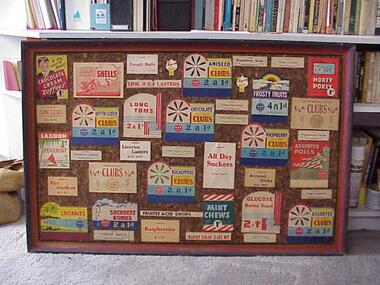
Photograph - Display board, Lagoon Confectionary labels, David Thompson, Mar 1999
... There are also digital images of each individual label on the hard drive, numbered 1204.08-42...There are also digital images of each individual label on the hard drive, numbered 1204.08-42 Photograph Display board, Lagoon Confectionary labels David Thompson ...Photographed by David THOMPSON when the display board was on loan from the company for Port Melbourne Festival 1999. Photos made upstairs at Pat GRAINGER'S house in natural light.One of seven digital photos of Lagoon Confectionery's display board of labels from the 1930s, 40s etc. There are also digital images of each individual label on the hard drive, numbered 1204.08-42industry - food, lagoon confectionery pty ltd -
 Melbourne Tram Museum
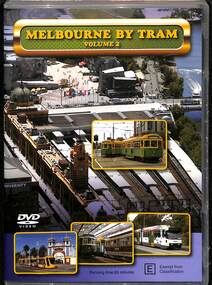
Film - Compact Diskette with video, Association of Railway Enthusiasts (ARE), "Melbourne by Tram Vol. 2", c2012
... DVD is not copied to the hard drive....DVD is not copied to the hard drive. "Melbourne by Tram Vol. 2" Film Compact Diskette with video Association of Railway Enthusiasts (ARE) ...DVD, with plastic cover and printed paper insert, DVD printed white cover, titled "Melbourne by Tram Vol. 2", produced by the Association of Railway Enthusiasts c2012. Approx 65mins. Produced and filmed by Tony Marsden. DVD is not copied to the hard drive.trams, tramways, melbourne trams, are, video tape -
 Melbourne Tram Museum
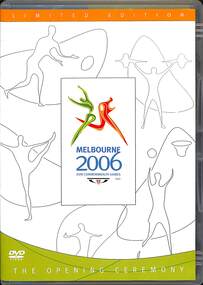
Film - Compact Diskette with video, Sony, "Melbourne 2006", Mar. 2006
... DVD is write protected, could not copied to the hard drive....DVD is write protected, could not copied to the hard drive. "Melbourne 2006" Film Compact Diskette with video Sony ...DVD, with plastic cover and printed paper insert, DVD printed white cover, titled "Melbourne 2006", of the opening ceremony of the Commonwealth Games. Features the flying Melbourne W class from about 6min 20 secs for about 3 mins. DVD is write protected, could not copied to the hard drive.trams, tramways, commonwealth games, melbourne, events -
 City of Whittlesea
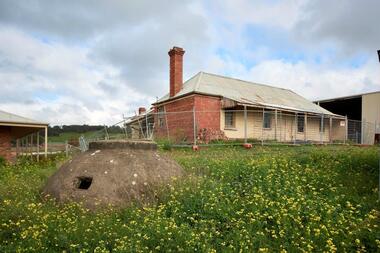
Photograph (item) - Photographs - Buildings, Hin Lim Photography, Blackbraes Farm, 21/6/2017
... Also in digital format on portable hard drive (1). Photographs detail Blackbraes Farm, 10 Cravens Road, Mernda, existing conditions, 21 June 2017....Also in digital format on portable hard drive (1). Photographs detail Blackbraes Farm, 10 Cravens Road, Mernda, existing conditions, 21 June 2017. ...Blackbraes Farm is listed in the Whittlesea Heritage Overlay HO14, Photographic survey, 10 Cravens Road Merndablackbraes farm, mernda -
 RMIT Design Archives
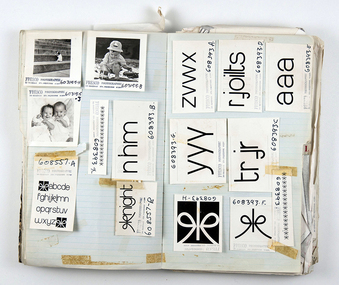
Albums, Index book containing contact prints
... The book's monochromatic pages speak of a time long past when design was a manual undertaking, a time of hard copies, not hard drives. Dominic Hofstede, 2017...The book's monochromatic pages speak of a time long past when design was a manual undertaking, a time of hard copies, not hard drives. Dominic Hofstede, 2017 Graphic design Index book containing contact prints relating to businesses and promotional campaigns. ...Sourced from Alex Stitt's extensive archive, this well used index book provides a fascinating insight into the operations of the designer's graphic design studio in the 1970s. Used as a repository to catalogue client artwork, each contact print was given a hand-written code, evidence of a simple system to manage the process of creating artwork. The book's monochromatic pages speak of a time long past when design was a manual undertaking, a time of hard copies, not hard drives. Dominic Hofstede, 2017Index book containing contact prints relating to businesses and promotional campaigns.graphic design -
Federation University Historical Collection
Laptop Computer, Acer, Acernote 350 Laptop Computer, 10/10/1995
... The Acer Note350 has a 3½ inch floppy drive and a hard drive with a capacity of 401 megabytes and a ram capacity of 64 kilobytes. ...The Acer Note350 has a 3½ inch floppy drive and a hard drive with a capacity of 401 megabytes and a ram capacity of 64 kilobytes. ...The Acer was one of the first notebook computers used in the Electrical Engineering Department of the School of Engineering at the Ballarat University College. It was purchased in 1995 at a cost of $1800. The Acer Note350 has a 3½ inch floppy drive and a hard drive with a capacity of 401 megabytes and a ram capacity of 64 kilobytes. The operating system is Windows 95. The computer was used most often in conjunction with a data acquisition device plugged into the parallel port. In 1996 the equipment was setup to measure the forces of acceleration on a cricket bat caused by impact with the ball. This debunked a long held misconception that Composition balls used in a cricket bowling machine caused more damage to a bat than normal leather balls. Grey Plastic laptop computer, with black AC Adapter. Model 350C Ext No 0P3 Serial No M0006862 DC rating 20v 1.7a computer, ballarat university college, laptop -
 Federation University Historical Collection
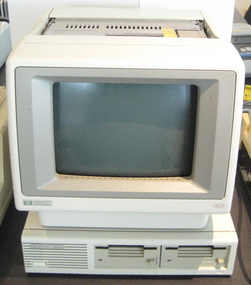
Equipment - Computer, Hewlett Packard, Hewlett Packard Touchscreen Monitor (HP2674A) and computer (HP9121), 1983 (exact)
... You can use your PC's hard drive (with an HP-IB board installed) to emulate this drive with vintage HP computers. ...You can use your PC's hard drive (with an HP-IB board installed) to emulate this drive with vintage HP computers. ...This computer was used at the Ballarat College of Advanced Education. The 2674A was introduced in 1983, and obsoleted on November 1, 1985. (http://www.hpmuseum.net/display_item.php?hw=45) The 9121D monitor was a dual, 3.5 inch floppy disc drive with an HP-IB interface. A grid of electrical beams on all fours sides of the screen gave the monitor touch screen capability. Its drives accomodated SS/DD discs (270KB). The 9121S was the single drive version of the 9121, priced at $1185. The 9121 was the first HP product to come in the new slimline, stackable form factor. HP used this form factor for computers and disc drives for over ten years. The 9121 used the AMIGO command set. The 9121 was obsoleted in November of 1987. You can use your PC's hard drive (with an HP-IB board installed) to emulate this drive with vintage HP computers. (http://www.hpmuseum.net/display_item.php?hw=288) Hewlett Packard grey monitor Series 100/150(HP2674A) and grey computer (HP9121). The monitor is an early touchscreen. A series of holes on all four sides of the monitor enabled a grid of electric beams allowing touchscreen functionhewlett packard, computer, monitor -
Federation University Art Collection
La Perruque, 2018
... A USB and a portable hard drive in a black archival box with a signed certificate. ...By her clever collaging of characters, editing and story adaptation, Laresa has created an impressive fictional and insightful work that by way of its very construction cleverly illustrates and articulates aspects of Australian culture,’ (Shelley Hinton, Curator Federation University’s Post Office Gallery) Guirguis New Art Prize video A USB and a portable hard drive in a black archival box with a signed certificate. ...Laresa KOSLOFF Laresa Kosloff makes performative videos, Super-8 films, hand-drawn animations, sculpture, installations and live performance works, all linked by an interest in the body and its agency within the everyday. Recurrent themes include humour and tension between received cultural values, individual agency and free will. La Perruque won the 2018 Guirguis New Art Prize. ‘Laresa is a worthy winner having been dedicated to her practice over many years and creating a work that is intelligently structured and steeped in satire, epitomising what we all either know or experience at work or in office life. By her clever collaging of characters, editing and story adaptation, Laresa has created an impressive fictional and insightful work that by way of its very construction cleverly illustrates and articulates aspects of Australian culture,’ (Shelley Hinton, Curator Federation University’s Post Office Gallery)A USB and a portable hard drive in a black archival box with a signed certificate. Her short film La Perruque is made entirely out of commercial stock footage, generic material produced for corporate advertising, which is strangely artificial, simplistic and loaded with images of success and productivity. Kosloff uses this footage to tell the tale of an office worker who is secretly trying to write a novel during work hours. The silent footage has been dubbed using voice actors and assembled into a story that subverts commercial representations of office life. The title refers to a French term that translates into 'wearing the wig', used to describe a situation of secretly working on personal projects during work time.guirguis new art prize, video -
 Ballarat Tramway Museum
Film - Digital Movie, Ballarat Tramway Museum (BTM), "BTM Brag 2008", for the Launceston COTMA Conference, 2008
... Transferred to the Hard Drive - AV Files - dB text/AV Files/Reg Item 5458/ in DVD format. ...Transferred to the Hard Drive - AV Files - dB text/AV Files/Reg Item 5458/ in DVD format. ...Yields information about the activities of the BTM in the period 2006 - to 2008, and has a strong association with various BTM individuals. Made for the 2008 COTMA Conference.Digital Movie "BTM Brag 2008", prepared by Richard Gilbert for the Launceston COTMA Conference in 2008. Transferred to the Hard Drive - AV Files - dB text/AV Files/Reg Item 5458/ in DVD format. Synopsis: based on time - 0.00 - 0.20 - titles etc. 0.21 - 1.40 - Begonia Festival with 671, 27, 466 1.41 - 2.35 - vehicle into the rear of the depot 2.36 - 3.16 - New shelving in depot and restoration of 12 3.17 - 4.30 - horse tram operation, Neville Hesketh, Neil Lardner, Carolyn Cleak, Richard Gilbert, Peter Winspur, Len Millar and Alastair Reither. 4.31 - 5.26 - track repairs Wendouree Parade 5.27 - 6.15 - work on 38, transfer to workshop and No. 28 6.16 - 6.26 - fitting of clear plastic blinds to 661 6.27 - 6.43 - No. 8 scrubber at work etc. 6.44 - 7.03 - On going work of volunteers, 661, Roger Salen, Neville Hesketh 7.04 - 7.14 - Credits etc. trams, tramways, btm, horse tram, depot, wendouree parade, begonia festival, scrubber tram -
 Vision Australia
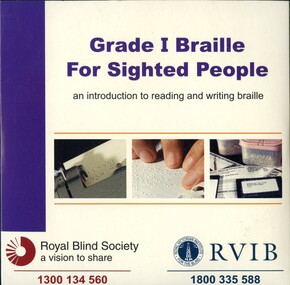
Education kit - Object, Grade I Braille For Sighted People: an introduction to reading and writing Braille, 2001
... For best results run the program from your hard drive. If the setup fails to start automatically, double click My Computer or Windows Explorer, double click the CD-ROM drive icon, then double click the setup icon. ...For best results run the program from your hard drive. If the setup fails to start automatically, double click My Computer or Windows Explorer, double click the CD-ROM drive icon, then double click the setup icon. ...In 2001 RBS and RVIB worked on a joint project to assist sighted people to learn Grade 1 Braille. This CD-ROM was produced to enable people to be able to learn and practice at home.1 CD-ROM with text and BrailleNot all keyboards are suitable for use with this program. To gauge usability launch Notepad or Wordpad and press the s, d, f and j, k, l keys simultaneously. If all six letters appear your keyboard can be used as a virtual brailler. Minimum system requirements: 32MB of Ram; Pentium 166mhz; Microsoft Internet Explorer 4.0; Quicktime Browser plugin and Macromedia Flash plugin (included in installation). NB: Video may take one minute to load. Display: At least 800 x 600, high colour (16 bit). Installation: The CD-ROM will automatically run the setup procedure. For best results run the program from your hard drive. If the setup fails to start automatically, double click My Computer or Windows Explorer, double click the CD-ROM drive icon, then double click the setup icon. This CD-ROM is a joint project by the Royal Blind Society and Royal Victorian Institute for the Blind.royal blind society of new south wales, education, royal victorian institute for the blind -
 Ballarat Tramway Museum
Film - Compact Diskette with video, Diana May Clark and Philip Donnellon, Ballarat Tram 671, Diana May Clark, Batucade Bonde, Apr. 2014
... Transferred to the Hard Drive 4/2/2013- AV Files - dB text/AV Files/Reg Item 6132/Video_TS. ...Transferred to the Hard Drive 4/2/2013- AV Files - dB text/AV Files/Reg Item 6132/Video_TS. ...Yields information about making a song video using Ballarat Tramway Museum tramcars. Has a strong association with the singer and the film maker.DVD compact diskette in paper case, (on same DVD as Reg Item 6132, featuring a song movie made using Ballarat Tram 671, Diana May Clark, Batucade Bonde. From the first issue of BTM eNews - July 2014: "In February, Melbourne musician Diana May Clark came to the Ballarat Tram Museum to record her song, "Batacuda Bond (Tram Song)". This is a pop style tune with a catchy Brazilian beat. Diana wrote this song while on honeymoon in Brazil. It is about the Santa Teresa tram which runs from downtown Rio de Janeiro and climbs up the Santa Teresa hill offering spectacular views across the city. Opened in 1877 with a horse tram service, the tramway is one of the oldest street railways in the world. The tram is currently out of action after an accident in 2011 which killed five people, including the driver, and injured another 57 people. This was Brazil's worst tram accident. The people of Santa Teresa rely on this tram as their main link to Rio and are rallying for its safe return. With film maker Philip Donnellon, Diana wanted to use an old green W class tram as the setting for the song's film clip. The only green W class trams running in Victoria are those operated by Yarra Trams. They decided that our W4 671 would be suitable, and it certainly provided a great setting. Philip is well known for his interest in trams. He made the documentary movie called "Bring 'Em Back", about Melbourne's tram conductors. He said afterwards that the BTM offered some great filming opportunities, and he would certainly be returning. Over the last 15 years Diana has released five CDs, one EP, and two singles." Transferred to the Hard Drive 4/2/2013- AV Files - dB text/AV Files/Reg Item 6132/Video_TS. btm, wendouree parade, music, films -
 Greensborough Historical Society
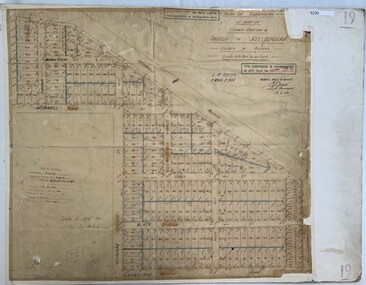
Poster - Planning Document, City of Heidelberg, Subdivision Plan # 19 - Parish of Keelbundoora, Crown Portion 16, Watsonia "Black's subdivision', 1924
... Drive). Includes Lambourn Road, Black Street, Grace Street, Eden Avenue, High Street, Kenmare Street, Morwell Avenue, Greensborough Road, Mundy Street, Ladd Street. An example of hard ...Subdivision Plan # 19 - Parish of Keelbundoora, Crown Portion 16, Watsonia "Black's subdivision". This subdivision plan includes proposed street names which were later changed (e.g. Morwell Street (not Morwell Avenue) now called Greenwood Drive). Includes Lambourn Road, Black Street, Grace Street, Eden Avenue, High Street, Kenmare Street, Morwell Avenue, Greensborough Road, Mundy Street, Ladd Street.An example of hard copy subdivision plans from the Greensborough area. Mainly from the Shire of Diamond Valley era (1964-1994).Plan (single sided) mounted on heavy card. Stamped and handwritten Council permissions, dates and other details. subdivision plans, city of heidelberg, greensborough, main street greensborough, shire of heidelberg, watsonia, black family -
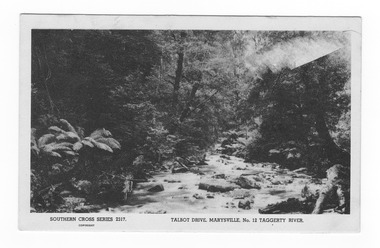 Marysville & District Historical Society
Postcard (item) - Black and white postcard, Rose Stereograph Company, Talbot Drive, Marysville, Vic. No. 12, Taggerty River, 1913-1967
... Lady Talbot Drive is named after Lady Sarah Elizabeth, the wife of Sir Reginald Talbot, who was the Governor of Victoria from 25th April, 1904 to 6th July 1908. marysville victoria taggerty river postcard souvenir lady talbot drive sir reginald talbot sarah elizabeth talbot southern cross series 2317 POST CARD Correspondence Address "Kooringa"/ Marysville/ Monday Dear Gwen, Kids/ I do hope your missing me especially/ around morning & afternoon tea time./ Its a hard place here with tons to eat so/ I'll probably stagger back to 31 King St-/ awful thought. ...A postcard in a series produced by the Rose Stereograph Company in Victoria, Australia as a souvenir of Marysville.A black and white photograph taken along Lady Talbot Drive, Marysville, Victoria, of the Taggerty River. Lady Talbot Drive a 24 kilometer scenic rainforest car journey which passes a number of walks and waterfalls in the Yarra Ranges National Park. Lady Talbot Drive is named after Lady Sarah Elizabeth, the wife of Sir Reginald Talbot, who was the Governor of Victoria from 25th April, 1904 to 6th July 1908.POST CARD Correspondence Address "Kooringa"/ Marysville/ Monday Dear Gwen, Kids/ I do hope your missing me especially/ around morning & afternoon tea time./ Its a hard place here with tons to eat so/ I'll probably stagger back to 31 King St-/ awful thought. The weather has been beaut/ so far - it rained the first Sunday, last/ Wednesday, but otherwise has been O.K. Its/ just as well I didn't get my togs, Lorna, the/ pool is empty. I'd sure like a swim today/ though. Ive got to write a letter to my/ Honeybunch so I'd better finish. Goodbye Kids,/ Love/ Gwen.marysville, victoria, taggerty river, postcard, souvenir, lady talbot drive, sir reginald talbot, sarah elizabeth talbot, southern cross series, 2317 -
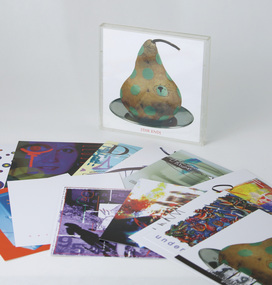 Federation University Historical Collection
Container - Exhibition Catalogue Card Pack, Fungus Spots on Fruit, 1995
... Hard plastic transparent hinged case originally designed to house "zip" data drives. 17 cards printed two sides, most full colour one side (featuring student work) reverse lists student name and contact phone number. ...Hard plastic transparent hinged case originally designed to house "zip" data drives. 17 cards printed two sides, most full colour one side (featuring student work) reverse lists student name and contact phone number....Hard plastic transparent hinged case originally designed to house "zip" data drives. 17 cards printed two sides, most full colour one side (featuring student work) reverse lists student name and contact phone number. ...Fungus Spots on Fruit, features examples of student work, University of Ballarat graduating graphic designers, 1995. Hard plastic transparent hinged case originally designed to house "zip" data drives. 17 cards printed two sides, most full colour one side (featuring student work) reverse lists student name and contact phone number. Names: Kerrie Powell, Daniel Szkilnyk, Louise Brinkmann, Cassandra McGregor, Michelle Ryrie, George Koliantzas, Susan Daly, Melissa Chappell, Nicole O'Loughlin, Tracey Stafford, Johnathan Provost, Megan Dawes, Kylie Verberne, Helmut Stenzel (lecturer)Hard plastic transparent hinged case originally designed to house "zip" data drives. 17 cards printed two sides, most full colour one side (featuring student work) reverse lists student name and contact phone number.kerrie powell, daniel szkilnyk, louise brinkmann, cassandra mcgregor, michelle ryrie, george koliantzas, susan daly, melissa chappell, nicole o'loughlin, tracey stafford, johnathan provost, megan dawes, kylie verberne, helmut stenzel (lecturer), university of ballarat, federation university, graphic design -
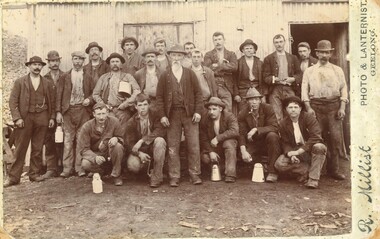 Federation University Historical Collection
Photograph, R. Millist, Hanlon Consols Mine Rokewood, 1901
... By September 1901, the mine had produced gold worth £66,124 and the No2 shaft main drive was in 346 feet, with gold being found mainly in crevices in the hard floor. ...By September 1901, the mine had produced gold worth £66,124 and the No2 shaft main drive was in 346 feet, with gold being found mainly in crevices in the hard floor. ...The photo depicts one shift of mine hands at Hanlon Consols Mine Rokewod in 1901. ist on the left is George Edgar Yung. George was born in Ararat the son of Yohann Godlip and Christina (b Weller)Yung. They lived at Happy Valley near Linton. and Piggoreet. Yohann was a miner and died in the All Nations Mine collapse at Derwnt Jack's in 1877. Interesting to note in the following information that the Hanlon Consol mamager, William Maughan was also the manager of the Try Again Mine in Piggoreet. He was also on the six man school committee of Piggoreet Common School No. 726. (Is this why George Yung ended up working in Rokewood because of a previous connection at Piggoreet? George married Clara Emma Smith from Happy Valley and worked in a mine at Allendale. They later moved to Yendon) About the Hanlon gold mining company near Rokewood. 1901 - Information Bendigo Prospecting Club, 21/08/2020. Information provided once again by Peter McCarthy. Christopher Hanlon had put down a line of bores south of the Rokewood main street, looking for a continuation of the Break O’Day lead which had been worked for two or three miles with highly payable results, though in a primitive manner. Ground was being paddocked 30 feet deep and made to pay. The bores suggested the sinking would be about 70 feet and a shaft site was selected at the back of Stanbrook’s Hotel. The Hanlon Gold Mining Company was formed in March 1895 and the shaft was bottomed at 68 feet, getting just over an ounce of gold from the shaft bottom. By January 1896, the poppet heads were up, and steam plant was nearly ready. The mine produced 846 oz by September, which was not as good as expected, but they installed a second puddling machine. The mine was profitable for the next three years, with periods of prospecting and the need to install steam pumps in 1897. A second shaft was sunk in 1899, which bottomed at 86 feet on good wash and was sunk on to 109 feet. 1743 oz of gold had been produced in six months to September 1899, but the No1 shaft was let on tribute as the No2 workings were opened and machinery installed the following year. The No1 shaft tributors broke even in 1900 and in 1901 the shaft was shut down, with the No1 shaft machinery sold late in 1902. By September 1901, the mine had produced gold worth £66,124 and the No2 shaft main drive was in 346 feet, with gold being found mainly in crevices in the hard floor. Mining continued, but once the No2 shaft workings met up with the old No1 shaft workings at the end of 1902 there was not much wash remaining. The mine was let on tribute in June 1903 and a drive was put in to test deeper ground. The company was wound up in February 1904 and the plant sold. From what they discovered, the manager concluded that the mine sat at the edge of an ancient coastline and the gold was in a beach deposit. The total gold production from the mine was worth £73,294. J Lee Archer JP, shareholder, was the manager of the Bank of Victoria in Ballarat. Born in Tasmania, he came to Victoria with his parents and first came to Ballarat in 1855 as a junior clerk with the bank. He died in 1902 aged 64. Alexander J. Peacock was a legal manager and a share broker. In 1897 Peacock, born in Creswick, had been elected as one of the Victorian delegates to the Constitutional Convention which wrote the Australian Constitution. He later became a politician, state treasurer and three times state premier of Victoria and was knighted KCGM. He died in 1933 aged 72. William Maughan, director, was an English miner who came to Victoria in the 1850s and became a mine manager, managing the Try Again at Piggoreet, Ryan’s Freehold and the Madam Berry, among others. He died in Williamstown in 1915 aged 85. Sepia photographRhs front of photo: R. Millist Phto & Lanternist Geelong Verso (upside down): ONE SHIFT OF MINE HANDS HANLON CONSOLS MINE ROKEWOOD 1901 Grandfather Yung 1st on left rokewood, hanlon consols mine, shift of mine workers 1901, gold mines, george edgar godlip yung, william maughan -
Federation University Historical Collection
Book, Ballarat School of Mines Apprentices' Handbook, 1953, 1953
... Hard to get a good job if they are much out of round, but it is the only practical way at present." That is 40 years ago and contrasts with today. (1953) ballarat school of mines trades apprenticeship apprentice electrical mechanics motor mechanics turning and fitting plumbing and gasfitting blacksmithing printing useful tables mechanical and electrical unit equivalents power consumption of electrical appliances horse power to drive machinery breakdown troubles of cars pre-war post-war table of chemical elements screw gauges welding tips .1: E J Tippett in blue ink on inside of front cover. ...Apprentices' Handbook, Issued with the compliments of The Council and Staff of The Ballarat School of Mines and Industries. It contains a foreword from the Principal to apprentices. It states how they are taking the first step towards becoming a first class craftsman in their chosen field. The course is set down by the Victorian Apprenticeship Commission and consists of the practical experience obtained while on the job together with the subjects studied at this school. Page 26 gives the date the book was produced. From the diary of a service man dated January 25, 1913:- "Been filing crank pins all day. Hard to get a good job if they are much out of round, but it is the only practical way at present." That is 40 years ago and contrasts with today. (1953)Sixty-two page handbook with illustrations. .1: E J Tippett in blue ink on inside of front cover. Printer's name and emblem on last page. "John Fraser & Son Printers - Albert Street, Ballarat"ballarat school of mines, trades, apprenticeship, apprentice, electrical mechanics, motor mechanics, turning and fitting, plumbing and gasfitting, blacksmithing, printing, useful tables, mechanical and electrical unit equivalents, power consumption of electrical appliances, horse power to drive machinery, breakdown troubles of cars, pre-war post-war, table of chemical elements, screw gauges, welding tips -
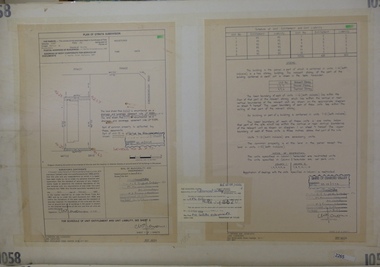 Greensborough Historical Society
Planning Document, Subdivision Plan #1058. Wattle Drive Watsonia, 14/07/1983
... Plan of Strata Subdivision at 6 Wattle Drive Watsonia for 6 units. An example of hard copy subdivision plans from the Greensborough area. ...Plan of Strata Subdivision at 6 Wattle Drive Watsonia for 6 units.An example of hard copy subdivision plans from the Greensborough area. Mainly from the Shire of Diamond Valley era (1964-1994).Plan (3 sheets) mounted on heavy card.Stamped and handwritten Council permissions, dates and other details.subdivision plans, wattle drive watsonia -
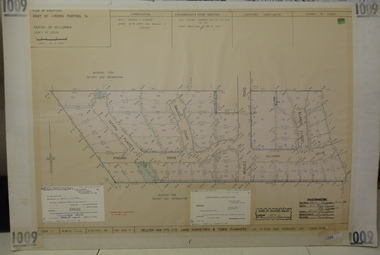 Greensborough Historical Society
Planning document, Subdivision Plan #1009. Corner Allumba Drive and Beales Road Greensborough, 1981_
... Plan of Subdivision of land at corner of Allumba Drive and Beales Road Greensborough. An example of hard copy subdivision plans from the Greensborough area. ...Plan of Subdivision of land at corner of Allumba Drive and Beales Road Greensborough.An example of hard copy subdivision plans from the Greensborough area. Mainly from the Shire of Diamond Valley era (1964-1994).Plan (2 sheets) mounted on heavy card.Stamped and handwritten Council permissions, dates and other details.subdivision plans, allumba drive, beales road -
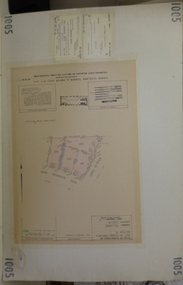 Greensborough Historical Society
Planning document, Subdivision Plan #1005. Corner Douglas Court and Glen Katherine Drive Greensborough, 1981_
... Corner Douglas Court and Glen Katherine Drive Greensborough. An example of hard copy subdivision plans from the Greensborough area. ...Plan of Subdivision. Corner Douglas Court and Glen Katherine Drive Greensborough.An example of hard copy subdivision plans from the Greensborough area. Mainly from the Shire of Diamond Valley era (1964-1994).Plan (2 sheets) mounted on heavy card.Stamped and handwritten Council permissions, dates and other details.subdivision plans, douglas court, glen katherine drive -
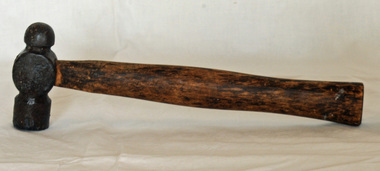 Orbost & District Historical Society
hammer, 1920's
... Its steel head is harder than that of a claw hammer, so is less likely to chip on impact. Ball peen hammers are commonly used to drive cold chisels, set rivets, and bend and shape metal. ...Its steel head is harder than that of a claw hammer, so is less likely to chip on impact. Ball peen hammers are commonly used to drive cold chisels, set rivets, and bend and shape metal. ...A ball-peen ) hammer, also known as a machinist's hammer, is a type of peening hammer used in metal-working. Its steel head is harder than that of a claw hammer, so is less likely to chip on impact. Ball peen hammers are commonly used to drive cold chisels, set rivets, and bend and shape metal. Before the advent of pneumatic rivet guns, ball peen hammers were commonly used for riveting. First the flat head drove the nail through, then the round ball was used to "peen over" the other side of the rivet. Before the advent of pneumatic rivet guns, ball peen hammers were commonly used for riveting. First the flat head drove the nail through, then the round ball was used to "peen over" the other side of the rivet. These hammers were made to last.Wooden handled ball peen pein) hammer. The handle has been nailed in and may not be the original. The metal head has one end shaped into a sphere and the other flat.hammer-ball-peen tool metal-work -
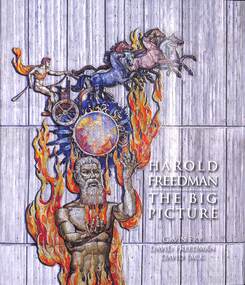 Ringwood and District Historical Society
Book, Harold Freedman The Big Picture, Designed and published by Gavin Fry, David Freedman, David Jack for Melbourne Mural Studio, 2017
... drive, ambition and achievement. While best known for his series of painted and mosaic murals, the largest ever created in Australia. He was also an influential teacher, an official war Artist and book designer. Hard ...Hard Cover Book with Dust cover.Harold Freedman was an Artist of enormous drive, ambition and achievement. While best known for his series of painted and mosaic murals, the largest ever created in Australia. He was also an influential teacher, an official war Artist and book designer. -
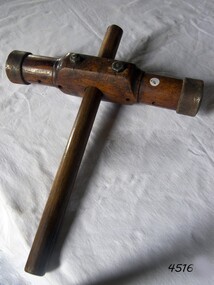 Flagstaff Hill Maritime Museum and Village
Tool - Caulking mallet, Mid 19th to early 20th centuries
... drive the oakum (caulk) between the ship's bottom planking to seal them up. The mallet has slots to dampen the vibration of the mallet blows on the user's elbows. The head is made of a very hard...drive the oakum (caulk) between the ship's bottom planking to seal them up. The mallet has slots to dampen the vibration of the mallet blows on the user's elbows. The head is made of a very hard ...The subject item is a vintage Nautical Shipwrights Ship Boat Caulking Hammer Mallet, Unusual Small Size. These mallets were routinely used in the 1800s when ships were made of wood. This mallet was used with caulking irons to drive the oakum (caulk) between the ship's bottom planking to seal them up. The mallet has slots to dampen the vibration of the mallet blows on the user's elbows. The head is made of a very hard wood, possibly Lignum Vitae or another dark tropical wood. The item seems to be of a very early design with the two preened-over metal rods for reinforcing the head. Item appears to be of early manufacture by an unknown maker from the mid to late 19th century and is significant as tools of this era are quite rare. This tool is also significant as it gives an insight into how ships made of wooden planks were made sea-worthy by inserting caulking material between the boards thereby making the vessel watertight. Caulking Mallet Wooden with iron ferrules on each end. Wooden head with two large bolts passing through body. Stamped W Milne. James S Steele tool box.Stamped W Milne & James S Steele tool box.mallet, flagstaff hill, warrnambool, flagstaff hill maritime museum, maritime museum, shipwreck coast, flagstaff hill maritime village, great ocean road, caulking mallet, caulking, james steele, shipwrights tools
