
Showing 12 items matching "henry handel richardson"
-
 Sunshine and District Historical Society Incorporated
Book - Henry Handel Richardson Memorial "Lake View" Chiltern, National Trust (Victoria), 1979
... Henry Handel Richardson Memorial "Lake View" Chiltern...20-page booklet about 'Lake View', Chiltern, Victoria, the childhood home of Australian author Henry Handel Richardson, (born Ethel Florence Lindesay Richardson). ...Henry Handel Richardson Memorial "Lake View" Chiltern - The Property of the National Trust of Australia (Victoria)...20-page booklet about 'Lake View', Chiltern, Victoria, the childhood home of Australian author Henry Handel Richardson, (born Ethel Florence Lindesay Richardson). ...20-page booklet about 'Lake View', Chiltern, Victoria, the childhood home of Australian author Henry Handel Richardson, (born Ethel Florence Lindesay Richardson). It Includes a brief biography of her and her parents. Published by the National Trust of Australia (Victoria).Henry Handel Richardson Memorial "Lake View" Chiltern - The Property of the National Trust of Australia (Victoria)chiltern, lake view, national trust, historic properties -
 Bendigo Historical Society Inc.
Book - HENRY HANDEL RICHARDSON - 'LAKE VIEW' CHILTERN, 1980s (?)
... HENRY HANDEL RICHARDSON - 'LAKE VIEW' CHILTERN......Henry Handel Richardson...About 'Lake View', Chiltern, Victoria, the childhood home of the author Henry Handel Richardson. (born Ethel Florence Lindesay Richardson) Includes a brief biography of her and her parents. ...NATIONAL TRUST Properties Henry Handel Richardson 'Lake View' Chiltern National Trust National Trust 20 page booklet. ...20 page booklet. About 'Lake View', Chiltern, Victoria, the childhood home of the author Henry Handel Richardson. (born Ethel Florence Lindesay Richardson) Includes a brief biography of her and her parents. Illustrated with seven B & W photos and one colour photo of the house on the front cover. Published by the National Trust of Australia (Victoria) Copy No. 14770 imprinted on back cover.National Trustnational trust, properties, henry handel richardson, 'lake view' chiltern, national trust -
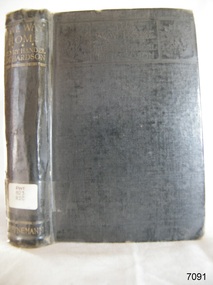 Flagstaff Hill Maritime Museum and Village
Book - A Fictional Story, Henry Handel Richardson (Pen Name), The Way Home, 1925
... ...henry handel richardson...Henry Handel Richardson was the pen name of Ethel Florence Lindesay Richardson (later Robertson), 1870–1946. ...The Way Home Author: Henry Handel Richardson Publisher: William Heinemann Ltd Date: 1925 Further Information: Black Cloth embossed hardcover with lettering and patterning to spine in Gilt The spine has a Library label with an inscription....Henry Handel Richardson (Pen Name)...Henry Handel Richardson was the pen name of Ethel Florence Lindesay Richardson (later Robertson), 1870–1946. ...The Way Home (1925) is the second volume of Henry Handel Richardson's trilogy The Fortunes of Richard Mahony, published by William Heinemann Ltd, following Australia Felix (1917) and preceding Ultima Thule (1929). The three were later collected into a single volume in 1930 under the trilogy's overall title. The novel continues the story of Richard Mahony, an Irish-born doctor who made and lost a fortune on the Victorian goldfields. After years of struggle in the Australian outback, Richard Mahony returns to his native England to live out his years in comfort and quiet. Although his dreams have been realised, he soon discovers the prejudice with which the wealthy view men who went across the world to make their fortunes. Unable to gain a foothold in the land of his birth, he makes the difficult decision to return to Australia. It's a heavily autobiographical work, as Richardson built the character of Mahony from her own father, a doctor whose life followed a very similar arc, including a descent into mental illness.Hard cover book. The Way Home Author: Henry Handel Richardson Publisher: William Heinemann Ltd Date: 1925 Further Information: Black Cloth embossed hardcover with lettering and patterning to spine in Gilt The spine has a Library label with an inscription.fictionThe Way Home (1925) is the second volume of Henry Handel Richardson's trilogy The Fortunes of Richard Mahony, published by William Heinemann Ltd, following Australia Felix (1917) and preceding Ultima Thule (1929). The three were later collected into a single volume in 1930 under the trilogy's overall title. The novel continues the story of Richard Mahony, an Irish-born doctor who made and lost a fortune on the Victorian goldfields. After years of struggle in the Australian outback, Richard Mahony returns to his native England to live out his years in comfort and quiet. Although his dreams have been realised, he soon discovers the prejudice with which the wealthy view men who went across the world to make their fortunes. Unable to gain a foothold in the land of his birth, he makes the difficult decision to return to Australia. It's a heavily autobiographical work, as Richardson built the character of Mahony from her own father, a doctor whose life followed a very similar arc, including a descent into mental illness.warrnambool, shipwrecked-coast, flagstaff-hill, flagstaff-hill-maritime-museum, maritime-museum, shipwreck-coast, flagstaff-hill-maritime-village, shipwrecked-artefact, book, the way home, henry handel richardson -
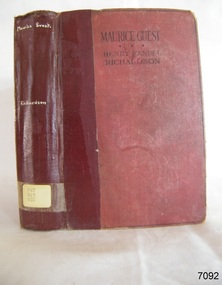 Flagstaff Hill Maritime Museum and Village
Book - A Fictional Story, Ethel Florence Lindesay ( Pen Name Henry Handel Richardson), Maurice Guest, 1929
... ...henry handel richardson...The author, Henry Handel Richardson, was the pen name of Ethel Florence Lindesay Richardson (1870–1946). ...Maurice Guest Author: Ethel Florence Lindesay ( Pen Name Henry Handel Richardson) Publisher: William Heinemann & Co Date: 1929 Further Information: Red Cloth front hardcover with lettering in black. ...Ethel Florence Lindesay ( Pen Name Henry Handel Richardson)...The author, Henry Handel Richardson, was the pen name of Ethel Florence Lindesay Richardson (1870–1946). ...Set in the 1890s music world of Leipzig, Germany, the novel follows Maurice Guest, a young Englishman studying piano at the Conservatorium, who falls into an obsessive, ultimately destructive love affair with Louise Dufrayer, an Australian woman already entangled with a gifted but caddish violinist, Eugen Schilsky. The story follows Maurice's violent passion for the indolent, sensuous Louise, who is the mistress of the talented violinist Eugen Schilsky. Maurice consoles himself with another woman, but a scandal drives Schilsky away, after which Maurice and Louise come together. Maurice is forced to confront his own mediocrity as a musician, and Louise's chequered past comes to light through a former lover, leading to a violent confrontation, further betrayals, a suicide, and finally Louise leaving Maurice, who then walks into the countryside and shoots himself. It is essentially a naturalist tragedy of obsessive love and thwarted artistic ambition, set against a vividly rendered expatriate music-student milieu.Hard cover book. Maurice Guest Author: Ethel Florence Lindesay ( Pen Name Henry Handel Richardson) Publisher: William Heinemann & Co Date: 1929 Further Information: Red Cloth front hardcover with lettering in black. Rebound reinforced spine with red reinforced cloth strip. The spine has a Library label with an inscription.fictionSet in the 1890s music world of Leipzig, Germany, the novel follows Maurice Guest, a young Englishman studying piano at the Conservatorium, who falls into an obsessive, ultimately destructive love affair with Louise Dufrayer, an Australian woman already entangled with a gifted but caddish violinist, Eugen Schilsky. The story follows Maurice's violent passion for the indolent, sensuous Louise, who is the mistress of the talented violinist Eugen Schilsky. Maurice consoles himself with another woman, but a scandal drives Schilsky away, after which Maurice and Louise come together. Maurice is forced to confront his own mediocrity as a musician, and Louise's chequered past comes to light through a former lover, leading to a violent confrontation, further betrayals, a suicide, and finally Louise leaving Maurice, who then walks into the countryside and shoots himself. It is essentially a naturalist tragedy of obsessive love and thwarted artistic ambition, set against a vividly rendered expatriate music-student milieu.warrnambool, shipwrecked-coast, flagstaff-hill, flagstaff-hill-maritime-museum, maritime-museum, shipwreck-coast, flagstaff-hill-maritime-village, shipwrecked-artefact, book, maurice guest, henry handel richardson -
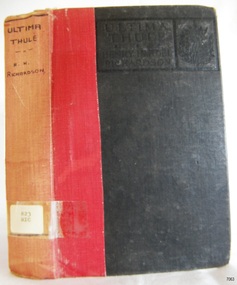 Flagstaff Hill Maritime Museum and Village
Book - A Fictional Story, William Heinemann Ltd, Ultima Thule, 1929
... ...henry handel richardson...The author, Henry Handel Richardson, was the pen name of Ethel Florence Lindesay Richardson (1870–1946). ...Ulima Thule Author: Ethel Florence Lindesay ( Pen Name Henry Handel Richardson) Publisher: William Heinemann & Co Date: 1929 Further Information: Black Cloth front hardcover with lettering and embossed patterning. ......Henry Handel Richardson (Pen Name)...The author, Henry Handel Richardson, was the pen name of Ethel Florence Lindesay Richardson (1870–1946). ...Ultima Thule (1929) is the landmark third and final novel in the acclaimed trilogy The Fortunes of Richard Mahony by Ethel Florence Lindesay ( Pen Name Henry Handel Richardson). The synopsis of Ultima Thule follows the final, tragic chapter of Dr Richard Mahony's life. Having lost his wealth due to poor investments and misplaced trust, the forty-nine-year-old Mahony returns to Australia financially ruined. Forced to restart his medical practice in the rural Victorian towns of Chiltern and Koroit, Mahony suffers a severe physical and mental breakdown driven by early-onset neurosyphilis and profound alienation from his surroundings. The narrative focuses on mental and physical decay, with a harrowing and realistic depiction of Mahony's descent into dementia and insanity. The psychological struggle of his steadfast wife, Mary (Polly), is also depicted, as she steps up to support the family amidst social stigma and poverty within the harsh Australian landscape, alongside her own alienation as an exile in an unyielding environment.Hard cover book. Ulima Thule Author: Ethel Florence Lindesay ( Pen Name Henry Handel Richardson) Publisher: William Heinemann & Co Date: 1929 Further Information: Black Cloth front hardcover with lettering and embossed patterning. Rebound brown spine with red reinforced cloth strip. The spine has a Library label with an inscription.fictionUltima Thule (1929) is the landmark third and final novel in the acclaimed trilogy The Fortunes of Richard Mahony by Ethel Florence Lindesay ( Pen Name Henry Handel Richardson). The synopsis of Ultima Thule follows the final, tragic chapter of Dr Richard Mahony's life. Having lost his wealth due to poor investments and misplaced trust, the forty-nine-year-old Mahony returns to Australia financially ruined. Forced to restart his medical practice in the rural Victorian towns of Chiltern and Koroit, Mahony suffers a severe physical and mental breakdown driven by early-onset neurosyphilis and profound alienation from his surroundings. The narrative focuses on mental and physical decay, with a harrowing and realistic depiction of Mahony's descent into dementia and insanity. The psychological struggle of his steadfast wife, Mary (Polly), is also depicted, as she steps up to support the family amidst social stigma and poverty within the harsh Australian landscape, alongside her own alienation as an exile in an unyielding environment.shipwrecked-coast, flagstaff-hill, flagstaff-hill-maritime-museum, warrnambool, maritime-museum, shipwreck-coast, flagstaff-hill-maritime-village, shipwrecked-artefact, book, pattison collection, warrnambool library, warrnambool mechanics’ institute, ralph eric pattison, corangamite regional library service, warrnambool city librarian, mechanics’ institute library, victorian library board, warrnambool books and records, warrnambool children’s library, ultima thule, henry handel richardson, ethel florence lindesay -
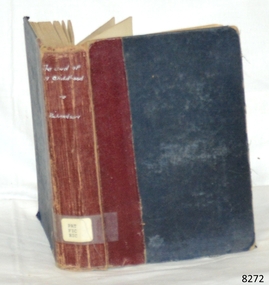 Flagstaff Hill Maritime Museum and Village
Book, The End of a Childhood
... ...Henry Handel Richardson...The End of a Childhood Author: Henry Handel Richardson Publisher: William Heinemann Ltd Date: 1934 ...The Warrnambool Mechanics' Institute’s publication collection is of both local and state significance. flagstaff hill warrnambool shipwrecked coast flagstaff hill maritime museum maritime museum shipwreck coast flagstaff hill maritime village great ocean road book pattison collection warrnambool library warrnambool mechanics’ institute ralph eric pattison corangamite regional library service warrnambool city librarian mechanics’ institute library victorian library board warrnambool books and records warrnambool children’s library The End of a Childhood Henry Handel Richardson The label on the spine cover with typed text PAT FIC RIC Pastedown frontend paper has a sticker from Warrnambool Mechanics Institute and Free Library covered by a sticker from Corangamite Regional Library Service Front loose endpaper has a stamp from Corangamite Regional Library Service Front loose endpaper has a stamp from Warrnambool Mechanics Institute The End of a Childhood Author: Henry Handel Richardson Publisher: William Heinemann Ltd Date: 1934 The End of a Childhood Book Book ...This book was part of a large group of books referred to as the Pattison Collection, which belonged to the Warrnambool Public Library, part of the Warrnambool Mechanics’ Institute. About RALPH ERIC PATTISON and the ‘PATTISON COLLECTION’ The ‘Pattison Collection’ is a collection of books and records that was originally owned by the Warrnambool Mechanics’ Institute, founded in Warrnambool in 1853. By 1886 the Warrnambool Mechanics’ Institute (WMI) had grown to have a Library, Museum and Fine Arts Gallery, with a collection of “… choice productions of art and valuable specimens in almost every branch and many wonderful national curiosities are now to be seen there, including historic relics of the town and district.” It later included a School of Design. Although it was very well patronised, the WMI was led to ask the City Council to take it over in 1911 due to lack of financial support. In 1935 Ralph Pattison was appointed as City Librarian to establish and organise the Warrnambool Public Library as it was then called. Ralph Eric Pattison was born in Rockhampton, Queensland, in 1891. He married Maude Swan from Warrnambool in 1920 and they set up home in Warrnambool. In 1935 when Pattison accepted the position as City Librarian for the Warrnambool City Council his huge challenge was to make a functional library within two rooms of the Mechanics’ Institute. He tirelessly cleaned, cleared and sorted a disarrayed collection of old books, jars of preserved specimens and other items reserved for exhibition in the city’s museum. He developed and updated the library with a wide variety of books for all tastes, including reference books for students; a difficult task to fulfil during the years following the Depression. He converted all of the lower areas of the building into a library, reference room and reading room for members and the public. The books were sorted and stored using a cataloguing and card index system that he had developed himself. He also prepared the upper floor of the building and established the Art Gallery and later the Museum, a place to exhibit the many old relics that had been stored for years for this purpose. One of the treasures he found was a beautiful ancient clock, which he repaired, restored and enjoyed using in his office during the years of his service there. Ralph Pattison was described as “a meticulous gentleman whose punctuality, floorless courtesy and distinctive neat dress were hallmarks of his character, and ‘his’ clock controlled his daily routine and his opening and closing of the library’s large heavy doors to the minute.” Pattison took leave from 1942 to 1945 to serve in the Royal Australian Navy, Volunteer Reserve as Lieutenant. A few years later he converted one of the Museum’s rooms into a Children’s Library, stocking it with suitable books for the younger generation. This was an instant success. In the 1950’s he had the honour of being appointed to the Victorian Library Board and received more inspiration from the monthly conferences in Melbourne. He was sadly retired in 1959 after over 23 years of service, due to the fact that he had gone over the working age of council officers. However, he continued to take a very keen interest in the continual development of the Library until his death in 1969. THE NEW WARRNAMBOOL LIBRARY When the WMI building was pulled down in 1963 a new civic building was erected on the site and the new Warrnambool Library, on behalf of the City Council, took over all the holdings of the WMI. At this time some of the items were separated and identified as the ‘Pattison Collection’, named after Pattison. Eventually, the components of the WMI were distributed from the Warrnambool Library to various places, including the Art Gallery, Historical Society and Flagstaff Hill. Later some were even distributed to other regional branches of Corangamite Regional Library and passed to and fro. It is difficult now to trace just where all of the items have ended up. The books at Flagstaff Hill Maritime Village generally display stamps and markings from Pattison as well as a variety of other institutions including the Mechanics’ Institute itself. WARRNAMBOOL MECHANICS’ INSTITUTE Warrnambool's Mechanics' Institute (or Institution as it was sometimes called) was one of the earliest in Victoria. On 17th October 1853, a meeting was held where it was resolved to request the Lieutenant Governor of the Colony to grant land for the erection of a Mechanics' Institutes building. A committee was formed at the meeting and Richard Osburne chaired the first meeting of this committee. The land on the North West corner of Banyan and Merri Streets was granted but there were no funds to erect the building. The Formal Rights of the Warrnambool Mechanics' Institute's encompassed its aims and these were officially adopted in1859; "This Institution has for its object the diffusion of literary, scientific, and other useful knowledge amongst its members, excluding all controversial subjects, religious or political. These objects are sought to be obtained by means of a circulating library, a reading room, the establishment of classes, debates, and the occasional delivery of lectures on natural and experimental philosophy, mechanics, astronomy, chemistry, natural history, literature, and the useful and ornamental arts, particularly those which have a more immediate reference to the colony." The Warrnambool Mechanics' Institute opened its first reading room in November 1884 in the National School building at the corner of Banyan and Timor Streets. The Institute was funded by member subscription, payable on a quarterly, half-yearly or yearly basis. Samuel Hannaford, the Manager of the Warrnambool Bank of Australasia, was the first Honorary Secretary of the Mechanics' Institutes, and an early President and Vice-President. He also gave several of the early lectures in the Reading Room. Another early Secretary, Librarian and lecturer was Marmaduke Fisher, the teacher at the National School. Lecture topics included The Poets and Poetry of Ireland', 'The Birth and Development of the Earth', 'The Vertebrae - with Remarks on the pleasures resulting from the study of Natural History' and 'Architecture'. In 1856 the Reading Room was moved to James Hider's shop in Timor Street, and by 1864 it was located in the bookshop of Davies and Read. In the 1860's the Mechanics' Institute struggled as membership waned but in 1866, after a series of fundraising efforts, the committee was able to purchase land in Liebig Street, on a site then called Market Square, between the weighbridge and the fire station. A Mechanics' Institute building was opened at this site in August 1871. The following year four more rooms were added to the main Reading Room and in 1873 the Artisan School of Design was incorporated into the Institute. The same year Joseph Archibald established a Museum; however, it deteriorated when he was transferred to Bendigo in 1877. In 1880, with Archibald's return to Warrnambool, the Museum was re-established, and in 1885 a new building was built at the back of the Institute to accommodate the re-created School of Design, the Art Gallery and the Museum. In 1887 the Museum section was moved to the former courthouse in Timor Street (for some time the walls of the building formed part of the TAFE cafeteria but all is now demolished)). In 1911 the Museum was transferred back to the original building and the management of the Mechanics' Institute was handed over to the Warrnambool City Council. The Museum and Art Gallery became one and housed many fine works of art, and the Library continued to grow. The building was well patronised, with records showing that at the beginning of the 20th century there were between 500 and 800 visitors. During World War One the monthly figures were in the thousands, with 3,400 people visiting in January 1915. The Museum was a much - loved Institution in Warrnambool until the contents of the Museum and Art Gallery were removed to make room for the Warrnambool City Council Engineers' Department. The contents were stored but many of the items were scattered or lost. When the original building was demolished the site became occupied by the Civic Centre, which included the new City Library. (The library was temporarily located in the old Palais building in Koroit Street.) In the process of reorganisation the Collection was distributed amongst the community groups: -The new City Library took some of the historical books and some important documents, historic photographs and newspapers. -The Art Gallery kept the 19th Century art collection and some of the artefacts from the museum. -The Historical Society has some items -The State Museum has some items -Some items were destroyed -Flagstaff Hill Maritime Village has old newspapers, Government Gazettes, most of the Mechanics' Institute Library, ledgers and documents connected to the Mechanics' Institute Library, some framed and unframed artworks and some photographs. The Warrnambool Mechanics' Institute Library book collection is deemed to be of great importance because it is one of the few collections in an almost intact state, and many of the books are now very rare and of great value. The Pattison Collection, along with other items at Flagstaff Hill Maritime Village, was originally part of the Warrnambool Mechanics' Institute’s collection. The Warrnambool Mechanics’ Institute Collection is primarily significant in its totality, rather than for the individual objects it contains. Its contents are highly representative of the development of Mechanics' Institute libraries across Australia, particularly Victoria. A diversity of publications and themes has been amassed, and these provide clues to our understanding of the nature of and changes in the reading habits of Victorians from the 1850s to the middle of the 20th century. The collection also highlights the Warrnambool community’s commitment to the Mechanics’ Institute, reading, literacy and learning in the regions, and proves that access to knowledge was not impeded by distance. These items help to provide a more complete picture of our community’s ideals and aspirations. The Warrnambool Mechanics Institute book collection has historical and social significance for its strong association with the Mechanics Institute movement and the important role it played in the intellectual, cultural and social development of people throughout the latter part of the nineteenth century and the early twentieth century. The collection of books is a rare example of an early lending library and its significance is enhanced by the survival of an original collection of many volumes. The Warrnambool Mechanics' Institute’s publication collection is of both local and state significance. The End of a Childhood Author: Henry Handel Richardson Publisher: William Heinemann Ltd Date: 1934 The label on the spine cover with typed text PAT FIC RIC Pastedown frontend paper has a sticker from Warrnambool Mechanics Institute and Free Library covered by a sticker from Corangamite Regional Library Service Front loose endpaper has a stamp from Corangamite Regional Library Service Front loose endpaper has a stamp from Warrnambool Mechanics Institute flagstaff hill, warrnambool, shipwrecked coast, flagstaff hill maritime museum, maritime museum, shipwreck coast, flagstaff hill maritime village, great ocean road, book, pattison collection, warrnambool library, warrnambool mechanics’ institute, ralph eric pattison, corangamite regional library service, warrnambool city librarian, mechanics’ institute library, victorian library board, warrnambool books and records, warrnambool children’s library, the end of a childhood, henry handel richardson -
 Ballarat Heritage Services
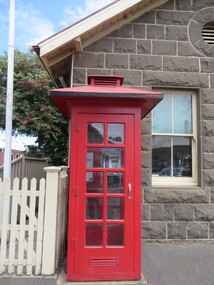
Photograph - Photograph - Colour, Clare Gervasoni, Koroit Post Office, 2015, 21/12/2015
... ...henry handel richardson...Rosebrook Bridge, Rosebrook (1853; replaced) Post Office buildings, Bank Street, Port Fairy (c.1857) The author Henry Handel Richardson lived in the Koroit Post Office as a child after her family moved to Koroit in 1878. ...Yule.) koroit post office phone box payphone bluestone henry handel richardson koroit post office Photographs showing the bluestone Koroit Post Office, phone box and postbox. ...The town borrows its name from the Koroitch Gundidj people who occupied the area prior to European settlement. (https://en.wikipedia.org/wiki/Koroit, accessed 21 December 2016) Koroit was first surveyed as a township in 1847. Around the 1850 the district had the highest population of Irish immigrants in rural Australia. The Koroit Post Office was designed by architect and engineer John Mason of Port Fairy. (Moyne Shire Heritage Study 2006 Stage 2, Volume 2: Environmental History, Prepared for Moyne Shire Council Helen Doyle in association with Context Pty Ltd, 2006.) Rosebrook Bridge, Rosebrook (1853; replaced) Post Office buildings, Bank Street, Port Fairy (c.1857) The author Henry Handel Richardson lived in the Koroit Post Office as a child after her family moved to Koroit in 1878. Remembering Koroit from her youth, the third volume in her The Fortunes of Richard Mahony trilogy is set in the town. When the author was six, her father Walter died in Koroit on 1 August 1879 and was buried at the Koroit cemetery. (https://en.wikipedia.org/wiki/Koroit, accessed 21 December 2016) In 1878 Mary Richardson was appointed postmistress of the Koroit Post Office at a salary of 72 pounds with free quarters, firewood and kerosene. She lived at the back of the Post Office. (From a Green and Pleasant Land by H. McCorkell and P. Yule.) Photographs showing the bluestone Koroit Post Office, phone box and postbox. It is located at 99 Commercial Road, Koroit. "Historic Area Statement of Significance: The significance of Koroit derives from its role as the urban centre of one of the most concentrated Irish Roman Catholic rural districts in Australia, noted for its mixed livestock and cropping argicultural patterns. This is reflected in two separate and distinctive areas in the town - the administrative/commercial area and the church precinct. The administrative and commercial area (focussing on the Boundary-Commercial Road/High Street intersection and the Koroit Hotel) consists of a number of significant public buildings and leads to a street of relatively intact humble shopfronts and kerbline verandahs, visually punctuated by opposing bank facades. The church precinct is dominated by a group of Catholic buildings larger in scale and more complete in range than those in any comparably sized Victorian town." http://vhd.heritagecouncil.vic.gov.au/places/69338#sthash.ELLuSMvg.dpuf, accessed 21 December 2016."koroit, post office, phone box, payphone, bluestone, henry handel richardson, koroit post office -
 Phillip Island and District Historical Society Inc.
Book, The fortunes of Richard Mahony, 1930
... henry handel richardson...Book belonged to Rudolf Himmer, Programme Controller for ABC Radio Victoria, who had a holiday home in Cowes on Phillip Island. henry handel richardson the fortunes of richard mahony australia felix the way home ultima thule heinemann rudolf himmer Signed: Rudolf Himmer Labelled: Himmer Bequest Stamped: Cowes Library comprising Australia Felix, The way home, Ultima Thule 990 p. ...Book belonged to Rudolf Himmer, programme controller for ABC Radio Victoria, who had holiday home in Cowes on Phillip Island.Book belonged to Rudolf Himmer, Programme Controller for ABC Radio Victoria, who had a holiday home in Cowes on Phillip Island.comprising Australia Felix, The way home, Ultima Thule 990 p.Signed: Rudolf Himmer Labelled: Himmer Bequest Stamped: Cowes Libraryhenry handel richardson, the fortunes of richard mahony, australia felix, the way home, ultima thule, heinemann, rudolf himmer -
 Emerald Museum & Nobelius Heritage Park
Book - Local history book, Nettie Palmer, The Dandenongs, 1953 (Second Edition)
... Much of her writing dealt with the themes, subjects and idiom of Australian writers, notably Henry Handel Richardson. She played a seminal role in establishing the canons of Australian literary criticism but she also wrote widely on world literature. ...Much of her writing dealt with the themes, subjects and idiom of Australian writers, notably Henry Handel Richardson. She played a seminal role in establishing the canons of Australian literary criticism but she also wrote widely on world literature. ...Janet Gertrude (Nettie) Palmer (1885-1964), writer and critic, was born on 18 August 1885 at Sandhurst (Bendigo), Victoria. Nettie's education began at home with her mother and continued at Miss Rudd's Seminary at Malvern. In 1900-04 she attended Presbyterian Ladies' College. n 1905 Nettie enrolled at the University of Melbourne (B.A., 1909; M.A., 1912). She was awarded the exhibition and first-class honours in first-year English and gained honours in modern languages. The Palmers returned to Melbourne in 1915 and moved to Katharine Prichard's cottage at Emerald. Between 1918-19 she lived with her aunt Ina Higgins, returning to Emerald living at Rose Charman Cottage in the early 1920s. Nettie emerged as possibly the most important literary critic in Australia. After the publication of Modern Australian Literature 1900-1923 (1924), a landmark in criticism which won the Lothian essay prize, she had many more regular outlets, notably her weekly literary causerie in the Illustrated Tasmanian Mail (212 articles in 5½ years), the Brisbane Courier, All About Books and the Bulletin Red Page. Nettie was committed to the development of a national literature as a means of achieving a more enlightened community. Much of her writing dealt with the themes, subjects and idiom of Australian writers, notably Henry Handel Richardson. She played a seminal role in establishing the canons of Australian literary criticism but she also wrote widely on world literature. Some of her essays were published in Talking it Over (1932); her 1928 anthology, An Australian Story-Book, set standards for the short story. Nettie's lively correspondence from Caloundra, and from 1929 from Melbourne, established a network of contact and encouragement between many Australian and overseas writers and intellectuals, and especially for young women writers such as Marjorie Barnard and Eleanor Dark for whom she provided an anchor. In 1931 she published her biography, Henry Bournes Higgins, and in 1934 she co-edited The Centenary Gift Book. Active in the Australian Literature Society, the Verse-Speaking Association, and later the Fellowship of Australian Writers, she lectured and broadcasted.The book is socially, artistically and historically significant as it is an account of the gradual settlement of the Dandenongs, and Nettie Palmer was a significant figure in Australian art circlesRed hard cover book with buff dust jacket, dust jacket protected with plastic cover.$4.95 (crosses out), 200,$1707 263dandenongs, book, nettie, palmer -
Canterbury History Group
Book, Gwen McWilliam, Boroondara Musings
... ... Richardson> Henry Handel...Boroondara Libraries Creeks Richardson> Henry Handel McCrae> Georgiana Stanley Grove Canterbury Road Canterbury Primary School Railways Schools Book two of a collection of articles by Gwen McWilliam published in the Progress Press from 1990-1993 with many coloured photographs. ...Book two of a collection of articles by Gwen McWilliam published in the Progress Press from 1990-1993 with many coloured photographs.boroondara, libraries, creeks, richardson> henry handel, mccrae> georgiana, stanley grove, canterbury road, canterbury primary school, railways, schools -
 Flagstaff Hill Maritime Museum and Village
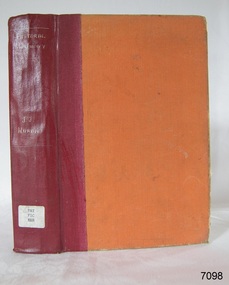
Book - Historical Novel, John Jackson Hardie, Pastoral Symphony, 1939
... While it is not considered a top-tier masterpiece of Australian literature—such as works by Patrick White, Henry Handel Richardson, or Eleanor Dark—it is respected for its meticulous detail regarding early Australian agriculture, livestock breeding, and pioneer life. ...Pastoral Symphony (1939) is an Australian historical novel set during the early years of British settlement in New South Wales, primarily during the governorship of Arthur Phillip. Unlike many early Australian bush-life stories focusing on convict labour or harsh pioneer struggles, Pastoral Symphony traces the origins of Australia's livestock and pastoral industries. It follows early settlers, stockmen, and breeders as they adapt European agriculture to the harsh Australian terrain. It was intended by Hardie as the first instalment in an ambitious historical novel trilogy.Hard cover book. Pastoral Symphony Author: J J Hardie Publisher: Angus & Robertson Date: 1939 Further Information: Red Cloth hardcover with lettering and patterning to spine in white texter. The spine has a Library label with an inscription.fictionPastoral Symphony (1939) is an Australian historical novel set during the early years of British settlement in New South Wales, primarily during the governorship of Arthur Phillip. Unlike many early Australian bush-life stories focusing on convict labour or harsh pioneer struggles, Pastoral Symphony traces the origins of Australia's livestock and pastoral industries. It follows early settlers, stockmen, and breeders as they adapt European agriculture to the harsh Australian terrain. It was intended by Hardie as the first instalment in an ambitious historical novel trilogy.warrnambool, shipwrecked-coast, flagstaff-hill, flagstaff-hill-maritime-museum, maritime-museum, shipwreck-coast, flagstaff-hill-maritime-village, shipwrecked-artefact, book, pastoral symphony, j j hardie -
 Flagstaff Hill Maritime Museum and Village
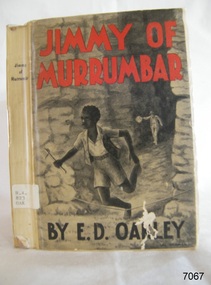
Book - A Fictional Story, Edward Daniel Oakley, Jimmy of Murrumbar, 1938
... It is not comparable in literary stature with works by Henry Handel Richardson, Miles Franklin or May Gibbs, but it is a potentially scarce and useful specimen of interwar Australian children's fiction and colonial racial representation. ...The story is a children's adventure story in which Jimmy works as a police tracker, following criminals through the Victorian bush and mountain ranges. The emphasis is on his "amazing ability" and "fidelity" that is, his loyalty, reliability and skill in serving the police. The plot appears to belong to the tradition of Australian juvenile bush fiction with a pursuit over difficult terrain, danger, endurance and the demonstration of specialised bush knowledge. It should not automatically be treated as a documentary account of a particular historical tracker. Unless the text contains an author's note or identifiable historical references, Jimmy is best regarded as a fictional or fictionalised character. The book is therefore both an adventure narrative and a period document revealing how Aboriginal ability was represented through a predominantly settler-colonial publishing culture.Hard cover book. Jimmy of Murrumbar Author: E D Oakley (Edward Daniel Oakley) Publisher: Osboldstone & Co, Pty Ltd Date: 1938 Further Information: Pictorial paper-covered boards or wrappers over a stiff paper binding Illustrated title/contents material and a frontispiece or inserted plate. The spine has a Library label with an inscription.fictionThe story is a children's adventure story in which Jimmy works as a police tracker, following criminals through the Victorian bush and mountain ranges. The emphasis is on his "amazing ability" and "fidelity" that is, his loyalty, reliability and skill in serving the police. The plot appears to belong to the tradition of Australian juvenile bush fiction with a pursuit over difficult terrain, danger, endurance and the demonstration of specialised bush knowledge. It should not automatically be treated as a documentary account of a particular historical tracker. Unless the text contains an author's note or identifiable historical references, Jimmy is best regarded as a fictional or fictionalised character. The book is therefore both an adventure narrative and a period document revealing how Aboriginal ability was represented through a predominantly settler-colonial publishing culture.shipwrecked-coast, flagstaff-hill, flagstaff-hill-maritime-museum, warrnambool, maritime-museum, shipwreck-coast, flagstaff-hill-maritime-village, shipwrecked-artefact, book, pattison collection, warrnambool library, warrnambool mechanics’ institute, ralph eric pattison, corangamite regional library service, warrnambool city librarian, mechanics’ institute library, victorian library board, warrnambool books and records, warrnambool children’s library, jimmy of murrumbar, e d oakley, edward daniel oakley, novel, young adult novel, juvenile fiction, australian black tracker, law enforcement - police trackers, tracking and trailing in australia, australian bush, grampian ranges in victoria, warrnambool history, fletcher jones, oakbank, thomas and eliza oakley, indigenous literature, indigenous australians
