
Showing 234 items matching "heritage -- kew (vic.)"
-
![Kew and Hawthorn: Further heritage investigations - Assessment of specific sites / [by] Lovell Chen](/media/collectors/550653872162f11fb04854aa/items/5ebc8bf1a9d32b09e4a3fcb7/item-media/5ebc8c98a9d32b09e4a43ea2/item-fit-380x285.jpg?cb=6) Kew Historical Society Inc
Kew Historical Society IncBooklet, Lovell Chen, Kew & Hawthorn: Further heritage investigations - Assessment of specific sites - Summary Report, 2011
... heritage - kew (vic.)...heritage - kew (vic.) heritage - hawthorn (vic.) Heritage Report of built structures Heritage investigations. ...Heritage Report of built structuresHeritage investigations. Assessment of specific sites in Kew and Hawthorn. Summary Report.non-fictionHeritage Report of built structuresheritage - kew (vic.), heritage - hawthorn (vic.) -
 Kew Historical Society Inc
Archive (Sub-series) - Subject File, Buildings (Kew), 1964
... buildings -- kew (vic.)...heritage...Typically files will contain primary and secondary sources. buildings -- kew (vic.) heritage -- kew (vic.) Reference file containing newspaper articles/clippings, research and correspondence from and to the Society. ...Various partiesReference, Research, InformationSecondary Values (KHS Imposed Order)Subject file containing newspaper articles/clippings, research and correspondence from and to the Society. The earliest item, dating from 1964 is a letter from the Society to the City of Kew seeking Council support for the use of Ellesmore, 80 Princess Street as a cultural heritage centre. Other items of correspondence relate to the Masonic Hall (Walpole Street), Fernhurst, Southesk, Roberts House, Park Hill, Butleigh Wooton, Villa Alba, D’Estaville, Charleville, Roseneath, Merridale, La Verna, Otira, Raheen, Willsmere, Holy Trinity Church. Some of these letters contain information about construction of the buildings and architects. In addition to this correspondence, the file includes brief undated research notes on the Clock Tower at the Kew Cemetery, Tarring, Southesk, the Alexandra Gardens, Studley House (Burke Hall), Ellesmore, the Masonic Hall, Xavier College, Genazzano, Trinity Grammar, Carey Baptist College, Abbotsford, Fernhurst, Illapa, Madford, Morganville, Otira, Parkhill, Monnington, Field Place, Lalla Rookh, Merridale, Kew Mental Hospital, and D’Estaville.buildings -- kew (vic.), heritage -- kew (vic.)buildings -- kew (vic.), heritage -- kew (vic.) -
Kew Historical Society Inc
Archive (Sub-series) - Subject File, Kew Historical Society, Kew Association, 1974
... kew (vic)...community groups - kew (vic)...heritage...Typically files will contain primary and secondary sources. kew - history kew association - kew (vic) community groups - kew (vic) heritage - kew (vic) Information file on ‘The Kew Association’ formed in 1974 as a separate group to the Kew Historical Society. ...Various partiesReference, Research, InformationSecondary valuesSubject file on ‘The Kew Association’ formed in 1974 as a separate group to the Kew Historical Society. Its constitution, which is filed, is general in nature. One part of the Association’s interests was the formation of a Historical Working Group to ‘examine historic buildings and other aspects of Kew’s history’. A founding member of the Society, Joy Stewart, was its convenor. By June 1974 it had 133 members. It differed from the Society in that it specifically aimed to improve Council services. One of its achievements was to begin a ‘historical home survey’ by street. The survey documents in the file list street name, number of house, side of street, size of house and general observations. Other information in the archive file includes correspondence, agendas, minutes etc. of the Association. As these only cover the years 1974-5, this may have been the period in which the group operated.kew - history, kew association - kew (vic), community groups - kew (vic), heritage - kew (vic)kew - history, kew association - kew (vic), community groups - kew (vic), heritage - kew (vic) -
 Kew Historical Society Inc
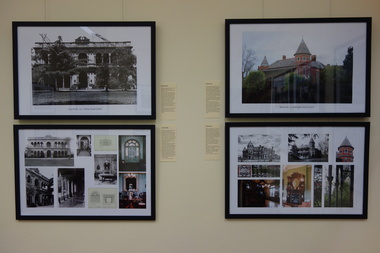
Photograph, Robert Baker, Exhibition Series - Beyond the Gate 1840-1930, 2014
... heritage - kew (vic)...Smaller displays continue to be mounted in the Kew Library. heritage - kew (vic) kew historical society - exhibitions historic houses - kew (vic) A series of born digital photographs of the framed photographs in the exhibition which explored thirteen historic houses in Kew using old and contemporary photographs. ...The Kew Historical Society, founded in 1958, is one of the oldest continuing historical societies in the Greater Melbourne region. From its beginnings, the Society has mounted exhibitions and/or displays, in early days in shop windows and in community spaces located in the Kew City Hall (later Kew Library), and since 2010 at the Kew Court House. Exhibitions typically coincided with the annual Kew Community Festival in March, but after 2013 evolved into three new exhibitions yearly at the Kew Court House. Smaller displays continue to be mounted in the Kew Library.A series of born digital photographs of the framed photographs in the exhibition which explored thirteen historic houses in Kew using old and contemporary photographs. The Houses included: Turanville, D'Estaville, Ivy Grange,Tarring, Charleville, Ramornie, Dalsraith, Heald Lawn, and the James Beament House. Each house was selected as representative of a particular decade. The curators of the exhibition were Robert Baker, Kerry Fairbank and Tony Michael. New photographs of architectural features were taken with the permission of the owner of the house.heritage - kew (vic), kew historical society - exhibitions, historic houses - kew (vic) -
Kew Historical Society Inc
Archive (Sub-series) - Subject File, Kew Historical Society, Historic Buildings Register (Kew), 1975/1985
... heritage protection - kew (vic)...Since its foundation in 1958, members of the Kew Historical Society have been compiling and storing information about subjects relating to the history of Kew and its environs, of which this file is an example. Typically files will contain primary and secondary sources. heritage protection - kew (vic) heritage victoria victorian heritage database Small archive file of correspondence between representatives of the University of Melbourne, the Council of Adult Education, and Kew Historical Society relating to buildings and parks in Kew, some of which at that time were listed on the Register of the National Estate. ...Various partiesReference, Research, InformationSecondary Values (KHS Imposed Order)Small subject file of correspondence between representatives of the University of Melbourne, the Council of Adult Education, and Kew Historical Society relating to buildings and parks in Kew, some of which at that time were listed on the Register of the National Estate. The file includes a list of buildings and very brief handwritten summaries of each.heritage protection - kew (vic), heritage victoria, victorian heritage databaseheritage protection - kew (vic), heritage victoria, victorian heritage database -
Kew Historical Society Inc
Archive (Sub-series) - Subject File, Kew Court House 1986-1989, 1986
... kew police station...heritage campaigns - kew (vic)...Kew Court House and Police Station began when the Victorian Government announced its intention to sell the properties comprising this heritage precinct. The Kew Historical Society mounted a community campaign to raise funds from the community for its preservation, with the support of the City of Boroondara. The funds raised by the Society were $500,000, which contributed to the buildings purchase and restoration. The community campaign was an exemplary example of heritage in action. The Society holds the complete documentation of this heritage campaign. kew - history kew court house kew police station heritage campaigns - kew (vic ...Various partiesReference, Research, InformationSecondary Values (KHS Imposed Order)Subject file containing information relating to the Kew Post Office complex, including the Kew Court House and the Police Station. The correspondence between parties included the City of Kew, the Kew Historical Society, and the Victorian Government. Initially the correspondence related to the proposed use of the Court House as a Centre for the Society as it was being forced to vacate the Copy Shop (q.v) in Walpole Street due to its impending demolition. Later correspondence relates to the proposed sale of the Court House by the Victorian Government.kew - history, kew court house, kew police station, heritage campaigns - kew (vic)kew - history, kew court house, kew police station, heritage campaigns - kew (vic) -
Kew Historical Society Inc
Archive (Sub-series) - Subject File, Kew Court House - 2000-2005, 2000
... kew police station...heritage campaigns - kew (vic)...Kew Court House and Police Station began when the Victorian Government announced its intention to sell the properties comprising this heritage precinct. The Kew Historical Society mounted a community campaign to raise funds from the community for its preservation, with the support of the City of Boroondara. The funds raised by the Society were $500,000, which contributed to the buildings purchase and restoration. The community campaign was an exemplary example of heritage in action. The Society holds the complete documentation of this heritage campaign. kew - history kew court house kew police station heritage campaigns - kew (vic ...Various partiesReference, Research, InformationSecondary Values (KHS Imposed Order)Subject file containing information about the heritage significance of the Kew Court House (and Police Station) in High Street, Kew. Most of the file contains correspondence between a number of interested parties including the Kew Historical Society which was leading the campaign to have the building/precinct preserved and used for community purposes. Letters and submissions include those from the Department of Treasury & Finance, Ray Tonkin (Heritage Victoria), Dr. Robert Dean MLA, Judith Voce, Hon David Davis MLC, John Lenders MP, Hon John Thwaites, Andrew McIntosh MLA and officers of the Kew Historical Society. The file also contains records of interview and memos and meeting minutes relating to the campaign.kew - history, kew court house, kew police station, heritage campaigns - kew (vic)kew - history, kew court house, kew police station, heritage campaigns - kew (vic) -
Kew Historical Society Inc
Archive (Series) - Tours & Heritage Walks
... Tours – Kew (Vic.)...Heritage...Tours – Kew (Vic.) Heritage Walks – Kew (Vic.) Tourism – Kew (Vic.) ...Various PartiesReference, Research, InformationArranged by Secondary Values (value of records to users)The many features of Boroondara, both naturally and historically, provide many-a-would-be tour guides with different paths and tours to perform in the area. These range from exploring Hay’s Paddocks, to the Kew Billabong as well as around Camberwell. The file includes: Multiple booklets detailing tours to take around Boroondara, and a modern booklets on heritage walks to take as a self-guided tour. The Society has produced five self-guided walking tours of areas within Kew that are also available at the Kew Court House.tours – kew (vic.), heritage walks – kew (vic.), tourism – kew (vic.)tours – kew (vic.), heritage walks – kew (vic.), tourism – kew (vic.) -
Kew Historical Society Inc
Archive (series) - Subject File, Victoria Park : Concept Management Plan, Research Papers, 2004, 2004
... heritage architect...victoria park - kew (vic)...The Butler papers provide an important, and increasingly significant body of heritage research relating to Kew. graeme butler - heritage architect victoria park - kew (vic) heritage studies - kew (vic.) ...Graeme Butler & AssociatesProject FilesProvenance OrderRed cardboard wallet containing historical research by Graeme Butler, heritage architect, into the history of Victoria Park, Kew. The file also includes a draft Victoria Park Concept Master Plan, 2004. The research includes memoranda, maps, photocopies of plans, forms, notes, aerial photos, and sundry references.graeme butler - heritage architect, victoria park - kew (vic), heritage studies - kew (vic.)graeme butler - heritage architect, victoria park - kew (vic), heritage studies - kew (vic.) -
![72 Pakington St., Kew / [by] Amethyst Moon Enterprises](/media/collectors/550653872162f11fb04854aa/items/5ebc8e26a9d32b09e4a49e1a/item-media/5ebc8f0aa9d32b09e4a4a9bb/item-fit-380x285.jpg?cb=6) Kew Historical Society Inc
Kew Historical Society IncBook, Amethyst Moon Publishing, 72 Pakington St., Kew, 2017
... kew (vic.)...house histories - kew (vic.)...heritage...72 pakington street - kew (vic.) house histories - kew (vic.) heritage reports - houses - kew (vic.) ...House historyHouse history. 72 Pakington Street, Kew, Victoria. Book in presentation box with title.non-fictionHouse history72 pakington street - kew (vic.), house histories - kew (vic.), heritage reports - houses - kew (vic.) -
 Kew Historical Society Inc
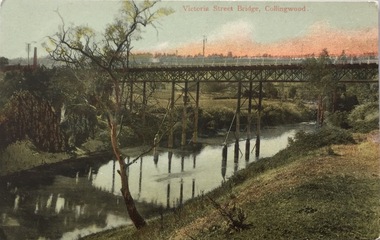
Postcard, Victoria Street Bridge, Collingwood, 1905-1913
... Heritage Victoria) Early and rare postcard of the Victoria Street Bridge linking Victoria Street and Barkers Road. postcards -- Yarra River postcards -- bridges. -- Greater Melbourne (Vic.) Victoria Street bridge View from Harrison Cres embankment / former Xavier College boatshed on site of tree in foreground. / Chimney left corner - Wool Scoring Mils in Victoria St. / On horizon - Studley Villa, Studley House circa 1880s, Studley Hall / Chinese gardens to be seen behind three set of columns / M.J. Slattery Polychrome postcard of the Victoria Street Bridge which links Richmond and Abbotsford with Kew ...Victoria Bridge is a riveted and welded steel Warren truss bridge over the Yarra River completed in 1884 to a design by Fraser & Chase following a controversial design competition held in 1880. Funds for the bridge's construction were provided by the councils of Collingwood, Hawthorn, Kew and Richmond. The contract was awarded to Mr P. Platt. Charles Rowand was officially appointed Supervising Engineer in 1883. The winning design was based on the theoretical work of William Charles Kernot (1845-1909) who campaigned for economy in public works design and the application of scientific principles in engineering. ... The bridge was widened in 1890 by the addition of a third line of truss on new piers on the up stream side to carry horse trams. Work commenced in 1914 to convert the horse tramway to an electric tramway by the Prahran & Malvern Tramways Trust, part of the Trust's extension of its tramway into the eastern suburbs between 1913-18. In 1915 the bridge was further strengthened to accommodate the extra weight of electric trams and widened by the addition of two six feet cantilever footpaths. During this period the Prahran & Malvern Tramways Trust erected two ornamental gantries over the roadway to support overhead wires for the electric tramway. Further widening and reconditioning of the bridge took place in 1933, including the addition of four new welded trusses, two intermediate and two on the outside. The latter were supported on new cantilevered truss cross beams attached to the top of the piers. (Source: Heritage Victoria)Early and rare postcard of the Victoria Street Bridge linking Victoria Street and Barkers Road.Polychrome postcard of the Victoria Street Bridge which links Richmond and Abbotsford with Kew and Hawthorn.View from Harrison Cres embankment / former Xavier College boatshed on site of tree in foreground. / Chimney left corner - Wool Scoring Mils in Victoria St. / On horizon - Studley Villa, Studley House circa 1880s, Studley Hall / Chinese gardens to be seen behind three set of columns / M.J. Slatterypostcards -- yarra river, postcards -- bridges. -- greater melbourne (vic.), victoria street bridge -
 Kew Historical Society Inc
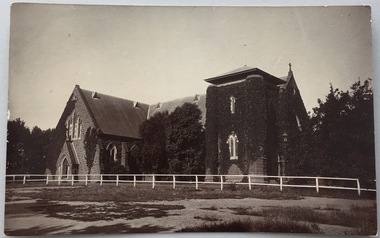
Postcard, Holy Trinity Church, 1905-1913
... Heritage classifications. The church contains many stained glass windows dating from the 19th century. holy trinity church -- kew (vic.) churches -- kew (vic.) postcards -- kew (vic.) postcards -- churches (vic.) ...Holy Trinity Anglican Church is one of the parishes of the Diocese of Melbourne in the Anglican Church of Australia. Services of worship began in this building in March, 1863. The Vicarage was built in 1873, and both carry National Heritage classifications. The church contains many stained glass windows dating from the 19th century.Monochrome postcard showing the exterior of Holy Trinity Church, High Street, Kew. The western exterior of the church is viewed from High Street, Kew. The Church is surrounded by extensive vegetation, some later removed. The postcard predates 1913 when the tower was completed."Reg-No-KHS-411. Holy Trinity Church Kew - Prior to tower completion (1913)"holy trinity church -- kew (vic.), churches -- kew (vic.), postcards -- kew (vic.), postcards -- churches (vic.) -
 Kew Historical Society Inc
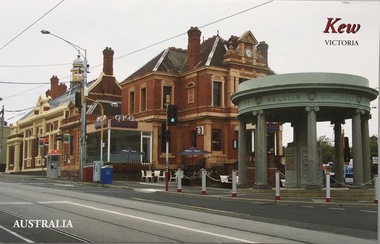
Postcard, Margie McKenzie Photography, Kew Victoria, Australia, c.2010
... kew (vic.) QPO Bar, Restuarant & Function Centre/ Cnr High Street & Cotham Rd. Mel Ref 45 C6 MacKenzie photography / Copyright margiesphotos.com.au Modern photographic postcard of the QPO Restaurant and the former Kew Court House. At the front of the restaurant is the Kew War Memorial, the drum of which at this stage was incorrectly painted a shade of green, which the Council later changed after representations from the Kew Historical Society and a heritage report. ...The Kew Historical Society's postcard collection includes views of Kew, Melbourne and Greater Melbourne as well as those including overseas scenes sent or received from Europe or the Middle East. They date from the 1890s to the 2000s. These postcards may or may not include the name of the publisher or printer. A number of the cards were published as parts of popular series. Modern photographic postcard of the QPO Restaurant and the former Kew Court House. At the front of the restaurant is the Kew War Memorial, the drum of which at this stage was incorrectly painted a shade of green, which the Council later changed after representations from the Kew Historical Society and a heritage report.QPO Bar, Restuarant & Function Centre/ Cnr High Street & Cotham Rd. Mel Ref 45 C6 MacKenzie photography / Copyright margiesphotos.com.auqpo restaurant, kew post office, kew court house, kew war memorial, postcards -- kew (vic.) -
 Kew Historical Society Inc
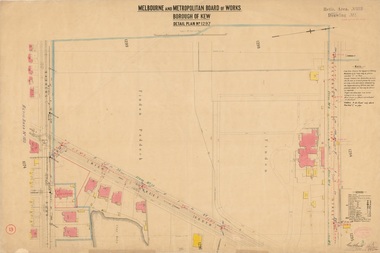
Plan, Melbourne & Metropolitan Board of Works : Borough of Kew : Detail Plan No.1297, 1904
... heritage consultants. A number of the plans are not held in the collection of the State Library of Victoria so they have the additional attribute of rarity. melbourne and metropolitan board of works, detail plans mmbw 1297 cartography Kew (Vic.) — municipal collection Original survey plan, issued by the MMBW to a sewage contractor with responsibility for constructing sewers in the area identified on the plan within the Borough of Kew. ...The Melbourne and Metropolitan Board of Works (MMBW) plans were produced from the 1890s to the 1950s. They were crucial to the design and development of Melbourne's sewerage and drainage system. The plans, at a scale of 40 feet to 1 inch (1:480), provide a detailed historical record of Melbourne streetscapes and environmental features. Each plan covers one or two street blocks (roughly six streets), showing details of buildings, including garden layouts and ownership boundaries, and features such as laneways, drains, bridges, parks, municipal boundaries and other prominent landmarks as they existed at the time each plan was produced. (Source: State Library of Victoria)This plan forms part of a large group of MMBW plans and maps that was donated to the Society by the Mr Poulter, City Engineer of the City of Kew in 1989. Within this collection, thirty-five hand-coloured plans, backed with linen, are of statewide significance as they include annotations that provide details of construction materials used in buildings in the first decade of the 20th century as well as additional information about land ownership and usage. The copies in the Public Record Office Victoria and the State Library of Victoria are monochrome versions which do not denote building materials so that the maps in this collection are invaluable and unique tools for researchers and heritage consultants. A number of the plans are not held in the collection of the State Library of Victoria so they have the additional attribute of rarity.Original survey plan, issued by the MMBW to a sewage contractor with responsibility for constructing sewers in the area identified on the plan within the Borough of Kew. The plan was at some stage hand-coloured, possibly by the contractor, but more likely by officers working in the Engineering Department of the Borough and later Town, then City of Kew. The hand-coloured sections of buildings on the plan were used to denote masonry or brick constructions (pink), weatherboard constructions (yellow), and public buildings (grey). This plan of Kew encompasses the area bounded by Barkers Road, High Street and Stevenson Street. Because of the angle created by High Street, a number of houses on the northern side of High Street are shown. The area is dominated by one of the great original landholdings in Kew, described here as the ‘Findon Paddock’. ‘Findon’, the house from which the name of the paddock was taken fronts Stevenson Street and was clearly a rambling structure. The best-known occupant of Findon was Henry ‘Money Miller’ who bought the house in 1871. Miller was a member of Victoria’s first parliament and assisted in the framing of its constitution. Findon was to be subdivided as early as 1912, when the Findon Subdivision was advertised to be sold by auction. In the plan of the subdivision, the original house is not shown, so, presumably it had previously been demolished. Fincham & Son moved the organ, built by Henry Willis, which was installed in the house, first to ‘Whernside’ in Toorak, and later to the Box Hill Methodist Church.melbourne and metropolitan board of works, detail plans, mmbw 1297, cartography, kew (vic.) — municipal collection -
Kew Historical Society Inc
Journal, Kew Historical Society, Newsletter No.130, March 2020
... kew historical society (vic.) -- periodicals. kew historical society (vic.) -- newsletters kew historical society (vic.) -- journals Historic Sporting Clubs / Robert Baker p1. History News: Monthly Meetings, 2020 Kew Festival, Australian Heritage ...Historic Sporting Clubs / Robert Baker p1. History News: Monthly Meetings, 2020 Kew Festival, Australian Heritage Festival p3. Kew's Golden Triangle: Crown Land Portion 86 / Margaret Robinson p4. Woodbury Ladies' College 1903-1920 / Robert Baker p6. John Percy Jones: a socialist in Kew / David White p8. The Humes of Studley Park: 5 Studley Avenue and the Hume Pipe Garden / Julie King p10. Donations to the collection / Robert Baker p11. Membership & Donations p12.Published quarterly since 1977, the newsletters of the Kew Historical Society contain significant research by members exploring relevant aspects of the Victorian and Australian Framework of Historical Themes. Frequently, articles on people, places and artefacts are the only source of information about an aspect of Kew, and Melbourne’s history.non-fictionHistoric Sporting Clubs / Robert Baker p1. History News: Monthly Meetings, 2020 Kew Festival, Australian Heritage Festival p3. Kew's Golden Triangle: Crown Land Portion 86 / Margaret Robinson p4. Woodbury Ladies' College 1903-1920 / Robert Baker p6. John Percy Jones: a socialist in Kew / David White p8. The Humes of Studley Park: 5 Studley Avenue and the Hume Pipe Garden / Julie King p10. Donations to the collection / Robert Baker p11. Membership & Donations p12.kew historical society (vic.) -- periodicals., kew historical society (vic.) -- newsletters, kew historical society (vic.) -- journals -
Kew Historical Society Inc
Journal, Kew Historical Society, Newsletter No.128, September 2019
... kew historical society (vic.) -- periodicals. kew historical society (vic.) -- newsletters kew historical society (vic.) -- journals A View From Rockingham / Robert Baker p1. Society News: Events, [Donations to] The Collection, Exhibition, History Week 2019 p3. Conserving Our Civic Heritage ...A View From Rockingham / Robert Baker p1. Society News: Events, [Donations to] The Collection, Exhibition, History Week 2019 p3. Conserving Our Civic Heritage & History [Local History Grant] / Robert Baker p4. Victoria’s First Self-Service Supermarket / David White p5. Kew Historical Society 1900-2000 / Robert Baker p7. The Kew Spur Line: a key to the past / Robert Baker p9.A Pharmaceutical Collection / Robert Baker p10. [Notice of] Annual General Meeting / Desley Reid p10. Form for Appointment of Proxy p11. Nomination Form p11. Membership & Donations p12.Published quarterly since 1977, the newsletters of the Kew Historical Society contain significant research by members exploring relevant aspects of the Victorian and Australian Framework of Historical Themes. Frequently, articles on people, places and artefacts are the only source of information about an aspect of Kew, and Melbourne’s history.non-fictionA View From Rockingham / Robert Baker p1. Society News: Events, [Donations to] The Collection, Exhibition, History Week 2019 p3. Conserving Our Civic Heritage & History [Local History Grant] / Robert Baker p4. Victoria’s First Self-Service Supermarket / David White p5. Kew Historical Society 1900-2000 / Robert Baker p7. The Kew Spur Line: a key to the past / Robert Baker p9.A Pharmaceutical Collection / Robert Baker p10. [Notice of] Annual General Meeting / Desley Reid p10. Form for Appointment of Proxy p11. Nomination Form p11. Membership & Donations p12.kew historical society (vic.) -- periodicals., kew historical society (vic.) -- newsletters, kew historical society (vic.) -- journals -
Kew Historical Society Inc
Journal, Kew Historical Society, Newsletter No.124, September 2018
... kew historical society (vic.) -- periodicals. kew historical society (vic.) -- newsletters kew historical society (vic.) -- journals History & Heritage / Robert Baker p1. ...History & Heritage / Robert Baker p1. Society News p3. Kew Municipal Baths / David White p4. Kew East Heritage Gap Study / Brad Miles p6. Preserving Visual Evidence in Paintings / Robert Baker {with Don Garden, Lisa Worrell] p5. Performing & Visual Arts: the Vandersluys-Kelly Collection / Robert Baker p9. Notice of Annual General Meeting / Brad Miles p10. Form for Appointment of Proxy; Nomination form p11. Membership & Donations p12.Published quarterly since 1977, the newsletters of the Kew Historical Society contain significant research by members exploring relevant aspects of the Victorian and Australian Framework of Historical Themes. Frequently, articles on people, places and artefacts are the only source of information about an aspect of Kew, and Melbourne’s history.non-fictionHistory & Heritage / Robert Baker p1. Society News p3. Kew Municipal Baths / David White p4. Kew East Heritage Gap Study / Brad Miles p6. Preserving Visual Evidence in Paintings / Robert Baker {with Don Garden, Lisa Worrell] p5. Performing & Visual Arts: the Vandersluys-Kelly Collection / Robert Baker p9. Notice of Annual General Meeting / Brad Miles p10. Form for Appointment of Proxy; Nomination form p11. Membership & Donations p12.kew historical society (vic.) -- periodicals., kew historical society (vic.) -- newsletters, kew historical society (vic.) -- journals -
Kew Historical Society Inc
Journal, Kew Historical Society, Newsletter No.121, December 2017
... kew historical society (vic.) -- periodicals. kew historical society (vic.) -- newsletters kew historical society (vic.) -- journals No. 121 DECEMBER 2017. Award winning collection / Robert Baker p1. In the News - Exhibitions [Theatre & Music in Kew 1940-1970]; Meetings [Alfred Fuller /George Maidment]; Annual Dinner; Committee News p3. Heritage ...No. 121 DECEMBER 2017. Award winning collection / Robert Baker p1. In the News - Exhibitions [Theatre & Music in Kew 1940-1970]; Meetings [Alfred Fuller /George Maidment]; Annual Dinner; Committee News p3. Heritage Gap Study: City of Boroondara / Don Garden p4. 31 Miller Grove: Evaluating its historical significance / Robert Baker p.5. Kew Fire Brigade / David White p6. Houses Hitting the Dust: The changing streetscape and social structure of Gladstone Street [Kew] / Suzanne McWha p8. Membership & Donations p12.Published quarterly since 1977, the newsletters of the Kew Historical Society contain significant research by members exploring relevant aspects of the Victorian and Australian Framework of Historical Themes. Frequently, articles on people, places and artefacts are the only source of information about an aspect of Kew, and Melbourne’s history.non-fictionNo. 121 DECEMBER 2017. Award winning collection / Robert Baker p1. In the News - Exhibitions [Theatre & Music in Kew 1940-1970]; Meetings [Alfred Fuller /George Maidment]; Annual Dinner; Committee News p3. Heritage Gap Study: City of Boroondara / Don Garden p4. 31 Miller Grove: Evaluating its historical significance / Robert Baker p.5. Kew Fire Brigade / David White p6. Houses Hitting the Dust: The changing streetscape and social structure of Gladstone Street [Kew] / Suzanne McWha p8. Membership & Donations p12.kew historical society (vic.) -- periodicals., kew historical society (vic.) -- newsletters, kew historical society (vic.) -- journals -
Kew Historical Society Inc
Journal, Kew Historical Society, Newsletter No.116, September 2016
... kew historical society (vic.) -- periodicals. kew historical society (vic.) -- newsletters kew historical society (vic.) -- journals Back to Kew 1875 / Judith Scurfield p1. Heritage ...Back to Kew 1875 / Judith Scurfield p1. Heritage issues / Brad Miles p3. What's On - September to December / Brad Miles p3. New Strategic Plan / Brad Miles p4. Not a Ragbag Wagga: the Kew patchwork quilt / Suzanne McWha p5. The Great War in Kew: 1916 those who went / Andrew Frost p7. The Kew Festival Gazette 5 October 1895 / Don Garden p7. The Skilled Artisan: Bertie Robert Edgar Greenwood / Robert Baker, John Torpey, Judith Vimpani p9. Jill O'Brien / Robert Baker p9. More examples of Lost Kew - Clutha / Robert Baker; Fernhurst / Kerry Fairbank; Blackhall / Felicity Renowden; Kew Railway Station / Robert Baker p10. AGM Form of appointment of proxy p11. AGM Nomination form p11.Published quarterly since 1977, the newsletters of the Kew Historical Society contain significant research by members exploring relevant aspects of the Victorian and Australian Framework of Historical Themes. Frequently, articles on people, places and artefacts are the only source of information about an aspect of Kew, and Melbourne’s history.non-fictionBack to Kew 1875 / Judith Scurfield p1. Heritage issues / Brad Miles p3. What's On - September to December / Brad Miles p3. New Strategic Plan / Brad Miles p4. Not a Ragbag Wagga: the Kew patchwork quilt / Suzanne McWha p5. The Great War in Kew: 1916 those who went / Andrew Frost p7. The Kew Festival Gazette 5 October 1895 / Don Garden p7. The Skilled Artisan: Bertie Robert Edgar Greenwood / Robert Baker, John Torpey, Judith Vimpani p9. Jill O'Brien / Robert Baker p9. More examples of Lost Kew - Clutha / Robert Baker; Fernhurst / Kerry Fairbank; Blackhall / Felicity Renowden; Kew Railway Station / Robert Baker p10. AGM Form of appointment of proxy p11. AGM Nomination form p11.kew historical society (vic.) -- periodicals., kew historical society (vic.) -- newsletters, kew historical society (vic.) -- journals -
Kew Historical Society Inc
Journal, Kew Historical Society, Newsletter No.113, December 2015
... kew historical society (vic.) -- periodicals. kew historical society (vic.) -- newsletters kew historical society (vic.) -- journals Creative Communities / Robert Baker p1. Exhibitions p3. Quarterly Book Sale p3. Meetings & Lectures p3. Kew Historical Society Online p3. Chandler Hwy Upgrade options / Brad Miles p4. Lost Melbourne / Robert Baker p4. Heritage ...Creative Communities / Robert Baker p1. Exhibitions p3. Quarterly Book Sale p3. Meetings & Lectures p3. Kew Historical Society Online p3. Chandler Hwy Upgrade options / Brad Miles p4. Lost Melbourne / Robert Baker p4. Heritage Issues: 14 Irymple Avenue / Debbie McColl-Davis & Richard Peterson p5. The Diaries of Chris Robinson / John Torpey p7. Patriotic Buttons / Suzanne McWha & Robert Baker p9. Coley of Kew / Suzanne McWha p10. Some Examples of Lost Kew: Byram; Chipperfield's Boat House; Rotunda Alexandra Gardens; Kilby Lodge / Various authors p11. Membership & Donations p12.Published quarterly since 1977, the newsletters of the Kew Historical Society contain significant research by members that explore aspects of the Victorian and Australian Framework of Historical Themes. Frequently, articles on people, places and artefacts are the only source of information about an aspect of Kew, and Melbourne’s history.non-fictionCreative Communities / Robert Baker p1. Exhibitions p3. Quarterly Book Sale p3. Meetings & Lectures p3. Kew Historical Society Online p3. Chandler Hwy Upgrade options / Brad Miles p4. Lost Melbourne / Robert Baker p4. Heritage Issues: 14 Irymple Avenue / Debbie McColl-Davis & Richard Peterson p5. The Diaries of Chris Robinson / John Torpey p7. Patriotic Buttons / Suzanne McWha & Robert Baker p9. Coley of Kew / Suzanne McWha p10. Some Examples of Lost Kew: Byram; Chipperfield's Boat House; Rotunda Alexandra Gardens; Kilby Lodge / Various authors p11. Membership & Donations p12.kew historical society (vic.) -- periodicals., kew historical society (vic.) -- newsletters, kew historical society (vic.) -- journals -
 Kew Historical Society Inc
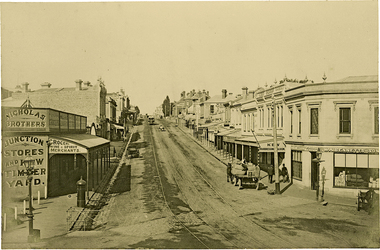
Photograph, J F C Farquhar, High Street, Kew, 1891
... Kew. The individual images have proved essential in identifying buildings and places of heritage value in the district. kew illustrated kew where we live photographic books henry kellett high street - kew (vic) High Street, Kew In 1891, High Street was the centre of commercial activity in the Borough of Kew. ...At the beginning of the 1890s, the Kew businessman and Town Councillor, Henry Kellett, commissioned J.F.C. Farquhar to photograph scenes of Kew. These scenes included panoramas as well as pastoral scenes. The resulting set of twelve photographs was assembled in an album, Kew Where We Live, from which customers could select images for purchase.The preamble to the album describes that the photographs used the ‘argentic bromide’ process, now more commonly known as the gelatine silver process. This form of dry plate photography allowed for the negatives to be kept for weeks before processing, hence its value in landscape photography. The resulting images were considered to be finely grained and everlasting. Evidence of the success of Henry Kellett’s venture can be seen today, in that some of the photographs are held in national collections.It is believed that the Kew Historical Society’s copy of the Kellett album is unique and that the photographs in the book were the first copies taken from the original plates. It is the first and most important series of images produced about Kew. The individual images have proved essential in identifying buildings and places of heritage value in the district.In 1891, High Street was the centre of commercial activity in the Borough of Kew. It was unpaved and edged with deep bluestone gutters, which were designed to channel the significant flow of storm water down the hill to and beyond the Junction. On either side of the entrance to the shopping strip are two cast iron gas lamps that provided the only public street lighting before the Post Office was reached. Most shops, including the Nicholas Brothers’ Junction Store featured cast iron verandas. Further up the hill, Dougherty’s Greyhound Hotel was by this stage a local institution. Apart from the horse-drawn tram, the main form of personal and commercial transport in this period remained the horse, horse and cart, or buggy.The panoramic view predates the widening of High Street in the 20th century, and thus includes the original alignment of buildings on the south side. These included Henry Kellett’s shop.High Street, Kewkew illustrated, kew where we live, photographic books, henry kellett, high street - kew (vic) -
 Kew Historical Society Inc
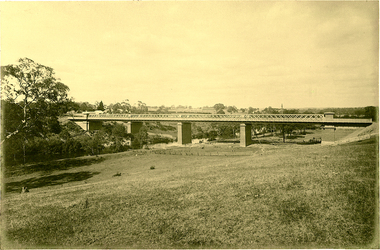
Photograph, J F C Farquhar, Railway Bridge Over the Yarra, 1891
... Kew. The individual images have proved essential in identifying buildings and places of heritage value in the district. kew illustrated kew where we live photographic books henry kellett railway viaduct - - kew (vic) Railway Bridge Over the Yarra Completed in November 1890, the railway viaduct (now the Chandler Highway Bridge) linked Kew and Fairfield. ...At the beginning of the 1890s, the Kew businessman and Town Councillor, Henry Kellett, commissioned J.F.C. Farquhar to photograph scenes of Kew. These scenes included panoramas as well as pastoral scenes. The resulting set of twelve photographs was assembled in an album, Kew Where We Live, from which customers could select images for purchase.The preamble to the album describes that the photographs used the ‘argentic bromide’ process, now more commonly known as the gelatine silver process. This form of dry plate photography allowed for the negatives to be kept for weeks before processing, hence its value in landscape photography. The resulting images were considered to be finely grained and everlasting. Evidence of the success of Henry Kellett’s venture can be seen today, in that some of the photographs are held in national collections.It is believed that the Kew Historical Society’s copy of the Kellett album is unique and that the photographs in the book were the first copies taken from the original plates. It is the first and most important series of images produced about Kew. The individual images have proved essential in identifying buildings and places of heritage value in the district.Completed in November 1890, the railway viaduct (now the Chandler Highway Bridge) linked Kew and Fairfield. The viaduct is significant as the most substantial extant engineering remnant of the Outer Circle Railway Line. Opened in March 1891, the viaduct crossed the Yarra River in a single span, atop three supporting brick pillars. Following the closure of the railway line in 1927, and the construction of the Chandler Highway in 1930, the bridge was used for vehicular traffic. In 1891 when this panoramic photograph was taken, the grounds of what was then the Kew Lunatic Asylum extended down to the River and eastward beyond the viaduct. The landscape surrounding the Asylum was planted with traditional exotic trees such as Oaks, Pines and Cedars, and landmark trees from northern Australia such as the Hoop Pine. Remnant indigenous trees such as the River Red Gum, Yellow Box and Lightwood were scattered around the site, including beside the Yarra River.Railway Bridge Over the Yarrakew illustrated, kew where we live, photographic books, henry kellett, railway viaduct - - kew (vic) -
 Kew Historical Society Inc
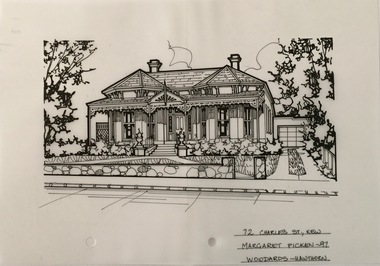
Drawing - Property Illustration, Margaret Picken, 72 Charles Street, Kew, 1997
... The year in which the drawing was created is also a valuable record for house historians, as a number of the properties depicted have either been altered since that date or demolished. artist -- margaret picken 1950- architectural drawings -- houses -- kew (vic.) 72 charles street -- kew (vic.) 72 CHARLES ST., KEW / MARGARET PICKEN ~97 / WOODARDS ~ HAWTHORN Victorian villa of Hawthorn brick. Built in 1890 and with Grade B heritage ...After training as a Cartographic Draftsman within the mining industry, I worked as a property illustrator for real estate firms in the eastern suburbs of Melbourne for 23 years from 1983. I initially photographed houses with a Polaroid camera and made a 'thumbnail' sketch while there. The photos were used to scale off a sketch in pencil and then that sketch was overlaid with drafting film and the 'pen and ink' completed. The pens I used were the Rotring ‘Rapidigraph’ drafting pens. The ink was also made by Rotring (German).The film was ‘Rapidraw’, polyester drafting film, double matte. It takes a very fine line and doesn’t bleed. As well as house sketches, there were often floor plans and site plans ordered. Aerial sketches were ordered when the property needed an overall view. (Margaret Picken, 2020)This drawing is one of a series created by Margaret Picken for a range of real estate agents in Melbourne between c.1983 and c.2005. Each work is signed and dated by the artist.Gift of Margaret Picken, 2020Victorian villa of Hawthorn brick. Built in 1890 and with Grade B heritage listing by the City of Boroondara. Rear additions and alterations in 1999. Replacement verandah roof and floor in 2020. Stone fence has been replaced with a palisade fence. The pen and ink architectural drawing on drafting film of 72 Charles Street, Kew was made by Margaret Picken in 1997.72 CHARLES ST., KEW / MARGARET PICKEN ~97 / WOODARDS ~ HAWTHORNartist -- margaret picken 1950-, architectural drawings -- houses -- kew (vic.), 72 charles street -- kew (vic.) -
 Kew Historical Society Inc
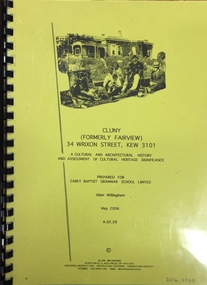
Document, Allan Willingham, Cluny (Formerly Fairview) 34 Wrixon Street, Kew 3101: A cultural and architectural history and assessment of cultural heritage significance / Allan Willingham, 2006
... kew (vic.) Research report, prepared by Allan Willingham for Carey Baptist Grammar School in 2006, into Cluny (formerly Fairview) 34 Wrixon Street, Kew 3101. The cultural and architectural history and assessment of cultural heritage ...Research Report on Fairview, Cluny, held in the KHS Reference Files. Research report, prepared by Allan Willingham for Carey Baptist Grammar School in 2006, into Cluny (formerly Fairview) 34 Wrixon Street, Kew 3101. The cultural and architectural history and assessment of cultural heritage includes a summary of the building's current heritage status, a history of the property, biographical portraits of the principal owners, an architectural history, an assessment of its cultural heritage significance, a statement of conservation policy and appendices.fairview -- wrixon avenue -- kew (vic.) -
 Kew Historical Society Inc
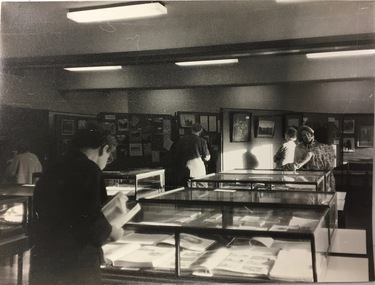
Photograph, Kew Historical Society, Historical Exhibition, Festival of Kew, 1976
... Kew’s history and heritage. The Society has regularly held local exhibitions, sometimes in shop windows, on other occasions in civic halls, and now at the Kew Court House and Kew Library. This and other photos taken in the same year are examples of an exhibition in the Kew City Hall. kew historical society - exhibitions kew city hall kew (vic.) -- history Reverse: "KH27. ...The Kew Historical Society, founded in 1958, is one of the oldest continuing historical societies in the Greater Melbourne region. For over 60 years, the Society has worked with local government and other community organisations to stimulate interest in Kew’s history and heritage. The Society has regularly held local exhibitions, sometimes in shop windows, on other occasions in civic halls, and now at the Kew Court House and Kew Library. This and other photos taken in the same year are examples of an exhibition in the Kew City Hall.Two foundation members of the Kew Historical Society at an early exhibition mounted by the Society. The historic 1890s oil painting of Adeney Avenue, donated to the Society in 1965 [1965.0002], can be viewed on one of the screens in the background. Reverse: "KH27. Kew Historical Society member Mr Clark, and Mrs Reed in attendance at the Historical Exhibition, Festival of Kew 1976. Kew Civic Centre (Town Hall), Mr Clark, background, Mrs Reed, facing camera."kew historical society - exhibitions, kew city hall, kew (vic.) -- history -
 Kew Historical Society Inc
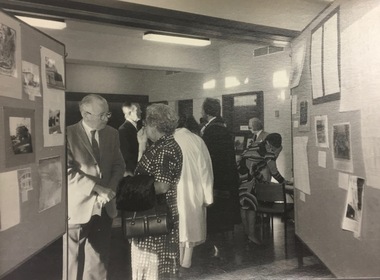
Photograph, Kew Historical Society, Historical Exhibition, Festival of Kew, 1976
... Kew’s history and heritage. The Society has regularly held local exhibitions, sometimes in shop windows, on other occasions in civic halls, and now at the Kew Court House and Kew Library. This and other photos taken in the same year are examples of an exhibition in the Kew City Hall. kew historical society - exhibitions kew (vic.) -- history kew civic hall kew city hall exhibitions — kew (vic.) ...The Kew Historical Society, founded in 1958, is one of the oldest continuing historical societies in the Greater Melbourne region. For over 60 years, the Society has worked with local government and other community organisations to stimulate interest in Kew’s history and heritage. The Society has regularly held local exhibitions, sometimes in shop windows, on other occasions in civic halls, and now at the Kew Court House and Kew Library. This and other photos taken in the same year are examples of an exhibition in the Kew City Hall.Attendees including named members of the Society at an early art exhibition.Reverse: "KH31. Background from left, KHS members (mayor Cr Hutchinson & mayoress), Mr Slattery, Reed, Miss Mack. Two visitors nearest camera. Historical exhibition 1976." "Dr McMahon?" kew historical society - exhibitions, kew (vic.) -- history, kew civic hall, kew city hall, exhibitions — kew (vic.) -
 Kew Historical Society Inc
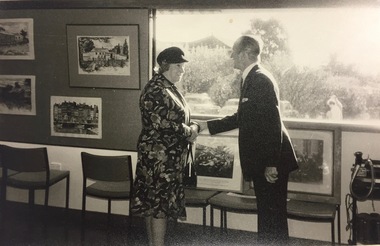
Photograph, Kew Historical Society, Historical Exhibition, Festival of Kew, 1976
... Kew’s history and heritage. The Society has regularly held local exhibitions, sometimes in shop windows, on other occasions in civic halls, and now at the Kew Court House and Kew Library. This and other photos taken in the same year are examples of an exhibition in the Kew City Hall. kew historical society - exhibitions kew (vic.) -- history kew civic hall kew city hall exhibitions — kew (vic.) ...The Kew Historical Society, founded in 1958, is one of the oldest continuing historical societies in the Greater Melbourne region. For over 60 years, the Society has worked with local government and other community organisations to stimulate interest in Kew’s history and heritage. The Society has regularly held local exhibitions, sometimes in shop windows, on other occasions in civic halls, and now at the Kew Court House and Kew Library. This and other photos taken in the same year are examples of an exhibition in the Kew City Hall.Cr Cascarret and Marshall Slattery at the Festival of Kew Exhibition, 1976.Reverse: "KH166. Cr Cascarret, member of Melb City Council and Mr M Slattery attending the KHS display 1976"kew historical society - exhibitions, kew (vic.) -- history, kew civic hall, kew city hall, exhibitions — kew (vic.) -
 Kew Historical Society Inc
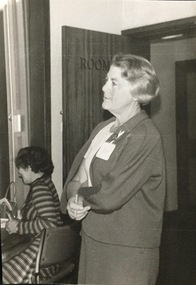
Photograph, Kew Historical Society, Historical Exhibition, Festival of Kew, 1976
... Kew’s history and heritage. The Society has regularly held local exhibitions, sometimes in shop windows, on other occasions in civic halls, and now at the Kew Court House and Kew Library. This and other photos taken in the same year are examples of an exhibition in the Kew City Hall. kew historical society - exhibitions kew (vic.) -- history kew civic hall kew city hall exhibitions — kew (vic.) ...The Kew Historical Society, founded in 1958, is one of the oldest continuing historical societies in the Greater Melbourne region. For over 60 years, the Society has worked with local government and other community organisations to stimulate interest in Kew’s history and heritage. The Society has regularly held local exhibitions, sometimes in shop windows, on other occasions in civic halls, and now at the Kew Court House and Kew Library. This and other photos taken in the same year are examples of an exhibition in the Kew City Hall. Mrs E. (Betty) Robertson at the Festival of Kew Exhibition, 1976.Reverse: "2-14. Kew Historical Society member, an (sic) co'organiser of Historical Exhibition, at Festival of Kew, 1976. Miss E. Robertson (Betty) nearest camera. KH36"kew historical society - exhibitions, kew (vic.) -- history, kew civic hall, kew city hall, exhibitions — kew (vic.) -
Kew Historical Society Inc
Archive (Sub-series) - Subject File, Bowling Clubs, 1958
... kew (vic.)...studley park bowling club...urban conservation...heritage...Typically files will contain primary and secondary sources. sports clubs - kew (vic.) studley park bowling club urban conservation heritage protection Reference file containing correspondence relating to the former Studley Park Bowling Club in Barry Street, Kew and its relocation to Yarra Bend Park. ...Various partiesReference, Research, InformationKHS OrderSubject file containing correspondence relating to the former Studley Park Bowling Club in Barry Street, Kew and its relocation to Yarra Bend Park. The file includes a photocopy of the letter by Nigel Lewis to the City of Kew, describing the historic importance of the Club (established c.1903) and the necessity of moving it before demolition. The file has information relating to the pavilion’s move and restoration as an art centre. [ KHS also holds the complete archives of the Auburn Heights Recreation Club (1904-98), the Kew Bowling Club (1880-1998) and the Kew Heights Sports Club (1998-2012). These are separate archives in Provenance Order].sports clubs - kew (vic.), studley park bowling club, urban conservation, heritage protectionsports clubs - kew (vic.), studley park bowling club, urban conservation, heritage protection -
Kew Historical Society Inc
Archive (Sub-series) - Subject File, Conservation Study (Kew) 1984-88, 984
... Typically files will contain primary and secondary sources. conservation studies -- kew(vic.) pru sanderson city of kew urban conservation study Archive file containing information about the nationally-funded Kew Urban Conservation Study, conducted by Pru Sanderson and completed in 1988. The Society had two representatives on the Kew Heritage ...Various partiesReference, Research, InformationSecondary Values (KHS Imposed Order)Subject file containing information about the nationally-funded Kew Urban Conservation Study, conducted by Pru Sanderson and completed in 1988. The Society had two representatives on the Kew Heritage Committee, which was established by Council to oversee the project. The file contains a number of documents including a copy of the original submission of May 1984. Two bound copies of the completed report in three volumes are held in the Society’s library.conservation studies -- kew(vic.), pru sanderson, city of kew urban conservation studyconservation studies -- kew(vic.), pru sanderson, city of kew urban conservation study
