
Showing 598 items matching "homelands"
-
 Narre Warren and District Family History Group
Photograph, Bloucher
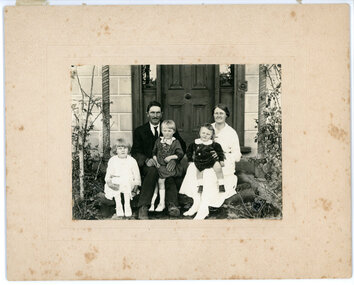
... ...Homelands...To Oscar & Minna With love from all at "Homelands" June 16th 1921. John Bloucher + his wife Minnie daughters Freda + Hazle + son Fred. ...Family history Historical Johann Blucher Minnie Blucher nee Wanke Frieda Blucher Hazel Blucher Fred Blucher Homelands To Oscar & Minna With love from all at "Homelands" June 16th 1921. ...Family historyHistoricalA black and white photograph of a family of two adults and three children sitting in front of a door of a houseTo Oscar & Minna With love from all at "Homelands" June 16th 1921. John Bloucher + his wife Minnie daughters Freda + Hazle + son Fred. Rushton Photo Pakenhamjohann blucher, minnie blucher nee wanke, frieda blucher, hazel blucher, fred blucher, homelands -
 Lakes Entrance Historical Society
Photograph - Bertha Hansen c1969, Lakes Post Newspaper
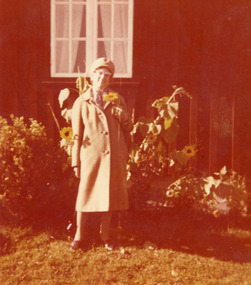
... Colour photograph of Miss Bertha Hansen taken standing by a garden possibly in her homeland Sweden...owner of Vengan Guest House Lakes Entrance Genealogy Colour photograph of Miss Bertha Hansen taken standing by a garden possibly in her homeland Sweden Photograph Bertha Hansen c1969 Lakes Post Newspaper ...owner of Vengan Guest House Lakes EntranceColour photograph of Miss Bertha Hansen taken standing by a garden possibly in her homeland Swedengenealogy -
 Ballarat RSL Sub-Branch Inc.
Letter - Re Bottle Message
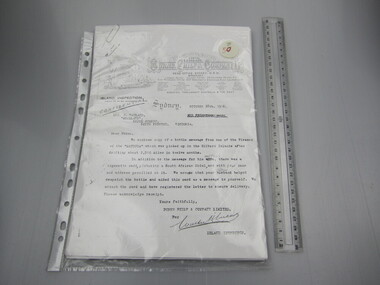
... From Burns, Philp & Co Ltd to Mrs J WAYLAND, "HOMELAND", Bruce Street, South Preston, VICTORIA...His next of kin is Pearl WAYLAND (Wife) First World War (WW1) 1914 - 1918 Literature Ballarat RSL Ballarat From Burns, Philp & Co Ltd to Mrs J WAYLAND, "HOMELAND", Bruce Street, South Preston, VICTORIA Letter - Re Bottle Message ...This object relates to James Henry WAYLAND. He was born on 14/10/1883 in Collingwood, VIC. James Henry served in the AMF AN&MEF (306) enlisting on, 14/12/1914 in Collingwood, VIC before being discharged from duties with the 2nd AN&MEF as a AN&MEF Non-Commissioned Sergeant (SGT) on 21/07/1919. James Henry WAYLAND was a prisoner of war. His next of kin is Pearl WAYLAND (Wife)From Burns, Philp & Co Ltd to Mrs J WAYLAND, "HOMELAND", Bruce Street, South Preston, VICTORIAfirst world war (ww1), 1914 - 1918, literature, ballarat rsl, ballarat -
 Warrnambool and District Historical Society Inc.
Book, Warrnambool A Long way to Tipperary The incredible life of John Hyland, 2014
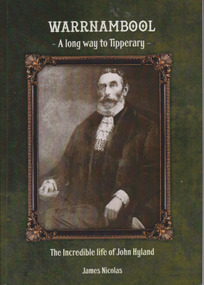
... Dedicated to all of those who joined the Irish Exodus around the world who loved their homeland and culture but necessity drove them to find new opportunities in new lands. ...Dedicated to all of those who joined the Irish Exodus around the world who loved their homeland and culture but necessity drove them to find new opportunities in new lands. ...Biography of early Warrnambool settler, John Hyland.Paperback Background is dark green with sepia photo in bronze coloured frame. Precis on back cover is printed in white lettering. 132 pages.non-fictionBiography of early Warrnambool settler, John Hyland.warrnambool, john hyland, james nicholas, warrnambool mayors -
 Bendigo Historical Society Inc.
Book - M.A. Mackay music book
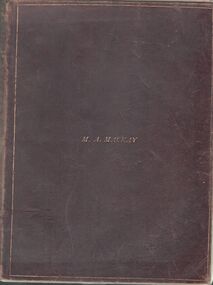
... The songs included are: Ever and ever mine, the dear homeland, The daily question, The old countree, the clang of the wooden shoon, home dearie home, The carnival, Last night, A creole love song, an old garden, for all eternity, The valley by the sea, Call me back. ...The songs included are: Ever and ever mine, the dear homeland, The daily question, The old countree, the clang of the wooden shoon, home dearie home, The carnival, Last night, A creole love song, an old garden, for all eternity, The valley by the sea, Call me back. ...Brown cover book with the name M.A. Mackay in gold letter on the front. Index of songs handwritten on second page. The songs included are: Ever and ever mine, the dear homeland, The daily question, The old countree, the clang of the wooden shoon, home dearie home, The carnival, Last night, A creole love song, an old garden, for all eternity, The valley by the sea, Call me back. Aileen and John Ellison Collection."No. 17" on first page. Stamp of Evans and Crock, Bendigo on several pages.music, mackay -
 Trafalgar Holden Museum
Functional object - Polson Gun, 1941
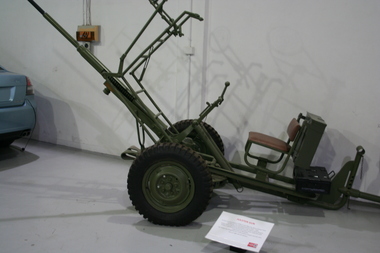
... Designed by a Czeck design team in London in 1941 after the Nazi's invaded their homeland....Designed by a Czeck design team in London in 1941 after the Nazi's invaded their homeland. Manufactured in Australia by Holden weaponary military polson gun Mobile multi shot machine cannon, military green in colour., seat for operator at rear. ...Designed by a Czeck design team in London in 1941 after the Nazi's invaded their homeland.Manufactured in Australia by HoldenMobile multi shot machine cannon, military green in colour., seat for operator at rear.weaponary, military, polson gun -
 Bendigo Historical Society Inc.
Slide - DIGGERS & MINING. CHINESE ON THE GOLDFEILD, c1857
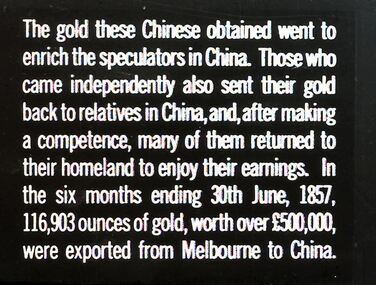
... Those who came independently also sent their gold back to relatives in China, and, after making a competence, many of them returned to their homeland to enjoy their earnings. In the six months ending 30th June,1857, 116.903 ounces of gold, worth over £500,000, were exported from Melbourne to China. ...Those who came independently also sent their gold back to relatives in China, and, after making a competence, many of them returned to their homeland to enjoy their earnings. In the six months ending 30th June,1857, 116.903 ounces of gold, worth over £500,000, were exported from Melbourne to China. ...Diggers & Mining. Gold. Chinese on the goldfeild. The gold these Chinese obtained went to enrich the speculators in China. Those who came independently also sent their gold back to relatives in China, and, after making a competence, many of them returned to their homeland to enjoy their earnings. In the six months ending 30th June,1857, 116.903 ounces of gold, worth over £500,000, were exported from Melbourne to China. Markings: 8 994.GOL. Used as a teaching aid.hanimounteducation, tertiary, goldfields -
 Sunshine and District Historical Society Incorporated
Book - Changing Places Vietnamese Women in Melbourne's West, Melbourne's Living Museum of the West, 1985
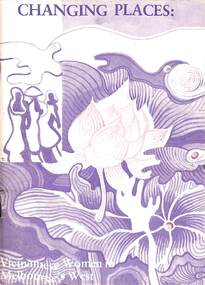
... The book tells of personal stories, struggles and adjustments of Vietnamese women after having to flee their homeland....The book tells of personal stories, struggles and adjustments of Vietnamese women after having to flee their homeland. Vietnamese Vietnam Women Community history Refugee camps This book contains stories of Vietnamese Women in Melbourne's Western Suburbs Changing Places Vietnamese Women in Melbourne's West|Le Van Tai|Thi Tu Nguyen|Yen Nhi|Trng Dang|Pham Thi Tranh|Carolyn Nguyen|Thai Huu Phuc|Uyen|and many other people A soft purple covered book with illustrations Changing Places Vietnamese Women in Melbourne's West Book Changing Places Vietnamese Women in Melbourne's West Melbourne's Living Museum of the West Le Van Tai Thanh Son Ngyuen Jenny Mitchell ...This book contains stories of Vietnamese Women in Melbourne's Western SuburbsA soft purple covered book with illustrationsnon-fictionThis book contains stories of Vietnamese Women in Melbourne's Western Suburbsvietnamese, vietnam, women, community history, refugee camps -
 Greensborough Historical Society
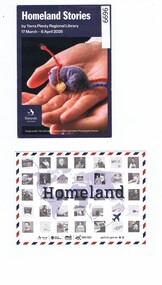
Postcard - Postcards, Yarra Plenty Regional Library, Homeland Stories, 2025
... Homeland Stories...Promotional cards regarding Homeland Stories by Yarra Plenty Regional Library 17 March - 6 April 2025...Promotional cards regarding Homeland Stories by Yarra Plenty Regional Library 17 March - 6 April 2025 yarra plenty regional library Homeland Stories immigration 2 cards with coloured images, black print and black and white images Homeland Stories Postcard Postcards Yarra Plenty Regional Library ...Promotional cards regarding Homeland Stories by Yarra Plenty Regional Library 17 March - 6 April 20252 cards with coloured images, black print and black and white imagesyarra plenty regional library, homeland stories, immigration -
 Bayside Gallery - Bayside City Council Art & Heritage Collection
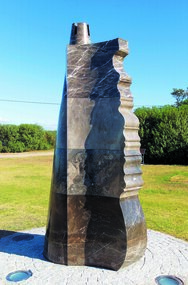
Sculpture, Faustas Sadauskas, The Beacon, 2003
... Inscribed with text that is an extract from a verse sung by Lithuanian displaced persons sailing to Australia having fled their homeland after Russian occupation following World War II. ...beacon sculpture faustas sadauskas Bayside Coastal Trail marble public art Black Rock foreshore Beach Road Progress park ship rudder Inscribed with text that is an extract from a verse sung by Lithuanian displaced persons sailing to Australia having fled their homeland after Russian occupation following World War II. ...Public art commission located at Progress Park on the Black Rock Foreshore.Inscribed with text that is an extract from a verse sung by Lithuanian displaced persons sailing to Australia having fled their homeland after Russian occupation following World War II. The text is in an ancient Runic typeface, translated in English, reads: "Faustas Sadauskas created Beacon two thousand [and] four years / Let the Blowing Wind Who Taketh the Ship Away Take Me Away".beacon, sculpture, faustas sadauskas, bayside coastal trail, marble, public art, black rock, foreshore, beach road, progress park, ship, rudder -
 Bendigo Military Museum
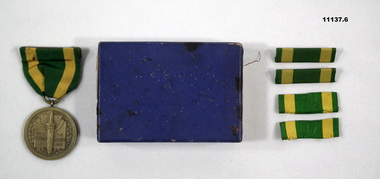
Award - SPANISH WAR MEDAL WITH BARS AND BOX, Unknown
... Spanish War Service Medal, was created for personnel to contributed to Homeland Defence in Spanish American War 1899 but not eligible for Spanish Campaign Medal....Spanish War Service Medal, was created for personnel to contributed to Homeland Defence in Spanish American War 1899 but not eligible for Spanish Campaign Medal. ...1. Spanish War Service Medal, was created for personnel to contributed to Homeland Defence in Spanish American War 1899 but not eligible for Spanish Campaign Medal.1. Spanish War Service medals - US - with ribbon and pin. 2. Blue box lined with velvet. 3. Bar for Spanish Service Medal - Green and Yellow. 4. bar for Spanish Service Medal - Green and Yellow. 5. Bar Ribbon Cover - Green and Yellow. 6. Bar Ribbon Cover - Green and Yellow.1. Medal Inscribed - "For Service in The Spanish War" inscribed serial no. 21758.ron mills collection, medal, spanish conflict -
 Bendigo Historical Society Inc.
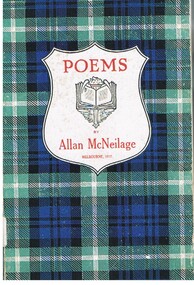
Book - ALEC H. CHISHOLM COLLECTION: BOOK ''POEMS'' BY ALLAN MCNEILAGE
... CHISHOLM COLLECTION. 128 page cardboard cover book of verse subtitled 'Memories o' the Homeland Australian Fancies and Friendly Epistles'. ...CHISHOLM COLLECTION. 128 page cardboard cover book of verse subtitled 'Memories o' the Homeland Australian Fancies and Friendly Epistles'. ...Book. ALEC H. CHISHOLM COLLECTION. 128 page cardboard cover book of verse subtitled 'Memories o' the Homeland Australian Fancies and Friendly Epistles'. A selection of poems of Allan McNeilage with a forward by Thos. L. Work. Illustrated with four B & W Scottish scenes and two Australian scenes. Published in 1917 by the Victorian Scottish Union, Melbourne and printed by J. T. Picken & Son, Melbourne. Catalogue sticker '2027 MCN' on spine. Handwritten in ink on the flyleaf ''With compliments from Cr. J. S. Yorston Caulfield Sept 7. 43''Allan McNeilagebooks, collections, poetry, alec h. chisholm collection, allan mcneilage, victorian scottish union, j.s.yorston, poetry -
 Bendigo Historical Society Inc.
Document - MALONE COLLECTION: GREETING CARDS
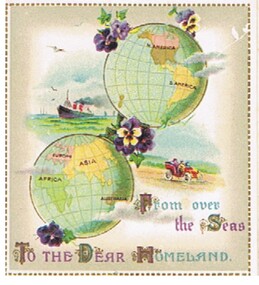
... 'From over the Seas To the Dear Homeland' printed in gold, blue and purple at the bottom....'From over the Seas To the Dear Homeland' printed in gold, blue and purple at the bottom. ...Small white card with a gold, dashed border. At the top is a world map with N & S America on it and diagonally below it is another world map with Africa, Europe, Asia and Australia on it. There are 2 small bunches of pansies at the top of the America globe, a larger one between the two globes and a purple pansy below the lower globe. On the left of the globes is a coloured picture of a ship and on the right, a picture of people in a red car travelling in the country. Grey shading inside the gold border. 'From over the Seas To the Dear Homeland' printed in gold, blue and purple at the bottom.person, greeting cards, malone collection, malone collection, greeting cards -
 Ithacan Historical Society
Postcard, SS Queen Frederica, 1957
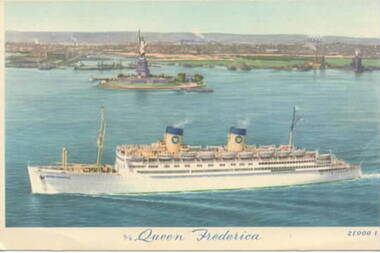
... The ocean liner 'SS Queen Frederica', owned by the Greek shipping company Chandris Lines during the 1960s and 1970s, carried many Greek emigrants from their homeland to other countries across the world. ...The ocean liner 'SS Queen Frederica', owned by the Greek shipping company Chandris Lines during the 1960s and 1970s, carried many Greek emigrants from their homeland to other countries across the world. ...The ocean liner 'SS Queen Frederica', owned by the Greek shipping company Chandris Lines during the 1960s and 1970s, carried many Greek emigrants from their homeland to other countries across the world. A coloured post card of the liner 'Queen Fredirica' in full sail entering New York harbour with the Statue of Liberty in the background.QUEEN FREDERICA/ 21.000 -
 Bendigo Historical Society Inc.
Document - GERMAN HERITAGE SOCIETY COLLECTION: BAROSSA VALLEY COACH TOUR 1994, 8th - 10th April, 1994
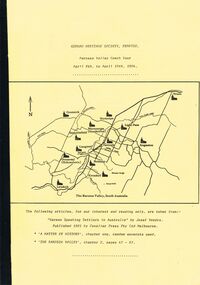
... Mentioned in the booklet are the German settlement in the Barossa Valley, the arrival of the Germans in Australia and some of the reasons which led up to why they left their homeland....Mentioned in the booklet are the German settlement in the Barossa Valley, the arrival of the Germans in Australia and some of the reasons which led up to why they left their homeland. Document GERMAN HERITAGE SOCIETY COLLECTION: BAROSSA VALLEY COACH TOUR 1994 ...Bound collection with a yellow front cover and a buff back cover. Barossa Valley Coach Tour, April 8th to April 10th, 1984. The front has a line map of The Barossa Valley, South Australia. Articles taken from 'German Speaking Settlers in Australia' by Josef Vondra, Published 1981 by Cavalier Press Pty Ltd Melbourne. 'A Matter of History' chapter one, random excerpts used. 'The Barossa Valley', chapter 2, pages 47 - 67. Mentioned in the booklet are the German settlement in the Barossa Valley, the arrival of the Germans in Australia and some of the reasons which led up to why they left their homeland.document, memo, german heritage society, german heritage society collection - barossa valley coach tour 1994, josef vondra, cavalier press pty ltd -
 Moorabbin Air Museum
Document (Item) - Defence White Paper 2008 - 02- 04
... Description: GAO: 09-184 Date Jan 2009 Author: GAO Publisher: GAO Binding: Loose Leaf - Envelope Keywords: Homeland Defence - Actions Needed to Imrove Management of Air Sovereignty Alert Operation to Protect U.S. ...Description: GAO: 09-184 Date Jan 2009 Author: GAO Publisher: GAO Binding: Loose Leaf - Envelope Keywords: Homeland Defence - Actions Needed to Imrove Management of Air Sovereignty Alert Operation to Protect U.S. ...Description: GAO: 09-184 Date Jan 2009 Author: GAO Publisher: GAO Binding: Loose Leaf - Envelope Keywords: Homeland Defence - Actions Needed to Imrove Management of Air Sovereignty Alert Operation to Protect U.S. Air Space Level of Importance: World. -
 Embroiderers Guild, Victoria
Textile - Chippewaw Indian Beaded Mat, Late 1800's
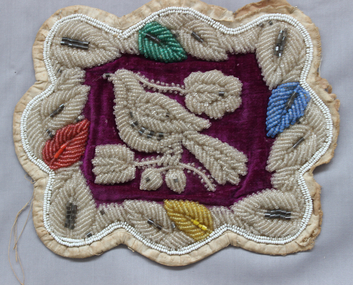
... The Chippewa, also known as the Ojibway, Ojibwe, and Anishinaabe, are one of the largest and most powerful nations in North America, having nearly 150 different bands throughout their original homeland in the northern United States — primarily Minnesota, Wisconsin, and Michigan; and southern Canada — especially Ontario, Manitoba, and Saskatchewan....The Chippewa, also known as the Ojibway, Ojibwe, and Anishinaabe, are one of the largest and most powerful nations in North America, having nearly 150 different bands throughout their original homeland in the northern United States — primarily Minnesota, Wisconsin, and Michigan; and southern Canada — especially Ontario, Manitoba, and Saskatchewan. ...The Chippewa, also known as the Ojibway, Ojibwe, and Anishinaabe, are one of the largest and most powerful nations in North America, having nearly 150 different bands throughout their original homeland in the northern United States — primarily Minnesota, Wisconsin, and Michigan; and southern Canada — especially Ontario, Manitoba, and Saskatchewan.Example of native american beadworkChunky beaded mat with a design of leaves and birds on purple velvet, cotton backing Edged in white beads and cotton, scalloped.Chippewaw Indian (on back)beading, mats, birds -
 Lara RSL Sub Branch
Book, Khaki and Green, 1943
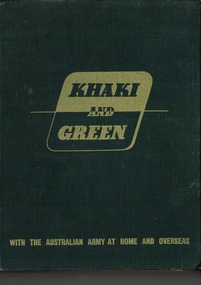
... Khaki and Green is a summary of the scope of the activities of the Australian soldiers since last they related their experiences, in book form. To their homeland. It speaks of desert and jungle epitomising the two major regions of the campaign in which Australians have participated since October 1942 - the overthrow of Rommel's forces at El Alamein and the smashing of the Chinese in Papua....Khaki and Green is a summary of the scope of the activities of the Australian soldiers since last they related their experiences, in book form. To their homeland. It speaks of desert and jungle epitomising the two major regions of the campaign in which Australians have participated since October 1942 - the overthrow of Rommel's forces at El Alamein and the smashing of the Chinese in Papua. ...Khaki and Green is a summary of the scope of the activities of the Australian soldiers since last they related their experiences, in book form. To their homeland. It speaks of desert and jungle epitomising the two major regions of the campaign in which Australians have participated since October 1942 - the overthrow of Rommel's forces at El Alamein and the smashing of the Chinese in Papua.Collection of servicemen recounts, poems and cartoons from World War 2Faded light green hardcover front and back with title in centre symmetrical green and back lettering (shadowed) With the Australian Army at home and overseas. Text is repeated on spine of book. Front and back inside pages has an illustrations of a kit bag and it's contents and text - Palestine, United Kingdom, Egypt, Libya, Greece, Crete, Eritrea, Cyprus, Syria, Siam, Malaya, Java, Ambon, Ceylon, China, New Britain, Ocean islands, Nauru, New Caledonia, New Guinea, Solomon's, Papua, Timor, Dutch New Guinea. Photos, illustrations, cartoons, poems. There are three copies held at the Lara RSL Sub Branch.To the memory of fallen comrades ‘They gave their lives. For the public gift they received a praise which never ages and a tomb most glorious – not so much the tomb in which they lie, but that in which their fame survives, to be remembered forever when occasion comes for word or dead…. ‘ blaney, aif, 6th and 7th division, poetry, middle east, south west pacific, darwin, nassau bay, kokoda, rats of moresby, bullybeef, night patrol, jungle fighters, prisoners of war, world war 2, ww2 -
 Mission to Seafarers Victoria
Card - Christmas message, Dear 717 Crew Seafarers and my Friends
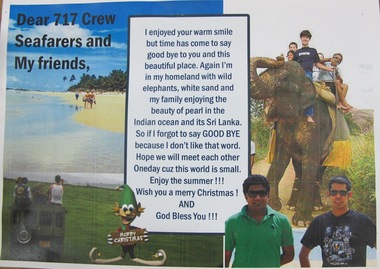
... Again I am in my homeland with wild elephants , white sand and my family enjoying the beusty of pearl in the Indian ocean and its [sic] Sri Lanka. ...Again I am in my homeland with wild elephants , white sand and my family enjoying the beusty of pearl in the Indian ocean and its [sic] Sri Lanka. ...Christmas Greeting sent by seafarers who previously visited the Mission to Seafarers circa 2000 - 2015A4 colour laser print of several collaged images with messageI enjoyed your warm smile but time has come to say goodbye to you and this beautiful place . Again I am in my homeland with wild elephants , white sand and my family enjoying the beusty of pearl in the Indian ocean and its [sic] Sri Lanka. So if I forgot to say GOOD BYE because I dont like that word. Hope we will meet each other Oneday [sic] cuz this world is small . Enjoy the summer!!! Wish you a merry Christmas ! AND God Bless You!!! / MERRY CHRISTMAScrew 717, flinders street, mission to seafarers, christmas, elephant, sri lanka, indian ocean -
 Mission to Seafarers Victoria
Book - Reference book, Jill Barnard et al, Welcome and Farewell: The Story of Station Pier, 2004
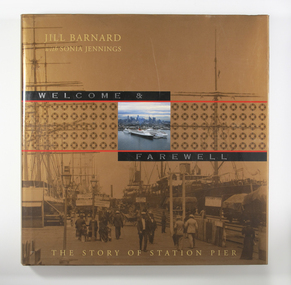
... Those who departed to homelands and foreign shores, and they who represented us and were never to return to loved ones. ...Those who departed to homelands and foreign shores, and they who represented us and were never to return to loved ones. ...In the mid-nineteenth century, Victoria’s primitive maritime infrastructure was not coping with the volume of passenger and cargo traffic arriving in and departing from the burgeoning gold-fevered colony. However, the opening of Railway Pier at Port Melbourne in 1854 greatly improved the situation. Railway Pier serviced the steamships, which plied Port Phillip Bay and the Victorian coastal waters beyond, and also offered berths for vessels on the regular runs to other Australian colonies and to overseas destinations. However, as the larger and more powerful steamships of the early twentieth century found berthing increasingly difficult at Railway Pier, the need for a more modern pier became apparent. By 1930, the new Station Pier had replaced its predecessor. Itself extended and upgraded several times including during the past decade, Station pier still offers every contemporary convenience to shipping services using its busy facilities, just as did its predecessor Railway Pier, 150 years ago. The Victorian Government commissioned Welcome & Farewell to celebrate the 150 years since the opening of the Railway Pier. In doing so, it was mindful that the story of the site is not limited to its contribution to national and state economies, or to its physical development. The Government wanted a history that would also speak to ordinary Victorians, and other Australians, of their own experiences of this significant place. For indeed the Station Pier site has played its part in almost every milestone or phase in our history: at moments of celebration and commemoration, during economic booms and depressions, during times of war and peace. It has also won a place in the hearts of ordinary individuals affected by the welcomes and farewells they have experienced there: those for visiting royalty and celebrities, for servicemen and medical personnel off to war or returning home, for migrants from distant countries and refugees from war zones, for friends and family travelling for personal, professional or cultural reasons. Welcome & Farewell thoughtfully examines Station Pier’s significance and offers a splendid visual panorama of the experiences lived out there between 1854 and 2004.Illustrated large-format book with 224 pages [36] p. of plates. : ill., maps, ports.Bibliography: p. 199-201non-fictionIn the mid-nineteenth century, Victoria’s primitive maritime infrastructure was not coping with the volume of passenger and cargo traffic arriving in and departing from the burgeoning gold-fevered colony. However, the opening of Railway Pier at Port Melbourne in 1854 greatly improved the situation. Railway Pier serviced the steamships, which plied Port Phillip Bay and the Victorian coastal waters beyond, and also offered berths for vessels on the regular runs to other Australian colonies and to overseas destinations. However, as the larger and more powerful steamships of the early twentieth century found berthing increasingly difficult at Railway Pier, the need for a more modern pier became apparent. By 1930, the new Station Pier had replaced its predecessor. Itself extended and upgraded several times including during the past decade, Station pier still offers every contemporary convenience to shipping services using its busy facilities, just as did its predecessor Railway Pier, 150 years ago. The Victorian Government commissioned Welcome & Farewell to celebrate the 150 years since the opening of the Railway Pier. In doing so, it was mindful that the story of the site is not limited to its contribution to national and state economies, or to its physical development. The Government wanted a history that would also speak to ordinary Victorians, and other Australians, of their own experiences of this significant place. For indeed the Station Pier site has played its part in almost every milestone or phase in our history: at moments of celebration and commemoration, during economic booms and depressions, during times of war and peace. It has also won a place in the hearts of ordinary individuals affected by the welcomes and farewells they have experienced there: those for visiting royalty and celebrities, for servicemen and medical personnel off to war or returning home, for migrants from distant countries and refugees from war zones, for friends and family travelling for personal, professional or cultural reasons. Welcome & Farewell thoughtfully examines Station Pier’s significance and offers a splendid visual panorama of the experiences lived out there between 1854 and 2004.port melbourne, station pier -
Tatura Irrigation & Wartime Camps Museum
Folder, Recollections of events in the life of the Girschik and Griffin families
... Letters (2) to Girschik Family and Annie Girschik in German and translated into English. New Homeland written by Helga Griffin. Copy of speeches to Goethe Society, Canberra 2006 and Tatura Probus Club 2007. ...Letters (2) to Girschik Family and Annie Girschik in German and translated into English. New Homeland written by Helga Griffin. Copy of speeches to Goethe Society, Canberra 2006 and Tatura Probus Club 2007. ...Recollections of events in the life of the Girschik and Griffin families. Internment of the Girschik Family - Personal Diary by Rudolf Girschik. Letters (2) to Girschik Family and Annie Girschik in German and translated into English. New Homeland written by Helga Griffin. Copy of speeches to Goethe Society, Canberra 2006 and Tatura Probus Club 2007. Text in German and English. Birth Certificate Peter Girschik. Camp 3 TaturaWritten recollections of events in the life of the Girschik familyww2 camp 3, girschik, griffin, helga griffin, helga girschik, annie girschik, peter girschik, camp 3 tatura -
 Wodonga & District Historical Society Inc
Slide - Mann Collection Album - High Street West from Lawrence Street - old Wine Café, C. 1940s
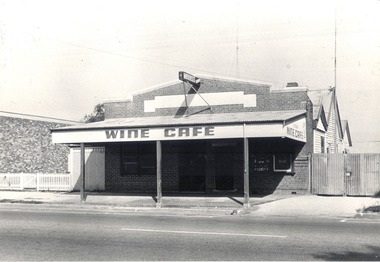
... It was owned by the Costa family for many years, then taken over by Josephine Adams Bernardo Costa was born in Switzerland in 1829 and left his homeland for Sydney at the age of 27. He ventured south to the gold fields of Beechworth and Yackandandah. ...It was owned by the Costa family for many years, then taken over by Josephine Adams Bernardo Costa was born in Switzerland in 1829 and left his homeland for Sydney at the age of 27. He ventured south to the gold fields of Beechworth and Yackandandah. ...Elaine Mann was married to David Mann, a successful Wodonga businessman and community leader who passed away in Wodonga in June 2012. David was a member of the Mann family who began their business in Wodonga in 1920. Elaine was a teacher in Wodonga for many years and an active member of the community.This photo collection is of significance as it documents how the businesses and buildings in Wodonga have evolved and contributed to community throughout the late 20th century.This image is reproduced from a set of coloured slides. The Wine Café on High Street next to Woolworths Food Fair Supermarket. It was owned by the Costa family for many years, then taken over by Josephine Adams Bernardo Costa was born in Switzerland in 1829 and left his homeland for Sydney at the age of 27. He ventured south to the gold fields of Beechworth and Yackandandah. He moved to Wodonga in1891. Bernardo applied for and was granted a wine licence on 24/14/1887 and established his Wine Saloon. After his death in 1915, the Wine Café continued to be operated by his daughters Annie, Angela and Gertrude. They also operated a boarding house behind the café. The business operated under a range of owners for approximately 72 years, closing in about 1963. It was estimated that hundreds of thousands of gallons of wines of all kinds were sold there. On façade of building "WINE CAFE"wodonga businesses, high street wodonga, woolworths food fair, peard plumbing, roy benson -
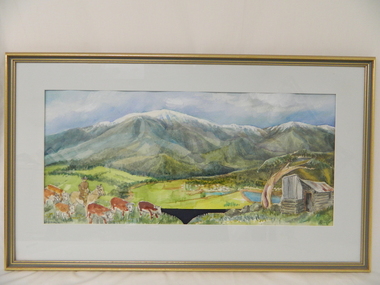 Kiewa Valley Historical Society
Painting, Cattlemen of the Bogong High Plains, c1995
... An official opening was held and Leo used the money earned to visit his homeland, Austria. Leo trained as a restorer of church art in Austria....An official opening was held and Leo used the money earned to visit his homeland, Austria. Leo trained as a restorer of church art in Austria. ...Leo Wimmer who lived locally was commissioned to do the painting for the Mt Beauty, S. K. Pearce Pty. Ltd., Supermarket as a display was wanted to fit against the blank walls opposite the cash registers (where the liquor store is now). His idea was to break up the parts in the painting and use these as large replicas painted on wood for the display. An official opening was held and Leo used the money earned to visit his homeland, Austria. Leo trained as a restorer of church art in Austria.This painting was commissioned for a Cattlemen's display behind the cash registers at the Mt Beauty S. K. Pearce Supermarket. Each part of the foreground was painted separately onto stand alone boards -the cattle, the hut, the grass and the Mt Beauty township. Leo Wimmer lived locally and was a professional frame conservator. Leo Wimmer specialised in gilding and worked at the National Gallery of Victoria and later the National Gallery of Australia (NGA Nov. 1981 - 1990) where he was responsible for conservation of gilded frames in the national collection. This involved crafting of missing pieces on period frames, conservation/restoration of gilded surfaces, crafting of period frames, and lecturing at galleries and institutions on gilding, wood carving, Australian frame history and crafting of period frames. Framed painting of Mt Bogong with cattle, Mt Beauty township and cattleman's hut in foreground.Circular watermark (illegible) on bottom right corner. "Wimmer / 1" is underneath the watermark.cattlemen; bogong high plains; s.k.pearce; mt beauty supermarket; leo wimmer; -
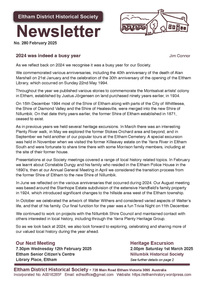 Eltham District Historical Society Inc
Journal - Newsletter, Newsletter, No. 280 February 2025
... Contents: • 2024 was indeed a busy year by Jim Connor • Our next meeting –7:30pm Wednesday 12th February 2025 – Homeland: Stories from Afar; Liz Pidgeon YPRL • Our next excursion – Saturday 1st March 2025 – Nillumbik Historical Society • Convict Life On The Chain by Ian Bryant • Eltham Water Reserve • My Schooldays at Killeavey by Jenny Ellis • Margot Knox by Alistair Knox • Margot Knox 1931 - 2002 by Gwen Ford • Men’s Sheds by Jim Connor • Little Eltham Heritage Walk brochure • Early Eltham • Hurstbridge Rail Line Electrification by Richard Pinn ...Contents: • 2024 was indeed a busy year by Jim Connor • Our next meeting –7:30pm Wednesday 12th February 2025 – Homeland: Stories from Afar; Liz Pidgeon YPRL • Our next excursion – Saturday 1st March 2025 – Nillumbik Historical Society • Convict Life On The Chain by Ian Bryant • Eltham Water Reserve • My Schooldays at Killeavey by Jenny Ellis • Margot Knox by Alistair Knox • Margot Knox 1931 - 2002 by Gwen Ford • Men’s Sheds by Jim Connor • Little Eltham Heritage Walk brochure • Early Eltham • Hurstbridge Rail Line Electrification by Richard Pinn The Shire of Eltham Historical Society was formed in October 1967. ...Contents: • 2024 was indeed a busy year by Jim Connor • Our next meeting –7:30pm Wednesday 12th February 2025 – Homeland: Stories from Afar; Liz Pidgeon YPRL • Our next excursion – Saturday 1st March 2025 – Nillumbik Historical Society • Convict Life On The Chain by Ian Bryant • Eltham Water Reserve • My Schooldays at Killeavey by Jenny Ellis • Margot Knox by Alistair Knox • Margot Knox 1931 - 2002 by Gwen Ford • Men’s Sheds by Jim Connor • Little Eltham Heritage Walk brochure • Early Eltham • Hurstbridge Rail Line Electrification by Richard Pinn The Shire of Eltham Historical Society was formed in October 1967. The first newsletter of the Society was issued May 1978 and has been published continuously ever since on a bi-monthly basis. With the cessation of the Shire of Eltham in late 1994, the Society's name was revised to Eltham District Historical Society and this name first appeared with issue No. 103, July 1995. The collection of the Society's newsletters provides a valuable resource on the history of the Society's activities, office bearers and committee members, guest speakers and subjects of historical interest pertinent to the former Shire of Eltham and the Eltham District.A4 newsletter distributed to members (Digital and A4 photocopy)newsletter, eltham district historical society -
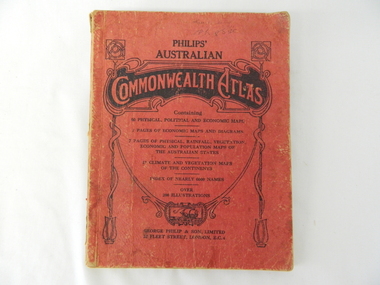 Kiewa Valley Historical Society
Atlas Australian Commonwealth, Philips' Australian Commonwealth Atlas, 1944
... The great political and territorial changes made as a result of World War II can be clearly identified for example , Israel (the Jewish homeland). The various prewar colonies of major European nations....The great political and territorial changes made as a result of World War II can be clearly identified for example , Israel (the Jewish homeland). The various prewar colonies of major European nations. ...This atlas, printed in 1944, details not only the geographic and political boundaries of the world as it was at that time but also the snap shot of life of the time. This snap shot in time covers the major Australian cities, the major farming, grazing, industrial and sporting/recreational activities. Also there are snap shots of similar activities from other global areas. The period also covered World War II, detailed by a photo of "shell making", munitions, required by Australian soldiers. The great political and territorial changes made as a result of World War II can be clearly identified for example , Israel (the Jewish homeland). The various prewar colonies of major European nations.This atlas was used by children of a Kiewa Valley family and shows the value and the general educational exposure that these children had at this time. The rural setting and within the backdrop of a world war did not severely alter the life style of children in this region. The "news reels" shown in cinemas of cities and larger towns were the only visual realisations of major events of global significance available to these children. The information provided by this atlas allowed students to glimpse at what the "outside world" was. The majority of these students would possibly never see these regions for themselves. The great communication facilities of the late 1900s and beyond, was still only science fiction.This atlas has a thick (350 g/m) red cardboard cover with bold black lettering and shading. The cover is set out within a shield like frame. The shield is held up by two square markings, each with a four part circular pattern and a cord entwining two pendulum structures ending with a bowl figure at the bottom. There is a semi circular form enclosing a printed book contents list. The inside cover has the atlas title and contents and the publisher details. The atlas contain 56 pages of world and Australian maps, vegetation and rainfall maps. Within this atlas there are 27 double sided pages of black and white photographs depicting life styles, buildings, landscapes and prominent and significant to Australia males from 1652 to 1944. The pages are of approximately 200 g/m and have the yellow aged appearance.On front cover "Philips' Australian COMMONWEALTH ATLAS" and underneath "Containing" underneath "60 PHYSICAL, POLITICAL AND ECONOMIC MAPS". Publisher George Philip & Son, Limited 32 Fleet Street, London E.C. 4. Inside cover are: written, in freehand and in ink the following names and dates; "J.Muller Form V 1945", "L L Muller Form IV 1946", "N.J. Muller Form I + II + III 1948 +49 + 50" and "D Muller Form I 1949". also handwritten and in pencil is "Peter Leslie". On the last page is a small freehand sketch of Australia in biro.1940s school curriculum, rural education, 1940s atlas, australian atlas -
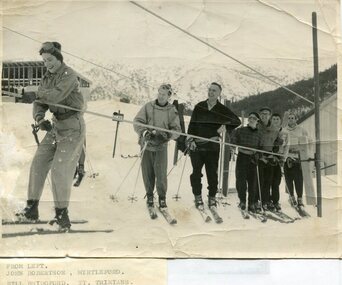 Kiewa Valley Historical Society
Photographs – Skiers at Falls Creek – Set of 10 black and white photographs
... Many of the hydro employees were of European background and had grown up enjoying skiing and snow sports in their homelands and were keen to continue to pursue their winter sports interests. ...Many of the hydro employees were of European background and had grown up enjoying skiing and snow sports in their homelands and were keen to continue to pursue their winter sports interests. ...After World War II, the Kiewa Hydro-Electric Scheme was started in the Kiewa River valley by the State Electricity Commission of Victoria. On land previously used only for summer cattle grazing in the natural alpine grasslands, the first ski lodge was built in 1948 by workers from the hydro scheme as skiing was a popular recreation. Many of the hydro employees were of European background and had grown up enjoying skiing and snow sports in their homelands and were keen to continue to pursue their winter sports interests. The first lift, a rope tow, was built in 1951 and the first chairlift in Australia was constructed there in 1957. Two T-Bars were opened in 1961. In 1964, the Victorian Municipal Directory recorded that Falls Creek had 29 ski club lodges and 16 commercial lodges.Employees of the State Electricity Commission of Victoria in the Kiewa River Valley were the earliest skiers on the Bogong High Plains and built one of the first ski lodges at Falls Creek. They were amongst those pivotal in the development of the skiing and tourist industry at Falls Creek and on the Bogong High Plains. Set of 10 black and white photographs of various skiers at Falls Creek Victoria1. From Left-John Robertson Myrtleford; Bill Bridgford, St Trinians; Girl not known; Roy Wolpole, Myrtleford; Fin McAuliffe, Myrtleford; Looking on foreground, Toni St Elmo 2. Falls Creek. Property of State Electricity Commission of Victoria Publicity Photo Negative No PB4046. Publicity Branch, 15 William St Melbourne. 3. Avic Lajons 4. No markings 5. Bill Bridgeford (lower person on slope) 6. Max Lawrence? Facing skiers 7. 6575. Indistinguishable red stamp on back 8. 6875. Ces Dobson on tractor 9. From left on tow. John Robertson (Myrtleford); Bill Bridgeford (St Trinians); Girl unknown; Roy Walpole (Myrtleford); Vin McAuliffe (Myrtleford); Looking on foreground Toni Beveridge. 10. From Left 1; 2; 3. Bill Bridgeford; 4. George McPherson ? (Myrtleford); 5. John Robertson (Myrtleford); 6. Elsbeth Rollenson? (Myrtleford); 7; 8; 9. 11. Bogong. Looking N.E from Big River fire track. Skiers on way to Falls Creek. Spion Kop on left. Going around Ropers Cerner near the 18 mile post falls creek, skiing, bogong high plains -
 Nillumbik Shire Council
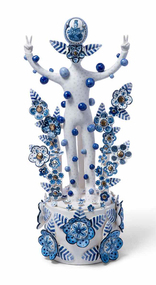
Ceramic, Vipoo Srivilasa, We Come In Peace III, 2017
... His works explore similarities between the cultures of homeland, Thailand and his adoptive home, Australia. ...His works explore similarities between the cultures of homeland, Thailand and his adoptive home, Australia. ...Vipoo Srivilasa works predominantly in ceramics, creating unique contemporary porcelain sculptures, vessels and figures to transmit a universal message of cross-cultural experience. His works explore similarities between the cultures of homeland, Thailand and his adoptive home, Australia. His work is both a playful, and at times a political, blend of historical figurative and decorative art practices with contemporary culture. For more than 20 years, Vipoo has exhibited both internationally and throughout Australia, including Museum of Fine Arts, Boston; Saatchi Gallery, London; Ayala Museum, Philippines; Yingge Ceramics Museum, Taiwan; Nanjing Arts Institute, China and the National Gallery of Thailand. His work is held in national and international collections including the National Gallery of Australia, the Art Gallery of South Australia, GOMA, and the Craft Council, UK. -
 Kiewa Valley Historical Society
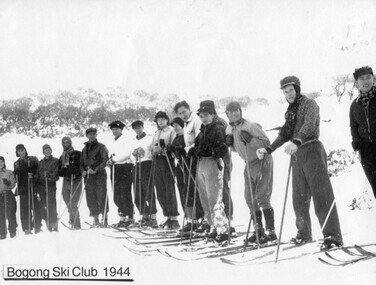
Photographs –Collection of 10 copies and original black and white photographs and printed articles relating to skiing on the Bogong High Plains
... Many of the hydro employees were of European background and had grown up enjoying skiing and snow sports in their homelands and were keen to continue to pursue their winter sports interests. ...Many of the hydro employees were of European background and had grown up enjoying skiing and snow sports in their homelands and were keen to continue to pursue their winter sports interests. ...After World War II, the Kiewa Hydro-Electric Scheme was started in the Kiewa River Valley by the State Electricity Commission of Victoria. On land previously used only for summer cattle grazing in the natural alpine grasslands, the first ski lodge was built in 1948 by workers from the hydro scheme as skiing was a popular recreation. Many of the hydro employees were of European background and had grown up enjoying skiing and snow sports in their homelands and were keen to continue to pursue their winter sports interests. The first lift, a rope tow, was built in 1951 at Falls Creek and the first chairlift in Australia was constructed there in 1957. Two T-Bars were opened in 1961. In 1964, the Victorian Municipal Directory recorded that Falls Creek had 29 ski club lodges and 16 commercial lodges. The area became a popular tourist destination for both winter and summer sports.: Employees of the State Electricity Commission of Victoria in the Kiewa River Valley were the earliest skiers on the Bogong High Plains and built one of the first ski lodges at Falls Creek. They were amongst those pivotal in the development of the skiing and tourist industry at Falls Creek and on the Bogong High Plains. Collection of 10 copies and original black and white photographs and printed articles relating to skiing on the Bogong High Plains. Some pieces have been enlarged to A3 poster size copies for display purposes 1. Copy of black and white photograph of group of skiers at Falls Creek 2. Copy of photograph of early skier on Bogong High Plains with temporary buildings and tents in the background 3. Copy of photograph of 3 skiers on Mt McKay 4. Copy of SECV photograph of Rocky Valley Camp under snow 5. Early sepia photograph of Falls Creek village with skiers in the foreground 6. Copy of a page from booklet (SECV?) promoting the benefits of owning a holiday home in the Bogong Village area 7. Copy of a page from booklet (SECV?) promoting the benefits of holidaying in and around Falls Creek/Mt Beauty 8. Panoramic view of ski fields with skis in the foreground 9. Photograph of young skier (identity unknown) 10. Photograph of 2 male skiers (identity unknown) performing a small jump 1. Bogong Ski Club Members & Friends 1944 2. Jack Neve – electrician. Rocky Valley 3. 17.5.55 Skiers ascending Mt McKay 4. State Electricity Commission of Victoria. Date:17.8.55 No:K8132 Kiewa Hydro Electric Works. Rocky Valley Camp – From Engineering Office 5 & 9 No markings 6 & 7 Short article relating to photos on each page 8. Handwritten signature on rear of photo (Sandra Conea) 10 Faded unreadable photographers stamp and handwritten numbers 6875 on rear secv; bogong high plains; skiers; falls creek; tourism -
 Kiewa Valley Historical Society
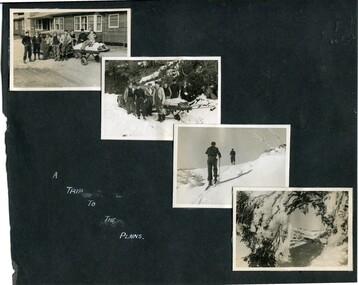
Photographs – Bogong High Plains - Set of 16 black and white photographs mounted back and front on 3 pieces of heavy black card likely removed from a photograph album
... Many of the hydro employees were of European background and had grown up enjoying skiing and snow sports in their homelands and were keen to continue to pursue their winter sports interests. ...Many of the hydro employees were of European background and had grown up enjoying skiing and snow sports in their homelands and were keen to continue to pursue their winter sports interests. ...After World War II, the Kiewa Hydro-Electric Scheme was started in the Kiewa River Valley by the State Electricity Commission of Victoria. On land previously used only for summer cattle grazing in the natural alpine grasslands, the first ski lodge was built in 1948 by workers from the hydro scheme as skiing was a popular recreation. Many of the hydro employees were of European background and had grown up enjoying skiing and snow sports in their homelands and were keen to continue to pursue their winter sports interests. The first lift, a rope tow, was built at Falls Creek in 1951 and the first chairlift in Australia was constructed there in 1957. Two T-Bars were opened in 1961. In 1964, the Victorian Municipal Directory recorded that Falls Creek had 29 ski club lodges and 16 commercial lodges. The area became a popular tourist destination for both winter and summer sports.Employees of the State Electricity Commission of Victoria in the Kiewa River Valley were the earliest skiers on the Bogong High Plains and built one of the first ski lodges at Falls Creek. They were amongst those pivotal in the development of the skiing and tourist industry at Falls Creek and on the Bogong High Plains. Black and white photographs of varying sizes mounted decoratively on heavy black Card. Some pages display a brief description printed in white ink 1. 4 photographs- displayed diagonally across page. 2 pictures of a group of men standing in the snow in front of a car with a loaded trailer behind. 1 photo of skiers. 1 photo of show hanging in tree branches. 2. 2 photographs- showing Upper Kiewa Road with snow in the background 3. 3 photographs- of skiers and 1 photo of 2 of men posing in the snow & 1 photo of 2 men posing shirtless in warmer weather. 4. 2 photographs- arranged diagonally on page showing early buildings and construction at Bogong Village 5. 2 photographs- 1 showing view of Bogong Village from higher up the mountain. 1 showing early Bogong High Plains road 6. 1 photograph- showing view down along Kiewa Valley from higher up in the mountains 1. Handwritten in white ink – A TRIP TO THE PLAINS 2. Handwritten in white ink – UPPER KIEWA ROAD MT FAINTER IN BACKGROUND 3 – 6. No markings bogong village; upper kiewa road; bogong high plains; falls creek; skiers -
 Federation University Art Collection
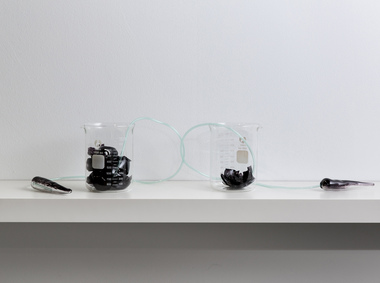
Sculpture - Artwork, 'The More Bones the Better' by Yhonnie Scarce, 2016
... Scarce’s work often references the on-going effects of colonisation on Aboriginal people, In particular her research focus has explored the impact of the removal and relocation of Aboriginal people from their homelands and the forcible removal of Aboriginal children from their families. ...Scarce’s work often references the on-going effects of colonisation on Aboriginal people, In particular her research focus has explored the impact of the removal and relocation of Aboriginal people from their homelands and the forcible removal of Aboriginal children from their families. ...Yhonnie SCARCE (1973- ) Born Woomera, South Australia Language group: Kokatha, Southern desert region and Nukunu, Spencer region Yhonnie Scarce works predominantly in glass. She majored in glass withing a Bachelor of Visual Arts (Honours) course at the South Australian School of Art, Adelaide, and holds a Master of Fine Arts from Monash University. One of the first contemporary Australian artists to explore the political and aesthetic power of glass, Scarce describes her work as ‘politically motivated and emotionally driven’. Scarce’s work often references the on-going effects of colonisation on Aboriginal people, In particular her research focus has explored the impact of the removal and relocation of Aboriginal people from their homelands and the forcible removal of Aboriginal children from their families. (https://thisisnofantasy.com/artist/yhonnie-scarce/, accessed 10 September 2018)Artist's Statement 'The More Bones the Better', 2016 Yhonnie Scarce was born in Woomera, SA and belongs to the Kokatha and Nukunu peoples. Scarce embraces a non traditional approach to glass blowing using glass as more than a mere material, acting as a lens and a mirror, Scarce reflects and exposes the tragedies of Australia’s colonisation. She applies the technical rigours of traditional glass blowing techniques in an innovative and unconventional manner. In particular Scarce uses glass to explore the lives and histories of Aboriginal Australians. Hand blown glass is shaped, engraved, painted and smashed to create indigenous fruits and vegetables such as bush bananas, bush plums and long yams symbolic of her peoples culture and traditions. With their elongated, torso-like shapes, they even evoke human bodies. Akin to a gatherer of bush food Scarce creates glass-gatherings of the persecuted. The repetition of brittle ambiguous bodies collected for experimentation and examination conjures the relentless impact of colonisation and the litany of abuses suffered by Aboriginal people. Within her research Scarce encountered a variety of ethnographic studies examining the use of scientific interventions amongst Indigenous cultures. These include Government sanctioned illegal drug testing of children in orphanages and other dubious medical practices amongst indigenous prison inmates. This work metaphorically looks at these situations and poses questions of what might have gone on in such a laboratory. The judge of the 2017 Guirguis New Art Prize (GNAP), Simon Maidment, Senior Curator, Contemporary Art, National Gallery of Victoria said; “The winning work by Yhonnie Scarce captures the sensitivity to materials she displays throughout her artistic practice. The blown and shattered glass elements are a delicate contrast to the shocking and little discussed histories of Aboriginal exploitation and abuse in the name of science in Australia. Engaging this topic, this work is haunting, in the same way those lived and documented experiences continue to haunt the collective unconscious of this country. Yhonnie Scarce’s work, The More Bones the Better 2016, I believe makes an important contribution to the Collection of Federation University Australia and will engage and move diverse audiences with its technical accomplishment, beauty and message. Yhonnie Scarce was born in Woomera SA and belongs to the Kokatha and Nukunu peoples. Scarce embraces a non-traditional approach to glass blowing using her medium as more than a mere material. Applying the technical rigours of traditional glass blowing in an innovative and unconventional manner, Scarce’s glass objects act as a lens and a mirror to reflect and expose the tragedies of Australia’s colonisation and, in particular, explore the lives and histories of Aboriginal Australians. Hand-blown glass is shaped, engraved, painted and smashed to represent indigenous fruits and vegetables such as bush bananas, bush plums and long yams, symbolic of Scarce’s people’s culture and traditions. While these elongated shapes on the one hand represent fruit and vegetables, gathered and grouped as in the gathering of bush food, Scarce’s torso-like bodies and forms are glass ‘gatherings’ representative of the gathering of people. Here, the many brittle bodies act as a metaphor for the collection, experimentation and examinations undertaken by government authorities on Aboriginal communities researched by Scarce. Exposing a variety of ethnographic studies, examining the use of scientific interventions on Indigenous cultures, Scarce also revealed Government sanctioned illegal drug testing of children in orphanages and other dubious medical practices undertaken on indigenous prison inmates. Scarce’s gatherings also reflect the impact of colonisation and the relentless conjuring and litany of abuses suffered by Aboriginal people. The More Bones the Better metaphorically looks at these situations and poses questions of what was undertaken and investigated in these laboratories. guirguis new art prize, yhonnie scarce, glass, aboriginal
