
Showing 122 items matching "houses 1960's"
-
 Phillip Island and District Historical Society Inc.
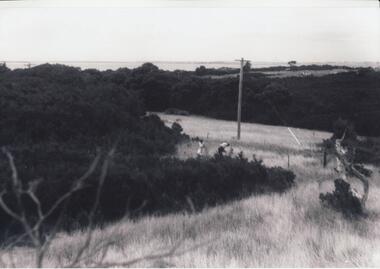
Photographs, Gary Field, 1963
... ...houses 1960's...(Information supplies by John Eddy). daffyd street red rocks red rocks phillip island houses 1960's gary field Four black & white photographs of panoramic views from and of Daffyd Street, Red Rocks in 1963, looking north with French Island and the Peninsula on the horizon, view of houses and caravans in Daffyd Street and showing local scrub and housing. ...Photographs taken by Gary Field. Lady in photos is Gary's mother. She planted Angophora trees near corner of Daffyd Street and Appley Avenue. (Information supplies by John Eddy).Four black & white photographs of panoramic views from and of Daffyd Street, Red Rocks in 1963, looking north with French Island and the Peninsula on the horizon, view of houses and caravans in Daffyd Street and showing local scrub and housing.daffyd street red rocks, red rocks phillip island, houses 1960's, gary field -
 Stawell Historical Society Inc
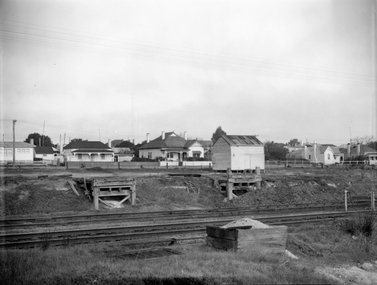
Photograph, Railway Yards with loading ramps and weatherboard shed c1960
... Virtually the same view, but shows some more Wakeham Street houses. c 1960's. ...Showing Wakeham Street Houses in background c1960 stawell railways transport Virtually the same view, but shows some more Wakeham Street houses. c 1960's. Railway Yards with loading ramps and weatherboard shed c1960 Photograph ...Railway Yards Stawell with loading ramps and weatherboard shed. Showing Wakeham Street Houses in background c1960Virtually the same view, but shows some more Wakeham Street houses. c 1960's. stawell railways transport -
 Whitehorse Historical Society Inc.
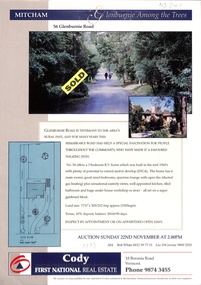
Pamphlet, Glenburnie among the trees, 1/11/1998
... Auction brochure for 56 Glenburnie Road, Mitcham, 22 November [1998], 3bedroom brick veneer house built mid 1960's. Agent, Cody First National, Boronia Road, Vermont....glenburnie road mitcham no 56 auctions Auction brochure for 56 Glenburnie Road, Mitcham, 22 November [1998], 3bedroom brick veneer house built mid 1960's. Agent, Cody First National, Boronia Road, Vermont. ...Auction brochure for 56 Glenburnie Road, Mitcham, 22 November [1998], 3bedroom brick veneer house built mid 1960's. Agent, Cody First National, Boronia Road, Vermont.glenburnie road, mitcham, no 56, auctions -
 Lakes Entrance Historical Society
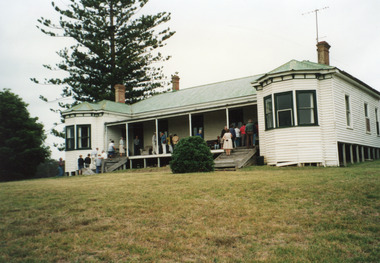
Photograph - Lake Tyers House 1995
... Lake Tyers House built 1886 by R Krokel of Bairnsdale as guest house and stop over being on the coastal road to Orbost and Merimbula. Guest house from 1886 to 1960's....Lake Tyers House built 1886 by R Krokel of Bairnsdale as guest house and stop over being on the coastal road to Orbost and Merimbula. Guest house from 1886 to 1960's. Accommodation Guesthouses Colour photograph taken at Lake Tyers House, a large timber dwelling built in Victorian Italianate style with two projecting faceted bay windows, corrugated iron roof. ...Lake Tyers House built 1886 by R Krokel of Bairnsdale as guest house and stop over being on the coastal road to Orbost and Merimbula. Guest house from 1886 to 1960's.Colour photograph taken at Lake Tyers House, a large timber dwelling built in Victorian Italianate style with two projecting faceted bay windows, corrugated iron roof. Three internal brick chimneys visible through roof. Situated on a prominent headland with a view of Lake Tyers. Lakes Tyers Victoriaaccommodation, guesthouses -
 Melbourne Legacy
Book - Scrapbook, Legacy events, 1960s
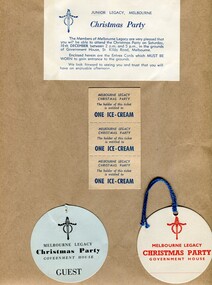
... 1960's. These include invitations and tickets to the Annual Demonstrations of 1960 and 1961, the ANZAC eve school children's ceremony, also to the Senior Widows Club Grand concert (18 December 1961). The Senior Widows club also held a Christmas Dinner. Also a lapel tag for the Legacy Mothers Club. There are also mementos for Junior Legatees, such as tickets to attend the Christmas party at Government House...The items include invitations and tickets to Christmas Parties at Government House in the 1960's, Operation Float, School Children's Anzac Eve Ceremony Attendance Card, Senior Widows Club-Christmas Dinner 1961 & Grand Concert 1962, plus a Greeting and Get Well Card. ...The items include invitations and tickets to Christmas Parties at Government House in the 1960's, Operation Float, School Children's Anzac Eve Ceremony Attendance Card, Senior Widows Club-Christmas Dinner 1961 & Grand Concert 1962, plus a Greeting and Get Well Card. ...Various invitations, programmes and other mementos collected from Legacy events held during the early 1960's. These include invitations and tickets to the Annual Demonstrations of 1960 and 1961, the ANZAC eve school children's ceremony, also to the Senior Widows Club Grand concert (18 December 1961). The Senior Widows club also held a Christmas Dinner. Also a lapel tag for the Legacy Mothers Club. There are also mementos for Junior Legatees, such as tickets to attend the Christmas party at Government House and to Operation Float in 1962 and 1963. There are also tokens for ice creams and soft drinks at the events. There is a programme for the 1961 Annual Demonstration.A collection compiled to remember various events held in the early 1960s. It's a good record of the practice of printing invitations and tokens.Brown scrapbook pages with commercially printed items attached. The 6 pages have event invitations, notices and cards glued to the brown paper, 4 pages are double sided. The items include invitations and tickets to Christmas Parties at Government House in the 1960's, Operation Float, School Children's Anzac Eve Ceremony Attendance Card, Senior Widows Club-Christmas Dinner 1961 & Grand Concert 1962, plus a Greeting and Get Well Card. The items were commercially printed.government house party, christmas, annual demonstration, junior legatee outing, senior widows club -
 Melbourne Tram Museum
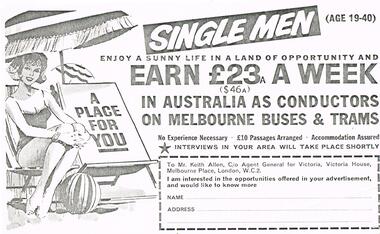
Newspaper, "Single Men - enjoy a sunny life in a land of opportunity and Earn L23 a week in Australia as Conductors on Melbourne Buses and Trams", mid 1960's
... Gives contact details for the Agent General in London at Victoria House. Not dated - mid 1960's - based on the $ figure provided as well....Gives contact details for the Agent General in London at Victoria House. Not dated - mid 1960's - based on the $ figure provided as well. ...Advertising for Single Men to come to Australia, titled "Single Men - enjoy a sunny life in a land of opportunity and Earn L23 a week in Australia as Conductors on Melbourne Buses and Trams". Has a lady sitting on a beach chair under an umbrella. Gives contact details for the Agent General in London at Victoria House. Not dated - mid 1960's - based on the $ figure provided as well.Demonstrates a MMTB advertisement for crews in UK papers;Photocopy of an advertisement that would have appeared in UK newspapers.trams, tramways, recruitment, conductors, advertisements, immigration -
 University of Melbourne, Burnley Campus Archives
Photograph - Colour and black and white photocopy and document, The Egg and Poultry Producer, The Macauley Family, 1872-2013
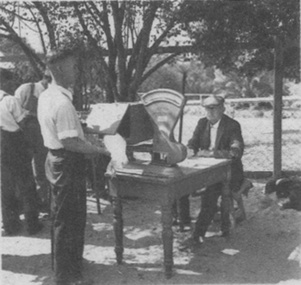
... s." Probably a bit earlier. (8) p.9 "2013." Actually pre 1991. (9) p.9 "Averil and Esmerelda 1959." (10) p.11(b) "1960 view showing 6 hen pens of Random Sample Laying Test. Residence (built 1960) at rear." (11) p.12(a) "1959 view of potting-shed/glasshouse on way to orchard." Note cactus collection. (12) p.12(b) "1960 view of 'Hydrangea Walk'-orchard fence on left." (13) p.12(c) "2013 view of path leading to the above pathway." (Hydrangea Walk.) (14) p.14 "Burnley Gardens Kneens house...s." Probably a bit earlier. (8) p.9 "2013." Actually pre 1991. (9) p.9 "Averil and Esmerelda 1959." (10) p.11(b) "1960 view showing 6 hen pens of Random Sample Laying Test. Residence (built 1960) at rear." (11) p.12(a) "1959 view of potting-shed/glasshouse on way to orchard." Note cactus collection. (12) p.12(b) "1960 view of 'Hydrangea Walk'-orchard fence on left." (13) p.12(c) "2013 view of path leading to the above pathway." (Hydrangea Walk.) (14) p.14 "Burnley Gardens Kneens house ...History and reminiscences with photocopied photographs and a newspaper article about the family and life at Burnley as children. John Macauley and son, Bill, lived at Burnley 1914-1972. History and reminiscences with photocopied photographs and a newspaper article about the family and life at Burnley as children. John Macauley and son, Bill, lived at Burnley 1914-1972. Egg Curators. (1) p.3(b) "Weigh-in at start of new Egg Laying Competition, c. 1940 with Bill and father John T. Macauley." (2) p.5(c) "P.R.L. 1960." Plant Research Laboratory. (3) p.5(d) "Path leading to Plant Breeding Plots. 1960." (4) p.7(a) 1959." (5) p.7(b) "Drive-Burnley Gardens 1949." (6) p.7(c) "Seed Testing Laboratory built 1966." (7) p.9 "1990's." Probably a bit earlier. (8) p.9 "2013." Actually pre 1991. (9) p.9 "Averil and Esmerelda 1959." (10) p.11(b) "1960 view showing 6 hen pens of Random Sample Laying Test. Residence (built 1960) at rear." (11) p.12(a) "1959 view of potting-shed/glasshouse on way to orchard." Note cactus collection. (12) p.12(b) "1960 view of 'Hydrangea Walk'-orchard fence on left." (13) p.12(c) "2013 view of path leading to the above pathway." (Hydrangea Walk.) (14) p.14 "Burnley Gardens Kneens house at rear 'Jack' 1960's." (16) p.14 "Horticultural College c.1967." (17) "The 'family' tree re-visited by Janice & Alison Downman Dec 1995." (18) Newspaper article, "Bill Macauley leaves the birds," from "The Egg and Poultry Producer" August 1972.family life, burnley, children, john macauley, bill macauley, egg curators, egg laying competition, plant research laboratory, janice downman (née macauley) -
 Ballarat Clarendon College
Furniture, Table and cabinet
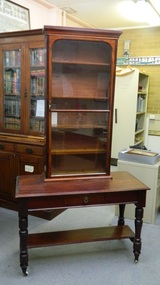
... House. The table was part of the office furniture during the 1960's. The small book shelf was donated by Rosalie price and fixed to the table to create a display cabinet during her tenure as alumni officer. ...House. The table was part of the office furniture during the 1960's. The small book shelf was donated by Rosalie price and fixed to the table to create a display cabinet during her tenure as alumni officer. rosalie-price wanliss-house Wooden table with small drawer and shelf at foot. ...These items originated in Wanliss House. The table was part of the office furniture during the 1960's. The small book shelf was donated by Rosalie price and fixed to the table to create a display cabinet during her tenure as alumni officer. Wooden table with small drawer and shelf at foot. Book shelf with glass doors fixed to table top. rosalie-price, wanliss-house, -
 Greensborough Historical Society
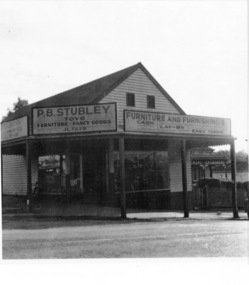
Photograph - Digital image, Stubley's Furniture, 1958c
... house at back. He coached Boxing]. This became the Welkay Store in the 1960's and owned by Walter Kenyon. ...house at back. He coached Boxing]. This became the Welkay Store in the 1960's and owned by Walter Kenyon. ...Stubley's Furniture Store late 1950s. The Stubley Group began in 1946 when Purcell Stubley purchased a site with petrol bowsers in Main Street from 'Snowy' Jessop. In 1948 Purcell began building the new Stubley Motors, working round the old site to keep the business operating. It was completed in 1951. The Group expanded into other areas such as this Furniture store. [Syd Thompson Fruit Shop was here in early 1950s, Syd lived in the house at back. He coached Boxing]. This became the Welkay Store in the 1960's and owned by Walter Kenyon. The Welkay store moved opposite to 100 Main Road on 6/9/1966, ref: Diamond Valley News Page 9. Soon after the store would have been demolished to make way for 'The Valley Building' still on the site in 2018.Digital copy of black and white photographpurcell stubley, stubley motors, stubley group greensborough -
 Glenelg Shire Council Cultural Collection
Functional object - Functional Object - Reel and Harness, n.d
... History House Collection Front: On each end of reel lettered in black outlined in gold. "Portland Surf Life Saving Club founded 1934. Back: - Surf life saving type. Circa 1960's ...History House CollectionSurf life saving type. Circa 1960's. Polished wooden arched frame, chrome plated brass fittings, wooden reel, bronze and wooden handle, chrome plated brass brake assembly. Yellow polythene rope and red terylene harness complete with shoulder straps and clasp.Front: On each end of reel lettered in black outlined in gold. "Portland Surf Life Saving Club founded 1934. Back: - -
 Halls Gap & Grampians Historical Society
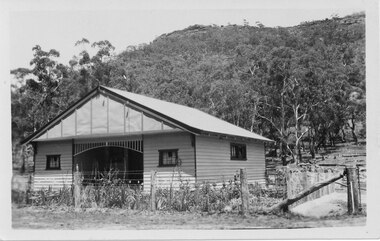
Postcard - B/W, C 1940s
... The owners were John and Florence Warren who ran the bakery until the 1960's when it was taken over by their daughter Ida and son-in-law Robert Greer. BUILDINGS Houses A weatherboard house surrounded by a 'chicken wire' fence. ...This is the Warren Street residence of the owners of the bakery, which was situated behind this building. The owners were John and Florence Warren who ran the bakery until the 1960's when it was taken over by their daughter Ida and son-in-law Robert Greer. A weatherboard house surrounded by a 'chicken wire' fence. There is a wooded hill in the background.buildings, houses -
 Heathcote McIvor Historical Society
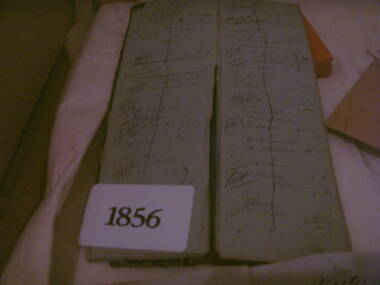
Day Book, Book, 1856
... They also owned a sawmill and quartz crushing battery. one of three books donated to the Museum, were found by the donors father back in the late 1960's while he was working on renovations to a building in heathcote these books had been thrown onto a pile of builders rubble, he retrieved them. when he passed away some years later his son found them while clearing out his effects, have travel through several house changes till 2010 when the son was doing a cleanup and the books were found again he contacted the Historic Society, date back to first settlement of Heathcote, inside writing is in excellient condition, as if it were written yeaterday. give a daily account of purchases by locals.gives us an insight into persons living and working in Heathcote McIvor district. ...Believed to be long to Routledge Brothers who ran a general store business in heathcote. They also owned a sawmill and quartz crushing battery.one of three books donated to the Museum, were found by the donors father back in the late 1960's while he was working on renovations to a building in heathcote these books had been thrown onto a pile of builders rubble, he retrieved them. when he passed away some years later his son found them while clearing out his effects, have travel through several house changes till 2010 when the son was doing a cleanup and the books were found again he contacted the Historic Society, date back to first settlement of Heathcote, inside writing is in excellient condition, as if it were written yeaterday. give a daily account of purchases by locals.gives us an insight into persons living and working in Heathcote McIvor district. Not many early items of this era left .Day book, oblong, leather cover, Day book gold blocked on front coverday book routledge, brothers -
 Ringwood and District Historical Society
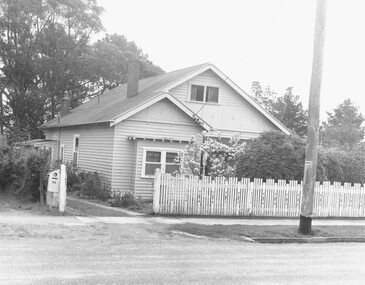
Photograph, Wigleys house, Wilana St, Ringwood (undated - possibly 1960's)
... Wigleys house, Wilana St, Ringwood (undated - possibly 1960's)...Written on rear of photographs: "Wigleys house, Wilana St.". Undated but possibly 1960's. (F0183 includes Vera Wigley and child in back yard)....Written on rear of photographs: "Wigleys house, Wilana St.". Undated but possibly 1960's. (F0183 includes Vera Wigley and child in back yard). ...Black and white photographs (5 images- F0182, F0183, F0184, F0185, F0187)Written on rear of photographs: "Wigleys house, Wilana St.". Undated but possibly 1960's. (F0183 includes Vera Wigley and child in back yard). -
 Ringwood and District Historical Society
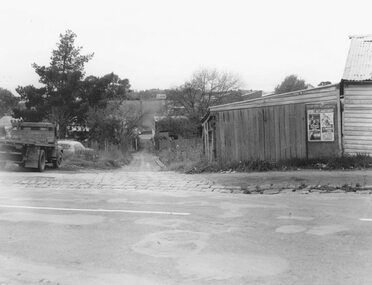
Photograph, Edwin G. Adamson A.R.P.S, Maroondah Highway Central, Ringwood. Lane running from Adelaide St. to Warrandyte Rd.Ringwood 1963 (Eastland Litigation Photo)
... 1960. WTCA sought "orders from the Supreme Court of Victoria that the planning scheme was invalid" - See "The Eastland Litigation" chapter in "From Horse Shoes to High Heels - Ringwood Shopping Centre and Eastland 1858-2008" by Richard Carter, Bounce Books 2009. Written on back of photograph: "The lane running from Adelaide St. to Warrandyte Rd. Now Civic Place. Right-hand side where Jack Orr used to make clothes hoists. Left-hand side verging on plumber - S. Hunt then Horman & Woolhouse.' Stamp on photograph reads, 'Edwin G. Adamston A.R.P.S. Chartres House ...This series of SS0380 photos are part of the "Eastland Litigation" launched in 1962 by the Whitehorse Traders Co-operative Association (WTCA), against the Ringwood Council's Interim Development Order of 1960. WTCA sought "orders from the Supreme Court of Victoria that the planning scheme was invalid" - See "The Eastland Litigation" chapter in "From Horse Shoes to High Heels - Ringwood Shopping Centre and Eastland 1858-2008" by Richard Carter, Bounce Books 2009.Black and White Photograph (2 copies)Written on back of photograph: "The lane running from Adelaide St. to Warrandyte Rd. Now Civic Place. Right-hand side where Jack Orr used to make clothes hoists. Left-hand side verging on plumber - S. Hunt then Horman & Woolhouse.' Stamp on photograph reads, 'Edwin G. Adamston A.R.P.S. Chartres House, Melbourne, Date May '63'. And on one copy stamped "IN THE SUPREME COURT E.W.L. 13 AUG 1963" -
 Ringwood and District Historical Society
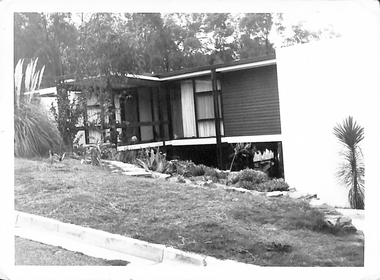
Photograph, 5 photographs of newly built 2 Hearthside Crt, North Ringwood, designed and built by Architect Ian Napier mid 1960's
... Set of 5 black and white photographs undated, of newly built house at No 2 Hearthside Court, North Ringwood. Undated but probably mid 1960's. ...(See Titles of each image for the handwritten notes on back of each photo) Set of 5 black and white photographs undated, of newly built house at No 2 Hearthside Court, North Ringwood. Undated but probably mid 1960's. ...Set of 5 black and white photographs undated, of newly built house at No 2 Hearthside Court, North Ringwood. Undated but probably mid 1960's. See also VC Items 11345-11346, and 11348-11349(See Titles of each image for the handwritten notes on back of each photo) -
 Ringwood and District Historical Society
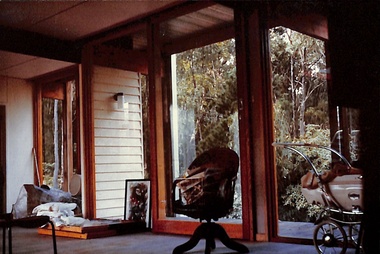
Photograph, Interior-Living Room of 2 Hearthside Crt, North Ringwood, designed and built by Architect Ian Napier mid 1960's - "Just moved in"
... Single colour photograph of Living Room in newly built house at No 2 Hearthside Court, North Ringwood. Undated but probably mid 1960's. ...Just Moved into living room Single colour photograph of Living Room in newly built house at No 2 Hearthside Court, North Ringwood. Undated but probably mid 1960's. ...Single colour photograph of Living Room in newly built house at No 2 Hearthside Court, North Ringwood. Undated but probably mid 1960's. See also VC Items 11345-11347, and 11349Just Moved into living room -
 Eltham District Historical Society Inc
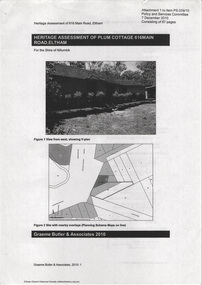
Document - Property Binder, 616 Main Road, Eltham; Plum Cottage
... 1960, the builder-designer, John Harcourt had created a pise house on the site, straddling the two subdivision lots. The house is visible on an aerial photograph from 1960s. Reputedly the house was called Plum Cottage and erected for Harcourt’s mother-in-law. A garage was added in 1959. Charles McNeil died in1971 aged 87: he was the son of Don McNeil and Margaret Arkell. Available rate records from the construction era start in the of the 1970s (1972-3) and list Mr H.C. & M/S...1960, the builder-designer, John Harcourt had created a pise house on the site, straddling the two subdivision lots. The house is visible on an aerial photograph from 1960s. Reputedly the house was called Plum Cottage and erected for Harcourt’s mother-in-law. A garage was added in 1959. Charles McNeil died in1971 aged 87: he was the son of Don McNeil and Margaret Arkell. Available rate records from the construction era start in the of the 1970s (1972-3) and list Mr H.C. & M/S ...Plum Cottage is covered by Heritage Overelay HO256 in the Nillumbuk Planning Scheme This two-lot land holding was created as a subdivision and sold to Charles Stuart McNeil by May 1955. Sometime in the period 1955-1960, the builder-designer, John Harcourt had created a pise house on the site, straddling the two subdivision lots. The designer, John M. Harcourt was a pioneer builder in pise-de-terre and mudbrick in the Eltham Shire, Eltham being synonymous with alternative lifestyles and building practises until the onset of suburbia in the late 20th and early 21st centuries. This hipped-roof house is set high above Main Road on a V-shape plan characteristic of the Arts & Crafts style, with rammed earth or pise walls, timber joinery and a cement tiled roof. The V shape plan was used by important English and Eltham Arts & Crafts designers. The use of natural materials such as stone and timber construction is an essential part of the Arts & Crafts style and Harcourt’s work. So too is the application of the style on both the exterior and interior of the house as a holistic concept. The house adjoins the Lim Joon adobe house built and designed by Alistair Knox in the same era (HO119), thus forming a distinctive pair, both using an uncommon plan form. This house was identified in the Shire of Shire of Eltham Heritage 1992 as contributory to the Eltham Gateway Conservation Area, then proposed as an urban conservation area (now Heritage Overlay Area). Land Ownership Emily Jane Smith of 12 Woodside Street Fitzroy owned Crown Allotments 1 & 2 Sections 14, 27 by August 1918, selling to William Henry Smith of 12 Woodside Street, Nth Fitzroy May 1921. (John) James Isherwood of Main Road, Eltham owned the property by 1928 (the year of his death) with the beneficiary of his estate and next owner of this site being his widow, Minnie Maria Isherwood of Cemetery Road, Eltham. His holding in Main Road included parts of what was described in rate records as allotments1 & 2 Section E6. In the late 1930s, early 1940s her son Alfred John Isherwood was also rated for the land around this site, with the rated nett annual value varying between £2 and £5. Alfred Isherwood also lived at Main Road, Eltham with his wife Ellen: her early death at the age of 24 was reported in the Argus of 1923. Part of the Isherwood land was divided off and sold to Charles Stuart McNeil by May1955. Sometime in the period 1955-1960, the builder-designer, John Harcourt had created a pise house on the site, straddling the two subdivision lots. The house is visible on an aerial photograph from 1960s. Reputedly the house was called Plum Cottage and erected for Harcourt’s mother-in-law. A garage was added in 1959. Charles McNeil died in1971 aged 87: he was the son of Don McNeil and Margaret Arkell. Available rate records from the construction era start in the of the 1970s (1972-3) and list Mr H.C. & M/S A.V. Charity at 616 Main Road Eltham of this property with a nett annual value of $740. More recent valuer's data describes the property as lots 1 & 2 LP25668, located in the Central Riding of Eltham Shire, owned by Ann Valerie Charity and later, in 1990, by the Chincarini family. Building Description This hipped roof 11 .5 square house is set high above Main Road on a characteristic-shape plan and has rammed earth or pise walls, timber joinery and a cement tiled roof. The V-shape plan was used by Important designers such as C.F.A. Voysey (UK) who interpreted medieval domestic architecture as part of the Arts & Crafts style of the late 19th and early 20th centuries. The pise walls are covered with a textured render while the cement roofing tiles are also seen in the Harcourt Hill examples. Reputedly the ceiling joists are of a deep section and span long lengths with no need for hanging beams in the roof space. The ceilings are low and panelled in main rooms with apparently Caneite soft board infill panels between the exposed ceiling beams. These are painted white but may have been stained at one time. The focus of the house is the large living area with its vast random stone fireplace. Significance Plum Cottage is significant to the locality of Eltham because: Historically: • Plum Cottage is closely associated with the important historical theme of earth construction evident in Eltham and elsewhere in the Shire since theear1y Arts & Crafts inspired creations at Penleigh Boyd's The Robins (1912, HO101) and those at Montsalvat (1934-, HO82) but more prominent from the Second War period when earth building in Eltham was promoted in national periodicals as an alternative building method that avoided the building materials shortages of that era; • The choice of the earth building technique also expresses the theme of refuge or alternative living, synonymous with Eltham in the early to mid 20th century; • as a good example of domestic architecture from John Harcourt who was the first major post Second War figure in an important phase of Eltham’s earth building development, using his characteristic Old English or Arts& Crafts style that relies in this case on the pise wall construction, pitched roof forms, exposed ceiling joists, half timbering, random stonework, and panelled internal wall finishes. Architecturally: • Plum Cottage's pise wall construction is uncommon among the early earth-walled structures in the Shire, that are mainly of adobe or mud brick, and as a building material is uncommon among the Shire’s suburban dwellings generally which are clad typically with either fired clay bricks or timber boarding. Aesthetically: • Plum Cottage is a good and well preserved example of a modern Old English or Arts & Crafts style earth-walled building in the Shire • For the proximity of the significant Lim Joon adobe house designed by Alistair Knox adjoining to the north, providing a distinctive earth wall house pair, with uncommon plan forms. Reference Heritage Assessment of Plum Cottage, 616 Main Road, Eltham; Graeme Butler & Associates 2010main road, eltham, property, houses, (john) james isherwood, alfred john isherwood, ann valerie charity, arts and crafts style, charles stuart mcneil, chincarini family, eltham gateway zone, emily jane smith, h.c. charity, heritage assessment, john harcourt, john m. harcourt, lim joon house, main road eltham, minnie maria isherwood, pise construction, plum cottage -
 Eltham District Historical Society Inc
Photograph - Aerial Photograph, Central Plan Office, Eltham, Jan. 1960
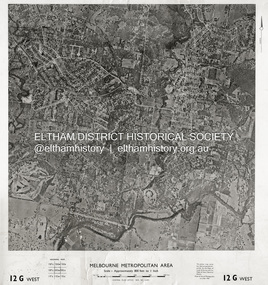
... /Feb. 1960 Scale : 800 feet to 1 inch 37°43'18.2"S 145°08'13.0"E Melways : 21 J6 (ed. 42) Aerial Photo Lower Plenty Main Road Montmorency Eltham Eltham Lower Park Heidelberg Golf Club Hurstbridge Railway Line Main Road Eltham Yarra River 1960-01 Andrews Street Arthur Street Bolton Street Briar Hill Brougham Steet Dave Lyon House Eltham North Eltham-Yarra Glen Road Ernie Andrew house Eucalyptus Road Greensborough Railway Station henry street Karingal Road Melway 21J6 Montmorency Railway Station Mount Pleasant Road Progress Road railway road Southernwood Were Street Photo print on card 61 x 76 cm Eltham Photograph Aerial Photograph Central Plan Office ...Centred on Bolton Street and Brougham Street, Eltham bounded by Progress Road to north, Yarra River to south, Andrews Street and Euclyptus Road to east and Greensborough Railway Station to west. Historic Aerial Imagery Source: Central Plan Office Neg. No. 21451 (Print) Dept. of Lands & Survey and the Melb. & Metro. Board of Works. Aerial Photo Details: MELBOURNE METROPOLITAN AREA Section : 12 G West Date : Jan./Feb. 1960 Scale : 800 feet to 1 inch 37°43'18.2"S 145°08'13.0"E Melways : 21 J6 (ed. 42)aerial photo, lower plenty, main road, montmorency, eltham, eltham lower park, heidelberg golf club, hurstbridge railway line, main road eltham, yarra river, 1960-01, andrews street, arthur street, bolton street, briar hill, brougham steet, dave lyon house, eltham north, eltham-yarra glen road, ernie andrew house, eucalyptus road, greensborough railway station, henry street, karingal road, melway 21j6, montmorency railway station, mount pleasant road, progress road, railway road, southernwood, were street -
Glen Eira Historical Society
Document - Shoobra Road, 1, Elsternwick
... As articles mention the house was 1920’s possibly meaning that original house (Cragie) was demolished: Also include current house features for sale advertisement Research notes from Sands and MacDougall detailing residents in 1910/1913/1923/1942/1948/1960....As articles mention the house was 1920’s possibly meaning that original house (Cragie) was demolished: Also include current house features for sale advertisement Research notes from Sands and MacDougall detailing residents in 1910/1913/1923/1942/1948/1960. ...3 items about this property: Auction details of 1 Shoobra Road: Melbourne Weekly Bayside article of 30/05/2012 and Property Review Weekly dated 25/05/2012 of forthcoming auction. As articles mention the house was 1920’s possibly meaning that original house (Cragie) was demolished: Also include current house features for sale advertisement Research notes from Sands and MacDougall detailing residents in 1910/1913/1923/1942/1948/1960.caulfield, glenhuntly road, elsternwick, pisano max, berry mary a., brown arth e, shoobra road, rushford marshall., jones alfred h., misso n. d, architectural features, cragie, berry herbert, real estate agents, brick houses, house names, ryder sophia, hocking stuart real estate, harper john a, ryde andw., harper jno a -
Glen Eira Historical Society
Document - Shoobra Road, 57, Elsternwick
... s split-level home. Gives information on home features. 2/ Handwritten research on 57 Shoobra, dated 22/06/2012 by Claire Barton taken from Sands and MacDougalls edition 1960. Elsternwick Davis JM Shoobra Road Kelly Juanita Kingston Phillip Brick Houses ...Two articles on 57 Shoobra Road: 1/ Brief newspaper item dated 21/11/2003, on forthcoming auction of 60’s split-level home. Gives information on home features. 2/ Handwritten research on 57 Shoobra, dated 22/06/2012 by Claire Barton taken from Sands and MacDougalls edition 1960.elsternwick, davis jm, shoobra road, kelly juanita, kingston phillip, brick houses -
 Queenscliffe Maritime Museum
Photograph - Queenscliff Lifeboat under sail, 06 March 1926
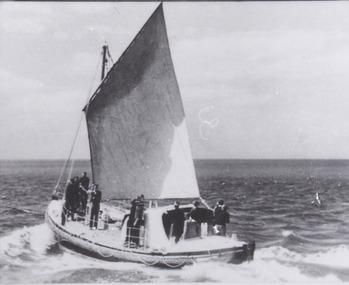
... Some of the vessels and calls for help the lifeboat attended were: 1960 - Army Commandos lost in the Rip 1967 - The search for the late Prime Minister Harold Holt 1974 - The last attendance to a vessel was to the Brisbane Trader which was on fire The shed which housed the lifeboat is located on the Queenscliff 'New' or 'Steamer' Pier (built in 1884). This shed includes the internal section of the slipway used to launch and retrieve the lifeboat. The external slipway and some other structures associated with the lifeboat shed have been removed. Originally fitted with two masts, the stern mast being removed in the 1960's...Some of the vessels and calls for help the lifeboat attended were: 1960 - Army Commandos lost in the Rip 1967 - The search for the late Prime Minister Harold Holt 1974 - The last attendance to a vessel was to the Brisbane Trader which was on fire The shed which housed the lifeboat is located on the Queenscliff 'New' or 'Steamer' Pier (built in 1884). This shed includes the internal section of the slipway used to launch and retrieve the lifeboat. The external slipway and some other structures associated with the lifeboat shed have been removed. Originally fitted with two masts, the stern mast being removed in the 1960's ...The Lifeboat Queenscliffe was built in Adelaide and commenced service at Queenscliff in 1926. She was taken out of service in 1976 by the Marine Board of Victoria and subsequently offered to the Borough of Queenscliffe for care and display. The Lifeboat is listed on the Australian Register of Historic Vessels (ARHV). To view the classification follow the link to the Queenscliffe page on the ARHV site. During her 50 years of service the Queenscliffe attended many calls for assistance both inside and outside the Heads. Some of the vessels and calls for help the lifeboat attended were: 1960 - Army Commandos lost in the Rip 1967 - The search for the late Prime Minister Harold Holt 1974 - The last attendance to a vessel was to the Brisbane Trader which was on fire The shed which housed the lifeboat is located on the Queenscliff 'New' or 'Steamer' Pier (built in 1884). This shed includes the internal section of the slipway used to launch and retrieve the lifeboat. The external slipway and some other structures associated with the lifeboat shed have been removed. Originally fitted with two masts, the stern mast being removed in the 1960's. A retractable centre plate was used when under sail. Delivered with an 80 hp Wayburn petrol motor which was later replaced by a 72 hp Gardiner diesel. Top speed of 7.5 knots and a range of 350 miles.Photograph of lifeboat Queenscliff at sea under sailQueenscliffelifeboat, a. macfarlane & sons -
 Queenscliffe Maritime Museum
Vehicle - Lifeboat, A McFarlane and Sons, Lifeboat Queenscliffe, 1926
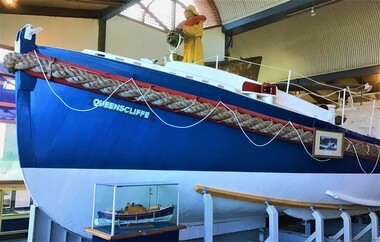
... Some of the vessels and calls for help the lifeboat attended were: 1960 - Army Commandos lost in the Rip 1967 - The search for the late Prime Minister Harold Holt 1974 - The last attendance to a vessel was to the Brisbane Trader which was on fire The shed which housed the lifeboat is located on the Queenscliff 'New' or 'Steamer' Pier (built in 1884). This shed includes the internal section of the slipway used to launch and retrieve the lifeboat. The external slipway and some other structures associated with the lifeboat shed have been removed. Originally fitted with two masts, the stern mast being removed in the 1960's...Some of the vessels and calls for help the lifeboat attended were: 1960 - Army Commandos lost in the Rip 1967 - The search for the late Prime Minister Harold Holt 1974 - The last attendance to a vessel was to the Brisbane Trader which was on fire The shed which housed the lifeboat is located on the Queenscliff 'New' or 'Steamer' Pier (built in 1884). This shed includes the internal section of the slipway used to launch and retrieve the lifeboat. The external slipway and some other structures associated with the lifeboat shed have been removed. Originally fitted with two masts, the stern mast being removed in the 1960's ...QUEENSCLIFFE was built in 1926 to a Royal National Lifeboat Institution (RNLI) design called the Watson Class. The double-diagonal planked vessel was built by A McFarlane and Sons in Port Adelaide SA, commissioned on the 6th of March 1926, and then officially named and launched on the 9th of April 1926. The original Wayburn petrol engine was replaced with a Gardner diesel. This gave QUEENSCLIFFE a top speed of 7.5 knots with a range of 350 miles. The equipment carried aboard included a VHF Radio Telephone, HF radio transceiver, visual signals, life rafts, hand rocket gun, flare gun, generator, search light and first aid supplies. In the tradition of many shore based lifeboats, QUEENSCLIFFE had its own shed and slipway and was always ready for launching when required to go to sea in response to an emergency call. Its area of operation included 'the Rip' at Port Phillip Heads and the Bass Strait seas immediately offshore. She was taken out of service in 1976 by the Marine Board of Victoria and subsequently offered to the Borough of Queenscliffe for care and display. The Lifeboat is listed on the Australian Register of Historic Vessels (ARHV). During her 50 years of service the Queenscliffe attended many calls for assistance both inside and outside the Heads. Some of the vessels and calls for help the lifeboat attended were: 1960 - Army Commandos lost in the Rip 1967 - The search for the late Prime Minister Harold Holt 1974 - The last attendance to a vessel was to the Brisbane Trader which was on fire The shed which housed the lifeboat is located on the Queenscliff 'New' or 'Steamer' Pier (built in 1884). This shed includes the internal section of the slipway used to launch and retrieve the lifeboat. The external slipway and some other structures associated with the lifeboat shed have been removed. Originally fitted with two masts, the stern mast being removed in the 1960's. A retractable centre plate was used when under sail. Delivered with an 80 hp Wayburn petrol motor which was later replaced by a 72 hp Gardiner diesel. Top speed of 7.5 knots and a range of 350 miles.QUEENSCLIFFE is a wooden lifeboat built in 1926 in South Australia. It has a long association with the Victorian port of Queenscliff. It was manned voluntarily by their local fishermen and is therefore closely attached to families of the Queenscliff community. It is a rare surviving example of the coastal shore-based lifeboats that were based around the Australian coastline.The lifeboat 'Queenscliffe' a Watson Class LifeboatQueenscliffelifeboat, rescue, watson class boat -
 Eltham District Historical Society Inc
Photograph, The Jelbart Barn, 93 Arthur Street, Eltham, 1972c
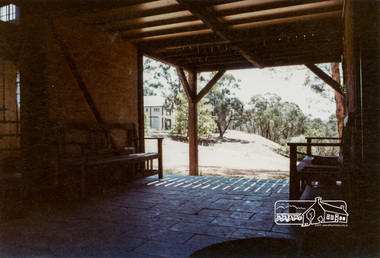
... house and its barn were built, Eltham was a rural community; Jelbart’s grandfather Ronald was a businessman whose poultry farm formed part of the family’s original 100ha holding. A portion would later be subdivided into residential lots to make way for new homes that would form the basis of the Woodridge Estate in the early 1970s. The Barn was developed as a residence by Ian Jelbart in the late 1960;'s...house and its barn were built, Eltham was a rural community; Jelbart’s grandfather Ronald was a businessman whose poultry farm formed part of the family’s original 100ha holding. A portion would later be subdivided into residential lots to make way for new homes that would form the basis of the Woodridge Estate in the early 1970s. The Barn was developed as a residence by Ian Jelbart in the late 1960;'s ...Owned at the time by architect, Ian Jelbart, the property had been in the Jelbart family since the 1940s; a 5560sqm secluded hilltop parcel in Eltham. When the manor house and its barn were built, Eltham was a rural community; Jelbart’s grandfather Ronald was a businessman whose poultry farm formed part of the family’s original 100ha holding. A portion would later be subdivided into residential lots to make way for new homes that would form the basis of the Woodridge Estate in the early 1970s. The Barn was developed as a residence by Ian Jelbart in the late 1960;'s. Handmade mud bricks were used in its construction. This is a view from The Barn looking towards the Manor HouseDigital file only; created from scan undertaken by EDHSarthur street, eltham, houses, jelbart barn, jelbart property, kinloch gardens, verandah, mud bricks, enclosure -
 Kiewa Valley Historical Society
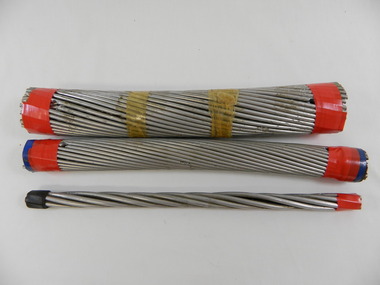
S.E.C.V. Transmission Cables x3
... The State Electricity Commission of Victoria constructed the Kiewa Hydro Electric scheme from the 1930's to 1960's during which time power cables were made to carry power from the Power stations to the switch yards and beyond to the towns and houses....The State Electricity Commission of Victoria constructed the Kiewa Hydro Electric scheme from the 1930's to 1960's during which time power cables were made to carry power from the Power stations to the switch yards and beyond to the towns and houses. ...The State Electricity Commission of Victoria constructed the Kiewa Hydro Electric scheme from the 1930's to 1960's during which time power cables were made to carry power from the Power stations to the switch yards and beyond to the towns and houses.These sample power cables indicate the types of power lines used in the Kiewa Hydro Electric Scheme and the amount of voltage that they carry.3 transmission cables of different width used for transmitting different amounts of power on different size power lines.The thinnest cable consists of a centre piece of wire covered by a layer of twisted wires. The middle sized cable has 4 layers of twisted wires around the centre piece and the thickest cable has 5 layers of twisted wires around the centre piece.The thickest cable has a plastic strip with 330.000 Volt Cable inscribed on it.state electricity commission of victoria. power lines. cables. kiewa hydro electric scheme. electricity. -
 Kiewa Valley Historical Society
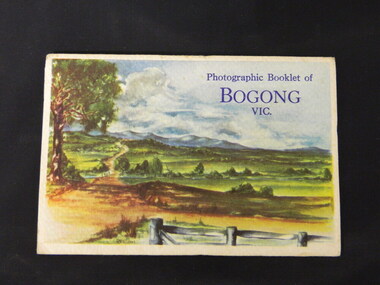
Booklet - Bogong, Photographic Booklet of Bogong Vic
... Bogong Village housed the State Electricity Commission of Victoria's employees working on the Kiewa Hydro Electric Scheme which began in the 1930's and finished in the 1960's. ...Bogong Village housed the State Electricity Commission of Victoria's employees working on the Kiewa Hydro Electric Scheme which began in the 1930's and finished in the 1960's. ...This booklet was produced to advertise Bogong Village and surrounding areas. The photos depict the area's buildings and equipment being used at the time. Bogong Village housed the State Electricity Commission of Victoria's employees working on the Kiewa Hydro Electric Scheme which began in the 1930's and finished in the 1960's. Maisie describes her visit in May 1958 giving an insight into the area including the weather and the roads.The photos indicate what the area around Bogong looked like c1958 towards the end of construction but before the bush grew back after the 1939 fires at Bogong village and after construction of the shopping centre at Mt Beauty. A sno' cat and snow plough are also shown emphasising the change in machinery over the years. This enables comparisons to be made in many areas of study.A fold down booklet postcard size of 9 black and white photos of Bogong village and surrounds and a letter addressed to Mrs. A. Parnell of Sydney from Maisie. Maise's husband has 2 married sisters living near Bogong on farms. The booklet is in a clear plastic sleevePostage stamp arrived in Sydney 28th May 1958.bogong. lake guy. howman gap hostel. mt beauty.bogong high plains. -
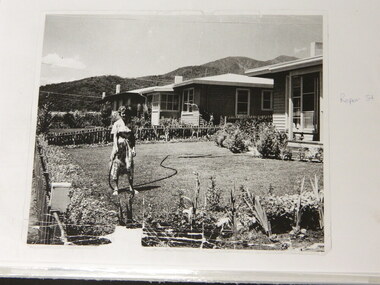 Kiewa Valley Historical Society
Folder - Early Photos of Mt Beauty
... Houses. Type C.1 6. Drawing Plan of 'Kiewa Scheme Mt Beauty Housing Type "G". 7. 5 pages on "Twelve Tips on Caring for Old Buildings 8. Booklet advertising Mt Beauty housing for sale including activities available in the area. (1960's) 9. ...Houses. Type C.1 6. Drawing Plan of 'Kiewa Scheme Mt Beauty Housing Type "G". 7. 5 pages on "Twelve Tips on Caring for Old Buildings 8. Booklet advertising Mt Beauty housing for sale including activities available in the area. (1960's) 9. ...Mt Beauty township was built during the 1950's to house the employees of the State Electricity Commission working on the Kiewa Hydro Electric Scheme. After the completion of the Kiewa Hydro Electric Scheme many houses were sold and the public buildings handed over to the Alpine Shire. Mt Beauty has always been a tourist destination especially with its proximity to the ski fields at Falls Creek.This folder contains many early photos of Mt Beauty showing the construction town during its development during the Kiewa Hydro Electric Scheme and its early days of tourism. A3 size black plastic folder with clear plastic sleeves holding early black & white photos of Mt Beauty township. Also included are: 1. 3 foolscap pages -Nov., 1953 Kiewa Hydro-Electric Scheme Progress. 2. SECV Drawing Plan (No. K6242) of Mt Beauty House - 3 angles and floor plan, English Pre-cut Type 3B.ILA with note that all houses with prefix 3B are similar. 3. Orange, black and white pamphlet "Welcome to Kiewa" 4. Tourist postcard 'fold-up' of 11 postcards "Mt Beauty and the Kiewa Scheme, Victoria 5. Drawing Plan of 'Mt Beauty Housing. Use of Prefabricated Cubicles for Houses. Type C.1 6. Drawing Plan of 'Kiewa Scheme Mt Beauty Housing Type "G". 7. 5 pages on "Twelve Tips on Caring for Old Buildings 8. Booklet advertising Mt Beauty housing for sale including activities available in the area. (1960's) 9. List of Photos from SECV held by KVHS Some photos have handwritten labels mt beauty. secv. kiewa hydro electric scheme.tourism. housing. construction town. falls creek. -
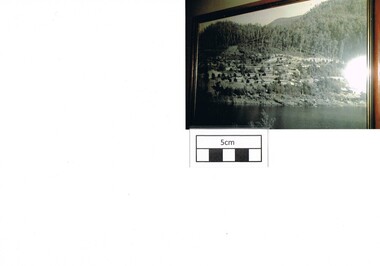 Kiewa Valley Historical Society
Photograph Bogong, Bogong Township Circa 1950, circa 1940s to 1950s
... These workers were initially settled in 26 houses and were mainly of European heritage. At the completion of the scheme, in the 1960's, the village was opened to public/tourism use. ...These workers were initially settled in 26 houses and were mainly of European heritage. At the completion of the scheme, in the 1960's, the village was opened to public/tourism use. ...The Bogong Village was originally constructed (1937-1940) by the State Electricity Commission to house, engineers and construction workers working on the Kiewa Hydroelectric Scheme. These workers were initially settled in 26 houses and were mainly of European heritage. At the completion of the scheme, in the 1960's, the village was opened to public/tourism use. This photograph shows the village before beautification for tourism was introduced and "bare bones" homes and village usage existed.This photo clearly presents a period of restricted human occupation of a very fragile Alpine environment(up to 4000 workmen involved). This was the beginning of a planned and controlled form of sustainable tourist orientated development of the Victorian Alps and high plains region. The Bogong Township was the base camp for workers employed by the State Electricity Commission. After the construction phase was completed, the planning and controls originating from this period have been modified to allow a greater public access of this unique environment.Photograph of a framed glass enclosed black and white photograph of the Bogong settlement Paper details "KodakXtraLife paper" on back of photo. bogong village, bogong township, sec alpine constructions, hydro, kiewa scheme -
 Kiewa Valley Historical Society
Mincer Meat, early to mid 1900's
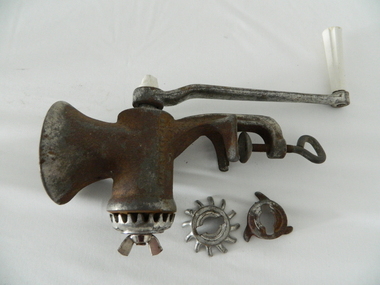
... 1960's that the Asian manufacturing giant woke up and started to dominate the market palce. This domestic kitchen appliance is very significant to the Kiewa Valley because it highlights the "made at home" period when food processing was made "in house" due to inability to source food from specialised shops e.g. the butcher or slaughter houses. ...This cast iron kitchen appliance was made in England in the early 1900's and shipped to the "colony" Australia. This was before World War II and the "growing up" of a colony to an independent member of "the British Commonwealth". It was a period when most appliances (be they household) where manufactured in England and shipped to Australian ports. It was not until the late 1960's that the Asian manufacturing giant woke up and started to dominate the market palce.This domestic kitchen appliance is very significant to the Kiewa Valley because it highlights the "made at home" period when food processing was made "in house" due to inability to source food from specialised shops e.g. the butcher or slaughter houses. It was a period before mass food processing factories were established and roads constructed up to the standard for distribution to semi remote regions such as Kiewa Valley was in the beginning of the 1900's.This cast iron (malleable iron) mincer for meat products has a large "funnel" to direct "chunks" of meat to the grinding "wheels". These "star" shaped wheels with "teeth" of three different cutting surfaces (fine, medium and coarse) provide for texture types of the final meat product. The meat is placed into the "loading" funnel and push downwards(gravity feed) through the mincing chamber and out through the front side. There is a long "screw worm" which is rotated by turning the handle. The appliance is table mounted by a vice "G" screw on clamp (hand operated). "BEATRICE No. 3" and "MADE IN ENGLAND", "P 3181"household cast iron appliances, food processors -
 Eltham District Historical Society Inc
Photograph, Woodburn residence, mudbrick adobe (1949), Eltham Heritage Tour, 24 May 1992, 24/05/1992
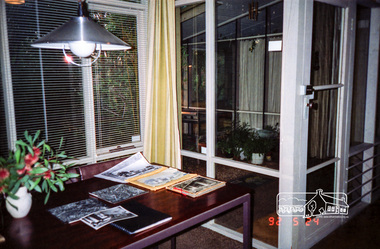
... Highlights of the tour included: - 10 am Leave from Shire Offices - 3 Important Trees - A Physical Link to Eltham's First Settlers - Toorak Mansion Gates - A Surviving Farm House - An Intact Circa 1900 Main Street - First Settlers - Gold Miners, and Timber-getters - An Early Hotel - A Pioneering Homestead - Changing Eltham Shire - 20th Century - 4 pm Afternoon Tea and Finish Tour Extract from ELTHAM CULTURAL HERITAGE TOUR (Newsletter No. 85, July 1992, by Bettina Woodburn) "In some respects Eltham is a 'back-water' and it has its own distinctive flavour. On the outskirts the homes date from the 1960's...Highlights of the tour included: - 10 am Leave from Shire Offices - 3 Important Trees - A Physical Link to Eltham's First Settlers - Toorak Mansion Gates - A Surviving Farm House - An Intact Circa 1900 Main Street - First Settlers - Gold Miners, and Timber-getters - An Early Hotel - A Pioneering Homestead - Changing Eltham Shire - 20th Century - 4 pm Afternoon Tea and Finish Tour Extract from ELTHAM CULTURAL HERITAGE TOUR (Newsletter No. 85, July 1992, by Bettina Woodburn) "In some respects Eltham is a 'back-water' and it has its own distinctive flavour. On the outskirts the homes date from the 1960's ...ELTHAM HERITAGE TOUR The Society excursion on 24th May 1992 was arranged by David Bick, leader of the team carrying out the Shire's heritage study. David selected a number of sites or buildings identified in the study, some of them lesser known components of the Shire's heritage. The tour commenced at the Eltham Shire Office at 10.00 am. Travel was by private car and mini-bus with stops at about twelve locations for commentary by David.It included a short walk in Hurstbridge and lunch at Kinglake. Highlights of the tour included: - 10 am Leave from Shire Offices - 3 Important Trees - A Physical Link to Eltham's First Settlers - Toorak Mansion Gates - A Surviving Farm House - An Intact Circa 1900 Main Street - First Settlers - Gold Miners, and Timber-getters - An Early Hotel - A Pioneering Homestead - Changing Eltham Shire - 20th Century - 4 pm Afternoon Tea and Finish Tour Extract from ELTHAM CULTURAL HERITAGE TOUR (Newsletter No. 85, July 1992, by Bettina Woodburn) "In some respects Eltham is a 'back-water' and it has its own distinctive flavour. On the outskirts the homes date from the 1960's, 70's and 80s with a sprinkling of 'earth homes', mud-brick or pise, rammed dirt. Crossing Main Road into Beddoe Street and Thompson Crescent a very pleasant drive past pines and old fence lines, front lawns unfenced, the occasional ·old farm building, we eventually looked down on a huge circular roof of a 1992 adobe home. Other distinctive places included the Pauline Toner Butterfly Reserve, Gordon Ford's splendid garden at Fulling in Pitt Street, cypress hedges and old houses in Bridge Street and in every direction Eltham's special feature - a totally treed horizon. We were now in the part of the Shire closest to Melbourne - Montmorency - not on the way to anywhere, with no through road going across it, developed in the 1950's and 1960's with conventional gardens, now converted to native plants. The rail looped between Greensborough and Eltham and a shopping street (Were Street) served the area, growing up the hill from the station. It was a typical outer Melbourne suburb with lawns and roses with patches of originality. The shopping precinct still has 1950 characteristics - walls which sloped back, projecting roofs, the original shop fronts are nearly all tiled below the old windows. There's an air of past times about the School, the Dairy, the Butcher's (now a milk bar) and the Castlemaine stone face of the Commonwealth Bank. The final stop for the tour was at the mud-brick Woodburn residence, adobe of 1949 with additions. After War Service, Bill Woodburn had commenced an Architecture course at Melbourne University and after second year in the Christmas vacation, with his wife, Betti, built the two bedroom house - with amazing saving of costs. In the three and a half months they made over 3000 bricks (external walls 18" x 12" x 4", internal walls 12" x 9" x 4"), sifted top soil for mortar and laid them, on concrete foundations and slab floor, made all the structural window frames, door frames and roof members to carry 'super six' asbestos sheets, laboured for the electrician and plumber, did all the glazing and, still without electricity, moved in in March 1949. Rooms have been added, at first with glass walls, later using concrete blocks, to accommodate three daughters and a son. The house not only grew from the earth, but also with the family."Record of the Society's history and activities and highlighting various aspects of the Heritage Study undertaken by David Bick used to create the future heritage overlay for the Shire of Eltham and later Nillumbik Shire.Roll of 35mm colour negative film, 4 stripsKodak Gold 100 5095shire of eltham historical society, activities, heritage tour, woodburn house -
 Kiewa Valley Historical Society
22KV Transformer Summation - S.E.C.V
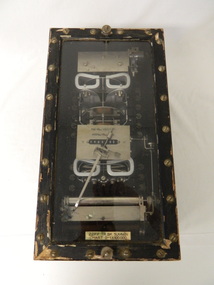
... houses in Mount Beauty and provided an inked one month period chart. This information was used to quantify and pay for the power consumption to the Transmission and Generating Department from the Distribution Department which then went on to bill local consumers. The State Electricity Commission of Victoria constructed the Kiewa Hydro Electric Scheme from the late 1930's to the 1960 ...This meter belonged to the State Electricity Commission of Victoria. This meter measured the power used by all the houses in Mount Beauty and provided an inked one month period chart. This information was used to quantify and pay for the power consumption to the Transmission and Generating Department from the Distribution Department which then went on to bill local consumers.The State Electricity Commission of Victoria constructed the Kiewa Hydro Electric Scheme from the late 1930's to the 1960's. The construction towns of Bogong and Mt Beauty used electricity which was measured by this meter resulting in billing customers for the power they used.Black box with black painted wooden frame top and bottom screwed on holding clear glass at the front so that the instruments can be seen. A metal cylinder is at the bottom of the instruments with a connecting rod to the 7 digit meter in the middle of the instrument panel. In the middle of each end of the front of the box are 2 screws with knobs wound on. 22KV. BK. summation Chart 0-1 x 100,000state electricity commission of victoria. meter. transformer summation. kiewa hydro scheme. mt beauty. power. electricity.
