
Showing 98 items matching "industrial machines"
-
 National Wool Museum
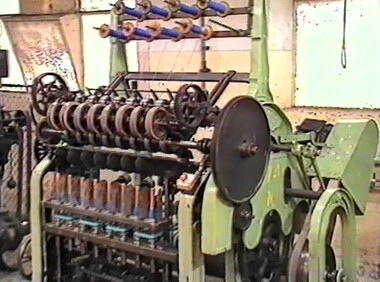
Film - Cap Spinning and Wool Scouring Machine, Sound Design Studios and Digital Arts, Melbourne, 1988
... machine...J Dyson & Sons...machinery...industrial...Film wool processing factory mill cap spinning machine wool scouring machine J Dyson & Sons machinery industrial machines Label on tape: VIDEO VISION / VHS / GEELONG WOOL MUSEUM / SPINNING / SCOURING Black VHS tape with white sticker and printed text. ...Tape shows two short films showing the operation of a cap spinning machine and wool scouring machine. Probably used in previous displays at the National Wool Museum.Black VHS tape with white sticker and printed text. Tape is housed in a black plastic case with labels and stickers. Film includes colour footage and audio. 00:05 - cap spinning machine in operation, including close up detail shots 01:12 - end 01:21 - wool scouring machine in operation, including close up detail shots 02:45 - endLabel on tape: VIDEO VISION / VHS / GEELONG WOOL MUSEUM / SPINNING / SCOURINGfilm, wool processing, factory, mill, cap spinning machine, wool scouring machine, j dyson & sons, machinery, industrial machines -
 National Wool Museum
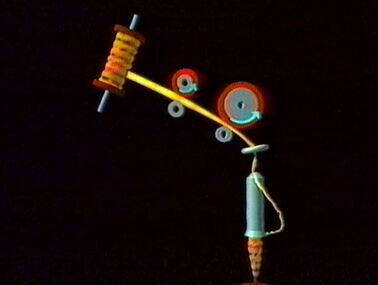
Film - Cap Spinning Machine, Les Gilbert, 1989
... machine...machinery...industrial...Film wool processing factory mill cap spinning machine machinery industrial machines Label on tape: VIDEO VISION / VHS / SPINNING / COMPILE / SOUND / DESIGN / STUDIO / LES GILBERT/DIRECTOR / 9A GARDEN STREET PRAHRAN / VICTORIA 3181 AUSTRALIA / TELEPHONE (03) 529 3086 Black VHS tape with yellow and white stickers and hand written and printed text. ...Tape shows a short film depicting the operation of a cap spinning machine, interspersed with explanatory animated graphics. Probably used in previous displays at the National Wool Museum.Black VHS tape with yellow and white stickers and hand written and printed text. Tape is housed in a black plastic case. Film includes colour footage and audio. 00:04 - animated graphic of cap spinning machine 00:26 - cap spinning machine 06:04 - end Film loops until 01:03:57Label on tape: VIDEO VISION / VHS / SPINNING / COMPILE / SOUND / DESIGN / STUDIO / LES GILBERT/DIRECTOR / 9A GARDEN STREET PRAHRAN / VICTORIA 3181 AUSTRALIA / TELEPHONE (03) 529 3086film, wool processing, factory, mill, cap spinning machine, machinery, industrial machines -
 Bendigo Historical Society Inc.
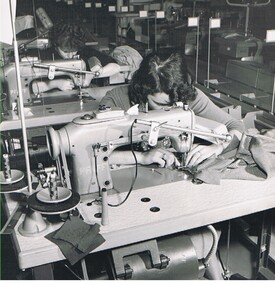
Photograph - HANRO COLLECTION: SEWING MACHINES
... Black and white photograph of women using industrial sewing machines, taken in the Hanro factory in Switzerland...ORGANIZATION Business hanro Hanro Clothing manufacture Sewing machines Black and white photograph of women using industrial sewing machines, taken in the Hanro factory in Switzerland Photograph HANRO COLLECTION: SEWING MACHINES ...Black and white photograph of women using industrial sewing machines, taken in the Hanro factory in Switzerlandorganization, business, hanro, hanro, clothing manufacture, sewing machines -
 Greensborough Historical Society
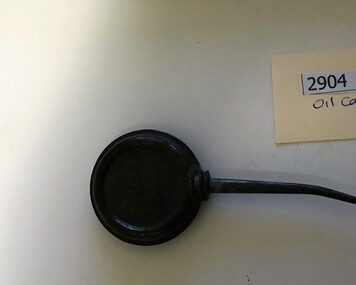
Oil Can, 1940s
... Used on industrial sewing machine, making hoods for baby carriages in the 1950s. ...Used on industrial sewing machine, making hoods for baby carriages in the 1950s. ...Used on industrial sewing machine, making hoods for baby carriages in the 1950s. The owner worked for Paramount Prams in Carlton.Round pressed steel container with brass screw thread soldered on to hold steel spout.prams, oil cans, paramount prams -
 Bendigo Historical Society Inc.
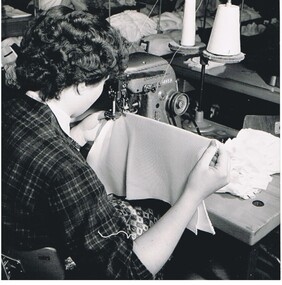
Photograph - HANRO COLLECTION: WOMAN AT SEWING MACHINE
... Photograph: black and white photo of woman sitting at industrial type sewing machine, feeding material through. ...ORGANIZATION Business hanro Hanro Bendigo manufacturing unknown Photograph: black and white photo of woman sitting at industrial type sewing machine, feeding material through. ...Photograph: black and white photo of woman sitting at industrial type sewing machine, feeding material through. On back of photo Handschin & Ronus, Aktiengesellschaft, Liestal, ( Schweiz )unknownorganization, business, hanro, hanro, bendigo, manufacturing -
 National Wool Museum
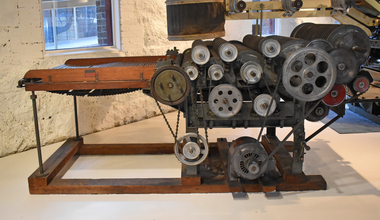
Machine - Carding Machine, CSIRO, 1960s
... This machine was developed by the CSIRO in the 1960s as a small-scale experimental machine. Industrial carding machines were four times the size of this one. ...This machine was developed by the CSIRO in the 1960s as a small-scale experimental machine. Industrial carding machines were four times the size of this one. ...After scouring, the wool fibres are still tangled together. Carding untangles the fibres by brushing and straightening. The wool moves through a series of wire brush rollers that revolve at different speeds and in different directions to tease apart the wool. The fibres emerge from the machine as a continuous filmy web - called a sliver. The sliver must be thinned and divided into strands before the next process. Carding machines constantly require tuning. A highly skilled technician maintained and adjusted the speed of the rollers on the machine. This machine was developed by the CSIRO in the 1960s as a small-scale experimental machine. Industrial carding machines were four times the size of this one. Gold plaque on display with machine until 2018 read: G.H. Mitchell & Son, Adelaide have celebrated 125 Years of involvement with the Australian Wool Processing Industry by contributing the funds necessary to restore The Carding Machine, Noble Comb & The Gill Box. Also another gold plaque read: Experimental Carding Machine donated to The National Wool Museum by C.S.I.R.O Ryde has been rebuilt by Nick Sokolov of Comb Research & Development with the help of Bernard Tolan.Carder with small roller missing at coiling end. Driven by three horse power motor. Wooden slated feed table synchronised to overall gearing.carding machine, machines, wool industry, manufacturing, wool processing -
 The Ed Muirhead Physics Museum
Galvanometer W.G. Pye & Co
... Handcrafted, machined/industrial technique, assembled, cast. Manual or machine application- sanded, buffed, polished, stained/coated/ laquered. ...Handcrafted, machined/industrial technique, assembled, cast. Manual or machine application- sanded, buffed, polished, stained/coated/ laquered. ...Galvanometer consisting of a wooden stand with a fold down wooden front cover. One coil attached to front panel and fixed coil on the rear stand. Quartz fibre and reflecting mirror missing. Three brass leveling screws on the base. Handcrafted, machined/industrial technique, assembled, cast. Manual or machine application- sanded, buffed, polished, stained/coated/ laquered. Surface finish: polished, laquered, stained, coated corrosion/patina. [Stamped] top centre of upright front face: W.G. PYE & CO./ ENG./ CAMBRIDGE. Inscribed on base plate in front: No. 11972. -
 Melbourne Tram Museum
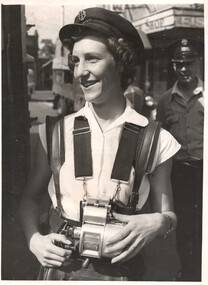
Photograph - Conductress Nona Sharp - Footscray depot strike - ticket machine, The Age, 15/2/1955
... The photograph shows Conductress Nona Sharp with a Gibson Ticket Machine around her shoulders in a MMTB Uniform blouse and cap, with the cutting recording that the Footscray Depot staff were holding a strike the following day over the weight of the machine - 6lb and asking that the machines be withdrawn. This is a subsequent event to another industrial issue over the machines in Nov. 1953 - see item 8340....The photograph shows Conductress Nona Sharp with a Gibson Ticket Machine around her shoulders in a MMTB Uniform blouse and cap, with the cutting recording that the Footscray Depot staff were holding a strike the following day over the weight of the machine - 6lb and asking that the machines be withdrawn. This is a subsequent event to another industrial issue over the machines in Nov. 1953 - see item 8340. ...The photograph shows Conductress Nona Sharp with a Gibson Ticket Machine around her shoulders in a MMTB Uniform blouse and cap, with the cutting recording that the Footscray Depot staff were holding a strike the following day over the weight of the machine - 6lb and asking that the machines be withdrawn. This is a subsequent event to another industrial issue over the machines in Nov. 1953 - see item 8340.Yields information about a dispute at Footscray depot over ticket machines and their weight, Black and white photograph with notes on the rear and the actual cutting.Has the sticker of "www.johnrogersarchive.com" and a date stamp of "15 Feb 1955"tramways, tramcars, ticket machines, strikes, gibson ticket machines, footscray, conductresses -
 Sunshine and District Historical Society Incorporated
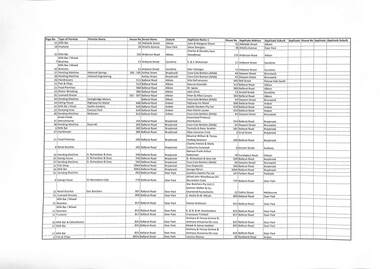
Archive - City of Sunshine Health Act Registration Schedule 1977, City of Sunshine, 1977
... Meat & Paper 433 - 451 Somerville Road Footscray West Vending Machine Nestles Shed 58 Somerville Road Footscray West Eating House Somerville Road Footscray West Vending Machine Industrial Engineering 6 South Road Braybrook Eating House Invicta Mills 38 South Road Braybrook Vending Machine Invicta Mills 38 South Road Braybrook Milk Bar 105 South Road Braybrook Milk Bar / Delicatessen 105 South Road Braybrook Greengrocer 107 South Road Braybrook Fish Shop 109 South Road Braybrook Milk Bar 111 South Road Braybrook Milk Bar 111 South Road Braybrook Hairdresser Shop 121 South Road Braybrook Self Service Grocery 125 South Road Braybrook Retail Butcher 127 South Road Braybrook Retail Greengrocery 129 South Road Braybrook Hairdresser / Beautry Parlour 131 South Road Braybrook Bakery 133 South Road Braybrook Milk Bar 125A South Road Braybrook Preparked Grocery Foods Stall 22 - 23 St. ...Meat & Paper 433 - 451 Somerville Road Footscray West Vending Machine Nestles Shed 58 Somerville Road Footscray West Eating House Somerville Road Footscray West Vending Machine Industrial Engineering 6 South Road Braybrook Eating House Invicta Mills 38 South Road Braybrook Vending Machine Invicta Mills 38 South Road Braybrook Milk Bar 105 South Road Braybrook Milk Bar / Delicatessen 105 South Road Braybrook Greengrocer 107 South Road Braybrook Fish Shop 109 South Road Braybrook Milk Bar 111 South Road Braybrook Milk Bar 111 South Road Braybrook Hairdresser Shop 121 South Road Braybrook Self Service Grocery 125 South Road Braybrook Retail Butcher 127 South Road Braybrook Retail Greengrocery 129 South Road Braybrook Hairdresser / Beautry Parlour 131 South Road Braybrook Bakery 133 South Road Braybrook Milk Bar 125A South Road Braybrook Preparked Grocery Foods Stall 22 - 23 St. ...The City of Sunshine Health Inspector had a broad mandate to protect public health across the municipality. Their duties included inspecting food premises such as: - Restaurants - Cafés - Takeaway shops - Milk bars - Supermarkets - Food vans - Market stalls They checked for: - Safe food handling practices - Correct storage temperatures (hot and cold holding) - Cleanliness of food preparation areas - Pest control and vermin prevention - Staff hygiene and hand‑washing facilities - Proper waste and grease‑trap management These inspections were carried out under the Food Act and local by‑laws. This list of businesses in the City of Sunshine is an extract from a report by the City of Sunshine Health Inspector in 1977.This report records the business name, type of business and address of businesses operating in the City of Sunshine in 1977.Milk Bar 62 Adelaide Street Albion Fruiterer 26 Amelia Avenue Deer Park Milk Bar 133 Anderson Road Albion Milk Bar / Mixed Business 11 Ardoyne Street Sunshine Milk Bar / Mixed Business 11 Ardoyne Street Sunshine Vending Machine National Springs 185 - 195 Ashley Street Braybrook Vending Machine Harland Engineering Ashley Street Braybrook Hairdressers 511 Ballarat Road Albion Fish & Chips 513 Ballarat Road Albion Food Premises 580 Ballarat Road Albion Motor Wrecking 584 Ballarat Road Albion Licensed Grocer 501 - 507 Ballarat Road Albion Vending Machine Swingbridge Motors Ballarat Road Albion Eating House Highway Inn Motel 608 Ballarat Road Ardeer Milk Bar / Kiosk Apollo Gardens 610 Ballarat Road Ardeer Camping Area Caravan Park 610 Ballarat Road Ardeer Vending Machine McEwans 614 Ballarat Road Ardeer Snack Foods Manufacturer 254 Ballarat Road Braybrook Vending Machine Dyecraft 265 Ballarat Road Braybrook Milk Bar 282 Ballarat Road Braybrook Hairdresser 284 Ballarat Road Braybrook Food Premises 290 Ballarat Road Braybrook Retail Butcher 292 Ballarat Road Braybrook Vending Machine D. Richardson & Sons 330 Ballarat Road Braybrook Eating House D. Richardson & Sons 330 Ballarat Road Braybrook Vending Machine D. Richardson & Sons 330 Ballarat Road Braybrook Fish Shop 306A Ballarat Road Braybrook Milk Bar 306A Ballarat Road Braybrook Vending Machine 463 Ballarat Road Deer Park Eating House ICI Recreation Club 770 Ballarat Road Deer Park Retail Butcher Star Butchers 807 Ballarat Road Deer Park Licensed Grocery 809 Ballarat Road Deer Park Milk Bar / Mixed Business 813 Ballarat Road Deer Park Milk Bar / Mixed Business 815 Ballarat Road Deer Park Fruiterer 817 Ballarat Road Deer Park Milk Bar & Delicatessen 825 Ballarat Road Deer Park Milk Bar 825 Ballarat Road Deer Park Milk Bar 825 Ballarat Road Deer Park Fish & Chips 801A Ballarat Road Deer Park Fish & Chip Shop 801A Ballarat Road Deer Park Eating House 801B Ballarat Road Deer Park Fruit Shop 807A Ballarat Road Deer Park Vending Machine Goldern Fleece Service Station Ballarat Road Deer Park Hairdressers 5 Ballarat Road Maidstone Mixed Business 83 Ballarat Road Maidstone Butcher's Shop 151 Ballarat Road Maidstone Mixed Business 154 Ballarat Road Maidstone Mixed Business 193 Ballarat Road Maidstone Grocery Retail 129 - 131 Ballarat Road Maidstone Milk Bar 49A Ballarat Road Maidstone Food Premises 361 Ballarat Road Sunshine Mens Hairdresser Shop 363 Ballarat Road Sunshine Vending Machine B.P. Westbound 439 Ballarat Road Sunshine Eating House 459 Ballarat Road Sunshine Milk Bar / Mixed Business 469 Ballarat Road Sunshine Fish Shop 471 Ballarat Road Sunshine Mixed Business Food 473 Ballarat Road Sunshine Wholesale Egg Store 479 Ballarat Road Sunshine Vending Machine Sunshine Cabinet Works 503 Ballarat Road Sunshine Apartment House Caravan Park 610 Ballarat Road Sunshine Take Away Food Kentucky Fried Chicken 429A Ballarat Road Sunshine Vending Machine Mobil Service Station 432 Ballarat Road Sunshine North Vending Machine Spaldings 480 Ballarat Road Sunshine North Vending Machine Ajax Nettlefolds 484 Ballarat Road Sunshine North Eating House Ajax Nettlefolds 484 Ballarat Road Sunshine North Vending Machine National Food Service Nettlefolds 484 Ballarat Road Sunshine North Vending Machine Nettlefolds 484 Ballarat Road Sunshine North Eating House McDonalds 400 - 402 Ballarat Road Sunshine North Motor Wrecking Ballarat Road Cnr Carrington Drive Albion Mixed Business Ballarat Road Cnr Churchill Avenue Maidstone Eating House Ballarat Road Cnr Holt Street Ardeer Mixed Business 23 Beachley Street Braybrook Milk Bar 31 Beachley Street Braybrook Fish Shop 33 Beachley Street Braybrook Fish & Chips 3 Bell Street Sunshine West Greengrocer 1A Bell Street Sunshine West Butchers 1D Bell Street Sunshine West Milk Bar 61 Berkshire Road Sunshine North Vending Machine Rockwell Axles Berkshire Road Sunshine North Bulk Tallow Plant Burke Road Braybrook Soap Manufacturing Pennell 43 - 45 Burke Street Braybrook Vending Machine G.U.D. Burton Crescent Maribyrnong Motor Wrecking 18 Carrington Drive Albion Butcher 162 Churchill Avenue Braybrook Bakery & Shop 166 Churchill Avenue Braybrook Ladies Hairdressers 174 Churchill Avenue Braybrook Fish & Chip Shop 176 Churchill Avenue Braybrook Licenced Grocery 158 - 160 Churchill Avenue Braybrook Milk Bar / Mix Business 170 - 172 Churchill Avenue Braybrook Fishmonger 8 City Place Sunshine Butcher's Shop S.S. Meats 11 City Place Sunshine Retail Fish Sunshine Market 13 City Place Sunshine Retail Health Foods Sunshine Market 13 City Place Sunshine Retail Fruit / Eggs Stalls 3, 10 & 11 Sunshine Market 15 City Place Sunshine Delicatessen Sunshine Market 17 City Place Sunshine Supermarket Safeway 7 Clarke Street Sunshine Vending Machine Safeway 7 Clarke Street Sunshine Butcher 8 Clarke Street Sunshine Butcher Storeroom / Factory 11 Clarke Street Sunshine Hairdresser Room 7 2A Clarke Street Sunshine Milk Bar 1 Commercial Street Maidstone Hairdressers 7 Commercial Street Maidstone Chiropodist Corio Street Sunshine Chiropodist 39 Cornwall Road Sunshine North Gut Cleaning 37 Cranwell Street Braybrook Fat Extracting 37 Cranwell Street Braybrook Boiling Down 37 Cranwell Street Braybrook Piggery 37 Cranwell Street Braybrook Storage Canned Food 37 Cranwell Street Braybrook Packaging Food Products Cranwell Street Cnr Errol Street Braybrook Food Packing Southern Packages Cranwell Street Cnr Errol Street Braybrook Milk Bar / Mixed Business 24 Cypress Avenue Brooklyn Milk Bar 24 Cypress Avenue Brooklyn Vending Machine Steelcraft Baby Carriages 99 Derby Road Sunshine Ladies Hairdressers 110 Derby Road Sunshine Vending Machine Raleigh Nursery Derby Road Cnr Thorpe Street Sunshine Eating House Raleigh Nursery Derby Road Cnr Thorpe Street Sunshine Vending Machine Massey Ferguson 2 Devonshire Road Sunshine Vending Machine Sunshine Post Office 5 Devonshire Road Sunshine Milk Bar / Mixed Business 100 Devonshire Road Sunshine Vending Machine Massey Ferguson Devonshire Road Sunshine Milk Bar 5 Dickson Street Sunshine Fruit Shop 15 Dickson Street Sunshine Food Premises 27 Disraeli Street St. Albans Hairdressers 69 Dumfries Street Deer Park Fish Shop 71 Dumfries Street Deer Park Milk Bar 73 Dumfries Street Deer Park Butcher 75 Dumfries Street Deer Park Coffee 113 Durham Road Sunshine Hairdresser Shop 1 117 Durham Road Sunshine Drinks Lot 1 Emu Road Maidstone Vending Machine Pridhams Sociel Club 11 Evans Street Braybrook Processing & Pack Dripping Pridhams 21 Evans Street Braybrook Gut Cleaning Pridhams 21 Evans Street Braybrook Rendering Works Pridhams 21 Evans Street Braybrook Storage & Soft Drink Sales 16 - 20 First Avenue Sunshine Sandwich Bar 30A First Avenue Sunshine Milk & Snack Bar 30A First Avenue Sunshine Vending Machine 106 Fitzgerald Road Sunshine West Mixed Business Lot 458 Fitzgerald Road Sunshine West Mixed Business Fitzgerald Road Sunshine West Butcher's Shop 26 Fiurlong Road Sunshine North Milk Bar / Mixed Business 154 Forrest Street Ardeer Milk Bar / Fish & Chips 222 Forrest Street Ardeer Milk Bar / Fish & Chips 222 Forrest Street Ardeer Vending Machine I.C.I. Detonating Fuse Factory Forrest Street Ardeer Vending Machine Connor-Shea 25 Fourth Avenue Sunshine Abattoir Thomas Borthwick & Sons 405 Francis Street Brooklyn Butcher's Shop Thomas Borthwick & Sons 405 Francis Street Brooklyn Eating House Borthwicks 405 Francis Street Brooklyn Abattoirs & Skaughterhouse Borthwicks 405 Francis Street Brooklyn Skin Store & Hide Treatment, Storage & Packing Borthwicks 405 Francis Street Brooklyn Boiling Down Meal, Dried Blood & Offals Borthwicks 405 Francis Street Brooklyn Fat Rendering Borthwicks 405 Francis Street Brooklyn Gut Rendering Borthwicks 405 Francis Street Brooklyn Vending Machine Dalgetys & Co 4 Frederick Street Brooklyn Take Away Food 28 Furlong Road Sunshine North Milk Bar / Mix Business 42 Furlong Road Sunshine North Vending Machine Parkhill Supermarket 18 - 22 Furlong Road Sunshine North Vending Machine Parkhill Supermarket 18 - 22 Furlong Road Sunshine North Supermarket & Storage Parkhill Supermarket 18 - 22 Furlong Road Sunshine North Vending Machine Tasman U.E.B. Industries 512 Geelong Road Brooklyn Take Away Food 553 Geelong Road Brooklyn Pizza 555 Geelong Road Brooklyn Warehouse Halfcase Warehouse 564 Geelong Road Brooklyn Vending Machine D.H. Opperman 568 Geelong Road Brooklyn Abattoirs J.H. Ralph & Sons 690 Geelong Road Brooklyn Boling Down Works J.H. Ralph & Sons 690 Geelong Road Brooklyn Piggery J.H. Ralph & Sons 690 Geelong Road Brooklyn Take Away Food 710 Geelong Road Brooklyn Vending Machine Internatioal Harvester Geelong Road Cnr McDonalds Road Brooklyn Milk Bar / Mixed Business 72 Glengala Road Sunshine West Hot Bread Shop Western & Continental Bread 78 Glengala Road Sunshine West Licenced Grocer 79 Glengala Road Sunshine West Milk Bar / Mixed Business 83 Glengala Road Sunshine West Milk Bar 85 Glengala Road Sunshine West Ladies Hairdressers 89 Glengala Road Sunshine West Eating House 93 Glengala Road Sunshine West Catering & Pastry Cook St. Albans Catering Service 95 Glengala Road Sunshine West Food Premises 142 Glengala Road Sunshine West Mixed Business 36 Hampshire Road Sunshine Eating House 44 Hampshire Road Sunshine Milk Bar 72 Hampshire Road Sunshine Hairdressers 76 Hampshire Road Sunshine Butcher 78 Hampshire Road Sunshine Fat Rendering 78 Hampshire Road Sunshine Fruit Shop 84 Hampshire Road Sunshine Fish Shop 86 Hampshire Road Sunshine Fish & Chip Shop 86 Hampshire Road Sunshine Eating House 90 Hampshire Road Sunshine Eating House 90 Hampshire Road Sunshine Vending Machine Shell Service Station 130 Hampshire Road Sunshine Pizza Restaurant 197 Hampshire Road Sunshine Eating House 209 Hampshire Road Sunshine Hot Bread Shop 217 Hampshire Road Sunshine Eating House 235 Hampshire Road Sunshine Butchery 244 Hampshire Road Sunshine Food Premises Caprile Meat Supply 244 Hampshire Road Sunshine Retail Liquor Sunshine Cellars 246 Hampshire Road Sunshine Delicatessen 252 Hampshire Road Sunshine Pie Manufacturer & Slaes 260 Hampshire Road Sunshine Milk Bar 266 Hampshire Road Sunshine Mens Hairdresser Shop Shop 7 Kontek Arcade 266 Hampshire Road Sunshine Vending Machine 266 Hampshire Road Sunshine Fruit Shop 268 Hampshire Road Sunshine Fruit & Vegetables 268 Hampshire Road Sunshine Hairdresser 277 Hampshire Road Sunshine Vending Machine Woolworths 282 Hampshire Road Sunshine Vending Machine Woolsworths Variety Store 282 Hampshire Road Sunshine Supermarket S.E. Dickens 294 Hampshire Road Sunshine Vending Machine 294 Hampshire Road Sunshine Butchery 252A Hampshire Road Sunshine Vending Machine G.J. Coles 254 - 258 Hampshire Road Sunshine Retail / Variety Store Coles 254 - 258 Hampshire Road Sunshine Vending Machine Coles 254 - 258 Hampshire Road Sunshine Vending Machine Coles Variety Store 254 - 258 Hampshire Road Sunshine Variety / Confectionary Woolworths 282 - 286 Hampshire Road Sunshine Vending Machine Dickens Supermarket 294 - 296 Hampshire Road Sunshine Vending Machine New World 294 - 296 Hampshire Road Sunshine Vending Machine Target Hampshire Road Sunshine Warehouse 7 Hampstead Road Maidstone Wholesale & Retail Selling Ernie's Supermarket 8 Hampstead Road Maidstone Vending Machine Ernie's Fruit Market 8 Hampstead Road Maidstone Vending Machine Ralph McKay Social Club 36 Hampstead Road Maidstone Food Premises 34A Hampstead Road Maidstone Mixed Business 110 Hertford Road Sunshine Warehouse 12 - 14 Hertford Road Sunshine Catering Service 45 Holt Street Ardeer Licenced Grocery / Milk Bar / Sub News / Post Office 49 Holt Street Ardeer Continental Butcher 51 Holt Street Ardeer Fish & Chips 59 Holt Street Ardeer Mixed Business 61 Holt Street Ardeer Fruit & Vegetables 51A Holt Street Ardeer Eating House W.L. Allen Foundry 3 Hulett Street Albion Mixed Business 56 King Edward Avenue Albion Milk Bar / Mixed Business 8 King Street Braybrook Milk Bar / Mixed Business 50 Links Street Sunshine West Milk Bar / Mixed Business 50 Links Street Sunshine West Ladies Hairdressers Shop 7 St. Albans Arcade 323 Main Road East St. Albans Ladies Hairdressers St. Albans Arcade 323 Main Road East St. Albans Mens Hairdresser Shop Shop 6 St. Albans Arcade 323 Main Road East St. Albans Vending Machine Woolworths 329 Main Road East St. Albans Mixed Business 57 Main Road West St. Albans Greengrocer 61 Main Road West St. Albans Butcher Shop / Smallgoods Manufacturer 75 Main Road West St. Albans Eating House 85 Main Road West St. Albans Hairdressing Salon 111 Main Road West St. Albans Milk Bar / Mix Business 113 Main Road West St. Albans General Store 171 Main Road West St. Albans Food Premises 173 Main Road West St. Albans Milk Bar / Mixed Business 179 Main Road West St. Albans Butcher / Continental Delicatessen 323 Main Road West St. Albans Mixed Business 175 - 177 Main Road West St. Albans Butcher's Shop 177A Main Road West St. Albans Ladies Hairdressers 61 - 63 Main Road West St. Albans Fruit & Vegetables 7 Market Place Braybrook Milk Bar 9 Market Place Braybrook Butcher Shop 11 Market Place Braybrook Butcher's Shop 11 Market Place Braybrook Fish Shop 15 Market Place Braybrook Eating House 1 Market Road Sunshine Food Premises 1 Market Road Sunshine Vending Machine R.M.D. Press 8 Market Road Sunshine Food Premises Wholesale Self Service 20 Market Road Sunshine Butcher Shop 29 Maxwell Street Ardeer Milk Bar / Post Office / Sub News 31 Maxwell Street Ardeer Mixed Business 31 Maxwell Street Ardeer Butcher / Delicatessen 52 Maxwell Street Ardeer Mixed Business 58 Maxwell Street Ardeer Butcher's Shop 29A Maxwell Street Ardeer Greengrocer 29B Maxwell Street Ardeer Licensed Grocery 31A Maxwell Street Ardeer Refrigerated Storage Sascol 41 McDonald Road Brooklyn Eating House McDonald Road Brooklyn Vending Machine Wunderlich 47 McIntyre Road Sunshine Vending Machine Taubmans Paints 51 McIntyre Road Sunshine North Milk Bar / Mixed Business 59 McIntyre Road Sunshine North Ladies Hairdressers 63 McIntyre Road Sunshine North Hairdressers 65 McIntyre Road Sunshine North Milk Bar 67 McIntyre Road Sunshine North Food Premises 69 McIntyre Road Sunshine North Fish & Chips 69 McIntyre Road Sunshine North Butcher Shop / Retail 75 McIntyre Road Sunshine North Greengrocer 81 McIntyre Road Sunshine North Milk Bar 83 McIntyre Road Sunshine North Food Factory Routley 119 McIntyre Road Sunshine North Bakery 119 McIntyre Road Sunshine North Eating House 129 McIntyre Road Sunshine North Vending Machine Sankey Benson McIntyre Road Sunshine North Ladies Hairdressers 57 Metherall Street Sunshine North Mixed Business 30 Millers road Brooklyn Milk Bar Millers Road Cnr Francis Street Brooklyn Dairy 6 Mitchell Street Maidstone Vending Machine Repco Dynamics 85 Mitchell Street Maidstone Vending Machine Repco Equipment 85 Mitchell Street Maidstone Take Away Food 124 Mitchell Street Maidstone Fish & Chips 130 Mitchell Street Maidstone Retail Butcher 132 Mitchell Street Maidstone Milk Bar 138 Mitchell Street Maidstone Ice Manufacturer Maidstone Ice Works 162 Mitchell Street Maidstone Milk Bar / Sub News / Mixed Business 1 Monash Street Sunshine Vending Machine 1 Monash Street Sunshine Milk Bar / Mixed Business 48 Monash Street Sunshine Vending Machine 48 Monash Street Sunshine Fish & Chips 50 Monash Street Sunshine Fish & Chips 50 Monash Street Sunshine Milk Bar / Grocery 106 Monash Street Sunshine Milk Bar / Mixed Business 106 Monash Street Sunshine Food Premises Slade Soft Drinks 54 - 56 Monash Street Sunshine Hairdresser's Shop 58A Monash Street Sunshine Mixed Business 4 Mulhall Drive St. Albans Milk Bar 79 Mulhall Drive St. Albans Milk Bar 79 Mulhall Drive St. Albans Mixed Business / Sub News 5 Northumberland Road Sunshine North Greengrocer 9 Northumberland Road Sunshine North Mixed Business 13 Northumberland Road Sunshine North Vending Machine 13 Northumberland Road Sunshine North Milk Bar 61 Northumberland Road Sunshine North Licenced Grocer 15 - 17 Northumberland Road Sunshine North Butcher's Shop 21A Northumberland Road Sunshine North Hairdresser's Shop 23A Northumberland Road Sunshine North Hairdressing Salon 23A Northumberland Road Sunshine North Fish & Chips 23B Northumberland Road Sunshine North Chiropodist 25 Norwood Street Albion Eating House Medway Golf Club 57 Omar Street Maidstone Vending Machine British Leyland Paramount Road Footscray West Hairdresser 35 Perth Avenue Albion Greengrocer 37 Perth Avenue Albion Retail Butcher 41 Perth Avenue Albion Mixed Business 43 Perth Avenue Albion Mixed Business 1 Porter Court Deer Park Milk Bar / Mixed Business / Sub News 42 Raleigh Road Maribyrnong Eating House Maribrnong R.S.L. 56 Raleigh Road Maribyrnong Milk Bar / Mixed Business 85 Raleigh Road Maribyrnong Milk Bar / Mixed Business 42 - 44 Raleigh Road Maribyrnong Eating House Sunshine Golf Club Ralph Street Sunshine West Vending Machine Sunshine Golf Club Ralph Street Sunshine West Vending Machine Law Somner (Hortico) Raymond Road Brooklyn Milk Bar / Food Premises 39 Rhodes Street St. Albans Vending Machine Maribyrnong High School 2 River Street Maribyrnong Supermarket S.E. Dickens 1 Rosamond Road Maidstone Vending Machine New World 1 Rosamond Road Maidstone Milk Bar 31 Rosamond Road Maidstone Butchers 77 Rosamond Road Maidstone Milk Bar 99 Rosamond Road Maidstone Food Premises 99 Rosamond Road Maidstone Eating House 101 Rosamond Road Maidstone Fish & Chip Shop 103 Rosamond Road Maidstone Milk Bar / Mixed Business 123 Rosamond Road Maidstone Vending Machine Dickens Supermarket 1 - 7 Rosamond Road Maidstone Vending Machine Dickens Supermarket 1 - 7 Rosamond Road Maidstone Fish & Chip Shop 103 Rosamond Road Maribyrnong Fruit & Vegetables 151 Rosamond Road Maribyrnong Vending Machine Vickers Hydraulics 160 Rosamond Road Maribyrnong Eating House Sperry Victers 169 Rosamond Road Maribyrnong Eating House Sunset Drive In 179 Rosamond Road Maribyrnong Vending Machine Sperry Victers 189 Rosamond Road Maribyrnong Fruit Shop 224 Rosamond Road Maribyrnong Retail Supermarket Target Highpoint West Shopping Centre 120 - 200 Rosamond Road Maribyrnong Cakes & Takeaway Food Shop 97 Highpoint West Shopping Centre 120 - 200 Rosamond Road Maribyrnong Butcher's Shop Shop 23 Level 2 Highpoint West Shopping centre 120 - 200 Rosamond Road Maribyrnong Eating House Shop 222 Highpoint West Shopping Centre 120 - 200 Rosamond Road Maribyrnong Food Premises Shop 97 Highpoint West Shopping Centre 120 - 200 Rosamond Road Maribyrnong Eating House Shop 85 Highpoint West Shopping Centre 120 - 200 Rosamond Road Maribyrnong Retail Butcher Gilbertons Shop 25 Highpoint City Shopping Centre 120 - 200 Rosamond Road Maribyrnong Retail Butcher Gilbertons Shop 39 Highpoint City Shopping Centre 120 - 200 Rosamond Road Maribyrnong Food Premises Shop B212 Highpoint City Shopping Centre 120 - 200 Rosamond Road Maribyrnong Confectionary / Variety Woolworths 120 - 200 Rosamond Road Maribyrnong Eating House Myers High Highpoint West Shopping Centre 120 - 200 Rosamond Road Maribyrnong Eating House McDonalds High Highpoint West Shopping Centre 120 - 200 Rosamond Road Maribyrnong Supermarket Safeway Highpoint West Shopping Centre 120 - 200 Rosamond Road Maribyrnong Eating House Target Highpoint West Shopping Centre 120 - 200 Rosamond Road Maribyrnong Eating House Shop 222 Highpoint West Shopping Centre 120 - 200 Rosamond Road Maribyrnong Hairdressers Myers High Highpoint West Shopping Centre 120 - 200 Rosamond Road Maribyrnong Retail Food Sales Myers High Highpoint West Shopping Centre 120 - 200 Rosamond Road Maribyrnong Vending Machine Target Highpoint West Shopping Centre 120 - 200 Rosamond Road Maribyrnong Vending Machine Target Highpoint West Shopping Centre 120 - 200 Rosamond Road Maribyrnong Vending Machine Woolsworths Highpoint City West Shopping Centre 120 - 200 Rosamond Road Maribyrnong Milk Bar / Mixed Business 1 Rowe Street Maidstone Kiosk Sunshine Swimming Pool 13 Service Street Sunshine Vending Machine Maidstone Police Station 8 Short Street Maidstone Eating House Drive In 2 Somers Street Sunshine Vending Machine Collins Davey Motors 410 Somerville Road Brooklyn Storage Woodsheds 53, 54, 55, 56, 57 & 58 422 - 426 Somerville Road Brooklyn Vending Machine P. & S. Seigal Somerville Road Brooklyn Eating House Monsanto 423 Somerville Road Footscray West Vending Machine Monsanto Chemicals 423 Somerville Road Footscray West Eating House Australia National Forge (ANI) 465 Somerville Road Footscray West Food Cannery S.C.I. Meat & Paper 433 - 451 Somerville Road Footscray West Wholesale Meat Depot S.C.I. Meat & Paper 433 - 451 Somerville Road Footscray West Wholesale Meat Depot J.A. Mason 433 - 451 Somerville Road Footscray West Abattiors S.C.I. Meat & Paper 433 - 451 Somerville Road Footscray West Skin Store S.C.I. Meat & Paper 433 - 451 Somerville Road Footscray West Boling Down Works - Blood, Bones & Offal S.C.I. Meat & Paper 433 - 451 Somerville Road Footscray West Vending Machine Nestles Shed 58 Somerville Road Footscray West Eating House Somerville Road Footscray West Vending Machine Industrial Engineering 6 South Road Braybrook Eating House Invicta Mills 38 South Road Braybrook Vending Machine Invicta Mills 38 South Road Braybrook Milk Bar 105 South Road Braybrook Milk Bar / Delicatessen 105 South Road Braybrook Greengrocer 107 South Road Braybrook Fish Shop 109 South Road Braybrook Milk Bar 111 South Road Braybrook Milk Bar 111 South Road Braybrook Hairdresser Shop 121 South Road Braybrook Self Service Grocery 125 South Road Braybrook Retail Butcher 127 South Road Braybrook Retail Greengrocery 129 South Road Braybrook Hairdresser / Beautry Parlour 131 South Road Braybrook Bakery 133 South Road Braybrook Milk Bar 125A South Road Braybrook Preparked Grocery Foods Stall 22 - 23 St. Albans Market 3 St. Albans Road St. Albans Poultry Stall 4 St. Albans Market 3 St. Albans Road St. Albans Fruit & Vegetables Stalls 31 & 32 St. Albans Market 3 St. Albans Road St. Albans Eating House Stall 13 St. Albans Market 3 St. Albans Road St. Albans Eating House Stall 14 St. Albans Market 3 St. Albans Road St. Albans Delicatessen Stall 15 St. Albans Market 3 St. Albans Road St. Albans Butcher Stall 3 St. Albans Market 3 St. Albans Road St. Albans Food Retailers Shop 9 St. Albans Market 3 St. Albans Road St. Albans Food Retailers Shops 5 & 6 St. Albans Market 3 St. Albans Road St. Albans Retail Fish Store Stall 2 St. Albans Market 3 St. Albans Road St. Albans Delicatessen Stalls 11 & 12 St. Albans Market 3 St. Albans Road St. Albans Butchery Stall 1 St. Albans Market 3 St. Albans Road St. Albans Vending Machine Big Sams Market Shop 13 St. Albans 3 St. Albans Road St. Albans Eating House 57 St. Albans Road St. Albans Pizza Parlour 57 St. Albans Road St. Albans Vending Machine 59 St. Albans Road St. Albans Mixed Business 61 St. Albans Road St. Albans Vending Machine 272 St. Albans Road St. Albans Eating House 22 - 26 St. Albans Road St. Albans Snack Bar St. Albans Market 5A St. Albans Road St. Albans Vending Machine Vinidex Tubemakers 231 - 245 St. Albans Road Sunshine North Vending Machine Tubemakers 231 - 245 St. Albans Road Sunshine North Vending Machine Lysaght Steel 323 - 325 St. Albans Road Sunshine North Hairdressers 52 Station Place Sunshine Eating House 54 - 56 Station Place Sunshine Hairsdresser's Shop 75 Station Road Deer Park Dairy Dairy 78 Station Road Deer Park Butcher Retail 87 Station Road Deer Park Fish Shop 94 Station Road Deer Park Mixed Business 98 Station Road Deer Park Vending Machine 98 Station Road Deer Park Vending Machine 100 Station Road Deer Park Vending Machine Deer Park Swimming Pool 119 Station Road Deer Park Piggery University of Melbourne 475 Station Road Deer Park Hairdresser Shop 87A Station Road Deer Park Ladies Hairdressers 93A Station Road Deer Park Vending Machine Nylex Corporation Station Road Deer Park Vending Machine ICI of A&NZ Station Road Deer Park Vending Machine Nylex Corporation Station Road Deer Park Hairdressers 41 Stradbroke Drive St. Albans Milk Bar / Mixed Business 44 Stradbroke Drive St. Albans Milk Bar 52 Stradbroke Drive St. Albans Fish & Chips 54 Stradbroke Drive St. Albans Milk Bar 24 Studley Street Maidstone Milk Bar / Post Office 15 Suffolk Road Sunshine North Licenced Grocer 17 Suffolk Road Sunshine North Hairdresser Shop 19 Suffolk Road Sunshine North Fruit Shop 21 Suffolk Road Sunshine North Mixed Business 35 Suffolk Road Sunshine North Butcher's Shop 15A Suffolk Road Sunshine North Retail Butchery 15A Suffolk Road Sunshine North Grocery / Delicatessen 23A Suffolk Road Sunshine North Mixed Businss 74 Suffolk Street Maidstone Vending Machine 25 Suffolk Street Sunshine Mens Hairdresser Shop 11 Sun Crescent Sunshine Eating House 19 Sun Crescent Sunshine Eating House 21 Sun Crescent Sunshine Retail Fruit & Vegetable Shop 23 Sun Crescent Sunshine Licensed Grocery 27 Sun Crescent Sunshine Sale of Coffee 21A Sun Crescent Sunshine Vending Machine Sunshine Police Station Sun Crescent Sunshine Supermarket Sims Markette 20 Sun Crescent Sunsnine Camping Area Sunshine Caravan Park 280 Sunshine Road Sunshine Hairdresser 169 Sunshine Road Tottenham Licensed Grocery Sales 171 Sunshine Road Tottenham Retail Butcher 175 Sunshine Road Tottenham Milk Bar & Mixed Business 177 Sunshine Road Tottenham Hairdressers Shop 179 Sunshine Road Tottenham Ladies Hairdressers 183 Sunshine Road Tottenham Eating House 193 Sunshine Road Tottenham Vending Machine Olex Cables 207 Sunshine Road Tottenham Eating House Olex Cables 207 Sunshine Road Tottenham Vending Machine Olex Cables 207 Sunshine Road Tottenham Vending Machine Wiltshire Files 213 Sunshine Road Tottenham Eating House McPherson's / Ajax Pumps 217 Sunshine Road Tottenham Pizza Eating House 179A Sunshine Road Tottenham Vending Machine Quaker Foods Sunshine Road Tottenham Milk Bar 21 Sydney Street Albion Milk Bar / Food Premises 32 Sydney Street Albion Mixed Business 67 Sydney Street Albion Flour Milliing & Packaging John Darling & Son 74 Sydney Street Albion Butcher 30A Sydney Street Albion Fish & Chips / Pizza Take Away Food Shop 7 2 - 16 Tallintyre Road Sunshine West Mil Bar / Mixed Business 2 - 16 Tallintyre Road Sunshine West Supermarket & Butcher Shop 2 - 16 Tallintyre Road Sunshine West Eating House Sunshine Baseball Club 5 Talmage Street Albion Eating House Sunshine City Club 24 Talmage Street Albion Mixed Business 28 Thomson Street Maidstone Hairdressers 28A Thomson Street Maidstone Canned Meat Storaage S.C.I. Meat & Paper Warehouses 1, 2 & 3 3 Victoria Drive Footscray West Vending Machine Cargo Newpack Industries Victoria Drive Footscray West Dairy Richards Dairy 39 Wallace Street Maidstone Milk Bar 68 Warwick Road Sunshine North Butcher's Shop 70 Warwick Road Sunshine North Hairdressers 72 Warwick Road Sunshine North Milk Bar / Business 76 Warwick Road Sunshine North Milk Bar 76 Warwick Road Sunshine North Fish & Chips 78 Warwick Road Sunshine North Butcher 80 Warwick Road Sunshine North Licenced Food Store 82 Warwick Road Sunshine North Hairdresser Shop 7 Durham Road Watt Street Sunshine Vending Machine Westbury Timber 18 Williamson Road Maribyrnong Milk Bar 91 Wright Street Sunshine -
 Flagstaff Hill Maritime Museum and Village
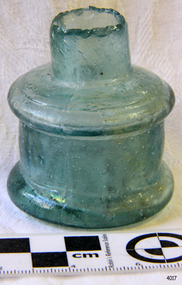
Container - Ink Bottle, Second half of 19th Century or first half of the 20th Century
... Fully automatic machines followed, but the true rugged survivor, utilising fully automatic gob delivery to the maximum versatility, was the Individual Section, or IS, machine invented by Henry Ingle at the Hartford Empire Company in 1925. Source: https://www.britannica.com/topic/glass-properties-composition-and-industrial-production-234890/History-of-glassmaking...Fully automatic machines followed, but the true rugged survivor, utilising fully automatic gob delivery to the maximum versatility, was the Individual Section, or IS, machine invented by Henry Ingle at the Hartford Empire Company in 1925. Source: https://www.britannica.com/topic/glass-properties-composition-and-industrial-production-234890/History-of-glassmaking Unlike item 4018, this is a much smaller ink bottle, and was probably used by an individual, as against the supply of ink to pupils from a much larger bottle. flagstaff hill warrnambool shipwrecked-coast flagstaff-hill flagstaff-hill-maritime-museum maritime-museum shipwreck-coast flagstaff-hill-maritime-village ink bottle glass None. ...Although glass containers for wine and beer are probably 1,600 years old, much of their use began only in the late 17th century. In the United States, large-scale production of bottles was pioneered by Caspar Wistar in 1739 at his New Jersey plant. In the 1770s the carbonation process for producing soft drinks was developed, and so began an entirely new bottling industry. At the Great Exhibition of 1851 in the Crystal Palace in London, one million “pop” bottles were consumed. The first beer pasteurised in glass was produced in Copenhagen in 1870. Pasteurisation of milk followed soon after. The moulding of a screw thread on a container was invented by John Mason in 1858. The principles of the “press-and-blow” process for making wide-mouth jars were shown in the United States by Philip Arbogast in 1882, and the “blow-and-blow” process for making narrow-neck containers was demonstrated by Howard Ashley in England in 1885. These processes employed manual delivery; fully automatic jar forming by a suction-and-blow process was perfected by Michael Owens over the period 1895–1917 at the Toledo (Ohio) Glass Company, which subsequently became the Owens Bottle Machine Company. The automatic single-gob feeder was developed in 1919–22 by Karl Peiler at the Hartford-Fairmont Company in Connecticut. Fully automatic machines followed, but the true rugged survivor, utilising fully automatic gob delivery to the maximum versatility, was the Individual Section, or IS, machine invented by Henry Ingle at the Hartford Empire Company in 1925. Source: https://www.britannica.com/topic/glass-properties-composition-and-industrial-production-234890/History-of-glassmakingUnlike item 4018, this is a much smaller ink bottle, and was probably used by an individual, as against the supply of ink to pupils from a much larger bottle.Cotton Reel Ink Bottle, green glass, small, chipped around the lip, bubbles in glass.None.flagstaff hill, warrnambool, shipwrecked-coast, flagstaff-hill, flagstaff-hill-maritime-museum, maritime-museum, shipwreck-coast, flagstaff-hill-maritime-village, ink, bottle, glass -
 Flagstaff Hill Maritime Museum and Village
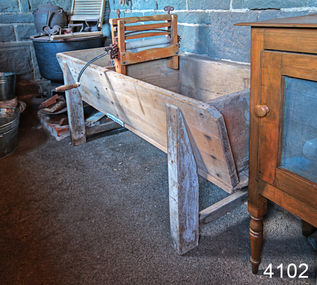
Domestic object - Wash trough, Melvin Newton Lovell, Mangle was Patented June 10, 1898 by Lovell Trough is possibly of later manufacture by a local unknown cabinet maker between 1900-1920
... machines and step-ladders. In 1881 Lovell individually began manufacturing other of his patents, including spring beds, and from modest inception, his Lovell Manufacturing Company grew to be one of the largest industrial concerns of its kind in the country and was recognized as being the most extensive manufacture of clothes-wringers in the entire world. ...machines and step-ladders. In 1881 Lovell individually began manufacturing other of his patents, including spring beds, and from modest inception, his Lovell Manufacturing Company grew to be one of the largest industrial concerns of its kind in the country and was recognized as being the most extensive manufacture of clothes-wringers in the entire world. ...Melvin Newton Lovell was born in Allegheny, Venango county, Pennsylvania, on 31 August 1844, to Darius T. Lovell (1815-1855) and Susan B. (Conover) Lovell (1827-1883). When Melvin Lovell was a boy, the family removed to Kerrtown, a village located in the vicinity of Titusville, PA. There Melvin served an apprenticeship at the carpenter's trade, and his natural mechanical talent enabled him to become a skilled workman. He followed his trade during the major portion of his term of residence in Kerrtown. In 1861, at seventeen years of age, Melvin Lovell left his home and, without parental authority, and entered the Union army soon after the outbreak of the Civil war. In August 1862, he was enlisted as a private in the 127th Pennsylvania Volunteer Infantry and saw active service until receiving his discharge at the end of May 1863. In 1865 he took up his residence in Erie, where he worked at the carpenter's trade for several years thereafter. In 1869 Melvin Lovell invented and patented several useful articles for household use, and in that year he began the manufacturing of certain of these inventions, in partnership with Franklin Farrar Adams, another inventor. Among the principal products of the original factory were washing machines and step-ladders. In 1881 Lovell individually began manufacturing other of his patents, including spring beds, and from modest inception, his Lovell Manufacturing Company grew to be one of the largest industrial concerns of its kind in the country and was recognized as being the most extensive manufacture of clothes-wringers in the entire world. In connection with his manufacture of domestic items, Lovell established sales agencies for his products in all parts of the country, and these branches were known as the Lovell stores. These goods were sold on the instalment plan and after his business had already been established becoming a substantial concern Lovell invented and patented the famous wringer which bears his name under the “Anchor” brand, and in later years he confined his operations largely to the manufacture of this very superior household invention. Lovell was also one of the organizers and stockholders of the Combination Roll & Rubber Manufacturing Co, of New York, which was formed to manufacture his patents, with headquarters in New York and a factory at Bloomfield, New Jersey.A significant household item used in the process of washing clothes by a man who had started in 1869, as a young carpenter and later he became a successful businessman and manufacturer of household items. Lovell was granted numerous patents for various devices during his career including several patents for adding machines (cash registers). This item is now sought by collectors and is even rarer due to it's combination with a Lovell clothes wringer. Wooden wash trough with 2 troughs & attached a Lovell wringer (or mangle Anchor Brand) Hard to make out as worn off with useflagstaff hill, warrnambool, shipwrecked-coast, flagstaff-hill-maritime-museum, flagstaff-hill-maritime-village, wash trough, wringer, mangle, laundry, cleaning, washing, housework, domestic, melvin newton lovell, wooden was trough -
 Flagstaff Hill Maritime Museum and Village
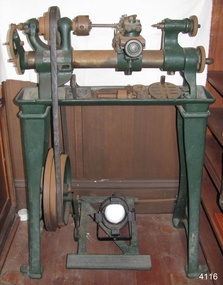
Machine - Treadle Lathe, 1920-1923
... Machine Tool Exhibition in 1977. This could not save the works from the pressures of the late 1970s, and Staveley Industries closed its Guildford site in 1980. An early example of a lathe that was designed primarily for the hobbyist model maker. It is in good condition and sought today by collectors as many of it's attributes were innovative at the time and lead to further development and incorporation of some of its features into more industrial models of production machinery. flagstaff hill warrnambool shipwrecked coast flagstaff hill maritime museum maritime museum shipwreck coast flagstaff hill maritime village great ocean road lathe 1920-1923 round bed lathe treadle lathe drummond type a guildford surrey drummond brothers guildford surrey england tread'e "MADE BY DRUMMOND BROTHERS LIMITED - PATENT TEES - RYDE'S HILL n GUILDFORD SURREY", "Serial Number 01470," "L44" or "L45 " Lathe, round bed, treadle powered lathe, Drummond Type A, Serial number and maker's inscription. 1920-1923, Made by Drummond Brothers in Guildford, Surrey, England. ...The lathe-making business incorporated in 1902 as Drummond Bros Ltd originated in the fertile mind of Mr Arthur Drummond, said to have been living at that time at Pinks Hill, on the southern edge of Broad Street Common, west of Guildford. Mr Drummond, whose accomplishments included several pictures hung in the Royal Academy, was unable to find a lathe suitable for use in model engineering. In 1896 he designed for himself a ‘small centre lathe … which had a compound slide rest with feed-screws and adjustable slides’. He also designed and built ‘lathes of 4.5 inch and 5 inch centre height, which had beds of a special form whereby the use of a gap piece was eliminated but the advantages of a gap-bed lathe were retained’. Assisted by his brother, Mr Frank Drummond, who had served an apprenticeship to an engineering firm at Tunbridge Wells, the first lathes were made in a workshop adjoining Arthur Drummond’s house. The demand that speedily built up led to the decision to form a company and manufacture the lathes for sale commercially. Land was acquired nearby, at Rydes Hill, and the first factory built. The enterprise was a success, and the company quickly established ‘a high reputation in this country and abroad for multi-tool and copying lathes, and gear-cutting machines’. Other lathes were added to the range, including the first of the ’round bed’ machines for which the firm became widely known. A Drummond 3.5 inch lathe was among the equipment of Captain Scott’s 1912 expedition to the South Pole, and large numbers of 3.5 inch and 4 inch designs were exported to Australia, Canada and India. By the outbreak of war in 1914, 5 inch, 6 inch and 7 inch screw cutting lathes, arranged for power drive, were on sale. Large orders were received from the government for 3.5 inch lathes, for use in destroyers and submarines, and 5 inch lathes for the mechanised section of the Army Service Corps. The latter were used in mobile workshops. The factory worked night and day to supply the forces’ needs, until production was disrupted by a fire which destroyed a large part of the works in May 1915. As soon as rebuilding was complete work restarted. At the end of the war the entire production was being taken by the Government departments, a special feature being a precision screw lathe, bought by the Ministry of Munitions in 1918. Between the wars Drummond Bros Ltd introduced new machines for the motor vehicle, and later the aircraft industry, and the works were extended on many occasions to fulfill the increasing orders. The Maxicut multi-tool lathe (1925), designed for high-production turning operations, was one of the first machines of this type to be built in England. It was followed (1928) by an hydraulic version for turning gear blanks, and similar work. Further developments provided machines which, during the Second World War, turned all the crankshafts and propeller shafts for Bristol engines. Others, ordered by the Ministry of Supply were employed in turning shells, and many other specific needs of vehicle and aircraft manufacture were catered for by new types of Drummond lathes. Production of the small centre lathes ceased during the war when the company needed to concentrate on building multi-tool lathes and gear shapers. After the war a completely new Maxicut range was introduced, replacing the older versions, and fully automatic. The types were continually developed, and new versions manufactured until the end of the company’s life in 1980. The disappearance from the scene of Mr Arthur Drummond in 1946, and the end of the company’s autonomous existence in 1953 when the company was acquired by William Asquith Ltd, which was in turn bought by Staveley in 1966, meant that the factory at Rydes Hill became one – albeit very effective – part of a large national engineering company. Achievements at the Guildford works during its last years included the development of automated Maxicut gear-shapers in what was ‘probably the most fully automated gear shop in the country’, while a machine from Guildford was sent to the Osaka Fair in 1962. In 1963 an agreement was signed with Hindustan Machine Tools for the manufacture of Maxicut gear-shapers in state owned factories in Bangalore and Chandigarh. During 1963 the two largest multi-tool lathes ever made in the UK were installed in Ambrose Shardlow’s works in Sheffield for handling cranks up to 14 foot long. In 1976 Drummond lathes were included in Staveley’s £14,000,000 installation in Moscow of an automated production line for Zil motor cars. Up to the end invention continued at Guildford: a new Drummond Multi-turn memory-controlled machine was shown at the International Machine Tool Exhibition in 1977. This could not save the works from the pressures of the late 1970s, and Staveley Industries closed its Guildford site in 1980.An early example of a lathe that was designed primarily for the hobbyist model maker. It is in good condition and sought today by collectors as many of it's attributes were innovative at the time and lead to further development and incorporation of some of its features into more industrial models of production machinery. Lathe, round bed, treadle powered lathe, Drummond Type A, Serial number and maker's inscription. 1920-1923, Made by Drummond Brothers in Guildford, Surrey, England. Lathe is complete with Chuck, Tool post and Tail Stock in situ (30 extra parts)"MADE BY DRUMMOND BROTHERS LIMITED - PATENT TEES - RYDE'S HILL n GUILDFORD SURREY", "Serial Number 01470," "L44" or "L45 " flagstaff hill, warrnambool, shipwrecked coast, flagstaff hill maritime museum, maritime museum, shipwreck coast, flagstaff hill maritime village, great ocean road, lathe 1920-1923, round bed lathe, treadle lathe, drummond type a, guildford surrey, drummond brothers guildford surrey england, tread'e -
 Flagstaff Hill Maritime Museum and Village
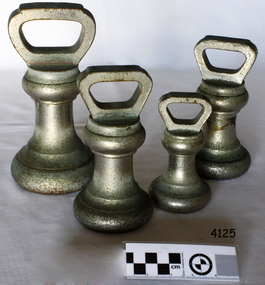
Functional object - Standard avoirdupois weights, Avery Ltd, 1950s
... machine technology after World War II led to the closure of the foundry, the introduction of electronic weighing with the simultaneous gradual disappearance of purely mechanical devices. The continued expansion was partly achieved through a series of acquisitions of other companies. After almost a century of national and international expansion, the company was taken over by GEC in 1979. Keith Hodgkinson, managing director at the time, completed the turn-around from mechanical to electronic weighing with a complete overhaul of the product range of retail sales of industrial...machine technology after World War II led to the closure of the foundry, the introduction of electronic weighing with the simultaneous gradual disappearance of purely mechanical devices. The continued expansion was partly achieved through a series of acquisitions of other companies. After almost a century of national and international expansion, the company was taken over by GEC in 1979. Keith Hodgkinson, managing director at the time, completed the turn-around from mechanical to electronic weighing with a complete overhaul of the product range of retail sales of industrial ...A weight made in England by W&T Avery a British manufacturer of weights and weighing machines. The company was founded in the early 18th century and took the name W & T Avery in 1818. The undocumented origin of the company goes back to 1730 when James Ford established the business in the town of Digbeth. On Joseph Balden, the then company’s owner’s death in 1813 William and Thomas Avery took over his scale making business and in 1818 renamed it W & T Avery. The business rapidly expanded and in 1885 they owned three factories: the Atlas Works in West Bromwich, the Mill Lane Works in Birmingham and the Moat Lane Works in Digbeth. In 1891 the business became a limited company with a board of directors and in 1894 the shares were quoted on the London Stock Exchange. In 1895 the company bought the legendary Soho Foundry in Smethwick, a former steam engine factory owned by James Watt & Co. In 1897 the move was complete and the steam engine business was gradually converted to pure manufacture of weighing machines. The turn of the century was marked by managing director William Hipkins who was determined to broadening the renown of the Avery brand and transforming the business into specialist manufacture of weighing machines. By 1914 the company occupied an area of 32,000m² and had some 3000 employees. In the inter-war period, the growth continued with the addition of specialized shops for cast parts, enamel paints and weighbridge assembly and the product range diversified into counting machines, testing machines, automatic packing machines and petrol pumps. During the second world war, the company also produced various types of heavy guns. At that time the site underwent severe damage from parachute mines and incendiary bombs. Then from 1931 to 1973, the company occupied the 18th-century Middlesex Sessions House in Clerkenwell as its headquarters. Changes in weighing machine technology after World War II led to the closure of the foundry, the introduction of electronic weighing with the simultaneous gradual disappearance of purely mechanical devices. The continued expansion was partly achieved through a series of acquisitions of other companies. After almost a century of national and international expansion, the company was taken over by GEC in 1979. Keith Hodgkinson, managing director at the time, completed the turn-around from mechanical to electronic weighing with a complete overhaul of the product range of retail sales of industrial platform scales. In 1993 GEC took over the Dutch-based company Berkel and the Avery-Berkel name was introduced. In 2000 the business was in turn acquired by the US-American company Weigh-Tronix, who already owned Salter, and is today operating as Avery Weigh-Tronix. An item used used by grocers and merchants to weigh store bought goods around the 1950s. This item gives an insight into social history of the time.Weights, metal, silver electroplated, 1 x 2lb, 2 x 4lb, 1 x 7lb. (4) all government stamped, made by Avery Ltd.Noneflagstaff hill, warrnambool, shipwrecked-coast, flagstaff-hill, flagstaff-hill-maritime-museum, maritime-museum, shipwreck-coast, flagstaff-hill-maritime-village, weight, imperial weight, imperial standard weights and measures, imperial standard weight -
 Flagstaff Hill Maritime Museum and Village
Functional object - Weight Avoirdupois, Avery Ltd, 1940-1950s
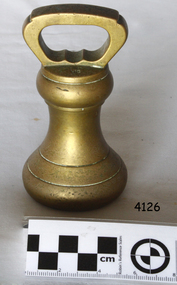
... machine technology after World War II led to the closure of the foundry, the introduction of electronic weighing with the simultaneous gradual disappearance of purely mechanical devices. The continued expansion was partly achieved through a series of acquisitions of other companies. After almost a century of national and international expansion, the company was taken over by GEC in 1979. Keith Hodgkinson, managing director at the time, completed the turn-around from mechanical to electronic weighing with a complete overhaul of the product range of retail sales of industrial...machine technology after World War II led to the closure of the foundry, the introduction of electronic weighing with the simultaneous gradual disappearance of purely mechanical devices. The continued expansion was partly achieved through a series of acquisitions of other companies. After almost a century of national and international expansion, the company was taken over by GEC in 1979. Keith Hodgkinson, managing director at the time, completed the turn-around from mechanical to electronic weighing with a complete overhaul of the product range of retail sales of industrial ...A weight made in England by W&T Avery a British manufacturer of weights and weighing machines. The company was founded in the early 18th century and took the name W & T Avery in 1818. The undocumented origin of the company goes back to 1730 when James Ford established the business in the town of Digbeth. On Joseph Balden, the then company’s owner’s death in 1813 William and Thomas Avery took over his scale making business and in 1818 renamed it W & T Avery. The business rapidly expanded and in 1885 they owned three factories: the Atlas Works in West Bromwich, the Mill Lane Works in Birmingham and the Moat Lane Works in Digbeth. In 1891 the business became a limited company with a board of directors and in 1894 the shares were quoted on the London Stock Exchange. In 1895 the company bought the legendary Soho Foundry in Smethwick, a former steam engine factory owned by James Watt & Co. In 1897 the move was complete and the steam engine business was gradually converted to pure manufacture of weighing machines. The turn of the century was marked by managing director William Hipkins who was determined to broadening the renown of the Avery brand and transforming the business into specialist manufacture of weighing machines. By 1914 the company occupied an area of 32,000m² and had some 3000 employees. In the inter-war period, the growth continued with the addition of specialized shops for cast parts, enamel paints and weighbridge assembly and the product range diversified into counting machines, testing machines, automatic packing machines and petrol pumps. During the second world war, the company also produced various types of heavy guns. At that time the site underwent severe damage from parachute mines and incendiary bombs. Then from 1931 to 1973, the company occupied the 18th-century Middlesex Sessions House in Clerkenwell as its headquarters. Changes in weighing machine technology after World War II led to the closure of the foundry, the introduction of electronic weighing with the simultaneous gradual disappearance of purely mechanical devices. The continued expansion was partly achieved through a series of acquisitions of other companies. After almost a century of national and international expansion, the company was taken over by GEC in 1979. Keith Hodgkinson, managing director at the time, completed the turn-around from mechanical to electronic weighing with a complete overhaul of the product range of retail sales of industrial platform scales. In 1993 GEC took over the Dutch-based company Berkel and the Avery-Berkel name was introduced. In 2000 the business was in turn acquired by the US-American company Weigh-Tronix, who already owned Salter, and is today operating as Avery Weigh-Tronix. An item used used by grocers and merchants to weigh store bought goods around the 1950s. This item gives an insight into social history of the time.Weight, brass, Stamped F27, 2lb.flagstaff hill, warrnambool, shipwrecked-coast, flagstaff-hill, flagstaff-hill-maritime-museum, maritime-museum, shipwreck-coast, flagstaff-hill-maritime-village, weight, brass weight -
 Flagstaff Hill Maritime Museum and Village
Machine - Steam Engine, Tangyes engineering, Mid-1880s
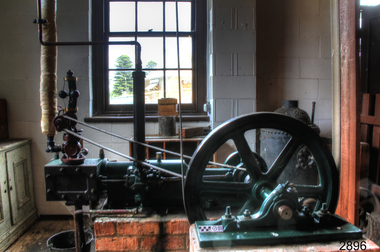
... machine tools...hydraulic rams...hydraulic pumps...steam pumps...differential pulleys...Mill type steam engine...4 inch cylinder...Weston’s differential pulley...Thomas Aldridge Weston...1862 International Exhibition in London...Brunel...SS Great Eastern...Cleopatra’s Needle...Forth Road Bridge...Cornwall House...Collins Street Melbourne...agricultural machinery...industrial...Flagstaff Hill Warrnambool Maritime Village Maritime Museum Flagstaff Hill Maritime Museum and Village Shipwreck coast Great Ocean Road machine invention engine steam steam engine horizontal steam engine Tangyes horizontal steam engine stationary steam engine single cylinder steam engine manufacturing farming pumps lifting equipment engines machine tools hydraulic rams hydraulic pumps steam pumps differential pulleys Mill type steam engine 4 inch cylinder Weston’s differential pulley Thomas Aldridge Weston 1862 International Exhibition in London Brunel SS Great Eastern Cleopatra’s Needle Forth Road Bridge Cornwall House Collins Street Melbourne agricultural machinery industrial machinery Allspeeds dairy pump Richard Tangye & Brothers James Tangye and Brothers Tangye Brothers and Price Tangye Brothers Tangye Brothers & Holman Tangyes Ltd. ...This Tangye B-size, single-cylinder, horizontal steam engine was likely manufactured in England around the mid-1880s. It was distributed by Melbourne machinery merchants Cameron & Sutherland, which also operated in Bendigo and Ballarat. A local cheese maker once used the engine to drive factory equipment. It was later donated to the Warrnambool Technical School, which then donated it to Flagstaff Hill to add to its historical steam engine collection. Between its manufacture and its donation to Flagstaff Hill, the governor had been replaced by the current Pickering governor. This engine design was very popular in the late 19th and early 20th centuries. When connected and powered up, the engine could drive an overhead line shaft via a flat belt off its flywheel. The line shaft would then drive the machinery via flat belts. It could drive virtually any type of machinery, such as water and sewerage pumps, mine elevators, winches, cranes, metal forges, air blowers, and marine machinery. This engine features a mechanical governor, which controls the speed of the engine regardless of whether it is under load. It also has a water pump built into the valve rod, which is used to supply the boiler with water. Steam enters the cylinder via a slide valve and applies pressure to the piston; it is like a modern internal combustion engine, but in the case of the steam engine, the pressure is exerted in turn on either side of the piston. In other words, the connecting rod is pushed by steam via the piston and piston rod and then pulled back again by steam pushing on the opposite side of the piston. Thus, power is exerted almost continuously, except at the end of each piston stroke, when it reverses direction. In the 1880s, many local butter and cheese manufacturers installed Tangye steam engines to power their machinery. A comprehensive article in the Gippsland Mercury in September 1889 extolled the magnificence of the Farnham Butter Factory in Dennington, Warrnambool, and described how one Tangye engine was used to drive several machines in the cheese- and butter-making processes. A report in the Warragul Guardian in December 1890 notes that the newly opened Warrnambool Butter Factory used a Tangye steam engine to pump water from a 60-foot well. Tangye: Richard Tangye (1833–1906) and four of his brothers—James, Joseph, Edward, and George—were the sons of Joseph Tangye, a Quaker Cornish miner. In 1857, they founded the engineering firm Richard Tangye & Brothers in Birmingham, UK. In 1860, the firm became Tangye Brothers and moved to Cornwall Works in Birmingham. The business encouraged inventors to join the company and develop their patents there, as happened with Weston’s differential pulley block, invented by the Englishman Thomas Aldridge Weston in 1854. Tangye bought the patent in 1858, giving the firm the sole right to manufacture it. The design received a medal for “original application, practical utility and success” at the 1862 International Exhibition in London. Also in 1858, the Tangye firm was commissioned by Brunel’s shipping company to manufacture hydraulic lifting jacks, or rams, to launch the steamship SS Great Eastern. The success of this project brought favourable attention to the firm, and it became involved in other notable projects, including the erection of Cleopatra’s Needle in London in 1878 and work on the Forth Road Bridge in Scotland. The firm underwent several name changes over the years, including James Tangye and Brothers (1857), Tangye Brothers and Price (1859), Tangye Brothers (1860), Tangye Brothers & Holman (1876), Tangye Brothers (by 1878), Tangye Ltd. (1881), and then simply Tangye. Its machinery and equipment were exported worldwide. In 1884, a branch with showrooms, offices, and a warehouse was opened in Melbourne at Cornwall House, Collins Street West. The firm was well known for producing high-quality machinery for agriculture and industry. Even today, new Tangye machinery is available for a subsidiary of Allspeeds. An extensive account of the firm’s history, names, inventions, and further references is available in Grace’s Guide, which also includes references to and diagrams of the Tangye horizontal steam engine. The horizontal steam engine was made by the well-known engineering firm Tangye, known for its high quality of manufacture. It was an important development in machinery because it helped improve productivity. Engines of this type are still used in some parts of the world today. This engine is a good example of a late 19th-century steam engine used in industry and agriculture and adapted for many different purposes. It is also important locally because it was connected to a local cheese making business and part of the thriving western district dairy industry. It may have been one of the Tangyes engines used at the Farnham butter factory or the Warrnambool Butter Factory, which was reported to be one of the most important in the Colony. It is also connected to the Warrnambool Technical School, established in 1968. Steam engine: stationary Tangye Size B, single-cylinder, horizontal Mill type steam engine. It has a 4-inch diameter cylinder with an 8-inch stroke. The body is painted green, and the Pickering governor is red. It was manufactured in Birmingham, England, in accordance with Tangye's Patent 238930, and distributed by Cameron and Sunderland, Melbourne, in the mid-1880s. TANGEYS PATENT BIRMINGHAM B SIZE 238930 CAMERON & SUTHERLAND MELBOURNE THE PICKERING PORTLAND . GOVERNOR . CONN. U.S.A.flagstaff hill, warrnambool, maritime village, maritime museum, flagstaff hill maritime museum and village, shipwreck coast, great ocean road, machine, invention, engine, steam, steam engine, horizontal steam engine, tangyes horizontal steam engine, stationary steam engine, single cylinder steam engine, manufacturing, farming, pumps, lifting equipment, engines, machine tools, hydraulic rams, hydraulic pumps, steam pumps, differential pulleys, mill type steam engine, 4 inch cylinder, weston’s differential pulley, thomas aldridge weston, 1862 international exhibition in london, brunel, ss great eastern, cleopatra’s needle, forth road bridge, cornwall house, collins street melbourne, agricultural machinery, industrial machinery, allspeeds, dairy, pump, richard tangye & brothers, james tangye and brothers, tangye brothers and price, tangye brothers, tangye brothers & holman, tangyes ltd., tangye, richard tangye, james tangye, joseph tangye, edward tangye, george tangye, cornwall works, birmingham, pickering governor, pickering portland connecticut usa, 19th century, dairy plant, steam power, tangye's patent 238930, tangye b size engine, cameron & sutherland, machine merchants, 1880s, mid-1880s, cheese manufacturer, butter manufacturer, diary industry, warrnambool technical school, belt driven machinery, agriculture, mechanical governor, farnham butter factory, warrnambool butter factory -
 Flagstaff Hill Maritime Museum and Village
Domestic object - Sewing Machine, Singer Sewing Machine Company, 1922
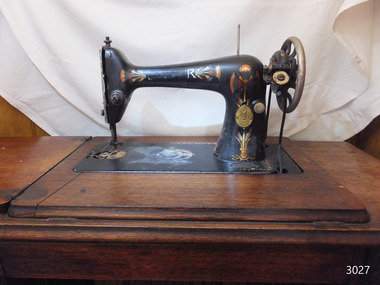
... machines, women as the ones who traditionally stayed home to do chores including making and repairing clothing, found themselves with more free time. Previously several days a week would be dedicated to sewing clothing for herself and her family, a housewife could now complete her sewing in merely several hours, allowing for more free time to pursue hobbies and attain new skills. Sewing and clothing production, in general, became more industrialized activities, taking place less in the home and more in large factories. Industrial ...In 1867 the Singer Company decided that the demand for their sewing machines in the UK was sufficiently high to open a local factory. Glasgow was selected for its iron-making industries, cheap labour, and possibly because at the time the General Manager of the US Singer Sewing Machine Company was George McKenzie, who was of Scottish descent. The company obtained a lease on land near Queen Street Station and machinery and machine parts were shipped over from the US. Demand for sewing machines outstripped production at the new plant and by 1873 a new larger factory was completed near Bridgeton Cross. By now Singer employed over 2,000 people in Scotland but still, they could not produce enough machines. In 1882 George McKenzie, the soon to become President of the Singer Sewing Machine Company undertook the ground breaking ceremony on 46 acres of farmland at Kilbowie, Clydebank and the largest Singer factory in the world started to be built. Originally two main buildings were constructed. Built above the middle wing of the factory was a huge clock tower with the 'Singer' name displayed for all to see from miles around. Many miles of railway lines were laid throughout the factory to connect the different departments and to aid in the shipping of their goods. Railway lines from the factory connected Glasgow, Dumbarton, and Helensburgh stations. The factory was regarded as the most modern facility in Europe at that time. As different departments in the factory were completed, the workers moved from the old sites to the new one at Kilbowie and the factory was finally finished in 1885. With nearly a million square feet of space and almost 7,000 employees producing on average 13,000 machines a week, making it the largest sewing machine factory in the world. The Clydebank factory was so productive that in 1905 the US Singer Company set up the Singer Manufacturing Company Ltd. as a UK registered company. The invention of the sewing machine had several very significant impacts on the lives of many people. It changed the domestic life of many women as more households began to own sewing machines, women as the ones who traditionally stayed home to do chores including making and repairing clothing, found themselves with more free time. Previously several days a week would be dedicated to sewing clothing for herself and her family, a housewife could now complete her sewing in merely several hours, allowing for more free time to pursue hobbies and attain new skills. Sewing and clothing production, in general, became more industrialized activities, taking place less in the home and more in large factories. Industrial sewing machines, in combination with the cotton gin, the spinning jenny, and the steam engine, made clothing production much easier and much cheaper. Sewing machine, treadle operated, "Branded Premier" 5-7-9-2-0-0-" Serial Number Y6243048 (denotes 1922 year of manufacture) flagstaff hill, warrnambool, shipwrecked-coast, flagstaff-hill-maritime-museum, maritime-museum, shipwreck-coast, flagstaff-hill-maritime-village, sewing machine, hand operated, dressmaking, textile machinery, portable, premier sewing machine, premier, singer treadle sewing machine -
 Flagstaff Hill Maritime Museum and Village
Domestic object - Sewing Machine, Singer Sewing Machine Company, 1907 -1920 (see note section this document for further information regards model identification)
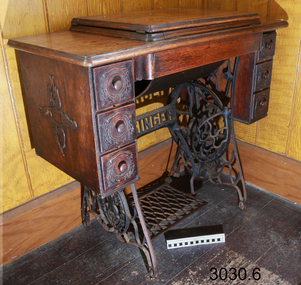
... machines, women as the ones who traditionally stayed home to do chores including making and repairing clothing, found themselves with more free time. Previously several days a week would be dedicated to sewing clothing for herself and her family, a housewife could now complete her sewing in merely several hours, allowing for more free time to pursue hobbies and attain new skills. Sewing and clothing production, in general, became more industrialized activities, taking place less in the home and more in large factories. Industrial ...In 1867 the Singer Company decided that the demand for their sewing machines in the UK was sufficiently high to open a local factory. Glasgow was selected for its iron-making industries, cheap labour, and possibly because at the time the General Manager of the US Singer Sewing Machine Company was George McKenzie, who was of Scottish descent. The company obtained a lease on land near Queen Street Station and machinery and machine parts were shipped over from the US. Demand for sewing machines outstripped production at the new plant and by 1873 a new larger factory was completed near Bridgeton Cross. By now Singer employed over 2,000 people in Scotland but still, they could not produce enough machines. In 1882 George McKenzie, the soon to become President of the Singer Sewing Machine Company undertook the ground breaking ceremony on 46 acres of farmland at Kilbowie, Clydebank and the largest Singer factory in the world started to be built. Originally two main buildings were constructed. Built above the middle wing of the factory was a huge clock tower with the 'Singer' name displayed for all to see from miles around. Many miles of railway lines were laid throughout the factory to connect the different departments and to aid in the shipping of their goods. Railway lines from the factory connected Glasgow, Dumbarton, and Helensburgh stations. The factory was regarded as the most modern facility in Europe at that time. As different departments in the factory were completed, the workers moved from the old sites to the new one at Kilbowie and the factory was finally finished in 1885. With nearly a million square feet of space and almost 7,000 employees producing on average 13,000 machines a week, making it the largest sewing machine factory in the world. The Clydebank factory was so productive that in 1905 the US Singer Company set up the Singer Manufacturing Company Ltd. as a UK registered company. The invention of the sewing machine had several very significant impacts on the lives of many people. It changed the domestic life of many women as more households began to own sewing machines, women as the ones who traditionally stayed home to do chores including making and repairing clothing, found themselves with more free time. Previously several days a week would be dedicated to sewing clothing for herself and her family, a housewife could now complete her sewing in merely several hours, allowing for more free time to pursue hobbies and attain new skills. Sewing and clothing production, in general, became more industrialized activities, taking place less in the home and more in large factories. Industrial sewing machines, in combination with the cotton gin, the spinning jenny, and the steam engine, made clothing production much easier and much cheaper. Singer sewing machine treadle type wooden stand with six drawers plus instruction manual Lotus decoration to machinewarrnambool, shipwrecked-coast, flagstaff-hill, flagstaff-hill-maritime-museum, shipwreck-coast, flagstaff-hill-maritime-village, sewing-machine, clothes repair, singer sewing machine -
 Flagstaff Hill Maritime Museum and Village
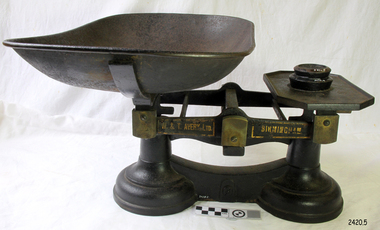
Equipment - Scale and weights, 1860-1900
... machine technology after World War II led to the closure of the foundry, the introduction of electronic weighing with the simultaneous gradual disappearance of purely mechanical devices. The continued expansion was partly achieved through a series of acquisitions of other companies. After almost a century of national and international expansion, the company was taken over by GEC in 1979. Keith Hodgkinson, managing director at the time, completed the turn-around from mechanical to electronic weighing with a complete overhaul of the product range of retail sales of industrial...machine technology after World War II led to the closure of the foundry, the introduction of electronic weighing with the simultaneous gradual disappearance of purely mechanical devices. The continued expansion was partly achieved through a series of acquisitions of other companies. After almost a century of national and international expansion, the company was taken over by GEC in 1979. Keith Hodgkinson, managing director at the time, completed the turn-around from mechanical to electronic weighing with a complete overhaul of the product range of retail sales of industrial ...The subject item was made in England by W&T Avery a British manufacturer of weights and weighing machines. The company was founded in the early 18th century and took the name W & T Avery in 1818. The undocumented origin of the company goes back to 1730 when James Ford established the business in the town of Digbeth. On Joseph Balden, the then company’s owner’s death in 1813 William and Thomas Avery took over his scale making business and in 1818 renamed it W & T Avery. The business rapidly expanded and in 1885 they owned three factories: the Atlas Works in West Bromwich, the Mill Lane Works in Birmingham and the Moat Lane Works in Digbeth. In 1891 the business became a limited company with a board of directors and in 1894 the shares were quoted on the London Stock Exchange. In 1895 the company bought the legendary Soho Foundry in Smethwick, a former steam engine factory owned by James Watt & Co. In 1897 the move was complete and the steam engine business was gradually converted to pure manufacture of weighing machines. The turn of the century was marked by managing director William Hipkins who was determined to broaden the renown of the Avery brand and transform the business into specialist manufacture of weighing machines. By 1914 the company occupied an area of 32,000m² and had some 3000 employees. In the inter-war period, the growth continued with the addition of specialized shops for cast parts, enamel paints and weighbridge assembly and the product range diversified into counting machines, testing machines, automatic packing machines and petrol pumps. During the second world war, the company also produced various types of heavy guns. At that time the site underwent severe damage from parachute mines and incendiary bombs. Then from 1931 to 1973, the company occupied the 18th-century Middlesex Sessions House in Clerkenwell as its headquarters. Changes in weighing machine technology after World War II led to the closure of the foundry, the introduction of electronic weighing with the simultaneous gradual disappearance of purely mechanical devices. The continued expansion was partly achieved through a series of acquisitions of other companies. After almost a century of national and international expansion, the company was taken over by GEC in 1979. Keith Hodgkinson, managing director at the time, completed the turn-around from mechanical to electronic weighing with a complete overhaul of the product range of retail sales of industrial platform scales. In 1993 GEC took over the Dutch-based company Berkel and the Avery-Berkel name was introduced. In 2000 the business was in turn acquired by the US-American company Weigh-Tronix, who already owned Salter, and is today operating as Avery Weigh-Tronix.An item used by grocers and merchants throughout the then British colonies of England to weigh store-bought goods around the mid to late 19th century. This item gives an insight into the daily lives of early colonial settlers and is a significant part of the era’s social history of the time.Balance scale and weights with removable dish, two round weights glued to tray 4oz and 8oz. Scales 'to weigh up to 28lb. Printed in gold on black labels each side "W & T AVERY LTD", "BIRMINGHAM" warrnambool, flagstaff-hill, flagstaff-hill-maritime-museum, maritime-museum, shipwreck-coast, flagstaff-hill-maritime-village, scale and weights, food preparation equipment, w t avery ltd, balance scale, grocers scales, james ford, william & thomas avery, birmingham uk -
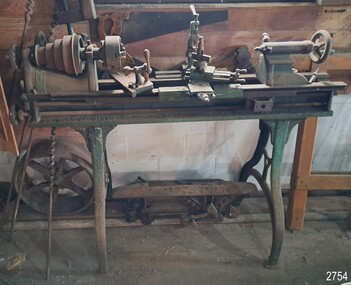 Flagstaff Hill Maritime Museum and Village
Machine - Lathe, W F & John Barnes, early 1900s
... This early 1900s lathe marks a significant stage in the evolution of machinery, positioned between the era of hand-operated machines and the advent of electrically powered equipment. Its presence exemplifies the progression of industrial technology and craftsmanship during this period. ...This woodworking lathe, connected to both a pulley and a flywheel, demonstrates its historical operation with a steam engine. Such a configuration reflects manufacturing practices from the late 1800s and early 1900s, when steam power was the predominant source for driving workshop and factory machinery. Large machine shops often utilised a single power source, distributing power via roof-mounted belts and pulleys to operate several machines simultaneously. Over time, petrol-driven motors were introduced, and eventually, electricity became the standard power source. Conversion kits were made available in the late 19th and early 20th centuries to adapt older lathes to these newer, cleaner fuels. Manufacturer's History: W.F. & J. Barnes was a renowned maker of hand- and foot-powered treadle woodworking and metalworking machinery, established in 1869. The partnership between William F. Barnes and John Barnes was formalised in 1872, and the firm was incorporated in 1884. Their machines were used for both ‘farm’ applications and professional engineering. By 1881, the company began producing electrically powered machinery. By 1937, W.F. & J. Barnes expanded into manufacturing machinery for automotive assembly. The business closed in 1983, and in 1998, LeBlond Ltd. of Ohio acquired the firm. The lathe was donated by Briggs Marine, Melbourne: In Flagstaff Hill’s formative years, 1972-1975, Briggs Marine, Melbourne (Briggs Brass Foundry), donated equipment and objects used or made at their premises. The foundry was established in 1912 by Herbert Harrison Briggs. In 1965, the firm was owned by partners Cyril Briggs and Frank Lee: Cyril died in 1967, and Frank died in 1971, so the foundry was then run by his son and daughter-in-law, Les and Eva Lee. Briggs Marine’s Warrnambool Branch closed in 1972 after the death of Frank Lee in 1971. Flagstaff Hill’s founding director, John Lindsay, recalled that Briggs Marine’s family members gave personal assistance in setting up the displays in the original village shops, particularly the ‘Brass Foundry’ building, around the time the Maritime Museum opened in 1975. Briggs Marine still exists today, but the Briggs family is no longer involved. This early 1900s lathe marks a significant stage in the evolution of machinery, positioned between the era of hand-operated machines and the advent of electrically powered equipment. Its presence exemplifies the progression of industrial technology and craftsmanship during this period. The lathe is particularly notable for its association with the Briggs Brass Foundry. The foundry was known for developing a specialised brass alloy composed of non-ferrous metals, a formulation that resulted in durable products built to withstand the demanding conditions of marine environments. This focus on resilience and longevity made Briggs Brass Foundry’s goods highly sought after within the maritime sector. Briggs Maine, a long-established business, utilised the foundry’s capabilities to create cast goods tailored to the needs of the marine industry. The facility was equipped to deliver both custom-designed and mass-produced items, ensuring versatility in meeting various requirements. Many of Briggs Foundry’s products found their place on sailing and steam vessels throughout Victoria’s coastline, including in the port town of Warrnambool, where there was once a brancy of Briggs Marine. In addition to general marine fittings, Briggs Marine earned recognition for its expertise in bell-founding. The foundry’s reputation is closely linked to the restoration of the Schomberg Bell at Flagstaff Hill, a small but historically significant bell from a luxury migrant vessel dating back to the mid-19th century. The successful restoration of the Schomberg Bell demonstrates Briggs Brass Foundry’s commitment to preserving craftsmanship and maritime heritage.The lathe is a green, bench-type, steam-powered woodworking machine. Its bench is supported by decorative posts at each end, with each post dividing into arched legs. The lathe is mechanically connected to both a pulley and a flywheel, designed to be operated in conjunction with a steam engine. Included with the lathe is a range of accessories. Across the front of the machine, an inscription is cast, and a stamped, metal lathe pulley guide is attached to the drive mechanism. The lathe was manufactured by W. F. and J. Barnes, Rockford, Illinois, USA, during the 1900s.“W F and J Barnes, Rockford, USA” "1820" "1887"flagstaff hill, flagstaff hill maritime museum and village, warrnambool, maritime museum, maritime village, great ocean road, shipwreck coast, lathe, steam-operated lathe, steam-operated pulley, steam power, steam engine, machine, steam operated machine, metal work, foundry work, metal working trade, tool, pulley driven, metalworking, woodworking, barnes lathe, briggs marine, belt driven, wordworking lathe, free standing lathe, bench lathe, steam powered, vintage lathe, woodturning lathe, w. f. and j. barnes, illanois, early 20th century, briggs, briggs brass foundry, briggs marine foundry, briggs marine products, herbert harrison briggs, george edward briggs, cyril falkiner mckinnon briggs, collingwood, moorabbin, frank lee, les lee, eva lee, briggs marine warrnambool, non-ferrous founders, bell specialists, ship bell specialists, sand cast, marine equipment, marine fittings, foundry, brass foundry, founders -
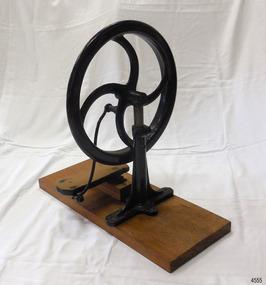 Flagstaff Hill Maritime Museum and Village
Machine - Treadle Machine, Early 20th century
... This mounted, smoothly working treadle machine demonstrates the treadle mechanism that was used in the early 20th century to power mechanical devices and in turn to save time, energy and money. The treadle was used in domestic and industrial ...This foot-powered treadle machine could be used to manually operate many devices such as a sewing machine or spinning wheel. Treadle machines were used to power sewing machines, dental drills, lathes, spinning wheels and saws The machine is mounted on a board to demonstrate treadle operation.This mounted, smoothly working treadle machine demonstrates the treadle mechanism that was used in the early 20th century to power mechanical devices and in turn to save time, energy and money. The treadle was used in domestic and industrial environments. The Collection at Flagstaff Hill Maritime Museum and Village has two treadle-operated dentist's drills, a treadle sewing machine, a saw, a lathe and a treadle paper numbering machine.Treadle-powered machine; a black painted metal wheel with four curved spokes, connected to a wooden treadle. The height of the wheel is adjustable. The mechanical device is mounted on a thick rectangular wooden block. The working treadle mechanism turns smoothly. flagstaff hill, warrnambool, maritime museum, maritime village, great ocean road, shipwreck coast, treadle machine, manual machine, foot treadle, display treadle, treadle, demonstration, education, working model -
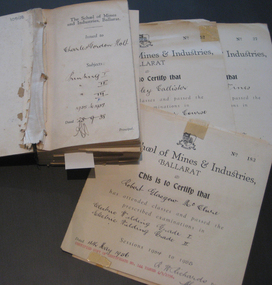 Federation University Historical Collection
Book - Certificate stub book, School of Mines Ballarat, Ballarat School of Mines Certificate Stubb Book, 1938-1964
... The subjects covered include: Printing, mining, geology, metallurgy, mining geology, mine surveying, mechanics applied to mining, electric welding, machine shop practice, algebra, trigonometry, mechanics and heat, applied mechanics, heat treatment, graphics, oxywelding, engineering drawing, blacksmithing, shorthand theory advanced, shorthand speed, commercial English, intermediate English, plain dressmaking, dressmaking advanced, electric wiring, physics, electric technology, carpentry, machine shop, plumbing, trade science, carpentry and joinery, building construction, heat treatment, wiring, oxyacetylene welding, foremanship, turning and fitting, electric wiring, arithmetic, social studies, commercial correspondence, office routine, bookkeeping, typewriting, shorthand, electric refrigerator servicing, refrigeration, radio mechanics, trade maths, sheetmetal, wool sorting, motor mechanics, human relations in management and industrial supervision. ...The subjects covered include: Printing, mining, geology, metallurgy, mining geology, mine surveying, mechanics applied to mining, electric welding, machine shop practice, algebra, trigonometry, mechanics and heat, applied mechanics, heat treatment, graphics, oxywelding, engineering drawing, blacksmithing, shorthand theory advanced, shorthand speed, commercial English, intermediate English, plain dressmaking, dressmaking advanced, electric wiring, physics, electric technology, carpentry, machine shop, plumbing, trade science, carpentry and joinery, building construction, heat treatment, wiring, oxyacetylene welding, foremanship, turning and fitting, electric wiring, arithmetic, social studies, commercial correspondence, office routine, bookkeeping, typewriting, shorthand, electric refrigerator servicing, refrigeration, radio mechanics, trade maths, sheetmetal, wool sorting, motor mechanics, human relations in management and industrial supervision. ...This certificate stub book contains the subject certificates of the graduates of the School of Mines and Indutsries, Ballarat, a predecessor of Federation University Australia.This item highlights the subjects studied and graduates of the School of Mines between 1938 to 1964. It also records the change of cursive over that time.This book includes stubs of subject certificates from the School of Mines and Industries, Ballarat. This also contains a number of uncollected certificates. It is a brown hardback book with black binding. Its contents covers certificates between 1938 to 1964. Names of recipients include: Charles Holt, Henry Elford, Irvin Singleton, J. H. Hughes, John Morcom, Alfred Amor, John Wastell, John Rudwick, Jared Hines, Harry Allan, L. F. J. Hillman, Arthur Davies, Letitia Stanley, Victor Wright,Raymond Ball, Mary O'Callaghan, Ethna Burke, Alec Foyster, James Duggan, Leonard Auchettl, Reeves Collins, James Patterson, Stanley Douglas Webb, Oswald Lyle, Marvis Orr, Eric Roberts, Jack Clennell, A. R. Millar, Heith Smyth, Walter Hines, Harold Leslie, Joseph Fisher, Geoffry Burns, Alick Dait, George Hill, Raymond Wines, Robert Manson, Albert O'Neill, Thomas Green, William Stargatt, William Harrison, Reginald Allen, Albert Wilson, Allan Curtis, Arthur Donald, John Wynn, Sydney Robinson, John Blackic, Percy Elsdon, Hubert Jenkins, Kingsley Callister, Douglas Hall, Norman Lawson, Winfield Tonkin, Artuhur Williams, Allan Curtis, Ernest, Billinge, John Daelon, Harold Bunting, Stanley Wilton, Robert Sugden, Heith Foster, Winsome Stevens, Herbert Stanbridge, Robert Pittard, Henry Brew, Ernest Berriman, Carlyle West-Onley, William Blackic, Lorna Dunstan, Cedric Pike, Stanley Jephson, Hugh Hendrick, Joseph Fisher, Ernest Grove, Ronald Fisher, Heith Halsall, Henry Harris, Maxwell Silvey, Stanley Trengove, Donald Trescowthick, Harold Tolliday, Russell Lucas, John Boyd, John Keys, Stanley Betteridge, Ernest Betteridge, Michael Ross, Robert Stewart, Joseph Beasley, William Beasley, Ray Deveson, George Hennessy, Charles Matthews, Maxwell Silvey, Ian Creek, Geoffrey Moorhouse, Hector Tonks, John Donald, Hugh Hendrick, Stanley Jephson, Ian McIntosh, Robert Nice, Ralph Scott, Walter Martin, Grant Coutts, Lindsay Hannah, John Tainsh, Hubert Robinson, John Donald, George Beaton, Heather Harris, Brian McCarthy, Samuel Perry, Valentine Pascoe, Philip McLean, Geoffrey Hewish, Hubert Robinson, John Borch, Frederick Gale, Ian Grundell, Albert Perry, Frank Hutchinson, Horace Shuttleworth, Kenneth Mason, David Hatt, Malcom Foster, George Jones, Graham McKinnon, Ronald Newton, John Betts, Leonard Wade, Robert McClure, David Beaumont, Leslie Powell, Samuel Perry, Donald Treweek, Edgar McArthur, Russell Fraser, Edgar McArthur Bartrop, Clive Carmichael, Leslie Fuhrmeister, Lindsay Coon, Zigurds Plavina, Victor Gingell, Rupert McKenna, Graham McKinnon, David Fairley, Johannes Meennen, Ronald Murphy, Johannes Naus, John McConville, Graham Melonie, William Cutter, Thomas Chalkley, Kenneth Morton, Stanley Shears, Robert Auld, Donald Campbell, John Cofield, Brian Whykes, William Milford, Noel Richards, Stewart Jacobs, James Robertson, Clement Rose, Eric Brown, Allan Raworth, Ernest Salter, Neville Cartledge, Peter Stacey, Robert McClure, Antonius Goossens, Rodney Cartledge, Rodney Hayes, Bevan Grigsby, James Robertson, Neil Stephens, John Riddle, Andreas Aaus, Bruce Fletcher, Keith Pedler, Allen Flavell, Robert Cartledge, Ronald Shaw, Kenneth Hibberd, William Lockland, Percival Bilney and Petrus Damen. Uncollected certificates for James Patterson, Robert Sugden, Ernest Berriman, Stanley Jephson, Henry Harris, Maxwell Silvey, Joseph Beasley, Charles Matthews, Maxwell Silvey, Ian Creek, Geoffrey Hewish, Robert McClure, Kingsley Callister, Winfield Tonkin, Raymond Wines, Oswald Wilde and Kenneth Mason are included within. The subjects covered include: Printing, mining, geology, metallurgy, mining geology, mine surveying, mechanics applied to mining, electric welding, machine shop practice, algebra, trigonometry, mechanics and heat, applied mechanics, heat treatment, graphics, oxywelding, engineering drawing, blacksmithing, shorthand theory advanced, shorthand speed, commercial English, intermediate English, plain dressmaking, dressmaking advanced, electric wiring, physics, electric technology, carpentry, machine shop, plumbing, trade science, carpentry and joinery, building construction, heat treatment, wiring, oxyacetylene welding, foremanship, turning and fitting, electric wiring, arithmetic, social studies, commercial correspondence, office routine, bookkeeping, typewriting, shorthand, electric refrigerator servicing, refrigeration, radio mechanics, trade maths, sheetmetal, wool sorting, motor mechanics, human relations in management and industrial supervision. Many of the stubbs are signed by principal Dick Richards. Each certificate is signed by the current principal of the School of Mines and Industries, Ballarat, and a number have also been signed by the students.school of mines, school of mines andindustries, certificate, richard w. richards, horace william shuttleworth, dick richards, charles holt, henry elford, irvin singleton, j. h. hughes, john morcom, alfred amor, john wastell, john rudwick, jared hines, harry allan, l. f. j. hillman, arthur davies, letitia stanley, victor wright, raymond ball, mary o'callaghan, ethna burke, alec foyster, james duggan, leonard auchettl, reeves collins, james patterson, stanley douglas webb, oswald lyle, marvis orr, eric roberts, jack clennell, a. r. millar, heith smyth, walter hines, harold leslie, joseph fisher, geoffry burns, alick dait, george hill, raymond wines, robert manson, albert o'neill, thomas green, william stargatt, william harrison, reginald allen, albert wilson, allan curtis, arthur donald, john wynn, sydney robinson, john blackic, percy elsdon, hubert jenkins, kingsley callister, douglas hall, norman lawson, winfield tonkin, artuhur williams, allan curtis, ernest billinge, john daelon, harold bunting, stanley wilton, robert sugden, winsome stevens, herbert stanbridge, robert pittard, henry bre, ernest berriman, carlyle west-onley, william blackic, lorna dunstan, cedric pike, stanley jephson, hugh hendrick, joseph fisher, ernest grove, ronald fisher, heith halsall, henry harris, maxwell silvey, stanley trengove, donald trescowthick, harold tolliday, russell lucas, john boyd, john keys, stanley betteridge, ernest betteridge, michael ross, robert stewart, joseph beasley, william beasley, ray deveson, george hennessy, charles matthews, maxwell silvey, ian creek, geoffrey moorhouse, hector tonks, john donald, hugh hendrick, stanley jephson, ian mcintosh, robert nice, ralph scott, walter martin, grant coutts, lindsay hannah, john tainsh, hubert robinson, john donald, george beaton, heather harris, brian mccarthy, samuel perry, valentine pascoe, philip mclean, geoffrey hewish, hubert robinson, john borch, frederick gale, ian grundell, albert perry, frank hutchinson, horace shuttleworth, kenneth mason, david hatt, malcom foster, george jones, graham mckinnon, ronald newton, john betts, leonard wade, robert mcclure, david beaumont, leslie powell, samuel perry, donald treweek, edgar mcarthur, russell fraser, edgar mcarthur bartrop, clive carmichael, leslie fuhrmeister, lindsay coon, zigurds plavina, zig plavina, victor gingell, rupert mckenna, graham mckinnon, david fairley, johannes meennen, ronald murphy, johannes naus, john mcconville, graham melonie, william cutter, thomas chalkley, kenneth morton, stanley shears, robert auld, donald campbell, john cofield, brian whykes, william milford, noel richards, stewart jacobs, james robertson, clement rose, eric brown, allan raworth, ernest salter, neville cartledge, peter stacey, robert mcclure, antonius goossens, rodney cartledge, rodney hayes, bevan grigsby, james robertson, neil stephens, john riddle, andreas aaus, bruce fletcher, keith pedler, allen flavell, robert cartledge, ronald shaw, kenneth hibberd, william lockland, percival bilney, petrus damen, james patterson, robert sugden, ernest berriman, stanley jephson, henry harris, maxwell silvey, joseph beasley, charles matthews, maxwell silvey, ian creek, geoffrey hewish, robert mcclure, kingsley callister, winfield tonkin, raymond wines, oswald wilde, kenneth mason, trades -
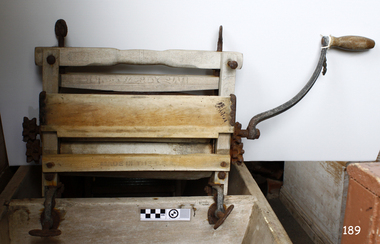 Flagstaff Hill Maritime Museum and Village
Domestic object - Wringer/Mangle, Melvin Newton Lovell, 1898 -1900
... machines and step-ladders. In 1881 Lovell individually began manufacturing other of his patents, including spring beds, and from modest inception, his Lovell Manufacturing Company grew to be one of the largest industrial concerns of its kind in the country and was recognized as being the most extensive manufacture of clothes-wringers in the entire world. ...machines and step-ladders. In 1881 Lovell individually began manufacturing other of his patents, including spring beds, and from modest inception, his Lovell Manufacturing Company grew to be one of the largest industrial concerns of its kind in the country and was recognized as being the most extensive manufacture of clothes-wringers in the entire world. ...Melvin Newton Lovell was born in Allegheny, Venango county, Pennsylvania, on 31 August 1844, to Darius T. Lovell (1815-1855) and Susan B. (Conover) Lovell (1827-1883). When Melvin Lovell was a boy, the family removed to Kerrtown, a village located in the vicinity of Titusville, PA. There Melvin served an apprenticeship at the carpenter's trade, and his natural mechanical talent enabled him to become a skilled workman. He followed his trade during the major portion of his term of residence in Kerrtown. In 1861, at seventeen years of age, Melvin Lovell left his home and, without parental authority, and entered the Union army soon after the outbreak of the Civil war. In August 1862, he was enlisted as a private in the 127th Pennsylvania Volunteer Infantry and saw active service until receiving his discharge at the end of May 1863. In 1865 he took up his residence in Erie, where he worked at the carpenter's trade for several years thereafter. In 1869 Melvin Lovell invented and patented several useful articles for household use, and in that year he began the manufacturing of certain of these inventions, in partnership with Franklin Farrar Adams, another inventor. Among the principal products of the original factory were washing machines and step-ladders. In 1881 Lovell individually began manufacturing other of his patents, including spring beds, and from modest inception, his Lovell Manufacturing Company grew to be one of the largest industrial concerns of its kind in the country and was recognized as being the most extensive manufacture of clothes-wringers in the entire world. In connection with his manufacture of domestic items, Lovell established sales agencies for his products in all parts of the country, and these branches were known as the Lovell stores. These goods were sold on the instalment plan and after his business had already been established becoming a substantial concern Lovell invented and patented the famous wringer which bears his name under the “Anchor” brand, and in later years he confined his operations largely to the manufacture of this very superior household invention. Lovell was also one of the organizers and stockholders of the Combination Roll & Rubber Manufacturing Co, of New York, which was formed to manufacture his patents, with headquarters in New York and a factory at Bloomfield, New Jersey.A significant household item used in the process of washing clothes by a man who had started in 1869, as a young carpenter and later he became a successful businessman and manufacturer of household items. Lovell was granted numerous patents for various devices during his career including several patents for adding machines (cash registers).Wringer (or mangle); portable wooden washing wringer with rubber rollers, manually driven by iron set of gears and handle. Includes iron clamps and adjusting screws for attaching. Marked on frame "382", "12 x 1 3/4" Anchor Brand "Made in USA" flagstaff hill, warrnambool, shipwrecked coast, flagstaff hill maritime museum, flagstaff hill maritime village, great ocean road, mangle, clothes wringer, washing equipment, laundry, wringer, domestic, washing mangle -
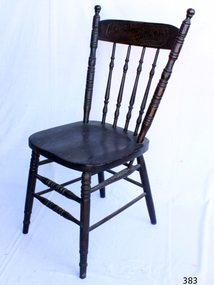 Flagstaff Hill Maritime Museum and Village
Domestic object - Chair, Early 20th Century
... By the 1830s, factory-manufactured “fancy chairs” like those by Sears, Roebuck, and Co. allowed families to purchase machined sets. With the Industrial Revolution, chairs became much more available. ...By the 1830s, factory-manufactured “fancy chairs” like those by Sears, Roebuck, and Co. allowed families to purchase machined sets. With the Industrial Revolution, chairs became much more available. ...This chair is one of a set of three kitchen chairs once used by the Warrnambool Council. The chair has been used since antiquity, although for many centuries it was a symbolic article of state and dignity rather than an article for ordinary use. "The chair" is still used as the emblem of authority in the House of Commons in the United Kingdom and Canada, and in many other settings. In keeping with this historical connotation of the "chair" as the symbol of authority, committees, boards of directors, and academic departments all have a 'chairman' or 'chair'. Endowed professorships are referred to as chairs. It was not until the 16th century that chairs became common. Until then, people sat on chests, benches, and stools, which were the ordinary seats of everyday life. The number of chairs that have survived from an earlier date is exceedingly limited; most examples are of ecclesiastical, seigneurial or feudal origin. Chairs were in existence since at least the Early Dynastic Period of Egypt (c. 3100 BC). They were covered with cloth or leather, were made of carved wood, and were much lower than today's chairs – chair seats were sometimes only 10 inches (25 cm) high. In ancient Egypt, chairs appear to have been of great richness and splendour. Fashioned of ebony and ivory, or of carved and gilded wood, they were covered with costly materials, magnificent patterns and supported upon representations of the legs of beasts or the figures of captives. Generally speaking, the higher ranked an individual was, the taller and more sumptuous was the chair he sat on and the greater the honour. On state occasions, the pharaoh sat on a throne, often with a little footstool in front of it.[ The average Egyptian family seldom had chairs, and if they did, it was usually only the master of the household who sat on a chair. Among the better off, the chairs might be painted to look like the ornate inlaid and carved chairs of the rich, but the craftsmanship was usually poor. The earliest images of chairs in China are from 6th-century Buddhist murals and stele, but the practice of sitting in chairs at that time was rare. It was not until the 12th century that chairs became widespread in China. Scholars disagree on the reasons for the adoption of the chair. The most common theories are that the chair was an outgrowth of indigenous Chinese furniture, that it evolved from a camp stool imported from Central Asia, that it was introduced to China by Christian missionaries in the 7th century, and that the chair came to China from India as a form of Buddhist monastic furniture. In modern China, unlike Korea or Japan, it is no longer common to sit at floor level. In Europe, it was owing in great measure to the Renaissance that the chair ceased to be a privilege of state and became a standard item of furniture for anyone who could afford to buy it. Once the idea of privilege faded the chair speedily came into general use. Almost at once the chair began to change every few years to reflect the fashions of the day. Thomas Edward Bowdich visited the main Palace of the Ashanti Empire in 1819, and observed chairs engrossed with gold in the empire. In the 1880s, chairs became more common in American households and usually there was a chair provided for every family member to sit down to dinner. By the 1830s, factory-manufactured “fancy chairs” like those by Sears, Roebuck, and Co. allowed families to purchase machined sets. With the Industrial Revolution, chairs became much more available. The 20th century saw an increasing use of technology in chair construction with such things as all-metal folding chairs, metal-legged chairs, the Slumber Chair,[ moulded plastic chairs and ergonomic chairs. The recliner became a popular form, at least in part due to radio and television. The modern movement of the 1960s produced new forms of chairs: the butterfly chair (originally called the Hardoy chair), bean bags, and the egg-shaped pod chair that turns. It also introduced the first mass-produced plastic chairs such as the Bofinger chair in 1966. Technological advances led to moulded plywood and wood laminate chairs, as well as chairs made of leather or polymers. Mechanical technology incorporated into the chair enabled adjustable chairs, especially for office use. Motors embedded in the chair resulted in massage chairs.The set of chairs represents one of the most commonly used items providing comfort. It represents domestic furniture used in the late 19th and early 20th centuries in Australia, signified by its decoration of an Australian theme motif.Chair, wooden, varnished dark brown. Spokes for back support, front legs, and spokes joining legs are patterned turned wood. Backrest has a carved floral emblem with a kangaroo in the centre.Back rest: motif {floral emblem with a kangaroo in the centre]flagstaff hill, warrnambool, shipwrecked-coast, flagstaff-hill, flagstaff-hill-maritime-museum, maritime-museum, shipwreck-coast, flagstaff-hill-maritime-village, chair, dining, carpentry -
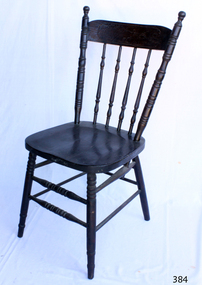 Flagstaff Hill Maritime Museum and Village
Domestic object - Chair, Early 20th Century
... By the 1830s, factory-manufactured “fancy chairs” like those by Sears, Roebuck, and Co. allowed families to purchase machined sets. With the Industrial Revolution, chairs became much more available. ...By the 1830s, factory-manufactured “fancy chairs” like those by Sears, Roebuck, and Co. allowed families to purchase machined sets. With the Industrial Revolution, chairs became much more available. ...This chair is one of a set of three kitchen chairs once used by the Warrnambool Council. The chair has been used since antiquity, although for many centuries it was a symbolic article of state and dignity rather than an article for ordinary use. "The chair" is still used as the emblem of authority in the House of Commons in the United Kingdom and Canada, and in many other settings. In keeping with this historical connotation of the "chair" as the symbol of authority, committees, boards of directors, and academic departments all have a 'chairman' or 'chair'. Endowed professorships are referred to as chairs. It was not until the 16th century that chairs became common. Until then, people sat on chests, benches, and stools, which were the ordinary seats of everyday life. The number of chairs which have survived from an earlier date is exceedingly limited; most examples are of ecclesiastical, seigneurial or feudal origin. Chairs were in existence since at least the Early Dynastic Period of Egypt (c. 3100 BC). They were covered with cloth or leather, were made of carved wood, and were much lower than today's chairs – chair seats were sometimes only 10 inches (25 cm) high. In ancient Egypt, chairs appear to have been of great richness and splendour. Fashioned of ebony and ivory, or of carved and gilded wood, they were covered with costly materials, magnificent patterns and supported upon representations of the legs of beasts or the figures of captives. Generally speaking, the higher ranked an individual was, the taller and more sumptuous was the chair he sat on and the greater the honour. On state occasions, the pharaoh sat on a throne, often with a little footstool in front of it.[ The average Egyptian family seldom had chairs, and if they did, it was usually only the master of the household who sat on a chair. Among the better off, the chairs might be painted to look like the ornate inlaid and carved chairs of the rich, but the craftsmanship was usually poor. The earliest images of chairs in China are from 6th-century Buddhist murals and stele, but the practice of sitting in chairs at that time was rare. It was not until the 12th century that chairs became widespread in China. Scholars disagree on the reasons for the adoption of the chair. The most common theories are that the chair was an outgrowth of indigenous Chinese furniture, that it evolved from a camp stool imported from Central Asia, that it was introduced to China by Christian missionaries in the 7th century, and that the chair came to China from India as a form of Buddhist monastic furniture. In modern China, unlike Korea or Japan, it is no longer common to sit at floor level. In Europe, it was owing in great measure to the Renaissance that the chair ceased to be a privilege of state and became a standard item of furniture for anyone who could afford to buy it. Once the idea of privilege faded the chair speedily came into general use. Almost at once the chair began to change every few years to reflect the fashions of the day. Thomas Edward Bowdich visited the main Palace of the Ashanti Empire in 1819, and observed chairs engrossed with gold in the empire. In the 1880s, chairs became more common in American households and usually there was a chair provided for every family member to sit down to dinner. By the 1830s, factory-manufactured “fancy chairs” like those by Sears, Roebuck, and Co. allowed families to purchase machined sets. With the Industrial Revolution, chairs became much more available. The 20th century saw an increasing use of technology in chair construction with such things as all-metal folding chairs, metal-legged chairs, the Slumber Chair,[ moulded plastic chairs and ergonomic chairs. The recliner became a popular form, at least in part due to radio and television. The modern movement of the 1960s produced new forms of chairs: the butterfly chair (originally called the Hardoy chair), bean bags, and the egg-shaped pod chair that turns. It also introduced the first mass-produced plastic chairs such as the Bofinger chair in 1966. Technological advances led to moulded plywood and wood laminate chairs, as well as chairs made of leather or polymers. Mechanical technology incorporated into the chair enabled adjustable chairs, especially for office use. Motors embedded in the chair resulted in massage chairs.The set of chairs represents one of the most commonly used items providing comfort. It represents domestic furniture used in the late 19th and early 20th centuries in Australia, signified by its decoration of an Australian theme motif.Chair, wooden, one of a set of three. The kitchen chair has a dark brown varnish. The spokes for the back support, front legs, and joining legs are patterned turned wood. The backrest has a carved floral emblem with a kangaroo in the centre.Back rest: motif {floral emblem with a kangaroo in the centre]flagstaff hill, flagstaff hill maritime museum and village, warrnambool, maritime museum, maritime village, great ocean road, shipwreck coast, chair, kitchen chair, dining chair, carpentry, carving, australian motif -
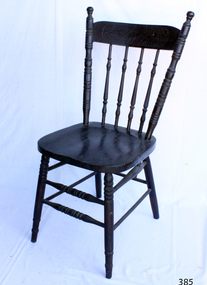 Flagstaff Hill Maritime Museum and Village
Domestic object - Chair, Early 20th Century
... By the 1830s, factory-manufactured “fancy chairs” like those by Sears, Roebuck, and Co. allowed families to purchase machined sets. With the Industrial Revolution, chairs became much more available. ...By the 1830s, factory-manufactured “fancy chairs” like those by Sears, Roebuck, and Co. allowed families to purchase machined sets. With the Industrial Revolution, chairs became much more available. ...This chair is one of a set of three kitchen chairs once used by the Warrnambool Council. The chair has been used since antiquity, although for many centuries it was a symbolic article of state and dignity rather than an article for ordinary use. "The chair" is still used as the emblem of authority in the House of Commons in the United Kingdom and Canada, and in many other settings. In keeping with this historical connotation of the "chair" as the symbol of authority, committees, boards of directors, and academic departments all have a 'chairman' or 'chair'. Endowed professorships are referred to as chairs. It was not until the 16th century that chairs became common. Until then, people sat on chests, benches, and stools, which were the ordinary seats of everyday life. The number of chairs which have survived from an earlier date is exceedingly limited; most examples are of ecclesiastical, seigneurial or feudal origin. Chairs were in existence since at least the Early Dynastic Period of Egypt (c. 3100 BC). They were covered with cloth or leather, were made of carved wood, and were much lower than today's chairs – chair seats were sometimes only 10 inches (25 cm) high. In ancient Egypt, chairs appear to have been of great richness and splendour. Fashioned of ebony and ivory, or of carved and gilded wood, they were covered with costly materials, magnificent patterns and supported upon representations of the legs of beasts or the figures of captives. Generally speaking, the higher ranked an individual was, the taller and more sumptuous was the chair he sat on and the greater the honour. On state occasions, the pharaoh sat on a throne, often with a little footstool in front of it.[ The average Egyptian family seldom had chairs, and if they did, it was usually only the master of the household who sat on a chair. Among the better off, the chairs might be painted to look like the ornate inlaid and carved chairs of the rich, but the craftsmanship was usually poor. The earliest images of chairs in China are from 6th-century Buddhist murals and stele, but the practice of sitting in chairs at that time was rare. It was not until the 12th century that chairs became widespread in China. Scholars disagree on the reasons for the adoption of the chair. The most common theories are that the chair was an outgrowth of indigenous Chinese furniture, that it evolved from a camp stool imported from Central Asia, that it was introduced to China by Christian missionaries in the 7th century, and that the chair came to China from India as a form of Buddhist monastic furniture. In modern China, unlike Korea or Japan, it is no longer common to sit at floor level. In Europe, it was owing in great measure to the Renaissance that the chair ceased to be a privilege of state and became a standard item of furniture for anyone who could afford to buy it. Once the idea of privilege faded the chair speedily came into general use. Almost at once the chair began to change every few years to reflect the fashions of the day. Thomas Edward Bowdich visited the main Palace of the Ashanti Empire in 1819, and observed chairs engrossed with gold in the empire. In the 1880s, chairs became more common in American households and usually there was a chair provided for every family member to sit down to dinner. By the 1830s, factory-manufactured “fancy chairs” like those by Sears, Roebuck, and Co. allowed families to purchase machined sets. With the Industrial Revolution, chairs became much more available. The 20th century saw an increasing use of technology in chair construction with such things as all-metal folding chairs, metal-legged chairs, the Slumber Chair,[ moulded plastic chairs and ergonomic chairs. The recliner became a popular form, at least in part due to radio and television. The modern movement of the 1960s produced new forms of chairs: the butterfly chair (originally called the Hardoy chair), bean bags, and the egg-shaped pod chair that turns. It also introduced the first mass-produced plastic chairs such as the Bofinger chair in 1966. Technological advances led to moulded plywood and wood laminate chairs, as well as chairs made of leather or polymers. Mechanical technology incorporated into the chair enabled adjustable chairs, especially for office use. Motors embedded in the chair resulted in massage chairs.The set of chairs represents one of the most commonly used items providing comfort. It represents domestic furniture used in the late 19th and early 20th centuries in Australia, signified by its decoration of an Australian theme motif.Chair, wooden, one of a set of three. The kitchen chair has a dark brown varnish. The spokes for the back support, front legs, and joining legs are patterned turned wood. The backrest has a carved floral emblem with a kangaroo in the centre.Back rest: motif {floral emblem with a kangaroo in the centre]flagstaff hill, flagstaff hill maritime museum and village, warrnambool, maritime museum, maritime village, great ocean road, shipwreck coast, chair, kitchen chair, dining chair, carpentry, carving, australian motif -
Federation University Historical Collection
Book - Book - Scrapbook, Ballarat School of MInes: Scrapbook of Newspaper Cuttings, Book 23, January 1985 to June 1985
... The papers concerned are The Courier, Ballarat, The Australian, The Age over the period of 15 January 1985 to 6 June 1985. teaching positions advertised pre-employment courses courses available new tafe board head - glen ludbrook order of australia medal to agnes tweedle and william north more funds for retraining for older workers ballarat regional association for community education tafe catering course for unemployed forestry seminar centre opened victorian school of forestry and land management creswick industrial sewing machining course short course to more satisfying life government spending $6 million at smb stephen bracks roger lowrey evan walker minister for public works $790000 smb work extension launched $95000 for smb arts centre community employment program grant ballarat's job board launched jim simmonds ballarat employment and training board bill gribble andrea lees begonia queen firm donates car to traffic safety school bulldozed out of existence smb extensions silvana faulkner equal opportunity officer the age nikon school photographic contest 1985 smb offering dance as a subject history of the school of mines and industries ballarat book our aladdin's cave of rowing trophies Book with beige cover, front, spiral bound. ...Collection of newspaper articles related to Ballarat School Of Mines.They cover activities and advertisements for staff. The papers concerned are The Courier, Ballarat, The Australian, The Age over the period of 15 January 1985 to 6 June 1985.Book with beige cover, front, spiral bound. teaching positions advertised, pre-employment courses, courses available, new tafe board head - glen ludbrook, order of australia medal to agnes tweedle and william north, more funds for retraining for older workers, ballarat regional association for community education, tafe catering course for unemployed, forestry seminar centre opened, victorian school of forestry and land management creswick, industrial sewing machining course, short course to more satisfying life, government spending $6 million at smb, stephen bracks, roger lowrey, evan walker, minister for public works, $790000 smb work extension launched, $95000 for smb arts centre, community employment program grant, ballarat's job board launched, jim simmonds, ballarat employment and training board, bill gribble, andrea lees, begonia queen, firm donates car to traffic safety school, bulldozed out of existence, smb extensions, silvana faulkner equal opportunity officer, the age nikon school photographic contest 1985, smb offering dance as a subject, history of the school of mines and industries ballarat book, our aladdin's cave of rowing trophies -
 Lara RSL Sub Branch
Framed Picture Print of a Lancaster Bomber
... machine guns, as well as bombs. Some planes were modified so they could carry the so called Grand Slam bomb, weighing 10,000 kg. During World War II, Lancasters flew over 156,000 sorties, or raids. They dropped over 50 million incendiary bombs and over 608,000 tons of explosive bombs. One of the most famous bombing raids was a 1942 raid on Cologne, Germany. Over 1,000 bombers dropped bombs on the industrial ...The Lancaster Bomber was one of the most famous aircraft of World War II. It first saw service in 1941 and became the RAF’s main bomber during the war. The first prototype Lancaster flew in January, 1941. A total of 7,377 Lancasters were made, after the first one rolled off the production line in October, 1941. It carried a crew of 7 and could fly at about 454 kmh. The plane was just over 21 metres long, had a wingspan of 31 metres and a flying range of 4,000 km. The Lancaster was normally armed with 8 Browning machine guns, as well as bombs. Some planes were modified so they could carry the so called Grand Slam bomb, weighing 10,000 kg. During World War II, Lancasters flew over 156,000 sorties, or raids. They dropped over 50 million incendiary bombs and over 608,000 tons of explosive bombs.One of the most famous bombing raids was a 1942 raid on Cologne, Germany. Over 1,000 bombers dropped bombs on the industrial city, destroying over 600 acres. Many Lancaster crew members were given medals for heroic actions while flying. Guy Gibson had flown 170 missions by the age of 24 and was awarded the Victoria Cross. Towards the end of World War II, Lancaster Bombers dropped food into the occupied Netherlands.Rectangular shaped glass covered picture frame with photo print of a Lancaster Bomber.lancaster bomber, ww2, avro, lara r.s.l. british aircraft. -
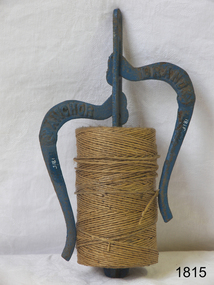 Flagstaff Hill Maritime Museum and Village
Functional object - String Dispenser, Lovell Manufacturing Company, 1900-1948
... The company's principal products were washing machines and step-ladders but also made many other cast iron household items known as the “Anchor Brand” when manufacturing began in earnest in 1881. As a result, the Lovell Manufacturing Company grew to be one of the largest industrial concerns of its kind in the country, recognized as being the most extensive manufacturer of clothes-wringers in the entire world. ...The company's principal products were washing machines and step-ladders but also made many other cast iron household items known as the “Anchor Brand” when manufacturing began in earnest in 1881. As a result, the Lovell Manufacturing Company grew to be one of the largest industrial concerns of its kind in the country, recognized as being the most extensive manufacturer of clothes-wringers in the entire world. ...The string has long been a household and office utility, but an easily tangled one. generations of manufactures have devised cast-iron string holders and string reels in an attempt to distribute this material more efficiently. Many different designs of cast-iron string holders exist some nickel, others painted many had an open pattern so clerks behind the counter of the general store could see at a glance if he or she was about to run out of string. In the 20th century, string holders became more decorative, morphing into novelty items for the home. History: Starting from 1869, the young carpenter by trade, Melvin Newton Lovell (1844-1895) from Erie, Pennsylvania, later a manufacturer and successful businessman, was granted numerous patents for various devices, between them several patents for adding machines and cash registers in 1891. The Lovell Manufacturing Company was founded by Melvin Newton Lovell who was born in Allegheny, Venango county, Pennsylvania, on 31 August 1844, to Darius T. Lovell (1815-1855) and Susan B. (Conover) Lovell (1827-1883). When Melvin Lovell was a boy, the family moved to Kerrtown, a village located in the vicinity of Titusville, Pennsylvania. There Melvin served an apprenticeship as a carpenter's and his natural mechanical talent, soon enabled him to become a skilled workman. In 1861, at seventeen years of age, Melvin left home, without parental authority, and joined the Union Army soon after the outbreak of the Civil war, in August 1862, he enlisted as a private in the 127th Pennsylvania Volunteer Infantry, and was discharged the end of May 1863. In 1865 he took up residence in Erie, where he worked as a carpenter for some years. In 1869 Melvin Lovell invented and patented several useful articles for household use, and in that year he began the manufacturing certain of these inventions, in partnership with Franklin Farrar Adams, another inventor. The company's principal products were washing machines and step-ladders but also made many other cast iron household items known as the “Anchor Brand” when manufacturing began in earnest in 1881. As a result, the Lovell Manufacturing Company grew to be one of the largest industrial concerns of its kind in the country, recognized as being the most extensive manufacturer of clothes-wringers in the entire world. Lovell established sales agencies for his products in all parts of the country, and these branches were known as the Lovell stores. These goods were sold on the instalment plan, an innervation at the time for which Lovell was credited as the originator. Lovell invented and patented the famous wringer which bears his name, and in later years he confined his operations largely to the manufacture and improvement of this invention. Lovell was also one of the organisers and stockholders of the Combination Roll & Rubber Manufacturing Co, of New York, which was formed to manufacture his patents. With headquarters in New York and a factory at Bloomfield, New Jersey. Unfortunately, during a trip to Atlanta, while representing the state of Pennsylvania at a trade exposition, he passed away in his prime, on 21 November 1895, and was buried in Erie Cemetery, Erie, PA. Today the Lovell Manufacturing Company and foundry is preserved and situated at Lovell Place 1301 French Street Erie Pennsylvania, the site is regarded as a historic complex and national historic district. It includes nine contributing buildings built between 1883 and 1946 and has now been converted to luxury apartments.An item used in shops, offices etc to dispense string although the item was commonly found in many areas of general commerce. It was made by a factory and patented in the USA by Melvin Lovell who had invented the first adding machine and the original mangle or wringer washing machine used in every house throughout the world from 1891 and the forerunner to our modern day washing machines. Its age and connection to this once notable maker and his company and it's age makes it an interesting item from a historical view point.Dispenser,cast iron for string with a central rod & 2 curved handing hooks. Marked Anchor Brand & blue in colour.flagstaff hill, warrnambool, flagstaff-hill-maritime-museum, shipwreck-coast, flagstaff-hill-maritime-village, melvin newton lovell, string dispenser, string, packaging, anchor brand -
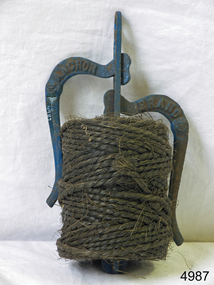 Flagstaff Hill Maritime Museum and Village
Functional object - String Dispenser, Lovell Manufacturing Company, 1900-1948
... The company's principal products were washing machines and step-ladders but also made many other cast iron household items known as the “Anchor Brand” when manufacturing began in earnest in 1881. As a result, the Lovell Manufacturing Company grew to be one of the largest industrial concerns of its kind in the country, recognized as being the most extensive manufacturer of clothes-wringers in the entire world. ...The company's principal products were washing machines and step-ladders but also made many other cast iron household items known as the “Anchor Brand” when manufacturing began in earnest in 1881. As a result, the Lovell Manufacturing Company grew to be one of the largest industrial concerns of its kind in the country, recognized as being the most extensive manufacturer of clothes-wringers in the entire world. ...The string has long been a household and office utility, but an easily tangled one. generations of manufactures have devised cast-iron string holders and string reels in an attempt to distribute this material more efficiently. Many different designs of cast-iron string holders exist some nickel, others painted many had an open pattern so clerks behind the counter of the general store could see at a glance if he or she was about to run out of string. In the 20th century, string holders became more decorative, morphing into novelty items for the home. History: Starting from 1869, the young carpenter by trade, Melvin Newton Lovell (1844-1895) from Erie, Pennsylvania, later a manufacturer and successful businessman, was granted numerous patents for various devices, between them several patents for adding machines and cash registers in 1891. The Lovell Manufacturing Company was founded by Melvin Newton Lovell who was born in Allegheny, Venango county, Pennsylvania, on 31 August 1844, to Darius T. Lovell (1815-1855) and Susan B. (Conover) Lovell (1827-1883). When Melvin Lovell was a boy, the family moved to Kerrtown, a village located in the vicinity of Titusville, Pennsylvania. There Melvin served an apprenticeship as a carpenter's and his natural mechanical talent, soon enabled him to become a skilled workman. In 1861, at seventeen years of age, Melvin left home, without parental authority, and joined the Union Army soon after the outbreak of the Civil war, in August 1862, he enlisted as a private in the 127th Pennsylvania Volunteer Infantry, and was discharged the end of May 1863. In 1865 he took up residence in Erie, where he worked as a carpenter for some years. In 1869 Melvin Lovell invented and patented several useful articles for household use, and in that year he began the manufacturing certain of these inventions, in partnership with Franklin Farrar Adams, another inventor. The company's principal products were washing machines and step-ladders but also made many other cast iron household items known as the “Anchor Brand” when manufacturing began in earnest in 1881. As a result, the Lovell Manufacturing Company grew to be one of the largest industrial concerns of its kind in the country, recognized as being the most extensive manufacturer of clothes-wringers in the entire world. Lovell established sales agencies for his products in all parts of the country, and these branches were known as the Lovell stores. These goods were sold on the instalment plan, an innervation at the time for which Lovell was credited as the originator. Lovell invented and patented the famous wringer which bears his name, and in later years he confined his operations largely to the manufacture and improvement of this invention. Lovell was also one of the organisers and stockholders of the Combination Roll & Rubber Manufacturing Co, of New York, which was formed to manufacture his patents. With headquarters in New York and a factory at Bloomfield, New Jersey. Unfortunately, during a trip to Atlanta, while representing the state of Pennsylvania at a trade exposition, he passed away in his prime, on 21 November 1895, and was buried in Erie Cemetery, Erie, PA. Today the Lovell Manufacturing Company and foundry is preserved and situated at Lovell Place 1301 French Street Erie Pennsylvania, the site is regarded as a historic complex and national historic district. It includes nine contributing buildings built between 1883 and 1946 and has now been converted to luxury apartments.An item used in shops, offices etc to dispense string although the item was commonly found in many areas of general commerce. It was made by a factory and patented in the USA by Melvin Lovell who had invented the first adding machine and the original mangle or wringer washing machine used in every house throughout the world from 1891 and the forerunner to our modern day washing machines. Its age and connection to this once notable maker and his company and it's age makes it an interesting item from a historical view point.Dispenser,cast iron for string with a central rod & 2 curved handing hooks. Marked Anchor Brand & blue in colour.flagstaff hill, warrnambool, flagstaff-hill-maritime-museum, shipwreck-coast, flagstaff-hill-maritime-village, melvin newton lovell, string dispenser, string, packaging, anchor brand -
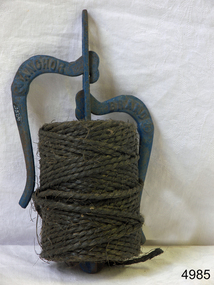 Flagstaff Hill Maritime Museum and Village
Functional object - String Dispenser, Lovell Manufacturing Company, 1900-1948
... The company's principal products were washing machines and step-ladders but also made many other cast iron household items known as the “Anchor Brand” when manufacturing began in earnest in 1881. As a result, the Lovell Manufacturing Company grew to be one of the largest industrial concerns of its kind in the country, recognized as being the most extensive manufacturer of clothes-wringers in the entire world. ...The company's principal products were washing machines and step-ladders but also made many other cast iron household items known as the “Anchor Brand” when manufacturing began in earnest in 1881. As a result, the Lovell Manufacturing Company grew to be one of the largest industrial concerns of its kind in the country, recognized as being the most extensive manufacturer of clothes-wringers in the entire world. ...The string has long been a household and office utility, but an easily tangled one. generations of manufactures have devised cast-iron string holders and string reels in an attempt to distribute this material more efficiently. Many different designs of cast-iron string holders exist some nickel, others painted many had an open pattern so clerks behind the counter of the general store could see at a glance if he or she was about to run out of string. In the 20th century, string holders became more decorative, morphing into novelty items for the home. History: Starting from 1869, the young carpenter by trade, Melvin Newton Lovell (1844-1895) from Erie, Pennsylvania, later a manufacturer and successful businessman, was granted numerous patents for various devices, between them several patents for adding machines and cash registers in 1891. The Lovell Manufacturing Company was founded by Melvin Newton Lovell who was born in Allegheny, Venango county, Pennsylvania, on 31 August 1844, to Darius T. Lovell (1815-1855) and Susan B. (Conover) Lovell (1827-1883). When Melvin Lovell was a boy, the family moved to Kerrtown, a village located in the vicinity of Titusville, Pennsylvania. There Melvin served an apprenticeship as a carpenter's and his natural mechanical talent, soon enabled him to become a skilled workman. In 1861, at seventeen years of age, Melvin left home, without parental authority, and joined the Union Army soon after the outbreak of the Civil war, in August 1862, he enlisted as a private in the 127th Pennsylvania Volunteer Infantry, and was discharged the end of May 1863. In 1865 he took up residence in Erie, where he worked as a carpenter for some years. In 1869 Melvin Lovell invented and patented several useful articles for household use, and in that year he began the manufacturing certain of these inventions, in partnership with Franklin Farrar Adams, another inventor. The company's principal products were washing machines and step-ladders but also made many other cast iron household items known as the “Anchor Brand” when manufacturing began in earnest in 1881. As a result, the Lovell Manufacturing Company grew to be one of the largest industrial concerns of its kind in the country, recognized as being the most extensive manufacturer of clothes-wringers in the entire world. Lovell established sales agencies for his products in all parts of the country, and these branches were known as the Lovell stores. These goods were sold on the instalment plan, an innervation at the time for which Lovell was credited as the originator. Lovell invented and patented the famous wringer which bears his name, and in later years he confined his operations largely to the manufacture and improvement of this invention. Lovell was also one of the organisers and stockholders of the Combination Roll & Rubber Manufacturing Co, of New York, which was formed to manufacture his patents. With headquarters in New York and a factory at Bloomfield, New Jersey. Unfortunately, during a trip to Atlanta, while representing the state of Pennsylvania at a trade exposition, he passed away in his prime, on 21 November 1895, and was buried in Erie Cemetery, Erie, PA. Today the Lovell Manufacturing Company and foundry is preserved and situated at Lovell Place 1301 French Street Erie Pennsylvania, the site is regarded as a historic complex and national historic district. It includes nine contributing buildings built between 1883 and 1946 and has now been converted to luxury apartments.An item used in shops, offices etc to dispense string although the item was commonly found in many areas of general commerce. It was made by a factory and patented in the USA by Melvin Lovell who had invented the first adding machine and the original mangle or wringer washing machine used in every house throughout the world from 1891 and the forerunner to our modern day washing machines. Its age and connection to this once notable maker and his company and it's age makes it an interesting item from a historical view point.Dispenser,cast iron for string with a central rod & 2 curved handing hooks. Marked Anchor Brand & blue in colour.flagstaff hill, warrnambool, flagstaff-hill-maritime-museum, shipwreck-coast, flagstaff-hill-maritime-village, melvin newton lovell, string dispenser, string, packaging, anchor brand
