
Showing 109 items matching "japanese garden"
-
 University of Melbourne, Burnley Campus Archives
Plan, Colleen Miller, Williamstown North Primary School Japanese Gravel Garden, 2002
... Williamstown North Primary School Japanese Gravel Garden......Japanese garden...colleen miller williamstown north primary school Japanese garden (1) Section Elevations by Colleen Miller, dated 26.06.2002. ...(1) Section Elevations by Colleen Miller, dated 26.06.2002. Scale 1:50. (2) Page with 2 colour photographs of the garden/similar.colleen miller, williamstown north primary school, japanese garden -
 Tatura Irrigation & Wartime Camps Museum
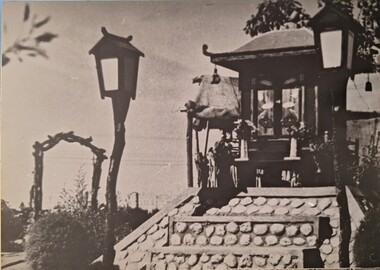
Photograph, Japanese garden in Camp 14, 1989
... Japanese garden in Camp 14...Between the 2 lamps there are three stone steps leading up to a small Japanese building. Japanese garden in Camp 14 Photograph Photograph ...The archway is at the entrance to the Japanese compound. The small Japanese building is a Japanese shrine. This was built at Camp 14.Black and white photograph. Two lamps on posts in the front of the photograph. There is an archway to the left and rear of the photograph. Between the 2 lamps there are three stone steps leading up to a small Japanese building.loveday, south australia, opium crops, internment camp loveday, japanese shrines, japanese internees -
University of Melbourne, Burnley Campus Archives
Album - Black and white and sepia prints, Gardens Other Than Burnley, 1890-1920
... ...japanese garden...Treasury Gardens: (22) Japanese Garden. (23)Japanese Garden. This area around the Lake done by Guilfoyle c.1901-1902. ...Treasury Gardens: (22) Japanese Garden. (23)Japanese Garden. This area around the Lake done by Guilfoyle c.1901-1902. ...Identification and information on reverse of some photographs given by Georgina Whitehead (Tel-9572 1225) who visited the Archives on 26 September, 1995 when she was writing a book on the various gardens owned and run by the Melbourne City Council-'Civilizing the city: a history of Melbourne's public gardens,' State Library of Victoria, Melbourne 1997.34 bkack and white and sepia photographs. Possibly used for Magic Lantern slides. Fitzroy Gardens: (1) Possibly, towards St Patrick's Cathedral. (2, 3) Path through avenue of trees. (4) Winter. Heavily pruned Elms. (5) Looking towards Clarendon St-eastwards. (6) Probably, lawn. (7) 2 copies, possibly Kiosk. (8) 1920's or earlier. Man sitting on bench. (9) Path through avenue of trees. (10) 2 copies. Probably-fenced originally-fences coming down 1890's on. (11) Statue at crossroad. (12) The Vase Fountain. (13) Tree trunks. (14) Tree trunks. (15) Probably, tree trunks. (16) Winding path. (17) Probably, misty winter scene. (18) Probably, summer. (19) Probably, this is the sort of garden seat used. (20) Avenue of trees, information about exposure on reverse. (21) 2 copies. Probably. Treasury Gardens: (22) Japanese Garden. (23)Japanese Garden. This area around the Lake done by Guilfoyle c.1901-1902. This photograph about this period. (24) Gardener at lake edge. Snowdon Gardens: (25) View towards city. Unidentified: (26) ?Botanic fern Gully/ Fitzroy Fern Gully. (27) Lake view. (28) Narrow path through long grass and trees. (29) Trees in winter. (30, 30a) Tree ferns. (31,32) Cordylines. (33) People on lawn. (34) Winter view of path through elms. These photographs have been scanned but have not been uploaded.georgina whitehead, fitzroy gardens, trees, elms, the vase fountain, trunks, treasury gardens, japanese garden, guilfoyle, snowdon gardens, fern gully, lake view, parks -
 Robin Boyd Foundation
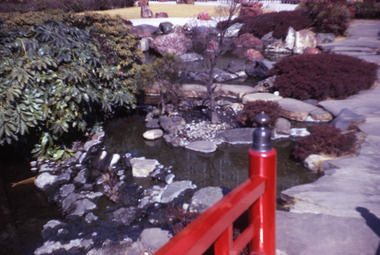
Slide, Robin Boyd, 1970
... Colour slide in a mount. Japanese garden, probably Kyoto, Japan...Amongst the topics covered were Australian scientific innovation (including brain research, immunology, Antarctic research, Snowy Mountains Hydro-Electric Power Scheme, rainmaking, and the night sky), Australian sport, house interiors, car manufacturing, Australian music and art, and Japanese-Australian relations. slide robin boyd Made in Australia / 28 / APR 70M2 Colour slide in a mount. Japanese garden, probably Kyoto, Japan Slide Robin Boyd ...Robin Boyd was appointed Exhibits Architect for the Australian Pavilion at Expo ‘70 in Osaka and travelled to Osaka several times in 1969-1970. Boyd designed the innovative Space Tube, which had over 25 exhibition boxes, projecting from it. Amongst the topics covered were Australian scientific innovation (including brain research, immunology, Antarctic research, Snowy Mountains Hydro-Electric Power Scheme, rainmaking, and the night sky), Australian sport, house interiors, car manufacturing, Australian music and art, and Japanese-Australian relations.Colour slide in a mount. Japanese garden, probably Kyoto, JapanMade in Australia / 28 / APR 70M2slide, robin boyd -
 Robin Boyd Foundation
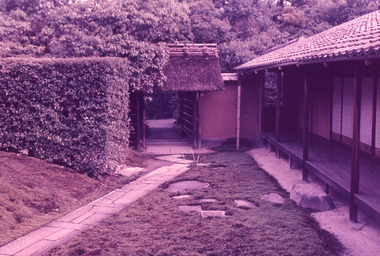
Slide, Commercial, 1960
... Inner gateway and inner garden, Katsura Imperial Villa, Kyoto, Japan ...Japanese Gardens (2) / Katsura Imperial Villa / Inner Gateway & Inner Garden / Nippon Bunker Film Co. ...Japan slide Japanese Gardens (2) / Katsura Imperial Villa / Inner Gateway & Inner Garden / Nippon Bunker Film Co. ...Robin Boyd wrote two books on Japanese architects and architecture - “Kenzo Tange” published by George Braziller in 1962 and “New Directions in Japanese Architecture” published by Studio Vista in 1968. During the 1960s he travelled several times to Japan to research these books and as part of his role as Exhibits Architect for the Australian Pavilion at Expo ‘70 in Osaka.Colour slide in a mount. Inner gateway and inner garden, Katsura Imperial Villa, Kyoto, Japan Japanese Gardens (2) / Katsura Imperial Villa / Inner Gateway & Inner Garden / Nippon Bunker Film Co. Tokyo Japan/ 2402 / 2/ 1960japan, slide -
 Robin Boyd Foundation
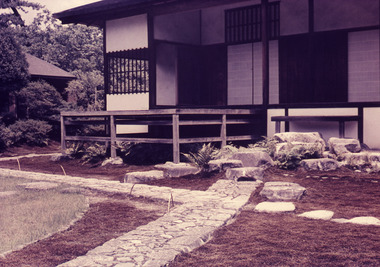
Slide, Robin Boyd, 1964
... Tokyo, Japan / Japanese Gardens (2) / Katsura Inperial Villa / Step at Ko Shoin and Moon-view pavilion / 8 / Encircled 3 (Handwritten) / Encircled 3 (Handwritten)...During the 1960s he travelled several times to Japan to research these books and as part of his role as Exhibits Architect for the Australian Pavilion at Expo ‘70 in Osaka. slide robin boyd Tokyo, Japan / Japanese Gardens (2) / Katsura Inperial Villa / Step at Ko Shoin and Moon-view pavilion / 8 / Encircled 3 (Handwritten) / Encircled 3 (Handwritten) Colour slide in a mount. ...Robin Boyd wrote two books on Japanese architects and architecture - “Kenzo Tange” published by George Braziller in 1962 and “New Directions in Japanese Architecture” published by Studio Vista in 1968. During the 1960s he travelled several times to Japan to research these books and as part of his role as Exhibits Architect for the Australian Pavilion at Expo ‘70 in Osaka.Colour slide in a mount. Ko-shoin: Moon-Viewing Platform, Katsura Imperial Villa, Kyoto, JapanTokyo, Japan / Japanese Gardens (2) / Katsura Inperial Villa / Step at Ko Shoin and Moon-view pavilion / 8 / Encircled 3 (Handwritten) / Encircled 3 (Handwritten)slide, robin boyd -
 Robin Boyd Foundation
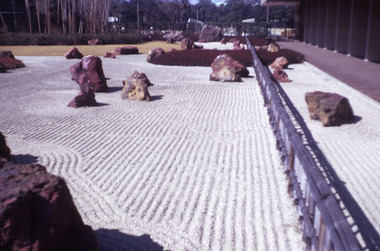
Slide, Robin Boyd, 1970
... Colour slide in a mount. Japanese dry garden, probably Kyoto, Japan...Expo 70 Osaka robin boyd slide Made in Australia / 27 / APR 70M2 Colour slide in a mount. Japanese dry garden, probably Kyoto, Japan Slide Robin Boyd ...Robin Boyd was appointed Exhibits Architect for the Australian Pavilion at Expo ‘70 in Osaka and travelled to Osaka several times in 1969-1970. Boyd designed the innovative Space Tube, which had over 25 exhibition boxes, projecting from it. Amongst the topics covered were Australian scientific innovation (including brain research, immunology, Antarctic research, Snowy Mountains Hydro-Electric Power Scheme, rainmaking, and the night sky), Australian sport, house interiors, car manufacturing, Australian music and art, and Japanese-Australian relations.Colour slide in a mount. Japanese dry garden, probably Kyoto, JapanMade in Australia / 27 / APR 70M2expo 70, osaka, robin boyd, slide -
 Robin Boyd Foundation
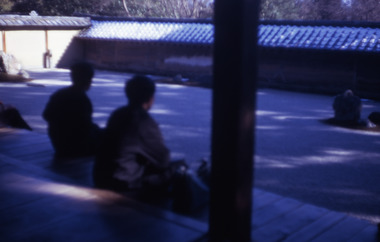
Slide, Robin Boyd, 1970
... Colour slide in a mount. Japanese dry garden, possibly at Ryōan-ji temple, Kyoto, Japan...Expo 70 Osaka robin boyd slide Made in Australia / 25 / APR 70M2 / Japan (Handwritten) Colour slide in a mount. Japanese dry garden, possibly at Ryōan-ji temple, Kyoto, Japan Slide Robin Boyd ...Robin Boyd was appointed Exhibits Architect for the Australian Pavilion at Expo ‘70 in Osaka and travelled to Osaka several times in 1969-1970. Boyd designed the innovative Space Tube, which had over 25 exhibition boxes, projecting from it. Amongst the topics covered were Australian scientific innovation (including brain research, immunology, Antarctic research, Snowy Mountains Hydro-Electric Power Scheme, rainmaking, and the night sky), Australian sport, house interiors, car manufacturing, Australian music and art, and Japanese-Australian relations.Colour slide in a mount. Japanese dry garden, possibly at Ryōan-ji temple, Kyoto, JapanMade in Australia / 25 / APR 70M2 / Japan (Handwritten)expo 70, osaka, robin boyd, slide -
Tatura Irrigation & Wartime Camps Museum
Book, Cowra on the Lachlan
... Includes the 1944 prison break out and the resulting Cowra War Cemetery, Japanese Garden and Cultural Centre. ...Includes the 1944 prison break out and the resulting Cowra War Cemetery, Japanese Garden and Cultural Centre. Cowra Japanese prison break out Japanese internees WW2 internees Australian Internment camps Presented to Tatura H S by Cowra H S 7/5/1994 Hard cover book, green with gold writing on spine (title and authors name). ...Tells the story of Cowra from early settlers to when book written. Includes the 1944 prison break out and the resulting Cowra War Cemetery, Japanese Garden and Cultural Centre. Hard cover book, green with gold writing on spine (title and authors name). Dust cover, yellow, with picture of The Cowra Bicentennial tapestry on front cover. Back cover has picture of Cowra. Inside front of dust cover has what the book about and inside back of dust cover tells about the author, Joan Marriott.Presented to Tatura H S by Cowra H S 7/5/1994cowra, japanese prison break out, japanese internees, ww2 internees, australian internment camps -
University of Melbourne, Burnley Campus Archives
Slide - Glass slide, Hand coloured, 1891-1905
... Mother and child standing in Iris garden, Japan....japan 23.' Hand coloured. Mother and child standing in Iris garden, Japan. ...23.' Hand coloured. Mother and child standing in Iris garden, Japan.overseas images, japan -
University of Melbourne, Burnley Campus Archives
Slide - Glass slide, Hand coloured, 1891-1905
... Hand coloured. 2 women standing in Iris garden, Japan....overseas images japan 33.' Hand coloured. 2 women standing in Iris garden, Japan. Slide Glass slide, Hand coloured ...33.' Hand coloured. 2 women standing in Iris garden, Japan.overseas images, japan -
University of Melbourne, Burnley Campus Archives
Glass slide, Hand coloured, 1891-1905
... Hand coloured. 3 women and a man in an Iris garden, Japan....japan 4.' Hand coloured. 3 women and a man in an Iris garden, Japan. Glass slide, Hand coloured ...4.' Hand coloured. 3 women and a man in an Iris garden, Japan.overseas images, japan -
 Bendigo Military Museum
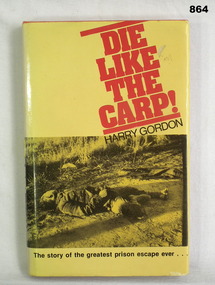
Book, Harry Gordon, Die like the Carp!, c.1978
... One side has a map of Cowra,New South Wales, the other has a map & information about the Japanese Garden & Cultural Centre, Cowra, New South Wales....One side has a map of Cowra,New South Wales, the other has a map & information about the Japanese Garden & Cultural Centre, Cowra, New South Wales. books military history Written on 1st page: Nancy Brown Written on back of 2nd page: Alan W Brown Written on title page: Donated by Bgo Y Mens Club Book, 240 pages, orange hard cover with yellow & black dust jacket. ...Folded page inside front of book. One side has a map of Cowra,New South Wales, the other has a map & information about the Japanese Garden & Cultural Centre, Cowra, New South Wales.Book, 240 pages, orange hard cover with yellow & black dust jacket. Front of dust jacket has photo of the body of a soldier lying on the ground & the back a photo of 2 men & 1 woman looking at photos. Written on 1st page: Nancy Brown Written on back of 2nd page: Alan W Brown Written on title page: Donated by Bgo Y Mens Clubbooks, military, history -
 Ringwood and District Historical Society
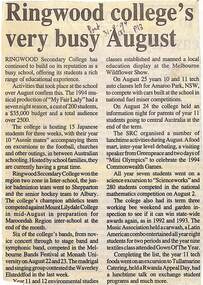
Newspaper, Ringwood college's very busy August. - Post, 31-08-94, Page 13
... Japanese students for three weeks and engaged in all types of educational experiences. Badminton, Hockey and athletics were successful. College bands and singing groups were in fine form. The SRC held a number of lunchtime activities. A visit to Scienceworks and garden...Japanese students for three weeks and engaged in all types of educational experiences. Badminton, Hockey and athletics were successful. College bands and singing groups were in fine form. The SRC held a number of lunchtime activities. A visit to Scienceworks and garden ...ClippingRingwood Secondary College has continued to build on its reputation as a busy school, offering its students a rich range of educational experience. Activities that took place at the school over August confirm this. "My Fair Lady" had a 7 night season. The school hosted 15 Japanese students for three weeks and engaged in all types of educational experiences. Badminton, Hockey and athletics were successful. College bands and singing groups were in fine form. The SRC held a number of lunchtime activities. A visit to Scienceworks and garden working bees added to the myriad of August activities. -
 Werribee RSL Sub Branch
Termial - battery, World War Two
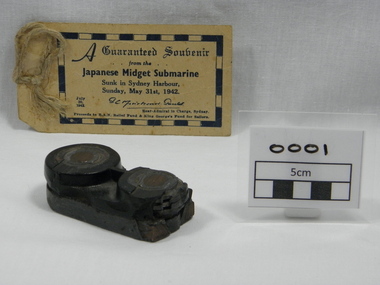
... Cardboard tag - "A Guaranteed Souvenir / from the / Japanese Midget Submarine / Sunk in Sydney Harbour,/ Sunday May 31st, 1942" / sign by "Rear-Admiral in Charge, Sydney /July 30, 1942 Proceeds to RAN Relief Fund & King George's Fund for Sailors". Back of Tag - "27th November 1942 on show in the Gardens...Cardboard tag - "A Guaranteed Souvenir / from the / Japanese Midget Submarine / Sunk in Sydney Harbour,/ Sunday May 31st, 1942" / sign by "Rear-Admiral in Charge, Sydney /July 30, 1942 Proceeds to RAN Relief Fund & King George's Fund for Sailors". Back of Tag - "27th November 1942 on show in the Gardens ...This battery treminal was removed from one of the Japanese Midget Submarines sunk in Sydney Harbour during the night attack on Sunday 31st May 1942 and sold publicly as a souvenir to raise money for the RAN relief funds for sailors. Metal plate - two round black metal lugs on top of a flat grey lead plate with four Japanese characters stamped on the base off the top of a battery from a Midget Submarine, with a cardboard souvenir card.Metal Plate - four Japanese characters. Cardboard tag - "A Guaranteed Souvenir / from the / Japanese Midget Submarine / Sunk in Sydney Harbour,/ Sunday May 31st, 1942" / sign by "Rear-Admiral in Charge, Sydney /July 30, 1942 Proceeds to RAN Relief Fund & King George's Fund for Sailors". Back of Tag - "27th November 1942 on show in the Gardens in Melbourne"souvenenir, japanese midget submarine -
 Federation University Historical Collection
Book, The Craftsman (July -Dec 1912 and Jan-June 1913), 1912-1913
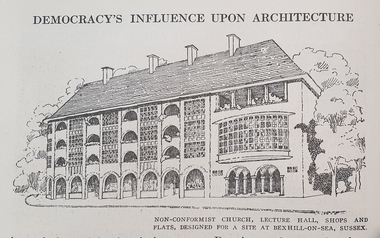
... The Ballarat Technical Art School was a division of the Ballarat School of Mines, and a predecessor institution of Federation University Australia. john burroughs california architecture garden furniture peer gynt norway's ancient log cabins king's langley's priory lincoln memorial school wrought iron school gardens birch bark canoes old west alice in wonderland californian bungalow japanese gardens john muir yosemite san stefano, bologna brickwork anna boberg ctaftsman house henrik lund water gardens lois akin electric lighting bookplate library plate Ballarat Technical Art School Two large half leather bound volumes. ...Two large half leather bound volumes. The books were once part of the Ballarat Technical Art School Library. .1) July - December 1912. Includes a book plate from the Ballarat Technical Art School Library (BM/98) .2) January- June 1913. Includes a book plate from the Ballarat Technical Art School Library (BM/99)john burroughs, california, architecture, garden furniture, peer gynt, norway's ancient log cabins, king's langley's priory, lincoln memorial school, wrought iron, school gardens, birch bark canoes, old west, alice in wonderland, californian bungalow, japanese gardens, john muir, yosemite, san stefano, bologna, brickwork, anna boberg, ctaftsman house, henrik lund, water gardens, lois akin, electric lighting, bookplate, library plate, ballarat technical art school -
 City of Moorabbin Historical Society (Operating the Box Cottage Museum)
Clothing - Clothing, lady’s half petticoat, c1970
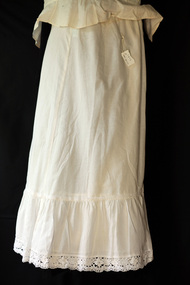
... Japan, San Francisco that sold their range of fabrics, dresses and accessories. In 1980 home furnishings were added to the range. Laura died in an accident 1985, Bernard retired in1993 and the company is now Public Listed on Stock Exchange. ‘Laura Ashley’ clothing, fabric and accessories were very popular in Melbourne in 1970’s. clothing brighton moorabbin dressmaking market gardeners ...Laura and Bernard Ashley began printing fabric in their London kitchen in 1953. Commencing with head scarves and place-mats they gradually developed table-ware and bed sheets. In 1960 they entered the Fashion world with blouses and smocks . The ‘swinging sixties’ saw them in great demand for the feminine florals and flounces of the ‘maxi’ fashions and they opened in smart South Kensington, London. In 1970 they opened franchises in Australia, Canada, Japan, San Francisco that sold their range of fabrics, dresses and accessories. In 1980 home furnishings were added to the range. Laura died in an accident 1985, Bernard retired in1993 and the company is now Public Listed on Stock Exchange.‘Laura Ashley’ clothing, fabric and accessories were very popular in Melbourne in 1970’s.A lady’s white cotton half petticoat with crocheted flounce, Laura Ashley Pty Ltdclothing, brighton, moorabbin, dressmaking, market gardeners, early settlers, craftwork, textiles, laura ashley -
 City of Moorabbin Historical Society (Operating the Box Cottage Museum)
Card - World War 1939-1945, Ration Cards x 2; Identity Card 1942, 1948
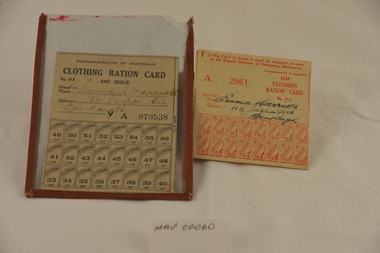
... Japan entered the War, comprehensive rationing was introduced to manage shortages and control civilian consumption. After the War, rationing was gradually phased out. Clothing rationing was abolished on 24 June1948. The last rationed product was tea, which ended in July 1950. Many young men from the City of Moorabbin volunteered for active service during WW2 .The market gardeners ...World War 2 commenced in 1939 in Europe. The first controls over the production and distribution of products in Australia were introduced in 1940, partly due to disruption of shipping. In 1942, after Japan entered the War, comprehensive rationing was introduced to manage shortages and control civilian consumption. After the War, rationing was gradually phased out. Clothing rationing was abolished on 24 June1948. The last rationed product was tea, which ended in July 1950.Many young men from the City of Moorabbin volunteered for active service during WW2 .The market gardeners had to manage their farms with reduced labour. Farms and businesses over the whole country were affected so rationing was introduced to control the civilian use of commodities. Pink-coloured card, printed in black with coupons to be cut off from the left side, originally 24 supplied. 2 original, partly used paper ration cards issued in Melbourne 1948. !x Identity Card for Emma Marriott 1) Meat Ration 2) Clothing Ration 3) Identity Card1)If this Card is found it must be returned at once/ to the Deputy Director of Rationing Melbourne/Commonwealth of Australia/ 1948/ B 891314 MEAT/RATION CARD/Rg,D.1/ Issued to/Name Reed G.M/Address 251 Centre Rd/SE14/ tickets -MEAT 104 - 54 2) as above / B891313/ CLOTHING/ RATION CARD/ tickets 1- 56 3) OHMS / Identity Card ...........1942ww2, melbourne, bentleigh, food rations, food supply, farming, market gardeners, city of moorabbin, cheltenham, marriott emma, reed george, william green, kenneth j blackman -
 City of Moorabbin Historical Society (Operating the Box Cottage Museum)
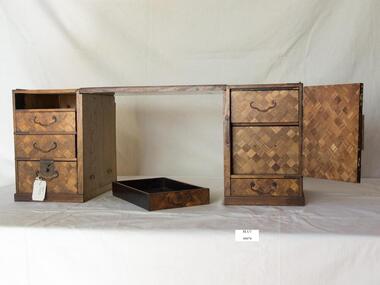
Furniture - Furniture, small wooden portable cabinet of "Dr" Palk, c1850
... This portable cabinet with writing board was used by "Dr" Palk, one of the first "Doctors" to practice medicine in Melbourne c1850 . bland c. melbourne medical practitioners Palk dr Emerald Hill moorabbin brighton pioneers early settlers market gardeners dairymen farmers A Japanese Meiji Parquetry Scholars box. ..."Dr" Robert Palk (1813 - 1890), a self proclaimed doctor, set up his practice in Coventry Street, Emerald Hill (South Melbourne). He was also a mineral surveyor and a municipal councillor for Emerald Hill. His Grandson Mr Charles Bland donated the cabinet to CMHS.This portable cabinet with writing board was used by "Dr" Palk, one of the first "Doctors" to practice medicine in Melbourne c1850 .A Japanese Meiji Parquetry Scholars box. Late 19th Century wooden portable cabinet with 3 sections that belonged to "Dr" Palk c1850. Two side cabinets that lock together by grooves on inner sides, and a flat writing board that sits on a shelf at the top of the inner sides. One of the cabinets has 4 drawers, one of which has a lock. The other cabinet has 1 drawer and a cupboard with a door lock No Keys are available, The cabinet is decorated on the outer surfaces by inlaid bamboo squares with metal decorative hinges and handles and at the corners on the door. bland c. melbourne, medical practitioners, palk dr, emerald hill, moorabbin, brighton, pioneers, early settlers, market gardeners, dairymen, farmers -
 City of Moorabbin Historical Society (Operating the Box Cottage Museum)
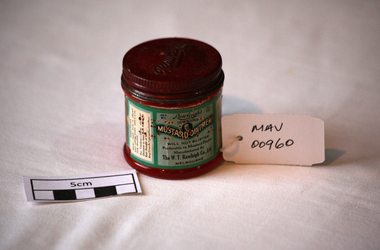
Manufactured Glass, jar of Mustard Ointment 'Rawleigh's;, mid 20thC
... From Japan came camphor and menthol for making medicines. From Tavenui, the Garden Island of Fiji, came the food grade coconut oil for Rawleigh's gold medal winning Coconut Oil Soap. ...From Japan came camphor and menthol for making medicines. From Tavenui, the Garden Island of Fiji, came the food grade coconut oil for Rawleigh's gold medal winning Coconut Oil Soap. ...WT Rawleigh (1870-1952) Freeport USA began in 1889 the direct selling method to sell his products, travelling around on horse and cart in the early days from house to house selling his medicines and other lines. Rawleigh's wide range of products includes: Medicinal, Nutritional, Gourmet, Homecare, Personal Care, Animal & Plant Care Since 1889, millions of families around the world have learned to rely upon and keep Rawleigh's reliable medicines and other products on hand ready for emergencies to relieve sickness, pains, injuries and for their daily needs. By 1920, young Rawleigh had built the biggest manufacturing organisation in the world. Mr Floyd George Rawleigh who was the son of David Rawleigh, W.T.Rawleigh's brother, came to Australia, with Mr Jackson, in 1931 and set up the Rawleighs Company Business . Generations of Australians, Canadians and Americans grew up waiting for The Rawleigh Man to arrive at their front door with his sample case of goodies to add spice to their life and to heal their ailments. In World War II, most Australian soldiers posted overseas carried a tin of Rawleigh Antiseptic Salve in their kits to treat wounds and ward off infection The Rawleigh Man brought to family front doors the best materials money could buy from around the world: spices from Sumatra, Java, China, India, Africa, the West Indies; black pepper from the island of Ponapai; lemon and orange oils from California and Sicily and Vanilla from Madagascar and Java; high grade coffee beans from the Andes. Most of the herbs, roots, barks and buds used in making cough medicines and tonics came from Europe, India, Ceylon, China, North America, the West Indies, Jamaica, Honduras and Asia. From Japan came camphor and menthol for making medicines. From Tavenui, the Garden Island of Fiji, came the food grade coconut oil for Rawleigh's gold medal winning Coconut Oil Soap. Rawleigh products are still only available from Rawleigh men and women who carry on the time-honoured tradition of the Rawleigh company to give individuals a go at developing their own business supplying products to people in their homes. Only now they are also doing it in cyberspace. A clear glass jar with a metal screw lid containing Mustard Ointment made by W.T. Rawleigh Co. Ltd. .Melbourne Lid ; Rawleigh’s Front ; Rawleigh’s / Net WT. / 1 ½ oz / COMPOUND / MUSTARD OINTMENT / WILL NOT BLISTER /preferable to Mustard Plaster / MNUFACTURED BY / The W, T. Rawleigh Co Ltd / MELBOURNE. / Left side ; DIRECTIONS …….. , / Right side ; Useful pharmacy, medicines, mustard ointment, w.t. rawleigh company ltd., hospitals, nursing, containers, moorabbin, bentleigh, cheltenham, melbourne, respiratory diseases -
 City of Moorabbin Historical Society (Operating the Box Cottage Museum)
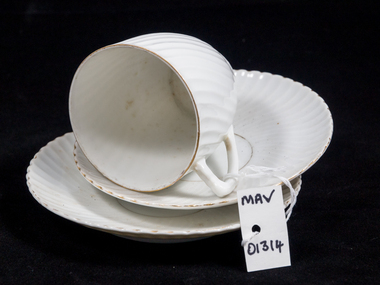
Kitchen Equipment, cup, 2 saucers c1950, c1950
... A white china cup with 2 saucers c1950 commonly used by post World War 2 residents of the City of Moorabbin After World War 2 more market gardens were sold in allotments to the returning soldiers and the population of the City of Moorabbin increased dramatically. kitchen equipment, crockery, post war settlers, city of moorabbin, bentleigh, cheltenham, highett, tea sets, Japan White china cup and 2 two saucers c1950 Kitchen Equipment, cup, 2 saucers c1950 ...A white china cup with 2 saucers c1950 commonly used by post World War 2 residents of the City of MoorabbinAfter World War 2 more market gardens were sold in allotments to the returning soldiers and the population of the City of Moorabbin increased dramatically. White china cup and 2 two saucers c1950Japankitchen equipment, crockery, post war settlers, city of moorabbin, bentleigh, cheltenham, highett, tea sets, -
Glenelg Shire Council Cultural Collection
Souvenir - China Sandwich Tray - Portland Souvenir, n.d
... Front: 'BOTANICAL GARDENS PORTLAND, VICTORIA' Back: Red makers stamp 'Opaline glazed china OGC Made in Japan'...Front: 'BOTANICAL GARDENS PORTLAND, VICTORIA' Back: Red makers stamp 'Opaline glazed china OGC Made in Japan' White china sandwich tray, coloured decal of Botanic Gardens Portland, gold rim. ...White china sandwich tray, coloured decal of Botanic Gardens Portland, gold rim.Front: 'BOTANICAL GARDENS PORTLAND, VICTORIA' Back: Red makers stamp 'Opaline glazed china OGC Made in Japan' -
 Orbost & District Historical Society
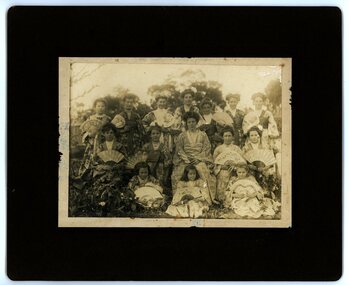
Photograph - 2 group photos, Mikado Theatre Cast, C. 1950s
... garden. Photos on dark grey card. 3384.1 Black and white photo of a group of women and girls in Japanese costumes. 3384.2 Black and white photo of 3 women dressed in Japanese costumes....garden. Photos on dark grey card. 3384.1 Black and white photo of a group of women and girls in Japanese costumes. 3384.2 Black and white photo of 3 women dressed in Japanese costumes. ...These 2 photos relate to the staging of the opera "The Mikado" in Orbost. This opera was staged by Fred Herbert. Circa 1950's Most likely staged outdoors.These photographs are significant because they represent an important part of local Orbost cultural activity. A local musical group staged several theatrical productions including 'Hiawatha' and 'The Mikado'Two black and white photos of the same event. Both photos posed out of doors in a garden. Photos on dark grey card. 3384.1 Black and white photo of a group of women and girls in Japanese costumes. 3384.2 Black and white photo of 3 women dressed in Japanese costumes.nonethe mikado, orbost, opera -
Glenelg Shire Council Cultural Collection
Book, Walter Tyndale, Japan and the Japanese, 1910
... Japan travel social life customs Front: Label on inside front cover. 'Portland Free Library Museum and Literary Institute' etc. purchased 6.4.14 (1914) Light blue, cloth-covered covers and spine. Text and graphics in gold. Coloured illustration on front cover-garden ...Light blue, cloth-covered covers and spine. Text and graphics in gold. Coloured illustration on front cover-garden scene. 32 coloured illustrations by the author.japan, travel, social life, customs -
Glen Eira Historical Society
Document - Howitt Road, 32, Caulfield North, Fooks House
... garden. Fooks House Howitt Road Caulfield City of Glen Eira Fooks Ernest Krimper Shulim Fooks Noemi Kaldor Erwin Kagan Anatol Rosh Robert Feldhagen Michael A Holgar John Holgar Helena S and S Susskind Pty Ltd Fuchs Ernest Architectural styles Traditional Japanese architecture Architects Caulfield modernists Historic buildings Australian House and Garden Sievers Wolfgang Architectural features Document Howitt Road, 32, Caulfield North, Fooks House ...A copy of the National Trust of Australia’s (Victoria) twelve page Classification Report on Fooks House. The report gives a very detailed description and assessment of the property and includes photocopies of two photographs of the interior of the house, a copy of a photograph of the house exterior and a copy of a plan of the house and its garden.fooks house, howitt road, caulfield, city of glen eira, fooks ernest, krimper shulim, fooks noemi, kaldor erwin, kagan anatol, rosh robert, feldhagen michael a, holgar john, holgar helena, s and s susskind pty ltd, fuchs ernest, architectural styles, traditional japanese architecture, architects, caulfield modernists, historic buildings, australian house and garden, sievers wolfgang, architectural features -
 Bendigo Military Museum
Photograph - PHOTOGRAPH, JAPAN
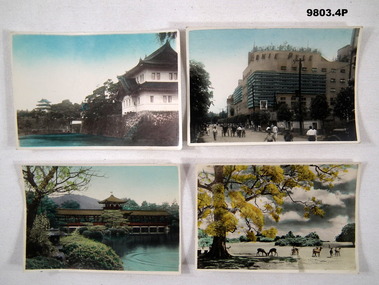
... Colour photograph of a Japanese style building within a garden which features a lake. ...Colour photograph of a Japanese style building within a garden which features a lake. ...2. The Ernie Pyle Theatre was named after the American War correspondent who was killed in action during WW2. Part of the Bennetts Collection. See Catalogue No. 9726P for details of service for "Alva Marie Bennetts"., 1. Colour photograph of a Japanese style building facing a lake, second building in the background. White border around photograph. 2. Colour photograph of a street scene. Pedestrians on road fronting a multi story building. White border around photograph. 3. Colour photograph of a Japanese style building within a garden which features a lake. White border around photograph. 4. Colour photograph of a rural scene. Deer grazing in an open field. Large tree on LHS. White border around photograph.1. Handwritten in black ink on back: "The Imperial Palace". 2. Handwritten in black ink on back: Information explaining the naming of the building (Ernie Pyle Theatre).bennetts collection, alva bennetts, photographs, japan, ww2, ernie pyle. -
 Bendigo Military Museum
Photograph - PHOTOGRAPHS, BCOF, Elton Fox studios, 1946 - 50
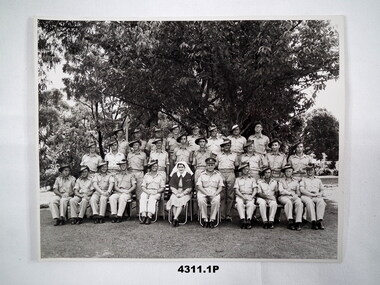
... Japan post WW2. These two photos are possibly pre BCOF or after. Owen is 2nd from the right 2nd row in .1) 3rd from the left in rear row .2) Refer back to Cat No 4310P. photographs BCOF .1) Photo B & W shows a group of 28 soldiers and one nurse sitting/standing in a garden setting. ...The items relate to William H Owen with BCOF in Japan post WW2. These two photos are possibly pre BCOF or after. Owen is 2nd from the right 2nd row in .1) 3rd from the left in rear row .2) Refer back to Cat No 4310P..1) Photo B & W shows a group of 28 soldiers and one nurse sitting/standing in a garden setting. On rear are the photographers details. .2) Photo B & W showing a group of 28 soldiers and one nurse sitting/standing with a building in the background with "Common Room" on the door.photographs, bcof -
 Eltham District Historical Society Inc
Photograph - Digital Photograph, Marguerite Marshall, Former home of Professor William MacMahon Ball, York Street, Eltham, 24 May 2007
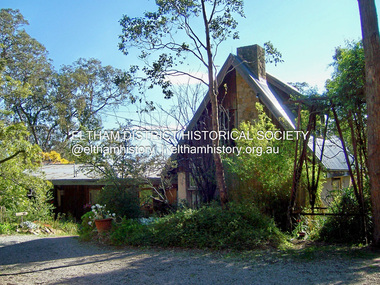
... garden design. Mac (as he was usually called), who was the son of a Church of England minister, was born in Casterton, Victoria in 1901 and died in 1986. In 1945 he helped establish the United Nations, as political consultant to the Australian Delegation at the San Francisco Conference.3 Then in 1946 Mac was appointed British Commonwealth Representative on the Allied Council for Japan, which is recorded in detail in his diary.4 In 1948 Mac led an Australian Government Goodwill Mission to South East Asia. ...garden design. Mac (as he was usually called), who was the son of a Church of England minister, was born in Casterton, Victoria in 1901 and died in 1986. In 1945 he helped establish the United Nations, as political consultant to the Australian Delegation at the San Francisco Conference.3 Then in 1946 Mac was appointed British Commonwealth Representative on the Allied Council for Japan, which is recorded in detail in his diary.4 In 1948 Mac led an Australian Government Goodwill Mission to South East Asia. ...Situated at the eastern end of York Street, Eltham, 'Shinrone', the former home of Professor William (Mac) MacMahon Ball was one of the first in the Shire of Eltham to incorporate mud-brick. Professor MacMahon Ball, a political scientist, writer, broadcaster and diplomat and family moved to York Street, Eltham in 1945 into a timber cottage built around the 1890s and in poor repair. Mac asked Alistair Knox to renovate the home and he expanded the living area and added verandahs. In 1948 Montsalvat artist and sculptor Sonia Skipper supervised the building of most of the mud-brick studio. Neighbour Gordon Ford made the mud-bricks. Mac also asked John Harcourt, who had worked with him as a journalist in shortwave broadcasting, to build a pise (rammed earth) and stone addition to the largely timber house. Harcourt built two bedrooms - including an attic bedroom - a balcony with a shower and toilet, a nd a fireplace and chimney of local stone. Published: Nillumbik Now and Then / Marguerite Marshall 2008; photographs Alan King with Marguerite Marshall.; p141 At the eastern tip of York Street, Eltham, stands Shinrone, the former home of one of Australia’s intellectual leaders. Professor William Macmahon Ball, was one of the first to bring Asia as a foreign policy issue to the Australian public.1 He was a political scientist, writer, broadcaster and diplomat. The house was one of the first in Eltham Shire to incorporate mud-brick,2 because of the acute shortage of building materials after World War Two. Its novice builders later become leaders in Eltham’s built and garden design. Mac (as he was usually called), who was the son of a Church of England minister, was born in Casterton, Victoria in 1901 and died in 1986. In 1945 he helped establish the United Nations, as political consultant to the Australian Delegation at the San Francisco Conference.3 Then in 1946 Mac was appointed British Commonwealth Representative on the Allied Council for Japan, which is recorded in detail in his diary.4 In 1948 Mac led an Australian Government Goodwill Mission to South East Asia. However, Mac was perhaps most successful as an academic and public speaker.5 He was a commentator on the Australian Broadcasting Commission, from the early 1930s to the early 1960s. He was also Controller of the Short-Wave Broadcasting Unit during World War Two, which later became Radio Australia. From 1923 he taught at The University of Melbourne, then became foundation Professor of Political Science in 1949 and was Chair until his retirement in 1968.6 In 1942, as the government expected a Japanese invasion, Mac’s wife Katrine and their only child Jenny, moved from Kew to Eltham as temporary evacuees. However Mac and Katrine lived in Eltham for almost the rest of their lives. After staying with friends, they rented a house in Reynolds Road, where, as it was wartime, they needed to keep horses for transport and a cow and poultry for milk and eggs. In 1945 the family moved to the house at York Street, which was then a timber cottage, built around the 1890s and in poor repair. The underground well, cellar and part of the garden are all that remain of what stood on the original 18 acre (7.3ha) allotment. Thanks largely to Katrine’s hard work, the house was gradually renovated and extended. The long rambling house was partially built by several young neighbours, who were inspired by the cheap mud-brick and stone building style of Montsalvat, the Eltham artists’ colony. Mac asked Alistair Knox to renovate Shinrone, named after an Irish village near Katrine’s family home. Knox later popularised the mud-brick style of house construction, for which Eltham became known. He expanded the living area and added verandas. In 1948 Montsalvat artist and sculptor Sonia Skipper supervised the building of most of the mud-brick studio. Another neighbour, Gordon Ford, who was to have a major influence on the Australian garden style, made the mud-bricks. Mac also asked John Harcourt, who had worked with him as a journalist in short-wave broadcasting, to build a pisé (rammed earth) and stone addition to the largely timber house. Harcourt built two bedrooms – including an attic bedroom – a balcony with a shower and toilet, and a fireplace and chimney of local sandstone. With pioneering work naturally came mistakes, including one particularly dramatic incident when Harcourt was building walls with unsupported sections. Jenny Ellis, Mac’s daughter, remembers being awakened from sleep by a thundering shudder. The wall of her room had fallen down – fortunately away from her! In 1950 artist Peter Glass – another neighbour and later landscape designer – built Katrine a mud-brick pottery. As a result, the house features at one end Harcourt’s characteristic steep gable roof, while at the other the flatter construction characteristic of Knox. Mac referred to the home as the Eltham ‘experimental building site’.7 Surprisingly, the combination works, perhaps partly because it has the warm inviting feel of timber, mud-brick and stone.This collection of almost 130 photos about places and people within the Shire of Nillumbik, an urban and rural municipality in Melbourne's north, contributes to an understanding of the history of the Shire. Published in 2008 immediately prior to the Black Saturday bushfires of February 7, 2009, it documents sites that were impacted, and in some cases destroyed by the fires. It includes photographs taken especially for the publication, creating a unique time capsule representing the Shire in the early 21st century. It remains the most recent comprehenesive publication devoted to the Shire's history connecting local residents to the past. nillumbik now and then (marshall-king) collection, eltham, alistair knox, gordon ford, john harcourt, mudbrick construction, pise construction, professor macmahon ball, shinrone, sonia skipper, york street -
 Warrnambool and District Historical Society Inc.
Booklet, Air Raid Precautions, 1941
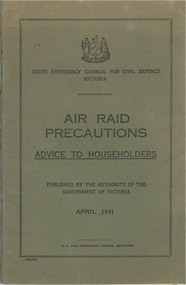
... garden shelters and risks from air raids. It contains the relevant siren signals which denote different types of events and explains in detail various aspects of preparing for possible attack. There was discussion about issues such as evacuation of children should such an event occur with the focus primarily on the larger centres such as Geelong and Melbourne. From 1942 the number of air attacks increased mainly from Japan...garden shelters and risks from air raids. It contains the relevant siren signals which denote different types of events and explains in detail various aspects of preparing for possible attack. There was discussion about issues such as evacuation of children should such an event occur with the focus primarily on the larger centres such as Geelong and Melbourne. From 1942 the number of air attacks increased mainly from Japan ...This booklet was published on the recommendation of the Commonwealth government as part of a plan to offer protection to the people in the event of air strikes. Local councils and individuals were called to help to protect themselves in taking precautions,. The booklet itself sets out action to be taken in the event of an air raid happening, lighting restrictions fire prevention, refuge rooms and garden shelters and risks from air raids. It contains the relevant siren signals which denote different types of events and explains in detail various aspects of preparing for possible attack. There was discussion about issues such as evacuation of children should such an event occur with the focus primarily on the larger centres such as Geelong and Melbourne. From 1942 the number of air attacks increased mainly from Japan on the northern and western parts of Australia including over 60 on Darwin. Attacks continued into 1943 and it wasn’t until later in that year that the Prime Minister, John Curtin announced that the threat of invasion had passed.While the link to Warrnambool’s history is tenuous, it was a government publication to all persons in the state of Victoria in 1941.This item relates to a significant period in Australia’s history. All Australians were affected by the war. It has historical and scientific or research interest as it gives a number of diagrams and possible plans and the effectiveness of same. Olive green soft card cover with black text. 36 pages, with 2 extra pages depicting plans for shelters pasted inside back cover. Victorian coat of arms at top of cover.April 1941. H. E. Daw, Government printer. Forward by Sir John Harris KBE MLC Minister of Public Instruction and Public Healthhistory of warrnambool, air raid precautions 1941 -
 Buninyong & District Historical Society
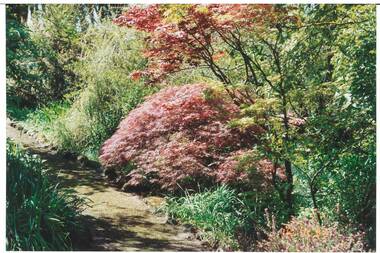
Photograph - Original Colour Photograph, Ann Beggs Sunter, Gardens at Lal Lal House, Yendon, October 1993
... Colour photo part of Garden at Lal Lal House, Yendon, cottage-style garden, gravel path curving to left, Japanese Maple with autumn foliage centre....Lal Lal House Yendon garden Fisken Colour photo part of Garden at Lal Lal House, Yendon, cottage-style garden, gravel path curving to left, Japanese Maple with autumn foliage centre. ...Early settlers, Fisken family's dwelling.Colour photo part of Garden at Lal Lal House, Yendon, cottage-style garden, gravel path curving to left, Japanese Maple with autumn foliage centre.lal lal house, yendon, garden, fisken
