
Showing 116 items matching "king river"
-
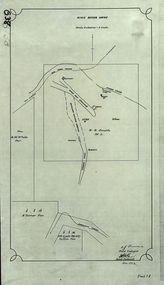 Federation University Historical Collection
Plan, King River Mine, 1932, 12/1932
... King River Mine, 1932......king river...Copy of a plan of King River Mine....mount lyell king river mining tasmania king river mine k.m. white h. turner k.j. finnacane blake Copy of a plan of King River Mine. ...Copy of a plan of King River Mine.mount lyell, king river, mining, tasmania, king river mine, k.m. white, h. turner, k.j. finnacane, blake -
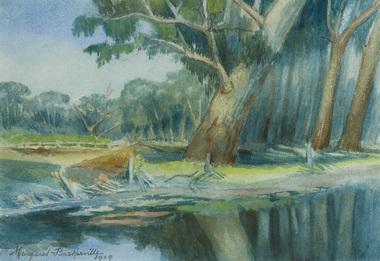 Bayside Gallery - Bayside City Council Art & Heritage Collection
Work on paper - watercolour, Margaret Baskerville, The King River at Wangaratta, 1908-09
... The King River at Wangaratta......king river...landscape river king river wangaratta trees watercolour margaret baskerville reflection bush watercolour The King River at Wangaratta Work on paper watercolour Margaret Baskerville ...watercolourlandscape, river, king river, wangaratta, trees, watercolour, margaret baskerville, reflection, bush -
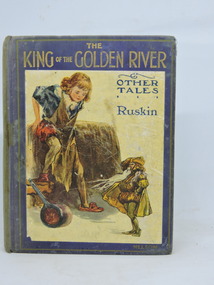 Kilmore Historical Society
The King of the Golden River, The King of the Golden River & Other Tales, 1908
... The King of the Golden River...The King of the Golden River & Other Tales....Fair condition. The King of the Golden River & Other Tales. The King of the Golden River John Ruskin, etc., etc. ...Collection of stories for children by John Ruskin, Nathaniel Hawthorne, Mrs. Craik, and others. Donated from Monica Smith's (nee Turner) childhood collection. Descendant of early Kilmore Business families the Morrisseys and Hartnells.Blue cloth-bound hardcover with colour plated pasted to front. Gilt border front cover. Very faded spine, some fading & staining back & front. Insect damage front & back flyleaves and half title page. Front hinge broken, binding loose. 159 pp. Fair condition.Inside front cover, 'Monica Turner', pencil, cursive part worn away, Front flyleaf, 'Monica Turner/from C. Whelan/August 7th 1909'children's literature, turner collection -
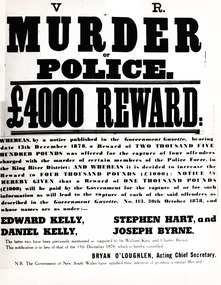 The Beechworth Burke Museum
Photograph - Poster - Reproduction, December 1878
... ...King River District...The men were charged with the murder of police in the King River District. The poster notes that the previous reward of £2500 offered on 13 December 1878 has been cancelled, and replaced with this increased reward money....The men were charged with the murder of police in the King River District. The poster notes that the previous reward of £2500 offered on 13 December 1878 has been cancelled, and replaced with this increased reward money. ...Poster created 13th December 1878 by the Government of New South Wales, offering a reward of £4000 for information leading to the capture of Edward Kelly, Daniel Kelly, Stephen Hart and Joseph Bryne. The men were charged with the murder of police in the King River District. The poster notes that the previous reward of £2500 offered on 13 December 1878 has been cancelled, and replaced with this increased reward money.The poster identities numerous Bushrangers who were being charged by the State Police Department in the late 19th Century. The large reward indicates the strong need and desire for information by the Police Department. The members of the Kelly Gang were hiding out in the Beechworth area.Black and white rectangular reproduced poster printed on paperObverse: V / R ./ MURDER / OF / POLICE. /£4000 REWARD:kelly album, wanted poster, reward, murder of police, edward kelly, daniel kelly, stephen hart, joseph byrne, £4000, king river district, 1878, kelly gang -
 Marysville & District Historical Society
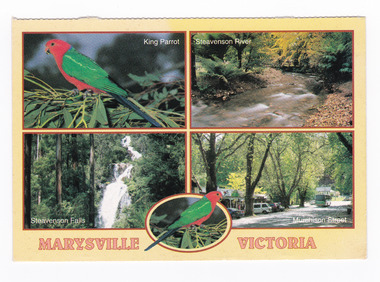
Postcard (item) - Colour postcard, Rose Stereograph Company, MARYSVILLE VICTORIA, Pre 2009
... king parrot...steavenson river...There is a photograph of a King Parrot, the Steavenson River, Steavenson Falls and Murchison Street in Marysville....MARYSVILLE VICTORIA/ King Parrot/ Steavenson River/ Steavenson Falls/ Murchison Street POST CARD The "Rose" Series/ De Luxe Proudly Printed in Australia Since 1880 Four Views of beautiful/ MARYSVILLE, VICTORIA, AUSTRALIA/ Photos: Ken Stepnall, Neil Cutts,/ Marysville Newsagengy AFFIX/ STAMP/ HERE/ Rose Series/ Post Card No./ 3523 ADDRESS/ POSTCODE Copyright Rose Stereograph Co., Glen Waverley, Victoria (03) 9560 7772...There is a photograph of a King Parrot, the Steavenson River, Steavenson Falls and Murchison Street in Marysville. ...A postcard with four colour photographs of natural attractions in and around Marysville in Victoria.A postcard with four colour photographs of natural attractions in and around Marysville in Victoria. The postcard was produced by the Rose Stereograph Co of Australia as a souvenir of Marysville.MARYSVILLE VICTORIA/ King Parrot/ Steavenson River/ Steavenson Falls/ Murchison Street POST CARD The "Rose" Series/ De Luxe Proudly Printed in Australia Since 1880 Four Views of beautiful/ MARYSVILLE, VICTORIA, AUSTRALIA/ Photos: Ken Stepnall, Neil Cutts,/ Marysville Newsagengy AFFIX/ STAMP/ HERE/ Rose Series/ Post Card No./ 3523 ADDRESS/ POSTCODE Copyright Rose Stereograph Co., Glen Waverley, Victoria (03) 9560 7772marysville, victoria, king parrot, steavenson river, steavenson falls, murchison street, postcard, souvenir, rose stereograph co -
 Lakes Entrance Historical Society
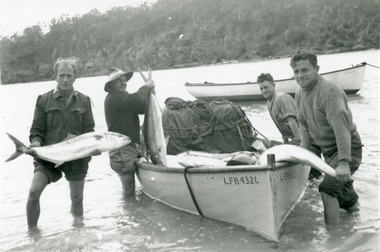
Photograph - King fishing at Pambula River, NSW c1950
... King fishing at Pambula River, NSW c1950...Black and white photograph of four men showing their catch of king fish from their lake boat in the Pambula River, NSW...Fishing Industry Boats and Boating Fish Jetties Black and white photograph of four men showing their catch of king fish from their lake boat in the Pambula River, NSW Photograph King fishing at Pambula River, NSW c1950 ...Black and white photograph of four men showing their catch of king fish from their lake boat in the Pambula River, NSWfishing industry, boats and boating, fish, jetties -
 Federation University Historical Collection
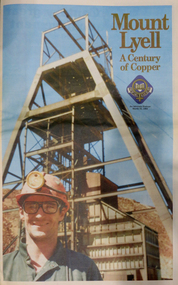
Newspaper, Mt Lyell: A Century of Copper, 22/03/2016
... ...king river...mt lyell copper mt lyell centenary keith faulkner mt lyell smelter renison goldfields james smith heemskirk zeehan dundas mt cleveland magnet mt read rosebery savage read balfour t.b. moore t. currie c.h. curtain f. harvey con lynch f.o. henry charles gould tom currie king river copper james crotty iron blow steve karlson bowes kelly lyell mining and roailway co. robert carl stricht penghana f.a. cutten lake margaret power station don clark queenstown eric reece hodfast mine pieman river golden gate gold mine r.m. murray a.h.p. moline frad jakin dave carswell awu australian workers union reg trudgian sulpher renison bell williamsford tullah waratah john pearton gormanston gormanston cork club north lyell mt lyell disaster mount lyell 32 page newspaper relating to the centenary of Mt Lyell copper. ...32 page newspaper relating to the centenary of Mt Lyell copper. mt lyell copper, mt lyell centenary, keith faulkner, mt lyell smelter, renison goldfields, james smith, heemskirk, zeehan, dundas, mt cleveland, magnet, mt read, rosebery, savage read, balfour, t.b. moore, t. currie, c.h. curtain, f. harvey, con lynch, f.o. henry, charles gould, tom currie, king river, copper, james crotty, iron blow, steve karlson, bowes kelly, lyell mining and roailway co., robert carl stricht, penghana, f.a. cutten, lake margaret power station, don clark, queenstown, eric reece, hodfast mine, pieman river, golden gate gold mine, r.m. murray, a.h.p. moline, frad jakin, dave carswell, awu, australian workers union, reg trudgian, sulpher, renison bell, williamsford, tullah, waratah, john pearton, gormanston, gormanston cork club, north lyell, mt lyell disaster, mount lyell -
 Federation University Historical Collection
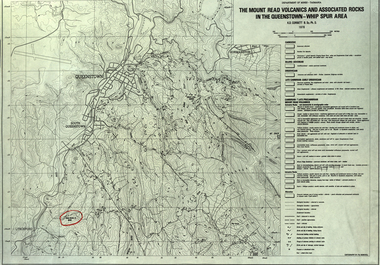
Map, The Mount Read Volcanics and Associated Rocks in the Queenstown - Whip Spur Area, 1978, 1978
... ...king river...department of mines tasmania volcanics mount read queesntown whip spur mining king river gormanston mt owen lynchford Contour map of the Queenstown area in Tasmania, Australia. ...Contour map of the Queenstown area in Tasmania, Australia.department of mines tasmania, volcanics, mount read, queesntown, whip spur, mining, king river, gormanston, mt owen, lynchford -
 Federation University Historical Collection
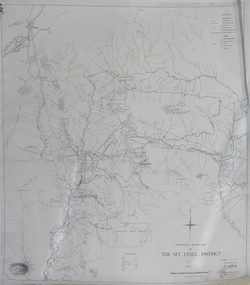
Map, Geological Sketch Map of the Mount Lyell District, 1935, 25-09-1935
... ...king river...mount lyell queenstown mining king river Copy of a plan showing mining leases around Mount Lyell, Tasmania. ...Copy of a plan showing mining leases around Mount Lyell, Tasmania.mount lyell, queenstown, mining, king river -
 8th/13th Victorian Mounted Rifles Regimental Collection
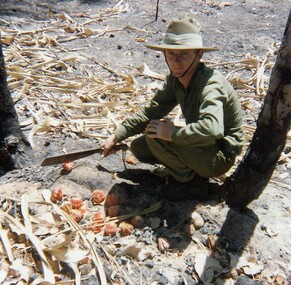
Photograph
... LCpl Van De Velde has a collection of Pandamus Palm nut prematurely ripened by fire near King River Northern Territory....LCpl Van De Velde has a collection of Pandamus Palm nut prematurely ripened by fire near King River Northern Territory. Photograph ...In 1988, as part of a Defence of Mainland Australian policy, defence of facilities of strategic importance in northern Australia were allocated to Army Reserve units. ‘A’ Squadron was allocated the defence of Tindal Air Force base located 15 KM outside Katherine in Northern Territory. Consequently the Squadron deployed on Exercise ‘Northern Explorer’ to gain first-hand knowledge of operating conditions for mounted and dismounted patrolling in the area.Lance Corporal R. Van De Velde, ' A ' Squadron 8/13 VMR during Exercise ' Northern Explorer' September 1988. LCpl Van De Velde has a collection of Pandamus Palm nut prematurely ripened by fire near King River Northern Territory. -
 Bendigo Historical Society Inc.
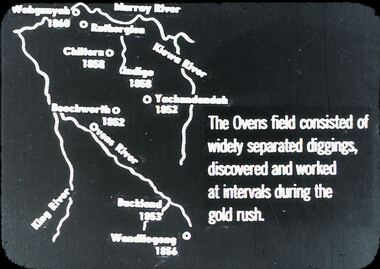
Slide - DIGGERS & MINING: THE DIGGINGS - THE DIGGERS
... Slide depicts: Murrey River, Kiewa River, Ovens River, King River. The Ovens Field consisted of widely separated diggings, discovered and worked at intervals during the gold rush. ...Slide depicts: Murrey River, Kiewa River, Ovens River, King River. The Ovens Field consisted of widely separated diggings, discovered and worked at intervals during the gold rush. ...Diggers & Mining. The Digging - The Diggers. Slide depicts: Murrey River, Kiewa River, Ovens River, King River. The Ovens Field consisted of widely separated diggings, discovered and worked at intervals during the gold rush. Markings: 23 994.LIF:6. Used as a teaching aid.hanimounteducation, tertiary, goldfields -
 Victorian Aboriginal Corporation for Languages
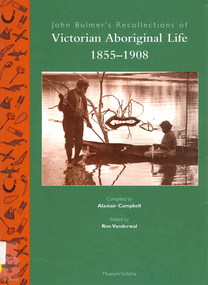
Book, Ron Vanderwal, John Bulmer's recollections of Victorian Aboriginal life, 1855-1908
... ...King Charley...Snowy River...Gunai Kurnai Gippsland Lake Tyers Lakes Entrance King Charley Snowy River Ellen Hood Sarah Moffat Lance McDougall Kassie McDougall Tom Foster Alec McCrae Nellie Blair John Bulmer Victorian history Indigenous social life kinship religion and mythology bush foods maps, b&w photograph, word lists, tables John Bulmer spent forty years of his life as missionary to Aboriginal people in Victoria, in 1855 devoting his activities to communities on the Murray, but most of his life was spent at Lake Tyers where he established a Church of England mission in 1862, In his later years he wrote a series of thirteen papers in which he recorded his observations on the life and times of the people to whom he ministered. ...John Bulmer spent forty years of his life as missionary to Aboriginal people in Victoria, in 1855 devoting his activities to communities on the Murray, but most of his life was spent at Lake Tyers where he established a Church of England mission in 1862, In his later years he wrote a series of thirteen papers in which he recorded his observations on the life and times of the people to whom he ministered. Over a period of several years Alistair Campbell transliterated the manuscripts, altering a little but retaining the flavour of the original text.maps, b&w photograph, word lists, tablesgunai kurnai, gippsland, lake tyers, lakes entrance, king charley, snowy river, ellen hood, sarah moffat, lance mcdougall, kassie mcdougall, tom foster, alec mccrae, nellie blair, john bulmer, victorian history, indigenous social life, kinship, religion and mythology, bush foods -
 Wangaratta High School
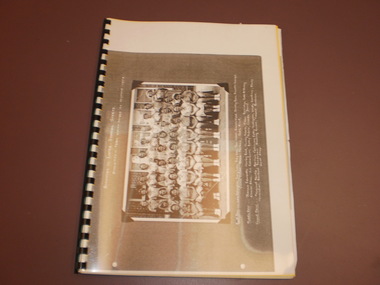
WHS Magazine -Korrumbeia, 1952
... Korrumbeia is Victorian aboriginal term meaning restful river/creek (Kurrabi; creek, Umina; rest, Beeia; river) This is a reference to the Ovens and King rivers merging in Wangaratta, and the fact that WHS houses are named after local waterways....Korrumbeia is Victorian aboriginal term meaning restful river/creek (Kurrabi; creek, Umina; rest, Beeia; river) This is a reference to the Ovens and King rivers merging in Wangaratta, and the fact that WHS houses are named after local waterways. ...This is the transition year as the Wangaratta High school magazine is renamed to Korrumbeia. Korrumbeia is Victorian aboriginal term meaning restful river/creek (Kurrabi; creek, Umina; rest, Beeia; river) This is a reference to the Ovens and King rivers merging in Wangaratta, and the fact that WHS houses are named after local waterways.Black and white photocopy of the 1952 edition of Korrumbeia featuring a large image of the interschool sports athletics team -
 Melbourne Tram Museum
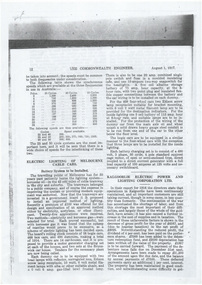
Document - Photocopy, The Commonwealth Engineer, "Electric Lighting of Melbourne Cable Cars", "Electric Lighting for Melbourne Trams", 1917
... Also has an item about King River hydro electric power and the standardisation of the electrical industry....Also has an item about King River hydro electric power and the standardisation of the electrical industry. ...Photocopy of an article from The Commonwealth Engineer, dated 1/8/1917, titled "Electric Lighting of Melbourne Cable Cars". Describes the battery system, the number of cars, the use of a motor generator at each depot, the lamps and the system on each car. Also has a start of a short item on the Kalgoorlie Electric Tramways Annual report. Short report in the same journal, 1/11/1917 titled Electric Lighting for Melbourne Trams", about a contract issued by the Tramway Board to the General Electric company for approximately 40,000 pounds. Also has an item about King River hydro electric power and the standardisation of the electrical industry.trams, tramways, cable trams, tramcars, lights, depots, general electric -
 Lakes Entrance Historical Society
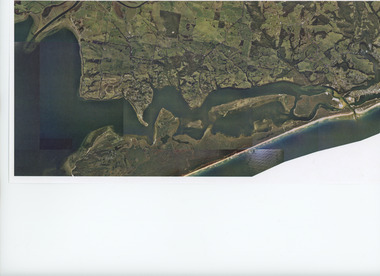
Photograph - Aerial view of Gippsland Lakes/Entrance to Tambo River c1960, Gippsland Ports, 2006 c
... Colour aerial photograph showing the entrance to Gippsland Lakes from Bass Strait westward to Reeves Channel Shaving Point at Metung through Lake King to Tambo River Gippsland Lakes Victoria...Aerial Photograph Waterways Township Topography Lakes Entrance Colour aerial photograph showing the entrance to Gippsland Lakes from Bass Strait westward to Reeves Channel Shaving Point at Metung through Lake King to Tambo River Gippsland Lakes Victoria Photograph Aerial view of Gippsland Lakes/Entrance to Tambo River c1960 Gippsland Ports ...Colour aerial photograph showing the entrance to Gippsland Lakes from Bass Strait westward to Reeves Channel Shaving Point at Metung through Lake King to Tambo River Gippsland Lakes Victoriaaerial photograph, waterways, township, topography, lakes entrance -
 Wodonga & District Historical Society Inc
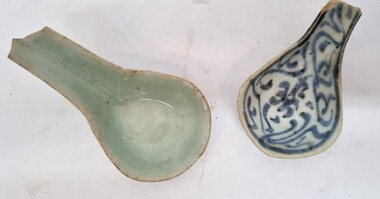
Functional object - Chinese Ceramic Spoons
... However, a number settled in the area as merchants, hawkers and market gardeners in surrounding towns including Wodonga, the Ovens, King, Buffalo River and Kiewa Valleys. They also rented lands and established themselves in the hops and tobacco farming industries. ...However, a number settled in the area as merchants, hawkers and market gardeners in surrounding towns including Wodonga, the Ovens, King, Buffalo River and Kiewa Valleys. They also rented lands and established themselves in the hops and tobacco farming industries. ...During the Victorian goldrushes of the 1850s thousands of Chinese migrants arrived to seek their fortunes. At that time many came to the lucrative gold fields of Northeast Victoria. After the Gold rush, many Chinese migrants returned home. However, a number settled in the area as merchants, hawkers and market gardeners in surrounding towns including Wodonga, the Ovens, King, Buffalo River and Kiewa Valleys. They also rented lands and established themselves in the hops and tobacco farming industries. These spoons were found by Mr Robert Black when he was ploughing a paddock on his farm in Kergunyah, Victoria in the 1930s.2 small ceramic Chinese spoons. Spoon 1 has a clear light green glaze. Spoon 2 is decorated with a blue painted pattern.chinese immigration to victoria, chinese market gardens, chinese migration northeast victoria -
 Wangaratta RSL Sub Branch
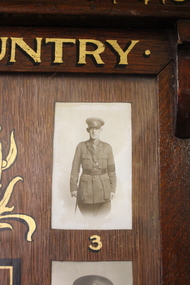
Honour Board, Killawarra State School, C1915
... The latter was 1 of 6 lives lost when they drowned in the disastrous floods of the Ovens and King Rivers on 7/6/1917....The latter was 1 of 6 lives lost when they drowned in the disastrous floods of the Ovens and King Rivers on 7/6/1917. A timber and glass framed Honour Board containing 15 names and 11 black and white photographs of teachers and past students of Killawarra State School who enlisted for military service during World War 1. ...WW1 Killawarra State School 1914-1919 Honour Board contains the names and photographs of teachers and past students who enlisted for military service during World War 1. Owen Francis Private 68800; William Francis Robertson,Sergeant 981/Lieutenant KIA 7/6/1917: Lubin James Robertson,MC and Croix de Guerre L/Cpl 980/Lieutenant; Christopher George Everitt 5882 Died of Wounds 26/4/1918; James Samuel Everitt 3319 KIA 18/7/1916; William John Rhodes 917, Henry Rhodes 2779, Robert Ernest Payne 5215,KIA 15/4/1918; Joseph Adams 10296, Albert Reginald Coppin 57084, Thomas Rhodes, Reserve - Enlisted 15/7/1915 did not embark - discharged medically unfit on 29/4/1916 due to meningitis and lumbago, Henry Sumpton 1827, James Joseph Kellow 6836, William Patrick Toohey 1750 and David William Quinton Clarke 44233 School Teacher Enlisted 15/5/1916 and discharged on 11/7/1916 due to urgent family reasons. Robert "Ernie" PAYNE was a cousin to William,Henry and Thomas RHODES. The latter was 1 of 6 lives lost when they drowned in the disastrous floods of the Ovens and King Rivers on 7/6/1917.A timber and glass framed Honour Board containing 15 names and 11 black and white photographs of teachers and past students of Killawarra State School who enlisted for military service during World War 1. Following the closure of the school the Honor Board was donated to the Wangaratta RSL Sub Branch. In 2018 the community of Killawarra sought the loan of the Honour Board for display in the CFA/Community Hall.Wooden Honour Board containing fifteen names listed in the centre surrounded by 11 numbered photographs.Top - "Killawarra State School/Roll of Honour/For King & Country" Bottom - "The Great War 1914 to 1919"killawarra state school, honour board ww1 -
 Wodonga & District Historical Society Inc
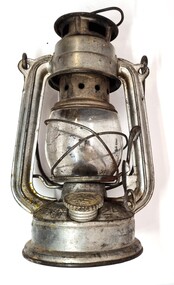
Domestic object - Kerosene Lantern
... However, a number settled in the area as merchants, hawkers and market gardeners in surrounding towns including Wodonga, the Ovens, King, Buffalo River and Kiewa Valleys. They also rented lands and established themselves in the hops and tobacco farming industries. ...However, a number settled in the area as merchants, hawkers and market gardeners in surrounding towns including Wodonga, the Ovens, King, Buffalo River and Kiewa Valleys. They also rented lands and established themselves in the hops and tobacco farming industries. ...During the Victorian goldrushes of the 1850s thousands of Chinese migrants arrived to seek their fortunes. At that time many came to the lucrative gold fields of Northeast Victoria. After the Gold rush, many Chinese migrants returned home. However, a number settled in the area as merchants, hawkers and market gardeners in surrounding towns including Wodonga, the Ovens, King, Buffalo River and Kiewa Valleys. They also rented lands and established themselves in the hops and tobacco farming industries. Items of Chinese origin made their way into many households. Importation of Chinese mass produced items such as this lantern continued well into the 20th century and were common domestic items across Australia before households were connected to electricity.This item is representation of kerosene / paraffin lamps used throughout Australia to provide lighting inside and outdoors prior to the widespread availability of electricity.A small hurricane lamp with a rounded tank and small carry handle attached to the top. A larger handle is also attached at the top of the frame. It has a lever to open the glass tank. It has a metal base which is filled with kerosene. It has a screw knob to open the kerosene receptacle. The metal hood also has vents. The Chinese characters around the base translate to "Shanghai Guanghuaheng".Around base : Chinese characters. On top : "Made in China KWANG HWA"kerosene lamp, domestic appliances, chinese artefacts -
 The Beechworth Burke Museum
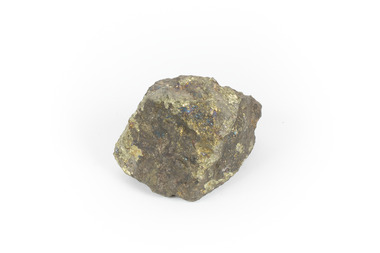
Geological specimen - Chalcopyrite
... The environmental impacts from this complex of mines are extensive, with waste tailings and heavy metal contamination flowing directly into the King and Queen River catchments. In 1954, the eminent Australian historian, Geoffrey Blainey, published 'The Peaks of Lyell' which delves into the history of the 1912 North Mount Lyell Disaster....The environmental impacts from this complex of mines are extensive, with waste tailings and heavy metal contamination flowing directly into the King and Queen River catchments. In 1954, the eminent Australian historian, Geoffrey Blainey, published 'The Peaks of Lyell' which delves into the history of the 1912 North Mount Lyell Disaster. ...This specimen originated from Mount Lyell on the west coast of Tasmania, where a large group of open cut and underground copper-silver-gold mines began operating in 1883. Between 1893-1994, the Mt Lyell Mining and Railway Company were responsible for operations. The Mt Lyell copper-gold mines produce some excellent crystallised specimens of chalcopyrite and other minerals. The deposits are generally considered to be of Cambrian volcanic origin, but there are indications of Devonian granitic influence on the ores, plus local remobilisation during Devonian deformation. Over 120 million tonnes of ore was produced from several workings, including the main Prince Lyell mine and the North Lyell mine, which was also of great importance. The Mount Lyell mines have a long history of human and environmental disasters, including the 1912 North Lyell fire that killed 42 miners, and two separate incidents in 2013 in which three people lost their lives. The environmental impacts from this complex of mines are extensive, with waste tailings and heavy metal contamination flowing directly into the King and Queen River catchments. In 1954, the eminent Australian historian, Geoffrey Blainey, published 'The Peaks of Lyell' which delves into the history of the 1912 North Mount Lyell Disaster.Chalcopyrite does not contain the most copper in its structure relative to other minerals, but it is the most important copper ore since it can be found in many localities and occurs in a variety of ore types. The brassy-yellow colours in Chalcopyrite mean it is often confused with pyrites and gold, leading to use of the term, "fool's gold." Chalcopyrite has been the primary ore of copper since smelting began five thousand years ago. This specimen is part of a larger collection of geological and mineral specimens collected from around Australia (and some parts of the world) and donated to the Burke Museum between 1868-1880. A large percentage of these specimens were collected in Victoria as part of the Geological Survey of Victoria that begun in 1852 (in response to the Gold Rush) to study and map the geology of Victoria. Collecting geological specimens was an important part of mapping and understanding the scientific makeup of the earth. Many of these specimens were sent to research and collecting organisations across Australia, including the Burke Museum, to educate and encourage further study.This hand sized solid mineral specimen has shades of brass-yellow with spots of iridescent green-black tarnish. Chalcopyrite is a copper iron sulphide mineral and a major ore of copper common in sulphide veins and disseminated in igneous rocks. Chalcopyrite has a hardness of 3.5-4 on the Mohs Scale. It is a member of the tetragonal crystal system and has metallic lustre and opaque transparency.burke museum, beechworth, indigo shire, beechworth museum, geology, geological specimen, chalcopyrite, copper pyrites, copper mining, tasmanian geology, mount lyell, mount lyell mines, fools gold, mohs scale, crystals, minerals, historical geological collection, victorian geological survey, a.r.c selwyn, gold rush, van diemans land -
 Wangaratta Historical Society
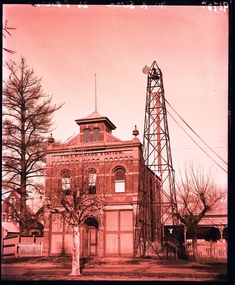
Wangaratta Historical Society
... Wangaratta in North East Victoria has a population of over 27 thousand people and is situated at the junction of the King and the Ovens Rivers. Agriculture has always been a big part of its history as well as education, health and manufacturing. ...Wangaratta in North East Victoria has a population of over 27 thousand people and is situated at the junction of the King and the Ovens Rivers. Agriculture has always been a big part of its history as well as education, health and manufacturing. ...The Wangaratta Historical Society Inc. (WHS) was established in 1959 and moved into its present home in the 1970s. Wangaratta in North East Victoria has a population of over 27 thousand people and is situated at the junction of the King and the Ovens Rivers. Agriculture has always been a big part of its history as well as education, health and manufacturing. The museum was originally a fire station built 1895 and included living quarters for its staff. The building is owned by the Rural City of Wangaratta who are great supporters of the WHS The museum was bequeathed 10,000 glass negatives from the late 1800s to the 1950s these were by the Vine & Thelma studios of mostly, portraits, weddings and historical photos. Also owned by the WHS is the Maianne Gibson crazy patchwork quilt made by a Wangaratta woman in the 1890s and now Heritage listed. This Quilt is housed in an specially controlled conditions. The Wangaratta Historical Society Museum was accredited in 2012 under the Museums Accreditation Program. -
 Mission to Seafarers Victoria
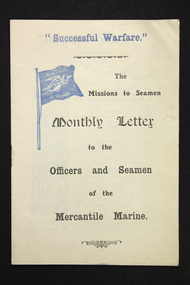
Flyer - Newsletter, Mission to Seafarers, "Successful Warfare" - The Missions to Seamen Monthly Letter to the Officers and Seamen of the Mercantile Marine, 1914-1918
... King George V. So this foyer predates 1919. An unusual example of newsletter circulated by the Missions to Seamen (UK) during WW1. The aim may well have been to boost morale but clearly targeting Merchant mariners. WW 1 Mercantile Marine service mercantile marine ww1 first world war great war Small paper and ink (2 colours, black and blue) 4 page stapled paper pamphlet/booklet. First page features some small black and white printed hand drawn graphics of a river ...The newsletter was published to address the Mercantile Marine primarily officers in the service. This is the number 19. The term "Merchant Navy" was coined in 1919 by King George V. So this foyer predates 1919.An unusual example of newsletter circulated by the Missions to Seamen (UK) during WW1. The aim may well have been to boost morale but clearly targeting Merchant mariners.Small paper and ink (2 colours, black and blue) 4 page stapled paper pamphlet/booklet. First page features some small black and white printed hand drawn graphics of a river mouth and a decorative angel or female. ww 1, mercantile marine service, mercantile marine, ww1, first world war, great war -
 Federation University Historical Collection
Document - Booklets, Books of sheet music, Mid 1900s
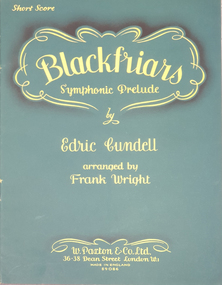
... Variations of 'The Shining River' by Edmund Rubbra for Solo B flat Cornet (Conductor). 7). 'Le Roi D'Ys' (The King of Ys) Overture by Edouard Lalo for Solo B flat Cornet (Conductor). 8). ...Variations of 'The Shining River' by Edmund Rubbra for Solo B flat Cornet (Conductor). 7). 'Le Roi D'Ys' (The King of Ys) Overture by Edouard Lalo for Solo B flat Cornet (Conductor). 8). ...Frank Wright was a renown resident of Smeaton, where he was born on 2 August 1901. He lived at Laura Villa, and attended Smeaton State School. His father William was a gold miner and his mother's name was Sarah. Their family won many singing and instrumental awards. Frank was tutored by Percy Code and was awarded a gold medal for the highest marks in the ALCM examinations in the British Colonies at the age of seventeen years. He became the Australian Open Cornet Champion by the age of eighteen. A year later, Frank conducted the City of Ballarat Band, and later the Ballarat Soldiers’ Memorial Band. He formed the Frank Wright Frisco Band and Frank Wright and his Coliseum Orchestra. These bands won many South Street awards, and Frank as conductor won many awards in the Australian Band Championship contest. In 1933 Frank Wright sailed to England to conduct the famous St Hilda’s Band and was later appointed Musical Director of the London County Council, where he organized many amazing concerts in parks, in and around the London district. He was made Professor of Brass and Military Band Scoring and conducted at the Guildhall of Music and Drama. Frank was often invited to adjudicate Brass Band Championships around Europe, in Australia, including South Street and in New Zealand. The Frank Wright Medal at the Royal South Street competition is awarded to an individual recognized as making an outstanding contribution to brass music in Australia.11 books of sheet music written by various composers but all arranged by Frank Wright. 1). 'Le Carnaval Romain' (The Roman Carnival) Overture by Berlioz for Solo B flat Cornet (Conductor). 2). 'Ida and Dot' Polka by F.H.Losey, for Soprano Cornet, 1st & 2nd Solo Cornet (Conductor), 3rd Cornet, Repiano B flat, 2nd Cornet, Solo Tenore E flat, 1st Tenor E flat, 2nd Tenor E flat, Euphonium B flat, Bass Trombone, 1st Baritone B flat, 2nd Baritone B flat, 1st Trombone, 2nd Trombone, Contre Bass E flat & Drums. The Pianoforte accompaniment was arranged by Frank Wright. 3). 'Trumpet Concerto' by Haydn. The Full Score with parts for a band of 25. 4). 'Diadem of Gold' Overture by G.Bailey for Solo B flat Cornet (Conductor). 5). 'The Frogs (of Aristophanes)' Overture for Solo B flat Cornet (Conductor), Short Score & Full Score arranged for brass band. 6). Variations of 'The Shining River' by Edmund Rubbra for Solo B flat Cornet (Conductor). 7). 'Le Roi D'Ys' (The King of Ys) Overture by Edouard Lalo for Solo B flat Cornet (Conductor). 8). 'Sovereign Heritage' Symphonic Overture by J.Beaver for Solo B flat Cornet (Conductor). 9). 'La Forza del Destino' (The Force of Destiny) Overture by Verdi - the Short Score. 10). 'Blackfriars' Symphonic Prelude by Edric Cundell - Short Score. 11). 'Diadem of Gold' Overture by G.Bailey - Short Score1). Pencil markings on page 1,4,5 &6. 9). Written in pen on front cover - Mr Geoffrey Hosier. 10). Written in pen on title page - All good wishes F.W. 29.x.'55frank wright, sheet music, le carnaval romain, berlioz, ida and dot polka, f.h. losey, trumpet concerto, haydn, diadem of gold overture, g. bailey, the frogs overture, granville bantock, the shining river, edmund rubbra, le roi d'ys overture, edouard lalo, sovereign heritage, j. beaver, la forza del destino overture, verdi, cornet, blackfriars symphonic prelude, eric cundell -
 Marysville & District Historical Society
Article (item) - Museum Victoria Australia Article, Museum Victoria Australia, Aboriginal Land, Unknown
... river...tonne-be-wong...toole-be-wong...donne-be-wong...mount riddell...ben cairn...donna buang...port phillip settlement...john batman...james dredge...port phillip protectorate for aborigines...duang wurrung...king...A brief history of the Kulin clan in Victoria. kulin clan great dividing range yarra river goulburn river tonne-be-wong toole-be-wong donne-be-wong mount riddell ben cairn donna buang port phillip settlement john batman james dredge port phillip protectorate for aborigines duang wurrung king parrot creek acheron river mitchellstown william le souef murchison woi wurrung boon wurrung warrandyte mordialloc little river william thomas acheron station mohican run john green mohican station badger creek healesville coranderrk black's spur christmas bush prostanthera lasianothos geringdah A brief history of the Kulin clan in Victoria. ...A brief history of the Kulin clan in Victoria.A brief history of the Kulin clan in Victoria.kulin clan, great dividing range, yarra river, goulburn river, tonne-be-wong, toole-be-wong, donne-be-wong, mount riddell, ben cairn, donna buang, port phillip settlement, john batman, james dredge, port phillip protectorate for aborigines, duang wurrung, king parrot creek, acheron river, mitchellstown, william le souef, murchison, woi wurrung, boon wurrung, warrandyte, mordialloc, little river, william thomas, acheron station, mohican run, john green, mohican station, badger creek, healesville, coranderrk, black's spur, christmas bush, prostanthera lasianothos, geringdah -
 Marysville & District Historical Society
Postcard (item) - Black and white postcard, Rose Stereograph Company, Talbot Drive, Marysville, Vic. No. 12, Taggerty River, 1913-1967
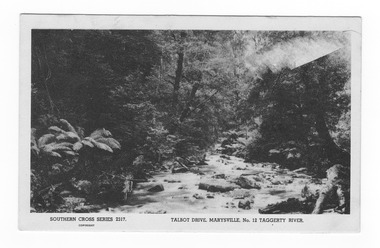
... Lady Talbot Drive is named after Lady Sarah Elizabeth, the wife of Sir Reginald Talbot, who was the Governor of Victoria from 25th April, 1904 to 6th July 1908. marysville victoria taggerty river postcard souvenir lady talbot drive sir reginald talbot sarah elizabeth talbot southern cross series 2317 POST CARD Correspondence Address "Kooringa"/ Marysville/ Monday Dear Gwen, Kids/ I do hope your missing me especially/ around morning & afternoon tea time./ Its a hard place here with tons to eat so/ I'll probably stagger back to 31 King St-/ awful thought. ...A postcard in a series produced by the Rose Stereograph Company in Victoria, Australia as a souvenir of Marysville.A black and white photograph taken along Lady Talbot Drive, Marysville, Victoria, of the Taggerty River. Lady Talbot Drive a 24 kilometer scenic rainforest car journey which passes a number of walks and waterfalls in the Yarra Ranges National Park. Lady Talbot Drive is named after Lady Sarah Elizabeth, the wife of Sir Reginald Talbot, who was the Governor of Victoria from 25th April, 1904 to 6th July 1908.POST CARD Correspondence Address "Kooringa"/ Marysville/ Monday Dear Gwen, Kids/ I do hope your missing me especially/ around morning & afternoon tea time./ Its a hard place here with tons to eat so/ I'll probably stagger back to 31 King St-/ awful thought. The weather has been beaut/ so far - it rained the first Sunday, last/ Wednesday, but otherwise has been O.K. Its/ just as well I didn't get my togs, Lorna, the/ pool is empty. I'd sure like a swim today/ though. Ive got to write a letter to my/ Honeybunch so I'd better finish. Goodbye Kids,/ Love/ Gwen.marysville, victoria, taggerty river, postcard, souvenir, lady talbot drive, sir reginald talbot, sarah elizabeth talbot, southern cross series, 2317 -
Federation University Historical Collection
Report, Port Fairy: Environmental/Physical Plan, 1999, 11/06/1999
... victorian tourisim industry tourism port fairy alumni port fairy folk festival griffith island portland pea soup mott's cottage mill's cottage port fairy lighthouse moyne river Report compiled by fivestudents of Tourism at University of Ballarat (later Federation University Australia) Port Fairy: Environmental/Physical Plan, 1999 Report Damien King Morag Marjoribanks Belinda Pearce Rebecca Plant Marc Wright ...Report compiled by fivestudents of Tourism at University of Ballarat (later Federation University Australia)victorian tourisim industry, tourism, port fairy, alumni, port fairy folk festival, griffith island, portland, pea soup, mott's cottage, mill's cottage, port fairy lighthouse, moyne river -
 Federation University Historical Collection
Book, Ballarat School of Mines Visitors' Book, 1879-1890, 1879-1890
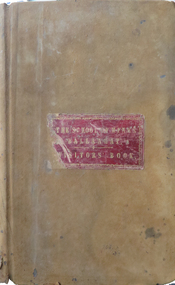
... King Accountant Adelaide, South Australia "see signature 6 leaves back" May 6 William Morley Wesleyan Minister Auckland, New Zealand May 6 Rainsford Ravin Wellington, New Zealand May 7 Frank E. Lawrence, Lake River...King Accountant Adelaide, South Australia "see signature 6 leaves back" May 6 William Morley Wesleyan Minister Auckland, New Zealand May 6 Rainsford Ravin Wellington, New Zealand May 7 Frank E. Lawrence, Lake River ...James Redmond Gilbert (sr) was born in 1837 at Hamilton, Ontario, Canada. He married Ellen Spouse. He , James Gilbert died on 26 July 1900 at Melbourne, and is buried at Boroondara Cemetery (Kew). J.R Gilbert lived at Running Creek (later Havilah) for some time, and during that time was employed in one of the bigger mines in the district. (Research by Ren at Havilah Research, 2019) Leatherbound ledger with hand written names, professions, residence and remarks relating to visitors to the Ballarat School of Mines. Sample Names: 1881 May 2 David Kerr Diamond Miner South Africa May 2 S. R. Dodds Diamond Miner South Africa May 3 Albert E. King Accountant Adelaide, South Australia "see signature 6 leaves back" May 6 William Morley Wesleyan Minister Auckland, New Zealand May 6 Rainsford Ravin Wellington, New Zealand May 7 Frank E. Lawrence, Lake River, Tasmania May 9 M. Richter Engineer Germany May 9 Dr Wilhelm Landall naturalist Berlin, Germany May 10 William Ralph Heaton Mercantile Birmingham May 11 Arthur I. Traill Grazier Llanpollen, New South Wales May 10 Marian Traill 1882 July 10 Arthur W.W. Brown London July 10 Benjamin Spargo Mining Mananger and owner Snowy Creek July 10 Thomas Cooke Miner Ballarat July 14 Robert H. Kenny July 14 Mr and Mrs Buston, [Indigo Planter?] Bengal, Indonesia July 14 Samuel H. Halker Ballarat July 14 Charles Phelan Talbot July 14 E. Walker Ballarat 1884 June 30 M.N. Cooper Dunedin, new Zealand June 30 Richard Hosking gardiner Gong Gong Well pleased with School June 30 Humphrey John Ballarat July 1 Cecily Gilbert Melbourne July 1 Florence Shrivall Melbourne July 1 [W.N. Marsh?] Colonial Secretary Hong Kong July 1 Louis Fause Engine Driver Dunolly July 1 John L. Bertram Blacksmith Melbourne July 1 Thomas Eardley Coachmaker London "Exceedingly obliged to Mr Oddie for a very pleasant instruction time spent in inspection of the various scientific appliances in the Ballarat School of Mines." (Donation 2/6) July 4 E. Goodwin [David?] Artist Spellbound July 4 W. Glumley Station Master Murtoa July July 4 James Thomas Miner Corrinondie, New Zealand "Very pleased with the School in all its branches. I hope to contribute to the specimen department. J.T." July 8 Robert Wall Engine Driver 1885 September 16 J.W. Springthorpe, M.D., Melbourne (very much pleased in every way) September 26 M. Oddie, Ballarat 1886 January 12 William Piekard, Leicester, England January 12 Robert Linford, Norwich, England January 12 H. Tipping, Draughtsman, Adelaide (Very instructive and should be taken advantage of by all who can) January 12 Fred H.K. Dreslecher, London (ditto) January 23 Walter Redgate, Manchester (ditto) April 7 Annie Bellingham, Richmond April 9 Fred Kruger, Landscape Photo, Geelong April 14 Mary Barry, Murtoa April 19 N.J. Tabuteau Accountant Napier, New Zealand April 19 George N. [Baroft?] Gentleman Cheshire, England April 21 Hon. George D'Almaine, Peer of England, London April 21 Lord Augustus Honour April 21 William Holt, South Melbourne April 21 H. Bartell, Gentleman, Smythes April 21 Fred Musgrove, Gentleman April 21 A. Chirnside, Squatter April 23 Alice Cravino, student, Buninyong April 24 East Melbourne Bicycle Club April 28 J. Kinnear, Kyneton April 28 J.P. Kinnear, Kyneton May 19 Bob Selby, Doctor, Ballarat May 19 J.W.M.. Quiggin, globe trotter, Picton (NS Wales) May 25 Arthur Night, Sutton Hotel, Ballarat (very fair) May 28 D. Kelly, attendant, China May 28 J. Kelly, schoolboy, China June 1 Joseph Jelbart, Blacksmith, Harrow September 9 David Ham, M.L.C. Ballarat ( A right to be pleased) September 9 J.J. Green, Merchant, Adelaide (Very much pleased with my visit to this intitiution it has my hearty sympathy and appreciation, Much pleased at what I have seen its value to the community) 9 December James H. Tappin, Agent, Ballarat (very pleased with instruction 1887 March 20 Thomas Bath Learmonth March 20 James R. Gilbert= Miner Running Creek March 20 C. Holtermann Out of business Adelaide 1890 21 May Mr and Mrs Fairchild, gentleman. Yarra house, Dalgety St, St Kildaballarat school of mines, visitors, j.w. springthorpe, chinese visitors, visitors' book, running creek, james redmond gilbert sr, havilah -
Federation University Historical Collection
Book - Book - Press Clippings, Ballarat University College/University of Ballarat School of Visual and Performing Arts, 1993 - 1999, 1993
... Rivers of China, Lord Wedgewood, Rick Chandler. James Charters, Matt Molony, Antoninino Atzori, Joseph, Len Bauska, Joseph and the Amazing Technicolour Dreamcoat, Damian Muller, Bert Labonte, Once a Catholic, Peta Brady, Fiddler on the Roof, King Richard III, The Seagull, Mr Men .3) 1995 - Point of Departure, Stags and Hens, Hansel and Gretel, Rob Knowles, The Would Be Gentlemen, SOund of Music, Barry Breen, The Bundle, Karl Hutton, Much Ado About Nothing, Len Bauska, Hamlet, Pajama Game, Peter Tulloch .4) 1996 Melissa Casey, The Wizard of Oz, Peter Tulloch, Libby Tanner, Rooted, Erard Concert Grand Piano, Atlantis. ...Rivers of China, Lord Wedgewood, Rick Chandler. James Charters, Matt Molony, Antoninino Atzori, Joseph, Len Bauska, Joseph and the Amazing Technicolour Dreamcoat, Damian Muller, Bert Labonte, Once a Catholic, Peta Brady, Fiddler on the Roof, King Richard III, The Seagull, Mr Men .3) 1995 - Point of Departure, Stags and Hens, Hansel and Gretel, Rob Knowles, The Would Be Gentlemen, SOund of Music, Barry Breen, The Bundle, Karl Hutton, Much Ado About Nothing, Len Bauska, Hamlet, Pajama Game, Peter Tulloch .4) 1996 Melissa Casey, The Wizard of Oz, Peter Tulloch, Libby Tanner, Rooted, Erard Concert Grand Piano, Atlantis. ...Blue cover book of press clippings. .1) 1993 - briar rabbit, brer rabbit, Libby Tanner, Lorrae Desmond, Cherry Orchard .2) 1994 - Bruce Widdop, Eureka, Rebellion, Aiden Fennessy, Steel Magnolias, Rumpilstiltskin, Tale of Two Cities, Peter Tulloch, Ring Round the Moon, Grainery Lane, Barnstorm Theatre, Rivers of China, Lord Wedgewood, Rick Chandler. James Charters, Matt Molony, Antoninino Atzori, Joseph, Len Bauska, Joseph and the Amazing Technicolour Dreamcoat, Damian Muller, Bert Labonte, Once a Catholic, Peta Brady, Fiddler on the Roof, King Richard III, The Seagull, Mr Men .3) 1995 - Point of Departure, Stags and Hens, Hansel and Gretel, Rob Knowles, The Would Be Gentlemen, SOund of Music, Barry Breen, The Bundle, Karl Hutton, Much Ado About Nothing, Len Bauska, Hamlet, Pajama Game, Peter Tulloch .4) 1996 Melissa Casey, The Wizard of Oz, Peter Tulloch, Libby Tanner, Rooted, Erard Concert Grand Piano, Atlantis. The Visit, Stella Axarlis, Me and My Girl, Our Country's Good, Three Billy Goats Gruff, Hold the Mayo, The Crucible, Chris Dickins, Stuart Pursell, Arts Academy .5) 1997 - Tempest at Loch Ard Gorge, Maelstrom, Angela Coad, Damian Muller, West Side Story, The Importance of Being Ernest, Mark Gambino, Brett Edgington, Cosi, Damian Muller, Leonard Bauska, Matthew Heenan, Amanda Sandwith, Bacchae, Richard DiGregorio, Roger Woodward, Peter Tulloch, Gavin Fenech, Bruce Widdop, Lola Montez, Tim Haymes, Tina Ford, Ross Jones .6) 1989 - Graeme Bird, Leanne Lettieri, Ballarat Symphony Orchestra, Christopher White, David Addenbrooke, Bruce Widdop, Chris Betts, John Garland, Allan Mann, John Sharpham, David Forrest, Warwick Stengards, Jan Davis, Wendy Morrison, Equus, Scott Cameron, Bryan Trueman, Peter Blizzard, Andrew Burnham, Peter Pilven, Chalk Circle, Tsou Nan-Chien, Ten Little Indians, Doug Wright, Stellarc, Chris Betts, Eric Lovett, Bob Allan, Doug Wright, Kaspar, Bill Levis, The Removalists, Liz Poklar, Goldfields Print Award, Margaret Sulikowski, Kathy Gamble, Maria Froia-Crump, Ian Hemmingway, Geoff Wallis .7) 1989 - Shirley Randall, Fred Sulikowski Fargher, Richard Jeziorney, Shane Lee, Neville Philpott, Val Lehman, Bill Levis, Hamp, Peter Ford, Shane Lee, Richard Akers, Peter Blizzard, Debbie Fraser, Shane Lee, Away, Genevieve Lacey, Pauline Coutts, Tsou Nan-Chien, Petrus Spronk, Debbie Fraser, Chris Betts, David Addenbrooke, Alan Peascod, John Crump, Deb Rosser, Michael Cook, Bruce Widdop, Jenny Trickey, Jennifer Marshall, Stellarc, Carboni, Stuart Matteson, Peter Sargeant retirement, Lyn Conellan .8) 1990 - Micehelle Tuddenham, Pauline Coutts, Anthony Horton, Claire Dale, Kryal Castle, Howard Tostivan, Simon Buckle, Blitz, STelarc, Hitz of the Blitz, Doug Wright, Nerissa Heath, Mieke Glickson, Ruth Greenburg, Peter SParkman, Allan Mann, Rachel Appleton, Michelle Tuddenham, Romeo and Juliet, Jennifer Pacey, Felicity Hay, Kristen Boys, Shane Lee, Norm Strange, Demolition Job, Merran Lisette, Charlotte's Web, Merran Hedbury, Richard Akers, Felicity Hay, Disco, Peter Harbison, Peter Clinch, Jeff Crispin, Cynthia Treadwell, Anagama Kiln, Debbie Lord, Sue Quinlan, Hedder Gabler, , Christine Hateley, Marilyn Chestnut, Geoff Crispen, Petrus Spronk, Peter Ashman, Country Heat, Bruce Widdop, Andrew Seary, Len Bauska, Christopher Pendlebury, Doug Wright, Frank Hurley, Peter Tulloch. Liz Blizzard .9) 1991 - Goldilocks and the Three Bears, Yvonne James, Doll's House, Liz Blizzard, Peter Blizzard, Elizabeth Tanner, Amanda Davies, Kimba Jeffries, Black Comedy and Public Eye, Peter Pilven, Macbeth, Richard Sutherland, Bruce Widdop, The Little Prince, The Would-be Gentleman, The Crucible, Warren Muschialli, Janet Dale, .10) 1992 - Deanne Clapton, Anthony Marsh, Alice in Wonderland, Bruce Widdop, The Beard, Fiona Bennett, Warren Muschialli, Orphans, Peter Blizzard, Red Riding Hood, Circus In a Suitcase, Frank Zappla, The Twelfth Night, Peta Brady, Street Angels, Lawrence Price, Donna Brunt, Jessi Watson, Too Much Punch for Judy, Miranda Crellin, Lyle Quick, Trevor Harris, Howard Tostivan, John Daykin, Barry Breen, The Paradise, Hansel and Gretel, Sandra Moon, Rosalind Lawson, Jason Wasley, The Paradise and The Passion, Simon Buckle, Sam Trinder, Doug Wright, .11) 1998 - Barnum, Skins, Marqui De Sade, Kangaroo Pie, Comedy of Errors, Manhatten, Nicholas Nickleby, Great White Way, Peer Gynt, Boys from Syracuse, Cancerto, Miranda Crellin, Ron McLeod, Alexandra Meerbach, Nathan Firmin, Chris Dickins, Christine Ward, Judith Roberts, Tim Arundell, Dom Phelan, Paul Thomas, Rose Tonkovic, Jon Peck, Andrew Page, Luke Doxey .12) 1999 - Pirates of Penzance, Phil Horwood, Adrian Barnes, Dennis Olsen, Kate Gorman, Nathan Firmin, Margaret Whitlam, Nadine Collins, Liz Gutt, Sara Brett, Kate McLennan, Dom Phelon, Midsummer Night's Dream, Bruce Widdop, Nadia Andary, Amy Maiden, Sing For Your Supper, Tania Burn, Under Milkwood, A month of Sundays, Matt Heyward, Dane Carpenter, Peter Tulloch, phil Crompton, Tim Haymes, David Haymes, Jenny Haymes, Barry Wemyss, Heather Kent, Monty Farag, Sancho de Silva, Jose da Costa, Cameron Sweatman, Ways and Means, Matt Heywood, Rebecca McGuiness, Michelle Pitcher, Peter Tullochperforming arts, visual arts, ballarat academy of performing arts, peter tulloch, bapa -
 Marysville & District Historical Society
Postcard (item) - Colour postcard, COTTAGE Riverside, Unknown
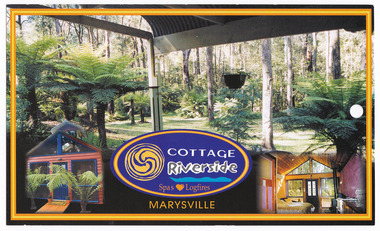
... Romantic self-contained Riverside Cottages on the Steavenson River Surrounded/ by Stateforest. Hand feed King Parrots from your luxury country Cottage./ A secluded peaceful and romantic getaway yet only 1.2km from main street. ...A colour postcard to advertise accommodation at Riverside Cottages in Marysville. marysville victoria australia riverside cottages accommodation postcard Romantic self-contained Riverside Cottages on the Steavenson River Surrounded/ by Stateforest. Hand feed King Parrots from your luxury country Cottage./ A secluded peaceful and romantic getaway yet only 1.2km from main street. ...A colour postcard to advertise accommodation at Riverside Cottages in Marysville.A colour postcard to advertise accommodation at Riverside Cottages in Marysville.Romantic self-contained Riverside Cottages on the Steavenson River Surrounded/ by Stateforest. Hand feed King Parrots from your luxury country Cottage./ A secluded peaceful and romantic getaway yet only 1.2km from main street. MARYSVILLE/ Victoria Australia STAMP www.dreamer.com.au 129 Falls Rd. Marysville Vic 3779 (03)5963-3388 E-mail : [email protected], victoria, australia, riverside cottages, accommodation, postcard -
 Lara RSL Sub Branch
Sympathy Cards Mc Intyre, 1917 and 1918
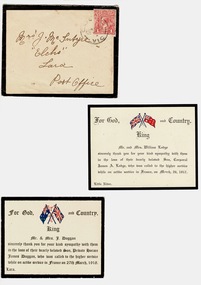
... River and the other from Mr. and Mrs. J Duggan Lara on the loss of their son Private Horace James Duggan. (France 27th March 1918) For God, King and Country with the Australian and English flag. ...River and the other from Mr. and Mrs. J Duggan Lara on the loss of their son Private Horace James Duggan. (France 27th March 1918) For God, King and Country with the Australian and English flag. 2 Cards and one envelope stuck to white a4 paper Sympathy Cards Mc Intyre ...Standard sympathy cards sent by family acknowledging the loss of their sons killed during World War OneStandard sympathy cards sent by parents acknowledging letters of sympathy sent to them on the loss of their sons.2 Cards and one envelope stuck to white a4 paperEnvelope Addressed to Mrs J MC Intyre Elcho Lara Australia, includes a one penny stamp. Two standard printed Cards " Thanking you for your kind Sympathy ........." . One card from Mr. and Mrs. Lodge for the loss of their son Corporal James A lodge ( France March 26 1917) Little River and the other from Mr. and Mrs. J Duggan Lara on the loss of their son Private Horace James Duggan. (France 27th March 1918) For God, King and Country with the Australian and English flag. -
 Flagstaff Hill Maritime Museum and Village
Book - Journal Reference Book/History, Edward John Eyre, Journals of Expeditions of Discovery into Central Australia and Overland From Adelaide to King George Sound. In the years 1840-1 Vol 1, 1845
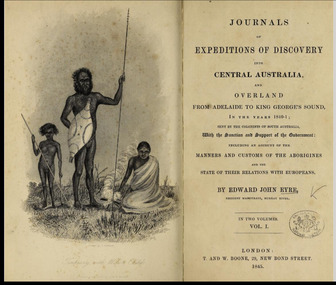
... King George’s Sound. The book is published in two volumes and was first issued in 1845. It blends practical expedition reporting with reflection, so it is both a record of exploration and a statement about the colonial understanding of inland Australia. The label on spine cover has typed text RA 919.4 EYR Paste down front end paper has a sticker from Warrnambool Public Library Flyleaf has a stamp from Warrnambool Mechanics Institute. Flyleaf has the title Expeditions of Discovery into Central Australia by Edward John Eyre Resident Magistrate, Murray River ...Journals of Expeditions of Discovery into Central Australia was written by Edward John Eyre. It is Eyre’s 1845 account of his 1840–41 exploration journeys from Adelaide into central Australia and then overland to King George’s Sound. The book is published in two volumes and was first issued in 1845. It blends practical expedition reporting with reflection, so it is both a record of exploration and a statement about the colonial understanding of inland Australia.Journals of Expeditions of Discovery into Central Australia Vol 1 Author: Edward John Eyre Publisher: T and W Boone Date: 1845 non-fictionJournals of Expeditions of Discovery into Central Australia was written by Edward John Eyre. It is Eyre’s 1845 account of his 1840–41 exploration journeys from Adelaide into central Australia and then overland to King George’s Sound. The book is published in two volumes and was first issued in 1845. It blends practical expedition reporting with reflection, so it is both a record of exploration and a statement about the colonial understanding of inland Australia. flagstaff hill, warrnambool, shipwrecked coast, flagstaff hill maritime museum, maritime museum, flagstaff hill maritime village, great ocean road, book, warrnambool library, warrnambool mechanics’ institute, mechanics’ institute library, victorian library board, warrnambool books and records, journals of expeditions of discovery into central australia vol 1, edward john eyre
