
Showing 17 items matching "locomotive restoration"
-
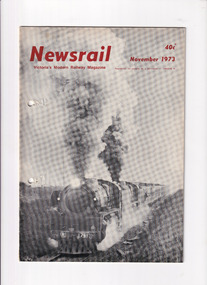 Victorian Railway History Library
Journal - Newsrail November 1973, Unattributed, Report of railmotor workings operating out of Bendigo. Restoration and return to service of Puffing Billy loco 12A, 1973
... ...locomotive restoration...Railmotor operations Puffing Billy locomotive restoration Two articles from the November 1973 issue of Newsrail. ...Two articles from the November 1973 issue of Newsrail. First - Report of railmotor operations based out of Bendigo, connecting with trains arriving from Melbourne. Second - The restoration/overhaul of locomotive 12A at Ballarat North workshops and its return to service at Belgrave.Ill, p.20.non-fictionTwo articles from the November 1973 issue of Newsrail. First - Report of railmotor operations based out of Bendigo, connecting with trains arriving from Melbourne. Second - The restoration/overhaul of locomotive 12A at Ballarat North workshops and its return to service at Belgrave.railmotor operations, puffing billy, locomotive restoration -
 Port Melbourne Historical & Preservation Society
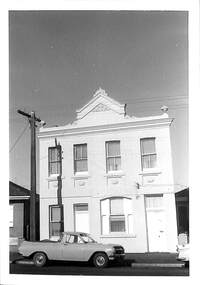
Photograph - 176 Princes Street, Port Melbourne, Janet and Allen Walsh, 1973
... The building was originally the Locomotive Hotel(1864-96), then the Yacht Club Hotel (1897-1909). From 1909 it was a boarding house until restoration as a family home in the 1980s Shot in 1973 with particular interest in architecture...The building was originally the Locomotive Hotel(1864-96), then the Yacht Club Hotel (1897-1909). From 1909 it was a boarding house until restoration as a family home in the 1980s Shot in 1973 with particular interest in architecture Janet WALSH Allen WALSH Built Environment - Commercial Built Environment - Domestic Princes Street Locomotive Hotel Yacht Club Hotel Business and Traders - Hotels Identified and dated on back in ink Set of 31 photographs taken in June and July 1973 Former Locomotive Hotel (then Yacht Club Hotel), then a boarding house since 1909 at 176 Princes St Photograph 176 Princes Street, Port Melbourne Janet and Allen Walsh ...The building was originally the Locomotive Hotel(1864-96), then the Yacht Club Hotel (1897-1909). From 1909 it was a boarding house until restoration as a family home in the 1980s Shot in 1973 with particular interest in architectureSet of 31 photographs taken in June and July 1973 Former Locomotive Hotel (then Yacht Club Hotel), then a boarding house since 1909 at 176 Princes StIdentified and dated on back in inkjanet walsh, allen walsh, built environment - commercial, built environment - domestic, princes street, locomotive hotel, yacht club hotel, business and traders - hotels -
 Ballarat Tramway Museum
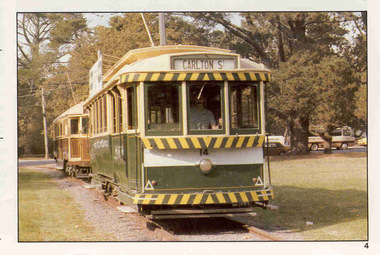
Magazine, Victorian State Transport Authority - V/Line, "V/Line News September 1984", Sep. 1984
... Articles included within the magazine are more locomotives for V Line, Ballarat Leads the Way in Tourist Promotion, Ballarat Station - a careful restoration, photos of Chief General Manager - John Hearsch, a photographic article by George Bamberry about Darjeeling trains, Michael Schrader - Railways of Australia new director. ...Articles included within the magazine are more locomotives for V Line, Ballarat Leads the Way in Tourist Promotion, Ballarat Station - a careful restoration, photos of Chief General Manager - John Hearsch, a photographic article by George Bamberry about Darjeeling trains, Michael Schrader - Railways of Australia new director. ...Thirty page, A4 colour and black and white magazine - titled "V/Line News September 1984", Victorian State Transport Authority Journal. Has a photo of T361 passing under a Geelong bluestone overbridge. Articles included within the magazine are more locomotives for V Line, Ballarat Leads the Way in Tourist Promotion, Ballarat Station - a careful restoration, photos of Chief General Manager - John Hearsch, a photographic article by George Bamberry about Darjeeling trains, Michael Schrader - Railways of Australia new director. The Ballarat articles feature a photo of BTPS No. 14, with 661 behind. Warren Doubleday in No. 14. Railway station restoration article has photo two photos of the station, one circa 1900 and the other with scaffolding around the tower.trams, tramways, btps, railways, victorian railways, ballarat station -
 Puffing Billy Railway
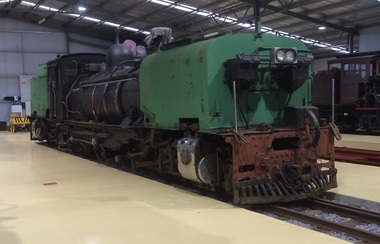
NGG16 No.127 - Garratt Steam Locomotive, 1951
... The Beyer, Peacock locomotives ordered by the SAR, numbers NG109 to NG116 and NG125 to NG131, were shared more or less equally between the Natal and Avontuur lines No. 127 was purchased from the South African Railways by the Emerald Tourist Railway Board for the Puffing Billy Railway in late 2011 / early 2012, together with a container load of spare parts stripped from a derelict NGG16, and prepared for transport to Australia. The spare parts will assist in the restoration...The Beyer, Peacock locomotives ordered by the SAR, numbers NG109 to NG116 and NG125 to NG131, were shared more or less equally between the Natal and Avontuur lines No. 127 was purchased from the South African Railways by the Emerald Tourist Railway Board for the Puffing Billy Railway in late 2011 / early 2012, together with a container load of spare parts stripped from a derelict NGG16, and prepared for transport to Australia. The spare parts will assist in the restoration ...No. 127 is a 2'-gauge ex-South African Railways 'NGG16' class Beyer-Garratt locomotive. It was built by Beyer Peacock & Co of Manchester (builder's No.7428 of 1951) to their "Beyer Garratt" patented design of articulated steam locomotive. The South African Railways Class NG G16 2-6-2+2-6-2 of 1937 is a narrow gauge steam locomotive. Between 1937 and 1968, the South African Railways placed 34 Class NG G16 Garratt articulated steam locomotives with a 2-6-2+2-6-2 Double Prairie type wheel arrangement in service on the Avontuur Railway and on the Natal narrow gauge lines - The third order was for a further seven locomotives in 1951, numbered in the range from NG125 to NG131, once again from Beyer, Peacock. These and the subsequent locomotives had welded water and coal bunkers and flat-topped water tanks with rounded top side edges. The Beyer, Peacock locomotives ordered by the SAR, numbers NG109 to NG116 and NG125 to NG131, were shared more or less equally between the Natal and Avontuur lines No. 127 was purchased from the South African Railways by the Emerald Tourist Railway Board for the Puffing Billy Railway in late 2011 / early 2012, together with a container load of spare parts stripped from a derelict NGG16, and prepared for transport to Australia. The spare parts will assist in the restoration of sister NGG16 No.129 in the short term, while No.127 will provide the PBR with the option of restoring a second NGG16 at some future stage, if required. details from http://www.australiansteam.com/BP7428.htmHistoric - Overseas - South African - Narrow Gauge Railways - Steam Locomotive Garratt Steam Locomotive - 2-6-2+2-6-2 Beyer Peacock & Co NGG16 No.127 build No.7428puffing billy, ngg16, sar, beyer peacock & co garratt ngg16 no.127 build no7428, narrow gauge, steam locomotive, garratt -
 Puffing Billy Railway
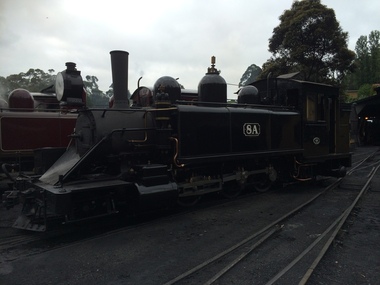
8A, Victorian Railways Na Class Steam Locomotive, 1908
... locomotive was issued to the Upper Ferntree Gully to Gembrook line. Over the years, it saw service on the Colac to Crowes and Moe to Walhalla lines, but it saw more service on the Gembrook line than any other. It was withdrawn from service in 1955 at Upper Fern Tree Gully and sold to the Beaumaris City Council where it remained on static display until 1970. After storage at Newport & Ballarat North Workshops, it was brought to Belgrave in 1976 for restoration...locomotive was issued to the Upper Ferntree Gully to Gembrook line. Over the years, it saw service on the Colac to Crowes and Moe to Walhalla lines, but it saw more service on the Gembrook line than any other. It was withdrawn from service in 1955 at Upper Fern Tree Gully and sold to the Beaumaris City Council where it remained on static display until 1970. After storage at Newport & Ballarat North Workshops, it was brought to Belgrave in 1976 for restoration ...8A Built in 1908 and painted Canadian red & dark brown, this locomotive was issued to the Upper Ferntree Gully to Gembrook line. Over the years, it saw service on the Colac to Crowes and Moe to Walhalla lines, but it saw more service on the Gembrook line than any other. It was withdrawn from service in 1955 at Upper Fern Tree Gully and sold to the Beaumaris City Council where it remained on static display until 1970. After storage at Newport & Ballarat North Workshops, it was brought to Belgrave in 1976 for restoration. It was returned to service in 1982 after a complete rebuild in close to its late 1920s condition with its extended bunker & modified front end including the tapered “stovepipe” smokestack, steel cow-catcher and the all-over Black livery. Loco: 8A In service Monday, 2nd March 1908 Livery Canadian red & dark brown Owner Puffing Billy Gauge 762mm / 2' 6" Status Preserved - Operational Service History : May 1908 - UFTG. - initial allocation of a new locomotive May 1908 - Mar 1910 UFTG. Apr 1910 - Mar 1915 Colac Jun 1915 -Sep 1926 UFTG. Jan 1927 - Jan 1930 Moe Mar 1930 - Oct 1936 UFTG. Nov 1936 - Dec 1936 Moe Jan 1937 - Oct 1954 UFTG. Dec 1954 - Workshops Jan 1955 - Jan 1968 Other Jul 1970 - Apr 1977 Workshops Jul 1982 - Belgrave - In active service at Puffing Billy Railway Belgrave Victorian Railways - Narrow Gauge NA class steam locomotive number 8A Dates that 8A worked on the Gembrook Line Mar-1908 to Apr-1910 - initial allocation of a new locomotive Jun-1915 to Jan-1927 Mar-1930 to Nov-1936 Jan-1937 to Dec-1954 Jul-1982 - Returned to service PBRSteam Locomotive 8Apuffing billy, 8a, victorian railways, narrow gauge, steam locomotive -
 Puffing Billy Railway
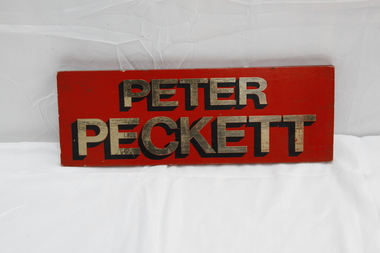
Peter Peckett Head Board, 1992
... Historic - Puffing Billy Railway Locomotive Head Board used initially for fundraising the restoration of the Lakeside to Gembrook line by the Puffing Billy Preservation Society with trips on the completed line from the Gembrook end and later in the Celebration of Special Children's train days. ...Historic - Puffing Billy Railway Locomotive Head Board used initially for fundraising the restoration of the Lakeside to Gembrook line by the Puffing Billy Preservation Society with trips on the completed line from the Gembrook end and later in the Celebration of Special Children's train days. ...Head Board - Peter Peckett in use from 1992. Historic - Puffing Billy Railway Locomotive Head Board used initially for fundraising the restoration of the Lakeside to Gembrook line by the Puffing Billy Preservation Society with trips on the completed line from the Gembrook end and later in the Celebration of Special Children's train days. Train Headboard - Peter - face used on special Children's trains hauled by former Gas Works locomotive Sir John Grice - alias Peter Peckett. Historic - Puffing Billy Railway Locomotive Head Board used in the Celebration of Special Children's train days Red painted wood with gold Leaf and black vinyl stickers.Peter Peckettpeter peckett, head board, puffing billy -
 Puffing Billy Railway
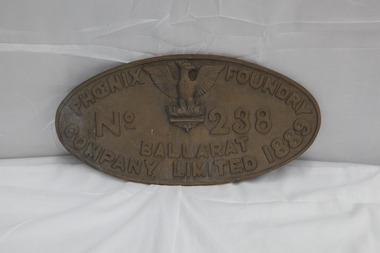
Phoenix Foundry Plate
... locomotive and tender. Y 112 was one of the last in service when withdrawn in 1961. Fortunately it was saved for preservation and plinthed in central Ballarat, ostensibly in commemoration of Phoenix Foundry. I understand it is owned by the Sovereign Hill Museums Association. During the 1980’s, Y 112 was leased to Steamrail Victoria and restored to operation at an industrial site in Ballarat. Y 112 features an attractive lined apple green livery and has performed various rail tours around Victoria since restoration...locomotive and tender. Y 112 was one of the last in service when withdrawn in 1961. Fortunately it was saved for preservation and plinthed in central Ballarat, ostensibly in commemoration of Phoenix Foundry. I understand it is owned by the Sovereign Hill Museums Association. During the 1980’s, Y 112 was leased to Steamrail Victoria and restored to operation at an industrial site in Ballarat. Y 112 features an attractive lined apple green livery and has performed various rail tours around Victoria since restoration ...Phoenix Foundry Plate - replica Made about 2010 cast off original from locomotive Y112 The Phoenix Foundry (1857-1906) fabricated iron and brass products - including engines and pumping gear for the mining industry, locomotives, steam rollers, water pipes, water gauges and diverse small items. Throughout its operation the business was located at premises on Armstrong Street, Ballarat . Background In 1852, at the age of thirty-three and after a year of operating his own engineering business at Williamstown, Lancashire-born blacksmith and engineer George Threlfall (1819-1897) arrived on the Sebastopol gold plain and immediately undertook blacksmith work repairing picks and tools for the miners. Little did he know that this fledgling business would be the genesis of the most iconic business of nineteenth-century Ballarat. At approximately thirty-nine years of age, English mechanical engineer Richard Carter (c1814-1883) came to Australia on board the Arrogant - arriving in Melbourne on 19 April 1853. He soon travelled to the Ballarat goldfields. Born in the year 1830 in Belfast (Ireland), mechanical engineer William Henry Shaw (1830-1896) arrived in Australia in October 1853. He worked briefly with George Threlfall at Sebastopol, then moved to Geelong to manage the small foundry of Frederick Moore. Twenty-four year old English-born iron moulder Robert Holden (c1831-?) left his home in Belfast (Ireland) in late 1854 and travelled from Liverpool to Melbourne on board the James Baines - arriving in February 1855. Afterwards he joined his brother-in-law William Henry Shaw in Ballarat. History Foundation to Incorporation In March 1857 George Threlfall joined in business with Richard Carter, William Henry Shaw and Robert Holden. They relocated Threlfall's successful engineering enterprise from Sebastopol to new premises in Armstrong Street, Ballarat. This business was then known variously as the Phoenix Iron Works Company, Phoenix Foundry or Messrs Carter and Co. By 15 April 1857 they were advertising that they were open for business as engineers, millwrights, boiler makers, smiths, iron founders and brass founders. In January 1858 George Threlfall left the partnership. Incorporation to 1889 1890 to Closing locomotive Y112 Builder: Phoenix Foundry, Ballarat Builder’s Number & Year: 238 of 1889 Designer: Kitson & Co Wheel Arrangement: 0-6-0 No. in class: 31 Entered Service: 24 July 1889 Taken off Register: 11 May 1961 The origins of the Victorian Railways Y-class lay with the decision by Kitson & Co, Leeds to place a 0-6-0 freight locomotive on display at the Centennial International Exhibition, Melbourne in 1888, together with a 2-4-2T suburban passenger locomotive. This marketing initiative proved successful as the Victorian Railways were clearly impressed with these machines, with both purchased after the exhibition and becoming the patterns for new standard locomotive types. Thirty examples of the 0-6-0 heavy freight design were ordered from the Phoenix Foundry, Ballarat, becoming the Y-class for main line heavy freight duties, while the 2-4-2T design became the E-class for Melbourne suburban passenger duties (represented by preserved locomotive E 236). The Y-class prove successful in service and accrued high mileages. They were inevitably superseded by more modern and powerful steam locomotives and a number cascaded into shunting and yard pilot duties, often with the addition of shunters steps along both locomotive and tender. Y 112 was one of the last in service when withdrawn in 1961. Fortunately it was saved for preservation and plinthed in central Ballarat, ostensibly in commemoration of Phoenix Foundry. I understand it is owned by the Sovereign Hill Museums Association. During the 1980’s, Y 112 was leased to Steamrail Victoria and restored to operation at an industrial site in Ballarat. Y 112 features an attractive lined apple green livery and has performed various rail tours around Victoria since restoration. It is normally based at the Steamrail depot in Ballarat East. Y 112 is the only 19th century design in operational condition in Victoria and as such is one of the oldest working steam locomotive in Victoria . Historic - Phoenix Foundry Plate - replica Made about 2010 cast off original from locomotive Y112Phoenix Foundry Plate Oval shaped plate with an image of a phoenix centered at the top with lettering surrounding it.Phoenix Foundry No 238 Ballarat Company Limited 1889.puffing billy, phoenix foundry, ballarat, locomotive y112, phoenix foundry plate - replica -
 Puffing Billy Railway
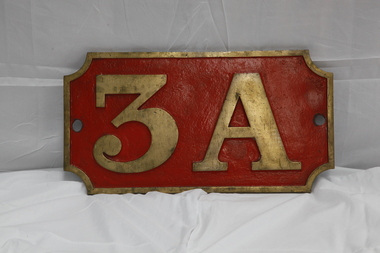
Number Plate - 3A
... locomotive was issued to the Upper Ferntree Gully to Gembrook line and was used in the line’s construction. Over the years, it saw service on the Colac to Crowes and Moe to Walhalla lines, but it saw more service on the Gembrook line than any other. It was withdrawn from service in 1955 at Upper Fern Tree Gully and sold in 1960 to the Lord Mayor’s Camp at Portsea where it remained on static display until 1977. From there it was eventually brought to Belgrave for eventual restoration...locomotive was issued to the Upper Ferntree Gully to Gembrook line and was used in the line’s construction. Over the years, it saw service on the Colac to Crowes and Moe to Walhalla lines, but it saw more service on the Gembrook line than any other. It was withdrawn from service in 1955 at Upper Fern Tree Gully and sold in 1960 to the Lord Mayor’s Camp at Portsea where it remained on static display until 1977. From there it was eventually brought to Belgrave for eventual restoration ...Loco: 3A In service Monday, 4th June 1900 Livery Not painted Owner Puffing Billy Gauge 762 Status Stored 3A Built in 1900 and painted two-tone green, this locomotive was issued to the Upper Ferntree Gully to Gembrook line and was used in the line’s construction. Over the years, it saw service on the Colac to Crowes and Moe to Walhalla lines, but it saw more service on the Gembrook line than any other. It was withdrawn from service in 1955 at Upper Fern Tree Gully and sold in 1960 to the Lord Mayor’s Camp at Portsea where it remained on static display until 1977. From there it was eventually brought to Belgrave for eventual restoration. When restored, it will be returned, as far as possible to its original condition with wooden cow-catchers, original design side tanks, low bunker, no smoke-box ash chute, etc. It will also have its original colour scheme of two-tone green with white lining.Historic - Victorian Railways Locomotive Number Plate used on Steam Locomotive 3ALocomotive Number Plate from 3A made of cast metal & Brass3Apuffing billy, 3a, number plate -
 Puffing Billy Railway
Climax - Geared Steam Locomotive No. 1694, 1928
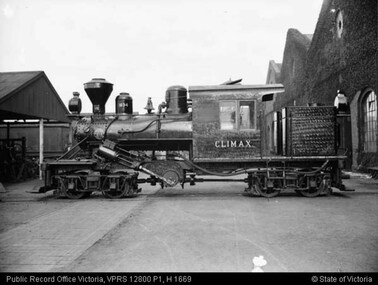
... locomotive was withdrawn from service in 1949 following the closure of the tramway and in 1950 it travelled from Tyers Junction to Collins Siding to Erica where it remained stored until 1965. Loaned to the Puffing Billy Preservation Society for its Steam Museum, it was taken to Menzies Creek in 1965 where it remained until 1982 when the Emerald Tourist Railway Board bought it and transferred it to Belgrave for restoration. ...locomotive was withdrawn from service in 1949 following the closure of the tramway and in 1950 it travelled from Tyers Junction to Collins Siding to Erica where it remained stored until 1965. Loaned to the Puffing Billy Preservation Society for its Steam Museum, it was taken to Menzies Creek in 1965 where it remained until 1982 when the Emerald Tourist Railway Board bought it and transferred it to Belgrave for restoration. ...Climax geared locomotive No. 1694 in active service on special occasions - stored at Emerald Station A Miraculous Survivor Climax locomotive No.1694 is a miraculous survivor of a rare breed of steam locomotive. For about 100 years from the mid-1850s sawn timber was carted from Victorian sawmills to the nearest railway station by timber tramway. These tramways were generally very rough, steeply graded, sharply curved, and of narrow gauge. Many had wooden rails, and horses provided haulage. The better ones used steam locomotives. In all about fifty steam locomotives are known to have worked on Victorian timber tramways. These locomotives were usually somewhat peculiar - made to cope with arduous, rough conditions, rather than speed. Climax locomotive No.1694 is the only one of these locomotives to survive intact. It was built in 1928 by the Climax Manufacturing Company, Corry, Pennsylvania, USA, for the Forests Commission of Victoria. The distinctive feature of the Climax locomotive is that the cylinders do not directly connect to the driving wheels. Instead they drive a cross shaft near the centre of the locomotive. From there the drive is transmitted to the small driving wheels through rotating shafts, universal joints, and bevel gears. The driving wheels are mounted in two four-wheel bogies so that they can easily follow sharp curves in the track. None of these features are found in normal steam locomotives. The result is a locomotive that is extremely powerful for its size, and that will cope with sharp curves and steep grades with ease. But this is at the cost of speed, Climax locomotive No.1694 is just about flat-out at 13 km/h (8 mph). Climax Locomotive Built in 1928 for the Forests Commission of Victoria and painted all-over black with the name CLIMAX painted on the sides of the cab in white block letters, this locomotive was issued to the Tyers Valley tramway which branched off the Moe to Walhalla line at Collins Siding. This locomotive was withdrawn from service in 1949 following the closure of the tramway and in 1950 it travelled from Tyers Junction to Collins Siding to Erica where it remained stored until 1965. Loaned to the Puffing Billy Preservation Society for its Steam Museum, it was taken to Menzies Creek in 1965 where it remained until 1982 when the Emerald Tourist Railway Board bought it and transferred it to Belgrave for restoration. It was returned to service for special use on the Belgrave to Gembrook line in 1988 painted in its original all-over black livery, except that the word “Climax” on the sides of the cab was now painted in the style of the Climax Manufacturing Co., a style that this locomotive had never carried.Historical - Industrial railway - Forests Commission of Victoria, Timber Logging Climax Locomotive Climax geared Steam locomotive made of steel and wrought iron Climax 1694climax locomotive works, climax, geared steam locomotive, puffing billy, climax locomotive no. 1694, steam locomotive -
 Puffing Billy Railway
G42, Garratt Steam Locomotive, 1926
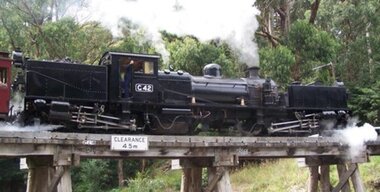
... locomotive was issued to the Moe to Walhalla line where it remained—other than for overhauls—until the line closed in 1954. After an overhaul at Newport Workshops, it was issued to the Colac to Crowes line and remained there until that line closed in 1962 when it was returned to Newport Workshops for storage. In 1964 it was sold to the Puffing Billy Preservation Society and removed from the V.R. register 3 months later. It arrived at Belgrave in 1968 and was hauled to Menzies Creek for static display in the museum. 1986 saw the commencement of restoration...locomotive was issued to the Moe to Walhalla line where it remained—other than for overhauls—until the line closed in 1954. After an overhaul at Newport Workshops, it was issued to the Colac to Crowes line and remained there until that line closed in 1962 when it was returned to Newport Workshops for storage. In 1964 it was sold to the Puffing Billy Preservation Society and removed from the V.R. register 3 months later. It arrived at Belgrave in 1968 and was hauled to Menzies Creek for static display in the museum. 1986 saw the commencement of restoration ...G42 Garratt Steam Locomotive Traffic and train loadings on Victoria's narrow gauge railways reached their peak during the 1920s. To assist in handling the longer, heavier trains, the Victorian Railways ordered two larger, more powerful Beyer Garratt locomotives. These were delivered in 1926 and were numbered G41 and G42. They were sent to work on the Colac–Beech Forest–Crowes line and the Moe–Walhalla line respectively. After the line from Moe closed in 1954, G42 was sent to Colac, where it worked with its mate, G41, until closure of that line in mid-1962. G41 had been in poor condition and was scrapped, whereas a brighter future awaited G42. The Victorian Railways offered G42 to the Puffing Billy Preservation Society, for display as a static exhibit in the Menzies Creek Museum. Over time, a plan evolved to restore G42 to operation, a goal that was eventually achieved by the launch of G42 back into traffic in April 2004. G42 now continues to operate as a restored member of the Puffing Billy Railway's locomotive fleet. No. originally constructed: 2 No. in service: 1 (No. 42) Boiler pressure: (lb/sq. in) 180 Boiler heating surface: 1268 sq ft (117.8 m2) Tractive effort: (85%) 26,860 lbs (12.18 t) Driving wheel diameter: 36" (91.44 cm) Max axle load: 9t 5cwt Length Overall: 51' 7" (15.72m) Height Overall: 10' 8" (3.28m) Date of manufacture: 1926 Manufacturer: Beyer Peacock Place of manufacture: Manchester UK Locomotive Type: Garratt Coal capacity: 70 cwt Cylinder diameter: 13" (33.02 cm) Cylinder stroke: 18" (45.72 cm) Wheel arrangement: 2-6-0+0-6-2 Roadworthy weight: 69t Water capacity: 1680 gal (7,637.43 l) Beyer Peacock - Garratt Locomotives Register Works Number - 6268 / 1926 Gauge/Railway/Class - 2'6"/Victorian Government Rlys/G Type - 2-6-0+0-6-2 No. G42 Notes - Australia G42 Built in 1926 and painted all-over black, this Garratt locomotive was issued to the Moe to Walhalla line where it remained—other than for overhauls—until the line closed in 1954. After an overhaul at Newport Workshops, it was issued to the Colac to Crowes line and remained there until that line closed in 1962 when it was returned to Newport Workshops for storage. In 1964 it was sold to the Puffing Billy Preservation Society and removed from the V.R. register 3 months later. It arrived at Belgrave in 1968 and was hauled to Menzies Creek for static display in the museum. 1986 saw the commencement of restoration the Belgrave workshops and has been restored to its 1946 to 1954 condition with raised cab roof, raised marker lamps, steel cow-catchers and all-over black livery. It was returned to service on April 18, 2004. Service History : Jun 1926 - Moe - initial allocation of a new locomotive Jun 1926 - Oct 1954 Moe Oct 1954 - Jan 1955 Workshops Jun 1955 - May 1962 Colac Jul 1962 - Dec 1965 Workshops - Stored Jan 1968 - Feb 1968 Belgrave - Stored Feb 1968 - 1982 - Menzies Creek Steam Museum 1982 - 2004 - Under restoration Apr 2004 - Belgrave - In active service at Puffing Billy Railway BelgraveHistoric - Victorian Railways - Narrow Gauge - Garratt Steam Locomotive - G42 Victorian Heritage Register (VHR) Number H2187 G42 Garratt Steam Locomotive made of steel, iron and wrought iron with brass fittings - the Locomotive is in Active Service - Belgrave Station G42puffing billy, narrow gauge, garratt, g42, steam locomotive, beyer peacock, victorian railways -
 Puffing Billy Railway
Emerald Station Sign
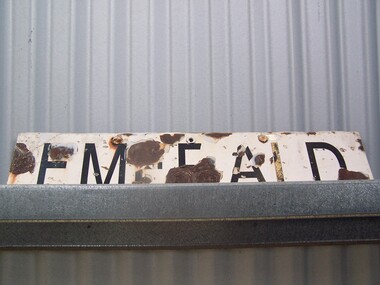
... Also, a Signal and Telegraph Branch depot in the form of a large Goods Shed and a multi-purpose yard building in the form of a Locomotive Depot administration building have been added. During 2009, the station building underwent stage one of an internal restoration to its former glory. ...Also, a Signal and Telegraph Branch depot in the form of a large Goods Shed and a multi-purpose yard building in the form of a Locomotive Depot administration building have been added. During 2009, the station building underwent stage one of an internal restoration to its former glory. ...Station Sign - Emerald Emerald Station is situated on the Puffing Billy Railway in Victoria, Australia. It was opened with the Railway on 18 December 1900 and comprised a platform track and a loop siding. A passing loop was added between the two a few years later. There was also a spur siding off the Down end of No. 3 Road. Two standard 12 ft by 20 ft timber portable station buildings with a Van Goods Shed between (all adjoining) were provided on the platform and a Goods Shed on the No. 3 Road loop siding. Other buildings included Tea Rooms, lamp room and toilets along with a cattle race and loading bank. The station building was later reduced in length by one of the portables which housed the General and Ladies' waiting rooms. Emerald today remains very similar to the early days, but has had other Roads added into a Carriage Workshops, a turntable and storage sidings. Also, a Signal and Telegraph Branch depot in the form of a large Goods Shed and a multi-purpose yard building in the form of a Locomotive Depot administration building have been added. During 2009, the station building underwent stage one of an internal restoration to its former glory. ref: https://en.wikipedia.org/wiki/Emerald_railway_station,_Victoria photos at http://www.vicrailstations.com/Gembrook/Emerald/Emerald.html Historic - Victorian Railways Station sign used at Emerald Station Station Sign - Emerald Metal rectangle Station Name Sign with white enamel back ground and black lettersEmeraldstation sign, puffing billy, emerald station -
 Puffing Billy Railway
Peckett, 1711 Peckett Steam Locomotive, 1926
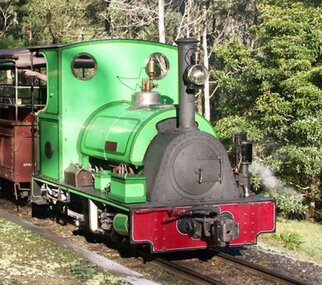
... locomotive was named “Sir John Grice” in 1928. It was withdrawn from traffic in 1941 and stored until sold privately in 1962. In 1965 it was sold again and went to the Whistle Stop Amusement Park in Frankston and again stored until bought at auction by the Puffing Billy Preservation Society in 1974 and put on static display in the Steam Museum. Restoration...locomotive was named “Sir John Grice” in 1928. It was withdrawn from traffic in 1941 and stored until sold privately in 1962. In 1965 it was sold again and went to the Whistle Stop Amusement Park in Frankston and again stored until bought at auction by the Puffing Billy Preservation Society in 1974 and put on static display in the Steam Museum. Restoration ...Steam Locomotive - 1711 Peckett “Sir John Grice” Date built - 1926 Locomotive type ; Cranmore Original owner - Metropolitan Gas Coy., West Melbourne Original gauge - 762mm Withdrawn - 1941 Next owner - Whistle Stop Amusement Park, Frankston Built in 1926 for the West Melbourne site of the Metropolitan Gas Company, and issued to traffic the same year this saddle tank locomotive was named “Sir John Grice” in 1928. It was withdrawn from traffic in 1941 and stored until sold privately in 1962. In 1965 it was sold again and went to the Whistle Stop Amusement Park in Frankston and again stored until bought at auction by the Puffing Billy Preservation Society in 1974 and put on static display in the Steam Museum. Restoration started in 1978 and it was returned to service in 1981 painted light green with yellow lining. It is temporarily renamed “Thomas the Tank Engine” with a fibreglass “Thomas” body cover each time it appears in the “Thomas the Tank Engine” shows at Gembrook station.Historic - Industrial Narrow Gauge Railway - Steam Locomotive used at the Metropolitan Gas Coy., West Melbourne, Victoria, AustraliaSteam Locomotive made of steel, wrought iron Peckettpeckett “sir john grice”, 1711 peckett, puffing billy, steam locomotive, industrial narrow gauge railway, metropolitan gas coy., west melbourne -
 Puffing Billy Railway
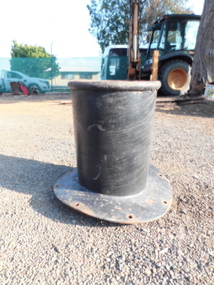
G 42 Stack, era 1955, circa era 1955
... The stack remained in use until 1962, when the locomotive was withdrawn, and was still connected to the boiler until restoration of G 42 was undertaken. ...The stack remained in use until 1962, when the locomotive was withdrawn, and was still connected to the boiler until restoration of G 42 was undertaken. ...Constructed during the overhaul of locomotive G 42 in 1954/1955. This stack was the exhaust for the coal fired Garratt locomotive G 42 and replaced the ornate stack it had been built with by Beyer Peacock in England in 1926. The overhaul was carried out between it's last run on the Moe to Walhalla railway and prior to locomotive being placed in service, for the first time, on the Colac to Beech Forest railway line. The stack remained in use until 1962, when the locomotive was withdrawn, and was still connected to the boiler until restoration of G 42 was undertaken. Locomotive G 42, with its replica ornate stack, was restored by the Puffing Billy Preservation Society in 2004 and can be seen operating on the Puffing Billy Railway. G 42 Stack - era 1955G 42 Stack - era 1955 made of cast Metal -
 Puffing Billy Railway
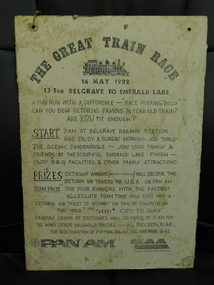
Great Train Race Sign, 1982
... an original Great Train Race publicity sign - from inaugural first great train race held on 16 May 1982 ran by the Puffing Billy Preservation society to raise funds for the restoration of G42 Garratt Locomotive ...an original Great Train Race publicity sign - from inaugural first great train race held on 16 May 1982 ran by the Puffing Billy Preservation society to raise funds for the restoration of G42 Garratt Locomotive Historic - Puffing Billy Railway - PBRS fPublicity event sign The Great Train Race - 16 May 1982 - 13.5km Belgrave to Emerald Lake a fun run with a difference - "Race Puffing Billy " can you beat Victorias famous 76 year old train ? ...an original Great Train Race publicity sign - from inaugural first great train race held on 16 May 1982 ran by the Puffing Billy Preservation society to raise funds for the restoration of G42 Garratt Locomotive Historic - Puffing Billy Railway - PBRS fPublicity event signGreat Train Race Sign - Black printed ink Paper sign glued on to Masonite wood The Great Train Race - 16 May 1982 - 13.5km Belgrave to Emerald Lake a fun run with a difference - "Race Puffing Billy " can you beat Victorias famous 76 year old train ? are you fit enough? Start 9 am at Belgrave Railway Station and enjoy a Sunday morning jog thru the scenic Dandenongs - join your family & friends at beautiful emerald lake finish - enjoy BBQ facilities & other family attractions Prizes outright winner ( not Puffing Billy ) will receive two return tickets to USA on Pan Am Team Prize the four runners with the fastest aggregate team time will each win a return air ticket to Sydney on TAA to compete in the 1982 "the Sun City to surf" Random draws of entrants will be made at 11Am for the many other valuable;e prizes - all proceeds to aid the restoration of Puffing Billy's big brother G42 PAN AM TAA Trans Australia Airlines -
 Southern Sherbrooke Historical Society Inc.
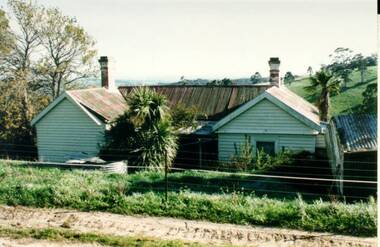
Information folder - Glen Park
... locomotives, and "Colin just loves steam locomotion" re. engine no. 861. -4 letters, from Puffing Billy Railway, in support of Col Rees. -Letter, dated 19 June 1996, from Emerald Tourist Railway, re. appeal for restoration of Garratt engine. ...locomotives, and "Colin just loves steam locomotion" re. engine no. 861. -4 letters, from Puffing Billy Railway, in support of Col Rees. -Letter, dated 19 June 1996, from Emerald Tourist Railway, re. appeal for restoration of Garratt engine. ...Folder containing information pertaining to the history of Glen Park homestead, Menzies Creek. Contents: -two pages photocopied from "That Little Train" by Peter Cuffley, showing four photos of Glen Park homestead and a short history of Edwin Johns at Glen Park (2 copies of each) -articles, "No. 861's full steam ahead again", photo shows Col Rees with Coonara Community School students, and "Living the dream" re. engine no. 861. On verso, "A Family Reunited", article by Emerald Tourist Railway re. locomotives, and "Colin just loves steam locomotion" re. engine no. 861. -4 letters, from Puffing Billy Railway, in support of Col Rees. -Letter, dated 19 June 1996, from Emerald Tourist Railway, re. appeal for restoration of Garratt engine. On verso, copy of certificate awarded to Col Rees for donation to appeal. -Letter, 1 June 1998, re. Garrett appeal. On verso, certificate awarded to Col & Kellie Rees for donation to appeal. -Aerial photo showing proposed property boundaries of Glen Park subdivision. -Aerial photo showing existing property boundaries of Glen Park. NB. last four items provided to society by Col Rees in support of subdivision. -Memorandum dated 2 May 2000 from Graham Whitt, Shire of Yarra Ranges, to Shire Service Centres, re proposed division of Glen Park land. -Fax, dated 13 June 2000, from Southern Sherbrooke Historical Society to Shire of Yarra Ranges, re. intention to make submission. -Letter, dated 14 June 2000, acknowledging receipt of above fax. -Submission, dated 18 June 2000, from Southern Sherbrooke HS, expressing concern re. proposed subdivision of Glen Park. -Fax, dated 27 June 2000, from Dianne Kueffer to Susan Heywood-Downard, Agenda Item 2 of the Yarra Ranges Planning Committee Agenda 14 March 2000, including detailed description of proposed subdivision and map. -Letter, dated 7 July 2000, Shire to Society, re. discussion of Glen Park subdivision by council. -Letter, dated 7 July 2000, Society to Shire, re. withdrawal of objection subject to certain conditions. -Letter, dated 14 July 2000, Shire to Society, re. council resolution to allow subdivision of Glen Park. -Letter, dated 24 October 2000, Shire to Society, stating that amendment to Planning Scheme allowing subdivision was approved by council and gazetted on 19 October 2000. -seven A3 sheets, showing house and property plans for new constructions proposed for Lot 1 of Glen Park subdivision. -diagram, hand-drawn (by Col Rees?) on lined A4 sheet, showing proposed development. -A1 sheet, Plan of feature survey of Lot 2 Blackhill Rd, Selby, dated 12 April 2000, showing contours, vegetation, proposed location of buildings, etc. -Glen Park Homestead and Cyprus Avenue, document prepared for the Shire Of Yarra Ranges by Helen Lardner Conservation & Design P/L, June 2003edwin johns, breen family, col & kellie rees, puffing billy -
 Victorian Railway History Library
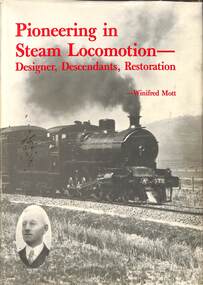
Book, Mott, Winifred, Pioneering in Steam Locomotion - Designer, Descendants, Restoration
... Railroad engineers -- Australia -- .Biography tourist railways and museums - Victoria A history of the locomotive designer Eugene Victor Siepen & the Mornington Railway Preservation Society index, ill, maps, p.239. Pioneering in Steam Locomotion - Designer, Descendants, Restoration Book Mott, Winifred Siepen, Eugene Victor ...A history of the locomotive designer Eugene Victor Siepen & the Mornington Railway Preservation Societyindex, ill, maps, p.239.non-fictionA history of the locomotive designer Eugene Victor Siepen & the Mornington Railway Preservation Societyrailroad engineers -- australia -- .biography, tourist railways and museums - victoria -
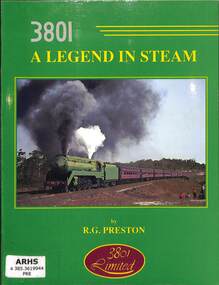 Victorian Railway History Library
Book, Preston, R.G, 3801 A Legend In Steam, 1992
... Locomotives -- New South Wales -- History 38 class locomotive - New South Wales - History An illustrated history of the 38 class 4-6-2 steam locomotive on the New South Wales Railways and its restoration to service. ill, p.104. 3801 A Legend In Steam Book Preston, R.G. ...An illustrated history of the 38 class 4-6-2 steam locomotive on the New South Wales Railways and its restoration to service.ill, p.104.non-fictionAn illustrated history of the 38 class 4-6-2 steam locomotive on the New South Wales Railways and its restoration to service.locomotives -- new south wales -- history, 38 class locomotive - new south wales - history
