
Showing 99 items matching "message form"
-
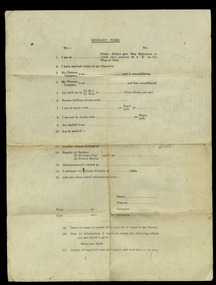 Magnet Galleries Melbourne Inc
message form, red cliffs00169.tif
... message form......message form...message form...ww1 world war 1 message form message form red cliffs00169.tif message form ...message formww1, world war 1, message form -
 4th/19th Prince of Wales's Light Horse Regiment Unit History Room
Message Form, 1940's
... Message Form...Four, paper, small message forms that were adopted in Sep 1943...Army Form C2136 Small Message Form...Signals forms message Army Form C2136 Small Message Form Four, paper, small message forms that were adopted in Sep 1943 Message Form ...Four, paper, small message forms that were adopted in Sep 1943Army Form C2136 Small Message Formsignals, forms, message -
 Bendigo Military Museum
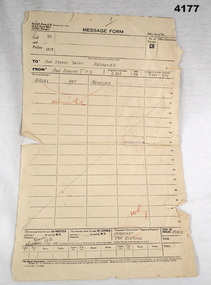
Document - MESSAGE FORM
... MESSAGE FORM...Message form...RAAF Message form A 22 printed in black ink on cream paper. ...Refer Cat No 3536P for his service record. Message form document RAAF RAAF Message form A 22 printed in black ink on cream paper. ...The message relates to Bibles not being received. Part of the Frederick Gardner Davey DFC No 410533 RAAF collection. Refer Cat No 3536P for his service record.RAAF Message form A 22 printed in black ink on cream paper. Message details hand written in grey lead pencil, corrections and comments in red coloured pencil. On the rear Flight information is hand written in grey lead pencil, corrections and comments in red coloured pencil. message form, document, raaf -
 Clunes Museum
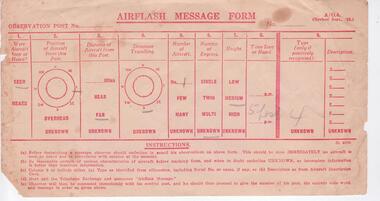
Ephemera - AIR FLASH MESSAGE FORM, 1942
... AIR FLASH MESSAGE FORM...AIR FLASH MESSAGE FORM ISSUED TO NOMINATED OBSERVERS OF AIRCRAFT FLYING IN IMMEDIATE AREA. ...Ephemera AIR FLASH MESSAGE FORM ...MRS. ANDREW McLENNAN [ALMA] WAS AN OBSERVER FROM 1042 WHILE LIVING AT TOURELLO ESTATE, SMEATON ROAD, CLUNES.AIR FLASH MESSAGE FORM ISSUED TO NOMINATED OBSERVERS OF AIRCRAFT FLYING IN IMMEDIATE AREA. OBSERVER TO RECORD AND REPORT THE POSITION, DIRECTION, NUMBER OF ENGINES, HEIGHT, TIME SEEN OR HEARD AND TYPE OF AIRCRAFT TO AIRFORCE CONTROL BASE [BALLARAT] DURING 1939-1945 WORLD WAR .local history, document, identification, military, airforce, ww2 -
 Dandenong/Cranbourne RSL Sub Branch
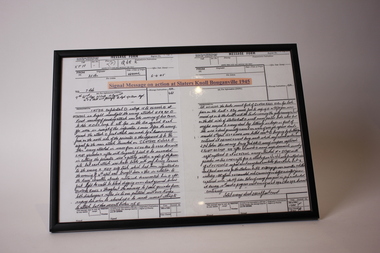
Document - Signal message, Signal message on action at Slaters Knoll Bouganville 1945, 6/4/1945
... Framed copy of original message form with signal message enclosed. Message on white paper with black glassed frame....From 25 Bn to 7 Bde dated 6/4/1945 Framed copy of original message form with signal message enclosed. Message on white paper with black glassed frame. ...Item is linked to a WW11 battle at Slaters Knoll Bouganville describing a battle 1n 1945 describing the military action, the number of enemy killed and the type of weapons used.History of WW11 battle in New Guinea.Framed copy of original message form with signal message enclosed. Message on white paper with black glassed frame.From 25 Bn to 7 Bde dated 6/4/1945signal, signal of contact report message on action at slater knoll bouganville 1945. -
 Bendigo Military Museum
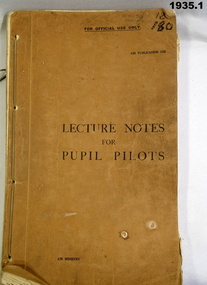
Manual - LECTURE NOTES AND FORMS, c. 1939 - 1945
... Re piloting A/C .3) RAAF message form. blank. May 1942. .4) RAAF message form. blank. ...Re piloting A/C .3) RAAF message form. blank. May 1942. .4) RAAF message form. blank. ...Items belonged to Maxwell Lennox Matheson No 418447 RAAF. Refer Cat 1959 for his service history. .1) Titled "Lecture notes for Pupil Pilots" Air publication 1723. Brown Covers loose leaf with laces. .2) Exam questions sheet. Foolscap double sided. Re piloting A/C .3) RAAF message form. blank. May 1942. .4) RAAF message form. blank. May 1942..1) "180" M Matheson Robinvale, Vic” The rear of the book holds a RAAF supplement dated 1941.lecture notes, pupils, raaf -
 Bendigo Military Museum
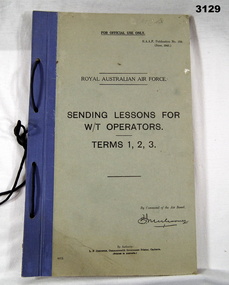
Book - BOOK, RAAF, L F Johnston Govt Printer, RAAF Sending Lessons for W/T Operators Terms 1, 2, 3, 1941
... Illustrated with photos & examples of RAAF message forms....Illustrated with photos & examples of RAAF message forms. RAAF Sending Lessons for W/T Operators Terms 1, 2, 3 Book BOOK, RAAF L F Johnston Govt Printer ...RAAF Publication No 175 June 1941. Blue buckram hard cover book loosely bound & held together by a shoe lace. Light blue binding, black printing, 110 pages. Illustrated with photos & examples of RAAF message forms.books-military/education/air force, w/t operators, raaf -
 Bendigo Military Museum
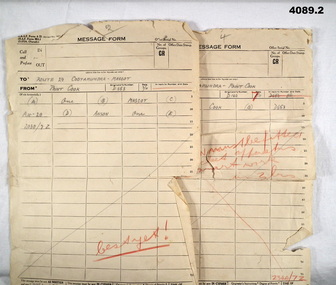
Document - MESSAGE FORMS, 7.11.1942
... Message forms (RAAF Form A22) relate to training flights. ...Message forms (RAAF Form A22) relate to training flights. ...Message forms (RAAF Form A22) relate to training flights. Part of the Frederick Gardner Davey DFC No 410533 RAAF collection. Refer Cat No 3536P for his service details..1) & .2) Foolscap size pro for a printed in black ink, hand written details front and back in red and grey lead pencil..1) hand written details of flight from, “Point Cook to Cootamundra - Mascot”, signed by “F.G.Davey” .2) Hand written details of flight from, “Mascot to Cootamundra - Point Cook”, signed by “F.G.Davey”message forms, training flights, raaf -
 Bendigo Military Museum
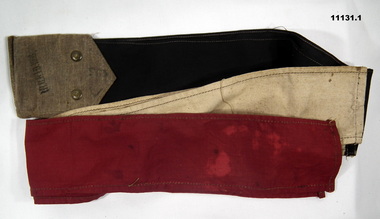
Equipment - AIR DROP MESSAGE RIBBON, 1918
... Light brown colour of strong quality. Message form with boxes to write words in, to and from lines at top....Light brown colour of strong quality. Message form with boxes to write words in, to and from lines at top. ...The message reads= "To O.C. Ba77oms from Q NR ALJ Date 3 "We are about to drop you quinine/books/tobacco. To indicate where you want items dropped, place a cross (in a circle) made from any handy material such as towels etc. The aircraft will fire a red very light and the drop supplies on next dive where you indicate. Stand clear when A/C dives in - and don't be long making cross - Good Luck - 3 Blindies in AU. Aircraft will be watching you - so indicate (fallen position as best you can). Written by (Signature) ACDO. Time of origin 1700/L1. Two calico ribbons. Each ribbon has 3 colours, black, white, red. The ribbons are of equal length. Width 9.5 cms. They terminate at a small canvas pocket with 2 brass press studs. 2. Piece of mild steel, rounded ends. 3. Message paper. Light brown colour of strong quality. Message form with boxes to write words in, to and from lines at top.Stamped on flap is a broad arrow with indecipherable numbers. Stamped on back is IH. G.R.I.D. 1918.ww2, messages, air drop -
Frankston RSL Sub Branch
Handbook, W C Penfold, Signalling Handbook for Australian Military Forces, 1915
... The topics included are the morse system, the semaphore system, use and care of apparatus, helio, telescope, flags, message form, station routine, training and classification. ...The topics included are the morse system, the semaphore system, use and care of apparatus, helio, telescope, flags, message form, station routine, training and classification. ...Small pocket size training handbook which includes instruction on topics related to signalling used in the field by Australian Military Forces. The topics included are the morse system, the semaphore system, use and care of apparatus, helio, telescope, flags, message form, station routine, training and classification. This small book has a buff coloured cover in card quality paper and contains 95 printed pages. This book was published in 1915 by Angus & Robertson Ltd., 89-95 Castlereagh Street, Sydney.The book front cover is printed in black on a buff coloured card. See image for details.signal, signalling, morse code, morse, semaphore, helio, heliograph, telescope, flag, communications, communicate, alphabet -
 National Vietnam Veterans Museum (NVVM)
Document, Surrender Leaflet, 1968-1973
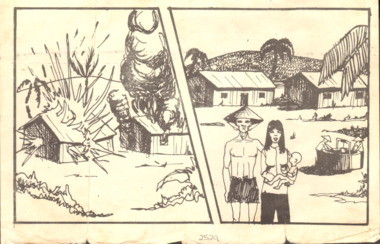
... Vietnamese message in letter form. Circular stamp with following writing - "Viet-nam Coung Hoa Tinh Phuoc-Tuy"...Leaflet Propaganda Psychology Military Instructions surrender Sgt A Moylan 4 Platoon B Coy 7 RAR 7th Battalion 16063 Royal Australian Infantry Corps Arnold George Moylan Vietnamese message in letter form. Circular stamp with following writing - "Viet-nam Coung Hoa Tinh Phuoc-Tuy" Black and white surrender leaflet. ...Black and white surrender leaflet. One side shows contrasting pictures of two houses - one exploding and burning with the other house in a peaceful setting with a couple holding a child and other villagers drawing water from a well. Reverse has Vietnamese writing with a signature and a black stampVietnamese message in letter form. Circular stamp with following writing - "Viet-nam Coung Hoa Tinh Phuoc-Tuy"leaflet, propaganda, psychology, military, instructions, surrender, sgt a moylan, 4 platoon, b coy, 7 rar, 7th battalion, 16063, royal australian infantry corps, arnold george moylan -
 Bendigo Historical Society Inc.
Newspaper - Articles about the Y Service Clubs Bicentennial quilt, 1987
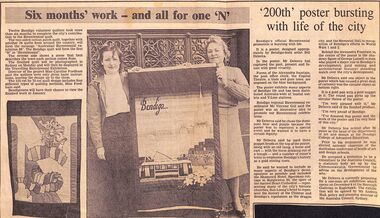
... The two-sided cotton patch quilt, together with another 34 quilts from around Australia, formed the message "Australian Bicentennial exhibition 88". ...The two-sided cotton patch quilt, together with another 34 quilts from around Australia, formed the message "Australian Bicentennial exhibition 88". ...The Australian Bicentennial was held in 1988. The Y's Workbox craft group produced a quilt designed by Mrs Carolyn Marrone as part of the celebrations. The quilt measures 1.41 metres across by 2.52 metres high and represented more than 3000 hours' work by 28 women.It is now mounted on a wall of the Bendigo library.Five Bendigo Advertiser newspaper articles telling the story of the Bendigo Bicentennial quilt. They describe who made them, how they were designed and of their significance. The two-sided cotton patch quilt, together with another 34 quilts from around Australia, formed the message "Australian Bicentennial exhibition 88". The Bendigo quilt formed the first "N" in "Bicentennial".y's menettes, y service clubs -
 Eltham District Historical Society Inc
Photograph - Photo Postcard, Pond near Eltham Park, c.1910
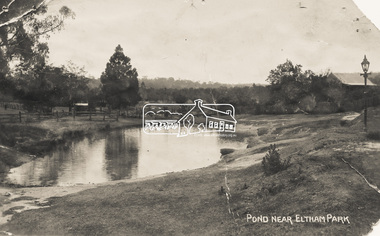
... Sending postcards to family and friends including short messages was a common form of communication in the early 20th century. ...Sending postcards to family and friends including short messages was a common form of communication in the early 20th century. ...This card depicts the pond near Eltham Park (later Eltham Lower Park) circa 1910. The view is taken from Maria Street (Main Road) opposite Dalton Street looking northwest across the Dalton Street road extension reserve (now Wingrove Park Trail) and Jarrold farm. A haystack is visible. Also visible is a gas streetlight and White Cloud cottage which belonged to the Jarrold family From the same collection as accession no. 00778, (Yarra at Eltham) - sent from Eltham and addressed to "Mr J. L. Brown, "Elthamville", Tinning Street, Brunswick" "with love from Nellie" who was most probably a member of the extended Brown family, and no. 00780 (Eltham, J.H. Clark Photo - dated 20 May 1911). Sending postcards to family and friends including short messages was a common form of communication in the early 20th century. Part of a slide show presentation "Bridges & Waterways of the Shire" by Russell Yeoman to the 13 September 1989 Society meeting. The presentation included slides of historic photos from the Shire of Eltham Pioneers collections as well as several recent views.Sending postcards to family and friends including short messages was a common form of communication in the early 20th century.Sepia postcard in very poor condition which has been removed from an album. Glue residue and album page adhering preventing information being readFront: Pond near Eltham Parkpostcard, eltham, pond, dalton street, duck pond, eltham park, elthamville, gas lamp, haystack, jarrold cottage, jarrold property, main road, maria street, white cloud cottage, wingrove park trail -
 The Beechworth Burke Museum
Ceremonial object - Message Sticks, Dja Dja Wurrung
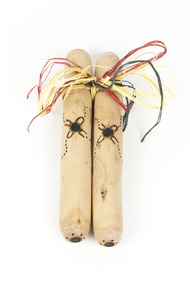
... The Burke Museum is continuing to build relationships and collaborate with traditional owners, Aboriginal communities and the museum sector to ensure culturally appropriate outcomes for the collection, including repatriation of objects to communities of origin. Message sticks are a form of communication between Aboriginal nations, clans and language groups even within clans. ...The Burke Museum is continuing to build relationships and collaborate with traditional owners, Aboriginal communities and the museum sector to ensure culturally appropriate outcomes for the collection, including repatriation of objects to communities of origin. Message sticks are a form of communication between Aboriginal nations, clans and language groups even within clans. ...These Message Sticks acknowledge the return of Dja Dja Wurrung Cultural material held by the Burke Museum. The Burke Museum is the current custodian of a significant collection of First Peoples’ cultural material from across South-Eastern Australia. These objects were sold to the Museum by Reynold Everly Johns in 1868. We recognise the harm caused by dispossession of cultural material, and by any inappropriate display and interpretation of this collection over the past 150 years. The Burke Museum is continuing to build relationships and collaborate with traditional owners, Aboriginal communities and the museum sector to ensure culturally appropriate outcomes for the collection, including repatriation of objects to communities of origin. Message sticks are a form of communication between Aboriginal nations, clans and language groups even within clans. Traditional message sticks were made and crafted from wood and were generally small and easy to carry (between 10 and 20 cm). They were carved, incised and painted with symbols and decorative designs conveying messages and information. Some were prepared hastily, like you might create a note left on a friend’s desk or a quick text message; others were prepared with more time to make the markings neat and ornate. There were always marks that were distinctive to the particular group or nation sending the message and often marks identifying the relationship of the carrier to their group. This way it could be identified and authenticated by neighboring groups and by translators when the message stick was taken long distances. Two solid cylindrical shaped pieces of wood bound together with black, red and yellow string. Each stick has etchings with angular lines and dots. dja dja wurrung, message sticks, burke museum, beechworth, beechworth museum, repatriation, reynold everly johns -
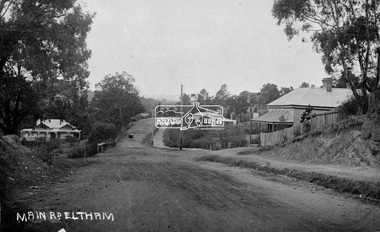 Eltham District Historical Society Inc
Negative - Photograph, Main Road, Eltham, c.1915
... Sending postcards to family and friends including short messages was a common form of communication in the early 20th century from 1905 to the 1940s. ...Sending postcards to family and friends including short messages was a common form of communication in the early 20th century from 1905 to the 1940s. ...Sending postcards to family and friends including short messages was a common form of communication in the early 20th century from 1905 to the 1940s. Many were collected and kept in albums. This scene is viewed looking north along Main Road from near Bridge Street. The old Baker’s shop (Burgoyne’s store) on the corner of York is on the right. Also visible is the footpath dug by hand c.1906 between Yoirk Street and Bridge Street. On the left is ‘Derril’ or more commonly known as the Gahan House after it was purchased by Walter Ernest and Alice Miriam Gahan in 1924, on the western side of Main Road near the present-day site of Shillinglaw Cottage where they remained till about 1960 when Walter died. The house was demolished in 1968 during the widening of Main Road. In the distance on the bend is the Shillinglaw cottage with the Shillinglaw trees out front of the cottage. On the eastern side at the top of the hill (visible immediately to the left of the bakery) is the new St Mary’s Catholic Church on Henry Street near Main Road. The church site was relocated c.1912 from further south along Main Road (near Wingrove Cottage) in order to be more central to the congregation following the shifting of the township away from Little Eltham and closer to the railway station. It was subsequently destroyed by fire in 1961. On the back of the postcard is written: Printed Post Empire Care - correspondence - Address only - stamp Written in ink: 15 ? 1920 Many happy of the day I hope you and ? will have a very pleasant trip ? a great time when you reach England. ? & best wishes from your sincere friend E Harper?This photo forms part of a collection of photographs gathered by the Shire of Eltham for their centenary project book,"Pioneers and Painters: 100 years of the Shire of Eltham" by Alan Marshall (1971). The collection of over 500 images is held in partnership between Eltham District Historical Society and Yarra Plenty Regional Library (Eltham Library) and is now formally known as the 'The Shire of Eltham Pioneers Photograph Collection.' It is significant in being the first community sourced collection representing the places and people of the Shire's first one hundred years.Digital image 4 x 5 inch B&W Neg Sepia Postcard 9 x 14 cm 35mm positive transparencyshire of eltham pioneers photograph collection, eltham, main road, gahan house, bakery, footpath, postcard, shillinglaw cottage, shillinglaw trees, st marys catholic church, york street, michael aitken collection -
 Bendigo Military Museum
Administrative record - COMPENDIUM WW1 - WW2, 4) A H Pettifer, Government Printer et al, 2) 14.2.1946; .3) 1.3.1919; .4) 30.11.1954 .5) 24.11.19? - WWI; .6) 31.10.1917; .7) 12.6.1917; .8) Page 1: 20.12.1915, Page 2: 10.12.1915, Page 6: 19.1915; .9) 10.9.1918; .10) 18.4.1919; .11) c.2.3.19?; .12) 18.9.1920; .14) post WWI; .15) 24.4.1920; .17) 18.4.1942; .18) 19.6.1943; .19) 18.3.1947; .20) 1944; .21) 1944; .23) 22.10.1941; .26) 13.9.1944; .27) 1.1944; .30) 7.3.1950; .31) 31.7.1944; .32) 16.4.1942; .33) 13.6.1946; .34) 6.5.1946; .36) a) & b) 3.11.1947; .37) 24.10.1951; .38) 24.9.1957; .39) 9.10.1957; .40) 19.2.1958; .41) 26.2.1958; .42) 1.3.1958; .43) & .44) 7.3.1958; .45) 25.2.1958; .46) 3.1.1948; .47) 26.2.1948; .48) 22.4.1958; .49) 24.2.1958; .50) 12.3.1958; .51) 6.1958; .52) c.Mar/Apr 1958; .53) 5.4.1958; .54) c.end WWII; .55) a.b. 13.6.1967; .56) 26.5.1967; .57) 18.2.1954
... Black cursive script printing below gold crown on front. .26) Typed letter on cream paper. .27) Typed foolscap application form to claim the Africa Star. .28) & .29) Message form filled with typed orders. .30) Typed letter acknowledging an application for campaign medals & listing eligible awards. .31) Typed letter on bond paper. .32) Certificate on cream parchment. ...Black cursive script printing below gold crown on front. .26) Typed letter on cream paper. .27) Typed foolscap application form to claim the Africa Star. .28) & .29) Message form filled with typed orders. .30) Typed letter acknowledging an application for campaign medals & listing eligible awards. .31) Typed letter on bond paper. .32) Certificate on cream parchment. ...Herbert Trangmar Allan, refer 2755.4 for his extensive service history and wards. .2) Details gifting of a pair of Japanese binoculars to Col H T ALLAN by Pacific Island Regiment. .3) Certificate issued by Winston Churchill, Secretary of State for War (The War of 1914-1918), awarded to Capt H T ALLAN MC. .4) Herbert Trangman ALLAN born 5.1.1895 at Woolwich, NSW. Middle name misspelled, should be Trangmar not Trangman. .6) Congratulating H T ALLAN on receiving the Military Cross award for leading 2 companies which had lost officers during action on Passchendaele Ridge on 9.10.1917. .7) Describes life behind the lines whilst H T ALLAN's battalion has been resting for a month. Daily life consisted of training drills, sport & entertainment. Writer takes time to describe the countryside & weather. .8) Relate to H T ALLAN's military exam results & his promotion to 2nd Lieutenant in 1915. .9) To Herbert Allan's father, Mr P Allan detailing the citation for awarding of the Military Cross to Herbert ALLAN. Original citation appeared in the London Gazette,5.4.1918. .10) Form addressed to Capt H ALLAN MC, 17th Battalion stating his period of enlistment in the 1st AIF was to expire 26.5.1919. .11) Letter from Lord BIRDWOOD (General) to Herbert ALLAN in response to a letter received 19.11.19?. General BIRDWOOD expresses his opinions on difficulties the allied troops face in their fight against the Japanese. .12) Letter to Capt H T ALLAN advising of MID oak leaves sent to him. Details guidelines for attaching oak leaves to both the larger Victory Medal & the small service dress medal. .13) Form details H T ALLAN's WWII Army No, Rank, Unit & Decorations & Medals held. The form has not been signed & dated. .14) Details service record of Lt Col H T ALLAN NX12229. Includes military service from 1912 - 1944, schools & courses attended, decorations, promotions & overseas service. .16) Form issued to H T ALLAN on 15.12.1939 granting permission to leave New Guinea for Australia & return within a period of 12 months. Issued by Customs Office in Salamaua. Lists H T ALLAN's age as 44, height 5' 10" & occupation. .17) Letter from Major General MORSHEAD GOC, AIF (ME) to Major H T ALLAN, OBE, MC congratulating him on being awarded the OBE for outstanding service at Tobruch. .18) Letter from Major General MORSHEAD to Major H T ALLAN, OBE, MC replying to ALLAN's letter of 15.6.1943. MORSHEAD is congratulating ALLAN on his appointment to New Guinea Force, also acknowledges his excellent service record. .19) Letter acknowledges H T ALLAN's resignation from the Office of Production Member of the Australian New Guinea Production Control Board, effective from 28.8.1946. .20) Major General WINDEYER commanded the 20th Brigade from 1942-1946. .22) Card sent from the CO of the 3rd Australian Anti-Tank Regiment. .23) Menu for Farewell Dinner held in the Officer's Mess of the 20th Infantry Brigade, Tobruch on 22.10.1941. .24) Menu & Toast list for Farewell Dinner to Brigadier J J MURRAY DSO MC VD. Attended by H T ALLAN & held in the Officers Mess, 2/17 Australian Infantry Battalion on 22.12.1941. .25) Invitation to Col H T ALLAN by Lady Gowrie (wife of Governor General Baron Gowrie) to attend a Luncheon at Government House, Canberra, ACT. .26) Letter to Major (T/Lt Col) H T ALLAN from Major W A JENNER advising him of his secondment to 2/17 Australian Infantry Battalion & appointment to command 5 Aust Base Sub Area. .27) Application for Africa Star with Eighth Army Clasp signed by H T ALLAN & approved by Lt Colonel of 2/17 Australian Infantry Battalion. H T ALLAN held the rank of Major (substantive) at the time of qualification, 1.3.1942 - 11.1942. He held the rank of Lt Colonel at the time of application in 2.1944. .28) Detailing changes in command & promotions including that of Lt Col H T ALLAN, dated 1.4.19? .29) For Lt Col H T ALLAN detailing movements required by First Australian Army command. .30) Acknowledgement & confirmation of Col H T ALLAN's application for campaign awards for WWII. .31) Letter addressed to Lt Col H T ALLAN from Lt Gen Stanley Sauige requesting information on New Britain for a forthcoming visit. .32) Certificate was presented to H T ALLAN on 16.4.1942 when he was awarded an OBE by King George VI. .33) Document details H T ALLAN's relinguishing of Command of the HQ of Pacific Islands Regiment. ALLAN also relinguished the rank of temporary Colonel & was transferred to the Reserve of Officers with rank of substantive Lt Colonel. .35) Official letter to Colonel H T ALLAN from Joseph Francis, Minister for the Army. The letter acknowledges Col ALLAN's long & distinguished career during both peace & wartime. .36) a) & b) From H T ALLAN (assumed) to Prime Minister J B CHIFFLEY referring to the production of copra in New Guinea, the actions of the Commonwealth Bank in relation to planters & the collaboration of New Guinea natives with the Japanese. Assumed to be a copy of original. .37) Letter to H T ALLAN indicating he had been placed on the Retired List with the rank of Honorary Colonel. .38) Letter invites H T ALLAN to officially open the State Conference in Lae in late March or early April 1958. Invitation was extended due to H T ALLAN for distinguished service in PNG. .39) Letter to H T ALLAN thanking him for accepting the invitation to open the Papua & New Guinea State Conference in late March or early April 1958. .40) Letter from H T ALLAN to Lt Gen Sir Henry WELLS, Chief of the General Staff, Victoria Barracks, Melbourne. ALLAN requests permission to wear his uniform for official engagements during his upcoming visit to New Guinea. ALLAN also offers advice on how to deal with native troops including serving time with them, learning their language & studying their customs. He suggests that this would help quell & dissent & revolt. .41) Reply from Major General DALY to HT ALLAN thanking him for his offer to spend time with the CO of the Pacific Island Regiment to address concerns with that unit. This meeting would coincide with ALLAN's upcoming visit to PNG. .42) HT ALLAN's reply to Major General T J DALY's letter of 26.2.1958. ALLAN requests an opportunity to discuss PIR issues with Major General DALY prior to his visit to PNG. .43) Major General T J DALY's reply to HT ALLAN's request for a meeting to discuss ongoing issues with the Pacific Island Regiment. .44) Letter from HT ALLAN to Brigadier D M CLELAND notifying him that he will be staying in Port Moresby on his way to the RSS&AILA Congress in Lae. .45) Lieutenant Colonel MCGUINN writes to invite Colonel ALLAN to visit the PIR during his visit to New Guinea at the end of March of the beginning of April 1959. .46) Letter of appreciation to H T ALLAN thanking him for his efforts in presenting the case for the Territory of New Guinea during the post WWII transition period. .47) Letter to H T ALLAN from New Guinea Citizens Association, Lae Branch, thanking him for his service on behalf of the people of the Territory of New Guinea. The association offered to send ALLAN a suitable present in recognition of his service. .48) Major General T J DALY's reply to HT ALLAN's suggestions for handling disquiet amongst the native troops in the Pacific Island Regiment. .49) Reply from Lieutenant General WELLS to H T ALLAN granting him permission to wear his uniform on his forthcoming visit to New Guinea. WELLS also notes that he has passed other requests made by ALLAN to Major General DALY. .50) Copy of H T ALLAN's reply to Lieutenant General WELL's letter of 24.2.1958 [.49)]. .51) A written account of Colonel H T Blue ALLAN's visit to New Guinea in 3.1958. Article appeared on p.65 & 67 of the 6.1958 edition of Pacific Islands Monthly. .52) Newspaper account of Colonel H T Blue ALLAN's opening of the Rabaul Branch of the Native Ex Servicemen's Association. Colonel ALLAN spoke of the involvement of the Pacific Islands Regiment during WWII. .53) The Rabaul Times account of Colonel H T Blue ALLAN's opening of the Rabaul Branch of Native Ex Servicemen's Club. Featured on p1, concluded p3. .54) Biographical account of Colonel H T ALLAN's service in WWI & WWII. In addition an account of his success in New Guinea between the wars is included. .55) a.b. Biography of Colonel H T ALLAN written by R W Robson who was the founder of the Pacific Islands Monthly. Article was written following ALLAN's death on 23.5.1967 aged 72. This item is a pre publication copy of Robson's article which appeared in the Pacific Islands Monthly. .56) Text of a valedictory given at the funeral of Colonel Herbert Trangmar ALLAN OBE, MC, ED, NX12229 held 26.5.1967 following his death on 23.5.1967. The speech summarized his life in both wars & civilian life. 57) Invitation issued to Colonel H T & Mrs ALLAN to attend a Garden Party at Government House on 18.2.1954. At this function Colonel H T & Mrs ALLAN were to be presented to her Majesty Queen Elizabeth II.Herbert T ALLAN Collection. The contents are all of various size, the Album is the size documented. .1) Large teal green album containing 16 plastic pockets each with white card insert. Various documents & photos contained in each pocket. .2) Typed letter, black type on cream paper. .3) Certificate mounted on fawn card backed with dark brown veneer. Presented to Capt H T ALLAN MC for being mentioned in despatches on 7.11.1917. .4) New South Wales Birth Certificate extract, printed on pink paper with watermark. .5) Telegram on tissue paper to a sheet of cream paper. Pin located top L corner. Requests the attendance of Lt Herbert ALLAN, Russell Hotel, Russell Square. .6) Typed letter mounted on grey cardboard. .7) 2 page letter on foolscap paper, secured by pin top L corner. Written from France by Herbert (Bert) ALLAN & addressed to his father. .8) 11 pages secured with a clip top L corner. 1st document typed, 2nd handwritten, remainder printed. Relate to H T ALLAN's military exam results. .9) Typed letter from Department of Defence Base Records Office to P ALLAN. .10) Document, printed form to inform the recipient that their period of enlistment in the 1st AIF had expired. .11) 4 page handwritten letter on 2 sheets of paper. 1st page has a printed letterhead. .12) BR Form No 20. Typed formal letter from AIF Base Records Office to accompany Mentioned in Despatches oak leaves sent to the recipient. .13) Form AAFA36 used for recommending the awarding of an Efficiency Decoration. Form details service record & details of a serving soldier. .14) 1 large / 1 small page, numbered, detailing the service record of Lt Col H T ALLAN. Black type on cream paper. 2 pages are loose but evidence of attachment visible. .15) Bachelor of Arts Degree Certificate (testamur) granted by the University of Sydney, awarded to Herbert Trangmar ALLAN. Printed on cream parchment. .16) Proforma document issued by the Territory of New Guinea permitting leave & return to the Territory. Printed 2 sides, black type on cream paper. .17) Letter on Australian Imperial Force letterhead from Major General MORSHEAD to Major H T ALLAN. .18 Letter on HQ2 Aust Corps letterhead from Major General MORSHEAD to Major H T ALLAN. .19) Typed letter on External Territories letterhead from J R Halligan to H T ALLAN. .20) Cream Christmas card folded in 2, sent to H T ALLAN. On front in black lettering is HQ 20th Australian Infantry Brigade below black Rising Sun emblem. Inside in black lettering is With Best Wishes for Christmas and New Year. Christmas 1944. .21) Cream card folded in 2. Front illustration depicts a devil figure riding a platypus & carrying a pennant with 2/13 on it. The devil is depicted attacking a German & Japanese soldier. Below the devil is a boomerang with Greetings Xmas 1944 printed on it. Illustration is in green & black. Inside on LHS is a message from 2/13 Battalion. On RHS is a list of 2/13 battle honours from 1940-1943. On back in black print is 1944-1945 New Guinea Australia. .22) Cream Christmas card folded in 2. Front illustration in brown with word Greetings in green. RHS inside printing in green & brown letters. Artillery badge on back in brown. .23) Cream card folded in 2. Typed menu on cream paper attached inside. Front cover illustrated with 20th Infantry Brigade colour patch & a rat over a scroll with words - So What? .24) Cream card folded in 2. On front black printing accompanied by 2/17 Battalion colour patch that is black over green diamond shape. Inside a list of Toasts & Dinner Menu printed in black. Back page for autographs. .25) Cream invitation card. Black cursive script printing below gold crown on front. .26) Typed letter on cream paper. .27) Typed foolscap application form to claim the Africa Star. .28) & .29) Message form filled with typed orders. .30) Typed letter acknowledging an application for campaign medals & listing eligible awards. .31) Typed letter on bond paper. .32) Certificate on cream parchment. Black print in cursive script. Text details the awarding of an OBE to the recipient. .33) Typed text on Australian Military Forces letterhead. Cream paper. .34) Typed text. Temporary note for H T ALLAN's discharge from AMF. .35) Typed letter on Commonwealth of Australia, Minister for the Army letterhead. .36) a) & b) 2 page letter in black type on cream paper. Pages are loose, letter unsigned. .37) 1 page typed letter on Australian Military Forces letterhead. .38) & .39) 1 page typed letter on Return Sailors, Soldiers & Airmen's Imperial League of Australia, Papua & New Guinea Branch letterhead. .40) 1 page typed letter, unsigned. .41) Single sided typed letter on Australian Military Forces letterhead on cream paper. .42) 1 page typed letter, unsigned on cream paper. .43) Single sided typed letter on Australian Military Forces, Northern Command, Victoria Barracks, Brisbane letterhead on cream paper. .44) Single sided typed letter on cream paper. .45) 2 page typed letter on folded cream paper bearing the letterhead of the Pacific Islands Regiment. .46) 1 page typed letter on cream, lined paper. .47) 1 page typed letter on cream paper. .48) 1 page typed letter on Australian Military Forces, Northern Command Headquarters, Victoria Barracks, Brisbane letterhead on cream paper. .49) 1 page typed letter on Chief of General Staff, Australian Military Forces, Army Headquarters, Victoria Barracks, Melbourne letterhead on cream paper. .50) 1 page copy of an unsigned letter on cream paper. .51) Magazine article: Building a New Nation in New Guinea : Some advice from Colonel Blue ALLAN. Black & white article with a 2nd small section stapled to the main page. Large page features a black & white captioned photo of a group listening to a uniformed Officer deliver a speech. Also features advertising front & back. .52) Newspaper article: Official Opening of Native Ex Servicemen's Club. Black & white typed newspaper article featuring a captioned black & white photo of a uniformed Australian Officer & a group of New Guinea Ex Servicemen. .53) a. b. c. Newspaper article: Master Blue Came Back to the Islands: 4000 Attend Club Opening. 3 Section article cut from a newspaper. One part is the banner of the newspaper with date published. Other sections contain the text of the article. The larger section features a black & white photo of an Australian Army Officer in uniform. .54) Newspaper article, untitled. Black & white typed newspaper article with black & white caricature of an Australian Army Officer featured. .55) a. b. Magazine article: The Story of a Big Man who Loved Soldiering. 2 page black & white typed article with sub headings. .56) Text of a Speech. 2 page typed text written for a valedictory given at a funeral. Pages connected with a staple in the top L corner. .57) Printed, cream card invitation to a Garden Party for the recipient to meet Queen Elizabeth II & The Duke of Edinburgh. Text is in cursive script under the Coat of Arms of Her Majesty. .2) Signature ? Capt S C PIR. .4) Date of issue typed: 30.11.1954 Name of recipient: Herbert Trangman Allan Stamped: T Wells, Registrar General NSW .5) Handwritten: To Lt Herbert Allan, Russell Hotel, Russell Square. Typed: Buckingham Palace OHS. Your attendance is required at Buckingham Palace on Wednesday next the Twentyeighth inst (28.11.19?) at ten o'clock am service dress please telegraph acknowledgement Lord Chamberlain London. Stamped: Central District 24 NO 19. .6) Signed in pencil: W Birdwood. In pencil on back: 15 x 12. .8) p1: Handwritten signature. Copy dated 29.12.1915. p2 Handwritten in ink: P Allan Esq, Mount Hunter Hill. Military Examination. Copy dated 29.12.1915. Handwritten in pencil: Results: H T Allan. Tactics - Distinction 92% HE Barff p3 Underlined in ink: 38th Infantry Herbert Trangmar Allan to be 2nd Lieutenant (provisionally). Dated 16 June 1914. p5 Handwritten: Total 139. Lieut Allan tied with 15 others for 20 place. p7, 9, 10 & 11underlined in ink: H T Allan. p8 Underlined in ink: Allan HT. .9) & .10) Signature in black ink. .12) Handwritten signature in black ink: On back handwritten signature in black ink: Clive Wilkinson, Buddong, Robinson St, Chatswood. Also ? Rd, Cremorne Pt. .13) Handwritten in black ink: Details of HT Allan's Commission Service from 16.6.1914 - 18.2.1946. .15) Handwritten signature of the University Chancellor, Dean of Faculty of Arts & Registrar. Handwritten name of recipient. Seal of the University of Sydney imprinted bottom LHS. .16) Handwritten in black ink: Details of recipient. Stamped in red ink: New Guinea Customs. Stamped in blue ink: H M Customs, Cooktown, dated 17.12.1939. Handwritten on reverse: Signature. Stamped on reverse in red ink: New Guinea Customs, dated 15.12.1939. .17) & .18) Handwritten signature: Major General Morshead. .19) Handwritten signature in black ink: J R Halligan. .20) Handwritten inside in blue ink: Lt Col Allan. Good wishes from your many friends here. Signed by Major General Windeyer. .21) Inside LHS handwritten in blue ink: Lt Col Allan & an indecipherable signature. .22) Inside RHS handwritten: To Major (Blue) Allan OBE MC from Lt Col? .23) On front handwritten in blue ink: H T Allan?. Inside in black ink & pencil are 19 signatures. .24) On front: 3 signatures in black ink & pencil. On back: 36 signatures in black & blue ink & pencil. .25) On back handwritten in black ink: Colonel H T Allan OBE MC, with 3 ink lines below name. .26) Handwritten in blue/black ink: Signature. Handwritten in blue pencil top R corner: A32/3477. Handwritten in black ink bottom L corner: Cond (?) 15/9A. Handwritten in black ink: Signature. .27) Stamped top R corner: 2/17 Bn Received 9.2.1944. Signature in black ink: H T Allan. Signature in black ink: ? Lt Col 2/17 Aust Inf Bn 10.2.1944 Page bottom in pencil: Blue will keep 1 1/4 for you? .30) Handwritten: Details of eligible medals. Handwritten signature: J C K Miller Capt 7.3.50. Handwritten bottom L corner: Col H T Allan Bottom R corner: OBE, MC, 1914-19, Victory, ED, MID 1914-18, MID 1939-45 On back: Steak & Kidney Morris ) Clark ) Vowood ) 10/- 70215 Maughan ) Allan ) .31) Top of page: Imprinted Coat of Arms Top LHS in black ink: TOP SECRET AND PERSONAL Handwritten signature: Stanley Sauige .32) Embossed top L corner: Seal of the Most Excellent Order of the British Empire. Handwritten: Mary R. .32) Signed: Queen Mary, mother of George VI. .33) Handwritten signature. .34) Handwritten in blue ink: HERBERT TRANGMAR ALLAN 6 MAY 46 Handwritten signature. .35) Handwritten signature in blue ink: Joseph Francis, Minister for the Army. .37) Handwritten signature. .38) & .39) Handwritten signature: J W Knight. .41), .43) & .45) Handwritten signature in blue ink. .46) & .47) Handwritten signature in black ink: Henry G Eckhoff. .48) Handwritten signature in blue ink: With best wishes Yours sincerely T J Daly. .49) Handwritten signature in black ink: Yours sincerely H Wells. .57) Handwritten in black ink: Colonel & Mrs H T Allan.certificates, records, awards, administrative, compendium -
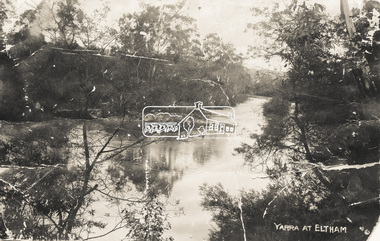 Eltham District Historical Society Inc
Photograph - Photo postcard, J.H. Clark, Yarra at Eltham, c.1910
... Sending postcards to family and friends including short messages was a common form of communication in the early 20th century. ...Sending postcards to family and friends including short messages was a common form of communication in the early 20th century. ...This card depicts the Yarra River at Eltham circa 1910. It was addressed to "Mr J. L. Brown, "Elthamville", Tinning Street, Brunswick" most probably from an extended family member. From the same collection as accession no 00779, (Pond near Eltham Park) and no. 00780 (Eltham, J.H. Clark Photo - dated 20 May 1911). Sending postcards to family and friends including short messages was a common form of communication in the early 20th century. Photographer: J.H. Clark John Henry Clark was the youngest of three boys born to William Henry Clark (1823-1877) and Maria White (1843-1914). He and his brothers, William Charles Clark (1872-1945), Clement Kent Clark (1874-1912) operated a photography business (Clark Bros.) from 25 Thomas Street, Windsor near Prahran during the period c.1894 to 1914. Following death of Clement in September 1912 and their mother in 1914, the Clark Bros business appears to have dissolved, the premises demolished, and a new house was under construction in 1915. John set up business independently in 1914 operating out of 29 Moor Street, Fitzroy where he is registered in the 1914 and 1915 Electoral Rolls. By 1916 John had relocated to Eltham where he continued his practice as a photographer and took many of the early images around the district of Little Eltham. Around 1930 John changed professions and opened a small cobbler's shop in 1931 near the pond opposite Dalton Street adjacent to the Jarrold family cottage. He never married and continued his profession as a bootmaker from this little shop, maintaining a close relationship with Mrs Jarrold for the rest of their lives. His bootmaker shop remains today beside the Whitecloud cottage and is one of only three remaining shops in the area from the early 20th century. There are a couple of images of Eltham taken by Clark Bros. in the Eltham District Historical Society collection, one such example being Hunniford’s Post Office with Miss Anne Hunniford out front (EDHS_00140 - marked on the back of the print, Clark Bros., 25 Thomas St. Windsor), which would date this image between c.1894 and 1914. Other early images of Eltham taken by John Henry Clark are marked on the face “J. H. Clark Photo” and it is assumed these are dated between 1914 and 1930. It is noted that the Grant of Probate for John H Clark of Eltham South dated 5 April !957 (513/387) records his occupation as "X Photographer".Sending postcards to family and friends including short messages was a common form of communication in the early 20th century.Postcard in very poor condition which has been removed from an album. Glue residue and album page adhering preventing information being readFront: Yarra at Elthameltham, yarra river, brown family, j.h. clark photo -
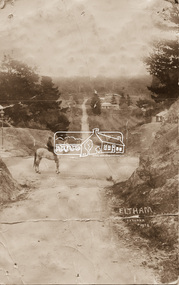 Eltham District Historical Society Inc
Photograph - Photo postcard, J.H. Clark, Eltham, looking down Bridge Street near intersection with Main Road, c.1910
... Sending postcards to family and friends including short messages was a common form of communication in the early 20th century. ...Sending postcards to family and friends including short messages was a common form of communication in the early 20th century. ...This postcard depicts the view down Bridge Street from east of Maria Street (Main Road) circa 1910. A man on a horse stands in the foreground. J.H. Clark Photo is stated under the title. From the same collection as accession no. 00778, (Yarra at Eltham) - sent from Eltham and addressed to "Mr J. L. Brown, "Elthamville", Tinning Street, Brunswick" "with love from Nellie" who was most probably a member of the extended Brown family, and no. 00779 (Pond near Eltham Park). "Dear John, As you see " can be ascertained on the reverse of this card. Sending postcards to family and friends including short messages was a common form of communication in the early 20th century. Photographer: J.H. Clark John Henry Clark was the youngest of three boys born to William Henry Clark (1823-1877) and Maria White (1843-1914). He and his brothers, William Charles Clark (1872-1945), Clement Kent Clark (1874-1912) operated a photography business (Clark Bros.) from 25 Thomas Street, Windsor near Prahran during the period c.1894 to 1914. Following death of Clement in September 1912 and their mother in 1914, the Clark Bros business appears to have dissolved, the premises demolished, and a new house was under construction in 1915. John set up business independently in 1914 operating out of 29 Moor Street, Fitzroy where he is registered in the 1914 and 1915 Electoral Rolls. By 1916 John had relocated to Eltham where he continued his practice as a photographer and took many of the early images around the district of Little Eltham. Around 1930 John changed professions and opened a small cobbler's shop in 1931 near the pond opposite Dalton Street adjacent to the Jarrold family cottage. He never married and continued his profession as a bootmaker from this little shop, maintaining a close relationship with Mrs Jarrold for the rest of their lives. His bootmaker shop remains today beside the Whitecloud cottage and is one of only three remaining shops in the area from the early 20th century. There are a couple of images of Eltham taken by Clark Bros. in the Eltham District Historical Society collection, one such example being Hunniford’s Post Office with Miss Anne Hunniford out front (EDHS_00140 - marked on the back of the print, Clark Bros., 25 Thomas St. Windsor), which would date this image between c.1894 and 1914. Other early images of Eltham taken by John Henry Clark are marked on the face “J. H. Clark Photo” and it is assumed these are dated between 1914 and 1930. It is noted that the Grant of Probate for John H Clark of Eltham South dated 5 April !957 (513/387) records his occupation as "X Photographer".Sending postcards to family and friends including short messages was a common form of communication in the early 20th century. Original sepia photo postcard hand dated 20 May 1911 in very poor condition which has been removed from an album. Glue residue and album page adhering preventing information being read Eltham J.H. Clark Photoeltham, bridge street, j.h. clark photo, main road, maria street, horse rider -
Moorabbin Air Museum
Document (series) - Nomad Development Material - Collection of Vilem Gottlieb
... Fincher 1979 10 Bound book Nomad ASTA Nomad model N22S - Certification Report N22S2-21022 - Flight Test Certification Report - AF36 Documentation 1988 11 Bound book Nomad GAF GAF Project Report RN2/4 - Nomad N22 - Detail Specification - Part 1 Basic Aircraft 1973 12 Bound book Nomad GAF Nomad Aircraft - Model N22-B - With icing spray system fitted - Development flight test schedule 1978 13 Stapled book Nomad GAF N22B - Nomad Performance Summary for Air Taxi and Commercial Operations 14 Manila Folder Nomad Civil Aviation Authority (Commonwealth of Australia) Copy of Certificate of Approval for aeroplanes type known as GAF models N2, N22, N22B, N22C, N22S, N24 and N24A 1992 15 Nomad Photograph of a Nomad with what looks like smoke underneath 16 Nomad GAF Brochure - STRETCHED Nomad N24 17 Suspension folder General Motors - Allison Gas Turbine Operations Engineering Department Report No.11910A - Instructions for the use of a program, in the form of a source deck of digital computer cards, tape, or floppy diskette to calculate steady state performance of the Allison Gas Turbine Model 250-B17E Turboprop Engine 1987 18 General Motors - Allison Gas Turbine Operations Supplement 1 to the above 19 Fax - very feint - From: Woodward Governor Company Small Aircraft Controls - To: Hawker Pacific - About: propellor synchrophasing systems availability 1992 20 Various pages, some handwritten or faxed about engines, propellor synchronising, and installation charts 1987 21 Manila Folder Nomad Newspaper article: Another Nomad Scare 22 Bulldog Newspaper article: Undercarriage Jams on Test Flight - The Daily Telegraph 1976 23 Jetstream Photograph of a Jetstream 24 Nomad GAF/Department of Productivity Memo re Nomad Ground Training Certificate awarded to Vilem K Gottlieb 25 Avalon Memo congratulating V K Gottlieb on successfully passing the Avalon B17B Engine Course 1978 26 Nomad ASTA Aircraft Weighing Summary - N22B - VH-AUN 1992 27 ASTA/Litton Systems Canada Ltd Fax - very feint - USCS Radar Trials 1990 28 Gippsland Aeronautics Email trail GA18 Bill of Material 2011 29 ASTA Instrument of Appointment - delegate Patrick Larcey 2002 30 Certificate of Competency in Winching Operations for Endorsement in a Helicopter Winch Operator’s/Aircrewman’s Log Book 1986 31 CASA Email: Mod 953 SB 2008 32 Gippsland Aeronautics Email trail: Nomad Technical Publications - Flight manuals for the Mod N953 2011 33 Gippsland Aeronautics Publication “What’s News at GippsAero” Issue 13 October 2012 2011 34 A page from an illustrated parts catalogue - Figure 8 Flap Control, Actuation, Post-Mod N953 35 Nomad A page from a Nomad - Series N24 Maintenance Manual 36 Gippsland Aeronautics Email trail re BOM creation for GA18 2011 37 Nomad Nomad N24A - Draft list of composite parts and accompanying handwritten notes 38 Nomad Gippsland Aeronautics Nomad product support - Service bulletins 2009 39 Nomad Gippsland Aeronautics Email asking for document listing the major modifications and customer options 40 Nomad Gippsland Aeronautics Handwritten notes about spare parts 41 Jetstream Jetstream CEntral Jetstream 31 Commuter Performance Information 42 Nomad Avalon Aircraft Weighing Summary - N24A-60 - ZK-NMD 43 Photograph of a Learjet cockpit 44 Photograph of a cabin of an unknown aircraft - could be the Learjet in the previous photo 45 Manila Folder ASTA Newspaper article: ASTA bids for $500m Orion deal 46 Newspaper article: re Hornet fighter jet rescue helicopter 47 Newspaper article: ASTA returns profit despite poor times 48 Newspaper article: Government to sell ASTA 49 Newspaper employment ad: ASTA Defence - Integrated Logistics Support Personnel 50 Newspaper article: ASTA to cut staff 51 Newspaper employment ad: Test Pilot at the Flying Operations Airworthiness Division (DoT) 52 GAF Job application: Flight Test Observer (No.138) 1976 53 Australian High Commission Letter re recruitment for GAF position 1977 54 Australian High Commission Letter re interview for GAF position 1977 55 Australian High Commission Letter advising of successful application for GAF position 1977 56 Australian High Commission Letter re successful medical examination 1977 57 Australian High Commission Memos regarding start date in Australia 1977 58 Memos confirming appointment as Deputy Chief Flight Test Engineer 1969 59 Australian Department of Foreign Affairs International Message Form: Nomad Icing UK 1978 60 Australian Consolate Advice re interview for application to migrate to Australia 1977 61 GAF Copy of a job ad for Flight Development Engineer 1984 62 GAF Memo: expressing interest in the Flight Development Engineer position 1984 63 GAF Memo: acknowledgement of above memo expressing interest in the Flight Development Engineer position 1984 64 Menu: 94th Aero Squadron - 1st Pursuit Group - unsure of the specific event 65 Avalon Memo: GAF Helicopter Crew - Compensation/Insurance and Additional Payments 1986 66 Aeronautical Development Associates Ltd Letter and list of installation projects 1983 67 Certificate of Competency in Winching Operations for Endorsement in a Helicopter Winch Operator’s/Aircrewman’s Log Book - DoT Air Navigation Orders on Air Service Operations - Helicopter winching and rappelling operations 1986 68 ASTA Memo: appointment of George Stuart to the position of CEO 1987 69 ASTA Various letters and memos re termination of employment and retrenchment 70 GAF Duty Statement - Senior Technical Officer (Engineering) Grade 2 1973 71 Nomad ASTA Letter to Field Aviation Company Limited requesting support services as required for Nomad N22S-164 1988 72 GAF Letter to Avalon Workforce: re GAF ceasing operations on 30/6, recommencing operations as ASTA on 1/7 1987 73 GAF Attached to #72 a copy of a newspaper obituary - GAF passing away! ...Fincher 1979 10 Bound book Nomad ASTA Nomad model N22S - Certification Report N22S2-21022 - Flight Test Certification Report - AF36 Documentation 1988 11 Bound book Nomad GAF GAF Project Report RN2/4 - Nomad N22 - Detail Specification - Part 1 Basic Aircraft 1973 12 Bound book Nomad GAF Nomad Aircraft - Model N22-B - With icing spray system fitted - Development flight test schedule 1978 13 Stapled book Nomad GAF N22B - Nomad Performance Summary for Air Taxi and Commercial Operations 14 Manila Folder Nomad Civil Aviation Authority (Commonwealth of Australia) Copy of Certificate of Approval for aeroplanes type known as GAF models N2, N22, N22B, N22C, N22S, N24 and N24A 1992 15 Nomad Photograph of a Nomad with what looks like smoke underneath 16 Nomad GAF Brochure - STRETCHED Nomad N24 17 Suspension folder General Motors - Allison Gas Turbine Operations Engineering Department Report No.11910A - Instructions for the use of a program, in the form of a source deck of digital computer cards, tape, or floppy diskette to calculate steady state performance of the Allison Gas Turbine Model 250-B17E Turboprop Engine 1987 18 General Motors - Allison Gas Turbine Operations Supplement 1 to the above 19 Fax - very feint - From: Woodward Governor Company Small Aircraft Controls - To: Hawker Pacific - About: propellor synchrophasing systems availability 1992 20 Various pages, some handwritten or faxed about engines, propellor synchronising, and installation charts 1987 21 Manila Folder Nomad Newspaper article: Another Nomad Scare 22 Bulldog Newspaper article: Undercarriage Jams on Test Flight - The Daily Telegraph 1976 23 Jetstream Photograph of a Jetstream 24 Nomad GAF/Department of Productivity Memo re Nomad Ground Training Certificate awarded to Vilem K Gottlieb 25 Avalon Memo congratulating V K Gottlieb on successfully passing the Avalon B17B Engine Course 1978 26 Nomad ASTA Aircraft Weighing Summary - N22B - VH-AUN 1992 27 ASTA/Litton Systems Canada Ltd Fax - very feint - USCS Radar Trials 1990 28 Gippsland Aeronautics Email trail GA18 Bill of Material 2011 29 ASTA Instrument of Appointment - delegate Patrick Larcey 2002 30 Certificate of Competency in Winching Operations for Endorsement in a Helicopter Winch Operator’s/Aircrewman’s Log Book 1986 31 CASA Email: Mod 953 SB 2008 32 Gippsland Aeronautics Email trail: Nomad Technical Publications - Flight manuals for the Mod N953 2011 33 Gippsland Aeronautics Publication “What’s News at GippsAero” Issue 13 October 2012 2011 34 A page from an illustrated parts catalogue - Figure 8 Flap Control, Actuation, Post-Mod N953 35 Nomad A page from a Nomad - Series N24 Maintenance Manual 36 Gippsland Aeronautics Email trail re BOM creation for GA18 2011 37 Nomad Nomad N24A - Draft list of composite parts and accompanying handwritten notes 38 Nomad Gippsland Aeronautics Nomad product support - Service bulletins 2009 39 Nomad Gippsland Aeronautics Email asking for document listing the major modifications and customer options 40 Nomad Gippsland Aeronautics Handwritten notes about spare parts 41 Jetstream Jetstream CEntral Jetstream 31 Commuter Performance Information 42 Nomad Avalon Aircraft Weighing Summary - N24A-60 - ZK-NMD 43 Photograph of a Learjet cockpit 44 Photograph of a cabin of an unknown aircraft - could be the Learjet in the previous photo 45 Manila Folder ASTA Newspaper article: ASTA bids for $500m Orion deal 46 Newspaper article: re Hornet fighter jet rescue helicopter 47 Newspaper article: ASTA returns profit despite poor times 48 Newspaper article: Government to sell ASTA 49 Newspaper employment ad: ASTA Defence - Integrated Logistics Support Personnel 50 Newspaper article: ASTA to cut staff 51 Newspaper employment ad: Test Pilot at the Flying Operations Airworthiness Division (DoT) 52 GAF Job application: Flight Test Observer (No.138) 1976 53 Australian High Commission Letter re recruitment for GAF position 1977 54 Australian High Commission Letter re interview for GAF position 1977 55 Australian High Commission Letter advising of successful application for GAF position 1977 56 Australian High Commission Letter re successful medical examination 1977 57 Australian High Commission Memos regarding start date in Australia 1977 58 Memos confirming appointment as Deputy Chief Flight Test Engineer 1969 59 Australian Department of Foreign Affairs International Message Form: Nomad Icing UK 1978 60 Australian Consolate Advice re interview for application to migrate to Australia 1977 61 GAF Copy of a job ad for Flight Development Engineer 1984 62 GAF Memo: expressing interest in the Flight Development Engineer position 1984 63 GAF Memo: acknowledgement of above memo expressing interest in the Flight Development Engineer position 1984 64 Menu: 94th Aero Squadron - 1st Pursuit Group - unsure of the specific event 65 Avalon Memo: GAF Helicopter Crew - Compensation/Insurance and Additional Payments 1986 66 Aeronautical Development Associates Ltd Letter and list of installation projects 1983 67 Certificate of Competency in Winching Operations for Endorsement in a Helicopter Winch Operator’s/Aircrewman’s Log Book - DoT Air Navigation Orders on Air Service Operations - Helicopter winching and rappelling operations 1986 68 ASTA Memo: appointment of George Stuart to the position of CEO 1987 69 ASTA Various letters and memos re termination of employment and retrenchment 70 GAF Duty Statement - Senior Technical Officer (Engineering) Grade 2 1973 71 Nomad ASTA Letter to Field Aviation Company Limited requesting support services as required for Nomad N22S-164 1988 72 GAF Letter to Avalon Workforce: re GAF ceasing operations on 30/6, recommencing operations as ASTA on 1/7 1987 73 GAF Attached to #72 a copy of a newspaper obituary - GAF passing away! ...Donation from Anna Gottlieb -
 Federation University Historical Collection
Computer, Mutlitech Industrial Corporation, Micro-Professor MPF-IP and manuals, 1983 (estimated)
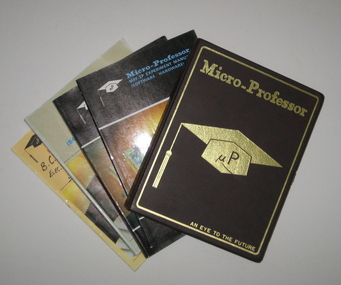
... messaged. Each character printed by the printer is in a 5 by 7 dot matrix. Although the prime purpose of the programming was for machine language object code formed as hexadecimal numbers, the Micro-Professor has an embedded Tiny Basic interpreter for which formation of some of the alpha characters using a standard 7 segment display was ingenious. ...messaged. Each character printed by the printer is in a 5 by 7 dot matrix. Although the prime purpose of the programming was for machine language object code formed as hexadecimal numbers, the Micro-Professor has an embedded Tiny Basic interpreter for which formation of some of the alpha characters using a standard 7 segment display was ingenious. ...The Micro-Professor I Plus (MPF-IP) was a low cost, versatile microcomputer system featuring sophisticated software and hardware capabilities. (MPF-IP) boasted a display panel with the ability to display 20 characters using 16-segment fonts. All 64 standard ASCII characters could be displayed. The operation of the MPF-IP was controlled by an 8k monitor program which resides in the Read Only Memory (ROM). The monitor, aided by 4k Random Access Memory (RAM), enabled the user to enter a comprehensive set of single keystroke commands, making it easier for the user to use the CPU, memory and I/0 devices. This allowed the user to concentrate of microprocessor software development and application design. The system allowed printing at 48 lines per minute, and the ability to permanently record the commands, data, programs, status and other messaged. Each character printed by the printer is in a 5 by 7 dot matrix. Although the prime purpose of the programming was for machine language object code formed as hexadecimal numbers, the Micro-Professor has an embedded Tiny Basic interpreter for which formation of some of the alpha characters using a standard 7 segment display was ingenious. The program memory consisted of non volatile 2 kilobytes electrically programmable ROM whilst the Random Access Memory came with 2 kilobytes of static RAM but could be upgraded to 4 kilobytes by insertion of another chip. The entire memory space of 64 kilobytes was accessible by way of the terminals on the left hand side of the board. Engineering and Science students from the Ballarat School of Mines and the Ballarat College of Advanced Education used a class set (as they were relatively inexpensive at approx. $100 each) during the mid to late 1980s. Student were encouraged to borrow the Micro-Professors in order to assist in learning how to use them. Only one was ever not returned on time. When pressed to return the device the student confessed that his dog had chewed the plastic case. This is still in our collection complete with bite marks! The Micro-Professor used a Zilog Z80 microprocessor. This was the most powerful of the 8 bit microprocessors at the time. Zilog was derived from the Intel 8080 microprocessor. The Z80 had 158 instructions of which the Intel 78 instructions were a subset. The Intel processor continued on through development in the IBM computers as 8086, 80286, 80386, 80486 and later the pentiums. Zilog lost most of its market share when it developed the 16 bit Z8000 microprocessor. Although the microprocessor was excellent, the lack of peripherals caused users to abandon Zilog products. A brown and gold plastic box containing a microcomputer for use in classrooms. Four manuals are titled 'Micro-Professor MPF-IP user's Manual', 'MPF-I Experiment Manual (Software/Hardware)', Micro-professor MPF-IP experiment Manual (Software/Hardware)' and Micro-Professor MPF-I Monitor Program Source Listing.microcomputer, micro computer, micro professor, electronics -
 Flagstaff Hill Maritime Museum and Village
Audio - Phonograph Horn, Thomas A. Edison, Edison Laboratory, c.1909
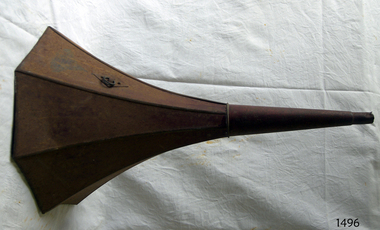
... messages over a telegraph machine. He patented the phonograph in early 1878. The phonograph was able to record sound and play it back sound. This amazing invention opened up a whole new world of entertainments, where wax cylinders of pre-recorded sound could be purchased with a wide variety of music and played over and over. The first wax cylinders were white and used a combination of bees' wax and animal fax or tallow. By 1892 Edison was using 'brown wax' cylinders that ranged from cream through to dark brown. The Edison Phonograph Company was formed...messages over a telegraph machine. He patented the phonograph in early 1878. The phonograph was able to record sound and play it back sound. This amazing invention opened up a whole new world of entertainments, where wax cylinders of pre-recorded sound could be purchased with a wide variety of music and played over and over. The first wax cylinders were white and used a combination of bees' wax and animal fax or tallow. By 1892 Edison was using 'brown wax' cylinders that ranged from cream through to dark brown. The Edison Phonograph Company was formed ...This external horn is part of an Edison Fireside Phonograph made in c.1909. The horn was attached to the machine when in use. The rings on the side of the horn allowed the horn to be suspended above the machine. The narrow opening on the horn was attached to the sound outlet on the machine and the conical shape of the horn amplified the sound. The horn was suspended to allow a clear sound. This was done by attaching the ring fitted to the outside of the horn to a chain or chord, which in turn was attached to a curved wire fitted to the phonograph machine. The phonograph machine was invented by Thomas Alva Edison in the late 19th century. Edison adapted the idea used when sending messages over a telegraph machine. He patented the phonograph in early 1878. The phonograph was able to record sound and play it back sound. This amazing invention opened up a whole new world of entertainments, where wax cylinders of pre-recorded sound could be purchased with a wide variety of music and played over and over. The first wax cylinders were white and used a combination of bees' wax and animal fax or tallow. By 1892 Edison was using 'brown wax' cylinders that ranged from cream through to dark brown. The Edison Phonograph Company was formed in 1887 to produce these machines. He sold the company in 1855 to the North American Phonograph Company but bought that company in 1890. He started the Edison Spring Motor factory in 1895 and then the National Phonograph Company in 1896. In 1910 the company became Thomas A. Edison Inc. In 1898 Edison produced the Edison Standard Phonograph, the first phonograph to carry his own trade mark. He began mass producing duplicate copies of his wax cylinders in 1901 using moulds instead of engraving the cylinders. The wax was black and harder than the brown wax. The ends of the cylinders were bevelled so that the title's label could be added. The last phonograph machine to use an external horn was produced in 1912 due to the much more robust records being invented. In 1913 Edison started producing the Edison Disc Phonograph. The company stopped trading in 1929. [NOTE: a phonograph machine plays cylinders, a gramophone plays records]This Edison external phonograph horn is significant for its connection to the c.1909 Edison Fireside phonograph model. The phonograph machine brought a new era of music into the homes of everyday people but was only popular for a few decades due to the growing popularity of records, which gave a much higher quality sound and were more robust.Phonograph horn; open horn, a conical shape with the lower part flaring out. The horn's shape on the opening half is octagonal, made from eight joined sheets of metal with a scalloped finish at the opening. The narrow end is hollow and ready to fit onto a phonograph outlet. There are two rings attached together on the side of the horn, perhaps for storing on a hook. The inner surface of the horn has remnants of deep red paint. This horn is from the Edison Fireside phonograph. (There is a mark on the outside of the horn where the Edison brand would be)flagstaff hill, maritime museum, maritime village, warrnambool, great ocean road, shipwreck coast, gramophone, phonograph, music player, entertainment, audio equipment, edison, thomas a edison, horn, phonograph horn, amplifier, audio, sound recording, sound playback, phonograph machine, external horn, edison phonograph company, wax cylinders, edison spring motor factory, national phonograph company, thomas a. edison inc, phonographic cylinder, sound reproduction -
 Frankston RSL Sub Branch
Card
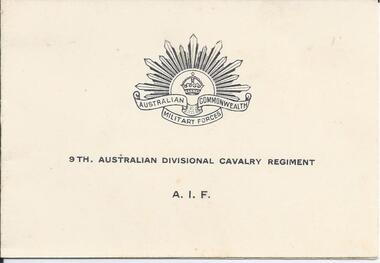
... message. At the bottom of this page are the words "MIDDLE EAST" and "DECEMBER 1941". The rear cover page has an illustration of two camels, one leading the other. Christmas card sent to a family in Australia by Australian Army serviceman, Noel Blundell who served in Syria during World war 2. The card is in the form ...Christmas card sent to a family in Australia by Australian Army serviceman, Noel Blundell who served in Syria during World war 2. The card is in the form of a booklet consisting of the cover and one double page insert. The card front cover has the Australian 'Rising Sun' badge and the words "9th Australian Divisional Cavalry Regiment" and "A. I. F.". The centre pages have an illustration of a village scene on the left page and the words "A Merry Christmas And A Happy New Year" printed on the right page. The serviceman has written "To Alice From Noel" beneath the Christmas message. At the bottom of this page are the words "MIDDLE EAST" and "DECEMBER 1941". The rear cover page has an illustration of two camels, one leading the other.christmas, middle east, 2nd aif, army, aif, ww2, world war 2, syria, blundell, noel blundell, 9th australian division -
Federation University Historical Collection
Document - SMB Documents E.J. Barker, Various School of Mines Ballarat Papers collected by E.J. Barker
... John New South Wales Institute of Technology Phone Messages Peter O'Loughlin Annual Report Signing of Agreement Position Description Certificates Fifth Form Letters, Reports Plans, Ephemera and Clipboard associated with E.J. ...E.J. Barker is a past principal of the School of Mines Ballarat and the Library at the Mt Helen Campus is named after him. School of Mines is a predecessor of Federation UniversityLetters, Reports Plans, Ephemera and Clipboard associated with E.J. Barker and the School of Mines Ballaratplanning requirements, individual rooms, dr ron wild, school of mines and industries ballarat, institute profile, location map, university of ballarat, campus plan, great hall/arts complex, notes, 1970-72 building program, operations and decisions, report to council, visit by principal, priorities, electrical engineering, mt helen, minutes of special council meeting, university of melbourne, engineering, mt helen development report, administration building, technical art school, former ballarat gaol, the court house, smb community centre, trust news, articles, discovery day, k.j. flecknoe, retirement, membership of sub committee, n.a crouch, e.j. barker, k.l. cross, w.j. gribble, l.f.j. hillman, r.c lovett, d. nicholson, g. robertson, p.r. shiells, b. tanner, r. feary, i. harris, b.c. mclennan, m. stevens, t.a. wiseman, d.r. bolster, p.h. dixon, r. dunlop, r. furness, e.j. lumsdon, a. mccaffrey, p.r. davies, d. farnsworth, j. harrison, k. mcfarlane, j. mills, s.a. mendelson, i. robinson, d.j. fraser, j. van dreven, k. alsop, b. bridges, m. palmer, r. sutton, l. snibson, h. van hammond, t. runnalls, p. sculley, g. shearer, t. slater, michael ronaldson, robert lovett, edward john barker, e.j. barker building, council membership, clipboard, n.g curry, state college of victoria, articles of association, memorandum, australian conference of principles of colleges of advanced education, commonwealth ministerial working party, victorian post secondary education commission, australian institute of physics symposium, royal australian institute of public administration, premier of victoria, r.j. hamer, m.b. john, new south wales institute of technology, phone messages, peter o'loughlin, annual report, signing of agreement, position description, certificates, fifth form -
 Lara RSL Sub Branch
Wallet, Y.M.C.A. Wallet Mr Sid Ellis carried by hm during WW1
... Thompson. .23 Paper note a pencil written recipe for an ointment measured amounts of the ingredients. .24 Two copies of Australian Imperial Force, Message to the "Officers, Non-Commissioned Officers, and Men of the Australian Imperial Force." From Commander in the field. .25 Memo "the Diggers" by Capt. William Denny - an order form...Thompson. .23 Paper note a pencil written recipe for an ointment measured amounts of the ingredients. .24 Two copies of Australian Imperial Force, Message to the "Officers, Non-Commissioned Officers, and Men of the Australian Imperial Force." From Commander in the field. .25 Memo "the Diggers" by Capt. William Denny - an order form ...WW1. Y.M.C.A. London, French scenesWW1 Wallet . YMCA LondonYMCA Wallet containing personal papers and letters - Sid Ellis- -472.01 Black leather Wallet - Y.M.C.A. Australian Logo on front. On the rear of the wallet is a Motto "Talk Clean, Live Clean, Fight Clean. Play the Game." .02 Paper slip containing details of acquaintances service numbers name and regiment details. .03 Paper Sovenior of France - written in French. .04 Paper folded to contain 10 photographic shots of French scenes countryside, sailing cutters. .05 Receipt from Returned Sailors & Soldiers Imperial League of Australia(Victoria). Issued to S. W. Ellis Brunswick Sub-branch dated 31/12/1936 Badge Number 48697. .06 Envelope Service of Campaign - printed on the front the envelope is written in Portuguese. "Servicio De Campanha" .07 Small brown paper representation of a boomerang with Cooee in gold lettering embossed on the front. .08 Small white business card for "Cafe - Debit" written in French "Albert Succr" Le Havre. .09 Cut-out from a magazine "View of the Seven Bridges" .10 Cut-out From a magazine "The New Louvre. .11 Cut-out from a magazine "Vendome Place" .12 Cut-out from a magazine "The Madeleine" .13 Cut-out from a magazine "The Arch De Triomphe - it is 150 feet high and cost 362,000 Pounds" .14 Cut-out from a magazine "The Grand Opera House - its cost was about 1,190,500 pounds and it seats over 2,000 people" .15 Cut-out from a magazine "The Cathedral of Notre Dame - A splendid example of the gothic architecture of the 13th century. .16 Cut-out from a magazine "The Trocadero Place erected from the Universal Exhibition of 1878 . with a Hall Capable of holding 5,000 people. .17 Envelope sent to Private S.W. Ellis from Lara took a well-traveled route to reach him. .18 Postcard of Park & Bandstand, Melton, Mowbray to Pte S.W Ellis. .19 Y.M.C.A. Newspaper "The Rising Sun" Vol 1, No. 14 Dated 28/1/1919 London, England. .20 Small note from Y.M.C.A. with pencil note on the rear "423 Pte. Schofield E.J." .21 Small Calander for 1918 from Y.M.C.A. London. .22 Cut out from a newspaper of a Funeral notice of Mrs. Thompson. .23 Paper note a pencil written recipe for an ointment measured amounts of the ingredients. .24 Two copies of Australian Imperial Force, Message to the "Officers, Non-Commissioned Officers, and Men of the Australian Imperial Force." From Commander in the field. .25 Memo "the Diggers" by Capt. William Denny - an order form for copies of the book.472.01 Black leather with Y.M.C.A. Australian Armed Forces Logo embossed on the front and on the Back a motto "Talk Clean, Live Clean, Fight Clean, Play The Game." .02 White pocket notebook paper. .03 Small thin cardboard white with Blue and Red chevrons on each corner. On the reverse side is a word "Souscrivez!" .04 Thin paper folder in a cascade that contains 10 small photos of French scenery. .05 Tissue paper receipt No. 31996 dated 15/01/1916 from Returned Sailors & Soldiers Imperial League of Australia (Victoria). .06 Brown Envelope with Green printing of the front. Army Form Number W 3078 (P) .07 Small Brown paper, shaped as a boomerang with a saying printed on the front "Cooee" .08 Cardboard white Business card for Cafe-Debit, Le Havre, .09 Paper cut out from a magazine with a view of the Seven Bridges. The reverse is printed with magazine writings. .10 Paper cut out from a magazine with a view of the New Louvre. The reverse is printed with magazine writings. .11 Paper cut out from a magazine with a view of Vendome Place. The reverse is printed with magazine writings. .12 Paper cut out from a magazine with a view of The Madeleine. The reverse is printed with magazine writings. .13 Paper cut out from a magazine with a view of The Arc De Triomphe. The reverse is printed with magazine writings. .14 Paper cut out from a magazine with a view of The Grand Opera House. The reverse is printed with magazine writings. .15 Paper cut out from a magazine with a view of The Cathedral Of Notre Dame. The reverse is printed with magazine writings. .16 Paper cut out from a magazine with a view of The Trocadero Palace. The reverse is printed with magazine writings. .17 Paper envelope Addressed to Pte. S. W. Ellis No. 640 sent from Lara and redirected to the recipient by Army Base Post Office. .18 Cardboard Postcard with a photographic picture of The Park & Bandstand, Melton Mowbray. Addressed to Pte. S. W. Ellis No. 640. .19 Y.M.C.A. Newspaper "The Rising Sun" Vol. 1 No. 14. .20 Thin paper from Y.M.C.A. addressed to 423 Pte. Schofield E.J. .21 Cardboard folded in two, a calendar for 1918, and small Map of Aldwych, reverse side is Y.M.C.A. in London details. Printed in red and black. .22 Cut out from a newspaper of a Funeral notice of Mrs. Thompson. .23 Thin Brown Paper with a note in pencil containing a written recipe for an ointment measured amounts of the ingredients. .24 Two copies of paper pamphlets. To the Officers & men of Australian Imperial Force dated 14th November 1918, .25 A paper pamphlet "The Diggers" by Capt. William Denny -
 Flagstaff Hill Maritime Museum and Village
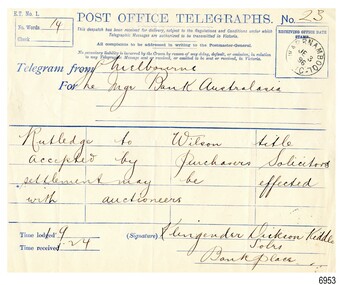
Document - Telegraph, Klingender Dickson and Kiddle, solicitors, 3-6-1896
... The layout of the paper form includes a table with four columns and five rows, set out for writing just one word into each of the twenty spaces. The happy message...The layout of the paper form includes a table with four columns and five rows, set out for writing just one word into each of the twenty spaces. The happy message ...The telegraph system of sending and receiving messages was developed in the early 1800s and improved as time went on. It sends electronic signals that represent letters and words along a wire. Those signals are then converted back to words at the other end of the wire. Morse code is a similar system. A fee is charged to send a telegraph, per letter or per word. The telegraph greatly improved communication, particularly in a large country like Australia. It was a fast way to send news and send out calls for help for people during a shipwreck. In Warrnambool, it was even used to set the correct time every day; a signal was sent from the time ball in Melbourne, and along the railway line to the Warrnambool Post Office. This 1896 telegraph tells a big story in very few words, only fourteen! The layout of the paper form includes a table with four columns and five rows, set out for writing just one word into each of the twenty spaces. The happy message is the approval to go ahead with the exchange/sale of the title from landowner Rutledge to Wilson. The Melbourne Legal firm Klingender Dickson and Kiddle sent this message on behalf of its client to the Bank of Australasia in Warrnambool. The Bank of Australasia was incorporated by the Royal Charter of England in March 1834. The bank began in Australia on 14th December 1835, opening in Sydney. The Acting Superintendent of the bank at that time was David Charters McArthur. He was Superintendent from 1867-to 1876. The Melbourne branch opened on 28th August 1838 in a two-roomed brick cottage on the north side of Little Collins Street, where two huge mastiff dogs were used at night to guard the bank. The government also provided an armed military sentinel. Due to the bank's rapid growth, a new building for the Melbourne branch was opened in 1840 at 75 Collins Street West. By 1879 the bank had been upgraded to a magnificent two-storey building on the corners of Collins and Queens Streets, with the entry on Collins Street. In 1951 the Bank of Australasia amalgamated with the Union Bank to form Australia and New Zealand Bank, now known as the ANZ. Then in 1970, the ANZ merged with both the ES&A and the London Bank of Australia to form the ANZ Banking Group Limited. The ANZ Banking Group Ltd kindly donated a variety of historic items from the Bank of Australasia. BANK of AUSTRALASIA, WARRNAMBOOL – In 1854 Warrnambool had two banks, the Union Bank and the Bank of Australasia. Later, completely different bank businesses opened; in 1867 the National Bank of Australasia, then in 1875 the Colonial Bank of Australasia. The original Warrnambool branch of the Bank of Australasia was established in July 1854, and operated from a leased cottage on Merri Street, close to Liebig Street. The bank later bought a stone building previously erected by drapers Cramond & Dickson on the corner of Timor and Gibson Streets. Samuel Hannaford was a teller and then Manager at the Warrnambool branch from 1855 to 1856 and the Warrnambool Council chose that bank for its dealings during 1856-57. In 1859 Roberts & Co. was awarded the contract to build the new Bank of Australasia branch for the sum of £3,000. The land was on a sand hill on the northeast corner of Timor and Kepler Streets and had been bought in 1855 from investor James Cust. The new building opened on May 21, 1860. The bank continued to operate there until 1951 when it merged with the Union Bank to form the ANZ Bank, which continued operating from its Liebig Street building. Warrnambool City Council purchased the former Bank of Australasia building in 1971 and renovated it, then on 3rd December 1973 it was officially opened as the Art Gallery by Cr. Harold Stephenson and Gallery Director John Welsh. The Gallery transferred to the purpose-built building in Liebig Street in 1986 and the old bank building is now the Gallery club. Staff at the Bank of Australasia in Warrnambool included the following men but others were also involved: Samuel Hannaford, Teller then Manager from 1855-1856; W H Palmer, Manager from January 1857 until November 1869 when the Teller Basil Spence was promoted to Manager; H B Chomley, Manager from April 1873 and still there in 1886; A Butt, Manager in 1895-1904; J R McCleary Accountant and Acting Manager for 12 months, until 1900; A Kirk, Manager 1904; J Moore, staff until his transfer to Bendigo in December 1908; J S Bath was Manager until 1915; C C Cox, Manager until April 1923; Richard C Stanley, Manager 1923 to April 1928. This telegraph has historical significance as it was sent to the Bank of Australasia in Warrnambool. The parties involved in the message, Rutledge and Wilson, were involved in a land deal in 1896 when the district was importing and exporting goods into and out of Warrnambool Harbour via sailing ships. It is also a historical record of the nature of financial agreements between similar institutions in Warrnambool and the district. The telegraph is significant for its association with the Bank of Australasia in Warrnambool, the first bank in Warrnambool, established in 1854. The bank continued to operate until its merger in 1951 when it became the ANZ Bank, which is still in operation today. The Bank was an integral part of the establishment and growth of commerce in Colonial Warrnambool and throughout Australia.Telegraph RECEIVED: Warrnambool Post Office, Wednesday 3rd June 1896. FROM: Klingender, Dickson, and Kiddle, solicitors, Bank Place, Melbourne FOR :the Manager, Bank of Australasia, Warrnambool, REGARDING: Rutledge to Wilson titleSTAMP: text inside circle "WARRNAMBOOL VIC", and in centre of the circle "JE 3 96" Telegraph No. "23", FROM :"Melbourne", FOR: "The Mgr, Bank of Australasia" MESSAGE (14 words): "Rutledge to Wilson title accepted by Purchaser's Solicitors settlement may be effected with auctioneers" TIME: "9:24" SIGNED: " Klingender Dickson Kiddle, Solrs, Bank Place"flagstaff hill, warrnambool, flagstaff hill maritime museum, maritime museum, commerce, banking, bank of australasia, australia & new zealand bank, anz bank, david charters mcarthur, telegraph, 1896, rutledge, wilson, klengender, dickson, kiddle, warrnambool post office, klengender dickson and kiddle, bank place -
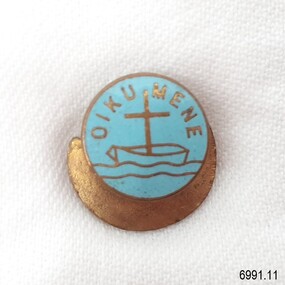 Flagstaff Hill Maritime Museum and Village
Badge - World Council of Churches, OIKUMENE, 1940s
... The WCC explains that the logo uses early Christian symbols to portray its message, with the church portrayed as a boat afloat on the sea of the world with the mast in the form of a cross. ...The WCC explains that the logo uses early Christian symbols to portray its message, with the church portrayed as a boat afloat on the sea of the world with the mast in the form of a cross. ...This small label badge carries the symbol of the World Council of Churches (WCC), which was established in 1948. The WCC states on its website "The World Council of Churches (WCC) is the broadest and most inclusive among the many organized expressions of the modern ecumenical movement, a movement whose goal is Christian unity. " The 'V' on the back of the badge possibly stands for Victoria. The word on the logo of this badge has the spelling "OIKUMENE" but in many other WCC logos, the Greek word "Oikoumene" is used. The term is translated as "inhabited earth" and is used fifteen times in the original Greek New Testament, including in Matthew 24:14, which says "And the gospel of the kingdom shall be preached in all the world for a witness unto all nations and then shall the end come." The WCC explains that the logo uses early Christian symbols to portray its message, with the church portrayed as a boat afloat on the sea of the world with the mast in the form of a cross. This badge is part of a set of eleven badges collected from the 1920s to the 1940s by Dr W. R. Angus. The set represents various organisations that he had interests in. It was donated to Flagstaff Hill Maritime Village by the family of Doctor Angus, Surgeon and Oculist. The set of badges is part of the “W.R. Angus Collection” which includes historical medical equipment, surgical instruments and material once belonging to Dr Edward Ryan and Dr Thomas Francis Ryan, (both of Nhill, Victoria) as well as Dr Angus’ own belongings. The Collection’s history spans the medical practices of the two Doctors Ryan, from 1885-1926 plus that of Dr Angus, up until 1969. ABOUT THE “W.R.ANGUS COLLECTION” Doctor William Roy Angus M.B., B.S., Adel., 1923, F.R.C.S. Edin.,1928 (also known as Dr Roy Angus) was born in Murrumbeena, Victoria in 1901 and lived until 1970. He qualified as a doctor in 1923 at the University of Adelaide, was Resident Medical Officer at the Royal Adelaide Hospital in 1924 and for a period was a house surgeon to Sir (then Mr.) Henry Simpson Newland. Dr Angus was briefly an Assistant to Dr Riddell of Kapunda, then commenced private practice at Curramulka, Yorke Peninsula, SA, where he was a physician, surgeon and chemist. In 1926, he was appointed as the new Medical Assistant to Dr Thomas Francis Ryan (T.F. Ryan, or Tom), in Nhill, Victoria, where his experiences included radiology and pharmacy. In 1927 he was Acting House Surgeon in Dr Tom Ryan’s absence. Dr Angus married Gladys in 1927 at Ballarat, the nearest big city to Nhill where he began as a Medical Assistant. He was also Acting House surgeon at the Nhill hospital where their two daughters were born. During World War II He served as a Military Doctor in the Australian Defence Forces. Dr Angus and his family moved to Warrnambool in 1939, where Dr Angus operated his own medical practice. He later added the part-time Port Medical Officer responsibility and was the last person appointed to that position. Both Dr Angus and his wife were very involved in the local community, including the planning stages of the new Flagstaff Hill and the layout of the gardens there. Dr Angus passed away in March 1970.This religious lapel badge of the World Council of Churches represents one of the organisations in which Dr Angus had an interest. The set of badges is significant for connecting Doctor Angus with Australian organisations of the early-to-mid 20th century, including those relating to military service support. The W.R. Angus Collection is significant for still being located at the site it is connected with, Doctor Angus being the last Port Medical Officer in Warrnambool. The Collection includes historical medical objects that date back to the late 1800s.Lapel badge; a small round blue enamel badge with gold image and text. The image contains the symbol of a cross above a small boat on waves. The image is the logo of the World Council of Churches.This badge is part of a set of badges collected by Dr W R Angus. the set represents organisations that he was involved in, and is part of the W.R. Angus Collection.Test above Logo: “OIKUMENE” Logo; [cross] above [small boat] above [waves] Text under clip; “V” flagstaff hill, warrnambool, maritime museum, maritime village, great ocean road, shipwreck coast, oikumene, w.r. angus, metal badge, enamel badge, organisation badges, religious badge, lapel badge, oikoumene, world council of churches, wcc, christian unity -
Glenelg Shire Council Cultural Collection
Card - Birthday Card, n.d
... Back: 'To Dea Mother Form your dorter Olive Kean' hand written, black ink Front section of a birthday card glued to a piece of white card. Blue flowers and birthday message ...Front section of a birthday card glued to a piece of white card. Blue flowers and birthday messageBack: 'To Dea Mother Form your dorter Olive Kean' hand written, black ink -
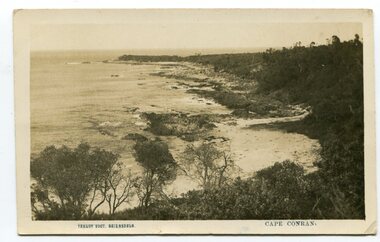 Orbost & District Historical Society
black and white photograph, Vogt, Stanley, first half 20th century
... message. Between 1901 and 1914 a wide range of subjects were recorded by often anonymous artists and photographers and published by everyone from major companies to enthusiastic individuals. As a result, postcards provide a comprehensive resource for anyone interested in how our forebears lived, laughed and loved one hundred years ago. They are very interesting records of places gone, architecture gone and people gone, showing social history such as dress, or early automobiles. Postcards form ...This is a scene of Cape Conran, East Gippsland taken by Bairnsdale photographer, Stanley Vogt. It was probably one of a collection of commercial post cards available to tourists or East Gippsland residents to send to friends or relatives. Cameras in the early 20th century were not a common family possession and a postcard was a common souvenir and way of sending a short message.Between 1901 and 1914 a wide range of subjects were recorded by often anonymous artists and photographers and published by everyone from major companies to enthusiastic individuals. As a result, postcards provide a comprehensive resource for anyone interested in how our forebears lived, laughed and loved one hundred years ago. They are very interesting records of places gone, architecture gone and people gone, showing social history such as dress, or early automobiles. Postcards form a vital part of social and historical records for researchers. A black / white postcard photograph of a scenic view of the beach and ocean at Cape Conran in Far East Victoria.on front - "Stanley Voigt - Bairnsdale - Cape Conran"postcard-cape-conran -
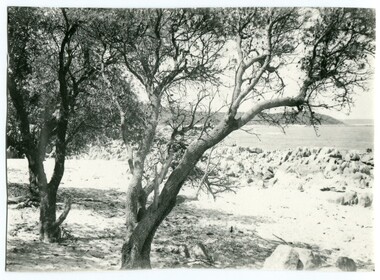 Orbost & District Historical Society
black and white photograph, first half 20th century
... It appears to be a copy of a commercial postcard available to tourists or East Gippsland residents to send to friends or relatives.Cameras in the early 20th century were not a common family possession and a postcard was a common souvenir and way of sending a short message. Postcards form a vital part of social and historical records for researchers. cape-conran A black / photograph of trees and a beach with rocks and the ocean in the background. ...this photograph is of Cape Conran in Far East Gippsland. It appears to be a copy of a commercial postcard available to tourists or East Gippsland residents to send to friends or relatives.Cameras in the early 20th century were not a common family possession and a postcard was a common souvenir and way of sending a short message.Postcards form a vital part of social and historical records for researchers. A black / photograph of trees and a beach with rocks and the ocean in the background. It appears to be a copy of a postcard and has been hand trimmed.cape-conran -
 Orbost & District Historical Society
booklet, 1958 Road Safety Colouring Competition, second half 1950's
... messages and activities specifically considered for children. Its aim was to teach road safety in a fun, but educational way. This item was an important educational tool. road-safety competitions-colouring A booklet of competitions - Road Safety- Victorian Section for Children It was issued by the Australian Road Safety Council. The front cover is blue, red, black and white. It contains crosswords, colouring competitions with entry forms ...Between the 1950s and 1970s, road safety was redefined as a medical and social problem, rather than a moral and legal one. This was a time before seat belts. The Road Safety Colouring Competition was a free colouring competition for children, organised by Commonwealth Oil Refineries Ltd., started in August 1954 with the , aims of teaching road safety. There were 1,000 prizes, valued at £1,200. The winner would receive a £100 bursary and a free plane trip with one parent to Canberra to receive the prize from the Federal Minister for Transport, Senator.G. McLeay. This booklet is the one used by the children in Orbost in 1958. This booklet was designed to promote road safety awareness, with messages and activities specifically considered for children. Its aim was to teach road safety in a fun, but educational way. This item was an important educational tool. A booklet of competitions - Road Safety- Victorian Section for Children It was issued by the Australian Road Safety Council. The front cover is blue, red, black and white. It contains crosswords, colouring competitions with entry forms.road-safety competitions-colouring
