
Showing 37 items matching "middle east operations"
-
 Moorabbin Air Museum
Book - De Havilland Venom, Venom. De Havilland Venom and Sea Venom The Complete History
... ...Middle East operations...De Havilland Venom Venom development Venoms with second tactical air force Middle East operations The Suez crises Malaya Venoms in the Far East RAF Venom NF.2 Venom NF.2A Venom NF3 night fighter Sea Venom development Into service with the Royal Navy Sea Venom FAW.21 Blown flap trials Venoms in service overseas Warbirds & survivors From the cockpit History of Venom / Sea Venom fighter, circa 2003 Venom. ...History of Venom / Sea Venom fighter, circa 2003non-fictionHistory of Venom / Sea Venom fighter, circa 2003venom development, venoms with second tactical air force, middle east operations, the suez crises, malaya, venoms in the far east, raf venom nf.2, venom nf.2a, venom nf3 night fighter, sea venom development, into service with the royal navy, sea venom faw.21, blown flap trials, venoms in service overseas, warbirds & survivors, from the cockpit -
 Bendigo Military Museum
Memorabilia - COMMEMORATION MEDALLION, Post 2014
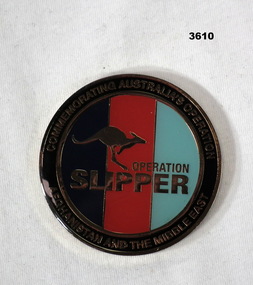
... In centre over stripes: A kangaroo with words “OPERATION SLIPPER” Circumference: COMMEMORATING AUSTRALIAN OPERATION - AFGHANISTAN AND THE MIDDLE EAST” Rear: “OPERATION SLIPPER AUSTRALIA 2001 - 2014” ...Medallion slipper operation commemoration In centre over stripes: A kangaroo with words “OPERATION SLIPPER” Circumference: COMMEMORATING AUSTRALIAN OPERATION - AFGHANISTAN AND THE MIDDLE EAST” Rear: “OPERATION SLIPPER AUSTRALIA 2001 - 2014” Heavy metal & enamel, circular medallion. ...Heavy metal & enamel, circular medallion. Centre has 3 coloured stripes, dark blue / red / light blue. Rear is embossed with Australian Coat of Arms, black on gold.In centre over stripes: A kangaroo with words “OPERATION SLIPPER” Circumference: COMMEMORATING AUSTRALIAN OPERATION - AFGHANISTAN AND THE MIDDLE EAST” Rear: “OPERATION SLIPPER AUSTRALIA 2001 - 2014” medallion, slipper, operation, commemoration -
 Montmorency–Eltham RSL Sub Branch
Medal - Commemorative Medallion
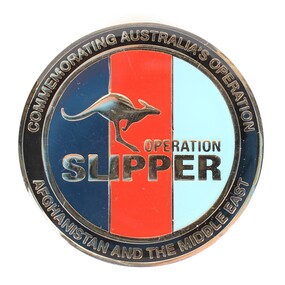
... operation slipper...afghanistan...australian army...middle east...On front of medallion, "Operation Slipper", "Commemorating Australia's Operation/Afghanistan and the Middle East" On reverse, "Operation Slipper" and "2001 - 2014" and the Australian Coat of Arms....Australia's military contribution to the International Security Assistance Force mission in Afghanistan ended in 2014, making Operation Slipper Australia's longest running operation. commemoration operation slipper afghanistan australian army middle east international security assistance force On front of medallion, "Operation Slipper", "Commemorating Australia's Operation/Afghanistan and the Middle East" On reverse, "Operation Slipper" and "2001 - 2014" and the Australian Coat of Arms. ...In November 2001 Australian SAS troops joined the war in Afghanistan under the operation name "Operation Slipper." Australia's military contribution to the International Security Assistance Force mission in Afghanistan ended in 2014, making Operation Slipper Australia's longest running operation.This commemorative medallion features the tri-service colours, navy, red and light blue, representing the Australian Defence Force, and a golden bounding kangaroo to represent non-combatant contributions. Commemorative text encircles the kangaroo motif and Coat of Arms on the front and back, respectively.On front of medallion, "Operation Slipper", "Commemorating Australia's Operation/Afghanistan and the Middle East" On reverse, "Operation Slipper" and "2001 - 2014" and the Australian Coat of Arms.commemoration, operation slipper, afghanistan, australian army, middle east, international security assistance force -
 Bendigo Military Museum
Print - PRINT, FRAMED, RAAF, RAAF (c) Juanita Franzi 2013/ AERO ILLUSTRATIONS, 2013
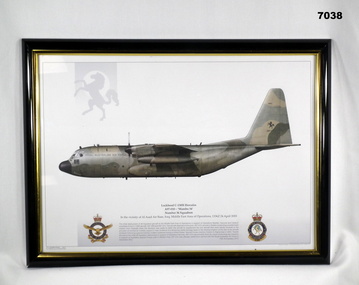
... Heading to printed information - "Lockheed C-130 Hercules/ A97-010- Mambo 34/ Number 36 Squadron/ In the vicinity of Al Asad Air Base, Iraq, Middle East Area of Operations, 1336Z 24 April 2003" Further information below heading....Heading to printed information - "Lockheed C-130 Hercules/ A97-010- Mambo 34/ Number 36 Squadron/ In the vicinity of Al Asad Air Base, Iraq, Middle East Area of Operations, 1336Z 24 April 2003" Further information below heading. ...Heading to printed information - "Lockheed C-130 Hercules/ A97-010- Mambo 34/ Number 36 Squadron/ In the vicinity of Al Asad Air Base, Iraq, Middle East Area of Operations, 1336Z 24 April 2003" Further information below heading.Framed Print. Print - in colour on paper, photograph of a RAAF aircraft "Lockheed C.130H Hercules" with information on aircraft below in black print. RAAF and 36 SQUADRON crest in colour, either end of the printed information. Frame - moulded black plastic with gold inner edge. Glass front and timber back.framed print, raaf, lockheed aircraft -
 Tatura Irrigation & Wartime Camps Museum
Book, Paul Daley, Beersheba - A journey through Australia's Forgotten War, 2009
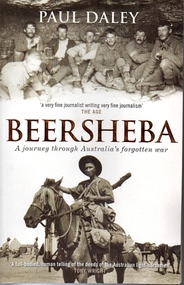
... Telling of the deeds of the Australian Light Horsemen, Campaigns of the 4th Lighthorse Regiment - Middle East, Palestine. Australian Cavalry operations and Military History of Beersheba ( Israel). ...Telling of the deeds of the Australian Light Horsemen, Campaigns of the 4th Lighthorse Regiment - Middle East, Palestine. Australian Cavalry operations and Military History of Beersheba ( Israel). ...Telling of the deeds of the Australian Light Horsemen, Campaigns of the 4th Lighthorse Regiment - Middle East, Palestine. Australian Cavalry operations and Military History of Beersheba ( Israel). World War 1 1914-1918 339 pages - B/W Photos - slight water damage -
 Flagstaff Hill Maritime Museum and Village
Container - Tin, Kiwi Shoe Polish Manufacture, 1940s
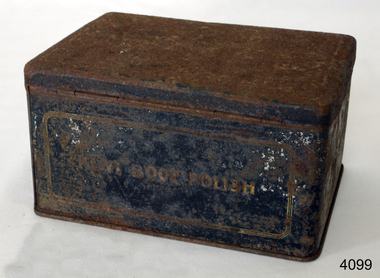
... Middle East. In the mid-1970s, as part of a major streamlining, the UK factory was closed with production switched to France. The UK operation...Middle East. In the mid-1970s, as part of a major streamlining, the UK factory was closed with production switched to France. The UK operation ...The polish was developed in Australia by William Ramsay who named it Kiwi after the flightless bird endemic to New Zealand, the home country of his wife, Annie Elizabeth Meek Ramsay. Its success in Australia expanded overseas when it was adopted by both the British and American armies in World War I. In the UK, Kiwi was for many years manufactured at its British headquarters in Ealing (Brumwell Road, London W5 1DT). From here the factory manufactured for the UK market and exported the Kiwi brand too much of Europe and the Middle East. In the mid-1970s, as part of a major streamlining, the UK factory was closed with production switched to France. The UK operation moved to Surrey at Yately becoming, effectively, a sales and marketing office, with distribution contracted to a third party. In 1980, production for the UK market moved back to the UK and was housed in a factory near Huddersfield. The UK head office was relocated to Maidstone, Kent, where Kiwi had other product interests. Following the global merger with Nicholas Laboratories, the UK head office was again relocated to Slough at the Nicholas building on Bath Road.A significant product as Kiwi is an Australian brand name of shoe polish, first launched and sold in Australia in 1906 and as of 2005 sold in almost 180 countries. Previously owned by the Sara Lee Corporation since 1984, it was sold in 2011 to S. C. Johnson. It is the dominant shoe polish in some countries, including the United Kingdom and the United States, where it has about two thirds of the market. In Malaysia and Singapore, Kiwi has become such a household brand for a shoe polish that the word "kiwi" has been genericized into a verb in the Malay language, meaning "to polish one's shoes".Metal cleaning outfit of Kiwi boot polish brush, scraper, & polish missingKiwi Boot Polish to front of containerflagstaff hill, warrnambool, shipwrecked-coast, flagstaff-hill, flagstaff-hill-maritime-museum, maritime-museum, shipwreck-coast, flagstaff-hill-maritime-village -
 Flagstaff Hill Maritime Museum and Village
Vehicle - Furphy Water Cart, J. Furphy & Sons, c. 1942
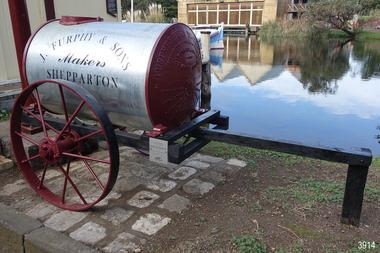
... operation today. Furphy carts are of military significance for the role they played during The Great War (1914-1918) in Australian army camps, and theatres of war in Europe and the Middle East, to supply the AIF troops with fresh water. ...This horse-drawn, two-wheeled cart with a tank, is known as a Furphy Farm Water Cart that was made in Shepparton, northern Victoria, c. 1942. John Furphy (1842-1920) was born in Moonee Ponds, in 1842 to Irish immigrant parents and subsequently raised in the Yarra Valley before the family moved to Kyneton in central Victoria, where he completed an apprenticeship with the firm Hutcheson and Walker. Murphy began operations of his own at a site on Piper Street in Kyneton in 1864. He relocated for a business opportunity and founded the first blacksmiths and wheelwrights shop in the newly surveyed town of Shepparton in 1873. Furphy invented many farming tools and machines including a patented grain-stripper, and won awards at the 1888-89 Melbourne International Exhibition. His most famous invention is the Furphy Farm Water Cart, designed in the 1880s, at a time when water for most households and farms was carted on wagons in wooden barrels. The Furphy’s water cart is a single item that combines a water metal tank and a cart. The design of the cart was simple yet effective, and became popular very quickly and established itself as a vital piece of farming equipment. The water cart has had a number of words cast into its ends over many years. References to the foundry’s location in Shepparton, as well as advertising of other products also manufactured by J. Furphy & Sons were present on the ends. However, the most significant set of words to feature on the tank, was a poem encouraging continual improvement: ‘Good Better Best, Never Let it Rest, Until your Good is Better, And your Better Best’. During The Great War (1914-1918), the water cart was used by the Australian militarily at a large AIF (Australian Imperial Force) camp in Broadmeadows (Melbourne) where thousands of men were camped for months, before being transported aboard. Furphy Water Carts provided water to the troops, and were usually placed near the camp latrines, which was one of the few places the troops could share gossip and tall tales away from the prying eyes and ears of their officers. The water cart drivers were also notorious sources of information, despite most of their news being hearsay, or totally unreliable. By the time the men of the AIF were in engaged in combat on the Gallipoli Peninsula and the Western Front, the carts used for water supply had no markings and became simply referred to as Furphys. This owed as much to the coining of the term ‘Furphy’, Australian slang for suspect information or rumour. After a number of decades as principally a soldier’s word, 'Furphy' entered the broader Australian vernacular and was used mainly by the political class until recently when the term was taken up by a Australian brewer as a beer brand. This Furphy Water Cart was purchased by Friends of Flagstaff Hill in 2014. The support of local individuals, organisations and businesses enabled its restoration and later its installation alongside the existing late-19th century water pipe stand and 1940s hand pump The Furphy Farm Water Cart is of historical significance as it represents a famous Australian time-saving and energy-saving invention of the 1880s, replacing the labour intensive activity of collecting and dispensing water from barrels and casks on the back of carts. The water cart’s connection with manufacturing companies J. Furphy & Sons and Furphy Foundry are significant for being early Australian businesses that are still in operation today. Furphy carts are of military significance for the role they played during The Great War (1914-1918) in Australian army camps, and theatres of war in Europe and the Middle East, to supply the AIF troops with fresh water. A wooden framed, two-wheeled, horse-drawn cart, fitted with a horizontally mounted, cylindrical metal tank. The tank is made of rolled, sheet steel with a riveted seam, and cast iron ends with cast iron ends. The spoked metal wheels have fitted flat iron tyres and metal hubs. A metal pipe is joined to the outlet. The tank is silver coloured, the ends, wheels and trims are crimson, and the script lettering on tank sides is black. There are inscriptions on the tank, ends, and hubs. The water tank was made in 1942 in Shepparton, Australia, by J. Furphy & Sons and has a capacity of 180 gallons (848 litres). Hub perimeter, embossed “J. FURPHY & SONS” “KEEP THE / BOLTS TIGHT” Hub centre embossed [indecipherable] Tank, each side, painted “J. FURPHY & SONS / Makers / SHEPPARTON” Tank ends, embossed – “FURPHY’S FARM WATER CART” “BORN ABOUT 1880 – STILL ‘GOING STRONG’ 1942” “j. FURPHY & SONS / MAKERS / SHEPPARTON - VIC “ “S - - - - - L MANUFACTURERS” [SPECIAL] “SPIKE ROLLERS” “SINGLE TREES” “PLOUGH WHEELS” “IRON CASTINGS” “LAND GRADERS” “STEEL DELVERS” “CAST IRON PIG” “CHAIN YOKES” “GOOD – BETTER – BEST / NEVER LET IT REST / TILL YOUR GOOD IS BETTER / AND YOUR BETTER – BEST” Image [Stork carrying a baby] above shorthand, transcribed "Produce and populate or perish" Image [Furphy Pig Feeder] beside ‘Cast Iron Pig’ Shorthand, transcribed “"Water is the gift of God but beer and whiskey are concoctions of the Devil, come and have a drink of water"warrnambool, flagstaff hill maritime museum, water cart, furphy cart, furphy tank, furphy farm water cart, furphy, john furphy, john furphy & sons, furphy foundry, kyneton, shepparton, mobile water tank, jinker, hutchinson & walker, blacksmith, farm equipment, implement maker, tool maker, horse drawn, stork and baby, good, better, best, barrel, tank, first world war, wwi, eastern front, gallipoli, j furphy & sons -
 Montmorency–Eltham RSL Sub Branch
Medal - Commemorative Medallion
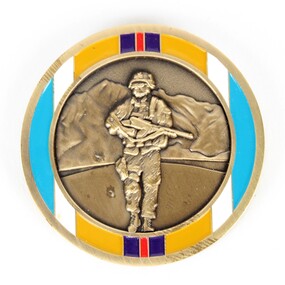
... operation slipper...afghanistan...australian army...middle east...According to the Department of Defence, "the ribbon is khaki representing the dominant ground colour of the terrain, edged with light blue and white stripes representing the sky above the mountains and the snow on the mountain peaks with central stripes of purple and red representing the ADF and the conflict in Afghanistan." commemoration operation slipper afghanistan australian army middle east international security assistance force This commemorative medallion features the Afghanistan Medal ribbon colours encircling the figure of an ADF member holding a weapon. ...In November 2001 Australian SAS troops joined the war in Afghanistan under the operation name "Operation Slipper." Australia's military contribution to the International Security Assistance Force mission in Afghanistan ended in 2014, making Operation Slipper Australia's longest running operation. According to the Department of Defence, "the ribbon is khaki representing the dominant ground colour of the terrain, edged with light blue and white stripes representing the sky above the mountains and the snow on the mountain peaks with central stripes of purple and red representing the ADF and the conflict in Afghanistan." This commemorative medallion features the Afghanistan Medal ribbon colours encircling the figure of an ADF member holding a weapon. The image is in relief. The reverse features a number of service personnel pictured in front of a vehicle, encircled by the motif of the Australian national flag.commemoration, operation slipper, afghanistan, australian army, middle east, international security assistance force -
 Red Cliffs Military Museum
Replica Medals, WW1 & WW11 Medals Awarded to Nathaniel Barclay, (estimated); between 1914 & 1945
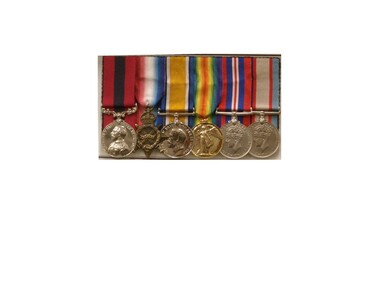
... Embarked from Melbourne for the middle East with 3rd reinforcement group for the 5th Battalion, 2nd Brigade, 1st Division, 25th February 1915 per transport 'Runic'. Disembarked Alexandria and to camp Heliopolis, Egypt. Operation...Embarked from Melbourne for the middle East with 3rd reinforcement group for the 5th Battalion, 2nd Brigade, 1st Division, 25th February 1915 per transport 'Runic'. Disembarked Alexandria and to camp Heliopolis, Egypt. Operation ...Born 5th October 1895 in Adavoyle, United Kindom Occupation Grocer and later horticulturalist Married after WW1- Wife - Daisy Florence Barclay World War One Staff Sergeant Regimental Number 2139 Enlisted AIF in Melbourne 29th December 1914, having previously served 3 months with the Ulster Volunteers and to camp Broadmeadows, to depot Battalion 29th December 1914. Embarked from Melbourne for the middle East with 3rd reinforcement group for the 5th Battalion, 2nd Brigade, 1st Division, 25th February 1915 per transport 'Runic'. Disembarked Alexandria and to camp Heliopolis, Egypt. Operation Gallipoli from 5th May 1915 with 5th Battalion. Sick with dental problems 2nd Field Ambulance 17th September 1915. To hospital Lemnos 20th December 1915. To Alexandria hospital with pluerisy 12th January 1916. Returned to Australia with enteric per 'Nestor' 9th February 1916.To duty Broadmeadows 4th April 1916. Wmbarked with 4th reinforcements group for the 58th Battalion, 15th Brigade per transport 'Themistocles' 1st August 1916 Returned to England 14th September 1916. Operations France and Flanders from 6th December 1916. To 59th Battalion 29th December 1916. To 5th Division Infantry School 18th February to 28th March 1917 as Lance Corporal. Corporal 7th April 1917. Sergeant 2nd May 1917. To 3rd Southern General Hospital Oxford 4th October 1917. Returned to Melbourne per Transport 'Persic' 12th February 1918. Discharged 14th March 1918. Second World War. Regimental Number V5571 Emlisted in the Australian Military Forces in Royal Park, Melbourne 22nd August 1940 and to 2nd Infantry Training Battalion, Fyansford. Staff Sergeant 24th August 1940. To 2/14th Training Battalion Wangaratta 11th October 1940. To 2/23rd Training Battalion, Wangaratta 18th October, 1940.To Southern Command Training School 26th May 1941.to Camp Bonegilla 15th May 1942. To Camp Caulfield 11th November 1942. Discharged to Reserve Occupation 19th November 1942. Remarks. Awarded 1915-15 Star, British War Medal, and Victory Medal 1914-1919 Awarded Distinguished Conduct Medal as Lance Corporal vide London Gazette 30111 of 31st July 1918. Citation for action on 9th July 1917 during the third Battle of Ypres reads- " For conspicous gallantry and devotion to duty. He rendered invaluable service during operation in carrying important messsages through heavy fire" Awarded War Medal and Australian Service Medal 1939-45 in 1951. Described as 71.5inches tall, medium complexion, blue eyes and brown hair. He died 11th September 1962.WW1 - Distinguished Conduct Medal 1914/15 Star 1914/18 British War Medal Victory Medal WW11 - 1939/45 British War Medal Australian Service Medal 1939/45 All medals with associated coloured ribbons. These are replica medals made in the exact metals as the originals. Also in display is a record of War Service which can be found in the narrative. Noneservice, medal, 1918, citation, ww1, military, gazette, london, ww11, medals, 30111, 31st, july, ypres, distinguished -
 Australian Commando Association - Victoria
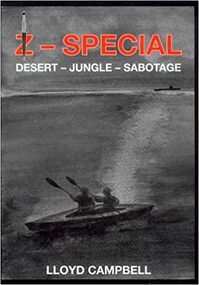
Book, Z Special- Desert-Jungle- Sabotage
... Middle East with 2/17 Battalion. Later in New Guinea he made a major career change and volunteered for an unknown unit and special operations. ...Middle East with 2/17 Battalion. Later in New Guinea he made a major career change and volunteered for an unknown unit and special operations. ...When Lloyd Campbell joined the AIF, he was underage and went to the Middle East with 2/17 Battalion. Later in New Guinea he made a major career change and volunteered for an unknown unit and special operations. What he had joined was the SRD – known as Z-Special Unit. Z Special Unit—also known as Special Operations Executive (SOE), Special Operations Australia (SOA) or the Services Reconnaissance Department (SRD)—was a joint Allied special forces unit formed during the Second World War to operate behind Japanese lines in South East Asia. Predominantly Australian, Z Special Unit was a specialist reconnaissance and sabotage unit that included British, Dutch, New Zealand, Timorese and Indonesian members, predominantly operating on Borneo and the islands of the former Netherlands East Indies. The unit carried out a total of 81 covert operations in the South West Pacific theatre, with parties inserted by parachute or submarine to provide intelligence and conduct guerrilla warfare. The best known of these missions were Operation Jaywick and Operation Rimau, both of which involved raids on Japanese shipping in Singapore Harbour; the latter of which resulted in the deaths of 23 commandos either in action or by execution after capture. Although the unit was disbanded after the war, many of the training techniques and operational procedures employed were later used during the formation of other Australian Army special forces units and they remain a model for guerrilla operations to this day. pp. 274, illusts, maps ww2, the australian special operations, special forces, z special unit -
 Bendigo Military Museum
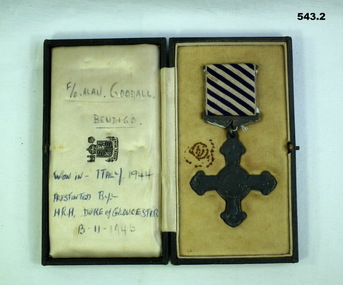
Award - MEDAL DFC, C.1944 - 46
... Middle East Command) with 150 Sqd RAF flying Wellingtons from North Africa. On 21.12.1943 on a non operational flight from Africa to Italy his flight crashed into Mt Etna, they were coming out of a cloud when the Pilot saw Etna. Allan as least injured made sure his mates were okay and sheltered he walked down to a nearby village (Maletto) to get help. Allan spent from 21.12.1943 to 5.1.1944 in hospital with Abrasions. He was awarded the DFC (Distinguished Flying Cross) in 1944 for operations...Middle East Command) with 150 Sqd RAF flying Wellingtons from North Africa. On 21.12.1943 on a non operational flight from Africa to Italy his flight crashed into Mt Etna, they were coming out of a cloud when the Pilot saw Etna. Allan as least injured made sure his mates were okay and sheltered he walked down to a nearby village (Maletto) to get help. Allan spent from 21.12.1943 to 5.1.1944 in hospital with Abrasions. He was awarded the DFC (Distinguished Flying Cross) in 1944 for operations ...Allan Frederick GOODALL DFC. (Born Ringwood, enlisted Melbourne) in the RAAF on 10.10.1941 No 409828 age 18 years. He was mustered as Aircrew on elisted and was designated as WO/AG ( Wireless operator Air Gunner) on 23.7.1942. he rose through the ranks from AC2, LAC, Sgt, F/Sgt, W/O, F/O to Flt/Lt on 1.3.1945. Embarked for England on 24.8.1942 and posted to RAF Station Bournemouth on 18 .11.1942, posted to MEC (Middle East Command) with 150 Sqd RAF flying Wellingtons from North Africa. On 21.12.1943 on a non operational flight from Africa to Italy his flight crashed into Mt Etna, they were coming out of a cloud when the Pilot saw Etna. Allan as least injured made sure his mates were okay and sheltered he walked down to a nearby village (Maletto) to get help. Allan spent from 21.12.1943 to 5.1.1944 in hospital with Abrasions. He was awarded the DFC (Distinguished Flying Cross) in 1944 for operations over Italy, at the time he was classed as Sqd Signals Leader. According to his records he flew 37 Operational sorties. He was discharged from the RAAF on 3.1.1946. The crew of the Plane were; Bruce Hayman (NZ) Pilot, Fractured leg. Allan Goodall Aust (WOP/AG) abrasions and injured wrist. Alan Warner (Aust) Navigator, Fractured Ankle. Y.F.Redknap (UK) injured shoulder. C.A. Carr (UK) Fractured Dorsal Spine. J.E. Ward (UK) Dislocated shoulder. Alfred Dugdale (UK) Deceased. Tony Moore (UK) Deceased. Both are buried at the Catania War Cemetery Sicily. Refer Cat No 1025P for his photo.543.1 Medal-Distinguished FLying Cross won by FO Alan F Goodall. Rear of medal is engraved "Italy FO Alan Goodall 1944" 543.2 Case-to suit DFC above. Case rear has a note "Alan's sister Jean, Mrs R.T Mitchell, 22 O'Dea Cres Kangaroo Flat 3555 471428." Written inside case in pen "F/O Alan Goodall Bendigo Won in Italy 1944 Presented by HRH Duke of Gloucester 13-11-1946"awards, dfc ww2, raaf -
 4th/19th Prince of Wales's Light Horse Regiment Unit History Room
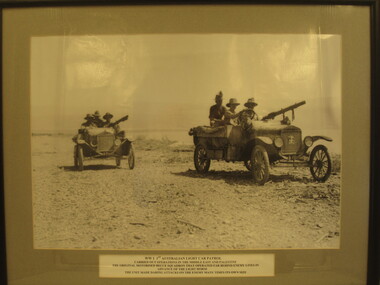
Photograph - Framed Photograph, WW1 1st Australian Light Car Patrol, c 1918
... Caption: WW1 1st Australian Light Car Patrol Carried out operations in the Middle East and Palestine. The original motorised recce squadron that operated far behind enemy lines in advance of the Light Horse. ...Caption: WW1 1st Australian Light Car Patrol Carried out operations in the Middle East and Palestine. The original motorised recce squadron that operated far behind enemy lines in advance of the Light Horse. ...Refer inscriptionsFramed B&W photo of two Model T Ford vehicles, with crews, of 1st Australian Light Car Patrol. Each vehicle is fitted with a Lewis Machine GunAustralian War Memorial watermark. Caption: WW1 1st Australian Light Car Patrol Carried out operations in the Middle East and Palestine. The original motorised recce squadron that operated far behind enemy lines in advance of the Light Horse. The unit made daring attacks on the enemy many times its own size.ww1 1st australian light car patrol c1918, model t ford vehicles with crew -
 4th/19th Prince of Wales's Light Horse Regiment Unit History Room
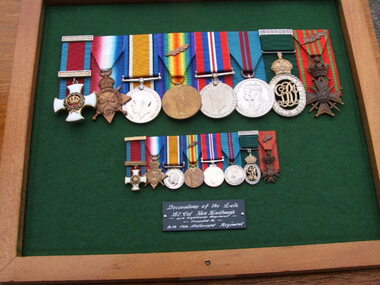
Medal Set, Col S G A Hindhaugh, 1914-1945
... His occupation was Station Manager. 14 April 1904 - Appointed Lieutenant 11th Light Horse Regiment Militia. 3 April 1911 - Promoted to Captain in the Militia. 20 August 1914 - Appointed to the Australian Imperial Forces to A Squadron, 4th Light Horse Regiment at Broadmeadows camp. 19 October 1914 - Embarked for the Middle East from Melbourne with the 4th Light Horse Regiment per Tranport A18 "Wiltshire". 11 December 1914 - Disembarked at Alexandria for camp Mena. 19 May 1915 - Promoted to Major. From 22 May 1915 - On operations ...Stanley George Allen Hindhaugh (1883-1962), soldier, was born on 12 December 1883 at Camperdown, Victoria. His occupation was Station Manager. 14 April 1904 - Appointed Lieutenant 11th Light Horse Regiment Militia. 3 April 1911 - Promoted to Captain in the Militia. 20 August 1914 - Appointed to the Australian Imperial Forces to A Squadron, 4th Light Horse Regiment at Broadmeadows camp. 19 October 1914 - Embarked for the Middle East from Melbourne with the 4th Light Horse Regiment per Tranport A18 "Wiltshire". 11 December 1914 - Disembarked at Alexandria for camp Mena. 19 May 1915 - Promoted to Major. From 22 May 1915 - On operations at Gallipoli. 6 August 1915 - Noted in the fierce engagement at Leane's Post. 19 August 1915 - Appointed Second in Command 4th Light Horse Regiment. December 1915 - To camp at Tel El Kebir. January 1916 - Acting CO 4th Light Horse Regiment. 21 March 1916 - Embarked Alexandria per "Cestrian" for Marseilles with B Squadron 4th Light Horse Regiment for operations in France and Flanders. 16 February 1917 - Promoted to Lt Colonel. March 1918 - In action at Passchendaele - Awarded Belgian Croix de Guerre. 7 December 1918 - To 2nd Light Horse Regiment. 2nd ANZAC Mounted Regiment. 15 May 1919 - Returned to Australia. 11 October 1919 - Transferred to Reserve of Officers. 1932 - Commanded 20th Light Horse Regiment. 1934 - Commanded 11th Light Horse Regiment. 15 November 1941 - Retired. Full size and miniature sets of medals awarded to Colonel Stanley George Allen Hindhaugh. Comprising: Distinguished Service Order (Flanders 1 June 1918), 1914-1918 Star, British War Medal 1914-1920, Victory Medal (with MID) 1919, War Medal 1939-1945, King George V Coronation 1911, Colonial Officers Auxiliary Forces Decoration, Croix de Guerre (Belgium) 1917. Mounted in glass fronted display case.Plaque in case enscribed: "Decorations of the late Lt Col Stan Hindhaugh 4th Light Horse Regiment. Presented to 4th 19th Motorised Regiment". Adhesive label on case: Alwyn and Barbara Catmore 32 Morrie Crescent Blackburn Vic 3130 (03)8984124 medals, world war, 1, victory medal, 4th light horse, militia, western front, dso, king george v coronation, colonial officers auxiliary decoration, 1914 1918 star, mid, croix de guerrre belgium, passchendaele, 2nd anzac mounted regiment, 20th light horse, 11th light horse -
4th/19th Prince of Wales's Light Horse Regiment Unit History Room
Book, Government Press and Survey of Egypt, A Brief Record of the Advance of the Egyptian Expeditionary Force Under the Command of General Sir Edmund H H Allenby GCB, GCMB. July 1917 to October 1918, 1919
... Provides historical information about operations of Australian Light Horse units in the Middle East World War 1 Middle East Egyptian Expeditionary Force In front cover: Joan Rice (Flawley) 41 Arnold Drive Chelsea vic 3196 Soft covered A4 book, 112 pages plus maps A Brief Record of the Advance of the Egyptian Expeditionary Force Under the Command of General Sir Edmund H H Allenby GCB, GCMB. ...Provides historical information about operations of Australian Light Horse units in the Middle EastSoft covered A4 book, 112 pages plus mapsIn front cover: Joan Rice (Flawley) 41 Arnold Drive Chelsea vic 3196world war 1, middle east, egyptian expeditionary force -
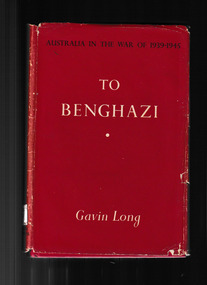 Monbulk RSL Sub Branch
Book, Australian War Memorial, To Benghazi, 1952
... The volunteers To the Middle East After the fall of France Victory at Sidi Barrani Before Bardia The battle of Bardia The capture of Tobruk The engagement at Derna Beda Fomm and Benghazi The capture of Giarabub Appendixes : 1. The A.I.F. in the United Kingdom ; 2. The 6th Division's operation ...Between the wars A second A.I.F. The volunteers To the Middle East After the fall of France Victory at Sidi Barrani Before Bardia The battle of Bardia The capture of Tobruk The engagement at Derna Beda Fomm and Benghazi The capture of Giarabub Appendixes : 1. The A.I.F. in the United Kingdom ; 2. The 6th Division's operation order for the capture of Bardia ; 3. Abbreviations ; 4. A.I.F. colour patches, 1941.Index, ill, maps, p.336.non-fictionBetween the wars A second A.I.F. The volunteers To the Middle East After the fall of France Victory at Sidi Barrani Before Bardia The battle of Bardia The capture of Tobruk The engagement at Derna Beda Fomm and Benghazi The capture of Giarabub Appendixes : 1. The A.I.F. in the United Kingdom ; 2. The 6th Division's operation order for the capture of Bardia ; 3. Abbreviations ; 4. A.I.F. colour patches, 1941. world war 1939-1945 - campaigns - north africa, world war 1939-1945 - australian involvement -
 Monbulk RSL Sub Branch
Book, Australian War Memorial, Air war against Germany and Italy, 1939-1943, 1954
... world war 1939-1945 - aerial operations - australia royal australian air force Describes the part played by Australian airmen in the first four years of the war in Europe and the Middle East Index, ill, maps, p.732. ...Describes the part played by Australian airmen in the first four years of the war in Europe and the Middle EastIndex, ill, maps, p.732.non-fictionDescribes the part played by Australian airmen in the first four years of the war in Europe and the Middle Eastworld war 1939-1945 - aerial operations - australia, royal australian air force -
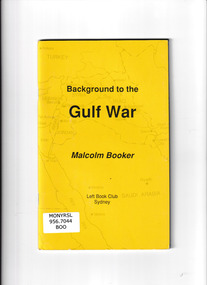 Monbulk RSL Sub Branch
Book, Left Book Club Co-operative, Background to the Gulf War, 1991
... Middle East - Politics and government...Operation...Middle East - Politics and government Operation desert shield A brief review of the background to the invasion of Iraq by the USA in 1991 Bibliography, ill, maps, p.47. ...A brief review of the background to the invasion of Iraq by the USA in 1991Bibliography, ill, maps, p.47.non-fictionA brief review of the background to the invasion of Iraq by the USA in 1991middle east - politics and government, operation desert shield -
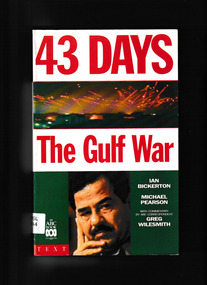 Monbulk RSL Sub Branch
Book, Text Publishing in association with the Australian Broadcasting Corporation, 43 days : the Gulf War, 1991
... Iraq Kuwait crisis 1990-1991 Operation Desert Shield An illustrated account of the Gulf War written by two Australian Middle East specialists with contributions from experienced journalists who covered the war. ...An illustrated account of the Gulf War written by two Australian Middle East specialists with contributions from experienced journalists who covered the war. Includes extracts from reports filed by ABC correspondents in Washington, Moscow, London and the Middle East, and an appendix of key documents.Index, bibliography, ill, maps, p.249.non-fictionAn illustrated account of the Gulf War written by two Australian Middle East specialists with contributions from experienced journalists who covered the war. Includes extracts from reports filed by ABC correspondents in Washington, Moscow, London and the Middle East, and an appendix of key documents.iraq kuwait crisis 1990-1991, operation desert shield -
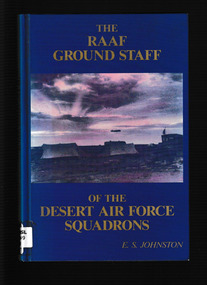 Monbulk RSL Sub Branch
Book, E. Johnston, Royal Australian Air Force ground staff of the Desert Air Force Squadrons, 1992
... World War 1939-1945 - Campaigns - North Africa World War Two 1939-1945 - Aerial operations - Australia The experiences of RAAF ground staff in the Middle East Ill, maps, p.246. ...The experiences of RAAF ground staff in the Middle EastIll, maps, p.246.non-fictionThe experiences of RAAF ground staff in the Middle Eastworld war 1939-1945 - campaigns - north africa, world war two 1939-1945 - aerial operations - australia -
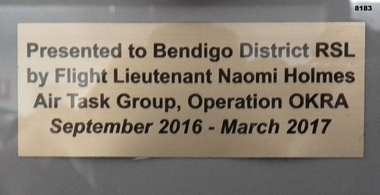 Bendigo Military Museum
Memorabilia - OPERATION OKRA, Post March 2017
... Operation Okra was an Australian Defence Force contribution to the Military intervention against Islamic State. It was part of Joint Task Force 633 in the Middle East. ...Operation Okra was an Australian Defence Force contribution to the Military intervention against Islamic State. It was part of Joint Task Force 633 in the Middle East. ...Operation Okra was an Australian Defence Force contribution to the Military intervention against Islamic State. It was part of Joint Task Force 633 in the Middle East. Its initial stated aim was to Combat ISIL (ISIS) threat in Iraq. The commencement date was August 31st 2014.Framed Memorabilia, frame is brown timber, centre is an Australian Flag folded in a diamond shape, there is 3 posters around the flag, scattered around the items are various items of memorabilia from the Operation, at the bottom is a small plaque with details of the memorabilia and donor.On the plaque, “Presented to the Bendigo District RSL by Flight Lieutenant Naomi Holmes Air Task Group, Operation Okra, September 2016 - March 2017”brsl, smirsl, bdrslinc -
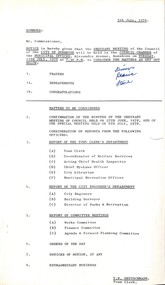 Sunshine and District Historical Society Incorporated
Administrative record - City of Sunshine - Commissioner Mr Alexander "Alex" George Gillon Collection 1976 - 1982 - Minutes of the Ordinary Meeting of Council Held on 11th July 1978, City of Sunshine, 5th July 1978
... Strata Subdivision Washington Street and Kodre Street Strata Subdivision 28 Middle Road Child Care Centre Orama Road Tender Acceptance and Consolidation of Title Lots 281, 282 & 283 Orama Street Property for Road Widening and Drainage Purposes for the Ultimate Construction of Somerville Road westwards from Market Road to the Proposed Freeeway Wright Street Bridge over Kororoit Creek Load Limit on road Tottenham Area Sunshine Avenue McIntyre Road to Main Road East Construction Declaration of Sewage area no 3496 Planning & Service Boring Operations M.M.B.W. ...Strata Subdivision Washington Street and Kodre Street Strata Subdivision 28 Middle Road Child Care Centre Orama Road Tender Acceptance and Consolidation of Title Lots 281, 282 & 283 Orama Street Property for Road Widening and Drainage Purposes for the Ultimate Construction of Somerville Road westwards from Market Road to the Proposed Freeeway Wright Street Bridge over Kororoit Creek Load Limit on road Tottenham Area Sunshine Avenue McIntyre Road to Main Road East Construction Declaration of Sewage area no 3496 Planning & Service Boring Operations M.M.B.W. ...Notice of Ordinary Meeting of the Council 11th July 1978 Report of the Town Clerk's Department Report of the Town Clerk Local Government Finance Commonwealth Funds Land Transfer Discontinued Road Between Verdun Street and Mitchell Street Drain Construction Agreement Plantation Street and The Esplanade Maribyrnong 2 - 4 Burton Crescent Report of the Co-Ordinator of Welfare Services Community Youth Support Scheme Early Childhood Development Complex Accommodation For Adolescents Child Care Centres 45 Warmington Road and 56 Tallintyre Road Sunshine West Multipipe Sclerosis Society of Victoria Report International Year of the Child Report of the Acting Chief Health Inspector Health Act Registration Applications for Transfer of Proprietorship of Premise Under the Health Act Council Own Properties Duke Street North End of Butler Street and on the Bank of the Maribyrnong River Melbourne & Metropolitan Board of Works Land on Maribyrnong River below D. F. Thompson Reserve Maribyrnong Immunisation Basic Microbiology for Health Services Course Health, Hygiene and History Course Poliomyelitis Immunisation Amusement Parlours Sanitary Closets Municipal Saleyards Association Report of Inspector of Weights & Measures Report of the Medical Officer Report of the Chief By-Laws Officer Court Proceedings Parking Infringements Extension of Limited Parking George Street Report of the Municipal Recreation Officer Future of The Hub and the Indoor Heated Swimming Pool Use of the Marching Girls' Hall Kinder Smith Reserve Lily Street Braybrook by Sunshine East Primary School Holiday Programme Report May Holidays 1978 Report of the City Engineer Town planning Compensation The Gobbo Report Lower Maribyrnong River Draft Action Statement Planning Permit Application Extension to Secondary School Marian College Lots 590 & 591 Glengala Road Planning Permit Application Office & Advertising Sign Shop 1B Princess Street St. Albans Planning Permit Application Flats 52B Forrest Street Town Planning Appeal Planning Permit Application Cafe Lot 4 Glengala Road Sunshine West Planning Permit Application Car Sales Yard Ballarat Road South West Corner Hampshire Road Planning Permit Application Sky Sign Lots 58, 59, 60, Part Lots 93, 94 & 95 392 Ballarat Road North West Corner of Alford Street Sunshine North Melbourne Metropolitan Planning Scheme Amendment Planning Permit Application Take Away Food Premise Lot 300 McIntyre Road Sunshine North Planning Permit Application Factory & Office Gee Street Sunshine North Plan of Subdivision Warr's Road Drainage Easement Consolidation of Title Ballarat Road, Alford Street & Victor Street Shell Co. Strata Subdivision Washington Street and Kodre Street Strata Subdivision 28 Middle Road Child Care Centre Orama Road Tender Acceptance and Consolidation of Title Lots 281, 282 & 283 Orama Street Property for Road Widening and Drainage Purposes for the Ultimate Construction of Somerville Road westwards from Market Road to the Proposed Freeeway Wright Street Bridge over Kororoit Creek Load Limit on road Tottenham Area Sunshine Avenue McIntyre Road to Main Road East Construction Declaration of Sewage area no 3496 Planning & Service Boring Operations M.M.B.W. Bayliss Road Area (Bon Thomas Reserve) & Market Road East Side at Somerville Road for Monsanto Complex Sewerage Facilities to Premise St. Albans bounded by Protea Crescent, Larkspur Drive, Chestnut Drive & Oleander Drive Re-Roofing of Dempster Park Day Care Centre, Infant Welfare Centre & Pre-School Centre Phoenix street Sunshine North Alterations to Granstand Skinner Reserve Garaging of Meals on Wheels Vehicles at Maidstone Hall Thomson Street Maidstone Fairbairn Road Double Unit Pre-School Centre Alterations The Hub Willis Street Pre-School Centre More Park Pavilion Report of the Building Surveyor Installation of Underground Tanks lots 1 & 2 Duke Street Sunshine & Lot 27 St. Albans Road St. Albans Report of the Director of parks & Recreation Errington Reserve Cricket Practice Enclosure for St. Albans Cricket Club city of sunshine, alexander "alex" george gillon, verdun street, mitchell street, maidstone, plantation street, the esplanade, burton crescent, maribyrnong, warmington road, tallintyre road, warmington road child care centre, tallintyre road child care centre, sunshine west, duke street, butler street, maribyrnong river, braybrook, d. f. thompson reserve, the hub, sun crescent, sunshine, kinder smith reserve, lily street, sunshine east primary school, marian college, glengala road, princess street, st. albans, forrest street, albion, ballarat road, hampshire road, alford street, mcintyre road, gee street, warrs road, victor street, washington street, kodre street, middle road, orama road, orama road child care centre, deer park, somerville road, market road, wright street, kororoit creek, tottenham, main road east, sunshine avenue, bon thomas reserve, quinn street, monsanto, protea crescent, larkspur drive, chestnut drive, oleander drive, dempster park day care centre, dempster park pre-school centre, dempster park infant welfare care centre, phoenix street, skinner reserve, churchill avenue, maidstone hall, thomson street, fairbairn road, willis street pre-school centre, willis street, more park, esmond street, errington reserve, st. albans cricket club, george street -
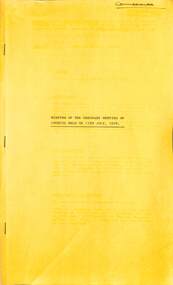 Sunshine and District Historical Society Incorporated
Administrative record - City of Sunshine - Commissioner Mr Alexander "Alex" George Gillon Collection 1976 - 1982 - Minutes of the Ordinary Meeting of Council Held on 11th July 1978, City of Sunshine, 11th July 1978
... Strata Subdivision Washington Street and Kodre Street Strata Subdivision 28 Middle Road Child Care Centre Orama Road Tender Acceptance and Consolidation of Title Lots 281, 282 & 283 Orama Street Property for Road Widening and Drainage Purposes for the Ultimate Construction of Somerville Road westwards from Market Road to the Proposed Freeeway Wright Street Bridge over Kororoit Creek Load Limit on road Tottenham Area Sunshine Avenue McIntyre Road to Main Road East Construction Declaration of Sewage area no 3496 Planning & Service Boring Operations M.M.B.W. ...Strata Subdivision Washington Street and Kodre Street Strata Subdivision 28 Middle Road Child Care Centre Orama Road Tender Acceptance and Consolidation of Title Lots 281, 282 & 283 Orama Street Property for Road Widening and Drainage Purposes for the Ultimate Construction of Somerville Road westwards from Market Road to the Proposed Freeeway Wright Street Bridge over Kororoit Creek Load Limit on road Tottenham Area Sunshine Avenue McIntyre Road to Main Road East Construction Declaration of Sewage area no 3496 Planning & Service Boring Operations M.M.B.W. ...Minutes of the Ordinary Meeting of Council Held on 11th July 1978 Report of the Town Clerk's Department Report of the Town Clerk Local Government Finance Commonwealth Funds Land Transfer Discontinued Road Between Verdun Street and Mitchell Street Drain Construction Agreement Plantation Street and The Esplanade Maribyrnong 2 - 4 Burton Crescent Report of the Co-Ordinator of Welfare Services Community Youth Support Scheme Early Childhood Development Complex Accommodation For Adolescents Child Care Centres 45 Warmington Road and 56 Tallintyre Road Sunshine West Multipipe Sclerosis Society of Victoria Report International Year of the Child Report of the Acting Chief Health Inspector Health Act Registration Applications for Transfer of Proprietorship of Premise Under the Health Act Council Own Properties Duke Street North End of Butler Street and on the Bank of the Maribyrnong River Melbourne & Metropolitan Board of Works Land on Maribyrnong River below D. F. Thompson Reserve Maribyrnong Immunisation Basic Microbiology for Health Services Course Health, Hygiene and History Course Poliomyelitis Immunisation Amusement Parlours Sanitary Closets Municipal Saleyards Association Report of Inspector of Weights & Measures Report of the Medical Officer Report of the Chief By-Laws Officer Court Proceedings Parking Infringements Extension of Limited Parking George Street Report of the Municipal Recreation Officer Future of The Hub and the Indoor Heated Swimming Pool Use of the Marching Girls' Hall Kinder Smith Reserve Lily Street Braybrook by Sunshine East Primary School Holiday Programme Report May Holidays 1978 Report of the City Engineer Town planning Compensation The Gobbo Report Lower Maribyrnong River Draft Action Statement Planning Permit Application Extension to Secondary School Marian College Lots 590 & 591 Glengala Road Planning Permit Application Office & Advertising Sign Shop 1B Princess Street St. Albans Planning Permit Application Flats 52B Forrest Street Town Planning Appeal Planning Permit Application Cafe Lot 4 Glengala Road Sunshine West Planning Permit Application Car Sales Yard Ballarat Road South West Corner Hampshire Road Planning Permit Application Sky Sign Lots 58, 59, 60, Part Lots 93, 94 & 95 392 Ballarat Road North West Corner of Alford Street Sunshine North Melbourne Metropolitan Planning Scheme Amendment Planning Permit Application Take Away Food Premise Lot 300 McIntyre Road Sunshine North Planning Permit Application Factory & Office Gee Street Sunshine North Plan of Subdivision Warr's Road Drainage Easement Consolidation of Title Ballarat Road, Alford Street & Victor Street Shell Co. Strata Subdivision Washington Street and Kodre Street Strata Subdivision 28 Middle Road Child Care Centre Orama Road Tender Acceptance and Consolidation of Title Lots 281, 282 & 283 Orama Street Property for Road Widening and Drainage Purposes for the Ultimate Construction of Somerville Road westwards from Market Road to the Proposed Freeeway Wright Street Bridge over Kororoit Creek Load Limit on road Tottenham Area Sunshine Avenue McIntyre Road to Main Road East Construction Declaration of Sewage area no 3496 Planning & Service Boring Operations M.M.B.W. Bayliss Road Area (Bon Thomas Reserve) & Market Road East Side at Somerville Road for Monsanto Complex Sewerage Facilities to Premise St. Albans bounded by Protea Crescent, Larkspur Drive, Chestnut Drive & Oleander Drive Re-Roofing of Dempster Park Day Care Centre, Infant Welfare Centre & Pre-School Centre Phoenix street Sunshine North Alterations to Granstand Skinner Reserve Garaging of Meals on Wheels Vehicles at Maidstone Hall Thomson Street Maidstone Fairbairn Road Double Unit Pre-School Centre Alterations The Hub Willis Street Pre-School Centre More Park Pavilion Report of the Building Surveyor Installation of Underground Tanks lots 1 & 2 Duke Street Sunshine & Lot 27 St. Albans Road St. Albans Report of the Director of parks & Recreation Errington Reserve Cricket Practice Enclosure for St. Albans Cricket Club Orders of the Day Accounts Submitted for Payment 21st June 1978 & 30th June 1978 Purchase of Second Bookmobile Extraordinarily Business Planning Permit Application Commercial Centre and Associated Car Parking Neale Road Bi-Annual Conference Australian Road Research Board city of sunshine, alexander "alex" george gillon, verdun street, mitchell street, maidstone, plantation street, the esplanade maribyrnong, burton crescent, maribyrnong, warmington road, tallintyre road, sunshine west, warmington road child care centre, tallintyre road child care centre, duke street, butler street, maribyrnong river, d. f. thompson reserve, george street, sunshine, the hub, sun crescent, kinder smith reserve, lily street, sunshine east primary school, marian college, glengala road, princess street, st. albans, forrest street, albion, ballarat road, hampshire road, alford street, sunshine north, mcintyre road, gee street, washington street, kodre street, middle road, orama road child care centre, orama road, somerville road, market road, wright street, kororoit creek, brooklyn, tottenham, main road east, bon thomas reserve, quinn street, deer park, monsanto, protea crescent, larkspur drive, chestnut drive, oleander drive, dempster park day care centre, dempster park infant welfare care centre, dempster park children's and community centre, phoenix street, skinner reserve, churchill avenue, maidstone hall, thomson street, fairbairn road, fairbairn road pre-school centre, willis street pre-school centre, willis street, more park, esmond street, ardeer, st. albans road, errington reserve, st. albans cricket club, neale road -
Tatura Irrigation & Wartime Camps Museum
Book, Australian War Memorial. Treasures from a Century of Collecting, 2012
... operations and current conflicts. Written by Nola Anderson. Australian War Memorial Second World War War in the Pacific Korea vietnam Australia's peacekeeping commitments conflict in the middle east Book: Dark mustard hard cover book with title done in white print on front; side has title, author and Australian War Memorial emblem. ...Tells the story of one of the most significant military history collections in the world. Covers Gallipoli to the jungles of Vietnam, from two world wars to peacekeeping operations and current conflicts. Written by Nola Anderson.Book: Dark mustard hard cover book with title done in white print on front; side has title, author and Australian War Memorial emblem. Dust cover is white thick card with title and author printed in white on a back drop of the memorial plaque and poppies. Side has same background and same print as on book; back cover has 3 paragraphs of writing in white, Australian War Memorial emblem. 612 pages.australian war memorial, second world war, war in the pacific, korea, vietnam, australia's peacekeeping commitments, conflict in the middle east -
 Nhill and District Historical Society Inc.
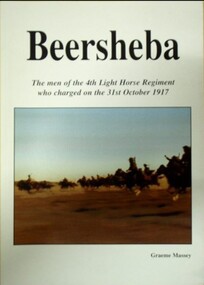
Book - Beersheba, The men of the 4th light Horse Regiment who charged on the 31st October 1917, 2018
... Middle East campaign, as it marked the beginning of the end of Ottoman rule in Palestine. The brigade's charge was a strategic move to break the Turkish line and secure vital water sources for their horses, which had been crucial for their operations in the desert. ...Middle East campaign, as it marked the beginning of the end of Ottoman rule in Palestine. The brigade's charge was a strategic move to break the Turkish line and secure vital water sources for their horses, which had been crucial for their operations in the desert. ...The 4th Light Horse Regiment biography of soldiers who were at the charge of the Battle of Beersheba.white soft cover with title and image of the Light Horse chargenon-fictionThe 4th Light Horse Regiment biography of soldiers who were at the charge of the Battle of Beersheba. biography, war history, 4th light horse regiment, australian light horse, world wa 1, regimental history, campaigns -middle east, campaigns-palestine -
 Wangaratta RSL Sub Branch
Mixed media - Framed Photo and Medals, Private J L Parker
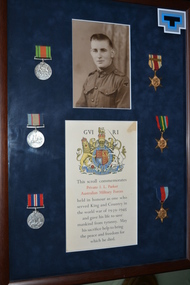
... Middle East in November. The 2/23rd left Alamein on 2 December and headed back to Gaza in Palestine, where it participated in the 9th Division parade on 22 December. The battalion left Palestine in the third week of January 1943 and reached Sydney at the end of February. Reorganised for jungle operations...Middle East in November. The 2/23rd left Alamein on 2 December and headed back to Gaza in Palestine, where it participated in the 9th Division parade on 22 December. The battalion left Palestine in the third week of January 1943 and reached Sydney at the end of February. Reorganised for jungle operations ...Photograph and medals belonging to Private John Leonard PARKER VX56265 2/23 Battalion AIF Killed in Action on 24/11/1943 during WW2. Buried at Lae cemetery in New Guinea. The 2/23rd Infantry Battalion was raised at the Albury Showgrounds in New South Wales in August 1940, as part of the 26th Brigade. Initially the brigade belonged to the 7th Division but in early 1941 moved to the 9th Division. The battalion did its initial training in Albury before moving to Bonegilla, Victoria, before sailing for the Middle East in November. The 2/23rd left Alamein on 2 December and headed back to Gaza in Palestine, where it participated in the 9th Division parade on 22 December. The battalion left Palestine in the third week of January 1943 and reached Sydney at the end of February. Reorganised for jungle operations, on 4 September the 2/23rd participated in the division's amphibious landing at Red Beach, north west of Lae. Shortly before the landing occurred, the invasion fleet was attacked by six Japanese fighters and three bombers. Most of the Japanese bombs missed the Allied ships but one bomb hit the landing craft carrying the 2/23rd headquarters - killing the battalion commander and the ship's captain. The landing craft, however, made it to shore and the 2/23rd participated in the subsequent fighting around Lae, Finschhafen, and Sattelberg. After Sattelberg, the 2/23rd continued to move inland, capturing Masangkoo, Kuanko, and finally on 9 December, Wareo. Brown timber frame with dark blue background containing photograph of soldier, three round and three star shaped medals and document with coloured crest."This scroll commemorates Private J. L Parker Australian Military Forces held in honour as one who served King and Country in the world war of 1939-1945 and gave his life to save mankind from tyranny. May his sacrifice help to bring the peace and freedom for which he died."private john leonoard parker, 2/23rd battalion, ww2, new guinea -
 Wangaratta RSL Sub Branch
Map, Australian Army Operations 1940-45
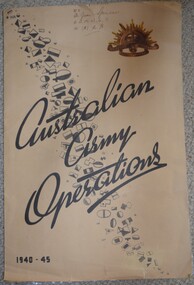
... She served with the 130 Australia General Hospital and was deployed overseas to Japan on 17/6/1947 and returned on 26/1/1949 australian army operations private joan spencer aamws 130 agh Hand written at top - VFX Pte Joan Spencer AAMWS 115 (H) M.H. Large cream coloured cardboard folded in three, inside is a coloured map of the Middle East 1940-1942, New Guinea Theatre 1942-1944, Pacific Islands 1944-1945 and Malay and Islands 1942-1945. ...Large fold out map and chronology of Australian Army Operations between 1940-1945 that belonged to Private Joan Spencer VFX12932 (VF507134) born 12/11/1924 at Albury. The family moved to Wangaratta and Joan was educated at Wangaratta High School before joining the Australian Army Medical Women's Service at 115 (Heidelberg) Military Hospital. She served with the 130 Australia General Hospital and was deployed overseas to Japan on 17/6/1947 and returned on 26/1/1949Large cream coloured cardboard folded in three, inside is a coloured map of the Middle East 1940-1942, New Guinea Theatre 1942-1944, Pacific Islands 1944-1945 and Malay and Islands 1942-1945. Front cover has Unit patches from top left to bottom right corner , at top right corner is the rising sun badge and bottom left corner 1940-45 Back cover is a listed Chronology.Hand written at top - VFX Pte Joan Spencer AAMWS 115 (H) M.H.australian army operations, private joan spencer, aamws, 130 agh -
 Wangaratta RSL Sub Branch
Book - Booklet, Director General of Public Relations Australian Army, Reconquest New Guinea 1943-1944, c1944
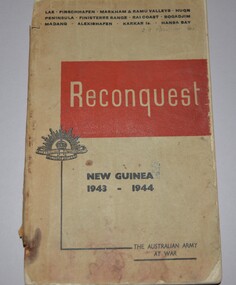
... operations, and brutal jungle warfare. Booklet belonged to Robert Francis ISKOV VX15237 born at Glenrowan served with the 59th Battalion CMF before joining the 2/14th Battalion at Caulfield in September 1940. He disembarked for the Middle East...operations, and brutal jungle warfare. Booklet belonged to Robert Francis ISKOV VX15237 born at Glenrowan served with the 59th Battalion CMF before joining the 2/14th Battalion at Caulfield in September 1940. He disembarked for the Middle East ...The Reconquest of New Guinea in 1943–1944 was a massive, grueling Allied offensive that shattered the Japanese Eighteenth Army through a combination of amphibious assaults, airborne operations, and brutal jungle warfare. Booklet belonged to Robert Francis ISKOV VX15237 born at Glenrowan served with the 59th Battalion CMF before joining the 2/14th Battalion at Caulfield in September 1940. He disembarked for the Middle East in November, 1940 and fought in the Syrian campaign in 1941. In 1942 the 2/14th Battalion returned to Australia and sent to Papua where he fought at the Battle of Isurava before the battalion was sent to Gona. On 1943 Bob returned to Australia to undertake officer training and in 1945 with the 2/23rd Battalion sailed to Morotai and served with the battalion on Tarakan. He returned to Australia in November, 1945 and discharged a month later.Soft cover booklet containing 160 pages including maps and photographs. Cover is cream colour cardboard with black print and rising sun crest.Front Cover - The Australian Army at War. Rear Cover - Overseas Edition Not For Public Sale ww2, new guinea, booklet, reconquest -
 Wangaratta RSL Sub Branch
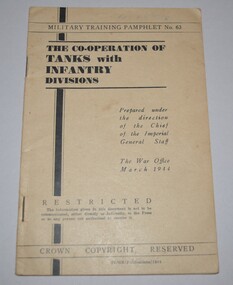
Pamphlet - Military Training Pamphlet No 63, The Co-operation of Tanks with Infantry Divisions, 1944
... operations leading up to the invasion of North-West Europe. Booklet belonged to Robert Francis ISKOV VX15237 born at Glenrowan served with the 59th Battalion CMF before joining the 2/14th Battalion at Caulfield in September 1940. He disembarked for the Middle East...operations leading up to the invasion of North-West Europe. Booklet belonged to Robert Francis ISKOV VX15237 born at Glenrowan served with the 59th Battalion CMF before joining the 2/14th Battalion at Caulfield in September 1940. He disembarked for the Middle East ...Military Training Pamphlet (MTP) No. 63, "The Co-Operation of Tanks with Infantry Divisions" is a World War II British Army publication issued by the War Office in 1944. It established the tactical framework for combined arms operations leading up to the invasion of North-West Europe. Booklet belonged to Robert Francis ISKOV VX15237 born at Glenrowan served with the 59th Battalion CMF before joining the 2/14th Battalion at Caulfield in September 1940. He disembarked for the Middle East in November, 1940 and fought in the Syrian campaign in 1941. In 1942 the 2/14th Battalion returned to Australia and sent to Papua where he fought at the Battle of Isurava before the battalion was sent to Gona. On 1943 Bob returned to Australia to undertake officer training and in 1945 with the 2/23rd Battalion sailed to Morotai and served with the battalion on Tarakan. He returned to Australia in November, 1945 and discharged a month later.Soft cover pamphlet with black lettering containing 30 pages Restricted Crown Copyright Reservedww2, 1944, war office, military training pamphlet -
 8th/13th Victorian Mounted Rifles Regimental Collection
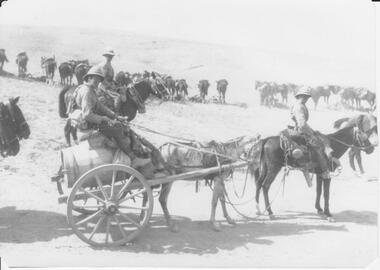
Photograph - 8thLH water cart
... Middle East Campaign. Colonel Maygar died of wounds at Beersheba when the regiment was attacked by enemy aircraft while waiting to follow up the successful charge of the 4th LH Brigade on 30 October 1917. The 8th Light Horse AIF was disbanded in 1919, but soon after re-raised as the 8th (Indi) Light Horse in the Citizen Military Forces, superseding 16th (Indi) Light Horse. Comparatively rare collection of photographs of 8th Light Horse (AIF) on operations ...The 8th Light Horse Regiment was engaged in the battle to capture Turkish defences in and around Beersheba in early November 1917 in conjunction with other Light Horse units and troops from the Imperial Camel Corps, British Yeomanry Division, New Mounted Rifles and 53 Welsh Division. The 8th Light Horse Regiment AIF was raised at Broadmeadows Victoria in September 1914 under the command of Lieutenant Colonel Alexander White and formed part of the 3rd Light Horse Brigade. The regiment served at Gallipoli where in a courageous but ill-fated charge at the Nek on 7 August 1915 it suffered horrendous casualties including Lieutenant Colonel White. Rebuilt in Egypt under the command of Lieutenant Colonel Leslie Maygar VC the regiment went on the serve throughout the Middle East Campaign. Colonel Maygar died of wounds at Beersheba when the regiment was attacked by enemy aircraft while waiting to follow up the successful charge of the 4th LH Brigade on 30 October 1917. The 8th Light Horse AIF was disbanded in 1919, but soon after re-raised as the 8th (Indi) Light Horse in the Citizen Military Forces, superseding 16th (Indi) Light Horse.Comparatively rare collection of photographs of 8th Light Horse (AIF) on operations in Egypt and Sinai 1916-1918.Black and White photograph of two-wheeled water cart drawn by donkey, also two mounted men who are wearing sun toppees and one has a rifle in rifle bucket."Captured Turkish water cart at Beersheba with British Yeomanry"beersheba, turkish, world war one, wwi, 8th, light horse -
 8th/13th Victorian Mounted Rifles Regimental Collection
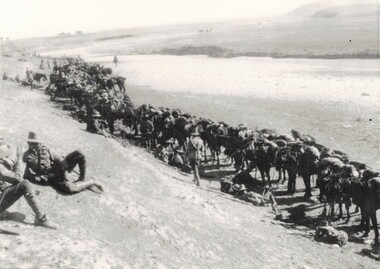
Photograph - WWI LH resting, November 1917
... Middle East Campaign. Colonel Maygar died of wounds at Beersheba when the regiment was attacked by enemy aircraft while waiting to follow up the successful charge of the 4th LH Brigade on 30 October 1917. The 8th Light Horse AIF was disbanded in 1919, but soon after re-raised as the 8th (Indi) Light Horse in the Citizen Military Forces, superseding 16th (Indi) Light Horse. Comparatively rare collection of photographs of 8th Light Horse (AIF) on operations ...The 8th Light Horse Regiment AIF was raised at Broadmeadows Victoria in September 1914 under the command of Lieutenant Colonel Alexander White and formed part of the 3rd Light Horse Brigade. The regiment served at Gallipoli where in a courageous but ill-fated charge at the Nek on 7 August 1915 it suffered horrendous casualties including Lieutenant Colonel White. Rebuilt in Egypt under the command of Lieutenant Colonel Leslie Maygar VC the regiment went on the serve throughout the Middle East Campaign. Colonel Maygar died of wounds at Beersheba when the regiment was attacked by enemy aircraft while waiting to follow up the successful charge of the 4th LH Brigade on 30 October 1917. The 8th Light Horse AIF was disbanded in 1919, but soon after re-raised as the 8th (Indi) Light Horse in the Citizen Military Forces, superseding 16th (Indi) Light Horse.Comparatively rare collection of photographs of 8th Light Horse (AIF) on operations in Egypt and Sinai 1916-1918.Black and White photograph of column of horsemen, dismounted, in desert landscape. Two figures reclining at left foreground. Part of a collection of photographs of 8th Light Horse (AIF) on operations in Egypt and Sinai 1916-1918."Resting in Wadi Ghuzzie outside Beershaba (slopes of Tel el Saba top right)"beersheba, light horse, wwi, world war one, egypt, wadi ghuzie
