
Showing 38 items matching "military law"
-
 4th/19th Prince of Wales's Light Horse Regiment Unit History Room
Book, L F Johnston Commonwealth Government Printer, Manual of Military Law 1941 Australian Edition (3 copies), 1941
... Manual of Military Law 1941 Australian Edition (3 copies)...Military Law...Hard covered book dealing with military law for the Australian Armed Forces...Military Law World War 2 Hard covered book dealing with military law for the Australian Armed Forces Manual of Military Law 1941 Australian Edition (3 copies) Book L F Johnston Commonwealth Government Printer ...Hard covered book dealing with military law for the Australian Armed Forcesmilitary law, world war 2 -
4th/19th Prince of Wales's Light Horse Regiment Unit History Room
Booklet, Maj W J Pendlebury, The King's Regulations and Manual of Military Law, 1940's
... The King's Regulations and Manual of Military Law...Military Law...Soft covered booklet - a precis of King's Regulations and Manual of Military Law written for Officers by Maj W J Pendlebury late RFA (T) and Staff Captain, Kantara EEF...Military Law Sixth Edition revised in accordance with KR 1940, 1941 Soft covered booklet - a precis of King's Regulations and Manual of Military Law written for Officers by Maj W J Pendlebury late RFA (T) and Staff Captain, Kantara EEF The King's Regulations and Manual of Military Law Booklet Maj W J Pendlebury Whitcombe & Tombs Ltd Wilding & Son ...Soft covered booklet - a precis of King's Regulations and Manual of Military Law written for Officers by Maj W J Pendlebury late RFA (T) and Staff Captain, Kantara EEFSixth Edition revised in accordance with KR 1940, 1941military law -
 Geelong RSL Sub Branch
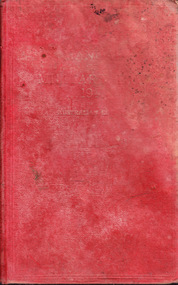
Book, L.F. Johnston Commonwealth Government Printer Canberra, Manual of Military Law 1941 Australian Edition, Early 20th Century
... Manual of Military Law 1941 Australian Edition...Military Law Manual 1941 L.F. Johnston Printer Canberra...This Manual of Military Law 1941 Australian Edition contains Military Law that apply's to officers and enlisted personnel of the Australian Military Forces....This Manual of Military Law 1941 Australian Edition contains Military Law that apply's to officers and enlisted personnel of the Australian Military Forces. ...This Manual of Military Law 1941 Australian Edition contains Military Law that apply's to officers and enlisted personnel of the Australian Military Forces.The Manual provides rules and regulations that apply to officers and enlisted personnel of the AMF when not on war service and on war service.Leather bound book red in colour oblong shape. The front cover has faded over time.Printed in Australia L.F. Johnston, Commonwealth Government Printer, Canberra.military law manual 1941 l.f. johnston printer canberra -
 4th/19th Prince of Wales's Light Horse Regiment Unit History Room
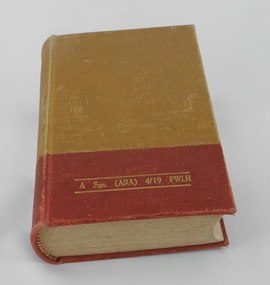
Book, Australian Army, Australian Edition of Manual of Military Law 1941
... Australian Edition of Manual of Military Law 1941...military law...This effectively applied British military law. In 1982 the Defence Force Discipline Act of the Australian Parliament established a framework of military law for Australia's circumstances. ...This effectively applied British military law. In 1982 the Defence Force Discipline Act of the Australian Parliament established a framework of military law for Australia's circumstances. military law world war 2 On front cover in gold lettering- "A Sqn (ARA) 4/19 PWLH" On fly leaf, rubber stamps - "A SQN 1 CAV REGT. ...Law manual applicable to Australian Army personnel from 1941. This effectively applied British military law. In 1982 the Defence Force Discipline Act of the Australian Parliament established a framework of military law for Australia's circumstances. Hard cover bookOn front cover in gold lettering- "A Sqn (ARA) 4/19 PWLH" On fly leaf, rubber stamps - "A SQN 1 CAV REGT. Inscription in red ink - "This book is the personal property of ; -J.B.Larkman" and rubber stamp - "WO2 SSM A SQN" On title page - Rubber stamps - "A Sqn (ARA) 4/19 PWLH" and "A SQN 1 CAV REGT" Detailed records of amendments entered in red ink on Amendments pages from Serial 1, 30 Nov 41 to Serial 9, 31 July 1948 military law, world war 2 -
 Warrnambool and District Historical Society Inc.
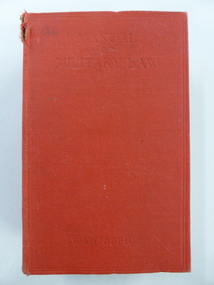
Book, Manual of Military Law, 1929
... Manual of Military Law......Military Law...The book has an Introduction, textual material on military law in three Sections and an Index. It also has several pages of advertisements printed on pink paper at the front of the book. ...There is evidence of mould on the back cover. Manual of Military Law Book ...This book belonged to Captain Charles Rogers of the Australian Army. He was part of the Guard of Honour during the visit of the Duke of Gloucester in 1934. The visit was part of Victoria’s Centenary celebrations. Rogers was a well-known Warrnambool identity in the 1930s, 40s and 50s as a horseman and an army man. He was a long-serving Warrnambool Agricultural Show official as a judge of equine events. He died in 1961. The book is of interest as it belonged to a well-known resident of Warrnambool in the 1930s, 40s and 50s. This is a hard cover book of 1068 pages. It has a red cover with black printing on the spine. The book has an Introduction, textual material on military law in three Sections and an Index. It also has several pages of advertisements printed on pink paper at the front of the book. The cover at the top part of the spine is torn away, there is evidence of silverfish damage in several places and the text has been annotated in many places, in handwriting in red ink. There is a signature of the owner in pencil on the one of the first pages and blue stamps of the Warrnambool & District Historical Society on the same page and on a back page. There is evidence of mould on the back cover.‘C.A.Rogers’ captain charles rogers, military law, history of warrnambool -
 Bendigo Military Museum
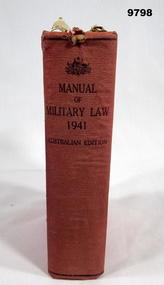
Manual - MILITARY LAW WW2, Command of the Military Board, Army Headquarters/ Melbourne, 1941
... MILITARY LAW WW2......Military Law...From Title Page; "AUSTRALIAN EDITION/ OF/ MANUAL OF/ MILITARY LAW/ 1941/ Including Army Act and Rules of Procedure as/ modified and adapted by the Defence Act 1903 - 1939 and the Australian Military Regulations". ...Publication Book WW2 Manual Military Law Front end paper - purple ink stamp. ...From Title Page; "AUSTRALIAN EDITION/ OF/ MANUAL OF/ MILITARY LAW/ 1941/ Including Army Act and Rules of Procedure as/ modified and adapted by the Defence Act 1903 - 1939 and the Australian Military Regulations". Part of the William (Bill) THOMASON Collection. Refer Cat. No. 4136P for more items.Hardcover book Cover - cardboard, red colour buckram, embossed lettering on front, black colour ink print on spine. 850 pages - cut, plain, off white colour . No illustrations. Amendments have been added to many pages - paper slips glued to designated pages. Amendments noted on Page iii - handwritten red and black ink pen dated "30/11/41", 31/9/42", "31/12/42", 30/6/43". Front end paper - three purple and one black ink stamps and handwritten signatures and information in black and blue ink pen. Front end paper - purple ink stamp. "Major/ Brigade Major B.P. & G. Force" date "1942", illegible signature. "Major/ G.S. Victoria Garrison Brigade - date "1942", illegible signature. "Major/ Adm.Comd. Vic Garrison Bde with illegible signature - date "42/43" - black ink print. "Lt.Col/ A.A. & G.M.G., Vic covering Force " - with illegible signature - handwritten information, black ink pen "Private Property", blue ink pen. Return to/ Room 10 Block B/ Southern Command.publication, book, ww2, manual, military law -
4th/19th Prince of Wales's Light Horse Regiment Unit History Room
Booklet, Australian Supplement to the Manual of Military Law 1940, 1940
... Australian Supplement to the Manual of Military Law 1940...Military Law...Military Law Army World War 2 Commonwealth crest Soft covered booklet of adaptions of the Army Act and the Rules of Procedure that apply to the Australian Military Forces by the Defence Act Australian Supplement to the Manual of Military Law 1940 Booklet T Rider ...Soft covered booklet of adaptions of the Army Act and the Rules of Procedure that apply to the Australian Military Forces by the Defence ActCommonwealth crestmilitary law, army, world war 2 -
4th/19th Prince of Wales's Light Horse Regiment Unit History Room
Booklet, Ramsay, Ware Publishing Pty Ltd, Notes on Administration of Discipline on War Service, 1 May 1943
... Military Law...A paper covered publication to assist officers of the Australian Military Forces on war service on the administration of military law ...Military Law World War 2 Not to be published A paper covered publication to assist officers of the Australian Military Forces on war service on the administration of military law Notes on Administration of Discipline on War Service Booklet Ramsay, Ware Publishing Pty Ltd ...A paper covered publication to assist officers of the Australian Military Forces on war service on the administration of military law Not to be publishedmilitary law, world war 2 -
 Bendigo Military Museum
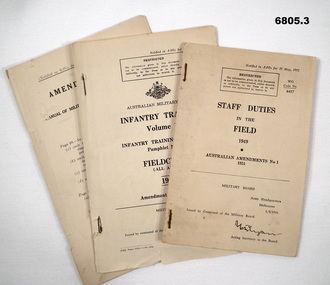
Manual - STAFF, INFANTRY AND LAW, 1941, 1948
... ...Military Law...Some pages loose. .3) Small paper, yellow booklet marked "Manual of Military Law 1941" Serial No. 8, 7 numbered pages and blanks....Some pages loose. .3) Small paper, yellow booklet marked "Manual of Military Law 1941" Serial No. 8, 7 numbered pages and blanks. ...Various manuals issued to outline & regulate formal behavior in key areas. Given to various Commanders at different levels. Amendments issued on regular basis and gazetted to make official. Ref Cat 6719.2P Lt. Col. Swatton for his service details..1) Small paper yellow booklet marked "Staff Duties in the Field" Amend No. 1. Stapled pages heavily redacted - some pages almost all removed. Pages not numbered. .2) Extract of small yellow booklet marked "Infantry Training Vol 1, 1948". Stapled pages dated Apr 1950. Some pages loose and parts of pages cut out. Some pages loose. .3) Small paper, yellow booklet marked "Manual of Military Law 1941" Serial No. 8, 7 numbered pages and blanks..1) & .2) Paragraphs all ticked. .3) On back some notations in pencil of Chapter No's.passchendaele barracks trust, field manuals, military law -
4th/19th Prince of Wales's Light Horse Regiment Unit History Room
Book, Defence Act 1903-1939 and Regulations and Orders for the AMF and Senior Cadets 1927, 1940 (estimated)
... military law...military law defence act defence regulations defence orders senior cadets Initials: J.H.N on top edge Hard cover bound copy of Defence Act 1903 and Regulations and Orders for the Australian Military Forces and Senior Cadets 1927 Defence Act 1903-1939 and Regulations and Orders for the AMF and Senior Cadets 1927 Book T Rider ...Hard cover bound copy of Defence Act 1903 and Regulations and Orders for the Australian Military Forces and Senior Cadets 1927Initials: J.H.N on top edge military law, defence act, defence regulations, defence orders, senior cadets -
4th/19th Prince of Wales's Light Horse Regiment Unit History Room
Booklet, Victorian Railways Printing Works, Australian Military Forces - Courts of Inquiry and Boards, 31 May 1941
... Military Law...Military Law World War 2 Not to be published A paper covered publication Australian Military Forces - Courts of Inquiry and Boards Booklet Victorian Railways Printing Works ...A paper covered publicationNot to be publishedmilitary law, world war 2 -
Unions Ballarat
World politics : trend and transformation, 12th ed, Kegley, Charles W Jnr et al, 2009
... ...military...law...military strategy 15. Alliances and the balance of power Part 6. Liberal Paths to World Order 16. Negotiated conflict resolution and international law 17. ...Relevant to global issues in the political arena. btlc ballarat trades and labour council ballarat trades hall politics economics economy collective action globalisation power ecology military law Front cover: author's name, title and edition. ...GovernGlobal politics, economy, power and collective action. Table of contents: Part 1. Trend and Transformation in World Politics 1. Interpreting world politics 2. Theories of world politics 3. International decision making Part 2. The Globe's Actors and Their Relations 4. Great power rivalries and relations 5. The global south in a world of powers 6. Intergovernmental organizations and the quest for global governance 7. Nongovernmental organizations and the shape of the global future 8. People power and the promotion of human rights Part 3. The Economic and Demographic Dimensions of Globalization 9. The globalization of international finance 10. International trade in the global marketplace 11. The demographic and cultural dimensions of globalization Part 4. Threats to the World 12. Threats to the preservation of the world's common ecology 13. The treat of armed aggression to the world Part 5. Realist Roads to National and International Security 14. The military pursuit of power through arms and military strategy 15. Alliances and the balance of power Part 6. Liberal Paths to World Order 16. Negotiated conflict resolution and international law 17. Liberal approaches to collective security Part 7. Envisioning Your Alternative Global Futures and Predicting Global Transformations 18.Thinking about global trends, transformations, and the future of world politics. Relevant to global issues in the political arena.Paper; book. Front cover: orange/red/brown theme; white lettering.Front cover: author's name, title and edition.btlc, ballarat trades and labour council, ballarat trades hall, politics, economics, economy, collective action, globalisation, power, ecology, military, law -
 Bendigo Historical Society Inc.
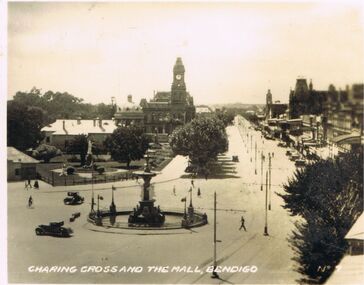
Photograph - LESLIE JOHN BAGUST COLLECTION: CHARING CROSS AND THE MALL, 1940
... Soldiers Memorial Hall is the Military Museum. The law Courts are then beside the Old Post Office Gallery....Soldiers Memorial Hall is the Military Museum. The law Courts are then beside the Old Post Office Gallery. ...Leslie John Bagust Collection. Black & White Photo Charing Cross and Pall Mall Bendigo 1940. Alexandra Fountain in the foreground and behind that the Queen Victoria Gardens. Image taken looking west towards the Shamrock Hotel and the Old Post Office. Beside the R.S.L. Soldiers Memorial Hall is the Military Museum. The law Courts are then beside the Old Post Office Gallery.bendigo, tourism, charing cross and pall mall bendigo -
 Flagstaff Hill Maritime Museum and Village
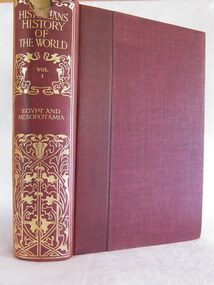
Book - Reference Book/History, Henry Smith Williams, The Historians History of the World Vol 01 set 1 - Edited by Henry Smith Williams L.L.D. Published by “The Times” 1908, 1908
... law, writing (cuneiform), and city-state governance. The Babylonian Empire focuses on the reign of Hammurabi and the splendour of Babylon. Additional subjects center on the Assyrian war machine, the rise of Nineveh and the military dominance of the Assyrian kings. ...law, writing (cuneiform), and city-state governance. The Babylonian Empire focuses on the reign of Hammurabi and the splendour of Babylon. Additional subjects center on the Assyrian war machine, the rise of Nineveh and the military dominance of the Assyrian kings. ...The 1908 edition of The Historians' History of the World is a monumental work of Edwardian scholarship, representing a specific era of "universal history" where the goal was to synthesise all human knowledge into a single narrative. Volume 1 is titled "Egypt and Mesopotamia," it is divided into two distinct parts Part I concentrates on ancient Egypt, covering the Nile Valley from its legendary beginnings through the various dynasties.Book is part of a 25 volume set with red cloth bindings and gold filigree design to rib.non-fictionThe 1908 edition of The Historians' History of the World is a monumental work of Edwardian scholarship, representing a specific era of "universal history" where the goal was to synthesise all human knowledge into a single narrative. Volume 1 is titled "Egypt and Mesopotamia," it is divided into two distinct parts Part I concentrates on ancient Egypt, covering the Nile Valley from its legendary beginnings through the various dynasties. flagstaff hill, warrnambool, shipwrecked-coast, flagstaff-hill, flagstaff-hill-maritime-museum, maritime-museum, shipwreck-coast, flagstaff-hill-maritime-village, book, the historians history of the world vol 1 set 1 -
 Federation University Historical Collection
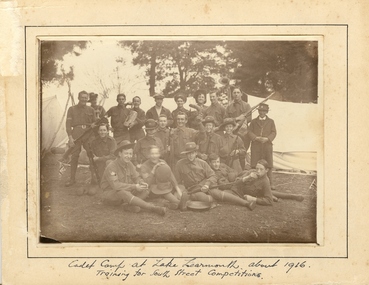
Photograph - Photograph - Sepia, Ballarat School of Mines Cadets, 1916, c1916
... Kitchener’s report echoed the bill, introduced to Parliament in 1909 and supported by the Opposition Labor Party at its 1908 conference, to introduce compulsory military training in peace time (referred to as universal training). On 1 January 1911, the Commonwealth Defence Act 1911 (Cth) was passed as law and all males aged 12 to 26 were required to receive military training. ...Kitchener’s report echoed the bill, introduced to Parliament in 1909 and supported by the Opposition Labor Party at its 1908 conference, to introduce compulsory military training in peace time (referred to as universal training). On 1 January 1911, the Commonwealth Defence Act 1911 (Cth) was passed as law and all males aged 12 to 26 were required to receive military training. ...Field Marshal Viscount Kitchener of Great Britain was invited by Prime Minister Deakin in 1909 to visit Australia and advise on the best way to provide Australia with a land defence. Kitchener’s report echoed the bill, introduced to Parliament in 1909 and supported by the Opposition Labor Party at its 1908 conference, to introduce compulsory military training in peace time (referred to as universal training). On 1 January 1911, the Commonwealth Defence Act 1911 (Cth) was passed as law and all males aged 12 to 26 were required to receive military training. Men were divided according to age, with junior cadets comprising boys 12-14 years of age, senior cadets comprising boys 14-18, and young men aged 18-26 assigned to the home militia defence. The support of schools was vital to the success of the scheme, since the system of cadet training began in the primary schools, with physical training prescribed by military authorities. Junior cadet training was entirely in the hands of school teachers, who had first been trained by military officers. This early training was less military in nature than focused on physical drill and sport. It also acted to inculcate boys with the notions of loyalty to country and empire. At this age, uniforms were not worn, although there were schools with pre-existing uniformed cadet units, who continued to do so. Senior Cadets were organised by Training Areas, administered by Area Officers. If a school had at least 60 senior cadets, they could form their own units. Unlike their junior counterparts, Senior Cadets were issued uniforms, a rifle, and learned the foundations necessary for service in any arm of the defence forces. Boys and men could be exempted from compulsory training if they lived more than five miles from the nearest training site, or were passed medically unfit. Those who failed to register for training were punished with fines or jail sentences, and the severity of this punishment generated some of the strongest opposition to the scheme. While institutions such as the political parties and most churches generally supported universal training, some in the broader labour movement were less enthusiastic, as evidenced in the Daily Herald newspaper’s editorials and letters. Universal military training persisted after the conclusion of World War 1, with the Junior Cadet scheme the first to go, in 1922. Senior cadets and service with the militia was suspended in November 1929. (http://guides.slsa.sa.gov.au/content.php?pid=575383&sid=4788359, accessed 29/10/2015) According to Neil Leckie, Manager of the Ballarat Ranger Military Museum: * Originally 12 – 14 year olds went to Junior Cadets attached to their school. * From age 14 – 17 they were Senior Cadets attached to the local militia unit. * After 1 July of the year a Cadet turned 18, the Cadet left the Senior Cadets and became a member of the Citizen Military Force. * In October 1918 the AIF, Militia and Cadets were renamed to give some connection to the AIF battalion raised in the area. Ballarat saw: 8th Australian Infantry Regiment comprising: * 8th Battalion AIF renamed 1st Battalion 8th Australian Infantry Regiment * 70th Infantry Militia renamed 2nd Battalion 8th Australian Infantry Regiment * 70th Infantry Cadets renamed 3rd B, 8th Australian Infantry. 39th Australian Infantry Regiment comprising: * 39th Battalion AIF renamed 1st Battalion 39th Australian Regiment * 71st Infantry Militia renamed 2nd Bn, 39th Australian Infantry Regiment * 71st Infantry Cadets renamed 3rd Bn, 39th Australian Infantry Regiment Prior to the reorganisation in 1918 the 18th Brigade was the 70th, 71st and 73rd Infantry. It is thought that the 18th Brigade Cadet units in 1920 were those that came from the old: * 69th Infantry (Geelong/Queenscliff) * 70th Infantry (Ballarat/Colac) * 71st Infantry (Ballarat West) * 72nd Infantry Warrnambool) * 73rd Infantry (NW Vic) The next name change came in 1921!Mounted sepia photograph of 21 young males. They are the Ballarat School of Mines Cadets on a training camp at Lake Learmonth. Back row left to right: Harold Wakeling; ? ; T. Wasley; H. Witter; H.V. Maddison (staff); Lieutenant S.J. Proctor, Joe ? ; ? ; B.C. Burrows. Centre left to right: Howard Beanland; ? ; F.N. Gibbs; H. Siemering; P. Riley; ? : E. Adamthwaite. Front row left to right: Albert E. Williams; Francis Davis (RAAF Dec.); A. Miller; W. Shattock; T. Rees From the Ballarat School of Mines Magazine, 1916 "Our Competition Team, 1916 At a parade, held on the 25th August competition teams were called from from the three colleges - Ballarat College, St Patrick's College, and the School of Mines. In each case, a large muster was obtained, twenty-nine volunteering fro the School of Mines. On account of the number in a team being limited to 21, some had to be weeded out. The team decided to have a camp at Learmonth in the vacation for the benefit of training for the coming competitions. The tents, within our baggage, were brought to the Junior Technical School at 10 a.m. on Monday, 11 September. Everything was carted to the station on a lorry, which was very kindly lent by Mr C. Burrow. ... Arriving at our camp, which was in the Park, we first raised the tents. This was done in record time. Three large tents, A.B.C., were pitched one behind the other. We also pitched a smaller one to act as a provisions tent. The provisions supplied by each cadet were placed in this tent. Dinner was ready by 3.30, and was prepared by the three senior non-coms., who also acted as orderlies. Things went alright Monday night, the two senior non-coms. acting as sentries for the first two hours. On Tuesday morning Reville sounded at 7. There was no need for it, however, as nearly all the cadets were up before daylight, owing to their beds being too hard. After physical exercises were gone through we had breakfast. We then had rifle exercises until Messrs A.W. Steane and F.N. King arrived. The former put the team through the table of physical exercises set down for competition work, many valuable points being obtained. The visitors remained for dinner, afterwards returning to Ballarat. Wednesday was uneventful, until the soldiers arrived at about 11 a.m., stopping at the park for lunch. As we handed over the coppers, etc., to them, our lunch was delayed. Two more visitors arrived after lunch, and after taking a few photos returned home. That night we had a "Sing-a-long" in C Tent until "Lights out" sounded at 9.30. After physical exercises ad breakfast on Thursday, we went for a six mile route march round the lake, doing skirmishing on the way. In the afternoon we practised rifle exercises and the march past. A concert was arranged for that night, the chief singers being cadets H. Siemering and W. Shattock. Supper was served at the end of the entertainment. On Friday, Reveille sounded at 6.30 instead of 7, and, as usual, we had physical exercises before breakfast, after which the team went through skirmishing at the reserve. In the afternoon, section drill and the march past were practised. Friday night, being our last night in camp, leave was granted until 10 p.m., "lights out" sounding at 11. Reveille sounded on Saturday at 4.30, the reason being that all kits, tents, etc., had to be packed away ready to catch the 8.15 train to Balalrat. At 7.30 we were all ready to leave for the station. We had a very enjoyable time in the train, each cadet having a chip in at the patriotic songs. On arriving at Ballarat, we found the lorry awaiting us. The luggage was carted to the Junior Technical School, the team following. The team were here dismissed, everyone feeling that he had had a very good time. F.G. Davis"Written in ink on front 'cadet camp at Lake Learmonth about 1916. Training for South Street Competitions. ballarat school of mines, cadets, ballarat school of mines cadets, lake learmonth, world war one, boomerang, camp, cadet camp, h.g. wakeling, harold wakeling, f.g. davis, albert w. steane, f.n. king, h. siermering, w. shattock, francis davis, harold wakeling, t. wasley, h. witter, h.v. maddison, s.j. proctor, b.c. burrows, howard beanland, f.n. gibbs, h. siemering, p. riley, e. adamthwaite, albert e. williams; francis davis, a. miller, w. shattock, t. rees, photography, foto, boxing gloves -
 Ballarat Clarendon College
Book set
... He went on the study Law at the University of Melbourne. He enlisted in England on 14th December 1915 and was awarded the Military Cross at Messines Ridge on 7 June 1917. ...He went on the study Law at the University of Melbourne. He enlisted in England on 14th December 1915 and was awarded the Military Cross at Messines Ridge on 7 June 1917. ...School book prizes awarded to Harold Oscar Nevett (1902). Harold Oscar was born in Ballarat 3rd January 1885, the son of Oscar Horatio Arthur and Elizabeth (Dowling) Nevett. He entered Ballarat College 1894 after attending Ellerslie College III Class. Harold Oscar was Dux of the College in 1900. He went on the study Law at the University of Melbourne. He enlisted in England on 14th December 1915 and was awarded the Military Cross at Messines Ridge on 7 June 1917. After demobilisation in May 1919 he married Evelyn Kitson on 25 October in England. Harold Oscar died on 11 June 1940. Harold's brothers Arthur Hereword, Horace William and Ralph Dowling all attended Ballarat College also. Set of 7 books with Ballarat College crest embossed in gold on front cover as well as a boxed set of three titles with ballarat Crest embossed in gold on box cover. Book plate inside 1/8 front cover: Ballarat College crest / Logic / VI Form / 1st prize / Awarded to / O Nevett / Christmas 1901 Book plate inside 2/8 front cover: Ballarat College crest / History / V Form / 1st prize / Awarded to / O Nevett / Christmas 1900 Book plate inside 3/8 front cover: Ballarat College crest / English Subjects / Third Form / 1st prize / Awarded to / O Nevett / Christmas 1896 Book plate inside 4/8 front cover: Ballarat College crest / Mathematics / IV Form / 1st prize / Awarded to / O Nevett / Christmas 1898 Book plate inside 5/8 front cover: Ballarat College crest / French / V Form / 1st prize / Awarded to / O Nevett / Christmas 1900 Book plate inside 6/8 front cover: Ballarat College crest / English / Fifth Form / 1st prize / Awarded to / O Nevett / Christmas 1899 Book plate inside 7/8 front cover: Ballarat College crest / Languages / Upper II Form / 2nd prize / Awarded to / O Nevett / Christmas 1896 Book plate inside 8/8 front cover of first book in set: Ballarat College crest / Latin / V Form / 1st prize / Awarded to / O Nevett / Christmas 1900harold-oscar-nevett, book-prize, ballarat-college, arthur-hereword-nevett, horace-william-nevett, ralph-dowling-nevett -
Phillip Island and District Historical Society Inc.
Book, MURDOCH, Sir Walter, Australian Citizen : an elementary account of civic rights and duties, 1912?
... Book from the Cleeland Bequest - a comprehensive collection of books relating to the History of England, Civil & Military, Religious, Intellectual & Social. league of nations civics australia juvenile literature law politics government Cleeland Bequest Labelled: Phillip Island Historical Society. ...Book from the Cleeland Bequest - a comprehensive collection of books relating to the History of England, Civil & Military, Religious, Intellectual & Social. Labelled: Phillip Island Historical Society. Cleeland Bequest. Inscribed: L. Danielson Sect C., Frank Danielson, 32 Chetwynd St., West Melbourne, Victoria.league of nations, civics, australia, juvenile literature, law, politics, government, cleeland bequest -
 Montmorency–Eltham RSL Sub Branch
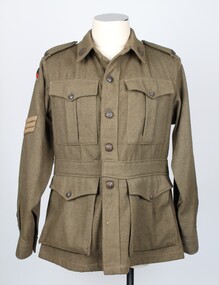
Uniform - Jacket, Service Dress WW2, WW2 Service Jacket, 1942
... law who was living in Montmorency and was a committee member of MERSL when item donated. Inside label: V300; 1942; Size (2 - 'faint', may be other numbers indicating size details) Brass badges: Australian Commonwealth Military Forces (both lapels); Australia (both shoulder straps) Badge of rank (Sergeant) - 3 chevrons (R upper sleeve) Colour patches on both sleeves for 2/5 Battalion, 6th Division Second AIF Years of Service insignia - 3 chevrons, indicating 3 years O/S service (R lower sleeve) Unit patches - rectangle black over red (2/5 Battalion, WW2) Khaki jacket; long sleeve 4 front buttons (attached with continuous leather strip) 4 pockets (buttons sewn on) Shoulder straps (buttons sewn on) Cuff buttons (sewn on) Badges on lapels & on shoulder straps Unit Patches on upper sleeves (Part of set with Slouch Hat, 0030.2) WW2 Service Jacket Uniform Jacket, Service Dress WW2 ...Owned by William Albert HARRISON (Service Number VX41478; above Link ["WW2 Record"] indicates that Rank on Discharge was Cpl, but other AIF documents, from National Archives Australia [including Proceedings of Discharge - see pdf Media File above], indicate that he was Sergeant, which is consistent with the rank on this jacket). Name not written on item but known to be part of set which includes slouch hat, which does contain the name, and other related items which include Service Number, verifying identity. See further service details in "Links" above. Soldier's name known. Items donated (date unknown) by brother-in-law who was living in Montmorency and was a committee member of MERSL when item donated.Khaki jacket; long sleeve 4 front buttons (attached with continuous leather strip) 4 pockets (buttons sewn on) Shoulder straps (buttons sewn on) Cuff buttons (sewn on) Badges on lapels & on shoulder straps Unit Patches on upper sleeves (Part of set with Slouch Hat, 0030.2)Inside label: V300; 1942; Size (2 - 'faint', may be other numbers indicating size details) Brass badges: Australian Commonwealth Military Forces (both lapels); Australia (both shoulder straps) Badge of rank (Sergeant) - 3 chevrons (R upper sleeve) Colour patches on both sleeves for 2/5 Battalion, 6th Division Second AIF Years of Service insignia - 3 chevrons, indicating 3 years O/S service (R lower sleeve) Unit patches - rectangle black over red (2/5 Battalion, WW2) -
 Montmorency–Eltham RSL Sub Branch
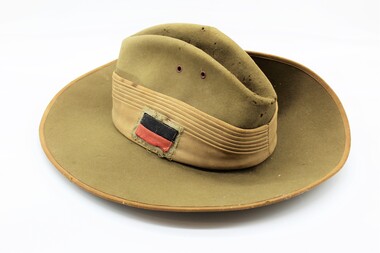
Headwear - Slouch hat, Hat, khaki, fur felt, 1940, 1940
... law who was living in Montmorency and was a committee member of MERSL when item donated. Inside: hand-written name (W. A. HARRISON) Size 6 7/8, 1940 Maker's name stamped on leather lining (CORONET FELTS Pty [Ltd]) Slouch hat with Australian Commonwealth Military Forces badge; cotton puggaree with 2/5 Battalion unit colour patch (Rectangle, black over red). ...Owned by William Albert HARRISON (Service Number VX41478; above Link ["WW2 Record"] indicates that Rank on Discharge was Cpl, but other AIF documents, from National Archives Australia [including Proceedings on Discharge - see pdf Media File above], indicate that he was Sergeant). Soldier's name known. Items donated (date unknown) by brother-in-law who was living in Montmorency and was a committee member of MERSL when item donated.Slouch hat with Australian Commonwealth Military Forces badge; cotton puggaree with 2/5 Battalion unit colour patch (Rectangle, black over red). Inside: hand-written name (W. A. HARRISON) Size 6 7/8, 1940 Maker's name stamped on leather lining (CORONET FELTS Pty [Ltd]) -
 Montmorency–Eltham RSL Sub Branch
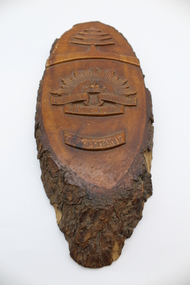
Plaque - Wooden wall-hanging, Cedar Wooden Wall Hanging, 1941
... law who was living in Montmorency and was a committee member of MERSL when item donated. Two stamps in French possibly where it was made, Artiols bois des cedres. Becharry Liban. Salim Kabalan. Hand written message;- Mother with all the best to you Bill. Dated 25-10-41 Oval shaped slice of wood from the cedar tree in Lebanon. Carving of a cedar tree across top and emblem of Australian Commonwealth Military ...Owned by William Albert HARRISON (Service Number VX41478; above Link ["WW2 Record"] Sent home to his mother from Liban on 25-10-41 Soldier's name known. Items donated (date unknown) by brother-in-law who was living in Montmorency and was a committee member of MERSL when item donated.Oval shaped slice of wood from the cedar tree in Lebanon. Carving of a cedar tree across top and emblem of Australian Commonwealth Military Services half way down and Cedar of Lebanon across the bottom half. Stained with light brown varnish. Original bark of tree all the way around the edge.Two stamps in French possibly where it was made, Artiols bois des cedres. Becharry Liban. Salim Kabalan. Hand written message;- Mother with all the best to you Bill. Dated 25-10-41 -
 Montmorency–Eltham RSL Sub Branch
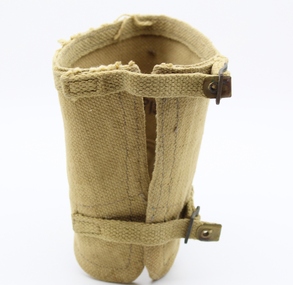
Accessory - Gaiter, Patt. '37 W.E, Gaiter, 1942
... law who was living in Montmorency and was a committee member of MERSL when item donated. Hand-written name ("W. A. HARRISON") and service number (VX41478) JJ 1942 size 2 Gaiter webbing, Australian Commonwealth Military Forces. ...Owned by William Albert HARRISON (Service Number VX41478; above Link ["WW2 Record"] indicates that Rank on Discharge was Cpl, but other AIF documents, from National Archives Australia [including Proceedings on Discharge - see pdf Media File above], indicate that he was Sergeant). Soldier's name known. Items donated (date unknown) by brother-in-law who was living in Montmorency and was a committee member of MERSL when item donated.Gaiter webbing, Australian Commonwealth Military Forces. Hand-written name ("W. A. HARRISON") and service number (VX41478) JJ 1942 size 2 -
 Supreme Court of Victoria Library
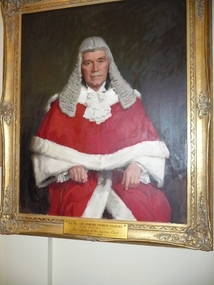
Portrait, Sir Edmund Herring, 1963
... Sir Edmund served as an artillery officer with the British Army in World War One and was awarded the Military Cross. While he returned to the Law between the wars, becoming King's Counsel in 1936, he continued his military associations through Australian Militia Forces, rising to colonel by the start of the Second World War. ...Sir Edmund served as an artillery officer with the British Army in World War One and was awarded the Military Cross. While he returned to the Law between the wars, becoming King's Counsel in 1936, he continued his military associations through Australian Militia Forces, rising to colonel by the start of the Second World War. ...Sir Edmund Herring had a military career before becoming the Chief Justice of Victoria in 1944. Sir Edmund served as an artillery officer with the British Army in World War One and was awarded the Military Cross. While he returned to the Law between the wars, becoming King's Counsel in 1936, he continued his military associations through Australian Militia Forces, rising to colonel by the start of the Second World War. At the outset of WWII Herring was appointed as Commander of the Royal Artillery for the Australian Sixth Division. Herring saw service in North Africa and Greece and was in charge of Australian Northern forces in 1942, afterwards working with General Blamey in Papua New Guinea. Sir Edmund was appointed Chief Justice, straight from his army command in 1944. As Chief Justice he quickly established the Law Reform Committee and after the war oversaw the extension of the Supreme Court buildings, with the creation of new Courts. He was considered an able administrator, but his refusal to appoint Joan Rosanove a Queen’s Counsel throughout the 1950s, did not sit well with many legal practitioners. After his retirement from the Bench, he continued in his many public activities, including trustee of the Shrine of Remembrance and the Australian War Memorial and a member of the Melbourne Grammar School Council, as well as Lieutenant Governor of the State of Victoria, a position he held from 1945 to 1972. Herring was also an outspoken social critic; between the wars he had been a member of the White Guard, who were a far right group acting against communism. During the Cold War period of the 1950s, Herring spoke out in favour of the British Empire and the American alliance. The portrait of Sir Edmund Herring is the second one that Sir William Dargie (1912-2003), completed of Sir Edmund; his first effort in 1944/45 won the Archibald prize. Dargie won the Archibald prize a record eight times. His fame as a portrait painter was not without controversy, as he was considered ‘safe’ and the favourite of conservative sitters, particularly as many of his Archibald winners were of ‘Captains of Industry’. While no Archibald prize was awarded for this portrait, it is an interesting counterpoint to Dargie’s 1944/45 portrait. The portrait of Sir Edmund Herring is significant because of whom it portrays and the artist William Dargie who painted it.Portait in oils of Sir Edmund Herring. This is a half portrait of Sir Edmund in his red judicial robes. Gold leaf frame, with plaque.Plaque reads "The Honourable Sir Edmund Francis Herring, KCMG, KBE, DSO, MC, ED. Chief Justice of the Supreme Court 1944-1964"edmund herring, william dargie -
 Supreme Court of Victoria Library
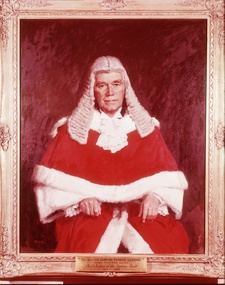
Portrait, Sir Edmund Herring, 1964
... Sir Edmund served as an artillery officer with the British Army in World War One and was awarded the Military Cross. While he returned to the Law between the wars, becoming Kings Counsel in 1936, he continued his military associations through the Australian Militia forces rising to colonel by the start of the Second World War. ...Sir Edmund served as an artillery officer with the British Army in World War One and was awarded the Military Cross. While he returned to the Law between the wars, becoming Kings Counsel in 1936, he continued his military associations through the Australian Militia forces rising to colonel by the start of the Second World War. ...The portrait of Chief Justice Sir Edmund Herring is significant because of whom it portrays and who painted it. Sir Edmund Herring (1892-1982), had a military career before becoming the Chief Justice of Victoria in 1944. Sir Edmund served as an artillery officer with the British Army in World War One and was awarded the Military Cross. While he returned to the Law between the wars, becoming Kings Counsel in 1936, he continued his military associations through the Australian Militia forces rising to colonel by the start of the Second World War. At the outset of World War Two Herring was appointed as Commander of the Royal Artillery for the Australian Sixth Division. Herring saw service in North Africa and Greece and was in charge of Australian Northern forces in 1942, afterwards working with General Blamey in Papua New Guinea. It was at this time that Herring confirmed the death sentences of 22 Papuans who had been found guilty of murder and treason. Sir Edmund was appointed Chief Justice, straight from his army command in 1944. As Chief Justice he quickly established the Law Reform Committee and after the war oversaw the extension of the Supreme Court buildings, with the creation of new Courts. He was considered an able administrator, but his refusal to appoint Joan Rosanove a Queen’s Counsel throughout the 1950s, did not sit well with many legal practitioners. After his retirement from the Bench, he continued in his many public activities, including trustee of the Shrine of Remembrance and the Australian War Memorial and a member of the Melbourne Grammar School Council, as well as Lieutenant Governor of the State of Victoria a position he held from 1945 to 1972. Herring was also an outspoken social critic, between the wars he had been a member of the White Guard, who were a far right group acting against communism. During the Cold War period of the 1950s, Herring spoke out in favour of the British Empire and the American alliance. The portrait of Chief Justice Sir Edmund Herring is significant because of whom it portrays and who painted it. The portrait of Sir Edmund Herring is the second one that Sir William Dargie (1912-2003), completed of Sir Edmund, his first effort in 1944/45 won the Archibald prize. Dargie won the Archibald prize a record eight times.Portrait in oils of Sir Edmund Herring, Chief Justice of the Supreme Court of Victoria (1944-1964). Sir Edmund is seated, this is a half portrait, dressed in his red judicial robes. The sitter takes up most of the frame and there is very little extra information in the picture. signed lower left "Dargie'. Plaque with the following details : Sir Edmund Francis Herring, KCMG, KBE, DSO, MC, ED. Chief Justice of the Supreme Court, 1944-1964.judges, herring -
 Bendigo Military Museum
Award - MEDAL SET WW1, Post 1919
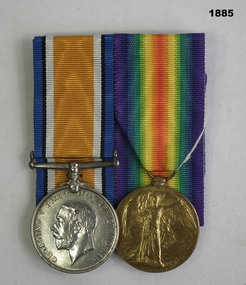
... Harris and Yarrow were brothers in law killed one day apart. numismatics-medals-military metalcraft military history-army ron mills collection "5105 Pte WC Harris 57 Bn AIF" Medal set, court mounted, set of (2) re William Charles Harris. 1. ...W.C Harris No 5105 (born Bendigo, enlisted Bendigo) enlisted on 22.1.16 in 16th reinforcements 6th Batt AIF. He then transferred to the 57 th Batt. On 28.10. 16 he was attached to 15th LTM Battery. He was KIA on 26.9.17. See also item no 1855. Harris and Yarrow were brothers in law killed one day apart.Medal set, court mounted, set of (2) re William Charles Harris. 1. British War Medal 1914-18. 2. Victory Medal 1914 - 19."5105 Pte WC Harris 57 Bn AIF"numismatics-medals-military, metalcraft, military history-army, ron mills collection -
 Bendigo Military Museum
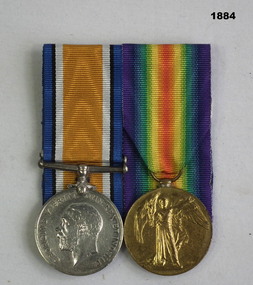
Award - MEDAL SET WW1, Post 1919
... Harris and Yarrow were brothrs in law killed one day apart. numismatics-medals-military metalcraft ron mills collection "3648 Pte J Yarrow 60 Bn AIF" Medal set, court mounted, set of (2) re Jack Yarrow. 1. ...Jack Yarrow (born Sandhurst, enlisted Eaglehawk) enlisted on 13.7.15 in the 8th reinforcements 21st Batt AIF. He transferred to the 60th Batt on 26.2.16. Hospital with Influenza on 15.3.16. KIA 25.9.17. See also item no 1884. Harris and Yarrow were brothrs in law killed one day apart.Medal set, court mounted, set of (2) re Jack Yarrow. 1. British War Medal 1914-18. 2. Victory Medal 1914 - 19 "3648 Pte J Yarrow 60 Bn AIF"numismatics-medals-military, metalcraft, ron mills collection -
 Bendigo Military Museum
Weapon - ROCKET LAUNCHER, post 1960
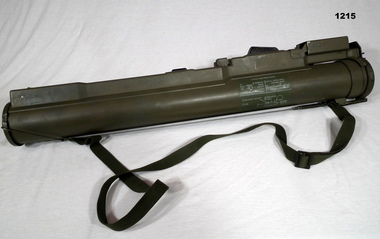
... arms-ordnance military history M 72 rocket Rocket HE 66 mm Anti Tank M72 A3 Lot RAN90 E 001 - 018, Operating and Storage Temp 40oF to + 140oF - Danger near blast area. M72 LAW ...M72 LAW 66mm Rocket Launcher Anti Tank Cylinder Housing. Round cylinder with a 2 clip on end caps adjustable sites & trigger mechanism rubber. All metal construction, has a fabric shoulder strap. Firing instructions drawn in white on one side.Rocket HE 66 mm Anti Tank M72 A3 Lot RAN90 E 001 - 018, Operating and Storage Temp 40oF to + 140oF - Danger near blast area.arms-ordnance, military history, m 72, rocket -
 Bendigo Military Museum
Work on paper - LEAFLET, SURRENDER, C.1945
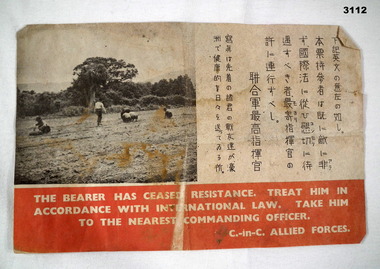
... military history-army documents-pamphlets Propaganda Bottom of front page: “The bearer has ceased resistance. Treat him in accordance with International Law. ...Soiled paper leaflet printed both sides. Front side has a black & white photo of Asian farmers. Right side has Asian character writing. Bottom has English words in red colour. Rear page has 21 columns of Asian character writing. Left side has a red & blue 45 degree bar.Bottom of front page: “The bearer has ceased resistance. Treat him in accordance with International Law. Take him to the nearest Commanding Officer. C-in-C Allied Forces”military history-army, documents-pamphlets, propaganda -
 Bendigo Historical Society Inc.
Article - Devils Own Cricket Club Established Bendigo Advertiser Article
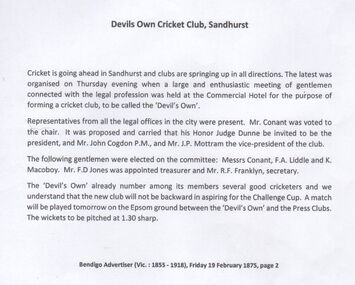
... Law Association as "The Devil's Own". "It is understood that the King was in high health and excellent spirits at the time. When the 'Temple companies' had defiled before him, his Majesty enquired of Lord David Erskine, who commanded them, as lieutenant colonel, what was the composition of that corps? 'They are all lawyers, Sire,' said Erskine. 'What! What! 'exclaimed the King, 'all lawyers? all lawyers? Call them the Devil's Own, call them the Devil's Own!" "And the Devil's Own they were called accordingly." ( Norton, F.C., A short history of the military...Law Association as "The Devil's Own". "It is understood that the King was in high health and excellent spirits at the time. When the 'Temple companies' had defiled before him, his Majesty enquired of Lord David Erskine, who commanded them, as lieutenant colonel, what was the composition of that corps? 'They are all lawyers, Sire,' said Erskine. 'What! What! 'exclaimed the King, 'all lawyers? all lawyers? Call them the Devil's Own, call them the Devil's Own!" "And the Devil's Own they were called accordingly." ( Norton, F.C., A short history of the military ...The Devils' Own Cricket Club was also referred to as the Law Cricket Club and the Law (Devils' Own) Cricket Club. The club was formed in 1875 from members of the local legal fraternity and business people in Sandhurst (Bendigo). In addition to the Devils' Own Cricket Club, there were many male cricket clubs formed in Bendigo in the 1870's, for example, the Bendigo United Cricket Club; Epsom Cricket Club; All Trades Cricket Club; New Chum Cricket Club; California Gully Cricket Club; Long Gully Cricket Club; Butchers' Cricket Club; View Point Cricket Club; Myers Street Cricket Club; Australian Natives Association Cricket Club; View Point Cricket Club; Beehive Cricket Club; Advertiser Cricket Club; Kangaroo Flat Cricket Club; Golden Square Cricket Club; North Bendigo Cricket Club; Crusoe Cricket Club; City Cricket Club; Bohemians Cricket Club and the Happy Valley Cricket Club. Where did the name 'Devils' Own' come from? The Inns of Court Regiment, London, has a unique place in history as a result of its ancient and intimate connection with the Law and lawyers. It recruited and 'officered' almost exclusively from the legal profession, drawn from barristers, attorneys, notaries and their clerks and students practising in the area of the Inns of Court comprising Middle Temple, Inner Temple, Lincoln’s Inn and Gray’s Inn. During Napoleonic Wars all Inns raised companies. During a review by King George III in Hyde Park in 1803, the King used his dislike for lawyers – particularly ones carrying arms – to name the massed ranks of the Law Association as "The Devil's Own".[5] "It is understood that the King was in high health and excellent spirits at the time. The Bloomsbury and Inns of Court Volunteers was reformed in 1797 during the Napoleonic Wars. It was shortly afterwards that the regiment gained its enduring nickname. During a review by King George III in Hyde Park in 1803, the King used his dislike for lawyers – particularly ones carrying arms – to name the massed ranks of the Law Association as "The Devil's Own". "It is understood that the King was in high health and excellent spirits at the time. When the 'Temple companies' had defiled before him, his Majesty enquired of Lord David Erskine, who commanded them, as lieutenant colonel, what was the composition of that corps? 'They are all lawyers, Sire,' said Erskine. 'What! What! 'exclaimed the King, 'all lawyers? all lawyers? Call them the Devil's Own, call them the Devil's Own!" "And the Devil's Own they were called accordingly." ( Norton, F.C., A short history of the military & naval services of the Inns of Court and the members of the Bench and the Bar, 1886, William Clowes & Sons, Stamford Street and Charing Cross, London) Did Bendigo’s legal fraternity name themselves DOCC with the intent that they would reflect the distinguished pedigree and qualities of the Devil’s Own regiment? Details of one the players in the 'Devils'Own' CC : Pelling Hugh Gough Pigott Stainsby Conant, solicitor, born Hampshire, England 1846. Arrived Australia 1871. Pelling was the son of Francis Pigott Stainsby Conant Esq., Lieutenant Governor of the Isle of Man. He married Catherine Anne Drummond. In 1874, his practice was in the Albion Chambers, Sandhurst, given as 'Pelling H.G.P.S. Conant, Solicitor'. Organisation-Club/society-sportA transcript of the Devils Own Cricket Club article in the 19th February, 1875 edition of the Bendigo Advertiser docc, devils own cricket club, sandhurst, bendigo advertiser, pelling h.g.p. s. conant, solicitor, barrister -
 Monbulk RSL Sub Branch
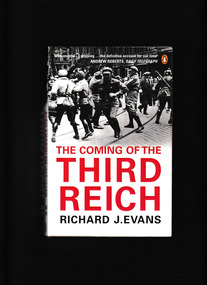
Book, Penguin Books, The coming of the Third Reich, 2004
... Its citizens were angry and embittered by military defeat and economic ruin, and its young democracy undermined by a civil service, an army, and a law enforcement system deeply alienated from the new order. ...n 1900, Germany was one of modernity's great success stories: The most progressive and dynamic nation in Europe, it was the only country whose rapid economic growth and innovation rivaled that of the United States. Its political culture was far less authoritarian than Russia's and less anti-Semitic than France's. Representative institutions thrived, and competing political parties and elections were a central part of life. How, then, could it be that in little more than a generation this stable modern country would fall into the hands of Adolf Hitler and the violent, racist, extremist political movement he led, a movement that would lead Germany and then all of Europe into utter moral, physical, and cultural ruin?" "There is no story in twentieth-century history more important to understand, and Richard Evans has written the definitive account for our time. A masterful synthesis of a vast body of scholarly work integrated with important new research and interpretations, Evans's history restores drama and contingency to the rise to power of Hitler and the Nazis, even as he shows how ready Germany was by the early 1930s for such a takeover to occur. Its citizens were angry and embittered by military defeat and economic ruin, and its young democracy undermined by a civil service, an army, and a law enforcement system deeply alienated from the new order. The electorate was beset by growing extremism and panic about communism; and the small but successful Jewish community was subject to wide-spread suspicion and resentment. In the end, though nothing about what happened was preordained, Germany proved to be fertile ground for Nazism's ideology of hatred.Index, bibliography, ill, maps, p.335.non-fictionn 1900, Germany was one of modernity's great success stories: The most progressive and dynamic nation in Europe, it was the only country whose rapid economic growth and innovation rivaled that of the United States. Its political culture was far less authoritarian than Russia's and less anti-Semitic than France's. Representative institutions thrived, and competing political parties and elections were a central part of life. How, then, could it be that in little more than a generation this stable modern country would fall into the hands of Adolf Hitler and the violent, racist, extremist political movement he led, a movement that would lead Germany and then all of Europe into utter moral, physical, and cultural ruin?" "There is no story in twentieth-century history more important to understand, and Richard Evans has written the definitive account for our time. A masterful synthesis of a vast body of scholarly work integrated with important new research and interpretations, Evans's history restores drama and contingency to the rise to power of Hitler and the Nazis, even as he shows how ready Germany was by the early 1930s for such a takeover to occur. Its citizens were angry and embittered by military defeat and economic ruin, and its young democracy undermined by a civil service, an army, and a law enforcement system deeply alienated from the new order. The electorate was beset by growing extremism and panic about communism; and the small but successful Jewish community was subject to wide-spread suspicion and resentment. In the end, though nothing about what happened was preordained, Germany proved to be fertile ground for Nazism's ideology of hatred.germany - politics and government 1933-1939, germany - nazi party -
 National Vietnam Veterans Museum (NVVM)
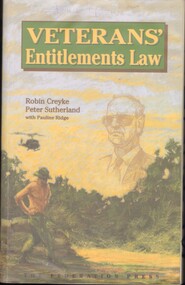
Book, Creyke, Robin & Sutherland, Peter, Veterans' Entitlements Law
... Veterans - Legal status laws etc - Australia Military pensions - Australia For over eighty-five years, and from both sides of politics, the Commonwealth Government has provided support for servicemen and women. ...For over eighty-five years, and from both sides of politics, the Commonwealth Government has provided support for servicemen and women. Whether it be soldier settlers' block, further education, specially fitted cars for limbless, habitation programs or financial support, Australians have been prepared in practical ways to help and compensate the men and women who have served their country in the armed forces especially in times of war.For over eighty-five years, and from both sides of politics, the Commonwealth Government has provided support for servicemen and women. Whether it be soldier settlers' block, further education, specially fitted cars for limbless, habitation programs or financial support, Australians have been prepared in practical ways to help and compensate the men and women who have served their country in the armed forces especially in times of war.veterans - legal status, laws etc - australia, military pensions - australia
