
Showing 139 items matching "new guinea campaign"
-
 Bendigo Military Museum
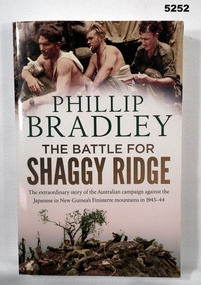
Book - BOOK, AUSTRALIAN WW2 NEW GUINEA CAMPAIGN, Phillip BRADLEY, "The Battle for Shaggy Ridge", 2021
... BOOK, AUSTRALIAN WW2 NEW GUINEA CAMPAIGN..."THE BATTLE FOR/ SHAGGY RIDGE/ The extraordinary story of the Australian Campaign against the/ Japanese in New Guinea's Finisterre Mountains in 1943-44"..."The Battle for Shaggy Ridge" Book BOOK, AUSTRALIAN WW2 NEW GUINEA CAMPAIGN Phillip BRADLEY Allen & Unwin Pty Ltd McPherson Printing Group ..."THE BATTLE FOR/ SHAGGY RIDGE/ The extraordinary story of the Australian Campaign against the/ Japanese in New Guinea's Finisterre Mountains in 1943-44"Soft Cover Book Soft cover - cardboard, gold, dark green and grey colour print on front, spine and back. Illustrated - in - colour - front two photographs, at top, troops resting, bottom soldiers in dug out positions. Back - troops marching out of the foothills. 318 pages - paper, cut, plain, off white. Illustrated - colour and black and white photographs and map diagrams.books, history, ww2, new guinea -
 Bendigo Military Museum
Booklet - NEW GUINEA WW2, Major J.H. Moore, The New Guinea Campaign 1941-43, 1972
... The New Guinea Campaign 1941-43...Includes map and line diagrams on page 11. The New Guinea Campaign 1941-43 Booklet NEW GUINEA WW2. ...An account based on Colonel Keogh's book "South West Pacific Campaign" plus additional notes as compiled by Major J. H. More, ED, HC, E Comd. Part of the Kevin John Herdman (No.397661) Collection. See Catalogue No. 5942P for details of his service.A4 sized soft covered booklet. Cover is green coloured card. Printing on front cover in black type. Back cover blank. 36 pages with cut edges. Text in black type. Pages glued to cover. Includes map and line diagrams on page 11.Stamped on front cover is purple ink: "SOUTHERN COMMAND LIBRARY".kevin john herdman, new guinea, ww2, booklet -
 8th/13th Victorian Mounted Rifles Regimental Collection
Book, The New Guinea Campaign 1941-43
... The New Guinea Campaign 1941-43...Green soft covered booklet, 28 pages double sided printing, thermal binding. The New Guinea Campaign 1941-43 Book ...A series of study notes covering the military campaign in Papua and New Guinea during the Second World War.Green soft covered booklet, 28 pages double sided printing, thermal binding.non-fictionA series of study notes covering the military campaign in Papua and New Guinea during the Second World War.wwii, new guinea, papua, world war two, moore, history -
 Bendigo Military Museum
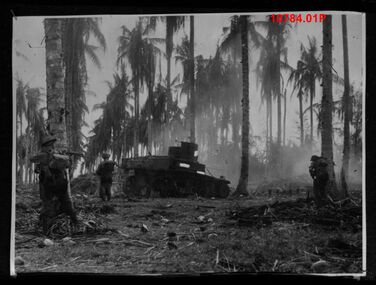
Slide - KODAK LANTERN SLIDES WW2 ERA, Set of slides of George Silk photographs of Australians at Battle of Buna
... New Guinea campaign...This is evident by the obscured identification numbers on the Stuart tank in slide 01. New Guinea campaign Buna Australian infantry WW2 Glass plate slides in original box Set of slides of George Silk photographs of Australians at Battle of Buna Slide KODAK LANTERN SLIDES WW2 ERA ...A set of 14 glass plate slides of official photography from the Battle of Buna-Gona in 1943. The images were originally taken by famous photographer George Silk, and have featured heavily in histories of the campaign since the war. The slides themselves are 'photographs of photographs' evident by the pins holding down the corners of the images. The slides were likely taken for educational purposes, and would have been used during the war. This is evident by the obscured identification numbers on the Stuart tank in slide 01.Glass plate slides in original boxnew guinea campaign, buna, australian infantry ww2 -
 Monbulk RSL Sub Branch
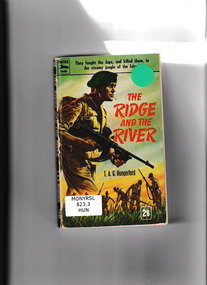
Book, Panther Books, The ridge and the river, 1958
... new guinea campaigh...bougainville campaign...new guinea campaigh bougainville campaign World War II fiction set in New Guinea; characters include Aboriginal soldier. p.192. ...World War II fiction set in New Guinea; characters include Aboriginal soldier.p.192.World War II fiction set in New Guinea; characters include Aboriginal soldier. new guinea campaigh, bougainville campaign -
 Uniting Church Archives - Synod of Victoria
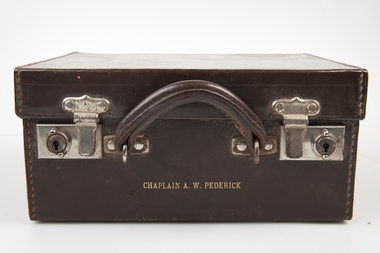
Travelling Communion Set, c1940s
... The Rev A W Pederick was a chaplain who served in the New Guinea Campaign during WWII. His service included the Kokoda Trail. ...The Rev A W Pederick was a chaplain who served in the New Guinea Campaign during WWII. His service included the Kokoda Trail. portable communion set Rev A W Pederick "CHAPLAIN A. ...The Rev A W Pederick was a chaplain who served in the New Guinea Campaign during WWII. His service included the Kokoda Trail. Brown leather carry case with a brown metal base, a carry handle and two lockable latches on the font. The box has a blue velvet lining. The box holds a paten, diameter 12.0 cm, and a wafer tin which are held in pouches in the lid. Two bottles with cork and silver lids are in fitted compartments inside the box which also contains a small white embroidered cloth. There is embossed gold lettering on the front of the box. The box also holds a letter from the Rev Douglas W Risstrom."CHAPLAIN A. W. PEDERICK" inside the lid: "The gift of the Methodist Padres Auxiliary of Australia"portable communion set, rev a w pederick -
![Newspaper - Newspaper clippings, [The Sun News-Pictorial], [24 December 1942]](/media/collectors/64a5077bc83bd7b7b94f4211/items/66fc9c08536b424317f5571b/item-media/66fca174536b424317f60e66/item-fit-380x285.jpg?cb=6) Returned Nurses RSL Sub-branch
Returned Nurses RSL Sub-branchNewspaper - Newspaper clippings, [The Sun News-Pictorial], [24 December 1942]
... TROOPS wounded in the New Guinea campaign on a hospital train / somewhere in Australia. ...TROOPS wounded in the New Guinea campaign on a hospital train / somewhere in Australia. ...Caption: "U.S. TROOPS wounded in the New Guinea campaign on a hospital train / somewhere in Australia. On the train journey the troops were / attended by A.I.F. nurses."Newspaper clipping of partial headings, photograph and captionunited states troops, new guinea, aif, wwii, world war ii, world war two -
 Bendigo Military Museum
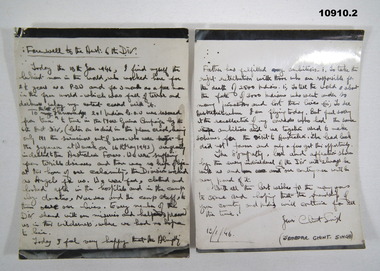
Letter - LETTER, PHOTOGRAPHIC COPY, Jemedar Ghint-Singh, Farewell to the Aust 6th Div, 13 Jan 1946
... In the letter he thanks the members of the Aust 6th Division who helped him and his comrades during the New Guinea Campaign. Part of the Meade Collecton. ...In the letter he thanks the members of the Aust 6th Division who helped him and his comrades during the New Guinea Campaign. Part of the Meade Collecton. ...Copy of a letter written by "Jemedar" (equivalent rank to Second Lieutenant) Ghint-Singh an Indian soldier who was a POW of the Japanese. In the letter he thanks the members of the Aust 6th Division who helped him and his comrades during the New Guinea Campaign. Part of the Meade Collecton. See Cat 10785P for details of service "Ernest James Meade" No. 2112.Black and white two page photograph of a handwritten letter written by an Indian soldier.meade collection, ernest james meade, australia 6th div, pow, indian army, ww2 -
 Wangaratta RSL Sub Branch
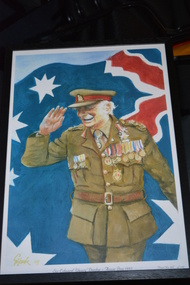
Print - Framed print, c1993
... Born 12 July 1907 Major Plains, Victoria Died 2 July 1993 (aged 85) Service/branch Australian Army Years of service 1935–1946 Rank Colonel Unit Royal Australian Army Medical Corps 2/2nd Casualty Clearing Station Commands held No.1 Allied General Hospital Battles/wars World War II Battle of Greece North African Campaign Syria-Lebanon campaign South West Pacific New Guinea Campaign South East Asia Campaign Awards Companion of the Order of Australia Knight Bachelor Companion of the Order of St Michael and St George Officer of the Order of the British Empire Knight of the Venerable Order of Saint John Mentioned in Despatches ...Born 12 July 1907 Major Plains, Victoria Died 2 July 1993 (aged 85) Service/branch Australian Army Years of service 1935–1946 Rank Colonel Unit Royal Australian Army Medical Corps 2/2nd Casualty Clearing Station Commands held No.1 Allied General Hospital Battles/wars World War II Battle of Greece North African Campaign Syria-Lebanon campaign South West Pacific New Guinea Campaign South East Asia Campaign Awards Companion of the Order of Australia Knight Bachelor Companion of the Order of St Michael and St George Officer of the Order of the British Empire Knight of the Venerable Order of Saint John Mentioned in Despatches colonel sir ernest edward dunlop "weary" dunlop surgeon Sir Edward "Weary" Dunlop - Anzac Day 1993 Print No 455 of 500 Black timber frame containing coloured caricature of saluting Army Officer with flag in background. ...Colonel Sir Ernest Edward "Weary" Dunlop, AC, CMG, OBE (Born at Wangaratta 12 July 1907 – 2 July 1993) was an Australian surgeon who was renowned for his leadership while being held prisoner by the Japanese during World War II. Born 12 July 1907 Major Plains, Victoria Died 2 July 1993 (aged 85) Service/branch Australian Army Years of service 1935–1946 Rank Colonel Unit Royal Australian Army Medical Corps 2/2nd Casualty Clearing Station Commands held No.1 Allied General Hospital Battles/wars World War II Battle of Greece North African Campaign Syria-Lebanon campaign South West Pacific New Guinea Campaign South East Asia Campaign Awards Companion of the Order of Australia Knight Bachelor Companion of the Order of St Michael and St George Officer of the Order of the British Empire Knight of the Venerable Order of Saint John Mentioned in Despatches Black timber frame containing coloured caricature of saluting Army Officer with flag in background.Sir Edward "Weary" Dunlop - Anzac Day 1993 Print No 455 of 500colonel sir ernest edward dunlop, "weary" dunlop, surgeon -
 Bendigo Military Museum
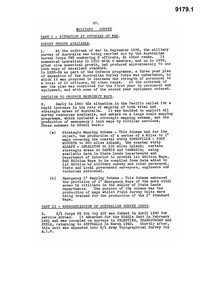
Administrative record - Australian Survey Corps - Outbreak of WWII through to 1945, Australian Survey Corps, August 1945
... Part 4 New Guinea and Borneo Campaigns, Formations and Survey Units Under Command. ...Part 4 New Guinea and Borneo Campaigns, Formations and Survey Units Under Command. ...This is an important record detailing the Military Survey Situation in Australia before and after WWII. Because of its importance, the entire five page document has been reproduced. The document is written in four parts: Part 1 Situation at the start of War and Survey Troops available. Part 2 Reorganisation of Australian Survey Corps, Liaison with American Forces, Training and Equipment. Part 3 Map Situation at 31 August 1945, Maps published by Australian Units, Distribution of Maps, Map Records and Air Photos. Part 4 New Guinea and Borneo Campaigns, Formations and Survey Units Under Command. 5 x A4 photocopied pages of typed text, stapled top LH corner. Pages are numbered 87 to 91. The entire document has been reproduced.royal australian survey corps, rasvy, fortuna, army survey regiment, army svy regt, asr -
 Wangaratta RSL Sub Branch
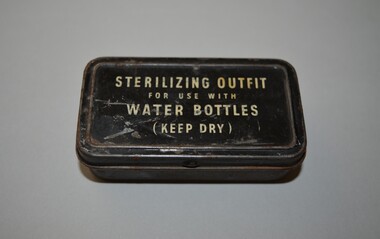
Container - Sterilizing Outfit, Tromax Limited, C1942-45
... Water Sterilization Outfit manufactured in Australia to sterilize water for use in the field by soldiers particularly deployed to Borneo and New Guinea/Kokoda Track Campaigns during WW2, where clean jungle drinking water was a matter of survival. ...Water Sterilization Outfit manufactured in Australia to sterilize water for use in the field by soldiers particularly deployed to Borneo and New Guinea/Kokoda Track Campaigns during WW2, where clean jungle drinking water was a matter of survival. ...Water Sterilization Outfit manufactured in Australia to sterilize water for use in the field by soldiers particularly deployed to Borneo and New Guinea/Kokoda Track Campaigns during WW2, where clean jungle drinking water was a matter of survival. Item belonged to Robert Francis ISKOV VX15237 served with the 59th Battalion/Hume Regiment CMF before joining the 2/14th Battalion at Caulfield in September 1940. He disembarked for the Middle East in November, 1940 and fought in the Syrian campaign in 1941. In 1942 the 2/14th Battalion returned to Australia and sent to Papua where he fought at the Battle of Isurava before the battalion was sent to Gona. On 1943 Bob returned to Australia to undertake officer training and in 1945 with the 2/23rd Battalion sailed to Morotai and served with the battalion on Tarakan. He returned to Australia in November, 1945 and discharged a month laterRectangular tin with hinged lid containing two clear glass vials of water sterilization tablets. The tin is plain metal apart from the black lid with white lettering. The two vials are stoppered with cork. The thinner vial contains small round blue tablets, while the thicker vial contains a white substance and has a paper label titled '50 Sterilizing Tablets'.LID - 'STERILIZING OUTFIT / FOR USE WITH / WATER BOTTLES / (KEEP DRY) ww2, bob iskov, amf, sterilizing outfit, new guinea -
 Werribee RSL Sub Branch
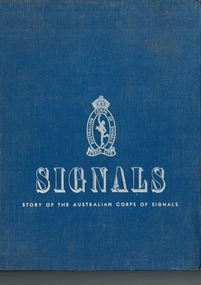
Book, Military History, SIGNALS STORY OF THE AUSTRALIAN CORPS OF SIGNALS, 1951 (exact)
... "SIGNALS" is an outline of the achievments of the Australian Corpf of Signals over the years from the campaigns in the Middle East to the present day of the victories in New Guinea. ...new guinea aaho 6 'TO THE FALLEN" Front cover is embossed. The embossing is in silver. The embossung shows the Signal Corp emblem and title. "SIGNALS" is an outline of the achievments of the Australian Corpf of Signals over the years from the campaigns in the Middle East to the present day of the victories in New Guinea. ..."SIGNALS" is an outline of the achievments of the Australian Corpf of Signals over the years from the campaigns in the Middle East to the present day of the victories in New Guinea. Itpays tribute to the Arm of the services which is on duty and maintainimng vital communication channels for the passage of signals traffic to the far-flung Headquarters and Units of the Australian Military Forces.'TO THE FALLEN" Front cover is embossed. The embossing is in silver. The embossung shows the Signal Corp emblem and title. world war two, signals, middle east, australian military forces, new, guinea, aaho 6 -
Werribee RSL Sub Branch
Book, Military History, SIGNALS STORY OF THE AUSTRALIAN CORPS OF SIGNALS, 1951 (exact)
... "SIGNALS" is an outline of the achievments of the Australian Corpf of Signals over the years from the campaigns in the Middle East to the present day of the victories in New Guinea. ...new guinea aaho 6 'TO THE FALLEN" Front cover is embossed. The embossing is in silver. The embossung shows the Signal Corp emblem and title. "SIGNALS" is an outline of the achievments of the Australian Corpf of Signals over the years from the campaigns in the Middle East to the present day of the victories in New Guinea. ..."SIGNALS" is an outline of the achievments of the Australian Corpf of Signals over the years from the campaigns in the Middle East to the present day of the victories in New Guinea. Itpays tribute to the Arm of the services which is on duty and maintainimng vital communication channels for the passage of signals traffic to the far-flung Headquarters and Units of the Australian Military Forces.'TO THE FALLEN" Front cover is embossed. The embossing is in silver. The embossung shows the Signal Corp emblem and title. world war two, signals, middle east, australian military forces, new, guinea, aaho 6 -
 Lara RSL Sub Branch
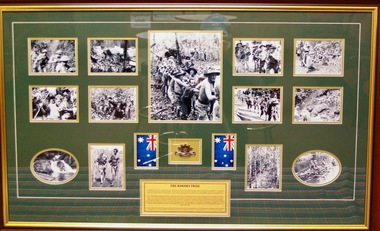
Framed collection of the Kokoda Trail, The Kodoka Trail, Circa 2018
... The Kokoda Track (or Trail) is a single-file thoroughfare that runs 96 kilometres (60ml) overland) - 60 kilometres (37ml) in a straight line - through the Owen Stanley Range in Papua New Guinea (PNG).The trail was First used by Europeans in the 1890s by miners struggling northwards to the Yodda Kokoda goldfields. During the Pacific War of World War 2 a series of battles were fought from July 1942 to January 1943 between Japanese and Australian forces. One of the bloodiest campaigns ...The Kokoda Track (or Trail) is a single-file thoroughfare that runs 96 kilometres (60ml) overland) - 60 kilometres (37ml) in a straight line - through the Owen Stanley Range in Papua New Guinea (PNG).The trail was First used by Europeans in the 1890s by miners struggling northwards to the Yodda Kokoda goldfields. During the Pacific War of World War 2 a series of battles were fought from July 1942 to January 1943 between Japanese and Australian forces.One of the bloodiest campaigns of World War 2,which has forever sealed the relation ship between Australia and Papua New Guinea began 61 years ago. This Photographic Memorial is dedicated to those Australian and Papua New Guinea forces who fought against the Japanese with courage and fortitude on the Kokoda Trail.Rectangular shaped glass covered picture frame showing a collection of photos,two flags and a Rising sun badge. The Kododa Trail.kokoda track, world war 2, papua new guinea, australian forces, lara r.s.l. -
 Lara RSL Sub Branch
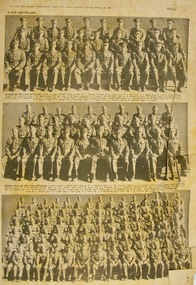
Newspaper, 17th Australian Infantry Brigade, February 22nd 1940
... The 17th Brigade fought in the Western Desert Campaign in Libya, the Battle of Greece, the Battle of Wau, the Salamaua-Lae campaign in Papua, and in the Aitape-Wewak campaign in New Guinea. ...The 17th Brigade fought in the Western Desert Campaign in Libya, the Battle of Greece, the Battle of Wau, the Salamaua-Lae campaign in Papua, and in the Aitape-Wewak campaign in New Guinea. The photographs are of national significance as they may reflect the only known photographs of individuals from WW2. aif army 17th brigade second aif 2/5th battalion australian army australian infantry brigade 2/2nd field aumbulance 2/2nd australian general hospital 6th divisional australian army medical corps 6th divisional engineers The Argus 17th Australian Infantry Brigade, Second AIF, Souvenir Supplement, Thursday, February 22, 1940 Page 1 2/5th Battalion - Picture 1 Officers of the 2/5th Battalion; Picture 2 Senior NCO's of the 2/5th Battalion; Picture 3 A Company 2/5th Battalion Page 2 B Company 2/5th Battalion; C Company 2/5th Battalion; D Company 2/5th Battalion Page 3 Headquarters 2/2nd Field Regiment 6th Divisional Artillery; 3rd Battery 2/2nd Field Regiment 6th Divisional Artillery Page 4 Officers, NCO's and men of 2/2nd Field Company, 6th Divisional Engineers; Officers NCO's and men 2/2nd Field Ambulance and 2/2nd Australian General Hospital 6th Divisional Australian Army Medical Corps 4 page newspaper pictures of 17th Brigade, Second AIF 17th Australian Infantry Brigade Newspaper ...The 17th Australian Infantry Brigade was an infantry brigade in the Australian Army. First formed in 1917 during World War I, it did not see any action. Reformed during World War II, before being disbanded in 1946. Today, its name is perpetuated by the 17th Combat Service Support Brigade, which was raised as a logistics formation in May 2006. The 17th Brigade was reformed on 13 October 1939, again as part of the 6th Division, recruited from Victoria. The 17th Brigade fought in the Western Desert Campaign in Libya, the Battle of Greece, the Battle of Wau, the Salamaua-Lae campaign in Papua, and in the Aitape-Wewak campaign in New Guinea. The photographs are of national significance as they may reflect the only known photographs of individuals from WW2.4 page newspaper pictures of 17th Brigade, Second AIFThe Argus 17th Australian Infantry Brigade, Second AIF, Souvenir Supplement, Thursday, February 22, 1940 Page 1 2/5th Battalion - Picture 1 Officers of the 2/5th Battalion; Picture 2 Senior NCO's of the 2/5th Battalion; Picture 3 A Company 2/5th Battalion Page 2 B Company 2/5th Battalion; C Company 2/5th Battalion; D Company 2/5th Battalion Page 3 Headquarters 2/2nd Field Regiment 6th Divisional Artillery; 3rd Battery 2/2nd Field Regiment 6th Divisional Artillery Page 4 Officers, NCO's and men of 2/2nd Field Company, 6th Divisional Engineers; Officers NCO's and men 2/2nd Field Ambulance and 2/2nd Australian General Hospital 6th Divisional Australian Army Medical Corpsaif, army, 17th brigade, second aif, 2/5th battalion, australian army, australian infantry brigade, 2/2nd field aumbulance, 2/2nd australian general hospital, 6th divisional australian army medical corps, 6th divisional engineers -
 Lara RSL Sub Branch
Book, Signals - Story of the Australian Corps of Signals, 1953
... An outline of the Australian Signals Corps over the years from the campaign in the Middle East to the present day of the victories in New Guinea. ...Little has been written previously about this technical group of men and women and that their duties were under insurmountable difficulties which they faced and overcome in conditions that were encountered in the desert and jungle warfare. Without their constant and never ending services, the task of the force in bringing to a close this fight for freedom would have been greatly handicapped.An outline of the Australian Signals Corps over the years from the campaign in the Middle East to the present day of the victories in New Guinea. A tribute to the corps that stayed on duty every hour of every day providing and maintaining vital communication channels.Signals - Story of the Australian Corps of Signals. Green front and back hardcover with black text and insignia. Photographs, cartoons, illustrations and poems. The inside front and back covers have a photograph montage in green sepia.signal corps, wwii, c.h.simpson, motorcycle couriers, signals 7 australian division, lt.commander b.t.r chadd, palestine, spark plug, semiphore, morse code, field radio, a.i.f, british signals corps, pieter mersk, breconshire corp signals, new guinea, malaysa, singapore, switchboard, carrier pigeons, linesmen, gaza signal office -
 Lara RSL Sub Branch
Photograph, Australian infantry in New Guinea 1939/45 war
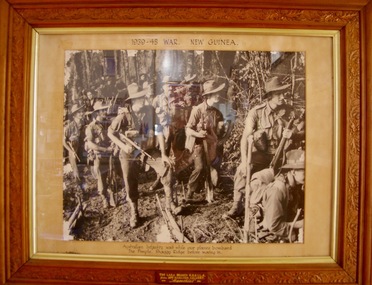
... The Battle of the Shaggy Ridge was part of the Markham and Ramu Valley – Finisterre Range campaign, consisting of a number of actions fought by Australian and Japanese troops in Papua New Guinea in World War II. ...The Battle of the Shaggy Ridge was part of the Markham and Ramu Valley – Finisterre Range campaign, consisting of a number of actions fought by Australian and Japanese troops in Papua New Guinea in World War II. ...The Battle of the Shaggy Ridge was part of the Markham and Ramu Valley – Finisterre Range campaign, consisting of a number of actions fought by Australian and Japanese troops in Papua New Guinea in World War II. Following the Allied capture of Lae and Nadzab, the Australian 9th Division had been committed to a quick follow up action on the Huon Peninsula in an effort to cut off the withdrawing Japanese. Once the situation on the Huon Peninsula stabilised in late 1943, the 7th Division had pushed into the Markham and Ramu Valleys towards the Finisterre Range with a view to pushing north towards the coast around Bogadjim, where they would meet up with Allied forces advancing around the coast from the Huon Peninsula, before advancing towards Madang.In late December 1943, the Australian offensive to take Shaggy Ridge began, focused on an attack on The Pimple.[13] The Pimple was one of three rocky outcrops, held by the Japanese on the ridge line.Framed Photograph of Australian infantry waiting while our planes" bombard the Pimple,"Shaggy Ridge before moving in. Australian infantry waiting while our planes" bombard the Pimple,"Shaggy Ridge before moving in. THE LARA BRANCH R.S.S.I.L.A. FROM MRS HAMILTON CALVERT =MEMORIES=ww2, papua new guinea, world war 2, lara r.s.l., photographs, australian infantry, shaggy ridge -
 Geelong RSL Sub Branch
Photograph HMAS Bathurst
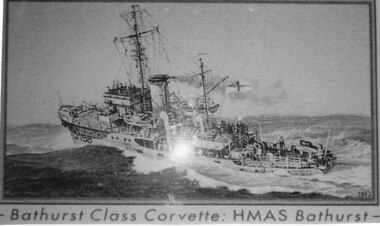
... New Guinea i n 1945. Bathurst was paid off in 1946 and sold for scrap in 1948. There were 60 Bathurst class corvettes constructed during WW2 the photograph in this collection is HMAS Bathurst the lead ship of 60. In this collection there are photograph albums, diaries and documents relating to W2156 Noel G Hernan, Stoker, including Sailor's Pay Book, Balmoral Naval Depot Identity Card, Entitlement to War Gratuity, Clothing Ration Card 1945-46 Issue, letters, newspaper cuttings, train tickets, a booklet 'V for Victory, Notes for Guidance in the Wearing of Campaign Stars and War Medals on Civilian Clothes. ...HMAS Bathurst (J158) named after the City of Bathurst NSW is the lead ship of 60 Bathurst class corvettes that were constructed during WW2. The Bathurst was constructed in 1940 her early career was spent operating with the British Eastern Fleet. Bathurst returned to Australian waters in 1944 and was deployed to New Guinea i n 1945. Bathurst was paid off in 1946 and sold for scrap in 1948.There were 60 Bathurst class corvettes constructed during WW2 the photograph in this collection is HMAS Bathurst the lead ship of 60. In this collection there are photograph albums, diaries and documents relating to W2156 Noel G Hernan, Stoker, including Sailor's Pay Book, Balmoral Naval Depot Identity Card, Entitlement to War Gratuity, Clothing Ration Card 1945-46 Issue, letters, newspaper cuttings, train tickets, a booklet 'V for Victory, Notes for Guidance in the Wearing of Campaign Stars and War Medals on Civilian Clothes. All of these items are the originals of W2156 Noel G Hernan and the photograph albums and diaries are those collected and amassed by W2156 Noel G Herman. Photograph of HMAS Bathburst., An oblong photograph, colour, kodac paper, a colour photograph of HMAS Bathurst a Bathurst Class Corvette.There is an enlarged print of this colour photograph, framed. The large framed version is hanging in the Geelong RSL 1st Floor. -
 Australian Commando Association - Victoria
Book, The Private War of the Spotters: A history of the New Guinea Air Warning Wireless Company, February 1942-April 1945
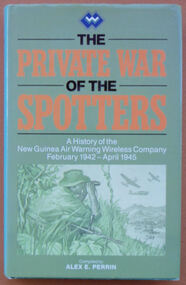
... New Guinea behind enemy lines. On 3 February 1942 the company issued its first air warning in Papua, when spotters at Tufi saw Japanese aircraft about to attack Port Moresby for the first time. The following month the company was responsible for the first Japanese killed in action in Papua by Australian ground forces, when spotters from Gona engaged the crew of a downed Japanese bomber. And in July 1942 the station at Buna signalled Port Moresby with news of the Japanese landings in Papua, marking the beginning of the Kokoda campaign ...The history of the New Guinea Air Warning Wireless Company. This reprinted version contains a map of the dispositions of Spotting Stations August 1943, additional MID awards listed and some additions to the nominal roll. The New Guinea Air Warning Wireless Company was formed in Port Moresby in late January 1942 and was granted “Separate Independent Establishment” status in October 1943. The company’s “founding father” was Major Don Small, who had witnessed Japanese air raids on Rabaul and realised that having lacked an effective early-warning system around New Britain meant that the defenders were taken by surprise. At the time, gaps had also appeared in the coast-watching communications network because the territory administration ordered the withdrawal of civilian wireless operators when Japan entered the war. The first influx of men into the company consisted largely of volunteers from the 39th Infantry Battalion, which was stationed at Port Moresby. Initial training was rudimentary, hasty, and was sometimes even carried out on en route to a new station. The first party of company personnel, or “spotters”, left Port Moresby as early as 1 February 1942, bound for the strategically important Samarai area, at the tip of Papua. In the first month of the company’s existence 16 spotter stations were established on the coast of Papua and in the mountains around Port Moresby. At the end of 1942 there were 61 operational stations being run by 180 men. The company’s high-water mark was in late 1944, by which time over 150 stations had been set up in Papua and New Guinea behind enemy lines. On 3 February 1942 the company issued its first air warning in Papua, when spotters at Tufi saw Japanese aircraft about to attack Port Moresby for the first time. The following month the company was responsible for the first Japanese killed in action in Papua by Australian ground forces, when spotters from Gona engaged the crew of a downed Japanese bomber. And in July 1942 the station at Buna signalled Port Moresby with news of the Japanese landings in Papua, marking the beginning of the Kokoda campaign. The dangers involved in the company’s work had also been made clear by this time. In July 1942 a party of spotters attempting to set up a station at Misima Island, off Milne Bay, was intercepted by a Japanese destroyer, resulting in the company’s first operational losses. Anticipating the direction of the campaign as a whole, the company’s focus moved north and north-west over the three years of its existence. In May 1942 a network was set up in the Wau area in association with the activities of Kanga Force. As part of the Wau network, spotter Ross Kirkwood audaciously constructed an observation post overlooking the Japanese airstrip at Salamaua. Kirkwood’s position was photographed by Damian Parer on the understanding that the pictures would not be published. They nevertheless appeared in a Sydney newspaper. The day after the publication of the photographs the observation post was attacked by the Japanese and Kirkwood was lucky to escape. In June 1944 the company’s headquarters were moved to Nadzab. By that time, spotter stations existed behind Japanese lines, as far north as Hollandia, and the company began to train Americans to perform similar work in the Philippines. In early 1945 the company moved to Balcombe, Victoria, where its members were posted to other units of the Australian Corps of Signals.gray plasticnon-fictionThe history of the New Guinea Air Warning Wireless Company. This reprinted version contains a map of the dispositions of Spotting Stations August 1943, additional MID awards listed and some additions to the nominal roll. The New Guinea Air Warning Wireless Company was formed in Port Moresby in late January 1942 and was granted “Separate Independent Establishment” status in October 1943. The company’s “founding father” was Major Don Small, who had witnessed Japanese air raids on Rabaul and realised that having lacked an effective early-warning system around New Britain meant that the defenders were taken by surprise. At the time, gaps had also appeared in the coast-watching communications network because the territory administration ordered the withdrawal of civilian wireless operators when Japan entered the war. The first influx of men into the company consisted largely of volunteers from the 39th Infantry Battalion, which was stationed at Port Moresby. Initial training was rudimentary, hasty, and was sometimes even carried out on en route to a new station. The first party of company personnel, or “spotters”, left Port Moresby as early as 1 February 1942, bound for the strategically important Samarai area, at the tip of Papua. In the first month of the company’s existence 16 spotter stations were established on the coast of Papua and in the mountains around Port Moresby. At the end of 1942 there were 61 operational stations being run by 180 men. The company’s high-water mark was in late 1944, by which time over 150 stations had been set up in Papua and New Guinea behind enemy lines. On 3 February 1942 the company issued its first air warning in Papua, when spotters at Tufi saw Japanese aircraft about to attack Port Moresby for the first time. The following month the company was responsible for the first Japanese killed in action in Papua by Australian ground forces, when spotters from Gona engaged the crew of a downed Japanese bomber. And in July 1942 the station at Buna signalled Port Moresby with news of the Japanese landings in Papua, marking the beginning of the Kokoda campaign. The dangers involved in the company’s work had also been made clear by this time. In July 1942 a party of spotters attempting to set up a station at Misima Island, off Milne Bay, was intercepted by a Japanese destroyer, resulting in the company’s first operational losses. Anticipating the direction of the campaign as a whole, the company’s focus moved north and north-west over the three years of its existence. In May 1942 a network was set up in the Wau area in association with the activities of Kanga Force. As part of the Wau network, spotter Ross Kirkwood audaciously constructed an observation post overlooking the Japanese airstrip at Salamaua. Kirkwood’s position was photographed by Damian Parer on the understanding that the pictures would not be published. They nevertheless appeared in a Sydney newspaper. The day after the publication of the photographs the observation post was attacked by the Japanese and Kirkwood was lucky to escape. In June 1944 the company’s headquarters were moved to Nadzab. By that time, spotter stations existed behind Japanese lines, as far north as Hollandia, and the company began to train Americans to perform similar work in the Philippines. In early 1945 the company moved to Balcombe, Victoria, where its members were posted to other units of the Australian Corps of Signals.world war ii, special operations, new guinea, new guinea air warning wireless company -
 Australian Commando Association - Victoria
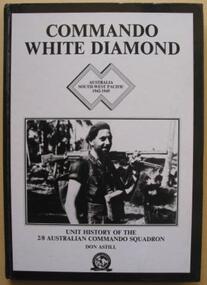
Book, Commando White Diamond: Unt History of the 2/8th Australian Commando Squadron
... While at Lae, the squadron received an intake of 70 men from the 2/8th from the 2/3rd, 2/5th and 2/6th Cavalry (Commando) Squadrons, many of whom were veterans of the earlier New Guinea campaigns. Their experience was no doubt a useful reserve that would have been called upon during the 2/8th’s subsequent campaign in Bougainville. ...The detailed history of the No.8 Independent Commando Company during World War II. Plastic protective cover over the book. The 2/8th Independent Company was formed at Wilson’s Promontory, Victoria, in July 1942 and travelled to Yandina, in Queensland, in September. While the other seven independent companies saw action in the islands off Australian and in New Guinea, the 2/8th spent most of the next two years based at Adelaide River, in the Northern Territory. While it was in the Territory, the independent companies underwent a series of reorganisations and the name of the 2/8th was changed from the 2/8th Independent Company to the 2/8th Cavalry (Commando) Squadron. This name was later simplified to just commando squadron. In July 1944, after years of waiting, the squadron left the Territory and sailed from Townsville to Lae, via Milne Bay. While at Lae, the squadron received an intake of 70 men from the 2/8th from the 2/3rd, 2/5th and 2/6th Cavalry (Commando) Squadrons, many of whom were veterans of the earlier New Guinea campaigns. Their experience was no doubt a useful reserve that would have been called upon during the 2/8th’s subsequent campaign in Bougainville. Others though, were able to implement some of their commando training when a small group from the 2/8th they made a secret landing on New Britain. Towards the end of the 1944 the 5th Division was preparing to make a landing at Jacquinot Bay in New Britain. Part of these preparations included landing a small group of officers from the division at Jacquinot Bay to make a secret reconnaissance of the potential landing site. As Jacquinot Bay was still in Japanese controlled territory, ‘C’ Troop from the 2/8th provided the protection for the reconnaissance party by establishing a position on the beach and by patrolling the surrounding country. Everything went well and the 5th Division later landed at Jacquinot Bay in November. The squadron too was on the move, and in October it sailed to Torokina, the main Australian base on Bougainville, where it joined the II Australian Corps. The campaign on Bougainville was dived into three areas, the Central, Northern and Southern Sectors. The 2/8th served in the latter two areas. The 2/8th made the first move of the Australian campaign in the Northern Sector, by patrolling from Torokina to Kuraio Mission and Amun once a week. The squadron did this from the second week of November unit the second week of December. The 2/8th was then transferred to the Southern Sector. The main battle for Bougainville was fought in the Southern Sector, as the 3rd Division advanced towards Buin – the main Japanese base on the island. As the division’s infantry brigades advanced along the coast, the 2/8th’s task was to protect their flank by conducting forward reconnaissance patrols, harassing the Japanese with raids and ambushes and conducting a form of guerrilla warfare. The squadron had a long campaign. For nine months, from the end of December until August 1945, the troopers were in action the whole time. After securing the Jaba River, they moved inland, first to Sovele Mission, then the villages of Opai, Nihero and Morokaimoro. They had reached Kilipaijino by the end of the war. Each village taken became a patrol base. Patrols were usually limited to two sections, although up to six sections could be operating at a time. Patrols generally lasted four to six days, but nine-day patrols were not unknown. The squadron collected and collated track information, terrain reports and located the enemy. Once patrols had gathered information, they were free to make a ‘strike’ against the Japanese by setting an ambush or taking a prisoner. These raids were very effective, as they forced the Japanese to deploy troops to their rear areas, removing men from the front created by the infantry. Following Japan’s surrender and the end of the war, the ranks of the squadron thinned quickly as men were discharged or were transferred to other units. For those who were left, the squadron returned to Australia at the end of December. In mid January 1946, at Liverpool, the 2/8th Commando Squadron was disbanded.non-fictionThe detailed history of the No.8 Independent Commando Company during World War II. Plastic protective cover over the book. The 2/8th Independent Company was formed at Wilson’s Promontory, Victoria, in July 1942 and travelled to Yandina, in Queensland, in September. While the other seven independent companies saw action in the islands off Australian and in New Guinea, the 2/8th spent most of the next two years based at Adelaide River, in the Northern Territory. While it was in the Territory, the independent companies underwent a series of reorganisations and the name of the 2/8th was changed from the 2/8th Independent Company to the 2/8th Cavalry (Commando) Squadron. This name was later simplified to just commando squadron. In July 1944, after years of waiting, the squadron left the Territory and sailed from Townsville to Lae, via Milne Bay. While at Lae, the squadron received an intake of 70 men from the 2/8th from the 2/3rd, 2/5th and 2/6th Cavalry (Commando) Squadrons, many of whom were veterans of the earlier New Guinea campaigns. Their experience was no doubt a useful reserve that would have been called upon during the 2/8th’s subsequent campaign in Bougainville. Others though, were able to implement some of their commando training when a small group from the 2/8th they made a secret landing on New Britain. Towards the end of the 1944 the 5th Division was preparing to make a landing at Jacquinot Bay in New Britain. Part of these preparations included landing a small group of officers from the division at Jacquinot Bay to make a secret reconnaissance of the potential landing site. As Jacquinot Bay was still in Japanese controlled territory, ‘C’ Troop from the 2/8th provided the protection for the reconnaissance party by establishing a position on the beach and by patrolling the surrounding country. Everything went well and the 5th Division later landed at Jacquinot Bay in November. The squadron too was on the move, and in October it sailed to Torokina, the main Australian base on Bougainville, where it joined the II Australian Corps. The campaign on Bougainville was dived into three areas, the Central, Northern and Southern Sectors. The 2/8th served in the latter two areas. The 2/8th made the first move of the Australian campaign in the Northern Sector, by patrolling from Torokina to Kuraio Mission and Amun once a week. The squadron did this from the second week of November unit the second week of December. The 2/8th was then transferred to the Southern Sector. The main battle for Bougainville was fought in the Southern Sector, as the 3rd Division advanced towards Buin – the main Japanese base on the island. As the division’s infantry brigades advanced along the coast, the 2/8th’s task was to protect their flank by conducting forward reconnaissance patrols, harassing the Japanese with raids and ambushes and conducting a form of guerrilla warfare. The squadron had a long campaign. For nine months, from the end of December until August 1945, the troopers were in action the whole time. After securing the Jaba River, they moved inland, first to Sovele Mission, then the villages of Opai, Nihero and Morokaimoro. They had reached Kilipaijino by the end of the war. Each village taken became a patrol base. Patrols were usually limited to two sections, although up to six sections could be operating at a time. Patrols generally lasted four to six days, but nine-day patrols were not unknown. The squadron collected and collated track information, terrain reports and located the enemy. Once patrols had gathered information, they were free to make a ‘strike’ against the Japanese by setting an ambush or taking a prisoner. These raids were very effective, as they forced the Japanese to deploy troops to their rear areas, removing men from the front created by the infantry. Following Japan’s surrender and the end of the war, the ranks of the squadron thinned quickly as men were discharged or were transferred to other units. For those who were left, the squadron returned to Australia at the end of December. In mid January 1946, at Liverpool, the 2/8th Commando Squadron was disbanded. -
 Australian Commando Association - Victoria
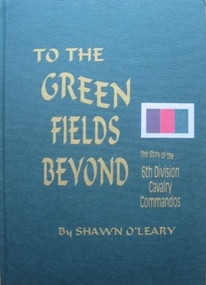
Book - 6th Div, Shawn OLeary, To The Green Fields Beyond:The story of the 6th Division Cavalry Commandos
... The regiment remained with the 6th Division and participated in the Aitpae–Wewak campaign, in New Guinea, during 1945. Includes Nominal Roll To The Green Fields Beyond:The story of the 6th Division Cavalry Commandos Book 6th Div Shawn OLeary Shawn O'Leary ...The comprehensive history of the 6th Australian Division Cavalry Commandos – a (now out of print) reprint of one of the rarer Armoured unit history books. This is the story of one of Australia’s most famous fighting regiments during World War II. As an armoured cavalry unit it fought the Italians and Germans in the sands of the African desert and the Vichy French in the mountains of Syria. Later as a dismounted commando unit it fought the Japanese in the terrifying jungles of New Guinea. The heroism of the men in its ranks and the actions in which they engaged are portrayed in a way which makes battle deeds leap realistically from the pages. “To The Green Fields Beyond” is a documented and detailed book which is of value to everyone who is interested in Australia’s story. Seldom before has such a contribution been made to record of our national history. The book has been approved and sponsored by the Australian War Memorial. The 6th Division Cavalry Regiment was formed in November 1939 and, just two months later, was sent overseas to the Middle East in January 1940. Arriving in Egypt, the regiment immediately went to Palestine, where it joined the rest of the 6th Division and trained using machine-gun carriers and, from October, six old Vickers light tanks. At the end of the year the regiment moved into the Western Desert, where it joined British forces ready for the major offensive to commence on 9 December. Two days later the regiment became the first unit of the 2nd Australian Imperial Force (AIF) to go into action when one of its squadron fought a sharp action against the Italians holding Garn el Grein and Fort Maddalina on 11 and 12 December. By 21 December British forces had captured Sidi Barrrani and the desert was now open for the 6th Division’s advance along the Libyan coast. On 3 January 1941 the division attacked and captured the Italian fort of Bardia. The regiment’s A Squadron, under the command of Major Denzil Macarthur-Onslow, who went on to command the 4th Armoured Brigade, supported the attack. Tobruk was the next Italian fort to be captured, with the regiment again in support and covering the 19th Brigade’s advance. The regiment, though, was under-equipped and without its full compliment of vehicles, using only machine gun carriers. To compensate for this, A Squadron was parity re-equipped with captured Italian light tanks, which had large kangaroos painted on the hulls and turrets to distinguish them from enemy vehicles. After Tobruk, the regiment was used as part of the advance guard in the capture of Derna and then Benghazi. In April the unit moved to Helwan, where it was equipped with Vickers light tanks and machine-gun carriers, and operated with British troops in capturing Sollum. Towards the end of May the regiment moved to Palestine, where it came under the command of the 7th Division for the imminent invasion of Syria. The regiment experienced its heaviest fighting during the Syrian campaign, which began on 7 June. A Squadron was attached to the 21st Brigade and advanced along the coast, where the rugged hills made it difficult to manoeuvre the tanks and carriers. The squadron was relieved by one of the 9th Division Cavalry Regiment’s squadrons on 13 and 14 June. C Squadron, meanwhile, was with the 25th Brigade, and advanced along the Rosh Pinna road, engaging strong enemy defences at Fort Khirbe. C Squadron was relieved by B Squadron, which was later attacked by Vichy French tanks that were supported by heavy artillery and machine-gun fire, which forced the Australians to withdrawal. Always willing or needing to improvise during the campaign, A and B Squadrons both operated three captured French R35 Renault light tanks, while C Squadron provided personnel for a horse troop, quickly nicknamed the “Kelly Gang”, to patrol the high, rugged hills near the Mardjayoun–Banis Road. The regiment remained in Syria as part of the occupation force and returned to Australia in March 1942. It was sent to the Adelaide River, in the Northern Territory, and then later to Murgon, in Queensland. In 1943 and 1944 divisional cavalry regiments were reorganised into cavalry (commando) regiments. In January 1944 the 6th Division Cavalry Regiment became the 2/6th Cavalry (Commando) Regiment. The regiment lost its vehicles and became the administrative headquarters for the 2/7th, 2/9th, and 2/10th Commando Squadrons. The regiment remained with the 6th Division and participated in the Aitpae–Wewak campaign, in New Guinea, during 1945. Includes Nominal Rollnon-fictionThe comprehensive history of the 6th Australian Division Cavalry Commandos – a (now out of print) reprint of one of the rarer Armoured unit history books. This is the story of one of Australia’s most famous fighting regiments during World War II. As an armoured cavalry unit it fought the Italians and Germans in the sands of the African desert and the Vichy French in the mountains of Syria. Later as a dismounted commando unit it fought the Japanese in the terrifying jungles of New Guinea. The heroism of the men in its ranks and the actions in which they engaged are portrayed in a way which makes battle deeds leap realistically from the pages. “To The Green Fields Beyond” is a documented and detailed book which is of value to everyone who is interested in Australia’s story. Seldom before has such a contribution been made to record of our national history. The book has been approved and sponsored by the Australian War Memorial. The 6th Division Cavalry Regiment was formed in November 1939 and, just two months later, was sent overseas to the Middle East in January 1940. Arriving in Egypt, the regiment immediately went to Palestine, where it joined the rest of the 6th Division and trained using machine-gun carriers and, from October, six old Vickers light tanks. At the end of the year the regiment moved into the Western Desert, where it joined British forces ready for the major offensive to commence on 9 December. Two days later the regiment became the first unit of the 2nd Australian Imperial Force (AIF) to go into action when one of its squadron fought a sharp action against the Italians holding Garn el Grein and Fort Maddalina on 11 and 12 December. By 21 December British forces had captured Sidi Barrrani and the desert was now open for the 6th Division’s advance along the Libyan coast. On 3 January 1941 the division attacked and captured the Italian fort of Bardia. The regiment’s A Squadron, under the command of Major Denzil Macarthur-Onslow, who went on to command the 4th Armoured Brigade, supported the attack. Tobruk was the next Italian fort to be captured, with the regiment again in support and covering the 19th Brigade’s advance. The regiment, though, was under-equipped and without its full compliment of vehicles, using only machine gun carriers. To compensate for this, A Squadron was parity re-equipped with captured Italian light tanks, which had large kangaroos painted on the hulls and turrets to distinguish them from enemy vehicles. After Tobruk, the regiment was used as part of the advance guard in the capture of Derna and then Benghazi. In April the unit moved to Helwan, where it was equipped with Vickers light tanks and machine-gun carriers, and operated with British troops in capturing Sollum. Towards the end of May the regiment moved to Palestine, where it came under the command of the 7th Division for the imminent invasion of Syria. The regiment experienced its heaviest fighting during the Syrian campaign, which began on 7 June. A Squadron was attached to the 21st Brigade and advanced along the coast, where the rugged hills made it difficult to manoeuvre the tanks and carriers. The squadron was relieved by one of the 9th Division Cavalry Regiment’s squadrons on 13 and 14 June. C Squadron, meanwhile, was with the 25th Brigade, and advanced along the Rosh Pinna road, engaging strong enemy defences at Fort Khirbe. C Squadron was relieved by B Squadron, which was later attacked by Vichy French tanks that were supported by heavy artillery and machine-gun fire, which forced the Australians to withdrawal. Always willing or needing to improvise during the campaign, A and B Squadrons both operated three captured French R35 Renault light tanks, while C Squadron provided personnel for a horse troop, quickly nicknamed the “Kelly Gang”, to patrol the high, rugged hills near the Mardjayoun–Banis Road. The regiment remained in Syria as part of the occupation force and returned to Australia in March 1942. It was sent to the Adelaide River, in the Northern Territory, and then later to Murgon, in Queensland. In 1943 and 1944 divisional cavalry regiments were reorganised into cavalry (commando) regiments. In January 1944 the 6th Division Cavalry Regiment became the 2/6th Cavalry (Commando) Regiment. The regiment lost its vehicles and became the administrative headquarters for the 2/7th, 2/9th, and 2/10th Commando Squadrons. The regiment remained with the 6th Division and participated in the Aitpae–Wewak campaign, in New Guinea, during 1945. Includes Nominal Rollww2, australian commandos, australian special forces, world war 2 -
 Australian Commando Association - Victoria
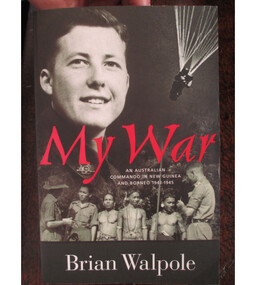
Book, My War: An Australian Commando in New Guinea and Borneo 1943 to 1945
... New Guinea and Borneo during WW2. Brian was a commando with the Australian 2/3 Independent Company. He went to New Guinea in January 1943 and remained until the fall of the Japanese base at Salamaua in September. He fought on the Bobdubi Ridge. His commanding officer was the well-regarded George Warfe, whose portrait was sketched by war artist Ivor Hele. Brian blazed a trail through the New Guinea jungle which appears on some maps as Walpole’s Track, discovering and naming the ambush site Goodview Junction. Soon afterwards (July 1943) Goodview Junction was the scene of a key campaign...New Guinea and Borneo during WW2. Brian was a commando with the Australian 2/3 Independent Company. He went to New Guinea in January 1943 and remained until the fall of the Japanese base at Salamaua in September. He fought on the Bobdubi Ridge. His commanding officer was the well-regarded George Warfe, whose portrait was sketched by war artist Ivor Hele. Brian blazed a trail through the New Guinea jungle which appears on some maps as Walpole’s Track, discovering and naming the ambush site Goodview Junction. Soon afterwards (July 1943) Goodview Junction was the scene of a key campaign ...Brian Walpole, the author, was a Australian Commando and special operations operative behind enemy lines in New Guinea and Borneo during WW2. Brian was a commando with the Australian 2/3 Independent Company. He went to New Guinea in January 1943 and remained until the fall of the Japanese base at Salamaua in September. He fought on the Bobdubi Ridge. His commanding officer was the well-regarded George Warfe, whose portrait was sketched by war artist Ivor Hele. Brian blazed a trail through the New Guinea jungle which appears on some maps as Walpole’s Track, discovering and naming the ambush site Goodview Junction. Soon afterwards (July 1943) Goodview Junction was the scene of a key campaign victory which contributed to George Warfe being awarded the Military Cross.Brian’s Special Operations training mostly took place at Careening Bay (Western Australia) and Fraser Island (Queensland). He arrived in Borneo at the time of the 9th Division’s landing at Labuan Island, and took part in two SRD operations – Colt and Semut 3. After the surrender, Walpole's work continued as many of the Japanese did not recognise the surrender and continued to fight on. Brian relates how on the 14th of September 1945 while still an operative in SRD he was able to save POWs from certain death and after a firefight arrested 10 Japanese soldiers at Simanggang Borneo. He was alone and had been assisted in the battle by 20 headhunters from the jungles along the Rejang River. One of the people saved was a young nurse in her 20s, Lena Ricketts. ww2, australian special operations, australian commando, new guinea, borneo, world war ii -
 Orbost & District Historical Society
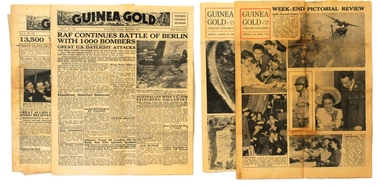
newspapers, Guinea Gold, 1943-1944
... Guinea-Gold newspaper WW11 Pacific-Campaign New-Guinea...Guinea-Gold newspaper WW11 Pacific-Campaign New-Guinea Eight editions of "Guinea Gold" from 1943 and 1944. 2103.1 is edition 7/6/1943. 2103.2 is edition 8/6/1943. 2103.3 is edition 12/6/1943. 2103.4 is edition 27/2/1944. 2103.5 is edition 26/3/1944 and is the Weekend Supplement. 2103.6 is edition 26/3/1944 and 2103.7 is dated 9/4/1944 and is the Weekend Supplement. 2103.8 is dated 18/5/1944 is a field edition Guinea Gold newspapers ...In WWII New Guinea, GUINEA GOLD presented news to all troops "in the field". It avoided editorial comment. It published for 1320 continuous days, without missing a single edition. The front and back pages concentrated on current world news, including major sporting events. Page 2 was generally devoted to extracts from Australian and US newspapers. Some news was obtained by taking shorthand notes of short-wave radio bulletins from Australia, the U.S. and the B.B.C. At its peak, distribution was 37,000 to US forces and 27,000 to Australian forces, daily. The daily version had four pages and the WEEK-END SUPPLEMENT edition contained 8 pages (with extra pictures & cartoons).Guinea Gold" daily brought to the news-hungry men of the Australian and American forces serving in the steaming jungle, topics of interest to allay their boredom and boost their morale. It was able to do so because US General Douglas MacArthur, Supreme Commander of Allied Forces in the South-West Pacific, gave it permission to publish his communiqués 20 hours before the release time for the rest of the world's media. The newspaper contains Australian, American & world news (military, political, sports & tabloid).Eight editions of "Guinea Gold" from 1943 and 1944. 2103.1 is edition 7/6/1943. 2103.2 is edition 8/6/1943. 2103.3 is edition 12/6/1943. 2103.4 is edition 27/2/1944. 2103.5 is edition 26/3/1944 and is the Weekend Supplement. 2103.6 is edition 26/3/1944 and 2103.7 is dated 9/4/1944 and is the Weekend Supplement. 2103.8 is dated 18/5/1944 is a field editionguinea-gold newspaper ww11 pacific-campaign new-guinea -
 Bendigo Military Museum
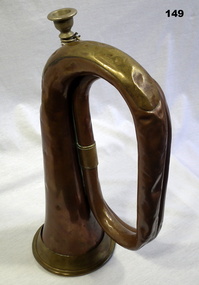
Instrument - BUGLE, C. 1940
... new electronic siren was installed Bill Nicholls souvenired it and carried it in his haversack until he reached home. William Bona Nicholls No VX36468 2/24 Batt 9th Div. (Born Bendigo, enlisted Royal Park) on 12.8.40, embarked 16.11.1940 for the Middle East, promoted L/Cpl 8.5.1941, served in the Seige of Tobruk, El Alamein and Middle East Campaigns. He was taken POW at Derna and escaped after 8 hours. Embarked for Australia 1.2.1943 and disembarked Melbourne 25.2.1943. Embarked for New Guinea...new electronic siren was installed Bill Nicholls souvenired it and carried it in his haversack until he reached home. William Bona Nicholls No VX36468 2/24 Batt 9th Div. (Born Bendigo, enlisted Royal Park) on 12.8.40, embarked 16.11.1940 for the Middle East, promoted L/Cpl 8.5.1941, served in the Seige of Tobruk, El Alamein and Middle East Campaigns. He was taken POW at Derna and escaped after 8 hours. Embarked for Australia 1.2.1943 and disembarked Melbourne 25.2.1943. Embarked for New Guinea ...The Bugle was played by the British over 2000 times to warn of impending air raids in the Middle East. When a new electronic siren was installed Bill Nicholls souvenired it and carried it in his haversack until he reached home. William Bona Nicholls No VX36468 2/24 Batt 9th Div. (Born Bendigo, enlisted Royal Park) on 12.8.40, embarked 16.11.1940 for the Middle East, promoted L/Cpl 8.5.1941, served in the Seige of Tobruk, El Alamein and Middle East Campaigns. He was taken POW at Derna and escaped after 8 hours. Embarked for Australia 1.2.1943 and disembarked Melbourne 25.2.1943. Embarked for New Guinea 1.8.1943, hospital 5.12.1943 with Degue Fever, rejoin unit 9.12.1943, served in the Lae and Finschafen campaigns. Promoted Sgt 11.2.1944, embark for Australia from Finschafen 28.2.1944 and disembark Brisbane 7.3.1944. Evacuated to hospital 16.3.1945, appears to be Anxiety State. Discharged from the Army 3.9.1945 with the rank of S/Sgt.Copper & brass army bugle with nozzle & holding chain.Main section of bugle has: a lettered crest, & Besson & Co, London, 1940musical instruments - wind, military history, bugle, tobruk -
 Bendigo Military Museum
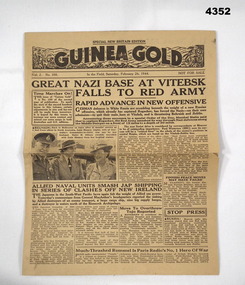
Newspaper - NEWSPAPER 1944, Guinea Gold, 26th February 1944
... campaigns and political articles. There is a racing guide for the Flemington races. newspaper headlines photo "Special New Britain Edition" "Guinea Gold" "Vol.2. ...Newspaper with general information of the Second World War including stories of various campaigns and political articles. There is a racing guide for the Flemington races.Yellowing newspaper, four pages, small photo on front page"Special New Britain Edition" "Guinea Gold" "Vol.2. No. 100 In The Field, Saturday, Febuary 26, 1944" "NOT FOR SALE"newspaper, headlines, photo -
 Bendigo Military Museum
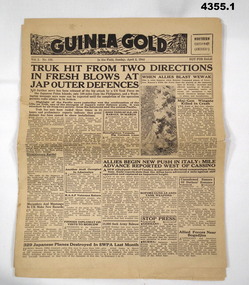
Newsletter - GUINEA GOLD, 1944
... Page 4, Ginger Meggs cartoon comic strip. .2) Newspaper with general information of WW2 campaigns and political items guinea gold newspaper 1944 sports news politics ww2 .1) Guinea Gold Northern Edition (America) Vol.2 No136 In the Field, Sunday April 2, 1944. .2) Guinea Gold Special New Britain Edition Vol.2 No.127. ....1) General information of WW2, various campaigns, political and sports. Page 3, Three photos of well known young film actresses. Page 4, Ginger Meggs cartoon comic strip. .2) Newspaper with general information of WW2 campaigns and political items.1) Yellowing newspaper of 8 pages, small photo on front page. .2) Yellowing newspaper of 4 pages, 2 small photos on front page..1) Guinea Gold Northern Edition (America) Vol.2 No136 In the Field, Sunday April 2, 1944. .2) Guinea Gold Special New Britain Edition Vol.2 No.127. In the Field, Friday March 24, 1944.guinea gold, newspaper, 1944, sports news, politics, ww2 -
 Eltham District Historical Society Inc
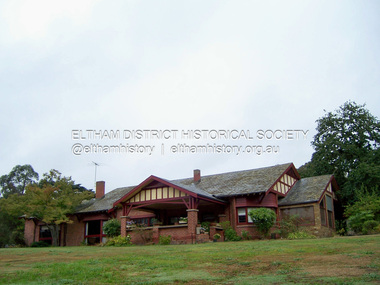
Photograph - Digital Photograph, Marguerite Marshall, 'Worlingworth', 10-26 Banoon Road, Eltham, 30 January 2006
... New Guinea (for his military service in New Guinea he was awarded an OBE) and he was invalided from service in 1944. That year he was diagnosed with diabetes. A fire in 1946 destroyed what Thomson regarded as perhaps the best record he had made of Aboriginal life – the 20,000 feet, (6096m) of film he had shot in Arnhem Land. In 1954 he and wife, Gladys, divorced. The next year he married his technical assistant, Dorita McColl. Several times during his career Thomson had major disagreements. For instance Professor P Elkin constantly opposed his work. He also opposed Thomson when he campaigned...New Guinea (for his military service in New Guinea he was awarded an OBE) and he was invalided from service in 1944. That year he was diagnosed with diabetes. A fire in 1946 destroyed what Thomson regarded as perhaps the best record he had made of Aboriginal life – the 20,000 feet, (6096m) of film he had shot in Arnhem Land. In 1954 he and wife, Gladys, divorced. The next year he married his technical assistant, Dorita McColl. Several times during his career Thomson had major disagreements. For instance Professor P Elkin constantly opposed his work. He also opposed Thomson when he campaigned ...'Worlingworth', Eltham, home of noted anthropologist the late Professor Donald Thomson and his wife Dorita Thomson. Covered under Heritage Overlay, Nillumbik Planning Scheme. Published: Nillumbik Now and Then / Marguerite Marshall 2008; photographs Alan King with Marguerite Marshall.; p127 Dubbed as ‘Australia’s Lawrence of Arabia’ anthropologist Donald Thomson lived much of his life in Eltham, at Banoon Road. On his retirement as Professor of Anthropology in 1968, The University of Melbourne professorial board compared Thomson to Lawrence of Arabia because of his work for Aborigines and his controversial personality. Although Thomson is now recognised for his huge contribution, during his lifetime he suffered opposition and his life has been described as ‘tragic’.1 Thomson failed to gain the recognition as a scientist that he felt he deserved and he failed to alter government policy towards Aboriginal people. But towards the end of his life in 1970, anthropologists were moving towards the type of research he had done and the movement to grant land rights to Aborigines was strengthening. Thomson is best known for his anthropological fieldwork in Cape York, Arnhem Land and Central Australia, but he is also known for his scholarly contributions to ornithology and ecology. Thomson documented every aspect of the daily and ritual life of the Aboriginal world of Cape York and Arnhem Land in the 1930s and 1940s. The huge collection in Museum Victoria includes 11,000 photographs, 7500 items of material culture, 1000 botanical and zoological specimens and 4500 pages of field-notes.2 The film Ten Canoes used Thomson’s photographs as a source. Thomson bought the Eltham property known as Worlingworth in 1934. The single-storey 60-square house standing by the Yarra River was built in 1922-23. It is one of the last in Eltham to survive with its farm setting intact. It is also one of the few substantial residences built in the Eltham Shire from the late 19th century to the early 20th century, which signalled a major change in the area towards the residential municipality it is today.3 The original section, built in the mid 1860s, of rose pink hand-made bricks and stone quarried on the property, was incorporated in the new red-brick house built in 1922. An immense oak tree by the house grew from an acorn brought by Patrick Armstrong who first bought the land in March 14, 1862. Armstrong named Worlingworth after his forbears’ village in Suffolk, England. Worlingworth saw grand days when Commander Alan A Barlee (R.N.) bought it in 1922 after winning the Calcutta Sweep. The property then included a nine-hole golf course, a tennis court, a bowling green, a boathouse and a boat-ramp.4 For most of his career Thomson, who was born in 1901, was attached to The University of Melbourne. In 1935 he represented the Commonwealth Government at Caledon Bay in east Arnhem Land to investigate and mediate for four Aborigines accused of killing five Japanese and three Europeans. In 1938 Thomson was awarded a PhD in Anthropology at Cambridge University, and during his career, he received several medals from British Societies, who perhaps appreciated his work better than their Australian counterparts. From World War Two, Thomson suffered a string of hardships, beginning with severe wounding in Dutch New Guinea (for his military service in New Guinea he was awarded an OBE) and he was invalided from service in 1944. That year he was diagnosed with diabetes. A fire in 1946 destroyed what Thomson regarded as perhaps the best record he had made of Aboriginal life – the 20,000 feet, (6096m) of film he had shot in Arnhem Land. In 1954 he and wife, Gladys, divorced. The next year he married his technical assistant, Dorita McColl. Several times during his career Thomson had major disagreements. For instance Professor P Elkin constantly opposed his work. He also opposed Thomson when he campaigned vigorously in 1947 against the establishment of a rocket range at Woomera, South Australia, because of the threat it posed Aborigines. Thomson resigned in frustration from the Victorian Aborigines Welfare Board in 1967, after serving for ten years, because he found that his advice was disregarded. His ashes were scattered over Caledon Bay from the air.This collection of almost 130 photos about places and people within the Shire of Nillumbik, an urban and rural municipality in Melbourne's north, contributes to an understanding of the history of the Shire. Published in 2008 immediately prior to the Black Saturday bushfires of February 7, 2009, it documents sites that were impacted, and in some cases destroyed by the fires. It includes photographs taken especially for the publication, creating a unique time capsule representing the Shire in the early 21st century. It remains the most recent comprehenesive publication devoted to the Shire's history connecting local residents to the past. nillumbik now and then (marshall-king) collection, banoon road, donald thomson, dorita thomson, eltham, worlingworth -
 Waverley RSL Sub Branch
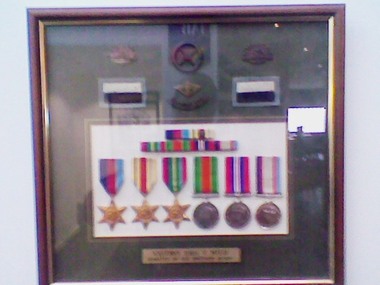
Medal set Framed
... New Guinea,Borneo and Darwin. Pte. Eric Wild D.O.B. 30/09/1909 enlisted in Windosr Vic. 27/05 1940. and served with the 16RWAR. until his discharge 27/10/1944, at which time he had been assigned to 2/2 Army Fld. Wshops. He saw service in Africa and the Pacific 16 RWAR Campaign ...During WWII the Batallion fought in Syria, New Guinea,Borneo and Darwin. Pte. Eric Wild D.O.B. 30/09/1909 enlisted in Windosr Vic. 27/05 1940. and served with the 16RWAR. until his discharge 27/10/1944, at which time he had been assigned to 2/2 Army Fld. Wshops. He saw service in Africa and the Pacific 16 RWAR Campaign WWII North Africa 1941, Syria, Syrian Frontier, The Litani, Sidon, Wadi Zeini, Damour, South West Pacific 1942 - 1945, Kokoda Trail, Isurava, Eora Creek, Templetons Crossing, Efogi-Menari, Ioribaiwa, Buna-Gona, Gona, Liberation of Australian New Guinea, Ramu Valley, Shaggy Ridge, Borneo, Balikpapan, WaitavoloMedal set 1939-45 star, Africa star,Pacific Star,Defence Medal,War Medal 1939-45 and Australian Service Medal 1939-45.Also patches for 16 RWAR Awarded to Wild, Eric Vincent VX 17865 2/2 Field Workshop16 rawr, wild eric vincent -
 Bendigo Military Museum
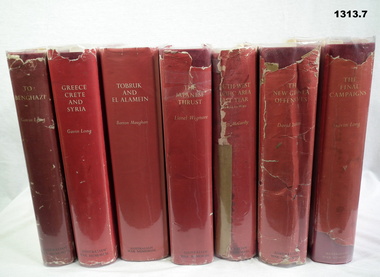
Book - BOOKS, 1), .2) & .7) Gavin Long et al, Australians in the War of 1939-1945 . Series One. Army, 1) 1952; .2) 1953; .3) 1966; .4) 1957; .5) 1963; .6) 1961; .7) 1963
... Black & white photos & illustrations. .1) Vol I The Benghazi, 336 pages .2) Vol II Greece, Crete and Syria, 587 pages .3) Vol III Tobruk and El Alamein, 854 pages .4) Vol IV The Japanese Thrust, 715 pages .5) Vol V South-West Pacific Area - First Year, 655 pages .6) Vol VI The New Guinea Offensives, 851 pages .7) Vol VII The Final Campaigns, 667 pages...Black & white photos & illustrations. .1) Vol I The Benghazi, 336 pages .2) Vol II Greece, Crete and Syria, 587 pages .3) Vol III Tobruk and El Alamein, 854 pages .4) Vol IV The Japanese Thrust, 715 pages .5) Vol V South-West Pacific Area - First Year, 655 pages .6) Vol VI The New Guinea Offensives, 851 pages .7) Vol VII The Final Campaigns, 667 pages Australians in the War of 1939-1945 . ....3) A Lee, 27 Alamein Court, Golden Square, Bendigo.Red buckram covers with loose paper & plastic covers. White text on loose covers. Black & white photos & illustrations. .1) Vol I The Benghazi, 336 pages .2) Vol II Greece, Crete and Syria, 587 pages .3) Vol III Tobruk and El Alamein, 854 pages .4) Vol IV The Japanese Thrust, 715 pages .5) Vol V South-West Pacific Area - First Year, 655 pages .6) Vol VI The New Guinea Offensives, 851 pages .7) Vol VII The Final Campaigns, 667 pagesbooks, military history -
4th/19th Prince of Wales's Light Horse Regiment Unit History Room
Display Binder, 2/4 Armoured Regiment Group, abt 2014
... New Guinea and Bougainville in World War 2. By 1945 the United States publicity machine under General McArthur focussed on US campaigns to the North treating this action as a back water The unit's battle honours comprise South West Pacific 1945, Liberation of Australian New Guinea, Hawain River, Wewak, Wirui Mission, Slater's Knoll, Hongorai River, Egan's Ridge-Hongorai Ford, Hari River and Mivo River...New Guinea and Bougainville in World War 2. By 1945 the United States publicity machine under General McArthur focussed on US campaigns to the North treating this action as a back water The unit's battle honours comprise South West Pacific 1945, Liberation of Australian New Guinea, Hawain River, Wewak, Wirui Mission, Slater's Knoll, Hongorai River, Egan's Ridge-Hongorai Ford, Hari River and Mivo River 2/4 Armoured Regiment is an antecedent unit of our modern Regiment ., Museum quality 3 ring, A3 size binder with clear inserts for documents and photos, in slip case. ...Provides an excellent account of the service of Australian 2/4 Armoured Regiment Group in New Guinea and Bougainville in World War 2. By 1945 the United States publicity machine under General McArthur focussed on US campaigns to the North treating this action as a back water The unit's battle honours comprise South West Pacific 1945, Liberation of Australian New Guinea, Hawain River, Wewak, Wirui Mission, Slater's Knoll, Hongorai River, Egan's Ridge-Hongorai Ford, Hari River and Mivo River2/4 Armoured Regiment is an antecedent unit of our modern Regiment ., Museum quality 3 ring, A3 size binder with clear inserts for documents and photos, in slip case. Presents history of Australian 2/4 Armoured Group in South West Pacific in World War 2
