
Showing 29 items matching "operational requirements"
-
 Moorabbin Air Museum
Book - AGARD reports, Guidance and Control Technology for Highly Integrated Systems
... Operational requirements...AGARD reports Operational requirements Cooperative/interdependent system considerations Threat & target detection & identification Autonomous integrated weapons systems Affordability & survivability considerations Discussion of issues aroung guidance/control technology for highly integrated systems, circa 1982 Guidance and Control Technology for Highly Integrated Systems Book AGARD reports ...Discussion of issues aroung guidance/control technology for highly integrated systems, circa 1982non-fictionDiscussion of issues aroung guidance/control technology for highly integrated systems, circa 1982operational requirements, cooperative/interdependent system considerations, threat & target detection & identification, autonomous integrated weapons systems, affordability & survivability considerations -
 National Vietnam Veterans Museum (NVVM)
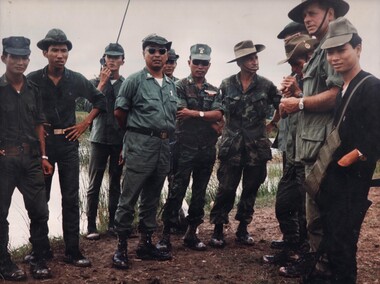
Photograph, Gibbons, Denis, Pleiku
... A colour photograph of three members of the Australian Army Training Team Vietnam (AATTV) discussing operational requirements with the senior Vietnamese Army Colonel at Pleiku, South Vietnam. ...A colour photograph of three members of the Australian Army Training Team Vietnam (AATTV) discussing operational requirements with the senior Vietnamese Army Colonel at Pleiku, South Vietnam. ...Denis Gibbons (1937 – 2011) Trained with the Australian Army, before travelling to Vietnam in January 1966, Denis stayed with the 1st Australian Task Force in Nui Dat working as a photographer. For almost five years Gibbons toured with nine Australian infantry battalions, posting compelling war images from within many combat zones before being flown out in late November 1970 after sustaining injuries. The images held within the National Vietnam Veterans Museum make up the Gibbons Collection.A colour photograph of three members of the Australian Army Training Team Vietnam (AATTV) discussing operational requirements with the senior Vietnamese Army Colonel at Pleiku, South Vietnam. The advisers with their American counterparts commanded a Montagnard Mike Force Battalion.A colour photograph of three members of the Australian Army Training Team Vietnam (AATTV) discussing operational requirements with the senior Vietnamese Army Colonel at Pleiku, South Vietnam. The advisers with their American counterparts commanded a Montagnard Mike Force Battalion.photograph, aattv, pleiku, south vietnam, montagnard mike force, gibbons collection catalogue, denis gibbons, photographer, vietnam war, australian army training team vietnam (aattv), vietnamese army colonel -
 Melbourne Tram Museum
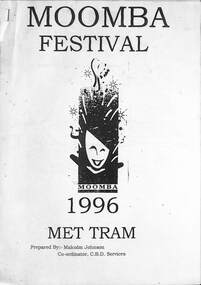
Document, The Met, "Moomba Festival 1996 Met Tram", 2/1996
... The document titled "Moomba Festival 1996 Met Tram" provides an outline of the Moomba event, tram service provision, rosters for CSEs and Operational Officers, Operational Requirements and Event debrief. Has a program of events, altered service arrangements, and notes the stoppage of trams for 3 minutes during fireworks. ...The document titled "Moomba Festival 1996 Met Tram" provides an outline of the Moomba event, tram service provision, rosters for CSEs and Operational Officers, Operational Requirements and Event debrief. Has a program of events, altered service arrangements, and notes the stoppage of trams for 3 minutes during fireworks. ...The document titled "Moomba Festival 1996 Met Tram" provides an outline of the Moomba event, tram service provision, rosters for CSEs and Operational Officers, Operational Requirements and Event debrief. Has a program of events, altered service arrangements, and notes the stoppage of trams for 3 minutes during fireworks. Prepared by Malcolm Johnson, Co-ordinator CBD Services Feb. 1996.Yields information about tram operations during the 1996 Melbourne Moomba Festival.Document - 17 A4 photocopied pages, stapled in top left hand corner.moomba, the met, operations, events -
Ballarat Tramway Museum
Administrative record, Victorian Government, "Victorian Government Gazette - No. 32", March 1929
... Victorian Government Gazette No. 32 of 20/3/1929 on pages 1081 to 1085 detailing the By-Laws and Regulations No. 58 pursuant to the Sections 9 and 46 of the Motor Omnibus Act (Urban and Country) No. 3570, of 1927 detailing the operational requirements for buses in Bendigo. Provides definitions, fares, timetables, and passengers. ...Victorian Government Gazette No. 32 of 20/3/1929 on pages 1081 to 1085 detailing the By-Laws and Regulations No. 58 pursuant to the Sections 9 and 46 of the Motor Omnibus Act (Urban and Country) No. 3570, of 1927 detailing the operational requirements for buses in Bendigo. Provides definitions, fares, timetables, and passengers. ...Victorian Government Gazette No. 32 of 20/3/1929 on pages 1081 to 1085 detailing the By-Laws and Regulations No. 58 pursuant to the Sections 9 and 46 of the Motor Omnibus Act (Urban and Country) No. 3570, of 1927 detailing the operational requirements for buses in Bendigo. Provides definitions, fares, timetables, and passengers. The regulations detail the routes, timetables, and advertising matter. A similar set of regulations are provided for the Mildura bus service. Yields information about the Bendigo bus regulations of 1929 for Bendigo.Document - 56 foolscap pages, off white paper stapled on the left hand edge.ESCo dated stamp of 16 Apr 1929buses, bendigo, museums omnibuses, regulations, bus services -
 Bendigo Military Museum
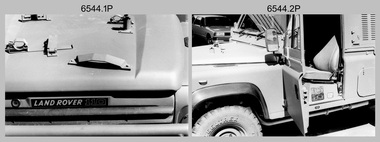
Photograph - 4th Field Survey Squadron - Land Rover Perentie Light Vehicles, Keswick Barracks, Adelaide SA, 1987
... There were 35 vehicles built to satisfy the operational requirements of RA Svy’s units. Source – Wikipedia. ...There were 35 vehicles built to satisfy the operational requirements of RA Svy’s units. Source – Wikipedia. ...This is a set of 35 photographs featuring 4th Field Survey Squadron’s newly introduced Survey variant of the Land Rover Perentie light vehicle, at Keswick Barracks, Adelaide SA in 1987. The Land Rover Perentie is a nickname for the Land Rover 110 produced by JRA Limited for the Australian Army, and part manufactured and assembled in Moorebank, New South Wales, during the 1980s and 1990s The name Perentie originates from Land Rover's successful tender to Project Perentie, which was the official Australian Army trial to select new 1 and 2-tonne light vehicles to replace the ageing fleet of Series 2A and 3 Land Rovers. The major differences between the Land Rover Perentie and British Land Rovers were the relocation of the spare wheel to a position under the rear of the load area, a galvanised chassis and the Isuzu engine. The Land Rover Perenties were produced in 4x4 and 6x6 variants and powered by an Isuzu 3.9-litre four-cylinder 4BD1 diesel engine. The Truck, Panel, Lightweight, Survey, FFR, Winch, MC2 model was one of eight 4x4 variants built for the Australian Army. There were 35 vehicles built to satisfy the operational requirements of RA Svy’s units. Source – Wikipedia. See item 6545.9P for related photos of these vehicles.This is a set of 35 photographs featuring 4th Field Survey Squadron’s newly introduced Survey variant of the Land Rover Perentie light truck vehicle, at Keswick Barracks, Adelaide SA in 1987. The black & white photographs are on 35mm negative film and are part of the Army Survey Regiment’s Collection. The photographs were scanned at 96 dpi. .1) to .8) - Photo, black & white, 1987. Land Rover Perentie light truck vehicle features. .9) - Photo, colour, 1986. L to R: unidentified, RQMS - WO2 Peter Symmans, unidentified. .10) to .15) - Photo, black & white, 1987. Land Rover Perentie light truck vehicle features. .16) - Photo, black & white, 1987. Land Rover Perentie light truck vehicle. L to R: WO2 Russ Larsen, SSGT Barry Lutwyche, 2IC Terry Lord, SGT Mick Hogan, unidentified. .17) - Photo, black & white, 1987. Land Rover Perentie light truck vehicle features. .18) & .19) - Photo, black & white, 1987. Loading field trip stores into Land Rover Perentie light truck vehicle. .20) & .21) - Photo, black & white, 1987. L to R: SPR Steve Perks, SGT Mick Hogan loading field trip stores into Land Rover Perentie light truck vehicle. .22) to .25) - Photo, black & white, 1987. L to R: SPR Steve Perks loading field trip stores into Land Rover Perentie light truck vehicle. .26) - Photo, black & white, 1987. CAPT Danny Galbraith loading field trip stores into Land Rover Perentie light truck vehicle. .27) to .31) - Photo, black & white, 1987. Loading field trip stores into Land Rover Perentie light truck vehicle. .32) to .34) - Photo, black & white, 1987. Land Rover Perentie light truck vehicle – broken transfer case lever. .35) - Photo, black & white, 1987. Land Rover Perentie light truck vehicle’s Isuzu 3.9-litre four-cylinder 4BD1 diesel engine..1P to .35P – There are no personnel identified. ‘PERENTI MOTOR VEHICLES JUL 87’ annotated on negatives sleeve.royal australian survey corps, rasvy, 4 fd svy sqn -
 Bendigo Military Museum
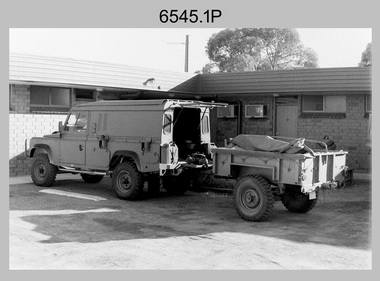
Photograph - 4th Field Survey Squadron - Land Rover Perentie Light Vehicles in the Field, 1987
... There were 35 Vehicles built to satisfy the operational requirements of RA Svy’s units. Source – Wikipedia. ...There were 35 Vehicles built to satisfy the operational requirements of RA Svy’s units. Source – Wikipedia. ...This is a set of nine photographs featuring 4th Field Survey Squadron’s newly introduced Survey variant of the Land Rover Perentie light truck vehicle on a field trip in SA, in 1987. The Land Rover Perentie is a nickname for the Land Rover 110 produced by JRA Limited for the Australian Army, and part manufactured and assembled in Moorebank, New South Wales, during the 1980s and 1990s The name Perentie originates from Land Rover's successful tender to Project Perentie, which was the official Australian Army trial to select new 1 and 2-tonne light vehicles to replace the ageing fleet of Series 2A and 3 Land Rovers. The major differences between the Land Rover Perentie and British Land Rovers were the relocation of the spare wheel to a position under the rear of the load area, a galvanised chassis and the Isuzu engine. The Land Rover Perenties were produced in 4x4 and 6x6 variants and powered by an Isuzu 3.9-litre four-cylinder 4BD1 diesel engine. The Truck, Panel, Lightweight, Survey, FFR, Winch, MC2 model was one of eight 4x4 variants built for the Australian Army. There were 35 Vehicles built to satisfy the operational requirements of RA Svy’s units. Source – Wikipedia. See item 6544.35P for related photos of these vehicles.This is a set of 35 photographs featuring 4th Field Survey Squadron’s newly introduced Survey variant of the Land Rover Perentie light truck vehicle, at Keswick Barracks, Adelaide SA in 1987. The black & white photograThis is a set of nine photographs featuring 4th Field Survey Squadron’s newly introduced Survey variant of the Land Rover Perentie light truck vehicle on a field trip in SA, in 1987. The black & white photographs are on 35mm negative film and are part of the Army Survey Regiment’s Collection. The photographs were scanned at 96 dpi. .1) - Photo, black & white, 1987. Perentie Land Rover with trailer parked outside unknown motel in SA. .2) & .3) - Photo, black & white, 1987. Field trip featuring Perentie Land Rover. .4) - Photo, black & white, 1987. Field trip featuring Perentie Land Rover. Series 3 Land Rover parked behind. Unidentified personnel. .5) & .6) - Photo, black & white, 1987. Field trip featuring Perentie Land Rover. Unidentified personnel. .7) & .8) - Photo, black & white, 1987. Field trip featuring Perentie Land Rover. Typical sandy 4WD track on fence line. .9) - Photo, black & white, 1987. Field trip featuring Perentie Land Rover. Probable gas extraction facility..1P to .9P – There are no personnel identified. ‘PERENTI MOTOR VEHICLES JUL 87’ annotated on negatives sleeve.tified. royal australian survey corps, rasvy, 4 fd svy sqn -
 Ballarat Tramway Museum
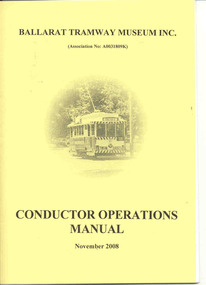
Document - Instruction Book, Ballarat Tramway Museum (BTM), "Conductor Operations Manual", 2009
... Provides details of the manual, index, operational procedures, map, requirements, many procedures, and some forms. ...Provides details of the manual, index, operational procedures, map, requirements, many procedures, and some forms. ...Yields information about the operation of the BTM and the management of tramcar operations. Demonstrates how information within tram crews and shed staff was distributed.Twenty four page document within yellow card covers, folded A4 paper to form an A5 booklet titled "Ballarat Tramway Museum Conductor Operations Manual, November 2008". Provides details of the manual, index, operational procedures, map, requirements, many procedures, and some forms. Issued to existing workers and new workers at the time. See memo in back of worksheet for Reg item 4440 for details and mailing list.trams, tramways, btm, operations, instructions, procedures, conductors -
 Ballarat Tramway Museum
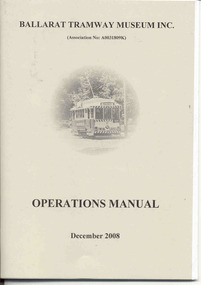
Document - Instruction Book, Ballarat Tramway Museum (BTM), "Operations Manual", 2009
... Provides details of the manual, index, operational procedures, driver training, requirements, many procedures, and some forms. ...Provides details of the manual, index, operational procedures, driver training, requirements, many procedures, and some forms. ...Yields information about the operation of the BTM and the management of tramcar operations. Demonstrates how information within tram crews and shed staff was distributed.Fifty Six page document within grey card covers, folded A4 paper to form an A5 booklet titled "Ballarat Tramway Museum Operations Manual, December 2008". Provides details of the manual, index, operational procedures, driver training, requirements, many procedures, and some forms. Issued to existing workers and new workers at the time. See memo in back of worksheet for Reg item 4440 for details and mailing list.trams, tramways, btm, operations, instructions, procedures -
 Ballarat Tramway Museum
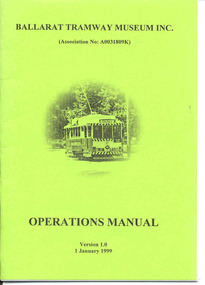
Document - Instruction Book, Ballarat Tramway Museum (BTM), "Operations Manual", 1999
... Provides details of the manual, index, operational procedures, driver training, requirements, procedures, and some forms. ...Provides details of the manual, index, operational procedures, driver training, requirements, procedures, and some forms. ...Yields information about the operation of the BTM and the management of tramcar operations. Demonstrates how information within tram crews and shed staff was distributed.Twenty eight page document within green card covers, folded A4 paper to form an A5 booklet titled "Ballarat Tramway Museum Operations Manual, Version 1.0, 1 January 1999" with a single page supplement, dated 28/1/99, with amendments, stapled into the rear of the book. Provides details of the manual, index, operational procedures, driver training, requirements, procedures, and some forms. Issued to existing workers and new workers at the time.trams, tramways, btm, operations, instructions, procedures -
Ballarat Tramway Museum
Document - Report, Maunsell Pty Ltd, "City of Ballarat - Feasibility Study for Reinstatement of the Ballarat Trams - Final Report - July 1998", Jul. 1998
... Report looks at background, geometric criteria, depot location, alignment proposals, the BTM, existing tramcars, availability and sources of materials, tramcar requirements, operational equipment and has an Appendix. ...Report looks at background, geometric criteria, depot location, alignment proposals, the BTM, existing tramcars, availability and sources of materials, tramcar requirements, operational equipment and has an Appendix. ...Thirty six page (A4) plus 10 folded A3 pages report with clear plastic cover, card rear cover and bound using a white comb binder, featuring a black and white photograph of BTM No. 33 on front cover. Report titled "City of Ballarat - Feasibility Study for Reinstatement of the Ballarat Trams - Final Report - July 1998". Report looks at background, geometric criteria, depot location, alignment proposals, the BTM, existing tramcars, availability and sources of materials, tramcar requirements, operational equipment and has an Appendix. Prepared as revision F, Final report 31/7/1998 by Richard Darby of Maunsell Proprietary Limited in association with Allom Lovell and Associates Pty Ltd. Contains a A3 map of the main area of "original tramway system" - excludes Sebastopol and ends of Mt Pleasant and Victoria St. lines. Has three State Library of Victoria photos of Ballarat, three folded A3 sheets containing 12 photographs each of the 1998 conditions, four fold A3 sheets of the proposed route showing photo locations, suggested loops and two folded A3 sheets of cross sections.trams, tramways, city tramway, ballarat tramways, maunsell, tramway revival -
Ringwood and District Historical Society
Document, Ringwood Technical School, 1982 - Policies, Structures, Roles, SRC, Camp Duncan Rules etc
... The Index pdf lists the contents of each part but is repeated here: Part 1 • General Educational Policy • Procedures Adopted By The Curriculum Board In Order To Implement The Educational Policy Part 2 • School Administrative Structure o Operational Structure - Operations Committee o Curriculum Board o Org Chart • Role of the Senior Teacher • Role of Head of Department • Role of Assistant with Responsibility • Role of Year Level Coordinator • Role of Section Leader Part 3 • Role of the Welfare Officer • Bell Times 1983 • School Layout • Evacuation Procedure and Diagram • Recording of Students’ Attendance • Staff Absences • Concerning School Rules Part 4 - SRC • Students; Representative Council – Constitution and Rules Part 5 – Camp Duncan, Excursion etc • Camp Duncan Disposition of Duties 1983 • Receipts/forms pro-forma • Some Facts About Camp Duncan • Camp Duncan Date 1983 • Student Checklist and Luggage Requirements for Camps and excursions • Confidential Medical Report for School Camps • Parental Permission Form Part 6 • Education Department Victoria o Pay Advice and Allowance Table o Subject Coding o Leave o General Advice on Transfers o Excursion procedure, Approval Form • Student Assembly Points ...The Index pdf lists the contents of each part but is repeated here: Part 1 • General Educational Policy • Procedures Adopted By The Curriculum Board In Order To Implement The Educational Policy Part 2 • School Administrative Structure o Operational Structure - Operations Committee o Curriculum Board o Org Chart • Role of the Senior Teacher • Role of Head of Department • Role of Assistant with Responsibility • Role of Year Level Coordinator • Role of Section Leader Part 3 • Role of the Welfare Officer • Bell Times 1983 • School Layout • Evacuation Procedure and Diagram • Recording of Students’ Attendance • Staff Absences • Concerning School Rules Part 4 - SRC • Students; Representative Council – Constitution and Rules Part 5 – Camp Duncan, Excursion etc • Camp Duncan Disposition of Duties 1983 • Receipts/forms pro-forma • Some Facts About Camp Duncan • Camp Duncan Date 1983 • Student Checklist and Luggage Requirements for Camps and excursions • Confidential Medical Report for School Camps • Parental Permission Form Part 6 • Education Department Victoria o Pay Advice and Allowance Table o Subject Coding o Leave o General Advice on Transfers o Excursion procedure, Approval Form • Student Assembly Points Ringwood Technical School, 1982 - Policies, Structures, Roles, SRC, Camp Duncan Rules etc Document ...Set of Documents describing school policies, structure, roles, SRC, Camp Duncan, subject coding, emergency procedures etc. Scanned in 6 parts due to volume of pages. Most pages are not numbered. Donated by Joan Pickford (nee Dear) 2022. (Prefect 1970-71). The Index pdf lists the contents of each part but is repeated here: Part 1 • General Educational Policy • Procedures Adopted By The Curriculum Board In Order To Implement The Educational Policy Part 2 • School Administrative Structure o Operational Structure - Operations Committee o Curriculum Board o Org Chart • Role of the Senior Teacher • Role of Head of Department • Role of Assistant with Responsibility • Role of Year Level Coordinator • Role of Section Leader Part 3 • Role of the Welfare Officer • Bell Times 1983 • School Layout • Evacuation Procedure and Diagram • Recording of Students’ Attendance • Staff Absences • Concerning School Rules Part 4 - SRC • Students; Representative Council – Constitution and Rules Part 5 – Camp Duncan, Excursion etc • Camp Duncan Disposition of Duties 1983 • Receipts/forms pro-forma • Some Facts About Camp Duncan • Camp Duncan Date 1983 • Student Checklist and Luggage Requirements for Camps and excursions • Confidential Medical Report for School Camps • Parental Permission Form Part 6 • Education Department Victoria o Pay Advice and Allowance Table o Subject Coding o Leave o General Advice on Transfers o Excursion procedure, Approval Form • Student Assembly Points rts, ringwood tech -
 Kiewa Valley Historical Society
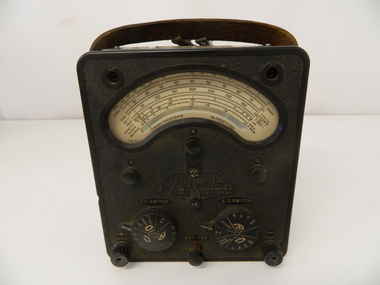
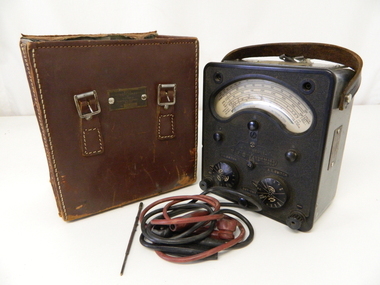
Meter AVO, circa 1930 to 1951
... The need for a mountainous and a large area of operational requirements, such as the SEC Vic Kiewa Hydro Electricity Scheme, to minimise the weight of equipment carried by electricians and technicians was of the utmost relevance. ...When this AVOMETER was being utilised in the early 1950's it was at the "leading" edge of electrical measuring instrumentation.The first meter was produced by Automatic Coil Winder and Electrical Equipment Co. in 1923. This model was produced in the time from 1933 to 1951 when it was superseded by the most popular model, Model 8 (1951 to 2008).This AVO meter brought the measuring of three electrical power indicators i.e., amps, volts and ohms into one measuring unit. By using a "one fits all" unit, the carrying of separate measuring devices was reduced considerably. The need for a mountainous and a large area of operational requirements, such as the SEC Vic Kiewa Hydro Electricity Scheme, to minimise the weight of equipment carried by electricians and technicians was of the utmost relevance. The significance of this meter to the Kiewa Valley region relates to the impact of modern technology (at that time) upon a mainly rural environment. This equipment shows how the boost of "modern" equipment into the area because of the "Hydro Scheme" was facilitated a lot faster than would have taken under "normal" evolutionary time. The speed of information on all "new technology" had a relatively slow assimilation rate to those living in rural communities. This AVOMETER is a Model 7 MKII, production pre 1951. This meter measures electrical Amps, Volts and Ohms and has two internal batteries for its power. The main casing is made from aluminium with a bake-lite front. The front has a "window" detailing, with a needle pointer, the amount of electrical power being tested. There are two big dial switches, detailing Direct Current(DC) and Alternating Current(AC) when reading measurements of Ampere, Voltage and Ohms for power. This meter took the place of three or four meters used earlier. Modern meters (2000 onwards) have become digilised and are considerably lighter in weight and smaller. There are two electrical connection leads (one black and one red) each has a removable clasp and is 125cm long.Molded on the front centre panel " UNIVERSAL AVOMETER". Below this and above the left hand dial "D.C. SWITCH" .Above the right hand switch the right "A.C. SWITCH". On the left of each switch is an arrow pointing to it.The left switch is marked with a "+" and the right one with a "-". There is a "divisional 2" mark. Between and below the dials is "CUT OUT" plunger.electrical meters, electrical equipment, sec vic., state electricity commission of victoria, mt beauty, bogong village -
 Kiewa Valley Historical Society
Case Leather, circa mid to late 1900's
... The need for a mountainous and a large area of operational requirements, such as the SEC Vic Kiewa Hydro Electricity Scheme, to minimise the weight of equipment carried by electricians and technicians was of the utmost relevance. ...When this AVOMETER leather case was being utilised in the early 1950's it contained the "leading" edge of electrical measuring instrumentation.The first meter was produced by Automatic Coil Winder and Electrical Equipment Co. in 1923. This model was produced in the time from 1933 to 1951 when it was superseded by the most popular model, Model 8 (1951 to 2008).This leather case which holds its AVO Meter brought the measuring of three electrical power indicators i.e., amps, volts and ohms into one measuring unit. By using a "one fits all" unit, the carrying of separate measuring devices was reduced considerably. The need for a mountainous and a large area of operational requirements, such as the SEC Vic Kiewa Hydro Electricity Scheme, to minimise the weight of equipment carried by electricians and technicians was of the utmost relevance. The significance of this meter to the Kiewa Valley region relates to the impact of modern technology (at that time) upon a mainly rural environment. This equipment shows how the boost of "modern" equipment into the area because of the "Hydro Scheme" was facilitated a lot faster than would have taken under "normal" evolutionary time. The speed of information on all "new technology" had a relatively slow assimilation rate to those living in rural communities. The use of solid leather carrying bags for transporting equipment up and down the mountains provided some form of protection against bumps and dust.This carry case for its AVO meter has an outer leather covering with an inner thick cardboard liner. The case has two mild steel buckles but stitched onto one side but no lid to fasten down. The sides are stitched together with strong tick twine. On either side there are small strap holds. On the bottom are four large chromed metal lugs acting as feet to keep the bottom from lying flat on any floor. The outside bottom has been branded "SOLID COWHIDE"Between the front two buckles is a identification plate riveted onto the cowhide "STATE ELECTRICITY COMMISSION OF VICTORIA ELECTRICAL ENGINEERING SECTION"electrical meters, electrical equipment, sec vic., state electricity commission of victoria, mount beauty, bogong village -
 Kiewa Valley Historical Society
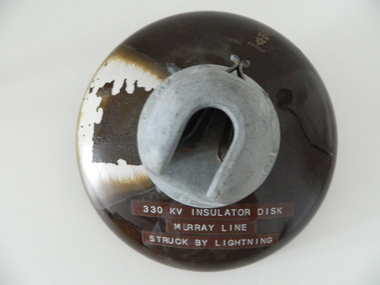
Insulator Disk High Voltage, 1964
... The need for a mountainous and a large area of operational requirements, such as the SEC Vic Kiewa Hydro Electricity Scheme, to distribute the electricity produced in the Victorian Alps to the major users required power transmission lines to "carry" high above the sometimes inaccessible land mass electricity generated at the power stations to the various sub stations along the valleys and ranges to flatter populated regions. ...This insulator disk for the high voltage carrying electrical cables was manufactured in 1964 and used by the SEC Vic (Kiewa Hydro Electricity Scheme) from that date until late 1900's. It was used to connect high voltage cables to their "towers" going from various Hydro Generators to and from power "stations". During this time period, high quality "cable" insulators were manufactured in Japan. In an earlier time they would have been sourced from Europe or England. After the 1950's the sourcing of electrical hardware was being influenced by the lower costs obtainable from Japan. Later on other Asian sources also became available.The need for a mountainous and a large area of operational requirements, such as the SEC Vic Kiewa Hydro Electricity Scheme, to distribute the electricity produced in the Victorian Alps to the major users required power transmission lines to "carry" high above the sometimes inaccessible land mass electricity generated at the power stations to the various sub stations along the valleys and ranges to flatter populated regions. The significance of this insulation "high voltage" disk to the Kiewa Valley region relates to the impact of modern technology (at that time) upon a mainly rural environment. These power lines are a stark visual "show" of the impact that the "Scheme" has on the mostly rural landscape of the Kiewa Valley and what a boost of "modern" equipment into the area has taken place. The "Hydro Scheme" had facilitated the transition of a semi rural area to an advanced rural region within a shorter time frame, than would have taken under "normal" evolutionary time. The speed of information of all "new technology" had a relatively slow assimilation rate before the SEC Kiewa Hydro Scheme came to those living in the then quieter rural communities. This high voltage (330 KV) insulation disk is made from non conductive porcelain stoneware. It is highly polished brown in colour and has a clip fastening for the high voltage cable to be attached to. This disk was hit by lightning and the burn marks are quite noticeable. The top metal connector has a "mushroom" extension jutting below the semi cone like insulation disk. Also four circular ridges or grooves (old 78 rpm disc recording style).Cable bell on top of insulation disk "4K " next to it the international symbol for electricity (triangle containing one horizontal line under one V line and one vertical flame like line.) On the opposite side "2" and to the right "64"sec vic kiewa hydro scheme, alternate energy supplies, alpine (above ground) high voltage electricity cables, volt cable, 330000 volt cable -
 Kiewa Valley Historical Society
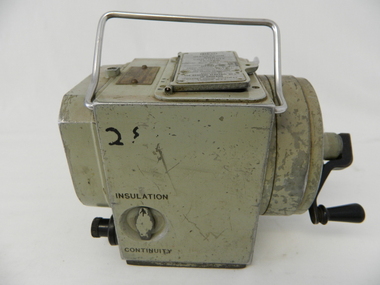
Tester Direct Current, mid 1900's
... As part of the Occupation, Health and Safety requirements, equipment used to monitor the performance of electricity producing generators, regularly, hand held testers were used to check the insulation and the "earth" pin were up the the required operational levels. ...As part of the Occupation, Health and Safety requirements, equipment used to monitor the performance of electricity producing generators, regularly, hand held testers were used to check the insulation and the "earth" pin were up the the required operational levels. ...This tester was used between 1950 and 1980's. As part of the Occupation, Health and Safety requirements, equipment used to monitor the performance of electricity producing generators, regularly, hand held testers were used to check the insulation and the "earth" pin were up the the required operational levels. As the generators and their ancillary monitoring equipment was spread over a large area and cumbersome to service small hand held devices were required. These had to always be safe for the user to operate. A selected range of high quality meters were recalibrated every two years in the Meter and Calibration Laboratory at Yarraville(near Melbourne) This meter is very significant to The Kiewa Hydro Electricity Scheme because it was an integral part of maintaining the electricity producing water driven generators of the power stations. The reason why this meter was so essential is that provided the safety check on equipment used to monitor each Hydro Generator that they were complying within the grid network parameters. Grid parameters are set so that if there is an electrical fault on the system, that fault can be attended to with a very small change in the output stability of each generator. It is essential that the voltage of the network remain within the set limits. Generators are at Dartmouth, Mackay, Clover, West Kiewa, Yarrawonga, Cain Curran and three Power Stations in the Thornton area.This hand driven current generator produces 500 volts by winding the handle(on funnel curved side) to keep the voltage constant(one minute per test). The whole body is made from caste aluminium. One of the functions of this meter is to test the isolation resistance of any equipment being tested. This is to see if that equipment is safe to handle(no electrical shocks). The second function is to test the earth pin of any portable electrical equipment. The turn key on one side can direct which function is required(marked insulation or continuity). On the top side(enclosed in a glass fronted marked scale) is a continuity scale(top) and an insulation scale(bottom). This is covered , when not in use by "flip up" lid with manufacturer's details and name of the instrument. Opposite the winder are two screw tight knobs. One marked earth(left side) and one marked line(right side). On the top and next to the glass windowed scales in a post manufacture SEC Vic equipment equipment ID number. For carrying purposes there is chromed steel (fold together) handle.The bottom of the unit has two metal "feet" 150mm long by 114mm wideManufacturer's details on top side "MEG" underneath "INSULATION AND CONTINUITY TESTER" below this "constant 500 VOLT pressure" below this "REGISTERED MEG MEGGER TRADE MARK" below this "REG DESIGN NO. 690326" below this "UNITED KINGDOM PATENT Nos. 193746, 197178, 198182, 202062, 202398, 204649, 350715" below this "SUPPLIED BY THE GENERAL ELECTRIC Co. Ltd OF ENGLAND" below this "MAGNET HOUSE, KINGSWAY LONDON W.C.2" 'sec vic kiewa hydro scheme, alternate energy supplies, alpine feasibility studies temperature, rainfall -
 Kiewa Valley Historical Society
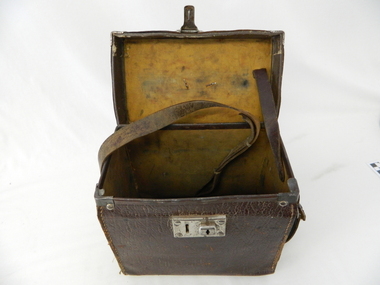
Case leather
... As part of the Occupation, Health and Safety requirements, equipment used to monitor the performance of electricity producing generators, regularly, hand held testers were used to check the insulation and the "earth" pin were up the the required operational levels. ...As part of the Occupation, Health and Safety requirements, equipment used to monitor the performance of electricity producing generators, regularly, hand held testers were used to check the insulation and the "earth" pin were up the the required operational levels. ...This case was used between 1950 and 1980's. As part of the Occupation, Health and Safety requirements, equipment used to monitor the performance of electricity producing generators, regularly, hand held testers were used to check the insulation and the "earth" pin were up the the required operational levels. As the generators and their ancillary monitoring equipment was spread over a large area and cumbersome to service small hand held devices were required. These had to always be safe for the user to operate. A selected range of high quality meters were recalibrated every two years in the Meter and Calibration Laboratory at Yarraville(near Melbourne)This leather case contains a meter which is very significant to The Kiewa Hydro Electricity Scheme because it was an integral part of maintaining the electricity producing water driven generators of the power stations. The reason why this meter was so essential is that provided the safety check on equipment used to monitor each Hydro Generator that they were complying within the grid network parameters. Grid parameters are set so that if there is an electrical fault on the system, that fault can be attended to with a very small change in the output stability of each generator. It is essential that the voltage of the network remain within the set limits. Generators are at Dartmouth, Mackay, Clover, West Kiewa, Yarrawonga, Cain Curran and three Power Stations in the Thornton area.This carry case is made from leather hide and cloth covered cardboard insert. The front side has a lockable English made suitcase fitting. It has a broken carry strap (leather) travelling from top and through leather strap holders both sides and on the bottom of the case. A State Electricity Commission of Victoria identification tag riveted onto the top lid "ELECTRICAL ENGINEERING SECTION No. 1483"sec vic kiewa hydro scheme, alternate energy supplies, alpine located electricity generators, mobile measuring equipment -
 Kiewa Valley Historical Society
Meter Ammeter Recorder, Circa 1950
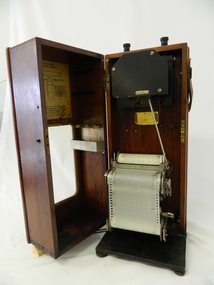
... operational times (milking machines). This mobile voltage recorder is very significant to the Kiewa Valley because it highlights the difficulties that can occur in maintaining a power supply that experiences fluctuating power demands by the rural industries that it supplies. The requirement ...This testing voltmeter recorder was last certified by SEC Vic laboratories on the 17/4/77. It was used extensively as mobile recorder placed for periods of one month at locations experiencing unacceptable fluctuations of power. These locations would cover the North East regions of Victoria. They cover voltage drops at domestic and business properties especially those that were experiencing regular fluctuations(daily) at approximately the same time of the day. As the electrical network is required to operate within a set level of voltage, fluctuations outside of this has to be investigated and necessary remedial action taken. This is especially so for rural properties where power "drainage" can occur through animal/bird and tree interference. It can also be the result of defective wiring and overloading at peek operational times (milking machines).This mobile voltage recorder is very significant to the Kiewa Valley because it highlights the difficulties that can occur in maintaining a power supply that experiences fluctuating power demands by the rural industries that it supplies. The requirement of a mobile testing apparatus to cover the various sections in the Kiewa Valley and other rural areas in the northeast region is one of necessity as electricity once connected to a rural property is a labour saving supply as generators on rural properties require a higher degree of maintenance an ultimately at a higher cost. The testing of the SEC Vic supplied electricity to rural properties,those who had previously run on generators, had to be quick and unassuming with certainty of correct supply levels.The mechanism of this voltage recorder has been installed(by the manufacturer) into its own protective wooden box. This box has a front (swing open) lockable section which permits direct access to the installed measuring equipment (for servicing and data collection). The top section of the box has two screw on terminals for access to the machine being tested. This tester has its own inbuilt ink supply facilities and a mechanical clockwork device that unwinds a roll of paper onto a second roll at a rate of 10 mm per hour. The recording chart is marked with time slots against voltage. There is a recording arm which has an ink pen at the end. Both arm and pen carry the ink supply from the ink reservoir, located on the left side of the cabinet door in specially constructed bottle holder( three small bottle capacity). To record a suspect power problem to a home or business establishment the voltmeter is connected to a power supply outlet being tested and wind the recording clockwork mechanism (gives a four week running time). Before leaving the recorder in situ the electrician checks to see if the chart is recording the correct voltage and that the clock mechanism is advancing correctly.On the front of the access "door" at the top a metal label "RECORDING AMMETER" below this "MURDAY SYSTEM" below this "ALTERNATING CURRENT" and below this the manufacturer's registered number "No. 139156" Below this is a metal tag with State Electricity Commission of Victoria Electrical Engineer's Section equipment number "338" Below these tags and above the viewing window is the manufacturer's dtails "EVERSHED & VIGNOLES Led LONDON"sec vic kiewa hydro scheme, alternate energy supplies, alpine feasibility studies temperature, rainfall, power outages -
4th/19th Prince of Wales's Light Horse Regiment Unit History Room
Medal, War Medal 1939-45
... operational service may be counted, providing that it was of 28 days or more duration. Eligibility The War Medal 1939-45 is awarded for 28 days full-time service between 3 September 1939 and 2 September 1945. In the Merchant Navy there is a requirement...operational service may be counted, providing that it was of 28 days or more duration. Eligibility The War Medal 1939-45 is awarded for 28 days full-time service between 3 September 1939 and 2 September 1945. In the Merchant Navy there is a requirement ...The War Medal 1939-45 was awarded for full-time service in the Armed Forces, wherever that service may have been rendered during the war. Operational and non-operational service may be counted, providing that it was of 28 days or more duration. Eligibility The War Medal 1939-45 is awarded for 28 days full-time service between 3 September 1939 and 2 September 1945. In the Merchant Navy there is a requirement that the 28 days should have been served at sea. A member qualifies for the award where service was brought to an end by death, wounds or other disabilities due to service or by cessation of hostilities on 2 September 1945. The War Medal 1939-45 is awarded to Australian Civilian Personnel who served afloat with the United States Army Small Ships Section between 8 December 1941 and 2 September 1945. Eligibility is the same as that for Merchant Navy personnel. See required evidence to support a claim. The Medal The War Medal 1939-45 is cupro-nickel with the crowned effigy of King George VI on the obverse. The reverse has a lion standing on a fallen dragon. The top of the reverse shows the dates 1939 and 1945. The Ribbon The War Medal 1939-45 ribbon colours of red, white and blue represent the colours of the Union Flag. Emblem The single bronze oak leaf Emblem signifying either a Mention in Despatches, King's Commendation for brave conduct, or a King's Commendation for valuable service in the air, will, if granted for service during World War II, be worn on the ribbon of the War Medal 1939-45.Full size and miniature medals with ribbons. Miniature has MID claspnilwar medal 1939-45 -
Bendigo Historical Society Inc.
Administrative record - Commercial Egg Producers' Association of Victoria (CEPA) Central Council Correspondence, 1977
... This item includes the following documents: 8504.33a The document outlines agenda items for a poultry industry conference, focusing on operational, regulatory, and industry improvement topics. 8504.33b A letter discussing delays, objectives, and formation of the District Liaison Committee for agricultural community engagement. 8504.33c This notice provides essential logistical details for branch representatives to prepare for the upcoming conference. 8504.33d Branch secretaries are asked to convene a special meeting within the week to discuss information regarding proposed amendments to the Egg Industry Stabilization Act 1973 8504.33e The letter from the Secretary of the Federal Council of Poultry Farmers Associations of Australia outlines three key agenda items for the upcoming council meeting. These points focus on pricing, board membership requirements...This item includes the following documents: 8504.33a The document outlines agenda items for a poultry industry conference, focusing on operational, regulatory, and industry improvement topics. 8504.33b A letter discussing delays, objectives, and formation of the District Liaison Committee for agricultural community engagement. 8504.33c This notice provides essential logistical details for branch representatives to prepare for the upcoming conference. 8504.33d Branch secretaries are asked to convene a special meeting within the week to discuss information regarding proposed amendments to the Egg Industry Stabilization Act 1973 8504.33e The letter from the Secretary of the Federal Council of Poultry Farmers Associations of Australia outlines three key agenda items for the upcoming council meeting. These points focus on pricing, board membership requirements ...The Commercial Egg Producers' Association of Victoria was active by the 1930s, engaging in industry management and lobbying.The Commercial Egg Producer's Association (CEPA) had branches in Bendigo, South Bendigo, Eaglehawk, Wedderburn, Murrabit and Euroa.CEPA Commercial Egg Producer's Association (Bendigo Region) correspondence, for the year 1977. This item includes the following documents: 8504.33a The document outlines agenda items for a poultry industry conference, focusing on operational, regulatory, and industry improvement topics. 8504.33b A letter discussing delays, objectives, and formation of the District Liaison Committee for agricultural community engagement. 8504.33c This notice provides essential logistical details for branch representatives to prepare for the upcoming conference. 8504.33d Branch secretaries are asked to convene a special meeting within the week to discuss information regarding proposed amendments to the Egg Industry Stabilization Act 1973 8504.33e The letter from the Secretary of the Federal Council of Poultry Farmers Associations of Australia outlines three key agenda items for the upcoming council meeting. These points focus on pricing, board membership requirements, and oversight of research activities relevant to poultry farmers. 8504.33f The Commercial Egg Producers Association of Victoria formally thanks the Victorian Egg Marketing Board for inviting them to an industry meeting scheduled for August 18, 1977 8504.33g The document is a letter from the Commercial Egg Producers' Association of Victoria to the Liberal Party's Rural Committee, August 1977 8504.33h The Commercial Egg Producers' Association of Victoria (C.E.P.A.), August 1977 8504.33i The Central Council of Poultry Farmers Association of Australia is organizing a conference in Melbourne on April 4th and 5th, 1977. The Council suggests inviting Mr. Smith, the Minister of Agriculture, to officially open the conference. 8504.33j The newspaper article highlights the effectiveness and necessity of egg production licensing in Victoria. It shows that licensing has benefited both producers and consumers, stabilized the industry, and is recommended for ongoing implementation. 8504.33ka A letter from the egg producers' association in Victoria, expressing concern about the future of egg production licensing. The letter urges the Rural Committee of thew Liberal Party to ensure the continuation of licensing for the benefit of the industry. 8504.33l From the Association requesting Mr. F. Grimwade, M.L.A., to distribute copies of a document to relevant commercial Members of Parliament who are not part of the Association. 8504.33m The document is a formal letter advocating for reforms in rural land valuation. The association firmly recommends that land valuation for all purposes should be based on productive capacity, not market subdivision value. 8504.33n This document is a formal letter from the Central Council of the Commercial Egg Producers' Association of Victoria. These points highlight the Council's efforts to keep Parliament informed and coordinate communication among its branches. 8504.33o A formal letter from K. Fitzgibbon, Secretary, addressed to Mr. Ben McConchie at the Diagnostic Centre in Epsom. The document serves as an official request to initiate discussions about the Advisory Council's future. 8504.33p This document is a formal protest letter from a poultry farmers' association addressed to the State Electricity Commission. The letter is signed by the association's secretary, K. Fitzgibbon, and aims to prompt the State Electricity Commission to improve its support infrastructure for rural customers. 8504.33q A letter from the Secretary of the Commercial Egg Producers' Association of Victoria to the Victorian Egg Marketing Board. This letter advocates for a more efficient approach to supplying egg trolleys to improve labor efficiency in egg grading operations. 8504.33r A formal letter to the Agriculture Department Melbourne, addressing the classification of non-commercial poultry entries in random sample tests. 8504.33s The letter is addressed to the Minister of Agriculture, Mr. Ian Smith, and dated June 1st.The main purpose is to high light that the egg industry complied with a price freeze, unlike the meat-meal industry and some others, which increased their prices by 35 to 15 per tonne during the freeze period. 8504.33t A letter requesting comments from the Prices Justification Tribunal regarding this disparity in industry responses to the price freeze. 8504.33u This letter addresses the Victorian government Premier, Rupert Hamer, urging a revision of land valuation methods for agricultural properties. 8504.33v The document is a formal letter from the Strathfieldsaye Association to the Municipal Association of Victoria, requesting a revision of land valuation methods for farms. 8504.33w Key points document and evidence for continuation of egg production licensing in Victoria. 8504.33x The document is a formal letter from the Victorian Egg Marketing Board addressed to Mr. Ian Smith, Minister of Agriculture. This letter serves as an official submission of candidates for board appointment, fulfilling the request from the Minister of Agriculture. 8504.33y This document is a formal letter from the Commercial Egg Producers' Association of Victoria, dated May 13, 1977. The letter serves as an official thank you and confirmation to Mr. F. Grimwade for agreeing to open the Association's Annual Conference. 8504.33z Notice regarding the Annual Conference of the Commercial Egg Producers Association of Victoria. 8504.33aa This document is a formal invitation from the Commercial Egg Producers' Association of Victoria. To invite local members of Parliament to the Association's Annual Conference. 8504.33ab The Commercial Egg Producers' Association of Victoria formally invites Mr. I. Smith, the Minister of Agriculture, to open their Annual Conference. 8504.33ac Agenda for the Annual Meeting of the Commercial Egg Producers' Association of Victoria, May 1977. 8504.33ad Formal notice regarding branch nominations for the Victorian Egg Producers Board in 1977 8504.33ae Annual Meeting Announcement:The Commercial Egg Producers' Association of Victoria's Central Council will hold its annual meeting at City Hall at 12:30 p.m. on Friday, 20th May, 1977. 8504.33af This document is a meeting agenda from the Commercial Egg Producers' Association of Victoria, highlighting three main issues for discussion: Meatmeal Price and Supply, Feather Picking Problems, and Telecom Profits. 8504.33ag This document is a letter from the Commercial Egg Producers' Association of Victoria expressing gratitude to Ted Drake for his service as Secretary. 8504.33ah This document is a letter from the Central Council of the Commercial Egg Producers' Association of Victoria to the Egg & Egg Pulp Marketing Board. The key points is an objection to the practice of washing all eggs, particularly clean eggs processed on approved inline washers. 8504.33ai The Central Council of Poultry Farmers Association of Australia is organizing a conference in Melbourne on April 4th and 5th, 1977. The Council suggests inviting Mr. Smith, the Minister of Agriculture, to officially open the conference. 8504.33aj he document lists individual members and their contact details, including names, postal addresses, and telephone numbers. Examples include Lindsay Bartel (MSSTIC PARK), Harold Wilson (YARRABERB), Larsen (EAGLEHAWK), Epic Walker (FENTONS CREEK), and others across various locations. 8504.33ak The letter from the Secretary outlines several objections and suggestions regarding the Cost of Production document prepared by Price Waterhouse for the Victorian Egg Board 8504.33al Executive meeting minutes of the Commercial Egg Producers Association of Victoria held on September 5, 1977 8504.33am Department of Agriculture and Fisheries south Australia Fact Sheet Dec 1977 - Achieving a satisfactory yolk colour 8504.33an Two References, one from Van Der Graaf Bodies Pty Ltd General Engineers, one typed, one handwrittenegg producer's information, correspondence, cepa, commercial egg producers' association -
 Bendigo Military Museum
Document - Contingency Support Capability - Army Topographic Support Establishment (ATSE) Implementation, Army Survey Regiment, Bendigo, Apr - Jun 1995
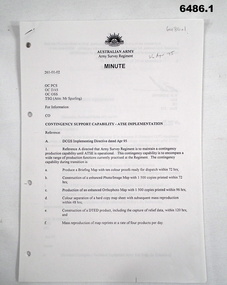
... .1 The Minute details that the Army Survey Regiment is maintain a contingency production capability until ATSE is operational. .2 The Minute details the Data Aquisition Squadron requirements during the Implementation to ATSE. .3 The Minute details the Hardware, Software, Personnel and skills required during Implementation to ATSE. .4 The Instruction details that the non-core mapping, charting and geodetic (MC&G) activities of the Army Survey Regiment and 4 Fd Svy Sqn were tested under the Commercial Support Program (CSP) process resulting in the decision to award the contract for the provision of non-core mapping services to the ADF to the Preferred In-House Option (PIHO). ....1 The Minute details that the Army Survey Regiment is maintain a contingency production capability until ATSE is operational. .2 The Minute details the Data Aquisition Squadron requirements during the Implementation to ATSE. .3 The Minute details the Hardware, Software, Personnel and skills required during Implementation to ATSE. .4 The Instruction details that the non-core mapping, charting and geodetic (MC&G) activities of the Army Survey Regiment and 4 Fd Svy Sqn were tested under the Commercial Support Program (CSP) process resulting in the decision to award the contract for the provision of non-core mapping services to the ADF to the Preferred In-House Option (PIHO). ....1 The Minute details that the Army Survey Regiment is maintain a contingency production capability until ATSE is operational. .2 The Minute details the Data Aquisition Squadron requirements during the Implementation to ATSE. .3 The Minute details the Hardware, Software, Personnel and skills required during Implementation to ATSE. .4 The Instruction details that the non-core mapping, charting and geodetic (MC&G) activities of the Army Survey Regiment and 4 Fd Svy Sqn were tested under the Commercial Support Program (CSP) process resulting in the decision to award the contract for the provision of non-core mapping services to the ADF to the Preferred In-House Option (PIHO). .1 Contingency Support Capability - Army Topographic Support Establishment (ATSE) Implementation 26 Apr 95 (11 x A4 pages) .2 Data Acquisition Squadron (DAS) Contingency Support Capability - Army Topographic Support Establishment (ATSE) Implementation Apr 95 (4 x A4 Pages) .3 Contingency Support Capability - Army Topographic Support Establishment (ATSE) Implementation 28 Apr 95 (9 x A4 pages) .4 Directorate of Military Survey - Army Instruction for Implementation of the Army Topographic Support Establishment (ATSE) Jun 95 (10 x A4 pages)royal australian survey corps, rasvy, fortuna, army survey regiment, army svy regt, asr, atse -
 Sunshine and District Historical Society Incorporated
Document - City Of Brimbank Annual Reports, City of Brimbank
... operational and financial performance for the financial year. Through these reports, Council reviews its performance, achievements and progress made towards strategic objectives and the strategic directions set out in the Council’s Plans. These reports also provided insights into emerging challenges facing the organisation and how the Council has used public resources to deliver services, programs and infrastructure in the interests of our community. These Annual Reports aligns with the principles set in the Local Government Act 2020, meeting legislative and compliance reporting requirements...operational and financial performance for the financial year. Through these reports, Council reviews its performance, achievements and progress made towards strategic objectives and the strategic directions set out in the Council’s Plans. These reports also provided insights into emerging challenges facing the organisation and how the Council has used public resources to deliver services, programs and infrastructure in the interests of our community. These Annual Reports aligns with the principles set in the Local Government Act 2020, meeting legislative and compliance reporting requirements ...The Brimbank City Council Annual Reports examines the Council’s strategic, operational and financial performance for the financial year. Through these reports, Council reviews its performance, achievements and progress made towards strategic objectives and the strategic directions set out in the Council’s Plans. These reports also provided insights into emerging challenges facing the organisation and how the Council has used public resources to deliver services, programs and infrastructure in the interests of our community. These Annual Reports aligns with the principles set in the Local Government Act 2020, meeting legislative and compliance reporting requirements for local government in Victoria, thus ensuring the Council remains accountable to its community.5774.01 - City Of Brimbank Annual Report 2014 - 2015.PDF 5774.02 - City Of Brimbank Annual Report 2015 - 2016.PDF 5774.03 - City Of Brimbank Annual Report 2016 - 2017.PDF 5774.04 - City Of Brimbank Annual Report 2017 - 2018.PDF 5774.05 - City Of Brimbank Annual Report 2018 - 2019.PDF 5774.06 - City Of Brimbank Annual Report 2019 - 2020.PDF 5774.07 - City Of Brimbank Annual Report 2020 - 2021.PDF 5774.08 - City Of Brimbank Annual Report 2021 - 2022.PDF 5774.09 - City Of Brimbank Annual Report 2022 - 2023.PDF 5774.10 - City Of Brimbank Annual Report 2023 - 2024.PDF city of brimbank -
 Puffing Billy Railway
Ballarat Station Parcels Office Clock
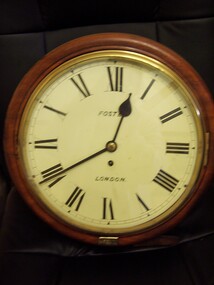
... requirement to be somewhere or do something. There was sun up and sun down. A number of towns in Victoria operated on different times to other towns in the state. With the coming of the railways in Victoria from 1854, time became more important not only from the public side, but from a railway operational safety side. ...requirement to be somewhere or do something. There was sun up and sun down. A number of towns in Victoria operated on different times to other towns in the state. With the coming of the railways in Victoria from 1854, time became more important not only from the public side, but from a railway operational safety side. ...This historic railway clock , originally installed in the Parcels Office at Ballarat Station Station Clock - Ballarat Station A Victorian Railways Station clock that was located in the Parcels Office at Ballarat. In the 19th Century, time was not seen as an urgent requirement to be somewhere or do something. There was sun up and sun down. A number of towns in Victoria operated on different times to other towns in the state. With the coming of the railways in Victoria from 1854, time became more important not only from the public side, but from a railway operational safety side. Clocks started appearing at railway stations, sometimes showing a different (standard) time to that of the local town. Eventually all of Victoria was bought into the same time zone, which matched the railway standard. Historic - Station Clock - Ballarat Station - which was used in the Parcels Office at the Victorian Railways Ballarat railway stationStation Clock - Ballarat Station Parcels Office Clock Antique timber cased railway clock. Circular face with Roman numerals. By Foster of London, with numbered brass plaque '631'. Single barrel fusee movement. Foster London 631 puffing billy, ballarat station, station clock -
Moorabbin Air Museum
Manual - Aerial agriculture, Agricultural Pilots Manual
... Aerial agriculture Agricultural airstrip requirements Pilot technique Aircraft performance Operational planning Operational technique The helicopter in agriculture The turbine engine in agriculture Night aerial spraying operations Study guide for those seeking agricultural pilot licences, circa 1985 4 ring folder Agricultural Pilots Manual Manual Aerial agriculture ...Study guide for those seeking agricultural pilot licences, circa 19854 ring foldernon-fictionStudy guide for those seeking agricultural pilot licences, circa 1985agricultural airstrip requirements, pilot technique, aircraft performance, operational planning, operational technique, the helicopter in agriculture, the turbine engine in agriculture, night aerial spraying operations -
Moorabbin Air Museum
Manual - Ansett Boeing 767 operating manuals, Boeing B767 Operating Manual Chapter 6 Weight and Balance April 1995
... Ansett Boeing 767 operating manuals Compartment capacities Loading limitations Configuration layout Variations to operational items Galleys Fuel Standard passenger & baggage weights Overview of weight & balance requirements/limitations for Boeing 767, circa 1995 Spiral bound book style manual Boeing B767 Operating Manual Chapter 6 Weight and Balance April 1995 Manual Ansett Boeing 767 operating manuals ...Overview of weight & balance requirements/limitations for Boeing 767, circa 1995Spiral bound book style manualnon-fictionOverview of weight & balance requirements/limitations for Boeing 767, circa 1995compartment capacities, loading limitations, configuration layout, variations to operational items, galleys, fuel, standard passenger & baggage weights -
Moorabbin Air Museum
Book - Civilian air transport, Air Transport Manual
... Civilian air transport Progress of air transport Air service development in Britain Aerodromes in Britain & Ireland British Commercial Aircraft British engines Aerodrome requirements Formalities & regulations Maintenance Operational costs Wireless for aircraft Training Fuels & lubricants Aircraft accessories Aeronautical terms Overview of civilian air transport aircraft, airfields, equipment & maintenance, circa 1935 Air Transport Manual Book Civilian air transport ...Overview of civilian air transport aircraft, airfields, equipment & maintenance, circa 1935non-fictionOverview of civilian air transport aircraft, airfields, equipment & maintenance, circa 1935progress of air transport, air service development in britain, aerodromes in britain & ireland, british commercial aircraft, british engines, aerodrome requirements, formalities & regulations, maintenance, operational costs, wireless for aircraft, training, fuels & lubricants, aircraft accessories, aeronautical terms -
Moorabbin Air Museum
Book - AGARD reports, Advances in Guidance and Control Systems Using Digital Techniques
... AGARD reports Functional design concepts/trends & requirements Advances in analytical & design techniques Advances in digital system design Data processing & computation techniques Software design validation techniques Operational & system development Overview of use of digital techniques in guidance & control system advances , circa 1979 Advances in Guidance and Control Systems Using Digital Techniques Book AGARD reports ...Overview of use of digital techniques in guidance & control system advances , circa 1979non-fictionOverview of use of digital techniques in guidance & control system advances , circa 1979functional design concepts/trends & requirements, advances in analytical & design techniques, advances in digital system design, data processing & computation techniques, software design validation techniques, operational & system development -
 Wodonga & District Historical Society Inc
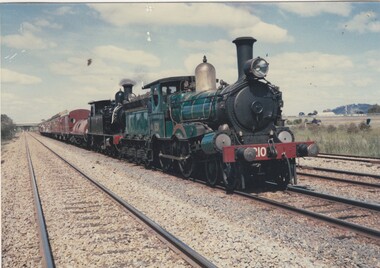
Photograph - Fred Rochow Railways Collection - Locomotives 1210 and 3112 waiting to cross, 15 October 1988
... It was a requirement of the Bicentennial Authority Grant that the engine be operational. ...It was a requirement of the Bicentennial Authority Grant that the engine be operational. ...The Fred Rochow Railways Collection incorporates photos related to the operation of the Wodonga Railway Station including different types of trains and railways staff C. 1930 – 1990. It was donated to the Wodonga Historical Society by Fred Rochow, a railwayman who spent many years based in Wodonga. He joined the Victorian Railways on 17th June l947 and retired in 1988. For some time, he was a member of the Australian Federated Union of Locomotive Enginemen and served a term as a member of the Trades Hall Council. He had an extensive knowledge of the struggles that took place to achieve better conditions for railway workers. Fred worked for many years as a fireman and then worked his way up the ranks to driver, experiencing many changes from the days of steam locomotives through to diesel trains, locomotives and even the modern XPT train. He worked throughout Victoria at different stages of his career, with his final working years focused on the northeast of Victoria and the Albury to Melbourne line. After his retirement, Fred continued to share his love of steam miniature trains with the community.This collection has local and statewide significance as it captures images of trains, locomotives and personnel who operated the railway services in Wodonga and throughout Northeast Victoria. The railways played a critical role in opening up Victoria and connecting Australia for trade, business, social communication and transport.This locomotive was built in 1878 by Beyer Peacock & Co, Manchester, England. It arrived in Sydney on August 19, 1878 and began its working life as No 120 of C[79] class on the southern and western lines of NSW in September that year. On 24 May 1914, when the new branch line to Canberra was completed, the locomotive unofficially opened the track by pulling the first train to the construction site of the national capital. The engine was given the new number 1210 in the 1923 re-classification of NSW engines. Locomotive 1210 continued in use until 1958 when it was finally withdrawn from service. The NSW Steam Tram and Preservation Society appealed to the National Capital Development Commission (NCDC) and the NSW Railways to assist in the locomotive's preservation. As a result of the Society's appeal the locomotive was purchased by the NCDC for 800 pounds. The locomotive was relocated to the Canberra Railway Museum in 1984. It was restored with funds received from the Australian Bicentennial Authority. It was a requirement of the Bicentennial Authority Grant that the engine be operational. The locomotive was re-commissioned by the Member for Canberra, the Hon Ros Kelly, on 19 September 1988. As part of the Australian Bicentennial celebrations Locomotive 1210 attended the AusSteam '88 event in Melbourne, travelling south in the company with Locomotive 3112. It is claimed by the Australian Railway Historical Society that No 1210 is the oldest operational main line steam locomotive in the world.On front of locomotive "1210" railways wodonga, fred rochow, locomotive 1210 -
 Returned Nurses RSL Sub-branch
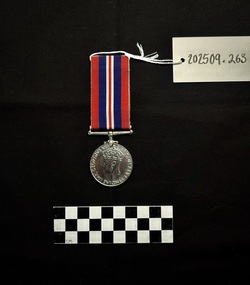
Medal - War Medal 1939–1945, [post 1949]
... Operational and non-operational service may be counted if it was 28 days or more in duration. In the merchant navy, there was a requirement that the 28 days should have been served at sea. ...Operational and non-operational service may be counted if it was 28 days or more in duration. In the merchant navy, there was a requirement that the 28 days should have been served at sea. ...Medal belonged to Joan Grace Gibson (Mitchell) Service numbers: VFX53656 VX53656 VX38752. The War Medal 1939–45 was awarded for 28 days full-time service in the armed forces between 3 September 1939 and 2 September 1945. Operational and non-operational service may be counted if it was 28 days or more in duration. In the merchant navy, there was a requirement that the 28 days should have been served at sea. A member qualifies for the award where service was brought to an end by death, wounds or other disabilities due to service or by cessation of hostilities on 2 September 1945.The medal is of high significance and should be kept in the collection.Made from cupro-nickel, the medal itself is cool-to-the-touch. The front has a central and textured design of the crowned effigy of King George VI, facing left and signed 'PM', the initials of designer Percy Metcalfe, below the truncated neck of the effigy. Around the perimeter is the legend 'GEORGIVS VI D:G:BR:OMN:REX ET INDIAE IMP:' The reverse has a lion standing on a double-headed dragon. The top of the reverse shows the dates 1939 and 1945. The ribbon colours of red, white and blue represent the colours of the Union Flag. The ribbon is tactile, feeling ribbed under finger. The edge is engraved with the service number, initials and name of the recipient.'VFX53656 J. G. GIBSON' [engraved around lower part of the medal edge]world war 2, world war ii, world war two, joan grace gibson, war medal 1939-45, wwii, ww2 -
 Returned Nurses RSL Sub-branch
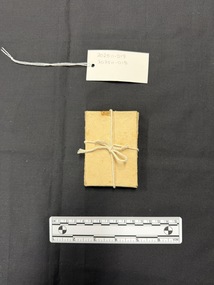
Medal - War Medal 1939–1945, [post 1949]
... Operational and non-operational service may be counted if it was 28 days or more in duration. In the merchant navy, there was a requirement that the 28 days should have been served at sea. ...Operational and non-operational service may be counted if it was 28 days or more in duration. In the merchant navy, there was a requirement that the 28 days should have been served at sea. ...Medal belonged to Margaret Lawrence Jackson Service numbers: Q140158 QF140158. The War Medal 1939–45 was awarded for 28 days full-time service in the armed forces between 3 September 1939 and 2 September 1945. Operational and non-operational service may be counted if it was 28 days or more in duration. In the merchant navy, there was a requirement that the 28 days should have been served at sea. A member qualifies for the award where service was brought to an end by death, wounds or other disabilities due to service or by cessation of hostilities on 2 September 1945.The medal is of high significance and should be kept in the collection.Medal belonged to Margaret Lawrence Jackson Service numbers: Q140158 QF140158. Made from cupro-nickel, the medal itself is cool-to-the-touch. The front has a central and textured design of the crowned effigy of King George VI, facing left and signed 'PM', the initials of designer Percy Metcalfe, below the truncated neck of the effigy. Around the perimeter is the legend 'GEORGIVS VI D:G:BR:OMN:REX ET INDIAE IMP:' The reverse has a lion standing on a double-headed dragon. The top of the reverse shows the dates 1939 and 1945. The ribbon colours of red, white and blue represent the colours of the Union Flag. The ribbon is tactile, feeling ribbed under finger. The edge is engraved with the service number, initials and name of the recipient.'QF140158 M. L. JACKSON' [engraved around lower part of the medal edge]world war 2, world war ii, world war two, war medal 1939-45, wwii, ww2, margaret lawrence jackson
