
Showing 14 items matching "political prisoners"
-
 Unions Ballarat
No easy walk to freedom : articles, speeches, and trial addresses of Nelson Mandela, Mandela, Nelson, 1965
... ...political prisoners...Nelson Mandela was a political prisoner for 27 years. He was an anti-apartheid advocate and was charged with inciting workers' strikes and leaving the country without permission. ...Nelson Mandela was a political prisoner for 27 years. He was an anti-apartheid advocate and was charged with inciting workers' strikes and leaving the country without permission. ...Nelson Mandela was a political prisoner for 27 years. He was an anti-apartheid advocate and was charged with inciting workers' strikes and leaving the country without permission. The book is a collection of his speeches, articles and letters.Relevant to the history of race relations in South Africa as told by Nelson Mandela.Paper; book. Front cover: author's name and title; contributor's name (foreword).btlc, ballarat trades hall, ballarat trades and labour council, mandela, nelson, political prisoners, politics, south africa, apartheid, strikes, speeches, articles, letters, race relations, history -
 Eltham District Historical Society Inc
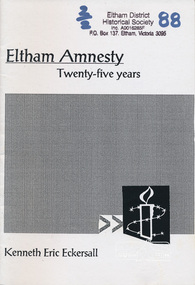
Book, Eltham amnesty : twenty-five years / Kenneth Eric Eckersall, 2002
... ...political prisoners...This booklet documents its first 25 years. amnesty international (eltham group) political prisoners Paperback; iv, 27 p. ; 21 cm. ...The Eltham Branch (North East Metro Group) of Amnesty International was formed in 1977. This booklet documents its first 25 years.Paperback; iv, 27 p. ; 21 cm.amnesty international (eltham group), political prisoners -
 Monbulk RSL Sub Branch
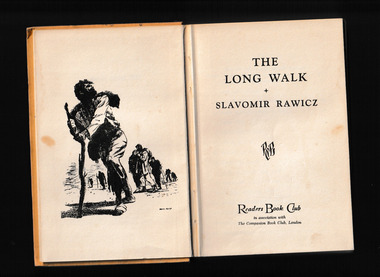
Book, Readers Book Club, The long walk, 1958
... Political prisoners - Soviet Union - Autobiography...Political prisoners - Soviet Union - Autobiography Prisons and prisoners - Russia Slavomir Rawicz was a young Polish cavalry officer. ...Slavomir Rawicz was a young Polish cavalry officer. On 19th November 1939, he was arrested by the Russians and after brutal interrogation he was sentenced to 25 years in the Gulags. After a three month journey to Siberia in the depths of winter he escaped with six companions. This title tells the true story of his adventure, survival and escape.Ill, maps, p.285.non-fictionSlavomir Rawicz was a young Polish cavalry officer. On 19th November 1939, he was arrested by the Russians and after brutal interrogation he was sentenced to 25 years in the Gulags. After a three month journey to Siberia in the depths of winter he escaped with six companions. This title tells the true story of his adventure, survival and escape. political prisoners - soviet union - autobiography, prisons and prisoners - russia -
 Monbulk RSL Sub Branch
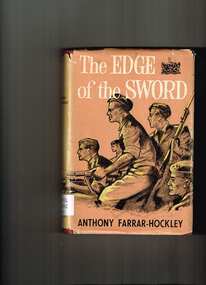
Book, Readers Book Club, The edge of the sword, 1954
... Like the majority of those who survived, the author became a prisoner-of-war, and the book continues with a remarkable account of his experiences in and out of Chinese prison camps. This book is not an attempt at a personal hero-story, and it is certainly not a piece of political propaganda. ...In April 1951, at the height of the Korean War, Chinese troops advanced south of the 38th parallel towards a strategic crossing-point of the Imjin River on the invasion route to the South Korean capital of Seoul. The stand of the 1st Battalion, the Gloucestershire Regiment, against the overwhelming numbers of invading troops has since passed into British military history. In The Edge of the Sword General Sir Anthony Farrar-Hockley, then Adjutant of the Glosters, has painted a vivid and accurate picture of the battle as seen by the officers and soldiers caught up in the middle of it. The book does not, however, end there. Like the majority of those who survived, the author became a prisoner-of-war, and the book continues with a remarkable account of his experiences in and out of Chinese prison camps. This book is not an attempt at a personal hero-story, and it is certainly not a piece of political propaganda. It is, above all, an amazing story of human fortitude and high adventure.Ill, p.286non-fictionIn April 1951, at the height of the Korean War, Chinese troops advanced south of the 38th parallel towards a strategic crossing-point of the Imjin River on the invasion route to the South Korean capital of Seoul. The stand of the 1st Battalion, the Gloucestershire Regiment, against the overwhelming numbers of invading troops has since passed into British military history. In The Edge of the Sword General Sir Anthony Farrar-Hockley, then Adjutant of the Glosters, has painted a vivid and accurate picture of the battle as seen by the officers and soldiers caught up in the middle of it. The book does not, however, end there. Like the majority of those who survived, the author became a prisoner-of-war, and the book continues with a remarkable account of his experiences in and out of Chinese prison camps. This book is not an attempt at a personal hero-story, and it is certainly not a piece of political propaganda. It is, above all, an amazing story of human fortitude and high adventure. korean war 1950-1953 - history, korean war - campaigns - gloucestershire regiment -
 National Vietnam Veterans Museum (NVVM)
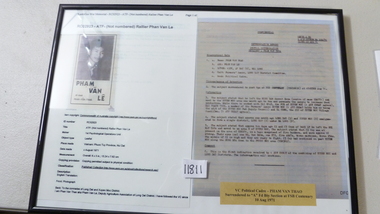
Photograph, V.C.Political Cadre - PHAM VAN THAO
... Photograph A Fd Bty Interrogation Of Prisoner Interrogation VC Pham Van Tho surrendered to "A" FD BTY Section at FSB Cenerary 10 Aug 1971. Framed photo of a political cadre (small photo inserted) RCO2923-ATF (not numbered) Rallier Phan Van Le and all his details on one side. ...Framed photo of a political cadre (small photo inserted) RCO2923-ATF (not numbered) Rallier Phan Van Le and all his details on one side. On the other side is a confidential report, initial interrogation of detainee - Pham Van Tho surrendered to "A" FD BTY Section at FSB Centenary 10 Aug 1971.VC Pham Van Tho surrendered to "A" FD BTY Section at FSB Cenerary 10 Aug 1971.photograph, a fd bty, interrogation of prisoner, interrogation -
 Narre Warren and District Family History Group
CD, W.A. Genealogical Society, Inc, Convict ticket-of-leave register, Toodyay Acc. 721/30, 2004
... Eighteen years later the last convict transport, the Hougoumont, arrived with 280 convicts, mostly Irish political prisoners, making a total of nearly 10,000 convicts arriving in the colony. ...Convict ticket-of-leave register, Toodyay Acc. 721/30 The Swan River Colony, founded in 1829, as a free settlement needed an injection of capital and an increase in population if it was to thrive. In late 1849 a petition signed by prominent settlers, requesting that male convicts be sent to the Swan River, was submitted to the colonial office. This request was welcomed and transportation officially began to Western Australia in 1850. The first convict ship, the Scindian, arrived at Fremantle on June 1 carrying 75 convicts and a small group of Enrolled Pensioner Guards and their families. Eighteen years later the last convict transport, the Hougoumont, arrived with 280 convicts, mostly Irish political prisoners, making a total of nearly 10,000 convicts arriving in the colony. This availability of cheap labour resulted in many convicts being granted their 'ticket-of-leave' before their sentences had expired, which allowed private settlers to employ them. To facilitate the distribution of working men throughout the settlement, hiring depots were established in key town and country areas. Ticket-of-leave men could not leave their assigned district without permission; had to carry their 'ticket' with them at all times and produce it to any official on demand; as well as lodge an official form with the local magistrate on January 1 and July 1 every year which detailed residence, employer and rate of pay. On the positive side, ticket of leave men were able to choose their own employer and even work for themselves. They could also marry with permission of the authorities and even own land. At the end of their sentences, ex-convicts or 'expirees' were given their freedom, although those with life or long-term sentences were often granted Conditional Pardons, which conferred most of the benefits of freedom but did not allow them to return to England. The movement of convicts around the colony is preserved in the many surviving convict registers which are now kept in the State Records Office of WA . These registers list the names of employers and the dates convicts were employed, and detail the rates of pay and any brushes the convict had with authorities. Many of the employers were themselves 'ticket-of-leave' men, expirees or conditional pardon men. One of the convict hiring depots was at Toodyay and two registers from this institution for the period 1862 to 1870 have been archived in the State Records Office at Accession Number 721, volumes 30 and 31. The impact these men had on the infant colony can best be guessed from the statistical data available from official records. In 1850 there were only 5,000 residents in the colony, but at the end of the convict period the number had risen to 25,000. While some convicts emigrated to other parts of Australia after receiving their conditional pardons, the majority stayed in Western Australia. Some had their families join them from the United Kingdom, while others married the young women who came out on the 'Bride Ships'. Over the years family historians' research into their forebears' convict origins have shown the profound influence these men have had on the development of the State of Western Australia and the districts in which they worked, settled and raised their families.1 optical discnon-fictionConvict ticket-of-leave register, Toodyay Acc. 721/30 The Swan River Colony, founded in 1829, as a free settlement needed an injection of capital and an increase in population if it was to thrive. In late 1849 a petition signed by prominent settlers, requesting that male convicts be sent to the Swan River, was submitted to the colonial office. This request was welcomed and transportation officially began to Western Australia in 1850. The first convict ship, the Scindian, arrived at Fremantle on June 1 carrying 75 convicts and a small group of Enrolled Pensioner Guards and their families. Eighteen years later the last convict transport, the Hougoumont, arrived with 280 convicts, mostly Irish political prisoners, making a total of nearly 10,000 convicts arriving in the colony. This availability of cheap labour resulted in many convicts being granted their 'ticket-of-leave' before their sentences had expired, which allowed private settlers to employ them. To facilitate the distribution of working men throughout the settlement, hiring depots were established in key town and country areas. Ticket-of-leave men could not leave their assigned district without permission; had to carry their 'ticket' with them at all times and produce it to any official on demand; as well as lodge an official form with the local magistrate on January 1 and July 1 every year which detailed residence, employer and rate of pay. On the positive side, ticket of leave men were able to choose their own employer and even work for themselves. They could also marry with permission of the authorities and even own land. At the end of their sentences, ex-convicts or 'expirees' were given their freedom, although those with life or long-term sentences were often granted Conditional Pardons, which conferred most of the benefits of freedom but did not allow them to return to England. The movement of convicts around the colony is preserved in the many surviving convict registers which are now kept in the State Records Office of WA . These registers list the names of employers and the dates convicts were employed, and detail the rates of pay and any brushes the convict had with authorities. Many of the employers were themselves 'ticket-of-leave' men, expirees or conditional pardon men. One of the convict hiring depots was at Toodyay and two registers from this institution for the period 1862 to 1870 have been archived in the State Records Office at Accession Number 721, volumes 30 and 31. The impact these men had on the infant colony can best be guessed from the statistical data available from official records. In 1850 there were only 5,000 residents in the colony, but at the end of the convict period the number had risen to 25,000. While some convicts emigrated to other parts of Australia after receiving their conditional pardons, the majority stayed in Western Australia. Some had their families join them from the United Kingdom, while others married the young women who came out on the 'Bride Ships'. Over the years family historians' research into their forebears' convict origins have shown the profound influence these men have had on the development of the State of Western Australia and the districts in which they worked, settled and raised their families.western australia, convicts western australia, toodyay registers -
 Tatura Irrigation & Wartime Camps Museum
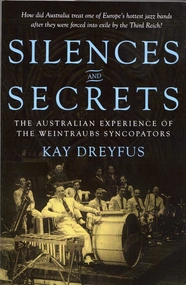
Book, Kay Dreyfus, Silences and Secrets: The Australian Experience of the Weintraubs Syncopators, 2013
... In this major recounting of the experience of the Weintraubs Syncopators, Kay Dreyfus pieces together the complex personal, social and political forces at work in this story of migration at a time of insecurity, fear and dramatic conflict." The Tatura group of camps were built after the beginning of World War 2, and held prisoners of war (enemy military) and civilian internees (enemy nationals, regardless of political affiliation, either living in Australia or in Allied territories overseas). ...In this major recounting of the experience of the Weintraubs Syncopators, Kay Dreyfus pieces together the complex personal, social and political forces at work in this story of migration at a time of insecurity, fear and dramatic conflict." The Tatura group of camps were built after the beginning of World War 2, and held prisoners of war (enemy military) and civilian internees (enemy nationals, regardless of political affiliation, either living in Australia or in Allied territories overseas). ...(From back cover): "The Weintraubs Syncopators, international musical celebrities of the 1930s, embarked on a four-year journey across Europe, Russia and the Far East in exile from the antisemitic ideologies of the German Third Reich. This band of mainly Jewish musicians arrived in Sydney, Australia, in 1937. The decision of some of them to stay brought them into conflict with the aggressively protectionist Musicians’ Union of Australia. They gained employment at a high-end Sydney nightclub but when war came, were forced to come to terms with a change in their status – from celebrities to enemy aliens. Denounced for alleged espionage activities in Russia, three were interned and the band broke up. In this major recounting of the experience of the Weintraubs Syncopators, Kay Dreyfus pieces together the complex personal, social and political forces at work in this story of migration at a time of insecurity, fear and dramatic conflict." The Tatura group of camps were built after the beginning of World War 2, and held prisoners of war (enemy military) and civilian internees (enemy nationals, regardless of political affiliation, either living in Australia or in Allied territories overseas). The Weintraubs Syncopators' members were just some of the civilians caught up in the conflict. Paperback book. Glossy black front cover, black & white photo of group of musicians. Blue & white text. Back cover glossy white, black & white photo group of men standing over bass drum labelled "Weintraubs Syncopators". 305 pages. Dewey no. 781.65092weintraub, camp 1, tatura, internment camps, civilian internees, jazz, jewish community, world war ii, musicians, stefan weintraub, horst graff -
Koorie Heritage Trust
Document - Report, Aboriginal Affairs Victoria et al, Royal Commission into Aboriginal Deaths in Custody : Victorian government 1994 implementation report, 1995
... Prisoners Aboriginal Australian -- Government policy -- Victoria.| Aboriginal Australians -- Government policy -- Victoria. | Aboriginal Australians -- Services for -- Victoria. | Law enforcement - Criminal law and procedure - Juvenile justice. | Politics and Government - Political action - Criminal justice. | Law enforcement - Prisons - Prisoners. ...The Royal Commission into Aboriginal Deaths in Custody was establishned in October 1987 in response to growing public concern that the deaths in custody of Aboriginal people were too common and that explanations failed to assure people that Aborigines were not subject to pressures beyond those normally experienced by persons held in custody. The task gi ven to the commission was to inquire into the Aboriginal custodial deaths occurring within the time frame of the Commission's investigation and to inquire into 'any subsequent action taken in respect of each of those deaths including the conduct of coronial, police and other inquiries'.The Royal Commission into Aboriginal Deaths in Custody was establishned in October 1987 in response to growing public concern that the deaths in custody of Aboriginal people were too common and that explanations failed to assure people that Aborigines were not subject to pressures beyond those normally experienced by persons held in custody. The task gi ven to the commission was to inquire into the Aboriginal custodial deaths occurring within the time frame of the Commission's investigation and to inquire into 'any subsequent action taken in respect of each of those deaths including the conduct of coronial, police and other inquiries'.aboriginal australians -- victoria -- criminal justice system. | prisoners, aboriginal australian -- government policy -- victoria.| aboriginal australians -- government policy -- victoria. | aboriginal australians -- services for -- victoria. | law enforcement - criminal law and procedure - juvenile justice. | politics and government - political action - criminal justice. | law enforcement - prisons - prisoners. -
 The Celtic Club
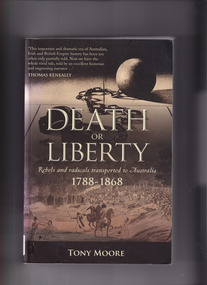
Book, Tony Moore, Death or liberty: Rebels and radicals transported to Australia 1788-1868, 2010
... Penal colonies - Australia - History Australian history - 19th century This is the first narrative history that brings together the stories of the political prisoners sent as convicts to Australia from all parts of the British Empire. ...This is the first narrative history that brings together the stories of the political prisoners sent as convicts to Australia from all parts of the British Empire.Index, bib, plates, ill., p.398. non-fictionThis is the first narrative history that brings together the stories of the political prisoners sent as convicts to Australia from all parts of the British Empire. penal colonies - australia - history, australian history - 19th century -
 Public Record Office Victoria
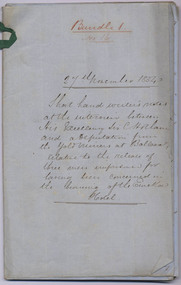
Report, 27 November 1854
... VA 466 Governor (including Lieutenant Governor 1851-1855 and Governor's Office) political meeting Eureka Stockade:Record of meeting between miners delegates and Hotham re: demanding release of prisoners charged with riot Report ...VA 466 Governor (including Lieutenant Governor 1851-1855 and Governor's Office)Eureka Stockade:Record of meeting between miners delegates and Hotham re: demanding release of prisoners charged with riotpolitical meeting -
Unions Ballarat
Commandant of Auschwitz: The autobiography of Rudolf Hoess (Don Woodward Collection), Hoess, Rudolf, 1995 (date of translation)
... Autobiographical interest . btlc ballarat trades hall ballarat trades and labour council hoess, rudolf politics and government - nazi germany hitler, adolf world war - prisoners and prisons auschwitz autobiography Military - World War II Book; 252 pages. ...Autobiography of Rudolf Hoess. Hoess was an SS functionary during the Nazi regime. He was responsible for devising killing methods at the concentration camps. Royalties from this book were distributed to survivors of Auschwitz. World War II - Auschwitz, Hitler, Rudolf Hoess. Autobiographical interest .Book; 252 pages. Cover: black and white photograph of Hoess on the first day of his trial (c) Hulton Getty; yellow and white lettering; authors' names and title.btlc, ballarat trades hall, ballarat trades and labour council, hoess, rudolf, politics and government - nazi germany, hitler, adolf, world war - prisoners and prisons, auschwitz, autobiography, military - world war ii -
Unions Ballarat
Straight left, Uren, Tom, 1994
... He also lived through the great depression and was a prisoner of war in WWII. The book, Straight Left, is Uren's memoir. Political relevance, especially to the ALP. ...Tom Uren was an ALP Member of Parliament from 1958 to 1990. For some of this time he served as Deputy Leader of the Opposition and was a cabinet minister. He was supportive of the heritage and conservation movement, particularly in Sydney. He also lived through the great depression and was a prisoner of war in WWII. The book, Straight Left, is Uren's memoir.Political relevance, especially to the ALP. Autobiographical interest - Tom Uren. Paper; book. Five black and white photographs on the back cover.Author, title and barcode on dust jacket. btlc, ballarat trades hall, ballarat trades and labour council, uren, tom, politics, deputy leader of the opposition, government, autobiography, alp, australian labor party -
 Bass Coast Shire Council - Robert Smith Collection
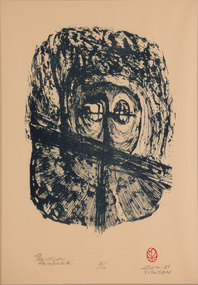
Artwork, other - Political Prisoner 1986, John Murray Wilson
... Australia 1930 - Signed, numbered and titled Lithograph 2/10 John Murray Wilson Artwork, other Political Prisoner 1986 ...Australia 1930 -Lithograph 2/10Signed, numbered and titled -
 Falls Creek Historical Society
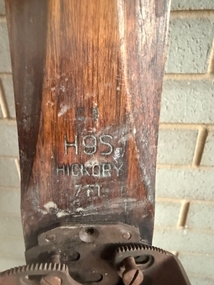
Equipment - Tom Mitchell's Skis, 1930s
... politics. Tom replied speaking about his support for the establishment and development of the Ski resort at Falls Creek. Tom’s passion for Falls Creek grew, not only from his own 1930s ski career, but also from his work as a prisoner of war in the Changi Ski Club. ...politics. Tom replied speaking about his support for the establishment and development of the Ski resort at Falls Creek. Tom’s passion for Falls Creek grew, not only from his own 1930s ski career, but also from his work as a prisoner of war in the Changi Ski Club. ...Tom Mitchell’s Skis After his retirement in 1976 as the local Member for Benambra, people asked Tom Mitchell about his greatest achievements in politics. Tom replied speaking about his support for the establishment and development of the Ski resort at Falls Creek. Tom’s passion for Falls Creek grew, not only from his own 1930s ski career, but also from his work as a prisoner of war in the Changi Ski Club. His 5 February 1943 diary entry reads: ‘In the evening had a very successful ski meeting of 19 and decided to go ahead with a scheme to approach the Government re-selling Diggers blocks of land in the snow country.’ After the 2020 Bushfires, my brother asked if I would find appropriate homes for some of my father’s old skis that had survived the fires. As Tom’s historic ski collection is in Corryong’s Man from Snowy River Museum, it seems appropriate that a remaining pair should go to The Falls Creek Ski Museum. I chose wooden edged skis as they reminded me of my first skis. As a five-year-old in 1958 at Dead Horse Gap, I soon discovered that wooden edges were no good in icy conditions. By the end of my first day on skis, I had fallen so many times that my homemade ski clothing was wet and cold. I was unhappy when Dad said that wooden edges would teach me to use my ‘edges’. At the end of our first day, Mum and Dad loaded us all into the back of the Land Rover together with our ski gear and drove us home. They had had a marvellous day, but I didn’t think much of the adventure. From the outset I knew my parents had steel-edged skis! Dad told me I’d have to ‘earn edges’. Trouble brewed when I said I hated skiing. I discovered I had to learn to like it! Eventually I graduated to steel-edged skis. By then Thredbo had built its first chairlift and it also had a rope tow. Meanwhile Tom had taught us to learn to ski the hard way and with steel edges, ski lifts and better ski clothing, I began to enjoy the sport. If there was any chance of finding the provenance of the skis, it probably burnt in the 2020 conflagration. All I can offer you is my story of my father teaching me to ski the hard way. The skis are a kind of memorial to the Tom Mitchell ski school and its enduring memories. Honor Auchinleck (Daughter of Tom and Elyne Mitchell)These skis are significant because they belonged to Tom Mitchell, a pioneer of skiing and ski resorts in Australia.A pair of vintage hickory wood skis, featuring a 7-foot length and rustic metal bindings. Hickory wood was preferred for its strength and flexibility. They feature early metal cable or "bear trap" style bindings, crucial for securing leather boots before the advent of modern plastic bindings. The skis feature a high, square-shaped tip referred tp as a sukkerbit (sugar cube).Beside Bindings- H9S HICKORY 7Fttom mitchell, ski equipment, australian skiing pioneers
