
Showing 49 items matching "post office operations"
-
 Bendigo Historical Society Inc.
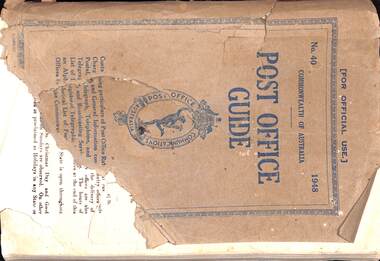
Book - Post office Guide No. 40. 1948, 1948
... ...Post Office operations...Social history Post Office operations Government printers, Melbourne Guide created for the Postmaster-General's Department - "For Official Use". ...Guide created for the Postmaster-General's Department - "For Official Use". Post Office Guide is in poor condition, cover and several initial pages have been torn and are incomplete. Soft cover separating from the body of the guide.Government printers, Melbournesocial history, post office operations -
 Tarnagulla History Archive
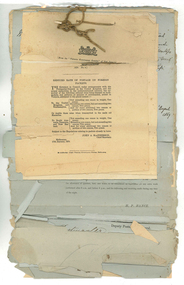
Stack of circulars & notices, Sandy Creek Post Office, 1860-1880
... A stack of circulars, letters and notices pertaining to post office operations which was used at Sandy Creek Post Office, most dating to the 1860s and 1870s. ...Donald Clark Collection. tarnagulla sandy creek post office postal regulations correspondence A stack of circulars, letters and notices pertaining to post office operations which was used at Sandy Creek Post Office, most dating to the 1860s and 1870s. ...Donald Clark Collection. A stack of circulars, letters and notices pertaining to post office operations which was used at Sandy Creek Post Office, most dating to the 1860s and 1870s. Contents relate to rates and fees, rules for correspondence and other regulations. Bound together at top by a piece of twine.tarnagulla, sandy creek, post office, postal regulations, correspondence -
 City of Moorabbin Historical Society (Operating the Box Cottage Museum)
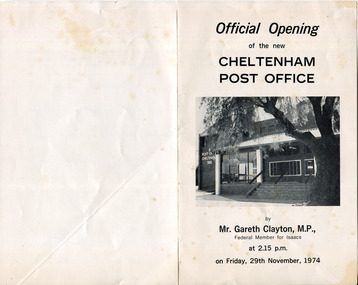
Document - Program Official Opening Cheltenham Post Office, Government Printer, 1974
... Post Office that opened 1/8/1857 in a boot and shoe store. Mail was transported to and from St Kilda to Cheltenham by coach 6 days a week and an additional service twice weekly to Tootgarook via Frankston also by coach. 1868 Post office Savings Bank began operation and the Telegraph office was established at the Railway Station 1885. ...Post Office that opened 1/8/1857 in a boot and shoe store. Mail was transported to and from St Kilda to Cheltenham by coach 6 days a week and an additional service twice weekly to Tootgarook via Frankston also by coach. 1868 Post office Savings Bank began operation and the Telegraph office was established at the Railway Station 1885. ...John Hitchen was the manager of the first Cheltenham Post Office that opened 1/8/1857 in a boot and shoe store. Mail was transported to and from St Kilda to Cheltenham by coach 6 days a week and an additional service twice weekly to Tootgarook via Frankston also by coach. 1868 Post office Savings Bank began operation and the Telegraph office was established at the Railway Station 1885. A new building was built 1891 in Point Nepean Road for the official Cheltenham Post Office and a new manual telephone exchange began 1899 with 24 subscribers. By 1909 100 subscribers, 1951 there were 1700 and in 1974 12,000 subscribers . Hence this new building was designed by Oscar A. T. Gimsey & Assoc. and built by T W Morris & Sons Mordialloc. Mr G Clayton Federal MP Isaacs, opened the Post Office with Moorabbin City Council Mayor C.R McHutchison, Mr WJB Pollock, Director Posts and Telegraphs, and hands the Key of the post Office to Mr L De Longville Postmaster.The Post Office was an integral part to the development and prosperity of the Cheltenham area as the area grew from pioneer settlers in the 1850's to flourishing market gardens c1900 and industrial diversity of 1974.Program for the 'Official Opening of the Cheltenham Post Office' November 29th 1974 with a black and white photo of the building.city of moorabbin, county of bourke, moorabbin roads board, parish of moorabbin, shire of moorabbin, henry dendy's special survey 1841, were j.b., bent thomas, o'shannassy john, king richard, charman s, highett william, ormond francis, maynard dennis, post office, telegraph, st kilda station, tootgarook, frankston, clayton g mhr, mchutchison r.p mayor, pollock w j b mp, market gardens, early settlers, horse coach, de longville l postmaster -
 Flagstaff Hill Maritime Museum and Village
Document - Building Specifications, Bank of Australasia, Specifications Bank of Australasia Warrnambool, before March 18, 1860
... Post Office. The document is significant for its association with the Bank of Australasia in Warrnambool, the first bank in Warrnambool, established in 1854. The bank continued to operate until its merger in 1951 when it became the ANZ Bank, which is still in operation today. ...These specifications were for the Bank of Australasia building on the corner of Timor and Kepler Streets in Warrnambool. The two-storey stone Regency building was built by Roberts & Co. in 1859 and it still stands today, a hundred and sixty years later. Above the doorway, the words "BANK OF AUSTRALASIA" were etched into the stone. In 1856 Roberts & Co. built the Warrnambool Post Office on Timor Street, and in 1858 purchased land on Timor Street. The Bank of Australasia was incorporated by the Royal Charter of England in March 1834. The bank began in Australia on 14th December 1835, opening in Sydney. The Acting Superintendent of the bank at that time was David Charters McArthur. He was Superintendent from 1867-to 1876. The Melbourne branch opened on 28th August 1838 in a two-roomed brick cottage on the north side of Little Collins Street, where two huge mastiff dogs were used at night to guard the bank. The government also provided an armed military sentinel. Due to the bank's rapid growth, a new building for the Melbourne branch was opened in 1840 at 75 Collins Street West. By 1879 the bank had been upgraded to a magnificent two-storey building on the corners of Collins and Queens Streets, with the entry on Collins Street. In 1951 the Bank of Australasia amalgamated with the Union Bank to form Australia and New Zealand Bank, now known as the ANZ. Then in 1970, the ANZ merged with both the ES&A and the London Bank of Australia to form the ANZ Banking Group Limited. The ANZ Banking Group Ltd kindly donated a variety of historic items from the Bank of Australasia. BANK of AUSTRALASIA, WARRNAMBOOL – In 1854 Warrnambool had two banks, the Union Bank and the Bank of Australasia. Later, completely different bank businesses opened; in 1867 the National Bank of Australasia, then in 1875 the Colonial Bank of Australasia. The original Warrnambool branch of the Bank of Australasia was established in July 1854, and operated from a leased cottage on Merri Street, close to Liebig Street. The bank later bought a stone building previously erected by drapers Cramond & Dickson on the corner of Timor and Gibson Streets. Samuel Hannaford was a teller and then Manager at the Warrnambool branch from 1855 to 1856 and the Warrnambool Council chose that bank for its dealings during 1856-57. In 1859 Roberts & Co. was awarded the contract to build the new Bank of Australasia branch for the sum of £3,000. The land was on a sand hill on the northeast corner of Timor and Kepler Streets and had been bought in 1855 from investor James Cust. The new building opened on May 21, 1860. The bank continued to operate there until 1951 when it merged with the Union Bank to form the ANZ Bank, which continued operating from its Liebig Street building. Warrnambool City Council purchased the former Bank of Australasia building in 1971 and renovated it, then on 3rd December 1973 it was officially opened as the Art Gallery by Cr. Harold Stephenson and Gallery Director John Welsh. The Gallery transferred to the purpose-built building in Liebig Street in 1986 and the old bank building is now the Gallery club. Staff at the Bank of Australasia in Warrnambool included the following men but others were also involved: Samuel Hannaford, Teller then Manager from 1855-1856; W H Palmer, Manager from January 1857 until November 1869 when the Teller Basil Spence was promoted to Manager; H B Chomley, Manager from April 1873 and still there in 1886; A Butt, Manager in 1895-1904; J R McCleary Accountant and Acting Manager for 12 months, until 1900; A Kirk, Manager 1904; J Moore, staff until his transfer to Bendigo in December 1908; J S Bath was Manager until 1915; C C Cox, Manager until April 1923; Richard C Stanley, Manager 1923 to April 1928. The document with the building specifications for the Bank of Australasia, Warrnambool has historical significance as it was the basis for the building housing the Bank from early 1860. The document is also a historical record of the specifications and the builders of the mid-1800s in Warrnambool. The document is also significant for its association with Roberts & Co. which also built the Warrnambool Post Office. The document is significant for its association with the Bank of Australasia in Warrnambool, the first bank in Warrnambool, established in 1854. The bank continued to operate until its merger in 1951 when it became the ANZ Bank, which is still in operation today. The Bank was an integral part of the establishment and growth of commerce in Colonial Warrnambool and throughout Australia.Building Specifications; five large cream-coloured pages, folded in half to make a book. Handwritten text in black ink. Rectangular paper sheets were folded in half parallel to the short sides then stapled together near the fold A remnant of green tape suggests it was used to seal the binding. The specifications relate to the Bank of Australasia's Timor Street branch in Warrnambool, 1860.Handwritten in pencil on front cover "Completion date 18th March 1860" "Cost £2,860 sterling" Script handwriting, black ink on cover "Specifications / Bank of Australasia / Warrnambool"flagstaff hill, warrnambool, flagstaff hill maritime museum, maritime museum, commerce, banking, bank of australasia, australia & new zealand bank, anz bank, david charters mcarthur, 1860, regency building, specifications, bank building, roberts & co. -
 Flagstaff Hill Maritime Museum and Village
Document - Telegraph, Klingender Dickson and Kiddle, solicitors, 3-6-1896
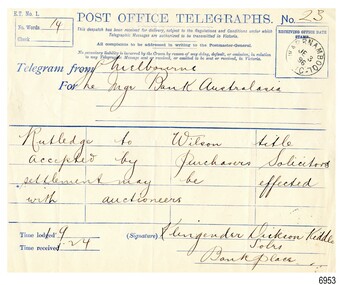
... operation today. The Bank was an integral part of the establishment and growth of commerce in Colonial Warrnambool and throughout Australia. Flagstaff Hill Warrnambool Flagstaff Hill Maritime Museum Maritime Museum commerce banking Bank of Australasia Australia & New Zealand Bank ANZ Bank David Charters McArthur telegraph 1896 Rutledge Wilson Klengender Dickson Kiddle Warrnambool Post Office Klengender Dickson and Kiddle Bank Place STAMP: text inside circle "WARRNAMBOOL VIC", and in centre of the circle "JE 3 96" Telegraph No. "23", FROM :"Melbourne", FOR: "The Mgr, Bank of Australasia" MESSAGE (14 words): "Rutledge to Wilson title accepted by Purchaser's Solicitors settlement may be effected with auctioneers" TIME: "9:24" SIGNED: " Klingender Dickson Kiddle, Solrs, Bank Place" Telegraph RECEIVED: Warrnambool Post Office, Wednesday 3rd June 1896. ...The telegraph system of sending and receiving messages was developed in the early 1800s and improved as time went on. It sends electronic signals that represent letters and words along a wire. Those signals are then converted back to words at the other end of the wire. Morse code is a similar system. A fee is charged to send a telegraph, per letter or per word. The telegraph greatly improved communication, particularly in a large country like Australia. It was a fast way to send news and send out calls for help for people during a shipwreck. In Warrnambool, it was even used to set the correct time every day; a signal was sent from the time ball in Melbourne, and along the railway line to the Warrnambool Post Office. This 1896 telegraph tells a big story in very few words, only fourteen! The layout of the paper form includes a table with four columns and five rows, set out for writing just one word into each of the twenty spaces. The happy message is the approval to go ahead with the exchange/sale of the title from landowner Rutledge to Wilson. The Melbourne Legal firm Klingender Dickson and Kiddle sent this message on behalf of its client to the Bank of Australasia in Warrnambool. The Bank of Australasia was incorporated by the Royal Charter of England in March 1834. The bank began in Australia on 14th December 1835, opening in Sydney. The Acting Superintendent of the bank at that time was David Charters McArthur. He was Superintendent from 1867-to 1876. The Melbourne branch opened on 28th August 1838 in a two-roomed brick cottage on the north side of Little Collins Street, where two huge mastiff dogs were used at night to guard the bank. The government also provided an armed military sentinel. Due to the bank's rapid growth, a new building for the Melbourne branch was opened in 1840 at 75 Collins Street West. By 1879 the bank had been upgraded to a magnificent two-storey building on the corners of Collins and Queens Streets, with the entry on Collins Street. In 1951 the Bank of Australasia amalgamated with the Union Bank to form Australia and New Zealand Bank, now known as the ANZ. Then in 1970, the ANZ merged with both the ES&A and the London Bank of Australia to form the ANZ Banking Group Limited. The ANZ Banking Group Ltd kindly donated a variety of historic items from the Bank of Australasia. BANK of AUSTRALASIA, WARRNAMBOOL – In 1854 Warrnambool had two banks, the Union Bank and the Bank of Australasia. Later, completely different bank businesses opened; in 1867 the National Bank of Australasia, then in 1875 the Colonial Bank of Australasia. The original Warrnambool branch of the Bank of Australasia was established in July 1854, and operated from a leased cottage on Merri Street, close to Liebig Street. The bank later bought a stone building previously erected by drapers Cramond & Dickson on the corner of Timor and Gibson Streets. Samuel Hannaford was a teller and then Manager at the Warrnambool branch from 1855 to 1856 and the Warrnambool Council chose that bank for its dealings during 1856-57. In 1859 Roberts & Co. was awarded the contract to build the new Bank of Australasia branch for the sum of £3,000. The land was on a sand hill on the northeast corner of Timor and Kepler Streets and had been bought in 1855 from investor James Cust. The new building opened on May 21, 1860. The bank continued to operate there until 1951 when it merged with the Union Bank to form the ANZ Bank, which continued operating from its Liebig Street building. Warrnambool City Council purchased the former Bank of Australasia building in 1971 and renovated it, then on 3rd December 1973 it was officially opened as the Art Gallery by Cr. Harold Stephenson and Gallery Director John Welsh. The Gallery transferred to the purpose-built building in Liebig Street in 1986 and the old bank building is now the Gallery club. Staff at the Bank of Australasia in Warrnambool included the following men but others were also involved: Samuel Hannaford, Teller then Manager from 1855-1856; W H Palmer, Manager from January 1857 until November 1869 when the Teller Basil Spence was promoted to Manager; H B Chomley, Manager from April 1873 and still there in 1886; A Butt, Manager in 1895-1904; J R McCleary Accountant and Acting Manager for 12 months, until 1900; A Kirk, Manager 1904; J Moore, staff until his transfer to Bendigo in December 1908; J S Bath was Manager until 1915; C C Cox, Manager until April 1923; Richard C Stanley, Manager 1923 to April 1928. This telegraph has historical significance as it was sent to the Bank of Australasia in Warrnambool. The parties involved in the message, Rutledge and Wilson, were involved in a land deal in 1896 when the district was importing and exporting goods into and out of Warrnambool Harbour via sailing ships. It is also a historical record of the nature of financial agreements between similar institutions in Warrnambool and the district. The telegraph is significant for its association with the Bank of Australasia in Warrnambool, the first bank in Warrnambool, established in 1854. The bank continued to operate until its merger in 1951 when it became the ANZ Bank, which is still in operation today. The Bank was an integral part of the establishment and growth of commerce in Colonial Warrnambool and throughout Australia.Telegraph RECEIVED: Warrnambool Post Office, Wednesday 3rd June 1896. FROM: Klingender, Dickson, and Kiddle, solicitors, Bank Place, Melbourne FOR :the Manager, Bank of Australasia, Warrnambool, REGARDING: Rutledge to Wilson titleSTAMP: text inside circle "WARRNAMBOOL VIC", and in centre of the circle "JE 3 96" Telegraph No. "23", FROM :"Melbourne", FOR: "The Mgr, Bank of Australasia" MESSAGE (14 words): "Rutledge to Wilson title accepted by Purchaser's Solicitors settlement may be effected with auctioneers" TIME: "9:24" SIGNED: " Klingender Dickson Kiddle, Solrs, Bank Place"flagstaff hill, warrnambool, flagstaff hill maritime museum, maritime museum, commerce, banking, bank of australasia, australia & new zealand bank, anz bank, david charters mcarthur, telegraph, 1896, rutledge, wilson, klengender, dickson, kiddle, warrnambool post office, klengender dickson and kiddle, bank place -
 Glenelg Shire Council Cultural Collection
Administrative record - Hire Purchase Agreement, c. 1939
... Post-office place (MELB). In 1926 Duncan and Co. wholesale and retail distributors of automotive parts was absorbed and was occupied in a larger building in Franklin Street (MELB) to maintain the warehouse operations. ...Post-office place (MELB). In 1926 Duncan and Co. wholesale and retail distributors of automotive parts was absorbed and was occupied in a larger building in Franklin Street (MELB) to maintain the warehouse operations. ...From Aussie Velos: Alfred George Healing was born in 1868 in the suburb of Richmond, Melbourne (VIC). Starting in the cycle industry as a cycle builder and repairer in 1898, he obtained the Victorian agency for the English “Haddon” bicycle located on Bridge Road, Richmond. With many years behind him in the bicycle industry in 1907 he opened a small shop from borrowing £50 from his sister and began operating as A.G Healing. Importing bicycle parts Healing was quickly gaining a reputation for his quality and service among the cycling community, with steady business growth, Healing stumbled across an error that had been made in a recent order which resulted in twice the number of bicycle parts received. With no finances to pay for them, Healing decided to cycle around Victoria selling these parts to make the money he needed to fix up the order. As Healing travelled across Victoria he found that there was such a large market place for cycling gear that the order was soon fixed. It became apparent that Healing needed to open cycle shops in various locations. By 1912 Healing decided to open up his own proprietary company in Niagara Lane, Melbourne (VIC), the company was surging with enthusiastic cyclists and commuters and other branches began to spread all over state of Victoria. In 1921 Healing’s son Keith joined the firm and became an apprentice bicycle maker and Healing cycles grew more popular and at peak production 25,000 bicycles were made per year. Shops under the name of Healing were now operating across Australia. The business was now transferred to another location of Melbourne House, Post-office place (MELB). In 1926 Duncan and Co. wholesale and retail distributors of automotive parts was absorbed and was occupied in a larger building in Franklin Street (MELB) to maintain the warehouse operations. A.G Healing was now a public company. By 1933 the firm also began to specialize in importing radios and later began to make their own. One of the many Champions who rode on a Healing cycle was W.K “Bill” Moritz. His achievements included winning all major events in Australia and New Zealand during the years of 1936-37 path racing season. In 1936 Healing released a lightweight cycle that would rule in their supreme line-up, built from the lightest possible materials, the frame and forks were chrome plated, stripped for racing weighed exactly 16 1/2 lbs. It was fitted with special “Osgear” three-speed gear and built specially built for D. Byrant. By 1937, Healing cycles were being ridden by many, at the exhibition board track Jack Molloy won the Victorian ten-mile amateur championship, Bill Moritz captured the five mile professional, and Tassle Johnson the five-mile amateur scratch race. These wins brought up the total championships won in one week by Healing cycles to six.A hire agreement (hire purchase) between H.L. Vivian and R&G Finances Pty Ltd, for a Healing 'A' bicycle, with Eadie Coaster Hub brake. -
Australian Commando Association - Victoria
Book, United Kingdom, UK War Office -Amphibious Warfare Handbook No.10a-The Organisation Employment and Training of Commandos 1951
... post-war commando companies. Commandos Special operations Special forces Australian military Marked as "Confidential' and number 6078 AN A4 80 page UK War Office -Amphibious Warfare Handbook No.10a-The Organisation Employment and Training of Commandos 1951 Book United Kingdom- ...A training publication used by training staff and cadre during the formation of the Australian post-war commando companies.AN A4 80 page Marked as "Confidential' and number 6078commandos, special operations, special forces, australian military -
 Orbost & District Historical Society
book, Australian Postmaster General's Dept, Course of Technical Instruction and Telegraphy, 1940's -1950's
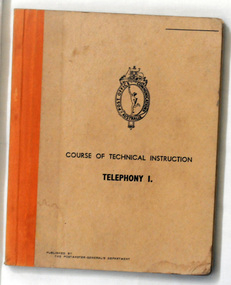
... operation of radio, telephone and telegraph systems. Its laboratories also designed, developed and manufactured vital defence equipment. This item reflects that contribution and history. manual-telephony postmaster-general's-training-department instruction-book communications A 31 pp buff colored book with orange cloth binding. Black print on the front cover - a oval shaped logo with Post Office ...The Postmaster-General's Department (P.M.G.) of Australia was created in 1901 with Federation taking control over all six Colonies (States) Postal and Telegraphic services within Australia to form the national Postal and Telegraphic services within Australia. The Department was administered by the Postmaster-General. This manual was produced as a syllabus of training for Army Personnel units in P.M.G's Department schools.In war times the postal organisation was a vital link between the services, the community and overseas centres. The Postmaster-General's Department co-operated with service departments in the installation and operation of radio, telephone and telegraph systems. Its laboratories also designed, developed and manufactured vital defence equipment. This item reflects that contribution and history.A 31 pp buff colored book with orange cloth binding. Black print on the front cover - a oval shaped logo with Post Office Communication Australia around a small sketch depicting Mercury, the messenger of the gods below an Australian coat-of-arms. Below that is the title,"COURSE OF TECHNICAL INSTRUCTION TELEPHONY 1".manual-telephony postmaster-general's-training-department instruction-book communications -
 Eltham District Historical Society Inc
Photograph, Peter Pidgeon, 820 Main Road, Eltham, 2 Aug. 2022
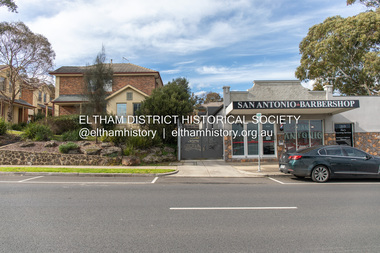
... post office. A continuous telephone service operated by Mr Burgoyne and his family commenced operation 18 November 1939. ...post office. A continuous telephone service operated by Mr Burgoyne and his family commenced operation 18 November 1939. ...In 1855 the first post office opened in Eltham under the management of Thomas Hunniford. It was a weatherboard building located on the eastern side of Main Road just south of Bridge Street. During the 1880s under the managment of Hunniford's daughter, Anne, the building was modernised with a new awning and upper facade. In late 1925 a new brick building was erected immediately next door (820 Main Road). Following the death of Anne Hunniford in December 1928, J.N Burgoyne was appointed Postmaster. The extension to the right of the store was erected in 1939 for a new telephone exchange adjacent to the store and post office. A continuous telephone service operated by Mr Burgoyne and his family commenced operation 18 November 1939. Approximately 70 extensions were routed through the new exchange, 40 of which were transferred from the Greensborough Exchange. Entry to the exchange was via a separate door on Main Road or via the shop. The public telephone was initially mounted on the wall but later moved to the street. The present store is a barber shop and it remains, though heavily modified, one of only three remaining shop fronts from the early 1900s in Eltham. Comparison photo: SEPP_0700, 00140, SEPP_0701, SEPP_0702 Part of a presentation by Peter Pidgeon to the Society, 13 August 2022 showcasing a series of photographs taken by John Henry Clark over the period 1895 to 1930. John Henry Clark was the youngest of three boys born to William Henry Clark (1823-1877) and Maria White (1843-1914). He and his brothers, William Charles Clark (1872-1945), Clement Kent Clark (1874-1912) operated a photography business (Clark Bros.) from 25 Thomas Street, Windsor near Prahran during the period c.1894 to 1914. Following death of Clement in September 1912 and their mother in 1914, the Clark Bros business appears to have dissolved, the premises demolished, and a new house was under construction in 1915. John set up business independently in 1914 operating out of 29 Moor Street, Fitzroy where he is registered in the 1914 and 1915 Electoral Rolls. By 1916 John had relocated to Eltham where he continued his practice as a photographer and took many of the early images around the district of Little Eltham. Around 1930 John changed professions and opened a small cobbler's shop in 1931 near the pond opposite Dalton Street adjacent to the Jarrold family cottage. He never married and continued his profession as a bootmaker from this little shop, maintaining a close relationship with Mrs Jarrold for the rest of their lives. His bootmaker shop remains today beside the Whitecloud cottage and is one of only three remaining shops in the area from the early 20th century.Comparative photo taken 2022 with one taken from same location over 100 years earlier by noted local photographer J.H. ClarkBorn Digitaleltham, j.h. clark photo (2022), main road, 820 main road, burgoyne store -
 Eltham District Historical Society Inc
Folder, Eltham Bakery, 1999
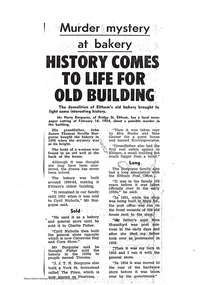
... operation of the bakehouse in 1954. Also includes article: "D.Ck girl for London" in reference to Thelma Kirkbride. Copy of newspaper article: "Murder mystery at bakery, history comes to life for old building" dated 4 November 1979 Copy of newspaper article: "Big crowd sees Eltham P.O.Opening "The News" dated January 31, 1958 816 main road, boake, burgoyne, eltham bakehouse, eltham bakery, eltham post office, garner, h. burgoyne, harry burgoyne, harry gilham collection, hawthorns, joh ebeli, john james thomas neville burgoyne, kooringoorama, murder, nicholls, preservation, the pines, thelma kirkbride HG Booklet 37 7 pages Eltham Bakery Folder Tarcoola Press ...Account written by EDHS member Joh Ebeli about his efforts to save the Eltham Bakery building. Newspaper article from "The Valley Voice" 18 July 1979 about the removal of the Eltham Bakery building, its history and ideas to preserve historical builldings in Eltham. Copy of undated article headed "Auction part of Eltham history" regarding sale of property at 816 Main Road, Eltham (In March 2020 the site of Goodstart Early Learning Eltham) on the corner of John Street owned by the Burgoyne Family. Copy of Newspaper article from "Diamond Valley Local" Tuesday February 16, 1954 " Was woman found in well put in it?" which includes brief description of a body found in the well at the back of the house, detailed descriotion of the operation of the bakehouse in 1954. Also includes article: "D.Ck girl for London" in reference to Thelma Kirkbride. Copy of newspaper article: "Murder mystery at bakery, history comes to life for old building" dated 4 November 1979 Copy of newspaper article: "Big crowd sees Eltham P.O.Opening "The News" dated January 31, 19587 pagesHG Booklet 37816 main road, boake, burgoyne, eltham bakehouse, eltham bakery, eltham post office, garner, h. burgoyne, harry burgoyne, harry gilham collection, hawthorns, joh ebeli, john james thomas neville burgoyne, kooringoorama, murder, nicholls, preservation, the pines, thelma kirkbride -
 Eltham District Historical Society Inc
Photograph, Ron Kirkbride, Wattle Glen Picnic Ground, c.1971, 1971c
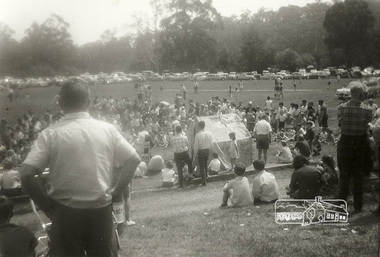
... post office and general store. The picnic ground operated from circa 1925 until late 1974, its heyday being in the early 1970s. It was then managed by Ron and Barbara Kirkbride and was a thriving operation. ...post office and general store. The picnic ground operated from circa 1925 until late 1974, its heyday being in the early 1970s. It was then managed by Ron and Barbara Kirkbride and was a thriving operation. ...The Wattle Glen Picnic Ground was located in a paddock just west of the Wattle Glen railway station (between the station and the creek). It has now completely disappeared except for a dilapidated overgrown building on a rise across the track from the railway platform. This was the picnic ground's main pavilion, which for a short time (circa 1972-1974) also served as the Wattle Glen post office and general store. The picnic ground operated from circa 1925 until late 1974, its heyday being in the early 1970s. It was then managed by Ron and Barbara Kirkbride and was a thriving operation. The pavilion housed a substantial kiosk as well as toilets and showers. There were swings and slides for children, and there was an oval for cricket and football matches. Large group bookings became so popular that often the general public were excluded. This photo is believed to have been taken in about 1971. Digital copies of four black and white photographswattle glen, picnic ground -
 Eltham District Historical Society Inc
Negative - Photograph, Burgoyne family outside J.N. Burgoyne's Store, Main Road, Eltham, Vic, 1940
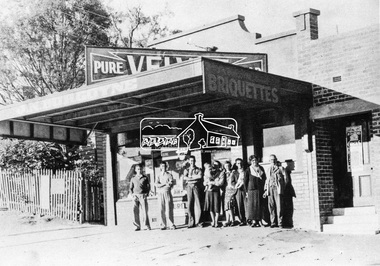
... Post Office to John Street during Nov-Dec 1926. Footpath construction in front of Burgoyne’s store commenced August 1942. The extension to the right of the store was erected in 1939 for a new telephone exchange adjacent to the store and post office. A continuous telephone service operated by Mr Burgoyne and his family commenced operation...Post Office to John Street during Nov-Dec 1926. Footpath construction in front of Burgoyne’s store commenced August 1942. The extension to the right of the store was erected in 1939 for a new telephone exchange adjacent to the store and post office. A continuous telephone service operated by Mr Burgoyne and his family commenced operation ...The store built in 1925 was located on Main Road just south of Bridge Street (present day No. 820 Main Road). An extension was added to the right in 1939. The store was built in late 1925 at the same time as Mr C. Nicholls’s new store was constructed. Both were considered modern shops, and an improvement on most, business establishments of the time. Mr. Nicholls’s store included alongside it a modern, weatherboard villa residence. Mr. Burgoyne’s store incorporated the post and telegraph office, which was operated by John Neville Burgoyne’s half-aunt, Miss Anne Hunniford until her death in 1928 at which time J.N. Burgoyne became postmaster. The unsealed footpath in front is reasonably extensive as not visible is a concrete kerb and channel which was laid from the Post Office to John Street during Nov-Dec 1926. Footpath construction in front of Burgoyne’s store commenced August 1942. The extension to the right of the store was erected in 1939 for a new telephone exchange adjacent to the store and post office. A continuous telephone service operated by Mr Burgoyne and his family commenced operation 18 November 1939. Approximately 70 extensions were routed through the new exchange, 40 of which were transferred from the Greensborough Exchange. Entry to the exchange was via a separate door on Main Road or via the shop. The public telephone was initially mounted on the wall but later moved to the street. Cross Ref: 0701 of the store c.1934This photo forms part of a collection of photographs gathered by the Shire of Eltham for their centenary project book,"Pioneers and Painters: 100 years of the Shire of Eltham" by Alan Marshall (1971). The collection of over 500 images is held in partnership between Eltham District Historical Society and Yarra Plenty Regional Library (Eltham Library) and is now formally known as the 'The Shire of Eltham Pioneers Photograph Collection.' It is significant in being the first community sourced collection representing the places and people of the Shire's first one hundred years.Digital image 4 x 5 inch B&W Negshire of eltham pioneers photograph collection, burgoyne's shop, eltham, main road, post office, shops -
 Eltham District Historical Society Inc
Negative - Photograph, J.N. Burgoyne’s store, Main Road, Eltham, Vic, c.1930
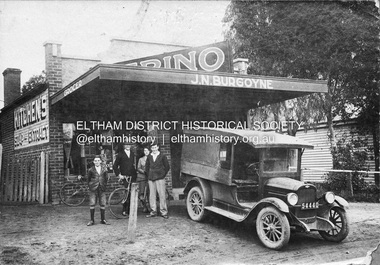
... post and telegraph office, which was operated by John Neville Burgoyne’s half-aunt, Miss Anne Hunniford. The unsealed footpath in front is reasonably extensive as not visible is a concrete kerb and channel which was laid from the Post Office to John Street during Nov-Dec 1926. Footpath construction in front of Burgoyne’s store commenced August 1942. An extension to the store was erected in 1939 for a new telephone exchange adjacent to the store and post office. A continuous telephone service operated by Mr Burgoyne and his family commenced operation...post and telegraph office, which was operated by John Neville Burgoyne’s half-aunt, Miss Anne Hunniford. The unsealed footpath in front is reasonably extensive as not visible is a concrete kerb and channel which was laid from the Post Office to John Street during Nov-Dec 1926. Footpath construction in front of Burgoyne’s store commenced August 1942. An extension to the store was erected in 1939 for a new telephone exchange adjacent to the store and post office. A continuous telephone service operated by Mr Burgoyne and his family commenced operation ...The photo is of John Neville and Ethel (Polly) Burgoyne’s store with eldest children and a 1927/28 model Chevrolet 1 ton truck. The store was located on Main Road just south of Bridge Street (present day No. 820 Main Road). L-R (unconfirmed): Francis (Frank) Neville Burgoyne (1916-2002), unidentified, Mary Frances Burgoyne (1914-1991) and John (Jack) William Burgoyne (1913-2005) which would date the picture as circa 1929/1930. Henry Charles Burgoyne (1920-1994) and Royston (Roy) Edward Burgoyne (1922-2004) not in picture. The unidentified male is believed to be an early boyfriend of Mary Frances at the time, not Reginald John Squire (1916-1981) whom she married in 1938 who was two years her junior. The new store was built in late 1925. At the same time Mr C. Nicholls’s new store was constructed. Both were considered modern shops, and an improvement on most, business establishments of the time. Mr. Nicholls’s store included alongside it a modern, weatherboard villa residence. Mr. Burgoyne’s store incorporated the post and telegraph office, which was operated by John Neville Burgoyne’s half-aunt, Miss Anne Hunniford. The unsealed footpath in front is reasonably extensive as not visible is a concrete kerb and channel which was laid from the Post Office to John Street during Nov-Dec 1926. Footpath construction in front of Burgoyne’s store commenced August 1942. An extension to the store was erected in 1939 for a new telephone exchange adjacent to the store and post office. A continuous telephone service operated by Mr Burgoyne and his family commenced operation 18 November 1939. Approximately 70 extensions were routed through the new exchange, 40 of which were transferred from the Greensborough Exchange. Reproduced on p92 of 'Pioneers & Painters' Cross Ref: 0702 shows extension on right of shopThis photo forms part of a collection of photographs gathered by the Shire of Eltham for their centenary project book,"Pioneers and Painters: 100 years of the Shire of Eltham" by Alan Marshall (1971). The collection of over 500 images is held in partnership between Eltham District Historical Society and Yarra Plenty Regional Library (Eltham Library) and is now formally known as the 'The Shire of Eltham Pioneers Photograph Collection.' It is significant in being the first community sourced collection representing the places and people of the Shire's first one hundred years.Digital image 4 x 5 inch B&W Negshire of eltham pioneers photograph collection, 1927 chevrolet series aa truck, burgoyne's shop, eltham, francis (frank) neville burgoyne (1916-2002), frank burgoyne, henry charles burgoyne (1920-1994), jack burgoyne, john (jack) william burgoyne (1913-2005), john neville burgoyne, main road, mary frances burgoyne squire (1914-1991), pioneers and painters, post office, shops -
 Bendigo Historical Society Inc.
Document - ALBERT RICHARDSON COLLECTION: THE PEARL MINE
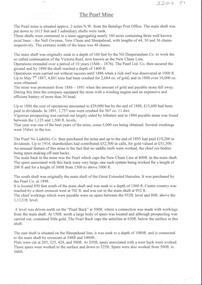
... operation of the Pearl Mine. The mine was located approximately 2 miles north west from the Bendigo Post Office. ...operation of the Pearl Mine. The mine was located approximately 2 miles north west from the Bendigo Post Office. ...Typed, 2 page document, detailing the location and history of the operation of the Pearl Mine. The mine was located approximately 2 miles north west from the Bendigo Post Office. The main shaft was put down to 1613 feet and 3 subsidiary shafts were sunk, Information is given about the south shaft, originally the main shaft of the Great Extended Hercules and the east shaft, which was situated on the Sheepshead line.bendigo, mining, pearl company mine -
 Bendigo Historical Society Inc.
Document - SOUTH NEW MOON GARDEN GULLY LINE OF REEF
... post Office. An historical overview of the mine is provided with information regarding its location, depth of shaft, original company, engine house, air compressor, battery and years of operation. ...post Office. An historical overview of the mine is provided with information regarding its location, depth of shaft, original company, engine house, air compressor, battery and years of operation. ...Two page typed carbon copy of document, headed 'South New Moon, Garden Gully line of Reef', located one mile north from Eaglehawk post Office. An historical overview of the mine is provided with information regarding its location, depth of shaft, original company, engine house, air compressor, battery and years of operation. The steel poppet legs were approximately 85 ft high and had a greater slope than usual on the front legs. ' Said to be the best poppet legs on the field'.Albert Richardsonbendigo, mining, south new moon mine -
 Warrnambool and District Historical Society Inc.
Morse key, C 1930
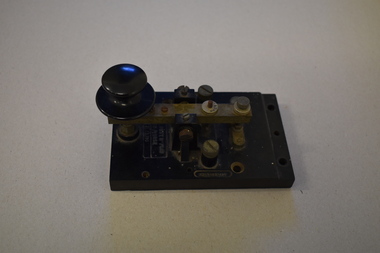
... operation since the 1860's. Morse code consists of five elements, dots, dashes, and gaps of one , three and seven units in length. It is still in use to this day and has been applied to other systems of communication such as amateur radio, mobile phones and communication systems for disabled people. This particular telegraph key possibly has post office...operation since the 1860's. Morse code consists of five elements, dots, dashes, and gaps of one , three and seven units in length. It is still in use to this day and has been applied to other systems of communication such as amateur radio, mobile phones and communication systems for disabled people. This particular telegraph key possibly has post office ...The Morse telegraph system had its beginnings in 1836 when Samuel Morse, Alfred Vail and Joseph Henry developed an early model of the system. There are a number of variations on the machine but the operating system is very similar in all and the language is a standardised international code which has been in operation since the 1860's. Morse code consists of five elements, dots, dashes, and gaps of one , three and seven units in length. It is still in use to this day and has been applied to other systems of communication such as amateur radio, mobile phones and communication systems for disabled people. This particular telegraph key possibly has post office or naval origins.Morse code was an important invention in world communication systems and this machine therefore has important social and research significance. It is useful as an interpretive item.This instrument sits on a black rectangular base of black bakelite. The mechanism ids held in place by three larger metal screws and two smaller ones on the upright section from the base.The movable part is metal with the attached handle a similar black material as the base.ADMY.PATT No 7681 KEY MORSE SERN PL 23780 Rocker Front contact. Lift @ turn on one of the screws on the bar.history of warrnambool, rocker telegraph, telegraph key, morse code -
 Ballarat Tramway Museum
Slide - Ballarat SECV trams - Lydiard St Nth - set of 3, Ron Hood, 12/1970
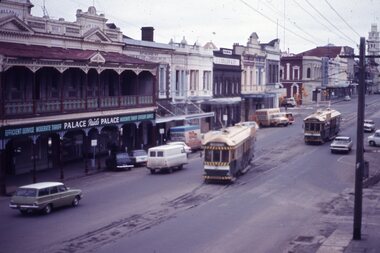
... In the background is the Ballarat Post Office. Yields information about tram operations in Lydiard St North during Dec. 1970 tramways trams tram 43 tram 39 Lydiard St Nth Double track Ballarat Post Office Titled "Lydiard St North" and "Ballarat" in ink. ...Set of three colour photographs by Ron Hood December 1970 taken in Lydiard St North: 1 - Two bogie trams at the end of the double track in Lydiard St North - In the background are Reid's coffee palace, Macleod & Co., Collier, and 3BA. Photo taken from the balcony of the Provincial Hotel. 2 - as above - tram 43, northbound to Lydiard St North. 3 - tram 39 turning from Lydiard St Nth to Sturt St with the conductor having alighted. Tram has an electric cooking roof advert. In the background is the Ballarat Post Office.Yields information about tram operations in Lydiard St North during Dec. 1970Set of 3 Colour slides in hanimount cardboard mounts.Titled "Lydiard St North" and "Ballarat" in ink.tramways, trams, tram 43, tram 39, lydiard st nth, double track, ballarat post office -
 Ballarat Tramway Museum
Negative - SECV Ballarat operations - set of 8, Robert Green, 30/12/1968
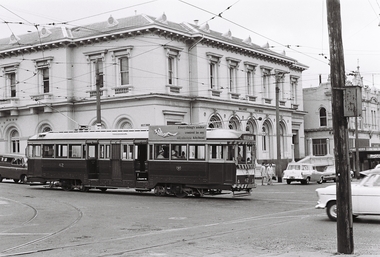
... Set of 8 photographs by Robert Green 30/12/1968 showing the tramcar operations of the SECV system on that day: 1 -Tram 42 Turning from Lydiard St North into Sturt St for city stop with Post Office in background 2 -Tram 26 Arriving at the city stop, with Crockers, Eyres Bros, and SEC Building in the background. ...Set of 8 photographs by Robert Green 30/12/1968 showing the tramcar operations of the SECV system on that day: 1 -Tram 42 Turning from Lydiard St North into Sturt St for city stop with Post Office in background 2 -Tram 26 Arriving at the city stop, with Crockers, Eyres Bros, and SEC Building in the background. ...Set of 8 photographs by Robert Green 30/12/1968 showing the tramcar operations of the SECV system on that day: 1 -Tram 42 Turning from Lydiard St North into Sturt St for city stop with Post Office in background 2 -Tram 26 Arriving at the city stop, with Crockers, Eyres Bros, and SEC Building in the background. Has destination of Gregory St 3 -Tram 26 Reversing at Gregory St 4 -Trams 34, 26? In Lydiard St North. Tram 34 for Sebastopol, has a Trotting Bray Raceway Friday Night sign 5 -Tram 26 with destination of Bell St, on level crossing 6 -Tram 26 At City stop with National Mutual in the background 7 -Tram 27 Turning from Lydiard St North into Sturt St for Grenville St with Post Office in background 8 -Tram 27 Parked in the City Loop with destination of Bell St and a Twin Lakes sign. Yields information about the SECV Ballarat tram operations on 30/12/1968.35mm negative in a film strip - set of 8tramways, tram 42, lydiard st nth, tram 26, sturt st, gregory st, tram 34, tram 27, city loop -
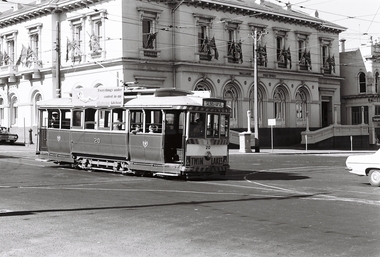 Ballarat Tramway Museum
Negative - SECV Ballarat operations set of 6, Robert Green, 3/3/1968
... Set of 6 photographs by Robert Green during 3/3/1968, showing the tramcar operations of the SECV system when the Vintage Train visited Ballarat. 1 -Tram 20 in Lydiard St about to turn into Sturt St with the Post Office in the background 2 -Tram 20 ditto 3 -Tram 39 climbing the Sturt St hill with Patersons, T&G, Ballarat Gas Co, Hong Kong Café, Thriftway, Ballarat Mechanics Institute advertising Vegas 70 , Cooks Private Hotel and OPSM 4 -Tram 39 In Sturt St crossing Lydiards St with the Commonwealth Bank in the background 5 -Tram 39 at the City stop 6 -Tram 41 at Mt Pleasant with the General store in the background. ...Set of 6 photographs by Robert Green during 3/3/1968, showing the tramcar operations of the SECV system when the Vintage Train visited Ballarat. 1 -Tram 20 in Lydiard St about to turn into Sturt St with the Post Office in the background 2 -Tram 20 ditto 3 -Tram 39 climbing the Sturt St hill with Patersons, T&G, Ballarat Gas Co, Hong Kong Café, Thriftway, Ballarat Mechanics Institute advertising Vegas 70 , Cooks Private Hotel and OPSM 4 -Tram 39 In Sturt St crossing Lydiards St with the Commonwealth Bank in the background 5 -Tram 39 at the City stop 6 -Tram 41 at Mt Pleasant with the General store in the background. ...Set of 6 photographs by Robert Green during 3/3/1968, showing the tramcar operations of the SECV system when the Vintage Train visited Ballarat. 1 -Tram 20 in Lydiard St about to turn into Sturt St with the Post Office in the background 2 -Tram 20 ditto 3 -Tram 39 climbing the Sturt St hill with Patersons, T&G, Ballarat Gas Co, Hong Kong Café, Thriftway, Ballarat Mechanics Institute advertising Vegas 70 , Cooks Private Hotel and OPSM 4 -Tram 39 In Sturt St crossing Lydiards St with the Commonwealth Bank in the background 5 -Tram 39 at the City stop 6 -Tram 41 at Mt Pleasant with the General store in the background. The conductor can be seen at the front of the tramYields information about the SECV Ballarat tramways operations on the day of the visit of the Vintage Train to Ballarat.35mm negative in a film strip - set of 6 - Black and white prints of items 1 and 6 held.tramways, lydiard st nth, vintage train, tram 41, tram 39, sturt st, tram 20, mt pleasant -
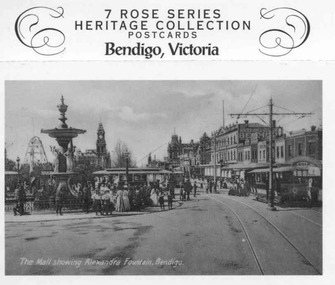 Ballarat Tramway Museum
Postcard - Folder set, Rose Stereograph Co, "7 Rose Series Heritage Collection Postcards - Bendigo Victoria", c1990
... operations , c1900. Rose series Number 2765. Photo supplied by Rod Aikman 3. Image of Pall Mall, Law courts and Post office building. ...operations , c1900. Rose series Number 2765. Photo supplied by Rod Aikman 3. Image of Pall Mall, Law courts and Post office building. ...Set of seven Rose Series Heritage postcards in a strip production featuring Bendigo Victoria. Each black and white postcard features an historic view of Bendigo from older Rose Series or Valentine's postcards and are perforated on the top and bottom so they can be separately used. On the rear of each card are areas for address, stamps, title, Rose logo and copyright note. Each card has been given a new Rose Series Number. On the top of the set of cards is a short history profile on the Rose Stereograph Co. 1. Photo of the Mall showing two ESCo trams, and the Alexandra Fountain with a third tram in the background c1908. Rose series Number 2764. Photo supplied by Rod Aikman - see image btm1662i1. 2. Photo of mining operations , c1900. Rose series Number 2765. Photo supplied by Rod Aikman 3. Image of Pall Mall, Law courts and Post office building. Rose series Number 2766. Photo supplied by Rod Aikman. Was Rose Series P3213. 4. Photo of Mitchell St. looking west from Pall Mall with fountain on right and two ESCo trams c1906.Rose series Number 2767. Photo supplied by Rod Aikman - see image btm1662i2. 5. Photo of Alexandra Fountain - was Valentine Series No. 1393 c1920's. - now Rose Series 2768. 6. Photo of Chinese Dragon "Loong", now Rose Series 2769 c1950 - was P2846. 7. Photo of Williamson Street Bendigo, showing Shamrock Hotel c1920- now Rose Series 2770 - was Valentine's M5710. trams, tramways, bendigo, pall mall, esco, mitchell st. -
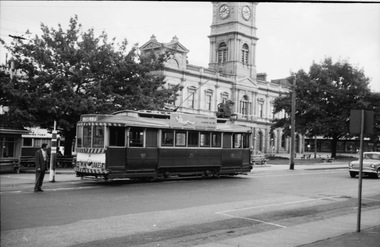 Ballarat Tramway Museum
Photograph - Digital image Set of 2 - tram 21, Graham Parry, 1971
... Post Office steps. Yields information about the Mt Pleasant terminus and tram operations in 1971. ...Photographed inn Ballarat during 1971 prior to closure of the system by Graham Parry. All images from the scanned negative. .1 - tram 21 at the city terminus, Sturt St, with a Lydiard St North destination and a Twin Lakes sign. In the background is another tram on the other side of the road, the short tram stop pole and the Town Hall. .2 - ditto taken from the Post Office steps.Yields information about the Mt Pleasant terminus and tram operations in 1971.Set of two digital images of photograph of tramstrams, tramways, sturt st, lydiard st north, town hall, tram 21 -
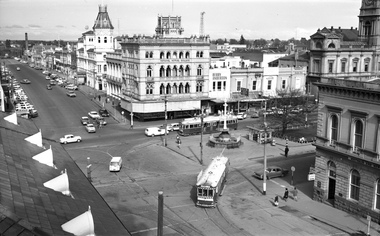 Ballarat Tramway Museum
Photograph - Digital image, John Ward, 20/08/1971 12:00:00 AM
... Yields information about the Sturt St and Lydiard St intersection just before closure and tram operations. Trams tramways Sturt St Lydiard St Post Office City Terminus tram 39 tram 35 Digital image of bogie tram 35 turning from Sturt St into Lydiard St North and tram 39 at the south side of the City tram stop at the corner. ...Yields information about the Sturt St and Lydiard St intersection just before closure and tram operations.Digital image of bogie tram 35 turning from Sturt St into Lydiard St North and tram 39 at the south side of the City tram stop at the corner. Has Craig's Hotel, the National Mutual building, Berry Anderson, Gemmola's Pharmacy, the Town Hall and the ANZ bank in the view. An Inspector can be seen near the tram stop. Photo taken from the Post Office tower. Photo by John Ward 20 August 1971. Slide title "04709 200871 7173-G SECV bogie trams 39 & 35 Sturt St to Lydiard St North Ballarat Vic"trams, tramways, sturt st, lydiard st, post office, city terminus, tram 39, tram 35 -
 Ballarat Tramway Museum
Photograph - Black & White Photograph/s, Andrew Howlett?, c1971
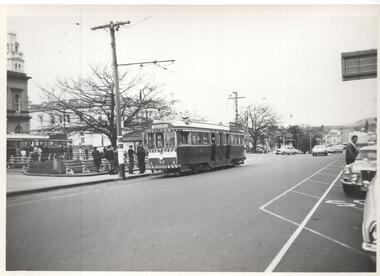
... operation of the main tram stop in the City in Sturt St prior to closure. Trams tramways Sturt St tram 42 Black and White photograph print of tram 42 and another bogie car at the City terminus, south side of Sturt St, c1971. Tram has the destination of Sebastopol. The Ballarat Post Office ...Yields information about the appearance and operation of the main tram stop in the City in Sturt St prior to closure.Black and White photograph print of tram 42 and another bogie car at the City terminus, south side of Sturt St, c1971. Tram has the destination of Sebastopol. The Ballarat Post Office is in the view.trams, tramways, sturt st, tram 42 -
 Ballarat Tramway Museum
Photograph - Digital image Set of 10, Tony Smith, 19/09/1971 12:00:00 AM
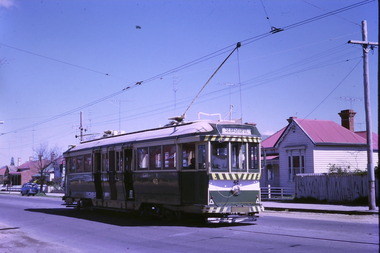
... operations - 19/9/1971 .1 - 40 in Drummond St Nth. near Macarthur St, showing Sebastopol. .2 - 35 turning from Drummond St north into Sturt St with the Southern Cross hotel in the background. Note the shoes in the overhead. .3 - 42 in Drummond St North, showing Special, nearing Sturt St. .4 - 42 turning into Sturt St, with the Shell Service station on the left. .5 - 42 reversing on the Lydiard St Nth crossover with the post office in the background. ...operations - 19/9/1971 .1 - 40 in Drummond St Nth. near Macarthur St, showing Sebastopol. .2 - 35 turning from Drummond St north into Sturt St with the Southern Cross hotel in the background. Note the shoes in the overhead. .3 - 42 in Drummond St North, showing Special, nearing Sturt St. .4 - 42 turning into Sturt St, with the Shell Service station on the left. .5 - 42 reversing on the Lydiard St Nth crossover with the post office in the background. ...Yields information about Ballarat Tramways and trams prior to the closure of the tramway system.Set of 10 digital images of Ballarat trams prior to closure, scanned from original slides by Tony Smith, 1971 prior to closure of the system. This set of slides appears to be the last day of operations - 19/9/1971 .1 - 40 in Drummond St Nth. near Macarthur St, showing Sebastopol. .2 - 35 turning from Drummond St north into Sturt St with the Southern Cross hotel in the background. Note the shoes in the overhead. .3 - 42 in Drummond St North, showing Special, nearing Sturt St. .4 - 42 turning into Sturt St, with the Shell Service station on the left. .5 - 42 reversing on the Lydiard St Nth crossover with the post office in the background. Tram showing Sebastopol. .6 - 39 reversing at Grenville St, tram showing Special. Has the Dickins and the Gasometer in the background. the conductor adjusting the trolley ropes. .7 - 39 running from Bridge St into Sturt St - as above. .8 - 34 and 39? parked in the City Loop. Has Patersons furniture, Gear Chemist and Edments stores in the background. .9 - 43 showing special at the Sturt and Lydiard St stop with 39? about to leave Lydiard St Nth. Has the post office in the background. .10 - 40 at the Lydiard St North terminus, with passengers boarding. Cemetery gates in the background.trams, tramways, drummond st nth, macarthur st, sturt st, closure, lydiard st nth, grenville st, city loop, closure, tram 40, tram 35, tram 42, tram 39, tram 34 -
 Ballarat Tramway Museum
Photograph - Digital image Set of 7, Tony Smith, 19/09/1971 12:00:00 AM
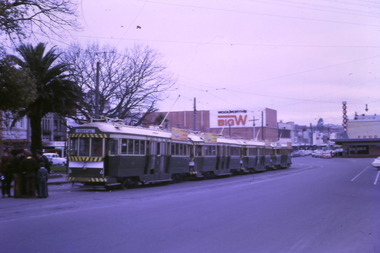
... operations - 19/9/1971 .1 - Four bogie trams parked in city loop with Woolworth's Big W and Dickins in the background. Not well focused. first tram 37 - see Reg Item 6158.6. .2 - 42 at Sturt and Lydiard St, north side, night photo with crew standing by the tram stop sign. Has the post office...Trams tramways Closure Night Photo City Loop Post Office tram 37 tram 42 tram 39 tram 34 Set of 7 digital images of Ballarat trams prior to closure, scanned from original slides by Tony Smith, 1971 prior to closure of the system. This set of slides appears to be the last day of operations ...Yields information about Ballarat Tramways and trams prior to the closure of the tramway system.Set of 7 digital images of Ballarat trams prior to closure, scanned from original slides by Tony Smith, 1971 prior to closure of the system. This set of slides appears to be the last day of operations - 19/9/1971 .1 - Four bogie trams parked in city loop with Woolworth's Big W and Dickins in the background. Not well focused. first tram 37 - see Reg Item 6158.6. .2 - 42 at Sturt and Lydiard St, north side, night photo with crew standing by the tram stop sign. Has the post office in the background. .3 - bogie tram at the south side, night photo, has the Commonwealth Bank in the background. .4 - 39 (at the rear of the four bogie trams parked in the City loop), night photo, looking west. .5 - 42 at Sebastopol terminus with the Royal Mail Hotel in the background - night photo. .6 - bogie tram and 39 parked in the city loop - two have now departed. Has Dickins, Gear Chemist and Edments Hartleys stores in the background. .7 - 34 at Sturt and Lydiard St north side.trams, tramways, closure, night photo, city loop, post office, tram 37, tram 42, tram 39, tram 34 -
 Ballarat Tramway Museum
Photograph - ESCo Bendigo Pall Mall, The Bendigonian, Sep. 2005
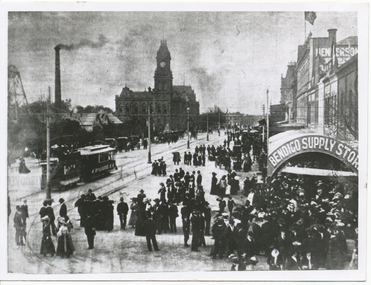
... Post Office buildings in the background, a mine poppet head. Features an electric tram towing an ex Ballarat double deck horse tram trailer. Has the Bendigo Supply Stores in the right hand side of the photo. Would appear to be a special event given the number of people in the photograph. Black and White copy print contained within the Wal Jack Bendigo and Geelong Album, see Reg Item 5003 for more details. Copied by Keith Kings from The Bendigonian 19/9/1905. Yields information about Pall Mall Bendigo and the early operations ...Photo of the Pall Mall with the Town Hall and Post Office buildings in the background, a mine poppet head. Features an electric tram towing an ex Ballarat double deck horse tram trailer. Has the Bendigo Supply Stores in the right hand side of the photo. Would appear to be a special event given the number of people in the photograph. Black and White copy print contained within the Wal Jack Bendigo and Geelong Album, see Reg Item 5003 for more details. Copied by Keith Kings from The Bendigonian 19/9/1905.Yields information about Pall Mall Bendigo and the early operations of ESCoBlack and white print with source notes on the rear.On rear in ink " SA777, Bendigo, Electric tram towing an ex Ballarat old horse tram. Fountain. Copied ex "The Bendigonian 19/9/1905."trams, tramways, bendigo, charing cross, horse trams, pall mall -
 Ballarat Tramway Museum
Photograph - Digital image Set of 5, George Coop, 1968 - 1970
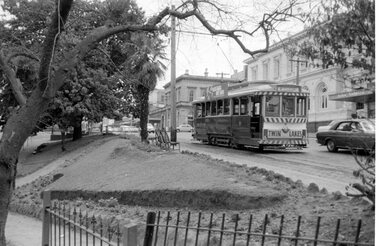
... operations at or near the Titanic Bandstand in Sturt St. Trams tramways Sturt St tram 11 tram 31 tram 13 tram 33 tram 26 Five (5) Digital images taken by George Coop during the period 1968 - 1970, of SEC trams in Sturt St, between Lydiard and Grenville Streets on the north side of Sturt St. .1 - Tram 11, descending the hill by the Titanic bandstand with the Post Office in the background. ...Yields information about the tram operations at or near the Titanic Bandstand in Sturt St.Five (5) Digital images taken by George Coop during the period 1968 - 1970, of SEC trams in Sturt St, between Lydiard and Grenville Streets on the north side of Sturt St. .1 - Tram 11, descending the hill by the Titanic bandstand with the Post Office in the background. Trams has a Twin Lakes advert, Bliss Bombs and the destination of Mt Pleasant. .2 - Tram 31 ditto, except destination of Victoria St. .3 - Tram 13 with bandstand in the view - for Mt Pleasant. .4 - Tram 33, with a lady and man carrying a box descending the footpath. Tram has the destination of Victoria St and a Twin Lakes sign. .5 - Tram 26, at corner of Sturt and Camp Streets, with the Owen Williams store in the background. trams, tramways, sturt st, tram 11, tram 31, tram 13, tram 33, tram 26 -
 Ballarat Tramway Museum
Slide - 35mm slide/s, Keith Caldwell, 16/03/1963 12:00:00 AM
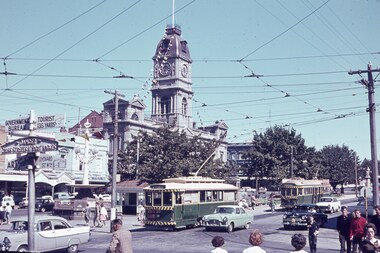
... operations. Tramways trams Sturt St Lydiard St City Town Hall tram 30 tram 36 In ink "16.3.63" Agfa colour slide, white cardboard mount, photo by Keith Caldwell on 16/3/1963 of: Photo of a busy scene at the corner of Sturt and Lydiard Streets. Tram 30 for Mt Pleasant and a Twin Lakes sign is departing the City terminus while No. 36 for Lydiard St North is arriving. The Town Hall and Georges Sea Food shop are in the photo along with a sign on the Post Office ...Yields information about traffic conditions at the intersection of Sturt and Lydiard St and tram operations.Agfa colour slide, white cardboard mount, photo by Keith Caldwell on 16/3/1963 of: Photo of a busy scene at the corner of Sturt and Lydiard Streets. Tram 30 for Mt Pleasant and a Twin Lakes sign is departing the City terminus while No. 36 for Lydiard St North is arriving. The Town Hall and Georges Sea Food shop are in the photo along with a sign on the Post Office steps advising the location of the Government Tourist Bureau, Art Gallery and a cast sign "Danger Cross Street at Right Angles".In ink "16.3.63"tramways, trams, sturt st, lydiard st, city, town hall, tram 30, tram 36 -
 Ballarat Tramway Museum
Postcard, Murray Views, Murray Views No. 29 - Sturt Street Looking West, Ballarat Vic.", c1955
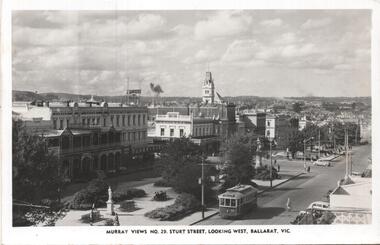
... Post Office Tower. A Plume sign is also visible. Yields information about the appearance of Sturt St in the early 1950's, tram operations, buildings and motor vehicles. ...Postcard - black and white - titled Murray Views No. 29 - Sturt Street Looking West, Ballarat Vic.", actually looking east from Doveton St towards Black Hill and Grenville St. Has tram 32 westbound to Gardens via Drummond St North. Divided back postcard with details of the maker on the right hand side, MV symbol and a space for a stamp. In the view are Lester House, Tunbridges, Crockers and the Post Office Tower. A Plume sign is also visible.Yields information about the appearance of Sturt St in the early 1950's, tram operations, buildings and motor vehicles.Postcard - divided back, unused Murray Viewstrams, tramways, sturt st, doveton st, tram 30 -
 Friends of Kurth Kiln
Photograph of Red Letter Box, Photograph taken ca 1976
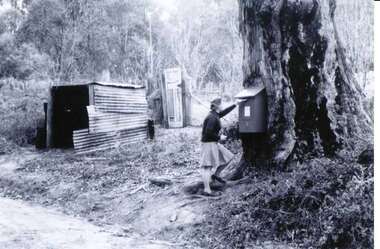
... Black and White Picture of the original Beenak Post Office Letter Box, used for collecting mail during the Beenak Sawmilling operations. ...Post Office officially closed on 31 August 1951, the Mail Box continued to be used until 1976. The history of Beenak (the town that never was) is part of the Yarra Valley Ranges, and this picture tells the story of the historic Mailbox Beenak Post Office A full scale replica of the box has been fitted to the shed at Kurth Kiln, made and painted by Henk Bouck under the supervision of ex PMG officer John Waghorn Black and White Picture of the original Beenak Post Office Letter Box, used for collecting mail during the Beenak Sawmilling operations. ...Although the Beenak Post Office officially closed on 31 August 1951, the Mail Box continued to be used until 1976. The history of Beenak (the town that never was) is part of the Yarra Valley Ranges, and this picture tells the story of the historic MailboxBlack and White Picture of the original Beenak Post Office Letter Box, used for collecting mail during the Beenak Sawmilling operations. The Friends of Kurth Kiln have errected a Commemorative Plaque on site next to the huge gum tree that still carries the scar where the the mail box had been mounted. A full scale replica of the box has been fitted to the shed at Kurth Kiln, made and painted by Henk Bouck under the supervision of ex PMG officer John Waghorn beenak, post office
