
Showing 52 items matching "post war boom"
-
 Moorabbin Air Museum
Book - AIR TRAFFIC CONTROL, Take Off To Touchdown The Story of Air Traffic Control
... ...Post war boom...Air traffic control The coming of radio War years Post war boom Navigation & control aids Area control Control tower Operational control Control of a flight Search & rescue Men of ATC Phonetic alphabet Air traffic control terms Technical & general overview of air traffic control in Australia, circa 1967 Take Off To Touchdown The Story of Air Traffic Control Book AIR TRAFFIC CONTROL ...Technical & general overview of air traffic control in Australia, circa 1967non-fictionTechnical & general overview of air traffic control in Australia, circa 1967the coming of radio, war years, post war boom, navigation & control aids, area control, control tower, operational control, control of a flight, search & rescue, men of atc, phonetic alphabet, air traffic control terms -
 Bendigo Historical Society Inc.
Photograph - HILDA HILL COLLECTION: BLACK AND WHITE PHOTO, 1919-1924
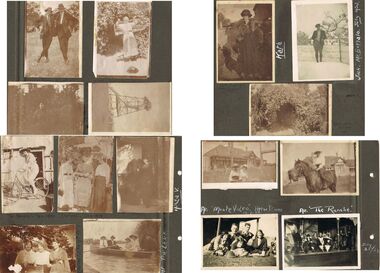
... ...victoria post war touring boom...AUSTRALIA History victoria post war touring boom http://www.yourbrisbanepastandpresent.com/2012_02_01_archive.html Hilda Hill Collection. ...Hilda Hill Collection. Combination of Sepia and Black & White Photos. (Total 16.) two men with arms on each others shoulders, both with legs crossed, background shows large group of people and large trees, Hibernian Picnic November 19th 1919. Elderly lady holding two bird cages with birds therein standing in front of large flowering bush, the lady is dressed in all white and her hat lies on the ground in front of her, the hat appears to have flowers on the brim. Mrs Mc'Rosebower' October 1919. Hilda V. Standing with a background of shrubbery, wearing a dark dress, photo not very clear, 'The Ranche' March 1921. The Pinnacle One Tree Hill, people on the top lookout area and the wooden staircase for access, note the iron roof at the first level to provide shelter at ground level, April 1920. Lady on a ladies bicycle, dressed in geometric patterned dress, in front of an old shed with a corrugated iron roof. The bicycle has a front and rear mudguard, 'The Ranche' January 1920. Three ladies, the lady on the left is wearing a white dress with a black belt and holding in her right hand a small bag with a handle, the middle lady is wearing a dress of another colour with three strips of material at different levels on the front and holding her hands at her waist, also wearing lace up boots, lady to the right is wearing a white blouse and a dark skirt and her hands behind her back, background is garden, 'Durvol' December 1919. Photo of young girl dressed in black standing next to a small bush with her back to a house exterior wall, to the left is a white wall, NO Details.Three ladies standing beneath a large tree arm in arm, left girl is wearing a white top with a black belt and dark skirt, Centre girl is wearing a white top and dark skirt, girl at right wearing coloured? Dress with matching sash belt,'Durvol' December 19th 1919. Two men and three ladies in a rowing boat on lake Weeroona, both men are wearing dark suits and hats, the ladies are all in light coloured clothing and also wearing large brimmed hats. Kath wearing a black dress with a fox skin stole and holding a large bag in her right hand in garden setting, left background is a corrugated iron fence with wooden top rail, to the right is the wall of a building, September 1919 'the Ranche'. Jack wearing a black coat and jodhpurs with a white high neck jumper leaning on a wire and netting farm type fence, Mt. Buffalo July 1923. Photo of a 'Rosebower' in a garden corner, right shows part of a picket fence, wear and tear indicates that a gate may be in the fence accessible through the bower, October 1919. Two ladies holding tennis racquets, dressed in white blouses with one dark dress and the other a lighter shade sitting on stool inside a netted tennis court, both ladies are wearing large brimmed hats, background is a house with a water tank on the left end, three decorative chimneys, tiled roof, decorative panelling below the guttering, 'Kilmuir' October 1919. Lady on dark coloured horse, the lady is wearing a white blouse and jodhpurs and a large brimmed hat, background is house showing a bow window three chimneys and a small portion of the decorative fretwork below the gutter line of the verandah, 'Kilmuir' October 1919. Two young men dressing collar and tie one wearing a coat and three young ladies reclining on the ground, girl on the left is wearing a light coloured dress white blouse and cardigan, middle girl wearing a short sleeved top, right lady is wearing white blouse and dark coat, in foreground there appears to be a pudding meat and a wine bottle, left edge another male can be partially seen lying on the ground with a bottle in his left hand, at 'Monte Video' after dinner 18 July 1924. Ten people sitting and standing on a veranda, 'The Ranche', celebrating an event, small 4 wheel table with food, person front left holding a white cup and saucer, July 1924.australia, history, victoria post war touring boom, http://www.yourbrisbanepastandpresent.com/2012_02_01_archive.html -
 Bendigo Historical Society Inc.
Photograph - HILDA HILL COLLECTION: BLACK AND WHITE PHOTOS
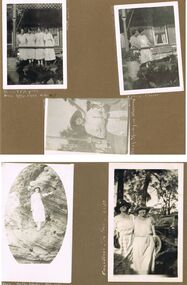
... ...victoria post war touring boom...AUSTRALIA History victoria post war touring boom Hilda Hill Personal Collection Hilda Hill Collection. ...Hilda Hill Collection. A Combination of Sepia & Black & White Photos Total of 5. Jonah dressed in light coloured dress with geometric pattern holding a parasol in both hands, background right is a part of a large tent in striped material, to the left is a light post with a sign attached advertising fairy floss, there are a number of people to the left of the post on a sloped surface at Lake Weeroona Bendigo. Four young ladies leaning on a hand rail of a verandah, to the left is a verandah post with a large pot plant at its base, behind the girls at right is a window partly open with a lace curtain, a white piece of rope extends from the post at an angle to a rolled up blind, directly in front of the girls on the ground is a large plant in a garden, the old V.P.S. Girls Alma, Kitty, Lorna and Hilda Hill. Eileen and Claire standing on verandah with hands on the rail, Eileen is dressed in a pale coloured dress and Claire in a white dress with a line pattern longitudinal, Verandah post to their left and cord going to a rolled up blind, large pot plant at base of post, deck chair at far right, foreground shows shadow of the photographer and garden to the right. Oval photo of Nora on the rocks Feb 1921, dressed in white with material over her left shoulder, and small round topped hat. Elma and Jonah both dressed in light coloured dresses, Elma has sailor neck blouse and her dress has a horizontal line pattern, background right is an old car and behind the girls there are large trees,The Rock 1 January 1923.Hilda Hill Personal Collectionaustralia, history, victoria post war touring boom -
 Sunshine and District Historical Society Incorporated
Souvenir - Albion North Primary School Commentative Coffee Cup
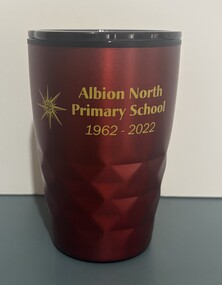
... After a post war migration population boom in Sunshine North and surrounding areas, the Albion North State School (Now Albion North Primary School) opened on the 3rd July 1962....After a post war migration population boom in Sunshine North and surrounding areas, the Albion North State School (Now Albion North Primary School) opened on the 3rd July 1962. ...After a post war migration population boom in Sunshine North and surrounding areas, the Albion North State School (Now Albion North Primary School) opened on the 3rd July 1962.This Commentative Coffee Cup celebrates 60 years since the school opened in 1962.Aluminum insulated coffee cup and lid with text printed on the sideAlbion North Primary School 1962 - 2022albion north primary school, furlong road, sunshine north, albion north state school -
 Sunshine and District Historical Society Incorporated
Souvenir - Albion North Primary School Commentative Key Ring
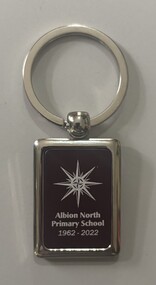
... After a post war migration population boom in Sunshine North and surrounding areas, the Albion North State School (Now Albion North Primary School) opened on the 3rd July 1962....After a post war migration population boom in Sunshine North and surrounding areas, the Albion North State School (Now Albion North Primary School) opened on the 3rd July 1962. ...After a post war migration population boom in Sunshine North and surrounding areas, the Albion North State School (Now Albion North Primary School) opened on the 3rd July 1962.This Commentative Key Ring celebrates 60 years since the school opened in 1962.Metal key ring and tag with textAlbion North Primary School 1962 - 2022albion north primary school, furlong road, sunshine north, albion north state school -
 Kiewa Valley Historical Society
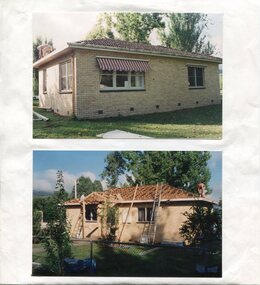
Photographs x 2 - Mount Beauty Infant Welfare Centre, February 1994
... During the 1950's, Mt Beauty's population was rapidly increasing due to the post war baby boom and because there was a young workforce moving into the area due to the opportunity available for work on the construction of the Kiewa Hydro Electric Scheme. ...During the 1950's, Mt Beauty's population was rapidly increasing due to the post war baby boom and because there was a young workforce moving into the area due to the opportunity available for work on the construction of the Kiewa Hydro Electric Scheme. ...During the 1950's, Mt Beauty's population was rapidly increasing due to the post war baby boom and because there was a young workforce moving into the area due to the opportunity available for work on the construction of the Kiewa Hydro Electric Scheme. Maternal Infant Welfare Centre Sisters conducted regular check-ups on babies to ensure they were feeding well, gaining weight and reaching appropriate milestones for their age.Infants and young children in the Kiewa Valley area continue to be monitored by the Maternal Health Nurses to ensure their healthy development. The photographs are an historical record of early buildings in the Mt Beauty area, their uses and how they have changed to meet the changing needs of the community.2 x colour photographs of renovations to Mt Beauty Infant Welfare Centre. Mounted on white A4 copy paperPrinted at bottom of page underneath photos - Mt Beauty Infant Welfare Centre February 1994. Replacement of tile roof with Colourbond corrugated iron and construction of covered entry porch.mt beauty, infant welfare centre -
 Sunshine and District Historical Society Incorporated
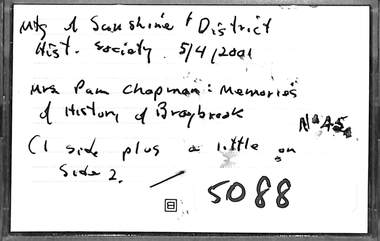
Audio - Mrs Pam Chapman Memories Of The History Of Braybrook Audio Tape, 23/4/1995
... In the 1950s the Housing Commission of Victoria developed Braybrook as a social housing hub for the post war population boom. The suburb has since seen a mix of community development, including the establishment of the Vietnamese Buddhist community's Quanh Minh Temple. ...In the 1950s the Housing Commission of Victoria developed Braybrook as a social housing hub for the post war population boom. The suburb has since seen a mix of community development, including the establishment of the Vietnamese Buddhist community's Quanh Minh Temple. ...Braybrook's history includes early white settlement in the 1840s, the establishment of the Braybrook Shire in 1871 and a period of industrial development in the late 1800s with activities like bluestone quarrying. In the 1950s the Housing Commission of Victoria developed Braybrook as a social housing hub for the post war population boom. The suburb has since seen a mix of community development, including the establishment of the Vietnamese Buddhist community's Quanh Minh Temple. The original Braybrook Shire became part of the City of Sunshine and then the City of Brimbank.Meeting At Sunshine & District Hist Society 5/4/2001 Mrs Pam Chapman Memories of History of Braybrookshire of braybrook, pam chapman -
 Sunshine and District Historical Society Incorporated
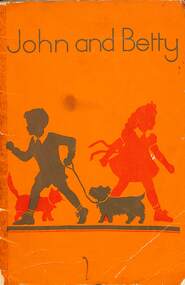
Book - John And Betty The Earliest Reader For The Little Ones, Betty Somerville et al, 1951
... The readers were designed for the big classes during the post World War 2 baby boom....The readers were designed for the big classes during the post World War 2 baby boom. This is just one of many books used the Victorian Education System in State, High, Technical Schools and Universities. ...Orange soft covered book with text and an imagenon-fiction -
 Sunshine and District Historical Society Incorporated
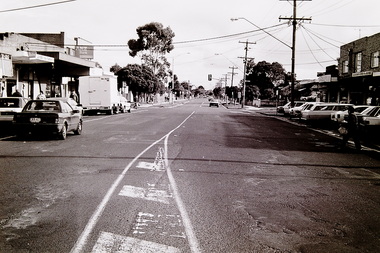
Photograph - Glengala Road Sunshine West Street Scene Photographs 1992, The Advocate, 1992
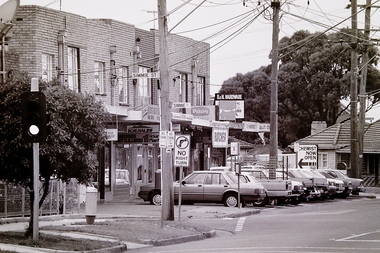
... Sunshine West, including Glengala Road, expanded rapidly during the 1950's and 1960's post‑war immigration boom. The Glengala local shopping strip emerges during the 1960's and the 1970's and they were simply known as the Glengala Road shops....Sunshine West, including Glengala Road, expanded rapidly during the 1950's and 1960's post‑war immigration boom. The Glengala local shopping strip emerges during the 1960's and the 1970's and they were simply known as the Glengala Road shops. ...The earliest development around Glengala Road began in the mid‑1920s, when the Glengala Estate was laid out on the western side of Kororoit Creek. At this time, the area was semi‑rural, with the Sunshine Golf Club being one of the few notable landmarks nearby. The area did not grow significantly until after World War II. Sunshine West, including Glengala Road, expanded rapidly during the 1950's and 1960's post‑war immigration boom. The Glengala local shopping strip emerges during the 1960's and the 1970's and they were simply known as the Glengala Road shops.5673.01 - Glengala Rd looking west from Gregory St (Sun Adv 337) 1992 Photo 01.JPG 5673.02 - Glengala Rd Cnr Pellew St (Suns Adv 377) 1992 Photo 01.JPG 5673.03 - Glengala Rd Cnr St. Andrew St (Sun Adv 377) 1992 Photo 01.JPGglengala road, sunshine west -
 Bendigo Historical Society Inc.
Photograph - HILDA HILL COLLECTION: BLACK AND WHITE PHOTOS, 1922
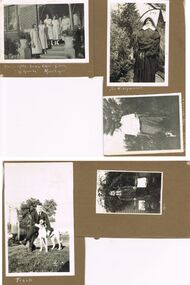
... Series of Black & White Images depicting life for the Hill Family and Friends During 1922 Post War Boom. Total 5 Photos. Ladies Day Out: Alma, Kitty, Lorna Claire & Eileen, all the ladies are dressed in white, lady at front wears dark stockings others are wearing white stockings and shoes, first two are standing on the steps and the others are on the verandah, two stone pillars with garden pots on them, Window of house to the left and curtains hanging inside, 'The Ranche' March 1922. ...AUSTRALIA History post war life Hilda Hill Personal Collection Series of Black & White Images depicting life for the Hill Family and Friends During 1922 Post War Boom. ...Series of Black & White Images depicting life for the Hill Family and Friends During 1922 Post War Boom. Total 5 Photos. Ladies Day Out: Alma, Kitty, Lorna Claire & Eileen, all the ladies are dressed in white, lady at front wears dark stockings others are wearing white stockings and shoes, first two are standing on the steps and the others are on the verandah, two stone pillars with garden pots on them, Window of house to the left and curtains hanging inside, 'The Ranche' March 1922. (Aunt Mabel) Sister M. Alphonsus, dressed in dark habit with rosary hanging from her waist, arms crossed, standing in archway covered with vine, to right a spire can be seen. Uncle Percy in South America with Fox Terrier, holding a gun in his left hand, garden setting with palm trees. Frank, dressed in black suit white shirt and dark tie with his hands around a Hound Dog enjoying some R&R. Ken with his tennis racquet, in his dark coloured uniform white shirt and dark tie, standing between two chairs holding a tennis racquet and ball, both chairs have a white cloth backing, left chair with object on seat and large vase on the ground, trellis to the right, weatherboard to the left and shrub.Hilda Hill Personal Collectionaustralia, history, post war life -
 Sunshine and District Historical Society Incorporated
Photograph - Glengala Shopping Centre Glengala Road Sunshine West 1990 Photographs, Adam Ellwood, 14th November 1990
... post‑war suburban expansion. Its earliest shops appeared in the mid‑1920s, but the area did not become a true neighbourhood shopping centre until the post‑war immigration boom transformed Sunshine West into a residential suburb. ...post‑war suburban expansion. Its earliest shops appeared in the mid‑1920s, but the area did not become a true neighbourhood shopping centre until the post‑war immigration boom transformed Sunshine West into a residential suburb. ...The Glengala Road shopping strip in Sunshine West emerged during the 1960s–1970s, following post‑war suburban expansion. Its earliest shops appeared in the mid‑1920s, but the area did not become a true neighbourhood shopping centre until the post‑war immigration boom transformed Sunshine West into a residential suburb. Mid‑1920s — First development begins The Glengala Estate was laid out west of Kororoit Creek. Sunshine West was still semi‑rural, with the Sunshine Golf Club as one of the few landmarks. No substantial shopping strip existed yet. 1950s–1960s — Post‑war immigration boom Sunshine West expanded rapidly as new housing estates were built. Migrant families (Maltese, Greek, Italian, Yugoslav, later Vietnamese) settled in the area. This population growth created demand for a local shopping centre. 1960s — The Glengala Road shops emerge The strip between 66–88 Glengala Road becomes the core of the neighbourhood centre. By 1965, shops included: Furniture store (Aguis C.F.) Hardware store (Agius Carmelo “Charles”) Fruiterers Butcher Photo studio Confectioners Dry cleaners 1970s — Growth and diversification By 1970, the strip had expanded to include: Greek Club (community hub) Dry cleaners Blinds shop TAB Confectioners Butcher Furniture and hardware stores Late 1970s — Mixed‑business era By 1977, the strip included: Milk bar / mixed business Western & Continental Bread bakery TAB Other small retailers 1990s — Mature neighbourhood centre Photographs from 1992 show Glengala Road as a fully developed suburban shopping strip with bakeries, cafés, small retailers, and community activity.Sunshine Shopping Centres 492.3glengala road shopping centre, glengala road, sunshine west -
 Sunshine and District Historical Society Incorporated
Photograph - Sunshine East Primary School Duke Street Sunshine Photographs
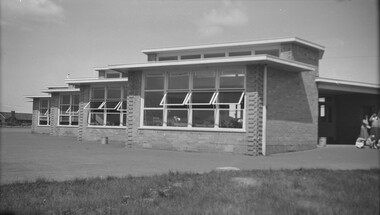
... The school was built to relieve pressure on the Sunshine Primary School and the Sunshine North Primary School as Sunshine’s population exploded after WWII, driven by the post war migrant boom which caused a rapidly growing population growth in the Sunshine and Braybrook districts. ...The school was built to relieve pressure on the Sunshine Primary School and the Sunshine North Primary School as Sunshine’s population exploded after WWII, driven by the post war migrant boom which caused a rapidly growing population growth in the Sunshine and Braybrook districts. ...Sunshine East Primary School opened on 5th February 1952 on Duke Street, Sunshine. The school was built to relieve pressure on the Sunshine Primary School and the Sunshine North Primary School as Sunshine’s population exploded after WWII, driven by the post war migrant boom which caused a rapidly growing population growth in the Sunshine and Braybrook districts. Many of these new migrants were staying in the nearby post war Housing Commission estates in Sunshine and Braybrook. In the 2000’s, the district saw a falling enrolment in student numbers across Sunshine’s older suburbs, and this led to school consolidations. In 2009, the school merged with the Braybrook Primary School and Sunvale Primary School forming the new school Sunshine Harvester Primary School, The Sunshine East site ceased operation on the 31st December 2008 and the site was later cleared with all original’s buildings being demolished. The new Sunshine Harvester Primary School was then built on the site.sunshine east primary school, duke street, sunshine -
 Sunshine and District Historical Society Incorporated
Photograph - 323 Main Rd East - St. Albans Arcade Photograph
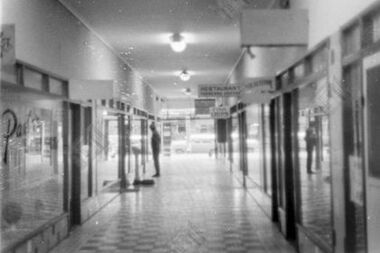
... . – Dealer - Arcade Hairdresser - Arcade Trading Co – Shoes This reflects the post‑war migrant boom, when St Albans was rapidly expanding and small shopfronts were essential community hubs. .... – Dealer - Arcade Hairdresser - Arcade Trading Co – Shoes This reflects the post‑war migrant boom, when St Albans was rapidly expanding and small shopfronts were essential community hubs. ...The St. Albans Arcade was one of first buildings in St. Albans that had various shops under one roof. The earliest listing of the Arcade appears in 1960, showing a lively mix of small migrant‑run businesses typical of early St Albans: - Arcade Fruit Supplies - Mrs Irena Leczycki – Delicatessen - St Albans Fish Shop - Kenroniee Café - Violet Gift & Hardware - Arcade Butcher - Brotherhood of St Laurence – Dealer - Kanizsay, A. – Dealer - Arcade Hairdresser - Arcade Trading Co – Shoes This reflects the post‑war migrant boom, when St Albans was rapidly expanding and small shopfronts were essential community hubs. In 1970, the Arcade included: - T.A.B. of Victoria - Hampshire Real Estate Agency - Wittner’s Pty Ltd – Boot Retailer - Marta’s Beauty Saloon - Georgiou, P. – Hairdresser This marks the Arcade’s shift from purely retail to professional services, reflecting St Albans’ growing population and commercial maturity.5666 - Main Rd East 323 - St. Albans Arcade 1970's Photo 01.jpgmain road east, st. albans, st. albans arcade -
 Sunshine and District Historical Society Incorporated
Archive - St. Albans Tin Shed Photographs
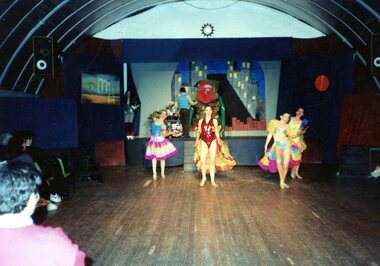
... This was during the explosive post‑war population boom, when St Albans lacked basic services such as sports clubs, libraries, and youth facilities. ...This was during the explosive post‑war population boom, when St Albans lacked basic services such as sports clubs, libraries, and youth facilities. ...The St Albans Community Youth Club began in the early 1950s, operating out of a small tin shed on Main Road East. This was during the explosive post‑war population boom, when St Albans lacked basic services such as sports clubs, libraries, and youth facilities. As membership grew, the original shed was replaced with a recycled Quonset Army Hut, a curved steel structure typical of post‑war surplus buildings. The hut was adapted by volunteers and became the heart of the centre. From the 1950s onward, the Tin Shed hosted an extraordinary range of activities, including: Judo (including the long‑running St Albans Judo Club) Table tennis Marching girls Gymnasium and fitness classes Scouts and Guides Drama and concerts Boat‑building and woodwork Preschool and playgroups Tai Chi, yoga, and lifelong learning programs Police Youth Club Country Women’s Association Food relief and community support services (more recent decades) This diversity made the Tin Shed one of the most important social anchors for newly arrived migrant families.The St Albans “Tin Shed” is one of the most important community-built institutions in Melbourne’s west, a post‑war, migrant‑era youth hub that grew from a tiny, corrugated shed into a major social centre.Only the 1st twenty photographs have been uploaded to Victorian Collections 5881.001 - St. Albans Tin Shed - Drama StCYC 1992.jpg 5881.002 - St. Albans Tin Shed - Edna Cooper and Lorna Cameron.jpg 5881.003 - St. Albans Tin Shed - Edna Cooper StACYC 1980's.jpg 5881.004 - St. Albans Tin Shed - Elfie and Lorna at the 50th Anniversary.jpg 5881.005 - St. Albans Tin Shed - Ellie, Lorna and Kon 2005.jpg 5881.006 - St. Albans Tin Shed - Floor plan.jpg 5881.007 - St. Albans Tin Shed - Gathering 1994.jpg 5881.008 - St. Albans Tin Shed - Ingrid and Samantha selling home made jewellery.jpg 5881.009 - St. Albans Tin Shed - Jack Sheridan and Lorna Cameron 1994.jpg 5881.010 - St. Albans Tin Shed - Jean and Sylvia StACYC 1992.jpg 5881.011 - St. Albans Tin Shed - Jenny watering at the Youth Club 1993.jpg 5881.012 - St. Albans Tin Shed - Karla Montalvo.jpg 5881.013 - St. Albans Tin Shed - Kerry, Elfie, Angela, Lorna Marilyn, Jennifer and Edna.jpg 5881.014 - St. Albans Tin Shed - Kim and Mal, Sunshine Council 1994.jpg 5881.015 - St. Albans Tin Shed - Les Cameron.jpg 5881.016 - St. Albans Tin Shed - Lorna and Nick Szwed 2005.jpg 5881.017 - St. Albans Tin Shed - Lorna at the Tin Shed.jpg 5881.018 - St. Albans Tin Shed - Lorna Cameron and Edna Cooper August 1994.jpg 5881.019 - St. Albans Tin Shed - Lorna Cameron and John Ribarow.jpg 5881.020 - St. Albans Tin Shed - Lorna Cameron and Thea Dukic.jpg 5881.021 - St. Albans Tin Shed - Lorna Cameron with her Renault 1970's.jpg 5881.022 - St. Albans Tin Shed - Lorna presented with certificate.jpg 5881.023 - St. Albans Tin Shed - Mary and Vicki.jpg 5881.024 - St. Albans Tin Shed - May 1993.jpg 5881.025 - St. Albans Tin Shed - Mosaic dedication 1994 1.jpg 5881.026 - St. Albans Tin Shed - Mosaic dedication 1994 2.jpg 5881.027 - St. Albans Tin Shed - Mural damaged 1.jpg 5881.028 - St. Albans Tin Shed - Mural damaged 2.jpg 5881.029 - St. Albans Tin Shed - Play group 1994.jpg 5881.030 - St. Albans Tin Shed - Play Group.jpg 5881.031 - St. Albans Tin Shed - Ray and Ken 1994.jpg 5881.032 - St. Albans Tin Shed - Ray, Helen and Willy. Mosaic 1994.jpg 5881.033 - St. Albans Tin Shed - Remembering Lorna.jpg 5881.034 - St. Albans Tin Shed - Return of the ring.jpg 5881.035 - St. Albans Tin Shed - Roy Cameron book launch 2025.jpg 5881.036 - St. Albans Tin Shed - StACYC drama 1992.jpg 5881.037 - St. Albans Tin Shed - StCYC mosaic 1994.jpg 5881.038 - St. Albans Tin Shed - Steve Thorpe, Lorna Cameron and Ruth Frede 1994.jpg 5881.039 - St. Albans Tin Shed - Sunshine Council workers 1994 Photo 01.jpg 5881.040 - St. Albans Tin Shed - Sunshine Council workers 1994 Photo 02.jpg 5881.041 - St. Albans Tin Shed - Tin Shed Photo 01.jpg 5881.042 - St. Albans Tin Shed - Tin Shed Photo 02.jpg 5881.043 - St. Albans Tin Shed - Tin Shed Photo 03.jpg 5881.044 - St. Albans Tin Shed - Tin Shed Photo 04.jpg 5881.045 - St. Albans Tin Shed - Tin Shed Photo 05.jpg 5881.046 - St. Albans Tin Shed - Tin Shed Photo 06.jpg 5881.047 - St. Albans Tin Shed - Tin Shed Photo 07.jpg 5881.048 - St. Albans Tin Shed - Tin Shed Photo 08.jpg 5881.049 - St. Albans Tin Shed - Tin Shed Photo 09.jpg 5881.050 - St. Albans Tin Shed - Tin Shed Photo 10.jpg 5881.051 - St. Albans Tin Shed - Tin Shed Photo 11.jpg 5881.052 - St. Albans Tin Shed - Tin Shed Photo 12.jpg 5881.053 - St. Albans Tin Shed - Tin Shed Photo 13.jpg 5881.054 - St. Albans Tin Shed - Tin Shed Photo 14.jpg 5881.055 - St. Albans Tin Shed - Tin Shed Photo 15.jpg 5881.056 - St. Albans Tin Shed - Tin Shed Photo 16.jpg 5881.057 - St. Albans Tin Shed - Tin Shed Photo 17.jpg 5881.058 - St. Albans Tin Shed - Tin Shed Photo 18.jpg 5881.059 - St. Albans Tin Shed - Tin Shed Anniversary cake Photo 19.jpg 5881.060 - St. Albans Tin Shed - Tin Shed Photo 60.jpg 5881.061 - St. Albans Tin Shed - Tin Shed Photo 61.jpg 5881.062 - St. Albans Tin Shed - Tin Shed Photo 62.jpg 5881.063 - St. Albans Tin Shed - Tin Shed Photo 33.jpg 5881.064 - St. Albans Tin Shed - Tin Shed Photo 64.jpg 5881.065 - St. Albans Tin Shed - Tin Shed Photo 65.jpg 5881.066 - St. Albans Tin Shed - Tin Shed Judo Photo 66.jpg 5881.067 - St. Albans Tin Shed - Tin Shed Photo 67.jpg 5881.068 - St. Albans Tin Shed - Tin Shed Photo 68.jpg 5881.069 - St. Albans Tin Shed - Tin Shed Photo 69.jpg 5881.070 - St. Albans Tin Shed - Tin Shed Photo 70.jpg 5881.071 - St. Albans Tin Shed - Tin Shed Photo 71.jpg 5881.072 - St. Albans Tin Shed - Tin Shed Photo 72.jpg 5881.073 - St. Albans Tin Shed - Tin Shed Photo 73.jpg 5881.074 - St. Albans Tin Shed - Tin Shed Photo 74.jpg 5881.075 - St. Albans Tin Shed - Tin Shed Photo 75.jpg 5881.076 - St. Albans Tin Shed - Tin Shed Photo 76.jpg 5881.077 - St. Albans Tin Shed - Tin Shed Photo 77.jpg 5881.078 - St. Albans Tin Shed - Tin Shed Photo 78.jpg 5881.079 - St. Albans Tin Shed - Tin Shed Photo 79.jpg 5881.080 - St. Albans Tin Shed - Tin Shed Photo 80.jpg 5881.081 - St. Albans Tin Shed - Tin Shed Photo 81.jpg 5881.082 - St. Albans Tin Shed - Tin Shed Photo 82.jpg 5881.083 - St. Albans Tin Shed - Tin Shed Photo 83.jpg 5881.084 - St. Albans Tin Shed - Tin Shed Photo 84.jpg 5881.085 - St. Albans Tin Shed - Tin Shed Photo 85.jpg 5881.086 - St. Albans Tin Shed - Tin Shed Photo 86.jpg 5881.087 - St. Albans Tin Shed - Tin Shed Photo 87.jpg 5881.088 - St. Albans Tin Shed - Tin Shed Photo 88.jpg 5881.089 - St. Albans Tin Shed - Tin Shed Photo 89.jpg 5881.090 - St. Albans Tin Shed - Tin Shed Photo 90.jpg 5881.091 - St. Albans Tin Shed - Tin Shed Photo 91.jpg 5881.092 - St. Albans Tin Shed - Tin Shed Photo 92.jpg 5881.093 - St. Albans Tin Shed - Tin Shed Photo 93.jpg 5881.094 - St. Albans Tin Shed - Tin Shed Photo 94.jpg 5881.095 - St. Albans Tin Shed - Tin Shed Photo 95.jpg 5881.096 - St. Albans Tin Shed - Tin Shed Photo 96.jpg 5881.097 - St. Albans Tin Shed - Tin Shed cheers 50 years of goodwill.jpg 5881.098 - St. Albans Tin Shed - Tin Shed still place to be.jpg 5881.099 - St. Albans Tin Shed - Tonnes of tons 2010.jpg 5881.100 - St. Albans Tin Shed - Val, Shea, Ken Steve and Louise 1994.jpg 5881.101 - St. Albans Tin Shed - Volunteers Required The Advocate 16 November 1999.jpg 5881.102 - St. Albans Tin Shed - Weekly time table.jpg 5881.103 - St. Albans Tin Shed - Bill Shorten at the Tin Shed.jpg 5881.104 - St. Albans Tin Shed - Book dream lives.jpg 5881.105 - St. Albans Tin Shed - Errington Reserve 1994.jpg 5881.106 - St. Albans Tin Shed - Errington Reserve sculpture 1.jpg 5881.107 - St. Albans Tin Shed - Errington Reserve sculpture 2.jpg 5881.108 - St. Albans Tin Shed - Facelift for an old tin shed.jpg 5881.109 - St. Albans Tin Shed - Fifty years on, the Tin Shed stands tall.jpg 5881.110 - St. Albans Tin Shed - Gravesite of Alice Errington, Footscray.jpg 5881.111 - St. Albans Tin Shed - Joe Ribarow and Lorna 2005.jpg 5881.112 - St. Albans Tin Shed - Judo 1994.jpg 5881.113 - St. Albans Tin Shed - Judo at the Tin Shed.jpg 5881.114 - St. Albans Tin Shed - Tom Rigg.jpgst. albans tin shed, main road east, st. albans, st. albans community youth club -
 Sunshine and District Historical Society Incorporated
Archive - St. Albans Tin Shed Documents
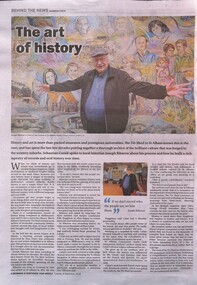
... This was during the explosive post‑war population boom, when St Albans lacked basic services such as sports clubs, libraries, and youth facilities. ...This was during the explosive post‑war population boom, when St Albans lacked basic services such as sports clubs, libraries, and youth facilities. ...The St Albans Community Youth Club began in the early 1950s, operating out of a small tin shed on Main Road East. This was during the explosive post‑war population boom, when St Albans lacked basic services such as sports clubs, libraries, and youth facilities. As membership grew, the original shed was replaced with a recycled Quonset Army Hut, a curved steel structure typical of post‑war surplus buildings. The hut was adapted by volunteers and became the heart of the centre. From the 1950s onward, the Tin Shed hosted an extraordinary range of activities, including: Judo (including the long‑running St Albans Judo Club) Table tennis Marching girls Gymnasium and fitness classes Scouts and Guides Drama and concerts Boat‑building and woodwork Preschool and playgroups Tai Chi, yoga, and lifelong learning programs Police Youth Club Country Women’s Association Food relief and community support services (more recent decades) This diversity made the Tin Shed one of the most important social anchors for newly arrived migrant families.The St Albans “Tin Shed” is one of the most important community-built institutions in Melbourne’s west, a post‑war, migrant‑era youth hub that grew from a tiny, corrugated shed into a major social centre.7204.01 - St. Albans Tin Shed Documents - The Art Of history Joseph Ribarow Star Weekly 8th September 2026 Page 6.jpg 7204.02 - St. Albans Tin Shed Documents - Raising Overdose Awareness In St. Albans Star Weekly 25th August 2026 Page 9.jpg 7204.03 - St. Albans Tin Shed Documents - Art Comes Out Of The Archive Star Weekly 18th August 2026 Page 1.jpgst. albans tin shed, main road east, st. albans, st. albans community youth club, joseph ribarow -
 Department of Energy, Environment and Climate Action
Equipment - Criterion Survey Laser
... The program was accelerated during the post-war housing boom. It was driven by the push eastwards away from the Central Highlands to find timber resources after the 1939 bushfire salvage was completed. ...The program was accelerated during the post-war housing boom. It was driven by the push eastwards away from the Central Highlands to find timber resources after the 1939 bushfire salvage was completed. ...There had been timber assessments in Victorian State forests since the late 1920s, coinciding with arrival of the three Norwegian foresters. The program was accelerated during the post-war housing boom. It was driven by the push eastwards away from the Central Highlands to find timber resources after the 1939 bushfire salvage was completed. Spending time in the field with assessment branch was a “rite of passage” for many young forestry graduates leaving Creswick. The work was arduous, and measurements were taken with simple and robust equipment like Gunters chains, prismatic compass, Abney levels, barometers and clinometers. Data was recorded by hand onto waterproof paper. The Statewide Forest Resource Inventory (SFRI) project began in 1993 and followed a few years after the release Timber industry Strategy. The aim was to bolster the existing 1:25000 scale mapping and improve the accuracy of the volume and growth estimates for the forest estate. This scary looking gadget looks like a speed radar used by the cops. The LTI Criterion Survey Laser and Rangefinder was a powerful instrument that could measure and record tree height, diameter at any visible point up the tree and branch take-off points. It was used to identify and map tree faults such as branches, scars and knots and to calculate tree taper functions. When used correctly, it has an accuracy of better than 1% for height and diameter. It could also measure survey information such as asmuth, distance and elevation. It was expensive back in the day (more than $20,000) - this one was manufactured in 1996 - and heavy. This item was donated to the Beechworth museum by Peter Black in 2015 and is now at Altona and recorded in Victorian Collections Criterion Survey Laser with box and batteryLaser Technology Inc, Englewood, Colorado, USAsurveying, forest measurement -
 Marysville & District Historical Society
Photograph (item) - Colour photograph, 10-1984
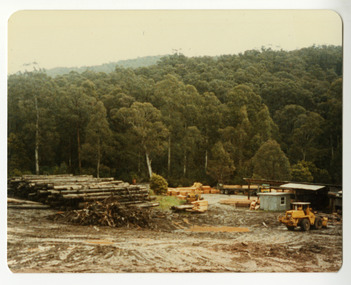
... It played a central role in the region's booming post-war logging era. The mill was highly active during the 1950s. ...It played a central role in the region's booming post-war logging era. The mill was highly active during the 1950s. ...A colour photograph taken at Sunds Bros Sawmill in Marysville. Sund's Sawmill (historically operated by Arthur & John Sund and often referenced locally as Sund Stenco) was a prominent mid-century timber mill located in Marysville, Victoria. It played a central role in the region's booming post-war logging era. The mill was highly active during the 1950s. This era marked a peak for Marysville's timber sector, with over 300 men employed across multiple local mills, sustaining nearly 1,000 residents. According to Victoria Government Gazette records from 1958, the Sund brothers operated commercial goods vehicles to transport Mountain ash and other hardwood logs from forest landings in the Mt. Gordon area directly to their mill in Marysville. Sawn timber from the Sund Bros mill was primary distributed to Millard's timber yards at Mt. Evelyn, eventually supplying building blocks across the rapidly growing eastern suburbs of Melbourne.A colour photograph taken at Sunds Bros Sawmill in Marysville.marysville, victoria, australia, arthur sund, john sund, sund stenco, sunds bros sawmill, victorian government gazette 1958, mountain ash, mount gordon, millard's timber yards, mt. evelyn, melbourne, photograph -
 Marysville & District Historical Society
Photograph (item) - Colour photograph, 10-1984
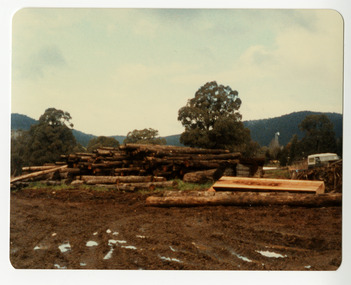
... It played a central role in the region's booming post-war logging era. The mill was highly active during the 1950s. ...It played a central role in the region's booming post-war logging era. The mill was highly active during the 1950s. ...A colour photograph taken at Sunds Bros Sawmill in Marysville. Sund's Sawmill (historically operated by Arthur & John Sund and often referenced locally as Sund Stenco) was a prominent mid-century timber mill located in Marysville, Victoria. It played a central role in the region's booming post-war logging era. The mill was highly active during the 1950s. This era marked a peak for Marysville's timber sector, with over 300 men employed across multiple local mills, sustaining nearly 1,000 residents. According to Victoria Government Gazette records from 1958, the Sund brothers operated commercial goods vehicles to transport Mountain ash and other hardwood logs from forest landings in the Mt. Gordon area directly to their mill in Marysville. Sawn timber from the Sund Bros mill was primary distributed to Millard's timber yards at Mt. Evelyn, eventually supplying building blocks across the rapidly growing eastern suburbs of Melbourne.A colour photograph taken at Sunds Bros Sawmill in Marysville.marysville, victoria, australia, arthur sund, john sund, sund stenco, sunds bros sawmill, victorian government gazette 1958, mountain ash, mount gordon, millard's timber yards, mt. evelyn, melbourne, photograph -
 Marysville & District Historical Society
Photograph (item) - Colour photograph, 10-1984
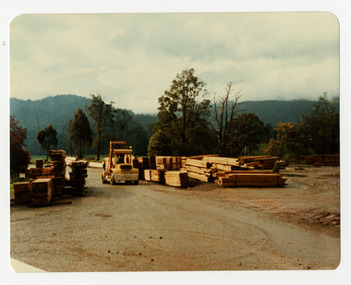
... It played a central role in the region's booming post-war logging era. The mill was highly active during the 1950s. ...It played a central role in the region's booming post-war logging era. The mill was highly active during the 1950s. ...A colour photograph taken at Sunds Bros Sawmill in Marysville. Sund's Sawmill (historically operated by Arthur & John Sund and often referenced locally as Sund Stenco) was a prominent mid-century timber mill located in Marysville, Victoria. It played a central role in the region's booming post-war logging era. The mill was highly active during the 1950s. This era marked a peak for Marysville's timber sector, with over 300 men employed across multiple local mills, sustaining nearly 1,000 residents. According to Victoria Government Gazette records from 1958, the Sund brothers operated commercial goods vehicles to transport Mountain ash and other hardwood logs from forest landings in the Mt. Gordon area directly to their mill in Marysville. Sawn timber from the Sund Bros mill was primary distributed to Millard's timber yards at Mt. Evelyn, eventually supplying building blocks across the rapidly growing eastern suburbs of Melbourne.A colour photograph taken at Sunds Bros Sawmill in Marysville.marysville, victoria, australia, arthur sund, john sund, sund stenco, sunds bros sawmill, victorian government gazette 1958, mountain ash, mount gordon, millard's timber yards, mt. evelyn, melbourne, photograph -
 Marysville & District Historical Society
Photograph (item) - Colour photograph, 10-1984
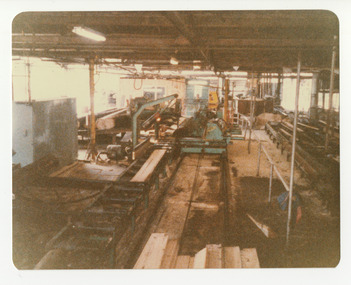
... It played a central role in the region's booming post-war logging era. The mill was highly active during the 1950s. ...It played a central role in the region's booming post-war logging era. The mill was highly active during the 1950s. ...A colour photograph taken at Sunds Bros Sawmill in Marysville. Sund's Sawmill (historically operated by Arthur & John Sund and often referenced locally as Sund Stenco) was a prominent mid-century timber mill located in Marysville, Victoria. It played a central role in the region's booming post-war logging era. The mill was highly active during the 1950s. This era marked a peak for Marysville's timber sector, with over 300 men employed across multiple local mills, sustaining nearly 1,000 residents. According to Victoria Government Gazette records from 1958, the Sund brothers operated commercial goods vehicles to transport Mountain ash and other hardwood logs from forest landings in the Mt. Gordon area directly to their mill in Marysville. Sawn timber from the Sund Bros mill was primary distributed to Millard's timber yards at Mt. Evelyn, eventually supplying building blocks across the rapidly growing eastern suburbs of Melbourne.A colour photograph taken at Sunds Bros Sawmill in Marysville.marysville, victoria, australia, arthur sund, john sund, sund stenco, sunds bros sawmill, victorian government gazette 1958, mountain ash, mount gordon, millard's timber yards, mt. evelyn, melbourne, photograph -
 Melbourne Legacy
Letter, Enez Domec-Carre, 1971
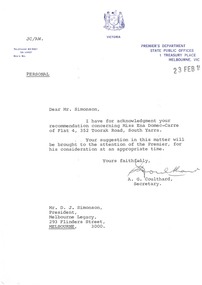
... In the post World War II baby boom the Legacy evening classes were attended by about 400 girls. ...In the post World War II baby boom the Legacy evening classes were attended by about 400 girls. ...A letter from the Secretary of the Victorian Premier's Department dated 23 February 1971 acknowledging the recommendation by President D.J. Simonson that Miss Ena (Enez) Domec-Carre be honoured. The suggestion bore fruit in the Queen's Birthday honours that year and Miss Domec-Carre was awarded the MBE. Miss Domec-Carre joined Melbourne Legacy in 1932 and became the chief instructor of girls' physical education until she retired aged 65. In the post World War II baby boom the Legacy evening classes were attended by about 400 girls. She helped organise Legacy Widows and Legatee wives to sew the costumes for performances. Among her proudest moments was a display by 1000 Junior Legatees at the MCG during the 1954 visit of Queen Elizabeth II. As well her work for Legacy she ran physical education, ballroom dancing and debutante preparation classes in Windsor, Elsternwick, Gardenvale and Geelong. See also Cat.No. 00978Primary source material for a dedicated teacher of both in Legacy and the wider community.Sheet of white letterhead, blue print and black type.Signed in black ballpoint 'A.G. Coulthard'girls' classes, enez domec carre -
 Marysville & District Historical Society
Photograph (item) - Colour photograph, 1970s
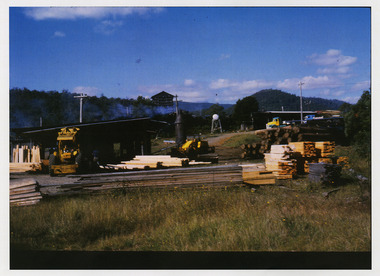
... It played a central role in the region's booming post-war logging era. The mill was highly active during the 1950s. ...It played a central role in the region's booming post-war logging era. The mill was highly active during the 1950s. ...A copy of a colour photograph taken at Sunds Bros Sawmill located in Marysville. The original photograph was taken in the 1970s. Sund's Sawmill (historically operated by Arthur & John Sund and often referenced locally as Sund Stenco) was a prominent mid-century timber mill located in Marysville, Victoria. It played a central role in the region's booming post-war logging era. The mill was highly active during the 1950s. This era marked a peak for Marysville's timber sector, with over 300 men employed across multiple local mills, sustaining nearly 1,000 residents. According to Victoria Government Gazette records from 1958, the Sund brothers operated commercial goods vehicles to transport Mountain ash and other hardwood logs from forest landings in the Mt. Gordon area directly to their mill in Marysville. Sawn timber from the Sund Bros mill was primary distributed to Millard's timber yards at Mt. Evelyn, eventually supplying building blocks across the rapidly growing eastern suburbs of Melbourne.A copy of a colour photograph taken at Sunds Bros Sawmill located in Marysville. The original photograph was taken in the 1970s.marysville, victoria, australia, arthur sund, john sund, sund stenco, sunds bros sawmill, victorian government gazette 1958, mountain ash, mount gordon, millard's timber yards, mt. evelyn, melbourne, photograph -
 Marysville & District Historical Society
Photograph (item) - Black and white photograph, Unknown
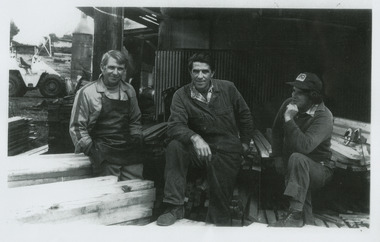
... It played a central role in the region's booming post-war logging era. The mill was highly active during the 1950s. ...It played a central role in the region's booming post-war logging era. The mill was highly active during the 1950s. ...A copy of a black and white photograph of Bill, Allan and Len Sund who at one stage operated the Sunds Bros Sawmill in Marysville. Sund's Sawmill (historically operated by Arthur & John Sund and often referenced locally as Sund Stenco) was a prominent mid-century timber mill located in Marysville, Victoria. It played a central role in the region's booming post-war logging era. The mill was highly active during the 1950s. This era marked a peak for Marysville's timber sector, with over 300 men employed across multiple local mills, sustaining nearly 1,000 residents. According to Victoria Government Gazette records from 1958, the Sund brothers operated commercial goods vehicles to transport Mountain ash and other hardwood logs from forest landings in the Mt. Gordon area directly to their mill in Marysville. Sawn timber from the Sund Bros mill was primary distributed to Millard's timber yards at Mt. Evelyn, eventually supplying building blocks across the rapidly growing eastern suburbs of Melbourne.A copy of a black and white photograph of Bill, Allan and Len Sund who at one stage operated the Sunds Bros Sawmill in Marysville.marysville, victoria, australia, arthur sund, john sund, sund stenco, sunds bros sawmill, victorian government gazette 1958, mountain ash, mount gordon, millard's timber yards, mt. evelyn, melbourne, photograph, bill sund, allan sund, len sund -
 Marysville & District Historical Society
Ephemera (item) - Bookmark, Heritage & Heritage Funerals, 05-2019
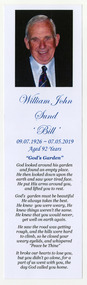
... It played a central role in the region's booming post-war logging era. The mill was highly active during the 1950s. ...It played a central role in the region's booming post-war logging era. The mill was highly active during the 1950s. ...A bookmark that was available to attendees at Bill Sund's funeral. The Sund family owned and operated a timber sawmill in Marysville. Sund's Sawmill (historically operated by Arthur & John Sund and often referenced locally as Sund Stenco) was a prominent mid-century timber mill located in Marysville, Victoria. It played a central role in the region's booming post-war logging era. The mill was highly active during the 1950s. This era marked a peak for Marysville's timber sector, with over 300 men employed across multiple local mills, sustaining nearly 1,000 residents. According to Victoria Government Gazette records from 1958, the Sund brothers operated commercial goods vehicles to transport Mountain ash and other hardwood logs from forest landings in the Mt. Gordon area directly to their mill in Marysville. Sawn timber from the Sund Bros mill was primary distributed to Millard's timber yards at Mt. Evelyn, eventually supplying building blocks across the rapidly growing eastern suburbs of Melbourne.A bookmark that was available to attendees at Bill Sund's funeral. The Sund family owned and operated a timber sawmill in Marysville.marysville, victoria, australia, arthur sund, john sund, sund stenco, sunds bros sawmill, victorian government gazette 1958, mountain ash, mount gordon, millard's timber yards, mt. evelyn, melbourne, 2009 black saturday bushfires, william john sund, bookmark -
 Marysville & District Historical Society
Photograph (item) - Colour photograph, 1970s
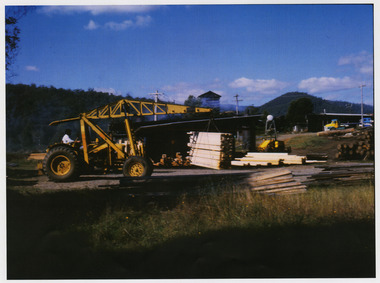
... It played a central role in the region's booming post-war logging era. The mill was highly active during the 1950s. ...It played a central role in the region's booming post-war logging era. The mill was highly active during the 1950s. ...A copy of a colour photograph taken at Sunds Bros Sawmill located in Marysville. The original photograph was taken in the 1970s. Sund's Sawmill (historically operated by Arthur & John Sund and often referenced locally as Sund Stenco) was a prominent mid-century timber mill located in Marysville, Victoria. It played a central role in the region's booming post-war logging era. The mill was highly active during the 1950s. This era marked a peak for Marysville's timber sector, with over 300 men employed across multiple local mills, sustaining nearly 1,000 residents. According to Victoria Government Gazette records from 1958, the Sund brothers operated commercial goods vehicles to transport Mountain ash and other hardwood logs from forest landings in the Mt. Gordon area directly to their mill in Marysville. Sawn timber from the Sund Bros mill was primary distributed to Millard's timber yards at Mt. Evelyn, eventually supplying building blocks across the rapidly growing eastern suburbs of Melbourne.A copy of a colour photograph taken at Sunds Bros Sawmill located in Marysville. The original photograph was taken in the 1970s.marysville, victoria, australia, arthur sund, john sund, sund stenco, sunds bros sawmill, victorian government gazette 1958, mountain ash, mount gordon, millard's timber yards, mt. evelyn, melbourne, photograph -
 Marysville & District Historical Society
Ephemera (item) - Thank you card, 'Back to the Bush', 2009
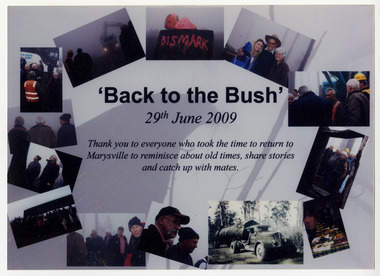
... It played a central role in the region's booming post-war logging era. The mill was highly active during the 1950s. ...It played a central role in the region's booming post-war logging era. The mill was highly active during the 1950s. ...A thank you card that was sent by the Sund family to attendees of a function that was held some four months after the 2009 Black Saturday bushfires that destroyed the majority of the township of Marysville. The Sund family owned and operated a timber sawmill in Marysville. Sund's Sawmill (historically operated by Arthur & John Sund and often referenced locally as Sund Stenco) was a prominent mid-century timber mill located in Marysville, Victoria. It played a central role in the region's booming post-war logging era. The mill was highly active during the 1950s. This era marked a peak for Marysville's timber sector, with over 300 men employed across multiple local mills, sustaining nearly 1,000 residents. According to Victoria Government Gazette records from 1958, the Sund brothers operated commercial goods vehicles to transport Mountain ash and other hardwood logs from forest landings in the Mt. Gordon area directly to their mill in Marysville. Sawn timber from the Sund Bros mill was primary distributed to Millard's timber yards at Mt. Evelyn, eventually supplying building blocks across the rapidly growing eastern suburbs of Melbourne.A thank you card that was sent by the Sund family to attendees of a function that was held some four months after the 2009 Black Saturday bushfires that destroyed the majority of the township of Marysville. The Sund family owned an operated a timber sawmill in Marysville.marysville, victoria, australia, arthur sund, john sund, sund stenco, sunds bros sawmill, victorian government gazette 1958, mountain ash, mount gordon, millard's timber yards, mt. evelyn, melbourne, photograph, 2009 black saturday bushfires -
 Melbourne Legacy
Letter, Enez Domec-Carre, 01/01/1959
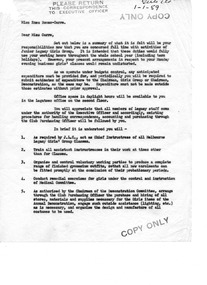
... In the post World War II baby boom the Legacy evening classes were attended by about 400 girls. ...In the post World War II baby boom the Legacy evening classes were attended by about 400 girls. ...A letter of appointment to Miss Enez Domec-Carre outlining duties and remuneration for Chief Instructress of all Melbourne Legacy Girls' Group Classes. Enez was the supervisor of the girls classes held at Legacy House for many years. She organised many annual demonstrations and was held in high regard by Legacy. The library at Legacy House is named in her honour. See also a newspaper article at 00978 which outlines her achievements, a summary of her career at 00458 and 00129. She was a former Miss Victoria and was known for her physical education skills and for introducing grace and culture to Melbourne. In 1932 she joined Melbourne Legacy as assistant to Mrs Gilles (wife of a Legatee) later became the chief instructor of girls' physical education until she retired aged 65. In the post World War II baby boom the Legacy evening classes were attended by about 400 girls. She helped organise Legacy Widows and Legatee wives to sew the costumes for performances. Among her proudest moments was a display by 1000 Junior Legatees at the MCG during the 1954 visit of Queen Elizabeth II. As well her work for Legacy she ran physical education, ballroom dancing and debutante preparation classes.A record of the appointment and duties of Miss Enez Domec-Carre as Chief Instructress of Legacy Girls' ClassesWhite quarto paper carbon copy, a letter x 2 pages to Enez Domec-CarreHandwritten "Girls classes 1-1-59" Stamped "COPY ONLY" and "PLEASE RETURN THIS CORRESPONDENCE TO EXECUTIVE OFFICER"annual demonstration, girls' classes, enez domec carre -
 Melbourne Legacy
Document - Speech, Miss Enez Domec-Carre, 1970
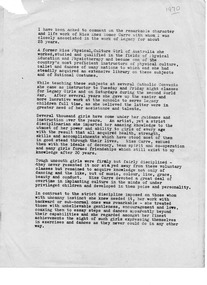
... In the post World War II baby boom the Legacy evening classes were attended by about 400 girls. ...In the post World War II baby boom the Legacy evening classes were attended by about 400 girls. ...A narrative of Miss Enez Domec-Carre's work with Melbourne Legacy. Appears to be text of a speech made on her retirement which was on 31 December 1970. Enez was the supervisor of the girls classes held at Legacy House for 36 years. She organised many annual demonstrations and was held in high regard by Legacy. The library at Legacy House is named in her honour. See also a newspaper article at 00978 which outlines her achievements, a summary of her career at 00458 and 00129. She was a former Miss Victoria and was known for her physical education skills and for introducing grace and culture to Melbourne. In 1932 she joined Melbourne Legacy as assistant to Mrs Gilles (wife of a Legatee) later became the chief instructor of girls' physical education until she retired aged 65. In the post World War II baby boom the Legacy evening classes were attended by about 400 girls. She helped organise Legacy Widows and Legatee wives to sew the costumes for performances. Among her proudest moments was a display by 1000 Junior Legatees at the MCG during the 1954 visit of Queen Elizabeth II. As well her work for Legacy she ran physical education, ballroom dancing and debutante preparation classes.Description of the contribution to the work of Melbourne Legacy by Miss Carre with Girls' Classes and in other areas.Off-white photocopy of typed speech by W.V. Scott. 3 pages.Top right corner of page one "1970" handwritten in blue pen. "W.V. Scott" handwritten in blue pen following text on page three.girls' classes, annual demonstration, enez domec carre -
 Melbourne Legacy
Letter, Enez Domec-Carre, 10/07/1970
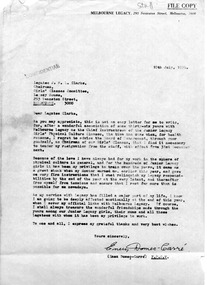
... In the post World War II baby boom the Legacy evening classes were attended by about 400 girls. ...In the post World War II baby boom the Legacy evening classes were attended by about 400 girls. ...Photocopy of a typed letter from Enez Domec-Carre to Legatee J.M.L. Clarke, Chairman of Girls' Classes Committee, tendering her resignation effective from 31st December 1970. Enez was the supervisor of the girls classes held at Legacy House for many years. She organised many annual demonstrations and was held in high regard by Legacy. The library at Legacy House is named in her honour. See also a newspaper article at 00978 which outlines her achievements, a summary of her career at 00458 and 00129. She was a former Miss Victoria and was known for her physical education skills and for introducing grace and culture to Melbourne. In 1932 she joined Melbourne Legacy as assistant to Mrs Gilles (wife of a Legatee) later became the chief instructor of girls' physical education until she retired aged 65. In the post World War II baby boom the Legacy evening classes were attended by about 400 girls. She helped organise Legacy Widows and Legatee wives to sew the costumes for performances. Among her proudest moments was a display by 1000 Junior Legatees at the MCG during the 1954 visit of Queen Elizabeth II. As well her work for Legacy she ran physical education, ballroom dancing and debutante preparation classes.Resignation of Miss Enez Domec-Carre as Chief Instructress of Legacy Girls' Classes after having served Legacy for 36 years.Off-white foolscap paper photocopy of a typed letter from Enez Domec-Carre to Legatee J.M.L. ClarkeStamped in purple "CONFIDENTIAL". "COPY TO .... FOR INFORMATION ONLY" and blue handwriting "Executive Officer"girls' classes, enez domec carre -
 Melbourne Legacy
Newspaper - Article, Salute to a Legacy Veteran, 1988
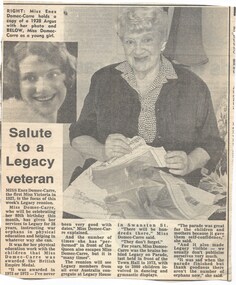
... In the post World War II baby boom the Legacy evening classes were attended by about 400 girls. ...In the post World War II baby boom the Legacy evening classes were attended by about 400 girls. ...A newspaper article published in The Sun on 25 March 1988 as Legacy was preparing to celebrate the a Legacy reunion featuring Miss Enez Domec-Carre who was turning 80. Enez was the supervisor of the girls classes held at Legacy House for many years - 38 years according to this article. She organised many annual demonstrations and was held in high regard by Legacy. The library at Legacy House is named in her honour. See also a newspaper article at 00978 which outlines her achievements, a summary of her career at 00458 and 00129. She was a former Miss Victoria and was known for her physical education skills and for introducing grace and culture to Melbourne. In 1932 she joined Melbourne Legacy as assistant to Mrs Gilles (wife of a Legatee) later became the chief instructor of girls' physical education until she retired aged 65. In the post World War II baby boom the Legacy evening classes were attended by about 400 girls. She helped organise Legacy Widows and Legatee wives to sew the costumes for performances. Among her proudest moments was a display by 1000 Junior Legatees at the MCG during the 1954 visit of Queen Elizabeth II. As well her work for Legacy she ran physical education, ballroom dancing and debutante preparation classes.A record that Legacy was saluting the hard work of Miss Domec-Carre in 1988.Newspaper cutting about Miss Enez Domec-Carre in 1988.girls' classes, enez domec carre
