
Showing 97 items matching "professions australia"
-
 Returned Nurses RSL Sub-branch
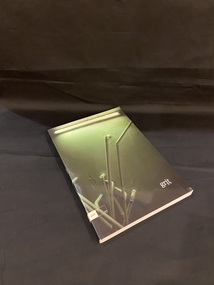
Book - Paperback book, Richard Nile et al, Grit, 2003
... Professions Australia...Page 39 - 'The age of transition: nursing and caring in the Nineteenth Century' by Wendy Madsen Page 47 - 'Nursing Gallipoli: identity and the challenge of experience' by Janet Butler Professions Australia Nurses Gallipoli Australian Nurses Janet Butler Grit is an issue of the Journal of Australian Studies, no. 78, 2003--[Title page verso]. ...Grit is an issue of the Journal of Australian Studies, no. 78, 2003--[Title page verso].Dark green paperback book with a dimly lit concrete wall on the cover . There is a fluorescent strip light across the top and multiple water pipes coming out of the wall. 'grit' is printed in white text in the lower right corner.non-fictionGrit is an issue of the Journal of Australian Studies, no. 78, 2003--[Title page verso].professions australia, nurses, gallipoli, australian nurses, janet butler -
 Moorabbin Air Museum
Book - Broad scope review of the current RAAF training, lifestyles, professions etc, ROYAL AUSTRALIAN AIR FORCE 2001, Fine Line Publishing Pty Ltd, ROYAL AUSTRALIAN AIR FORCE 2001, 2001
... Broad scope review of the current RAAF training, lifestyles, professions etc, ROYAL AUSTRALIAN AIR FORCE 2001...Broad scope review of the current RAAF training, lifestyles, professions etc, ROYAL AUSTRALIAN AIR FORCE 2001 Broad scope review of the current RAAF training, lifestyles, professions etc, ROYAL AUSTRALIAN AIR FORCE 2001 Jacket cover showing colour photo of RAAF Airwomen with sword and jet below ROYAL AUSTRALIAN AIR FORCE 2001 Book Broad scope review of the current RAAF training, lifestyles, professions etc, ROYAL AUSTRALIAN AIR FORCE 2001 Fine Line Publishing Pty Ltd ...Broad scope review of the current RAAF training, lifestyles, professions etc, ROYAL AUSTRALIAN AIR FORCE 2001Jacket cover showing colour photo of RAAF Airwomen with sword and jet belownon-fictionBroad scope review of the current RAAF training, lifestyles, professions etc, ROYAL AUSTRALIAN AIR FORCE 2001 -
 Alfred Hospital Nurses League - Nursing History Collection
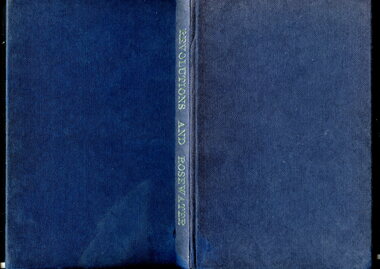
Book - Illustrated book, Maureen K. Minchin, Revolutions and rosewater: the evolution of nurse registration in Victoria 1923-1973, 1977
... Victoria was the third state to pass legislation to make nursing a registered profession in 1923. South Australia was the first (1920) and Western Australia the second (1922)....Victoria was the third state to pass legislation to make nursing a registered profession in 1923. South Australia was the first (1920) and Western Australia the second (1922). ...The evolution of nurse registration in Victoria 1923-1973.Illustrated book bound in dark blue with title printed in gold ink on spine.non-fictionThe evolution of nurse registration in Victoria 1923-1973.nurses, nursing, nursing registraiotn -victoria-history -
Australian Nursing & Midwifery Federation
32-minute video documentary on 1986 Victorian nurses strike, Breaking point: the 1986 nurses strike, 10 years on, 1998
... Australian Nurses). In this film, it is not primarily images of striking nurses and the words of striking nurses that tell the story, but the voice-over. The narrator (Patrick J. Bonello) positions the strike alongside other national and world events of 1986, ‘the year that changed the nursing profession in Australia forever’. ...Australian Nurses). In this film, it is not primarily images of striking nurses and the words of striking nurses that tell the story, but the voice-over. The narrator (Patrick J. Bonello) positions the strike alongside other national and world events of 1986, ‘the year that changed the nursing profession in Australia forever’. ...In October 1986, Victorian nurses began an historic strike action which was to last 50 days. Breaking Point (1998) is a retrospective work, reflecting on the 10 years following the 1986 Victorian strike. It was produced by Mark Bird and Nicholas Bird (of Waterbyrd Filmz, the production company that, as outlined above, also made Vivien Bullwinkel, Nurse TV and Australian Nurses). In this film, it is not primarily images of striking nurses and the words of striking nurses that tell the story, but the voice-over. The narrator (Patrick J. Bonello) positions the strike alongside other national and world events of 1986, ‘the year that changed the nursing profession in Australia forever’. In this film, the strike is framed as a pivotal one in the history of Australian nurses, and one that affected individual nurses deeply and transformed their profession irrevocably. There is a conscious discussion on the emotional effects of the 1986 strike – relationships broke up, people had no money, unionists could not feed their families, it was hard to keep going, families fought over the strike, picketing nurses recalled getting spat at, and there was even a death threat. [Description adapted from Milner & Brigden, 2014, pp. 116; 118]39 minute video file (.mp4 multimedia format), transferred from original videocassette. In colour, with sound. Original was released with a booklet explaining the broader context for the documentary.labor, labour history, nurses, royal australian nursing federation, strikes, industrial action, film, trade unions, 1986 victorian nurses strike, nursing, strike action, unionism, women, irene bolger, john cain, david white -
 Flagstaff Hill Maritime Museum and Village
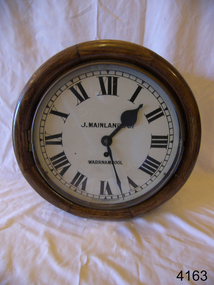
Clock, 1890s
... Australia in the late 1880s eventually settling in Walhalla Victoria where he became chief of the fire brigade for ten years before moving to Warrnambool. Gertrude Emily born 1872 met and married John G Mainland after he had increased his skills to become an optician. In Jan 1892 opened a business in Liebig St Warrnambool the sign outside his premises read, (J Mainland Watchmaker Jeweler and Optician). While he was establishing his business and profession...Australia in the late 1880s eventually settling in Walhalla Victoria where he became chief of the fire brigade for ten years before moving to Warrnambool. Gertrude Emily born 1872 met and married John G Mainland after he had increased his skills to become an optician. In Jan 1892 opened a business in Liebig St Warrnambool the sign outside his premises read, (J Mainland Watchmaker Jeweler and Optician). While he was establishing his business and profession ...John Gall Mainlands father John Mainland Snr. was born in 1835 in the town of Lerwick in the Shetland Isles off the coast of Scotland. At the age of fifteen, he migrated to the South Island of New Zealand where he trained as a carpenter/builder after settling in Oamaru where he soon became a prominent citizen. He was for many years the Chairman of the Hospital Board and Captain of the fire brigade (which he founded). Mary Gall, Johns wife had also migrated with her family from Glasgow Scotland in 1837 at the age of thirteen to New Zealand where she had met and married John Mainland and in 1866 John Gall Mainland the second eldest of their six children was born. After John Gall Mainland Jnr. had trained as a jeweller and watchmaker he also developed itchy feet and left New Zealand for Australia in the late 1880s eventually settling in Walhalla Victoria where he became chief of the fire brigade for ten years before moving to Warrnambool. Gertrude Emily born 1872 met and married John G Mainland after he had increased his skills to become an optician. In Jan 1892 opened a business in Liebig St Warrnambool the sign outside his premises read, (J Mainland Watchmaker Jeweler and Optician). While he was establishing his business and profession John had set about contributing to the cultural and business life of the Warrnambool community. One of his many community commitments was with the scouting movement where he became a King Scout and an original charter member of the Warrnambool Rotary Club.The clock was made by an early Warrnambool business identity who had also made an important contribution to the local community over the years through his involvement with Rotary as a founding member the fire brigade. Having an item that was made by John Mainland during the early development of Warrnambool and in such good condition is in itself significant, it's provenance is well established and it is another piece of local history that further tells a story of Warrnambool's cultural life and early development in the 1890s. Wall Clock, circular in a wooden case Roman numerals on a twelve hour dialName of maker to dial face "J Mainland & Co Warrnambool"flagstaff hill, warrnambool, shipwrecked-coast, flagstaff-hill, flagstaff-hill-maritime-museum, maritime-museum, shipwreck-coast, flagstaff-hill-maritime-village, warrnambool clock maker, john mainland, john gall mainland, mary gall, clock maker, optician, jeweller -
 Federation University Historical Collection
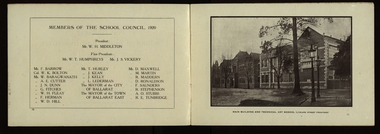
Booklet, The Ballarat School of Mines and Industries 1870-1920 Jubilee Booklet, 1920 (estimated)
... School of Mines boys have played a great part in developing the mining fields of Western Australia, South Australia, and africa, while old students who have made a name in their profession are constantly dropping in to see how the old place is getting along. ...School of Mines boys have played a great part in developing the mining fields of Western Australia, South Australia, and africa, while old students who have made a name in their profession are constantly dropping in to see how the old place is getting along. ...The first school of Mines in Australia was established at Ballarat in 1870. At the time of its jubilee (1930) the following people were members of the School Council: W.H. Middleton (President), W.T. Humphreys (VP), J.S. Vickery (VP), F. Barrow, Col. W.K. Bolton, William Baragwanath, A.E. Cutter, J.N. Dunn, G. Fitches, W.H. Fleay, F. Herman. W.D. Hill, T. Hurley, K. Kean. J. Kelly, L. Lederman, Mayor of Ballarat, Mayour of Ballarat East, D. Maxwell, M. Martin, R. Maddern, D. Ronaldson, F. Saunders, R. Stephenson, A.O. Stubbs, R.E. Tunbridge. The School Staff in 1920 comprised: Herbert H. Smith, Walter Rowbotham, Reginald L. Cutter, M.C. Young, Hilda Wardle, M. Wiliamson, P.S. Richards, L.H. Archibald, J. Woods, Ken Moss, W. Kenneth, Mrs McIlvena. B. Robinson, S. Rowe, E. Hope-Jones, Miss Abrams, L.St.G.P. Austin, Alfred Mica Smith, J.R. Pound, Herbert R. Murphy, N.H. Junner, Maurice Copland, L.H. Archibald, E.J.A. McConnon, Newton King, D.m. Hull, T.R. Gordon, John M. Sutherland, T.K. Jebb, Dick Richards, C. Tonkin, A.W. Steane, J. Paterson, H.W. Malin, R.V. Maddison, S.M. Mayo, F.A. King, W.H. Steane, T.R. Gordon, T.A. Williams, H. Waldron, G. Black, E.J. McConnon, R.V. Duncan. R. Cutter, E.G. Vawdrey, Hilda WardleWhite stapled booklet - landscape format - 20pp + soft covers with blue writing. Includes an historical sketch of the Ballarat School of Mines. Contains images of the school from around 1920. The history outlined in the booklet follows: 'Ballarat has helped to influence the life and destinies of Australia in many ways, the recital of which would perhaps prove tedious to the citizens of less favoured localities! However, it can be said, without much fear of contradiction, that only less known thought Australia than its fame as a gold field is the reputation won for it by its school of Mines, ... Ballarat was still quite a new place when the School was founded, but a very propserous and popular place all the same, with a go-ahead lot of citizens brim full of the spirit of enterprise which seemsto animate mining populations generally. Money was plentiful, and they launched out into ventures, which later, were to develop and take the place of the gold mines, while what is more to the point, they understood the value of education. the old digging days were passing away. So far as Ballarat itself was concerned the day of the cradle and tin dish had already passed into an antiquity "as dead and distant as the age of the Tubal Caon," said dir redmond Barry on declaring the School open. Mining had become a serious business, and the mining engineer, the metallurgist, and the geologist had become a power in the land. In these circumstances the suggestions to found a School of Mines met with ready acceptance. The late Mr James M. Bickett had the honor of bringing forward the proposition at a meeting of the Ballarat Mining Board in October, 1869. it was agreed to, and the Government, having been approached for assistance, granted a lease of the old Supreme Court buildings at a nominal reantal. A modest sum, including 100 pounds from the Borough Council of Ballarat West, was subscribed by a number of sympathisers, and on the 26th October, 1870, the inaugural address was delivered by Sir Redmond Barry, the first President of the School. Classes were commenced on the 23rd January, 1871. The students at first were mostly adults. They were chiefly men emloyed at the mines, who had the wisdom and energy to devote their spare time to study, and, though their attendance was somewhat irregular, they made very good progress. Old prints which have been preserved show them at work at furnaces, big bearded men of the old-fashioned type of miner. It is interesting to note that among those who gave evidence and encouragement was Sir Roderick Murchison, who many years before had advised Cornish miners to emigrate to Australia to search for gold, and who in 1848 was in possession of gold ore sent from this country. Sir Roderick sent a parcel of books for the library, and gave useful advice as to the curriculum which should be adopted. The Museum, which now contains a most valuable collection of minerals, was one of the first things attended to, and the reports presented to the Council from time to time speak of additions being made from all parts of the world. New equipment was constantly being added to the School, a good deal of assay work was done, and some specimens were sent from the East Indies for examination as far back as 1873. By this time there was a difficulty in providing accomodation for the students who wished to enrol, and the number of instructors had grown from two to four. In 1882 the first building was being erected on what was then part of the gaol reserve. A little more than ten years afterwards a buildnig formerly serving as a Methodist Church was absorbed, while later on, the demand for accomodation increasing, the attack upon the gaol was renewed. The School continued to grow in reputation and size, and became the science centre of the district, and in 1889 a learge new building was opened by Sir Alexander Peacock. Students came from over seas as well as from all the States of Australia, and after going through their courses they took with them the name and fame of the old School to all parts of the globe. School of Mines boys have played a great part in developing the mining fields of Western Australia, South Australia, and africa, while old students who have made a name in their profession are constantly dropping in to see how the old place is getting along. It was not to be expected, however, that the Ballarat School would be left without rivals, its very success inspiring competition. Mining Schools were started in other parts of Australia, and, at the same time, Victoria ceased to hold first place as a mining state. On the other hand there was a great advance in manufacturing, and the demand for technicaly trained men became a great and as insistent as ever it had been for trained mining men. The Council was quick to adapt the school to the new conditions, and the result is seen in the institution, which is one of Ballarat's proudest possession. Instruction is given in all branches of technical work, and the classes are filled with students who are building up for Ballarat a reputation as an industrial centre, which promises to equal that which it formerly held as a mining town. Owing to its bracing climate, its abundant opportunities for recreations, and its accessibilty, Ballarat as a city is an ideal place for educational purposed, and is yearly becoming more and more appreciated throughout the State. The chairman of one of Ballarat's biggests industries claims that the workman can do twice the day's work here that he can do in Melbourne. he was a little enthusiastic over it, perhaps, but it is a well-known fact that the healthy and invigourating Ballarat climate is conducive to both physical and mental activity, and the records of the School provide ample proof of it. One of the most interesting and successful branches of the School of Mines and Industries - if the name be enlarged with the enlargement of its scope - is the Technical Art School. "The City of Statues" has from its earliest days been a stronghold of art. Art schools have flourised here, and in 1905 the Education Department came to the conclusion that the best thing to do with them was to place them under the management of the School of Mines Council. A magnificent new Technical Art School was built at a cost of some 12,000 pounds on the site of the old Supreme Court building, and was formally opened on the 23rd July, 1915. The results have not only been justified but surpassed all anticipations. The most comprehensive list of subjects is taught, and this list is constantly added to. Students have flocked to the art School, which may be said to occupy a unique position in Australia, and its record of success is really astonishing. Its students supply art teachers for the newer schools that are being built, and many occupy leading positinos in important business houses. So well is its reputation known that orders are constantly being received, not only from Victoria, but from other States, for honor boards and challenge shields to be designed and made. The most recent addition to the School of Mines and Industries is the Junior Technical School, for which a new building is now being erected on a portion of the gaol site, transferred to the School of Mines Counci by the Government. At the present moment temporary quarters are being occupied. Some students after passing through the Junior School go straight to employment, continuing perhaps to attend the evening trade classes, while others move on to the senior School. In a review of the work of the School of Mines mention must be made of a series of industrial research carried out under supervision of the Principal. One in particular, regarding the suitability of the local ores for the manufacture of pigments attracted much attention, while the experiemtns on the manufacture of white potery from Victorian clayes were considered of sufficient importance by the Federal Advisory Council of Science and Industry to warrant the appointment of a special investigator. The results of these have been most encouraging, and may have far-reaching consequences. The vocational training of returned soldiers also should not be overlooked. The work was taken in hand from the first, before the Repatriation Department gave assistance, and now with the help of the department of the School has become one of the largest vocational training centres in Victoria outside of Melbourne. The soldiers, trained in a variety of occupations, have made remarkable progress, and already considerable numbers have found employment in local workshops and factories. To sum up, the School is divided into the following departments, each well staffed and equipped: - The School of Mines, science, and Engineering; the Techncial Art School, the Boys' Junior Technical School, the Girl's Preparatory Technical Classes, Trade Classes, and the Commercial School. The school of Mines, science and Engineering, comprises the following branches: - Mining, Metallurgy, Geology, Electrical Engineering, Civil Engineering, Mechanical Engineering, Applied Chemistry, and Pharmacy. Battery treatments, Cyanide Testing, Smelting, Assays, and Clay Testing from a regular part of the School's work. Students gaining qualifications obtain concession in their courses at the university, should they proceed there to continue their studies. The technical Art school curriculum includes training in all branches of pictorial and applied art, an Architectural Diploma Course, a Draughtman's Course, technical Art teachers' Course, Photography,Ticket Writing, Art Metal Work, Woodcarving, Needlework, and Leather work. The Trade Classes give instruction in Telephone Mechanics, telegraphy, Carpentry, Cabinet Making, Plumbing, Blacksmithing, Fitting, Electric Wiring, and Printing. Numerous Scholarships are offered every year, and altogether students will find few places to equal the Ballarat School of Mines and Industries as a training place for their life's work. One of the first in the continent to be established, its Jubilee finds it still in the front rank, keeping pace with the times, and offering to the youths of this country the means of taking advantage of Australia's teeming opportunities. william, battery, smith, herbert, drawing from the antique, ballarat school of mines botanical gardens, ballarat school of mines, redmond barry, alfred mica smith, james bickett, museum, dick richards, ballarat junior technical school, s m b, ballarat school of mines and industries, ballarat technical art school, model mine, james m bickett, j m bickett, roderick murchison, vocational training rooms, wesley church, methodist church, alexander peacock, lathes, repatriation, repatriatin department, war service, school council, baragwanath, gold mining, mining laboratory, plaster cast, r.w. richards, anniversary, jubilee -
Federation University Historical Collection
Booklet, The Ballarat School of Mines and Industries 1870-1920 Jubilee Booklet, 1920 (estimated)
... School of Mines boys have played a great part in developing the mining fields of Western Australia, South Australia, and africa, while old students who have made a name in their profession are constantly dropping in to see how the old place is getting along. ...School of Mines boys have played a great part in developing the mining fields of Western Australia, South Australia, and africa, while old students who have made a name in their profession are constantly dropping in to see how the old place is getting along. ...The first school of Mines in Australia was established at Ballarat in 1870. At the time of its jubilee (1930) the following people were members of the School Council: W.H. Middleton (President), W.T. Humphreys (VP), J.S. Vickery (VP), F. Barrow, Col. W.K. Bolton, William Baragwanath, A.E. Cutter, J.N. Dunn, G. Fitches, W.H. Fleay, F. Herman. W.D. Hill, T. Hurley, K. Kean. J. Kelly, L. Lederman, Mayor of Ballarat, Mayour of Ballarat East, D. Maxwell, M. Martin, R. Maddern, D. Ronaldson, F. Saunders, R. Stephenson, A.O. Stubbs, R.E. Tunbridge. The School Staff in 1920 comprised: Herbert H. Smith, Walter Rowbotham, Reginald L. Cutter, M.C. Young, Hilda Wardle, M. Wiliamson, P.S. Richards, L.H. Archibald, J. Woods, Ken Moss, W. Kenneth, Mrs McIlvena. B. Robinson, S. Rowe, E. Hope-Jones, Miss Abrams, L.St.G.P. Austin, Alfred Mica Smith, J.R. Pound, Herbert R. Murphy, N.H. Junner, Maurice Copland, L.H. Archibald, E.J.A. McConnon, Newton King, D.m. Hull, T.R. Gordon, John M. Sutherland, T.K. Jebb, Dick Richards, C. Tonkin, A.W. Steane, J. Paterson, H.W. Malin, R.V. Maddison, S.M. Mayo, F.A. King, W.H. Steane, T.R. Gordon, T.A. Williams, H. Waldron, G. Black, E.J. McConnon, R.V. Duncan. R. Cutter, E.G. Vawdrey, Hilda WardleWhite stapled booklet - landscape format - 20pp + soft covers with blue writing. Includes an historical sketch of the Ballarat School of Mines. Contains images of the school from around 1920. The history outlined in the booklet follows: 'Ballarat has helped to influence the life and destinies of Australia in many ways, the recital of which would perhaps prove tedious to the citizens of less favoured localities! However, it can be said, without much fear of contradiction, that only less known thought Australia than its fame as a gold field is the reputation won for it by its school of Mines, ... Ballarat was still quite a new place when the School was founded, but a very propserous and popular place all the same, with a go-ahead lot of citizens brim full of the spirit of enterprise which seemsto animate mining populations generally. Money was plentiful, and they launched out into ventures, which later, were to develop and take the place of the gold mines, while what is more to the point, they understood the value of education. the old digging days were passing away. So far as Ballarat itself was concerned the day of the cradle and tin dish had already passed into an antiquity "as dead and distant as the age of the Tubal Caon," said dir redmond Barry on declaring the School open. Mining had become a serious business, and the mining engineer, the metallurgist, and the geologist had become a power in the land. In these circumstances the suggestions to found a School of Mines met with ready acceptance. The late Mr James M. Bickett had the honor of bringing forward the proposition at a meeting of the Ballarat Mining Board in October, 1869. it was agreed to, and the Government, having been approached for assistance, granted a lease of the old Supreme Court buildings at a nominal reantal. A modest sum, including 100 pounds from the Borough Council of Ballarat West, was subscribed by a number of sympathisers, and on the 26th October, 1870, the inaugural address was delivered by Sir Redmond Barry, the first President of the School. Classes were commenced on the 23rd January, 1871. The students at first were mostly adults. They were chiefly men emloyed at the mines, who had the wisdom and energy to devote their spare time to study, and, though their attendance was somewhat irregular, they made very good progress. Old prints which have been preserved show them at work at furnaces, big bearded men of the old-fashioned type of miner. It is interesting to note that among those who gave evidence and encouragement was Sir Roderick Murchison, who many years before had advised Cornish miners to emigrate to Australia to search for gold, and who in 1848 was in possession of gold ore sent from this country. Sir Roderick sent a parcel of books for the library, and gave useful advice as to the curriculum which should be adopted. The Museum, which now contains a most valuable collection of minerals, was one of the first things attended to, and the reports presented to the Council from time to time speak of additions being made from all parts of the world. New equipment was constantly being added to the School, a good deal of assay work was done, and some specimens were sent from the East Indies for examination as far back as 1873. By this time there was a difficulty in providing accomodation for the students who wished to enrol, and the number of instructors had grown from two to four. In 1882 the first building was being erected on what was then part of the gaol reserve. A little more than ten years afterwards a buildnig formerly serving as a Methodist Church was absorbed, while later on, the demand for accomodation increasing, the attack upon the gaol was renewed. The School continued to grow in reputation and size, and became the science centre of the district, and in 1889 a learge new building was opened by Sir Alexander Peacock. Students came from over seas as well as from all the States of Australia, and after going through their courses they took with them the name and fame of the old School to all parts of the globe. School of Mines boys have played a great part in developing the mining fields of Western Australia, South Australia, and africa, while old students who have made a name in their profession are constantly dropping in to see how the old place is getting along. It was not to be expected, however, that the Ballarat School would be left without rivals, its very success inspiring competition. Mining Schools were started in other parts of Australia, and, at the same time, Victoria ceased to hold first place as a mining state. On the other hand there was a great advance in manufacturing, and the demand for technicaly trained men became a great and as insistent as ever it had been for trained mining men. The Council was quick to adapt the school to the new conditions, and the result is seen in the institution, which is one of Ballarat's proudest possession. Instruction is given in all branches of technical work, and the classes are filled with students who are building up for Ballarat a reputation as an industrial centre, which promises to equal that which it formerly held as a mining town. Owing to its bracing climate, its abundant opportunities for recreations, and its accessibilty, Ballarat as a city is an ideal place for educational purposed, and is yearly becoming more and more appreciated throughout the State. The chairman of one of Ballarat's biggests industries claims that the workman can do twice the day's work here that he can do in Melbourne. he was a little enthusiastic over it, perhaps, but it is a well-known fact that the healthy and invigourating Ballarat climate is conducive to both physical and mental activity, and the records of the School provide ample proof of it. One of the most interesting and successful branches of the School of Mines and Industries - if the name be enlarged with the enlargement of its scope - is the Technical Art School. "The City of Statues" has from its earliest days been a stronghold of art. Art schools have flourised here, and in 1905 the Education Department came to the conclusion that the best thing to do with them was to place them under the management of the School of Mines Council. A magnificent new Technical Art School was built at a cost of some 12,000 pounds on the site of the old Supreme Court building, and was formally opened on the 23rd July, 1915. The results have not only been justified but surpassed all anticipations. The most comprehensive list of subjects is taught, and this list is constantly added to. Students have flocked to the art School, which may be said to occupy a unique position in Australia, and its record of success is really astonishing. Its students supply art teachers for the newer schools that are being built, and many occupy leading positinos in important business houses. So well is its reputation known that orders are constantly being received, not only from Victoria, but from other States, for honor boards and challenge shields to be designed and made. The most recent addition to the School of Mines and Industries is the Junior Technical School, for which a new building is now being erected on a portion of the gaol site, transferred to the School of Mines Counci by the Government. At the present moment temporary quarters are being occupied. Some students after passing through the Junior School go straight to employment, continuing perhaps to attend the evening trade classes, while others move on to the senior School. In a review of the work of the School of Mines mention must be made of a series of industrial research carried out under supervision of the Principal. One in particular, regarding the suitability of the local ores for the manufacture of pigments attracted much attention, while the experiemtns on the manufacture of white potery from Victorian clayes were considered of sufficient importance by the Federal Advisory Council of Science and Industry to warrant the appointment of a special investigator. The results of these have been most encouraging, and may have far-reaching consequences. The vocational training of returned soldiers also should not be overlooked. The work was taken in hand from the first, before the Repatriation Department gave assistance, and now with the help of the department of the School has become one of the largest vocational training centres in Victoria outside of Melbourne. The soldiers, trained in a variety of occupations, have made remarkable progress, and already considerable numbers have found employment in local workshops and factories. To sum up, the School is divided into the following departments, each well staffed and equipped: - The School of Mines, science, and Engineering; the Techncial Art School, the Boys' Junior Technical School, the Girl's Preparatory Technical Classes, Trade Classes, and the Commercial School. The school of Mines, science and Engineering, comprises the following branches: - Mining, Metallurgy, Geology, Electrical Engineering, Civil Engineering, Mechanical Engineering, Applied Chemistry, and Pharmacy. Battery treatments, Cyanide Testing, Smelting, Assays, and Clay Testing from a regular part of the School's work. Students gaining qualifications obtain concession in their courses at the university, should they proceed there to continue their studies. The technical Art school curriculum includes training in all branches of pictorial and applied art, an Architectural Diploma Course, a Draughtman's Course, technical Art teachers' Course, Photography,Ticket Writing, Art Metal Work, Woodcarving, Needlework, and Leather work. The Trade Classes give instruction in Telephone Mechanics, telegraphy, Carpentry, Cabinet Making, Plumbing, Blacksmithing, Fitting, Electric Wiring, and Printing. Numerous Scholarships are offered every year, and altogether students will find few places to equal the Ballarat School of Mines and Industries as a training place for their life's work. One of the first in the continent to be established, its Jubilee finds it still in the front rank, keeping pace with the times, and offering to the youths of this country the means of taking advantage of Australia's teeming opportunities. william, battery, smith, herbert, drawing from the antique, ballarat school of mines botanical gardens, ballarat school of mines, redmond barry, alfred mica smith, james bickett, museum, dick richards, ballarat junior technical school, s m b, ballarat school of mines and industries, ballarat technical art school, model mine, james m bickett, j m bickett, roderick murchison, vocational training rooms, wesley church, methodist church, alexander peacock, lathes, repatriation, repatriatin department, war service, school council, baragwanath, gold mining, mining laboratory, plaster cast, r.w. richards, anniversary, jubilee -
 Marysville & District Historical Society
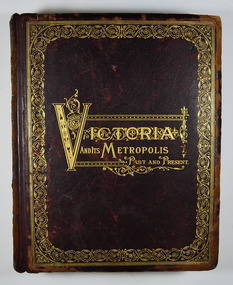
Book - Hardcover book, McCarron, Bird & Co, Victoria and its Metropolis-Past and Present-Volume 2, 1888
... Australia through until 1888. In this volume is a survey of Victoria in 1888 and details of engineering works that had been carried out in Victoria prior to and including 1888. This book also includes notes and comments on Victorian flora and fauna, the early medical profession in Victoria and banking and finance in early Victoria....Australia through until 1888. In this volume is a survey of Victoria in 1888 and details of engineering works that had been carried out in Victoria prior to and including 1888. This book also includes notes and comments on Victorian flora and fauna, the early medical profession in Victoria and banking and finance in early Victoria. ...A history of the various colonies and districts of Victoria from the time of the discovery of Australia through until 1888.Hardback. Dark brown cover with the title in gold lettering. There is also a border in gold decorating the outer edge of the front cover. The spine is also decorated in gold along with the title and the volume number.non-fictionA history of the various colonies and districts of Victoria from the time of the discovery of Australia through until 1888.melbourne, victoria, pioneers, colonisation, history, fauna, flora, banking, finance, medicine, western district, south-western district, wimmera district, geelong district, ballarat district, avoca district, coliban district, campase district, loddon district, lower goulburn district, upper goulburn district, ovens district, north-east district, gippsland district, mornington district, westernport district, upper yarra district, evelyn district, bourke district -
 Federation University Historical Collection
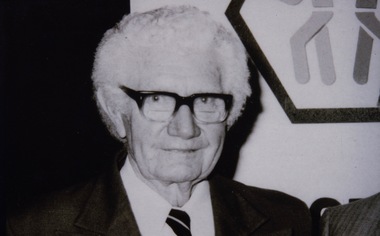
Photograph - Photograph - black and white, VIOSH: Harold Greenwood Thomas: Founding member of the Safety Engineering Society of Australia, c1950
... Australia (SIA). They all had attended the first Industrial Safety and Accident Prevention Course conducted by Melbourne Technical College in 1948. Due to his long service to safety and prevention there is the Harold Greenwood Thomas Lifetime Achievement Award. This is the most prestigious award by the Institute and may be issued to a person who has demonstrated a combination of long term outstanding and influential contribution to the profession in a specific or generalist area of Occupational Health and Safety and Work Health and Safety, where there work has made a major impact on outcomes in Australian workplaces. ...Australia (SIA). They all had attended the first Industrial Safety and Accident Prevention Course conducted by Melbourne Technical College in 1948. Due to his long service to safety and prevention there is the Harold Greenwood Thomas Lifetime Achievement Award. This is the most prestigious award by the Institute and may be issued to a person who has demonstrated a combination of long term outstanding and influential contribution to the profession in a specific or generalist area of Occupational Health and Safety and Work Health and Safety, where there work has made a major impact on outcomes in Australian workplaces. ...Victorian Institute of Occupational Safety and Health (VIOSH) Australia is the Asia-Pacific centre for teaching and research in occupational health and safety (OHS) and is known as one of Australia's leaders in the field. VIOSH has a global reputation for its innovative approach within the field of OHS management. VIOSH had its first intake of students in 1979. At that time the Institution was known as the Ballarat College of Advanced Education. In 1990 it became known as Ballarat University College, then in 1994 as University of Ballarat. It was 2014 that it became Federation University. VIOSH Australia students are safety managers, senior advisors and experienced OHS professionals. They come from all over Australia and industry. Students are taught active research and enquiry; rather than textbook learning and a one-size fits all approach. VIOSH accepts people into the Graduate Diploma of Occupational Hazard Management who have no undergraduate degree - on the basis of extensive work experience and knowledge. Harold Greenwood Thomas was one of a group of students who founded the Safety Institute of Australia (SIA). They all had attended the first Industrial Safety and Accident Prevention Course conducted by Melbourne Technical College in 1948. Due to his long service to safety and prevention there is the Harold Greenwood Thomas Lifetime Achievement Award. This is the most prestigious award by the Institute and may be issued to a person who has demonstrated a combination of long term outstanding and influential contribution to the profession in a specific or generalist area of Occupational Health and Safety and Work Health and Safety, where there work has made a major impact on outcomes in Australian workplaces. The Award will be issued once annually, but the board retains the right not to award in any given year, or in special circumstances more than once in a year. It Award is for an individual. Dennis Else, VIOSH Ballarat, is the 6th person to win the Harold Greenwood Thomas Lifetime Achievement Award. This was in 2021Photograph - Black and Whiteviosh, harold greenwood thomas, safety institute of australia, sia, dennis else -
 Federation University Historical Collection
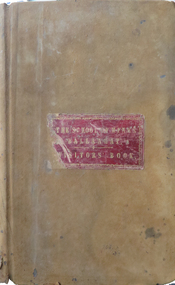
Book, Ballarat School of Mines Visitors' Book, 1879-1890, 1879-1890
... professions, residence and remarks relating to visitors to the Ballarat School of Mines. Sample Names: 1881 May 2 David Kerr Diamond Miner South Africa May 2 S. R. Dodds Diamond Miner South Africa May 3 Albert E. King Accountant Adelaide, South Australia...professions, residence and remarks relating to visitors to the Ballarat School of Mines. Sample Names: 1881 May 2 David Kerr Diamond Miner South Africa May 2 S. R. Dodds Diamond Miner South Africa May 3 Albert E. King Accountant Adelaide, South Australia ...James Redmond Gilbert (sr) was born in 1837 at Hamilton, Ontario, Canada. He married Ellen Spouse. He , James Gilbert died on 26 July 1900 at Melbourne, and is buried at Boroondara Cemetery (Kew). J.R Gilbert lived at Running Creek (later Havilah) for some time, and during that time was employed in one of the bigger mines in the district. (Research by Ren at Havilah Research, 2019) Leatherbound ledger with hand written names, professions, residence and remarks relating to visitors to the Ballarat School of Mines. Sample Names: 1881 May 2 David Kerr Diamond Miner South Africa May 2 S. R. Dodds Diamond Miner South Africa May 3 Albert E. King Accountant Adelaide, South Australia "see signature 6 leaves back" May 6 William Morley Wesleyan Minister Auckland, New Zealand May 6 Rainsford Ravin Wellington, New Zealand May 7 Frank E. Lawrence, Lake River, Tasmania May 9 M. Richter Engineer Germany May 9 Dr Wilhelm Landall naturalist Berlin, Germany May 10 William Ralph Heaton Mercantile Birmingham May 11 Arthur I. Traill Grazier Llanpollen, New South Wales May 10 Marian Traill 1882 July 10 Arthur W.W. Brown London July 10 Benjamin Spargo Mining Mananger and owner Snowy Creek July 10 Thomas Cooke Miner Ballarat July 14 Robert H. Kenny July 14 Mr and Mrs Buston, [Indigo Planter?] Bengal, Indonesia July 14 Samuel H. Halker Ballarat July 14 Charles Phelan Talbot July 14 E. Walker Ballarat 1884 June 30 M.N. Cooper Dunedin, new Zealand June 30 Richard Hosking gardiner Gong Gong Well pleased with School June 30 Humphrey John Ballarat July 1 Cecily Gilbert Melbourne July 1 Florence Shrivall Melbourne July 1 [W.N. Marsh?] Colonial Secretary Hong Kong July 1 Louis Fause Engine Driver Dunolly July 1 John L. Bertram Blacksmith Melbourne July 1 Thomas Eardley Coachmaker London "Exceedingly obliged to Mr Oddie for a very pleasant instruction time spent in inspection of the various scientific appliances in the Ballarat School of Mines." (Donation 2/6) July 4 E. Goodwin [David?] Artist Spellbound July 4 W. Glumley Station Master Murtoa July July 4 James Thomas Miner Corrinondie, New Zealand "Very pleased with the School in all its branches. I hope to contribute to the specimen department. J.T." July 8 Robert Wall Engine Driver 1885 September 16 J.W. Springthorpe, M.D., Melbourne (very much pleased in every way) September 26 M. Oddie, Ballarat 1886 January 12 William Piekard, Leicester, England January 12 Robert Linford, Norwich, England January 12 H. Tipping, Draughtsman, Adelaide (Very instructive and should be taken advantage of by all who can) January 12 Fred H.K. Dreslecher, London (ditto) January 23 Walter Redgate, Manchester (ditto) April 7 Annie Bellingham, Richmond April 9 Fred Kruger, Landscape Photo, Geelong April 14 Mary Barry, Murtoa April 19 N.J. Tabuteau Accountant Napier, New Zealand April 19 George N. [Baroft?] Gentleman Cheshire, England April 21 Hon. George D'Almaine, Peer of England, London April 21 Lord Augustus Honour April 21 William Holt, South Melbourne April 21 H. Bartell, Gentleman, Smythes April 21 Fred Musgrove, Gentleman April 21 A. Chirnside, Squatter April 23 Alice Cravino, student, Buninyong April 24 East Melbourne Bicycle Club April 28 J. Kinnear, Kyneton April 28 J.P. Kinnear, Kyneton May 19 Bob Selby, Doctor, Ballarat May 19 J.W.M.. Quiggin, globe trotter, Picton (NS Wales) May 25 Arthur Night, Sutton Hotel, Ballarat (very fair) May 28 D. Kelly, attendant, China May 28 J. Kelly, schoolboy, China June 1 Joseph Jelbart, Blacksmith, Harrow September 9 David Ham, M.L.C. Ballarat ( A right to be pleased) September 9 J.J. Green, Merchant, Adelaide (Very much pleased with my visit to this intitiution it has my hearty sympathy and appreciation, Much pleased at what I have seen its value to the community) 9 December James H. Tappin, Agent, Ballarat (very pleased with instruction 1887 March 20 Thomas Bath Learmonth March 20 James R. Gilbert= Miner Running Creek March 20 C. Holtermann Out of business Adelaide 1890 21 May Mr and Mrs Fairchild, gentleman. Yarra house, Dalgety St, St Kildaballarat school of mines, visitors, j.w. springthorpe, chinese visitors, visitors' book, running creek, james redmond gilbert sr, havilah -
 Federation University Historical Collection
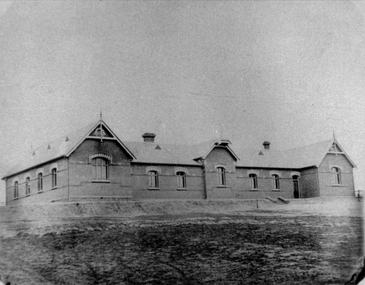
Photograph - Photograph - Black and White, Mount Pleasant Primary School No 1436, 1874
... professions. (Visions and Realisations, Vol. 2, pg 653 and 767) William Henry Williams became the first classifier of teachers for the Victorian Education Department. He died aged 51 while Head Teacher at Yarra Park Primary School on 01 April 1899. Some former students of this school include: J.G. Eagleston (County Court Judge); H.E. Starke (Judge of the High Court of Australia...professions. (Visions and Realisations, Vol. 2, pg 653 and 767) William Henry Williams became the first classifier of teachers for the Victorian Education Department. He died aged 51 while Head Teacher at Yarra Park Primary School on 01 April 1899. Some former students of this school include: J.G. Eagleston (County Court Judge); H.E. Starke (Judge of the High Court of Australia ...Mount Pleasant Primary School 1435 was formerly known as Clayton's Hill, and evolved from a tent school, commenced in 1855 by William McIntosh. When changed from a Wesyleyan day school to a Common School it was given the number 424, received State funding and was conducted by William H. Nicholls. On 01 January 1873 the school became a non-vested school under control of the Education Department until 31 August 1873. The State then leased the school until 31 July 1874, with the current brick school, Mount Pleasant No.1436, opening on 01 August 1874. The Head Teacher of the new school was William H. Nicholls, remained at the school until 1887. His assistants were Thomas Gray, Jane Shaw, Jane Tratham, Catherine J. Berriman, John Blight, Herbert Berchaivaise and Annie Hicks, all who had worked at Mount Pleasant No. 424. William Nicholls and his assistant Gray established after school classes to enable students to gain Exhibitions and Scholarships to matriculate for the University of Melbourne, and courses enabling entry to teaching, pharmacy and civil service. Before the establishment of State Secondary and Technical Educaiton over 100 pupils from Mount Pleasant Primary School has matiriculated and entered the various professions. (Visions and Realisations, Vol. 2, pg 653 and 767) William Henry Williams became the first classifier of teachers for the Victorian Education Department. He died aged 51 while Head Teacher at Yarra Park Primary School on 01 April 1899. Some former students of this school include: J.G. Eagleston (County Court Judge); H.E. Starke (Judge of the High Court of Australia ); Bernard O'Dowd (parliamentary draughtsman and poet); Albert Coates (Surgeon and Medical Officer in Burmese Prisoner of War Camps). Gold was discovered at Caylton's Hill in 1853.Black and white photograph of a primary school in the Ballarat suburb of Mount Pleasant. The brick school is sat on bluestone foundations.mount pleasant primary school, mount pleasant state school, mount pleasant, mt pleasant, education, clayton's hill, bluestone, william h. nicholls, thomas gray, jane shaw, jane tratham, catherine j. berriman, john blight, herbert berchaivaise, annie hicks, albert coates, h.e. starke, j.g. eagleston -
 Federation University Historical Collection
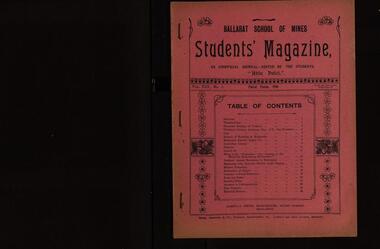
Magazine - Booklet, Ballarat School of Mines, Student Magazine, Third Term, 1910, 1910
... P., Our President, Coal, History of roasting at Kalgoorlie, Melbourne electric supply co, Australian coinage, Pilbarite, Liquid air, What is the "Expression" for "Success in the electrical engineering professions?"...P., Our President, Coal, History of roasting at Kalgoorlie, Melbourne electric supply co, Australian coinage, Pilbarite, Liquid air, What is the "Expression" for "Success in the electrical engineering professions?" ...Booklet of 30 pages. Table of Contents: Editorial, Theatre party, Economic Geology of Victoria, Obituary - Andrew Anderson Esq., J. P., Our President, Coal, History of roasting at Kalgoorlie, Melbourne electric supply co, Australian coinage, Pilbarite, Liquid air, What is the "Expression" for "Success in the electrical engineering professions?", Students' annual excursion to Melbourne, Melbourne city council's electric light station, Modern tunneling, Estimation of copper, Oxozone - a fume destroyer, News and notes, Sporting notes, Answers to correspondents, Past Students, Editorial notes. Images.Pink coloured booklet of 32 pages. Page 25 outline the whereabouts of past Ballarat School of Mines Students: A.R. Booth, W.T. Lakeland, Lewis Westcott, Leo M. Seward, Reginald Williamson, Stanley White, Clyde Allan, Charles Laird, W.E. Eyres, Virgil Tucker, H. Hawkesworth, H.J. Saw, H. Meadows, Fred G. Brinsden, C. Stevenson, Fred Treloar, J. Peart, E.M. Weston, Dick Galloway, Richard Galloway, G.R. Curry, H. Meadows, Will Watson, Don Cameron, Eric Bieske, Cliff Garrard ballarat school of mines, staff, obituary - andrew anderson, esq., j.p., l. w. g. buchner, a. r. booth, w. t. lakeland, lewis westcott, leo. m. seward, reginald williamson, stanley white, clyde allan, charles laird, w. e. eyres, virgil tucker, h. hawkesworth, h. j. saw, h. meadows, fred. g. brinsden, c. stevenson, fred treloar, j. peart, e. m. weston, dick galloway, h. b. bennetts, g. r. curry, will watson, don. cameron, eric bieske, cliff. garrard, lindsay d. cameron, phil brown, w. p. avery, j. foster, j. bickett, f. h. inglis, g. davenport, l. c. courbould, t. lennon, h. wilkins, g. h. reid, c. hesselmann, e. fraser, reginald callister, a.r. booth, w.t. lakeland, leo m. seward, w.e. eyres, h.j. saw, fred g. brinsden, e.m. weston, richard galloway, g.r. curry, don cameron, cliff garrard -
 Flagstaff Hill Maritime Museum and Village
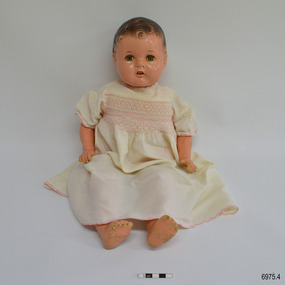
Leisure object - Doll, Reliable Toy Company Ltd, 1930s to 1940s
... profession in the town of Nhill, Dr Angus assisted Dr Tom Ryan in his pioneering use of X-rays and in ocular surgery, and Dr Angus later inherited these items. The W.R. Angus Collection includes these medical instruments and other related equipment and is culturally and historically significant as an example of the medical practice of the late 19th to the mid-20th century. Other items in the collection relate to Dr Angus’ service in the Flying Doctor Service and the Army. The doll is also significant as an example of toys imported into Australia ...This dressed doll was owned by the daughter of Dr William Roy Angus and his wife Gladys when the family came to Warrnambool in the late 1930s. It is part of the W.R. Angus collection, donated by the family of Dr W R Angus, surgeon and oculist. The doll was donated with another dress and a blanket. The doll has features similar to, but an earlier model than, Reliable's 1940s model Cuddlekins doll, which has an entirely composite body. ReliableToy Company was founded in Toronto, Canada, by Solomon Samuels in 1920. Samuels was later joined by his two brothers. The company had a reputation for products of good quality. In 1922 the company began making their own dolls from composition, where previously the parts were made elsewhere and assembled by Reliable. The company stopped making Reliable dolls in 1995. The W R Angus Collection spans from 1885 to the mid-1900s and includes historical medical and surgical equipment and instruments from the doctors Edward and Thomas Ryan of Nhill, Victoria. Dr Angus married Gladys in 1927 at Ballarat, the nearest big city to Nhill where he began as a Medical Assistant. He was also Acting House surgeon at the Nhill hospital where their two daughters were born. Dr Angus and his family moved to Warrnambool in 1939, where Dr Angus operated his own medical practice. He later added the part-time Port Medical Officer responsibility and was the last person appointed to that position. Dr Angus and his wife were very involved in the local community, including the planning stages of the new Flagstaff Hill and the layout of the gardens there. Dr Angus passed away in March 1970.This doll is connected to the history of Warrnambool, as it was owned by the daughter of Dr W. R. Angus and his wife Gladys, and is part of the W.R. Angus Collection, which is important for still being located at the site connected to Doctor Angus, Warrnambool’s last Port Medical Officer. Dr Angus and his wife brought their young family to Warrnambool in 1939 and he remained a resident until his death in 1970. Early in his profession in the town of Nhill, Dr Angus assisted Dr Tom Ryan in his pioneering use of X-rays and in ocular surgery, and Dr Angus later inherited these items. The W.R. Angus Collection includes these medical instruments and other related equipment and is culturally and historically significant as an example of the medical practice of the late 19th to the mid-20th century. Other items in the collection relate to Dr Angus’ service in the Flying Doctor Service and the Army. The doll is also significant as an example of toys imported into Australia in the 1930s and 1940s and used by children in the Warrnambool community.Doll with moulded composition head, neck, arms and legs, all attached to a fabric body. The doll’s head has brown moulded curls. The facial features include an open mouth showing two top teeth, green eyes, and sleeping, closing eyelids with eyelashes. The doll has a crier inside that makes a sound when the doll is turned over. It is clothed in a knitted pink singlet, modern pink underwear, and a cream flannel short-sleeved dress with pink smocking and embroidery, and ties at the rear. There is a moulded inscription on the back of the doll’s head. The doll was made by Reliable Toy Company Ltd, Canada. The doll is part of the W.R. Angus Collection.On the back of the head “RELIABLE / CANADA”flagstaff hill, warrnambool, maritime village, maritime museum, shipwreck coast, great ocean road, dr w r angus, dr roy angus, dr ryan, warrnambool oculist, port medical officer, mira hospital nhill, toy, nhill hospital, doll, baby doll, composition doll, reliable toy company, canada, solomon samuels, child's toy, w.r. angus collection -
 Orbost & District Historical Society
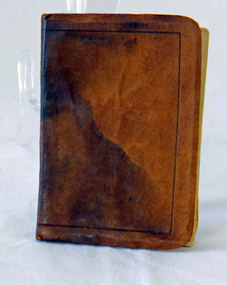
Book - Jennings Carmichael poems, Jennings Carmichael, POEMS by Jennings Carmichael (Mrs Francis Mullis), 1910
... profession. Following her marriage to Francis Mullis, they lived in England where she later died. Jennings Carmichael had 4 sons and a daughter Audrey. Only three of her sons survived to come to Australia...profession. Following her marriage to Francis Mullis, they lived in England where she later died. Jennings Carmichael had 4 sons and a daughter Audrey. Only three of her sons survived to come to Australia ...This small book of POEMS by Jennings Carmichael is one piece of a large number of published works by this poetess and author. As a child in the 1880s, Jennings Carmichael lived with her mother and step-father on Orbost Station. She witnessed the early development of Orbost township and later wrote about this. She later trained as a nurse in Melbourne and wrote stories and reports about her experiences in this profession. Following her marriage to Francis Mullis, they lived in England where she later died. Jennings Carmichael had 4 sons and a daughter Audrey. Only three of her sons survived to come to Australia. Jennings Carmichael is a significant poetess and author and is well-known and admired. Her early association with Orbost is recognised by the development of a Sensory Gardens on Forest Road, by the Orbost Garden Club in the early 2000s, near where she lived. This small book of POEMS is significant because it represents part of the oeuvre by well-known author and poetess, Grace Jennings Carmichael who lived in the Orbost area as a girl in the 1880s.A small book with a brown leather cover, gold lettering on the spine with the words Jennings Carmichael. on the spine: Jennings Carmichael on title page inside: POEMS by Jennings Carmichael (Mrs Francis Mullis)jennings carmichael, orbost, poems -
 Warrnambool and District Historical Society Inc.
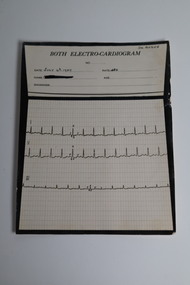
Document - "Both" Electrocardiogram printout, 4 Jul 1939
... His obituary in the Medical Journal of Australia (July 1970) stated he was "dedicated and devoted to both his profession and his patients" ....His obituary in the Medical Journal of Australia (July 1970) stated he was "dedicated and devoted to both his profession and his patients" . ...In 1932, Edward Thomas Both invented the first portable direct reading electro cardiograph. This item is a three lead electrocardiograph tracing conducted on one of Dr Angus' patients in 1939. Dr William Roy Angus (1901-1970) came to Warrnambool in 1939, purchasing the general practice of Dr John Hunter Henderson. He was the last serving Warrnambool Port Medical Officer. A health problem after the war prompted a change from general practice to ophthalmology. Dr. Angus became an important ophthalmologist , pioneering the use of the intrascleral cartilage implant which resulted in cosmetically better artificial eyes. He was an Honorary Consultant Ophthalmologist at Warrnambool Base Hospital for 31 years. He was Secretary of the Victorian South West sub-division of the Australian Medical Association from 1949 to 1956 and Chairman from 1956 to 1958. His obituary in the Medical Journal of Australia (July 1970) stated he was "dedicated and devoted to both his profession and his patients" .This item provides a link to an Australian invention of medical equipment which improved diagnosis and treatment of heart conditions in the 1930's. It is an example of diagnostic recordings used by a Warrnambool doctor in 1939.This is a card record of a three lead "Both" Electrogram. The upper one third has places for the date patient details and diagnosis. There are three electrocardiogram tracings over graph paper in the bottom two thirds of the item. The reverse side has a handwritten in ink interpretation of the tracings.Front: BOTH ELECTRO-CARDIOGRAM No. Date July 4th 1939 Rate 130 Name Age Diagnosis The patient name has been blacked out. Dr. Angus is printed in the top right hand corner. Rear: The P wave in lead 1 is broadened and notched, and has a suggestive "plateau" top. This may indicate a mitral stenosis, auricular hypertrophy. E Bannondr william roy angus, both electro-cardiogram, dr angus collection -
 Eltham District Historical Society Inc
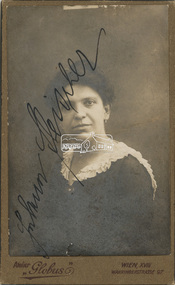
Document - Identy Card, Frau Fleischer, Vienna, Austria, 1919
... Australia some time after the First World War, did she end up in Eltham? We have tried tracking the name Fleischer in Eltham but no positive links so far. The card is written in Gothic German script, the handwriting is very difficult however we have been able to decipher some of what it states. Legitimation The identity of the person depicted in the photograph Mrs. Johanna? Fleischer Profession...Australia some time after the First World War, did she end up in Eltham? We have tried tracking the name Fleischer in Eltham but no positive links so far. The card is written in Gothic German script, the handwriting is very difficult however we have been able to decipher some of what it states. Legitimation The identity of the person depicted in the photograph Mrs. Johanna? Fleischer Profession ...Contained within our collection is an identity card for a Frau Fleischer from Vienna, Austria in 1919. We have no detail on this item, why we have it, where it came from and have not been able to conclusively decipher her first name. Did she migrate to Australia some time after the First World War, did she end up in Eltham? We have tried tracking the name Fleischer in Eltham but no positive links so far. The card is written in Gothic German script, the handwriting is very difficult however we have been able to decipher some of what it states. Legitimation The identity of the person depicted in the photograph Mrs. Johanna? Fleischer Profession ? Apartment XV. ?? and the handwritten signature is hereby officially confirmed D. o. Police Directorate Vienna, July 15, 19191919, atelier globus, austria, fleischer, frau fleisher, identity card, johanna fleischer, vienna, wahringerstrasse 97, wien -
 Kiewa Valley Historical Society
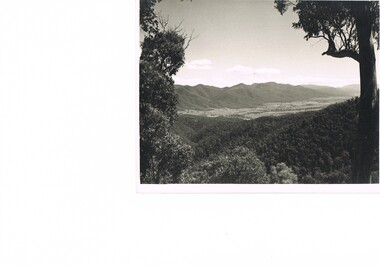
Photograph of Kiewa Valley Panorama, Farming lands within the Kiewa Valley in1950s, Circa 1950
... After World War II a mass of displaced European refugees and migrants boosted the Australian population and provided for a greater degree of diverse professions and rural related work force....After World War II a mass of displaced European refugees and migrants boosted the Australian population and provided for a greater degree of diverse professions and rural related work force. ...This photograph shows how (early to mid1900s), before the establishment of the Mount Beauty "gated" village, the Kiewa Valley was farmed and the scarce population was spread out over acres of productive land. This photograph catches a time before (what appeared to the local farmers as the invasion by a mass of construction workers) when this remote valley was part of a "lay back" rural landscape,occasionally visited by friends and some wayward tourists. The mountain ranges provided an adequate barrier against the way-would traveller. The immigration numbers coming into Australia was still quite small ( due to the "white" Australia policy) which was in force before World War II. After World War II a mass of displaced European refugees and migrants boosted the Australian population and provided for a greater degree of diverse professions and rural related work force.This photograph depicts the borderline in time between an exclusively rural based population and respective activities(early 1900s)to the present (2000 on wards) integrated village, tourist and retiree/holiday area. The time when land was exclusively used in agriculture is over and the impact of cheaper rural produce from Asian markets will see a shift of land useage and population activities. The Kiewa Valley is loosing its hiding place and is becoming more and more a source of untapped residential land. Black and white photograph of farming/grazing land useage, before the establishment of the Mount Beauty Village. Small pockets of residentual houses can be viewed. Road access (unsealed dirt) was typical of that provided in rural regions in the 1950s. The photo is on 200gms paper and not on photographic paper.kiewa valley in the early1900s, grazing in the kiewa valley, sec victoria -
 Kiewa Valley Historical Society
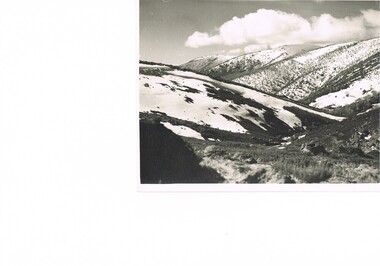
Photograph of Snow Covered Catchment Area Vic, Snow Covered Catchment Area Victorian Alps - 1950s, Circa 1950
... The expansion of the European immigration numbers (1950s) coming into Australia was increasing after World War II which not only provided increased construction workers to the region but also immigrants who appreciated alpine regions. Some of these immigrants contributed to the expansion of the region and provided for a greater degree of diverse professions and rural related work force....The expansion of the European immigration numbers (1950s) coming into Australia was increasing after World War II which not only provided increased construction workers to the region but also immigrants who appreciated alpine regions. Some of these immigrants contributed to the expansion of the region and provided for a greater degree of diverse professions and rural related work force. ...This photograph details (early to mid1950s), the Victorian Alpine region when this remote area was part of a "lay back" rural landscape,occasionally visited by recreational adventurers and some wayward tourists. The mountain ranges had provided an adequate barrier against the way-would traveller, but with the opening up of this region by the provision of improved roadways and accommodation facilities, courtesy of the Kiewa Valley Hydro Electricity Scheme, changes such as tourism and its impact upon the "natural" state started to show its side effects (clearing of the land). The expansion of the European immigration numbers (1950s) coming into Australia was increasing after World War II which not only provided increased construction workers to the region but also immigrants who appreciated alpine regions. Some of these immigrants contributed to the expansion of the region and provided for a greater degree of diverse professions and rural related work force.This photograph depicts the borderline in time between an exclusively rural based population and respective activities(early 1900s)to the present (2000 on wards) integrated village, tourist and retiree/holiday area. The time when land was exclusively used in agriculture and Alpine grazing lands is over. The Kiewa Valley is loosing its hiding place and is becoming more and more a source of untapped residential land and winter time recreational adventure lands. The changes brought about by modern technologies involving recreational activities such as hang gliding, gliding (local airstrip), mountain bikes, car rallies and their associated clubs is providing for an increased short term population boost. These together with the attractions for retirees is changing not only the physical nature of the Kiewa valley but also its "soul".This item is a black and white photograph of a section of snow covered catchment area in the Victorian Alps in the mid 1900. It is on 200 gms paper but not on photographic paper and has a white boarder (3 mm).kiewa valley tourism, victorian alps, alternate energy supplies, alpine population growth -
 Bendigo Military Museum
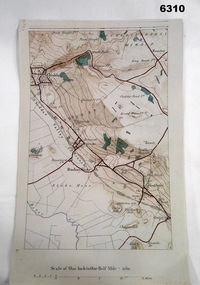
Map - Map Extract - Charterhouse of Mendip, John James Raisbeck, Unknown
... He was the first Australian appointed to the Survey Section RAE, on 16 April 1910, as a draughtsman which was his civilian profession, with the rank Warrant Officer, honorary 2nd Lieutenant. ...He was the first Australian appointed to the Survey Section RAE, on 16 April 1910, as a draughtsman which was his civilian profession, with the rank Warrant Officer, honorary 2nd Lieutenant. ...Map extract showing the towns of Cheddar, Rodney Stoke, Westbury and a smaller town of Easton. The area depicted is part of Somerset, England. Map is hand drawn by J.J. Raisbeck date unknown. John James RAISBECK was born on 4 July 1880 at Christchurch New Zealand. He served 4 years (Citizen Military Force - CMF) in 9th Australian Light Horse Regiment in Central VIC with the rank 2nd Lieutenant. He was the first Australian appointed to the Survey Section RAE, on 16 April 1910, as a draughtsman which was his civilian profession, with the rank Warrant Officer, honorary 2nd Lieutenant. He was required to resign his commission in the CMF. He supervised the draughting work of the Section in Melbourne and was largely responsible for the mapping standards and specifications set in the production of the Cowes one-inch-to-one-mile military map, which became the enduring Australian standard. He was also responsible for supervising the printing of the maps by the Victorian Government Printer. He was appointed 2nd Lieutenant in the AIF Survey Corps draft on 6 December 1917 (from Melbourne) embarking for England on 22 December 17. He was attached to the Australian Corps Topographic Section in France from 21 April 1918 to 5 March 1919 serving as Second-in-Command and as Officer Commanding. He was promoted Lieutenant 15 October 1918, attending the AIF Survey School, Southampton in 1919, returning to Australia 23 June 1919, before his AIF appointment was terminated 17 July 1919. He went on to serve the Survey Section RAE and Australian Survey Corps, including in the Second World War, having been promoted Captain then Major and Officer Commanding Army Headquarters Cartographic Section until February 1940. He retired after 33 years of service to military survey, and after serving the Corps in two world wars, on 4 July 1943 with the retired rank Lieutenant-Colonel. He was the author of the article ‘A Short History of the Military Survey of Australia, 1907-1936’, published in The Australian Surveyor, Sept 1, 1937Map extract slightly larger than A4. Scale: One Inch to One and a half Mile. 1:31680, 9 x copiesSignature of "J.J. Raisbeck" bottom right-hand cornerroyal australian survey corps, rasvy, fortuna, army survey regiment, army svy regt, asr -
 Geoffrey Kaye Museum of Anaesthetic History
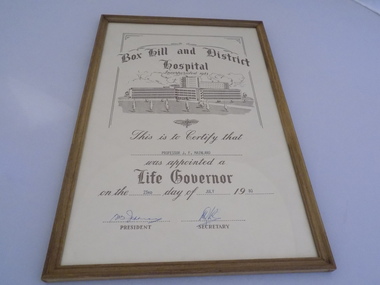
Document - Certificate, 1980
... Mainland became a Fellow of the Australian and New Zealand College of Anaesthetists in 1992, retiring from the profession in 1997....Mainland became a Fellow of the Australian and New Zealand College of Anaesthetists in 1992, retiring from the profession in 1997. certificate box hill and district hospital life governor mainland, john alfred hospital Printed in black ink on back of frame: marlow Galleries / 968 Whitehorse Rd, Box Hill / Ph: 89 2062, 1st floor •Inscribed on face of clips: Alfred Hospital Melbourne For Service •Printed in brown ink on the certificate: Box Hill and District / Hospital / This is to Certify that / Professor J. ...The certificate and tie clips were in the possession of Dr John Mainland. Mainland graduated from the University of Melbourne in 1950 with a Bachelor of Science degree. After researching and completing his medical degree, Mainland entered into the field of anaesthetics, training at the Royal Women's and Royal Children's Hospitals, later Alfred Hospital, in 1959. He completed training in 1964 and remained at the Alfred Hospital. During his career, he also became the first anaesthetist appointed to the position of Professor in Victoria. His other achievements include manufacturing a respiratory monitoring module that accompanied astronauts on the United States moon landing and developing a stimulator to lessen the risk of deep vein thrombosis in surgical patients. Mainland became a Fellow of the Australian and New Zealand College of Anaesthetists in 1992, retiring from the profession in 1997.The certificate rests beneath a thin layer of glass kept in a light wooden frame. The certificate is cream in colour with dark brown writing. In the middle is an illustration of Box Hill and District Hospital building. At the bottom of the certificate is the signature of the President and Secretory. On the back of the frame there are two metal loops connected by a thin piece of metal wire. Hanging on this wire are two clips from the Alfred Hospital. The face of the clips is consists of the Alfred Hospital emblem in red and gold surrounded by a border of blue with the name of the hospital inscribed. Masking tape runs the border of the frame.Printed in black ink on back of frame: marlow Galleries / 968 Whitehorse Rd, Box Hill / Ph: 89 2062, 1st floor •Inscribed on face of clips: Alfred Hospital Melbourne For Service •Printed in brown ink on the certificate: Box Hill and District / Hospital / This is to Certify that / Professor J. F. Mainland / was appointed a / Life Governor / on the 23rd day of July 1980 / President Secretary •Signed in blue ink by the President and Secretarycertificate, box hill and district hospital, life governor, mainland, john, alfred hospital -
 Geoffrey Kaye Museum of Anaesthetic History
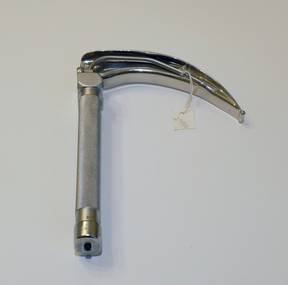
Tool - Laryngoscope, Macintosh
... Mainland became a Fellow of the Australian and New Zealand College of Anaesthetists in 1992, retiring from the profession in 1997....Mainland became a Fellow of the Australian and New Zealand College of Anaesthetists in 1992, retiring from the profession in 1997. macintosh, robert reynolds new zealand laryngoscope Mainland, John Alfred hospital Moon landing Etched into top of handle: J.F. ...A laryngoscope is an instrument used to view the larynx (voice box), which is the opening to the trachea and lungs. It consists of a “blade,” which goes into the patient’s mouth, and a handle. Prior to 1943 when Macintosh introduced his curved blade, most laryngoscope blades were long and straight. The straight blades were used to directly hold the epiglottis. Macintosh’s curved blade works differently: it indirectly opens the epiglottis by applying pressure to a space between the root of the tongue and epiglottis, called the vallecula. The flange running along the left lower edge of Macintosh’s blade was also a novel innovation. It was designed to move the tongue to the side, which improved the view of the larynx and made more room for a breathing tube. The Macintosh Laryngoscope remains one of the most popular blades worldwide. (Source: Wood Library Museum) This laryngoscope was previously owned by John Mainland, as evidenced by the name etched into the handle. Mainland graduated from the University of Melbourne in 1950 with a Bachelor of Science degree. After researching and completing his medical degree, Mainland entered into the field of anaesthetics, training at the Royal Women's and Royal Children's Hospitals, later Alfred Hospital, in 1959. He completed training in 1964 and remained at the Alfred Hospital. During his career, he also became the first anaesthetist appointed to the position of Professor in Victoria. His other achievements include manufacturing a respiratory monitoring module that accompanied astronauts on the United States moon landing and developing a stimulator to lessen the risk of deep vein thrombosis in surgical patients. Mainland became a Fellow of the Australian and New Zealand College of Anaesthetists in 1992, retiring from the profession in 1997.Oblong shaped handle with textured grip. Attached is a laryngoscope blade in a cruved shaped with light tube running through one side.Etched into top of handle: J.F. MAINLAND •Stamped into top of handle: REGD TRADE MARK / PENLON / MADE IN ENGLAND •Stamped into base of handle: CLOSE [arrow] •Etched into base of blade: MAC / 4 •Stamped into side of blade: REGD TRADE MARK / PENLON / MADE IN ENGLAND •Stamped into side of blade: STAINLESSmacintosh, robert reynolds, new zealand, laryngoscope, mainland, john, alfred hospital, moon landing -
 Bendigo Historical Society Inc.
Article - Devils Own Cricket Club Established Bendigo Advertiser Article
... In addition to the Devils' Own Cricket Club, there were many male cricket clubs formed in Bendigo in the 1870's, for example, the Bendigo United Cricket Club; Epsom Cricket Club; All Trades Cricket Club; New Chum Cricket Club; California Gully Cricket Club; Long Gully Cricket Club; Butchers' Cricket Club; View Point Cricket Club; Myers Street Cricket Club; Australian Natives Association Cricket Club; View Point Cricket Club; Beehive Cricket Club; Advertiser Cricket Club; Kangaroo Flat Cricket Club; Golden Square Cricket Club; North Bendigo Cricket Club; Crusoe Cricket Club; City Cricket Club; Bohemians Cricket Club and the Happy Valley Cricket Club. Where did the name 'Devils' Own' come from? The Inns of Court Regiment, London, has a unique place in history as a result of its ancient and intimate connection with the Law and lawyers. It recruited and 'officered' almost exclusively from the legal profession...In addition to the Devils' Own Cricket Club, there were many male cricket clubs formed in Bendigo in the 1870's, for example, the Bendigo United Cricket Club; Epsom Cricket Club; All Trades Cricket Club; New Chum Cricket Club; California Gully Cricket Club; Long Gully Cricket Club; Butchers' Cricket Club; View Point Cricket Club; Myers Street Cricket Club; Australian Natives Association Cricket Club; View Point Cricket Club; Beehive Cricket Club; Advertiser Cricket Club; Kangaroo Flat Cricket Club; Golden Square Cricket Club; North Bendigo Cricket Club; Crusoe Cricket Club; City Cricket Club; Bohemians Cricket Club and the Happy Valley Cricket Club. Where did the name 'Devils' Own' come from? The Inns of Court Regiment, London, has a unique place in history as a result of its ancient and intimate connection with the Law and lawyers. It recruited and 'officered' almost exclusively from the legal profession ...The Devils' Own Cricket Club was also referred to as the Law Cricket Club and the Law (Devils' Own) Cricket Club. The club was formed in 1875 from members of the local legal fraternity and business people in Sandhurst (Bendigo). In addition to the Devils' Own Cricket Club, there were many male cricket clubs formed in Bendigo in the 1870's, for example, the Bendigo United Cricket Club; Epsom Cricket Club; All Trades Cricket Club; New Chum Cricket Club; California Gully Cricket Club; Long Gully Cricket Club; Butchers' Cricket Club; View Point Cricket Club; Myers Street Cricket Club; Australian Natives Association Cricket Club; View Point Cricket Club; Beehive Cricket Club; Advertiser Cricket Club; Kangaroo Flat Cricket Club; Golden Square Cricket Club; North Bendigo Cricket Club; Crusoe Cricket Club; City Cricket Club; Bohemians Cricket Club and the Happy Valley Cricket Club. Where did the name 'Devils' Own' come from? The Inns of Court Regiment, London, has a unique place in history as a result of its ancient and intimate connection with the Law and lawyers. It recruited and 'officered' almost exclusively from the legal profession, drawn from barristers, attorneys, notaries and their clerks and students practising in the area of the Inns of Court comprising Middle Temple, Inner Temple, Lincoln’s Inn and Gray’s Inn. During Napoleonic Wars all Inns raised companies. During a review by King George III in Hyde Park in 1803, the King used his dislike for lawyers – particularly ones carrying arms – to name the massed ranks of the Law Association as "The Devil's Own".[5] "It is understood that the King was in high health and excellent spirits at the time. The Bloomsbury and Inns of Court Volunteers was reformed in 1797 during the Napoleonic Wars. It was shortly afterwards that the regiment gained its enduring nickname. During a review by King George III in Hyde Park in 1803, the King used his dislike for lawyers – particularly ones carrying arms – to name the massed ranks of the Law Association as "The Devil's Own". "It is understood that the King was in high health and excellent spirits at the time. When the 'Temple companies' had defiled before him, his Majesty enquired of Lord David Erskine, who commanded them, as lieutenant colonel, what was the composition of that corps? 'They are all lawyers, Sire,' said Erskine. 'What! What! 'exclaimed the King, 'all lawyers? all lawyers? Call them the Devil's Own, call them the Devil's Own!" "And the Devil's Own they were called accordingly." ( Norton, F.C., A short history of the military & naval services of the Inns of Court and the members of the Bench and the Bar, 1886, William Clowes & Sons, Stamford Street and Charing Cross, London) Did Bendigo’s legal fraternity name themselves DOCC with the intent that they would reflect the distinguished pedigree and qualities of the Devil’s Own regiment? Details of one the players in the 'Devils'Own' CC : Pelling Hugh Gough Pigott Stainsby Conant, solicitor, born Hampshire, England 1846. Arrived Australia 1871. Pelling was the son of Francis Pigott Stainsby Conant Esq., Lieutenant Governor of the Isle of Man. He married Catherine Anne Drummond. In 1874, his practice was in the Albion Chambers, Sandhurst, given as 'Pelling H.G.P.S. Conant, Solicitor'. Organisation-Club/society-sportA transcript of the Devils Own Cricket Club article in the 19th February, 1875 edition of the Bendigo Advertiser docc, devils own cricket club, sandhurst, bendigo advertiser, pelling h.g.p. s. conant, solicitor, barrister -
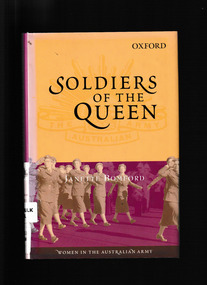 Monbulk RSL Sub Branch
Book, Oxford University Press, Soldiers of the Queen Women in the Australian Army, 2001
... Australia - Armed forces - Women - History Womens Royal Australian Army Corps This history of women in the Australian Army traces women's struggle for a place in the most male-dominated profession. ...This history of women in the Australian Army traces women's struggle for a place in the most male-dominated profession. It encompasses a campaign for equal opportunity in the workplace that culminated in women gaining the right to have a career in the army regardlesss of their marital status and whether they have children. Soldiers of the Queen provides a history of the Women's Royal Australian Army Corps. Bomford covers the WRAAC from its creation in 1951 to its dissolution in 1984, when women were integrated into the Australian army. This study analyzes the gender, political, and cultural issues surrounding women's struggle for inclusion in the nation's fighting forcesIndex, ill, p.183.non-fictionThis history of women in the Australian Army traces women's struggle for a place in the most male-dominated profession. It encompasses a campaign for equal opportunity in the workplace that culminated in women gaining the right to have a career in the army regardlesss of their marital status and whether they have children. Soldiers of the Queen provides a history of the Women's Royal Australian Army Corps. Bomford covers the WRAAC from its creation in 1951 to its dissolution in 1984, when women were integrated into the Australian army. This study analyzes the gender, political, and cultural issues surrounding women's struggle for inclusion in the nation's fighting forcesaustralia - armed forces - women - history, womens royal australian army corps -
 Royal Australian and New Zealand College of Obstetricians & Gynaecologists (RANZCOG)
Caul associated with Private Robert Powning Holbery, World War I
... Australian Imperial Forces (AIF) during WWI. Refer to supplementary file for War Records at Cat no: 34 A caul is a small slightly yellow coloured membrane that can cover the newborn baby's face. After birth, the caul can be removed and laid on a piece of paper to dry. Superstitions regarding cauls are very ancient, and believers in superstition thought that babies born with a caul would never drown. They were traditionally sold to sailors to bring good luck. Lawyers or advocates in the legal profession...Australian Imperial Forces (AIF) during WWI. Refer to supplementary file for War Records at Cat no: 34 A caul is a small slightly yellow coloured membrane that can cover the newborn baby's face. After birth, the caul can be removed and laid on a piece of paper to dry. Superstitions regarding cauls are very ancient, and believers in superstition thought that babies born with a caul would never drown. They were traditionally sold to sailors to bring good luck. Lawyers or advocates in the legal profession ...Label written by Dr Frank Forster documents that this item belonged to Private RP Holbery, who carried the caul as a good luck charm when he served in the Australian Imperial Forces (AIF) during WWI. Refer to supplementary file for War Records at Cat no: 34 A caul is a small slightly yellow coloured membrane that can cover the newborn baby's face. After birth, the caul can be removed and laid on a piece of paper to dry. Superstitions regarding cauls are very ancient, and believers in superstition thought that babies born with a caul would never drown. They were traditionally sold to sailors to bring good luck. Lawyers or advocates in the legal profession would buy cauls as they believed it would confer the "gift of the gab". Cauls were also carried by servicemen during the early part of the 20th Century. World War I pushed up the price of cauls. They were often carried in silver cases engraved with commemorative inscriptions. Other names used for a caul are "Coif", "Sillie", "How" (Hood) or "Hallihoo" (Holy Hood).Caul, consisting of yellowed membrane in two pieces. Caul has tissue paper like appearance and is folded upon itself.world war i -
 Victoria Police Museum
Record of Conduct and Service (Charles Lester Gordon Trewin)
... When the First World War broke out, Australian men from all backgrounds and professions were called to serve their country. ...When the First World War broke out, Australian men from all backgrounds and professions were called to serve their country. ...When the First World War broke out, Australian men from all backgrounds and professions were called to serve their country. Members of the Victorian Police force were some of the first to answer the call with twenty men joining the first convoy of soldiers who left Australian shores in October 1914. Over the course of four long years, one hundred and thirty-eight Victorian Police enlisted from stations across the state. Of these, twenty-seven lost their lives. Whilst the fate of each man was different, a deep commitment to protecting and serving the public was common to all. Victoria Police service: Joined 10/04/1911; Discharged 3/09/1914 WW1 service: Enlisted: 5 September 1914; Highest rank: Captain; Regiment: 4th Australian Light Horse Regiment; Fate: Returned to Australia 15th January 1919.Official documentworld war 1, 1914-1918; victoria police; trewin, charles lester gordon 5640 -
 Victoria Police Museum
Record of Conduct and Service (Charles Belcher)
... When the First World War broke out, Australian men from all backgrounds and professions were called to serve their country. ...When the First World War broke out, Australian men from all backgrounds and professions were called to serve their country. ...When the First World War broke out, Australian men from all backgrounds and professions were called to serve their country. Members of the Victorian Police force were some of the first to answer the call with twenty men joining the first convoy of soldiers who left Australian shores in October 1914. Over the course of four long years, one hundred and thirty-eight Victorian Police enlisted from stations across the state. Of these, twenty-seven lost their lives. Whilst the fate of each man was different, a deep commitment to protecting and serving the public was common to all. Victoria Police service: Joined: 28/10/1914; Resigned: 3/07/1915 WW1 service: Enlisted: 5 July 1915; Highest rank: Gunner; Regiment: V5A Australian Heavy Trench Mortar Battery; Fate: Died of illness, France, 18 January 1917; Medals: British War and Victory medalsOfficial documentworld war 1, 1914-1918; victoria police; belcher, charles 6041 -
 Victoria Police Museum
Record of Conduct and Service (Edward William Sharpe)
... When the First World War broke out, Australian men from all backgrounds and professions were called to serve their country. ...When the First World War broke out, Australian men from all backgrounds and professions were called to serve their country. ...When the First World War broke out, Australian men from all backgrounds and professions were called to serve their country. Members of the Victorian Police force were some of the first to answer the call with twenty men joining the first convoy of soldiers who left Australian shores in October 1914. Over the course of four long years, one hundred and thirty-eight Victorian Police enlisted from stations across the state. Of these, twenty-seven lost their lives. Whilst the fate of each man was different, a deep commitment to protecting and serving the public was common to all. Victoria Police service: Joined 3/05/1898; Leave without pay July 1915; Rejoined ca April 1918; Died 28/04/1919 from pneumonic influenza WW1 service: Enlisted 7 July 1915; Highest rank: Sergeant; Regiment: 29th Battalion, A Company; Fate: Returned to Australia 15 April 1918; Medals: 1914-15 Star, British War Medal, Victory MedalOfficial documentworld war 1, 1914-1918; victoria police; sharpe, edward william 4706 -
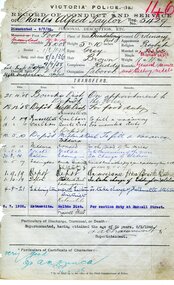 Victoria Police Museum
Record of Conduct and Service (Charles Alfred Taylor)
... When the First World War broke out, Australian men from all backgrounds and professions were called to serve their country. ...When the First World War broke out, Australian men from all backgrounds and professions were called to serve their country. ...When the First World War broke out, Australian men from all backgrounds and professions were called to serve their country. Members of the Victorian Police force were some of the first to answer the call with twenty men joining the first convoy of soldiers who left Australian shores in October 1914. Over the course of four long years, one hundred and thirty-eight Victorian Police enlisted from stations across the state. Of these, twenty-seven lost their lives. Whilst the fate of each man was different, a deep commitment to protecting and serving the public was common to all. Victoria Police service: Joined: 28/10/1908; Granted leave without pay: 5/05/1917; Re-joined: 1/10/1919; Retired: 8/02/1946; Highest rank: Inspector WW1 service: Enlisted: 10 May 1917; Highest rank: Corporal; Regiment: 38th Battalion; Fate: Returned to Australia 4 July 1919; Medals: 1914-1915 Star, British War and Victory medalsOfficial documentworld war 1, 1914-1918; victoria police; taylor, charles alfred 5429 -
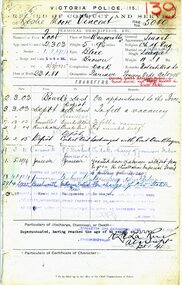 Victoria Police Museum
Record of Conduct and Service (Leslie Moore Vincent)
... When the First World War broke out, Australian men from all backgrounds and professions were called to serve their country. ...When the First World War broke out, Australian men from all backgrounds and professions were called to serve their country. ...When the First World War broke out, Australian men from all backgrounds and professions were called to serve their country. Members of the Victorian Police force were some of the first to answer the call with twenty men joining the first convoy of soldiers who left Australian shores in October 1914. Over the course of four long years, one hundred and thirty-eight Victorian Police enlisted from stations across the state. Of these, twenty-seven lost their lives. Whilst the fate of each man was different, a deep commitment to protecting and serving the public was common to all. Victoria Police service: Joined 2/03/1903; Granted leave without pay 1/09/1916; Resumed duties 6/08/1919; Retired 23/01/1941; Highest rank: Sergeant WW1 service: Enlisted 5 May 1916; Highest rank: Lance Sergeant; Regiment: 3rd Australian Divisional Ammunition Column; Fate: Returned to Australia 8 May 1919; Medals: 1914-1915 Star, British War and Victory MedalsOfficial documentworld war 1, 1914-1918; victoria police; vincent, leslie moore 5080 -
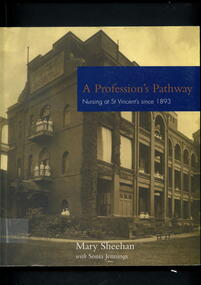 Alfred Hospital Nurses League - Nursing History Collection
Book - Illustrated book, Mary Sheehan, A Profession's Pathway: nursing at St Vincent's since 1893, 2005
... A Profession's Pathway: nursing at St Vincent's since 1893 Book Illustrated book Mary Sheehan Arcadia (an imprint of Australian Scholarly Publishing) Brown Prior Anderson ...This a comprehensive history of nursing at Melbourne's St Vincent's Hospital. It documents the transformation of nursing practice and education since the hospital's opening in 1893.Illustrated book. On front cover is a black and white photograph of the 1905 building c.1914, it shows the east side of the building with nurses on the balconies. Title in gold and white print on a blue rectangular background superimposed on this photo, as are the authors names in white print. On the spine in white print on a brown background are the abbreviated title, author's surname and publisher's name. On the back cover is a coloured photo of a group of nurses outside hospital entrance c.2004 on brown background.non-fictionThis a comprehensive history of nursing at Melbourne's St Vincent's Hospital. It documents the transformation of nursing practice and education since the hospital's opening in 1893.st vincent's hospital melbourne, nurses, nursing, hospitals-victoria-history
