
Showing 43 items matching "savige property"
-
 Melbourne Legacy
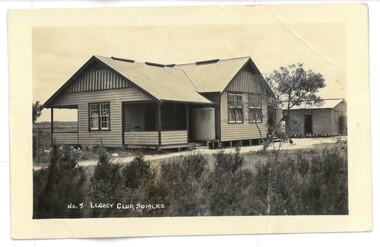
Photograph, Legacy Club, Somers
... ...Savige property...Photograph of a building on Legatee Stan Savige's property. It is labelled as Legacy Camp, Somers. ...Photograph of a building on Legatee Stan Savige's property. It is labelled as Legacy Camp, Somers. ...Photograph of a building on Legatee Stan Savige's property. It is labelled as Legacy Camp, Somers. This appears to be the original camp buildings established by Legacy in the 1930s. Melbourne Legacy provides camps for junior legatees. The camps gave the children an opportunity of a holiday with other Legacy children. In the early years, Legacy organised outings to the property of Legacy founder, Legatee Stan Savige, who had a place in Balnarring/Somers, close to the beach. Permanent camp buildings were built in 1930. Legacy Somers Camps continued intermittently at Stan's property until it was decided in 1951 to make other arrangements for holidays. . An original building at Somers Camp.Black and white photo of No. 7 Legacy Club Somers and white envelope.00398.1 Photo. "No. 7 Legacy Club Somers" on front. POST CARD in black ink on reverse. Pencil "To Ey?? / Legacy Camp / Bonnie" in pencil on reverse. 00398.2 Envelope. Archives June 1995. Legacy Camp. Legacy on Parade" in blue pen. "L/G D. Simonson" in black penjunior legatee outing, savige property, legacy somers camp, camps -
 Melbourne Legacy
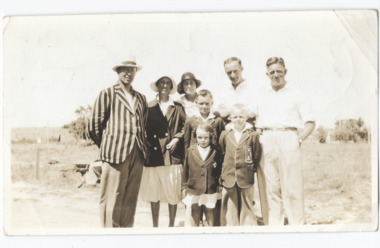
Photograph, Balnarring Camp Property, 1928
... Savige property...The photo shows a group of people on an outing to Stan Savige's property in Balnarring. Legatee Savige is in the striped jacket on the left. ...The photo shows a group of people on an outing to Stan Savige's property in Balnarring. Legatee Savige is in the striped jacket on the left. ...The photo shows a group of people on an outing to Stan Savige's property in Balnarring. Legatee Savige is in the striped jacket on the left. Legatee Savige had a beach side property that he allowed to be used for summer camps and outings by Legacy. In this photo there is mention of the children being from Minton Boys Home which was established in Olivers Hill, Frankston in 1924. n the early years, Legacy organised outings to the property of Legacy founder, Legatee Stan Savige, who had a place in Balnarring/Somers, close to the beach. Permanent camp buildings were built in 1930. Legacy Somers Camps continued intermittently at Stan's property until it was decided in 1951 to make other arrangements for holidays. The photo shows Legatees took disadvantaged children on outings to L/- Savige's property as early as 1928.Black and white photo of a group of people at Stan Savige's place.Handwritten on reverse: 'Taken on Stan Savige's place Balnarring about 1928. Includes MB Beattie with Adrian? Tony and Diana on right S?, Minton Boys Home. Photo by Aaron Beattie' in blue ink. Stamped 'Kodak print' and 'Velox'.savige property, stan savige -
 Melbourne Legacy
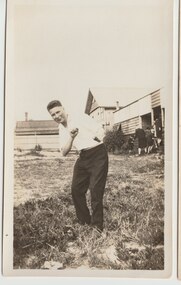
Photograph, Legacy Somers Camp, c1930
... ...Savige property...It shows some of the buildings that had been built on Legatee Stan Savige's property. In the early years, Legacy organised outings to the property of Legacy founder, Legatee Stan Savige, who had a place in Balnarring/Somers, close to the beach. ...It shows some of the buildings that had been built on Legatee Stan Savige's property. In the early years, Legacy organised outings to the property of Legacy founder, Legatee Stan Savige, who had a place in Balnarring/Somers, close to the beach. ...A black and white photo of junior legatee Ned Meade at Somers camp, probably in the 1930s. It shows some of the buildings that had been built on Legatee Stan Savige's property. In the early years, Legacy organised outings to the property of Legacy founder, Legatee Stan Savige, who had a place in Balnarring/Somers, close to the beach. Permanent camp buildings were built in 1930. Legacy Somers Camps continued intermittently at Stan's property until it was decided in 1951 to make other arrangements for holidays. This photo was with a group of photos from around the 1930s from the early days of Legacy, including cricket team, football team, and camps at Balnarring/Somers (saved as 01915 to 01934).Legatee Savige's property at Balnarring became very important for Legacy providing outings and camps for junior legatees.Black and white photo of a junior legatee called Ned Meade.Handwritten on reverse 'Ned Meade' in blue pen, stamped with 'Printed by Harringtons' in purple ink and '4-57' in pencil.junior legatee outing, legacy somers camp, savige property -
 Melbourne Legacy
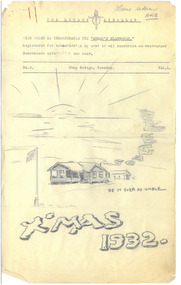
Newsletter, The Legacy Libeller: with which is incorporated "The Somers Slanderer", 1932
... ...Savige property...Pages headed 'Camp Savige, Tuesday' indicate that it was created for a camp at Stan Savige's property. It recounts the cricket competition between the Dark Blues, Light Blues, Green and Orange teams. ...Pages headed 'Camp Savige, Tuesday' indicate that it was created for a camp at Stan Savige's property. It recounts the cricket competition between the Dark Blues, Light Blues, Green and Orange teams. ...Dated 'Xmas 1932'. Pages headed 'Camp Savige, Tuesday' indicate that it was created for a camp at Stan Savige's property. It recounts the cricket competition between the Dark Blues, Light Blues, Green and Orange teams. Written and illustrated by Pat Hanna in a satirical style it was clearly intended to entertain as much as to inform, but the humour would be seen to be heavy handed or not funny at all today. Nevertheless it demonstrates that campers enjoyed their stay at Somers. See also 01289 and 01291. n the early years, Legacy organised outings to the property of Legacy founder, Legatee Stan Savige, who had a place in Balnarring/Somers, close to the beach. Permanent camp buildings were built in 1930. Legacy Somers Camps continued intermittently at Stan's property until it was decided in 1951 to make other arrangements for holidays. Illustrates the sort of activities considered appropriate to occupy camp participants, and the amateur enthusiasm of the newsletter producers in the early half of the twentieth century.Foolscap sheets x 3 pages, black on cream, penciled drawings, corrections and linesLegacy symbol hand drawn in pencil. Penciled 'please return ARB'newsletter, camp savige, legacy somers camp, savige property -
 Melbourne Legacy
Photograph, Legacy Somers Camp, c1930
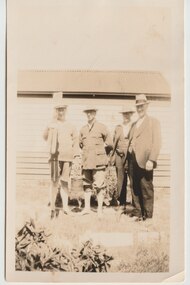
... ...Savige property...It shows a building that had been built on Legatee Stan Savige's property. In the early years, Legacy organised outings to the property of Legacy founder, Legatee Stan Savige, who had a place in Balnarring/Somers, close to the beach. ...Legacy Somers Camp Savige property Stamped on reverse with 'Kodak print' and 'X 657' in grey ink. ...A black and white photo of a group of four men, most likely at Somers camp, probably in the 1930s. Second from left is Legatee Stan Savige. One man is holding rowing oars. It shows a building that had been built on Legatee Stan Savige's property. In the early years, Legacy organised outings to the property of Legacy founder, Legatee Stan Savige, who had a place in Balnarring/Somers, close to the beach. Permanent camp buildings were built in 1930. Legacy Somers Camps continued intermittently at Stan's property until it was decided in 1951 to make other arrangements for holidays. This photo was with a group of photos from around the 1930s from the early days of Legacy, including cricket team, football team, and camps at Balnarring/Somers (saved as 01915 to 01934).Legatee Savige's property at Balnarring became very important for Legacy providing outings and camps for junior legatees.Black and white photo of four men, including Stan Savige.Stamped on reverse with 'Kodak print' and 'X 657' in grey ink. Velox paper.legacy somers camp, savige property -
 Melbourne Legacy
Newsletter, The Legacy Libeller: with which is incorporated "The Somers Slanderer"
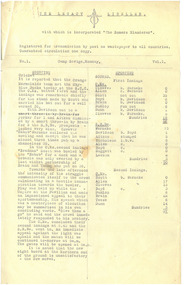
... ...Savige property...Pages headed 'Camp Savige, Monday' indicate that it was created for a camp at Stan Savige's property. It recounts the cricket competition between the Dark Blues, Light Blues, Green and Orange teams. ...Pages headed 'Camp Savige, Monday' indicate that it was created for a camp at Stan Savige's property. It recounts the cricket competition between the Dark Blues, Light Blues, Green and Orange teams. ...Undated but stapled to a further copy of 00130 which was dated 'Xmas 1932'. Pages headed 'Camp Savige, Monday' indicate that it was created for a camp at Stan Savige's property. It recounts the cricket competition between the Dark Blues, Light Blues, Green and Orange teams. Written and illustrated by Pat Hanna in a satirical style it was clearly intended to entertain as much as to inform, but the humour would be seen to be heavy handed or not funny at all today. Nevertheless it demonstrates that campers enjoyed their stay at Somers. See also 01290 and 01291. n the early years, Legacy organised outings to the property of Legacy founder, Legatee Stan Savige, who had a place in Balnarring/Somers, close to the beach. Permanent camp buildings were built in 1930. Legacy Somers Camps continued intermittently at Stan's property until it was decided in 1951 to make other arrangements for holidays. Illustrates the sort of activities considered appropriate to occupy camp participants, and the amateur enthusiasm of the newsletter producers in the early half of the twentieth century.3 typed foolscap sheets black on cream, pencilled corrections and linesLegacy symbol hand drawn in pencilnewsletter, savige property, legacy somers camp, camps -
 Melbourne Legacy
Newsletter, Camp Savige Newsletter
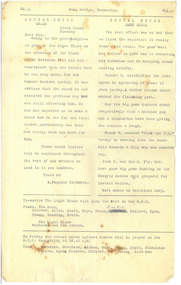
... ...Savige property...Pages headed 'Camp Savige, Wednesday' indicate that it was created for a camp at Stan Savige's property, recounting the cricket competition between the Dark Blues, Light Blues, Green and Orange teams. ...Pages headed 'Camp Savige, Wednesday' indicate that it was created for a camp at Stan Savige's property, recounting the cricket competition between the Dark Blues, Light Blues, Green and Orange teams. ...Undated but stapled to a further copy of 00130 which was dated 'Xmas 1932'. Pages headed 'Camp Savige, Wednesday' indicate that it was created for a camp at Stan Savige's property, recounting the cricket competition between the Dark Blues, Light Blues, Green and Orange teams. Written and illustrated by Legatee Pat Hanna in a satirical style it was clearly intended to entertain as much as to inform, but the humour would be seen to be heavy handed or not funny at all today. Nevertheless it demonstrates that campers enjoyed their stay. See also 01290 and 01289. n the early years, Legacy organised outings to the property of Legacy founder, Legatee Stan Savige, who had a place in Balnarring/Somers, close to the beach. Permanent camp buildings were built in 1930. Legacy Somers Camps continued intermittently at Stan's property until it was decided in 1951 to make other arrangements for holidays. Illustrates the sort of activities considered appropriate to occupy camp participants, and the amateur enthusiasm of the newsletter producers in the early half of the twentieth century.2 typed foolscap sheets black on cream, pencilled correction newsletter, legacy somers camp, savige property, camps -
 Melbourne Legacy
Photograph, Somers Camp, c1930
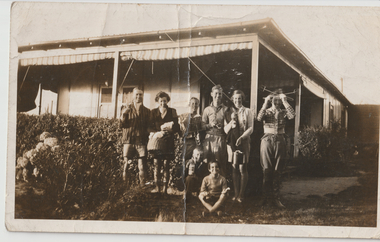
... ...Savige property...From other photos it appears to be a house often used for gatherings and may be on Stan Savige's Balnarring property. In the early years, Legacy organised outings to the property of Legacy founder, Legatee Stan Savige, who had a place in Balnarring/Somers, close to the beach. ...From other photos it appears to be a house often used for gatherings and may be on Stan Savige's Balnarring property. In the early years, Legacy organised outings to the property of Legacy founder, Legatee Stan Savige, who had a place in Balnarring/Somers, close to the beach. ...A black and white photo of a group of people holding camping items in the garden of a house. From other photos it appears to be a house often used for gatherings and may be on Stan Savige's Balnarring property. In the early years, Legacy organised outings to the property of Legacy founder, Legatee Stan Savige, who had a place in Balnarring/Somers, close to the beach. Permanent camp buildings were built in 1930. Legacy Somers Camps continued intermittently at Stan's property until it was decided in 1951 to make other arrangements for holidays. This photo was with a group of photos from around the 1930s from the early days of Legacy, including cricket team, football team, and camps at Balnarring/Somers (saved as 01915 to 01934). Mention has been found that the Savige holiday house at Balnarring was next to the campsite and sometimes provided support to the campers.A photo of a group of founding legatees or some of the first junior legatees. Legatee Savige was an important figure in Legacy's history and his property at Balnarring became very important for Legacy providing outings and camps for junior legatees.Black and white photo of a group of people at a house with camping items.Stamped 'Kodak print S 856' on back in grey ink.camp, junior legatee, legacy somers camp, savige property -
 Melbourne Legacy
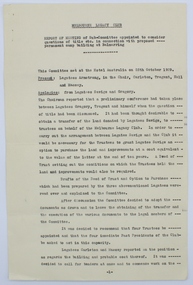
Document - Report, Ownership and lease of permanent camp at Balnarring, 1932
... ...Savige property...It started with camps on the property of Legacy founder, Legatee Stan Savige, who had a place in Balnarring/Somers, close to the beach. ...In the 1920s Legacy started camps at Stan Savige's property at Balnarring. By the 1930s a permanent camp kitchen and building had been built at Somers Camp. ...Documents concerning Legacy having a legal hold over land owned by Sir Stanley Savige in Balnarring in order to erect permanent camp buildings. 00253.1 and .2 Report of Meeting of sub committee considering the questions of title re permanent camp building at Balnarring. Meeting held at Hotel Austalia 2nd October 1929. Legatees Armstrong, Carleton, Tregent, Hall and Massey in attendence. 00253.3 Signed letter from Charles H. Peters to Brian Armstrong, Messers Plante and Henty Solicitors. 00253.4, .5, .6, .7, .8 Report on Balnarring Camp Property. Same as collection item 00250 but with different corrections and additional notes. 00253.9 Cover letter to L Armstrong signed from Dudley Tregent. 00253.10 Letter to Blatchford, Deputy Chairman Junior Legacy Club from unknown author. 00253.11, .12 Minutes of Meeting of Board of Management. Camp Premises Agreement and negotiations mentioned on page 3. Melbourne Legacy provides camps for junior legatees. The camps gave the children an opportunity of a summer beach holiday with other Legacy children. It started with camps on the property of Legacy founder, Legatee Stan Savige, who had a place in Balnarring/Somers, close to the beach. Permanent camp buildings were built in 1930. These documents relate to those buildings. Legacy Somers Camps continued intermittently at Stan's property until it was decided in 1951 to make other arrangements for holidays. Including using two other camps in the Somers area: Lord Somers Camp and the Somers School Camp (owned by the Education Department). Camps provided for junior Legatees have been very important from early in Legacy's history. In the 1920s Legacy started camps at Stan Savige's property at Balnarring. By the 1930s a permanent camp kitchen and building had been built at Somers Camp. These documents relate to the official status of the property.White paper with black type x 12 pages relating to land ownership and lease questions around the Balnarring Camp. Six sets of documents kept together. Total of twelve pages, some double sided.land transfer, deed of trust, option to purchase, properties, savige property, legacy somers camp -
 Melbourne Legacy
Photograph, Somers Camp, c1930
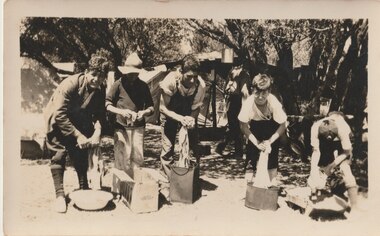
... ...Savige property...In the early years, Legacy organised outings to the property of Legacy founder, Legatee Stan Savige, who had a place in Balnarring/Somers, close to the beach. ... was an important figure in Legacy's history and his property at Balnarring became very important for Legacy providing outings and camps for junior legatees. beach junior legatee outing tents Legacy Somers Camp Savige property Stamped '39' on back in grey ink. ...A black and white photo of five boys washing items in tubs and tins at a beach camp. A similar photo is labeled Somers Camp so this was one of the very early camps using tents, before buildings were erected. In the early years, Legacy organised outings to the property of Legacy founder, Legatee Stan Savige, who had a place in Balnarring/Somers, close to the beach. Permanent camp buildings were built in 1930. Legacy Somers Camps continued intermittently at Stan's property until it was decided in 1951 to make other arrangements for holidays. This photo was with a group of photos from around the 1930s from the early days of Legacy, including cricket team, football team, and camps at Balnarring/Somers (saved as 01915 to 01934).Legatee Savige was an important figure in Legacy's history and his property at Balnarring became very important for Legacy providing outings and camps for junior legatees.Black and white photo of 5 boys doing washing at a camp.Stamped '39' on back in grey ink.beach, junior legatee outing, tents, legacy somers camp, savige property -
 Melbourne Legacy
Photograph, Somers Camp, c1930
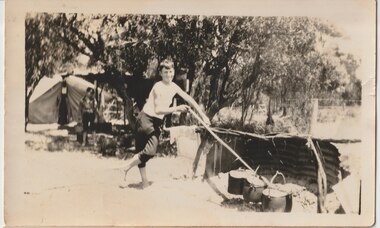
... ...Savige property...In the early years, Legacy organised outings to the property of Legacy founder, Legatee Stan Savige, who had a place in Balnarring/Somers, close to the beach. ...This photo was with a group of photos from around the 1930s from the early days of Legacy, including cricket team, football team, and camps at Balnarring/Somers (saved as 01915 to 01934). Legatee Savige's property at Balnarring became very important for Legacy providing outings and camps for junior legatees. beach campfire tents Savige property Legacy Somers Camp Handwritten 'Roy Gilbert Somers Camp' in blue pen. ...A black and white photo of a boy, Roy Gilbert, standing by cooking pots and a campfire at a beach camp. It is labeled Somers Camp so this was a very early camp using tents, before camp buildings were erected. In the early years, Legacy organised outings to the property of Legacy founder, Legatee Stan Savige, who had a place in Balnarring/Somers, close to the beach. Permanent camp buildings were built in 1930. Legacy Somers Camps continued intermittently at Stan's property until it was decided in 1951 to make other arrangements for holidays. This photo was with a group of photos from around the 1930s from the early days of Legacy, including cricket team, football team, and camps at Balnarring/Somers (saved as 01915 to 01934).Legatee Savige's property at Balnarring became very important for Legacy providing outings and camps for junior legatees.Black and white photo of a boy by cooking pots on a campfire.Handwritten 'Roy Gilbert Somers Camp' in blue pen. Stamped '39' on back in grey ink.beach, campfire, tents, savige property, legacy somers camp -
 Melbourne Legacy
Photograph, Somers Camp, c1930
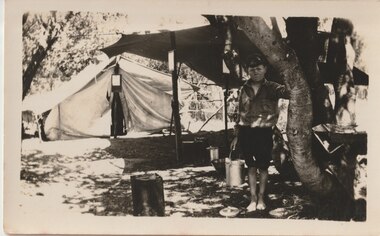
... ...Savige property...In the early years, Legacy organised outings to the property of Legacy founder, Legatee Stan Savige, who had a place in Balnarring/Somers, close to the beach. ...This photo was with a group of photos from around the 1930s from the early days of Legacy, including cricket team, football team, and camps at Balnarring/Somers (saved as 01915 to 01934). Legatee Savige's property at Balnarring became very important for Legacy providing outings and camps for junior legatees. beach tents Savige property Legacy Somers Camp Handwritten 'Somers Camp' in blue pen. ...A black and white photo of a boy by a tent at a beach camp. It is labelled Somers Camp so this was a very early camp using tents, before camp buildings were erected. In the early years, Legacy organised outings to the property of Legacy founder, Legatee Stan Savige, who had a place in Balnarring/Somers, close to the beach. Permanent camp buildings were built in 1930. Legacy Somers Camps continued intermittently at Stan's property until it was decided in 1951 to make other arrangements for holidays. This photo was with a group of photos from around the 1930s from the early days of Legacy, including cricket team, football team, and camps at Balnarring/Somers (saved as 01915 to 01934).Legatee Savige's property at Balnarring became very important for Legacy providing outings and camps for junior legatees.Black and white photo of a boy with a bucket at a camp.Handwritten 'Somers Camp' in blue pen. Stamped '39' on back in grey ink.beach, tents, savige property, legacy somers camp -
 Melbourne Legacy
Photograph, Somers Camp, c1930
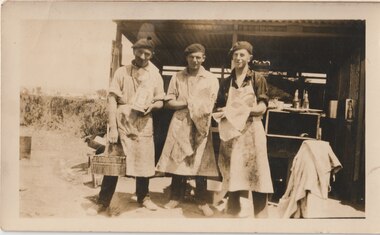
... ...Savige property...In the early years, Legacy organised outings to the property of Legacy founder, Legatee Stan Savige, who had a place in Balnarring/Somers, close to the beach. ...This photo was with a group of photos from around the 1930s from the early days of Legacy, including cricket team, football team, and camps at Balnarring/Somers (saved as 01915 to 01934). Legatee Savige's property at Balnarring became very important for Legacy providing outings and camps for junior legatees. beach Legacy Somers Camp Norm Smith Savige property Handwritten 'L R Norm Smith, Max Allan, Ewan Graham' in blue pen. ...A black and white photo three men wearing aprons at a beach camp kitchen. The names on the back say it is Norm Smith, Max Allan and Ewan Graham. It is likely to be Somers Camp with a type of camp kitchen behind the men. In the early years, Legacy organised outings to the property of Legacy founder, Legatee Stan Savige, who had a place in Balnarring/Somers, close to the beach. Permanent camp buildings were built in 1930. Legacy Somers Camps continued intermittently at Stan's property until it was decided in 1951 to make other arrangements for holidays. This photo was with a group of photos from around the 1930s from the early days of Legacy, including cricket team, football team, and camps at Balnarring/Somers (saved as 01915 to 01934).Legatee Savige's property at Balnarring became very important for Legacy providing outings and camps for junior legatees.Black and white photo of three legatees at a camp kitchen.Handwritten 'L R Norm Smith, Max Allan, Ewan Graham' in blue pen. Stamped '263' on back in purple ink.beach, legacy somers camp, norm smith, savige property -
 Melbourne Legacy
Photograph, Somers Camp, c1930
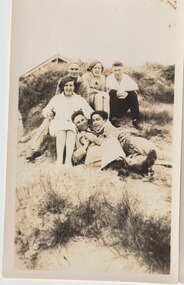
... ...Savige property...In the early years, Legacy organised outings to the property of Legacy founder, Legatee Stan Savige, who had a place in Balnarring/Somers, close to the beach. ...This photo was with a group of photos from around the 1930s from the early days of Legacy, including cricket team, football team, and camps at Balnarring/Somers (saved as 01915 to 01934). Legatee Savige's property at Balnarring became very important for Legacy providing outings and camps for junior legatees. beach junior legatee outing Legacy Somers Camp Savige property Handwritten 'L R. ...A black and white photo of six young people on a beach. The labels identify Frank Holliday, E. Smith, Ned Meade, Gwen Smith, Roy Gilbert, Bill Corrie. Likely to be a very early camp for junior legatees at Somers. In the early years, Legacy organised outings to the property of Legacy founder, Legatee Stan Savige, who had a place in Balnarring/Somers, close to the beach. Permanent camp buildings were built in 1930. Legacy Somers Camps continued intermittently at Stan's property until it was decided in 1951 to make other arrangements for holidays. This photo was with a group of photos from around the 1930s from the early days of Legacy, including cricket team, football team, and camps at Balnarring/Somers (saved as 01915 to 01934).Legatee Savige's property at Balnarring became very important for Legacy providing outings and camps for junior legatees.Black and white photo of six youths on a beach.Handwritten 'L R. F. Holliday, E. Smith, E. Meade, G. Smith, Roy Gilbert, Bill Corrie' in blue pen. Stamped 'Printed by Harringtons' in purple ink.beach, junior legatee outing, legacy somers camp, savige property -
 Melbourne Legacy
Photograph, Somers Camp, c1930
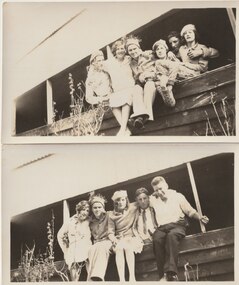
... ...Savige property...In the early years, Legacy organised outings to the property of Legacy founder, Legatee Stan Savige, who had a place in Balnarring/Somers, close to the beach. ...This photo was with a group of photos from around the 1930s from the early days of Legacy, including cricket team, football team, and camps at Balnarring/Somers (saved as 01915 to 01934). Legatee Savige's property at Balnarring became very important for Legacy providing outings and camps for junior legatees. junior legatee outing Legacy Somers Camp Savige property Handwritten 'L R. ...A group of photos of young people at a building believed to be at Somers Camp. The labels identify Frank Holliday, Gwen Smith, Lil Edmonds, Ned Meade, Roy Gilbert and Bill Corrie. Likely to be a very early camp or outing for junior legatees at Somers. In the early years, Legacy organised outings to the property of Legacy founder, Legatee Stan Savige, who had a place in Balnarring/Somers, close to the beach. Permanent camp buildings were built in 1930. Legacy Somers Camps continued intermittently at Stan's property until it was decided in 1951 to make other arrangements for holidays. This photo was with a group of photos from around the 1930s from the early days of Legacy, including cricket team, football team, and camps at Balnarring/Somers (saved as 01915 to 01934).Legatee Savige's property at Balnarring became very important for Legacy providing outings and camps for junior legatees.Black and white photo of six youths on a beach.Handwritten 'L R. F. Holliday, E. Smith, E. Meade, G. Smith, Roy Gilbert, Bill Corrie' in blue pen. Stamped 'Printed by Harringtons' in purple ink.junior legatee outing, legacy somers camp, savige property -
 Melbourne Legacy
Photograph, Legacy Somers Camp, c1930
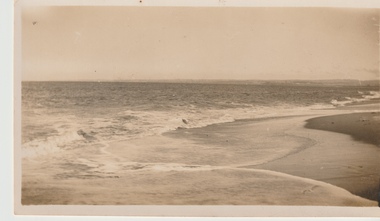
... ...Savige property...In the early years, Legacy organised outings to the property of Legacy founder, Legatee Stan Savige, who had a place in Balnarring/Somers, close to the beach. ...This photo was with a group of photos from around the 1930s from the early days of Legacy, including cricket team, football team, and camps at Balnarring/Somers (saved as 01915 to 01934). Legatee Savige's property at Balnarring became very important for Legacy providing outings and camps for junior legatees. beach Legacy Somers Camp Savige property Handwritten 'Somers Beach' in blue pen. ...A black and white photo of Somers beach. In the early years, Legacy organised outings to the property of Legacy founder, Legatee Stan Savige, who had a place in Balnarring/Somers, close to the beach. Permanent camp buildings were built in 1930. Legacy Somers Camps continued intermittently at Stan's property until it was decided in 1951 to make other arrangements for holidays. This photo was with a group of photos from around the 1930s from the early days of Legacy, including cricket team, football team, and camps at Balnarring/Somers (saved as 01915 to 01934).Legatee Savige's property at Balnarring became very important for Legacy providing outings and camps for junior legatees.Black and white photo of Somers beach.Handwritten 'Somers Beach' in blue pen. Stamped '6 54' in black ink.beach, legacy somers camp, savige property -
 Melbourne Legacy
Photograph, Legacy Somers Camp, c1930
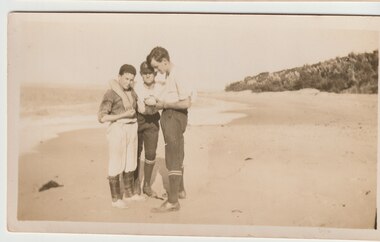
... ...Savige property...In the early years, Legacy organised outings to the property of Legacy founder, Legatee Stan Savige, who had a place in Balnarring/Somers, close to the beach. ...These photos were with a group of photos from around the 1930s from the early days of Legacy, including cricket team, football team, and camps at Balnarring/Somers (saved as 01915 to 01934). Legatee Savige's property at Balnarring became very important for Legacy providing outings and camps for junior legatees. beach junior legatee outing Legacy Somers Camp Savige property Handwritten 'Left to right Les Mitchell, Roy Gilbert' in blue pen. ...A black and white photo of junior legatees at Somers camp, probably in the 1930s. Names on the reverse say Les Mitchell and Roy Gilbert. In the early years, Legacy organised outings to the property of Legacy founder, Legatee Stan Savige, who had a place in Balnarring/Somers, close to the beach. Permanent camp buildings were built in 1930. Legacy Somers Camps continued intermittently at Stan's property until it was decided in 1951 to make other arrangements for holidays. These photos were with a group of photos from around the 1930s from the early days of Legacy, including cricket team, football team, and camps at Balnarring/Somers (saved as 01915 to 01934).Legatee Savige's property at Balnarring became very important for Legacy providing outings and camps for junior legatees.Black and white photo of Somers beach.Handwritten 'Left to right Les Mitchell, Roy Gilbert' in blue pen. Stamped '6 54' in black ink - same as 01928.beach, junior legatee outing, legacy somers camp, savige property -
 Melbourne Legacy
Photograph, Legacy Somers Camp, c1930
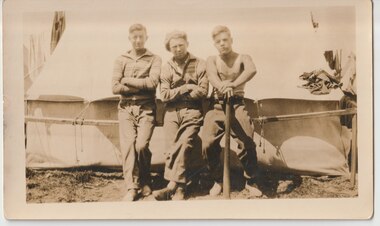
... ...Savige property...In the early years, Legacy organised outings to the property of Legacy founder, Legatee Stan Savige, who had a place in Balnarring/Somers, close to the beach. ...These photos were with a group of photos from around the 1930s from the early days of Legacy, including cricket team, football team, and camps at Balnarring/Somers (saved as 01915 to 01934). Legatee Savige's property at Balnarring became very important for Legacy providing outings and camps for junior legatees. junior legatee outing tents Legacy Somers Camp Savige property camps Handwritten on 01930.1 'x x Jim McGregor' in blue pen. ...Three black and white photos of junior legatee Jim McGregor at Somers camp, probably in the 1930s. In two of them he appears to be holding a pick axe. It could be when work was being done at Somers camp in the early 1930s. In the early years, Legacy organised outings to the property of Legacy founder, Legatee Stan Savige, who had a place in Balnarring/Somers, close to the beach. Permanent camp buildings were built in 1930. Legacy Somers Camps continued intermittently at Stan's property until it was decided in 1951 to make other arrangements for holidays. These photos were with a group of photos from around the 1930s from the early days of Legacy, including cricket team, football team, and camps at Balnarring/Somers (saved as 01915 to 01934).Legatee Savige's property at Balnarring became very important for Legacy providing outings and camps for junior legatees.Black and white photo x 3 of a junior legatee called Jim McGregor.Handwritten on 01930.1 'x x Jim McGregor' in blue pen. Stamped 'E63' in purple ink. Handwritten on 01930.2 'Jim McGregor' in blue pen and stamped '39' in black ink. Stamped on 01930.3 'E63' so same film as the first one.junior legatee outing, tents, legacy somers camp, savige property, camps -
 Melbourne Legacy
Photograph, Legacy Somers Camp, c1930
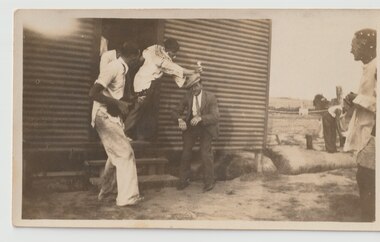
... ...Savige property...In the early years, Legacy organised outings to the property of Legacy founder, Legatee Stan Savige, who had a place in Balnarring/Somers, close to the beach. ...This photo was with a group of photos from around the 1930s from the early days of Legacy, including cricket team, football team, and camps at Balnarring/Somers (saved as 01915 to 01934). Legatee Savige's property at Balnarring became very important for Legacy providing outings and camps for junior legatees. junior legatee outing Legacy Somers Camp Savige property camp Handwritten on 01931.1 'Left to right x x Ron Rimmer' in blue pen. ...Four black and white photos of Somers camp, in 1931. One show a corrugated iron building that had been built and what looks like a prank being played on a Legatee in suit and cap. Also one of junior legatee Graham Billett by some camp buildings. Another shows Gwen Smith. Plus a group of youths on the beach. All are from the same film. In the early years, Legacy organised outings to the property of Legacy founder, Legatee Stan Savige, who had a place in Balnarring/Somers, close to the beach. Permanent camp buildings were built in 1930. Legacy Somers Camps continued intermittently at Stan's property until it was decided in 1951 to make other arrangements for holidays. This photo was with a group of photos from around the 1930s from the early days of Legacy, including cricket team, football team, and camps at Balnarring/Somers (saved as 01915 to 01934).Legatee Savige's property at Balnarring became very important for Legacy providing outings and camps for junior legatees.Black and white photo x 4 of Somers Camp in 1931.Handwritten on 01931.1 'Left to right x x Ron Rimmer' in blue pen. Handwritten on 01931.2 'Graham Billett' in blue pen. Handwritten on 01931.3 'Gwen Smith' in blue pen. All four are stamped '4 38' in blue ink meaning they are from the same film and have '1931' in pencil on them. Also all have 'Printed by Harringtons' in purple ink. All on Velox paper.junior legatee outing, legacy somers camp, savige property, camp -
 Melbourne Legacy
Photograph, Junior Legatee Outing
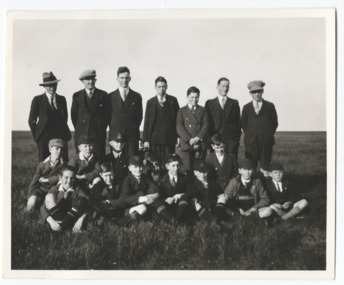
... It is possible it was L/- Stan Savige's property in Balnarring. Legatee Savige had a beach side property that he allowed to be used for summer camps and outings by Legacy. ...It is possible it was L/- Stan Savige's property in Balnarring. Legatee Savige had a beach side property that he allowed to be used for summer camps and outings by Legacy. ...The photo shows a group of people on an outing. There are 2 men, 5 youths and 12 boys. It could be Legatees taking junior legatees somewhere. The names and date is unknown as there are no inscriptions on the reverse. It is possible it was L/- Stan Savige's property in Balnarring. Legatee Savige had a beach side property that he allowed to be used for summer camps and outings by Legacy. The photo shows Legatees took junior legatees on outings.Black and white photo of a group of people outdoors.junior legatee outing, founding legatee -
 Melbourne Legacy
Photograph, Balnarring Camp Property
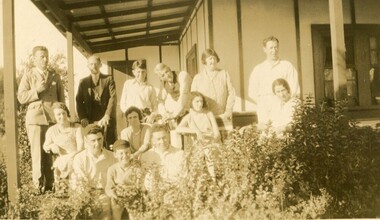
... A photo of a group of people at a Stan Savige's property in Balnarring. It appears to be a Legatee function and is the same building that is in the photo at 00398 which says No 7 Legacy Club Somers. ...A photo of a group of people at a Stan Savige's property in Balnarring. It appears to be a Legatee function and is the same building that is in the photo at 00398 which says No 7 Legacy Club Somers. ...A photo of a group of people at a Stan Savige's property in Balnarring. It appears to be a Legatee function and is the same building that is in the photo at 00398 which says No 7 Legacy Club Somers. The man standing on the right hand side could be Legatee Stan Savige. Legatee Savige had a beach side property that he allowed to be used for summer camps and outings by Legacy. In the early years of Legacy there were camps and picnics. In the 1930s permanent camp buildings were erected.A record of an early function at Somers and an original building at Somers Camp.Black and white photo of a group of people in the porch of a house.Handwritten on reverse 'I just adore poodle face to the left of your chair. Good old Carlo!!' Printed 'Kodak Print / B 300 'somers camp, legatee event -
 Melbourne Legacy
Photograph, Legacy Camp - John Bush photos, 1945
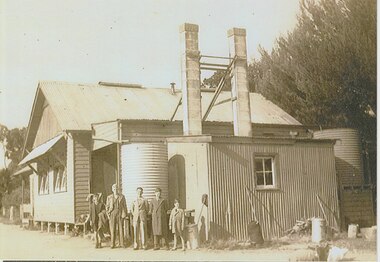
... A rare photo of Legacy camp buildings at Stan Savige's property in Balnarring dated as 1945. Plus other photos from camps and beach trips. ...A rare photo of Legacy camp buildings at Stan Savige's property in Balnarring dated as 1945. Plus other photos from camps and beach trips. ...A rare photo of Legacy camp buildings at Stan Savige's property in Balnarring dated as 1945. Plus other photos from camps and beach trips. The source is not known but John Bush is in several photos and was presumably a junior legatee that became part of a leadership group, such as the Intermediate Legacy Club (ILC). In the early years, Legacy organised outings to the property of Legacy founder, Legatee Stan Savige, who had a place in Balnarring/Somers, close to the beach. Permanent camp buildings were built in 1930. Legacy Somers Camps continued intermittently at Stan's property until it was decided in 1951 to make other arrangements for holidays. They are a group of old sepia photos that have been reproduced.A record of the initial buildings built at Somers/Balnarring and outings provided for Junior Legatees organised by Legacy.Reproductions of sepia photos of John Bush in the 1940s.Labels on the back are handwritten in black pen. 02177.1 School house / Legacy Camps / 1945 02177.2 John Bush - 27 / Leader after WW2 02177.3 John Bush 02177.4 Digging trenches for rubbish / Somers 1947 02177.5 John Bush 1937junior legatee outing, camps, ilc, legacy somers camp -
 Melbourne Legacy
Photograph, Legacy camp, Balnarring East, 1929, 1929
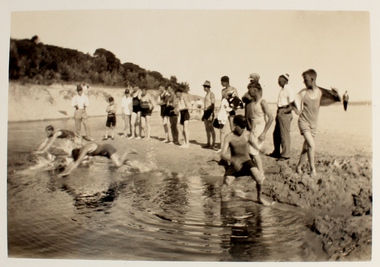
... Legatee Stan Savige had a property in the Balnarring area and some camps were held on his property. ...Legatee Stan Savige had a property in the Balnarring area and some camps were held on his property. ...One of the earliest camps held for Junior Legatees, showing tents, charabancs and fashions of the day. Legatee Stan Savige had a property in the Balnarring area and some camps were held on his property. Names noted on the back of the photos include: Pat Hanna, Aaron Beattie, Stan Savige, Sandy Lowe, Bill Pearce, Lyn Rule, Donovan Joynt, Carl Carleton, George Collins, Bill Pearce, Rupert Hely, Norman Stafford. Some of these were founding legatees. Melbourne Legacy provided camps for junior legatees - the children of deceased servicemen. It started in the early years of Legacy with outings to the property of Legacy founder, Legatee Stan Savige, who had a place in Balnarring. Permanent camp buildings were built in the 1930s. The camps gave the children an opportunity of a summer beach holiday with other Legacy children.A visual record of a camp run for Junior Legatees, with founder Stan Savige in one of the photographs, showing the accommodation and activities.Folding wallet, brown and cream with black printing, set of sepia photos varying sizes, 1 negative for 00061.7Wallet: 00061.1 “77283” (pencil), Kodak (Australasia) marketing text Photos: 00061.2 “Legacy Camp, Balnarring Xmas 1930/Taken by Aaron Beattie/Pat Hanna rear/Bill Pearce Lfront Lyn Rule/Donovan Joynt Centre Front/Carl Carlton Right Front/Child unknown/extreme left 2 unknown poss. from Bendigo Club” 00061.3 “N 481” 00061.5 “N 481” 00061.6 “Legacy Club Camp Hut/Balnarring East/ 7. Dec 1929” 00061.7 “N 481” 00061.8 “L to R/Stan Savige, George Collins, Bill Pearce/Sandy Lowe Rupert Hely/Norman Stafford/413” 00061.9 “738” 00061.10 “N 481” 00061.11 “N 481” 00061.12 “ Printer Harringtons/4 43” 00061.13 “738”camp, stan savige, founding legatee, somers camp -
 Melbourne Legacy
Document - Speech, Bulletin Address. Legatee Kem Kemsley Tuesday 27 September 1983
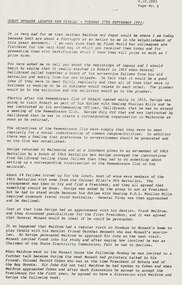
... and focus changed toward widows and children. Legatee Savige had a property at Balnarring and the first camps were started. ...and focus changed toward widows and children. Legatee Savige had a property at Balnarring and the first camps were started. ...An article from the Bulletin including the text an address by Legatee Kem Kemsley at a Legacy event on 27 September 1983. He discusses the beginnings of Legacy. He relates the approach made to Sir John Monash to be the first president. It was via Legatee Frank Meldrum who was playing tennis with Monash's son-in-law. It shows the nature of relations between high ranking ex servicemen. Monash suggested Colonel Harold Cohen. Initially Legacy was founded with 'one person from each profession or business who will represent that profession until such time as the Club has established itself on a wider basis.' For example there were 'two solicitors - Downing and Armstrong, Meldrum as dentist, George Worboys as plumber, Dr Gardener as the eye specialist, Doolan and Goodchild as Surveyors, Fred Wickham of the Premier's department who was regarded as very important, Baker from Myer's Emporium, Joynt from the printing world and Blackett the architect.' He also mentions a Police Strike and General Monash set up a special constabulary force. Cohen, Kemsley and many of the early legatees answered the call to help keep peace. By December 1923 there were 54 members of the new Legacy club. The name was under consideration as the Tasmanian club was called Remembrance Club. Pip Powell nominated the name of Legacy to be submitted for consideration, but it was Frank Selleck who moved the formal resolution. By the end of 1924 initial objectives were met. A picnic with widows and children was held at Heidelberg and then Beaumaris, (limited by the few legatees who had motorcars at the time). Following thoses successes Frank Doolan posed the question 'what does Legacy really mean?' and focus changed toward widows and children. Legatee Savige had a property at Balnarring and the first camps were started. For boys there was a Lacrosse team and football team. Also swimming classes and literary and debating classes, which were hoped to be interesting and develop their minds along the proper form of citizenship. Then classes for the widows and later the girls. The article was part of an album of past presidents from 1965 to 1989. The folder included biographical details and obituaries, eulogies and death notices of prominent Legatees. The items have been catalogued separately.A record of a speech made by Legatee Kem Kemsley a past president of Legacy about events in the early days of Legacy. The information was collected to record the lives of prominent legatees in a folder.Photocopy of 3 pages from Bulletin on an address by Legatee Kem Kemsley in 1983.Bulletin No. VAW 1209. 6.10.1983. Page No 8, 9 and 10.past presidents, speech, kem kemsley, history, police strike -
 Melbourne Legacy
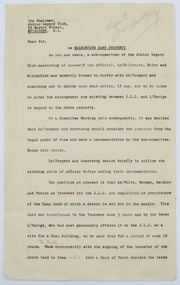
Letter, Re Balnarring Camp Property, c.1930
... Savige. Melbourne Legacy provided camps for junior legatees - the children of deceased servicemen. It started with outings to the property of Legacy founder, Legatee Stan Savige, who had a place in Balnarring. ...Savige. Melbourne Legacy provided camps for junior legatees - the children of deceased servicemen. It started with outings to the property of Legacy founder, Legatee Stan Savige, who had a place in Balnarring. ...Referring to the legal history and transfer of land for the Junior Legacy Club Balnarring camp from Legatee Savige. Melbourne Legacy provided camps for junior legatees - the children of deceased servicemen. It started with outings to the property of Legacy founder, Legatee Stan Savige, who had a place in Balnarring. Permanent camp buildings were built in 1930. Lord Somers (Governor of Victoria) also ran a camp in the area and the area became known as Somers. These documents record the transfer of the land to Legacy. The camps gave the children an opportunity of a summer beach holiday with other Legacy children.An important record of the history of the land owned by Stan Savige that was used for Legacy Camp, it adds to the other material available about Legacy Camp at Somers.White foolscap paper with black typed x 5 pages. Single sided. Black type with red corrections and some grey lead remarks. Addressed to ‘The chairman,/ Junior Legacy Club,/ 55 Market Street,/ Melbourne. C.1. From ‘Yrs Faithfully/ sgd/ J.H. Armstrong and W. A. Tregent. See also collection item 00253. somers camp, properties, land transfer -
 Melbourne Legacy
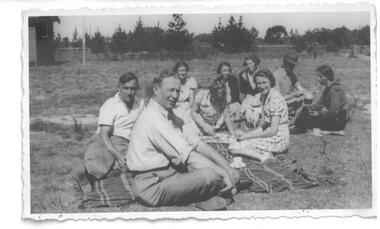
Photograph, Somers Camp, 1940
... In the early years, Legacy organised outings to the property of Legacy founder, Legatee Stan Savige, who had a place in Balnarring/Somers, close to the beach. ...In the early years, Legacy organised outings to the property of Legacy founder, Legatee Stan Savige, who had a place in Balnarring/Somers, close to the beach. ...Photo of a group of people on a picnic rug at Somers Camp in 1940. Melbourne Legacy provide camps for junior legatees - the children of deceased servicemen. In the early years, Legacy organised outings to the property of Legacy founder, Legatee Stan Savige, who had a place in Balnarring/Somers, close to the beach. Permanent camp buildings were built in 1930. Legacy Somers Camps continued intermittently at Stan's property until it was decided in 1951 to make other arrangements for holidays. A photograph of Stan Savige at Somers Camp.Black and white photo of Stan Savige at Somers Camp 1940."Norman Smith ILC" in blue pen and "Stan Savige at Somers Camp just before his departure with 17th Bde 1940" in pencil on reverse.stan savige, somers camp, camp -
 Melbourne Legacy
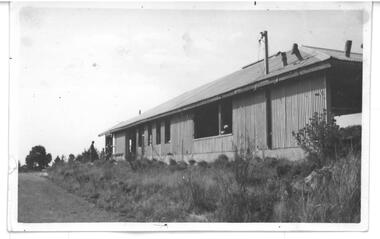
Photograph - Photo, Somers Camp
... In the early years, Legacy organised outings to the property of Legacy founder, Legatee Stan Savige, who had a place in Balnarring/Somers, close to the beach. ...An original building at Somers Camp on Sta Savige's property. somers camp camp "Norman Smith ILC" in blue pen and "Legacy Somers Camp (original Camp at Somers)" in pencil on reverse. ...Photograph of a building at Somers Camp. Melbourne Legacy provide camps for junior legatees - the children of deceased servicemen. In the early years, Legacy organised outings to the property of Legacy founder, Legatee Stan Savige, who had a place in Balnarring/Somers, close to the beach. Permanent camp buildings were built in 1930. Legacy Somers Camps continued intermittently at Stan's property until it was decided in 1951 to make other arrangements for holidays. An original building at Somers Camp on Sta Savige's property.Black and white photo of buildings at Somers Camp."Norman Smith ILC" in blue pen and "Legacy Somers Camp (original Camp at Somers)" in pencil on reverse.somers camp, camp -
 Melbourne Legacy
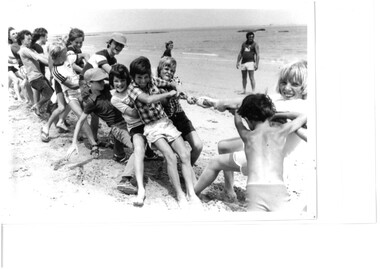
Photograph - Junior legatee outing, Somers Camp 1979, 1979
... It started with outings to the property of Legacy founder, Legatee Stan Savige, who had a place in Balnarring. ...It started with outings to the property of Legacy founder, Legatee Stan Savige, who had a place in Balnarring. ...Photograph of a large group of boys playing tug of war on beach. From the inscription it was at Somers Camp in January 1979. Melbourne Legacy provided camps for junior legatees. It started with outings to the property of Legacy founder, Legatee Stan Savige, who had a place in Balnarring. Permanent camp buildings were built. Other camp venues were used, such as Somers Education Department Camp. The camps gave the children an opportunity of a summer beach holiday with other Legacy children.A record of Junior Legatees enjoying an outing or a camp.Black and white photo of children playing tug of war on a beach January 1979."Jan 79" in blue pen on reverse. Stamped "Copyright / The Herald and Weekly Times" in blue ink. Stamped "The Property of Melbourne Legacy" in purple ink on reverse.somers camp, camp, junior legatee outing, beach -
 Melbourne Legacy
Photograph - Junior legatee outing, Camp, 01/1968
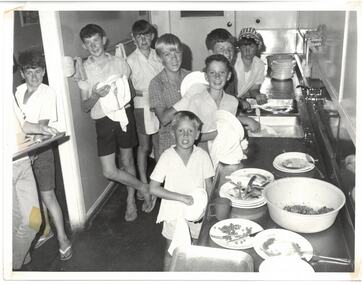
... It started with outings to the property of Legacy founder, Legatee Stan Savige, who had a place in Balnarring. ...It started with outings to the property of Legacy founder, Legatee Stan Savige, who had a place in Balnarring. ...A photo of 8 boys in a camp kitchen cleaning up after a meal. From the inscriptions it is Somers Camp in January 1968. Melbourne Legacy provided camps for junior legatees - the children of deceased servicemen. It started with outings to the property of Legacy founder, Legatee Stan Savige, who had a place in Balnarring. Permanent camp buildings were built. The camps gave the children an opportunity of a summer beach holiday with other Legacy children. Other camp venues were used, such as Somers Education Department Camp. It came from a Legacy envelope marked "P6 Junior Legatee Camps and Hols" in red pen, and dated Jan 1977 in pencil. The contents will be items 00418 to 00425. A record of Junior Legatee camps.Black and white photo of boys cleaning up the camp kitchen.Legacy P6 in blue pen. Stamped "The Property of Melbourne Legacy" and 19 Jan 1968 in purple ink. Stamped "Copyright Herald and Weekly Times" in blue ink. Paper label typed in black ink "(k) After a 'dip in the briny' and a big meal, even washing up the dishes is fun for these country Junior Legatees at our Somers Camp." Also "K" underlined twice in black texta.somers camp, junior legatee outing, kitchens -
 Melbourne Legacy
Photograph - Junior legatee outing, Somers Camp
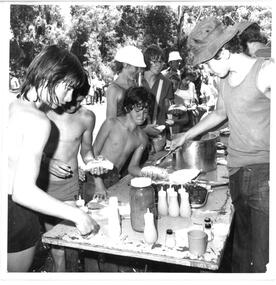
... It started in the 1930s with outings to the property of Legacy founder, Legatee Stan Savige, who had a place in Balnarring/Somers. ...It started in the 1930s with outings to the property of Legacy founder, Legatee Stan Savige, who had a place in Balnarring/Somers. ...A photo of boys in line receiving a meal at a camp at an unknown camp or date. It came from an envelope with other Camp photos of varying dates. The Legacy envelope was marked "P6 Junior Legatee Camps and Hols" in red pen, and dated Jan 1977 in pencil. The contents will be items 00418 to 00425. Melbourne Legacy arranged many events for Junior Legatees to experience. For many years a regular event was a two week camp at Somers Camp. It started in the 1930s with outings to the property of Legacy founder, Legatee Stan Savige, who had a place in Balnarring/Somers. Permanent camp buildings were built and used up to 1951. The camps gave the children an opportunity of a summer beach holiday with other Legacy children. A record of Junior Legatee camps.Black and white photo of boys being fed at a camp.P6 / Legacy / 4 in blue pen. Stamped "Copyright Herald and Weekly Times" in blue ink. somers camp, junior legatee outing
