
Showing 30 items matching "self-sufficiency"
-
 The Beechworth Burke Museum
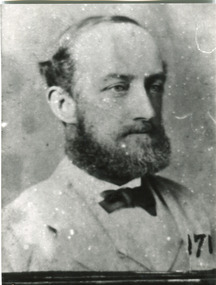
Photograph - Photograph Reproduction, 1870
... ...self-sufficiency...Dr Dick promoted the hospital`s self-sufficiency by engaging patients in various forms of work, such as clothing alterations and cultivation of the farm. ...Dr Dick promoted the hospital`s self-sufficiency by engaging patients in various forms of work, such as clothing alterations and cultivation of the farm. ...The photograph is a copy of the original one, with the latter been captured in 1870. The man depicted is Doctor Thomas Thomson Dick, who was the first Medical Superintendent at Mayday Hills Hospital. He was born in Scotland in 1840 and he died in East Malvern in 1919. He obtained his degree of Doctor of Medicine from Melbourne University in 1864 and, later in his career, he became Inspector-General of the mentally ill. Dr Dick promoted the hospital`s self-sufficiency by engaging patients in various forms of work, such as clothing alterations and cultivation of the farm. He also introduced monthly balls, which could be attended by patients, staff and guests, and they were later replaced by concerts. The Mayday Hills Hospital was constructed between 1864 and 1867, with buildings created in a number of periods. It formally opened on 24 October 1867 and, along with the Ovens Hospital and the Benevolent Asylum, made Beechworth a prominent social welfare centre in Victoria. The need for an institution of this kind was arisen due to the increased number of people with mental disturbances (induced by the harsh living conditions on the goldfields) and the remoteness of the district from Melbourne. The site was chosen for its panoramic view of the countryside, the hilltop atmosphere and the native fauna, all contributing to the cure of patients.The Hospital was originally named the “Ovens Lunatic Asylum” but, during the centenary celebrations in 1967, the name was officially changed to “Mayday Hills Hospital”, showing the gradual shift in the perception and understanding of mental health conditions over the last decades. The Hospital lies on the traditional land of the Kulin Nation. This photograph is historically significant as it provides information about the staff served at the Mayday Hills Hospital when it first opened. It also contributes to the understanding of the district`s development and its importance to the course of Victoria`s history and adds valuable information about the changing approaches to the treatment of mental health conditions. Black and white rectangular photograph printed on paper. Obverse: (7)/ Reverse: 1997.2452/ Dr Dick/No(7) Pioneer Board/ doctor thomas thomson dick, superintendent, mayday hills hospital, scotland, east malvern, doctor of medicine, melbourne university, inspector-general, clothing alterations, cultivation of the farm, self-sufficiency, balls, concerts, ovens hospital, benevolent asylum, beechworth, goldfields, kulin nation, panoramic view, mental health conditions -
 Kiewa Valley Historical Society
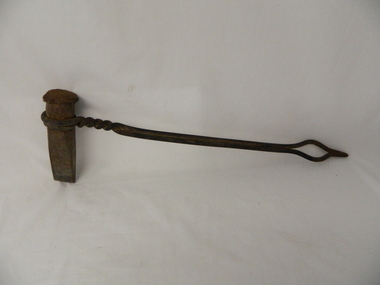
Hammer Blacksmith, 1900's
... This blacksmith's hammer was an integral tool used by cattle property "blacksmith's" for the maintenance of horse shoes and the manufacture/alterations and repair of any other metal item required by the property. Self sufficiency was the key element to the success of a cattle property especially in semi isolated rural areas(early Kiewa Valley) and the larger the property ie. stock holding the greater the need.....This blacksmith's hammer was an integral tool used by cattle property "blacksmith's" for the maintenance of horse shoes and the manufacture/alterations and repair of any other metal item required by the property. Self sufficiency was the key element to the success of a cattle property especially in semi isolated rural areas(early Kiewa Valley) and the larger the property ie. stock holding the greater the need.. ...This blacksmith's hammer was an integral tool used by cattle property "blacksmith's" for the maintenance of horse shoes and the manufacture/alterations and repair of any other metal item required by the property. Self sufficiency was the key element to the success of a cattle property especially in semi isolated rural areas(early Kiewa Valley) and the larger the property ie. stock holding the greater the need.. This blacksmith's hammer would not only have been used on the cattle property of the pioneer family (the Ropers) in the earlier part of the 1900s but also up in the Bogong High Plains grazing region to maintain the constant refurbishment/maintenance of horse shoes and other metal items. Depending on each property's requirement for blacksmith's service, one from the larger property could have serviced all the valley's requirements. Large blacksmith's hammer has a handle of twisted iron encircling 19 cm. hammer head. It has a round striking end and a wedge shaped punch end. V.B. [in dots ] tools, horses, punch, blacksmiths -
 Kiewa Valley Historical Society
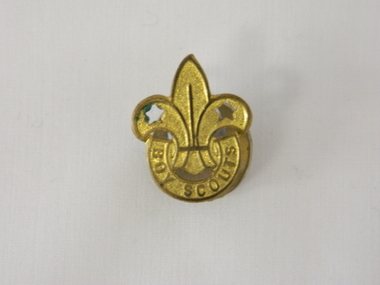
Badge Boy Scout, circa mid to late 1900's
... The scouting group applied the concept of self sufficiency and friendship to all its membership. ...The scouting group applied the concept of self sufficiency and friendship to all its membership. ...This badge, which was used in the mid to late 1900's (Scouts started in Australia in 1909) clearly demonstrates that the families in the Kiewa Valley although slightly remote were still able to participate in one of the prime "boy" only social groups. The Boy Scouting movement brought together boys from all the socio-economic areas in the Australian population. The scouting group applied the concept of self sufficiency and friendship to all its membership. It was an avenue to cross the boundaries of distance and regional mores. Many of the boys in the Kiewa Valley and its regions would have been more "in tune" with the core principles of the scouting movement because being in a rural environment and "living on the land" was a day to day part of their life. What was an important aspect to they was the "mateship" and the belonging to a very large, and international, group of "like minded" boys. This avenue of interacting with a larger group of boys cut through the "small population" mores of a rural and at times isolated environment. This Boy Scouting activity was both mentally and physically significant to growing boys within the Kiewa Valley as it opened up the world to them. This brass badge has a front formed in a half circle base supporting a "Fleur de Leis" in a spear shape with "cut outs" at the appropriate places to provide the emphasis needed to project the form. Attached to the badge is a crescent moon shaped pronged frame for attaching the badge to lapels or collars or button eyelets. On the bottom scroll "BOY SCOUTS" and on the back type fastener "STOKES & SONS" below this "Melb". societies, boy scouts, apparel badges, numismatics badges -
 Kiewa Valley Historical Society
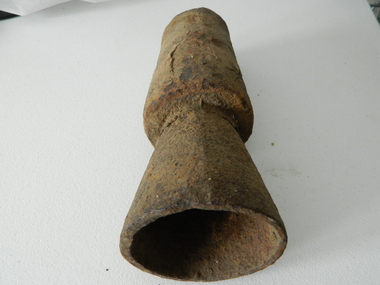
Tuyere Pipe, circa mid to late 1900's
... The "inventiveness" of cattlemen and construction workers to produce metal objects not available "off the shelf" is one of the inherent traits not only of rural self sufficiency but in the "pioneer" days of rural isolation one of survival....The "inventiveness" of cattlemen and construction workers to produce metal objects not available "off the shelf" is one of the inherent traits not only of rural self sufficiency but in the "pioneer" days of rural isolation one of survival. ...This tuyere (word from French origin) was used by professional blacksmiths and or cattlemen before and during the Kiewa Hydro Electricity Scheme was being constructed. The need to use a furnace or forge in the shaping of metal rods, horse shoes and pipes is both a rural necessity and a construction, on site requirement. The "inventiveness" of cattlemen and construction workers to produce metal objects not available "off the shelf" is one of the inherent traits not only of rural self sufficiency but in the "pioneer" days of rural isolation one of survival. This tuyere is of great significance to the Kiewa Valley and its regions because it highlights one of the greatest strengths of the rural (especially isolated) life and its folk living there, and that is the great human factor of adaptability and survival techniques in sometimes harsh and demanding environmental circumstances. The inventiveness and the attitude, "she'll be right mate", demonstrates life on the land where specialised blacksmith activities can be found in non "professionals" because of the fact that "someone" has to do the job. This is one of the differences between country "rural" life and that found in cities and larger towns. This iron cone shaped tuyere has a small hole (diamenter 25mm) starting within an ever enlarging cone (amplification of the air pressure going through) delivering varying hot or extremely hot air into a furnace or hearth which intensifies the heat to allow the "shaping" of metal objects. The larger "flared" cone extension allows for the directed air to be spread and not concentrated. blacksmith tool, tue, bellows, fashioning metal, forge manufacturing process -
 Kiewa Valley Historical Society
Box Sewing Kit, pre 1952
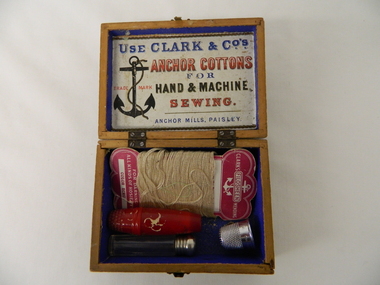
... This was at the period where self sufficiency in rural and especially remote areas was a requirement and not just a hobby. ...This was at the period where self sufficiency in rural and especially remote areas was a requirement and not just a hobby. ...This "sewing and darning" box was purchased before 1952 (the date that the Clark Brothers merged with J&P Coats). It was in an era where the production and alteration/modification to any household or personal clothing was carried out by a family member/s. This was at the period where self sufficiency in rural and especially remote areas was a requirement and not just a hobby. Clothing modifications and "hand me downs" was a way of life. The long and tiresome journey from home to millinery shops was a great force to ensure that home sewing was carried out in the majority of residential and farm areas. This sewing box was donated by a pioneer family in the Kiewa Valley. Its significance points to an era before the establishment of the Kiewa Hydro Electricity Scheme and the establishment of the Mount Beauty Township. It was a time when the rural industries of the Kiewa Valley was rich in production of beef, dairy products, tobacco leaf and before the mass of alpine adventurers that tourism sparked. It was a time rural enterprises out shone tourism. This wooden sewing box is covered with decorative paper. The lid is fastened to the bottom section with two small hinges each having four screws. Each side is fixed to the other by a mortise groove. At the front of the box is a small clasp for complete closure. The box contains needles, darrning thread, thimble, a glass vial with metal screwtop and a red plastic cylindrical container with a thimble screw on top(contains a small reel with three different cotton thread compartments). On outside lid "FROM A FRIEND. I DO NOT WISH THEE GRANDEUR, NOR YET A STORE OF WEALTH, I WISH THEE RICHER TREASURE, CONTENTMENT, PEACE & HEALTH", On inside lid "USE CLARK & CO ANCHOR COTTONS FOR HAND & MACHINE SEWING ANCHOR MILLS, PAISLEY" Each of the different sewing boxes from the Clark Bros. has a label with different "friend" passages. sewing box, hand stitching, domestic clothes alterations, haberdashery -
 Mont De Lancey
Functional object - Nut Loaf Tin, Willow, c early 1900's
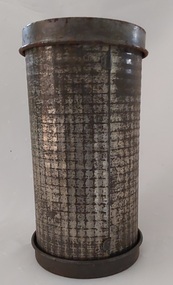
... This was a period of self sufficiency especially in semi remote rural areas. ...This was a period of self sufficiency especially in semi remote rural areas. ...This nut roll tin was used in a period before 1959(when plastic containers started being used). It was a period when "home" cooking(desserts and cakes) was the only method of having cakes and other pastry dishes in rural areas as there were no local shops. The utensils available for this home cooking had to be strong and reliable and low maintenance. This was a period of self sufficiency especially in semi remote rural areas. Sadly, the Willow Company no longer has a nut loaf tin among their many cooking tins. A cylindrical nut loaf tin with removable lids at each end. The metal body of the tin has tiny patterned indented squares with only two of the three clips to ensure the tin stays closed. The lids at each end add to this tightening. On the lids there is rusty difficult to read stamping for the Willow brand. The cooked cake can be easily removed when the two lids are taken off. This is a rare tin. Around the edges of each lid is stamped 'NUT LOAF TIN'. In the middle of each lid is a circular shape with 'Made in Australia' around the edge. Inside this is a diamond shape with 'WILLOW'. There is a tiny square shaped pattern indented all over the body of the tin. baking tins, kitchenware, baking, cooking -
 Emerald Museum & Nobelius Heritage Park
Leisure object - Amish dolls, Beryl Collett, 2000s
... The Amish are known for simple living, plain dress, Christian pacificism, self-sufficiency and a disregard for modern technology. ...The Amish are known for simple living, plain dress, Christian pacificism, self-sufficiency and a disregard for modern technology. ...These Amish-style dolls were made by Kallista woman, Beryl Collett (1925-2018) and form part of a large and varied range of objects relating to Beryl which is held by the Museum. She became very interested in Amish culture in the early 2000s and has also made Amish-style quilts. The Amish people have significant populations in the USA (Indiana, Ohio and Pennsylvania). The Amish are known for simple living, plain dress, Christian pacificism, self-sufficiency and a disregard for modern technology. Amish dolls typically have no facial features or hair to emphasise that all are alike in the eyes of God. The Dandenongs have been the chosen home of many creative people who, like Beryl, have found inspiration in the natural beauty of the area. Much of Beryl's work was created by her following her retirement from her accountancy job in 1980 and so epitomises the potential of the retirement phase of people's lives. Three Amish-style dolls. One female and two males. Stuffed and dressed in plain Amish-style clothing and wearing a hat or bonnet. No facial features or hair. One additional bonnet and pair of pantaloons. No markings beryl collett, kallista victoria australia, dolls, amish -
 National Wool Museum
Spinning Wheel, Charka spinning wheel
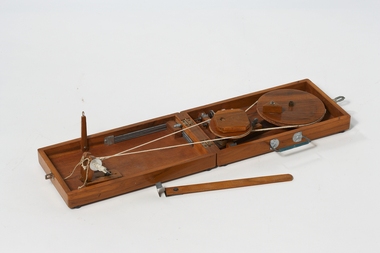
... He especially advocated their use to India's poor as a means to achieve self-sufficiency and thus combat the growing poverty rate in India after the departure of the British....He especially advocated their use to India's poor as a means to achieve self-sufficiency and thus combat the growing poverty rate in India after the departure of the British. handicrafts - history spinning wheels highlights of the national wool museum: the zakrzewski spinning wheel collection - exhibition (28/07/2001 - 02/12/2001) zakrzewski mr wlodzimierz Charka or Gandhi spinning wheel. ...Part of the Zakrzewski Collection of spinning wheels donated to the National Wool Museum by Mr Wlodzimierz Zakrzewski. For many years, Mr Zakrzewski collected, researched and repaired spinning wheels from all over the world. This spinning wheel is known a Charka spinning wheel and is from India. Spinning wheels like this became widely known through their connection with Mahatma Gandhi and are often referred to as Gandhi wheels. Gandhi encouraged people to spin whenever they had the opportunity. He especially advocated their use to India's poor as a means to achieve self-sufficiency and thus combat the growing poverty rate in India after the departure of the British. Charka or Gandhi spinning wheel. Part of the Zakrzewski Collection of hand spinning wheels from around the world. handicrafts - history, spinning wheels, highlights of the national wool museum: the zakrzewski spinning wheel collection - exhibition (28/07/2001 - 02/12/2001), zakrzewski, mr wlodzimierz -
 Kiewa Valley Historical Society
Tape Measure, mid 1900s
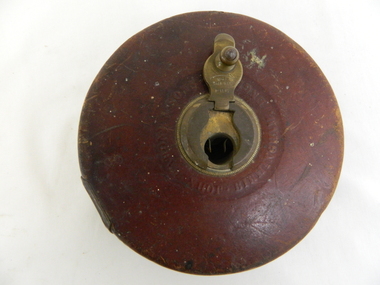
... World War II, when Australia had to defend its own boarders that the political push for self sufficiency of manufactured goods started local production. ...World War II, when Australia had to defend its own boarders that the political push for self sufficiency of manufactured goods started local production. ...This item predates the change of Imperial measure (England -1824) to decimal measure (Europe) in Australia (1970 to 1988). This item was manufactured in England as, was the majority of measuring tool and equipment. It was not until the late 1950s that other countries e.g. United States and Europe provided the same type of manufactured tools for the Australian market. World War II, when Australia had to defend its own boarders that the political push for self sufficiency of manufactured goods started local production. Workers in the Kiewa Valley had always relied on the high quality of tools and manufactured goods coming from England. From the middle to late 1950s migration by skilled workers from a war torn Europe provided the source of manpower for the expansion of the manufacturing industries in Australia. The requirement of an accurate measuring tool has always been critical. This item was used at the time when Australia was using the British Imperial measurements. Accurate measurements by carpenters and other trades people for both town and rural needs was just as critical as for the larger cities. The transition period from Imperial to metric was a period of over four years but it still presented those who had used the Imperial measurements for a longer period in their trades with a dual system of measurement for a longer time(usually up to their retirement) Other nations still using Imperial measurements kept the transition from Imperial to metric alive (the UK and USA still uses Imperial measurements in 2012) Retractable metallic wired tape measure within a leather casing. Length of tape is 66 feet. Brass fittings on casing(winder and back plate) Tape on one side marked in inches and feet and on the other in links. Winder lever marked "66ft No 401" on front and arrow with"wind this way". Leather cover marked "John R A Bone & Sons Birmingham England" on reverse side "Metallic wired tape R A Bone & Sons" wired tape measure, tool, mobile tool, construction tool -
 Kiewa Valley Historical Society
Pot Melting, circa mid to late 1900's
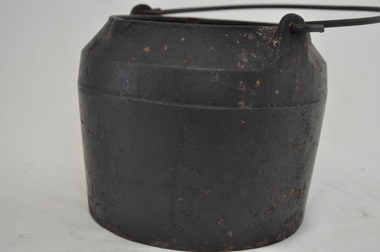
... The ability of self sufficiency on properties is still a boon to rural properties as time lost is never really recovered....The ability of self sufficiency on properties is still a boon to rural properties as time lost is never really recovered. ...Before 1908 the words "melting pot" was a term relating to a "crucible" with a meaning of "a pot in which metals and other substances are melted (fused) to provide metal items of varying shapes and uses. From the mid 1900's this term changed and became more related to the "mixing" of social and ethnically diverse populations. The description used here is that of pre 1908. This melting pot was used in the early to late 1900's when produce and hardware shops were too far away from the Kiewa Valley and time was at the essence. The ability to manufacture as many "crucial " items at the home property was the difference between running a successful rural business or not. The isolation of the Kiewa Valley (before the 1950's), hindered the "time down" of machinery and important "widget" replacements. The ability of self sufficiency on properties is still a boon to rural properties as time lost is never really recovered. This melting pot is highly significant to the Kiewa Valley as it provides evidence that the graziers and cattle stations required to be self sufficient in all aspects of day to day maintenance and replenishment of worn materials requiring to be "manufactured " at the property and lack of replacements from commercially shelved products. This aspect of "survival" in the "bush" can be seen in the "huts" built on the Bogong High Plains to accommodate the seasonal grazing of cattle from the Kiewa Valley. This black melting pot is made of cast iron. The lid is missing. The top rim of the pot has three lips for poring accuracy. The formation of these lips are in a "triangle" formation. The top section of the body has a curve inwards reducing the pot diameter from 270mm at the base to 135mm.at the top. The handle is made from heavy gauge wire which is fastened to the body through two lugs (welded onto the top section of the pot) and fasten through a hole at the top of each lug. The handle has a "U" shape as it goes through the lug hole, ensuring no accidental fixture to any side thus allowing free swiveling from one side to the other . "BH" indented within a diamond shape. Opposite "No 3" camp fire cooking utensils, hot plate, cast iron cooking appliance, drovers kitchen -
 The Beechworth Burke Museum
Photograph, 1857
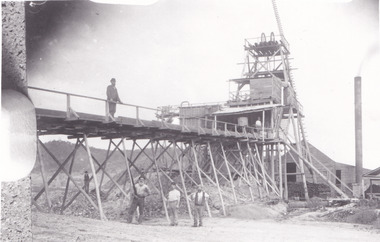
... People of all backgrounds were drawn to the gold fields by the prospect of riches and adventure, but they also learned self-sufficiency and found freedom of expression. ...People of all backgrounds were drawn to the gold fields by the prospect of riches and adventure, but they also learned self-sufficiency and found freedom of expression. ...This photograph is of old mine workings on the site of the Spring Creek diggings. Spring Creek is a contact zone for granite pluton and siltstones, shales and standstones; which has, over time, encouraged natural springs to form. Enriched with gold washed out of the surrounding granite, these alluvial deposits achieved fame from 1852 onwards as the Spring Creek Diggings sprang to life (not realised as geographically important until 1871). In Spring Creek that runs behind the main street of Beechworth, near the foot of Newtown Hill a pint pot of gold was discovered on one of these expeditions in 1852 by prospectors Baker and Strickland and the gold rush town of Spring Creek was formed. Australian gold rushes have always created a sense of independence and freedom; as do-it-yourself, off-grid, low-tech adventures. People of all backgrounds were drawn to the gold fields by the prospect of riches and adventure, but they also learned self-sufficiency and found freedom of expression. Industry boomed, new practices were adopted and social norms were upended. This image is of historical significance as it informs on the history of Australian gold mining. It represents the innovation that accompanied the mining industry and the importance of gold mining in town building and regional histories. Black and white rectangular photograph on unmounted board. gold mining, spring creek, mining, geography, geology -
 Kiewa Valley Historical Society
Mould Butter, unknown, post 1967
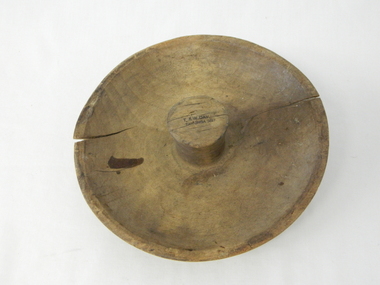
... This period was in most rural regions a time of self sufficiency where any domestic type implement which could be fashioned by the family would be crafted with skill. ...This period was in most rural regions a time of self sufficiency where any domestic type implement which could be fashioned by the family would be crafted with skill. ...This butter mould/pat may have been manufactured post 1967(year post codes appeared in Australia) however the post code was only stamped on after it was machined. This type of butter mould was used by rural families to fashion home/farm made butter. This period was in most rural regions a time of self sufficiency where any domestic type implement which could be fashioned by the family would be crafted with skill. Shopping for goods required catalogues from stores located in major rural towns and cities and involved lengthy waiting times. Travelling to and from these specialised stores was not pleasant due to the relatively poor quality of the roads and the lengthy times taken. The small general stores in the Kiewa Valley could not cater for all the needs of the valley. The 1960's was a time when facilities especially goods and services started to improve drastically. The S.E.C. of Victoria with its Kiewa Hydro Electricity Scheme provided not only an improvement of facilities in the valley but also a increase in the population. This increase resulted in a greater demand for local produce. This item is one of many domestic food processing implements used by Kiewa Valley households in the mid 1900s, whether on the farm or in the small towns and hamlets. Self sufficiency was the key to survival during these early times. Where ever possible supplies from within the valley were preferred to that brought in by travelling salesmen or traders. This butter mould and butter pat was commonly used to fashion "home" made butter throughout the valley and in some cases supplied to "outside" regional towns. Although this method of production was phased out by better access to goods from nearby cities the revival of the good organic home grown produce in the 1980s saw a greater demand of this type of farm based produce. This well crafted circular wooden butter mould could also be used as a butter pat.The handle in the middle of the mould was not added after the crafting but has been fashioned from the initial block of wood when the bowl was crafted. The bowl structure has a rim around the edge. The top of the handle has an ink stamp "T. & W. Dav" on the top line and "Tawonga 3697" underneath. domestic food preparation, wooden butter pat, butter mould circular, dairy industry -
 Kiewa Valley Historical Society
Pat Butter Profiler, Circa 1950s
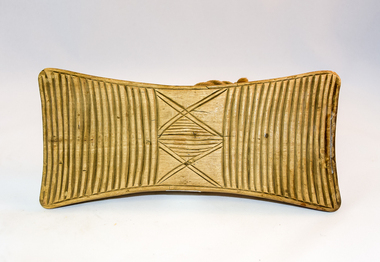
... This period was in most rural regions a time of self sufficiency where any domestic type implement which could be fashioned by the family would be crafted with skill. ...This period was in most rural regions a time of self sufficiency where any domestic type implement which could be fashioned by the family would be crafted with skill. ...This butter pat profiler may have been manufactured post 1967(year post codes appeared in Australia) however the post code was only stamped on after it was machined. This type of butter mould was used by rural families to fashion home/farm made butter. This period was in most rural regions a time of self sufficiency where any domestic type implement which could be fashioned by the family would be crafted with skill. Shopping for goods required catalogues from stores located in major rural towns and cities and involved lengthy waiting times. Travelling to and from these specialised stores was not pleasant due to the relatively poor quality of the roads and the lengthy times taken. The small general stores in the Kiewa Valley could not cater for all the needs of the valley. The 1960's was a time when facilities especially goods and services started to improve drastically. The S.E.C. of Victoria with its Kiewa Hydro Electricity Scheme provided not only an improvement of facilities in the valley but also a increase in the population. This increase resulted in a greater demand for local produce. This item is one of many domestic food processing implements used by Kiewa Valley households in the mid 1900s, whether on the farm or in the small towns and hamlets. Self sufficiency was the key to survival during these early times. Where ever possible supplies from within the valley were preferred to that brought in by travelling salesmen or traders. This butter mould and butter pat was commonly used to fashion "home" made butter throughout the valley and in some cases supplied to "outside" regional towns. Although this method of production was phased out by better access to goods from nearby cities the revival of the good organic home grown produce in the 1980s saw a greater demand of this type of farm based produce. This butter Pat/Profiler has on its base two patterns. On each end it has horizontal grooves cut into the wood which produce distinct lines onto the surface of the butter. between these grooves there is a section of two double lines crossing in the middle and separated by eleven horizontal lines The base has an elongated rectangular shape. The upper body has been sanded into a smooth convex shaped form where a wooden circular hand grip has been fashioned. On the top of the hand grip is stamped in black print"T. & W. Davies" and under this"TAWONGA 3697" domestic food preparation, wooden butter pat, butter mould circular, dairy industry -
 Kiewa Valley Historical Society
Pat Butter, Circa 1950
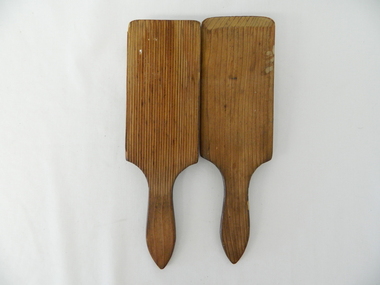
... This period was in most rural regions a time of self sufficiency where any domestic type implement which could be fashioned by the family would be crafted with skill. ...This period was in most rural regions a time of self sufficiency where any domestic type implement which could be fashioned by the family would be crafted with skill. ...This butter pat profiler may have been manufactured post 1967 (year post codes appeared in Australia) however the post code was only stamped on after it was machined. This type of butter mould was used by rural families to fashion home/farm made butter. This period was in most rural regions a time of self sufficiency where any domestic type implement which could be fashioned by the family would be crafted with skill. Shopping for goods required catalogues from stores located in major rural towns and cities and involved lengthy waiting times. Travelling to and from these specialised stores was not pleasant due to the relatively poor quality of the roads and the lengthy times taken. The small general stores in the Kiewa Valley could not cater for all the needs of the valley. The 1960's was a time when facilities especially goods and services started to improve drastically. The S.E.C. of Victoria with its Kiewa Hydro Electricity Scheme provided not only an improvement of facilities in the valley but also a increase in the population. This increase resulted in a greater demand for local produce. This item is one of many domestic food processing implements used by Kiewa Valley households in the mid 1900s, whether on the farm or in the small towns and hamlets. Self sufficiency was the key to survival during these early times. Where ever possible supplies from within the valley were preferred to that brought in by travelling salesmen or traders. This butter mould and butter pat was commonly used to fashion "home" made butter throughout the valley and in some cases supplied to "outside" regional towns. Although this method of production was phased out by better access to goods from nearby cities the revival of the good organic home grown produce in the 1980s saw a greater demand of this type of farm based produce. This butter pat is one of two,see KVHS 0071 (B). It has been crafted from wood. One side has grooves running from the handle to the square shaped bottom. These grooves would stop the wet butter from clinging to the pat. The top side of the pat has been bevelled on both sides and the bottom edge. The hand grip is flat and curved to allow for a comfortable hold. domestic food preparation, wooden butter pat, butter mould circular, dairy industry, butter -
 Kiewa Valley Historical Society
Pat Butter Profiler, Circa 1950
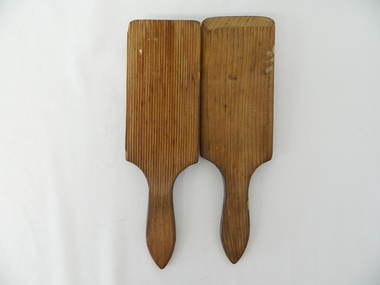
... This period was in most rural regions a time of self sufficiency where any domestic type implement which could be fashioned by the family would be crafted with skill. ...This period was in most rural regions a time of self sufficiency where any domestic type implement which could be fashioned by the family would be crafted with skill. ...This butter pat profiler may have been manufactured post 1967(year post codes appeared in Australia) however the post code was only stamped on after it was machined. This type of butter mould was used by rural families to fashion home/farm made butter. This period was in most rural regions a time of self sufficiency where any domestic type implement which could be fashioned by the family would be crafted with skill. Shopping for goods required catalogues from stores located in major rural towns and cities and involved lengthy waiting times. Travelling to and from these specialised stores was not pleasant due to the relatively poor quality of the roads and the lengthy times taken. The small general stores in the Kiewa Valley could not cater for all the needs of the valley. The 1960's was a time when facilities especially goods and services started to improve drastically. The S.E.C. of Victoria with its Kiewa Hydro Electricity Scheme provided not only an improvement of facilities in the valley but also a increase in the population. This increase resulted in a greater demand for local produce. This item is one of many domestic food processing implements used by Kiewa Valley households in the mid 1900s, whether on the farm or in the small towns and hamlets. Self sufficiency was the key to survival during these early times. Where ever possible supplies from within the valley were preferred to that brought in by travelling salesmen or traders. This butter mould and butter pat was commonly used to fashion "home" made butter throughout the valley and in some cases supplied to "outside" regional towns. Although this method of production was phased out by better access to goods from nearby cities the revival of the good organic home grown produce in the 1980s saw a greater demand of this type of farm based produce. This butter pat is one of two,see KVHS 0071 (A). It has been crafted from wood. One side has grooves running from the handle to the square shaped bottom. These grooves would stop the wet butter from clinging to the pat. The top side of the pat has been bevelled on both sides and the bottom edge. The hand grip is flat and curved to allow for a comfortable hold. domestic food preparation, wooden butter pat, butter mould circular, dairy industry -
 Sunshine and District Historical Society Incorporated
Book - McPhersons Industrial Catalogue, McPherson's Ltd, 1971
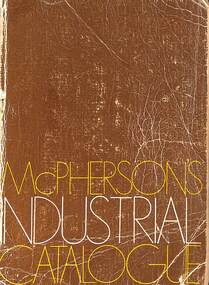
... He anticipated wartime supply issues and pushed for Australian self‑sufficiency, leading to new factories at Sunshine Road Tottenham, Kensington, Richmond. ...He anticipated wartime supply issues and pushed for Australian self‑sufficiency, leading to new factories at Sunshine Road Tottenham, Kensington, Richmond. ...McPherson’s Industrial Catalogue refers to the large, detailed product catalogues published by McPherson’s Pty Ltd, one of Australia’s most important hardware, machinery, and engineering‑supply firms from the late 19th to mid‑20th century. These catalogues were not just sales tools, they were reference books for farmers, workshops, factories, and technical schools across Australia.Brown soft covered book with yellow and white text non-fiction McPherson’s Industrial Catalogue refers to the large, detailed product catalogues published by McPherson’s Pty Ltd, one of Australia’s most important hardware, machinery, and engineering‑supply firms from the late 19th to mid‑20th century. These catalogues were not just sales tools, they were reference books for farmers, workshops, factories, and technical schools across Australia. albion explosive factory, ballarat road, deer park, sunshine road, tottenham, wiltshire files, ajax pumps, mcphersons -
 Melbourne Legacy
Document - Press Release 1975, Melbourne Legacy, One Man's Legacy, 1975
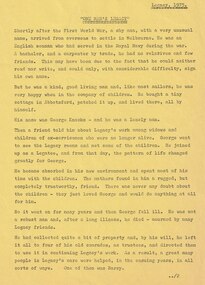
... Barry went on to prosperous work, self sufficiency and a lovely marriage. Due partially to Legatee George Knocks, his bequest and the support of Legacy. ...Barry went on to prosperous work, self sufficiency and a lovely marriage. Due partially to Legatee George Knocks, his bequest and the support of Legacy. ...A press release from Melbourne Legacy in 1975 which relates the story of George Knocks who joined Legacy and left a bequest that made a difference. The information was intended to be used by press and magazines etc. A longer version of the story is in the Weekly Bulletin - 29 Sept 1964. George was described as a lonely ex-seaman who migrated to Australia after the first world war. He learnt about Legacy and the work with widows and children. 'He joined up as a Legatee and from that day, the pattern of life changed greatly for George. He became absorbed in his new environment and spent most of his time with the children. The mothers founding him a rugged, but completely trustworthy friend.' When George died he was mourned by many Legacy friends. His left his property to four comrades, as trustees to use in continuing Legacy's work. As a result, a great many people in Legacy's care were helped, in all sorts of ways. One of them was Barry. Barry's father had died as a POW in a Japanese prison, and his mother had lost all her possessions in evacuating from Malaya. Barry had a disability and in time a new treatment was found, but it was expensive. Then Legacy came to aid Barry with money from the George Knocks fund. After long series of operations and treatments Barry made a wonderful recovery. While the fund ran out during the treatment, the last cost was met by The Stanley Savige Memorial Trust, which was a fund raised by the members of Legacy to honour the memory of their former leader. Barry went on to prosperous work, self sufficiency and a lovely marriage. Due partially to Legatee George Knocks, his bequest and the support of Legacy. More information on George Knocks includes his passport and a longer version of his story. See 02151 and 02152 and 02153. A record of how Legacy promoted their work in the 1970s and the story of the life of a legatee. Yellow foolscap page x 2 with black type of a press release in 1975. Title 'One Man's Legacy'' press release, promotion, bequests, george knocks -
 Victorian Aboriginal Corporation for Languages
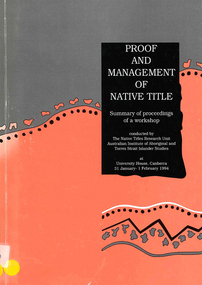
Book, Native Title Research Unit AIATSIS, Proof and management of native title : summary of proceedings of a workshop : conducted by the Native Titles Research Unit, Australian Institute of Aboriginal and Torres Strait Islander Studies at University House, Canberra 31 January - 1 February 1994, 1994
... objective tests of native title; 3.use of maps; 4.practice directions; 5. mediation; 6. what precision is needed to prove ownership; Third Session: Determinations - "Matters raised in discussion" - 1.what is a community; 2.the legal process for proof of communal title(i-iv); Fourth Session: New Management Regimes - Main matters raised in discussion - 1. need for new development models; 2. need for new administrative models; 3. is self-sufficiency a realistic goal; 4. actve/?passive income; 5. direct funding of Indigenous bodies; 6. towards self-government; Fifth Session: New Management Decisions - Main matters raised in discussion - 1. different models for money management; 2. local government laws and native title; 3. restrictions on the enjoyment of native title rights; 4. need for flexibility in investigating native title; Sixth Session: Conclusions and Recommendations - Papers as requested; discussion; Main New Matters raised by panel in discussion - 1. recommendations from the Aboriginal caucus; 2. requirements for an application; 3. issues for funding; 4. role of representative bodies; 5. double dipping; 6. role of AIATSIS; 7. trustees or agents; 8. land management issues; Annexes: annotated separately under author /? ...objective tests of native title; 3.use of maps; 4.practice directions; 5. mediation; 6. what precision is needed to prove ownership; Third Session: Determinations - "Matters raised in discussion" - 1.what is a community; 2.the legal process for proof of communal title(i-iv); Fourth Session: New Management Regimes - Main matters raised in discussion - 1. need for new development models; 2. need for new administrative models; 3. is self-sufficiency a realistic goal; 4. actve/?passive income; 5. direct funding of Indigenous bodies; 6. towards self-government; Fifth Session: New Management Decisions - Main matters raised in discussion - 1. different models for money management; 2. local government laws and native title; 3. restrictions on the enjoyment of native title rights; 4. need for flexibility in investigating native title; Sixth Session: Conclusions and Recommendations - Papers as requested; discussion; Main New Matters raised by panel in discussion - 1. recommendations from the Aboriginal caucus; 2. requirements for an application; 3. issues for funding; 4. role of representative bodies; 5. double dipping; 6. role of AIATSIS; 7. trustees or agents; 8. land management issues; Annexes: annotated separately under author /? ...Introduction - Jim Fingleton - Outlines history and problem aspects to do with the formulation of the Native Title Act 1993 and subsidiary /? consultative bodies (eg National Native Title Tribunal and Regulations; Native Title Implementation Task Force); Note: Talks &? discussion papers annotated separately by author/?title/?workshop title; SESSION GROUP DISCUSSIONS ONLY annotated here; First Session: Claims - Matters raised in discussion - timing; restraining orders; requirement for claim acceptance; researching claims; disputes; representative bodies; native title /? compensation claims; Second Session: Hearings - "Main matters raised in discussion" - 1.gender issue in hearings; 2.subjective /? objective tests of native title; 3.use of maps; 4.practice directions; 5. mediation; 6. what precision is needed to prove ownership; Third Session: Determinations - "Matters raised in discussion" - 1.what is a community; 2.the legal process for proof of communal title(i-iv); Fourth Session: New Management Regimes - Main matters raised in discussion - 1. need for new development models; 2. need for new administrative models; 3. is self-sufficiency a realistic goal; 4. actve/?passive income; 5. direct funding of Indigenous bodies; 6. towards self-government; Fifth Session: New Management Decisions - Main matters raised in discussion - 1. different models for money management; 2. local government laws and native title; 3. restrictions on the enjoyment of native title rights; 4. need for flexibility in investigating native title; Sixth Session: Conclusions and Recommendations - Papers as requested; discussion; Main New Matters raised by panel in discussion - 1. recommendations from the Aboriginal caucus; 2. requirements for an application; 3. issues for funding; 4. role of representative bodies; 5. double dipping; 6. role of AIATSIS; 7. trustees or agents; 8. land management issues; Annexes: annotated separately under author /? title. tables native title, land tenure -
 Parks Victoria - Wilsons Promontory Lightstation
Anvil
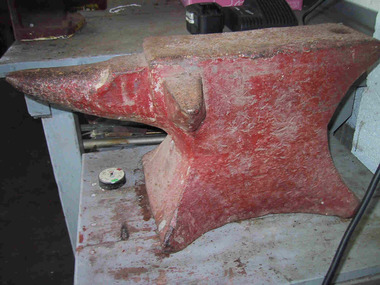
... The anvil is an example of the necessary resourcefulness and self sufficiency practiced by lightkeepers working and living in a remotely located workplace and home, and many of the iron items in the collection may have been repaired or even made on its working surface. ...The anvil is an example of the necessary resourcefulness and self sufficiency practiced by lightkeepers working and living in a remotely located workplace and home, and many of the iron items in the collection may have been repaired or even made on its working surface. ...As quoted from Wikipedia, ‘An anvil is a block with a hard surface on which another object is, struck. The block is as massive as it is practical, because the higher the inertia of the anvil, the more efficiently it causes the energy of the striking tool to be transferred to the work piece’. The lightstation’s anvil is a red-painted iron block with a conical beak or horn at one end that was used for hammering curved pieces of metal. It would have stood on a heavy free-standing pedestal, such as a large tree stump, to allow complete access to the item being hammered. Some anvils display the manufacturer’s name in the metal on the side, but this is not the case here, and its age, although unknown appears to be quite old, perhaps c.1900. It appears to have had a lot of use, and although no record of this survives, it is presumed that a forge operated on site for hammering, cutting, shaping and repairing tools such as bolts, nails, hooks, chain segments, pulley blocks, hinges, crow bars, picks, chisels, horseshoes and harness hardware. A hames hook (which forms part of the collar worn by a draught horse) survives at the lightstation as do many other heavy metal tools and pieces of equipment. The anvil is an example of the necessary resourcefulness and self sufficiency practiced by lightkeepers working and living in a remotely located workplace and home, and many of the iron items in the collection may have been repaired or even made on its working surface. As a lightstation manager Chris Richter used the anvil to manufacture pulley blocks for sash windows, repair brass door hinges & sharpen cold chisels, crowbars and picks and other lightkeepers have used this anvil for many fabricating jobs such as manufacturing ducting for the generator room ventilation system."The lightship only came in every three months with supplies and there would have been repairs to do between visits from a blacksmith - who would have had to travel on the ship. Also, the ship was only anchored in the bay long enough to unload supplies and collect and deliver lightkeeping staff – probably not enough time to get much smithy work done – especially if the weather packed it in and the ship had to depart. Lightkeepers in our time had to be self sufficient, resourceful and innovative and I imagine that would have been the case in the past." It has second level contributory significance. Red painted blacksmith's anvil. -
 City of Moorabbin Historical Society (Operating the Box Cottage Museum)
Domestic object - Kitchen Equipment, household soap, c1900
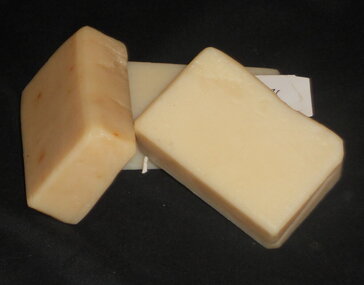
... These 3 cakes of home-made soap are examples of the self sufficiency of the early settlers as they had to be self reliant ,growing food and making and mending their own farm equipment, tools and clothes while establishing their market gardens in Moorabbin Shire soap making market gardeners pioneers early settlers moorabbin brighton dendy's special survey 1841. kitchen equipment laundry equipment bentleigh 3 cakes of home-made, white hard household soap. 1 cake of soap eaten by a brush tailed possum when he entered the Cottage via the chimney 27/4/2014 Domestic object Kitchen Equipment, household soap Unrecorded early settler ...Common soap was made from mixing animal fat with potash a form of the potassium based alkali present in plant and wood material. Early settlers, made their own soap from the waste fats and ashes they saved from their daily work. They did not then have to rely on waiting for soap to be shipped from England and waste their goods or money in trade for soap. In making soap the first ingredient required was a liquid solution of potash commonly called lye. Animal fat, when removed from the animals during butchering, must be rendered to remove all meat tissues and cooking residue before soap of any satisfactory quality can be made from it. To render, fats and waste cooking grease were placed in a large kettle with an equal amount of water. Then the kettle was placed over the open fire outdoors, because the smell from rendering the fats was too strong to wish in anyone's house. The mixture of fats and water were boiled until all the fats had melted. After a longer period of boiling to insure completion of melting the fats, the fire was stopped and into the kettle was placed another amount of water about equal to the first amount of water. The solution was allowed to cool down and left over night. By the next day the fats had solidified and floated to the top forming a layer of clean fat. All the impurities being not as light as the fat remained in water underneath the fat. In another large kettle or pot the fat was placed with an amount of lye solution ( known by experience ). This mixture was boiled until the soap was formed - 6-8 hours - a thick frothy mass, and a small amount placed on the tongue caused no noticeable "bite". The next day a brown jelly like slippery substance was in the kettle and this was 'soft soap' . To make hard soap, common salt was thrown in at the end of the boiling and a hard cake of soap formed in a layer at the top of the pot. But as salt was expensive most settlers used 'soft soap',. The soap could be scented with oils such as lavender for personal use. These 3 cakes of home-made soap are examples of the self sufficiency of the early settlers as they had to be self reliant ,growing food and making and mending their own farm equipment, tools and clothes while establishing their market gardens in Moorabbin Shire 3 cakes of home-made, white hard household soap. 1 cake of soap eaten by a brush tailed possum when he entered the Cottage via the chimney 27/4/2014 soap making, market gardeners, pioneers, early settlers, moorabbin, brighton, dendy's special survey 1841. kitchen equipment, laundry equipment, bentleigh -
 Orbost & District Historical Society
Functional object - brick with handprint, early 1900s
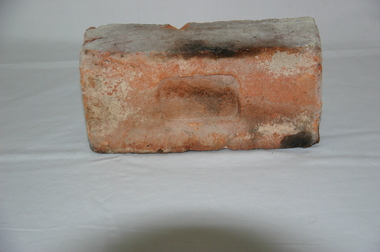
... This item is significant because it indicates the self-sufficiency needed by Orbost in the early 1900s when it was very isolated with poor transport with the rest of Victoria. brick hand-made brick Orbost This is a building brick, brown colour. ...This hand-made brick came from a fireplace which was being demolished in Orbost in 2023. The house is located cnr. Lyndall and Gladstone Streets, Orbost and was built c. early 1900s. The brick is almost certainly made from a local clay-pit at Orbost. At that time, the Orbost district was very isolated, with poor transport links to Melbourne. As a result, the town was very self-sufficient, and bricks were made locally. This item is significant because it indicates the self-sufficiency needed by Orbost in the early 1900s when it was very isolated with poor transport with the rest of Victoria. This is a building brick, brown colour. One side of the brick has an indent, and the other side has an imprint of a hand with fingers. brick, hand-made brick, orbost -
 Kiewa Valley Historical Society
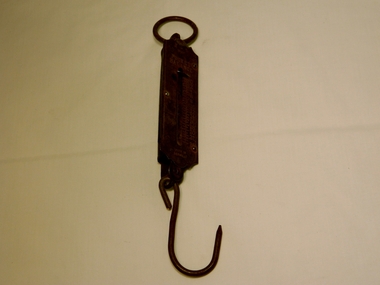
Scales Balance Pocket, Circa 1900
... This was more so in the depression years 1929 to late 1930s. Self sufficiency was to a large extent more attainable in this region than in the city/ large country town environment. ...Historically this item would have been used by gold miners, rabbit shooters, mobile "Rag and Bone" traders and other mobile(in caravans and/or horse drawn cart) traders of various small goods and haberdashery. Although marked as not to be used as trade, the isolation and sometimes difficult terrain rules out using larger and more delicate scales. In the early 1900s rough roads and severe weather conditions forced traders to be more flexible in trading with weights and measures. The "close enough is good enough" doctrine was the Australian outback rule of thumb. The significance of this item in the Kiewa Valley during this period demonstrates the slower acceptance of accurate trading measure using the country side principle "my hand shake is my bond". In the Kiewa Valley small quantity commercial undertakings e.g. gold mining, fur pelts and rabbit meat trade did not require bulk weight type scales. Commerce in rural production e.g. fruit and vegetables involved more farmers and their staff in a barter and/or "in kind" payments. This was more so in the depression years 1929 to late 1930s. Self sufficiency was to a large extent more attainable in this region than in the city/ large country town environment. The Australian "fair go" ethical approach to life and commerce was very much ingrained in those living in country regions, like Kiewa Valley as is demonstrated by the not so accurate hand balance, spring loaded scales. Portable Pocket Balance with front plate made from brass. Spring mechanism enclosed by black painted medium gauge steel cover( three quarters cylindrical). Front scale face and rear spring casing fastened by three rivets. Spring loaded marker blade is located in the centre of the front plate. See item KVHS 0224 for a similar scales. Front plate marked: at top "Not legal for use in trade", below this in larger print "Pocket Balance", under and to the right in smaller print "lbs" under this graded marks, first marked with a Zero, then every second mark in ascending order up to 25. At the bottom of the front plate is marked "Made in Germany" antique pocket balance, scales, mobile weights, vintage appliances -
 Kiewa Valley Historical Society
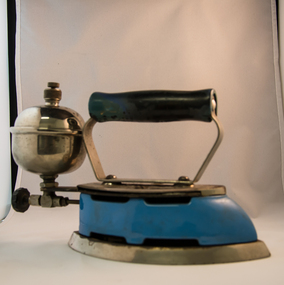
Iron Hand Kerosene, mid to late 1900s
... The supply of electricity was in summer time subject to interruption from bush fire damaged wooden poles carrying the electrical cables. Self sufficiency by rural populations was the backbone of survival and the ability to store energy sources "on the farm" was a prerequisite of isolated regions, such as the Kiewa Valley, circa 1950s. household appliances alternative non electrical ironing appliances domestic appliances kerosene appliances Stamped on the base plate of the handle, front region "COLEMAN LAMP & STOVE CO." below this "WICHITA KAN" below this"TORONTO CAN". ...The 1950's saw a revolution in small appliances for use in the average household. This hand held self heating(kerosene) iron was introduced as a time saving and more convenient iron for pressing clothes and other cloth fabrics. It replaced irons needing a separate fire source to heat the ironing plate. These irons continued to be in service, even when electricity was available in cities and larger rural towns (domestic electric steam irons were invented in 1938). This item was used before and during the electricity supplies available from the Kiewa Hydro Electricity Scheme. These irons remained in use within regional rural areas that had limited or unreliable electrical reticulation. In the 1950s and later the Kiewa Valley was still a relatively isolated region which was home to rural properties and small settlements. The availability of electricity and or the financial means to afford new types of electric hand irons ensured that older and sometimes less efficient ironing remained for an extended period covering the 1960s to 1970s. Kerosene products, such as this kerosene iron was a cheaper method for farm based domestic and other rural activities requiring a heat source. The use of kerosene as a heat/light source was able to be supplied in bulk and able to be used when floods severed vital roads into this region. The supply of electricity was in summer time subject to interruption from bush fire damaged wooden poles carrying the electrical cables. Self sufficiency by rural populations was the backbone of survival and the ability to store energy sources "on the farm" was a prerequisite of isolated regions, such as the Kiewa Valley, circa 1950s. This Coleman kerosene iron has a solid steel chrome plated(press) base with a painted (blue) wooden handle. The handle is stud fastened onto an oblong shaped rolled steel handle frame and screwed (two screws) onto the base plate. Both the heating plate and the top securing plate are shaped similar to a river boat. The main housing enclosing the heating element is enamel coated(blue in colour) steel and has a half hole for lighting the kerosene at the rear end. Behind the handle and protruding upwards is a stainless steel fully enclosed container (bowl shaped) for the main supply of kerosene to the burner or generator(enclosed within the main body of the iron. The bowl has an air valve and inlet for pressurised air intake (hand pump) On the bottom rear of the fuel bowl there is a screw regulated fuel pump. The fuel heated base plate provides the heat for this advertised "self heating iron(instant lighting). See KVHS 0347B- Instruction sheet; KVHS 0347C- Wrench; and KVHS 0347D Fuel can. Stamped on the base plate of the handle, front region "COLEMAN LAMP & STOVE CO." below this "WICHITA KAN" below this"TORONTO CAN". In the middle of the handle base and in larger print "COLEMAN Instant-Lite" At the rear location in large print "MODEL 4" in smaller print below "MADE IN U.S.A." below this "PAT#1718473" household appliances, alternative non electrical ironing appliances, domestic appliances, kerosene appliances -
 Kiewa Valley Historical Society
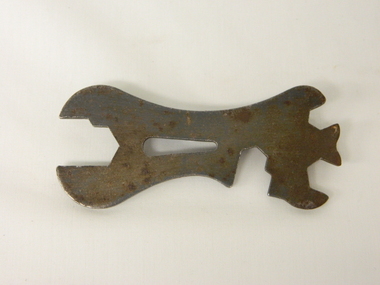
Wrench Coleman, circa 1950
... The supply of electricity was in summer time subject to interruption from bush fire damaged wooden poles carrying the electrical cables. Self sufficiency by rural populations was the backbone of survival(use of this wrench was a part of rural life). ...The 1950's saw a revolution in small appliances for use in the average household. This hand held wrench was provided exclusively for the Coleman self heating kerosene (KVHS 0347A) iron and used for the regular changing the kerosene used in it. The iron was used before and during the electricity supplies available from the Kiewa Hydro Electricity Scheme. These irons remained in use within regional rural areas that had limited or unreliable electrical reticulation. Kerosene supplies were cheaper than electricity but also more inconvenient than electric. Electrical appliances become cheaper to buy and maintain in the later part of the 1900's and the now older kerosene iron was faded out. This wrench was required to open the fuel container which stored kerosene in the Coleman hand iron(see KVHS 0347A). This item was part of the maintenance requirement of this particular hand iron. In the 1950s and later the Kiewa Valley was still a relatively isolated region which was home to rural properties and small settlements. The availability of electricity and or the financial means to afford new types of electric hand irons ensured that older and sometimes less efficient ironing remained for an extended period covering the 1960s to 1970s. Kerosene products, such as this kerosene iron was a cheaper method for farm based domestic and other rural activities requiring a heat source. The use of kerosene as a heat/light source was able to be supplied in bulk and able to be used when floods severed vital roads into this region. The supply of electricity was in summer time subject to interruption from bush fire damaged wooden poles carrying the electrical cables. Self sufficiency by rural populations was the backbone of survival(use of this wrench was a part of rural life). The ability to store energy sources "on the farm" was a prerequisite of isolated regions, such as the Kiewa Valley, circa 1950s. This item is a flat cast iron wrench, which has been specifically made for KVHS 0347A (kerosene iron). The wrench has four specific forms cut into the steel which fit firmly around their targeted nut and other fixtures. Also see See KVHS 0347B- Instruction sheet; and KVHS 0347D Fuel can. ironing, iron maintenance tool, domestic appliances, household -
 Kiewa Valley Historical Society
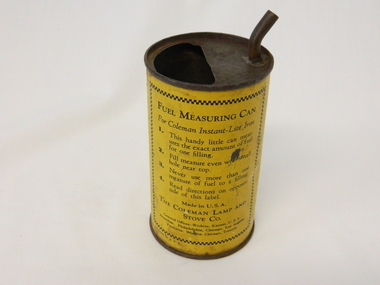
Can Fuel Measuring, circa 1950
... The supply of electricity was in summer time subject to interruption from bush fire damaged wooden poles carrying the electrical cables. Self sufficiency by rural populations was the backbone of survival and the ability to store energy sources "on the farm" was a prerequisite of isolated regions, such as the Kiewa Valley, circa 1950s. kerosene can ironing domestic appliances household appliances On one side of the can in black print on yellow background is "FUEL MEASURING CAN" underneath is "For Coleman Instant-Lite Iron" underneath are four numbered paragraphs detailing the use of this can. ...The 1950's saw a revolution in small appliances for use in the average household. The hand held self heating(kerosene) iron for which this filling can was provided ,was introduced as a time saving and more convenient iron for pressing clothes and other cloth fabrics. It replaced irons needing an external fire source to heat the ironing plate. These irons continued to be in service, even when electricity was available in cities and larger rural towns. This item was used before and during the electricity supplies available from the Kiewa Hydro Electricity Scheme. These irons remained in use within regional rural areas that had limited or unreliable electrical reticulation and the ability to service them from this filling can was an essential part. n the 1950s and later the Kiewa Valley was still a relatively isolated region which was home to rural properties and small settlements. The availability of electricity and or the financial means to afford new types of electric hand irons ensured that older and sometimes less efficient ironing appliances remained for an extended period covering the 1960s to 1970s. Kerosene products, such as the kerosene self heating (KVHS 0347A) iron and this kerosene filling item, was a cheaper method for farm based domestic and other rural activities requiring a heat source. The use of kerosene as a heat/light source was able to be supplied in bulk and able to be used when floods severed vital roads into this region. The supply of electricity was in summer time subject to interruption from bush fire damaged wooden poles carrying the electrical cables. Self sufficiency by rural populations was the backbone of survival and the ability to store energy sources "on the farm" was a prerequisite of isolated regions, such as the Kiewa Valley, circa 1950s. This specially spout fitted can was provided with the Coleman self heating kerosene iron (see KVHS 0347A). On one side of the half enclosed top of the can there is a small spout(for poring the appropriate liquid into the egg shaped fount container) at the rear end of the hand iron. The can is made from tin. See KVHS 0347B- Instruction sheet; KVHS 0347C- Wrench. On one side of the can in black print on yellow background is "FUEL MEASURING CAN" underneath is "For Coleman Instant-Lite Iron" underneath are four numbered paragraphs detailing the use of this can. Below this is the name and places of manufacture. On the other side of the can is printed "BE SURE" with filling and maintenance instructions kerosene can, ironing, domestic appliances, household appliances -
 Kiewa Valley Historical Society
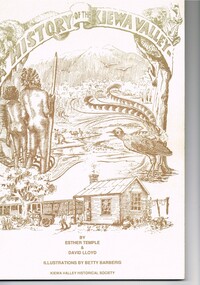
Book - A History of the Kiewa Valley, Kiewa Valley Historical Society, A History of the Kiewa Valley by Esther Temple and David Lloyd, Circa 1991
... It was this transformation which instilled into the Australian psyche of self sufficiency and the ability to grasp onto ideas or "bush" remedies to overcome enormous difficulties. ...This book was compiled by Esther Temple and David Lloyd with illustrations by Betty Barberis and additional material provided by Clare Roper, Joan Macdonald, Wilma Davies and Nell Bateman. The book was first penned in 1971. It briefly covers the period from the indigenous tribes(broken down into family groupings) known as the "first Australians" who lived in the valley well before English settlers arrived. first white settlement (graziers, miners, stockmen) to smaller settlements.The development or transformation from a pristine(hunter/gatherer) valley environment to one that has been gradually changing to a more commercial rural/industrial landscaped valley. This transformation was made within a time span of two hundred years. The book details the first pioneers and their descendants, along with the changes to their environments both domestic and commercial. The book highlights dates and events that shaped the "feel" of the valley. The extreme hardships faced by pioneer families during the extremely isolated times away from "civilisation". This publication provides an insight to the struggles and victories against the harsh Australian bushland by people who had not been raised in such a sometimes inhospitable environment. It was this transformation which instilled into the Australian psyche of self sufficiency and the ability to grasp onto ideas or "bush" remedies to overcome enormous difficulties. It is is ability that has produced the many inventions useful in the 20th and 21st centuries. This book has a 250 g/m cream coloured cover with print and drawings of rural aspects of historical significance ( Aboriginal and early white settlers). The book contains 124 pages of black and white photographs(139), black and white sketches(75), two pages of sketches and freehand drawings, two freehand maps one county lease /subdivision plan and black and white printing. See KVHS 0237 (B) for the official invitation to the launch of the book. The front top cover heading(in shaded print and enclosed in a banner form) "A HISTORY OF THE KIEWA VALLEY" The bottom printing "BY ESTHER TEMPLE & DAVID LLOYD ILLUSTRATIONS BY BETTY BARBERIS" and at the very bottom "KIEWA VALLEY HISTORICAL SOCIETY" oN THE BOOK SPINE "A HISTORY OF THE KIEWA VALLEY.....BY ESTHER TEMPLE & DAVID LLOYD" early settlers, dederang, tawonga, mount beauty, sec vic hydro electricity, falls creek early settlers, bonegilla -
 Kiewa Valley Historical Society
Tin Nut Loaf, early 1900's
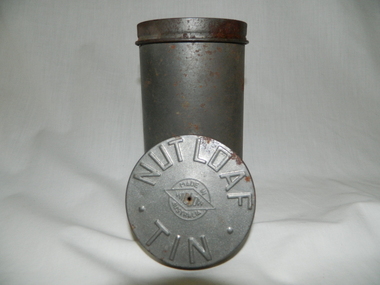
... This was a period of self sufficiency especially in semi remote rural areas such as the Kiewa Valley. ...This nut roll tin was used in a period before 1959(when plastic containers started being used). It was a period when "home" cooking(desert & cakes) was the only method of having cakes and other pastry dishes in rural areas. The utensils available for this home cooking had to be strong and reliable and low maintenance. This nut roll can is very significant(in rural Australia) because it highlights a period in time when the majority of cakes and other pastry dishes were cooked in the family kitchen and not purchased from a shop. This was a period of self sufficiency especially in semi remote rural areas such as the Kiewa Valley. This was a time when cooking utensils were either made in Australia or imported from England or Europe. After World War II imports from the USA increased significantly and then followed by cheaper products from Asia. This cylindrical nut loaf tin(mild steel) has a removable lid and base. There are three retaining hooks which stop the spring steel "main body" from being condensed beyond the circumference of both top and bottom "lids" The tin is pliable enough to "open" up and allow the baked nut loaf to be removed. On the outside edge of each lid "NUT LOAF" and the opposite side "TIN" baking tins, kitchen utensils, tins -
 Kiewa Valley Historical Society
Scales Weighing Pocket, circa early 1900s
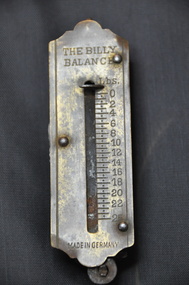
... This was more so in the depression years 1929 to late 1930s. Self sufficiency was to a large extent more attainable in this region than in the city/ large country town environment. ...Historically this item would have been used by gold miners, rabbit shooters, mobile "Rag and Bone" traders and other mobile(in caravans and/or horse drawn cart) traders of various small goods and haberdashery. Although marked as not to be used as trade, the isolation and sometimes difficult terrain rules out using larger and more delicate scales. In the early 1900s rough roads and severe weather conditions forced traders to be more flexible in trading with weights and measures. The "close enough is good enough" doctrine was the Australian outback rule of thumb. The significance of this item in the Kiewa Valley during this period demonstrates the slower acceptance of accurate trading measure using the country side principle "my hand shake is my bond". In the Kiewa Valley small quantity commercial undertakings e.g. gold mining, fur pelts and rabbit meat trade did not require bulk weight type scales. Commerce in rural production e.g. fruit and vegetables involved more farmers and their staff in a barter and/or "in kind" payments. This was more so in the depression years 1929 to late 1930s. Self sufficiency was to a large extent more attainable in this region than in the city/ large country town environment. The Australian "fair go" ethical approach to life and commerce was very much ingrained in those living in country regions, like Kiewa Valley as is demonstrated by the not so accurate hand balance, spring loaded scales. This brass "faced" portable Pocket Balance ( Fish Scales) has front plate made from thin pressed brass. The mild steel spring mechanism enclosed by black painted medium gauge steel cover( three quarters cylindrical). Front scale face and rear spring casing fastened by three rivets. Spring loaded marker blade is located in the centre of the front plate. A steel " finger holder" ring is attached at the top of the scale unit from one of two pre drilled holes. The top is for holding the scale upright and the bottom for a hook to dangle the item to be weighed from the bottom. See item KVHS 0223 for similar scales "THE BILLY BALANCE" and at the bottom "MADE IN GERMANY" antique pocket balance, scales, mobile weights, vintage appliances -
 Harcourt Valley Heritage & Tourist Centre
Quern, Between 1880-1920
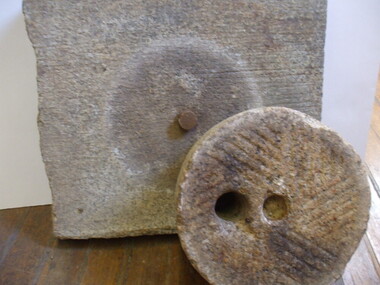
... Many local farmers sowed wheat immediately after clearing the land: raising of a wheat crop was evidence of use and improvement which, along with fencing and erecting other structures, was part of the mandatory steps to prove occupancy as a prelude to obtaining a Crown Grant for what had previously been deemed ‘crown land' The quern is of interest as a symbol of the desire for self-sufficiency and as a demonstration of the extent to which granite could be worked and shaped by masonry tools. ...This quern was made from Harcourt granite. Querns were used for grinding wheat into flour. (Wooden handles missing from this catalogued object).It was most likely made on Mount Alexander, in spare time, by a quarry worker using his employer’s gang saw and other tools. Wheat is not now grown in Harcourt district . Early settlers engaged in cropping until they exhausted the fertility of the soil. This quern was utilized by a local pioneer who intended to be self-sufficient to the extent of grinding his own grain into flour.. Many local farmers sowed wheat immediately after clearing the land: raising of a wheat crop was evidence of use and improvement which, along with fencing and erecting other structures, was part of the mandatory steps to prove occupancy as a prelude to obtaining a Crown Grant for what had previously been deemed ‘crown land' The quern is of interest as a symbol of the desire for self-sufficiency and as a demonstration of the extent to which granite could be worked and shaped by masonry tools. Quern, granite, square slab with raised metal centre shaft and one rounded piece of granite with off-centre hole and side ridges. -
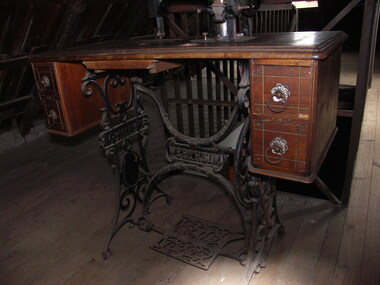 Friends of Westgarthtown
Domestic object - Sewing machine, Wertheim, Frankfurt
... As part of the Ziebell collection, the machine reflects the domestic craft, self-sufficiency, and technological adaptation of German settler families. ...c.1890-1905 This Wertheim sewing machine, donated by Sylvia Schultz, direct Ziebell descendent, is a rare early example manufactured in Frankfurt, Germany before the company established production in Melbourne. Its construction during this earlier European phase highlights the global reach of domestic technology that later became central to Australian household life. The machine features highly decorative cast-iron legs with ‘Wertheim’ prominently moulded into the frame, a brass plaque reading Wertheim Francfort with the firm’s pick-axe emblem, and a finely detailed sewing mechanism enclosed by a wooden cover. The treadle base, ornate ironwork, side storage compartments, and mobility wheels together illustrate the craftsmanship and functional elegance characteristic of 19th-century European sewing machines. As part of the Ziebell collection, the machine reflects the domestic craft, self-sufficiency, and technological adaptation of German settler families. It enriches the museum’s understanding of women’s work, household production, and the adoption of imported machinery in everyday life, offering insight into both global manufacturing histories and local cultural heritage. Hand sewing machine on stand with storage compartments. Ironwork frame, very decorative casting. Large wheel on right as part of sewing machine. Two wooden boxes on each side, with brass pull rings. Wooden box also for covering sewing machine. Decorative border around sewing mechanism. Frame is on wheels. Wertheim' cast in iron in centre of frame, and on both sides. 'Wertheim Francfort' on brass plaque nailed onto sewing machine, along with Wertheim symbol of man with pick. domestic items, sewing, machine, wertheim, francfort, domestic
