
Showing 27 items matching "showers street"
-
 Sunshine and District Historical Society Incorporated
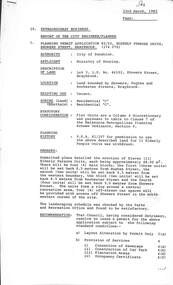
Administrative record - City of Sunshine - Commissioner Mr Alexander Alex George Gillon Collection 1976 - 1982 - Extraordinary Business Report Elderly Persons Units Showers Street 22nd March 1982, City of Sunshine, 23rd March 1982
... City of Sunshine - Commissioner Mr Alexander Alex George Gillon Collection 1976 - 1982 - Extraordinary Business Report Elderly Persons Units Showers Street 22nd March 1982......Showers Street...Extraordinary Business Report of the City Engineer / Planner Planning Permit Application Elderly Persons Units Lot 3 Showers Street Braybrook Planning Permit Application Vehicle Maintenance Workshop Lot 21 McIntyre Road Sunshine North Planning Permit Application Stan Cash Extension to existing warehouse 142 Ashley Steet Maidstone Planning Permit Application Waste Disposal Site McIntyre Road Sunshine North Report of the Building Surveyor Show Cause Notice 10 Esplanade Maribyrnong Building Surveyor Show Cause Notice 10 Esplanade Maribyrnong...Administrative record City of Sunshine - Commissioner Mr Alexander Alex George Gillon Collection 1976 - 1982 - Extraordinary Business Report Elderly Persons Units Showers Street 22nd March 1982 City of Sunshine ...Extraordinary Business Report of the City Engineer / Planner Planning Permit Application Elderly Persons Units Lot 3 Showers Street Braybrook Planning Permit Application Vehicle Maintenance Workshop Lot 21 McIntyre Road Sunshine North Planning Permit Application Stan Cash Extension to existing warehouse 142 Ashley Steet Maidstone Planning Permit Application Waste Disposal Site McIntyre Road Sunshine North Report of the Building Surveyor Show Cause Notice 10 Esplanade Maribyrnong Building Surveyor Show Cause Notice 10 Esplanade Maribyrnong city of sunshine, alexander "alex" george gillon, mcintyre road, sunshine north, showers street, braybrook, ashley street, maidstone, stan cash, esplanade, maribyrnong -
 Sunshine and District Historical Society Incorporated
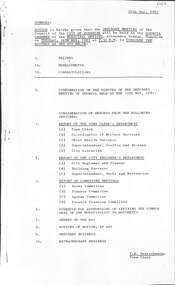
Administrative record - City of Sunshine - Commissioner Mr Alexander Alex George Gillon Collection 1976 - 1982 - Notice of ordinary meeting of the council 26th May 2026, City of Sunshine, 20th May 1981
... ...Showers Street...Italo-Australian Social Club proposal to sub-lease Elderly Persons Units South Road Housing Estate (Former Quarry Showers Street)...Albans South Road Showers Street Braybrook Italo-Australian Social Club proposal to sub-lease Elderly Persons Units South Road Housing Estate (Former Quarry Showers Street) Foolscap sized document. ...Italo-Australian Social Club proposal to sub-lease Elderly Persons Units South Road Housing Estate (Former Quarry Showers Street)italo-australian social club, furlong road, st. albans, south road, showers street, braybrook -
 Sunshine and District Historical Society Incorporated
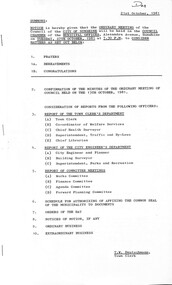
Administrative record - City of Sunshine - Commissioner Mr Alexander Alex George Gillon Collection 1976 - 1982 - Notice of ordinary meeting of the council 27th October 2026, City of Sunshine, 21st October 1981
... ...Showers Street...Private Street Construction Scheme Right of Way rear of Sydney Street North Sunshine United Soccer Club application for flood lighting Larissa Reserve Transfer of Land from Urban Land Authority area stretching from Kororoit Creek nearly to Neale Road Sunshine Cricket Club request for Bingo Transfer of Discontinued Road Showers Street and Rochester Street...Sydney Street Albion Sunshine Cricket Club Dempster Park Phoenix Street Sunshine North North Sunshine United Soccer Club Larissa Reserve Larissa Road St. Albans Showers Street Rochester Street Braybrook Kororoit Creek Neale Road Deer Park Private Street Construction Scheme Right of Way rear of Sydney Street North Sunshine United Soccer Club application for flood lighting Larissa Reserve Transfer of Land from Urban Land Authority area stretching from Kororoit Creek nearly to Neale Road Sunshine Cricket Club request for Bingo Transfer of Discontinued Road Showers Street and Rochester Street Foolscap sized document. ...Private Street Construction Scheme Right of Way rear of Sydney Street North Sunshine United Soccer Club application for flood lighting Larissa Reserve Transfer of Land from Urban Land Authority area stretching from Kororoit Creek nearly to Neale Road Sunshine Cricket Club request for Bingo Transfer of Discontinued Road Showers Street and Rochester Streetsydney street, albion, sunshine cricket club, dempster park, phoenix street, sunshine north, north sunshine united soccer club, larissa reserve, larissa road, st. albans, showers street, rochester street, braybrook, kororoit creek, neale road, deer park -
 Sunshine and District Historical Society Incorporated
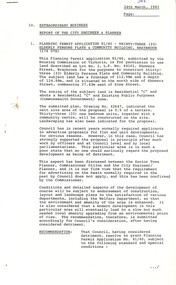
Administrative record - City of Sunshine - Commissioner Mr Alexander Alex George Gillon Collection 1976 - 1982 - Extraordinary business 24th March 1981, City of Sunshine, 24th March 1981
... Showers Street...Planning Permit Application Thirty-Three Elderly Persons Flats & Community Building Showers Street Braybrook Planning Permit Application St. ...Showers Street St. Johns College Braybrook Durham Road Sunshine St. ...Planning Permit Application Thirty-Three Elderly Persons Flats & Community Building Showers Street Braybrook Planning Permit Application St. Johns College Churchill Avenue Braybrook Planning Permit Application Illuminated Sign 115 Durham Road Sunshine Planning Permit Application Two signs 22 St. Albans Road Sunshine North Planning Permit Application Seed storage building Somerville Road Footscray West Planning Permit Application Monsanto chemical works Somerville Road Footscray West Planning Permit Application Alterations to existing tyre bay Target Highpoint West Rosamond Road Maribyrnongshowers street, st. johns college, braybrook, durham road, sunshine, st. albans road, sunshine north, monsanto, somerville road, footscray west, target, highpoint west, rosamond road, maribyrnong -
 Sunshine and District Historical Society Incorporated
Administrative record - City of Sunshine - Commissioner Mr Alexander Alex George Gillon Collection 1976 - 1982 - Notice of Ordinary Meeting 16th November 1982, City of Sunshine, 16th November 1982
... ...Showers Street...Ordinary meeting notice including reports from Council's officers Report of the Town Clerk's Department Report of the Town Clerk Accounts for Payment as at 25th October 1982 Statistical Report for Year October 1981 to September 1992 Proposed Discontinuance of Right of Way Beside 36 Clyde Street Maidstone Telephone Number Metropolitan Fire Brigade Acquisition Chaplin Reserve Community Facility Sunshine West United Nations Association of Australia Possible Membership Salvation Army Western Region Advisory Committee Council Representation Open Space Area Maribyrnong Valley Meeting Dates 1993 Proposal to Close Part of Service Street Sealing of General Rate Year Ending 30th September 1983 Use of Council Facilities Saturday 4th December 1982 Sunshine International Women's Year Action Group Discontinuance of Right of Way Between Lewin Street and Robinsons Road South Side of Ballarat Road Deer Park Discontinuance of Right of Way Between Hamilton Street, Burnside Street, Christie Street and Tulloch Street Deer Park Report of Chief Health Surveyor Registration of Premises Health Act Transfer of Premises Health Act Prosecution Proceedings Sunshine Magistrate Court Delivery of Advertising Material / Junk mail Health Act Registration Fees Report of the Medical Officer of Health Report of the Superintendent Traffic and By-Laws Dog Act Traffic and Parking Infringements Court Proceedings Proposed Procession Italian Festival Deer Park Parking Infringements Increase In Penalties Report of the Chief Librarian Children's Pre-Christmas workshops Report of the Co-Ordinator of Welfare Services Multi-Cultural Senior Citizens' Club of West Sunshine Registration and Maintenance Subsidy Showers Street Housing Commission Estate Furnishings Community Room Showers Street Housing Commission Estate Twin Tub Washing Machines Special Bus Emergency Foster Care Report of the City Engineer / Planner Western Suburbs Study Department of Planning Planning Permit Application Advertising Sign 35 Wright Street Planning Permit Application Extensions to Existing Abattoir Kalingra Road (Armbrook Siding) Brooklyn Melbourne Metropolitan Planning Scheme Amendment No 190 On Exhibition Planning Permit Application Extensions to Existing Premises Corner Hampstead Road and Mitchell Street Maidstone Plan of Proposed Strata Subdivision 35 Washington Street St. ...City of Sunshine Alexander "Alex" George Gillon Clyde Street Maidstone Chaplin Reserve Anderson Road Sunshine Maribyrnong Valley Service Street Ballarat Road Deer Park Lewin Street Robinsons Road Hamilton Street Burnside Street Christie Street Tulloch Street Multi-Cultural Senior Citizens' Club of West Sunshine Showers Street Braybrook Wright Street Kalingra Road Armbrook Siding Tottenham Hampstead Road Mitchell Street Washington Street St. ...Ordinary meeting notice including reports from Council's officers Report of the Town Clerk's Department Report of the Town Clerk Accounts for Payment as at 25th October 1982 Statistical Report for Year October 1981 to September 1992 Proposed Discontinuance of Right of Way Beside 36 Clyde Street Maidstone Telephone Number Metropolitan Fire Brigade Acquisition Chaplin Reserve Community Facility Sunshine West United Nations Association of Australia Possible Membership Salvation Army Western Region Advisory Committee Council Representation Open Space Area Maribyrnong Valley Meeting Dates 1993 Proposal to Close Part of Service Street Sealing of General Rate Year Ending 30th September 1983 Use of Council Facilities Saturday 4th December 1982 Sunshine International Women's Year Action Group Discontinuance of Right of Way Between Lewin Street and Robinsons Road South Side of Ballarat Road Deer Park Discontinuance of Right of Way Between Hamilton Street, Burnside Street, Christie Street and Tulloch Street Deer Park Report of Chief Health Surveyor Registration of Premises Health Act Transfer of Premises Health Act Prosecution Proceedings Sunshine Magistrate Court Delivery of Advertising Material / Junk mail Health Act Registration Fees Report of the Medical Officer of Health Report of the Superintendent Traffic and By-Laws Dog Act Traffic and Parking Infringements Court Proceedings Proposed Procession Italian Festival Deer Park Parking Infringements Increase In Penalties Report of the Chief Librarian Children's Pre-Christmas workshops Report of the Co-Ordinator of Welfare Services Multi-Cultural Senior Citizens' Club of West Sunshine Registration and Maintenance Subsidy Showers Street Housing Commission Estate Furnishings Community Room Showers Street Housing Commission Estate Twin Tub Washing Machines Special Bus Emergency Foster Care Report of the City Engineer / Planner Western Suburbs Study Department of Planning Planning Permit Application Advertising Sign 35 Wright Street Planning Permit Application Extensions to Existing Abattoir Kalingra Road (Armbrook Siding) Brooklyn Melbourne Metropolitan Planning Scheme Amendment No 190 On Exhibition Planning Permit Application Extensions to Existing Premises Corner Hampstead Road and Mitchell Street Maidstone Plan of Proposed Strata Subdivision 35 Washington Street St. Albans Plan of Proposed Transfer Hampton Avenue Plan of Subdivision Reid Street Sunshine Boral Resources (Previously Albion Reid Pty Ltd) Glendenning Street Traffic Problems Half Cost Footpath and Kerb And Channel Various Locations Traffic Signals Linking On Princes Highway West From Little Boundary Road to Sommerville Road Parking Restrictions At Municipal Offices Grade Separated Pedestrian Crossings Sunshine Centre Plaza Shopping Centre Traffic Control Items Bus Shelter At Stop 45 Ashley Street Maidstone Melbourne And Metropolitan Tramway Board Neale Road / Station Road Proposes Traffic Signals No Standing Prohibition Load Limits Various Roads Half Cost Fencing 11 Ravenna Street St. Albans Thompson Hall Maidstone West Gate Bridge Charges City of Williamstown Report of the Building Surveyor Building Over Easement 26 Krambrook Street Sunshine West Building Over Easement 36 Summers Street Deer Park Building Over Easement 2 The Mews Ardeer Building Over Easement 18 Merrivale Avenue Sunshine West Building Over Easement 34 Summers Street Deer Park Building Over Easement 83 Tamar Drive St. Albans Building Over Easement 7 Salvia Street St. Albans Building Over Easement 28 Yallourn Street Ardeer Substandard Allotment Lot 62 Tulloch Street Deer Park Height of Fence 100 Ballarat Road Extension of Building Time 52B Forrest Street Sunshine Orders of the Day Planning Permit Application Restaurant and Take Away Food Ballarat Road Sunshine Planning Permit Application Consulting Rooms Main Road West St. Albans city of sunshine, alexander "alex" george gillon, clyde street, maidstone, chaplin reserve, anderson road, sunshine, maribyrnong valley, service street, ballarat road, deer park, lewin street, robinsons road, hamilton street, burnside street, christie street, tulloch street, multi-cultural senior citizens' club of west sunshine, showers street, braybrook, wright street, kalingra road, armbrook siding, tottenham, hampstead road, mitchell street, washington street, st. albans, hampton avenue, reid street, albion, boral resources, previously albion reid, glendenning street, princes highway, little boundary road, sommerville road, sunshine centre plaza shopping centre, hampshire road, ravenna street, thompson hall, krambrook street, summers street, the mews, ardeer, merrivale avenue, tamar drive, salvia street, yallourn street, forrest street -
 Sunshine and District Historical Society Incorporated
Administrative record - City of Sunshine - Commissioner Mr Alexander Alex George Gillon Collection 1976 - Notice of Ordinary Meeting 20th July 1982, City of Sunshine, 28th July 1982
... ...Showers Street...Ordinary meeting notice including reports from Council's officers Report of the Town Clerk's Department Report of the Town Clerk Membership of Executive Committee Municipal Association of Victoria Award Matters House of Work Loan Funds Holiday Programme May 1982 Primary Centres, Teenage Centres, Library Programme Family Aide Co-Ordinator Date for Statutory and Ordinary Meetings of the Council Occupancy of Shop 95A Deer Park Shopping Centre Report of Statistical Data Paravics Sports Club Medway Homing Club Transfer of Splay of Discontinued Road Formerly Dudley Street Ardeer Transfer of Discontinued Right of Way Hamilton Street, Burnside Street, Poole Street and Tulloch Street Deer Park Report of the Acting Co-Ordinator of Welfare Services Furlong Road Child Care Centre Update of Sunshine Resource Directory Home Handyman Statistics Fogarty Place Showers Street Housing Commission Units C.Y.S.S. ...City of Sunshine Alexander "Alex" George Gillon Deer Park Shopping Centre Paravics Sports Club Medway Homing Club Dudley Street Ardeer Hamilton Street Burnside Street Poole Street ulloch Street Deer Park Furlong Road Child Care Centre Furlong Road Sunshine West Showers Street Braybrook Chifley Drive Maribyrnong Ballarat Road Station Road Oleander Drive St. ...Ordinary meeting notice including reports from Council's officers Report of the Town Clerk's Department Report of the Town Clerk Membership of Executive Committee Municipal Association of Victoria Award Matters House of Work Loan Funds Holiday Programme May 1982 Primary Centres, Teenage Centres, Library Programme Family Aide Co-Ordinator Date for Statutory and Ordinary Meetings of the Council Occupancy of Shop 95A Deer Park Shopping Centre Report of Statistical Data Paravics Sports Club Medway Homing Club Transfer of Splay of Discontinued Road Formerly Dudley Street Ardeer Transfer of Discontinued Right of Way Hamilton Street, Burnside Street, Poole Street and Tulloch Street Deer Park Report of the Acting Co-Ordinator of Welfare Services Furlong Road Child Care Centre Update of Sunshine Resource Directory Home Handyman Statistics Fogarty Place Showers Street Housing Commission Units C.Y.S.S. Replacement Report of the Chief Health Surveyor Registration of Premises Health Act Transfer of Premises Health Act Prosecution Proceedings Sunshine Magistrates Court Alteration to an Existing Septic Tank 87 Chifley Drive Proposed Cattle Sale Yards Regulations 1982 Report of the Superintendent Traffic and By-Laws Traffic and Parking Infringements Court Proceedings Shopping Trolleys Report of The Chief Librarian Libaray Council of Victoria Special Projects Grant Report of the Rainbow Workshop Report of the City Engineer / Planner Melbourne Metropolitan Planning Scheme Amendment No 183 Planning Permit Application Illuminated Sigh Ballarat Road Deer Park Planning Permit Application Office Lot 5 Station Road Deer Park Planning Permit Application Portable Classrooms Lot 2 Oleander Drive St. Albans Planning Permit Application Detached House within 60m of Maribyrnong River Lot 88 Chifley Drive Maribyrnong Planning Permit Application Reconstruction of Wall Lots 11 & 12 Western Avenue Sunshine Planning Permit Application Alterations to Existing Petrol Filling Station 439 Ballarat Road Planning Permit Application Transport Depot, Storage and Associated Office Hampstead Road Maidstone Delegated Matters Planning Permit Application Service Premises McIntyre Road Sunshine North Plan of Proposed Consolidation Corner Devonshire Road and Dawson Street Sunshine Proposed Subdivision Lots 1 & 2 Corner Paw Paw Road and Burgess Road Brooklyn Guiding Star Engineering Pty Ltd Sewerage Area 416A St. Albans Hawthorn Avenue Private Street Scheme Central Avenue Fourth Avenue to Wright Street Prohibited and Restricted Parking Ashley Street Dempster Street / Sunshine Road Intersection Transport Regulation Board Allocation From Transport Fund Safety Proposals at St. Albans Road Bridge Low Embankment on Railway Land in St. Albans Road opposite M.M.B.W. Main Building Garden State Committee Trees and Shrubs for New Homeowners Voucher Scheme AIBS / Building Industry Working Group Proposed Footings / Foundation Research Project Availability of Sewers Traffic Control Items Intersection Westmoreland Road / Suffolk Road Prohibitive and Restrictive Parking Tender Power Grader Active Recreation Reserve Mid Winter Report Report of the Building Surveyor Building Over Easement 9 Dalworth Street Albion Building Over Easement Lot 17 Phoenix Street Sunshine North Building Over Easement 4 Ballina Court Deer Park Building Over Easement 8 Glenmaggie Drive St. Albans Land Liable to Flooding Lot 35 Burton Crescent Maribyrnong Land Liable to Flooding 87 Chifley Drive Maribyrnong Land Liable to Flooding Sunshine Shopping Complex Hertford Road and Hampshire Road Sunshine Land Liable to Flooding Lot 5 Plantation Street Maribyrnong Fire Separation in Buildings Corner Somerville Road and Paramount Road Brooklyn Underground Tank Lot 2 Hampstead Road Maidstone Underground Tank Crown Portion 16 Ballarat Road Maidstone city of sunshine, alexander "alex" george gillon, deer park shopping centre, paravics sports club, medway homing club, dudley street, ardeer, hamilton street, burnside street, poole street, ulloch street, deer park, furlong road child care centre, furlong road, sunshine west, showers street, braybrook, chifley drive, maribyrnong, ballarat road, station road, oleander drive, st. albans, maribyrnong river, western avenue, sunshine, hampstead road, maidstone, mcintyre road, sunshine north, devonshire road, dawson street, paw paw road, burgess road, brooklyn, hawthorn avenue, central avenue, fourth avenue, wright street, ashley street, dempster street, sunshine road, tottenham, st. albans road bridge, st. albans road, westmoreland road, suffolk road, dalworth street, albion, phoenix street, ballina court, glenmaggie drive, burton crescent, hertford road, plantation street, somerville road, paramount road -
 Sunshine and District Historical Society Incorporated
Administrative record - City of Sunshine - Commissioner Mr Alexander Alex George Gillon Collection 1976 - 1982 - Extraordinary business 12th March 1981, City of Sunshine, 12th May 1981
... ...Showers Street...Albans South Road Showers Street Braybrook Building Control Bill Foolscap sized document. ...Building Control Billitalo-australian social club, furlong road, st. albans, south road, showers street, braybrook -
 Sunshine and District Historical Society Incorporated
Administrative record - City of Sunshine - Commissioner Mr Alexander Alex George Gillon Collection 1976 - 1982 - Notice of Ordinary Meeting 21st April 1982, City of Sunshine, 21st April 1982
... Albans High School & Tottenham Technical School Report of the Co-Ordinator of Welfare Services Dental Clinic Furlong Road Hospital Councill Sponsorship to Housing Commission Flats Showers Street Braybrook Salvation Army Services Advisory Committee Emergency Relief Reimbursement Pre-School Advisory Service Report of the Chief Health Surveyor Health Act Registrations Application for Transfer of Proprietorship of Premise Under The Health Act 15 Suffolk Road Sunshine North Report of the Medical Officer of Health Report of the Superintendent Traffic and By-Laws Greek Orthodox Easter Celebrations ANZAC Commemorative March Derelict Vehicles Cat Control Naming of Reserves Place Names Committee Kevin Wheelahan Gardens Snake Eradication Report of the Chief Librarian Rainbow Workshop National Seminar for Community Arts Offices Report of the City Engineer / Planner Sunshine Tip Sunshine Shopping Centre Excavations Planning Permit Industrial Sales Lot 9 Ballarat Road Albion Planning Permit Factory Extensions 11 – 13 Judge Street Sunshine Planning Permit Container Storage, Repairs & General Service 600 Geelong Road Brooklyn Planning Permit Promotion Panel Levingston 423 Somerville Road Footscray West Delegated Matters Pedestrian Operated Signals in Station Road near Montasell Avenue Deer Park Proposed Intersection Signals Hampshire Road / Hertford Road Sunshine Sunshine Council V Lend Lease Estates Availability of Sewers Deer Park Albion Football Club Pavilion Parsons Reserve Works carried out at The Hub Complex Willis Street Pre-School Centre Hume Street Child Care Centre Replacement of Hot Water Service Municipal Offices North Sunshine Pre-School Centre Phoenix Street Sunshine North Municipal Offices Proposed Works on Roof Above Council Chambers Report of the Building Surveyor Substandard Allotment of Land 64 Cornwall Road Sunshine Renewal of Building Permit Lots 41, 42 & 43 Cromer Avenue Sunshine North Building Over Easement 45 Novara Parade St. ...Albans High School & Tottenham Technical School Report of the Co-Ordinator of Welfare Services Dental Clinic Furlong Road Hospital Councill Sponsorship to Housing Commission Flats Showers Street Braybrook Salvation Army Services Advisory Committee Emergency Relief Reimbursement Pre-School Advisory Service Report of the Chief Health Surveyor Health Act Registrations Application for Transfer of Proprietorship of Premise Under The Health Act 15 Suffolk Road Sunshine North Report of the Medical Officer of Health Report of the Superintendent Traffic and By-Laws Greek Orthodox Easter Celebrations ANZAC Commemorative March Derelict Vehicles Cat Control Naming of Reserves Place Names Committee Kevin Wheelahan Gardens Snake Eradication Report of the Chief Librarian Rainbow Workshop National Seminar for Community Arts Offices Report of the City Engineer / Planner Sunshine Tip Sunshine Shopping Centre Excavations Planning Permit Industrial Sales Lot 9 Ballarat Road Albion Planning Permit Factory Extensions 11 – 13 Judge Street Sunshine Planning Permit Container Storage, Repairs & General Service 600 Geelong Road Brooklyn Planning Permit Promotion Panel Levingston 423 Somerville Road Footscray West Delegated Matters Pedestrian Operated Signals in Station Road near Montasell Avenue Deer Park Proposed Intersection Signals Hampshire Road / Hertford Road Sunshine Sunshine Council V Lend Lease Estates Availability of Sewers Deer Park Albion Football Club Pavilion Parsons Reserve Works carried out at The Hub Complex Willis Street Pre-School Centre Hume Street Child Care Centre Replacement of Hot Water Service Municipal Offices North Sunshine Pre-School Centre Phoenix Street Sunshine North Municipal Offices Proposed Works on Roof Above Council Chambers Report of the Building Surveyor Substandard Allotment of Land 64 Cornwall Road Sunshine Renewal of Building Permit Lots 41, 42 & 43 Cromer Avenue Sunshine North Building Over Easement 45 Novara Parade St. ...Ordinary meeting notice including reports from Council's officers Report of the Town Clerk's Department Report of the Town Clerk Proposed Conference Council Officers and Preventatives of Smorgon Consolidated Industries Proposed Conference Between Victorian Railways and Councils Metropolitan Fire Brigades Board Election of Representative Proposal to close part of Butler Street to Traffic Transfer of Funds from Resort and Recreation Account Use of Sunshine Tip by Present Regional and Commerial Users Unexpected Load Funds Albion Tennis Club Request for Bingo Sunshine Croquet Club Request For Bingo Financial Statement for the Year Ended 30th September 1992 Multiple Sclerosis Society Application To Conduct Fundraising Report of Officer Committee on Recreation Facilities and Open Space Shed on Diamond Avenue Reserve Agreements St. Albans High School & Tottenham Technical School Report of the Co-Ordinator of Welfare Services Dental Clinic Furlong Road Hospital Councill Sponsorship to Housing Commission Flats Showers Street Braybrook Salvation Army Services Advisory Committee Emergency Relief Reimbursement Pre-School Advisory Service Report of the Chief Health Surveyor Health Act Registrations Application for Transfer of Proprietorship of Premise Under The Health Act 15 Suffolk Road Sunshine North Report of the Medical Officer of Health Report of the Superintendent Traffic and By-Laws Greek Orthodox Easter Celebrations ANZAC Commemorative March Derelict Vehicles Cat Control Naming of Reserves Place Names Committee Kevin Wheelahan Gardens Snake Eradication Report of the Chief Librarian Rainbow Workshop National Seminar for Community Arts Offices Report of the City Engineer / Planner Sunshine Tip Sunshine Shopping Centre Excavations Planning Permit Industrial Sales Lot 9 Ballarat Road Albion Planning Permit Factory Extensions 11 – 13 Judge Street Sunshine Planning Permit Container Storage, Repairs & General Service 600 Geelong Road Brooklyn Planning Permit Promotion Panel Levingston 423 Somerville Road Footscray West Delegated Matters Pedestrian Operated Signals in Station Road near Montasell Avenue Deer Park Proposed Intersection Signals Hampshire Road / Hertford Road Sunshine Sunshine Council V Lend Lease Estates Availability of Sewers Deer Park Albion Football Club Pavilion Parsons Reserve Works carried out at The Hub Complex Willis Street Pre-School Centre Hume Street Child Care Centre Replacement of Hot Water Service Municipal Offices North Sunshine Pre-School Centre Phoenix Street Sunshine North Municipal Offices Proposed Works on Roof Above Council Chambers Report of the Building Surveyor Substandard Allotment of Land 64 Cornwall Road Sunshine Renewal of Building Permit Lots 41, 42 & 43 Cromer Avenue Sunshine North Building Over Easement 45 Novara Parade St. Albans city of sunshine, alexander "alex" george gillon, smorgans, somerville road, tottenham, butler street, braybrook, sunshine tip, albion tennis club, selwyn park, selwyn street, albion, sunshine croquet club, stanford street, sunshine, st. albans high school, tottenham technical school, main road east, st. albans, south road, suffolk road, sunshine north, furlong road, kevin wheelahan gardens, ballarat road, judge street, geelong road, brooklyn, footscray west, station road, montasell avenue, deer park, hampshire road, hertford road, albion football club, parsons reserve, willis street pre-school centre, willis street, the hub, sun crescent, hume street child care centre, city of sunshine municipal offices, alexandra avenue, north sunshine pre-school centre, phoenix street, cornwall road, cromer avenue, novara parade -
 Flagstaff Hill Maritime Museum and Village
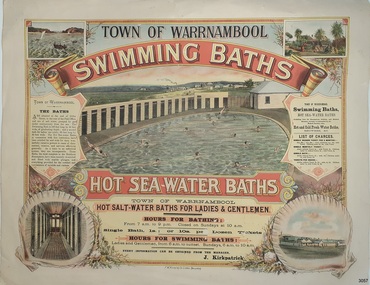
Poster - Recreation, Town of Warrnambool Swimming Baths, ca. May 1884
... Showers etc." "LIST OF CHARGES ... Single Season Ticket, Single Monthly Ticket, Single Bath without towel ... with towel.. Tickets per dozen without towel, with towel..." "The Baths are situated at the end of Gillies Street...Showers etc." "LIST OF CHARGES ... Single Season Ticket, Single Monthly Ticket, Single Bath without towel ... with towel.. Tickets per dozen without towel, with towel..." "The Baths are situated at the end of Gillies Street ...The poster advertises these Swimming Baths as “the most complete in the Southern Hemisphere”. In February 1877 a Baths Company (1050 shares) was formed in the town of Warrnambool for the establishment of the baths at the south end of Gillies Street. The baths were filled with sea water from Lady Bay, originally pumped by a windmill situated near the current Surf Lifesaving Club and carried by iron pipes to the Public Baths; later the water was pumped by a gas motor. Hot and cold fresh water baths were advertised. The gentlemen’s bath was 100 feet long and 50 feet wide, of graduating depth. A second bath, solely for ladies, was 60 feet long by 30 feet wide. Hot Sea water Baths were also part of the institution, and were sought after for their ‘wonderful curative powers’, and ‘incomparable’ as a ‘tonic for the feeble’. In June 1881 the Hot Sea Baths were opened, and both hot and cold water baths were supplied at reasonable charges. Patrons came from near and far to receive the benefits. The manager of the Baths was J. Kirkpatrick. The Baths Company struggled for several years without success, so in 1883 the baths were sold to the Borough Council for 1250 pounds. The original shareholders received nothing for their outlay; the overdraught was over the sale price. In May 1884 the Council announced that an estimated they has spent 1000 pounds in improving the baths since purchasing them and were now returning an income of 11 per cent. Historically significant to Warrnambool and the recreational facilities available in the 1880s to 1900s. The remains of the baths are still visible to the public today.Poster on heavy cream paper, landscape orientation, with coloured print. The poster advertises the Warrnambool Swimming Baths. It has several drawings such as Middle Island and the Merri River Mouth with vessels in the water, The inside of the Baths facility, the men's baths with the adjacent bathing rooms and figures in and out of the water, a cottage with figures in the garden, and fenced buildings with a windmill and aqueduct or pipes. The text describes the location and advantages, the opening times and various costs. It was printed in Ballarat by F.W. Niven & Co. Lithos."TOWN OF WARRNAMBOOL" "SWIMMING BATHS" "HOT SALT-WATER BATHS FOR LADIES AND GENTLEMEN" "HOURS FOR BATHING fROM 7 a.m. to 9 p. m. Closed on Sundays at 10 a.m." Single Bath 1s [1 shilling]; or 10s per Dozen Tickets" "HOURS FOR SWIMMING BATHS: Ladies and Gentlemen, from 6 a.m. to Sunset, Sundays 6 a.m. to 10 a.m." "Every information can be obtained from the Manager, J. Kirkpatrick" "HOT SEA-WATER BATHS ... strongly recommended by the Medical Faculty" "Hot and Cold Fresh Water Baths" "Showers etc." "LIST OF CHARGES ... Single Season Ticket, Single Monthly Ticket, Single Bath without towel ... with towel.. Tickets per dozen without towel, with towel..." "The Baths are situated at the end of Gillies Street, in the rear of the Post Office, and are of salt water pumped by gas motor continuously from the sea. The Swimming Bath is 100 feet long by 50 feet wide, of graduating depth; and a second bath for ladies' use solely, 60 feet long by 30 feet wide. The hot Sea-water Baths in connection with this institution have been extolled far and wide for their wonderfully curative powers in cases of rheumatism, sciatica, and nervous afflictions generally. As a tonic to an enfeebled system, they are incomparable, These Baths, the most complete in the Southern Hemisphere, have been recently re-erected and fitted with marble plunges, and everything provided for the comfort and convenience of invalids and visitors." "F.W. NIVEN & Co, LITHOS, BALLARAT"flagstaff hill, warrnambool, warrnambool swimming baths, hot sea water baths warrnambool, warrnambool baths company, f.w. niven & co, warrnambool therapudic baths, town of warrnambool, swimming baths, hot sea water baths, salt water baths, ladies' baths, gentlemen's baths, warrnambool town baths, j kirkpatrick -
 Federation University Historical Collection
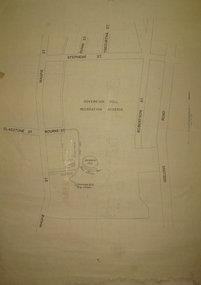
Plan, Sovereign Hill Recreation Reserve and Surrounds
... It shows the Sovereign Hill Recreation Rerserve, including the swimming pool located near the Sovereign Hill Trig Point, showers, toilets, kiosk, bandstand and pine trees. The plan also depicts the Ballarat East streets surrounding Sovereign hill, including Geelong Road, Magpie Street, Stephens Street, Tregurtha Street, Dunn Street, Bourke Street, Gladstone Street and Robertson Street. ...It shows the Sovereign Hill Recreation Rerserve, including the swimming pool located near the Sovereign Hill Trig Point, showers, toilets, kiosk, bandstand and pine trees. The plan also depicts the Ballarat East streets surrounding Sovereign hill, including Geelong Road, Magpie Street, Stephens Street, Tregurtha Street, Dunn Street, Bourke Street, Gladstone Street and Robertson Street. ...This map was probably produced around the time that the Sovereign Hill Museums Association was established. A simple plan with black marking on paper. It shows the Sovereign Hill Recreation Rerserve, including the swimming pool located near the Sovereign Hill Trig Point, showers, toilets, kiosk, bandstand and pine trees. The plan also depicts the Ballarat East streets surrounding Sovereign hill, including Geelong Road, Magpie Street, Stephens Street, Tregurtha Street, Dunn Street, Bourke Street, Gladstone Street and Robertson Street. The scale is 2 chains to 1 inch.sovereign hill, swimming pool -
 Marysville & District Historical Society
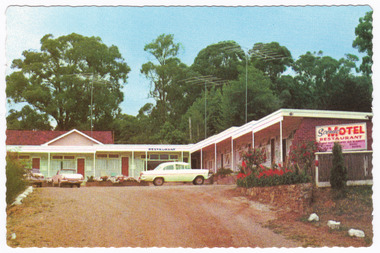
Postcard (item) - Colour postcard, John Sands Pty. Ltd, Unknown
... Ltd., Printers, Australia SPVI-SCENIC MOTEL, 5 DARWIN STREET, MARYSVILLE,/ Phone 92 "Modern luxuriously appointed sound proof bedsitting rooms./ all units wall-to-wall carpets./ Tiled shower recess and toilet,/ bedside lamps, T.V., radio, refrigerator. ...Ltd., Printers, Australia SPVI-SCENIC MOTEL, 5 DARWIN STREET, MARYSVILLE,/ Phone 92 "Modern luxuriously appointed sound proof bedsitting rooms./ all units wall-to-wall carpets./ Tiled shower recess and toilet,/ bedside lamps, T.V., radio, refrigerator. ...A colour postcard of the Scenic Motel in Marysville. The postcard was produced by John Sands Pty. Ltd. as a souvenir of Marysville.A colour postcard of the Scenic Motel in Marysville. The postcard was produced by John Sands Pty. Ltd. as a souvenir of Marysville.Sandscene/International PLACE/STAMP/HERE PRINTED IN/ AUSTRALIA Post Card POST OFFICE/PREFERRED John Sands Pty. Ltd., Printers, Australia SPVI-SCENIC MOTEL, 5 DARWIN STREET, MARYSVILLE,/ Phone 92 "Modern luxuriously appointed sound proof bedsitting rooms./ all units wall-to-wall carpets./ Tiled shower recess and toilet,/ bedside lamps, T.V., radio, refrigerator. Tea-making facilities./ Breakfast served to units. Parking at door. Magnificent Scenic/ Views. Restaurant open 6 p.m. A La Carte Meals."marysville, victoria, australia, scenic motel, accommodation, postcard, john sands pty. ltd., souvenir -
 Marysville & District Historical Society
THE TRIANGLE NEWS-VOL 3 NO 38-24 NOVEMBER 1978
... shower tea...final kinder...ladies bushwalking...birthday greetings...free family film night...for sale...girl guides l.a....kinder news...rainfall...primary school enrolments buxton...disco...kinder roster...typewriter appeal...marysville waterworks trust...wanted-bike wheels...brownies & guides christmas break up...cricket news...hay for sale...fire brigade...street...marysville victoria australia fruit salad farm senior citizens community care centre marysville uniting church marysville primary school council in hospital shower tea final kinder ladies bushwalking birthday greetings free family film night for sale girl guides l.a. kinder news rainfall primary school enrolments buxton disco kinder roster typewriter appeal marysville waterworks trust wanted-bike wheels brownies & guides christmas break up cricket news hay for sale fire brigade street stall bingo donation wanted to buy THE TRIANGLE NEWS-VOL 3 NO 38-24 NOVEMBER 1978 ...marysville, victoria, australia, fruit salad farm, senior citizens, community care centre, marysville uniting church, marysville primary school council, in hospital, shower tea, final kinder, ladies bushwalking, birthday greetings, free family film night, for sale, girl guides l.a., kinder news, rainfall, primary school enrolments buxton, disco, kinder roster, typewriter appeal, marysville waterworks trust, wanted-bike wheels, brownies & guides christmas break up, cricket news, hay for sale, fire brigade, street stall, bingo, donation, wanted to buy -
 Greensborough Historical Society
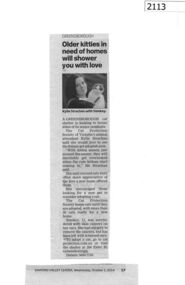
Newspaper Clipping, Older kitties will shower you with love, 01/10/2014
... This article encourages people to adopt a cat or kitten from the Cat Protection Society of Victoria in Elder Street Greensborough. cat protection society of victoria elder street greensborough News clipping, black text, colour image. Older kitties will shower you with love Newspaper Clipping Diamond Valley Leader ...This article encourages people to adopt a cat or kitten from the Cat Protection Society of Victoria in Elder Street Greensborough.News clipping, black text, colour image.cat protection society of victoria, elder street greensborough -
 Ringwood and District Historical Society
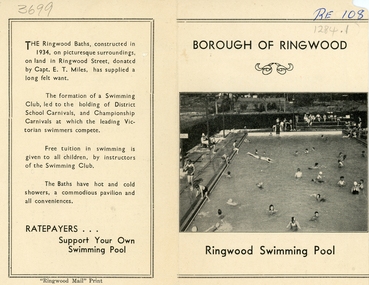
Document, Ringwood Swimming Pool (Baths). Brochure c1940's, c. 1940s
... Street and donated by Captain E.T. Miles. Brochure sets out reasons for supporting the pool - free swimming tuition, hot and cold showers, and inclusion in championship carnivals put on by the swimming club....Street and donated by Captain E.T. Miles. Brochure sets out reasons for supporting the pool - free swimming tuition, hot and cold showers, and inclusion in championship carnivals put on by the swimming club. ...The Ringwood Baths were constructed in 1934 in Ringwood Street and donated by Captain E.T. Miles. Brochure sets out reasons for supporting the pool - free swimming tuition, hot and cold showers, and inclusion in championship carnivals put on by the swimming club.Borough of Ringwood - Ringwood Swimming Pool. Brochure with picture of swimming pool on front. Cream coloured bi-fold with black printing. +Additional Keywords: Miles, E.T., Capt.Brochure shows information of Ringwood Municipal Baths- Opening hours, admission charges, history, etc. -
 Eltham District Historical Society Inc
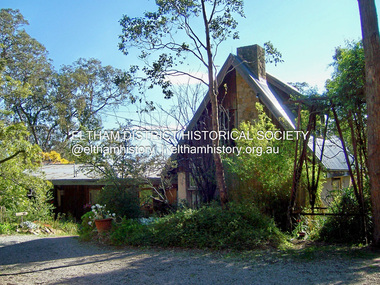
Photograph - Digital Photograph, Marguerite Marshall, Former home of Professor William MacMahon Ball, York Street, Eltham, 24 May 2007
... shower and toilet, a nd a fireplace and chimney of local stone. Published: Nillumbik Now and Then / Marguerite Marshall 2008; photographs Alan King with Marguerite Marshall.; p141 At the eastern tip of York Street, Eltham, stands Shinrone, the former home of one of Australia’s intellectual leaders. ...shower and toilet, a nd a fireplace and chimney of local stone. Published: Nillumbik Now and Then / Marguerite Marshall 2008; photographs Alan King with Marguerite Marshall.; p141 At the eastern tip of York Street, Eltham, stands Shinrone, the former home of one of Australia’s intellectual leaders. ...Situated at the eastern end of York Street, Eltham, 'Shinrone', the former home of Professor William (Mac) MacMahon Ball was one of the first in the Shire of Eltham to incorporate mud-brick. Professor MacMahon Ball, a political scientist, writer, broadcaster and diplomat and family moved to York Street, Eltham in 1945 into a timber cottage built around the 1890s and in poor repair. Mac asked Alistair Knox to renovate the home and he expanded the living area and added verandahs. In 1948 Montsalvat artist and sculptor Sonia Skipper supervised the building of most of the mud-brick studio. Neighbour Gordon Ford made the mud-bricks. Mac also asked John Harcourt, who had worked with him as a journalist in shortwave broadcasting, to build a pise (rammed earth) and stone addition to the largely timber house. Harcourt built two bedrooms - including an attic bedroom - a balcony with a shower and toilet, a nd a fireplace and chimney of local stone. Published: Nillumbik Now and Then / Marguerite Marshall 2008; photographs Alan King with Marguerite Marshall.; p141 At the eastern tip of York Street, Eltham, stands Shinrone, the former home of one of Australia’s intellectual leaders. Professor William Macmahon Ball, was one of the first to bring Asia as a foreign policy issue to the Australian public.1 He was a political scientist, writer, broadcaster and diplomat. The house was one of the first in Eltham Shire to incorporate mud-brick,2 because of the acute shortage of building materials after World War Two. Its novice builders later become leaders in Eltham’s built and garden design. Mac (as he was usually called), who was the son of a Church of England minister, was born in Casterton, Victoria in 1901 and died in 1986. In 1945 he helped establish the United Nations, as political consultant to the Australian Delegation at the San Francisco Conference.3 Then in 1946 Mac was appointed British Commonwealth Representative on the Allied Council for Japan, which is recorded in detail in his diary.4 In 1948 Mac led an Australian Government Goodwill Mission to South East Asia. However, Mac was perhaps most successful as an academic and public speaker.5 He was a commentator on the Australian Broadcasting Commission, from the early 1930s to the early 1960s. He was also Controller of the Short-Wave Broadcasting Unit during World War Two, which later became Radio Australia. From 1923 he taught at The University of Melbourne, then became foundation Professor of Political Science in 1949 and was Chair until his retirement in 1968.6 In 1942, as the government expected a Japanese invasion, Mac’s wife Katrine and their only child Jenny, moved from Kew to Eltham as temporary evacuees. However Mac and Katrine lived in Eltham for almost the rest of their lives. After staying with friends, they rented a house in Reynolds Road, where, as it was wartime, they needed to keep horses for transport and a cow and poultry for milk and eggs. In 1945 the family moved to the house at York Street, which was then a timber cottage, built around the 1890s and in poor repair. The underground well, cellar and part of the garden are all that remain of what stood on the original 18 acre (7.3ha) allotment. Thanks largely to Katrine’s hard work, the house was gradually renovated and extended. The long rambling house was partially built by several young neighbours, who were inspired by the cheap mud-brick and stone building style of Montsalvat, the Eltham artists’ colony. Mac asked Alistair Knox to renovate Shinrone, named after an Irish village near Katrine’s family home. Knox later popularised the mud-brick style of house construction, for which Eltham became known. He expanded the living area and added verandas. In 1948 Montsalvat artist and sculptor Sonia Skipper supervised the building of most of the mud-brick studio. Another neighbour, Gordon Ford, who was to have a major influence on the Australian garden style, made the mud-bricks. Mac also asked John Harcourt, who had worked with him as a journalist in short-wave broadcasting, to build a pisé (rammed earth) and stone addition to the largely timber house. Harcourt built two bedrooms – including an attic bedroom – a balcony with a shower and toilet, and a fireplace and chimney of local sandstone. With pioneering work naturally came mistakes, including one particularly dramatic incident when Harcourt was building walls with unsupported sections. Jenny Ellis, Mac’s daughter, remembers being awakened from sleep by a thundering shudder. The wall of her room had fallen down – fortunately away from her! In 1950 artist Peter Glass – another neighbour and later landscape designer – built Katrine a mud-brick pottery. As a result, the house features at one end Harcourt’s characteristic steep gable roof, while at the other the flatter construction characteristic of Knox. Mac referred to the home as the Eltham ‘experimental building site’.7 Surprisingly, the combination works, perhaps partly because it has the warm inviting feel of timber, mud-brick and stone.This collection of almost 130 photos about places and people within the Shire of Nillumbik, an urban and rural municipality in Melbourne's north, contributes to an understanding of the history of the Shire. Published in 2008 immediately prior to the Black Saturday bushfires of February 7, 2009, it documents sites that were impacted, and in some cases destroyed by the fires. It includes photographs taken especially for the publication, creating a unique time capsule representing the Shire in the early 21st century. It remains the most recent comprehenesive publication devoted to the Shire's history connecting local residents to the past. nillumbik now and then (marshall-king) collection, eltham, alistair knox, gordon ford, john harcourt, mudbrick construction, pise construction, professor macmahon ball, shinrone, sonia skipper, york street -
 Eltham District Historical Society Inc
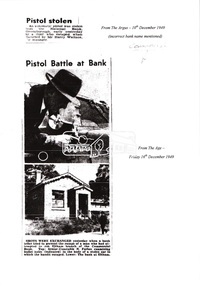
Folder, Commercial Bank of Australia Eltham Branch Hold-Up, 15 December 1949
... Street. Harry summons the police but a search by First Constable Thomas of the Greensborough Police assisted by a wireless patrol car is unsuccessful. A report is filed noting the theft of a .25 calibre pistol from the wardrobe. Thursday, December 15th. It is 1pm and the Commercial Bank has just opened. The branch is only open Mondays and Thursdays from 1-3pm. The morning started off a little cool with some scattered showers...Street. Harry summons the police but a search by First Constable Thomas of the Greensborough Police assisted by a wireless patrol car is unsuccessful. A report is filed noting the theft of a .25 calibre pistol from the wardrobe. Thursday, December 15th. It is 1pm and the Commercial Bank has just opened. The branch is only open Mondays and Thursdays from 1-3pm. The morning started off a little cool with some scattered showers ...Thursday, December 15, 1949, the quiet little bank was embroiled in an infamous wild shoot-out between a daring thief and two bank officers. Today, the building still carries the scars ; a bullet hole remains visible in a cedar bench testifying to the events that played out that day. 3.30 a.m., Friday, December 9. The manager of the Commercial Bank branch at Greensborough, Mr Harry Wallace and his wife are asleep in their bedroom of the little house behind the branch. Harry is awakened by a noise and sees an intruder in a corner of the bedroom. He calls out but the intruder who has switched off the power in anticipation flees through a side door and scarpers down Main Street. Harry summons the police but a search by First Constable Thomas of the Greensborough Police assisted by a wireless patrol car is unsuccessful. A report is filed noting the theft of a .25 calibre pistol from the wardrobe. Thursday, December 15th. It is 1pm and the Commercial Bank has just opened. The branch is only open Mondays and Thursdays from 1-3pm. The morning started off a little cool with some scattered showers but it has fined up and the temperature is now around 61 degrees (16 C). A new grey Singer sports car with soft-top pulls up on the opposite side of the road and a young man, neatly dressed in a dark blue suit, wearing a grey hat and carrying a brief case exits the vehicle. He looks around then crosses the road and walks up the steps and through the door into the bank. There are three people inside; Mr. Jack Burgoyne whose grocery store is situated just 50 yards up the road, Mr. Lindsay A. Spears, the Eltham Agency Receiving Officer and by chance, Mr Harry Wallace, manager of the Greensborough branch. Jack Burgoyne takes note of the young stranger; thinking to himself he appears nervous. The man approaches the counter and introduces himself as John Henderson of Greensborough and explains that he wishes to open a new account. He places his hat and £3 on the counter. Mr Spears attends to the paperwork. He asks the young man to sign two forms, which he does but then he withdraws from the counter and starts walking towards the door. Suddenly he spins around pulling an automatic pistol from his right-hand pocket. He exclaims forcefully; “The game’s on! I’ll take the lot!” Spears appears to comply by pretending to open a drawer. The man shouts loudly, “Keep your hand away from that drawer.” Spears instead reaches for a pistol in his pocket and challenges the man, “Here it is. Come and get it!” At the same time, Harry Wallace pulls a pistol from his pocket as well. The bandit fires a shot but misses, the bullet striking the counter. Both Spears and Wallace open fire and Jack Burgoyne ducks for cover. As the bandit turns and runs for the door leaving his £3 behind, he fires another shot, which strikes the ceiling. Spears fires back, and thinks he may have hit him in the foot. The bandit flees the bank and heads for the grey Singer car, registration NO-106, parked opposite. Wallace and Spears pursue him to the door and open fire again, striking the car three times around the driver’s door. Spears lets off eight shots and Wallace, seven before his gun jams. The getaway car initially heads slowly down Main Road towards Bridge Street. About 100 yards down the road, Dave Adams, a PMG employee, who has heard the shots, throws a steel manhole step at the driver. It hits the roof of the car nine inches above the driver’s head and tears the hood. Another witness claims to have seen the door blow open and the driver raise his hand. The car gathers speed and swings left into Bridge Street racing along at about 60 miles an hour careering recklessly past council employee, Mr. Percy Williams, who is driving a dray along Smarts Road [believed to be Bridge Street]. At the end of the road the Singer fails to get round the sharp turn and crashes into an embankment skidding to a stop outside the home of Mr John Clifford. One side of the car is wrecked. Mr Clifford, an aircraft engineer hears the fast travelling car bump heavily into the road bank at about 1.25 p.m. Hearing the whine of an engine he goes outside to find the grey Singer parked at the side of the road. Jack George also lives at the corner and hears the car crash. “The bandit opened the car door, ran 50 yards, and suddenly turned back,” exclaims Jack. “He took something from the car. It might have been a gun.” In his haste, the bandit drops his grey felt hat, size 6 7/8, on the road and dashes up Sherbourne Road for about 200 yards then disappears into the scrub carrying a brief case and a bundle in which a sailor’s cap can be seen. About 3 p.m., Mr H.D. Pettie of Mountain View Road, Montmorency is looking through his field glasses and notices a young man walking through thick scrub on private property some distance from his house. The man is wearing a sailor’s cap and disappears along the railway track toward Montmorency. As the day progresses, ten police cars, one motor cycle, and about 40 police led by Det. Sgt. McMennemin of Malvern CIB are searching for him. They believe he is hiding in thick scrub along the bank of the creek about half-a-mile outside Eltham township. Wireless patrol cars, four mobile traffic cars and the CIB area cars from Malvern and Kew are taking part. Police check the thief’s car and discover it was stolen from Helen Baxter, of Doncaster Road, North Balwyn from outside Victoria Barracks. Harry Wallace informs the police that he believes he recognised the bandit as the man who took his pistol from his bedroom the previous Friday morning. As night falls, armed police are posted at strategic points in the Eltham-Greensborough district. Police in cars are watching the roads. Others are searching the bush and checking passengers on trains. Little do they realise the young man has already slipped out of the net. SEQUEL YOUTH OF 19 CHARGED WITH ATTEMPTED ARMED ROBBERY OF BANK AT ELTHAM Weekly Times, Wednesday 15 February 1950, page 6 Detectives who raided a house in Bell St., Coburg, Melbourne, charged a 19-year-old youth, of South Yarra, with attempted armed robbery at the Commercial Bank’s Eltham (Vic.) receiving depot on Dec. 15. Police say they recovered a loaded automatic pistol, diamond and signet rings worth more than £200, a complete set of house-breaking instruments, a sailor’s uniform, and chloroform gauze in the raid. The youth was charged that while armed with an offensive weapon, he attempted to rob Lindsay George Spears of a sum of money. He was further charged on six counts of breaking, entering and stealing. Police allege that the person who tried to hold up Mr Spears in the Commercial Bank receiving depot at Eltham on December 15. escaped in a stolen car, after Mr Spears and Mr Henry Wallace, manager of the bank’s Greensborough branch, had fired at him. After the car crashed, he escaped into thick scrub and is alleged to have changed into a sailor’s uniform. On December 9 an automatic pistol was stolen from Mr Wallace’s bedroom at the Greensborough bank. The chloroform pad recovered is alleged to have been stolen from the Dental Supply Company, Plenty Road, Preston. The rings are alleged to have been taken in a £513 burglary from the shop of James Paton. Sydney Road, Coburg. Det. Sgt. H. McMennemin conducted the investigations with Senior Dets. R. Newton and M Downie, Detectives l. Dent, R. Rayner, P. Pedersen and M. Handley and First Constable A. Thomas. The youth will appear at Eltham Court on February 22. Manager’s Gun Used in Holdup at Bank The Age, Thursday 23 February 1950, page 4 It was stated in Eltham court yesterday that a youth who robbed a bank manager of his pistol, later used it in an attempt to hold-up the bank. Kay Arthur Morgan, 19, draftsman, of Castle-street, South Yarra, was committed for trial on charges of breaking and entering, and stealing a pistol and attempted robbery while armed with an offensive weapon. He pleaded guilty. The manager of Eltham branch of the Commercial Bank of Australia Ltd., Henry Clifton Cabot Wallace, said he disturbed someone in the bedroom, in which he and his wife were sleeping, at 3 a.m. on December. 9, 1949. Later he found that his automatic- pistol was missing. On December 15 a youth, who said his name was John Henderson, entered the bank and opened a new account. As the youth was leaving the bank he turned round with a pistol in his hand and said: — “I want the lot.” Spear indicated a drawer under the counter; and said.— “Here it is. Come and get it.” The youth said:— “Keep your hand away from that drawer.” Witness said Spear then drew his pistol from his hip pocket. The youth fired at them, and Spear returned the fire. “I pulled my pistol and fired, too” said witness. The youth fired again, ran out to a car and drove off. Witness and Spear fired several shots at the car. The youth was the accused Morgan, sitting in court, witness said. Evidence was given that one bullet was found in the celling and the other in the bank. Morgan was allowed £100 bail on each charge. Morgan ended up serving three years for the failed armed robbery and became a notorious criminal. He had twin sons, Peter and Doug and even though only ten years old, Morgan would get his sons to act as lookouts whilst he committed burglaries. The lads became building contractors but when the industry suffered a downturn in 1977 and they were short on cash, they returned to the family business. Over the following 23 months they undertook 24 raids on country and outer-suburban TABs and banks. Whilst robbing one country bank for the third time, just like their father, it all went wrong ending up with a police officer shot. They were nick-named the “After-dark” bandits and are considered to be Australia’s last bushrangers. They were convicted and served 17 years in prison.5 x A4 photocopied pagesbank hold-up, cba bank, det sgt mcmennemin, eltham, h.d. pettie, harry wallace, jack burgoyne, kay arthur morgan, lindsay a. spears, main road -
 Warrnambool and District Historical Society Inc.
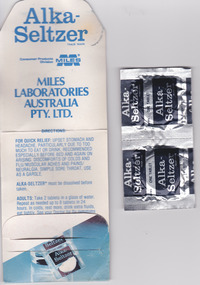
Mixed media - Travellers Aid Bag, Travellers Aid bag & Contents, C 1980
... The expansion from Warrnambool to Ballarat occurred in 1970 with a building in Doveton Street North, Ballarat. Items such as the sewing kit and shower cap are still given out as promotional material in many motels today. ...Plastic Bag: Mid City Motels, Princes Highway, Warrnambool, 055 62 8026, Doveton Street, Ballarat, 053 31 1222, Travellers Aid Bag for your car with Sewing Kit, Alka Seltzer, Shoe Shine, Shower Cap, Have a Nice Day, Ballarat City Map....The expansion from Warrnambool to Ballarat occurred in 1970 with a building in Doveton Street North, Ballarat. Items such as the sewing kit and shower cap are still given out as promotional material in many motels today. ...These items were given to clients of the Mid City Motel (probably the one in Ballarat ). The Mid City Motel company was formed in 1963 by a syndicate with the motel in Raglan Parade, Warrnambool. It was later sold with the company liquidated in 1982. The expansion from Warrnambool to Ballarat occurred in 1970 with a building in Doveton Street North, Ballarat. Items such as the sewing kit and shower cap are still given out as promotional material in many motels today. These items are of little importance but are examples of the promotional activities of the motel/tourism scene 30 or so years ago. They may be useful for display.This is a small plastic bag containing a paper sewing kit and a paper folder containing two Alka-Seltser tablets. The sewing kit is red and white and the Alka Seltzer packet is mostly blue. The three items come from the Mid-City Motel and are intended to be kept in a car. Plastic Bag: Mid City Motels, Princes Highway, Warrnambool, 055 62 8026, Doveton Street, Ballarat, 053 31 1222, Travellers Aid Bag for your car with Sewing Kit, Alka Seltzer, Shoe Shine, Shower Cap, Have a Nice Day, Ballarat City Map.warrnambool, mid city motel, tourism -
 National Wool Museum
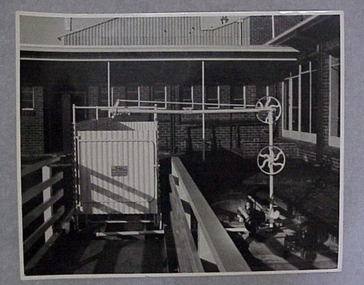
Photograph, Cooper Race Type Sheep Shower First Marketed 1946
... Cooper Race Type Sheep Shower First Marketed 1946 Photography by Wofgang Sievers in association with Norman Ikin9 Collins Street, Melbourne, C.I.When ordering please quote No. ..........Shearing machinery Cooper Engineering Company Pty Ltd Wolfgang Sievers Photography Cooper Race Type Sheep Shower First Marketed 1946 Photography by Wofgang Sievers in association with Norman Ikin9 Collins Street, Melbourne, C.I.When ordering please quote No. ....... ...Photographs of sheep showers in situ, at different angles.Photographs of sheep showers in situ. Photographs of sheep showers in situ. Photographs of sheep showers in situ. Photographs of sheep showers in situ.Cooper Race Type Sheep Shower First Marketed 1946 Photography by Wofgang Sievers in association with Norman Ikin9 Collins Street, Melbourne, C.I.When ordering please quote No. .......shearing machinery, cooper engineering company pty ltd wolfgang sievers photography -
 Sunshine and District Historical Society Incorporated
Administrative record - City of Sunshine - Commissioner Mr Alexander "Alex" George Gillon Collection 1976 - 1982 - Attachment for The Ordinary Meeting of Council to be Held on 31st October 1978, City of Sunshine, 31st October 1978
... City of Sunshine Alexander "Alex" George Gillon Sunshine Cricket Club Dempster Park Phoenix Street Sunshine North Attachment for The Ordinary Meeting of Council to be Held on 31st October 1978 Footscray institute of Technology Letter 2nd October 1978 In Service Training Program Patrick J. Cannon, Testro & Coburn Letter 19th October 1978 Proposed Library Agreement with Melton Sunshine Cricket Club Letter Request for Permission to Title the Shower Recesses Robinson Loo Wyss & Schneider Letter 11th October 1978 Council Depot Amenities Building Foolscap sized document. ...Attachment for The Ordinary Meeting of Council to be Held on 31st October 1978 Footscray institute of Technology Letter 2nd October 1978 In Service Training Program Patrick J. Cannon, Testro & Coburn Letter 19th October 1978 Proposed Library Agreement with Melton Sunshine Cricket Club Letter Request for Permission to Title the Shower Recesses Robinson Loo Wyss & Schneider Letter 11th October 1978 Council Depot Amenities Building city of sunshine, alexander "alex" george gillon, sunshine cricket club, dempster park, phoenix street, sunshine north -
 Vision Australia
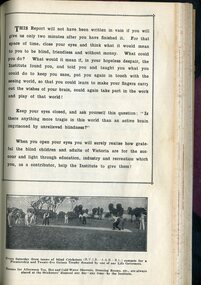
Administrative record - Text, Royal Victorian Institute for the Blind annual report 1927, 1927
... Tanswell as head teacher, George Findlay is entering the final year of his degree and Donald Forbes is in his second year, thanks to Sir Baldwin Spencer for allowing the children to visit the National Museum and touch various items as he spoke about the various exhibits, George Findlay won the 3LO Exhibition for Pianoforte, the success of the Concert Party and the difficulty in securing halls large enough to hold concerts, placement of safety zones by the City of Melbourne and South Melbourne councils opposite the Institute, official opening of the hostel in Raleigh Street by the Lord Mayor, activities providing support for those not working at the Institute include teaching of home trades who manufactured goods will be purchased by the RVIB for sale in their shop, a wholesale tobacco and grocery store, use of the Pipe Organ, musical instruments, wireless set, study, writing, games, typewriting, showers and baths and dressing rooms for on-site use, a brief outline of the blind cricket playing ground and the boat house, the decision to provide free Wireless Sets to those who cannot afford them, H. ...Tanswell as head teacher, George Findlay is entering the final year of his degree and Donald Forbes is in his second year, thanks to Sir Baldwin Spencer for allowing the children to visit the National Museum and touch various items as he spoke about the various exhibits, George Findlay won the 3LO Exhibition for Pianoforte, the success of the Concert Party and the difficulty in securing halls large enough to hold concerts, placement of safety zones by the City of Melbourne and South Melbourne councils opposite the Institute, official opening of the hostel in Raleigh Street by the Lord Mayor, activities providing support for those not working at the Institute include teaching of home trades who manufactured goods will be purchased by the RVIB for sale in their shop, a wholesale tobacco and grocery store, use of the Pipe Organ, musical instruments, wireless set, study, writing, games, typewriting, showers and baths and dressing rooms for on-site use, a brief outline of the blind cricket playing ground and the boat house, the decision to provide free Wireless Sets to those who cannot afford them, H. ...Articles in this annual report include: 60th anniversary, approximately 1000 blind people in Victoria, hope that Government will increase it's support which has not varied for over 30 years and comparison of costs compared to the 50th anniversary, visits by Lady Stonehaven and Lord and Lady Somers, resignation of G. Dent and appointment of J. Tanswell as head teacher, George Findlay is entering the final year of his degree and Donald Forbes is in his second year, thanks to Sir Baldwin Spencer for allowing the children to visit the National Museum and touch various items as he spoke about the various exhibits, George Findlay won the 3LO Exhibition for Pianoforte, the success of the Concert Party and the difficulty in securing halls large enough to hold concerts, placement of safety zones by the City of Melbourne and South Melbourne councils opposite the Institute, official opening of the hostel in Raleigh Street by the Lord Mayor, activities providing support for those not working at the Institute include teaching of home trades who manufactured goods will be purchased by the RVIB for sale in their shop, a wholesale tobacco and grocery store, use of the Pipe Organ, musical instruments, wireless set, study, writing, games, typewriting, showers and baths and dressing rooms for on-site use, a brief outline of the blind cricket playing ground and the boat house, the decision to provide free Wireless Sets to those who cannot afford them, H. Foster (foreman of the Mat department) again played Father Xmas at the children's Christmas party, the Orchestra and Concert Party gave their annual free concert to the Tramways Board and employees in appreciation for the free passes for the blind, formation of a Central Auxiliary with representatives from each municipality to help bring the work of the Institute more predominantly to the general public across Victoria, and the passing of workers Margaret Cates, Tom Ginniff and Peter Stevens.1 volume bound with illustrations.royal victorian institute for the blind, annual report, lord somers, lady somers, g dent, j tanswell, george findlay, donald forbes, baldwin spencer, national museum of victoria, cricket, rowing, h foster, auxiliaries, wirths brothers circus, raleigh street hostel, margaret cates, tom ginniff, peter stevens, buildings -
 Royal District Nursing Service (now known as Bolton Clarke)
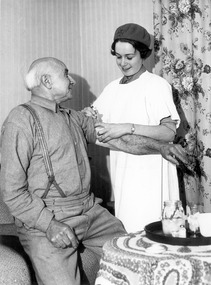
Photograph - Photograph, black and white, 1958
... showers. Rehabilitation with an aim towards independence remained at the forefront of the Sister’s minds and when possible using aids and instruction on safe techniques enabled the person to become fully independent. All care included giving advice and support to the patient and their Carers. The Sisters liaised with the persons Doctor, Hospital and allied Health personal when necessary. melbourne district nursing service mdns mdns - injection royal district nursing service rdns sister mary maxwell mr cannestra La Trobe Street Studios. ...This photograph depicts a Melbourne District Nursing Service (MDNS) Sister administering an injection to a gentleman in his own home in the suburbs of Melbourne. The Sister is wearing the MDNS winter grey uniform short sleeve dress and grey wool beret with a central red Maltese cross. Glass syringes were used until the mid 1960s when plastic disposable syringes were then used.The Trained nurses of the Melbourne District Nursing Society (MDNS), then Melbourne District Nursing Service from 1957, and from 1966 known as Royal District Nursing Service (RDNS), visited patients in their home and gave best practice care in many fields of nursing and to people of many cultures throughout its 130 years of expansion. Initial visits not only assessed the specific nursing situation but the situation as a whole. Their patients ranged in age from babes, children, adults to the elderly and referrals were taken from Hospitals, General Practitioners and allied Health facilities. Some of the care the Sisters provided is as follows: – Post-Natal care given to mother and babe, Wound Care following various types of surgery, accidents, burns, cancer, leg ulcers etc. Supervising and teaching Diabetic Care, including teaching and supervising people with Diabetes to administer their own Insulin, and administering Insulin to those unable to give their own injections. Administering other injections and setting up weekly medication boxes. The Sisters performed Catheterizations on adults suffering from conditions such as Quadriplegia, Paraplegia, Multiple Sclerosis (MS), Motor Neurone Disease (MND) and Guillan-Barre Syndrome, and when required at school on children for e.g. those with Spina Bifida. The Sisters visited those requiring Cystic Fibrosis support and care; those requiring Haemo-Oncology care, including visiting children at school; those requiring Home Enteral Feeding care, and those requiring IV therapy at home and home Dialysis. Palliative Care was given including pain relief with the use of syringe drivers, personal care as needed, and advice and support to both patient and family. The Sisters provided Stoma management to those needing Urostomy, Ileostomy and Colostomy care and those requiring Continence care. HIV/AIDS nursing care was provided; visits to Homeless Persons were made. Personal care was given to patients ranging in age and with varying mobility problems, such as those with MS, MND, Guillan-Barre Syndrome, Quadriplegia, Paraplegia, Acquired Brain Injury, to those following a Cerebrovascular Accident (Stroke), those with severe Arthritis and those with a form of Dementia. When necessary the elderly were assisted with personal care and advice given on safety factors with the use of hand rails, bath or shower seats, and hand showers. Rehabilitation with an aim towards independence remained at the forefront of the Sister’s minds and when possible using aids and instruction on safe techniques enabled the person to become fully independent. All care included giving advice and support to the patient and their Carers. The Sisters liaised with the persons Doctor, Hospital and allied Health personal when necessary. This photograph depicts Melbourne District Nursing Service (MDNS) Sister Mary Maxwell administering an injection into the left upper arm of Mr Cannestra. On the left of the photograph Mr Cannestra is sitting on the padded arm of his patterned couch; he has his left arm extended. His head, which is bald with some white hair at the side and rear, is turned towards the Sister who is standing on his right. He is wearing a grey shirt and his grey trousers are held up with braces. Sister Maxwell is wearing a white gown over her grey uniform with the collar seen. She is wearing a grey wool beret with central Maltese cross, over her short, dark hair. She is standing beside the patient and her left hand is holding his left arm with his shirt sleeve rolled up to expose his upper arm. She is holding the angled barrel of a glass and metal syringe in her right hand and some of the needle can be seen against Mr. Cannestra's arm. In the background the wall is covered with a striped wallpaper, and to the right part of a long floral curtain can be seen. To the right in the foreground, a round dark tray with jar, small bottle containing the medication for injection, a glass and a white cloth, sit on a small round table with a white and patterned tablecloth.La Trobe Street Studios. Reference number 59134-21melbourne district nursing service, mdns, mdns - injection, royal district nursing service, rdns, sister mary maxwell, mr cannestra -
 Linton and District Historical Society Inc
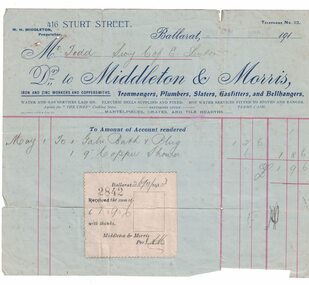
Invoice, Middleton and Morris invoice, 1913
... Pale blue, printed and handwritten invoice dated June 1913, issued to Mr Todd, Secretary, Church of England, Linton, by Middleton and Morris, "Ironmongers, Plumbers, Slaters, Gasfitters and Bellhangers" of Sturt Street, Ballarat. Invoice is for "Galv. Bath & Plug", and "Copper Shower" and is for a total of one pound, nine shillings and sixpence. ...Middleton and Morris [Plumbers] William Todd St Paul's Church of England Linton Receipts Pale blue, printed and handwritten invoice dated June 1913, issued to Mr Todd, Secretary, Church of England, Linton, by Middleton and Morris, "Ironmongers, Plumbers, Slaters, Gasfitters and Bellhangers" of Sturt Street, Ballarat. Invoice is for "Galv. Bath & Plug", and "Copper Shower" and is for a total of one pound, nine shillings and sixpence. ...Pale blue, printed and handwritten invoice dated June 1913, issued to Mr Todd, Secretary, Church of England, Linton, by Middleton and Morris, "Ironmongers, Plumbers, Slaters, Gasfitters and Bellhangers" of Sturt Street, Ballarat. Invoice is for "Galv. Bath & Plug", and "Copper Shower" and is for a total of one pound, nine shillings and sixpence. Small white printed and handwritten receipt for this amount is affixed to the invoice. Receipt no. 2842, dated 26/11/1913.middleton and morris [plumbers], william todd, st paul's church of england linton, receipts -
 Wodonga & District Historical Society Inc
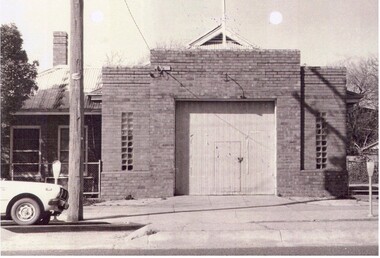
Photograph - Codling Collection 01 - Wodonga Fire station and CWA Hall
... Street on 31st March 1940. The building comprised an appliance room for housing the fire engine and plant. The floor had been especially treated to enable dancing when the occasion warranted. There was a meeting room, a station-keeper’s bedroom and a repair shop. A shower...Street on 31st March 1940. The building comprised an appliance room for housing the fire engine and plant. The floor had been especially treated to enable dancing when the occasion warranted. There was a meeting room, a station-keeper’s bedroom and a repair shop. A shower ...Miss Olive Codling was a Foundation Member and a Life Member of the Wodonga Historical Society. Many of her prize-winning photos are held in the Society Collection, including a series of photos of buildings in High Street (formerly Sydney Road), Wodonga. The CWA Hall officially opened in 1938 having been built on land granted by the Wodonga Council. Wodonga Infant Welfare Centre also occupied part of the building until 1959. Last meeting of the CWA in that hall was in held in December 1983, with the Council resuming ownership of the land to build the current day Post Office. Country Fire Brigade’s new fire station opened in High Street on 31st March 1940. The building comprised an appliance room for housing the fire engine and plant. The floor had been especially treated to enable dancing when the occasion warranted. There was a meeting room, a station-keeper’s bedroom and a repair shop. A shower room and modern kitchen were also included. The Fire station relocated to Smythe and Stanley Street corner which opened in 1977. They have now relocated to Thomas Mitchell Drive, Wodonga.This photo collection is significant as it documents how the businesses and buildings in Wodonga have evolved and contributed to community throughout the 20th century.A series of black and white photos depicting the Fire Station and CWA hall located in High Street, Wodonga C1940 - 1983wodonga businesses, high st wodonga, wodonga fire brigade, wodonga country women's association, cwa wodonga -
 Melbourne Tram Museum
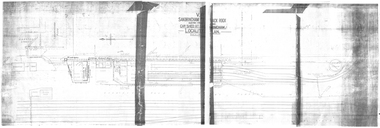
Drawing, VR Sandringham Tram Depot, 1921
... streets, dated 12.2.1923. Drawing 582.22. 420H x 590W. .4 - Locker Room for Bus Drivers – plan 264-46, dated 2-5-1946, 295H x 420W. .5 - Shower for Bus Drivers, Plan No. 815-50, dated 15/12/1950, 295H x 420W. ...streets, dated 12.2.1923. Drawing 582.22. 420H x 590W. .4 - Locker Room for Bus Drivers – plan 264-46, dated 2-5-1946, 295H x 420W. .5 - Shower for Bus Drivers, Plan No. 815-50, dated 15/12/1950, 295H x 420W. ...Set of 8 drawings, prints from original VR drawings of the Victorian Railways Sandringham Railway station, tram depot, bus depot and alterations between 1921 and 1958.\ .1 - VR Sandringham to Black Rock, Electric Street Railway – Car shed at Sandringham – Locality Plan – shows car depot layout, substation, track location for both the railway and tramway, including the platform, goods shed and coal stage. Not dated. Consists of two sheets of paper joined in the middle – 420H x 1210W. Minor creases at end of rolled sheet. .2 - Drawing 1907.21 - Sandringham car shed proposed extension – with note “Not carried out” – dated 2-8-21 Second copy has stamp – Drawer 2, Folio 1, plan 2 in bottom left hand corner. 480H x 630W .3 - Sandringham Station – station layout showing proposed extension to passenger platforms for both 7 and 10 car trains, buildings shops as the southern end of the yard, rail and tramway tracks, streets, dated 12.2.1923. Drawing 582.22. 420H x 590W. .4 - Locker Room for Bus Drivers – plan 264-46, dated 2-5-1946, 295H x 420W. .5 - Shower for Bus Drivers, Plan No. 815-50, dated 15/12/1950, 295H x 420W. Has a note on the drawing – “not carried out”. .6 - Tramcar shed – Site Plan – Entrance Gates – shows conversion arrangements of the depot from trams to buses, including entrance way gates. Plan 456-56. 295H x 420W. .7 - Conversion of sub-station into New Amenities Block - plan number 51-57, dated 22.2.1957 - Detail architectural drawings for the above work. 295H x 420W .8 - Conversion of sub-station into New Amenities Block - plan number 51-57, dated 22.2.1957 - Detail architectural drawings for the above work. 295H x 420W. .9 - Proposed Improvements to Bus Depot - Plan No. 455-52 - not dated. 420H x 595Wtrams, tramways, vr, sandringham, tramways, buses, railways, black rock -
 City of Melbourne Libraries
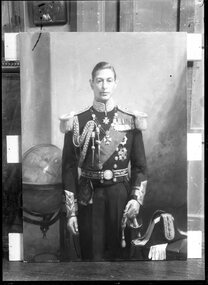
Photograph, Bull, Hugh Jones, 1897-1993, "A Royal Portrait" (Duke of York), 1933
... From an arch over Hargreaves Street, pretty girls showered the pair with rose petals. ...From an arch over Hargreaves Street, pretty girls showered the pair with rose petals. ...Published: The Age, Sat 14 October 1933 Published title: A Royal Portrait Published caption: "Seen at his studio, Alphington, Mr. W. B. Mclnnes's portrait of the Duke of York, which he painted recently on commission from the trustees of the Castlemaine Gallery, at St. John’s Wood, London, impresses as a vital record of one whose natural habitat is a palace, and whose place in life is one of near relationship to the throne of England. The Duke is painted in the uniform of the admiral of the fleet, a highly ornate vesture entailing much elaboration of gold and numerous medals, in dealing with which the artist has not failed to centre his attention on the head, and has succeeded in producing what is undoubtedly a soundly painted portrait and a good likeness. During the five fittings Mr. Mclnnes, apart from the ordinary social amenities, found his Royal sitter little inclined to talk, though he spoke feelingly of his trip to Australia and the pleasure it had given him: but with the Duchess the tendency to be sociable was much more clearly pronounced. She took, and expressed, a keen interest in the social and political matters of the day with a special concern for the supremacy of England and Australia in all questions relating to sport, such as cricket, tennis and golf. She spoke well of her portrait painted by Quinn, and regretted that she would not see the two hung side by side at the Castlemaine Gallery." Description: An unframed painting of a standing, middle-aged man dressed in the uniform of a Royal Navy admiral of the Fleet with medals, sash, ornate belt, cuffs and epaulettes. His left hand rests on the handle of a sword in its scabbard and his bicorn hat and white gloves are on a table beside him. To his right is a globe of the world showing Australia. Research by project volunteer, Fiona Collyer: In 1933, Castlemaine Art Gallery trustees commissioned artist W.B. McInnes (1889-1939) to paint a portrait of Prince Albert, Duke of York as a companion piece to the portrait of his wife, the Duchess of York, that the gallery had commissioned Australian official war artist James Quinn (1869-1951) to paint in 1930. During the First World War, the Duchess’s childhood home, Glamis Castle in Scotland was used as a makeshift military hospital and convalescence home for wounded soldiers. Many servicemen from the Castlemaine area recuperated there and had fond memories of the kindness of the teenage Lady Elizabeth Bowes-Lyon (1900-2002, later Duchess of York) who spent the war years running errands and aiding in the welfare and morale of the patients. In 1927, the Duke and Duchess of York (later King George VI and Queen Elizabeth) came to Australia to formally open the newly built Parliament House in Canberra and to tour the country. While visiting Victoria in April, they embarked on a whistle-stop train journey to Bendigo, stopping at Kyneton for ten minutes and Castlemaine for 15 minutes. At Kyneton, an excited crowd of 10,000 people welcomed the couple with “three cheers and three cheers for Baby Betty” before the Duchess was presented with a bouquet of locally grown roses and the Duke a bound album of photographs of noted beauty spots of the district. Next the Royal Couple stopped at Castlemaine to the cheers of 15,000 people. There the couple were presented with a basket of prime quality Harcourt apples and a pair of cot blankets, manufactured at Castlemaine Woollen Mills, a birthday gift for baby Princess Betty. The Duchess recognised Colonel W.E. James, of the Seventh Battalion, who had convalesced at Glamis Castle in 1917, and they chatted before the train departed, while the Duke shook hands with returned soldiers. Last stop was the town of Bendigo which was colourfully decorated with bunting and flags, arches and flowers. 3000 pigeons were released on their arrival and the liberated birds circled overhead for several minutes as if to welcome the Royal Couple. A crowd of 50,000 cheering people lined the streets in bright sunshine as the couple drove by. From an arch over Hargreaves Street, pretty girls showered the pair with rose petals. The Duke was presented with a gold nugget and an album, handsomely bound in morocco, of a history of the Bendigo mining industry, while the Duchess received a bouquet of prize winning white chrysanthemums. After 75 minutes in Bendigo they journeyed back to Melbourne for a State reception. While the couple were in Melbourne, the Duke often played lawn tennis at the Government House courts with three times Grand Slam champion Norman Brookes, who declared that while he considered the Duke a second class player whose serve lacked sting, he had a fine backhand and with time and practice he could become a first class player. The federal Parliament had previously been situated in Melbourne, but Canberra was chosen as the location for Australia’s capital as a compromise between fierce rival states, Victoria and NSW. It is written in the Constitution that the federal capital would be in “the State of NSW... distant not less than one hundred miles from Sydney.” The word Canberra is thought to derive from the local Ngunnawal word “Kanbarra” meaning “meeting place”. The Provisional Parliament House was a large, white, three storey building facetiously dubbed “The Wedding Cake”, plonked down in a bare, former sheep paddock. It was decorated for the event with Union Jacks and Australian red ensign flags. On 9 May, the day of the opening, the expectant crowd assembled in front of the building. Only two of the spectators were Aboriginal. One was Jimmy Clements (1847-1927, aka Nangar or Yangar, but popularly known as “King Billy”), accompanied by his three dogs. (The title “King” or “Queen” was often given by white settlers to Aborigines who were seen as allies and could maintain good relations between First Nations groups and the colonists. Some were given inscribed brass breastplates or gorgets to wear.) Jimmy was an excellent horse breaker and expert tracker for the police. He was also the nephew of “Queen” Nellie Hamilton (1842-1897) of the Canberra-Queanbeyan region, home of the Ngambri and Ngunnawal people. Nellie was the oldest surviving full-blooded Aboriginal woman in the district. The other was George John Noble (1840s-1928, aka Ooloogan, also “Marvellous” due to his regular use of the word). Both were initiated Wiradjuri walamira elders: “clever men” believed to have the ability to heal physical and spiritual ailments. They were also travelling showmen, skilled at boomerang and spear throwing and often performed at country agricultural shows and football matches. They had walked barefoot for three days from the Brungle Mission, near Gundagai. 11 May 1927, The Argus reported that “King Billy... claims sovereign rights to the Federal Territory” which the National Archives of Australia describes as “possibly the first recorded instance of Aboriginal protest at Parliament House in Canberra.” 10 May 1927, The Argus reported on Jimmy Clements: “During the wait great interest was taken in the appearance near the east stand of an aborigine, a member of the Gundagai tribe, and a well known character in the district. He was very old and grey and ruggedly picturesque. He was determined to go his own way in spite of the arguments of two inspectors and one sergeant of police. Immediately and instinctively the crowd in the stands rallied to his side. There were choruses of advice and encouragement for him to do as he pleased. A well-known clergyman stood up and called out that the aborigine had a better right than any man present to a place on the steps of the House of Parliament and in the Senate during the ceremony. The old man’s persistence and the sympathy of the crowd won him an excellent position and also a shower of small change that must have amounted to 30/ or 40/ [shillings].” At 10.30 am, Australia’s eighth Prime Minister, Mr Stanley Bruce (1923-1929) welcomed the Royal couple onto the crimson carpeted portico. Unfortunately, Dame Nellie Melba’s rendition of “God Save the King” and the greater part of the Duke’s reply was drowned out by the roar of squadrons of aeroplanes circling overhead. A brief religious service followed, conducted by leaders of the Methodist, Presbyterian and Anglican churches. Interestingly, there was no Roman Catholic representation at the ceremony even though around one quarter of Australians were Catholic at the time. The Duke unlocked the front doors with a golden key, then unveiled a statue of his father King George V by sculptor Sir Bertram Mackennal in the King’s Hall. Then the official party, Senators, members of the House of Representatives and invited guests entered the Senate chamber where the Duke read a message from the King, establishing Canberra as the seat of the Federal Government, watched on by Australia’s elite. The conclusion of the ceremony was announced by a gay fanfare of trumpets from the entrance of Parliament House and a 21 gun salute and answered by cheers from the crowd. The dignitaries then feasted on a luncheon of turtle soup, poached schnapper, fillets of beef, roast chicken and ham, straw potatoes, green peas, Canberra Pudding (a pudding made with dripping, dried fruit and jam), fruit, ices, coffee and cheese. They toasted the King with non-alcoholic fruit punch as the Federal Capital Territory (later ACT) was a “dry” area and no speeches were made. The diary entry that day of Ethel Baird, Lady Stonehaven, the wife of the Governor-General, is brief and to the point: “To P.H. & waited for Yorks. Ceremony went off without a hitch. Ghastly Banquet Lunch.” Later that day, the Duke mounted a coal black mare, police horse Number 303 which had been hastily re-named “Black Bess” for the occasion, to receive the final salute from the assembled troops and returned soldiers dressed in mufti. The RAAF squadron were flying overhead in “V” formations when suddenly, one of the planes, piloted by Flying Officer Francis Charles Ewen, left the formation, nose-diving 900 metres from Parliament House and landing behind the Y.W.C.A. refreshment marquee. Francis, aged only 28, tragically died of his wounds later that day. The Federal Capital Commission contracted Sargent’s Pies of Sydney to supply 5000 meals for the event. They supplied pies, sausage rolls, scones and sandwiches with the agreed price of 3 shillings a head. Only 1200 meals were served and the uneaten remainder dumped, with the Commission bearing the cost of the unsold food. An estimated crowd of 20,000 attended the opening, far fewer than the expected 100,000. Many visitors travelled long distances, bringing their own hampers of food and camping in tents as there was very limited accommodation available. Thousands of people around Australia listened to the ceremony broadcast on the wireless, with receiving sets installed in schools, public halls and workplaces and it was also filmed for posterity. The next morning, the Royal couple, along with Prime Minister Bruce and Mrs Bruce held an informal public reception on the steps of Parliament House where early settlers, residents and visitors to Canberra filed past them. The Press widely reported Jimmy Clements’ encounter with the Duke and Duchess. The Sun-Pictorial reported 11 May 1927: "MET THE DUKE. ABORIGINE KING HE APPROVED Sugarbag: Sports Suit. John Clements, otherwise King Billy, a full blooded aborigine king, aged 86, was among the 2000 who filed past the Duke and the Duchess at the public reception at Canberra to day. “How you likem Duke and Duchess Billy?” he was asked afterwards. “I think they are both very nice.” he replied in good English. King Billy was a very bedraggled figure, with tangled locks and a beard which almost hid his wrinkled and black face. He wore an old sports suit and carried a sugarbag. Passing the Duke and Duchess he turned full towards them. The crowd cheered, and the Duke and Duchess smiled. The Duke was particularly amused.” The Canberra Times reported 13 May 1927: "A REAL AUSTRALIAN. A quaint but pathetic figure stood in broad relief in the queue of ranks at the reception. Where his dusky forbears have gathered in native ceremonial for centuries past, a lone representative of a fast vanishing race saluted visiting Royalty. Despite the grotesque garb and untamed mane the aborigine comported himself not without dignity. With his three faithful dogs, he made an immediate target for a battery of cameras.” "The Argus reported 11 May 1927: "...an ancient aborigine who calls himself King Billy and who claims sovereign rights to the federal Territory walked slowly forward alone and saluted the Duke and Duchess. They cheerily acknowledged his greeting. The old aborigine, with his long, matted beard and nondescript clothing, is a popular identity of Canberra, and must be one of the most extraordinary figures who has received a Royal salute.” The Sun (Sydney) reported 10 May 1927: “Suddenly, in the midst of the forest of green and white colored hats of women, appeared a head with a shaggy leonine mane and a patriarchal beard. Jacky, the aboriginal, an identity of the district, who is also known as the King of Canberra, had arrived to testify to his loyalty. He saluted the Duke with an excellent dash, and shambled past with his faithful sheep dog aide-de-camp at his heels. The Duke and Duchess were highly amused at this quaint figure moving along with a sort of bodyguard of shrieking young boys and girls.” The Sydney Morning Herald 11 May 1927 mistook Jimmy for his friend “Marvellous”: “...the appearance of an aged aboriginal widely known in the district as “Marvellous, the uncrowned king of Queanbeyan." His beaming black countenance was almost hidden beneath a shock of hair and beard. Bare-footed and carrying a sugar bag in one hand and a tiny Australian flag in the other, he at first mistook a policeman at the foot of the steps for the Duke. To his great embarrassment and to the vast amusement of the onlookers, the policeman became the object of a hearty salutation. However, "Marvellous" was quickly shepherded back to a position in the procession and as he passed along brought his hand up to an approved military salute for the benefit of their Royal Highnesses. The Duke returned it with a special wave.” The Labor Daily 11 May 1927 irreverently reported on the scene: "People March Past. Some 400 people, old identities of Canberra marched past. They were mostly aged ladies with memories faithfully preserving the traditions of other days and curtsied reverently. The younger generations, who speedily joined the procession, behaved differently however. Surely it was the most motley collection that ever passed before Royalty. Men without collars jostled others well dressed. Fat women, young women, children of all heights and ages were there. The oldest inhabitants, in the persons of the abo, "Marbly", and his companion were present. The poor old fellows evidently were keen to get closer to the Duke than the procession dared go, but they were overawed by the stern glances of military men.” The Canberra Times reported 13 May 1927: "...and towards the end of the procession, a full-blooded aboriginal, bareheaded and barefooted, and carrying an old swag on his back, made a picturesque figure as he several times saluted the Royal couple, his old eyes beaming inexpressible delight.” The Register reported 11 May 1927: "PUBLIC MARCH PAST. Old “Jacky”, an aboriginal identity of the district, who has been following the proceedings of the various ceremonies with apparently great interest, appeared in the march past. He halted in front of the steps and raised his hand to his shaggy grey locks in an attempt at a salute. Smiling, the Duke returned the salute, and the Duchess bestowed a charming smile on the figure of mingled pathos and comedy.” Tweed Daily reported 12 May 1927: “King Billy” WAS THERE. Appropriately enough, the inevitable “King Billy” with his refreshing impression of possum and gum-leaves, was present at the dedication of the Federal capital at Canberra. Bare-footed, in a dingy old suit and battered felt hat, he wandered on to the empty stand after the illustrious assemblage had passed into Parliament House. A desolate figure in all that he stood for, he proved, an amiable representative of the dispossessed race. He cheerfully waved a Union Jack for the camera man, and grinned into the very eye of a movie man’s camera without flinching.” Footage of Jimmy filmed that day features in the film “The Birth Of White Australia” produced in 1928 and shows him enthusiastically waving a small Union Jack flag in front of Parliament House with his three dogs at his feet. The caption reads " "King Billy" calls for cheers for the son of the great white King across the seas. “Mine tinkit that pfellers father budgeree King liket me” supposedly says Jimmy." Jimmy told the Daily Telegraph, 13 May 1927 “I have opened your Parliament House on my own ground, now you can go and look at it." Jimmy died on 28 August 1927, aged 80. The Herald newspaper on 30 August 1927, published an illustration depicting Jimmy’s dog standing on his grave, his customary chimney pot hat leaning on his headstone. The caption reads: “The Dead King — His Only Mourner. Drawn by Will Dyson (King Billy, last of the Canberra aborigines, lived just long enough to see the Duke of York open Australia’s capital on the site where his tribe once roamed. He died in the Queanbeyan Hospital yesterday morning.)” A letter published in the Sydney Morning Herald, 19 September 1927 reported: "Old King Billy... Sir, ...I would like to mention... the passing away of one, if not the last remaining aboriginal chieftains. He may be called “Old King Billy,” and his death occurred here in Queanbeyan a few weeks ago. The removal of this well-known black has left another big gap in all that remains distinctively Australian in character. He was one of the last remaining tribe of the Monaro district, and one of the most predominant personalities throughout the Commonwealth. ...he had lived through 80 years all told. He was on many occasions sought by artists for his splendid physique and personality as a model, and many a journey he has had to make to Sydney on that account. A more striking and pronounced type could not be found. ...A very fine cast in lifelike form is to be seen in the Australian Museum, Sydney ...his last important appearance in public was at the Commonwealth celebrations at Canberra, to which territory he partly belonged. ...we have no aborigine statue chiselled to the memory of their race, a more fitting and lasting memorial could not be undertaken than to have one modelled from this fine figure and erected to the memory of his race at Canberra... It would be a fitting adornment if planted with the Australian gumtrees for any avenue or garden. [King Billy] ...a very intelligent fellow, responding readily to kindness and common sense. Hoping yet to see a befitting testimonial and a lasting memorial to a race that is rapidly and I may say, unfortunately, disappearing, I am etc., SYDNEY R.OAKLEY, Queanbeyan." The “lifelike form” referred to by the correspondent was a sculpture that Jimmy Clements had posed for: “The Wunderlich Aboriginal Group” for The Australian Museum in Sydney. In 1925, Mr Ernest Wunderlich, director of Wunderlich Limited, manufacturer of building materials and President of the Board of Trustees at The Australian Museum, commissioned renowned sculptor George Rayner Hoff (sculptor of the Anzac Memorial in Hyde Park, Sydney, National War Memorial in Adelaide, and “Lion” the original Holden Motor Company car emblem) to sculpt a life sized Aboriginal family group diorama as a gift to the Museum. There was much concern at this time that the Aboriginal population and especially the “full blooded” were fading into oblivion so fast that they may soon become extinct. Three “full blooded” Aborigines were chosen for models. An article in The Australian Museum magazine, July/September 1926 about The Wunderlich Aboriginal Group explained “...it will not be many years before the aborigine, in New South Wales and Victoria at least, will be an entity of the past. Every year sees a shrinkage in their number, and the coastal tribes that once roamed the Sydney district are, unfortunately, no longer with us. ...the man, who is hurling a boomerang, is Yangar, or “Jimmy Clements,” son of Gayan-Bleuet-Galoom, the late “King of Orange,” western New South Wales. “Jimmy” is an old man, but well preserved. He has a very retentive memory and recollects the various tribal customs and initiation ceremonies, but regarding these he is extremely reticent and will not communicate his “honoured secrets.” The female figure is “Nellie Walker,” a daughter of Geri-Bungel, and a native of Bombala, Monaro district, southern New South Wales. The boy is Harold Marsh, aged nine years, who was born at Kinchela, Macleay River, northern New South Wales. He is now living at the Brewarrina settlement... In the selection of aborigines great care had to be taken to ensure that the individuals were pure bloods, and to the Aborigines’ Protection Board and the Police Department of this State thanks are due for the valuable assistance rendered by them.” Ngarigo woman, Nellie Bungil Walker (1867-1932) had five children, two died as babies and her remaining children were taken from her. She worked as a domestic and was living at La Perouse Aboriginal Community, Sydney at the time of her sculpture’s creation. In the years after the sculpture was made, Nellie and Rayner remained friends. Yaegl boy Harold “Harry” Marsh was from the Kinchela Aboriginal Training Home for boys near Kempsey, (1924-1970), an agricultural training institution under the jurisdiction of the Aboriginal Protection Board to house Aboriginal boys forcibly removed from their families “in the interest of the moral or physical welfare” of the boys. The boys at Kinchela were aged 5-15 years old and referred to as numbers, not names and any connection to Aboriginal culture or language was forbidden. Brutal and cruel physical punishment and sexual assaults were rampant. Survivors recall being flogged and chained naked to a huge Morton Bay fig tree overnight or “sent down the line” where every boy was ordered to punch the “wrong doer” as hard as possible for fear that they would be next. The Kinchela children are acknowledged as part of the Stolen Generation. In 1925, Rayner Hoff created a terracotta bust “Harry Marsh” which is in the collection of the Art Gallery of New South Wales. The figures of the trio were modelled in clay before being cast in plaster and hand-coloured by Museum artist Miss Ethel A. King. The finished figures were completed with wigs and fur pelts and with Jimmy hurling a boomerang and Nellie holding a dilly-bag. They were placed in a glass cabinet in the Australian Ethnology Gallery. The subjects were not named. The Sydney Morning Herald 1 July 1926 critiqued the sculptures. "A GROUP OF STATUARY. MUSEUM’S ACQUISITION. Artistically the group is very fine, for the sculptor has caught his subjects in attitudes that reveal all the stalwart athletic lines of their bodies... The man, who is depicted as about 60 years of age, is bearded, immense, and savagely primitive-is throwing a boomerang, and beside him a boy, aged about 11 years is following beneath a shading hand, the flight of birds at which the hunter aims. Behind them, patient, obedient, stand(s) the woman waiting with her dilly bag to gather the spoils.” In 1996, Nellie’s daughter, Victoria Kempsey née Walker, happened to visit The Australian Museum and saw the sculpture of her mother, displayed semi-naked in a glass cabinet, alongside glass cabinets of taxidermied animals. She had last seen her mother 62 years previously when Nellie was dying from tuberculosis. Greatly distressed, Victoria wrote to the Museum requesting that they remove the sculpture, which they did. In 2023, a documentary was produced called “Her Name Is Nanny Nellie” which follows the journey of Nellie Walker’s great-granddaughter Auntie Irene Ridgeway discovering Nellie’s story, honouring her life and restoring her sculpture. Irene told Refinery29 Australia that “It was about reclaiming her life, reclaiming her history and who she really was as a real person. She was not a naked and unnamed lady standing in a museum. It's giving them back their families, they weren't just there to be looked at as flora and fauna or as 'natives'." The documentary was written and directed by Irene’s son Daniel King and premiered at the 2023 Adelaide Film Festival and broadcast on NITV. The restored sculpture of Nellie, dressed in 1920s style clothing was displayed at The Australian Museum, Sydney in The Bayala Nura Gallery in 2023. Irene wanted Nellie to be depicted in the way she actually was when she posed for the sculpture in 1925. The other two sculptures were not displayed due to ongoing conversations with family members and the fragility of the sculptures. It is anticipated that they may be displayed in the future. Melbourne born William Beckwith (Bill) McInnes (1889-1939) studied drawing at National Gallery School in Melbourne from the age of 14 under the tuition of artist Frederick McCubbin before succeeding his former teacher as Master of Drawing at the School from 1916-1934. He was acting Director of the NGV and Head of the National Gallery School from 1934. In 1927, Bill and official war artist H. Septimus Power were commissioned to paint the opening of the new federal Parliament House in Canberra. Septimus painted the general scene of the arrival of the Royal entourage in front of Parliament House, while Bill depicted the ceremony inside the Senate chamber. Bill was widely acclaimed for his landscapes and lauded as the heir to great Australian landscape artist Arthur Streeton. He won the Archibald Prize seven times (including the inaugural, a portrait of architect Desbrowe Annear) which made him a highly sought after portrait painter and he earned kudos for his commission to paint the Duke of York. During the breaks in painting the portrait, the pair chatted and Bill was surprised by the Duke’s wide knowledge of Australian affairs. The Duke was particularly interested to hear how the rabbit crisis was being handled. Bill’s work is held in major Australian galleries including the NGV, which has 12 of his paintings in their collection. Bill was married to fellow artist Violet McInnes and they lived at “The Poplars” in Alphington with their six children. Violet painted still life of flowers and portraits. In 1941, she entered her portrait of fellow artist Sybil Craig into the Archibald Prize and in 1945 Violet was appointed an official war artist. Defending his traditional style Bill said “...we in Australia have not been bitten by Cubism or Futurism or other of the “isms”...and I am glad of it”. References: THE DUCHESS OF YORK. (1931, December 7). The Argus (Melbourne, Vic. : 1848 - 1957), p. 8. Retrieved April 3, 2025, from http://nla.gov.au/nla.news-article4427568 WAR NURSE (1930, March 11). The Sun (Sydney, NSW : 1910 - 1954), p. 1. Retrieved April 3, 2025, from http://nla.gov.au/nla.news-article223714728 The Royal Visit. (1927, April 29). The Age (Melbourne, Vic. : 1854 - 1954), p. 9. Retrieved April 4, 2025, from http://nla.gov.au/nla.news-article205813465 Canberra. (1927, April 30). Advocate (Burnie, Tas. : 1890 - 1954), p. 5. Retrieved January 10, 2025, from http://nla.gov.au/nla.news-article68233606 Australian Dictionary of Biography, Nangar, https://adb.anu.edu.au/biography/nangar-33736 Australian Dictionary of Biography, Jimmy Clements, https://en.wikipedia.org/wiki/Jimmy_Clements Wikipedia, George John Noble, https://en.wikipedia.org/wiki/George_John_Noble PARLIAMENT AT CANBERRA. (1927, May 14). The Australasian (Melbourne, Vic. : 1864 - 1946), p. 37 (METROPOLITAN EDITION). Retrieved December 25, 2024, from http://nla.gov.au/nla.news-article140733921 CANBERRA CEREMONY (1927, May 10). The Argus (Melbourne, Vic. : 1848 - 1957), p. 19. Retrieved November 3, 2024, from http://nla.gov.au/nla.news-article3853643 CANBERRA. (1927, May 11). The Argus (Melbourne, Vic. : 1848 - 1957), p. 20. Retrieved November 24, 2024, from http://nla.gov.au/nla.news-article3853897 THE FINAL SCENES (1927, May 11). The Labor Daily (Sydney, NSW : 1924 - 1938), p. 5. Retrieved January 10, 2025, from http://nla.gov.au/nla.news-article236614453 TWIN SONS (1927, May 10). The Sun (Sydney, NSW : 1910 - 1954), p. 11. Retrieved April 4, 2025, from http://nla.gov.au/nla.news-article223616143 National Archives of Australia, Aboriginal [Jimmy Clements, a Wiradjuri elder] on steps of Parliament House (King Billy), https://recordsearch.naa.gov.au/SearchNRetrieve/Interface/ViewImage.aspx?B=3050026 Sydney Morning Herald, The chant of Jimmy Clements: I’ll do the honours on my ground, thanks, https://www.smh.com.au/national/the-chant-of-jimmy-clements-i-ll-do-the-honours-on-my-ground-thanks-20241023-p5kkt5.html MET THE DUKE (1927, May 11). The Sun News-Pictorial (Melbourne, Vic. : 1922 - 1954; 1956), p. 14. Retrieved November 3, 2024, from http://nla.gov.au/nla.news-article275177101 PUBLIC MARCH PAST. (1927, May 11). The Register (Adelaide, SA : 1901 - 1929), p. 11. Retrieved April 2, 2025, from http://nla.gov.au/nla.news-article54271512 A REAL AUSTRALIAN (1927, May 13). The Canberra Times (ACT : 1926 - 1995), p. 12. Retrieved December 18, 2024, from http://nla.gov.au/nla.news-article1213124 THE PEOPLE'S DAY (1927, May 13). The Canberra Times (ACT : 1926 - 1995), p. 3. Retrieved April 3, 2025, from http://nla.gov.au/nla.news-article1213105 KING BILLY" WAS THERE. (1927, May 12). Tweed Daily (Murwillumbah, NSW : 1914 - 1949), p. 2. Retrieved November 27, 2024, from http://nla.gov.au/nla.news-article190193273 A BUSY DAY. (1927, May 11). The Sydney Morning Herald (NSW : 1842 - 1954), p. 15. Retrieved November 3, 2024, from http://nla.gov.au/nla.news-article16374845 Nothing Wrong With Canberra Opening, Says "King Billy" (1927, May 13). The Daily Telegraph (Sydney, NSW : 1883 - 1930), p. 2. Retrieved November 3, 2024, from http://nla.gov.au/nla.news-article245750627 THIS IS MARVELLOUS! (1927, May 11). The Sun News-Pictorial (Melbourne, Vic. : 1922 - 1954; 1956), p. 16. Retrieved December 9, 2024, from http://nla.gov.au/nla.news-article275177155 Mildenhall's Canberra, Royal Visit, May 1927. Canberra citizens passing the Royal Party on the front steps of Parliament House at the Civic Reception 1927 [photograph], https://mildenhall.moadoph.gov.au/rephoto/62 Australian Dictionary of Biography, 1927 - Jimmy Clements, John Noble, and the Opening of Parliament House, https://adb.anu.edu.au/the-quest-for-indigenous-recognition/jimmy-clements YouTube, The Birth of White Australia (1928), amateurish racism on the big screen [Jimmy Clements at 11.12 minutes in], https://www.youtube.com/watch?v=OByX4iPsTgo YouTube, We Were Just Little Boys, https://m.youtube.com/watch?v=u4Hw9d91k2E WASTE AT CANBERRA. (1927, May 20). The South Eastern Times (Millicent, SA : 1906 - 1954), p. 1. Retrieved April 4, 2025, from http://nla.gov.au/nla.news-article200058308 YouTube, Museum of Australian Democracy at Old Parliament House, Whispers in the Corridors-An Aboriginal Presence, https://www.youtube.com/watch?v=fwifXP61M5Y History Snoop, Air Fatality in Canberra Scars an Historic Day in Australia, https://www.historysnoop.com/air-fatality-in-canberra/ YouTube, NFSA Films, The Opening Of Canberra, Australia's Capital City, https://www.youtube.com/watch?v=pOA8llA0iE0 Pauline Conolly, Pudding & Pies at Parliament House, https://paulineconolly.com/2022/pudding-and-pies-at-parliament-house/ THE MENU (1927, May 5). The Sun (Sydney, NSW : 1910 - 1954), p. 13 (FINAL EXTRA). Retrieved April 2, 2025, from http://nla.gov.au/nla.news-article223623278 PROMISING (1927, May 7). The Sun (Sydney, NSW : 1910 - 1954), p. 2. Retrieved December 15, 2024, from http://nla.gov.au/nla.news-article223616208 The Dead King -- His Only Mourner (1927, August 30). The Herald (Melbourne, Vic. : 1861 - 1954), p. 6. Retrieved November 3, 2024, from http://nla.gov.au/nla.news-article244196114 The VOICE of the CITY (1927, August 31). The Daily Telegraph (Sydney, NSW : 1883 - 1930), p. 4. Retrieved December 26, 2024, from http://nla.gov.au/nla.news-article246406061 THE LAST OF HIS TRIBE. (1927, September 2). Bairnsdale Advertiser and Tambo and Omeo Chronicle (Vic. : 1882 - 1946), p. 6. Retrieved December 24, 2024, from http://nla.gov.au/nla.news-article269318935 GONE WEST. (1927, September 17). The Irwin Index (Mingenew, WA : 1926 - 1956), p. 1. Retrieved December 23, 2024, from http://nla.gov.au/nla.news-article251554113 King Billy Dead. (1927, September 10). The Port Macquarie News and Hastings River Advocate (NSW : 1882 - 1950), p. 5. Retrieved December 1, 2024, from http://nla.gov.au/nla.news-article112534982 DEATH OF KING BILLY OF CANBERRA. (1927, September 16). Huon Times (Franklin, Tas. : 1910 - 1933), p. 5. Retrieved December 23, 2024, from http://nla.gov.au/nla.news-article136428435 OLD KING BILLY. (1927, September 19). The Sydney Morning Herald (NSW : 1842 - 1954), p. 5. Retrieved November 19, 2024, from http://nla.gov.au/nla.news-article16404722 "Marvellous" is Dead. (1928, March 30). The Gundagai Times and Tumut, Adelong and Murrumbidgee District Advertiser (NSW : 1868 - 1931), p. 2. Retrieved December 8, 2024, from http://nla.gov.au/nla.news-article122748136 LAST OF LACHLAN RIVER TRIBE (1926, May 3). Evening News (Sydney, NSW : 1869 - 1931), p. 7. Retrieved December 18, 2024, from http://nla.gov.au/nla.news-article117289515 Coal Strike Effects (1926, June 11). The Daily Telegraph (Sydney, NSW : 1883 - 1930), p. 14. Retrieved November 30, 2024, from http://nla.gov.au/nla.news-article245759732 SBS On Demand, Her name is Nanny Nellie, https://www.sbs.com.au/ondemand/movie/her-name-is-nanny-nellie/2300137539512 The Australian Museum Magazine, Vol. 2, No. 11, July-Sept 1926, The Wunderlich Aboriginal Group, https://shorturl.at/uViTe ABC News, King Billy and Marvellous were not invited to the 1927 opening of Parliament House — but that didn't stop their fight for sovereignty, https://shorturl.at/HGpjC Museum of Australian Democracy at Old Parliament House, The thieving diva: behind the scenes of the opening ceremony at Parliament House, https://www.moadoph.gov.au/explore/stories/heritage/the-thieving-diva-behind-the-scenes-of-the-opening-ceremony-at-parliament Refinery29, Beyond a museum glass case: one First Nations woman's quest to reclaim her ancestors' story, https://www.refinery29.com/en-au/my-name-is-nelly-documentary-irene-ridgeway-interview Sydney Morning Herald, Why it took 100 years to restore the dignity of Nanny Nellie, https://www.smh.com.au/national/why-it-took-100-years-to-restore-the-dignity-of-nanny-nellie-20230719-p5dpjo.html Australian Museum, Meeting Nanny Nellie, https://australian.museum/publications/explore_summer2024/nanny-nellie/ ABORIGINES. (1926, July 1). The Sydney Morning Herald (NSW : 1842 - 1954), p. 14. Retrieved November 29, 2024, from http://nla.gov.au/nla.news-article16302447 Wikipedia, Kinchela Aboriginal Boys Training Home, https://en.wikipedia.org/wiki/Kinchela_Aboriginal_Boys%27_Training_Home Art Gallery NSW, Harry Marsh by Rayner Hoff, https://www.artgallery.nsw.gov.au/collection/works/59.2000/ Art Gallery of South Australia, Lion (produced for the Holden Motor Company) by Rayner Hoff, https://www.agsa.sa.gov.au/collection-publications/collection/works/lion-produced-for-the-holden-motor-company/27253/ Wikipedia, William Beckwith McInnes, https://en.wikipedia.org/wiki/William_Beckwith_McInnes DUKE OF YORK PORTRAIT UNIVEILED IN CASTLEMAINE GALLERY (1933, December 4). The Sun News-Pictorial (Melbourne, Vic. : 1922 - 1954; 1956), p. 18. Retrieved April 4, 2025, from http://nla.gov.au/nla.news-article276125581 Castlemaine Art Museum, Portrait of His Royal Majesty the Duke of York, https://collection.castlemaineartmuseum.org.au/objects/181/portrait-of-his-royal-majesty-the-duke-of-yorkPhotographer notations on slide: "Portrait of Duke of York by W.B. McInnes 1933 B4".1930-1939, aboriginal culture, royal visits, openings (events), sculpture, land rights, museums, museum displays -
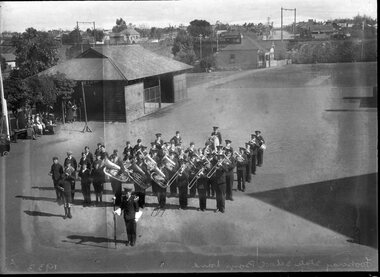 City of Melbourne Libraries
Photograph, Bull, Hugh Jones, 1897-1993, Footscray State School Boys Band
... Volunteers walked behind the band carrying a large tarpaulin to catch the shower of coins thrown by fans from both teams, which helped pay for new instruments, repairs and uniforms. The old footy joke goes- Q. Who played on the wing at the Western Oval for 20 years, but never kicked a goal? A. The Hyde Street...Volunteers walked behind the band carrying a large tarpaulin to catch the shower of coins thrown by fans from both teams, which helped pay for new instruments, repairs and uniforms. The old footy joke goes- Q. Who played on the wing at the Western Oval for 20 years, but never kicked a goal? A. The Hyde Street ...Photographer notations on slide: Footscray State School Boys Band 1933 B5 Published: JUNIOR BAND CHAMPIONS--BEFORE THE HOLIDAYS--BELGIAN CARNIVAL--A ROYAL YACHTSMAN. (1933, September 1). The Age (Melbourne, Vic. : 1854 - 1954), p. 3. Published caption: “Proud Champions.- The drum-major of the band of the Hyde-street State School, Footscray, leads his players in a march past for visitors during Music Week. Under Mr. Frank Johnston’s conductorship this band has held the championship for two years.” Trove article identifier: http://nla.gov.au/nla.news-article205116143 Scope and Content: Footscray’s Hyde Street State School Band, led by their drum major, prepare to march past a group of mothers while playing their instruments. The band held the record for winning the most Victorian State Schools Association Championships between 1931 and 1966. Research by project volunteer, Fiona Collyer: Description: A large group of boys, most of whom are dressed in long trousers and peaked band hats, led by their drum major, prepare to march past a group of women dressed in overcoats and hats and an infant in a pram. In the background is a school shelter shed, a railway line, houses and a netball ring on a wooden stand. The Hyde Street State School Band was formed in 1928 as the school band for Hyde Street State School No. 1912 at 10 Hyde Street Footscray (now Footscray City Primary School). Their bandmaster, Francis Charles Johnston,(1880-1953) nicknamed “Massa” as a boy for his love and admiration of southern American jazz music, also conducted the Victorian Police Band, Collingwood Citizens Band, and the Melbourne Metropolitan Fire Brigade Band, amongst others, leading to scores of wins in brass band competitions. Even into his sixties, “Massa” ran three laps around the South Melbourne Oval every morning in order to maintain fitness for his busy conducting schedule. He was a cornetist and horn player, and performed in and lead brass bands for more than fifty years including bands that farewelled Australian troops from the Boer War to the Second World War. The Argus 13 December 1947, described “Massa” - “Bandsmen say he is a genius in brass band music, and the best conductor in the Southern Hemisphere. He still retains the romance and Bohemianism of the old German bandsmen he played with in the streets of Melbourne 50 years ago.” In 1925, a bequest of £10,000 from the estate of the late writer, William Gillies was made to the Education Department of Victoria. It was devoted to three purposes - “1) The encouragement of instrumental music (school bands or orchestras) in the State schools of Victoria, leading, it is hoped, to an increase in the number of village bands and orchestras, and, most important of all, family orchestras; (2) The encouragement of the art of reading aloud, leading, it is hoped, to an increase of the admirable pastime of reading aloud in the family circle; and (3) The encouragement of any branch of nature study, the aim of all three being to make home life, especially in the country, more attractive.” The Director of Education, Mr. M.P. Hansen wrote in his book “Thoughts That Breathe” published in 1932, that, as a result of the Gillies Bequest- “£3,030 has already been made available for the purchase of band instruments, and thanks largely to the encouragement given by this fine bequest, there are now in State schools in Victoria, each under expert tuition, 31 brass bands, 9 orchestras, 13 fife bands and 23 violin classes. That the effect of such work has a significant bearing on the right use of leisure, is undeniable.” By 1937, at least 50 State school bands had been set up in Victoria and the Victorian State Schools Association Championships were hotly contested. Frank quickly and skilfully brought the inexperienced boys of the Hyde Street Brass Band to A grade level, winning their first Victorian State Schools Association Championships in 1931. The band went on to win multiple times, holding the record for winning the most Victorian State Schools Association Championships between 1931 and 1966. The band soon became an integral part of community events. Whenever the Footscray Football Team played a home game at the perpetually blustery Western Oval, (Whitten Oval since 1995) the band performed at half time, marching around the boundary line, belting out the Footscray Football Team theme song- “Sons of the ’Scray” played to the tune of “Sons of the Sea” by British music hall songwriter Felix McGlennon. Volunteers walked behind the band carrying a large tarpaulin to catch the shower of coins thrown by fans from both teams, which helped pay for new instruments, repairs and uniforms. The old footy joke goes- Q. Who played on the wing at the Western Oval for 20 years, but never kicked a goal? A. The Hyde Street Band. Now called the Hyde Street Youth Band Inc, it is a not-for-profit organisation, supported by the City of Maribyrnong. Their aim is to make brass music accessible to young people aged from 5-25 years, by supplying the instruments and lessons for a modest annual membership fee. The traditional British brass band comprises of three musical ensembles according to ability. The Hyde Street Youth Band Inc. play at community events including the AFL Grand Final Parade, ANZAC Day March at the Shrine of Remembrance, Moomba Parade and Yarraville Carols by Candlelight. Their repertoire includes classical, marches, hymns, contemporary music and movie themes. https://bandblastsfromthepast.blog/2018/04/08/victorian-state-school-brass-bands-their-legacy-lives-on/ Massa" and His Musical Firemen (1947, December 13). The Argus (Melbourne, Vic. : 1848 - 1957), p. 2 (The Argus Week-end Magazine). Retrieved May 5, 2025, from http://nla.gov.au/nla.news-article22532344 http://www.hydestreethistory.8m.net/photo2.html MUSIC AND MUSICIANS (1932, March 9). The Mercury (Hobart, Tas. : 1860 - 1954), p. 2. Retrieved May 8, 2025, from http://nla.gov.au/nla.news-article29946674 https://hsyb.org.au/about/history-2/ https://hsyb.org.au/about/ MUSIC AND READING ALOUD. (1925, June 1). The Argus (Melbourne, Vic. : 1848 - 1957), p. 10. Retrieved May 5, 2025, from http://nla.gov.au/nla.news-article2122525 Shake! Narrow Escape From Shark The Birdcage Walk Champion Schoolboy's Band (1931, December 24). The Sun News-Pictorial (Melbourne, Vic. : 1922 - 1954; 1956), p. 14-15. Retrieved April 8, 2025, from http://nla.gov.au/nla.news-article276259073 AROUND THE SCHOOLS: THE ARGUS JUNIOR (1947, September 23). The Argus (Melbourne, Vic. : 1848 - 1957), p. 6 (The Argus Super Comic). Retrieved April 20, 2025, from http://nla.gov.au/nla.news-article22509356 https://bandblastsfromthepast.blog/tag/hyde-street-youth-band/ THE GILLIES BEQUEST (1933, September 2). The Argus (Melbourne, Vic. : 1848 - 1957), p. 22. Retrieved May 5, 2025, from http://nla.gov.au/nla.news-article11688410 https://adb.anu.edu.au/biography/johnston-francis-charles-massa-13009 Hyde Street, Footscray, State School Children (1930, March 8). Weekly Times (Melbourne, Vic. : 1869 - 1954), p. 40. Retrieved May 8, 2025, from http://nla.gov.au/nla.news-article223899955Photographer notations on slide: Footscray State School Boys Band 1933 B5bands, 1930-1939, musical instruments, schools, state schools, uniforms, footscray -
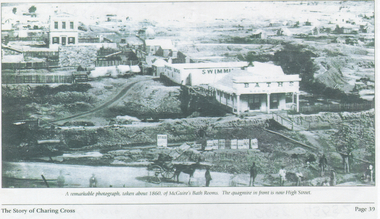 Bendigo Historical Society Inc.
Photograph - In The Swim Collection: McGuire's Baths and Swimming Pool, Bendigo, Approximately 1860
... shower-bath and towel every day for the low charge of twopence three farthings'. Further 'we can boast of every king of baths except vapour or Turkish are very little wanted on Sandhurst, as the inhabitants are generally a very steady well conducted people'. ( Bendigo Advertiser, 29th October, 1866. Bendigo Sandhurst McGuire's Baths swimming pools View Point McGuire and Co In the Swim Horse and cart Charing Cross High Street ...McGuire's Baths and Swimming Pool were constructed by Mr. P. McGuire 'opposite View Point and Royal Hotels' in Sandhurst. Mr. McGuire had permission to erect a building which contained twelve baths, together with ladies' and gentlemen's dressing rooms. The baths opened for business from 25th December, 1855. The establishment had a good supply of water. The water, 'after being used once', was 'passed into the Creek (Bendigo Creek)'. (Bendigo Advertiser, 25th December, '1855 'Baths, Baths, Baths' ) In November 1855 during the construction of the Baths a fire broke out, possibly started by a lighted cigar being left on wood shavings. The fire was extinguished by 'manual exertions'. There was a 'plenteous supply of water adjacent which contributed to the speedy extinguishing of the flames' In December 1863, a meeting was advertised to be held at McGuire's Baths for the purpose of establishing a swimming club (Bendigo Advertiser, 9th. December, 1863) By 1866, Mr. Matthew Moran now proprietor of the Baths since 1864, writes in a letter to the Bendigo Advertiser that 'we can now boast of the largest freshwater swimming baths in these colonies' and that 'any man can have a swim, a shower-bath and towel every day for the low charge of twopence three farthings'. Further 'we can boast of every king of baths except vapour or Turkish are very little wanted on Sandhurst, as the inhabitants are generally a very steady well conducted people'. ( Bendigo Advertiser, 29th October, 1866. Black and white copy of original photograph showing McGuire's Bath Rooms, Bendigo. Image shows building constructed near Bendigo Creek and adjoining current High Street, Bendigo. Sign on front of Building above verandah 'Baths'. Building at rear has 'Swimming' and 'Swimming Baths' signage on the front and side. In front of Baths buildings, a timber bridge across the Bendigo Creek. In foreground of image is High Street with a horse and cart with men standing along the road. Written on bottom of page 'a remarkable photograph, taken about 1860, of McGuire's Bath Rooms. The quagmire in front is now High Street' and 'The Story of Charing Cross'.bendigo, sandhurst, mcguire's baths, swimming pools, view point, mcguire and co, in the swim, horse and cart, charing cross, high street
