
Showing 169 items matching "slater house"
-
 Whitehorse Historical Society Inc.
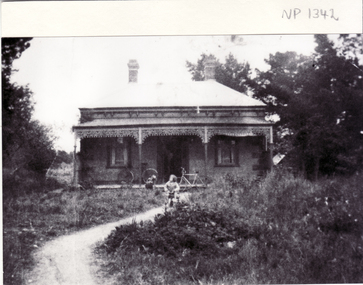
Photograph - B/W photograph, Slater House B;ackburn, C.1940s - 1950s
... Slater House B;ackburn...slater...House...Black and white photo of Slater House, 106 Surrey Road, Blackburn....slater House Blackburn Black and white photo of Slater House, 106 Surrey Road, Blackburn. ...Black and white photo of Slater House, 106 Surrey Road, Blackburn.slater, house, blackburn -
 Whitehorse Historical Society Inc.
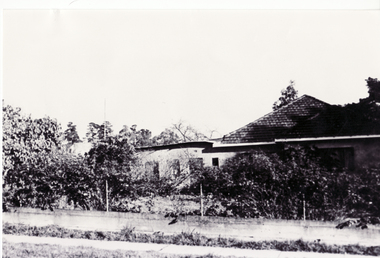
Photograph - B/W Photograph, House in Blackburn North incorporating part of Slater's Perfume Distillery, 1/06/1969 12:00:00 AM
... Slater house...Black and white photo of House in Blackburn North incorporating part of Slater's Perfume Distillery....Slater house Perfumery June 1969 Black and white photo of House in Blackburn North incorporating part of Slater's Perfume Distillery. ...Black and white photo of House in Blackburn North incorporating part of Slater's Perfume Distillery.June 1969slater house, perfumery -
 Port Fairy Historical Society Museum and Archives
Magazine - Newsletter, Richard Patterson, Port Fairy Post, August 2020
... ...Alabama loft house slater...This is the newsletter printed by the Port Fairy Historical Society to inform our members of the events that have taken place over a certain period of time and of research undertaken by the editor of personalities and events of historical interest. newsletter Magazine fairy boat stone walls gas works david Lindsay lighthouse keeper john o’brien stanley Hotham chidley Alabama loft house slater barkly street barclay street crossword whale john blackstock w.kelly An amalgamation of article relating to historical information regarding Port FAiry Belfast Digital newsletter Port Fairy Post Magazine Newsletter Richard Patterson ...An amalgamation of article relating to historical information regarding Port FAiry BelfastDigital newsletternon-fictionAn amalgamation of article relating to historical information regarding Port FAiry Belfastnewsletter, magazine, fairy, boat, stone walls, gas works, david lindsay, lighthouse keeper, john o’brien, stanley hotham chidley, alabama loft house slater, barkly street, barclay street, crossword, whale, john blackstock, w.kelly -
 Ballarat Heritage Services
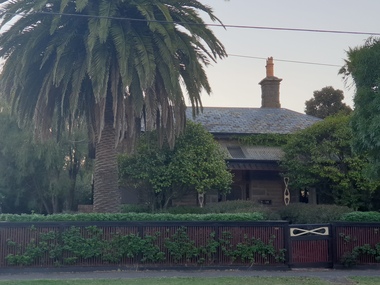
Photograph, Clare Gervasoni, Bluestone House in Ascot Street, Ballarat, 13/03/2022
... Bluestone house with slate roof in Ascot St, Ballarat....A number of early Ballarat houses are constructed of Bluestone. Bluestone Slate Ascot Street, Ballarat palm tree Bluestone house with slate roof in Ascot St, Ballarat. ...A number of early Ballarat houses are constructed of Bluestone. Bluestone house with slate roof in Ascot St, Ballarat.bluestone, slate, ascot street, ballarat, palm tree -
 Surrey Hills Historical Society Collection
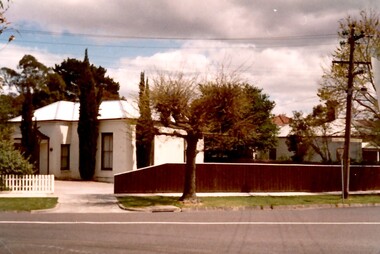
Photograph, Merthyr - 64 Windsor Crescent, Surrey Hills, 1988, 1988
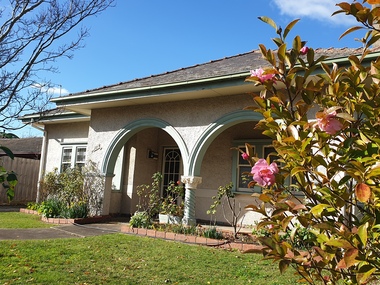
... A colour photo taken from the street at the rear of a Victorian-style house with rendered walls and a slate roof. The house sits behind a timber fence....This is one of the earliest surviving houses in Surrey Hills. victorian style windsor park estate merthyr plymouth bretheren meeting hall Mr John Abernethy Mrs Sarah Abernethy Mr H Jenkinson Surrey Hills A colour photo taken from the street at the rear of a Victorian-style house with rendered walls and a slate roof. The house sits behind a timber fence. ...Ref: Alan Holt records - This property was part of Lot 25 in the Windsor Park Estate which was subdivided in 1883. The house of 12 squares was built in 1888 for John Abernethy, an engineer. He also built 62 Windsor Crescent as a coachhouse and cottage. 1888-1891: Owners = John & Sarah Abernethy. John Abernethy died while on a trip to Hong Kong in 1891. 1891-1909: Owner = Mrs Sarah Abernethy 1910-1917: Owner = H Jenkinson The properties at 62 and 64 Windsor Crescent were separated during WW1 (by H Jenkinson). See Alan Holt records for other short term owners. 1970-1975 = Plymouth Bretheren Meeting Hall In 1976 it became a private home again.This is one of the earliest surviving houses in Surrey Hills.A colour photo taken from the street at the rear of a Victorian-style house with rendered walls and a slate roof. The house sits behind a timber fence.victorian style, windsor park estate, merthyr, plymouth bretheren meeting hall, mr john abernethy, mrs sarah abernethy, mr h jenkinson, surrey hills -
 Ballarat Heritage Services
Photograph, Clare Gervasoni, 105 Lyons Street South, Ballarat Central, 02/05/2020
... 105 Lyons Street South, Ballarat Central is a double brick Spanish Mission house with slate roof....This photograph was taken during the 2020 Covid19 lockdowns. 105 Lyons St South Ballarat Central Spanish Mission architecture slate roof Covid19 105 Lyons Street South, Ballarat Central is a double brick Spanish Mission house with slate roof. 105 Lyons Street South, Ballarat Central Photograph Clare Gervasoni ...This photograph was taken during the 2020 Covid19 lockdowns.105 Lyons Street South, Ballarat Central is a double brick Spanish Mission house with slate roof.105 lyons st south ballarat central, spanish mission, architecture, slate roof, covid19 -
 Ballarat Heritage Services
Photograph, Clare Gervasoni, 105 Lyons Street South, Ballarat Central from Dana Street, 28/05/2023
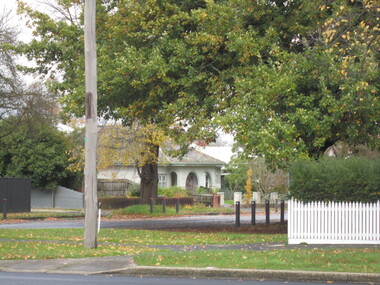
... 105 Lyons Street South, Ballarat Central is a double brick Spanish Mission house with slate roof....105 Lyons St South Ballarat Central Spanish Mission architecture slate roof 105 Lyons Street South, Ballarat Central is a double brick Spanish Mission house with slate roof. 105 Lyons Street South, Ballarat Central from Dana Street. ...105 Lyons Street South, Ballarat Central is a double brick Spanish Mission house with slate roof.105 lyons st south ballarat central, spanish mission, architecture, slate roof -
 Ballarat Heritage Services
Photograph, Clare Gervasoni, 105 Lyons Street South, Ballarat Central from Dana Street, 05/2023
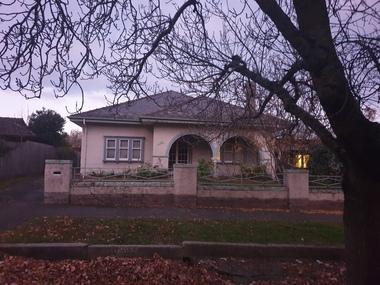
... 105 Lyons Street South, Ballarat Central is a double brick Spanish Mission house with slate roof....This photograph was taken while painters were on-site, the colour changing from green to grey. 105 Lyons St South Ballarat Central Spanish Mission architecture slate roof 105 Lyons Street South, Ballarat Central is a double brick Spanish Mission house with slate roof. 105 Lyons Street South, Ballarat Central from Dana Street. ...This photograph was taken while painters were on-site, the colour changing from green to grey. 105 Lyons Street South, Ballarat Central is a double brick Spanish Mission house with slate roof.105 lyons st south ballarat central, spanish mission, architecture, slate roof -
 Ballarat Heritage Services
Photograph, Clare Gervasoni, 105 Lyons Street South, Ballarat Central from Dana Street, 04/2023
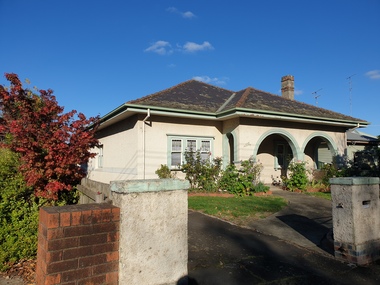
... 105 Lyons Street South, Ballarat Central is a double brick Spanish Mission house with slate roof....105 Lyons St South Ballarat Central Spanish Mission architecture slate roof 105 Lyons Street South, Ballarat Central is a double brick Spanish Mission house with slate roof. 105 Lyons Street South, Ballarat Central from Dana Street. ...105 Lyons Street South, Ballarat Central is a double brick Spanish Mission house with slate roof.105 lyons st south ballarat central, spanish mission, architecture, slate roof -
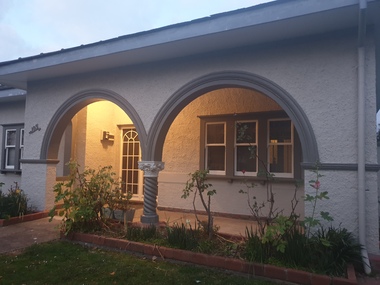 Ballarat Heritage Services
Photograph, Clare Gervasoni, 105 Lyons Street South, Ballarat Central from Dana Street, 15/06//2023
... 105 Lyons Street South, Ballarat Central is a double brick Spanish Mission house with slate roof....Recently painted. 105 Lyons St South Ballarat Central Spanish Mission architecture slate roof 105 Lyons Street South, Ballarat Central is a double brick Spanish Mission house with slate roof. 105 Lyons Street South, Ballarat Central from Dana Street. ...Recently painted.105 Lyons Street South, Ballarat Central is a double brick Spanish Mission house with slate roof.105 lyons st south ballarat central, spanish mission, architecture, slate roof -
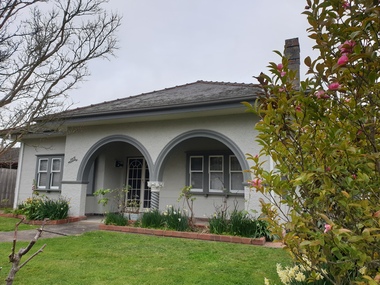 Ballarat Heritage Services
Photograph, Clare Gervasoni, 105 Lyons Street South, Ballarat Central, 2023, 15/06//2023
... 105 Lyons Street South, Ballarat Central is a double brick Spanish Mission house with slate roof....Recently painted. 105 Lyons St South Ballarat Central Spanish Mission architecture slate roof 105 Lyons Street South, Ballarat Central is a double brick Spanish Mission house with slate roof. 105 Lyons Street South, Ballarat Central, 2023 Photograph Clare Gervasoni ...Recently painted.105 Lyons Street South, Ballarat Central is a double brick Spanish Mission house with slate roof.105 lyons st south ballarat central, spanish mission, architecture, slate roof -
Lakes Entrance Historical Society
Postcard - Glenara Guest House, Lakes Entrance Victoria c1918
... Black and white postcard of the Glenara Guest House, showing a weatherboard house with slate roof and decorative tiling. Fourteen people on front veranda, including two children and a soldier in WWI uniform. ...Guesthouses Architecture Black and white postcard of the Glenara Guest House, showing a weatherboard house with slate roof and decorative tiling. Fourteen people on front veranda, including two children and a soldier in WWI uniform. ...On back Glenara Boarding. Emily Broome ran it at one time, she later married George Jennings.Also Black and white copy enlargement 20 x 25, also enlargement 13 x 18 in large frame with red background, also two 9 x 14 copies.Black and white postcard of the Glenara Guest House, showing a weatherboard house with slate roof and decorative tiling. Fourteen people on front veranda, including two children and a soldier in WWI uniform. Lakes Entrance Victoriaguesthouses, architecture -
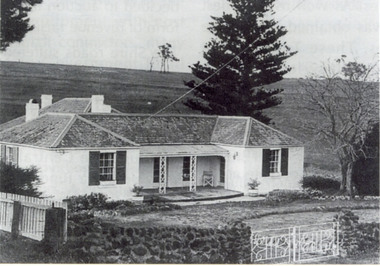 Federation University Historical Collection
Photograph, Somerset Inn, Bannockburn
... Black and white photograph of a house with slate roof and window shutters. The front fence is stone. .... & Sarah Holmes Black and white photograph of a house with slate roof and window shutters. The front fence is stone. ...The Somerset Inn was built for Edward Carter Holmes by carpenter Isaac Sutherland and his two sons in 1855/1856. Situated on Bruce's Creek on the Shelford - Bannockburn Road. Bruce's Creek was the original name for current day Bannockburn. Black and white photograph of a house with slate roof and window shutters. The front fence is stone. The house is the former Somerset Inn (later a private residence). This building is located on the Leigh River at Bannockburn and was the home of Edward Carter and Sarah Holmes. Verso in blue ball point pen. "Somerset Inn on Leigh river Bannockburn. Home of Edward C. & Sarah Holmesholmes, leigh river, sarah holmes, ec holmes, holmes family collection, chatham-holmes family collection, edward carter holmes, farm, bannockburn -
Glenelg Shire Council Cultural Collection
Photograph - Photograph - Rephotographed photograph, 1970s
... Verandah across front of house (?) slate roof, 3 stone chimneys, water barrel against side of house, verandah partly glassed in. ...Verandah across front of house (?) slate roof, 3 stone chimneys, water barrel against side of house, verandah partly glassed in. ...Photographic print of a rephotographed photograph. Image shows front and one side stone house at 61 Bancroft Street, South Portland. Verandah across front of house (?) slate roof, 3 stone chimneys, water barrel against side of house, verandah partly glassed in. Man and woman on verandah, another man in front garden. Residence of William Corney.Back: 'Mr Miller Bancroft St' - blue biro -
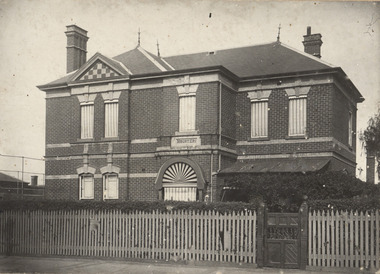 Kew Historical Society Inc
Photograph - 'Mount Eri', 9 Highbury Grove, 1919
... A photograph of Mount Eri, 9 Highbury Grove, an 11-room house for sale near the junction of Cotham and Glenferrie Roads. The substantial red brick, slate-roofed house and its location are not identified in the photograph, although the extent of the house is noted. ...A photograph of Mount Eri, 9 Highbury Grove, an 11-room house for sale near the junction of Cotham and Glenferrie Roads. The substantial red brick, slate-roofed house and its location are not identified in the photograph, although the extent of the house is noted. ...Subdivision plans are historically important documents used as evidence of the growth of suburbs in Australia. They frequently provide information about when the land was sold on which a built structure was subsequently constructed as well as evidence relating to surveyors and real estate and financial agents. The numerous subdivision plans in the Kew Historical Society's collection represent working documents, ranging from the initial sketches made in planning a subdivision to printed plans on which auctioneers or agents listed the prices for which individual lots were sold. In a number of cases, the reverse of a subdivision plan in the collection includes a photograph of a house that was also for sale by the agent. These photographs provide significant heritage information relating house design and decoration, fencing and household gardens.A photograph of Mount Eri, 9 Highbury Grove, an 11-room house for sale near the junction of Cotham and Glenferrie Roads. The substantial red brick, slate-roofed house and its location are not identified in the photograph, although the extent of the house is noted. It was described then as ‘well situated’ and close to 3 trams. Mathers, a financial agent in Cotham Road, placed advertisements about the sale of the property in The Argus in May and June 1919. The advertisement additionally refers to a billiard room and asserts that the house has every modern convenience. An annotation on the plan indicates that the house, with tennis court, was sold for £1960. Following extensive research, the house has now been conclusively identified, albeit extended and rendered. The house was originally built in the 19th century as a school and for much of the 20th century was used as a venue for receptions. -
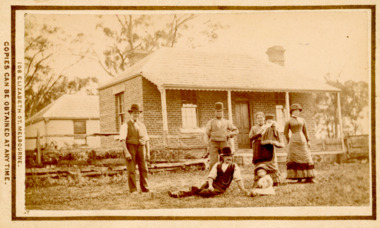 Bacchus Marsh & District Historical Society
Photograph, Tom Oliver and family at Woodside, Parwan 1883
... The farmhouse is a simple rectangular- shaped brick house with two chimneys and a tiled or slate roof. Behind the house can be seen a second building, also one-storeyed with a tiled or slate hip roof. ...The farmhouse is a simple rectangular- shaped brick house with two chimneys and a tiled or slate roof. Behind the house can be seen a second building, also one-storeyed with a tiled or slate hip roof. ...The family in this photograph is believed to be the Oliver family. Thomas Oliver, a farmer, advocated for a school at Parwan near Bacchus Marsh. This image depicts him and members of his family at his property, Woodside in 1883. The Woodside property was formerly owned by John Cook. The Olivers lived at Woodside during the 1870s and 1880s. Thomas Oliver retired around 1888 and moved to 'Elam's Cottage' in Bacchus Marsh. Three months after moving to Bacchus Marsh he died.Small sepia unframed photograph on card with gold border framing photograph. Housed in the album, 'Photographs of Bacchus Marsh and District in 1883 by Stevenson and McNicoll'. An image depicting a family group in front of a farm house. There are three men, two women and two small children standing or lying on a grassed area in front of the house, which has a post-and-rail fence. The farmhouse is a simple rectangular- shaped brick house with two chimneys and a tiled or slate roof. Behind the house can be seen a second building, also one-storeyed with a tiled or slate hip roof. On the front: Stevenson & McNicoll. Photo. 108 Elizabeth St. Melbourne. COPIES CAN BE OBTAINED AT ANY TIME. On the back: LIGHT & TRUTH inscribed on a banner surmounted by a representation of the rising sun. Copies of this Portrait can be had at any time by sending the Name and Post Office Money Order or Stamps for the amount of order to STEVENSON & McNICOLL LATE BENSON & STEVENSON, Photographers. 108 Elizabeth Street, MELBOURNE. stevenson and mcnicoll 1883 photographs of bacchus marsh and district, farms, farmers, oliver family parwan vic. -
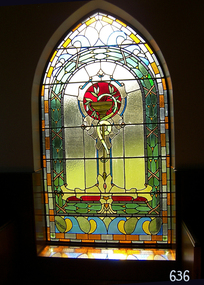 Flagstaff Hill Maritime Museum and Village
Artwork, other - Window, circa 1928
... house social and worshipful activities for seamen. The materials used in the building include sandstone recycled from nineteenth-century buildings demolished in Warrnambool and American slate tiles retrieved from the 1908 wreck of the FALLS OF HALLADALE. ...house social and worshipful activities for seamen. The materials used in the building include sandstone recycled from nineteenth-century buildings demolished in Warrnambool and American slate tiles retrieved from the 1908 wreck of the FALLS OF HALLADALE. ...This religiously themed window is situated in the western (weather) wall of the St. Nicholas Mission to Seamen’s Church building in the Flagstaff Hill Maritime Village. It was crafted circa 1928. ABOUT THE WINDOW This window, once known as the Dr Connell Memorial Window, was a feature of an external wall adjacent to the Women’s Children’s Wards of Warrnambool Hospital. Honorary Doctors had played a significant role in the operation of the hospital between the years 1900 to 1939. One of these doctors was Dr. Connell, who passed away in 1928. The green glass plaque is also a registered object in Flagstaff Hill's Collection. Its inscription dedicates the window to Dr. Connell. The inscription reads: “A tribute to Egbert John Connell M.B.B.S. who for 30 years rendered devoted and valuable service to this institution. Obiit April 4th 1928 A.D." A paragraph in the book ‘A History of the Warrnambool Base Hospital’ by Forth and Yule describes the role of the Honorary Doctors - “At the start of the period the senior-part time medical officer was replaced by the junior resident medical officer and control of beds and the right to operate were given to the honorary medical officers...and these men dominated the Warrnambool medical world in the years before the Second World War.” Dr. Connell leased ‘Ambleside’, 192 Koroit Street, in the early 20th century, following Dr Teed who had previously run his medical practice there. In 1914 Dr Connell purchased the property and continued his private practice there until his death in 1928. He also took a prominent part in hospital work, both as physician and surgeon, and often acted as spokesmen for the Honorary Doctors. According to colleague Dr. Horace Holmes’ subsequent notes, it was after the close of the First World War, and the following years of the world-wide pneumonic influenza epidemic, that Dr. Connell himself contracted pneumonia and died. His family and friends then recognised his work by gifting the memorial window in his honour to the Hospital. By the mid-1970s the old wards at the hospital had been replaced and there was no obvious place for the window. Discussions between the previous and past Hospital managers, the Anglican Diocese, and Flagstaff Hill Planning Board, led to its installation in its present position in St Nicholas Seamen’s Church and the memorial plaque was later installed beside the window. St NICHOLAS SEAMEN’S CHURCH, Anglican Church Flagstaff Hill’s Mission to Seamen was opened in 1981. Its conception was partly motivated by the offer of Stained Glass Memorial Windows from the local Warrnambool and District Base Hospital, which was undergoing multi-storey development in the late 1960’s and early 1970’s. The Manager/Secretary at the time was keen to see the historical windows installed in an appropriate location. The chapel was designed by a local architectural draftsman in conjunction with members of the Planning Board of Flagstaff Hill, and built by Mr Leon Habel. The vision of the designers included the hope that the church be used for formal worship such as weddings and funeral, and for multi-denominational special services such as War commemorations. The design is based on the ‘Mission to Seamen’ buildings in both Portland and Port Melbourne. These types of buildings were often erected to house social and worshipful activities for seamen. The materials used in the building include sandstone recycled from nineteenth-century buildings demolished in Warrnambool and American slate tiles retrieved from the 1908 wreck of the FALLS OF HALLADALE. Most of the chapel furnishings came from the Williamstown Missions to Seamen, which was consecrated in 1946 but later decommissioned. These artefacts range from the altar cloth to the hymn board and include a visually stunning round stained glass widow called ‘Christ Guiding the Helmsman’. However the provenance of this particular artefact, large western window, is local. This stained glass memorial window is of local, historical and social significance, linking local history and heritage with one of Warrnambool's doctors, Dr. Egbert John Connell (d. 1928), who gave 30 years of dedicated, medical service to the local citizens.Stained glass leadlight window in Gothic arched metal frame with six horizontal reinforcing rods. Image depicts a golden flat-bowled baptismal font on a slender stand with foliage proceeding from it. The image is internally framed by a Roman arch of coloured glass and surrounding rectangular and breaking-wave shapes. (The window was previously known locally as the Dr. Connell Memorial Window and a plaque dedicated to Dr. Connell is catalogued separately. See Context notes for details.)flagstaff hill, warrnambool, shipwrecked coast, flagstaff hill maritime museum, maritime museum, shipwreck coast, flagstaff hill maritime village, great ocean road, chapel window, stained glass window, warrnambool and district base hospital, st nicholas mission to seamen’s church, williamstown mission to seamen, dr egbert connell, ambleside warrnambool, leon habel builder, falls of halladale slate, memorial window, commemorative window, dr connell -
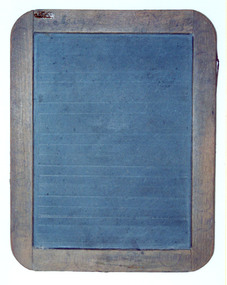 Federation University Historical Collection
Equipment - Writing Slate, Slate Board
... The slate, commonly used in schools, is housed in a timber frame and was used for drawing and writing with a special slate pencil...The slate, commonly used in schools, is housed in a timber frame and was used for drawing and writing with a special slate pencil ...The National School Slate Co. was started in 1847 and was a world importer of slate. They made chalk boards and pencils in Slatington, PennsylvaniaTwo slate boards. The slate, commonly used in schools, is housed in a timber frame and was used for drawing and writing with a special slate pencil. (.1) lines marked on slate. .1) has 'Mary Cook' written on top in pencilschool, education, teaching, slate, black board, mary cook, slate board -
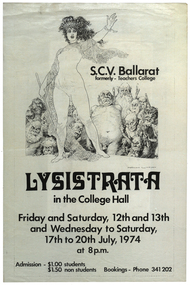 Federation University Historical Collection
Poster, 'Lysistrata ' Production Poster, 1974, 1974
... Slater, Peter Hassell, Errol Elbourne, Peter Orford, Kieth McDougall,Terrence Dorian, Robbie Eastcott, Shane Quick, Gary Oliver. MUSIC, Piano: Robbie Eastcott. Drums: Alex Traianou. Congas: David Murphy. Rhythm Guitar: Kim Hatcher. Bass Guitar: Shane Quick. Clarinet: Steve Albon. Flute: Tina Conroy. Acoustic Guitar: Tony Ryan. TECHNICAL CREW, Lighting: Austin Rickell, Sound: Stuart Tolliday, Keith McIvor, Design: Bruce Miller, Terrence Dorian, Set Construction: Bruce Miller, Terrence Dorian, Ken Jones, Choreograph: Cheryl Brown, Costumes: Gillian Hogan, Mary Staindl, Props: Denise Maroney, Jenny Tait, Publicity and Front of House: Ruth Newall. ...Slater, Peter Hassell, Errol Elbourne, Peter Orford, Kieth McDougall,Terrence Dorian, Robbie Eastcott, Shane Quick, Gary Oliver. MUSIC, Piano: Robbie Eastcott. Drums: Alex Traianou. Congas: David Murphy. Rhythm Guitar: Kim Hatcher. Bass Guitar: Shane Quick. Clarinet: Steve Albon. Flute: Tina Conroy. Acoustic Guitar: Tony Ryan. TECHNICAL CREW, Lighting: Austin Rickell, Sound: Stuart Tolliday, Keith McIvor, Design: Bruce Miller, Terrence Dorian, Set Construction: Bruce Miller, Terrence Dorian, Ken Jones, Choreograph: Cheryl Brown, Costumes: Gillian Hogan, Mary Staindl, Props: Denise Maroney, Jenny Tait, Publicity and Front of House: Ruth Newall. ...White paper poster with black text and drawing of a woman in front of some gruesome looking people. The the poster was for a State College Victoria (formerly Ballarat Teachers' College) production held at the college hall in Gillies Street, Ballarat.Front: "S.C.V. Ballarat, formerly - Teachers Collge, Lysistrata, in the College Hall, Friday and Saturday, 12th and 13th, and Wednesday to Saturday, 17th to 20th July, 1974, at 8 pm, Admission - $1.00 Students, $1.50 non students, Bookings - Phone 341 202" Back: "Lysistrata, by Aristophanes, CAST LIST, Lysistrata: Liz Stubbs, Kalonike: Joy Dunstan, Lampito: Jenny Tait, Myrrhine: Denise Maroney, Stratyllis: Ann Bilston, Interviewer: Tina Conroy, Kinesias: Michael Russo, Police Commisioner: Tony Ryan, Spartan Ambassador: Terrence Dorian, Spartan Herald; Shane Quick. WOMEN'S CHORUS, Sue Richards, Tina Conroy, Ann Bilston, Anne Giles, Glenda Hamilton, Janette Marshall, Gillian Hogan, Janine Grieg, Robyn Stanesby, Stephanie Buchanan, Janeen McCullough, Wendy Gray, Elizabeth Evans, Jenny Tait (Leader of Spartans), Mary Staindl, Barbara Price. MEN'S CHORUS, John Rowe, Stephen Schneider, Chris Slater, Peter Hassell, Errol Elbourne, Peter Orford, Kieth McDougall,Terrence Dorian, Robbie Eastcott, Shane Quick, Gary Oliver. MUSIC, Piano: Robbie Eastcott. Drums: Alex Traianou. Congas: David Murphy. Rhythm Guitar: Kim Hatcher. Bass Guitar: Shane Quick. Clarinet: Steve Albon. Flute: Tina Conroy. Acoustic Guitar: Tony Ryan. TECHNICAL CREW, Lighting: Austin Rickell, Sound: Stuart Tolliday, Keith McIvor, Design: Bruce Miller, Terrence Dorian, Set Construction: Bruce Miller, Terrence Dorian, Ken Jones, Choreograph: Cheryl Brown, Costumes: Gillian Hogan, Mary Staindl, Props: Denise Maroney, Jenny Tait, Publicity and Front of House: Ruth Newall. ACKNOWLEDGEMENTS, Meena Bazaar for the Jug, Turner Audio Systems. DIRECTED BY, Miichael D. Edwards. DIRECTOR'S NOTE, The sexual power of women is all persuasive. If, as Germaine Greer says, they stopped loving the victors, there would be genuine revolution. The idea of a sex strike to stop a war seems preposterous.... What else is left to the aware but politically emasculated woman? Aristophanes, like us, had been appalled by a pointless and hopeless war. Outrageous indignation had failed to stop it - so he resorted to comic absurdity; perhaps to shame the warmakers. Our version of the play is colloquial and probably ' in vogue'. It is colorful, musical, flippant, and not a little risque. It is, however, based on an awareness of the power of sex roles and the arrogance of a male-dominated society and a profound sense of frustration at the apparently immovable forces that make our wars and enact repression in all its forms."ballarat teachers' college, production, state college of victoria, ballarat, gillies street, liz stubbs, joy dunstan, jenny tait, denise maroney, ann bilston, tina conroy, michael russo, tony ryan, terrence doran, shane quick, sue richards, anne gillies, glenda hamilton, janette marshall, gillian hogan, janine grieg, robyn stanseby, stephanie buchanan, janeen mccillough, wendy gray, elizabeth evans, mary staindl, barbara price, john rowe, jeff moore, stephen schneider, chris slater, peter hassell, errol elbourne, peter orford, keith mcdougall, terrance doran, robbie eastcott, gary oliver, david murphy, alex traianou, kim hatcher, steve albon, austin rickell, stuart tolliday, keith mcivor, bruce miller, ken jones, cheryl brown, ruth newall, michael d. edwards, norman lindsay -
 Federation University Historical Collection
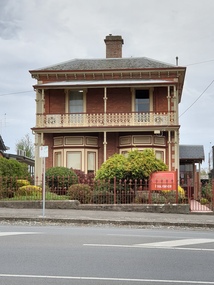
Photograph, Clare Gervasoni, Elders Insurance, 23/04/2022
... Double storey brick house with a slate roof....Elders Insturance architecture Armstrong Street South Ballarat Double storey brick house with a slate roof. Elders Insurance Photograph Clare Gervasoni ...Photographed during the first Covid19 Lockdown.Double storey brick house with a slate roof.elders insturance, architecture, armstrong street south, ballarat -
Federation University Historical Collection
Document - SMB Documents E.J. Barker, Various School of Mines Ballarat Papers collected by E.J. Barker
... House SMB Community Centre Trust News Articles Discovery Day K.J. Flecknoe Retirement Membership of Sub Committee N.A Crouch E.J. Barker K.L. Cross W.J. Gribble l.f.j. Hillman R.C Lovett D. Nicholson G. Robertson p.r. shiells B. Tanner R. Feary I. Harris B.C. McLennan M. Stevens T.A. Wiseman D.R. Bolster P.H. Dixon R. Dunlop R. Furness E.J. Lumsdon a. mccaffrey P.R. Davies D. Farnsworth J. Harrison K. McFarlane J. Mills S.A. Mendelson I. Robinson D.J. Fraser J. Van Dreven K. Alsop B. Bridges M. Palmer R. Sutton L. Snibson H. Van Hammond T. Runnalls P. Sculley G. Shearer T. Slater ...E.J. Barker is a past principal of the School of Mines Ballarat and the Library at the Mt Helen Campus is named after him. School of Mines is a predecessor of Federation UniversityLetters, Reports Plans, Ephemera and Clipboard associated with E.J. Barker and the School of Mines Ballaratplanning requirements, individual rooms, dr ron wild, school of mines and industries ballarat, institute profile, location map, university of ballarat, campus plan, great hall/arts complex, notes, 1970-72 building program, operations and decisions, report to council, visit by principal, priorities, electrical engineering, mt helen, minutes of special council meeting, university of melbourne, engineering, mt helen development report, administration building, technical art school, former ballarat gaol, the court house, smb community centre, trust news, articles, discovery day, k.j. flecknoe, retirement, membership of sub committee, n.a crouch, e.j. barker, k.l. cross, w.j. gribble, l.f.j. hillman, r.c lovett, d. nicholson, g. robertson, p.r. shiells, b. tanner, r. feary, i. harris, b.c. mclennan, m. stevens, t.a. wiseman, d.r. bolster, p.h. dixon, r. dunlop, r. furness, e.j. lumsdon, a. mccaffrey, p.r. davies, d. farnsworth, j. harrison, k. mcfarlane, j. mills, s.a. mendelson, i. robinson, d.j. fraser, j. van dreven, k. alsop, b. bridges, m. palmer, r. sutton, l. snibson, h. van hammond, t. runnalls, p. sculley, g. shearer, t. slater, michael ronaldson, robert lovett, edward john barker, e.j. barker building, council membership, clipboard, n.g curry, state college of victoria, articles of association, memorandum, australian conference of principles of colleges of advanced education, commonwealth ministerial working party, victorian post secondary education commission, australian institute of physics symposium, royal australian institute of public administration, premier of victoria, r.j. hamer, m.b. john, new south wales institute of technology, phone messages, peter o'loughlin, annual report, signing of agreement, position description, certificates, fifth form -
 Flagstaff Hill Maritime Museum and Village
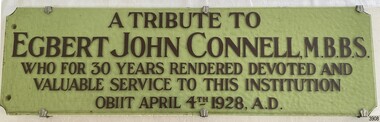
Plaque - Commemorative, circa 1928
... house social and worshipful activities for seamen. The materials used in the building include sandstone recycled from nineteenth-century buildings demolished in Warrnambool and American slate tiles retrieved from the 1908 wreck of the FALLS OF HALLADALE. ...house social and worshipful activities for seamen. The materials used in the building include sandstone recycled from nineteenth-century buildings demolished in Warrnambool and American slate tiles retrieved from the 1908 wreck of the FALLS OF HALLADALE. ...This commemorative plaque refers to the religiously themed window situated in the western (weather) wall of the St. Nicholas Mission to Seamen’s Church building in the Flagstaff Hill Maritime Village. It was crafted circa 1928. ABOUT THE WINDOW The window, to which this plaque belongs was once known as the Dr Connell Memorial Window, which was a feature of an external wall adjacent to the Women’s Children’s Wards of Warrnambool Hospital. Honorary Doctors had played a significant role in the operation of the hospital between the years 1900 to 1939. One of these doctors was Dr. Connell, who passed away in 1928. A paragraph in the book ‘A History of the Warrnambool Base Hospital’ by Forth and Yule describes the role of the Honorary Doctors - “At the start of the period the senior-part time medical officer was replaced by the junior resident medical officer and control of beds and the right to operate were given to the honorary medical officers...and these men dominated the Warrnambool medical world in the years before the Second World War.” Dr. Connell leased ‘Ambleside’, 192 Koroit Street, in the early 20th century, following Dr Teed who had previously run his medical practice there. In 1914 Dr Connell purchased the property and continued his private practice there until his death in 1928. He also took a prominent part in hospital work, both as physician and surgeon, and often acted as spokesmen for the Honorary Doctors. According to colleague Dr. Horace Holmes’ subsequent notes, it was after the close of the First World War, and the following years of the world-wide pneumonic influenza epidemic, that Dr. Connell himself contracted pneumonia and died. His family and friends then recognised his work by gifting the memorial window in his honour to the Hospital. By the mid-1970s the old wards at the hospital had been replaced and there was no obvious place for the window. Discussions between the previous and past Hospital managers, the Anglican Diocese, and Flagstaff Hill Planning Board, led to its installation in its present position in St Nicholas Seamen’s Church. It was installed without the bottom section of stained glass, which was inscribed as a memorial to Dr. Connell. St NICHOLAS SEAMEN’S CHURCH, Anglican Church Flagstaff Hill’s Mission to Seamen was opened in 1981. Its conception was partly motivated by the offer of Stained Glass Memorial Windows from the local Warrnambool and District Base Hospital, which was undergoing multi-storey development in the late 1960’s and early 1970’s. The Manager/Secretary at the time was keen to see the historical windows installed in an appropriate location. The chapel was designed by a local architectural draftsman in conjunction with members of the Planning Board of Flagstaff Hill, and built by Mr Leon Habel. The vision of the designers included the hope that the church be used for formal worship such as weddings and funeral, and for multi-denominational special services such as War commemorations. The design is based on the ‘Mission to Seamen’ buildings in both Portland and Port Melbourne. These types of buildings were often erected to house social and worshipful activities for seamen. The materials used in the building include sandstone recycled from nineteenth-century buildings demolished in Warrnambool and American slate tiles retrieved from the 1908 wreck of the FALLS OF HALLADALE. Most of the chapel furnishings came from the Williamstown Missions to Seamen, which was consecrated in 1946 but later decommissioned. These artefacts range from the altar cloth to the hymn board and include a visually stunning round stained glass widow called ‘Christ Guiding the Helmsman’. However the provenance of this particular artefact, large western window, is local.This plaque is significant because of its association with stained glass memorial window is of local, historical and social significance, linking local history and heritage with one of Warrnambool's doctors, Dr. Egbert John Connell (d. 1928), who gave 30 years of dedicated, medical service to the local citizens.Plaque, opaque, pale green glass rectangle mounted on white timber board and held in place with six decorative silver coloured clasps. Five rows of printed, capitalised text are fixed on the top surface. The plaque is companion to the commemorative, stained glass window installed in the St. Nicholas Mission to Seamen's Church at Flagstaff Hill. (The window was previously known locally as the Dr. Connell Memorial Window.)"A TRIBUTE TO / EGBERT JOHN CONNELL, M.B.B.S. / WHO FOR 30 YEARS RENDERED DEVOTED AND / VALUABLE SERVICE TO THIS INSTITUTION / OBIIT APRIL 4th 1928, A.D."flagstaff hill, warrnambool, shipwrecked coast, flagstaff hill maritime museum, maritime museum, shipwreck coast, flagstaff hill maritime village, great ocean road, chapel window, stained glass window, warrnambool and district base hospital, st nicholas mission to seamen’s church, williamstown mission to seamen, dr egbert connell, ambleside warrnambool, leon habel builder, falls of halladale slate, memorial window, commemorative window, dr connell, commemorative plaque, plaque, edgar mcconnell -
 Flagstaff Hill Maritime Museum and Village
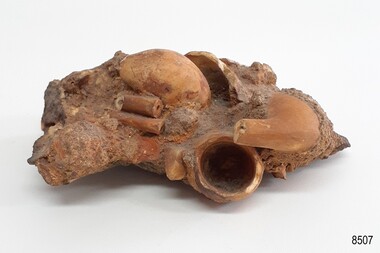
Leisure object - Tobacco Pipes, circa 1869
... Houses of Parliament and owned by the White Star line. The Victoria Tower sailed under the command of Captain Kerr from Liverpool towards Melbourne on its maiden voyage with 4 passengers and 16 crew plus a general cargo including bottled beer, slates, iron pipes and hardware. ...Houses of Parliament and owned by the White Star line. The Victoria Tower sailed under the command of Captain Kerr from Liverpool towards Melbourne on its maiden voyage with 4 passengers and 16 crew plus a general cargo including bottled beer, slates, iron pipes and hardware. ...This concretion of tobacco pipes is one of a group of artefacts in the McCulloch Collection. It was recovered from the shipwreck of the Victoria Tower. The pipes may have been amongst the ship's cargo, but could have been included in a passenger’s personal effects. The object is now one of the shipwreck artefacts in Flagstaff Hill’s Mc Culloch Collection, which includes items recovered from the wrecks of the Victoria Tower (wrecked in 1869) and Loch Ard (wrecked in 1878). They were salvaged by a diver in the early 1970s from the southwest coast of Victoria. Advanced marine technology had enabled divers to explore the depths of the ocean and gather its treasures before the Government introduced protective legislation. The artefacts were donated to the Queensland Department of Environment and Heritage Protection (EHP) by a passionate shipwreck lover. Bruce McCulloch verified their locations. In 2017, the Department repatriated them to Flagstaff Hill, where they joined our vast collection of artefacts from Victoria’s Shipwreck Coast. The Victoria Tower: - The three-masted iron clipper ship was built in 1869 in Liverpool, England, as a passenger and cargo ship for the Australian trade. It was named after one of the two towers of the British Houses of Parliament and owned by the White Star line. The Victoria Tower sailed under the command of Captain Kerr from Liverpool towards Melbourne on its maiden voyage with 4 passengers and 16 crew plus a general cargo including bottled beer, slates, iron pipes and hardware. It was almost at her destination when, on 17th October, 1869, it was wrecked at Point Impossible, west of Thompsons Creek, Breamlea, near Torquay. The shipwreck is a very popular dive site.The artefact is an example of cargo or personal items on board a ship in 1869. It provides a reference point for classifying and dating similar items. This artefact is significant for its association with the British-built, iron clipper ship Victoria Tower, a commercial and immigrant sailing ship constructed to carry cargo and passengers to colonial Australia. The vessel is recorded on the Victoria Heritage Database, VHR S698.Concretion of clay tobacco pipes. Bowls and stems of several broken orange tobacco pipes are joined together in ac irregularly shaped clump of concretion from the sea. The concretion also contains stones, shells, sand and particles of seaweed. It was recovered wreck of the ship Victoria Tower.flagstaff hill, warrnambool, maritime village, maritime museum, flagstaff hill maritime museum and village, shipwreck coast, great ocean road, shipwreck artefact, wreck dive, mcculloch collection, bruce mcculloch, white star line, victorian heritage register, clipper ship, victoria tower, captain kerr, shipwreck victoria tower, migrant ship 1869, cargo ship 1869, iron clipper, british clipper ship, 1869, cargo imported to australia, pipe cluster, concretion of pipes, pipe, ceramic pipes, tobacco pipes, smoker's pipes, southwest coast victoria, torquay, diver, evans, liverpool, sailing ship, iron hull, migrant ship, cargo ship, 1869 shipwreck -
 Flagstaff Hill Maritime Museum and Village
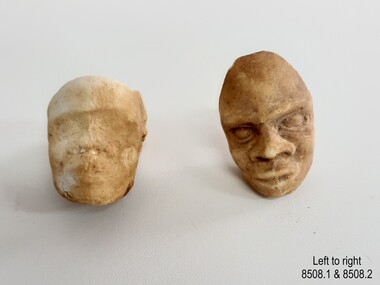
Leisure object - Tobacco Pipe Heads, circa 1869
... Houses of Parliament and owned by the White Star line. The Victoria Tower sailed under the command of Captain Kerr from Liverpool towards Melbourne on its maiden voyage with 4 passengers and 16 crew plus a general cargo including bottled beer, slates, iron pipes and hardware. ...Houses of Parliament and owned by the White Star line. The Victoria Tower sailed under the command of Captain Kerr from Liverpool towards Melbourne on its maiden voyage with 4 passengers and 16 crew plus a general cargo including bottled beer, slates, iron pipes and hardware. ...These tobacco pipe heads are one of a group of artefacts in the McCulloch Collection that were recovered from the shipwreck Victoria Tower and were donated together. The pipe heads could have been from the ship's cargo or amongst a passenger’s personal belongings. The stems of the clay pipes would have been easily broken during the 100 or so years they were under the sea. Other tobacco pipes in our collection were recovered from the Victoria Tower and the Loch Ard. The object is now one of the shipwreck artefacts in Flagstaff Hill’s Mc Culloch Collection, which includes items recovered from the wrecks of the Victoria Tower (wrecked in 1869) and Loch Ard (wrecked in 1878). They were salvaged by a diver in the early 1970s from the southwest coast of Victoria. Advanced marine technology had enabled divers to explore the depths of the ocean and gather its treasures before the Government introduced protective legislation. The artefacts were donated to the Queensland Department of Environment and Heritage Protection (EHP) by a passionate shipwreck lover. Bruce McCulloch verified their locations. In 2017, the Department repatriated them to Flagstaff Hill, where they joined our vast collection of artefacts from Victoria’s Shipwreck Coast. The Victoria Tower: - The three-masted iron clipper ship was built in 1869 in Liverpool, England, as a passenger and cargo ship for the Australian trade. It was named after one of the two towers of the British Houses of Parliament and owned by the White Star line. The Victoria Tower sailed under the command of Captain Kerr from Liverpool towards Melbourne on its maiden voyage with 4 passengers and 16 crew plus a general cargo including bottled beer, slates, iron pipes and hardware. It was almost at her destination when, on 17th October 1869, it was wrecked at Point Impossible, west of Thompsons Creek, Breamlea, near Torquay. The shipwreck is a very popular dive site. The artefact is an example of cargo or personal items on board a ship in 1869. It provides a reference point for classifying and dating similar items. This artefact is significant for its association with the British-built, iron clipper ship Victoria Tower, a commercial and immigrant sailing ship constructed to carry cargo and passengers to colonial Australia. The vessel is recorded on the Victoria Heritage Database, VHR S698. Tobacco pipe heads, two(2); bowls of white unglased clay tobacco pipes. Pipe bowls are each decorated with the image of a Negro slave head moulded into it and facing away from the smoker. The pipe heads have no stems. Both have a vertical line down the centre of the face, broad nostrils, sunken eyes, and recessed hair. 8508.1 - features are worn, but the ear is distinct, forehead bare, eyes sunken. The bowl is complete. 8508.2 - features are distinct, eyes closed, thick, broad lips. The back section of the bowl is missing. The items were recovered from the wreck of the ship Victoria Tower.white star line, victorian heritage register, clipper ship, victoria tower, captain kerr, shipwreck victoria tower, migrant ship 1869, cargo ship 1869, iron clipper, british clipper ship, 1869, cargo imported to australia, pipe heads, clay pipe fragments, pipe, ceramic pipe, clay pipe, smoker’s pipe, smoking accessory, tobacco pipe, smoker's pipe, personal effects, tobacco, smoking pipe, smoking tool, smoking habit, smoker, tobacco smoker, tobacco pipe heads, flagstaff hill maritime museum and village, warrnambool, great ocean road, maritime museum, shipwreck artefact, southwest coast victoria, shipwreck coast, torquay, diver, bruce mcculloch, evans, liverpool, sailing ship, iron hull, migrant ship, cargo ship, 1869 shipwreck -
 Flagstaff Hill Maritime Museum and Village
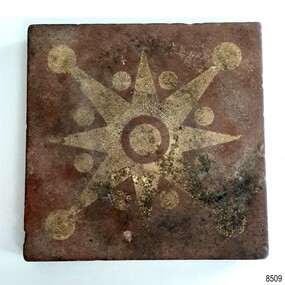
Ceramic - Floor Tile, Maw & Co, 1862-1869
... Houses of Parliament and owned by the White Star line. The Victoria Tower sailed under the command of Captain Kerr from Liverpool towards Melbourne on its maiden voyage with 4 passengers and 16 crew plus a general cargo including bottled beer, slates, iron pipes and hardware. ...Houses of Parliament and owned by the White Star line. The Victoria Tower sailed under the command of Captain Kerr from Liverpool towards Melbourne on its maiden voyage with 4 passengers and 16 crew plus a general cargo including bottled beer, slates, iron pipes and hardware. ...The floor tile is one of a group of artefacts in the McCulloch Collection that were recovered from the shipwreck Victoria Tower and were donated together. The tile could have been from the ship's cargo or amongst the ship’s fittings. It was made by Maw & Co., of Broseley, England, makers of earthenware encaustic and geometric floor tiles. In 1850, George Maw and his brother Arthur began their first factory in Worcester, and in 1862, the company moved to Broseley, Shropshire. The object is now one of the shipwreck artefacts in Flagstaff Hill’s McCulloch Collection, which includes other items recovered from the Victoria Tower, built in Liverpool by Evans in 1969, and wrecked the same year near Torquay, Victoria, on its maiden voyage. A diver salvaged the objects in the early 1970s while working along the southwest coast of Victoria. Advanced marine technology had enabled divers to explore the depths of the ocean and gather its treasures before the Government introduced protective legislation. The artefacts were donated to the Queensland Department of Environment and Heritage Protection (EHP) by a passionate shipwreck lover. Bruce McCulloch verified their locations. In 2017, the Department repatriated them to Flagstaff Hill, where they joined our vast collection of artefacts from Victoria’s Shipwreck Coast. The Victoria Tower: - The three-masted iron clipper ship was built in 1869 in Liverpool, England, as a passenger and cargo ship for the Australian trade. It was named after one of the two towers of the British Houses of Parliament and owned by the White Star line. The Victoria Tower sailed under the command of Captain Kerr from Liverpool towards Melbourne on its maiden voyage with 4 passengers and 16 crew plus a general cargo including bottled beer, slates, iron pipes and hardware. It was almost at her destination when, on 17th October 1869, it was wrecked at Point Impossible, west of Thompsons Creek, Breamlea, near Torquay. The shipwreck is a very popular dive site. The artefact is an example of cargo or personal items on board a ship in 1869. It provides a reference point for classifying and dating similar items. This artefact is significant for its association with the British-built, iron clipper ship Victoria Tower, a commercial and immigrant sailing ship constructed to carry cargo and passengers to colonial Australia. The vessel is recorded on the Victoria Heritage Database, VHR S698. Ceramic tile, square, with star or compass design. The brown floor tile has a cream design of a pointed star with a circle in its centre and between, and on the end of, each point. The side profile of the tile shows the division between the top layer and the base, with a groove between the two. The back of the tile has parallel ridges and is embossed with an inscription. The tile was made by MAW & Co. of Broseley, England, and was recovered from the wrecked ship Victoria Tower. Inscribed "MAW & CO BROSELEY" flagstaff hill, warrnambool, maritime village, maritime museum, flagstaff hill maritime museum and village, shipwreck coast, great ocean road, shipwreck artefact, wreck dive, mcculloch collection, bruce mcculloch, white star line, victorian heritage register, clipper ship, victoria tower, captain kerr, shipwreck victoria tower, migrant ship 1869, cargo ship 1869, iron clipper, british clipper ship, 1869, cargo imported to australia, tile, floor tile, ceramic tile, compass pattern, star pattern, flooring, george maw, arthur maw, maw & co., beverley, worcester, made in england -
 Glenelg Shire Council Cultural Collection
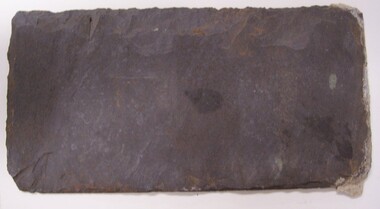
Domestic object - Slate Tile, n.d
... Displayed in History House. Slate tile used to cover lid of George V Monument time capsule (June 1911). ...Displayed in History House.Slate tile used to cover lid of George V Monument time capsule (June 1911). -
Glenelg Shire Council Cultural Collection
Photograph - Photograph - 'Stanton Drew', Portland, n.d
... house is an undistinguished design most notable for its associations with Western District pastoralist Alexander Davidson. No important historical associations are apparent, although the Davidson family lived in the residence until c.1908. Stanton Drew is in an extremely dilapidated state and has suffered badly form subsidence and lack of regular maintenance. The slate...house is an undistinguished design most notable for its associations with Western District pastoralist Alexander Davidson. No important historical associations are apparent, although the Davidson family lived in the residence until c.1908. Stanton Drew is in an extremely dilapidated state and has suffered badly form subsidence and lack of regular maintenance. The slate ...Stanton Drew was a two storey stucco rendered bluestone house was constructed in 1864 for Major Alexander Davidson, a Scottish born pastoralist who had earlier in 1848 settled on the Wando River near Casterton. Stanton Drew is a characteristic pattern book, regency gothic villa and virtually devoid of ornamentation save for unusually fenestrated bay windows and window label mouldings. Stanton Drew is a late example in Victoria of the primitive regency gothic style of villa architecture popularised by pattern books of the period 1840-60. The two storey house is an undistinguished design most notable for its associations with Western District pastoralist Alexander Davidson. No important historical associations are apparent, although the Davidson family lived in the residence until c.1908. Stanton Drew is in an extremely dilapidated state and has suffered badly form subsidence and lack of regular maintenance. The slate roof has been replaced with iron. The house was originally named Wando Villa by Davidson in memory of his time at Wando River. The house was renamed in 1938.Black and white photo. View of the front of 'Stanton-Drew' house, Portland.Back: 'STANTON-DREW, PORTLAND, VICTORIA, 1971' -handwritten black biro. Purple stamp 'ALEX PRIESTLEY BOX 155 PHONE 309 HEYWOOD VIC 3304'historic homestead, bluestone building, alexander davidson, pastoralist -
 Glenelg Shire Council Cultural Collection
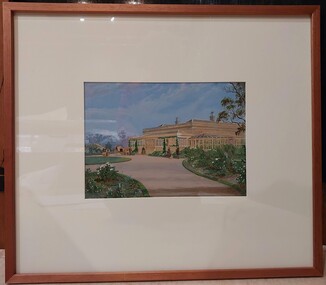
Painting, a) Johnston & Co. Hamilton b) Johnstone O'Shannessy, Melbourne, Burswood, late 1800s
... From Victorian Heritage: The single storey mansion house with enclosed glass verandah, Burswood was built in 1853 on a site overlooking the Portland Bay for English born pioneer colonist Edward Henty. John Barrow of Adelaide was the architect for this exceptional Australian regency style residence which he designed as a central block of fine axed basalt ashlar and slate roof (now replaced) with flanking brick wings forming an enclosed rear courtyard. ...From Victorian Heritage: The single storey mansion house with enclosed glass verandah, Burswood was built in 1853 on a site overlooking the Portland Bay for English born pioneer colonist Edward Henty. John Barrow of Adelaide was the architect for this exceptional Australian regency style residence which he designed as a central block of fine axed basalt ashlar and slate roof (now replaced) with flanking brick wings forming an enclosed rear courtyard. ...From Victorian Heritage: The single storey mansion house with enclosed glass verandah, Burswood was built in 1853 on a site overlooking the Portland Bay for English born pioneer colonist Edward Henty. John Barrow of Adelaide was the architect for this exceptional Australian regency style residence which he designed as a central block of fine axed basalt ashlar and slate roof (now replaced) with flanking brick wings forming an enclosed rear courtyard. Burswood is the most important early mansion house in western Victoria, being an exceptional Australian regency design by distinguished colonial architect James Barrow. Edward Henty, a member of one of Australia's most remarkable colonial families and the founder of Portland, established the first permanent settlement in Victoria on 19th November 1834, and Burswood is testimony to his success as an early colonist. Henty lived in his mansion for 17 years in a semi-regal state. Burswood has been little altered since completion in 1853. A glasshouse conservatory to the side of the present enclosed verandah was demolished prior to 1895 and the slate roof replaced with iron. Johnstone, O’Shannessy & Co was a leading photographic studio located in Melbourne, Victoria, Australia. It was active from 1865 to 1905. Henry James Johnstone was also an artist and studied at Louis Buvelot's school and with Thomas Clark.Painting of a sandstone coloured building. A grand house with a driveway and well-kept gardens to the front. There is a horse and cart with a man standing to the side of it. There is a female figure exiting the building and another female and a man further along the driveway with a dog. The building has a glass conservatory attached to the side. The sky is blue with several fluffy clouds.Bottom right: Johnstone O'Shannessy & Co Melbourne (in white paint)homestead, henty, historic buildings, colonial, burswood house -
 Australian National Surfing Museum
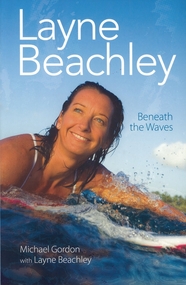
Book, Ebury Press/Random House Australia, Layne Beachley - Beneath the Waves
... slater stephanie gilmore lisa anderson michael gordon ken bradshaw kirk pengilly Book title, author name. Colour cover with a close up photographic image of a smiling Layne Beachley paddling into a wave. Layne Beachley - Beneath the Waves Book Ebury Press/Random House ...Authorised biography on Australia's Layne Beachley the most successful female surfer in the history of the sport. This book follows her story as she strives to overcome the obstacles of injury, chronic fatigue and family tragedy to achieve success in the male dominated sport of surfing.The first biography on seven times, World Surfing Champion Layne Beachley, one of the most succesful female athletes in the history of modern sport. Written by award winning journalist and surfer Michael Gordon.Colour cover with a close up photographic image of a smiling Layne Beachley paddling into a wave.Book title, author name.layne beachley, kelly slater, stephanie gilmore, lisa anderson, michael gordon, ken bradshaw, kirk pengilly -
 Ringwood and District Historical Society
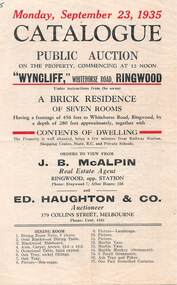
Flyer - Catalogue, Public Auction - Brick Residence and Contents of Dwelling, "Wyncliff", Whitehorse Road, Ringwood. 1935
... Slate; Crystal Radio Set; New Canvas Blind & Roller 6ft.; Electric Light Reflectors (two); Two pieces of Painted Baize; Small Vice; Sprinkler; One Gallon Tin of Spray Oil; 2 Packets of "Aresto"; Two Hurricane Lamps; One Pair Spring Balance Scales; Small Pair Spring Balance Scales. WASH HOUSE...Slate; Crystal Radio Set; New Canvas Blind & Roller 6ft.; Electric Light Reflectors (two); Two pieces of Painted Baize; Small Vice; Sprinkler; One Gallon Tin of Spray Oil; 2 Packets of "Aresto"; Two Hurricane Lamps; One Pair Spring Balance Scales; Small Pair Spring Balance Scales. WASH HOUSE ...Double-sided A5 size advertisement for public auction under instructions from the owner on Monday, September 23, 1935 on the property - seven room brick residence with frontage 456 feet by approximately 280 feet and contentents of dwelling fully listed over 4 pages. Agent - J.B. McAlpin, Ringwood, opp. station. Phone Ringwood 7; after houres 236. Auctioneer - ED. Haughton & Co., 379 Collins Street, Melbourne. Phone Central 4101.Contents of Dwelling List - includes: DINING ROOM - Dining Room Suite - 6 pieces; Oval Blackwood Dining Table; Blackwood Sideboard; Axminster Carpet, Occasional Table hand carved; Oak Trays; Seascape, Landscape and other Pictures; 2 Marble Vases; Marble Monkey and 3 other Small Ornaments; Ash Tray and Poker; One Pair Stencilled Curtains. Two Large Vases, 1 with floral design; Salad Bowl and Servers; One Dozen Dessert Knives; Nine Stainless Teaspoons (new); Plated Vases; Plated Jam Dishes; Plated Cream Bowl; Silver Plated Cake Dish; One Pair Plated Shell Butter Dishes; Lino Border. LOUNGE ROOM - 2 Pictures and 1 pair with Circular Frames; Floral Jardinere and Pot Plant; Cabinet Gramophone "Singola"; Records; Player Piano "Cable"; Piano Stool; 31 Rolls; Roll Cabinet; Quantity of Music; Music Case, Leather; Portable Gramophone "Decca"; Floral Design Jardinere; Wicker Occasional Table; 2 Wicker Chairs; Cane Lounge Settee; Blackwood Bookcase; 9 Volumes Universal Encyclopedia; 10 Vols Children's Encyclopedia; Floral Vase; Black and Gold Vase; One pair Plated Vases; Ash Pan; Lino Border (Lounge Room); One Carpet, green 13.6 x 10.6; One Cushion; Hall Stand; Pedestal; Floral Design Jardinere; Painting on Canvas (Landscape); Hall Runner Carpet 25 feet; Hall Lino 29ft 5 in.; Five Door Mats (small). FIRST BEDROOM - Arm Chair (Leather); English Oak Dressing Table; English Oak Wash Stand Marble Top; Toilet Set (Four pieces); Silk Fire Screen; Blackwood Occasional Table; Black and Gold Vase; Pair China Vases; Pair Glass Vases; Single Glass Vase; One Kewpie Lavender Bag; Bedroom Lino 15.6 x 13.6. SECOND BEDROOM - Arm Chair (Leather); Dressing Table; Wash Stand; 3 Piece Toilet Set; One Vase (Pink Cameo Design); Two Ornaments (one round); Bedroom Lino 13.5 x 12.10; 3 Pictures; 2 Pairs Curtains (applique, stenc'ld); Pair Curtain Poles. THIRD BEDROOM - Lino approx 14ft x 10ft; Two Green Mohair Mats; Pair Pictures (White frames); One Picture ("The Mourners"); Picture ("The Wanderer Found"); Small Picture; Wicker Chair. FOURTH BEDROOM - Duchess Chest 5 drawers; Corner Wardrobe and Curtains; One Single Bed & Wire Mattress; Single Bedding; Lino on floor 14ft x 6ft 6in.; Occasional Table; 3 Pictures; Two Door Mats; Hall Runner (Carpet) 21ft. BREAKFAST ROOM - Two Wicker Chairs; Cushion; Brown Cushion; Four Vienna Chairs; Jardinere; Kerb (Wooden). 3 Pictures; Oil Painting (Canvas); 2 Pictures; Lino 14ft x 14ft; Brown Table Cover; Fruit Set; Robur Tea Pot; Plaque; China Biscuit Barrel; Glass Fruit Bowl; Pair Pickle Jars and Stand; Wooden Inkstand; Pair Ash Trays; Two Marble Vases; Glass Vase; Electric Jug and Electric Toaster (practically new); Picture; Cushion; Pair Lace Curtains; Curtain Rod; Three Lace Curtains; Brass Curtain Rods (3); Lino in Vestibule 10ft x 8 ft; Lino in Kitchen 12.6 x8.6; Coal Scuttle; Two Small Tables (1 Baize Cover). STORE ROOM - Briquette Grate; Three Coir Mats (one new); Three Small Door Mats (new); Glass Fire Screen; 2 Alm Pot Stands; Steel Pot Stand; Lady's Bicycle; 2 Electric Radiators (one large); White Cabinet; Stretcher Bed; Large Cot with Wire Mattress; Kerb; Fender and Irons; Lino on floor 12ft x 12ft; Lino in Storeroom 6ft x 6ft; Three Large Window Blinds; Clothes Horse; Dressmaker's Fitting Stand; Dressmaker's Bust; Window Display Bust; Blouse Stand; Small Display Stand; Meat Cover (Metal); Leather Portmantau; Leather Kit Bag; Four Large Wooden Drawers; Picnic Basket; Mattress, Bolster and Pillow; Cot Quilt; One Long-handled Feather Duster; Feather Duster; Wicker Lounge; Cane Soiled Linen Basket; One New Washing Tub; Copper Preserving Pan; Lino in Laundry 8 x 6 approx; Carpet Sweeper; Small Jardinere; 2 Shopping Baskets; Kitchen Safe; Kitchen Table; Three Buckets; 1 Horse Rub patent (prac new); Wooden Pot Plant Stand; Bird Cage and Stand; Pair Steps; Pair Small Steps; Metal Meat Safe; Wooden Safe; Hand worked Table Cover; Pair Poplin Silk Curtains (new); Leather Table Centre. VERANDAH - 12ft Shelving with doors; 35ft Shelving; Wooden Stand; Axe Stand (wooden); Nine feet Wooden Shop Fittings; Small Filing Cabinet; Three Window Frames & Glass; 38 Pot Plants Fernery; 9 Hanging Baskets Fernery; Electric Shop Sgn Storeroom; 2 Small Electric Shop Signs Storeroom; 2 Garden Sprays; Doll's Pram and Doll; Two Boxes Paint and Slate; Crystal Radio Set; New Canvas Blind & Roller 6ft.; Electric Light Reflectors (two); Two pieces of Painted Baize; Small Vice; Sprinkler; One Gallon Tin of Spray Oil; 2 Packets of "Aresto"; Two Hurricane Lamps; One Pair Spring Balance Scales; Small Pair Spring Balance Scales. WASH HOUSE - Pair Heavy Tracers (2); Pair Reins; Back Band; One Tug; Pair Hames; One Pair Neck Bands (2); Four Manger Balls; Pair Knee Pads; Kicking Strap complete; Leather Head Stall; Collar Pad; Knife Board and Tin Polish; Fork Cleaner; Foot Spray Pump. TOOL SHED - One Stewart Horse Clipper; Approx 120ft Ribbed Hose; 100ft ½in Hose; Child's Scooter; Tin Box; Ferret Box; One Tool Box; Tomato Hoe; Sprinkler; Two Large Augers; Large Watering Can; Medium Watering Can; Small Watering Can; Wooden Tool Chest; Rope, Tackle and two Pulleys; Six pieces of Lino; Three Small Canvas Blinds; Lawn Mower 14in.; Lawn Mower 12in.; Grass Catcher; 8 Pieces Garden Tools; Barrow; Quantity of Timber; Quantity of Flower Pots; Quantity of Wire; 4 Egg & 1 Fowl Crates Feed Room; 1 Gallon Demijohn Feed Room; Quantity of Shelving Feed Room; Quantity of Cement, Lime; Six Small Doors; Roll of Perforated Cardboard; Boot Rack; Coat Rack; 3 Automatic Sanitary Disinfectant; Pair Neck Straps and Rope; One Chimney Top & 3 Vent Bks.; Desk; Large Pump; Large Safe; Pair Sliding Door Rollers & Fittings; Two Wooden Doors; Box Sundries; Wooden Frame and Glass; 2 Vienna Chairs; Delivery Cart; Five Boxes Tiles; Quantity Agricultural Pipes; Wooden Bench; Wood Horse; Earthenware Drain Pipe; Wooden Tool Box; New Brass Spray "Rego"; Two Wood Planes. YARD - Pair Hedge Clippers; Box Containing 2 prs Secateurs & Punch; Box Tools seven pieces; Box Sundries; Lawn Weeder and Seed Sower; Box Tools 6 pieces; Two Saws; Bundle Files; Three Braces; Box of 13 pieces Gimlets etc.; Five Spanners; Box Tools 4 pieces; Four Coal Chisels; Box 7 pieces of Tools; Box of 5 pieces of Tools; Box of Docket Books; One Printing set; Large Figure Printing Set; Small Figure Printing set; Price Ticket Box; Air Brush Writing Set Complete; Six Shelves & Brackets, one Hat Rack, in store room; Box of Three Hammers; Two Boot Lasts; Tin of Polishing Oil; Box of Gardening Sundries; 2 Bicycle Pumps Saddle & Clips; One Covered Baking Dish; 200 c.p. Globe (Vestibule); Two "Dimolite" Fittings; Set of Five Canisters; Earthernware Jar; Two shopping Cases; Dinner Set 11 pieces; Box of Sundry Tins; Alm Fish Pan and Drainer; Two Ventilators; Knife Board & 3 Bread Saws; Soap Box and Jewel Case; Three Glass Articles. OFFICE FURNITURE - Steel Safe (Office Safe); Office Table five drawers; Cabinet 8 drawers; Cupboard three shelves; Selves 2ft3in x 1ft6in; Cheque Protector; Remington Typewriter; Typewriter Adjustable Table; Burroughs Bookkeeping Machine and Stand Complete; Small Office Table; Glass Show Case3ft9 x 2ft.; Four Sheets M. Glass; Five Sheets P. Glass; Gent's Overcoat new; Boy's Pullover New; Small Show Case; Duplicator (complete); Webster's Dictionary; Family doctor's Book. Two Dictionaries; Bundle of Three Books; Art Decorating Book; Bundle of Three Books; Bundle of Three Books; Two Books (Children's); (Multiple) Bundles each containing Three Books; Leather Riding Whip; Tort-shell Inkstand & Calendar; Tort-shell Folding Letter Rack; Water Filter; Thermos Flask and Case; Two Waste Paper Baskets.
