
Showing 77 items matching "somers school camp"
-
 Melbourne Legacy
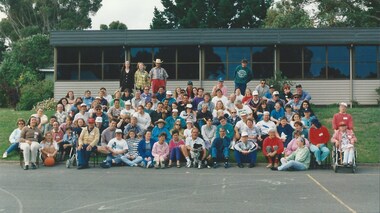
Photograph, HDC Camp 1992, 1992
... ...Somers School Camp...Once a year there is a two week camp, this is believed to be Somers School Camp. These photos are from 1992. An article in the widows' newsletter in 1992 explains more detail on the 1992 camp. ...Once a year there is a two week camp, this is believed to be Somers School Camp. These photos are from 1992. An article in the widows' newsletter in 1992 explains more detail on the 1992 camp. ...Every month Legacy's handicapped dependents are invited to go on outing for take part in recreational and educational activities. These programmes aim to develop independence and thus lessen the need for reliance on others for simple routine functions. Once a year there is a two week camp, this is believed to be Somers School Camp. These photos are from 1992. An article in the widows' newsletter in 1992 explains more detail on the 1992 camp. The article mentions that the annual camps run for two weeks at Somers Camp. It is a wonderful gathering of Junior Legatees, Legatees, and dedicated helpers. 50 junior legatees attended this camp (in 1992) with the personal attention almost one-to-one. With ages ranging from 22 to into the 60s, Legacy has to ensure it caters for the differing needs. Legatees headed by Camp Chief, Jim Hammon and Chairman of the Handicapped Dependents Committee, Merv Tickell, were supported by two Camp Co-Ordinators and 50 helpers known as 'leaders'. Many of the leaders are people in the workforce wishing to give something back to the community. Junior Legatees are organised into groups. They participate in horse-riding, swimming, golfing, strawberry picking, and many other activities. Photos were in a scrapbook of photos spanning 1983 to 1991.A record of the type of activities Legacy provided for the handicapped dependents of the Legacy families. Colour photo x 5 of the HDC camp in January 1992 and a white paper label.Label says 'January is holiday time for Legacy's Junior Legatees. Children aged 7 to 17 join together for a 10 day action packed holiday at Camp Howqua and Legacy's disabled dependants enjoy quality time at Somers Camp. Legatees, members of the Melbourne Legacy Leadership Group and volunteer helpers ensure all have a memorable time.'camp, handicapped dependents, somers school camp -
 Sunbury Family History and Heritage Society Inc.
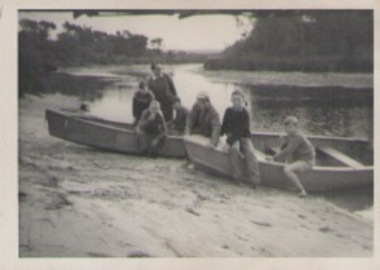
Photograph, Somers Camp, 1961
... Somers Camp...School...The six boys were from Bulla State School and with their teacher, Mr. Clifford, were attending the Somers Camp in 1961. ...The camp was owned by the Education Department and ran school camps for Grade 5 and 6 children attending Victorian State Schools. The children with their teacher were preparing to go rowing on the river. Somers ...The six boys were from Bulla State School and with their teacher, Mr. Clifford, were attending the Somers Camp in 1961. The camp was owned by the Education Department and ran school camps for Grade 5 and 6 children attending Victorian State Schools. The children with their teacher were preparing to go rowing on the river.A black and white photograph with a cream border of six children and an adult with two rowing boats at the edge of a river. Stamped on the back of the photograph '7249'somers camp, school camps, bulla state school, somers, mr. clifford -
 Melbourne Legacy
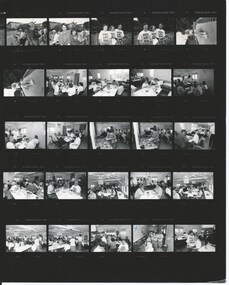
Photograph, HDC Camp at Somers Camp
... Once a year there is a two week camp at Somers, believed to be the Somers School Camp. The date of these photos are not known. ...Once a year there is a two week camp at Somers, believed to be the Somers School Camp. The date of these photos are not known. ...Every month Legacy's handicapped dependents were invited to go on outing for take part in recreational and educational activities. These programmes aim to develop independence and thus lessen the need for reliance on others for simple routine functions. Once a year there is a two week camp at Somers, believed to be the Somers School Camp. The date of these photos are not known. An article in the widows' newsletter in 1992 explains more detail on the 1992 camp. The article mentions that the annual camps run for two weeks at Somers Camp. It is a wonderful gathering of Junior Legatees, Legatees, and dedicated helpers. 50 junior legatees attended the 1992 camp with the personal attention almost one-to-one. With ages ranging from 22 to into the 60s, Legacy has to ensure it caters for the differing needs. A record of the type of activities Legacy provided for the handicapped dependents of the Legacy families.Black and white proof sheet of photos taken at a HDC at Somers.junior legatee outing, handicapped dependents, hdc -
 Melbourne Legacy
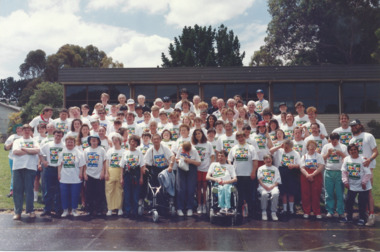
Photograph, HDC Camp 1991, 1991
... Once a year there is a two week camp at Somers Camp (believed to be Somers School Camp). This photo is from 1991. ...Once a year there is a two week camp at Somers Camp (believed to be Somers School Camp). This photo is from 1991. ...Every month Legacy's handicapped dependents are invited to go on outing for take part in recreational and educational activities. These programmes aim to develop independence and thus lessen the need for reliance on others for simple routine functions. Once a year there is a two week camp at Somers Camp (believed to be Somers School Camp). This photo is from 1991. An article in the widows' newsletter in 1992 explains more detail on the 1992 camp. The article mentions that the annual camps run for two weeks at Somers Camp. It is a wonderful gathering of Junior Legatees, Legatees, and dedicated helpers. 50 junior legatees attended this camp (in 1992) with the personal attention almost one-to-one. With ages ranging from 22 to into the 60s, Legacy has to ensure it caters for the differing needs. Legatees headed by Camp Chief, Jim Hammon and Chairman of the Handicapped Dependents Committee, Merv Tickell, were supported by two Camp Co-Ordinators and 50 helpers known as 'leaders'. Many of the leaders are people in the workforce wishing to give something back to the community. Junior Legatees are organised into groups. They participate in horse-riding, swimming, golfing, strawberry picking, and many other activities. Photos were in a scrapbook of photos spanning 1983 to 1991.A record of the type of activities Legacy provided for the handicapped dependents of the Legacy families. Colour photo of a HDC camp and a yellow paper label.Handwritten in blue pen ' HDC Camp Jan 91'junior legatee outing, hdc, somers camp -
 Melbourne Legacy
Photograph, HDC Camp 1992, 1992
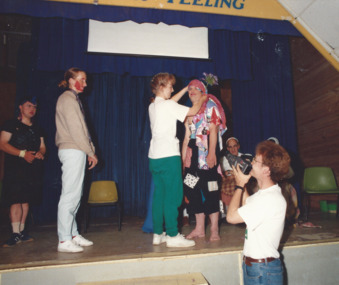
... camp are at 01560, 01562, 01563 and 01564. Some appeared in the newsletter in March 1992. The article mentions that the annual camps run for two weeks at Somers Camp (believed to be Somers School Camp). ...camp are at 01560, 01562, 01563 and 01564. Some appeared in the newsletter in March 1992. The article mentions that the annual camps run for two weeks at Somers Camp (believed to be Somers School Camp). ...Photos from a camp for handicapped dependents in January 1992. These photos show costumes and a stage production. Other photos from the camp are at 01560, 01562, 01563 and 01564. Some appeared in the newsletter in March 1992. The article mentions that the annual camps run for two weeks at Somers Camp (believed to be Somers School Camp). It is a wonderful gathering of Junior Legatees, Legatees, and dedicated helpers. 50 Legatees attended this camp with the personal attention almost one-to-one. With ages ranging from 22 to into the 60s, Legacy has to ensure it caters for the differing needs. Legatees headed by Camp Chief, Jim Hammon and Chairman of the Handicapped Dependents Committee, Merv Tickell, were supported by two Camp Co-Ordinators and 50 helpers known as 'leaders'. Many of the leaders are people in the workforce wishing to give something back to the community. Junior Legatees are organised into groups. They participate in horse-riding, swimming, golfing, strawberry picking, and many other activities. Every month Legacy's handicapped dependents are invited to go on outings or take part in recreational and educational activities. These programmes aim to develop independence and thus lessen the need for reliance on others for simple routine functions. Photos were in a scrapbook of photos spanning 1983 to 1991.A record of the type of activities Legacy provided for the handicapped dependents of the Legacy families. Colour photo x 3 of a HDC camp, a label and an article in the newsletter.Handwritten in blue pen 'HDC Camp -Somers / Jan 1992 / Camp Chief: L/ J Hammon / Co-ordinator Julien Hardy-Smith / Photo Eric Wadsworth / 51 J/Ls'junior legatee outing, hdc, somers camp -
 Melbourne Legacy
Photograph, HDC Camp 1992, 1992
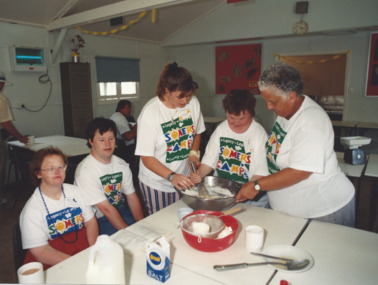
... camp are at 01560, 01561, 01563 and 01564. Some appeared in the newsletter in March 1992. The article mentions that the annual camps run for two weeks at Somers Camp (believed to be Somers School Camp). ...camp are at 01560, 01561, 01563 and 01564. Some appeared in the newsletter in March 1992. The article mentions that the annual camps run for two weeks at Somers Camp (believed to be Somers School Camp). ...Photos from a camp for handicapped dependents in January 1992. These photos show cooking classes. Other photos from the camp are at 01560, 01561, 01563 and 01564. Some appeared in the newsletter in March 1992. The article mentions that the annual camps run for two weeks at Somers Camp (believed to be Somers School Camp). It is a wonderful gathering of Junior Legatees, Legatees, and dedicated helpers. 50 Legatees attended this camp with the personal attention almost one-to-one. With ages ranging from 22 to into the 60s, Legacy has to ensure it caters for the differing needs. Legatees headed by Camp Chief, Jim Hammon and Chairman of the Handicapped Dependents Committee, Merv Tickell, were supported by two Camp Co-Ordinators and 50 helpers known as 'leaders'. Many of the leaders are people in the workforce wishing to give something back to the community. Junior Legatees are organised into groups. They participate in horse-riding, swimming, golfing, strawberry picking, and many other activities. Every month Legacy's handicapped dependents are invited to go on outing for take part in recreational and educational activities. These programmes aim to develop independence and thus lessen the need for reliance on others for simple routine functions. Photos were in a scrapbook of photos spanning 1983 to 1991.A record of the type of activities Legacy provided for the handicapped dependents of the Legacy families. Colour photo x 3 of a HDC camp, a label and an article in the newsletter.Handwritten in blue pen 'HDC Camp -Somers / Jan 1992 / Camp Chief: L/ J Hammon / Co-ordinator Julien Hardy-Smith / PhotoEric Wadsworth / 51 J/Ls'junior legatee outing, hdc, somers camp -
 Melbourne Legacy
Photograph, HDC Camp 1992, 1991
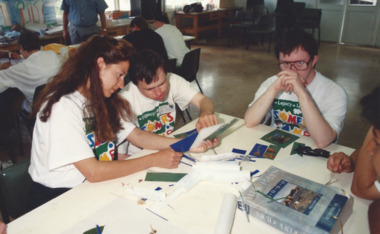
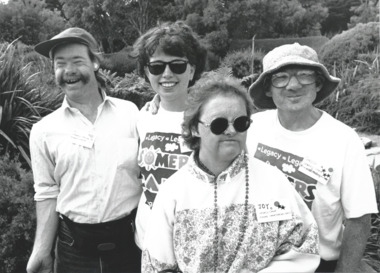
... camp are at 01561, 01562, 01563 and 01564. Some appeared in the newsletter in March 1992. The article mentions that the annual camps run for two weeks at Somers Camp (believed to be Somers School Camp). ...camp are at 01561, 01562, 01563 and 01564. Some appeared in the newsletter in March 1992. The article mentions that the annual camps run for two weeks at Somers Camp (believed to be Somers School Camp). ...Photos from a camp for handicapped dependents in January 1992. These photos show craft activities. One photo shows Chief Executive Terry Walsh with the children. Also a photo of a participant with the label 'Sharon proudly shows off her room'. Other photos from the camp are at 01561, 01562, 01563 and 01564. Some appeared in the newsletter in March 1992. The article mentions that the annual camps run for two weeks at Somers Camp (believed to be Somers School Camp). It is a wonderful gathering of Junior Legatees, Legatees, and dedicated helpers. 50 Legatees attended this camp with the personal attention almost one-to-one. With ages ranging from 22 to into the 60s, Legacy has to ensure it caters for the differing needs. Legatees headed by Camp Chief, Jim Hammon and Chairman of the Handicapped Dependents Committee, Merv Tickell, were supported by two Camp Co-Ordinators and 50 helpers known as 'leaders'. Many of the leaders are people in the workforce wishing to give something back to the community. Junior Legatees are organised into groups. They participate in horse-riding, swimming, golfing, strawberry picking, and many other activities. Every month Legacy's handicapped dependents are invited to go on outings or take part in recreational and educational activities. These programmes aim to develop independence and thus lessen the need for reliance on others for simple routine functions. Photos were in a scrapbook of photos spanning 1983 to 1992.A record of the type of activities Legacy provided for the handicapped dependents of the Legacy families. Colour photo x 6 of a HDC camp, a label and an article in the newsletter.Handwritten in blue pen 'HDC Camp -Somers / Jan 1992 / Camp Chief: L/ J Hammon / Co-ordinator Julien Hardy-Smith / PhotoEric Wadsworth / 51 J/Ls'junior legatee outing, hdc, somers camp -
 Melbourne Legacy
Photograph, HDC Camp 1992, 1992
... camp activities, including arts and craft, eating meals, cleaning up in the kitchen and outside activities. Some appeared in the newsletter in March 1992. The article mentions that the annual camps run for two weeks at Somers Camp (believed to be Somers School camp). ...camp activities, including arts and craft, eating meals, cleaning up in the kitchen and outside activities. Some appeared in the newsletter in March 1992. The article mentions that the annual camps run for two weeks at Somers Camp (believed to be Somers School camp). ...Photos from a camp for handicapped dependents in January 1992. These photos show different camp activities, including arts and craft, eating meals, cleaning up in the kitchen and outside activities. Some appeared in the newsletter in March 1992. The article mentions that the annual camps run for two weeks at Somers Camp (believed to be Somers School camp). It is a wonderful gathering of Junior Legatees, Legatees, and dedicated helpers. 50 Legatees attended this camp with the personal attention almost one-to-one. With ages ranging from 22 to into the 60s, Legacy has to ensure it caters for the differing needs. Legatees headed by Camp Chief, Jim Hammon and Chairman of the Handicapped Dependents Committee, Merv Tickell, were supported by two Camp Co-Ordinators and 50 helpers known as 'leaders'. Many of the leaders are people in the workforce wishing to give something back to the community. Junior Legatees are organised into groups. They participate in horse-riding, swimming, golfing, strawberry picking, and many other activities. Every month Legacy's handicapped dependents are invited to go on outing for take part in recreational and educational activities. These programmes aim to develop independence and thus lessen the need for reliance on others for simple routine functions. Other photos from the camp are at 01560, 01561, and 01562 and 01564. Photos were in a scrapbook of photos spanning 1983 to 1992.A record of the type of activities Legacy provided for the handicapped dependents of the Legacy families. Black and white photo x 3 of a HDC camp, a label and an article in the newsletter.Handwritten in blue pen 'HDC Camp -Somers / Jan 1992 / Camp Chief: L/ J Hammon / Co-ordinator Julien Hardy-Smith / Photo Eric Wadsworth / 51 J/Ls'junior legatee outing, somers camp -
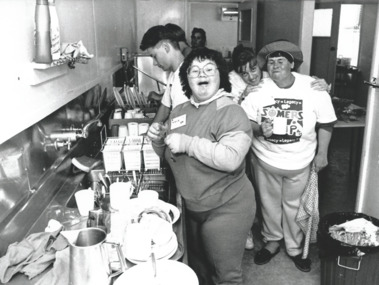 Melbourne Legacy
Photograph, HDC Camp 1992, 1992
... camp activities, including arts and craft, eating meals, cleaning up in the kitchen and outside activities. Some appeared in the newsletter in March 1992. The article mentions that the annual camps run for two weeks at Somers Camp (believed to be Somers School Camp). ...camp activities, including arts and craft, eating meals, cleaning up in the kitchen and outside activities. Some appeared in the newsletter in March 1992. The article mentions that the annual camps run for two weeks at Somers Camp (believed to be Somers School Camp). ...Photos from a cam for handicapped dependents in January 1992. These photos show different camp activities, including arts and craft, eating meals, cleaning up in the kitchen and outside activities. Some appeared in the newsletter in March 1992. The article mentions that the annual camps run for two weeks at Somers Camp (believed to be Somers School Camp). It is a wonderful gathering of Junior Legatees, Legatees, and dedicated helpers. 50 Legatees attended this camp with the personal attention almost one-to-one. With ages ranging from 22 to into the 60s, Legacy has to ensure it caters for the differing needs. Legatees headed by Camp Chief, Jim Hammon and Chairman of the Handicapped Dependents Committee, Merv Tickell, were supported by two Camp Co-Ordinators and 50 helpers known as 'leaders'. Many of the leaders are people in the workforce wishing to give something back to the community. Junior Legatees are organised into groups. They participate in horse-riding, swimming, golfing, strawberry picking, and many other activities. Every month Legacy's handicapped dependents were invited to go on outings or take part in recreational and educational activities. These programmes aim to develop independence and thus lessen the need for reliance on others for simple routine functions. Other photos from the camp are at 01560, 01561, 01562 and 01563. Photos were in a scrapbook of photos spanning 1983 to 1991.A record of the type of activities Legacy provided for the handicapped dependents of the Legacy families. Black and white photo x 2 of a HDC camp, a label and an article in the newsletter.Handwritten in blue pen 'HDC Camp -Somers / Jan 1992 / Camp Chief: L/ J Hammon / Co-ordinator Julien Hardy-Smith / Photo Eric Wadsworth / 51 J/Ls'junior legatee outing, somers, somers camp -
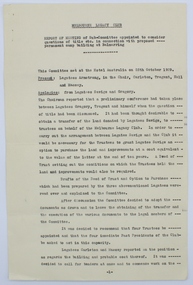 Melbourne Legacy
Document - Report, Ownership and lease of permanent camp at Balnarring, 1932
... camps on the property of Legacy founder, Legatee Stan Savige, who had a place in Balnarring/Somers, close to the beach. Permanent camp buildings were built in 1930. These documents relate to those buildings. Legacy Somers Camps continued intermittently at Stan's property until it was decided in 1951 to make other arrangements for holidays. Including using two other camps in the Somers area: Lord Somers Camp and the Somers School...camps on the property of Legacy founder, Legatee Stan Savige, who had a place in Balnarring/Somers, close to the beach. Permanent camp buildings were built in 1930. These documents relate to those buildings. Legacy Somers Camps continued intermittently at Stan's property until it was decided in 1951 to make other arrangements for holidays. Including using two other camps in the Somers area: Lord Somers Camp and the Somers School ...Documents concerning Legacy having a legal hold over land owned by Sir Stanley Savige in Balnarring in order to erect permanent camp buildings. 00253.1 and .2 Report of Meeting of sub committee considering the questions of title re permanent camp building at Balnarring. Meeting held at Hotel Austalia 2nd October 1929. Legatees Armstrong, Carleton, Tregent, Hall and Massey in attendence. 00253.3 Signed letter from Charles H. Peters to Brian Armstrong, Messers Plante and Henty Solicitors. 00253.4, .5, .6, .7, .8 Report on Balnarring Camp Property. Same as collection item 00250 but with different corrections and additional notes. 00253.9 Cover letter to L Armstrong signed from Dudley Tregent. 00253.10 Letter to Blatchford, Deputy Chairman Junior Legacy Club from unknown author. 00253.11, .12 Minutes of Meeting of Board of Management. Camp Premises Agreement and negotiations mentioned on page 3. Melbourne Legacy provides camps for junior legatees. The camps gave the children an opportunity of a summer beach holiday with other Legacy children. It started with camps on the property of Legacy founder, Legatee Stan Savige, who had a place in Balnarring/Somers, close to the beach. Permanent camp buildings were built in 1930. These documents relate to those buildings. Legacy Somers Camps continued intermittently at Stan's property until it was decided in 1951 to make other arrangements for holidays. Including using two other camps in the Somers area: Lord Somers Camp and the Somers School Camp (owned by the Education Department). Camps provided for junior Legatees have been very important from early in Legacy's history. In the 1920s Legacy started camps at Stan Savige's property at Balnarring. By the 1930s a permanent camp kitchen and building had been built at Somers Camp. These documents relate to the official status of the property.White paper with black type x 12 pages relating to land ownership and lease questions around the Balnarring Camp. Six sets of documents kept together. Total of twelve pages, some double sided.land transfer, deed of trust, option to purchase, properties, savige property, legacy somers camp -
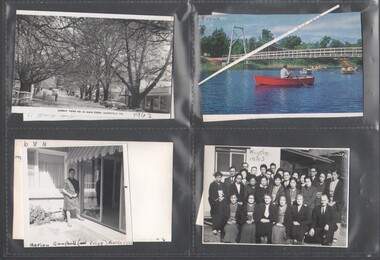 Bendigo Historical Society Inc.
Document - BAGGALEY COLLECTION: VARIOUS PHOTOGRAPHS, 1963
... Postcard - children's school camp, Somers, boat 13.5cm W x 8cm H c. Kyoto b&w photo, 1963 - 12.2cm W x 8.2cm H d, Marion Campbell b&w photo - 9 cm W x 8.2cm H...Postcard - children's school camp, Somers, boat 13.5cm W x 8cm H c. Kyoto b&w photo, 1963 - 12.2cm W x 8.2cm H d, Marion Campbell b&w photo - 9 cm W x 8.2cm H Document BAGGALEY COLLECTION: VARIOUS PHOTOGRAPHS ...Various photographs of the Baggeley family, and postcards a. Postcard - Marysville, Vic 13cm W x 8.7cmH b. Postcard - children's school camp, Somers, boat 13.5cm W x 8cm H c. Kyoto b&w photo, 1963 - 12.2cm W x 8.2cm H d, Marion Campbell b&w photo - 9 cm W x 8.2cm Hbaggaley family, postcards, photograph -
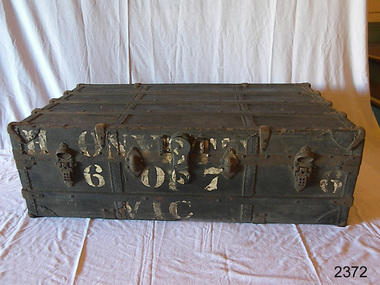 Flagstaff Hill Maritime Museum and Village
Functional object - Travel Trunk, 1890-1920
... school and camp, and another company Shwayder Trunk Company of Denver, Colorado would eventually become Samsonite. Another is the English luxury goods manufacturer H.J. Cave trading since 1839. Their Osilite trunk was used by such famous customers as T.E. Lawrence and Ruth Vincent Some...school and camp, and another company Shwayder Trunk Company of Denver, Colorado would eventually become Samsonite. Another is the English luxury goods manufacturer H.J. Cave trading since 1839. Their Osilite trunk was used by such famous customers as T.E. Lawrence and Ruth Vincent Some ...Steamer trunks (named after their location of storage in the cabin of a steamship, or "steamer") which are sometimes referred to as flat-tops, first appeared in the late 1870s, although the greater bulk of them date from the 1880–1920 period. They are distinguished by either their flat or slightly curved tops and were usually covered in canvas, leather or patterned paper and about (36 cm) tall to accommodate steamship luggage regulations. Steamer trunks were originally called a cabin trunk. An orthodox name for this type of trunk would be a "packer" trunk, but since it has been widely called a steamer for so long, it is now a hallmark of the style. A trunk, also known as a travel trunk, is a large cuboid container designed to hold clothes and other personal belongings. They are most commonly used for extended periods away from home. Trunks are differentiated from chests by their more rugged construction due to their intended use as luggage, instead of storage. Among the many styles of trunks, there are Jenny Lind, Saratoga, monitor, steamer or Cabin, barrel-staves, octagon or bevel-top, wardrobe, dome-top, barrel-top, wall trunks, and even full dresser trunks. These differing styles often only lasted for a decade or two and along with the hardware can be extremely helpful in dating an unmarked trunk. Although trunks have been around for thousands of years in China and elsewhere, the most common styles seen and referred to today date from the late 18th century to the early 20th century when they were supplanted in the market by the cost-effective and lighter suitcase. There were hundreds of trunk manufacturers in the United States and a few of the larger and well-known companies were Rhino Trunk & Case, C.A. Taylor, Haskell Brothers, Martin Maier, Romadka Bros, Goldsmith & Son, Crouch & Fitzgerald, M. M. Secor, Winship, Hartmann, Belber, Oshkosh, Seward, and Leatheroid. One of the largest American manufacturers of trunks at one point the Seward Trunk Co. of Petersburg, Virginia still makes them for school and camp, and another company Shwayder Trunk Company of Denver, Colorado would eventually become Samsonite. Another is the English luxury goods manufacturer H.J. Cave trading since 1839. Their Osilite trunk was used by such famous customers as T.E. Lawrence and Ruth Vincent Some of the better known French trunk makers were Louis Vuitton, Goyard, Moynat, and Au Départ. Only a few remain with the most prominent US company being Rhino Trunk and Case, Inc who probably manufacture more trunks than any company in the world.A snapshot into our social history regards how travel was undertaken over a hundred years ago and how people travelled so differently than today as they often packed for extended travel on ships. Travel then was so different with people having to pack a very large wardrobe of clothes to last for some time possibly for months overseas. The subject item looks like it was of military issue and was used for travel during the first world war by a military man from Victoria and was one of six similar trunks. This assessment is based on the type of locks used the trunk itself could have been made in America or Britain as the locks used in both countries came from American lock makers.Trunk wooden large covered with leather wood cleats and brass locks, also unreadable tableIn white paint "H Onvett, 6 of 7 and bottom right of front the number 6 (Owner)flagstaff hill, warrnambool, shipwrecked-coast, flagstaff-hill, flagstaff-hill-maritime-museum, maritime-museum, shipwreck-coast, flagstaff-hill-maritime-village, trunk -
 Federation University Historical Collection
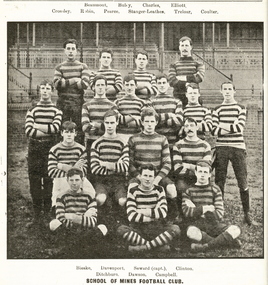
Book, Ballarat School of Mines Students' Magazine, 1907-1909, 1907-9
... School of Mines Sports Committee. 1907 * Hubert Krause 1908 * The location and Pegging of a Tramway Route by Yamba * The Unity of things by John Brittain * The transmission of power by Rope Driving, by A.E.C. Kerr * A visit to the Briseis Mine, and New Brothers' Home (includes photographs) * Mining Engineers in Tasmania * Limericks Sluiced at Snake Valley * David Ham Obituary * Matthew Lyndsay Obituary * Some Bunsen Memories by Professor Alfred Mica Smith * Geological Camp to Daylesford * Practical Mathematics by Hubert F. ...School of Mines Sports Committee. 1907 * Hubert Krause 1908 * The location and Pegging of a Tramway Route by Yamba * The Unity of things by John Brittain * The transmission of power by Rope Driving, by A.E.C. Kerr * A visit to the Briseis Mine, and New Brothers' Home (includes photographs) * Mining Engineers in Tasmania * Limericks Sluiced at Snake Valley * David Ham Obituary * Matthew Lyndsay Obituary * Some Bunsen Memories by Professor Alfred Mica Smith * Geological Camp to Daylesford * Practical Mathematics by Hubert F. ...Bound volume of the Ballarat School of Mines Students' Magazine for 1907-1909. Articles include the location and pegging of a tramway Route, the transmission of Power by Rope Driving by A.E.C. Kerr, A visit to the Briseis Mine, and New Brothers' Home, Mining Engineers in Tasmania, Obituaries for David Ham and Matthew Lyndsay, Pioneer Mining at Leichhardt, Automatic Ore Feeders and Chacedony Park by J.H. Adams. Images include the Ballarat School of Mines Football Team and the Ballarat School of Mines Sports Committee. 1907 * Hubert Krause 1908 * The location and Pegging of a Tramway Route by Yamba * The Unity of things by John Brittain * The transmission of power by Rope Driving, by A.E.C. Kerr * A visit to the Briseis Mine, and New Brothers' Home (includes photographs) * Mining Engineers in Tasmania * Limericks Sluiced at Snake Valley * David Ham Obituary * Matthew Lyndsay Obituary * Some Bunsen Memories by Professor Alfred Mica Smith * Geological Camp to Daylesford * Practical Mathematics by Hubert F. Hall * Pioneer Mining - Leickhardt * Automatic Ore Feeders * A Unique Ore Deposit (Lucknow Goldfield, NSW) * A country Ramble * The Alkaline Titration for Zinc * Chalcedony Park, Arizona, United States of America by J.H. Adams * Notetaking at Lectures * Smelter Cost-Keeping by Oliver E. Jaeger * Benefits of Physical Culture * Mineral Tasmania and its Wonderful Resources by F.F. Bradford * A holiday Trip to Queensland * The Compression of Air as Applied to Mining * Machine V Hand Drilling * The mining in the Malay States * William Thomas Grownow Obituary (includes image) * Timbering Stopes (Includes images) * Trip to Melbourne * Two Problems of Alluvial Mining by Richard Hain * The Berry Leads (includes plan of mines) * Black Pudding Supper * Observations for Meridian * NOtes on Coking Plants (includes plan) * How Old is the Earth * Conglomerations * A Pat Formula * The making of a Suitable Muffle for General Assay Work * Reduction of Gold Chloride by Charcoal * Chemical Definitions * Old Boys (R.J. Allen, W.B. Blyth, F. Brinsden, Lindsay D. Cameron, George W. Cornwell, John M. Currie, C.M. Harris, T. Wighton-Hood, W. Lakeland, W.S. Macartney, Fred A. Marriott, Karl B. Moore, G.E. Sander, Sherb. H. Sheppard, Norman S. Stuckby, John Sutherland, Lewis A. Westcott, Walter White, O.C. Witherden, Gerald Young) 1909 * The Graduates Problem * An Interesting Nevada Cyanide Plant (Bamberger De Lamar Gold Mines) * Easter Geological Camp to Ingliston * New Methods for the Volumetric Estimation of Lead * William Charles Kernott Obituary * Mount Morgan Mine by G.W. Williams * Tin Dredging at Tingha, New South Wales * Notes on the Iodide estimation of Copper * Photograph of the Ballarat School of Mines Students' Association Committee * The Importance of Mine Ventilation to the Students by F. Howells * Life in Mining Camp * Wise Words to Mining School Students * Military Search Lights * Gleaning s on resistance * Ministerial Visit to the Ballarat School of Mines by the Hon. A.A. Billson, Minister of Education , accompanied by Frank Tate, Director of Education. * Picture Making in Photography Composition * Mountains of Fire * A Walking Engine - New Military Machine - Guns into Action - Caterpillar No. 1. (Tank) * Fireless Locomotives * Elmore Concentrating Process (includes plan of Elmore Concentrator) * Mount Pani Limited * Surveying for Irrigation * Weights and Measures * Carbon Monoxide * Joseph Francis Usher obituary * The Problem of the Metalliferous Veins * Ballarat School of Mines Ambulance Class * Treatment of Gold in a battery Without the Use of Copper Plates by E.C. Hurdsfield * Meteorites * Werribee Gorge * Dredging in the Ovens Valley * Electrical Chatter - Electrocution by an Imaginary Eye-Witness * The Electric Furnace in Iron Metallurgy ballarat school of mines, ballarat school of mines football team, football, sports, tramway, mining engineers, david ham, matthew lyndsay, jack adams, berry lead, hepburn consuls, madame berry, west ristori, ristori no 1, allendale, dyke's co, charleson's mill, australian extended, mining, r.j. allen,, w.b. blyth, f. brinsden, lindsay d. cameron, george w. cornwell, john m. currie, c.m. harris, t. wighton-hood, w. lakeland, w.s. macartney, fred a. marriott, karl b. moore, g.e. sander, sherb. h. sheppard, norman s. stuckby, john sutherland, lewis a. westcott, walter white, o.c. witherden, gerald young, ballarat school of mines students' association, hubert krause, krause, vfl, afl -
 Flagstaff Hill Maritime Museum and Village
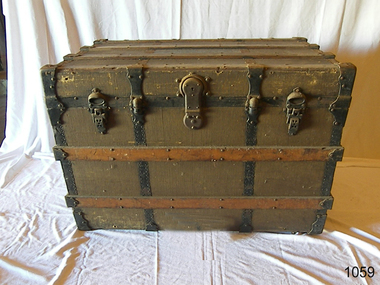
Functional object - Steamer Trunk, 1880-1925
... school and camp, and another company Shwayder Trunk Company of Denver, Colorado would eventually become Samsonite. Another is the English luxury goods manufacturer H.J. Cave trading since 1839. Their Osilite trunk was used by such famous customers as T.E. Lawrence and Ruth Vincent Some...school and camp, and another company Shwayder Trunk Company of Denver, Colorado would eventually become Samsonite. Another is the English luxury goods manufacturer H.J. Cave trading since 1839. Their Osilite trunk was used by such famous customers as T.E. Lawrence and Ruth Vincent Some ...Steamer trunks (named after their location of storage in the cabin of a steamship, or "steamer") which are sometimes referred to as flat-tops, first appeared in the late 1870s, although the greater bulk of them date from the 1880–1920 period. They are distinguished by either their flat or slightly curved tops and were usually covered in canvas, leather or patterned paper and about (36 cm) tall to accommodate steamship luggage regulations. Steamer trunks were originally called a cabin trunk. An orthodox name for this type of trunk would be a "packer" trunk, but since it has been widely called a steamer for so long, it is now a hallmark of the style. A trunk, also known as a travel trunk, is a large cuboid container designed to hold clothes and other personal belongings. They are most commonly used for extended periods away from home. Trunks are differentiated from chests by their more rugged construction due to their intended use as luggage, instead of storage. Among the many styles of trunks, there are Jenny Lind, Saratoga, monitor, steamer or Cabin, barrel-staves, octagon or bevel-top, wardrobe, dome-top, barrel-top, wall trunks, and even full dresser trunks. These differing styles often only lasted for a decade or two and along with the hardware can be extremely helpful in dating an unmarked trunk. Although trunks have been around for thousands of years in China and elsewhere, the most common styles seen and referred to today date from the late 18th century to the early 20th century when they were supplanted in the market by the cost-effective and lighter suitcase. There were hundreds of trunk manufacturers in the United States and a few of the larger and well-known companies were Rhino Trunk & Case, C.A. Taylor, Haskell Brothers, Martin Maier, Romadka Bros, Goldsmith & Son, Crouch & Fitzgerald, M. M. Secor, Winship, Hartmann, Belber, Oshkosh, Seward, and Leatheroid. One of the largest American manufacturers of trunks at one point the Seward Trunk Co. of Petersburg, Virginia still makes them for school and camp, and another company Shwayder Trunk Company of Denver, Colorado would eventually become Samsonite. Another is the English luxury goods manufacturer H.J. Cave trading since 1839. Their Osilite trunk was used by such famous customers as T.E. Lawrence and Ruth Vincent Some of the better known French trunk makers were Louis Vuitton, Goyard, Moynat, and Au Départ. Only a few remain with the most prominent US company being Rhino Trunk and Case, Inc who probably manufacture more trunks than any company in the world.A snapshot into our social history regards how travel was undertaken over a hundred years ago and how people travelled so differently than today as they often packed for extended travel on ships. Travel then was so different with people having to pack a very large wardrobe of clothes to last for some times months overseas.Trunk rectangular with wood ribs and metal strips for reinforcing. Covered with canvas and has 3 locking devices. Also has leather handles at ends.On lock inscription Eagle lock Co.flagstaff hill, warrnambool, shipwrecked-coast, flagstaff-hill, flagstaff-hill-maritime-museum, maritime-museum, shipwreck-coast, flagstaff-hill-maritime-village -
 Ringwood and District Historical Society
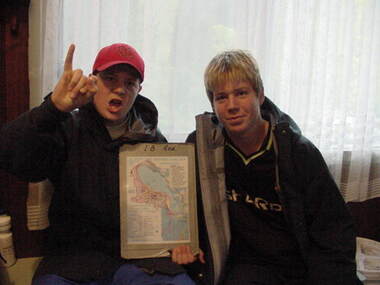
Photograph - Parkwood Secondary College, Ringwood North, Victoria, 14 Digitised Images from Bogong School Camp - 2001 - Field Studies
... School Magazine Transcript: "On the 15th of October, 23 Year 9 students headed off to Camp Bogong situated near Falls Creek. The camp involved not only students from our school but also Kuranjang Secondary College in Melton. The students did a range of activities, including initiative activities, games, high ropes course, field studies, environmental studies, canoeing, rock climbing (indoor and outdoor), abseiling, mountain bike riding and a trip up to the high plains. The students also got to experience snow, some...School Magazine Transcript: "On the 15th of October, 23 Year 9 students headed off to Camp Bogong situated near Falls Creek. The camp involved not only students from our school but also Kuranjang Secondary College in Melton. The students did a range of activities, including initiative activities, games, high ropes course, field studies, environmental studies, canoeing, rock climbing (indoor and outdoor), abseiling, mountain bike riding and a trip up to the high plains. The students also got to experience snow, some ...School Magazine Transcript: "On the 15th of October, 23 Year 9 students headed off to Camp Bogong situated near Falls Creek. The camp involved not only students from our school but also Kuranjang Secondary College in Melton. The students did a range of activities, including initiative activities, games, high ropes course, field studies, environmental studies, canoeing, rock climbing (indoor and outdoor), abseiling, mountain bike riding and a trip up to the high plains. The students also got to experience snow, some even getting bogged in the snow on a minibus. All in all, the students enjoyed the week spent up at Bogong, not only having fun and enjoying the activities but also making life long friends." -
 Ringwood and District Historical Society
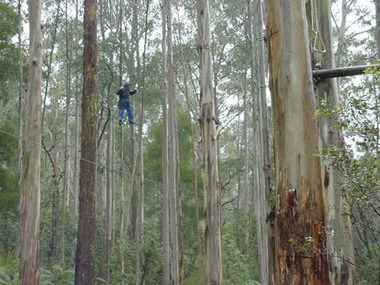
Photograph - Parkwood Secondary College, Ringwood North, Victoria, 10 Digitised Images from Bogong School Camp - 2001 - High Ropes
... School Magazine Transcript: "On the 15th of October, 23 Year 9 students headed off to Camp Bogong situated near Falls Creek. The camp involved not only students from our school but also Kuranjang Secondary College in Melton. The students did a range of activities, including initiative activities, games, high ropes course, field studies, environmental studies, canoeing, rock climbing (indoor and outdoor), abseiling, mountain bike riding and a trip up to the high plains. The students also got to experience snow, some...School Magazine Transcript: "On the 15th of October, 23 Year 9 students headed off to Camp Bogong situated near Falls Creek. The camp involved not only students from our school but also Kuranjang Secondary College in Melton. The students did a range of activities, including initiative activities, games, high ropes course, field studies, environmental studies, canoeing, rock climbing (indoor and outdoor), abseiling, mountain bike riding and a trip up to the high plains. The students also got to experience snow, some ...School Magazine Transcript: "On the 15th of October, 23 Year 9 students headed off to Camp Bogong situated near Falls Creek. The camp involved not only students from our school but also Kuranjang Secondary College in Melton. The students did a range of activities, including initiative activities, games, high ropes course, field studies, environmental studies, canoeing, rock climbing (indoor and outdoor), abseiling, mountain bike riding and a trip up to the high plains. The students also got to experience snow, some even getting bogged in the snow on a minibus. All in all, the students enjoyed the week spent up at Bogong, not only having fun and enjoying the activities but also making life long friends." -
 Ringwood and District Historical Society
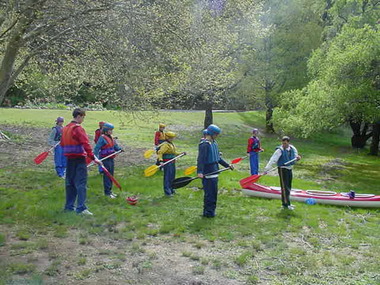
Photograph - Parkwood Secondary College, Ringwood North, Victoria, 8 Digitised Images from Bogong School Camp - 2001 - Kayaking
... School Magazine Transcript: "On the 15th of October, 23 Year 9 students headed off to Camp Bogong situated near Falls Creek. The camp involved not only students from our school but also Kuranjang Secondary College in Melton. The students did a range of activities, including initiative activities, games, high ropes course, field studies, environmental studies, canoeing, rock climbing (indoor and outdoor), abseiling, mountain bike riding and a trip up to the high plains. The students also got to experience snow, some...School Magazine Transcript: "On the 15th of October, 23 Year 9 students headed off to Camp Bogong situated near Falls Creek. The camp involved not only students from our school but also Kuranjang Secondary College in Melton. The students did a range of activities, including initiative activities, games, high ropes course, field studies, environmental studies, canoeing, rock climbing (indoor and outdoor), abseiling, mountain bike riding and a trip up to the high plains. The students also got to experience snow, some ...School Magazine Transcript: "On the 15th of October, 23 Year 9 students headed off to Camp Bogong situated near Falls Creek. The camp involved not only students from our school but also Kuranjang Secondary College in Melton. The students did a range of activities, including initiative activities, games, high ropes course, field studies, environmental studies, canoeing, rock climbing (indoor and outdoor), abseiling, mountain bike riding and a trip up to the high plains. The students also got to experience snow, some even getting bogged in the snow on a minibus. All in all, the students enjoyed the week spent up at Bogong, not only having fun and enjoying the activities but also making life long friends." -
 Ringwood and District Historical Society
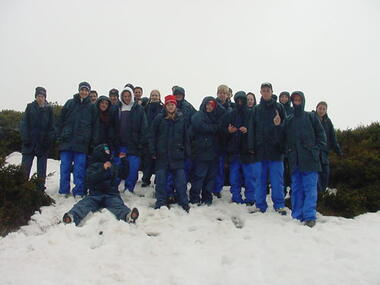
Photograph - Parkwood Secondary College, Ringwood North, Victoria, 7 Digitised Images from Bogong School Camp - 2001 - High Plains Snow Tour
... School Magazine Transcript: "On the 15th of October, 23 Year 9 students headed off to Camp Bogong situated near Falls Creek. The camp involved not only students from our school but also Kuranjang Secondary College in Melton. The students did a range of activities, including initiative activities, games, high ropes course, field studies, environmental studies, canoeing, rock climbing (indoor and outdoor), abseiling, mountain bike riding and a trip up to the high plains. The students also got to experience snow, some...School Magazine Transcript: "On the 15th of October, 23 Year 9 students headed off to Camp Bogong situated near Falls Creek. The camp involved not only students from our school but also Kuranjang Secondary College in Melton. The students did a range of activities, including initiative activities, games, high ropes course, field studies, environmental studies, canoeing, rock climbing (indoor and outdoor), abseiling, mountain bike riding and a trip up to the high plains. The students also got to experience snow, some ...School Magazine Transcript: "On the 15th of October, 23 Year 9 students headed off to Camp Bogong situated near Falls Creek. The camp involved not only students from our school but also Kuranjang Secondary College in Melton. The students did a range of activities, including initiative activities, games, high ropes course, field studies, environmental studies, canoeing, rock climbing (indoor and outdoor), abseiling, mountain bike riding and a trip up to the high plains. The students also got to experience snow, some even getting bogged in the snow on a minibus. All in all, the students enjoyed the week spent up at Bogong, not only having fun and enjoying the activities but also making life long friends." -
 Marysville & District Historical Society
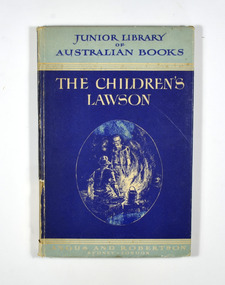
Book, Colin Roderick, The Children's Lawson, 1949
... School Committee/ to/ Dawn Carmody/ for/ the best kept books/ in/ Grades VII & VIII./ Dec. 1950 The Junior Library of Australia Books THE CHILDREN'S/ LAWSON Selected by/ COLIN RODERICK ANGUS AND ROBERTSON/ SYDNEY LONDON First Published 1949 Set up, printed and bound in Australia by/ Halstead Press Pty Ltd, 9-19 Nickson Street, Sydney Registered in Australia for transmission through the post as a book No dust cover. Front cover has an illustration of some men sitting around a camp ...A book of stories and poems by Henry Lawson collected and published in 1949 especially for children.No dust cover. Front cover has an illustration of some men sitting around a camp fire. The name of the author and the series is on the spine. On the back cover is a list of books published in the same series.fictionA book of stories and poems by Henry Lawson collected and published in 1949 especially for children.henry lawson, poetry, fiction, junior library of australian books -
 Federation University Historical Collection
Book, Valuable Steps: A History of Physical Educaiton in Victoria
... Physical Education steve moneghetti garry powell military drills physical education centre curriculum research group peter fryar physical drill mary cox frank beairepaire lil beaurepaire physical culture gertrude anderson swimming army cadet training scheme fritz duras eva duras albert willee physical education for victorian schools rosalie virtue maypole royal visit somers camp itinerant staff merlene lee gow folk dancing harvey cox t.l. emerson tom mann merlene nagle erskine house merrylands house golden trout dance tilden tragardh fine motor skills school camps achper little athletics wally bell Blue book of 312 pages Valuable Steps: A History of Physical Educaiton in Victoria Book ...Blue book of 312 pagesnon-fictionphysical education, steve moneghetti, garry powell, military drills, physical education centre, curriculum research group, peter fryar, physical drill, mary cox, frank beairepaire, lil beaurepaire, physical culture, gertrude anderson, swimming, army cadet training scheme, fritz duras, eva duras, albert willee, physical education for victorian schools, rosalie virtue, maypole, royal visit, somers camp, itinerant staff, merlene lee gow, folk dancing, harvey cox, t.l. emerson, tom mann, merlene nagle, erskine house, merrylands house, golden trout, dance, tilden tragardh, fine motor skills, school camps, achper, little athletics, wally bell -
Federation University Historical Collection
Document - Document - Letter, Ballarat Junior Technical School: Report on Student Teachers George Briggs and Ian Hastie
... Two Student Teachers, George Briggs and Ian Hastie, assisted in running the school camp. They supervised the boys in some classes, organised games in recreation periods and ensured work groups satisfactorily carried out their duties. ...Two Student Teachers, George Briggs and Ian Hastie, assisted in running the school camp. They supervised the boys in some classes, organised games in recreation periods and ensured work groups satisfactorily carried out their duties. ...Two Student Teachers, George Briggs and Ian Hastie, assisted in running the school camp. They supervised the boys in some classes, organised games in recreation periods and ensured work groups satisfactorily carried out their duties. Relationships with boys and staff very satisfactory. Cream page, typed. ballarat junior technical school, head master, l garner, george briggs, ian hastie, student teachers, school camp, supervision organisation relationships very satisfactory -
 Federation University Historical Collection
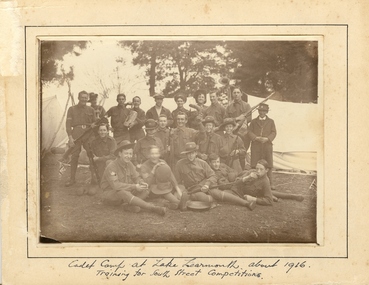
Photograph - Photograph - Sepia, Ballarat School of Mines Cadets, 1916, c1916
... School of Mines. On account of the number in a team being limited to 21, some had to be weeded out. The team decided to have a camp at Learmonth in the vacation for the benefit of training for the coming competitions. ...School of Mines. On account of the number in a team being limited to 21, some had to be weeded out. The team decided to have a camp at Learmonth in the vacation for the benefit of training for the coming competitions. ...Field Marshal Viscount Kitchener of Great Britain was invited by Prime Minister Deakin in 1909 to visit Australia and advise on the best way to provide Australia with a land defence. Kitchener’s report echoed the bill, introduced to Parliament in 1909 and supported by the Opposition Labor Party at its 1908 conference, to introduce compulsory military training in peace time (referred to as universal training). On 1 January 1911, the Commonwealth Defence Act 1911 (Cth) was passed as law and all males aged 12 to 26 were required to receive military training. Men were divided according to age, with junior cadets comprising boys 12-14 years of age, senior cadets comprising boys 14-18, and young men aged 18-26 assigned to the home militia defence. The support of schools was vital to the success of the scheme, since the system of cadet training began in the primary schools, with physical training prescribed by military authorities. Junior cadet training was entirely in the hands of school teachers, who had first been trained by military officers. This early training was less military in nature than focused on physical drill and sport. It also acted to inculcate boys with the notions of loyalty to country and empire. At this age, uniforms were not worn, although there were schools with pre-existing uniformed cadet units, who continued to do so. Senior Cadets were organised by Training Areas, administered by Area Officers. If a school had at least 60 senior cadets, they could form their own units. Unlike their junior counterparts, Senior Cadets were issued uniforms, a rifle, and learned the foundations necessary for service in any arm of the defence forces. Boys and men could be exempted from compulsory training if they lived more than five miles from the nearest training site, or were passed medically unfit. Those who failed to register for training were punished with fines or jail sentences, and the severity of this punishment generated some of the strongest opposition to the scheme. While institutions such as the political parties and most churches generally supported universal training, some in the broader labour movement were less enthusiastic, as evidenced in the Daily Herald newspaper’s editorials and letters. Universal military training persisted after the conclusion of World War 1, with the Junior Cadet scheme the first to go, in 1922. Senior cadets and service with the militia was suspended in November 1929. (http://guides.slsa.sa.gov.au/content.php?pid=575383&sid=4788359, accessed 29/10/2015) According to Neil Leckie, Manager of the Ballarat Ranger Military Museum: * Originally 12 – 14 year olds went to Junior Cadets attached to their school. * From age 14 – 17 they were Senior Cadets attached to the local militia unit. * After 1 July of the year a Cadet turned 18, the Cadet left the Senior Cadets and became a member of the Citizen Military Force. * In October 1918 the AIF, Militia and Cadets were renamed to give some connection to the AIF battalion raised in the area. Ballarat saw: 8th Australian Infantry Regiment comprising: * 8th Battalion AIF renamed 1st Battalion 8th Australian Infantry Regiment * 70th Infantry Militia renamed 2nd Battalion 8th Australian Infantry Regiment * 70th Infantry Cadets renamed 3rd B, 8th Australian Infantry. 39th Australian Infantry Regiment comprising: * 39th Battalion AIF renamed 1st Battalion 39th Australian Regiment * 71st Infantry Militia renamed 2nd Bn, 39th Australian Infantry Regiment * 71st Infantry Cadets renamed 3rd Bn, 39th Australian Infantry Regiment Prior to the reorganisation in 1918 the 18th Brigade was the 70th, 71st and 73rd Infantry. It is thought that the 18th Brigade Cadet units in 1920 were those that came from the old: * 69th Infantry (Geelong/Queenscliff) * 70th Infantry (Ballarat/Colac) * 71st Infantry (Ballarat West) * 72nd Infantry Warrnambool) * 73rd Infantry (NW Vic) The next name change came in 1921!Mounted sepia photograph of 21 young males. They are the Ballarat School of Mines Cadets on a training camp at Lake Learmonth. Back row left to right: Harold Wakeling; ? ; T. Wasley; H. Witter; H.V. Maddison (staff); Lieutenant S.J. Proctor, Joe ? ; ? ; B.C. Burrows. Centre left to right: Howard Beanland; ? ; F.N. Gibbs; H. Siemering; P. Riley; ? : E. Adamthwaite. Front row left to right: Albert E. Williams; Francis Davis (RAAF Dec.); A. Miller; W. Shattock; T. Rees From the Ballarat School of Mines Magazine, 1916 "Our Competition Team, 1916 At a parade, held on the 25th August competition teams were called from from the three colleges - Ballarat College, St Patrick's College, and the School of Mines. In each case, a large muster was obtained, twenty-nine volunteering fro the School of Mines. On account of the number in a team being limited to 21, some had to be weeded out. The team decided to have a camp at Learmonth in the vacation for the benefit of training for the coming competitions. The tents, within our baggage, were brought to the Junior Technical School at 10 a.m. on Monday, 11 September. Everything was carted to the station on a lorry, which was very kindly lent by Mr C. Burrow. ... Arriving at our camp, which was in the Park, we first raised the tents. This was done in record time. Three large tents, A.B.C., were pitched one behind the other. We also pitched a smaller one to act as a provisions tent. The provisions supplied by each cadet were placed in this tent. Dinner was ready by 3.30, and was prepared by the three senior non-coms., who also acted as orderlies. Things went alright Monday night, the two senior non-coms. acting as sentries for the first two hours. On Tuesday morning Reville sounded at 7. There was no need for it, however, as nearly all the cadets were up before daylight, owing to their beds being too hard. After physical exercises were gone through we had breakfast. We then had rifle exercises until Messrs A.W. Steane and F.N. King arrived. The former put the team through the table of physical exercises set down for competition work, many valuable points being obtained. The visitors remained for dinner, afterwards returning to Ballarat. Wednesday was uneventful, until the soldiers arrived at about 11 a.m., stopping at the park for lunch. As we handed over the coppers, etc., to them, our lunch was delayed. Two more visitors arrived after lunch, and after taking a few photos returned home. That night we had a "Sing-a-long" in C Tent until "Lights out" sounded at 9.30. After physical exercises ad breakfast on Thursday, we went for a six mile route march round the lake, doing skirmishing on the way. In the afternoon we practised rifle exercises and the march past. A concert was arranged for that night, the chief singers being cadets H. Siemering and W. Shattock. Supper was served at the end of the entertainment. On Friday, Reveille sounded at 6.30 instead of 7, and, as usual, we had physical exercises before breakfast, after which the team went through skirmishing at the reserve. In the afternoon, section drill and the march past were practised. Friday night, being our last night in camp, leave was granted until 10 p.m., "lights out" sounding at 11. Reveille sounded on Saturday at 4.30, the reason being that all kits, tents, etc., had to be packed away ready to catch the 8.15 train to Balalrat. At 7.30 we were all ready to leave for the station. We had a very enjoyable time in the train, each cadet having a chip in at the patriotic songs. On arriving at Ballarat, we found the lorry awaiting us. The luggage was carted to the Junior Technical School, the team following. The team were here dismissed, everyone feeling that he had had a very good time. F.G. Davis"Written in ink on front 'cadet camp at Lake Learmonth about 1916. Training for South Street Competitions. ballarat school of mines, cadets, ballarat school of mines cadets, lake learmonth, world war one, boomerang, camp, cadet camp, h.g. wakeling, harold wakeling, f.g. davis, albert w. steane, f.n. king, h. siermering, w. shattock, francis davis, harold wakeling, t. wasley, h. witter, h.v. maddison, s.j. proctor, b.c. burrows, howard beanland, f.n. gibbs, h. siemering, p. riley, e. adamthwaite, albert e. williams; francis davis, a. miller, w. shattock, t. rees, photography, foto, boxing gloves -
 Lara RSL Sub Branch
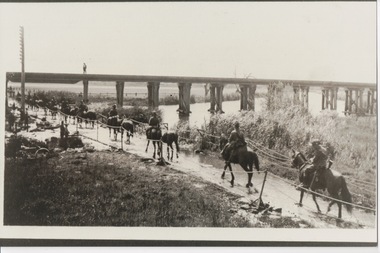
Photograph, Set 4 photographs. and others for Torquay Light Horse camp, 1940
... camp at Torquay accommodated some 5000 men and 2500 horses of the Second Cavalry Division. The rows of horses, tents and huts near Blackgate Road were quite a sight. While the cavalrymen engaged in exercises on the land and on the beaches, many of the troops took over the Torquay School for special training of men and officers. ...camp at Torquay accommodated some 5000 men and 2500 horses of the Second Cavalry Division. The rows of horses, tents and huts near Blackgate Road were quite a sight. While the cavalrymen engaged in exercises on the land and on the beaches, many of the troops took over the Torquay School for special training of men and officers. ...These images capture for all time Light Horsemen travelling through Geelong on their way to camp at Torquay for the last Group meeting in Australia . information following - details obtained from .........https://torquayhistory.com/light-horse-brigade/ On Australia Day, 1997, Sir John Young unveiled this plaque on Point Danger, Torquay. Torquay history, Light Horse Training Camp, WW2 Plaque at Pt. Danger Note----- (See images to view plaque) The plaque identifies a significant event in Torquay’s history and the sentiments of ‘change’ for the Light Horse Brigade – from horses to machines. In 1940 the four Light Horse Regiments (4th, 8th, 13th and 20th), some 5000 Light Horse and 2000 horses camped and trained at Torquay. Three other regiments, formerly mounted on horses, were also at Torquay ‘mounted’ on privately owned trucks and cars. Division troops included Artillery, Engineers, Signals, Field Ambulance and other branches of the Army necessary to enable a Division to function. It wasn’t just the sheer numbers of men coming to this little town that made the event significant, it was also the fact that the men of the Light Horse were dramatic, almost glamorous figures and it is easy to see their exploits as some splendid adventure. Horses have played a special role in the story of Australia. They were the only means of transport across this huge country, so it was necessary for everyone to have the ability to ride a horse. When war broke out in 1899 between Britain and the Boers of South Africa (“Boer” was Dutch for “farmer”) Australia sent troops to fight. At first Britain was wary of using untried, unprofessional colonial cavalrymen but soon saw that the slouch-hatted Australian “bushmen” were a match for the fast-moving and unconventional mounted commandos of the Boers. The Australians proved themselves to be expert rough-riding horsemen and good shots. Bush life had hardened them to go for long periods with little food and water. They also showed remarkable ability to find their way in a strange country and use its features for cover, in both attack and defence. By 1914, when Australia joined the war against Germany, there were 23 Light Horse regiments of militia volunteers. Many men from these units joined the Light Horse regiments of the Australian Imperial Force (AIF). Men were given remounts (if not using their own horses) – army horses bought by Commonwealth purchasing officers from graziers and breeders. These were called “walers” because they were a New South Wales stockhorse type – strong, great-hearted animals with the strains of the thoroughbred and semi-draught to give them speed, strength and stamina. On 1st November, 1914, Australia’s First Infantry Division and the first four Light Horse regiments sailed for England in a fleet of transport ships. The first of the Light Horse arrived at Gallipoli in May without their horses. Back with their horses after Gallipoli, they were formidable combatants across the Sinai and Palestine. Some British commanders observed that the light horseman moved with a “lazy, slouching gait, like that of a sleepy tiger” but described how the promise of battle “changes that careless gait, into a live athletic swing that takes him over the ground much quicker than other troops”. They had Light Horse, Torquay, training campdeveloped a reputation as formidable infantrymen. The Turks called them “the White Ghurkas” – a reference to their deadly skill with the bayonet. The Arabs called them “The Kings of the Feathers”. The plume had originally been a battle honour of the Queensland Mounted Infantry for their work in the shearer’s strike of 1891. During WW1 it was adopted by almost all the Light Horse Regiments. It was the proud badge of the light horseman. The most famous of their battles was the attack on Beersheba- the charge of the 4th Light Horse Brigade. Mounted infantrymen and their superb walers had carried out one of the most successful cavalry charges in history – against what seemed impossible odds. They surprised the Turks by charging cavalry-style, when they would normally have ridden close to an objective then dismounted to fight. The fall of Beersheba swung the battle tide against the Turks in Palestine; and changed the history of the Middle East. While 19 men from the Surf Coast Shire served with the 4th Light Horse over the course of WW1, only four were involved in the charge of Beersheba- John GAYLARD, Philip QUINN.(Winchelsea); Wallace FINDLAY (Anglesea); Harry TRIGG (Bambra). After the war, Light Horse units played a key role in the Australian Government’s compulsory military training programme. The Citizen Military Forces (C.M.F.) thrived on the glamour of the wartime Light Horse tradition, ignoring the possibility that motor vehicles would soon replace the horses. When training was no longer compulsory, the C.M.F. regiments declined and horses became more of a luxury during the 1930s depression years of poverty and unemployment. Some regiments were motorised. Then, in 1939, Australia joined Britain in another world war. Training was increased for the militia at both home bases and regional training camps. The camp at Torquay in 1940, commanded by Major General Rankin, was at Divisional strength. By the end of the camp some felt that the Division was ready for active service. Gradually, over the next four years, the Australian Light Horse units were mounted on wheels and tracks and the horses were retired. Six men enlisted at the Torquay camp and another 57 men and women enlisted at Torquay for service in WW2. Those who served in the Militia provided valuable Officers and NCOs and men for the armed services during the war. Each infantry division of the 2nd AIF had a Light Horse regiment attached to it. But the day of the Australian mounted soldier hadn’t quite passed. During World War II, Australia’s 6th Cavalry Regiment formed a mounted unit they called “The Kelly Gang” which did valuable scouting work. In New Guinea, a mounted Light Horse Troop did patrol duty and helped carry supplies. Some fully equipped walers were flown into Borneo for reconnaissance in rugged mountain country. But by the end of the war, in 1945, the horse had disappeared from the Australian Army. References: Australian Light Horse Association www.lighthorse.org.au National Australia Archives Australian War Memorial Surf Coast Shire WW1 memorials www.togethertheyserved.com The Light horse- a Cavalry under Canvas Light Horse, Training Camp, Torquay, WW2 Late in 1939 it was decided to set up a Lighthorse training camp in Torquay to train both men and horses for the battles of the Second World War. Horses, men and equipment came on special trains from all over Victoria and NSW, and as you would expect horseman came from areas such as Omeo and Sale, the Wimmera and the Western District. They arrived at the Geelong racecourse for watering in the Barwon River and then were ridden across the ford at the breakwater and began their 11 mile trek to Torquay. Light Horse, Training Camp, Torquay, WW2 Tent city By the end of January 1940 the camp at Torquay accommodated some 5000 men and 2500 horses of the Second Cavalry Division. The rows of horses, tents and huts near Blackgate Road were quite a sight. While the cavalrymen engaged in exercises on the land and on the beaches, many of the troops took over the Torquay School for special training of men and officers. Mr Bob Pettit local farmer and Councillor for the Barrabool Shire, wrote about the Light horse in the Surf Coast Community News in 1985 saying “They used to travel about the district riding four abreast in one long convoy. To my annoyance they went through my property and shut all the gates behind them. I had certain gates open to let stock in to the water holes and it would take me three -quarters of an hour to follow the horsemen up and put all the gates right again” he continued “the men from the Light Horse were here when the fire went through in March 1940. He recalled an incident when early one morning, as some one blew the bugle, a soldier putting a white sheet on the line frightened the horses. They panicked and ran off in all directions. Six went over the cliff near Bird Rock, five were never found, and the rest were gathered up after nearly a fortnight in the bush around Addiscott and Anglesea" Light Horse, Training Camp, Torquay, WW2, Geelong Parade Geelong parade The training camp culminated in a parade through the streets of Geelong on March 12th 1940. The salute was given at the Town Hall and the troops continued on a route to the You Yang’s for a training exercise. Note-----(see media section for photograph) The Camp was abandoned in mid 1940 as it was deemed unsuitable for training during winter and the cost of a permanent camp could not be justified if it could not be used all year. Historic.......Rare,,,Interpretive.Sepia photographs.set of four ....post card size ....Horses &LighthorsemenNo 1, Lighthorsemen Regiment Geelong 1940......No 2 Light Horse at Breakwater Geelong 1938 to 1940....No 3 Light Horse at Breakwater Geelong 1938 to 1940.....No 4 Light Horse crossing Breakwater camped at Geelong Showgrounds. These markings are on reverse of photographs.light horsemengeelong 1940., world war 2 -
 Federation University Historical Collection
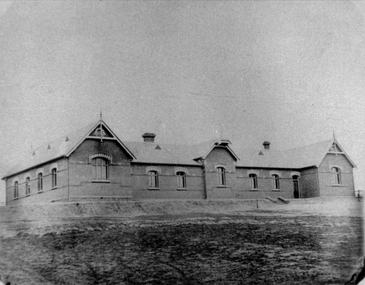
Photograph - Photograph - Black and White, Mount Pleasant Primary School No 1436, 1874
... School on 01 April 1899. Some former students of this school include: J.G. Eagleston (County Court Judge); H.E. Starke (Judge of the High Court of Australia ); Bernard O'Dowd (parliamentary draughtsman and poet); Albert Coates (Surgeon and Medical Officer in Burmese Prisoner of War Camps). ...School on 01 April 1899. Some former students of this school include: J.G. Eagleston (County Court Judge); H.E. Starke (Judge of the High Court of Australia ); Bernard O'Dowd (parliamentary draughtsman and poet); Albert Coates (Surgeon and Medical Officer in Burmese Prisoner of War Camps). ...Mount Pleasant Primary School 1435 was formerly known as Clayton's Hill, and evolved from a tent school, commenced in 1855 by William McIntosh. When changed from a Wesyleyan day school to a Common School it was given the number 424, received State funding and was conducted by William H. Nicholls. On 01 January 1873 the school became a non-vested school under control of the Education Department until 31 August 1873. The State then leased the school until 31 July 1874, with the current brick school, Mount Pleasant No.1436, opening on 01 August 1874. The Head Teacher of the new school was William H. Nicholls, remained at the school until 1887. His assistants were Thomas Gray, Jane Shaw, Jane Tratham, Catherine J. Berriman, John Blight, Herbert Berchaivaise and Annie Hicks, all who had worked at Mount Pleasant No. 424. William Nicholls and his assistant Gray established after school classes to enable students to gain Exhibitions and Scholarships to matriculate for the University of Melbourne, and courses enabling entry to teaching, pharmacy and civil service. Before the establishment of State Secondary and Technical Educaiton over 100 pupils from Mount Pleasant Primary School has matiriculated and entered the various professions. (Visions and Realisations, Vol. 2, pg 653 and 767) William Henry Williams became the first classifier of teachers for the Victorian Education Department. He died aged 51 while Head Teacher at Yarra Park Primary School on 01 April 1899. Some former students of this school include: J.G. Eagleston (County Court Judge); H.E. Starke (Judge of the High Court of Australia ); Bernard O'Dowd (parliamentary draughtsman and poet); Albert Coates (Surgeon and Medical Officer in Burmese Prisoner of War Camps). Gold was discovered at Caylton's Hill in 1853.Black and white photograph of a primary school in the Ballarat suburb of Mount Pleasant. The brick school is sat on bluestone foundations.mount pleasant primary school, mount pleasant state school, mount pleasant, mt pleasant, education, clayton's hill, bluestone, william h. nicholls, thomas gray, jane shaw, jane tratham, catherine j. berriman, john blight, herbert berchaivaise, annie hicks, albert coates, h.e. starke, j.g. eagleston -
Federation University Historical Collection
Booklet, Ballarat School of Mines Student's Magazine, Second Term, 1903, 1903
... camp, Some engineering experiences, Some reminiscences of W. A., Science notes, Notes on Mt Lyell, Students afield, Estimation of titanium, Illustration - students' abroad - No. 1, Past students, Ballarat scientific and literary society, Students' reunion, News and notes, Special notice, A sentimental ditty, International atomic weights. ballarat school of mines students' magazine o. e. jager obituary alfred gersham johnston w. b. blyth s. b. vial, d. w. b. arthur s. radcliffe r. j. allen tom vincent angus gibson lew westcott reg robin r. a. suter b. nicholls cecil eeles gerald young, harold edgar fred cooper h. l. krause len seal r. m. stubbs dave lilley e. w. trend austin woods j. phillipson j. brangan e. prendergast, w. j. lakeland w. a. gosman a. basil reid students' reunion alfred Mica Smith dr salmon j. b. pearson e. shew j. m. currie h. alston, h. irwin f. j. martell a. m. ritchie professor dawbarn a. m. ritchie t. s. hart j. a. reid a. e. kerr a. gillespie thomas hart frederick martell Pale gray booklet of 20 pages Ballarat School of Mines Student's Magazine, Second Term, 1903 Booklet Berry Anderson & Co. ...Table of contents: Editorial, Bad language in Sturt Street, The Greatest Mining Camp on Earth, A method for estimating arsenic in ores, S.M.B. camp, Some engineering experiences, Some reminiscences of W. A., Science notes, Notes on Mt Lyell, Students afield, Estimation of titanium, Illustration - students' abroad - No. 1, Past students, Ballarat scientific and literary society, Students' reunion, News and notes, Special notice, A sentimental ditty, International atomic weights. Pale gray booklet of 20 pagesballarat school of mines, students' magazine, o. e. jager, obituary, alfred gersham johnston, w. b. blyth, s. b. vial,, d. w. b. arthur, s. radcliffe, r. j. allen, tom vincent, angus gibson, lew westcott, reg robin, r. a. suter, b. nicholls, cecil eeles, gerald young,, harold edgar, fred cooper, h. l. krause, len seal, r. m. stubbs, dave lilley, e. w. trend, austin woods, j. phillipson, j. brangan, e. prendergast,, w. j. lakeland, w. a. gosman, a. basil reid, students' reunion, alfred mica smith, dr salmon, j. b. pearson, e. shew, j. m. currie, h. alston,, h. irwin, f. j. martell, a. m. ritchie, professor dawbarn, a. m. ritchie, t. s. hart, j. a. reid, a. e. kerr, a. gillespie, thomas hart, frederick martell -
Federation University Historical Collection
Booklet, Berry, Anderson and Co., Printers, Bookbinders, &c, Ballarat School of Mines, Student Magazine, Second Term, 1908, 1908
... Table of Contents: Editorial, Practical Mathematics, Annual Geological Camp, Pioneer Mining, Automatic Ore Feeders, A Unique Ore Deposit, A Country Ramble, Some Bunsen Memories, The Alkaline Titration for Zinc, Chalcedony Park, A Great Chemist's Toast, Correspondence, The Scientific and Literary Society, S.M.B. "Bon Mots", Theatre Party, Past Students', Answers to Correspondents, News and Notes, Sports Meeting, Football, Skating, Old Boys Please Note, Editorial Notices. ballarat school of mines, students' magazine, hubert f. hall, j. h. adams, sir william ramsay. past students': h. j. robin, c. w. nash, j. w. hawthorne, hubert krause, w. b. blyth, bob mitchell, w. b. cooke, e. gregory, w. macartney, j. watson, c. c. harris, f. brinsden, j. housten, o. e. jager, e. m. boyer, g. govett, h. s. sheppherd, hubert h. hall, w. playford, j. a. reid. .1) 23 pages .2) Orange/brown coloured Booklet of 20 pages plus advertisements. ...Table of Contents: Editorial, Practical Mathematics, Annual Geological Camp, Pioneer Mining, Automatic Ore Feeders, A Unique Ore Deposit, A Country Ramble, Some Bunsen Memories, The Alkaline Titration for Zinc, Chalcedony Park, A Great Chemist's Toast, Correspondence, The Scientific and Literary Society, S.M.B. "Bon Mots", Theatre Party, Past Students', Answers to Correspondents, News and Notes, Sports Meeting, Football, Skating, Old Boys Please Note, Editorial Notices..1) 23 pages .2) Orange/brown coloured Booklet of 20 pages plus advertisements.ballarat school of mines, students' magazine, hubert f. hall, j. h. adams, sir william ramsay. past students': h. j. robin, c. w. nash, j. w. hawthorne,, hubert krause, w. b. blyth, bob mitchell, w. b. cooke, e. gregory, w. macartney, j. watson, c. c. harris, f. brinsden, j. housten, o. e. jager, e. m. boyer,, g. govett, h. s. sheppherd, hubert h. hall, w. playford, j. a. reid. -
 Ringwood and District Historical Society
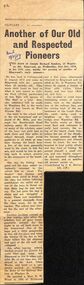
Newspaper, The Mail, Obituary - Joseph Richard Sanders - Old and Respected Pioneer Ringwood 1959 from the Ringwood Mail, 1959
... school was closed for the rest of the afternoon. Another incident related to a few tramps who after the scholars had all gone home, generally camped for the night in an old back room in the homestead. One of the boys put a little gunpowder in this old fireplace and when the tramps lit the fire to boil their billies the old chimney and part of the old wall just collapsed. Joe, after leaving school, worked around the district for some...school was closed for the rest of the afternoon. Another incident related to a few tramps who after the scholars had all gone home, generally camped for the night in an old back room in the homestead. One of the boys put a little gunpowder in this old fireplace and when the tramps lit the fire to boil their billies the old chimney and part of the old wall just collapsed. Joe, after leaving school, worked around the district for some ...The article was contributed by J.K.McCaskill, JP. a mayor of Ringwood in the years between 1924-1951.The Sanders family came from England and are mentioned in the book "Ringwood a Place of Many Eagles" by Hugh AndersonObituary from The Ringwood Mail of Joseph Richard Sanders of 18, Wantirna Road, Ringwood, aged 87 years. He came from a family who were early pioneers of Ringwood. he was born in Collingwood but schooled in Ringwood, married and brought up his family in Ringwood. He lived at 18, Wantirna Road .The article was contributed by J.K.McCaskill, JP. a mayor of Ringwood in the years between 1924-1951.Transcript: "The death occurred of Joseph Richard Sanders, 18 Wantirna Rd, Ringwood, on Wednesday, 21st October 1959, in his 87th year, marks the passing of another of Ringwood’s early pioneers. He was born in Collingwood in August 1873 and came to Ringwood with his parents when 15 months old. They made their home on land on what is now known as Jubilee Park (Fuller particulars of this Park will appear in ‘The Mail’ at a later date, also reference will be made to Wantirna Rd, in the early days it was known as West Prussia Rd). Joe went to the school held in the old homestead and orchard of Mr. Mills, just through the Heatherdale Road railway gates. He remembered many of the scholars, some of the boys and girls had to walk three and four miles to school through rough scrub paddocks in all kinds of weather. During the lunch hour a few of the boys generally went to the creek to fish for eels and would be late in getting back to school, greatly to the annoyance of the teacher. One day the fishing was good, and the boys rather reluctantly returned to the school late as usual. The teacher was furious and made them stand in front of the class but before inflicting punishment she called out to one of the boys to throw out that dirty bag he was holding. The lad gave the bag a shake and out wriggled a snake. There was immediately a general stampede from the classroom, led by the teacher. The school was closed for the rest of the afternoon. Another incident related to a few tramps who after the scholars had all gone home, generally camped for the night in an old back room in the homestead. One of the boys put a little gunpowder in this old fireplace and when the tramps lit the fire to boil their billies the old chimney and part of the old wall just collapsed. Joe, after leaving school, worked around the district for some time and later left Ringwood to live in other suburbs. He at one time was employed at the Aust Glass Works, and later as a carpenter worked on building the dome of the Railway Station at Flinders St. He married a Miss E. M. Wood in 1901 at Richmond and a few years afterwards returned to Ringwood and resided at No. 18 Wantirna Rd., where he reared a family' of three girls (Alice, Ethel, Joyce) and two boys (Robert and Joe). Joe recalled many interesting events of earlier years, such as the duplication of the railway line, and the cutting back of the embankment at the Goods Shed, the earth being used to heighten up the railway bridge over Wantirna Rd. The brickworks at Ringwood East and reference to early land surveys, the using of the heavy chain links before the use of the theodolite became general, and the many neighbours and friends whom he knew. He was interested in local public affairs and was fond of fishing. He proved himself a good citizen and was highly respected and esteemed throughout the district, and so another old pioneer passes on." (Contributed by J. K. McCaskill, J.P.) RM 19 Nov 1959 -
Ringwood and District Historical Society
Document, Ringwood Technical School, 1982 - Policies, Structures, Roles, SRC, Camp Duncan Rules etc
... The Index pdf lists the contents of each part but is repeated here: Part 1 • General Educational Policy • Procedures Adopted By The Curriculum Board In Order To Implement The Educational Policy Part 2 • School Administrative Structure o Operational Structure - Operations Committee o Curriculum Board o Org Chart • Role of the Senior Teacher • Role of Head of Department • Role of Assistant with Responsibility • Role of Year Level Coordinator • Role of Section Leader Part 3 • Role of the Welfare Officer • Bell Times 1983 • School Layout • Evacuation Procedure and Diagram • Recording of Students’ Attendance • Staff Absences • Concerning School Rules Part 4 - SRC • Students; Representative Council – Constitution and Rules Part 5 – Camp Duncan, Excursion etc • Camp Duncan Disposition of Duties 1983 • Receipts/forms pro-forma • Some Facts About Camp Duncan • Camp Duncan Date 1983 • Student Checklist and Luggage Requirements for Camps and excursions • Confidential Medical Report for School Camps • Parental Permission Form Part 6 • Education Department Victoria o Pay Advice and Allowance Table o Subject Coding o Leave o General Advice on Transfers o Excursion procedure, Approval Form • Student Assembly Points ...The Index pdf lists the contents of each part but is repeated here: Part 1 • General Educational Policy • Procedures Adopted By The Curriculum Board In Order To Implement The Educational Policy Part 2 • School Administrative Structure o Operational Structure - Operations Committee o Curriculum Board o Org Chart • Role of the Senior Teacher • Role of Head of Department • Role of Assistant with Responsibility • Role of Year Level Coordinator • Role of Section Leader Part 3 • Role of the Welfare Officer • Bell Times 1983 • School Layout • Evacuation Procedure and Diagram • Recording of Students’ Attendance • Staff Absences • Concerning School Rules Part 4 - SRC • Students; Representative Council – Constitution and Rules Part 5 – Camp Duncan, Excursion etc • Camp Duncan Disposition of Duties 1983 • Receipts/forms pro-forma • Some Facts About Camp Duncan • Camp Duncan Date 1983 • Student Checklist and Luggage Requirements for Camps and excursions • Confidential Medical Report for School Camps • Parental Permission Form Part 6 • Education Department Victoria o Pay Advice and Allowance Table o Subject Coding o Leave o General Advice on Transfers o Excursion procedure, Approval Form • Student Assembly Points Ringwood Technical School, 1982 - Policies, Structures, Roles, SRC, Camp Duncan Rules etc Document ...Set of Documents describing school policies, structure, roles, SRC, Camp Duncan, subject coding, emergency procedures etc. Scanned in 6 parts due to volume of pages. Most pages are not numbered. Donated by Joan Pickford (nee Dear) 2022. (Prefect 1970-71). The Index pdf lists the contents of each part but is repeated here: Part 1 • General Educational Policy • Procedures Adopted By The Curriculum Board In Order To Implement The Educational Policy Part 2 • School Administrative Structure o Operational Structure - Operations Committee o Curriculum Board o Org Chart • Role of the Senior Teacher • Role of Head of Department • Role of Assistant with Responsibility • Role of Year Level Coordinator • Role of Section Leader Part 3 • Role of the Welfare Officer • Bell Times 1983 • School Layout • Evacuation Procedure and Diagram • Recording of Students’ Attendance • Staff Absences • Concerning School Rules Part 4 - SRC • Students; Representative Council – Constitution and Rules Part 5 – Camp Duncan, Excursion etc • Camp Duncan Disposition of Duties 1983 • Receipts/forms pro-forma • Some Facts About Camp Duncan • Camp Duncan Date 1983 • Student Checklist and Luggage Requirements for Camps and excursions • Confidential Medical Report for School Camps • Parental Permission Form Part 6 • Education Department Victoria o Pay Advice and Allowance Table o Subject Coding o Leave o General Advice on Transfers o Excursion procedure, Approval Form • Student Assembly Points rts, ringwood tech -
 Ringwood and District Historical Society
Photograph, 43 Assorted photos from a Southwood Primary School camp to Somers (year unknown)
... Yellow envelope marked with "Spare Somers Photos Southwood" 43 Assorted photos from a Southwood Primary School camp to Somers (year unknown) Photograph ...Yellow envelope marked with "Spare Somers Photos Southwood" -
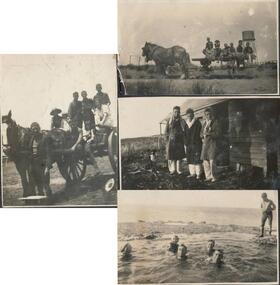 Phillip Island and District Historical Society Inc.
Photograph - Photographs of Phillip Island, 1920s and 1940s
... Photographs associated with Public Schools camp, that started in the 1930s. Some boys worked on chicory at McFee's farm. 314-05 was possibly located at Trenavin Farm, Ventnor. ...Photographs associated with Public Schools camp, that started in the 1930s. Some boys worked on chicory at McFee's farm. 314-05 was possibly located at Trenavin Farm, Ventnor. ...Photographs associated with Public Schools camp, that started in the 1930s. Some boys worked on chicory at McFee's farm. 314-05 was possibly located at Trenavin Farm, Ventnor. (Source Jan Andrews ) Photo of people on cart with tank stand was off to a 7 picnic at the Nobbies 1917. [See 1124-01] Keeston Sambell driving, behind him is Betty Parker. on side from left is May Lambert, Jim Patterson, Jim Blake, Carmen Sambell and Bill Sambell.[ Source Jim Blake] Eight black & white photographs. 314-01. Photograph of horse and cart with 2 women, 2 girls and 5 boys. 314-02. Photograph of a mixed group of 7 people on a horse and drag. 314-03. Photograph of 3 young adult males and a dog standing in front of a wooden building. 1926 “Campers Rest” Labelled The Immortal camp at Ventnor. Poss. Trenavin Park 314-04. Photograph of 5 boys and 1 woman swimming in rock pool. 1 boy watching. 314-05. Photograph of old wooden hut with tank and chimney. Appears to have been used by boys when camping. 314-06. Photograph of 4 boys - 2 in swimming costumes - on the beach. 314-07. Photograph of 3 women and 1 girl sitting on sand dunes. 314-08. Photograph of 3 boys in uniform and 1 man sitting on bench - maybe watching sporting event?scotch college camp phillip island, scotch college boys, s j mcfee, c.k. newman, f. r. newman, trenavin park phillip island, sambell family, jim blake, betty parker
