
Showing 150 items matching "stage one buildings"
-
 Federation University Historical Collection
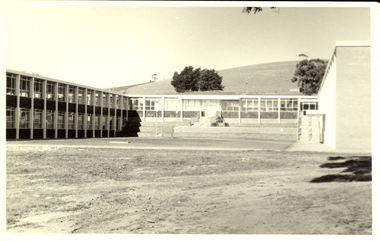
Photograph, Mount Helen Campus Stage One Buildings, c1970
... Mount Helen Campus Stage One Buildings...Stage one buildings...Black and white photograph of the Mount Helen Campus Stage One Buildings...Stage one buildings buildings f Building g building Black and white photograph of the Mount Helen Campus Stage One Buildings Mount Helen Campus Stage One Buildings Photograph ...Black and white photograph of the Mount Helen Campus Stage One Buildingsstage one buildings, buildings, f building, g building -
 Federation University Historical Collection
Photograph, Mount Helen Campus Stage One Buildings, 1974
... Mount Helen Campus Stage One Buildings...Photos of the Mount Helen Campus Stage One Buildings...Barker Library E Building Photos of the Mount Helen Campus Stage One Buildings Mount Helen Campus Stage One Buildings Photograph ...Photos of the Mount Helen Campus Stage One Buildingsbuildings, mount helen campus, library, e.j. barker library, e building -
 Federation University Historical Collection
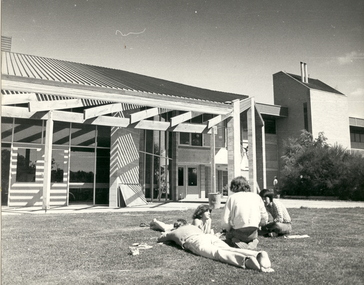
Photograph - Photograph - black and white, Mount Helen Campus Union Building, c1980
... building...albert coates complex...footbridge...stage one...mount helen campus buildings e.j. barker library union building albert coates complex footbridge stage one buildings Photograph of the Mt Helen Campus, including the library, Union Building Mount Helen Campus Union Building Photograph Photograph - black and white ...Photograph of the Mt Helen Campus, including the library, Union Buildingmount helen campus, buildings, e.j. barker library, union building, albert coates complex, footbridge, stage one buildings -
Federation University Historical Collection
Photograph, Official Opening of Stage 1 Buildings on Mount Helen Campus, 1970, 31/10/1970
... ...Stage one buildings...Nigel bowen mount helen campus opening Stage one buildings Morgan B. John M.B. John E.J. ...Official Opening of Stage 1 Buildings on Mount Helen Campus by The Hon. Nigel Bowennigel bowen, mount helen campus, opening, stage one buildings, morgan b. john, m.b. john, e.j. barker, jack barker, dudley erwin, rolly parfenovics, w.g. durant, bill durant, harold arblaster -
Federation University Historical Collection
Photograph, Turning of the Sod on Mount Helen Campus, 31/10/1970
... ...stage one buildings...mount helen campus stage one buildings morgan b. john m.b. john e.j. barker jack barker nigel bowen Kaye Barry Turning of the Sod on Stage 1 Buildings on Mount Helen Campus by The Hon. ...Turning of the Sod on Stage 1 Buildings on Mount Helen Campus by The Hon. Nigel Bowenmount helen campus, stage one buildings, morgan b. john, m.b. john, e.j. barker, jack barker, nigel bowen, kaye barry -
 Federation University Historical Collection
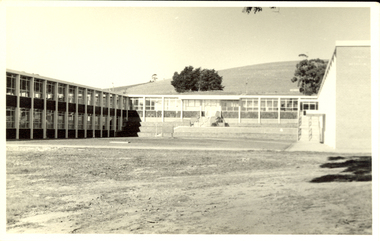
Photograph - Black and White, Bill Durant (probably), Mount Helen Campus, 1970, c1970
... Views of the Stage one buildings on the Mount Helen Campus...This photograph was most probably taken by lecturer Bill Durant who was a staff member on the Mount Helen Campus from 1970 federation university federation university australia feduni ballarat institute of advanced education durant Views of the Stage one buildings on the Mount Helen Campus Mount Helen Campus, 1970 Photograph - Black and White Bill Durant (probably) ...This photograph was most probably taken by lecturer Bill Durant who was a staff member on the Mount Helen Campus from 1970Views of the Stage one buildings on the Mount Helen Campusfederation university, federation university australia, feduni, ballarat institute of advanced education, durant -
 Federation University Historical Collection
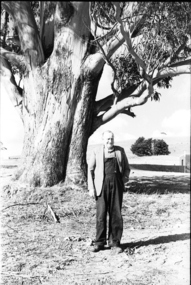
Photograph - black and white, Mr Downing by the Federation University Tree of Knowledge, 1970
... A man in overalls and jacket stands beside the Federation University Tree of Knowledge. Stage one buildings on the Mount Helen Campus are evident in the background....By 2003 the spread was 39.5 metres (N-S) and 35.5 metres (E-W), girth 7.75 metres, and height 42.5 metres. elizabeth downing downing tree of knowledge big tree mount helen campus Mount Helen A man in overalls and jacket stands beside the Federation University Tree of Knowledge. Stage one buildings on the Mount Helen Campus are evident in the background. ...Federation University Mount Helen Campus was open to students in 1970. In that year Mr Dowling as photographed beside a big Tasmanian bluegum which was used a the centre Mount Helen Campus concept plan, and later became known as the Tree of Knowledge. Mr Dowling watered the tree after it was planted by his mother, Elizabeth Downing, on Arbour Day 1896. Mrs Downing raised her large family on the site of the Mount Helen Campus, which included an orchard and milking cows. The Tree of Knowledge is actually two trees, the trunks have fused together over time, and there is further evidence of fusion. The Downing farmhouse was situated in the vicinity of the present Administration and Caro Conference Centre buildings and the tree was planted beside the "dunny". It was carefully watered by the nine Downing children from a brick-lined well situated under what is now the Albert Coates Building. As the tree grew to maturity, it was used to hang a meat safe after slaughtering a sheep for the family table. Some years ago, when the foundations were being dug for the E-Building, an old rusted percussion pistol was found. One of Mrs Downing's sons, at that time well into his nineties, remembered getting into trouble for playing with it without permission, and losing it. The land was purchased in 1966 as part of a 241-acre site for Ballarat's new tertiary institution. When the architects and planners inspected the site, they decided "The Big Tree" must remain as a central landmark in preparing the layout of the campus amenities. In 1982, the spread of the tree was 36 metres, girth 7 metres, and height 36 metres. By 2003 the spread was 39.5 metres (N-S) and 35.5 metres (E-W), girth 7.75 metres, and height 42.5 metres. A man in overalls and jacket stands beside the Federation University Tree of Knowledge. Stage one buildings on the Mount Helen Campus are evident in the background.elizabeth downing, downing, tree of knowledge, big tree, mount helen campus, mount helen -
 Federation University Historical Collection
Photograph, N.l. Harvey & Son, Mount Helen Campus, 1968, 1969
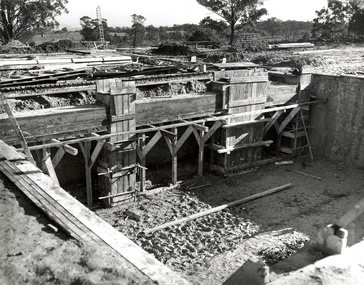
... First columns of E building. .13) Mt Helen development Stage One, Engineering Diploma Buildings. ...First columns of E building. .13) Mt Helen development Stage One, Engineering Diploma Buildings. ...The Federation University campus at Mount Helen was first used by students in 1970.Seven photographs of the Mt Helen Campus Stage one development. .1) Aerial view of foundation work, from west, towards Green Hill .2) Aerial View from South. Earthworks and foundations .3) Aerial View from south west. Earthworks, general view .4) Aerial View from above the South West corner of E building. .5) Aerial View from North East. Gear Avenue in background .6) Aerial View from North West. Earthworks extend from Gear Avenue .7) Ground level view. First columns of E building. .13) Mt Helen development Stage One, Engineering Diploma Buildings. This image shows the wall beam and pier construction to the East Wall of the Fluid Mechanics Laboratory adjacent to the pump chamber, 17 June 1968. .18) Flume Pit and Pump Chamber, 15 July 1968. .28) East Wing Pit Looking North, 26 August 1968 .40) Construction as of 04 November 1968federation university, federation university australia, feduni, university of ballarat, ballarat college of advanced education, ballarat institute of advanced education, building, earthworks, foundation, early development, soil testing laboratory -
 Flagstaff Hill Maritime Museum and Village
Document - Plans, Lighthouse Keeper's Quarters Warrnambool, 1858-1909
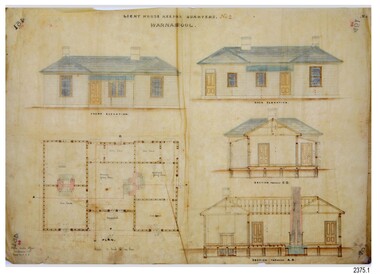
... buildings and the rest of the Crown Land on the site. The Flagstaff Hill Maritime Village opened in 1975 and began renovating the Cottage in stages, during which time evidence of a 1920s fire was found in the eastern section of the cottage. Additions of a porch on the west and a washroom on the east were made in the 1980s. The western part of the building is now a Shipwreck Museum and the east has returned to a late 19th-century Lighthouse Keeper’s cottage and includes the screen made by Assistant Lighthouse Keeper Thomas Hope during one...buildings and the rest of the Crown Land on the site. The Flagstaff Hill Maritime Village opened in 1975 and began renovating the Cottage in stages, during which time evidence of a 1920s fire was found in the eastern section of the cottage. Additions of a porch on the west and a washroom on the east were made in the 1980s. The western part of the building is now a Shipwreck Museum and the east has returned to a late 19th-century Lighthouse Keeper’s cottage and includes the screen made by Assistant Lighthouse Keeper Thomas Hope during one ...The set of seven 1858 plans shows proposed plans for the original Lighthouse Complex that was built on Middle Island in 1858-1859. The whole complex was then transferred to Flagstaff Hill in 1871. The plan, dated 1909, is for proposed additions and repairs to the Quarters at Flagstaff Hill. The plan 'Alterations and Additions' shows alternate plans for changes to the quarters at the Flagstaff Hill location. This plan has no date. The Complex comprised the Lighthouse, the Lighthouse Keepers’ Quarters, the Store (now called the Chart Room) and a Privy, which was not included in these plans. The Keeper’s bluestone Quarters was a cottage divided into two compartments, one for each keeper and his family. The bluestone Store was divided into three; a store, a workshop an oil store (or office). The Privy comprised of a small building also divided into two separate, back-to-back toilets, one for each Keeper and his family. The Flagstaff Hill Keeper's Quarters have had extensions and additions at various times, and these have also been removed at various other times. THE PLANS - *Dec. 1858 (12/58) ‘Lighthouse Keepers Quarters No.2 Warrnambool’ (2375.01)* Public Works Office Melbourne – Front and Back elevations, sections, and floor plan. The drawing shows timber walls. [The floor plan is the closest plan to the current building, however, the walls are timber in this plan.] *Nov. 1858 – No.3 ‘Lighthouse Keepers Quarters Warrnambool’ (2375.02)* Office of Public Works, Melbourne – Back and End elevations and section through. The drawing shows stone walls. One side; Senior Keeper’s bedroom, living room and kitchen with storeroom. Another side; is the Assistant’s bedroom, living room and storeroom. *Nov. 1858 - No.4 ‘Lighthouse Stores Warrnambool’ (2375.03)* Office of Public Works – Front, Side and end elevations, centre section. The drawing shows stone walls. *Nov. 1858 – No.4, ‘Lighthouse Stores No. 2 Warrnambool’ (2375.04)* Office of Public Works – Front, side and end elevations, centre section. The drawing shows timber walls. *Nov. 1858 – ‘Details Lighthouse Keepers Quarters No. 2 Warrnambool’ (2375.05)* Public Works Office Melbourne. The plan shows the foundations, joists and eaves. The drawing shows timber walls. (Nov. 1858 – ‘No.4 ‘Lighthouse No. 2 – Warrnambool’ (2375.06)* Public Works Melbourne (Part of the paper is missing). This plan shows an octagonal tower, internal stairs, a balcony landing, and a weather vane on top. *November 1858 – No. 1, ‘Lighthouse – Warrnambool’ (2375.07)* Office of Public Works Melbourne. This plan shows a round tower, including the stairs, windows on the tower and the weather vane on the top. *4/3/9 [1909] – ‘Additions and Repairs, Lighthouse Quarters, Warrnambool, General Plan’ (2375.8)* Department of Public Works Melbourne’s official stamp is signed by Croft. It shows the floor plans of the Store, Upper Lighthouse and the Quarters. The Store building has three sections; a Store, Work-Shop and Office, with an internal wall between them and separate entries. The Quarters are divided into two dwellings. The Senior Keeper’s side on the left has fireplaces in two of the three bedrooms and there is a pantry and wash house. The Assistant’s side has no fireplaces in the bedrooms and there’s no pantry or washhouse. These plans include proposed changes to the buildings. The Senior Keeper’s Quarters would have a partition on bedroom 2, a bath with plumbing and drainage, a wall moved and a built-in side porch. The Store would also have a built-in porch. The undated plan 'Additions and Alterations' (2375.9) shows alternative arrangements for water tanks, plumbing and such. WARRNAMBOOL'S LADY BAY LIGHTHOUSES- In the 1800s ships sailing from England to Australia began to use Bass Strait as a faster route to Melbourne. Small navigation errors led to many tragic shipwrecks. From 1848 lighthouses were operating along Victoria’s southern coast as a guide for sailors. Coastal towns such as Warrnambool grew and the exchange of trade and passengers were of great benefit. However, the uncertain weather changes, relatively shallow waters and treacherous, hidden rocky reefs were not suitable for a Harbour and in the 1840s and 1850s there were many shipwrecks in the area, with some even stranded in its Lady Bay harbour. A jetty was built in 1850 and a flagstaff to guide seafarers was placed up high on what became known now as Flagstaff Hill. In November 1857 the Victorian Government recommended that Warrnambool Harbour had beacons and two lighthouses to guide vessels into and out of the Harbour safely. The white light of the Middle Island lighthouse was to be used for the first time on September 1, 1859. The red light of the Beach Lighthouse, a wooden obelisk structure, was first operated on March 25, 1860, but in 1868 this light was ‘discontinued’ due to it being too low. Melbourne’s Department of Public Works decided to relocate the Middle Island Lighthouse Complex - Lighthouse, Keeper’s Quarters, Privy, Store Room and even water tanks - to Flagstaff Hill. The lower obelisk was shortened, and a protruding gallery, railing, and external ladder were added, as well as the light from the Beach Lighthouse. A green guiding light was erected on the end of the jetty. The transfer of the Complex began in March 1871. Each shaped stone of the lighthouse was carefully numbered, removed then reassembled on Flagstaff Hill. In 1872 the well was sunk behind the Lighthouse Keeper’s Cottage. The Keepers and families had left Middle Island in April and moved to Flagstaff Hill in October 1871. Vessels entering Lady Bay align the Upper and Lower Lighthouse towers during the day and the lights at night. The Upper Lighthouse is a round tower, the Lower Light is square. The Lighthouses were categorised as harbour lights rather than coastal lights, so they remain under the control of the Victorian Government’s Ports and Harbours section. The lights were originally powered by oil, then acetylene gas, later by electricity, and then converted to solar power in 1988. In 1993 the solar panel was replaced by a battery charger. A decision was made in 1936 to replace the lighthouses’ lights with unattended lights that no longer required Keepers and Assistants. At least 29 Keepers had attended to the lighthouse from its opening in 1859 to when the last official Lightkeepers left In April 1916. The Warrnambool Harbour Board rented out the Quarters from 1916 to 1936. The Board closed down but the rentals continued with other unknown landlords. In the 1970s the Flagstaff Hill Planning Board was set up under the chairmanship of John Lindsay. The Board was to make recommendations to the Warrnambool City Council regarding the use of the buildings and the rest of the Crown Land on the site. The Flagstaff Hill Maritime Village opened in 1975 and began renovating the Cottage in stages, during which time evidence of a 1920s fire was found in the eastern section of the cottage. Additions of a porch on the west and a washroom on the east were made in the 1980s. The western part of the building is now a Shipwreck Museum and the east has returned to a late 19th-century Lighthouse Keeper’s cottage and includes the screen made by Assistant Lighthouse Keeper Thomas Hope during one of his two periods of service there. THE LIGHTHOUSE KEEPERS Lighthouse Keepers were responsible for keeping their Lighthouse’s lights shining at night. They kept a lookout for passing vessels and changes in weather. They were expected to clean, polish and maintain the equipment and buildings. They kept regular and detailed records of who was on watch, and the time the light was lit, trimmed and extinguished. They kept a journal about other events that occurred. They keep regular, accurate Meteorological Logs. It was expected that they were competent in Morse code signalling. They would be called to help in times of disasters and shipwrecks, and to give official statements about these events. Many Lighthouse Keepers also volunteered as members of the lifeboat crew. The Lady Bay lighthouses were officially classified as small, so the Keepers had the official titles of Senior Assistant Lighthouse Keeper and Assistant Lighthouse Keeper. They were employed by the Public Service and paid rent to live in the Lighthouse Quarters. They were compulsorily retired at the age of 60, with most receiving a superannuation payment. Despite their time-consuming duties, there was time to follow hobbies and crafts such as growing vegetables, playing musical instruments, making models of buildings including lighthouses, and crafting furniture pieces. An example of a keeper’s skills is the carved fire screen made by /assistant Keeper Thomas Hope in the early 20th century and displayed in the Lighthouse Keeper’s cottage at Flagstaff Hill. The last occupants of the Middle Island Complex were Senior Keeper Robert Deverell, his Assistant Keeper, Andrew Farncombe, and their families. They all became the first occupants at the Lady Bay Lighthouse Keepers’ Quarters on Merri Street. The Warrnambool Lighthouse Complex plans are the origin of what is now the Lady Bay Lighthouse Complex. They are a record of the people, process and departments involved in bringing the complex into fruition. The plans are significant to the Complex, which is now listed on the Victorian Heritage Register, H1520, for being of historical, scientific (technological) and architectural significance to the State of Victoria. The Complex is significant as an example of early colonial development. The plan are significant for their connection with the important navigational function of the Lighthouses, a function still being performed to this day. The plans are also significant as an example of a product from the Public Works Department in Victoria in the mid-to-late 19th century. The structures built to these plans still stand strong. Plans for the Lighthouse Complex in Warrnambool, including Lighthouses, Keeper's Quarters and Stores. Seven of the plans are on thin fragile paper, one is on thicker, stronger paper. The drawings have been made in pens coloured red and black. They originate from Public Works in Melbourne. Seven were drawn in 1858, one in 1904, the other is not dated.Dec. 1858 - Lighthouse Keepers Quarters No.2 Warrnambool. Public Works Office Melbourne. Nov. 1858 - No.3 ‘Lighthouse Keepers Quarters Warrnambool. Public Works Office Melbourne. Nov. 1858 - No.4 ‘Lighthouse Stores Warrnambool. Office of Public Works. Nov. 1858 - No.4, ‘Lighthouse Stores No. 2 Warrnambool. Office of Public Works. Nov. 1858 - Details Lighthouse Keepers Quarters No. 2 Warrnambool. Public Works Office Melbourne. Nov. 1858 - No.4 ‘Lighthouse No. 2 – Warrnambool. Public Works Melbourne. Nov. 1858 - No. 1, Lighthouse - Warrnambool. Office of Public Works Melbourne. 4/3/9 [1909] - Additions and Repairs, Lighthouse Quarters, Warrnambool, General Plan. Department of Public Works Melbourne. SIGNED "Croft" "15A" on reverse [no date] - Lighthouse Quarters Warrnambool, Additions and Alterations. "9A" on reverseflagstaff hill, warrnambool, lighthouse keeper's cottage, lighthouse residence, lighthouse, plans, public works, melbourne, flagstaff hill maritime museum, maritime museum, shipwreck coast, flagstaff hill maritime village, chart room, quarters, privy, middle island, beach lighthouse, obelisk, lighthouse keeper, assistant keeper, lighthouse complex, lady bay, lady bay complex, keepers, upper lighthouse, lower lighthouse, ports and harbours, cottage, harbour board, flagstaff hill planning board, meteorological record, robert deverell, andrew farncombe, warrnambool port, warrnambool harbour, residence, alterations, repairs, department of works, light keeper -
Federation University Historical Collection
Programme, Programme for the Official Opening of the Mt Helen Campus, 10/1970
... Over the next two years a further four buildings, costing about $2,500,000, will be erected, and a further major portion of the Institute will move to Mt Helen. these buildings, in addition to one for direct teaching work, will include a Library, a Union and the first stage of a Hall of Residence."...Over the next two years a further four buildings, costing about $2,500,000, will be erected, and a further major portion of the Institute will move to Mt Helen. these buildings, in addition to one for direct teaching work, will include a Library, a Union and the first stage of a Hall of Residence." university of ballarat ballarat school of mines biae mount helen mt helen campus mb john jack barker e.j. barker rolly parfenovics parfenovics nigel bown campus. victorian institute of colleges m.b. john White, folded, paper programme printed on the occasion of the official opening of the Ballarat Institute of Advanced Education (BIAE) Mount Helen Campus on the occasion of the centenary of the Ballarat School of Mines Programme for the Official Opening of the Mt Helen Campus Programme Waller and Chester ...The first building at the Mt Helen Campus was opened in October 1970. Students first starting using the campus in the same year. The programme includes the following historical information: "On 26th October, 1870, Sir Redmond Barry officially opened the first venture into formal technical education in Australia - the Ballarat School of Mines. Over the preceding year a small group of Ballarat citizens interested in mining had conceived and brought into being the idea of creating such a school. They leased a derelict Court House next to the Ballarat Gaol in Lydiard St., at a nominal rental for15 years, and started classes with 4 students and an honorary lecturer. The School developed its courses beyond the initially intended range of studies related to mining, increased in enrolments, took over neighbouring properties and buildings and developed three levels of education - tertiary, trade and secondary. From the latter part of the 19th Century, even though remaining under the control of its own autonomous Council, it developed close links with the State Education Department. From the earliest times the School achieved widespread recognition and a particularly high reputation, and its graduates spread across Australia and the world. For several years it was affiliated with Melbourne University. In the last decade its scope has been further broadened by the introduction of new tertiary courses. During 1965 the State Government created the Victoria Institute of Colleges - a non-teaching body empowered to award degrees and directed towards the task of co-ordinating and developing tertiary education in Victorian in institutions other than universities. the tertiary division of the School became affiliated with the V.I.C. at the end of that same year. Subsequently the Council of the School decided that, whilst retaining for the whole establishment the time honoured title - The School of Mines and Industries, Ballarat - it should more distinctly sub-title the three divisions. the tertiary division then became known as the Ballarat Institute of Advanced Education. On receipt of substantial Commonwealth-State Grants, made to it as a college of advanced education, the Council was enabled at the start of 1967, to purchase for the Institute the 20 acre campus at Mt Helen. A master plan has been produced to develop this beautiful and spacious site as a tertiary institution enrolling, in due course, some 3000 full time students. the first sod was turned, to initiate this development, by the then Governor General of Australia, The Right Honourable Lord Casey, on 19th October, 1967. The first building group, now completed and occupied, has involved an expenditure approaching $1,000,000. It contains the departments of Mechanical, Civil and Mining Engineering, Metallurgy and Geology. it also contains the Computer Centre, a temporary Library and temporary student amenities. Over the next two years a further four buildings, costing about $2,500,000, will be erected, and a further major portion of the Institute will move to Mt Helen. these buildings, in addition to one for direct teaching work, will include a Library, a Union and the first stage of a Hall of Residence."White, folded, paper programme printed on the occasion of the official opening of the Ballarat Institute of Advanced Education (BIAE) Mount Helen Campus on the occasion of the centenary of the Ballarat School of Minesuniversity of ballarat, ballarat school of mines, biae, mount helen, mt helen campus, mb john, jack barker, e.j. barker, rolly parfenovics, parfenovics, nigel bown, campus. victorian institute of colleges, m.b. john -
 Federation University Historical Collection
Book, Gippsland Institute of Advanced Education Handbooks, 1970-1985
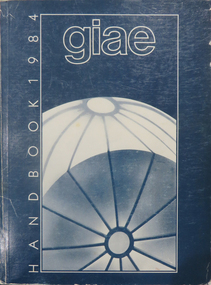
... buildings on a large campus in rural surroundings near the township of Churchill, ten kilometres south of Morwell and one hundred and sixty kilometres east of Melbourne. Engineering laboratories are temporarily located in buildings on the site of the Yallourn College of TAFE at Newborough and they will be consolidated on the Churchill campus by the end on 1985. In 1974 new buildings were completed under a self-help program to house the School of Visual Arts. A building complex to provide the first stages...buildings on a large campus in rural surroundings near the township of Churchill, ten kilometres south of Morwell and one hundred and sixty kilometres east of Melbourne. Engineering laboratories are temporarily located in buildings on the site of the Yallourn College of TAFE at Newborough and they will be consolidated on the Churchill campus by the end on 1985. In 1974 new buildings were completed under a self-help program to house the School of Visual Arts. A building complex to provide the first stages ....1) 1977 Gippsland Institute of Advanced Education Handbook with white cover .2) 1978 Gippsland Institute of Advanced Education Handbook with blue/black cover .3) 1979 Gippsland Institute of Advanced Education Handbook with orange cover .4) 1980 Gippsland Institute of Advanced Education Handbook with yellow/brown cover .5) 1981 Gippsland Institute of Advanced Education Handbook with grey/black cover .6 1984 Gippsland Institute of Advanced Education Handbook with blue cover .7) 1985 Gippsland Institute of Advanced Education Handbook with purple cover .8) 1989 Gippsland Institute of Advanced Education Handbook with white/purple/grey/red/blue cover .7) 1985 Gippsland Institute of Advanced Education Handbook with pale green cover. .9) 1974 Gippsland Institute of Advanced Education Handbook with orangeand white cover .10) 1975 Gippsland Institute of Advanced Education Handbook with green and white cover .11) 1976 Gippsland Institute of Advanced Education Handbook with white cover .12) 1986 Gippsland Institute of Advanced Education Handbook with mid-blue cover .13) 1987 Gippsland Institute of Advanced Education Handbook with red cover .14) 1988 Gippsland Institute of Advanced Education Handbook with red cover .15) 1973 Gippsland Institute of Advanced Education Handbook with brown cover .16) 1972 Gippsland Institute of Advanced Education Handbook with pale green cover .17) 1971 Gippsland Institute of Advanced Education Handbook with mid-blue cover non-fictiongippsland institute of advanced education, giae, gippsland, churchill, morwell, electricty, handbook, gippsland campus -
 Federation University Historical Collection
Photograph - Photograph - Black and White, Premier Joan Kirner visits the Ballarat School of Mines, August 1991, 08/1991
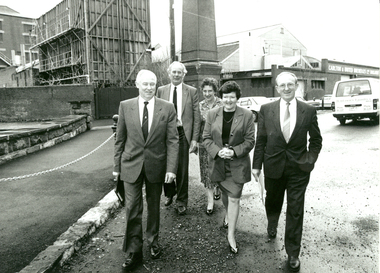
... stage 2 of the school's State Works and Services Development Project. Honoured in the naming ceremony was the late Albert Steane, the late Kenneth Fleckoe and Mr Jack Barker, President of the Ballarat School of Mines. The fourth facility was the recently opened carpentry and joinery complex. Mrs Kirner said naming the building in honour of the three men would act as a continual reminder of their contribution to education in Australia and what they have passed on to future generations. She said the Government and the State Training Board saw the college as not only one...stage 2 of the school's State Works and Services Development Project. Honoured in the naming ceremony was the late Albert Steane, the late Kenneth Fleckoe and Mr Jack Barker, President of the Ballarat School of Mines. The fourth facility was the recently opened carpentry and joinery complex. Mrs Kirner said naming the building in honour of the three men would act as a continual reminder of their contribution to education in Australia and what they have passed on to future generations. She said the Government and the State Training Board saw the college as not only one ...Before her marriage to Ron Kirner, Joan Hood taught at the Ballarat Girls' Junior Technical School in the late 1950s. The Girls' school was a division of the Ballarat School of Mines. After entering politics Joan Kirner was Minister for Education (1988) and Premier of Victoria (1990 to 1992). In 1992 Premier of Victoria Joan Kirner visited her former workplace to officially open and name four new facilities, marking stage 2 of the school's State Works and Services Development Project. Honoured in the naming ceremony was the late Albert Steane, the late Kenneth Fleckoe and Mr Jack Barker, President of the Ballarat School of Mines. The fourth facility was the recently opened carpentry and joinery complex. Mrs Kirner said naming the building in honour of the three men would act as a continual reminder of their contribution to education in Australia and what they have passed on to future generations. She said the Government and the State Training Board saw the college as not only one that was most important to Victoria but also nationally and internationally. A group of 5 people walking along Ballarat's Lydiard Street South. The former Ballarat Brewery in the background is in the process of being demolished to make way for an expansion of the SMB campus. Left to right: Peter Shiells, E.J. (Jack) Barker, Winsome Barker, Premier of Victoria Joan Kirner, Frank Sheehan MLA (Labor State Member for Ballarat South). joan kirner, joan hood, ballarat junior technical girls' school, e.j. barker, peter shiells, frank sheehan -
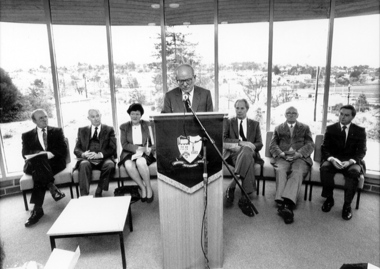 Federation University Historical Collection
Photograph - Photograph - Black and White, Premier Joan Kirner visits the Ballarat School of Mines, 1991, 08/1991
... stage 2 of the school's State Works and Services Development Project. Honoured in the naming ceremony was the late Albert Steane, the late Kenneth Flecknoe and Mr Jack Barker, President of the Ballarat School of Mines. The fourth facility was the recently opened carpentry and joinery complex. Mrs Kirner said naming the building in honour of the three men would act as a continual reminder of their contribution to education in Australia and what they have passed on to future generations. She said the Government and the State Training Board saw the college as not only one...stage 2 of the school's State Works and Services Development Project. Honoured in the naming ceremony was the late Albert Steane, the late Kenneth Flecknoe and Mr Jack Barker, President of the Ballarat School of Mines. The fourth facility was the recently opened carpentry and joinery complex. Mrs Kirner said naming the building in honour of the three men would act as a continual reminder of their contribution to education in Australia and what they have passed on to future generations. She said the Government and the State Training Board saw the college as not only one ...In 1991 Premier of Victoria Joan Kirner visited her former workplace (Ballarat Girls' Technical School, a division of the Ballarat School of Mines), to officially open and name four new facilities, marking stage 2 of the school's State Works and Services Development Project. Honoured in the naming ceremony was the late Albert Steane, the late Kenneth Flecknoe and Mr Jack Barker, President of the Ballarat School of Mines. The fourth facility was the recently opened carpentry and joinery complex. Mrs Kirner said naming the building in honour of the three men would act as a continual reminder of their contribution to education in Australia and what they have passed on to future generations. She said the Government and the State Training Board saw the college as not only one that was most important to Victoria but also nationally and internationally. Black and white photograph of a group of people in the Ballarat School of Mines E.J. Tippett Library. Bill Gribble is speaking behind a lecturn, with six people seated behind. They are (from left to right) Frank Sheehan (M.L.A. for Ballarat South; Peter Shiells (Director of the Ballarat School of Mines), Premier Joan Kirner; E.J. (Jack) Barker; Eric Steane. and David Flecknoe. joan kirner, frank sheehan, bill gribble, peter shiells, jack barker, david flecknoe, ken flecknoe, flecknoe, eric steane, albert steane, steane, kenneth flecknoe -
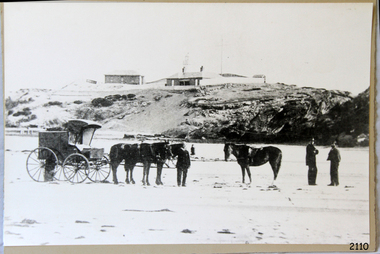 Flagstaff Hill Maritime Museum and Village
Photograph - Scene - Warrnambool, C. 1854-1871
... building also divided into two separate, back-to-back toilets, one for each Keeper and his family. In the 1970s the Flagstaff Hill Planning Board was set up under the chairmanship of John Lindsay. The Board was to make recommendations to the Warrnambool City Council regarding the use of the buildings and the rest of the Crown Land on the site. The Flagstaff Hill Maritime Village opened in 1975 and began renovating the Cottage in stages...building also divided into two separate, back-to-back toilets, one for each Keeper and his family. In the 1970s the Flagstaff Hill Planning Board was set up under the chairmanship of John Lindsay. The Board was to make recommendations to the Warrnambool City Council regarding the use of the buildings and the rest of the Crown Land on the site. The Flagstaff Hill Maritime Village opened in 1975 and began renovating the Cottage in stages ...This is an image of the Warrnambool Lighthouse Complex on Middle Island in 1854. The Store, Lighthouse Keeper's Quarters, Lighthouse and Flagstaff are in the background. The foreground shows a covered buggy drawn by two horses and a person in attendance, and another wheeled vehicle behind it with a figure nearby. There is a saddled horse to the right with two males in conversation nearby. The ground is soft, perhaps the riverbed or sandy shore. THE LIGHTHOUSE KEEPERS Lighthouse Keepers were responsible for keeping their Lighthouse’s lights shining at night. They kept a lookout for passing vessels and changes in weather. They were expected to clean, polish and maintain the equipment and buildings. They kept regular and detailed records of who was on watch, and the time the light was lit, trimmed and extinguished. They kept a journal about other events that occurred. They keep regular, accurate Meteorological Logs. It was expected that they were competent in Morse code signalling. They would be called to help in times of disasters and shipwrecks and to give official statements about these events. Many Lighthouse Keepers also volunteered as members of the lifeboat crew. The Lady Bay lighthouses were officially classified as small, so the Keepers had the official titles of Senior Assistant Lighthouse Keeper and Assistant Lighthouse Keeper. They were employed by the Public Service and paid rent to live in the Lighthouse Quarters. They were compulsorily retired at the age of 60, with most receiving a superannuation payment. Despite their time-consuming duties, there was time to follow hobbies and crafts such as growing vegetables, playing musical instruments, making models of buildings including lighthouses, and crafting furniture pieces. An example of a keeper’s skills is the carved fire screen made by /assistant Keeper Thomas Hope in the late 19th century and displayed in the Lighthouse Keeper’s cottage at Flagstaff Hill. Both Alexander and Farncombe had served under Senior Keeper Robert Deverell, who was the first and only Senior Lighthouse Keeper at the Middle Island Complex. John Alexander was the Assistant Keeper in the 1850s. Andrew Farncombe was the last Assistant Keeper at Middle Island, serving there with his family from 1864 to 1871. During 1871 and 1872 the Lighthouse Complex was moved to Flagstaff Hill on Merri Street. Farncombe and Deverell then became the first Keepers and occupants of the Lady Bay Lighthouse Complex at Flagstaff Hill. They continued their service together; overall, Deverell served from 1859 to 1885 and Farncombe from 1864 to 1974. WARRNAMBOOL'S LADY BAY LIGHTHOUSE COMPLEX - The original Lighthouse Complex was built on Middle Island in 1858-1859 then transferred stone-by-stone to Flagstaff Hill in 1871. The Complex comprised the Lighthouse, the Lighthouse Keepers’ Quarters and a Privy. The bluestone Keeper’s Quarters was a cottage divided into two compartments, one for the Senior Keeper and his family, the other for the Assistant Keeper and his family. The bluestone Store was divided into three; a store, a workshop, and an oil store (or office). The Privy comprised a small building also divided into two separate, back-to-back toilets, one for each Keeper and his family. In the 1970s the Flagstaff Hill Planning Board was set up under the chairmanship of John Lindsay. The Board was to make recommendations to the Warrnambool City Council regarding the use of the buildings and the rest of the Crown Land on the site. The Flagstaff Hill Maritime Village opened in 1975 and began renovating the Cottage in stages, during which time evidence of a 1920s fire was found in the eastern section of the cottage. Additions of a porch on the west and a washroom on the east were made in the 1980s. The western part of the building is now a Shipwreck Museum and the east has returned to a late 19th-century Lighthouse Keeper’s cottage and includes the screen made by Assistant Lighthouse Keeper Thomas Hope in the late 19th century. Hope served two periods of time at the Lighthouse. This photograph is significant as a visual record of the original Warrnambool Lighthouse Complex on Middle Island, the origin of what is now the Lady Bay Lighthouse Complex. The photograph is significant for its connection to the Complex, which is now listed on the Victorian Heritage Register, H1520, for being of historical, scientific (technological) and architectural significance to the State of Victoria. The Complex is significant as an example of early colonial development. The photograph is significant for its connection with the important navigational function of the Lighthouses, a function still being performed to this day. The photograph is also significant as it shows an example of buildings organised by the Public Works Department in Victoria in the mid-to-late 19th century. The structures tare still stand strong. Photograph of horses, a buggy and three gentlemen in the foreground and the background shows a lighthouse and accompanying buildings. Printed in black and white. (Another two horse-drawn vehicles are partially visible). The subject is the Lighthouse Complex on Middle Island, Warrnambool, dated between 1854 and 1871.An inscription is handwritten in black pen on the back of the mounting board."The lighthouse and accompanying buildings were / established on Middle Island in 1854, as this / picture shows. In 1871 they were moved to their / present site on Flagstaff Hill."flagstaff hill, flagstaff hill maritime museum, flagstaff hill maritime village, warrnambool, maritime museum, shipwreck coast, lighthouse keeper's cottage, lighthouse residence, lighthouse, chart room, quarters, privy, middle island, beach lighthouse, obelisk, lighthouse complex, lady bay complex, warrnambool port, warrnambool harbour, lady bay, keepers, lighthouse keeper, upper lighthouse, lower lighthouse, assistant keeper, ports and harbours, cottage, meteorological record, 1854, 1871, light keeper -
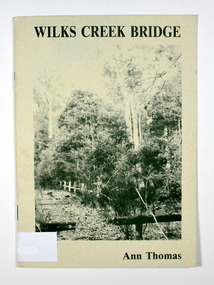 Marysville & District Historical Society
Book, Wilks Creek Bridge, 1993
... Dear Reader, The pen has only to select one of the many stages of building old Yarra Track,/ for a colorful story subject. ...A history of the Wilks Creek Bridge and its connection to the Yarra Track wilks creek marysville yarra track victoria history local history Dear Reader, The pen has only to select one of the many stages of building old Yarra Track,/ for a colorful story subject. ...A history of the Wilks Creek Bridge and its connection to the Yarra TrackPaperback. Front cover has an old photograph of the Wilks Creek Bridge.Dear Reader, The pen has only to select one of the many stages of building old Yarra Track,/ for a colorful story subject. The Track, first established in the early 1860's to/ serve goldseekers making their hazardous way to the rich Wood's Point goldfields,/ extended some 160km from Eltham - in Melbourne's northern region to Woods/ Point in the eastern ranges. I hope a glimmer of the excitement of those times comes through as I draw/ your attention to old Wilks Creek bridge and its picnic spot to be found 3.5km/ west of Marysville. Once part of Yarra Track and now superseded by a modern/ roadway alongside, the old bridge with its solid masonry walls either side of the/ cold, pure stream makes a pleasing scene for the visitor. With much pleasure/ I dedicate this narrative to Marysville and District Historical Society./ Ann Thomas Stamp of Marysville & District / Historical Society Inc / P.O. Box 22 / Marysville 3779wilks creek, marysville, yarra track, victoria, history, local history -
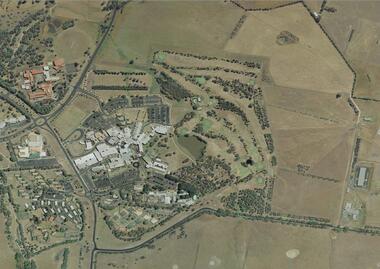 Federation University Historical Collection
Photograph - Photograph - Colour, Federation University Gippsland Campus, c1995, c1995
... buildings on a large campus in rural surroundings near the township of Churchill, ten kilometres south of Morwell and one hundred and sixty kilometres east of Melbourne. Engineering laboratories are temporarily located in buildings on the site of the Yallourn College of TAFE at Newborough and they will be consolidated on the Churchill campus by the end on 1985. In 1974 new buildings were completed under a self-help program to house the School of Visual Arts. A building complex to provide the first stages...buildings on a large campus in rural surroundings near the township of Churchill, ten kilometres south of Morwell and one hundred and sixty kilometres east of Melbourne. Engineering laboratories are temporarily located in buildings on the site of the Yallourn College of TAFE at Newborough and they will be consolidated on the Churchill campus by the end on 1985. In 1974 new buildings were completed under a self-help program to house the School of Visual Arts. A building complex to provide the first stages ...The following information was the preface of the 1985 GIAE handbook: The Gippsland institute of Advanced Education was established by an Order-in-Council in September, 1968, but, owes its origin to engineering diploma courses established in 1928 to service the developing electrical industry. The Council of the Institute includes members of the Gippsland community who are prominent in industry, commerce, education and the professions, the Director of the institute, the representative of the academic staff, of general staff, of students and of the Convocation of the Institute. In 1972 the Institute occupied the first of its permanent buildings on a large campus in rural surroundings near the township of Churchill, ten kilometres south of Morwell and one hundred and sixty kilometres east of Melbourne. Engineering laboratories are temporarily located in buildings on the site of the Yallourn College of TAFE at Newborough and they will be consolidated on the Churchill campus by the end on 1985. In 1974 new buildings were completed under a self-help program to house the School of Visual Arts. A building complex to provide the first stages of the permanent library and the Union, and accommodation for the School of Business and Social Sciences was completed in 1976. An Education building, an Applied Science building and student residential buildings for 108 student places were completed at the beginning on 1976. The Binishell, a multi-purpose facility was completed in 1980. On its establishment, the Institute assumed responsibility for the diploma courses which were previously offered by the Yallourn Technical College. These were diploma in Civil, Electrical, and Mechanical Engineering, Applied Chemistry, and Business, all of which were recognised by the appropriate professional bodies. The Gippsland Institute of Advanced Education is the only centre of Higher Education east of Melbourne and offers a range of vocational courses at associate diploma, diploma, degree, graduate degree and master levels to meet the educational needs of the Gippsland regions. The institute also has a very large commitment to a program on external studies. Federation University Australia was established on 1 January 2014. Formerly known as the University of Ballarat, its enabling legislation was the University of Ballarat Amendment (Federation University Australia) Act 2013. Although formally created as a University in 1994, the University of Ballarat had a lineage back to 1870 with the establishment of the School of Mines Ballarat, making it the third institution of higher learning to be established in Australia and the first to be established in regional Australia. On 1 January 1994, Ballarat University College became the University of Ballarat and in 1998 the University merged with three TAFE Institutes to become a dual sector institution with multiple campuses. On 1 January 2014, the University of Ballarat amalgamated with the Monash University Gippsland Campus to form Federation University Australia. The Gippsland Campus also had a long lineage dating back to 1928 with the establishment of the Yallourn Technical School which became a predecessor institution to the Gippsland College of Advanced Education formed in 1968. In 1990, it was renamed the Monash University College and in 1993 became the Gippsland Campus of Monash University. Large photograph adhered to foamcore showing an aerial view of the Federation University Gippsland Campus at Churchill, Victoria as it was c1995.churchill, gippsland campus, gippsland institute of advanced education, federation university, yallourn, morwell, binishell -
 Marysville & District Historical Society
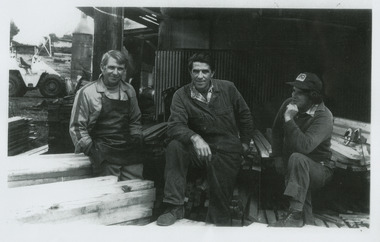
Photograph (item) - Black and white photograph, Unknown
... Evelyn, eventually supplying building blocks across the rapidly growing eastern suburbs of Melbourne. A copy of a black and white photograph of Bill, Allan and Len Sund who at one stage operated the Sunds Bros Sawmill in Marysville. marysville victoria australia arthur sund john sund sund stenco sunds bros sawmill victorian government gazette 1958 mountain ash mount gordon millard's timber yards mt. evelyn melbourne photograph bill sund allan sund len sund A copy of a black and white photograph of Bill, Allan and Len Sund who at one stage operated the Sunds Bros Sawmill in Marysville. ...A copy of a black and white photograph of Bill, Allan and Len Sund who at one stage operated the Sunds Bros Sawmill in Marysville. Sund's Sawmill (historically operated by Arthur & John Sund and often referenced locally as Sund Stenco) was a prominent mid-century timber mill located in Marysville, Victoria. It played a central role in the region's booming post-war logging era. The mill was highly active during the 1950s. This era marked a peak for Marysville's timber sector, with over 300 men employed across multiple local mills, sustaining nearly 1,000 residents. According to Victoria Government Gazette records from 1958, the Sund brothers operated commercial goods vehicles to transport Mountain ash and other hardwood logs from forest landings in the Mt. Gordon area directly to their mill in Marysville. Sawn timber from the Sund Bros mill was primary distributed to Millard's timber yards at Mt. Evelyn, eventually supplying building blocks across the rapidly growing eastern suburbs of Melbourne.A copy of a black and white photograph of Bill, Allan and Len Sund who at one stage operated the Sunds Bros Sawmill in Marysville.marysville, victoria, australia, arthur sund, john sund, sund stenco, sunds bros sawmill, victorian government gazette 1958, mountain ash, mount gordon, millard's timber yards, mt. evelyn, melbourne, photograph, bill sund, allan sund, len sund -
 Federation University Historical Collection
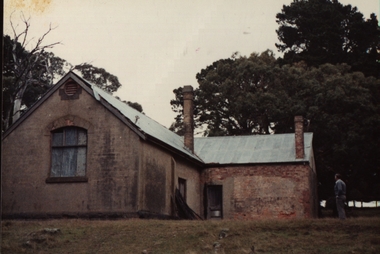
Photograph - Photograph - Colour, Happy Valley School, 1985
... The brick school building was built in this period. 1920s Enrolment declined in the 1920s to around 10 students. 1932 Enrolment continued to decline and the school was closed. 1933 The school reopened briefly under head teacher Selina McFarlane. 1936 It closed again at some stage before reopening in 1936 under head teacher Maxwell Brown. The school was closed finally in 1936. 1940 The building was sold. 150 years: Happy Valley State School Learn about the history of Happy Valley State School, one...The brick school building was built in this period. 1920s Enrolment declined in the 1920s to around 10 students. 1932 Enrolment continued to decline and the school was closed. 1933 The school reopened briefly under head teacher Selina McFarlane. 1936 It closed again at some stage before reopening in 1936 under head teacher Maxwell Brown. The school was closed finally in 1936. 1940 The building was sold. 150 years: Happy Valley State School Learn about the history of Happy Valley State School, one ...This photo was taken in 1985. Alf Watson, a descendent of settlers of the district - the Smiths and the Yungs whose children attended this school, is standing to the right of the building. The history of Happy Valley State School 1863 The school opened as Lucky Woman's in 1863. The school was located in the Linton area, a small mining township. The first head teacher was Thomas Lea. 89 students had enrolled. 1883 The name of the school changed to Happy Valley. The brick school building was built in this period. 1920s Enrolment declined in the 1920s to around 10 students. 1932 Enrolment continued to decline and the school was closed. 1933 The school reopened briefly under head teacher Selina McFarlane. 1936 It closed again at some stage before reopening in 1936 under head teacher Maxwell Brown. The school was closed finally in 1936. 1940 The building was sold. 150 years: Happy Valley State School Learn about the history of Happy Valley State School, one of Victoria’s oldest public schools. Key information Address: Ballarat, 3350 Opened: 1 February 1860 Closed: 31 December 1940 School type: Primary School number: 376 Other names: Lucky Woman's Common School, Lucky Woman's State School Search for more school profiles The history of Happy Valley State School 1863 The school opened as Lucky Woman's in 1863. The school was located in the Linton area, a small mining township. The first head teacher was Thomas Lea. 89 students had enrolled. 1883 The name of the school changed to Happy Valley. The brick school building was built in this period. 1920s Enrolment declined in the 1920s to around 10 students. 1932 Enrolment continued to decline and the school was closed. 1933 The school reopened briefly under head teacher Selina McFarlane. 1936 It closed again at some stage before reopening in 1936 under head teacher Maxwell Brown. The school was closed finally in 1936. 1940 The building was sold. Can you help us find records for this school? The Public Record Office Victoria (PROV) only hold historical correspondence records for this closed school. If you have any, or if you know of any, please let us know by emailing [email protected] Updated 19 May 2022.1 Happy Valley State School photographed in June 1985. Alf Watson observing the building. .2 View from the back and side of the Happy Valley State School.1 Verso: Grandma Watson's school Happy Valley June 1985 (Grandma nearly 97 years) Alf in bacckground. Edith Emma Watson b Yung. Alf - son of Edith and John Richard Watson. .2 Verso: School where Grandma Watson eudcated. Happy Valley. June 1985happy valley state school, lucky womans, lucky woman's common school, lucky woman's state school -
 Federation University Historical Collection
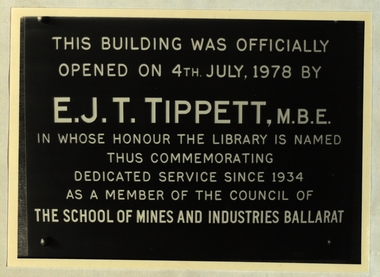
Photograph, Ballarat School of Mines Library Plaques, c1970s and 1980s
... Stage one of The Vocational Skills Centre was officially opened by The Hon. Robert Fordham M.P. Minister of Education on 29th April 1983 P.R. Shiells K.J. Flecknoe Principal President The School of Mines and Industries Ballarat Established - 1870 This plaque commemorates the opening of the Hairdressing School on 9 March 1983 by Peter Cutter, B. Comms, M. Ed. General Manager - Programs, TAFE Board School of Mines and Industries Ballarat Ltd Land Laboratory officially opened by Dr D.F. Smith Director of Agriculture on 12th November 1980. School of Mines & Industries Ballarat Amenities Building...Stage one of The Vocational Skills Centre was officially opened by The Hon. Robert Fordham M.P. Minister of Education on 29th April 1983 P.R. Shiells K.J. Flecknoe Principal President The School of Mines and Industries Ballarat Established - 1870 This plaque commemorates the opening of the Hairdressing School on 9 March 1983 by Peter Cutter, B. Comms, M. Ed. General Manager - Programs, TAFE Board School of Mines and Industries Ballarat Ltd Land Laboratory officially opened by Dr D.F. Smith Director of Agriculture on 12th November 1980. School of Mines & Industries Ballarat Amenities Building ...The Ballarat School of Mines is a predecessor organisation of Federation University Australia.Black and white photographThis building was officially opened on 4th July, 1978 by E.J.T. Tippett, M.B.E. in whose honour the library was named thus commemorating dedicated service since 1934 as a member of the Council of the School of Mines and Industries Ballarat Stamp Battery The stamp battery for treating gold ores was first intriduced in California. A heavy iron stamp is raised on a cam and let fall so that its weight causes the quartz which is held in the mortar box. This three head battery was installed in the mining laboratory of The School of Mines, Ballarat in 1898 and crused many hundreds of tons of quartz. It was reected on this site to commeorate the centenary of the School of Mines in 1870. School of Mines & Industries Ballarat Established - 1870 Stage one of The Vocational Skills Centre was officially opened by The Hon. Robert Fordham M.P. Minister of Education on 29th April 1983 P.R. Shiells K.J. Flecknoe Principal President The School of Mines and Industries Ballarat Established - 1870 This plaque commemorates the opening of the Hairdressing School on 9 March 1983 by Peter Cutter, B. Comms, M. Ed. General Manager - Programs, TAFE Board School of Mines and Industries Ballarat Ltd Land Laboratory officially opened by Dr D.F. Smith Director of Agriculture on 12th November 1980. School of Mines & Industries Ballarat Amenities Building was officially opened by His excellency The Hon. Sir Henry Winneke K.C.M.G., K.C.V.O., O.B.E.. K. St. J., O.C., Governor of Victoria on 7th October 1981 G.H. Beanland K.J. Beanland Principal President This room is known as the Yates Geological Centre in recognition of a professional lifetime of service from 1920=1962 as' head of Geology in The SChool of Mines and Industries Ballarat by Harold Yates M.Sc Plaque presented by former students This stone was laid by The Hon. Alexr J. Peacock Minister of Public Instruction April 14th 1899 Abdrew Anderson, Presidentbuildings, ballarat school of mines, smb campus, premier of victoria, plaque, e.j.t. tippett library, tippett learning research centre, smb library, ballarat school of mines library, e.j. tippett, smb foundation stone, smb stamp battery plaque, geology centre - yates, yates geological centre, smb amenities building opening, smb land laborarory opening, smb hairdressing school opening, smb vocational centre (stage 1) opening, smb e.j. tippett library opening, former ballarat gaol national trust plaque, former ballarat supreme court national trust plaque, smb buildings - administration national trust plaque, foundation of technical education in australia, ballarat school of mines foundation stone, yates geology centre, amenities building, land laboratory, former ballarat gaol, former ballarat supreme court, courthouse theatre, stamp battery, stamper battery, centenary, anniversary, mortar box, peter shiells, ken flecknoe, vocatonal skills centre, haidressing school, peter cutter, museum building, former wesley church, henry winneke, graham beanland, harold yates, alexander peacock, andrew anderson, a building, administration building -
Federation University Historical Collection
Photograph, Plaque for Stage One of the Vocational Skills Centre, 1983, c1983
... buildings ballarat school of mines smb campus premier of victoria plaque Vocational skills centre Stage one of the Vocational Skills Centre Robert fordham peter shiels ken flecknoe School of Mines and Industries Ballarat Established - 1870 Stage one of The Vocational Skills Cente was officially opened by the Hon. ...Colour photographSchool of Mines and Industries Ballarat Established - 1870 Stage one of The Vocational Skills Cente was officially opened by the Hon. Robet Fordham M.P. Minister of Education in 29th April 1983 P.R. Shiells K.J. Flecknoe Principal Presidentbuildings, ballarat school of mines, smb campus, premier of victoria, plaque, vocational skills centre, stage one of the vocational skills centre, robert fordham, peter shiels, ken flecknoe -
 Flagstaff Hill Maritime Museum and Village
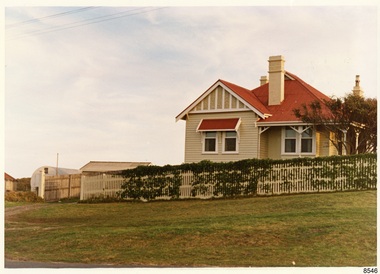
Photograph - Historical, Flagstaff Hill, Harbourmaster’s Quarters, 1970s
... One of the photographs in the set has the pencil inscription "Photo J Lindsay". It was taken in the early 1970s during the initial stages of the development of Flagstaff Hill as a Museum and Maritime Village. The photographs belonged to the donor's grandparents, who lived in the Warrnambool district of Allansford/Naringal. The photograph is a record of the site and surrounds of Flagstaff Hill Maritime Museum and Village before its development and opening in 1975. It shows the cottage on the east of the Lighthouse Complex,. The building ...The photograph shows a cottage, Harbourmaster’s quarters that still stands on the east of the Lady Bay Lighthouse and Historic Precinct at Flagstaff Hill in Warrnambool. The name was changed to the Lighthouse Lodge, and today guests can stay at the property. This photograph, a print, is one of a set of five that show the site of Flagstaff Hill. It is presumed to have been taken by John Lindsay, Founding Director of Flagstaff Hill Maritime Museum and Village. One of the photographs in the set has the pencil inscription "Photo J Lindsay". It was taken in the early 1970s during the initial stages of the development of Flagstaff Hill as a Museum and Maritime Village. The photographs belonged to the donor's grandparents, who lived in the Warrnambool district of Allansford/Naringal. The photograph is a record of the site and surrounds of Flagstaff Hill Maritime Museum and Village before its development and opening in 1975. It shows the cottage on the east of the Lighthouse Complex,. The building is now known as Lighthouse Lodge. The photograph is significant for recording the location and condition of the residence on the Hill.Coloured photograph, glassy print, one of a set of five. Photograph shows the cream timber cottage, Harbourmaster’s quarters to the east of the lighthouse complex at Flagstaff Hill, Warrnambool. On the left of the red roofed residence are iron buildings used, at the time, by the Lands Department. The photograph's paper has the printer's watermark on the back. The early 1970s photograph is presumed to have been by John Lindsay, Warrnambool.Label on the back: "WOODEN RESIDENCE TO THE EAST OF THE PROPERTY / The gun emplacements are immediately behind, and the iron huts to the left rear of the residence are used by the Lands Department who plan to vacate, for other premises."flagstaff hill, flagstaff hill maritime museum and village, warrnambool, maritime museum, maritime village, great ocean road, shipwreck coast, 1970s, photograph, flagstaff hill site, john lindsay, cannon emplacement, residence, wooden residence, timber residence, iron huts, lands department, light keeper -
 Flagstaff Hill Maritime Museum and Village
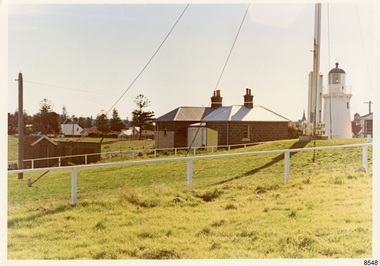
Photograph - Historical, Flagstaff Hill, The Lighthouse keepers cottage, from the gun emplacements, looking towards the town centre, 1970s
... building, and the well at the back of the Quarters. This photograph, a print, is one of a set of five that show the site of Flagstaff Hill. It is presumed to have been taken by John Lindsay, Founding Director of Flagstaff Hill Maritime Museum and Village. One of the photographs in the set has the pencil inscription "Photo J Lindsay". It was taken in the early 1970s during the initial stages...building, and the well at the back of the Quarters. This photograph, a print, is one of a set of five that show the site of Flagstaff Hill. It is presumed to have been taken by John Lindsay, Founding Director of Flagstaff Hill Maritime Museum and Village. One of the photographs in the set has the pencil inscription "Photo J Lindsay". It was taken in the early 1970s during the initial stages ...The photograph shows the back of the Lighthouse Keeper's Quarters and the privy, Upper Lighthouse and Flagstaff, and the condition and placement of these buildings and the street. The note on the back points out the uniqueness of the double-sided toilet building, and the well at the back of the Quarters. This photograph, a print, is one of a set of five that show the site of Flagstaff Hill. It is presumed to have been taken by John Lindsay, Founding Director of Flagstaff Hill Maritime Museum and Village. One of the photographs in the set has the pencil inscription "Photo J Lindsay". It was taken in the early 1970s during the initial stages of the development of Flagstaff Hill as a Museum and Maritime Village. The photographs belonged to the donor's grandparents, who lived in the Warrnambool district of Allansford/Naringal. The photograph is a record of the site and surrounds of Flagstaff Hill Maritime Museum and Village before its development and opening in 1975. It shows the Heritage Listed Precinct; the Lighthouse Keepers' Quarters, the privy and the Upper Lighthouse. The photograph is significant for recording the location and condition of the buildings on the hill, erected in the 1870s.Coloured photograph, glassy print, one of a set of five. Photograph shows the back of the Lighthouse Keepers' Cottage or Residence, the privy and the Upper Lighthouse. The photograph's paper has the printer's watermark on the back. The early 1970s scene is presumed to have been photographed by John Lindsay, Warrnambool.Label on the back: "THE COTTAGE, FROM THE GUN EMPLACEMENTS, LOOKING ACROSS THE PORTS AND HARBOURS AREA / The two-doored toilet is of interest, and the covered well is between the toilet and the rear door of the cottage."flagstaff hill maritime museum and village, warrnambool, great ocean road, shipwreck coast, 1970s, photograph, flagstaff hill site, john lindsay, lighthouse keepers' cottage, lighthouse keepers' residence, privy, upper lighthouse, upper light, lighthouse keepers' quarters -
 Flagstaff Hill Maritime Museum and Village
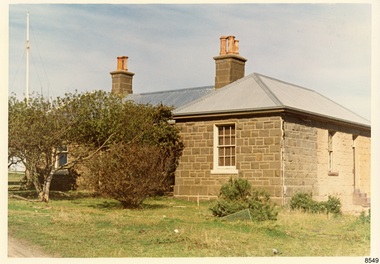
Photograph - Historical, Flagstaff Hill, The Lighthouse Keeper’s Cottage showing re-roofing carried out by Council, 1970s
... One of the photographs in the set has the pencil inscription "Photo J Lindsay". It was taken in the early 1970s during the initial stages of the development of Flagstaff Hill as a Museum and Maritime Village. The photographs belonged to the donor's grandparents, who lived in the Warrnambool district of Allansford/Naringal. The photograph is a record of the Lighthouse Keepers' Quarters at Flagstaff Hill Maritime Museum and Village before its development and opening in 1975. It shows the condition of the building ...The coloured photograph shows the Lighthouse Keepers' Quarters at Flagstaff Hill, Warrnambool. The building was erected in the 1850s on Middle Island, Lady Bay. It was relocated to its current location in the late 1870s along with the two lighthouses, the chart room and the privy. The Warrnambool City Council replaced the iron roof on the cottage in the 1970s and further work has since been carried out. The picture shows the poor condition of the stonework on the right hand side of the cottage. After the cottage ceased to be used by lighthouse keepers, it was rented out by various organisations and later became disused. The Historical Society requested the re-connection of power. The right hand side of the cottage was repurposed for use by Flagstaff Hill Maritime Museum and Village. in the 2020s it was restored and fitted out as the Alexander Farncombe room, which is used for temporary exhibitions. This photograph, a print, is one of a set of five that show the site of Flagstaff Hill. It is presumed to have been taken by John Lindsay, Founding Director of Flagstaff Hill Maritime Museum and Village. One of the photographs in the set has the pencil inscription "Photo J Lindsay". It was taken in the early 1970s during the initial stages of the development of Flagstaff Hill as a Museum and Maritime Village. The photographs belonged to the donor's grandparents, who lived in the Warrnambool district of Allansford/Naringal. The photograph is a record of the Lighthouse Keepers' Quarters at Flagstaff Hill Maritime Museum and Village before its development and opening in 1975. It shows the condition of the building at the time and some of the recent re-roofing. The photograph is significant for recording the condition of the original heritage listed building at that point in time.Coloured photograph, glassy print, one of a set of five. Photograph shows the Lighthouse Keepers' Quarters, focused on the Assistant's Quarters on the right. It shows the a new iron roof that had been installed by the Warrnambool City Council, and the condition of the bluestone,walls. There are clay chimney pots on the two chimneys. A set of steps are at the entry on the right hand side. The flagstaff is on the left of the photograph. The photograph's paper has the printer's watermark on the back. The early 1970s picture is presumed to have been photographed by John Lindsay, Warrnambool.Label on the back: "THE BLUESTONE COTTAGE SHOWING RE-ROOFING CARRIED OUT BY COUNCIL. The Historical Society has requested Council to have S.E.C. power re-connected"flagstaff hill maritime museum and village, warrnambool, maritime museum, shipwreck coast, 1970s, photograph, lady bay, flagstaff hill site, john lindsay, cannon emplacement, middle island, flagstaff, lighthouse keepers' quarters, lighthouse keepers' residence, alexander farncombe, re-roofing, s.e.c. connection -
 Phillip Island and District Historical Society Inc.
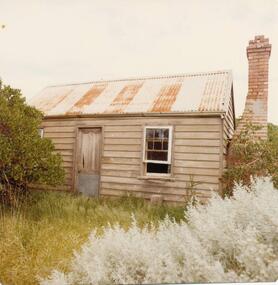
Photograph, 1978 - 79
... one stage called Julyan's Cottage. Finlay Julyan born there, owned by various families. At one time by H Grayden and R McKinley. Privately owned now. (Noted on the caption that it was built by John Evans about 1870??) local history photographs buildings ...Built by J D McHaffie as a Shepherd's Hut in the 1850 - 60s. At one stage called Julyan's Cottage. Finlay Julyan born there, owned by various families. At one time by H Grayden and R McKinley. Privately owned now. (Noted on the caption that it was built by John Evans about 1870??)Small wooden building on corner of Lyall Street and Ventnor Beach Road. Brick chimney still in situ.local history, photographs, buildings - historic, coloured photograph, john cook, phillip island, settlers home -
 Eltham District Historical Society Inc
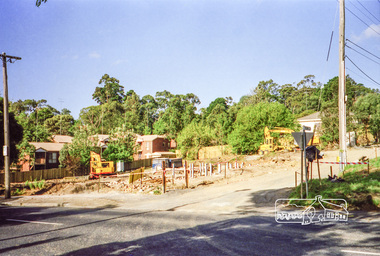
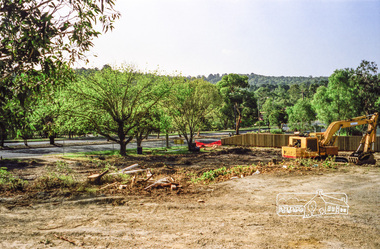
Photograph, Clearing land for Le Pine Funeral Home, cnr York Street and Main Road, Eltham, c.March 1998, 1998
... The proposal requires demolition of this building which is one of the few remaining old shops which formed the rather spread out "town centre" of Eltham. Prior to making its decision the Council obtained a report from Graeme Butler and Associates, the heritage consultants who carried out Stage 1 of the Nillumbik Heritage Study. ...The proposal requires demolition of this building which is one of the few remaining old shops which formed the rather spread out "town centre" of Eltham. Prior to making its decision the Council obtained a report from Graeme Butler and Associates, the heritage consultants who carried out Stage 1 of the Nillumbik Heritage Study. ...Newsletter No. 116, September, 1997 846-848 MAIN ROAD ELTHAM Nillumbik Shire Council has granted a permit for a funeral parlour on land which includes this site at the corner of Main Road and York Street. The site contains an architect's office in a building which was formerly a shop and dwelling dating from the 1920's. The proposal requires demolition of this building which is one of the few remaining old shops which formed the rather spread out "town centre" of Eltham. Prior to making its decision the Council obtained a report from Graeme Butler and Associates, the heritage consultants who carried out Stage 1 of the Nillumbik Heritage Study. The report summarized the historical significance as follows:- "This brick comer shop with associated residence has potential local historical significance as a late 1920's grocer's shop, now much altered and one of only a few shops of that era left in Eltham's Main Road. This significance is qualified by the many changes. The other examples are better preserved and still function as shops." With this type of expert advice it is difficult to make a strong case for preservation of the building although, of course, it is a shame to see it demolished. The report includes details of the site itself and its history based on research carried out by Carlotta Kellaway. The building dates from the late 1920's when it was owned by C.R. Nicholls. From the early 1930's it was Charles Cockroft's grocery shop and he also ran a grain store there. According to his daughter, Edna Brown, he delivered groceries around the district taking his truck as far as Kangaroo Ground. In 1950 he shifted to Traralgon. Since then several different businesses have operated from the site including a bottle merchant and produce store. Conversion to the present office use involved alterations to the shop front and rebuilding the galvanized iron store at the rear. Newsletter 119 March 1998 In our Newsletter No. 116 it was reported that the former shop on the comer of Main Road and York Street, Eltham was to be demolished as part of a funeral parlour development. If you have passed the site recently you will have noticed that it has now been demolished - another part of the old Eltham township has disappeared.Roll of 35mm colour negative film, 6 strips Also photographic prints 10 x 15 cmKodak Gold 200-6a.r. warren, eltham feed store, le pine funeral home, main road, york street, c.r. nicholls, charles cockcroft, grocery store -
 Eltham District Historical Society Inc
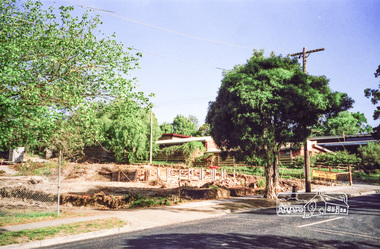
Photograph, Clearing land for Le Pine Funeral Home, cnr York Street and Main Road, Eltham, c.March 1998, 1998
... The proposal requires demolition of this building which is one of the few remaining old shops which formed the rather spread out "town centre" of Eltham. Prior to making its decision the Council obtained a report from Graeme Butler and Associates, the heritage consultants who carried out Stage 1 of the Nillumbik Heritage Study. ...The proposal requires demolition of this building which is one of the few remaining old shops which formed the rather spread out "town centre" of Eltham. Prior to making its decision the Council obtained a report from Graeme Butler and Associates, the heritage consultants who carried out Stage 1 of the Nillumbik Heritage Study. ...Newsletter No. 116, September, 1997 846-848 MAIN ROAD ELTHAM Nillumbik Shire Council has granted a permit for a funeral parlour on land which includes this site at the corner of Main Road and York Street. The site contains an architect's office in a building which was formerly a shop and dwelling dating from the 1920's. The proposal requires demolition of this building which is one of the few remaining old shops which formed the rather spread out "town centre" of Eltham. Prior to making its decision the Council obtained a report from Graeme Butler and Associates, the heritage consultants who carried out Stage 1 of the Nillumbik Heritage Study. The report summarized the historical significance as follows:- "This brick comer shop with associated residence has potential local historical significance as a late 1920's grocer's shop, now much altered and one of only a few shops of that era left in Eltham's Main Road. This significance is qualified by the many changes. The other examples are better preserved and still function as shops." With this type of expert advice it is difficult to make a strong case for preservation of the building although, of course, it is a shame to see it demolished. The report includes details of the site itself and its history based on research carried out by Carlotta Kellaway. The building dates from the late 1920's when it was owned by C.R. Nicholls. From the early 1930's it was Charles Cockroft's grocery shop and he also ran a grain store there. According to his daughter, Edna Brown, he delivered groceries around the district taking his truck as far as Kangaroo Ground. In 1950 he shifted to Traralgon. Since then several different businesses have operated from the site including a bottle merchant and produce store. Conversion to the present office use involved alterations to the shop front and rebuilding the galvanized iron store at the rear. Newsletter 119 March 1998 In our Newsletter No. 116 it was reported that the former shop on the comer of Main Road and York Street, Eltham was to be demolished as part of a funeral parlour development. If you have passed the site recently you will have noticed that it has now been demolished - another part of the old Eltham township has disappeared.Roll of 35mm colour negative film, 6 strips Also photographic prints 10 x 15 cmKodak Gold 200-6a.r. warren, eltham feed store, le pine funeral home, main road, york street, c.r. nicholls, charles cockcroft, grocery store -
 Eltham District Historical Society Inc
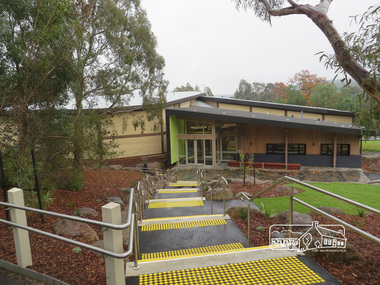
Photograph, Clearing land for Le Pine Funeral Home, cnr York Street and Main Road, Eltham, c.March 1998, 1998
... The proposal requires demolition of this building which is one of the few remaining old shops which formed the rather spread out "town centre" of Eltham. Prior to making its decision the Council obtained a report from Graeme Butler and Associates, the heritage consultants who carried out Stage 1 of the Nillumbik Heritage Study. ...The proposal requires demolition of this building which is one of the few remaining old shops which formed the rather spread out "town centre" of Eltham. Prior to making its decision the Council obtained a report from Graeme Butler and Associates, the heritage consultants who carried out Stage 1 of the Nillumbik Heritage Study. ...Newsletter No. 116, September, 1997 846-848 MAIN ROAD ELTHAM Nillumbik Shire Council has granted a permit for a funeral parlour on land which includes this site at the corner of Main Road and York Street. The site contains an architect's office in a building which was formerly a shop and dwelling dating from the 1920's. The proposal requires demolition of this building which is one of the few remaining old shops which formed the rather spread out "town centre" of Eltham. Prior to making its decision the Council obtained a report from Graeme Butler and Associates, the heritage consultants who carried out Stage 1 of the Nillumbik Heritage Study. The report summarized the historical significance as follows:- "This brick comer shop with associated residence has potential local historical significance as a late 1920's grocer's shop, now much altered and one of only a few shops of that era left in Eltham's Main Road. This significance is qualified by the many changes. The other examples are better preserved and still function as shops." With this type of expert advice it is difficult to make a strong case for preservation of the building although, of course, it is a shame to see it demolished. The report includes details of the site itself and its history based on research carried out by Carlotta Kellaway. The building dates from the late 1920's when it was owned by C.R. Nicholls. From the early 1930's it was Charles Cockroft's grocery shop and he also ran a grain store there. According to his daughter, Edna Brown, he delivered groceries around the district taking his truck as far as Kangaroo Ground. In 1950 he shifted to Traralgon. Since then several different businesses have operated from the site including a bottle merchant and produce store. Conversion to the present office use involved alterations to the shop front and rebuilding the galvanized iron store at the rear. Newsletter 119 March 1998 In our Newsletter No. 116 it was reported that the former shop on the comer of Main Road and York Street, Eltham was to be demolished as part of a funeral parlour development. If you have passed the site recently you will have noticed that it has now been demolished - another part of the old Eltham township has disappeared.Roll of 35mm colour negative film, 6 strips Also photographic prints 10 x 15 cmKodak Gold 200-6a.r. warren, eltham feed store, le pine funeral home, main road, york street, c.r. nicholls, charles cockcroft, grocery store -
 Eltham District Historical Society Inc
Photograph, Liz Pidgeon, Eltham Community and Reception Centre, 21 June 2017
... one of the Shire's most iconic mudbrick buildings took place 2016/2017. JR and BL Kendall Pty Ltf of Hurstbridge undertook the project. Upgrades to the building include: *replacement of corrugated asbestos roof as a safeguard for users and to prevent flooding *Improved accessibility from the car park to the Centre's entrance *Improved accessibility to the stage area via a lift to the stage level *Water harvesting to capture rainwater for garden and grounds *Installatation of solar power to provide energy and financial savings *Renewal of electrical infrastructure throughout the Centre *Upgrades to lighting and sound controls, replacement of amplifiers and renewal of stage curtains to meet fire standards *New toilets and upgrade to disabled toilet area *New foyer *New kitchen to meet commercial standards. ...one of the Shire's most iconic mudbrick buildings took place 2016/2017. JR and BL Kendall Pty Ltf of Hurstbridge undertook the project. Upgrades to the building include: *replacement of corrugated asbestos roof as a safeguard for users and to prevent flooding *Improved accessibility from the car park to the Centre's entrance *Improved accessibility to the stage area via a lift to the stage level *Water harvesting to capture rainwater for garden and grounds *Installatation of solar power to provide energy and financial savings *Renewal of electrical infrastructure throughout the Centre *Upgrades to lighting and sound controls, replacement of amplifiers and renewal of stage curtains to meet fire standards *New toilets and upgrade to disabled toilet area *New foyer *New kitchen to meet commercial standards. ...A substantial refurbishment of one of the Shire's most iconic mudbrick buildings took place 2016/2017. JR and BL Kendall Pty Ltf of Hurstbridge undertook the project. Upgrades to the building include: *replacement of corrugated asbestos roof as a safeguard for users and to prevent flooding *Improved accessibility from the car park to the Centre's entrance *Improved accessibility to the stage area via a lift to the stage level *Water harvesting to capture rainwater for garden and grounds *Installatation of solar power to provide energy and financial savings *Renewal of electrical infrastructure throughout the Centre *Upgrades to lighting and sound controls, replacement of amplifiers and renewal of stage curtains to meet fire standards *New toilets and upgrade to disabled toilet area *New foyer *New kitchen to meet commercial standards. (Source nillumbik News 2016 p. 7) Born Digitalsteps, accessibility, exterior, landscaping, eltham community and reception centre -
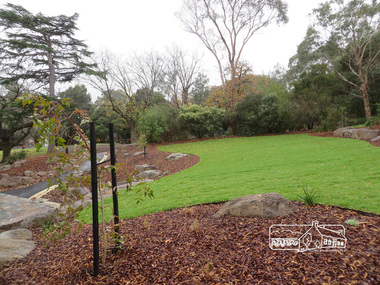 Eltham District Historical Society Inc
Photograph, Liz Pidgeon, Newly refurbished Eltham Community and Reception Centre, 21 June 2017
... one of the Shire's most iconic mudbrick buildings took place 2016/2017. JR and BL Kendall Pty Ltf of Hurstbridge undertook the project. Upgrades to the building include: *replacement of corrugated asbestos roof as a safeguard for users and to prevent flooding *Improved accessibility from the car park to the Centre's entrance *Improved accessibility to the stage area via a lift to the stage level *Water harvesting to capture rainwater for garden and grounds *Installatation of solar power to provide energy and financial savings *Renewal of electrical infrastructure throughout the Centre *Upgrades to lighting and sound controls, replacement of amplifiers and renewal of stage curtains to meet fire standards *New toilets and upgrade to disabled toilet area *New foyer *New kitchen to meet commercial standards. ...one of the Shire's most iconic mudbrick buildings took place 2016/2017. JR and BL Kendall Pty Ltf of Hurstbridge undertook the project. Upgrades to the building include: *replacement of corrugated asbestos roof as a safeguard for users and to prevent flooding *Improved accessibility from the car park to the Centre's entrance *Improved accessibility to the stage area via a lift to the stage level *Water harvesting to capture rainwater for garden and grounds *Installatation of solar power to provide energy and financial savings *Renewal of electrical infrastructure throughout the Centre *Upgrades to lighting and sound controls, replacement of amplifiers and renewal of stage curtains to meet fire standards *New toilets and upgrade to disabled toilet area *New foyer *New kitchen to meet commercial standards. landscaping gardens eltham community and reception centre grass mulch Born Digital Newly refurbished Eltham Community and Reception Centre Photograph Photograph Liz Pidgeon ...Photo taken during an EDHS Excursion "A walk around Little Eltham", 21 June 2017. One of a series of photos. A substantial refurbishment of one of the Shire's most iconic mudbrick buildings took place 2016/2017. JR and BL Kendall Pty Ltf of Hurstbridge undertook the project. Upgrades to the building include: *replacement of corrugated asbestos roof as a safeguard for users and to prevent flooding *Improved accessibility from the car park to the Centre's entrance *Improved accessibility to the stage area via a lift to the stage level *Water harvesting to capture rainwater for garden and grounds *Installatation of solar power to provide energy and financial savings *Renewal of electrical infrastructure throughout the Centre *Upgrades to lighting and sound controls, replacement of amplifiers and renewal of stage curtains to meet fire standards *New toilets and upgrade to disabled toilet area *New foyer *New kitchen to meet commercial standards. Born Digitallandscaping, gardens, eltham community and reception centre, grass, mulch -
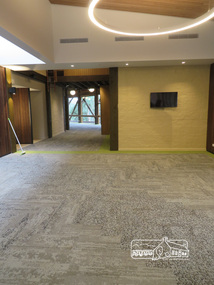 Eltham District Historical Society Inc
Photograph, Liz Pidgeon, Newly refurbished Eltham Community Centre, 21 June 2017
... one of the Shire's most iconic mudbrick buildings took place 2016/2017. JR and BL Kendall Pty Ltf of Hurstbridge undertook the project. Upgrades to the building include: *replacement of corrugated asbestos roof as a safeguard for users and to prevent flooding *Improved accessibility from the car park to the Centre's entrance *Improved accessibility to the stage area via a lift to the stage level *Water harvesting to capture rainwater for garden and grounds *Installatation of solar power to provide energy and financial savings *Renewal of electrical infrastructure throughout the Centre *Upgrades to lighting and sound controls, replacement of amplifiers and renewal of stage curtains to meet fire standards *New toilets and upgrade to disabled toilet area *New foyer *New kitchen to meet commercial standards. ...one of the Shire's most iconic mudbrick buildings took place 2016/2017. JR and BL Kendall Pty Ltf of Hurstbridge undertook the project. Upgrades to the building include: *replacement of corrugated asbestos roof as a safeguard for users and to prevent flooding *Improved accessibility from the car park to the Centre's entrance *Improved accessibility to the stage area via a lift to the stage level *Water harvesting to capture rainwater for garden and grounds *Installatation of solar power to provide energy and financial savings *Renewal of electrical infrastructure throughout the Centre *Upgrades to lighting and sound controls, replacement of amplifiers and renewal of stage curtains to meet fire standards *New toilets and upgrade to disabled toilet area *New foyer *New kitchen to meet commercial standards. eltham community centre Eltham community and reception centre foyer Born Digital Newly refurbished Eltham Community Centre Photograph Liz Pidgeon ...Photo taken during an EDHS Excursion "A walk around Little Eltham", 21 June 2017. One of a series of photos. A substantial refurbishment of one of the Shire's most iconic mudbrick buildings took place 2016/2017. JR and BL Kendall Pty Ltf of Hurstbridge undertook the project. Upgrades to the building include: *replacement of corrugated asbestos roof as a safeguard for users and to prevent flooding *Improved accessibility from the car park to the Centre's entrance *Improved accessibility to the stage area via a lift to the stage level *Water harvesting to capture rainwater for garden and grounds *Installatation of solar power to provide energy and financial savings *Renewal of electrical infrastructure throughout the Centre *Upgrades to lighting and sound controls, replacement of amplifiers and renewal of stage curtains to meet fire standards *New toilets and upgrade to disabled toilet area *New foyer *New kitchen to meet commercial standards. Born Digitaleltham community centre, eltham community and reception centre, foyer
