
Showing 99 items matching "stanley library"
-
 Stanley Athenaeum & Public Room
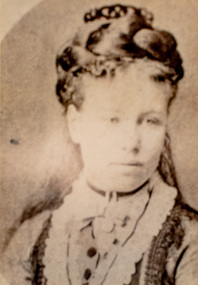
Photograph - Framed Photograph, Christina 'Teenie' Muter
... black and white framed photo of Christina Muter, President of Stanley Library and Athenaeum Committee in 1878....Miss Christine Muter - President of Stanley library and Athenaeum Committee (Christine is a misspelling should be Christina)...Miss Christine Muter - President of Stanley library and Athenaeum Committee (Christine is a misspelling should be Christina) black and white framed photo of Christina Muter, President of Stanley Library and Athenaeum Committee in 1878. ...black and white framed photo of Christina Muter, President of Stanley Library and Athenaeum Committee in 1878.Miss Christine Muter - President of Stanley library and Athenaeum Committee (Christine is a misspelling should be Christina) -
 Stanley Athenaeum & Public Room
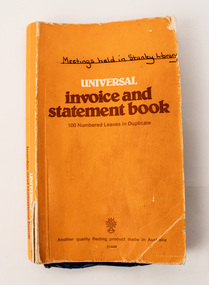
Legal record - Invoice & Statement Book, Invoice & Statement Book 1997-1998
... Olympic Invoice & Statement Book for Stanley Library Accounts 1997-1998. Orange cover with black binding. ...Handwritten title ' Stanley Library Accounts' Library. Printer Olympic. ...Handwritten title ' Stanley Library Accounts' Library. Printer Olympic. ...Olympic Invoice & Statement Book for Stanley Library Accounts 1997-1998. Orange cover with black binding. Copymate, carbonless. 50 leaf, duplicate, No724. Handwritten title ' Stanley Library Accounts' Library. Printer Olympic. -
 Stanley Athenaeum & Public Room
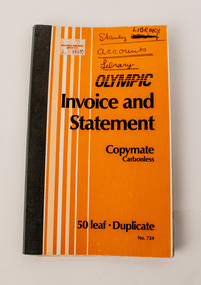
Legal record - Invoice & Statement Book
... Universal Invoice & Statement Book for meetings held at the Stanley Library 1982-1996. Orange cover. Copymate, carbonless. 50 leaf, duplicate, No724. ...Handwritten title 'Meetings held at the Stanley Library'. Printer Universal. ...Handwritten title 'Meetings held at the Stanley Library'. Printer Universal. Universal Invoice & Statement Book for meetings held at the Stanley Library 1982-1996. ...Universal Invoice & Statement Book for meetings held at the Stanley Library 1982-1996. Orange cover. Copymate, carbonless. 50 leaf, duplicate, No724. Names of organizations that met at the library.Handwritten title 'Meetings held at the Stanley Library'. Printer Universal. -
 Stanley Athenaeum & Public Room
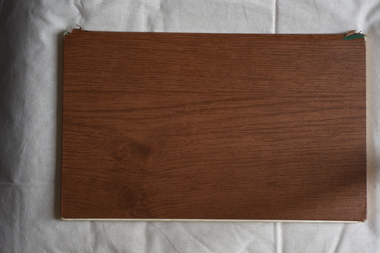
Legal record - Book, Stanley Athenaeum - Library Committee Minute Book 1970-1991
... Stanley Athenaeum - Library Committee Minute Book 1970-1991...Some records are on paper and clued to a page. Stanley Athenaeum - Library Committee Minute Book 1970-1991 Legal record Book ...Brown wood appearance 'contact' coloured covering - slightly ripped. Cover coming away from spine - cardboard material. Ruled blue lined pages x approximately 100 Period1970-1991. Some records are on paper and clued to a page. -
 Stanley Athenaeum & Public Room
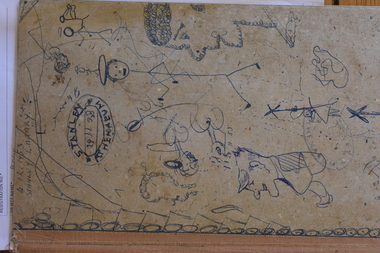
Journal - Book, Subscribers Records - Stanley Athenaeum 1953-1958
... Stanley stamp '4.12.1953 Stanley Library'...Stanley stamp '4.12.1953 Stanley Library' Beige coloured cardboard cover. ...Beige coloured cardboard cover. Scribbles and doodles on front and back covers. Athenaeum stamp on cover. Light brown fabric binding . Period 1953-1958Stanley stamp '4.12.1953 Stanley Library' -
 Stanley Athenaeum & Public Room
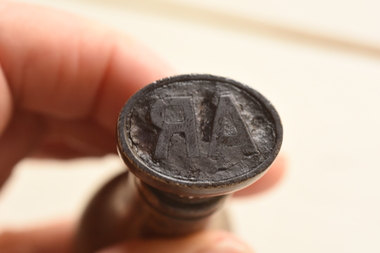
Tool - Library stamp, "AR" library stamp
... ...Stanley Library...Stamp used in Stanley Athenaeum book collection. ÄR" meaning unknown but has been seen in other libraries....Stamp used in Stanley Athenaeum book collection. ÄR" meaning unknown but has been seen in other libraries. library Stanley Library Book Stamp Athenaeum ÄR" Wooden handled stamp. ...Stamp used in Stanley Athenaeum book collection. ÄR" meaning unknown but has been seen in other libraries.Wooden handled stamp. A metal stamp is attached to the end of the bulb shaped wooden handle. The metal metal stamp is small and oval shaped. ÄR"library, stanley library, book stamp, athenaeum -
 Stanley Athenaeum & Public Room
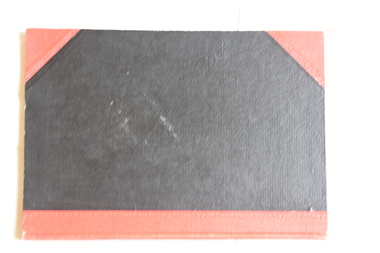
Legal record - Book, Stanley Athenaeum - Minute and Accounts Book 1992-1998
... Records from Stanley Athenaeum and Library Committee. January 1992- next 30 pages approximately blue lined. ...Records from Stanley Athenaeum and Library Committee. January 1992- next 30 pages approximately blue lined. ...Records from Stanley Athenaeum and Library Committee. January 1992- next 30 pages approximately blue lined. Front cover black with red binding on spine and corners. 1992-1998. -
 Flagstaff Hill Maritime Museum and Village
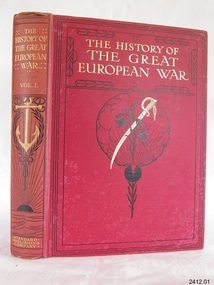
Book - Reference/History, W Stanley Macbean Knight, The History of the Great European War Set 1 Vol 1, 1914-1920
... Library stamps visible. Hard Cover Book. History of The Great European War Set 1 Vol 1 Author: W Stanley Macbean Knight Publisher: The Caxton Publishing Company Ltd Clune House, 161 Surrey St, London W.C. ...This set is a contemporary and popular narrative history of WWI, written and published while the war was still happening; the preface is dated 1914, but volumes were issued serially as the war progressed, meaning later volumes covering 1917–18 and the peace were released several years after the first. This is a common format for the period — compare rival serials like The Great War (Hammerton & Wilson) or Collier's The Story of the Great War — publishers issued 'instant history' in subscription parts to a public hungry for authoritative-sounding accounts. The volumes in this set cover the following topics during the First World War: Vol. I — Causes and Effects (1914): Its aims are to explain the political and diplomatic background to the war — the alliance system and the July Crisis — with the outbreak of hostilities in August 1914. Vol. II: Continues into the opening campaigns of 1914 (per Internet Archive, 'Vol 2 of 10', contemporary account). Vol. III: Descriptions note it as continuing the story of the campaign of the Allies and their mid-war campaigns. Vol. IV: Covers 1916 and the ongoing 1915–16 campaigns; this volume contains a fold-out colour map of the Serbian Retreat and one of the Italian front, featuring the Balkan and Italian theatres of war. Vols. V–VI: Continue the general campaign narrative through 1916–17. Vols. VII–VIII: Cover the later war years, focusing on 1917–18. Vols. IX–X: These volumes cover the war's final phase and the Armistice. Publication of the last volumes continued into the early 1920s, covering the peace settlement at Versailles and its aftermath.Hard Cover Book. History of The Great European War Set 1 Vol 1 Author: W Stanley Macbean Knight Publisher: The Caxton Publishing Company Ltd Clune House, 161 Surrey St, London W.C. Printer: The Standard Publishing Co. 100 Flinders St, Melbourne. Date: Various Volume Subscription Releases 1914 to 1920 Further Information: Red pictorial cloth gilt-lettered boards, each volume illustrated with a coloured frontispiece, black-and-white photographic plates, and fold-out colour maps of various fronts depending on volume(e.g. the Serbian Retreat, the Italian front etc.). Note there are two sets of this publication in the Flagstaff book collection.non-fictionThis set is a contemporary and popular narrative history of WWI, written and published while the war was still happening; the preface is dated 1914, but volumes were issued serially as the war progressed, meaning later volumes covering 1917–18 and the peace were released several years after the first. This is a common format for the period — compare rival serials like The Great War (Hammerton & Wilson) or Collier's The Story of the Great War — publishers issued 'instant history' in subscription parts to a public hungry for authoritative-sounding accounts. The volumes in this set cover the following topics during the First World War: Vol. I — Causes and Effects (1914): Its aims are to explain the political and diplomatic background to the war — the alliance system and the July Crisis — with the outbreak of hostilities in August 1914. Vol. II: Continues into the opening campaigns of 1914 (per Internet Archive, 'Vol 2 of 10', contemporary account). Vol. III: Descriptions note it as continuing the story of the campaign of the Allies and their mid-war campaigns. Vol. IV: Covers 1916 and the ongoing 1915–16 campaigns; this volume contains a fold-out colour map of the Serbian Retreat and one of the Italian front, featuring the Balkan and Italian theatres of war. Vols. V–VI: Continue the general campaign narrative through 1916–17. Vols. VII–VIII: Cover the later war years, focusing on 1917–18. Vols. IX–X: These volumes cover the war's final phase and the Armistice. Publication of the last volumes continued into the early 1920s, covering the peace settlement at Versailles and its aftermath.flagstaff hill, warrnambool, shipwrecked-coast, flagstaff-hill, flagstaff-hill-maritime-museum, maritime-museum, shipwreck-coast, flagstaff-hill-maritime-village, book, the history of the great european war vol 1 set 1, the history of the great european war, caxton printers -
 Federation University Historical Collection
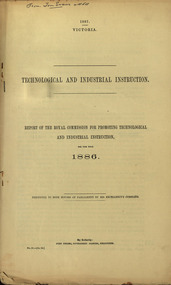
Booklet - Victorian Government Reports, Report of the Royal Commission for Promoting Technical and Industrial Education, 1886-8, 1886-8
... The Appendix of Art Schools under the Technological commission includes Ballarat City Schoolof Art (Academy of Arts, Ballarat West), Ballarat East School of Art (Ballarat East Public Library, Barkly St) and Ballarfat West School of Art (Ballaarat Mechanics' Institute) technology technical education Royal Commission for Technical Education education henry brougham loch JOseph Bosisto Art Schools science schools W.C. Kernot Frederick McCoy C.R. Blackett F. Stanley ...The Appendix of Art Schools under the Technological commission includes Ballarat City Schoolof Art (Academy of Arts, Ballarat West), Ballarat East School of Art (Ballarat East Public Library, Barkly St) and Ballarfat West School of Art (Ballaarat Mechanics' Institute).1 Twenty-three page typed report on foolscap sized paper dated 1886. It includes an appendix of a List of Schools of Art Under the Auspices of the technological COmmission for the year ending December 1886. .2 Twenty page photocopy of typed report on foolscap paper. Dated 1886. It includes a syllabus of technological subjects recognised by teh City and Guilds of London Institute. .3 Thirty-one page typed report on foolscap sized paper. Dated 1887 .1 and .2 are sectioned - 2 large sheets folded to make 8 pages. Sections are them stapled together .1 and .2 Victorian Government reports printed by John Ferres, Government Printer, Melbourne .3 Report printed by Robert S. Brain, Government Printer, Melbourne Each report is numbered bottom left-hand side: .1 No. 21-[1s.3d]; .2 No. 67-[1s]; .3 No.36-[1s3d]technology, technical education, royal commission for technical education, education, henry brougham loch, joseph bosisto, art schools, science schools, w.c. kernot, frederick mccoy, c.r. blackett, f. stanley dobson, andrew burns, j.g burns, ballarat west school of art, ballarat city school of arts, r. baker, e.h.l. swift, a. doepel, henry wheeler, w.h. batten, james oldham, henry j. hall, kew school of art, maryborough school of art, trades hall female school of art, clunes school of art, castlemaine school of art, professor huxley, edward fraser, a. humphreys, j. oldham, f.j. hall -
 Ballarat Clarendon College
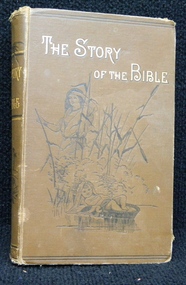
Book, S. W. Partridge and Co, The story of the bible, Prior to the book prize presented on Christmas, 1889
... Many of the prizes given in early years were returned to the school to equip the Weatherly Library when it opened in 1936. roydon-osmond-moore book-prize 1889 ballarat-college leslie-travis-stanley-moore gilbert-kent-moore r-t-moore miss-jago's-school. ...This book was awarded to Roydon Osmond Moore in 1889 for second prize for scripture in the second form. Roydon enrolled in Ballarat College in 1887 at the age of 8 along with his siblings: Leslie Travis Stanley Moore (B.D. 4/2/1877) and Gilbert Kent Moore (B.D. 14/12/1877). In the original register Parent/Guardian is listed as R.T.Moore, residing at 1 Cardygin Terrace/200 Sturt Street. It also documents that Roydon and his brothers previously attended Miss Jago's School II Class.Presbyterian educators placed great value on a classical education matched with diligence in study. Book prizes were highly regarded and academic success admired. In the school’s early years prizes were ordered direct from London and had the school crest embossed in gold on the front or back cover. Many of the prizes given in early years were returned to the school to equip the Weatherly Library when it opened in 1936.Bound in brown cloth with illustration on front and spine, college crest embossed on back cover. Floral end papers, black and white illustrations throughout, slight detached spine and detached papers. Slight foxing on pages, 621 p.Book plate inside front cover: college crest/ Scripture/ Second Form,/ Second Prize./ Awarded to/ Royden Moore/ Christmas, 1889.roydon-osmond-moore, book-prize, 1889, ballarat-college, leslie-travis-stanley-moore, gilbert-kent-moore, r-t-moore, miss-jago's-school. -
 Ballarat Clarendon College
Book, French revolution
... Presented to the Ballarat College library in 1973 by former student Andrew Stanley Humphries (1972), son of David and helen Humphreys (both old collegians). ...Presented to the Ballarat College library in 1973 by former student Andrew Stanley Humphries (1972), son of David and helen Humphreys (both old collegians). andrew-humphreys ballarat-college weatherly-library 1973 Book plate on flyleaf: Crest / Ballarat College / Library / PRESENTED BY / A Humphreys / 1973 Leatherbound book with gold lettering on spine French revolution Book ...Presented to the Ballarat College library in 1973 by former student Andrew Stanley Humphries (1972), son of David and helen Humphreys (both old collegians). Leatherbound book with gold lettering on spineBook plate on flyleaf: Crest / Ballarat College / Library / PRESENTED BY / A Humphreys / 1973andrew-humphreys, ballarat-college, weatherly-library, 1973 -
Ballarat Clarendon College
Book, The great navigators of the eighteenth century
... David Stanley Humphreys attended Ballarat College 1934 - 1939. he was School Captain 1939, member of winning rowing 1st crew 1939 and served on the Ballarat College Council 1969-73 Example of ongoing commmunity support of the school. The Weatherly Library ...Presented to the Ballarat College in 1939 by old collegian D S Humphreys. David Stanley Humphreys attended Ballarat College 1934 - 1939. he was School Captain 1939, member of winning rowing 1st crew 1939 and served on the Ballarat College Council 1969-73Example of ongoing commmunity support of the school. The Weatherly Library was opened in 1936 and its collection significantly established by donation or bequest of old collegians and members of the college community and associates.Tan cloth covered book with gold and black lettering and illustration on cover and spine. Book plate inside front cover: Crest / Ballarat College / Library / Presented by / D S Humphreys 1939...david-s-humphreys, ballarat-college, weatherly-library -
Ballarat Clarendon College
Book prize, How the British won India
... Stanley Coltman attended Ballarat College 1913 - 1920; Son of W F Coltman of 208 Clarendon St, Brother of W Lawrie, Owen H & Gwenda. A high achieving student John went on to become Dux of College 1919, School Captain 1920, Captain of cricket 1920, tennis 1918, 1919, 1920, football 1919, 1920, athletics 1919 1920, Stroke of first crew 1919 and 1920. The Coltman Demonstration Room, part of the MacKinnon Wing First Floor, was named in honour of John (1919py) and Owen Coltman (1917). The book was donated back to the school library...Stanley Coltman attended Ballarat College 1913 - 1920; Son of W F Coltman of 208 Clarendon St, Brother of W Lawrie, Owen H & Gwenda. A high achieving student John went on to become Dux of College 1919, School Captain 1920, Captain of cricket 1920, tennis 1918, 1919, 1920, football 1919, 1920, athletics 1919 1920, Stroke of first crew 1919 and 1920. The Coltman Demonstration Room, part of the MacKinnon Wing First Floor, was named in honour of John (1919py) and Owen Coltman (1917). The book was donated back to the school library ...John Stanley Coltman attended Ballarat College 1913 - 1920; Son of W F Coltman of 208 Clarendon St, Brother of W Lawrie, Owen H & Gwenda. A high achieving student John went on to become Dux of College 1919, School Captain 1920, Captain of cricket 1920, tennis 1918, 1919, 1920, football 1919, 1920, athletics 1919 1920, Stroke of first crew 1919 and 1920. The Coltman Demonstration Room, part of the MacKinnon Wing First Floor, was named in honour of John (1919py) and Owen Coltman (1917). The book was donated back to the school library in 1985. A blue leather bound set with Ballarat College crest and borders embossed in gold on front cover; page edges are maroon marbled; gold lettering on spine; bookplate fixed to inside of front cover; library plate to right side of end pages;Bookplate: Ballarat College / Awarded to / Jack Coltman / Form Vb / Prize for History 1st / A S Polson B A / Principal / Christmas 1915ballarat college, 1915, john-s-coltman -
Ballarat Clarendon College
Book prize, Mary Barton
... Stanley Coltman attended Ballarat College 1913 - 1920; Son of W F Coltman of 208 Clarendon St, Brother of W Lawrie, Owen H & Gwenda. A high achieving student John went on to become Dux of College 1919, School Captain 1920, Captain of cricket 1920, tennis 1918, 1919, 1920, football 1919, 1920, athletics 1919 1920, Stroke of first crew 1919 and 1920. The Coltman Demonstration Room, part of the MacKinnon Wing First Floor, was named in honour of John (1919py) and Owen Coltman (1917). This book was donated back to the school library...Stanley Coltman attended Ballarat College 1913 - 1920; Son of W F Coltman of 208 Clarendon St, Brother of W Lawrie, Owen H & Gwenda. A high achieving student John went on to become Dux of College 1919, School Captain 1920, Captain of cricket 1920, tennis 1918, 1919, 1920, football 1919, 1920, athletics 1919 1920, Stroke of first crew 1919 and 1920. The Coltman Demonstration Room, part of the MacKinnon Wing First Floor, was named in honour of John (1919py) and Owen Coltman (1917). This book was donated back to the school library ...John Stanley Coltman attended Ballarat College 1913 - 1920; Son of W F Coltman of 208 Clarendon St, Brother of W Lawrie, Owen H & Gwenda. A high achieving student John went on to become Dux of College 1919, School Captain 1920, Captain of cricket 1920, tennis 1918, 1919, 1920, football 1919, 1920, athletics 1919 1920, Stroke of first crew 1919 and 1920. The Coltman Demonstration Room, part of the MacKinnon Wing First Floor, was named in honour of John (1919py) and Owen Coltman (1917). This book was donated back to the school library in 1985. A marron leather bound book with Ballarat College crest and borders embossed in gold on front cover; gold lettering on spine; bookplate fixed to inside of front cover; library plate to right side of end pages;Bookplate: Ballarat College / Awarded to / J Coltman / Form VIb / Prize for Prefect / Presented by Principal / A S Polson B A / Principal / Christmas 1918ballarat college, john-s-coltman, 1918 -
 Ballarat Clarendon College
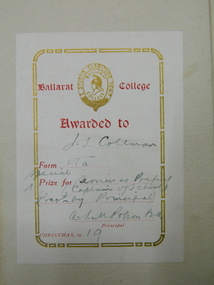
Book prize, Harold: the last of the Saxon kings
... Stanley Coltman attended Ballarat College 1913 - 1920; Son of W F Coltman of 208 Clarendon St, Brother of W Lawrie, Owen H & Gwenda. A high achieving student John went on to become Dux of College 1919, School Captain 1920, Captain of cricket 1920, tennis 1918, 1919, 1920, football 1919, 1920, athletics 1919 1920, Stroke of first crew 1919 and 1920. The Coltman Demonstration Room, part of the MacKinnon Wing First Floor, was named in honour of John (1919py) and Owen Coltman (1917). This book was donated back to the school library...Stanley Coltman attended Ballarat College 1913 - 1920; Son of W F Coltman of 208 Clarendon St, Brother of W Lawrie, Owen H & Gwenda. A high achieving student John went on to become Dux of College 1919, School Captain 1920, Captain of cricket 1920, tennis 1918, 1919, 1920, football 1919, 1920, athletics 1919 1920, Stroke of first crew 1919 and 1920. The Coltman Demonstration Room, part of the MacKinnon Wing First Floor, was named in honour of John (1919py) and Owen Coltman (1917). This book was donated back to the school library ...John Stanley Coltman attended Ballarat College 1913 - 1920; Son of W F Coltman of 208 Clarendon St, Brother of W Lawrie, Owen H & Gwenda. A high achieving student John went on to become Dux of College 1919, School Captain 1920, Captain of cricket 1920, tennis 1918, 1919, 1920, football 1919, 1920, athletics 1919 1920, Stroke of first crew 1919 and 1920. The Coltman Demonstration Room, part of the MacKinnon Wing First Floor, was named in honour of John (1919py) and Owen Coltman (1917). This book was donated back to the school library in 1985. A blackleather bound book with Ballarat College crest embossed in gold on front cover; gold lettering on spine; bookplate fixed to inside of front cover; library plate to right side of end pages;Bookplate: Ballarat College / Awarded to / J S Coltman / Form VIa / Special Prize for service as Prefect (Captain of School) / Pres. by Principal / A S Polson B A / Principal / Christmas 1919ballarat college, john-s-coltman, 1918 -
 Ballarat Clarendon College
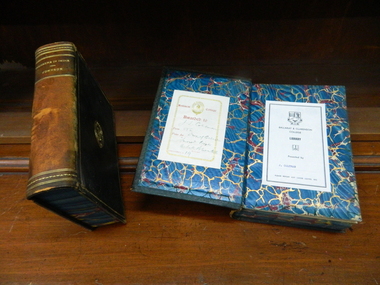
Book prize, Pioneers in Canada and Pioneers in India (2 vols)
... Stanley Coltman attended Ballarat College 1913 - 1920; Son of W F Coltman of 208 Clarendon St, Brother of W Lawrie, Owen H & Gwenda. A high achieving student John went on to become Dux of College 1919, School Captain 1920, Captain of cricket 1920, tennis 1918, 1919, 1920, football 1919, 1920, athletics 1919 1920, Stroke of first crew 1919 and 1920. The Coltman Demonstration Room, part of the MacKinnon Wing First Floor, was named in honour of John (1919py) and Owen Coltman (1917). This book was donated back to the school library...Stanley Coltman attended Ballarat College 1913 - 1920; Son of W F Coltman of 208 Clarendon St, Brother of W Lawrie, Owen H & Gwenda. A high achieving student John went on to become Dux of College 1919, School Captain 1920, Captain of cricket 1920, tennis 1918, 1919, 1920, football 1919, 1920, athletics 1919 1920, Stroke of first crew 1919 and 1920. The Coltman Demonstration Room, part of the MacKinnon Wing First Floor, was named in honour of John (1919py) and Owen Coltman (1917). This book was donated back to the school library ...John Stanley Coltman attended Ballarat College 1913 - 1920; Son of W F Coltman of 208 Clarendon St, Brother of W Lawrie, Owen H & Gwenda. A high achieving student John went on to become Dux of College 1919, School Captain 1920, Captain of cricket 1920, tennis 1918, 1919, 1920, football 1919, 1920, athletics 1919 1920, Stroke of first crew 1919 and 1920. The Coltman Demonstration Room, part of the MacKinnon Wing First Floor, was named in honour of John (1919py) and Owen Coltman (1917). This book was donated back to the school library in 1985. Dark green leather bound set with Ballarat College crest and borders embossed in gold on front cover; gold lettering on spine; marbled endpages and page edges; bookplate fixed to inside of front cover; library plate to right side of end pages;Bookplate: Ballarat College / Awarded to / J S Coltman / Form VIa / Prize for Dux of College / "Snow" prize / A S M Polson B A / Principal / Christmas 1919ballarat college, john-s-coltman, 1919, dux -
 Federation University Historical Collection
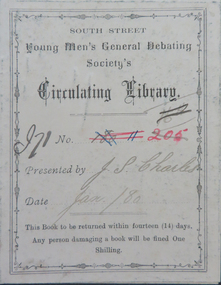
Book, W. Stanley Jevons, Money and the Mechanism of Exchange, 1876
... Library. Money and the Mechanism of Exchange Book Book W. Stanley Jevons Henry S. ...Crimson and black cloth bound book of 350 pages. Formerly part of the South Street Young Men's General Debating Society's Circulating Library.non-fictionmoney, south street, south street debating society, south street young men's general debating society circulating library, bookplate, j.s. charles, john p. charles, library, barter, currency, metals as money, coining, coins, standards, exchange, promissory notes, paper currency, credit documents, foreign bills of exchange, bank of england, corn rents, legal tender -
 Federation University Historical Collection
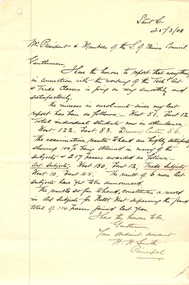
Document - Documents, Ballarat School of Mines Correspondence Relating to the Ballarat Technical Art School, 1907-1914, 24/12/1907 - 28/08/1914
... library...esther green...percy isaac...sloyd...millinery...r.w. richards...frank king...a.w. steane...naas...majorie walker...art needlework...stanley...This covers that time before the custom built Ballarat Technical Art School opened in 1915. ballarat technical school henry j. hall arthur m lilburn thomas h. trengrove herbert h. smith g.w. clegg m.c. young j.w. wright fred foster j. barber etsher green lily green p. isaac e.m. cornell albert steane f.n. king letterhead ballarat fine art public gallery association richard maddern j. powell j.a. powell frederick martell ponsonby carew-smyth stawell school of mines lilburne pridgeon arthur lilburne henry hall edith m. cornell john barber east ballarat library esther green percy isaac sloyd millinery r.w. richards frank king a.w. steane naas majorie walker art needlework stanley mullen company donald johnston ted cannon edwin cannon harold brown harold herbert art gallery of ballarat 48 pieces of hand and type written correspondence relating to the Ballarat Technical Art School, covering its first eight years. .1) Transferal of money from the Ballarat Fine Art Public Gallery Association to the Ballarat School of Mines for credit to the Ballarat Technical Art School No 15. .3) Letter from Herbert H. ...The dates 1907-1914 cover the first eight years of the Ballarat Technical Art School No. 15, a division of the Ballarat School of Mines. This covers that time before the custom built Ballarat Technical Art School opened in 1915.48 pieces of hand and type written correspondence relating to the Ballarat Technical Art School, covering its first eight years. .1) Transferal of money from the Ballarat Fine Art Public Gallery Association to the Ballarat School of Mines for credit to the Ballarat Technical Art School No 15. .3) Letter from Herbert H. Smith reporting on the appointment of Thomas Trengove to the position of Art Director at the Stawell School of Mines, and the appointment of Arthur Lilburne and Pridgeon as student assistants. .5) Application from Arthur M. Lilburne for a position at the Ballarat Technical Art School. .7) Resignation of Thomas Trengrove from the Ballarat Technical Art School so he could take up a position at the Stawell School of Mines, 1908. .9) Correspondence from H.H. Smith concerning expectations. 1908 .10) Report from Herbert H. Smith on the number of Art enrolments at the Ballarat West Art School, the Ballarat East Art School and the Drawing Centre. .8) Correspondence from Henry H. Hall regarding his teaching appointment, 1908 .11) A Report on architectural studies at the Ballarat Technical Art School on Clegg and Miller letterhead. .12) Report from M.C. Young. .13) Report from Arthur Lilburne .14) Reorrt from J.A. Wright, 1908 .15) Report on student numbers from Edith M. Cornell, 1908 .16) Report on classes in Freehand Geometry and Perspective by Fred Foster, 1908 .16b) Report by Decorating and Signwriting teacher John Barber, 1908 .17) Report from Esther and Lily Green from the East Public Library, 1908 .18) Report from Percy Isaac of the Ballarat East Public Library re manual training and Sloyd classes. .19) Report on the progress of the Ballarat Technical Art School by Principal Herbert H. Smith, 1908 .20) Report from Arthur M. Lilburn on the Elementary Evening Classes and the State School Teachers Saturday class, 1908 .21) Report by M.C. Young on drawing classes at the Ballarat Technical Art School, 1908 ,22) Report by Fred Foster on Freehand Geometry of Perspective classes at the Ballarat Technical Art School, 1908 .24) Report by E. and L. Green on classes at the Ballarat Technical Art School, 1908 .25) Report by Miss Wright on Dresscutting classes at the Ballarat Technical Art School, 1908 .26) Report by John Barber on Signs and Decorating classes at the Ballarat Technical Art School, 1908 .27) Report by Edith Cornell on Millinery classes at the Ballarat Technical Art School, 1908 .28) Report by Percy R. Green on Manual Training ad Carpentry classes at the Ballarat Technical Art School, 1908 .29) Correspondence from Posenby Carew-Smyth and Melbourne Education Department letterhead, 1908, .30) Report on the need for instruction in Decorative Needlework at the Ballarat Technical Art School by Principal Herbert H. Smith. Ida Johnston undertook classes from Miss Macgeorge in Melbourne at the suggestion of Posonby Carew-Smyth, and H.H. Smith suggested she be appointed to teach the class, 1910 .31) Report on the Junior Technical School, 1915 .32) Quarterly Report on the Ballarat Technical Art School by Principal Herbert H. Smith, 1911 .34) Report on the progress of the Ballarat Technical Art School by Principal Herbert H. Smith, 1914 .34b) Invoice from James Ingram and Son, Booksellers and School Stationers, 1908 .35) Report on the progress of the Ballarat Technical Art School by Principal Herbert H. Smith, 1914 .36) Correspondence from F.N. King seeking employment at the Ballarat Junior Technical Scool due to the resignation of A.W. Steane, 1914 .37) Correspondence regarding the qualifications of F.N. King, including Sloyd at NAAS, Sweden, 1914 Reference from F.V. Burridge of the London County Council Central School of Arts and Crafts (incorporating The Royal Female School of Art), Southamoton Row, London, regarding Francis N. King, 1913 .40) Correspondence on Ballarat Junior Technical School letterhead when it was located at 104 Doveton Street, Ballarat (Dana Street Primary School) from Albert W. Steane. The report mentioned to appointment of R.W. Richards commencing duties as a science ad mathematics master and Francis N. King as Woodwork and Modeling instructor, 1914 .41) Report on the progress of the Ballarat Technical Art School by Principal Herbert H. Smith, 1914 .42) Correspondence on Stanley Mullen Company letterhead requesting a junior (lady) to help in designing and drawing from Needlework, 1914 .43) Report on the progress of the Ballarat Technical Art School by Principal Herbert H. Smith, 1914 .44) Report on the progress of the Ballarat Technical Art School by Principal Herbert H. Smith, 1914. The report includes the resignation of Donadl Johnston to take up the position of assistant to Posonby Carew-Smyth. Harold Herbert to travel to England, and Edwin Cannon to to apply his art knowledge commercially. H.H. Smith suggested they be replaced with Ken Moss and Harold Brown .45) Report on the progress of the Ballarat Technical Art School by Principal Herbert H. Smith .46) Hours and duties of the caretaker and attendant at the Ballarat Technical Art School .47) Letter from the J.A. Powell, secretary of the Ballarat West Art School to the Ballarat School of Mines. ballarat technical school, henry j. hall, arthur m lilburn, thomas h. trengrove, herbert h. smith, g.w. clegg, m.c. young, j.w. wright, fred foster, j. barber, etsher green, lily green, p. isaac, e.m. cornell, albert steane, f.n. king, letterhead, ballarat fine art public gallery association, richard maddern, j. powell, j.a. powell, frederick martell, ponsonby carew-smyth, stawell school of mines, lilburne, pridgeon, arthur lilburne, henry hall, edith m. cornell, john barber, east ballarat library, esther green, percy isaac, sloyd, millinery, r.w. richards, frank king, a.w. steane, naas, majorie walker, art needlework, stanley mullen company, donald johnston, ted cannon, edwin cannon, harold brown, harold herbert, art gallery of ballarat -
 Flagstaff Hill Maritime Museum and Village
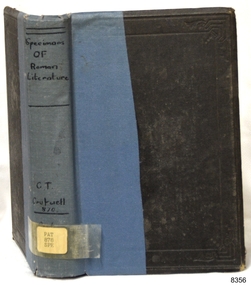
Book, Specimens of Roman Literature
... The label on the spine cover with typed text PAT 898 SPE Inside front loose end paper reads in Hand writing J T Stanley, Dec. 1883 Warrnambool Paste down front end paper has a sticker from Warrnambool Mechanics Institute and Free Library. ...The Warrnambool Mechanics' Institute’s publication collection is of both local and state significance. flagstaff hil Warrnambool flagstaff hill maritime museum maritime museum shipwreck coast flagstaff hill maritime village great ocean road book pattison collection warrnambool library warrnambool mechanics’ institute ralph eric pattison corangamite regional library service warrnambool city librarian mechanics’ institute library victorian library board warrnambool books and records warrnambool children’s library Specimens of Roman Literature Charles Cruttwell The label on the spine cover with typed text PAT 898 SPE Inside front loose end paper reads in Hand writing J T Stanley, Dec. 1883 Warrnambool Paste down front end paper has a sticker from Warrnambool Mechanics Institute and Free Library. ...This book was part of a large group of books referred to as the Pattison Collection, which belonged to the Warrnambool Public Library, part of the Warrnambool Mechanics’ Institute. About RALPH ERIC PATTISON and the ‘PATTISON COLLECTION’ The ‘Pattison Collection’ is a collection of books and records that was originally owned by the Warrnambool Mechanics’ Institute, founded in Warrnambool in 1853. By 1886 the Warrnambool Mechanics’ Institute (WMI) had grown to have a Library, Museum and Fine Arts Gallery, with a collection of “… choice productions of art and valuable specimens in almost every branch and many wonderful national curiosities, are now to be seen there, including historic relics of the town and district.” It later included a School of Design. Although it was very well patronised, the WMI was led to ask the City Council to take it over in 1911 due to a lack of financial support. In 1935 Ralph Pattison was appointed as City Librarian to establish and organise the Warrnambool Public Library as it was then called. Ralph Eric Pattison was born in Rockhampton, Queensland, in 1891. He married Maude Swan from Warrnambool in 1920 and they set up a home in Warrnambool. In 1935 when Pattison accepted the position as City Librarian for the Warrnambool City Council his huge challenge was to make a functional library within two rooms of the Mechanics’ Institute. He tirelessly cleaned, cleared and sorted a disarrayed collection of old books, jars of preserved specimens and other items reserved for exhibition in the city’s museum. He developed and updated the library with a wide variety of books for all tastes, including reference books for students; a difficult task to fulfil during the years following the Depression. He converted all of the lower areas of the building into a library, reference room and reading room for members and the public. The books were sorted and stored using a cataloguing and card index system that he had developed himself. He also prepared the upper floor of the building and established the Art Gallery and later the Museum, a place to exhibit the many old relics that had been stored for years for this purpose. One of the treasures he found was a beautiful ancient clock, which he repaired, restored and enjoyed using in his office during the years of his service there. Ralph Pattison was described as “a meticulous gentleman whose punctuality, floorless courtesy and distinctive neat dress were hallmarks of his character, and ‘his’ clock controlled his daily routine and his opening and closing of the library’s large heavy doors to the minute.” Pattison took leave from 1942 to 1945 to serve in the Royal Australian Navy, Volunteer Reserve as Lieutenant. A few years later he converted one of the Museum’s rooms into a Children’s Library, stocking it with suitable books for the younger generation. This was an instant success. In the 1950’s he had the honour of being appointed to the Victorian Library Board and received more inspiration from the monthly conferences in Melbourne. He was sadly retired in 1959 after over 23 years of service, due to the fact that he had gone over the working age of council officers. However, he continued to take a very keen interest in the continual development of the Library until his death in 1969. THE NEW WARRNAMBOOL LIBRARY When the WMI building was pulled down in 1963 a new civic building was erected on the site and the new Warrnambool Library, on behalf of the City Council, took over all the holdings of the WMI. At this time some of the items were separated and identified as the ‘Pattison Collection’, named after Pattison. Eventually, the components of the WMI were distributed from the Warrnambool Library to various places, including the Art Gallery, Historical Society and Flagstaff Hill. Later some were even distributed to other regional branches of Corangamite Regional Library and passed to and fro. It is difficult now to trace just where all of the items have ended up. The books at Flagstaff Hill Maritime Village generally display stamps and markings from Pattison as well as a variety of other institutions including the Mechanics’ Institute itself. The Pattison Collection, along with other items at Flagstaff Hill Maritime Village, was originally part of the Warrnambool Mechanics' Institute’s collection. The Warrnambool Mechanics’ Institute Collection is primarily significant in its totality, rather than for the individual objects it contains. Its contents are highly representative of the development of Mechanics' Institute libraries across Australia, particularly Victoria. A diversity of publications and themes has been amassed, and these provide clues to our understanding of the nature of and changes in the reading habits of Victorians from the 1850s to the middle of the 20th century. The collection also highlights the Warrnambool community’s commitment to the Mechanics’ Institute, reading, literacy and learning in the regions, and proves that access to knowledge was not impeded by distance. These items help to provide a more complete picture of our community’s ideals and aspirations. The Warrnambool Mechanics Institute book collection has historical and social significance for its strong association with the Mechanics Institute movement and the important role it played in the intellectual, cultural and social development of people throughout the latter part of the nineteenth century and the early twentieth century. The collection of books is a rare example of an early lending library and its significance is enhanced by the survival of an original collection of many volumes. The Warrnambool Mechanics' Institute’s publication collection is of both local and state significance. Specimens of Roman Literature Edited by Charles Cruttwell Publisher: Charles Griffin & Co Date: First Published 1879 Further Information: Second Edition. The label on the spine cover with typed text PAT 898 SPE Inside front loose end paper reads in Hand writing J T Stanley, Dec. 1883 Warrnambool Paste down front end paper has a sticker from Warrnambool Mechanics Institute and Free Library. Front loose end paper has a sticker from Corangamite Regional Library Service.flagstaff hil, warrnambool, flagstaff hill maritime museum, maritime museum, shipwreck coast, flagstaff hill maritime village, great ocean road, book, pattison collection, warrnambool library, warrnambool mechanics’ institute, ralph eric pattison, corangamite regional library service, warrnambool city librarian, mechanics’ institute library, victorian library board, warrnambool books and records, warrnambool children’s library, specimens of roman literature, charles cruttwell -
 Flagstaff Hill Maritime Museum and Village
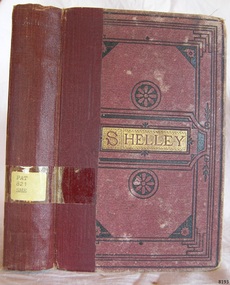
Book, The Poetical Works of Percy Bysshe Shelley
... The label on spine cover with typed text PAT 821 SHE Inside front, loose endpaper has the handwritten name "J S Stanley" Pastedown front endpaper has a sticker from Warrnambool Mechanics Institute and Free Library covered by a sticker from Corangamite Regional Library Service Front loose endpaper has a stamp from Corangamite Regional Library Service ...The Warrnambool Mechanics' Institute’s publication collection is of both local and state significance. flagstaff hill warrnambool shipwrecked coast flagstaff hill maritime museum maritime museum shipwreck coast flagstaff hill maritime village great ocean road book pattison collection warrnambool library warrnambool mechanics’ institute ralph eric pattison corangamite regional library service warrnambool city librarian mechanics’ institute library victorian library board warrnambool books and records warrnambool children’s library The Poetical Works of Percy Bysshe Shelley Percy Bysshe Shelley Shelley The label on spine cover with typed text PAT 821 SHE Inside front, loose endpaper has the handwritten name "J S Stanley" Pastedown front endpaper has a sticker from Warrnambool Mechanics Institute and Free Library covered by a sticker from Corangamite Regional Library Service Front loose endpaper has a stamp from Corangamite Regional Library Service The Poetical Works of Percy Bysshe Shelley Author: Percy Bysshe Shelley Publisher: Ward, Lock & Co Date: 1902 The Poetical Works of Percy Bysshe Shelley Book ...This book was part of a large group of books referred to as the Pattison Collection, which belonged to the Warrnambool Public Library, part of the Warrnambool Mechanics’ Institute. About RALPH ERIC PATTISON and the ‘PATTISON COLLECTION’ The ‘Pattison Collection’ is a collection of books and records that was originally owned by the Warrnambool Mechanics’ Institute, founded in Warrnambool in 1853. By 1886 the Warrnambool Mechanics’ Institute (WMI) had grown to have a Library, Museum and Fine Arts Gallery, with a collection of “… choice productions of art and valuable specimens in almost every branch and many wonderful national curiosities are now to be seen there, including historic relics of the town and district.” It later included a School of Design. Although it was very well patronised, the WMI was led to ask the City Council to take it over in 1911 due to lack of financial support. In 1935 Ralph Pattison was appointed as City Librarian to establish and organise the Warrnambool Public Library as it was then called. Ralph Eric Pattison was born in Rockhampton, Queensland, in 1891. He married Maude Swan from Warrnambool in 1920 and they set up home in Warrnambool. In 1935 when Pattison accepted the position as City Librarian for the Warrnambool City Council his huge challenge was to make a functional library within two rooms of the Mechanics’ Institute. He tirelessly cleaned, cleared and sorted a disarrayed collection of old books, jars of preserved specimens and other items reserved for exhibition in the city’s museum. He developed and updated the library with a wide variety of books for all tastes, including reference books for students; a difficult task to fulfil during the years following the Depression. He converted all of the lower areas of the building into a library, reference room and reading room for members and the public. The books were sorted and stored using a cataloguing and card index system that he had developed himself. He also prepared the upper floor of the building and established the Art Gallery and later the Museum, a place to exhibit the many old relics that had been stored for years for this purpose. One of the treasures he found was a beautiful ancient clock, which he repaired, restored and enjoyed using in his office during the years of his service there. Ralph Pattison was described as “a meticulous gentleman whose punctuality, floorless courtesy and distinctive neat dress were hallmarks of his character, and ‘his’ clock controlled his daily routine and his opening and closing of the library’s large heavy doors to the minute.” Pattison took leave from 1942 to 1945 to serve in the Royal Australian Navy, Volunteer Reserve as Lieutenant. A few years later he converted one of the Museum’s rooms into a Children’s Library, stocking it with suitable books for the younger generation. This was an instant success. In the 1950’s he had the honour of being appointed to the Victorian Library Board and received more inspiration from the monthly conferences in Melbourne. He was sadly retired in 1959 after over 23 years of service, due to the fact that he had gone over the working age of council officers. However, he continued to take a very keen interest in the continual development of the Library until his death in 1969. THE NEW WARRNAMBOOL LIBRARY When the WMI building was pulled down in 1963 a new civic building was erected on the site and the new Warrnambool Library, on behalf of the City Council, took over all the holdings of the WMI. At this time some of the items were separated and identified as the ‘Pattison Collection’, named after Pattison. Eventually, the components of the WMI were distributed from the Warrnambool Library to various places, including the Art Gallery, Historical Society and Flagstaff Hill. Later some were even distributed to other regional branches of Corangamite Regional Library and passed to and fro. It is difficult now to trace just where all of the items have ended up. The books at Flagstaff Hill Maritime Village generally display stamps and markings from Pattison as well as a variety of other institutions including the Mechanics’ Institute itself. WARRNAMBOOL MECHANICS’ INSTITUTE Warrnambool's Mechanics' Institute (or Institution as it was sometimes called) was one of the earliest in Victoria. On 17th October 1853, a meeting was held where it was resolved to request the Lieutenant Governor of the Colony to grant land for the erection of a Mechanics' Institutes building. A committee was formed at the meeting and Richard Osburne chaired the first meeting of this committee. The land on the North West corner of Banyan and Merri Streets was granted but there were no funds to erect the building. The Formal Rights of the Warrnambool Mechanics' Institute's encompassed its aims and these were officially adopted in1859; "This Institution has for its object the diffusion of literary, scientific, and other useful knowledge amongst its members, excluding all controversial subjects, religious or political. These objects are sought to be obtained by means of a circulating library, a reading room, the establishment of classes, debates, and the occasional delivery of lectures on natural and experimental philosophy, mechanics, astronomy, chemistry, natural history, literature, and the useful and ornamental arts, particularly those which have a more immediate reference to the colony." The Warrnambool Mechanics' Institute opened its first reading room in November 1884 in the National School building at the corner of Banyan and Timor Streets. The Institute was funded by member subscription, payable on a quarterly, half-yearly or yearly basis. Samuel Hannaford, the Manager of the Warrnambool Bank of Australasia, was the first Honorary Secretary of the Mechanics' Institutes, and an early President and Vice-President. He also gave several of the early lectures in the Reading Room. Another early Secretary, Librarian and lecturer was Marmaduke Fisher, the teacher at the National School. Lecture topics included The Poets and Poetry of Ireland', 'The Birth and Development of the Earth', 'The Vertebrae - with Remarks on the pleasures resulting from the study of Natural History' and 'Architecture'. In 1856 the Reading Room was moved to James Hider's shop in Timor Street, and by 1864 it was located in the bookshop of Davies and Read. In the 1860's the Mechanics' Institute struggled as membership waned but in 1866, after a series of fundraising efforts, the committee was able to purchase land in Liebig Street, on a site then called Market Square, between the weighbridge and the fire station. A Mechanics' Institute building was opened at this site in August 1871. The following year four more rooms were added to the main Reading Room and in 1873 the Artisan School of Design was incorporated into the Institute. The same year Joseph Archibald established a Museum; however, it deteriorated when he was transferred to Bendigo in 1877. In 1880, with Archibald's return to Warrnambool, the Museum was re-established, and in 1885 a new building was built at the back of the Institute to accommodate the re-created School of Design, the Art Gallery and the Museum. In 1887 the Museum section was moved to the former courthouse in Timor Street (for some time the walls of the building formed part of the TAFE cafeteria but all is now demolished)). In 1911 the Museum was transferred back to the original building and the management of the Mechanics' Institute was handed over to the Warrnambool City Council. The Museum and Art Gallery became one and housed many fine works of art, and the Library continued to grow. The building was well patronised, with records showing that at the beginning of the 20th century there were between 500 and 800 visitors. During World War One the monthly figures were in the thousands, with 3,400 people visiting in January 1915. The Museum was a much-loved Institution in Warrnambool until the contents of the Museum and Art Gallery were removed to make room for the Warrnambool City Council Engineers' Department. The contents were stored but many of the items were scattered or lost. When the original building was demolished the site became occupied by the Civic Centre, which included the new City Library. (The library was temporarily located in the old Palais building in Koroit Street.) In the process of reorganisation the Collection was distributed amongst the community groups: -The new City Library took some of the historical books and some important documents, historic photographs and newspapers. -The Art Gallery kept the 19th Century art collection and some of the artefacts from the museum. -The Historical Society has some items -The State Museum has some items -Some items were destroyed -Flagstaff Hill Maritime Village has old newspapers, Government Gazettes, most of the Mechanics' Institute Library, ledgers and documents connected to the Mechanics' Institute Library, some framed and unframed artworks and some photographs. The Warrnambool Mechanics' Institute Library book collection is deemed to be of great importance because it is one of the few collections in an almost intact state, and many of the books are now very rare and of great value. The Pattison Collection, along with other items at Flagstaff Hill Maritime Village, was originally part of the Warrnambool Mechanics' Institute’s collection. The Warrnambool Mechanics’ Institute Collection is primarily significant in its totality, rather than for the individual objects it contains. Its contents are highly representative of the development of Mechanics' Institute libraries across Australia, particularly Victoria. A diversity of publications and themes has been amassed, and these provide clues to our understanding of the nature of and changes in the reading habits of Victorians from the 1850s to the middle of the 20th century. The collection also highlights the Warrnambool community’s commitment to the Mechanics’ Institute, reading, literacy and learning in the regions, and proves that access to knowledge was not impeded by distance. These items help to provide a more complete picture of our community’s ideals and aspirations. The Warrnambool Mechanics Institute book collection has historical and social significance for its strong association with the Mechanics Institute movement and the important role it played in the intellectual, cultural and social development of people throughout the latter part of the nineteenth century and the early twentieth century. The collection of books is a rare example of an early lending library and its significance is enhanced by the survival of an original collection of many volumes. The Warrnambool Mechanics' Institute’s publication collection is of both local and state significance. The Poetical Works of Percy Bysshe Shelley Author: Percy Bysshe Shelley Publisher: Ward, Lock & Co Date: 1902 The label on spine cover with typed text PAT 821 SHE Inside front, loose endpaper has the handwritten name "J S Stanley" Pastedown front endpaper has a sticker from Warrnambool Mechanics Institute and Free Library covered by a sticker from Corangamite Regional Library Service Front loose endpaper has a stamp from Corangamite Regional Library Service flagstaff hill, warrnambool, shipwrecked coast, flagstaff hill maritime museum, maritime museum, shipwreck coast, flagstaff hill maritime village, great ocean road, book, pattison collection, warrnambool library, warrnambool mechanics’ institute, ralph eric pattison, corangamite regional library service, warrnambool city librarian, mechanics’ institute library, victorian library board, warrnambool books and records, warrnambool children’s library, the poetical works of percy bysshe shelley, percy bysshe shelley, shelley -
 Flagstaff Hill Maritime Museum and Village
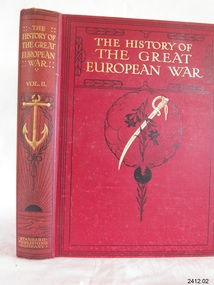
Book - Reference/History, W Stanley Macbean Knight, The History of the Great European War Set 1 Vol 2, 1914-1920
... Library stamps visible. Hard Cover Book. History of The Great European War Set 1 Vol 2 Author: W Stanley Macbean Knight Publisher: The Caxton Publishing Company Ltd Clune House, 161 Surrey St, London W.C. ...This set is a contemporary and popular narrative history of WWI, written and published while the war was still happening; the preface is dated 1914, but volumes were issued serially as the war progressed, meaning later volumes covering 1917–18 and the peace were released several years after the first. This is a common format for the period — compare rival serials like The Great War (Hammerton & Wilson) or Collier's The Story of the Great War — publishers issued 'instant history' in subscription parts to a public hungry for authoritative-sounding accounts. The volumes in this set cover the following topics during the First World War: Vol. I — Causes and Effects (1914): Its aims are to explain the political and diplomatic background to the war — the alliance system and the July Crisis — with the outbreak of hostilities in August 1914. Vol. II: Continues into the opening campaigns of 1914 (per Internet Archive, 'Vol 2 of 10', contemporary account). Vol. III: Descriptions note it as continuing the story of the campaign of the Allies and their mid-war campaigns. Vol. IV: Covers 1916 and the ongoing 1915–16 campaigns; this volume contains a fold-out colour map of the Serbian Retreat and one of the Italian front, featuring the Balkan and Italian theatres of war. Vols. V–VI: Continue the general campaign narrative through 1916–17. Vols. VII–VIII: Cover the later war years, focusing on 1917–18. Vols. IX–X: These volumes cover the war's final phase and the Armistice. Publication of the last volumes continued into the early 1920s, covering the peace settlement at Versailles and its aftermath.Hard Cover Book. History of The Great European War Set 1 Vol 2 Author: W Stanley Macbean Knight Publisher: The Caxton Publishing Company Ltd Clune House, 161 Surrey St, London W.C. Printer: The Standard Publishing Co. 100 Flinders St, Melbourne. Date: Various Volume Subscription Releases 1914 to 1920 Further Information: Red pictorial cloth gilt-lettered boards, each volume illustrated with a coloured frontispiece, black-and-white photographic plates, and fold-out colour maps of various fronts depending on volume(e.g. the Serbian Retreat, the Italian front etc.). Note there are two sets of this publication in the Flagstaff book collection.non-fictionThis set is a contemporary and popular narrative history of WWI, written and published while the war was still happening; the preface is dated 1914, but volumes were issued serially as the war progressed, meaning later volumes covering 1917–18 and the peace were released several years after the first. This is a common format for the period — compare rival serials like The Great War (Hammerton & Wilson) or Collier's The Story of the Great War — publishers issued 'instant history' in subscription parts to a public hungry for authoritative-sounding accounts. The volumes in this set cover the following topics during the First World War: Vol. I — Causes and Effects (1914): Its aims are to explain the political and diplomatic background to the war — the alliance system and the July Crisis — with the outbreak of hostilities in August 1914. Vol. II: Continues into the opening campaigns of 1914 (per Internet Archive, 'Vol 2 of 10', contemporary account). Vol. III: Descriptions note it as continuing the story of the campaign of the Allies and their mid-war campaigns. Vol. IV: Covers 1916 and the ongoing 1915–16 campaigns; this volume contains a fold-out colour map of the Serbian Retreat and one of the Italian front, featuring the Balkan and Italian theatres of war. Vols. V–VI: Continue the general campaign narrative through 1916–17. Vols. VII–VIII: Cover the later war years, focusing on 1917–18. Vols. IX–X: These volumes cover the war's final phase and the Armistice. Publication of the last volumes continued into the early 1920s, covering the peace settlement at Versailles and its aftermath.flagstaff hill, warrnambool, shipwrecked-coast, flagstaff-hill, flagstaff-hill-maritime-museum, maritime-museum, shipwreck-coast, flagstaff-hill-maritime-village, book, the history of the great european war vol 1 set 1, the history of the great european war, caxton printers -
 Flagstaff Hill Maritime Museum and Village
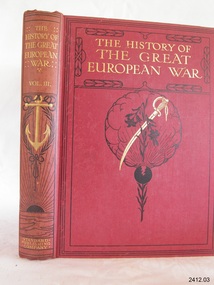
Book - Reference/History, W Stanley Macbean Knight, The History of the Great European War Set 1 Vol 3, 1914-1920
... Library stamps visible. Hard Cover Book. History of The Great European War Set 1 Vol 3 Author: W Stanley Macbean Knight Publisher: The Caxton Publishing Company Ltd Clune House, 161 Surrey St, London W.C. ...This set is a contemporary and popular narrative history of WWI, written and published while the war was still happening; the preface is dated 1914, but volumes were issued serially as the war progressed, meaning later volumes covering 1917–18 and the peace were released several years after the first. This is a common format for the period — compare rival serials like The Great War (Hammerton & Wilson) or Collier's The Story of the Great War — publishers issued 'instant history' in subscription parts to a public hungry for authoritative-sounding accounts. The volumes in this set cover the following topics during the First World War: Vol. I — Causes and Effects (1914): Its aims are to explain the political and diplomatic background to the war — the alliance system and the July Crisis — with the outbreak of hostilities in August 1914. Vol. II: Continues into the opening campaigns of 1914 (per Internet Archive, 'Vol 2 of 10', contemporary account). Vol. III: Descriptions note it as continuing the story of the campaign of the Allies and their mid-war campaigns. Vol. IV: Covers 1916 and the ongoing 1915–16 campaigns; this volume contains a fold-out colour map of the Serbian Retreat and one of the Italian front, featuring the Balkan and Italian theatres of war. Vols. V–VI: Continue the general campaign narrative through 1916–17. Vols. VII–VIII: Cover the later war years, focusing on 1917–18. Vols. IX–X: These volumes cover the war's final phase and the Armistice. Publication of the last volumes continued into the early 1920s, covering the peace settlement at Versailles and its aftermath.Hard Cover Book. History of The Great European War Set 1 Vol 3 Author: W Stanley Macbean Knight Publisher: The Caxton Publishing Company Ltd Clune House, 161 Surrey St, London W.C. Printer: The Standard Publishing Co. 100 Flinders St, Melbourne. Date: Various Volume Subscription Releases 1914 to 1920 Further Information: Red pictorial cloth gilt-lettered boards, each volume illustrated with a coloured frontispiece, black-and-white photographic plates, and fold-out colour maps of various fronts depending on volume(e.g. the Serbian Retreat, the Italian front etc.). Note there are two sets of this publication in the Flagstaff book collection.non-fictionThis set is a contemporary and popular narrative history of WWI, written and published while the war was still happening; the preface is dated 1914, but volumes were issued serially as the war progressed, meaning later volumes covering 1917–18 and the peace were released several years after the first. This is a common format for the period — compare rival serials like The Great War (Hammerton & Wilson) or Collier's The Story of the Great War — publishers issued 'instant history' in subscription parts to a public hungry for authoritative-sounding accounts. The volumes in this set cover the following topics during the First World War: Vol. I — Causes and Effects (1914): Its aims are to explain the political and diplomatic background to the war — the alliance system and the July Crisis — with the outbreak of hostilities in August 1914. Vol. II: Continues into the opening campaigns of 1914 (per Internet Archive, 'Vol 2 of 10', contemporary account). Vol. III: Descriptions note it as continuing the story of the campaign of the Allies and their mid-war campaigns. Vol. IV: Covers 1916 and the ongoing 1915–16 campaigns; this volume contains a fold-out colour map of the Serbian Retreat and one of the Italian front, featuring the Balkan and Italian theatres of war. Vols. V–VI: Continue the general campaign narrative through 1916–17. Vols. VII–VIII: Cover the later war years, focusing on 1917–18. Vols. IX–X: These volumes cover the war's final phase and the Armistice. Publication of the last volumes continued into the early 1920s, covering the peace settlement at Versailles and its aftermath.flagstaff hill, warrnambool, shipwrecked-coast, flagstaff-hill, flagstaff-hill-maritime-museum, maritime-museum, shipwreck-coast, flagstaff-hill-maritime-village, book, the history of the great european war vol 1 set 1, the history of the great european war, caxton printers -
 Flagstaff Hill Maritime Museum and Village
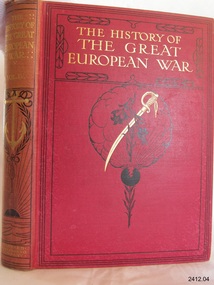
Book - Reference/History, W Stanley Macbean Knight, The History of the Great European War Set 1 Vol 4, 1914-1920
... Library stamps visible. Hard Cover Book. History of The Great European War Set 1 Vol 4 Author: W Stanley Macbean Knight Publisher: The Caxton Publishing Company Ltd Clune House, 161 Surrey St, London W.C. ...This set is a contemporary and popular narrative history of WWI, written and published while the war was still happening; the preface is dated 1914, but volumes were issued serially as the war progressed, meaning later volumes covering 1917–18 and the peace were released several years after the first. This is a common format for the period — compare rival serials like The Great War (Hammerton & Wilson) or Collier's The Story of the Great War — publishers issued 'instant history' in subscription parts to a public hungry for authoritative-sounding accounts. The volumes in this set cover the following topics during the First World War: Vol. I — Causes and Effects (1914): Its aims are to explain the political and diplomatic background to the war — the alliance system and the July Crisis — with the outbreak of hostilities in August 1914. Vol. II: Continues into the opening campaigns of 1914 (per Internet Archive, 'Vol 2 of 10', contemporary account). Vol. III: Descriptions note it as continuing the story of the campaign of the Allies and their mid-war campaigns. Vol. IV: Covers 1916 and the ongoing 1915–16 campaigns; this volume contains a fold-out colour map of the Serbian Retreat and one of the Italian front, featuring the Balkan and Italian theatres of war. Vols. V–VI: Continue the general campaign narrative through 1916–17. Vols. VII–VIII: Cover the later war years, focusing on 1917–18. Vols. IX–X: These volumes cover the war's final phase and the Armistice. Publication of the last volumes continued into the early 1920s, covering the peace settlement at Versailles and its aftermath.Hard Cover Book. History of The Great European War Set 1 Vol 4 Author: W Stanley Macbean Knight Publisher: The Caxton Publishing Company Ltd Clune House, 161 Surrey St, London W.C. Printer: The Standard Publishing Co. 100 Flinders St, Melbourne. Date: Various Volume Subscription Releases 1914 to 1920 Further Information: Red pictorial cloth gilt-lettered boards, each volume illustrated with a coloured frontispiece, black-and-white photographic plates, and fold-out colour maps of various fronts depending on volume(e.g. the Serbian Retreat, the Italian front etc.). Note there are two sets of this publication in the Flagstaff book collection.non-fictionThis set is a contemporary and popular narrative history of WWI, written and published while the war was still happening; the preface is dated 1914, but volumes were issued serially as the war progressed, meaning later volumes covering 1917–18 and the peace were released several years after the first. This is a common format for the period — compare rival serials like The Great War (Hammerton & Wilson) or Collier's The Story of the Great War — publishers issued 'instant history' in subscription parts to a public hungry for authoritative-sounding accounts. The volumes in this set cover the following topics during the First World War: Vol. I — Causes and Effects (1914): Its aims are to explain the political and diplomatic background to the war — the alliance system and the July Crisis — with the outbreak of hostilities in August 1914. Vol. II: Continues into the opening campaigns of 1914 (per Internet Archive, 'Vol 2 of 10', contemporary account). Vol. III: Descriptions note it as continuing the story of the campaign of the Allies and their mid-war campaigns. Vol. IV: Covers 1916 and the ongoing 1915–16 campaigns; this volume contains a fold-out colour map of the Serbian Retreat and one of the Italian front, featuring the Balkan and Italian theatres of war. Vols. V–VI: Continue the general campaign narrative through 1916–17. Vols. VII–VIII: Cover the later war years, focusing on 1917–18. Vols. IX–X: These volumes cover the war's final phase and the Armistice. Publication of the last volumes continued into the early 1920s, covering the peace settlement at Versailles and its aftermath.flagstaff hill, warrnambool, shipwrecked-coast, flagstaff-hill, flagstaff-hill-maritime-museum, maritime-museum, shipwreck-coast, flagstaff-hill-maritime-village, book, the history of the great european war vol 1 set 1, the history of the great european war, caxton printers -
 Flagstaff Hill Maritime Museum and Village
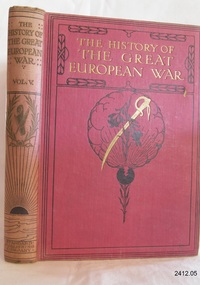
Book - Reference/History, W Stanley Macbean Knight, The History of the Great European War Set 1 Vol 5, 1914-1920
... Library stamps visible. Hard Cover Book. History of The Great European War Set 1 Vol 5 Author: W Stanley Macbean Knight Publisher: The Caxton Publishing Company Ltd Clune House, 161 Surrey St, London W.C. ...This set is a contemporary and popular narrative history of WWI, written and published while the war was still happening; the preface is dated 1914, but volumes were issued serially as the war progressed, meaning later volumes covering 1917–18 and the peace were released several years after the first. This is a common format for the period — compare rival serials like The Great War (Hammerton & Wilson) or Collier's The Story of the Great War — publishers issued 'instant history' in subscription parts to a public hungry for authoritative-sounding accounts. The volumes in this set cover the following topics during the First World War: Vol. I — Causes and Effects (1914): Its aims are to explain the political and diplomatic background to the war — the alliance system and the July Crisis — with the outbreak of hostilities in August 1914. Vol. II: Continues into the opening campaigns of 1914 (per Internet Archive, 'Vol 2 of 10', contemporary account). Vol. III: Descriptions note it as continuing the story of the campaign of the Allies and their mid-war campaigns. Vol. IV: Covers 1916 and the ongoing 1915–16 campaigns; this volume contains a fold-out colour map of the Serbian Retreat and one of the Italian front, featuring the Balkan and Italian theatres of war. Vols. V–VI: Continue the general campaign narrative through 1916–17. Vols. VII–VIII: Cover the later war years, focusing on 1917–18. Vols. IX–X: These volumes cover the war's final phase and the Armistice. Publication of the last volumes continued into the early 1920s, covering the peace settlement at Versailles and its aftermath.Hard Cover Book. History of The Great European War Set 1 Vol 5 Author: W Stanley Macbean Knight Publisher: The Caxton Publishing Company Ltd Clune House, 161 Surrey St, London W.C. Printer: The Standard Publishing Co. 100 Flinders St, Melbourne. Date: Various Volume Subscription Releases 1914 to 1920 Further Information: Red pictorial cloth gilt-lettered boards, each volume illustrated with a coloured frontispiece, black-and-white photographic plates, and fold-out colour maps of various fronts depending on volume(e.g. the Serbian Retreat, the Italian front etc.). Note there are two sets of this publication in the Flagstaff book collection.non-fictionThis set is a contemporary and popular narrative history of WWI, written and published while the war was still happening; the preface is dated 1914, but volumes were issued serially as the war progressed, meaning later volumes covering 1917–18 and the peace were released several years after the first. This is a common format for the period — compare rival serials like The Great War (Hammerton & Wilson) or Collier's The Story of the Great War — publishers issued 'instant history' in subscription parts to a public hungry for authoritative-sounding accounts. The volumes in this set cover the following topics during the First World War: Vol. I — Causes and Effects (1914): Its aims are to explain the political and diplomatic background to the war — the alliance system and the July Crisis — with the outbreak of hostilities in August 1914. Vol. II: Continues into the opening campaigns of 1914 (per Internet Archive, 'Vol 2 of 10', contemporary account). Vol. III: Descriptions note it as continuing the story of the campaign of the Allies and their mid-war campaigns. Vol. IV: Covers 1916 and the ongoing 1915–16 campaigns; this volume contains a fold-out colour map of the Serbian Retreat and one of the Italian front, featuring the Balkan and Italian theatres of war. Vols. V–VI: Continue the general campaign narrative through 1916–17. Vols. VII–VIII: Cover the later war years, focusing on 1917–18. Vols. IX–X: These volumes cover the war's final phase and the Armistice. Publication of the last volumes continued into the early 1920s, covering the peace settlement at Versailles and its aftermath.flagstaff hill, warrnambool, shipwrecked-coast, flagstaff-hill, flagstaff-hill-maritime-museum, maritime-museum, shipwreck-coast, flagstaff-hill-maritime-village, book, the history of the great european war vol 1 set 1, the history of the great european war, caxton printers -
 Flagstaff Hill Maritime Museum and Village
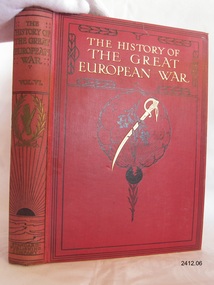
Book - Reference/History, W Stanley Macbean Knight, The History of the Great European War Set 1 Vol 6, 1914-1920
... Library stamps visible. Hard Cover Book. History of The Great European War Set 1 Vol 6 Author: W Stanley Macbean Knight Publisher: The Caxton Publishing Company Ltd Clune House, 161 Surrey St, London W.C. ...This set is a contemporary and popular narrative history of WWI, written and published while the war was still happening; the preface is dated 1914, but volumes were issued serially as the war progressed, meaning later volumes covering 1917–18 and the peace were released several years after the first. This is a common format for the period — compare rival serials like The Great War (Hammerton & Wilson) or Collier's The Story of the Great War — publishers issued 'instant history' in subscription parts to a public hungry for authoritative-sounding accounts. The volumes in this set cover the following topics during the First World War: Vol. I — Causes and Effects (1914): Its aims are to explain the political and diplomatic background to the war — the alliance system and the July Crisis — with the outbreak of hostilities in August 1914. Vol. II: Continues into the opening campaigns of 1914 (per Internet Archive, 'Vol 2 of 10', contemporary account). Vol. III: Descriptions note it as continuing the story of the campaign of the Allies and their mid-war campaigns. Vol. IV: Covers 1916 and the ongoing 1915–16 campaigns; this volume contains a fold-out colour map of the Serbian Retreat and one of the Italian front, featuring the Balkan and Italian theatres of war. Vols. V–VI: Continue the general campaign narrative through 1916–17. Vols. VII–VIII: Cover the later war years, focusing on 1917–18. Vols. IX–X: These volumes cover the war's final phase and the Armistice. Publication of the last volumes continued into the early 1920s, covering the peace settlement at Versailles and its aftermath.Hard Cover Book. History of The Great European War Set 1 Vol 6 Author: W Stanley Macbean Knight Publisher: The Caxton Publishing Company Ltd Clune House, 161 Surrey St, London W.C. Printer: The Standard Publishing Co. 100 Flinders St, Melbourne. Date: Various Volume Subscription Releases 1914 to 1920 Further Information: Red pictorial cloth gilt-lettered boards, each volume illustrated with a coloured frontispiece, black-and-white photographic plates, and fold-out colour maps of various fronts depending on volume(e.g. the Serbian Retreat, the Italian front etc.). Note there are two sets of this publication in the Flagstaff book collection.non-fictionThis set is a contemporary and popular narrative history of WWI, written and published while the war was still happening; the preface is dated 1914, but volumes were issued serially as the war progressed, meaning later volumes covering 1917–18 and the peace were released several years after the first. This is a common format for the period — compare rival serials like The Great War (Hammerton & Wilson) or Collier's The Story of the Great War — publishers issued 'instant history' in subscription parts to a public hungry for authoritative-sounding accounts. The volumes in this set cover the following topics during the First World War: Vol. I — Causes and Effects (1914): Its aims are to explain the political and diplomatic background to the war — the alliance system and the July Crisis — with the outbreak of hostilities in August 1914. Vol. II: Continues into the opening campaigns of 1914 (per Internet Archive, 'Vol 2 of 10', contemporary account). Vol. III: Descriptions note it as continuing the story of the campaign of the Allies and their mid-war campaigns. Vol. IV: Covers 1916 and the ongoing 1915–16 campaigns; this volume contains a fold-out colour map of the Serbian Retreat and one of the Italian front, featuring the Balkan and Italian theatres of war. Vols. V–VI: Continue the general campaign narrative through 1916–17. Vols. VII–VIII: Cover the later war years, focusing on 1917–18. Vols. IX–X: These volumes cover the war's final phase and the Armistice. Publication of the last volumes continued into the early 1920s, covering the peace settlement at Versailles and its aftermath.flagstaff hill, warrnambool, shipwrecked-coast, flagstaff-hill, flagstaff-hill-maritime-museum, maritime-museum, shipwreck-coast, flagstaff-hill-maritime-village, book, the history of the great european war vol 1 set 1, the history of the great european war, caxton printers -
 Flagstaff Hill Maritime Museum and Village
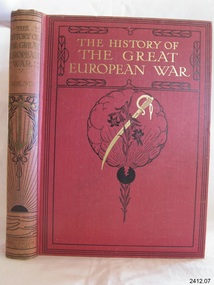
Book - Reference/History, W Stanley Macbean Knight, The History of the Great European War Set 1 Vol 7, 1914-1920
... Library stamps visible. Hard Cover Book. History of The Great European War Set 1 Vol 7 Author: W Stanley Macbean Knight Publisher: The Caxton Publishing Company Ltd Clune House, 161 Surrey St, London W.C. ...This set is a contemporary and popular narrative history of WWI, written and published while the war was still happening; the preface is dated 1914, but volumes were issued serially as the war progressed, meaning later volumes covering 1917–18 and the peace were released several years after the first. This is a common format for the period — compare rival serials like The Great War (Hammerton & Wilson) or Collier's The Story of the Great War — publishers issued 'instant history' in subscription parts to a public hungry for authoritative-sounding accounts. The volumes in this set cover the following topics during the First World War: Vol. I — Causes and Effects (1914): Its aims are to explain the political and diplomatic background to the war — the alliance system and the July Crisis — with the outbreak of hostilities in August 1914. Vol. II: Continues into the opening campaigns of 1914 (per Internet Archive, 'Vol 2 of 10', contemporary account). Vol. III: Descriptions note it as continuing the story of the campaign of the Allies and their mid-war campaigns. Vol. IV: Covers 1916 and the ongoing 1915–16 campaigns; this volume contains a fold-out colour map of the Serbian Retreat and one of the Italian front, featuring the Balkan and Italian theatres of war. Vols. V–VI: Continue the general campaign narrative through 1916–17. Vols. VII–VIII: Cover the later war years, focusing on 1917–18. Vols. IX–X: These volumes cover the war's final phase and the Armistice. Publication of the last volumes continued into the early 1920s, covering the peace settlement at Versailles and its aftermath.Hard Cover Book. History of The Great European War Set 1 Vol 7 Author: W Stanley Macbean Knight Publisher: The Caxton Publishing Company Ltd Clune House, 161 Surrey St, London W.C. Printer: The Standard Publishing Co. 100 Flinders St, Melbourne. Date: Various Volume Subscription Releases 1914 to 1920 Further Information: Red pictorial cloth gilt-lettered boards, each volume illustrated with a coloured frontispiece, black-and-white photographic plates, and fold-out colour maps of various fronts depending on volume(e.g. the Serbian Retreat, the Italian front etc.). Note there are two sets of this publication in the Flagstaff book collection.non-fictionThis set is a contemporary and popular narrative history of WWI, written and published while the war was still happening; the preface is dated 1914, but volumes were issued serially as the war progressed, meaning later volumes covering 1917–18 and the peace were released several years after the first. This is a common format for the period — compare rival serials like The Great War (Hammerton & Wilson) or Collier's The Story of the Great War — publishers issued 'instant history' in subscription parts to a public hungry for authoritative-sounding accounts. The volumes in this set cover the following topics during the First World War: Vol. I — Causes and Effects (1914): Its aims are to explain the political and diplomatic background to the war — the alliance system and the July Crisis — with the outbreak of hostilities in August 1914. Vol. II: Continues into the opening campaigns of 1914 (per Internet Archive, 'Vol 2 of 10', contemporary account). Vol. III: Descriptions note it as continuing the story of the campaign of the Allies and their mid-war campaigns. Vol. IV: Covers 1916 and the ongoing 1915–16 campaigns; this volume contains a fold-out colour map of the Serbian Retreat and one of the Italian front, featuring the Balkan and Italian theatres of war. Vols. V–VI: Continue the general campaign narrative through 1916–17. Vols. VII–VIII: Cover the later war years, focusing on 1917–18. Vols. IX–X: These volumes cover the war's final phase and the Armistice. Publication of the last volumes continued into the early 1920s, covering the peace settlement at Versailles and its aftermath.flagstaff hill, warrnambool, shipwrecked-coast, flagstaff-hill, flagstaff-hill-maritime-museum, maritime-museum, shipwreck-coast, flagstaff-hill-maritime-village, book, the history of the great european war vol 1 set 1, the history of the great european war, caxton printers -
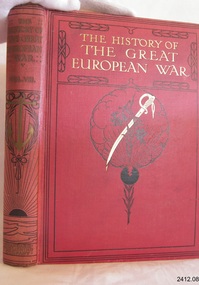 Flagstaff Hill Maritime Museum and Village
Book - Reference/History, W Stanley Macbean Knight, The History of the Great European War Set 1 Vol 8, 1914-1920
... Library stamps visible. Hard Cover Book. History of The Great European War Set 1 Vol 8 Author: W Stanley Macbean Knight Publisher: The Caxton Publishing Company Ltd Clune House, 161 Surrey St, London W.C. ...This set is a contemporary and popular narrative history of WWI, written and published while the war was still happening; the preface is dated 1914, but volumes were issued serially as the war progressed, meaning later volumes covering 1917–18 and the peace were released several years after the first. This is a common format for the period — compare rival serials like The Great War (Hammerton & Wilson) or Collier's The Story of the Great War — publishers issued 'instant history' in subscription parts to a public hungry for authoritative-sounding accounts. The volumes in this set cover the following topics during the First World War: Vol. I — Causes and Effects (1914): Its aims are to explain the political and diplomatic background to the war — the alliance system and the July Crisis — with the outbreak of hostilities in August 1914. Vol. II: Continues into the opening campaigns of 1914 (per Internet Archive, 'Vol 2 of 10', contemporary account). Vol. III: Descriptions note it as continuing the story of the campaign of the Allies and their mid-war campaigns. Vol. IV: Covers 1916 and the ongoing 1915–16 campaigns; this volume contains a fold-out colour map of the Serbian Retreat and one of the Italian front, featuring the Balkan and Italian theatres of war. Vols. V–VI: Continue the general campaign narrative through 1916–17. Vols. VII–VIII: Cover the later war years, focusing on 1917–18. Vols. IX–X: These volumes cover the war's final phase and the Armistice. Publication of the last volumes continued into the early 1920s, covering the peace settlement at Versailles and its aftermath.Hard Cover Book. History of The Great European War Set 1 Vol 8 Author: W Stanley Macbean Knight Publisher: The Caxton Publishing Company Ltd Clune House, 161 Surrey St, London W.C. Printer: The Standard Publishing Co. 100 Flinders St, Melbourne. Date: Various Volume Subscription Releases 1914 to 1920 Further Information: Red pictorial cloth gilt-lettered boards, each volume illustrated with a coloured frontispiece, black-and-white photographic plates, and fold-out colour maps of various fronts depending on volume(e.g. the Serbian Retreat, the Italian front etc.). Note there are two sets of this publication in the Flagstaff book collection.non-fictionThis set is a contemporary and popular narrative history of WWI, written and published while the war was still happening; the preface is dated 1914, but volumes were issued serially as the war progressed, meaning later volumes covering 1917–18 and the peace were released several years after the first. This is a common format for the period — compare rival serials like The Great War (Hammerton & Wilson) or Collier's The Story of the Great War — publishers issued 'instant history' in subscription parts to a public hungry for authoritative-sounding accounts. The volumes in this set cover the following topics during the First World War: Vol. I — Causes and Effects (1914): Its aims are to explain the political and diplomatic background to the war — the alliance system and the July Crisis — with the outbreak of hostilities in August 1914. Vol. II: Continues into the opening campaigns of 1914 (per Internet Archive, 'Vol 2 of 10', contemporary account). Vol. III: Descriptions note it as continuing the story of the campaign of the Allies and their mid-war campaigns. Vol. IV: Covers 1916 and the ongoing 1915–16 campaigns; this volume contains a fold-out colour map of the Serbian Retreat and one of the Italian front, featuring the Balkan and Italian theatres of war. Vols. V–VI: Continue the general campaign narrative through 1916–17. Vols. VII–VIII: Cover the later war years, focusing on 1917–18. Vols. IX–X: These volumes cover the war's final phase and the Armistice. Publication of the last volumes continued into the early 1920s, covering the peace settlement at Versailles and its aftermath.flagstaff hill, warrnambool, shipwrecked-coast, flagstaff-hill, flagstaff-hill-maritime-museum, maritime-museum, shipwreck-coast, flagstaff-hill-maritime-village, book, the history of the great european war vol 1 set 1, the history of the great european war, caxton printers -
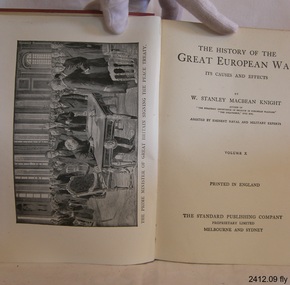 Flagstaff Hill Maritime Museum and Village
Book - Reference/History, W Stanley Macbean Knight, The History of the Great European War Set 1 Vol 10, 1914-1920
... Library stamps visible. Hard Cover Book. History of The Great European War Set 1 Vol 10 Author: W Stanley Macbean Knight Publisher: The Caxton Publishing Company Ltd Clune House, 161 Surrey St, London W.C. ...This set is a contemporary and popular narrative history of WWI, written and published while the war was still happening; the preface is dated 1914, but volumes were issued serially as the war progressed, meaning later volumes covering 1917–18 and the peace were released several years after the first. This is a common format for the period — compare rival serials like The Great War (Hammerton & Wilson) or Collier's The Story of the Great War — publishers issued 'instant history' in subscription parts to a public hungry for authoritative-sounding accounts. The volumes in this set cover the following topics during the First World War: Vol. I — Causes and Effects (1914): Its aims are to explain the political and diplomatic background to the war — the alliance system and the July Crisis — with the outbreak of hostilities in August 1914. Vol. II: Continues into the opening campaigns of 1914 (per Internet Archive, 'Vol 2 of 10', contemporary account). Vol. III: Descriptions note it as continuing the story of the campaign of the Allies and their mid-war campaigns. Vol. IV: Covers 1916 and the ongoing 1915–16 campaigns; this volume contains a fold-out colour map of the Serbian Retreat and one of the Italian front, featuring the Balkan and Italian theatres of war. Vols. V–VI: Continue the general campaign narrative through 1916–17. Vols. VII–VIII: Cover the later war years, focusing on 1917–18. Vols. IX–X: These volumes cover the war's final phase and the Armistice. Publication of the last volumes continued into the early 1920s, covering the peace settlement at Versailles and its aftermath.Hard Cover Book. History of The Great European War Set 1 Vol 10 Author: W Stanley Macbean Knight Publisher: The Caxton Publishing Company Ltd Clune House, 161 Surrey St, London W.C. Printer: The Standard Publishing Co. 100 Flinders St, Melbourne. Date: Various Volume Subscription Releases 1914 to 1920 Further Information: Red pictorial cloth gilt-lettered boards, each volume illustrated with a coloured frontispiece, black-and-white photographic plates, and fold-out colour maps of various fronts depending on volume(e.g. the Serbian Retreat, the Italian front etc.). Note there are two sets of this publication in the Flagstaff book collection.non-fictionThis set is a contemporary and popular narrative history of WWI, written and published while the war was still happening; the preface is dated 1914, but volumes were issued serially as the war progressed, meaning later volumes covering 1917–18 and the peace were released several years after the first. This is a common format for the period — compare rival serials like The Great War (Hammerton & Wilson) or Collier's The Story of the Great War — publishers issued 'instant history' in subscription parts to a public hungry for authoritative-sounding accounts. The volumes in this set cover the following topics during the First World War: Vol. I — Causes and Effects (1914): Its aims are to explain the political and diplomatic background to the war — the alliance system and the July Crisis — with the outbreak of hostilities in August 1914. Vol. II: Continues into the opening campaigns of 1914 (per Internet Archive, 'Vol 2 of 10', contemporary account). Vol. III: Descriptions note it as continuing the story of the campaign of the Allies and their mid-war campaigns. Vol. IV: Covers 1916 and the ongoing 1915–16 campaigns; this volume contains a fold-out colour map of the Serbian Retreat and one of the Italian front, featuring the Balkan and Italian theatres of war. Vols. V–VI: Continue the general campaign narrative through 1916–17. Vols. VII–VIII: Cover the later war years, focusing on 1917–18. Vols. IX–X: These volumes cover the war's final phase and the Armistice. Publication of the last volumes continued into the early 1920s, covering the peace settlement at Versailles and its aftermath.flagstaff hill, warrnambool, shipwrecked-coast, flagstaff-hill, flagstaff-hill-maritime-museum, maritime-museum, shipwreck-coast, flagstaff-hill-maritime-village, book, the history of the great european war vol 1 set 1, the history of the great european war, caxton printers -
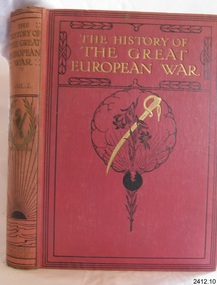 Flagstaff Hill Maritime Museum and Village
Book - Reference/History, W Stanley Macbean Knight, The History of the Great European War Set 2 Vol 1, 1914-1920
... Library stamps visible. Hard Cover Book. History of The Great European War Set 2 Vol 1 Author: W Stanley Macbean Knight Publisher: The Caxton Publishing Company Ltd Clune House, 161 Surrey St, London W.C. ...This set is a contemporary and popular narrative history of WWI, written and published while the war was still happening; the preface is dated 1914, but volumes were issued serially as the war progressed, meaning later volumes covering 1917–18 and the peace were released several years after the first. This is a common format for the period — compare rival serials like The Great War (Hammerton & Wilson) or Collier's The Story of the Great War — publishers issued 'instant history' in subscription parts to a public hungry for authoritative-sounding accounts. The volumes in this set cover the following topics during the First World War: Vol. I — Causes and Effects (1914): Its aims are to explain the political and diplomatic background to the war — the alliance system and the July Crisis — with the outbreak of hostilities in August 1914. Vol. II: Continues into the opening campaigns of 1914 (per Internet Archive, 'Vol 2 of 10', contemporary account). Vol. III: Descriptions note it as continuing the story of the campaign of the Allies and their mid-war campaigns. Vol. IV: Covers 1916 and the ongoing 1915–16 campaigns; this volume contains a fold-out colour map of the Serbian Retreat and one of the Italian front, featuring the Balkan and Italian theatres of war. Vols. V–VI: Continue the general campaign narrative through 1916–17. Vols. VII–VIII: Cover the later war years, focusing on 1917–18. Vols. IX–X: These volumes cover the war's final phase and the Armistice. Publication of the last volumes continued into the early 1920s, covering the peace settlement at Versailles and its aftermath.Hard Cover Book. History of The Great European War Set 2 Vol 1 Author: W Stanley Macbean Knight Publisher: The Caxton Publishing Company Ltd Clune House, 161 Surrey St, London W.C. Printer: The Standard Publishing Co. 100 Flinders St, Melbourne. Date: Various Volume Subscription Releases 1914 to 1920 Further Information: Red pictorial cloth gilt-lettered boards, each volume illustrated with a coloured frontispiece, black-and-white photographic plates, and fold-out colour maps of various fronts depending on volume(e.g. the Serbian Retreat, the Italian front etc.). Note there are two sets of this publication in the Flagstaff book collection.non-fictionThis set is a contemporary and popular narrative history of WWI, written and published while the war was still happening; the preface is dated 1914, but volumes were issued serially as the war progressed, meaning later volumes covering 1917–18 and the peace were released several years after the first. This is a common format for the period — compare rival serials like The Great War (Hammerton & Wilson) or Collier's The Story of the Great War — publishers issued 'instant history' in subscription parts to a public hungry for authoritative-sounding accounts. The volumes in this set cover the following topics during the First World War: Vol. I — Causes and Effects (1914): Its aims are to explain the political and diplomatic background to the war — the alliance system and the July Crisis — with the outbreak of hostilities in August 1914. Vol. II: Continues into the opening campaigns of 1914 (per Internet Archive, 'Vol 2 of 10', contemporary account). Vol. III: Descriptions note it as continuing the story of the campaign of the Allies and their mid-war campaigns. Vol. IV: Covers 1916 and the ongoing 1915–16 campaigns; this volume contains a fold-out colour map of the Serbian Retreat and one of the Italian front, featuring the Balkan and Italian theatres of war. Vols. V–VI: Continue the general campaign narrative through 1916–17. Vols. VII–VIII: Cover the later war years, focusing on 1917–18. Vols. IX–X: These volumes cover the war's final phase and the Armistice. Publication of the last volumes continued into the early 1920s, covering the peace settlement at Versailles and its aftermath.flagstaff hill, warrnambool, shipwrecked-coast, flagstaff-hill, flagstaff-hill-maritime-museum, maritime-museum, shipwreck-coast, flagstaff-hill-maritime-village, book, the history of the great european war vol 1 set 1, the history of the great european war, caxton printers -
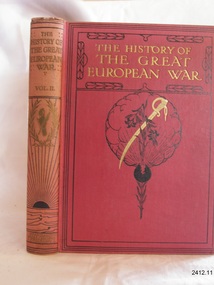 Flagstaff Hill Maritime Museum and Village
Book - Reference/History, W Stanley Macbean Knight, The History of the Great European War Set 2 Vol 2, 1914-1920
... Library stamps visible. Hard Cover Book. History of The Great European War Set 2 Vol 2 Author: W Stanley Macbean Knight Publisher: The Caxton Publishing Company Ltd Clune House, 161 Surrey St, London W.C. ...This set is a contemporary and popular narrative history of WWI, written and published while the war was still happening; the preface is dated 1914, but volumes were issued serially as the war progressed, meaning later volumes covering 1917–18 and the peace were released several years after the first. This is a common format for the period — compare rival serials like The Great War (Hammerton & Wilson) or Collier's The Story of the Great War — publishers issued 'instant history' in subscription parts to a public hungry for authoritative-sounding accounts. The volumes in this set cover the following topics during the First World War: Vol. I — Causes and Effects (1914): Its aims are to explain the political and diplomatic background to the war — the alliance system and the July Crisis — with the outbreak of hostilities in August 1914. Vol. II: Continues into the opening campaigns of 1914 (per Internet Archive, 'Vol 2 of 10', contemporary account). Vol. III: Descriptions note it as continuing the story of the campaign of the Allies and their mid-war campaigns. Vol. IV: Covers 1916 and the ongoing 1915–16 campaigns; this volume contains a fold-out colour map of the Serbian Retreat and one of the Italian front, featuring the Balkan and Italian theatres of war. Vols. V–VI: Continue the general campaign narrative through 1916–17. Vols. VII–VIII: Cover the later war years, focusing on 1917–18. Vols. IX–X: These volumes cover the war's final phase and the Armistice. Publication of the last volumes continued into the early 1920s, covering the peace settlement at Versailles and its aftermath.Hard Cover Book. History of The Great European War Set 2 Vol 2 Author: W Stanley Macbean Knight Publisher: The Caxton Publishing Company Ltd Clune House, 161 Surrey St, London W.C. Printer: The Standard Publishing Co. 100 Flinders St, Melbourne. Date: Various Volume Subscription Releases 1914 to 1920 Further Information: Red pictorial cloth gilt-lettered boards, each volume illustrated with a coloured frontispiece, black-and-white photographic plates, and fold-out colour maps of various fronts depending on volume(e.g. the Serbian Retreat, the Italian front etc.). Note there are two sets of this publication in the Flagstaff book collection.non-fictionThis set is a contemporary and popular narrative history of WWI, written and published while the war was still happening; the preface is dated 1914, but volumes were issued serially as the war progressed, meaning later volumes covering 1917–18 and the peace were released several years after the first. This is a common format for the period — compare rival serials like The Great War (Hammerton & Wilson) or Collier's The Story of the Great War — publishers issued 'instant history' in subscription parts to a public hungry for authoritative-sounding accounts. The volumes in this set cover the following topics during the First World War: Vol. I — Causes and Effects (1914): Its aims are to explain the political and diplomatic background to the war — the alliance system and the July Crisis — with the outbreak of hostilities in August 1914. Vol. II: Continues into the opening campaigns of 1914 (per Internet Archive, 'Vol 2 of 10', contemporary account). Vol. III: Descriptions note it as continuing the story of the campaign of the Allies and their mid-war campaigns. Vol. IV: Covers 1916 and the ongoing 1915–16 campaigns; this volume contains a fold-out colour map of the Serbian Retreat and one of the Italian front, featuring the Balkan and Italian theatres of war. Vols. V–VI: Continue the general campaign narrative through 1916–17. Vols. VII–VIII: Cover the later war years, focusing on 1917–18. Vols. IX–X: These volumes cover the war's final phase and the Armistice. Publication of the last volumes continued into the early 1920s, covering the peace settlement at Versailles and its aftermath.flagstaff hill, warrnambool, shipwrecked-coast, flagstaff-hill, flagstaff-hill-maritime-museum, maritime-museum, shipwreck-coast, flagstaff-hill-maritime-village, book, the history of the great european war vol 1 set 1, the history of the great european war, caxton printers
