
Showing 192 items matching "the sea of air"
-
 Moorabbin Air Museum
Book - Flight training, Let's Learn to Fly
... The sea of air...Flight training The sea of air The four forces Turning Climbing & descending Straight & level flight Stalling Air speed & ground speed Take off & landing Control of the approach path Spinning Forced landings The first solo flight Overview of the principles of flight for pupils, circa 1956 Let's Learn to Fly Book Flight training ...Overview of the principles of flight for pupils, circa 1956non-fictionOverview of the principles of flight for pupils, circa 1956the sea of air, the four forces, turning, climbing & descending, straight & level flight, stalling, air speed & ground speed, take off & landing, control of the approach path, spinning, forced landings, the first solo flight -
Coal Creek Community Park & Museum
Tin container, Stephen F. WHitman & Son Inc
... Whitman's Chocolates Land Sea and Air One Pound net..........Whitman's Chocolates Land Sea and Air One Pound net....... Round tin with picture depicting city landscape. ...Round tin with picture depicting city landscape.Whitman's Chocolates Land Sea and Air One Pound net....... -
 National Wool Museum
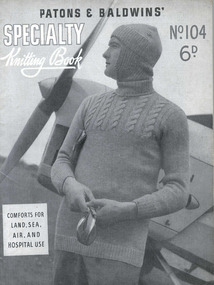
Book, Knitting, Patons and Baldwins' Specialty Knitting Book no. 104
... . / COMFORTS FOR / LAND, SEA, / AIR, AND / HOSPITAL USE.... / COMFORTS FOR / LAND, SEA, / AIR, AND / HOSPITAL USE Knitting Book (front cover) - Patons and Baldwins' Specialty Knitting Book no. 104, WWII. ...This knitting pattern book was produced during 1939-45 by Patons and Baldwins' and contains knitting patterns for mens civilian and service garments. It also includes a number of patterns for convalescent and hospital coverings, including a splint coverKnitting Book (front cover) - Patons and Baldwins' Specialty Knitting Book no. 104, WWII. Knitting Book (back cover) - Patons and Baldwins' Specialty Knitting Book no. 104, WWII.PATONS & BALDWINS' / SPECIALTY / Knitting Book / No. 104 / 6D. / COMFORTS FOR / LAND, SEA, / AIR, AND / HOSPITAL USEknitting world war ii, patons and baldwins (australia) ltd, knitting, world war ii -
 Lara RSL Sub Branch
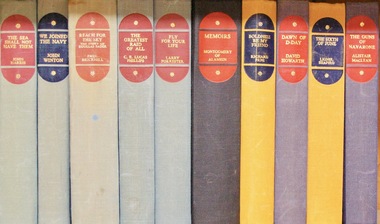
Book, The Sea shall not have them Author John Harris, N/A
... air sea rescue...During the war 13,269 lives were saved from the sea by Air-Sea Rescue - 13,269 lives were saved from the sea often under the enemy's guns. ...During the war 13,269 lives were saved from the sea by Air-Sea Rescue - 13,269 lives were saved from the sea often under the enemy's guns. ...During the war 13,269 lives were saved from the sea by Air-Sea Rescue - 13,269 lives were saved from the sea often under the enemy's guns. Of these 8,604 were air crew. The Sea will not have them' was the motto of Air Sea Rescue High Speed Launch Flotillas. This book was made into a Movie with the same title in 1954Recount of Air Sea rescue in WWIIair sea rescue, wwii, lancasters, flotilla, sea operation -
 Geelong RSL Sub Branch
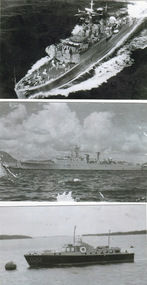
Photographs - Ships, HMAS Quickmatch, HMAS Quiberon, Air Sea Rescue Vessel, Early 20th century
... HMAS Quickmatch, HMAS Quiberon, Air Sea Rescue Vessel...HMAS Quiberon was a Q Class destroyer build for the Royal Navy and was commissioned to RAN in July 1942. Air Sea Rescue Boats, after their order were delivered to Sydney in June/July 1944. ...Ships - HMAS Quickmatch, HMAS Quibero, Air Sea Rescue Vessel....HMAS Quickmatch, HMAS Quiberon, Air Sea Rescue....Ships - HMAS Quickmatch, HMAS Quibero, Air Sea Rescue Vessel. HMAS Quickmatch, HMAS Quiberon, Air Sea Rescue Vessel Photographs - Ships ...HMAS Quickmatch was a Q Class destroyer built for the Royal Navy and was commissioned to RAN in September 1942. HMAS Quiberon was a Q Class destroyer build for the Royal Navy and was commissioned to RAN in July 1942. Air Sea Rescue Boats, after their order were delivered to Sydney in June/July 1944. HMAS Quickmatch was used as a Convoy Escort during WW2. HMAS Quiberon was used as a Convoy Escort during WW2. Air Sea Rescue Boats were mostly stationed in northern Australian waters or in New Guinea during WW2. Three black and White Photographs of Ships on photo paper. Ships - HMAS Quickmatch, HMAS Quibero, Air Sea Rescue Vessel.Hand written on the back of the photo 1. HMAS Quickmatch, HMAS Quiberon, Air Sea Rescue. -
 Bendigo Historical Society Inc.
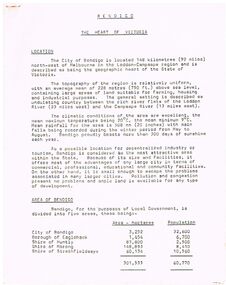
Document - BENDIGO - THE HEART OF VICTORIA
... Items mentioned are Location, Area of Bendigo, The People, Work Force, Industrial Base, natural Resources, Agriculture and Livestock, Minerals, Forests, Rail and Road, Sea and Air, Power and Water, Electricity, Natural Gas, Water, Sewerage, Industrial Land, Services, Community Services and Facilities, Educational Facilities, Hospitals, Culture and Tourism and Media....Items mentioned are Location, Area of Bendigo, The People, Work Force, Industrial Base, natural Resources, Agriculture and Livestock, Minerals, Forests, Rail and Road, Sea and Air, Power and Water, Electricity, Natural Gas, Water, Sewerage, Industrial Land, Services, Community Services and Facilities, Educational Facilities, Hospitals, Culture and Tourism and Media. ...Typed article titled Bendigo, The Heart of Victoria. Items mentioned are Location, Area of Bendigo, The People, Work Force, Industrial Base, natural Resources, Agriculture and Livestock, Minerals, Forests, Rail and Road, Sea and Air, Power and Water, Electricity, Natural Gas, Water, Sewerage, Industrial Land, Services, Community Services and Facilities, Educational Facilities, Hospitals, Culture and Tourism and Media.document, bendigo - the heart of victoria, city of bendigo, borough of eaglehawk, shire of huntly, shire of marong, shire of strathfieldsaye, bendigo development committee, department of agriculture, department of state development decentralization and tourism, state electricity commission, gas & fuel corporation of victoria, state rivers & water supply commission, bendigo sewerage authority, the bendigo college of advanced education, home and hospital for the aged, home for the blind, northern school of nursing, art gallery, historical society, dudley house, sun loong, central deborah gold mine, the vintage talking trams and transport museum, bcv8, the bendigo advertiser, golden city gazette, 3bo, 3cv, mr a j kelly -
 Lakes Entrance Historical Society
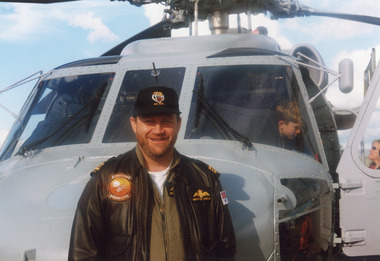
Photograph - Fielder, Lakes Post Newspaper, 9/05/2000 12:00:00 AM
... Colour photograph of Geoff Feildler , Pilot of Navy Sea Hawk Helicopter at Air Show Bairnsdale Victoria...Genealogy Colour photograph of Geoff Feildler , Pilot of Navy Sea Hawk Helicopter at Air Show Bairnsdale Victoria Photograph Fielder Lakes Post Newspaper ...Colour photograph of Geoff Feildler , Pilot of Navy Sea Hawk Helicopter at Air Show Bairnsdale Victoriagenealogy -
 Kyneton RSL Sub Branch
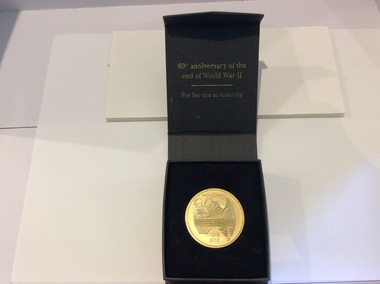
Medallion, 60th Anniversary of WW2 Medallion 1945-2005
... World War 2, 60 years, 1945 2005 Obverse depicts Commonwealth coat of arms, reverse design symbolises Navy, Army and Air Force through depiction of sea, land and air. ...The medallion was presented in 2005 by the Australian govt. to veterans who served in 1939- 1945. 2005 being the 60th anniversary of the end of WW2. 60th anniversary WW2 service medal World War 2, 60 years, 1945 2005 Obverse depicts Commonwealth coat of arms, reverse design symbolises Navy, Army and Air Force through depiction of sea, land and air. Medallion in a presentation case with information relating to the issue. 60th Anniversary of WW2 Medallion 1945-2005 Medallion ...The medallion was presented in 2005 by the Australian govt. to veterans who served in 1939- 1945. 2005 being the 60th anniversary of the end of WW2.Medallion in a presentation case with information relating to the issue. World War 2, 60 years, 1945 2005 Obverse depicts Commonwealth coat of arms, reverse design symbolises Navy, Army and Air Force through depiction of sea, land and air. 60th anniversary, ww2 service medal -
 Moorabbin Air Museum
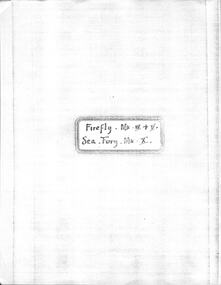
Manual (Item) - Firefly MK IV & V , Sea Fury MK X Airframe Notes
... Black Book containing both Firefly Mk.IV + V and Sea Fury Mk X Air frame Notes, both official and handwritten...Sea Fury Mk X Black Book containing both Firefly Mk.IV + V and Sea Fury Mk X Air frame Notes, both official and handwritten Firefly MK IV & V , Sea Fury MK X Airframe Notes Manual Firefly MK IV & V , Sea Fury MK X Airframe Notes ...Firefly Mk IV and V. Sea Fury Mk X -
 Lilydale RSL Sub Branch
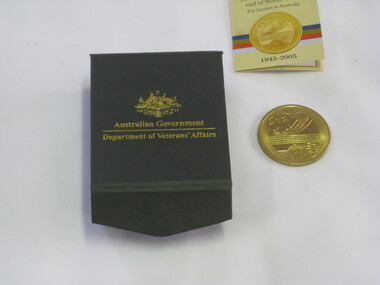
Commemorative Coin, 2005
... Obverse - Commonwealth Coat of Arms - Reverse Symbolises service in Navy, Army and Air Force through its depiction of sea, land and air. inscription: 60th Anniversay of the end of World War II - For Service to Australia..."Presented in 2005 by Australian Government on behalf of Australian people, to those who served this nation and her allies during the war from 1939 to 1945" AWM.gov.au Obverse - Commonwealth Coat of Arms - Reverse Symbolises service in Navy, Army and Air Force through its depiction of sea, land and air. inscription: 60th Anniversay of the end of World War II - For Service to Australia Coin commemorating 60th Anniversay of the end of WW2 1939-1945 in commemorative presentation box. ..."Presented in 2005 by Australian Government on behalf of Australian people, to those who served this nation and her allies during the war from 1939 to 1945" AWM.gov.auCoin commemorating 60th Anniversay of the end of WW2 1939-1945 in commemorative presentation box. Obverse - Commonwealth Coat of Arms - Reverse Symbolises service in Navy, Army and Air Force through its depiction of sea, land and air. inscription: 60th Anniversay of the end of World War II - For Service to Australia -
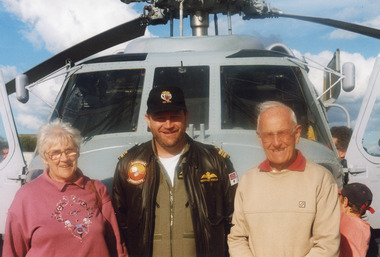 Lakes Entrance Historical Society
Photograph - Air Show Bairnsdale 2000, Lakes Post Newspaper
... Colour photograph showing Norm and Norma Fiedler of Lakes Entrance with their son Geoff, Pilot of Navy Sea Hawk Helicopter at Air Show Bairnsdale Victoria...Genealogy Colour photograph showing Norm and Norma Fiedler of Lakes Entrance with their son Geoff, Pilot of Navy Sea Hawk Helicopter at Air Show Bairnsdale Victoria Photograph Air Show Bairnsdale 2000 Lakes Post Newspaper ...Colour photograph showing Norm and Norma Fiedler of Lakes Entrance with their son Geoff, Pilot of Navy Sea Hawk Helicopter at Air Show Bairnsdale Victoriagenealogy -
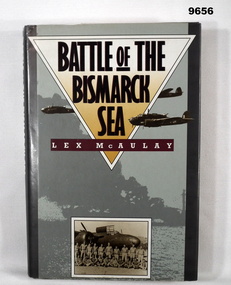 Bendigo Military Museum
Book - ALLIED AIR FORCES, WW2, Lex McAulay, "BATTLE OF THE BISMARK SEA", 1991
... World War 2 - land battle fought at sea and won from the air...."BATTLE OF THE BISMARK SEA". Book ALLIED AIR FORCES, WW2 Lex McAulay St. Martin's Press Printed in USA ...World War 2 - land battle fought at sea and won from the air.Hardcover book with dustcover. Hardcover - cardboard, with black buckram, gold colour print on spine. Dustcover - paper, black, white, gold print on front, spine and back. Front and back flap with printed information. Illustrated front - black and white tones, montage of aircaft, group of airmen with aircraft photograph, silhouette of sea battle scene. 226 pages - cut, plain, white colour paper. Illustrated black and white photographs and maps.publication, book, ww2, raaf, bismark, sea, new guinea -
Glenelg Shire Council Cultural Collection
Leisure object - Board Game, Strategy, n.d
... a)'Strategy' war board game. heavy card board, folds in half, red and blue outside with black and white photo of 3 servicemen (army, navy, airforce) playing strategy. Inside, land, sea, air depicted by different colours, leaflet of rules b) Rothman's cigarette packet containing coloured metal counters for use with Strategy. 12 army, 8 navy, 4 airforce...strategy game board game recreation leisure a)'Strategy' war board game. heavy card board, folds in half, red and blue outside with black and white photo of 3 servicemen (army, navy, airforce) playing strategy. Inside, land, sea, air depicted by different colours, leaflet of rules b) Rothman's cigarette packet containing coloured metal counters for use with Strategy. 12 army, 8 navy, 4 airforce Strategy Leisure object Board Game ...a)'Strategy' war board game. heavy card board, folds in half, red and blue outside with black and white photo of 3 servicemen (army, navy, airforce) playing strategy. Inside, land, sea, air depicted by different colours, leaflet of rules b) Rothman's cigarette packet containing coloured metal counters for use with Strategy. 12 army, 8 navy, 4 airforcestrategy, game, board game, recreation, leisure -
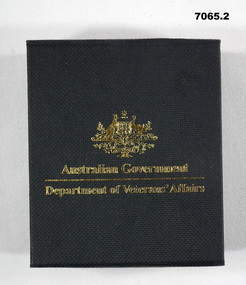 Bendigo Military Museum
Medal - MEDAL, SERVICE to AUSTRALIA & BOX, Royal Australian Mint
... On one side of the coin is the Commonwealth Coat of Arms with the reverse side symbolising the Navy, Army and AirForce through the depiction of sea, land and air over a stylized map of Australia. 2. ...On one side of the coin is the Commonwealth Coat of Arms with the reverse side symbolising the Navy, Army and AirForce through the depiction of sea, land and air over a stylized map of Australia. 2. ...Medallion was produced by the Royal Australian Mint and given to members who served with Australian Forces or her Allies between 1939 - 1945. This was on the 60th Anniversary of the end of WW2. Given to Tony Cork who was in the Merchant Navy, England 1939-45.1. Gold coloured coin medallion produced by Royal Mint. On one side of the coin is the Commonwealth Coat of Arms with the reverse side symbolising the Navy, Army and AirForce through the depiction of sea, land and air over a stylized map of Australia. 2. Contained in a hard cardboard black box inscribed with gold writing and Commonwealth emblem and medal lays in a felt recess within the box. 1. One side inscribed "World War 2", "60 years""1945 - 2005". and stylized map of Australia. Other side inscribed around Rim "World War 2"and "Service to Australia" with Commonwealth of Australia emblem in centre. 2. Box on top has Commonwealth Emblem and "Australian Govt", "Dept of Veteran Affairs". Inside "60th Ann of WW2".medal, 60th anniversary ww2 -
Moorabbin Air Museum
Book - Description of operation structures plus various individual stories of The RAF Air Sea Rescue Service 1918-1986, Jon Sutherland & Diane Canwell, The RAF Air Sea Rescue Service 1918-1986, 2005
... Description of operation structures plus various individual stories of The RAF Air Sea Rescue Service 1918-1986...The RAF Air Sea Rescue Service 1918-1986...Description of operation structures plus various individual stories of The RAF Air Sea Rescue Service 1918-1986...Description of operation structures plus various individual stories of The RAF Air Sea Rescue Service 1918-1986 Description of operation structures plus various individual stories of The RAF Air Sea Rescue Service 1918-1986 Cover jacket showing colour photos of at top White Sunderland in flight, at bottom two rescue boats moving at speed The RAF Air Sea Rescue Service 1918-1986 Book Description of operation structures plus various individual stories of The RAF Air Sea Rescue Service 1918-1986 Jon Sutherland & Diane Canwell ...Description of operation structures plus various individual stories of The RAF Air Sea Rescue Service 1918-1986Cover jacket showing colour photos of at top White Sunderland in flight, at bottom two rescue boats moving at speednon-fictionDescription of operation structures plus various individual stories of The RAF Air Sea Rescue Service 1918-1986 -
Mission to Seafarers Victoria
Letter - Correspondence, 1948
... Five sheets of unlined white paper with writing on both sides (0378a-e), dated 7/07/48 and written at sea on board S.S.Lali. White air mail envelope (0378f). ...Quinn Collection letters-from-abroad quinn Rio New York 1948 The envelope has been re-addressed, presumably by the original addressee, from West Brunswick, Victoria to Hotel Mansions, Kings Cross, Sydney NSW and bears three Brazilian stamps and numerous indistinct post-marks Five sheets of unlined white paper with writing on both sides (0378a-e), dated 7/07/48 and written at sea on board S.S.Lali. White air mail envelope (0378f). Letter Correspondence Allan Charles Quinn ...Quinn CollectionFive sheets of unlined white paper with writing on both sides (0378a-e), dated 7/07/48 and written at sea on board S.S.Lali. White air mail envelope (0378f). The envelope has been re-addressed, presumably by the original addressee, from West Brunswick, Victoria to Hotel Mansions, Kings Cross, Sydney NSW and bears three Brazilian stamps and numerous indistinct post-marksletters-from-abroad, quinn, rio, new york, 1948 -
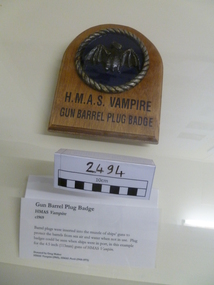 National Vietnam Veterans Museum (NVVM)
Ceremorial Object, Gun Barrel Plug Badge, 1969 (Approximate)
... Gun Barrel Plug Badge HMAS Vampire c1969 Barrel plugs were inserted into the muzzle of ships' guns to protect the barrels from sea air and water when not in use. Plug badges could be seen when ships were in port, in this example for the 4.5 inch (113mm) guns of HMAS Vampire. ...HMAS Vampire Badge Gun Barrel Plug Badge HMAS Vampire c1969 Barrel plugs were inserted into the muzzle of ships' guns to protect the barrels from sea air and water when not in use. Plug badges could be seen when ships were in port, in this example for the 4.5 inch (113mm) guns of HMAS Vampire. ...A black bat on a dark blue background of a robe's circle laid on top of a half round wooden board with texts below "H.M.A.S Gun Barrel plug Badge"Gun Barrel Plug Badge HMAS Vampire c1969 Barrel plugs were inserted into the muzzle of ships' guns to protect the barrels from sea air and water when not in use. Plug badges could be seen when ships were in port, in this example for the 4.5 inch (113mm) guns of HMAS Vampire. Donated by Greg Maher HMAS Vampire (1965), HMAS Perth (1968-1971)hmas vampire, badge -
 Ringwood RSL Sub-Branch
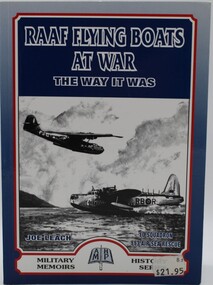
Book - RAAF, Australian Military History Publications, RAAF Flying Boats at War, 1999 reprinted 2004
... Europe and Pacific areas. also 113 Air Sea Rescue in the Pacific Area in WW2. Soft cover, 190 printed pages plus some photos. ...Europe and Pacific areas. also 113 Air Sea Rescue in the Pacific Area in WW2. Soft cover, 190 printed pages plus some photos. ...The story of No10 Squadron in WW2. Europe and Pacific areas. also 113 Air Sea Rescue in the Pacific Area in WW2. Soft cover, 190 printed pages plus some photos. Author Joe Leach. -
 Bendigo Military Museum
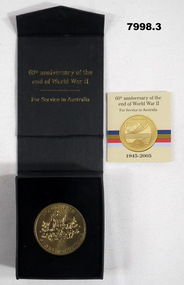
Memorabilia - COMMEMORATIVE MEDALLION, Australian Government, Department of Veterans' Affairs, Office of Australian War Graves, 2005
... The reverse symbolises land (Army) Sea (Navy) and Air (RAAF) on a stylized map of Australia. ...The reverse symbolises land (Army) Sea (Navy) and Air (RAAF) on a stylized map of Australia. ...Part of the Cooper Collection.1. Gold coloured metal medallion. The obverse features the Australian Coat of Arms with text "WORLD WAR II, SERVICE TO AUSTRALIA. The reverse symbolises land (Army) Sea (Navy) and Air (RAAF) on a stylized map of Australia. Text "WORLD WAR II, 60 YEARS, 1945-2005". 2. Black coloured cardboard box with hinged lid and magnetic catch. Navy blue felt covered insert to fit medallion. Gold coloured text on top of and inside of box. 3. Four page insert with text. 4. Commemorative certificate with text.2. Printed in gold on cover: 'Australian Government, Department of Veterans Affairs.' Australian Coat of Arms above text. Printed on inside of bar in gold text: "60th Anniversary of the end of World War II, for Services to Australia." 3. cooper collection, ww2, memorabilia, commemorative medallion -
 Bendigo Historical Society Inc.
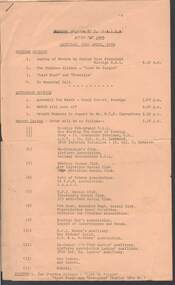
Document - R.S.L. BENDIGO COLLECTION: ANZAC SERVICE 1959, 25th April, 1959
... ... Sea Cadets... Air...Bn Ladies' Auxiliary, Sea Cadets, Air Cadets, Major T Martin, Mr G Styles, Court House Hotel, Sound Shell, and G F Osborne....Bn Ladies' Auxiliary, Sea Cadets, Air Cadets, Major T Martin, Mr G Styles, Court House Hotel, Sound Shell, and G F Osborne. ...Paper detailing the Morning and Afternoon Service, Wreath Laying, Order of March, Assembly Points and Movement for the Anzac Day Service on Saturday, 25th April, 1959. Mentioned are: Mr W E P Carruthers, Lt Commander Herniman RN, Col L J Lockwood, 38 Infantry Battalion, Lt Col D Scholes, Ex-Navalmen's Club, Airforce Association, Railway Sub-section R.S.L., Bendigo Legacy Club, 6th Battalion Social Club, 38th Battalion Social Club, Rats of Tobruk Association, Ex P.O.W. Association, R.A.A.O.C., T.P.I. Social Club, Interunits Social Club, 105 Anti-Tank Social Club, 4th Aust. Armoured Regt. Social Club, Repatriation Local Committee, Catholic War Veterans Association, Bendigo Dad's Association, Legion of Exservicemen and Women, R.S.L. Women's Auxiliary, War Widows' Guild, S.S. & A. Mothers' Association, Ex-Navalmen's Club Ladies' Auxiliary, Airforce Association Ladies' Auxiliary, 38th Inf. Bn Ladies' Auxiliary, Sea Cadets, Air Cadets, Major T Martin, Mr G Styles, Court House Hotel, Sound Shell, and G F Osborne.event, official, anzac memorial service, r.s.l. bendigo collection - anzac service 1959, mr w e p carruthers, lt commander herniman rn, col l j lockwood, 38 infantry battalion, lt col d scholes, ex-navalmen's club, airforce association, railway sub-section r.s.l., bendigo legacy club, 6th battalion social club, 38th battalion social club, rats of tobruk association, ex p.o.w. association, r.a.a.o.c., t.p.i. social club, interunits social club, 105 anti-tank social club, 4th aust. armoured regt. social club, repatriation local committee, catholic war veterans association, bendigo dad's association, legion of exservicemen and women, r.s.l. women's auxiliary, war widows' guild, s.s. & a. mothers' association, ex-navalmen's club ladies' auxiliary, airforce association ladies' auxiliary, 38th inf. bn ladies' auxiliary, sea cadets, air cadets, major t martin, mr g styles, court house hotel, sound shell, g f osborne -
Moorabbin Air Museum
Book - Single page description of each boat type with basic performance statistics plus b/w photos on opposite page, AN INTRODUCTION TO ROYAL AIR FORCE 1936-45 AIR SEA RESCUE LAUNCHES, John Pritchard, AN INTRODUCTION TO ROYAL AIR FORCE 1936-45 AIR SEA RESCUE LAUNCHES, 1979
... Single page description of each boat type with basic performance statistics plus b/w photos on opposite page, AN INTRODUCTION TO ROYAL AIR FORCE 1936-45 AIR SEA RESCUE LAUNCHES...AN INTRODUCTION TO ROYAL AIR FORCE 1936-45 AIR SEA RESCUE LAUNCHES...Single page description of each boat type with basic performance statistics plus b/w photos on opposite page, AN INTRODUCTION TO ROYAL AIR FORCE 1936-45 AIR SEA RESCUE LAUNCHES...Single page description of each boat type with basic performance statistics plus b/w photos on opposite page, AN INTRODUCTION TO ROYAL AIR FORCE 1936-45 AIR SEA RESCUE LAUNCHES Single page description of each boat type with basic performance statistics plus b/w photos on opposite page, AN INTRODUCTION TO ROYAL AIR FORCE 1936-45 AIR SEA RESCUE LAUNCHES Yellow cover with black writing, no photos or drawings AN INTRODUCTION TO ROYAL AIR FORCE 1936-45 AIR SEA RESCUE LAUNCHES Book Single page description of each boat type with basic performance statistics plus b/w photos on opposite page, AN INTRODUCTION TO ROYAL AIR FORCE 1936-45 AIR SEA RESCUE LAUNCHES John Pritchard ...Single page description of each boat type with basic performance statistics plus b/w photos on opposite page, AN INTRODUCTION TO ROYAL AIR FORCE 1936-45 AIR SEA RESCUE LAUNCHESYellow cover with black writing, no photos or drawingsnon-fictionSingle page description of each boat type with basic performance statistics plus b/w photos on opposite page, AN INTRODUCTION TO ROYAL AIR FORCE 1936-45 AIR SEA RESCUE LAUNCHES -
 National Vietnam Veterans Museum (NVVM)
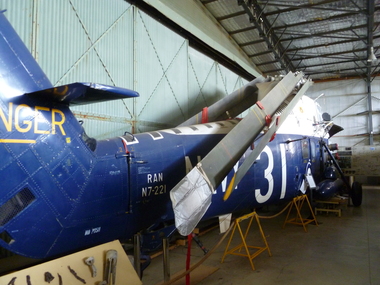
Vehicle - Helicopter, Westland Wessex Model 31B, 1964
... Manufactured in Britain from a USA design, the Wessex was jet powered (Napier Gazelle), a multi-role helicopter used in air sea rescue, anti-submarine, ambulance, troop and freight carrying. ...Tiger Head Unit Logo of 816 Sqn Manufactured in Britain from a USA design, the Wessex was jet powered (Napier Gazelle), a multi-role helicopter used in air sea rescue, anti-submarine, ambulance, troop and freight carrying. ...The Wessex was used between 1964 and 1984 by the Australian Navy in Australia and Oceania. This helicopter, no 31, also use for disaster relief in Darwin after Cyclone Tracy.Manufactured in Britain from a USA design, the Wessex was jet powered (Napier Gazelle), a multi-role helicopter used in air sea rescue, anti-submarine, ambulance, troop and freight carrying. Dependent on the mission profile, the aircraft carried a crew from three to five including two pilots.Includes a full set of Royal Australian Navy insignia and carries the Serial No. N7-221 and Navy Side No. 31.RAN Roundel. Navy Registration N7-221. No31, a/c safety markings. Tiger Head Unit Logo of 816 Sqnhelicopters, military equipment, wedssex, troop carrier, navy -
 Moorabbin Air Museum
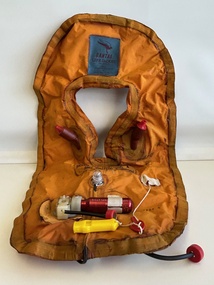
Clothing (item) - Qantas Life Jacket
... A vintage Qantas life jacket manufactured by Beaufort (Air-Sea) Equipment Ltd Birkenhead England. In oranged "proof" nylon, with simple over the head bib design with webbing tapes to tie around the body. ...Rear is inscribed with BACK/Derriere MK 8C/1 Patent No. 889158 9/70 SN279 A vintage Qantas life jacket manufactured by Beaufort (Air-Sea) Equipment Ltd Birkenhead England. In oranged "proof" nylon, with simple over the head bib design with webbing tapes to tie around the body. ...Rear is inscribed with BACK/Derriere MK 8C/1 Patent No. 889158 9/70 SN279 -
Moorabbin Air Museum
Machine - Bristol 171 Sycamore A91-1 (VH-Gvr, A80-2, VH-GVR, G-ALSZ, WV695)
... The Sycamore was used by the Royal Air Force and the Royal Navy in a wide variety of roles, including air ambulance, communications, air-sea rescue and aircraft carrier borne operation. ...The Sycamore was used by the Royal Air Force and the Royal Navy in a wide variety of roles, including air ambulance, communications, air-sea rescue and aircraft carrier borne operation. ...Historical Details: An intact and representative example of a first generation helicopter and one of the earliest examples to serve with the RAAF and in Australia.. Description: The Bristol Sycamore was designed in England and first flown in 1947. The Sycamore was used by the Royal Air Force and the Royal Navy in a wide variety of roles, including air ambulance, communications, air-sea rescue and aircraft carrier borne operation. Level of Importance: National -
Moorabbin Air Museum
Document (series) - Bristol 171 Sycamore Helicopter Log Books A91-1 and A91-2 Engine Alvis Leonides See Context and Content for details, Bristol 171 Sycamore Log Books A91-1 and A91-2
... The Sycamore was used by the Royal Air Force and the Royal Navy in a wide variety of roles, including air ambulance, communications, air-sea rescue and aircraft carrier borne operation. ...The Sycamore was used by the Royal Air Force and the Royal Navy in a wide variety of roles, including air ambulance, communications, air-sea rescue and aircraft carrier borne operation. ...Aircraft Log Book No 1 VH-GVR - mainly maintenance by ANA -1964-66 Some attachments 1951 Light Aircraft Engine Log Book Eng serial no. 977/A648547 1961-66 Alvis Leonides RAAF Aero Engine Log Book RAAF Form E/E 44 S/N 977 1955-64 RAAF Airframe Log Book A91-2 RAAF Form E/E 39 1955 - Crashed 13th December 1960 Ministry of Civil Aviation Aircraft Log Book A91-2 1954-54 -
 Flagstaff Hill Maritime Museum and Village
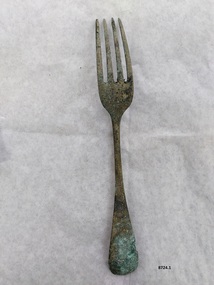
Domestic object - Forks, circa 1870's
... If objects like these spoons are submerged for long periods in sea water or air, the surface may become tarnished with different colours - purple tarnish is a natural early-stage of oxidation when the copper alloy reacts with sulfur in the air and is often a precursor to black tarnish, green patina occurs when copper or brass is exposed to air and water over long periods and is generally harmless and acts as a shield against further decay and brown tarnish occurs when copper combines with oxygen. ...If objects like these spoons are submerged for long periods in sea water or air, the surface may become tarnished with different colours - purple tarnish is a natural early-stage of oxidation when the copper alloy reacts with sulfur in the air and is often a precursor to black tarnish, green patina occurs when copper or brass is exposed to air and water over long periods and is generally harmless and acts as a shield against further decay and brown tarnish occurs when copper combines with oxygen. ...These forks are from the wreck of the Loch Ard, which sailed from Gravesend, London 1878. The manifest listed an array of manufactured goods being exported to the Colony of Victoria. Included in the cargo manifest was a large number of hardware & cutlery items. The forks are representative of similar items of silver electro-plated cutlery salvaged from the Loch Ard wreck site, comprising nickel silver electroplated spoons and forks of various sizes but all sharing the same general shape and design. Within the Flagstaff Hills cutlery collection donated from the Loch Ard, maker’s marks are often obscured by sedimentary accretion or verdigris after a century of submersion in the ocean. Electroplated silver objects are made of a base metal (like copper, nickel or brass) coated with a microscopic layer of silver using an electrical current. If objects like these spoons are submerged for long periods in sea water or air, the surface may become tarnished with different colours - purple tarnish is a natural early-stage of oxidation when the copper alloy reacts with sulfur in the air and is often a precursor to black tarnish, green patina occurs when copper or brass is exposed to air and water over long periods and is generally harmless and acts as a shield against further decay and brown tarnish occurs when copper combines with oxygen. The ship Loch Ard was built on the River Clyde in Scotland in 1873 for the prestigious Loch Line of colonial clipper ships, designed for the Australian run. It sailed from England on 1st March 1878 carrying 37 crew, 17 passengers and a load of cargo. The general cargo reflected the affluence of Melbourne at the time. On board were straw hats, umbrellas, perfumes, clay pipes, pianos, clocks, confectionary, linen and candles, as well as a heavier load of railway irons, cement, lead and copper. There were items included that were intended for display in the Melbourne International Exhibition in 1880 - a diverse general cargo ranging from luxury items to bulk railway iron. On 1 June 1878, emerging from fog and hearing too late the sound of breakers against the tall limestone cliffs, the vessel struck the southern foot of Mutton Bird Island and sank in 23 metres of water. Of the fifty-four people on board only two survived, one young male crewman, Tom Pearce, and one young female passenger, Eva Carmichael. Ten days after the Loch Ard tragedy, salvage rights to the wreck were sold at auction for £2,120. Cargo valued at £3,000 was salvaged and placed on the beach, but most washed back into the sea when another storm developed. The wreck of Loch Ard still lies at the base of Mutton Bird Island. Much of the cargo has now been salvaged and some was washed up into what is now known as Loch Ard Gorge. Cargo and artefacts have also been illegally salvaged over many years before protective legislation was introduced in 1976. One of the most unlikely pieces of cargo to have survived the shipwreck was a Minton porcelain peacock - one of only seven in the world. The peacock was destined for the Melbourne International Exhibition in 1880. It had been well packed, which gave it adequate protection during the violent storm. Today, the Minton peacock can be seen at the Flagstaff Hill Maritime Museum in Warrnambool. From Australia's most dramatic shipwreck it has now become Australia's most valuable shipwreck artefact and is one of very few 'objects' on the Victorian State Heritage Register.Flagstaff Hill’s collection of artefacts from LOCH ARD is significant for being one of the largest collections of artefacts from this shipwreck in Victoria. It is significant for its association with the shipwreck, which is on the Victorian Heritage Register (VHR S417). The collection is significant because of the relationship between the objects, as together they have a high potential to interpret the story of the LOCH ARD. The LOCH ARD collection is archaeologically significant as the remains of a large international passenger and cargo ship. The LOCH ARD collection is historically significant for representing aspects of Victoria’s shipping history and its potential to interpret sub-theme 1.5 of Victoria’s Framework of Historical Themes (living with natural processes). The collection is also historically significant for its association with the LOCH ARD, which was one of the worst and best known shipwrecks in Victoria’s history.Two forks recovered from the wreck of the Loch Ard which sank in 1878. Fork 8724.1 is a larger metal dinner fork with an elongated handle with a rounded end. It is heavy and has green and brown tarnish on both sides. Fork 8724.2 is a smaller dessert fork but of a similar design. The end of the handle has a set of indistinguishable maker's marks. It is showing some black and green tarnish.Maker's marks on handle - too worn to read.flagstaff hill maritime museum and village, warrnambool, great ocean road, shipwreck coast, loch ard, wreck of loch ard, salvage, salvage from loch ard, forks, dinner fork, flatware, cutlery -
 Bendigo Military Museum
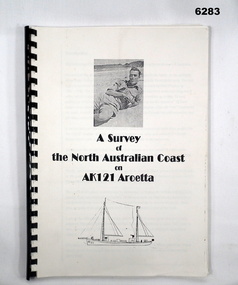
Booklet - A survey of the North Australian Coast on AK121 Aroetta, NT Force, NT Coastal Recce Unit RAE, 6 Aust Army Topo Survey Corps, AKA121 Aroetta, 28 Mar 1945
... Coastal Recce whose work it was to patrol the coast and as well do air - sea rescue. The survey party: Lieut Jack Worsley (the Loot) Sgt Jack Love, Spr Jack Cook, Spr Pat Hede. ...Coastal Recce whose work it was to patrol the coast and as well do air - sea rescue. The survey party: Lieut Jack Worsley (the Loot) Sgt Jack Love, Spr Jack Cook, Spr Pat Hede. ...The work of the Australian Survey Corps is to make maps for the Army. At the outbreak of war very little of the mainland had been mapped, especially the northern parts. The best maps in existence of the N.T. coast in Dec "41 were those made by Matt Flinders in 1801 -1802. The Army soon got out new maps of all important areas including much of the inland. Later it was decided to bring the complete coastline up to date. Several parties put in between them six months on the coast during the dry season of "45 but a couple more months would be needed to complete the program when the "wet" interrupted the work. A small section from Buckingham Bay - Groote Eylandt was still untouched and this diary covers that section of the N.T. Coast. A survey party of four men was chosen who were to be transported from place to place by the AK121 Aroetta - a ketch of 25 tons belonging to an army unit called N.T. Coastal Recce whose work it was to patrol the coast and as well do air - sea rescue. The survey party: Lieut Jack Worsley (the Loot) Sgt Jack Love, Spr Jack Cook, Spr Pat Hede. Crew of Aroetta: Liet Ralph Warne (Skipper), Sgt Buckley (Buck) (First Mate and Orderly Rm), Sgt Jim Terjesen (Jumbo) Bosun, WO2 Tom Davis (Engineer), Cpl Kevin Monk (Artificer), L/Cpl Jack Cox (Deck Hand), Spr Jack Andrews (Signals), Spr Laurie Rament (Ass. Engineer), Spr McKenzie (Mac) (Cook). The complete history is not available after July 31 1945. The remainder of the notes are very badly water-damaged and in some places unreadable.A4 Booklet, plain paper with text and diagrams and half tone photograph of Lt Jack Worsley with plastic binderSigned by George Barton Maj. for LtCol GS. NT Forceroyal australian survey corps, rasvy, fortuna, army survey regiment, army svy regt, asr -
 Flagstaff Hill Maritime Museum and Village
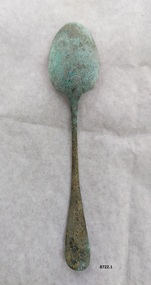
Domestic object - Spoons, William Page & Co, circa 1878
... If objects like these spoons are submerged for long periods in sea water or air, the surface may become tarnished with different colours - purple tarnish is a natural early-stage of oxidation when the copper alloy reacts with sulfur in the air and is often a precursor to black tarnish, green patina occurs when copper or brass is exposed to air and water over long periods and is generally harmless and acts as a shield against further decay and brown tarnish occurs when copper combines with oxygen. ...If objects like these spoons are submerged for long periods in sea water or air, the surface may become tarnished with different colours - purple tarnish is a natural early-stage of oxidation when the copper alloy reacts with sulfur in the air and is often a precursor to black tarnish, green patina occurs when copper or brass is exposed to air and water over long periods and is generally harmless and acts as a shield against further decay and brown tarnish occurs when copper combines with oxygen. ...These spoons are from the wreck of the Loch Ard, which sailed from Gravesend, London 1878. The manifest listed an array of manufactured goods being exported to the Colony of Victoria. Included in the cargo manifest was a large number of hardware & cutlery items. The spoons are representative of similar items of silver electro-plated cutlery salvaged from the Loch Ard wreck site, comprising nickel silver electroplated spoons and forks of various sizes but all sharing the same general shape and design. Some of the pieces display their makers’ mark of William Page & Co Birmingham UK. Within the Flagstaff Hills cutlery collection donated from the Loch Ard, maker’s marks are often obscured by sedimentary accretion or verdigris after a century of submersion in the ocean. However sufficient detail has survived to indicate that the collection of samples of electroplated cutlery probably originated from the same cargo consignment from the Loch Ard and were made by William Page & Co. Of Birmingham England. William Page was born in 1811 and died in 1885. He was active as a manufacturer of cutlery from 1829 with premises at 74 Belmont Rd, Dales End as a "close plater" (someone who works sheet metal), and he began electroplating in 1855. William Page & Co was also active from 1880 at Cranemore St, Cattle’s Grove also 55 Albion St, Birmingham, and in 1936 the firm became an Ltd company. The firm used the trademarks "Asrista, Bolivian Silver, Silverite, Roman Silver, Romanian Silver, and Trevor Plate. In 1938 William Page was a supplier to the British Government, marking its products with the broad arrow symbol and was also present at Sheffield. Electroplated silver objects are made of a base metal (like copper, nickel or brass) coated with a microscopic layer of silver using an electrical current. If objects like these spoons are submerged for long periods in sea water or air, the surface may become tarnished with different colours - purple tarnish is a natural early-stage of oxidation when the copper alloy reacts with sulfur in the air and is often a precursor to black tarnish, green patina occurs when copper or brass is exposed to air and water over long periods and is generally harmless and acts as a shield against further decay and brown tarnish occurs when copper combines with oxygen. The ship Loch Ard was built on the River Clyde in Scotland in 1873 for the prestigious Loch Line of colonial clipper ships, designed for the Australian run. It sailed from England on 1st March 1878 carrying 37 crew, 17 passengers and a load of cargo. The general cargo reflected the affluence of Melbourne at the time. On board were straw hats, umbrellas, perfumes, clay pipes, pianos, clocks, confectionary, linen and candles, as well as a heavier load of railway irons, cement, lead and copper. There were items included that were intended for display in the Melbourne International Exhibition in 1880 - a diverse general cargo ranging from luxury items to bulk railway iron. On 1 June 1878, emerging from fog and hearing too late the sound of breakers against the tall limestone cliffs, the vessel struck the southern foot of Mutton Bird Island and sank in 23 metres of water. Of the fifty-four people on board only two survived, one young male crewman, Tom Pearce, and one young female passenger, Eva Carmichael. Ten days after the Loch Ard tragedy, salvage rights to the wreck were sold at auction for £2,120. Cargo valued at £3,000 was salvaged and placed on the beach, but most washed back into the sea when another storm developed. The wreck of Loch Ard still lies at the base of Mutton Bird Island. Much of the cargo has now been salvaged and some was washed up into what is now known as Loch Ard Gorge. Cargo and artefacts have also been illegally salvaged over many years before protective legislation was introduced in 1976. One of the most unlikely pieces of cargo to have survived the shipwreck was a Minton porcelain peacock - one of only seven in the world. The peacock was destined for the Melbourne International Exhibition in 1880. It had been well packed, which gave it adequate protection during the violent storm. Today, the Minton peacock can be seen at the Flagstaff Hill Maritime Museum in Warrnambool. From Australia's most dramatic shipwreck it has now become Australia's most valuable shipwreck artefact and is one of very few 'objects' on the Victorian State Heritage Register. Flagstaff Hill’s collection of artefacts from LOCH ARD is significant for being one of the largest collections of artefacts from this shipwreck in Victoria. It is significant for its association with the shipwreck, which is on the Victorian Heritage Register (VHR S417). The collection is significant because of the relationship between the objects, as together they have a high potential to interpret the story of the LOCH ARD. The LOCH ARD collection is archaeologically significant as the remains of a large international passenger and cargo ship. The LOCH ARD collection is historically significant for representing aspects of Victoria’s shipping history and its potential to interpret sub-theme 1.5 of Victoria’s Framework of Historical Themes (living with natural processes). The collection is also historically significant for its association with the LOCH ARD, which was one of the worst and best known shipwrecks in Victoria’s history.This is a collection of six spoons recovered from the wreck of the Loch Ard which sank in 1878. Spoon 8722.1 (a tablespoon) is the largest of the spoons. It has an elongated rounded handle and is extensively covered with green verdigris. Spoon 8722.2 (a teaspoon) is the smallest of the spoons. It also has an elongated rounded handle and has black and green tarnish. There is evidence of markings on the handle but they are difficult to decipher. Spoons 8722.3 - 8722.6 are of similar size and design. They are dessert spoons with a fiddle back handle. Spoon 8722.3 is badly corroded and encrusted with sea debris but there is evidence (which is difficult to read) of markings on the handle. Spoon 8722.4 is also heavily tarnished with green verdigris and the metal is beginning to flake on the handle. It has remnants of masking tape on the inner bowl. Spoon 8722.5 has an extensive covering of vertigris and the metal is very thin and fragile with several tiny holes and a larger hole in the bowl. Spoon 8722.6 has extensive brown (and some green) oxidation and a full set of hall marks on the handle - including the maker's mark for William Page and Co Birmingham - A WP stamp within a square diamond, a letter "B" and three more hallmarks.Makers’ mark “W” & “P” placed within a raised diamond outline, which is in turn contained within a sunken crown shape identifying the manufacturer as William Page & Co of Birmingham plus a "B" and three other unidentified marks.flagstaff hill maritime museum and village, warrnambool, great ocean road, shipwreck coast, loch ard, wreck of the loch ard, loch ard artefacts, loch ard salvage, william page and company, william page and co birmingham, spoons, domestic spoons, silver plated spoons, electroplated spoons, electroplated cutlery -
 Flagstaff Hill Maritime Museum and Village
Equipment - Distant Signal, 1897-1931
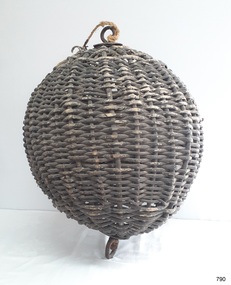
... air to pass through, minimising possible swaying. Similar sets were made from rope or fabric. Warrnambool's Flagstaff was erected in 1854. Its primary use was to display visual signals that could convey messages between land and sea. ...air to pass through, minimising possible swaying. Similar sets were made from rope or fabric. Warrnambool's Flagstaff was erected in 1854. Its primary use was to display visual signals that could convey messages between land and sea. ...This three-dimensional Distant Signal is part of a Flagstaff Signal set of ball, cone and drum shapes. It has been woven and then fabricated with strong metal swivel fittings and loops for suspending from a high point on a flagstaff at a signal station or on a ship’s masthead. The cane signal was constructed to withstand all weather and to be visible from a long distance. The gaps between the woven cane allow air to pass through, minimising possible swaying. Similar sets were made from rope or fabric. Warrnambool's Flagstaff was erected in 1854. Its primary use was to display visual signals that could convey messages between land and sea. It was also used to notify the local population of the approach of ships. One of the popular signalling codes in use in the early-to-mid 1800s was the Marryat’s Code but there were others in use as well; there was no one standard code. In 1857 the International Marine Conference adopted an International Code of Signals as a standard communications system for all vessels that could be understood in many different languages. The Normanby Advertiser reported on June 5th 1857 a query from the Post Master General as to whether the request of the Chief Harbour Master would be carried out, in that Warrnambool would receive a new flagstaff and a set of Marryatt’s signal flags. The Table of Codes was published, showing how to use combinations of these flags to send messages. The Code was revised in 1887 to cover situations where distance, light, wind and weather conditions affected the visibility of the flags and prevented clear communication. The first report of the International Code of Signals Committee of 1897 warned signalmen not to rely on ordinary semaphore flags and introduced a Distant Signal Code using either particular semaphore flags or the three-dimensional shapes of a ball, cone and drum that aligned with the semaphore flag shapes of a circle, pennant and square. International Code of Signals In 1931, after World War I’s experiences in using signal codes, the International Code of Signals conference in Washington revised and published the rules for the conduct of signalling. One of the changes was that “the use of the Distant Signals and of fixed semaphore was abandoned”. It is of interest to know that modern marine law in many countries insists that a set of Day Shapes must be carried onboard vessels of a certain size. These highly visible geometric shapes are used at sea in daylight to communicate messages between vessels. They are used in a similar way to the Distant Signals, in that different combinations of shapes represent different messages. The set of shapes includes a ball, cylinder, cone and diamond. The shapes are hung between the top of the vessel’s foremast and the front of the vessel. They are only coloured black and are about 1.5 metres high. The vertical line of shapes can mean messages such as Boat not under command, Fishing, and Under sail and power.Distant Signals were an important means of marine communication from the late 1880s to the early 1930s, including during World War I. They were an advancement to the International Shipping Codes and safety. The cane signals’ shapes appear to be the same from whatever direction they are viewed, removing confusion about the message they convey. The same shapes continue to be used today for the sets of Day Shapes used as marine navigational signals that are mandatory on certain-sized vessels.Distant Signal Ball, part of a Flagstaff signal set. A round woven cane ball, painted black, with a metal rod passing through the centre. The rod has a loop at each end, then a concave, octagonal metal plate that rests on the outside surface of the ball, serving as a washer. The rod has swivels at each end.flagstaff hill, flagstaff hill maritime museum and village, warrnambool, maritime museum, maritime village, great ocean road, shipwreck coast, distant signal, signal, maritime signal, ball signal, signal shape, flagstaff signal, signal station, masthead signal, communications, marine technology, signals, marine signals, flaghoists, international marine conference, international code of signals, signal codes, marine safety, signal flags, day shape, daymark, day symbol, navigation, warrnambool flagstaff, 1854, 1857 1931, 1887, 1897 -
 Flagstaff Hill Maritime Museum and Village
Equipment - Distant Signal, 1897-1931
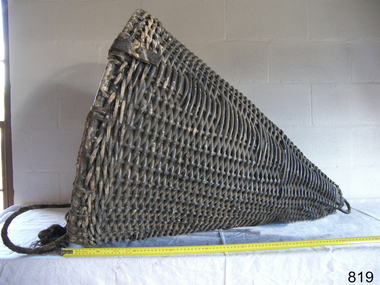
... air to pass through, minimising possible swaying. Similar sets were made from rope or fabric. Warrnambool's Flagstaff was erected in 1854. Its primary use was to display visual signals that could convey messages between land and sea. ...air to pass through, minimising possible swaying. Similar sets were made from rope or fabric. Warrnambool's Flagstaff was erected in 1854. Its primary use was to display visual signals that could convey messages between land and sea. ...This three-dimensional Distant Signal is part of a Flagstaff Signal set of ball, cone and drum shapes. It has been woven and then fabricated with strong metal swivel fittings and loops for suspending from a high point on a flagstaff at a signal station or on a ship’s masthead. The cane signal was constructed to withstand all weather and to be visible from a long distance. The gaps between the woven cane allow air to pass through, minimising possible swaying. Similar sets were made from rope or fabric. Warrnambool's Flagstaff was erected in 1854. Its primary use was to display visual signals that could convey messages between land and sea. It was also used to notify the local population of the approach of ships. One of the popular signalling codes in use in the early-to-mid 1800s was the Marryat’s Code but there were others in use as well; there was no one standard code. In 1857 the International Marine Conference adopted an International Code of Signals as a standard communications system for all vessels that could be understood in many different languages. The Normanby Advertiser reported on June 5th 1857 a query from the Post Master General as to whether the request of the Chief Harbour Master would be carried out, in that Warrnambool would receive a new flagstaff and a set of Marryatt’s signal flags. The Table of Codes was published, showing how to use combinations of these flags to send messages. The Code was revised in 1887 to cover situations where distance, light, wind and weather conditions affected the visibility of the flags and prevented clear communication. The first report of the International Code of Signals Committee of 1897 warned signalmen not to rely on ordinary semaphore flags and introduced a Distant Signal Code using either particular semaphore flags or the three-dimensional shapes of a ball, cone and drum that aligned with the semaphore flag shapes of a circle, pennant and square. International Code of Signals In 1931, after World War I’s experiences in using signal codes, the International Code of Signals conference in Washington revised and published the rules for the conduct of signalling. One of the changes was that “the use of the Distant Signals and of fixed semaphore was abandoned”. It is of interest to know that modern marine law in many countries insists that a set of Day Shapes must be carried onboard vessels of a certain size. These highly visible geometric shapes are used at sea in daylight to communicate messages between vessels. They are used in a similar way to the Distant Signals, in that different combinations of shapes represent different messages. The set of shapes includes a ball, cylinder, cone and diamond. The shapes are hung between the top of the vessel’s foremast and the front of the vessel. They are only coloured black and are about 1.5 metres high. The vertical line of shapes can mean messages such as Boat not under command, Fishing, and Under sail and power.Distant Signals were an important means of marine communication from the late 1880s to the early 1930s, including during World War I. They were an advancement to the International Shipping Codes and safety. The cane signals’ shapes appear to be the same from whatever direction they are viewed, removing confusion about the message they convey. The same shapes continue to be used today for the sets of Day Shapes used as marine navigational signals that are mandatory on certain-sized vessels.Distant Signal Cone, part of a Flagstaff signal set. A woven cane cone, painted black, with a metal rod passing through the centre and two crossed metal bars at the base. The central rod has a loop at the top and passes through the bars at the base, finishing in a metal loop. The rod has swivels at each end.flagstaff hill, warrnambool, flagstaff hill maritime museum and village, shipwreck coast, marine navigation, marine communications, communication signal, lifesaving, ship at sea, day shape, masthead signal, day signal, day mark signals, marine technology, safety equipment, navigation equipment, marine day shape, day marker, cane day shape, signal cone, day signal cone, cone signal, cone day shape, distant signal, flagstaff signal, signal station, communications, signals, marine signals, flaghoists, international marine conference, international code of signals, signal codes, marine safety, signal flags, daymark, day symbol, navigation, warrnambool flagstaff, 1854, 1857 1931, 1887, 1897
