
Showing 148 items matching "timber worker"
-
 Emerald Museum & Nobelius Heritage Park
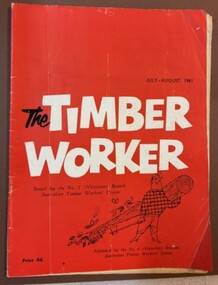
Magazine - Timber magazine, Australian Timber Workers' Union et al, The Timber Worker July-August 1961, 1961
... The Timber Worker July-August 1961......The Timber Worker... A magazine of the timber industry dated July-August 1961 published by the Victorian Branch of The Australian Timber Workers....A magazine of the timber industry dated July-August 1961 published by the Victorian Branch of The Australian Timber Workers. timber industry Businesses The Timber Worker Australian Timber Workers' Union 40-page soft cover magazine which includes advertisements. ...A magazine of the timber industry dated July-August 1961 published by the Victorian Branch of The Australian Timber Workers.40-page soft cover magazine which includes advertisements. Title is printed in white block print on red background.timber industry, businesses, the timber worker, australian timber workers' union -
 Marysville & District Historical Society
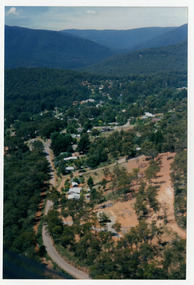
Photograph (item) - Colour photograph, Unknown
... A colour photograph of some of the timber workers' cottages that were for workers employed at J.L. ...A colour photograph of some of the timber workers' cottages that were for workers employed at J.L. ...Timber workers cottages/ Rd into M'sville from Melb/ From helicopter....A colour photograph of some of the timber workers' cottages that were for workers employed at J.L. ...A colour photograph of some of the timber workers' cottages that were for workers employed at J.L. Gould's Sawmill in Marysville. These cottages were located along the Marysville Road and the photograph was taken from a helicopter.A colour photograph of some of the timber workers' cottages that were for workers employed at J.L. Gould's Sawmill in Marysville.Timber workers cottages/ Rd into M'sville from Melb/ From helicopter.marysville, victoria, australia, j.l. gould sawmills pty. ltd., timber workers' cottages, marysville road, helicopter, photograph -
 Marysville & District Historical Society
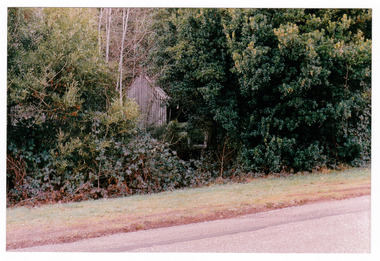
Photograph (Item) - Colour photograph, 1986
... A colour photograph of the timber worker's cottage that became Arbor Green Cottage in Marysville. ...A colour photograph of the timber worker's cottage that became Arbor Green Cottage in Marysville...../ Spring 1986./ Timber workers cottage/ To bcome Arbor Green Cottage...A colour photograph of the timber worker's cottage that became Arbor Green Cottage in Marysville. ...A colour photograph of the timber worker's cottage that became Arbor Green Cottage in Marysville. This cottage, along with most of the buildings in the township, was destroyed in the 2009 Black Saturday bushfires.A colour photograph of the timber worker's cottage that became Arbor Green Cottage in Marysville.1 Falls Rd M'sville./ Spring 1986./ Timber workers cottage/ To bcome Arbor Green Cottagemarysville, victoria, australia, photograph, accommodation, arbor green cottage, 2009 black saturday bushfires -
 Marysville & District Historical Society
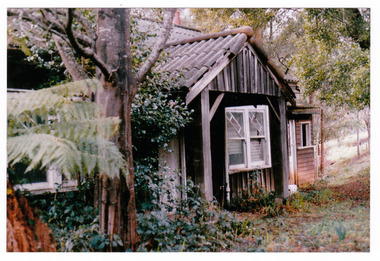
Photograph (Item) - Colour photograph, 1986
... A colour photograph of the timber worker's cottage that became Arbor Green Cottage in Marysville. ...A colour photograph of the timber worker's cottage that became Arbor Green Cottage in Marysville....1 Falls Rd M'sville./ Timber workers cottage/ To become Arbor Green Cottage./ Spring 1986....A colour photograph of the timber worker's cottage that became Arbor Green Cottage in Marysville. ...A colour photograph of the timber worker's cottage that became Arbor Green Cottage in Marysville. This cottage, along with most of the buildings in the township, was destroyed in the 2009 Black Saturday bushfires.A colour photograph of the timber worker's cottage that became Arbor Green Cottage in Marysville.1 Falls Rd M'sville./ Timber workers cottage/ To become Arbor Green Cottage./ Spring 1986.marysville, victoria, australia, photograph, accommodation, arbor green cottage, 2009 black saturday bushfires -
 Halls Gap & Grampians Historical Society
Photograph - Photocopy
... This is a photo of Fred Warren, a timber worker...."Fred Warren, Timber Worker". This seems to have been added to the bottom when the photocopy was made....This is a photo of Fred Warren, a timber worker. PEOPLE Warren TIMBER INDUSTRIES Logging "Fred Warren, Timber Worker". ...This is a photo of Fred Warren, a timber worker.A photocopy of a photo showing a man standing with his hands on his hips beside a large felled log. A cross-cut saw and axe are lodged in the log and four pieces of cut timber form a pyramid at the left front. A dog sits to the right of the man."Fred Warren, Timber Worker". This seems to have been added to the bottom when the photocopy was made.people, warren, timber industries, logging -
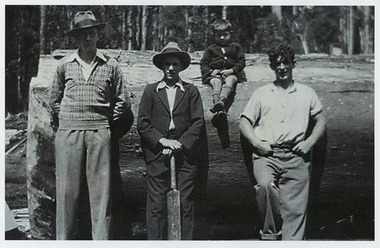 Marysville & District Historical Society
Photograph (item) - Black and white photograph, Original photograph taken in 1933
... A copy of a black and white photograph of some of the timber workers at Anderson's No. 1 Mill at Marysville. ...A copy of a black and white photograph of some of the timber workers at Anderson's No. 1 Mill at Marysville....A copy of a black and white photograph of some of the timber workers at Anderson's No. 1 Mill at Marysville. ...A copy of a black and white photograph of some of the timber workers at Anderson's No. 1 Mill at Marysville. The original photograph was taken in 1933.A copy of a black and white photograph of some of the timber workers at Anderson's No. 1 Mill at Marysville.RON ANDERSON, GEORGE Ely, MICK BROWN about 5, Mick HAlliday./ ANDERSON'S 1 WILKS CREEK/ C.1933marysville, victoria, australia, anderson no. 1 sawmill, anderson no. 2 sawmill, photograph, ron anderson, george ely, mick brown, mick halliday, wilks creek -
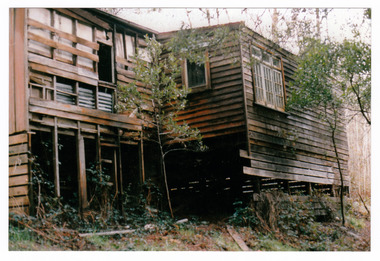 Marysville & District Historical Society
Photograph (Item) - Colour photograph, 1986
... A colour photograph of the timber worker's cottage that became Arbor Green Cottage in Marysville. ...A colour photograph of the timber worker's cottage that became Arbor Green Cottage in Marysville....A colour photograph of the timber worker's cottage that became Arbor Green Cottage in Marysville. ...A colour photograph of the timber worker's cottage that became Arbor Green Cottage in Marysville. This cottage, along with most of the buildings in the township, was destroyed in the 2009 Black Saturday bushfires.A colour photograph of the timber worker's cottage that became Arbor Green Cottage in Marysville.1 Falls Rd M'sville Spring 1986./ Rear cottage./ To become/ Arbor Green Cottage.marysville, victoria, australia, photograph, accommodation, arbor green cottage, 2009 black saturday bushfires -
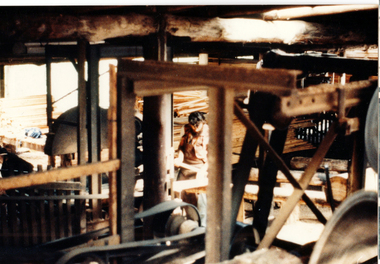 Coal Creek Community Park & Museum
Photograph (item) - Sawmill Interior, Coal Creek Community Park & Museum
... ...timber worker...The mill was essential to settlement towns, often being the first building to be constructed. sawmill timber worker pencilled on the reverse 'A8'. Kodak watermarks. ...The interior of the timber sawmill was designed to replicate what a mill may have looked like in a small country town circa 1890s. The image shows a rough-hewn building made from tree trunks and raw timber. In the centre, a man is working on making timber planks - around him lat many more pieces. In front a large piece of machinery showing belt-driven parts. The mill was essential to settlement towns, often being the first building to be constructed. pencilled on the reverse 'A8'. Kodak watermarks.sawmill, timber worker -
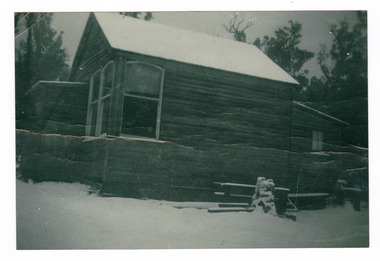 Marysville & District Historical Society
Photograph (item) - Black and white photograph, Unknown
... The Wilks Creek State School was established, primarily, to educate the timber mill workers' children....The Wilks Creek State School was established, primarily, to educate the timber mill workers' children....The Wilks Creek State School was established, primarily, to educate the timber mill workers' children. Photograph Black and white photograph ...A copy of a black and white photograph of the Wilks Creek State School. The Wilks Creek State School was established, primarily, to educate the timber mill workers' children.A copy of a black and white photograph of the Wilks Creek State School.Wilks Creek School/ in the Snowmarysville, victoria, australia, andersons no. 1 mill, andersons no. 2 mill, wilks creek state school, photograph -
 Upper Yarra Museum
Negative Photographic Reproduction, Group at the mill
... 03016 Group of timber workers at the mill Upper Yarra Shire 1888-1988 Centenary collection. ...timber mill group sandy ross 03016 Group of timber workers at the mill Upper Yarra Shire 1888-1988 Centenary collection. ...03016 Group of timber workers at the mill Upper Yarra Shire 1888-1988 Centenary collection. Black & white Negative, scanned at 600 dpitimber mill group sandy ross -
 Lakes Entrance Historical Society
Book, Timber Workers, 2001
... A souvenir booklet of the Rubicon Timber Workers reunion at Alexandra, Victoria. Contains short references to the workers, schools, and the hardships of life in this remote area especially for the women....Timber Workers Book ...A souvenir booklet of the Rubicon Timber Workers reunion at Alexandra, Victoria. Contains short references to the workers, schools, and the hardships of life in this remote area especially for the women.timber industry, schools, natural disasters -
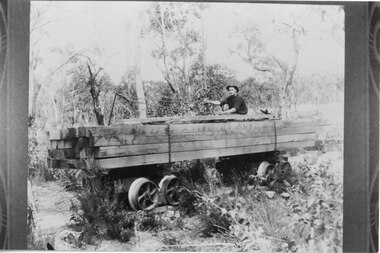 Halls Gap & Grampians Historical Society
Photograph - B/W
... The photo shows a timber worker "riding the load"....The photo shows a timber worker "riding the load". TIMBER INDUSTRIES Logging The photo shows a man sitting on a load of sawn timber, which is stacked on a trolley. ...The photo shows a timber worker "riding the load".The photo shows a man sitting on a load of sawn timber, which is stacked on a trolley. The trolley is sitting on timber rails. The man is holding a rope which is attached to a large lever (brake) on the right side of the trolley (near the front).timber industries, logging -
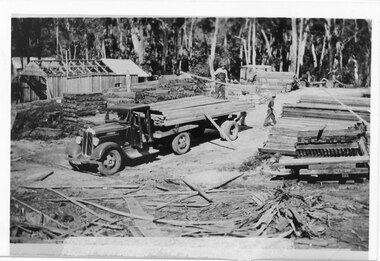 Halls Gap & Grampians Historical Society
Photograph - B/W
... This is a picture of timber workers loading a truck with sawn timber at Sandersons Mill....This is a picture of timber workers loading a truck with sawn timber at Sandersons Mill. ...This is a picture of timber workers loading a truck with sawn timber at Sandersons Mill.The photo shows a tray truck loaded with sawn timber. There is a partially roofed timber building behind the truck and stacks of sawn timber all around. A man is walking from the back of the truck towards a stack of timber to the right and another is standing on the timber on the tray of the truck, holding a piece of timber. There is thick bush in the background.timber industries, logging, sawmilling -
 Marysville & District Historical Society
Book, Mary Kenealy, The High Way to Heaven-A Story of Marysville and District, 2006
... Front cover has a drawing which depicts the Black Spur. There are timber workers on the road cutting timber as well as a man riding one horse whilst leading a pack horse. ...Box 22 / Marysville 3779 Front cover has a drawing which depicts the Black Spur. There are timber workers on the road cutting timber as well as a man riding one horse whilst leading a pack horse. ...A history of Marysville and the local district.Front cover has a drawing which depicts the Black Spur. There are timber workers on the road cutting timber as well as a man riding one horse whilst leading a pack horse. The drawing is done in green pencil.non-fictionA history of Marysville and the local district.marysville, history, local history, timber, tourism, victoria -
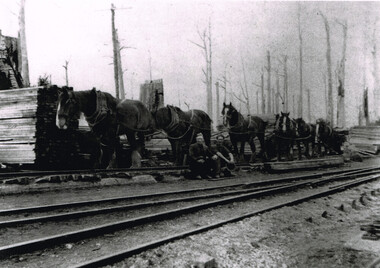 Otway Districts Historical Society
Photograph, Brucker, Pile Siding: horse-drawn timber tram, c.1920, c.1920
... A six horse-drawn timber tram at Pile Siding station in c.1920. Two timber workers are seated at the centre. Stacks of timber are awaiting collection. ...A six horse-drawn timber tram at Pile Siding station in c.1920. Two timber workers are seated at the centre. Stacks of timber are awaiting collection. ...Pile Siding was opened in December 1915 because of the Pettit Brothers sawmill and pile extraction operation. The siding was a spur with points facing Beech Forest with a timber tramway feeding the siding. During 1916/17 Pettit's sent away 5,000 tonnes of timber before moving to another site, after which loading dropped to insignificant proportions. Pettit's again occupied the site from 1924 and traffic rose to major levels again.B/W. A six horse-drawn timber tram at Pile Siding station in c.1920. Two timber workers are seated at the centre. Stacks of timber are awaiting collection. Note the bare tree trunks in the background. pile siding; weeaproinah; railways; tramways; -
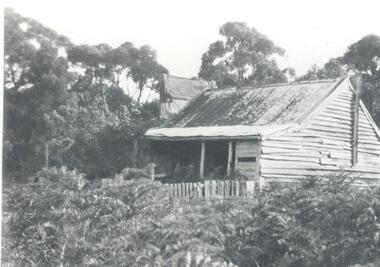 Halls Gap & Grampians Historical Society
Photograph - B/W, After 1900
... Cottage once stood in the Mafeking area and was owned in the 1920s/1930s by a prospector and timber worker, name unknown....Cottage once stood in the Mafeking area and was owned in the 1920s/1930s by a prospector and timber worker, name unknown. BUILDINGS Houses Wooden slab cottage with corrugated iron roof in apparent good condition. ...Cottage once stood in the Mafeking area and was owned in the 1920s/1930s by a prospector and timber worker, name unknown.Wooden slab cottage with corrugated iron roof in apparent good condition. Small front yard enclosed in picket fence, bracken in forefront and eocalypt trees at rear.buildings, houses -
 Orbost & District Historical Society
black and white photograph, late 19th century - early 20th century
... A very large framed black / white photograph of a large group of timber workers in a bush setting. Above and below the photograph are their names. ...A very large framed black / white photograph of a large group of timber workers in a bush setting. Above and below the photograph are their names. ...The local logging industry had its beginning back in 1882. The first batch of timber was cut in a sawmill at Orbost on the Brodribb River.Orbost has historically been based on the timber industry, but that industry has declined considerably over the last 20 years. The number of locals involved in the timber industry has declined and many of the mills have closed. This item reflects a time when that industry was a significant contributor to the economy of the district.A very large framed black / white photograph of a large group of timber workers in a bush setting. Above and below the photograph are their names. The names can be clearly read. The photograph is on a white buff card under glass in a black frame.Names are type - written above and below the photograph.timber-industry -
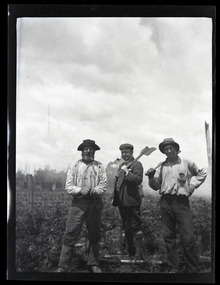 Emerald Museum & Nobelius Heritage Park
Negative - Image of Three Men in a Field, Baker & Rouse, Early 20th century
... This one is of three men of whom two are clearly workers, possibly timber workers, and the third may be their boss. ...This one is of three men of whom two are clearly workers, possibly timber workers, and the third may be their boss. ...This negative is one of a batch of ten images taken apparently around the same time at Gembrook c. early 20th century. This one is of three men of whom two are clearly workers, possibly timber workers, and the third may be their boss. Timber was an important early industry in Gembrook. These negatives provide a glimpse of the early 20th century timber industry in Gembrook.Black and white negative - portrait view - showing three men posing for the photo. The man in the middle wears a suit and is smoking a pipe and holding an axe. The men on either side of him appear to be workers with one holding a hand tool over his shoulder which may be an axe, and the other is smoking a pipe. Negative has been kept inside a packet which is not original.Handwritten on (not original) packet containing the negative: '3 men with axe - Gembrook'gembrook, timber industry -
 Puffing Billy Railway
Hand Winch
... Machinery Merchants, Melbourne & Sydney, this example is of the type of hand winch used by the Australian Industries and timber workers in the Australian bush. The central rotating drum is operated by three interacting cog wheels. ...Machinery Merchants, Melbourne & Sydney, this example is of the type of hand winch used by the Australian Industries and timber workers in the Australian bush. The central rotating drum is operated by three interacting cog wheels. ...Imported by Cameron, Sutherland & Seward Ltd. Machinery Merchants, Melbourne & Sydney, this example is of the type of hand winch used by the Australian Industries and timber workers in the Australian bush. The central rotating drum is operated by three interacting cog wheels. The metal cable is wound onto the central drum.Historic - Hand Winch type of hand winch used by the Australian Industries and timber workers in the Australian bush.Hand Winch made of wrought iron, metal and ironhand, winch -
Emerald Museum & Nobelius Heritage Park
Book - Historical fiction, Katharine Susannah Prichard, Working Bullocks, 1956
... 'Working Bullocks' was one of Katharine Susannah Prichard's two major works: it dramatized the physical and emotional traumas of timber workers in the karri country of Australia's south-west....'Working Bullocks' was one of Katharine Susannah Prichard's two major works: it dramatized the physical and emotional traumas of timber workers in the karri country of Australia's south-west. ...Emerald was a gathering place for some Australian writers in the early 20th century. She bought an Emerald cottage where she lived and also rented to fellow writers Vance and Netty Palmer. Katharine Susannah Prichard published between 1915 and 1967. 'Working Bullocks' was one of Katharine Susannah Prichard's two major works: it dramatized the physical and emotional traumas of timber workers in the karri country of Australia's south-west.Katharine Susannah Prichard was a well-known Australian writer with an association with Emerald.Hardback. Published 1956. First published 1926.'Working Bullocks /by / Katharine Susannah Prichard' on front and back coverskatharine susannah prichard, author, working bullocks, novel, vance and netty palmer, rose charman's cottage, emerald, victoria, australia -
 Puffing Billy Railway
Metal Pulley and Rope
... In the bush, the timber workers made good use of the pulleys. When set up in a sequence, they could move logs across gullys, up and down hills as the chopped down trees made their way to a sawmill. ...In the bush, the timber workers made good use of the pulleys. When set up in a sequence, they could move logs across gullys, up and down hills as the chopped down trees made their way to a sawmill. ...Metal Pully and Rope When heavy items were required to be moved a rope and pulley set was very handy. By attaching one end of the set to a solid surface, it was possible to lift items. In the bush, the timber workers made good use of the pulleys. When set up in a sequence, they could move logs across gullys, up and down hills as the chopped down trees made their way to a sawmill. Using animal or mechanical power increased the use of the pulley and rope. Historic - Industrial - Metal Pulley and RopeMetal Pulley and Ropepuffing billy, metal pulley and rope -
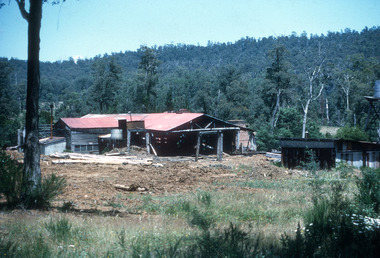 Marysville & District Historical Society
Photograph (item) - Colour photograph, Unknown
... However, wild dogs and difficult terrain eventually ended this. In 1938, timber workers established the Cathedral Mill near the junction of Little River and Storm Creek. ...However, wild dogs and difficult terrain eventually ended this. In 1938, timber workers established the Cathedral Mill near the junction of Little River and Storm Creek. ...A digital copy of a colour photograph of Cooks Mill in Victoria. Located in the Cathedral Range State Park near Marysville, Cooks Mill was established as Cathedral Mill in 1938. Processing Mountain Ash and Manna Gum, it was a major local employer before ceasing operations in 1955. Early settlers initially used the harsh, rocky country of the Cathedral Range for grazing. However, wild dogs and difficult terrain eventually ended this. In 1938, timber workers established the Cathedral Mill near the junction of Little River and Storm Creek. The mill was later renamed Cooks Mill and supported local milling operations through the 1940s and 1950s, supplying sawn timber to the Healesville railway station and Melbourne builders. The mill itself stopped operating in 1955, though logging continued in the surrounding forests until late 1971.A digital copy of a colour photograph of Cooks Mill in Victoria.marysville, victoria, australia, taggerty, cathedral range state park, cathedral mill, mountain ash, manna gum, little river, storm creek, cooks mill, healesville railway station, melbourne -
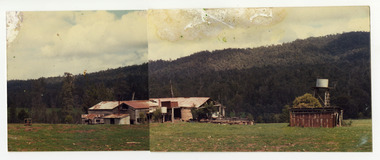 Marysville & District Historical Society
Photograph (item) - Colour photograph, Unknown
... However, wild dogs and difficult terrain eventually ended this. In 1938, timber workers established the Cathedral Mill near the junction of Little River and Storm Creek. ...However, wild dogs and difficult terrain eventually ended this. In 1938, timber workers established the Cathedral Mill near the junction of Little River and Storm Creek. ...A colour photograph of Cooks Mill in Victoria. Located in the Cathedral Range State Park near Marysville, Cooks Mill was established as Cathedral Mill in 1938. Processing Mountain Ash and Manna Gum, it was a major local employer before ceasing operations in 1955. Early settlers initially used the harsh, rocky country of the Cathedral Range for grazing. However, wild dogs and difficult terrain eventually ended this. In 1938, timber workers established the Cathedral Mill near the junction of Little River and Storm Creek. The mill was later renamed Cooks Mill and supported local milling operations through the 1940s and 1950s, supplying sawn timber to the Healesville railway station and Melbourne builders. The mill itself stopped operating in 1955, though logging continued in the surrounding forests until late 1971.A colour photograph of Cooks Mill in Victoria.marysville, victoria, australia, taggerty, cathedral range state park, cathedral mill, mountain ash, manna gum, little river, storm creek, cooks mill, healesville railway station, melbourne, photograph -
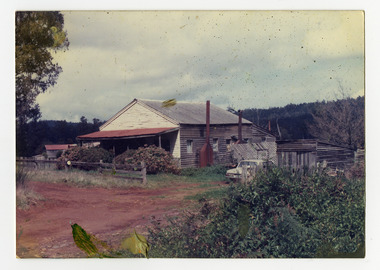 Marysville & District Historical Society
Photograph (item) - Colour photograph, Unknown
... However, wild dogs and difficult terrain eventually ended this. In 1938, timber workers established the Cathedral Mill near the junction of Little River and Storm Creek. ...However, wild dogs and difficult terrain eventually ended this. In 1938, timber workers established the Cathedral Mill near the junction of Little River and Storm Creek. ...A colour photograph of a house that was located at Cooks Mill in Victoria. Located in the Cathedral Range State Park near Marysville, Cooks Mill was established as Cathedral Mill in 1938. Processing Mountain Ash and Manna Gum, it was a major local employer before ceasing operations in 1955. Early settlers initially used the harsh, rocky country of the Cathedral Range for grazing. However, wild dogs and difficult terrain eventually ended this. In 1938, timber workers established the Cathedral Mill near the junction of Little River and Storm Creek. The mill was later renamed Cooks Mill and supported local milling operations through the 1940s and 1950s, supplying sawn timber to the Healesville railway station and Melbourne builders. The mill itself stopped operating in 1955, though logging continued in the surrounding forests until late 1971.A colour photograph of a house that was located at Cooks Mill in Victoria.Cook's Mill House/ (Tom Lewis lived there) 1970'smarysville, victoria, australia, taggerty, cathedral range state park, cathedral mill, mountain ash, manna gum, little river, storm creek, cooks mill, healesville railway station, melbourne, photograph, tom lewis -
 Eltham District Historical Society Inc
Audio - Audio Recording, Jim Connor - Eltham Lower Park, 8 Feb. 2023
... The first European settlers were squatters or leaseholders and itinerants such as timber workers. Records of their early occupation are sketchy but the Eltham Lower Park area was probably included within the pastoral run established in 1841 by Henry Foley. ...The first European settlers were squatters or leaseholders and itinerants such as timber workers. Records of their early occupation are sketchy but the Eltham Lower Park area was probably included within the pastoral run established in 1841 by Henry Foley. ...EDHS Newsletter No. 268 February 2023 Prior to the extension of European people into the lands of the Nillum-bik in the late 1830s the Wurundjeri people had been meeting in the area now known as Eltham Lower Park for thousands of years. Waterway junctions had a particular attraction as tribal meeting places and the junction of the Diamond Creek with the Yarra River (Birr-arung to the Wurundjeri) was one such important location in terms of aboriginal culture. The sculpture “Not Just a Pretty Place” by Aleks Danko, located near the junction of these two watercourses pays tribute to this important cultural location. The first European settlers were squatters or leaseholders and itinerants such as timber workers. Records of their early occupation are sketchy but the Eltham Lower Park area was probably included within the pastoral run established in 1841 by Henry Foley. He sold his leasehold in 1845 to Joseph Wilson who in turn sold it to Frederick Faulkner soon after. From this early history the Eltham Lower Park area has undergone many changes and has been developed to provide residents and visitors with a range of passive and active public open space, including even being used for various horse racing events. At our next meeting, Jim Connor will explore the history of Eltham Lower Park and touch on various individuals and groups involved along the way.1:05:19 duration Digital MP3 file; 22.4MBaudio recording, eltham district historical society, meeting, society meeting, jim connor, eltham, eltham lower park -
 Emerald Museum & Nobelius Heritage Park
Photograph, Legg's Sawmill Emerald, c. 1920-40
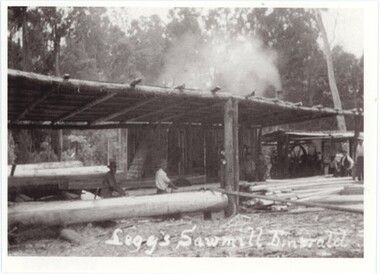
... To the left of the image, several unprocessed logs sit on the ground, while to the right is a pile of processed, cut, timber. Several workers - may five - are in frame, all standing near or under the wooden structure. ...To the left of the image, several unprocessed logs sit on the ground, while to the right is a pile of processed, cut, timber. Several workers - may five - are in frame, all standing near or under the wooden structure. ...This photograph depicts a sawmill in Emerald operated by the Legg family - most likely by James Henry Legg (1860-1940) and his son Percy (1893-1968), who operated the mill business. They established 'spot mills' - smaller or temporary mills establish on the location of timber harvesting - around the local area, including at least this one and one in Macclesfield - though it is possible the caption is wrong and this IS the mill in Macclesfield. There are at least two other copies of this photograph in our collection.This image depicts a notable local business from the early 20th century, owned by a significant local family.This item is a modern printed copy of a black and white photograph. It depicts an open-walled wooden structure, with a closed roof held up by posts. Behind the main structure is a smaller structure covering a machine with steam flowing out of its chimney - a mechanical component of the mill, making the work of processing timber easier. To the left of the image, several unprocessed logs sit on the ground, while to the right is a pile of processed, cut, timber. Several workers - may five - are in frame, all standing near or under the wooden structure. In the background, dense trees rise above the structure, rising high enough to leave the frame. The reverse of the photograph reveals logos for a modern photograph paper brand and a handwritten accession number, but no other annotation.Obverse, Caption: "Legg's Sawmill Emerald"forestry, industry, emerald, macclesfield, legg family, james legg, percy legg -
 Melbourne Tram Museum
Photograph - MMTB Body Shop Preston workshops, Edwin G Adamson, mid 1920s
... In the foreground is a bandsaw, workers sorting timber, lockers, storage racks, and benches with workers assembling items and other machinery. ...In the foreground is a bandsaw, workers sorting timber, lockers, storage racks, and benches with workers assembling items and other machinery. ...Photograph shows the interior of the Body Shop at Preston Workshops with new trams under construction. Based on the door spacing, it would appear that they are W class trams, or possibly W1 class trams. The Preston Workshops commenced to producing W class trams late 1926. In the foreground is a bandsaw, workers sorting timber, lockers, storage racks, and benches with workers assembling items and other machinery. In the background are two or three trams of the non-W type.Yields information about the interior of the Preston Workshops interior during the early manufacture of W class trams at the workshops.Black and White photograph, with notes and photographer's stamp on the rear.In ink "Body shop PWS New W2 cars" and stamp of Edwin G Adamson.preston workshops, tramways, mmtb, body shop, tramcars, new tramcars -
 Otway Districts Historical Society
Book, Merimbula Easiprint, The Otways that I knew, 1993
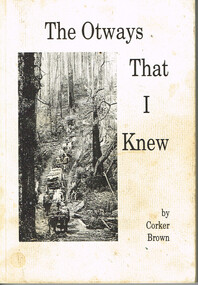
... It covers how the rail link brought in the timber mills and their workers which made timber the main industry of that era, and covers the changes that took place in the 1930s as the mills closed down and the district raised crops, dairying and grazing....It covers how the rail link brought in the timber mills and their workers which made timber the main industry of that era, and covers the changes that took place in the 1930s as the mills closed down and the district raised crops, dairying and grazing. ...Condensing 100 years of Otway history the author tries to give an insight into the thoughts and ways of the settlers in opening the western Otway Ranges. It gives some indication of the mental pressure, hand-in-hand with the physical stress, as a settler cleared the land and made a living for his family. It covers how the rail link brought in the timber mills and their workers which made timber the main industry of that era, and covers the changes that took place in the 1930s as the mills closed down and the district raised crops, dairying and grazing.The Otways that I knew. Ronald Charles 'Corker' Brown. 1st ed. Corker Brown; np; 1993. 216 p.; illus; maps. Soft cover. ISBN 0 646 16798 7otway ranges; corker brown; otway lighthouse; aborigines; beech forest; farming; grazing; crops; railways; roads; timber; -
 Flagstaff Hill Maritime Museum and Village
Book - A Fictional Story, William Hatfield, Ginger Murdoch, 1932
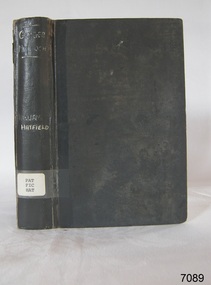
... He became a first-rate bushman, working for years across South Australia, Central Australia, the Northern Territory and Queensland as a station-hand, stockman, drover, cook, horse-breaker, kangaroo-shooter, dingo-trapper, book-keeper, seaman, miner, fruit-picker, painter and timber-worker, and along the way studied Aboriginal languages and customs. ...He became a first-rate bushman, working for years across South Australia, Central Australia, the Northern Territory and Queensland as a station-hand, stockman, drover, cook, horse-breaker, kangaroo-shooter, dingo-trapper, book-keeper, seaman, miner, fruit-picker, painter and timber-worker, and along the way studied Aboriginal languages and customs. ...Ginger Murdoch is a novel built around a recurring bush character of Hatfield's, which had already been running as a series of short stories in The Sydney Mail from 1931 onward. It's about a hard-drinking bushman named Ginger Murdoch. The stories (titles like 'Ginger Murdoch: Horse Dealer', 'Ginger Murdoch, Publican', 'Ginger Murdoch–Outlaw', 'Ginger Murdoch: Squatter') cast him as a knockabout outback figure a horse-dealer, publican, 'knight errant', squatter moving through the kind of droving, station and bush-town life Hatfield knew first-hand. The 1932 Angus & Robertson first edition ran to 268 pages, and the dust-jacket art shows Ginger Murdoch on horseback, exploring the countryside consistent with a picaresque, episodic outback adventure rather than a tightly plotted single narrative.Hard cover book. Ginger Murdoch Author: William Hatfield Publisher: Angus & Robertson Date: 1932 Further Information: Dark Blue plain cloth hardcover with lettering and patterning to spine in white. The spine has a Library label with an inscription.fictionGinger Murdoch is a novel built around a recurring bush character of Hatfield's, which had already been running as a series of short stories in The Sydney Mail from 1931 onward. It's about a hard-drinking bushman named Ginger Murdoch. The stories (titles like 'Ginger Murdoch: Horse Dealer', 'Ginger Murdoch, Publican', 'Ginger Murdoch–Outlaw', 'Ginger Murdoch: Squatter') cast him as a knockabout outback figure a horse-dealer, publican, 'knight errant', squatter moving through the kind of droving, station and bush-town life Hatfield knew first-hand. The 1932 Angus & Robertson first edition ran to 268 pages, and the dust-jacket art shows Ginger Murdoch on horseback, exploring the countryside consistent with a picaresque, episodic outback adventure rather than a tightly plotted single narrative.warrnambool, shipwrecked-coast, flagstaff-hill, flagstaff-hill-maritime-museum, maritime-museum, shipwreck-coast, flagstaff-hill-maritime-village, shipwrecked-artefact, book, ginger murdoch, william hatfield -
 Flagstaff Hill Maritime Museum and Village
Book - A Fictional Story, William Hatfield, Black Waterlily, 1935
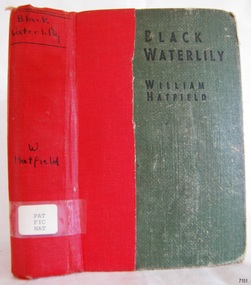
... He became a first-rate bushman, working for years across South Australia, Central Australia, the Northern Territory and Queensland as a station-hand, stockman, drover, cook, horse-breaker, kangaroo-shooter, dingo-trapper, book-keeper, seaman, miner, fruit-picker, painter and timber-worker, and along the way studied Aboriginal languages and customs. ...He became a first-rate bushman, working for years across South Australia, Central Australia, the Northern Territory and Queensland as a station-hand, stockman, drover, cook, horse-breaker, kangaroo-shooter, dingo-trapper, book-keeper, seaman, miner, fruit-picker, painter and timber-worker, and along the way studied Aboriginal languages and customs. ...Black Waterlily is an outback novel set in the Northern Territory. It is dedicated to ‘Dinkum’, a blue cattle-dog and the author’s sole companion on many tough outback tracks. Contemporary reviewers grouped it with other 1935 books on northern Australia. Its central character is a woman, which scholars have contrasted with the male-centred Territory of Xavier Herbert’s Capricornia. An Australian National University (ANU) Press study notes that the continuing popularity of Capricornia has overshadowed Hatfield’s female character, who explores the same theme in Black Waterlily. The story includes a mission-station doctor who is noted for his sincerity and rapport with Aboriginal people, and the station is recognisable as Oenpelli, in the Northern Territory.Hard cover book. Black Waterlily Author: William Hatfield Publisher: Angus & Robertson Date: 1935 Further Information: Dark green plain cloth hardcover with lettering to front cover spine has red cloth repair to spine lettering in black pen. The spine has a Library label with an inscription.fictionBlack Waterlily is an outback novel set in the Northern Territory. It is dedicated to ‘Dinkum’, a blue cattle-dog and the author’s sole companion on many tough outback tracks. Contemporary reviewers grouped it with other 1935 books on northern Australia. Its central character is a woman, which scholars have contrasted with the male-centred Territory of Xavier Herbert’s Capricornia. An Australian National University (ANU) Press study notes that the continuing popularity of Capricornia has overshadowed Hatfield’s female character, who explores the same theme in Black Waterlily. The story includes a mission-station doctor who is noted for his sincerity and rapport with Aboriginal people, and the station is recognisable as Oenpelli, in the Northern Territory.shipwrecked-coast, flagstaff-hill, flagstaff-hill-maritime-museum, warrnambool, maritime-museum, shipwreck-coast, flagstaff-hill-maritime-village, shipwrecked-artefact, book, pattison collection, warrnambool library, warrnambool mechanics’ institute, ralph eric pattison, corangamite regional library service, warrnambool city librarian, mechanics’ institute library, victorian library board, warrnambool books and records, warrnambool children’s library, black waterlily, william hatfield
