
Showing 453 items matching "timor primary school"
-
 Bendigo Historical Society Inc.
Newspaper - Bendigo Advertiser Collection: Schools Searching for a Future - Timor Primary School 1207, Sept 18 1993
... Bendigo Advertiser Collection: Schools Searching for a Future - Timor Primary School 1207......primary school...timor...Timor Primary School (No. 1207) was established in 1873 in a former gold-mining town in Victoria. ...Series of photos and information about Timor Primary School No. 1207. Pictures by Lisa Honeychurch. ...Timor Primary School (No. 1207) was established in 1873 in a former gold-mining town in Victoria. ...Timor Primary School (No. 1207) was established in 1873 in a former gold-mining town in Victoria. The area once had a population of around 7,000 during the gold rush, but is now sparsely populated. The original schoolhouse, built in 1879-80, was a grand structure designed for large numbers of students (up to 490 at one time). The local Grand Duke mine, which operated until 1896, played a significant role in the town's history and left a physical legacy near the school.In 1983, the school began managing a four-hectare block of land opposite the school, previously damaged by mining, as an 'environment block.' By 1988, the school was officially appointed custodian of this land, now called the Timor Primary School and Community Education and Environment Reserve. The school and community have improved the reserve by installing rabbit-proof fencing, building a bridge, creating paths, adding water, installing a fitness track, and planting many trees. The reserve has become a focal point for both the school’s 26 pupils and the wider community. Timor Primary School won the Australia Trust for Conservation Volunteers-ANZ Bank Environment Improvement Competition in 1986 and received praise for its achievements and community pride. The school has also received two ANA awards for its well-maintained garden. The school has faced challenges related to its small size and has been involved in a taskforce with neighboring schools to address these issues. The local community is strongly opposed to the possible closure of the school, with visible signs of protest throughout the town. Residents, including business owners like Chris Frahn, emphasize the school's importance to the town's vitality and express concerns that closure could lead to families moving away. The school's future is uncertain, with 28 pupils expected next year. If two more students enroll, the school would qualify for a second teacher. Enrollment is projected to increase over the next five years, suggesting potential for growth. The school has gained support from larger schools and the broader community. The final decision on the school's fate will be announced by the Education Minister on October 4, following a taskforce review. The school has a 120-year history in Timor. There is mention of possible renewed gold-mining activity in the area, which could impact the town's future and potentially increase the school-age population.Schools searching for a Future. Series of photos and information about Timor Primary School No. 1207. Pictures by Lisa Honeychurch. Written by Owen Davies. This item contains the following documents and Photos: 8091.607a Part of Page 11, the Bendigo Advertiser Friday Sept 10 1993 8091.607b Part of Page 11, the Bendigo Advertiser Friday Sept 10 1993 8091.607c Black and White Photo of Prep pupils - Contact BHS for details 8091.607d Black and White Photo of Hilda (Teacher) - Contact BHS for details 8091.607e Black and White Photo - front is Bev Walker - Contact BHS for details 8091.607f Black and White Photo - Students playing on fallen down tree - Contact BHS for details 8091.607g Black and White Photo - School Steeple - Contact BHS for details 8091.607h Black and White Photo -Timor School Sign - Contact BHS for details 8091.607i Black and White Photo - Students playing on fallen down tree - Contact BHS for details 8091.607j Black and White Photo - School from the front - Contact BHS for details 8091.607k Black and White Photo - Part of School and three kids playing basketball - Contact BHS for detailsnewspaper, bendigo advertiser, primary school, timor primary school -
 Bendigo Historical Society Inc.
Document - GOLDEN SQUARE LAUREL STREET P.S. COLLECTION: PAST STUDENTS REMINISCE
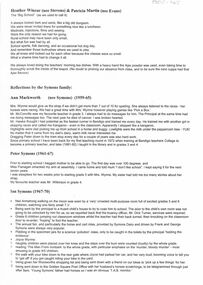
... Articles by Heather Winzar ( Stevens and Patricia martin ( Evans ); Ann Markworth ( Symons ) Peter Symons and Ian Symons regarding their memories of their time at Golden Square Primary School, Laurel Street....BENDIGO Education golden square primary school E Articles by Heather Winzar ( Stevens and Patricia martin ( Evans ); Ann Markworth ( Symons ) Peter Symons and Ian Symons regarding their memories of their time at Golden Square Primary School, Laurel Street. ...Articles by Heather Winzar ( Stevens and Patricia martin ( Evans ); Ann Markworth ( Symons ) Peter Symons and Ian Symons regarding their memories of their time at Golden Square Primary School, Laurel Street.Ebendigo, education, golden square primary school -
 Orbost & District Historical Society
Photograph - Orbost State School No. 2744, Possibly 1890s
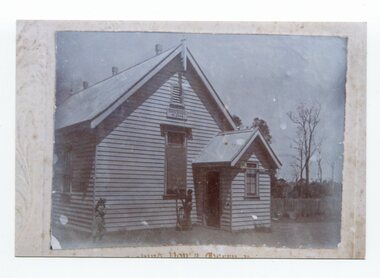
... Orbost Primary School was established in 1886 in Ruskin Street and functioned on a half-time basis with Jarrahmond Primary School....Orbost Primary School was established in 1886 in Ruskin Street and functioned on a half-time basis with Jarrahmond Primary School. an original photograph of this school Orbost Education Orbost Primary School as above A b/w photograph of a weather-board building, with the words STATE SCHOOL No. 2744 printed in black onto a white board located near the top of the building. ...Orbost Primary School was established in 1886 in Ruskin Street and functioned on a half-time basis with Jarrahmond Primary School.an original photograph of this schoolA b/w photograph of a weather-board building, with the words STATE SCHOOL No. 2744 printed in black onto a white board located near the top of the building. Three children in foreground. The photograph has been pasted onto a card which has the words Wishing You a Merry Christmas in gold lettering below the photograph.as aboveorbost, education, orbost primary school -
Greensborough Historical Society
Article, Greensborough Primary School 140 years, by Atis Lejins, 04/08/2018
... Atis Lejins recalls his childhood living in Greensborough, including his time at Greensborough Primary School. This takes the form of a letter to the students of Greensborough Primary School on the occasion of the school's 140th Anniversary in 2018....Atis Lejins recalls his childhood living in Greensborough, including his time at Greensborough Primary School. This takes the form of a letter to the students of Greensborough Primary School on the occasion of the school's 140th Anniversary in 2018. greensborough primary school lejins family atis lejins 3 pages typescript Greensborough Primary School 140 years, by Atis Lejins Article Article Atis Lejins Atis Lejins ...Atis Lejins recalls his childhood living in Greensborough, including his time at Greensborough Primary School. This takes the form of a letter to the students of Greensborough Primary School on the occasion of the school's 140th Anniversary in 2018.3 pages typescriptgreensborough primary school, lejins family, atis lejins -
Greensborough Historical Society
Oral History, Richards - Angland Family, by Ida Brown as told to June Hall, 1895o
... From her grandfather's arrival in Australia (John Henry Richards) to her time at Greensborough Primary School. As told to June Hall 2011....From her grandfather's arrival in Australia (John Henry Richards) to her time at Greensborough Primary School. As told to June Hall 2011. ...Ida Brown relates the story of her family, through good and bad times. From her grandfather's arrival in Australia (John Henry Richards) to her time at Greensborough Primary School. As told to June Hall 2011.A primary source recollection of Greensborough pioneer families.2 typed pages.rickards angland family, ida brown, henry richards, lillian richards, john angland -
 Bendigo Historical Society Inc.
Document - GOLDEN SQUARE LAUREL STREET P.S. COLLECTION: GEORGE MANALLACK, JACK HARPER
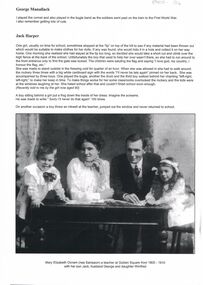
... Recollection of George Manallack and Jack Harper on their time at Golden Square Primary School. Photo of Mary Elizabeth Oxnam ( nee Sampson ) teacher from 1905 - 1910, and her son Jack, husband George and daughter Winifred....BENDIGO Education golden square primary school Recollection of George Manallack and Jack Harper on their time at Golden Square Primary School. ...Recollection of George Manallack and Jack Harper on their time at Golden Square Primary School. Photo of Mary Elizabeth Oxnam ( nee Sampson ) teacher from 1905 - 1910, and her son Jack, husband George and daughter Winifred.bendigo, education, golden square primary school -
 Narre Warren and District Family History Group
Book, Narre Warren & District Family History Group Inc, Casey Cardinia Collection - Hallam Information File, 2021
... The date the articles were published, and title of articles are listed below. 13 Oct 2005 Family Marks the Years - Edith Dundon 20 Apr 2004 Dale’s Ton of Courage - Dale Atkin 27 Jun 2005 Voices from the Dust 2 Dec 1993 Eileen Loved Playing in Hallam’s Air Raid Shelters 5 Nov 1998 Suspended in Time - Hallam Valley Primary School 17 Oct 1991 A Small Rural Community When George Came to Hallam 1 Jun 2006 After 65 Years, it’s a Wheel Love - Aerie & Ann Rottier 27 Feb 2014 Community Pioneer Passes - Pauline Saunders 2 Sep 1993 Roundabout Needed in Frawley Road, Hallam 20 Apr 2011 Woman in a Man’s World - Pat Kenneally 26 Oct 2011 A Busy Life - George Chudleigh 21 May 2015 Quilts for Veterans’ Comfort 4 Aug 2021 A Place in Games History - Ern Barker 4 Apr 2018 Gangster’s Hallam Link - Squizzy Taylor 21 Oct 2021 Timber Legend Marks 60 - Jeff Harvey 24 Jul 2024 Barker Ern’s Place in History - Ern Barker...The date the articles were published, and title of articles are listed below. 13 Oct 2005 Family Marks the Years - Edith Dundon 20 Apr 2004 Dale’s Ton of Courage - Dale Atkin 27 Jun 2005 Voices from the Dust 2 Dec 1993 Eileen Loved Playing in Hallam’s Air Raid Shelters 5 Nov 1998 Suspended in Time - Hallam Valley Primary School 17 Oct 1991 A Small Rural Community When George Came to Hallam 1 Jun 2006 After 65 Years, it’s a Wheel Love - Aerie & Ann Rottier 27 Feb 2014 Community Pioneer Passes - Pauline Saunders 2 Sep 1993 Roundabout Needed in Frawley Road, Hallam 20 Apr 2011 Woman in a Man’s World - Pat Kenneally 26 Oct 2011 A Busy Life - George Chudleigh 21 May 2015 Quilts for Veterans’ Comfort 4 Aug 2021 A Place in Games History - Ern Barker 4 Apr 2018 Gangster’s Hallam Link - Squizzy Taylor 21 Oct 2021 Timber Legend Marks 60 - Jeff Harvey 24 Jul 2024 Barker Ern’s Place in History - Ern Barker Casey Cardinia Collection - Hallam Information File Book Narre Warren & District Family History Group Inc. ...Folder containing a table of contents and various newspaper clippings and other information pertaining to the Hallam area. The date the articles were published, and title of articles are listed below. 13 Oct 2005 Family Marks the Years - Edith Dundon 20 Apr 2004 Dale’s Ton of Courage - Dale Atkin 27 Jun 2005 Voices from the Dust 2 Dec 1993 Eileen Loved Playing in Hallam’s Air Raid Shelters 5 Nov 1998 Suspended in Time - Hallam Valley Primary School 17 Oct 1991 A Small Rural Community When George Came to Hallam 1 Jun 2006 After 65 Years, it’s a Wheel Love - Aerie & Ann Rottier 27 Feb 2014 Community Pioneer Passes - Pauline Saunders 2 Sep 1993 Roundabout Needed in Frawley Road, Hallam 20 Apr 2011 Woman in a Man’s World - Pat Kenneally 26 Oct 2011 A Busy Life - George Chudleigh 21 May 2015 Quilts for Veterans’ Comfort 4 Aug 2021 A Place in Games History - Ern Barker 4 Apr 2018 Gangster’s Hallam Link - Squizzy Taylor 21 Oct 2021 Timber Legend Marks 60 - Jeff Harvey 24 Jul 2024 Barker Ern’s Place in History - Ern Barkernon-fictionhallam (vic.), edith dundon -
 Warrnambool and District Historical Society Inc.
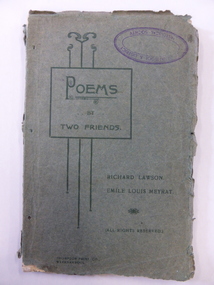
Book, Poems by two friends, 1909
... Dr Richard Lawson (1875-1971) was born in Warrnambool, the fifth child of Thomas and Susan Lawson (shopkeepers in Timor Street). He attended primary schools in Warrnambool and Cobden and then went to Stanley’s Warrnambool Grammar School where he won a scholarship to attend Melbourne University. ...Dr Richard Lawson (1875-1971) was born in Warrnambool, the fifth child of Thomas and Susan Lawson (shopkeepers in Timor Street). He attended primary schools in Warrnambool and Cobden and then went to Stanley’s Warrnambool Grammar School where he won a scholarship to attend Melbourne University. ...This book contains poems written by Richard Lawson and Emile Louis Meyrat when they were fellow teachers at the Warrnambool College/Academy early in the 20th century. Dr Richard Lawson (1875-1971) was born in Warrnambool, the fifth child of Thomas and Susan Lawson (shopkeepers in Timor Street). He attended primary schools in Warrnambool and Cobden and then went to Stanley’s Warrnambool Grammar School where he won a scholarship to attend Melbourne University. In 1899 he returned to Warrnambool and in partnership with William Oakley ran a school, the Warrnambool Academy. They were firstly established in Koroit Street and then at ‘Upton’ in Canterbury Road. They bought out the school formed by the amalgamation of Scott’s School and Stanley’s Grammar (Warrnambool College) and the school was then known as the Warrnambool College/Academy. This school closed in 1911 and Lawson became a teacher at the Warrnambool High School. He later became a lecturer at Melbourne Teachers’ College and gained a Doctorate with a thesis on literary translations. With James Elijah Lawson produced four volumes of ‘The National Grammar’ and two English Literature text books. In 1924 he became Professor of Education at the University of Otago, New Zealand. While in Warrnambool Lawson was an active sportsman, enjoying games of tennis and cricket. Emile Louis Meyrat, a South Australia born about 1880, was educated at Way College and was a teacher at Lawson’s school. He and his wife, Annie Hawkins, had a daughter, Pauline Marie Louise, born in Hawthorn in 1909, but the couple divorced in 1914. In 1912, Meyrat was in Switzerland and published a poem called ‘Eurydicean’. Meyrat dedicated his poems in ‘Poems By Two Friends’ to his father’s memory. The date of the book, ‘Poems By Two Friends’ is printed in the Preface of the book – ‘May 20, 1909, Warrnambool College’. This book is of great significance as it is an original copy of the poems produced by two people, Emile Louis Meyrat and Richard Lawson, teachers at the Warrnambool College/Academy in 1909. This school is important in the history of education in Warrnambool and Richard Lawson is a key figure in this history. He also later had a distinguished career in education in both Australia and New Zealand. This book is rare and one of the few early 20th century books surviving that was written by local Warrnambool people and produced in Warrnambool. It is also of literary interest as an example of the type of poems produced by well-educated people early in the 20th century – classical and florid in style. This is a soft cover book of 100 pages. The cover is dark green with the title of the book in green print inside an ornamental pattern of lines. There is a Latin quotation inside the front page and some of the poems have French or Latin sub-titles. The book has an Index listing the 61 poems and a Preface. The book is bound with staples, glue and some stitching using string. Front cover and inside first page: Stamp of Warrnambool & District Historical Societyemile louis meyrat, richard lawson, warnambool college/academy, history of warrnambool -
 Federation University Historical Collection
Photograph - Photograph Album, Photographs of Ballarat Buildings, 1967, 1967
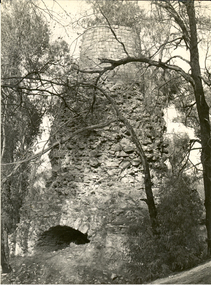
... time Her Majesty's Theatre was known as the Memorial Theatre. Lenaghan of Tourello "Master Dan Lenaghan, eldest son of Mr. and Mrs. R. Lenaghan, of Tourello, has been successful in obtaining a Government scholarship, tenable for four years at St. Patrick's College, Ballarat.(Melbourne Advocate, 02 March 1939) ballarat buildings bluestone iron architecture biddington geoff biddington railway old colonists lal lal blast furnace beaufort house her majesty's theatre craig's hotel botanical gardens bailey cuthbert lenaghan tourello smythesdale post office court house hotel, smythesdale smythesdale alexandria tea rooms cast iron eureka street primary school dana street primary school ballarat school of mines administration building grigsby brass founder foundry pratt's warehouse selkirk bricks grandstand court house hotel Two Black folders of Ballarat photographs as follows: .1) Interior of Ballarat Railway Station .2) Interior of Ballarat Railway Station .3) Craig's Hotel .4) Craig's Hotel .5) Craig's Hotel .6) Craig's Hotel .7) Ballarat Fine Art Gallery later Art Gallery of Ballarat .8) Cuthberts, corner Lydiard and Mair Streets .9) Golden City Hotel (GCs) .10) Golden City Hotel (GCs) .11) Reid's Coffee Palace .12) Alexandria Tea Rooms, neighbouring Old Colonists' Club, Ballarat, Lydiard Street North .13) ? ...When these photos were taken Geoffrey Biddington was highly involved with the Ballarat Branch of the National Trust. At one time Her Majesty's Theatre was known as the Memorial Theatre. Lenaghan of Tourello "Master Dan Lenaghan, eldest son of Mr. and Mrs. R. Lenaghan, of Tourello, has been successful in obtaining a Government scholarship, tenable for four years at St. Patrick's College, Ballarat.(Melbourne Advocate, 02 March 1939) Two Black folders of Ballarat photographs as follows: .1) Interior of Ballarat Railway Station .2) Interior of Ballarat Railway Station .3) Craig's Hotel .4) Craig's Hotel .5) Craig's Hotel .6) Craig's Hotel .7) Ballarat Fine Art Gallery later Art Gallery of Ballarat .8) Cuthberts, corner Lydiard and Mair Streets .9) Golden City Hotel (GCs) .10) Golden City Hotel (GCs) .11) Reid's Coffee Palace .12) Alexandria Tea Rooms, neighbouring Old Colonists' Club, Ballarat, Lydiard Street North .13) ? .14 Caste iron drink fountain, corner of Strurt and Drummond Streets, October 1967 .15) Lal Lal Blast Furnace .16) Ballarat Botanical Garden Gates .17) Ballaarat Old Cemetery Gates .18) Novar gate .19) Ballaarat Old Cemetery Gates .20) ? .21) Webster Street .22) Doveton Street South .23) ? .24) ? .25) .26) .27) Iron hitching Rail .28) Iron hitching Rail .30) Postal Box, Corner or Armstrong Street South and Eyre Street, October 1967 .31) Iron Drinking Fountain in the Ballarat Botanical Gardens .32) Iron Drinking Fountain in the Ballarat Botanical Gardens .33) Killarney, Warrenheip .34) Killarney, Warrenheip .35) Killarney, Warrenheip .36) Killarney, Warrenheip .37) Bailey's Mansion, Drummond Street .38) Bailey's Mansion, Drummond Street .39) Beaufort House .40) Beaufort House .41) ? .42) ? .43) ? .44) ? .45) ? .46) ? .47) ? .48) Lenaghan's Tourello, February 1968 .49) Lenaghan's Tourello, February 1968 .50) ? .51) ? .52) ? .53) ? .54) ? .55) ? .56) ? .57) ? .58) ? .59) ? .70) Her Majesty's Theatre, Lydiard Street .71) Her Majesty's Theatre, Lydiard Street .72) Dana Street Primary School, September 1967 .73) Ballarat School of Mines Administration Building, September 1967 .74) Eureka Street Primary School ? .75) Selkirk Brick Chimney? .76) Grigsby's Foundry, Mair Street, September 1967 .77) Pratt's Warehouse, Camp Street .78) Premises of R. And R.A. Williams, Mair Street, September 1967 .79) City Oval Grandstand, with fire training tower in the background, .80) City Oval Grandstand .81) City Oval Grandstand .82) Smythesdale Post Office, October 1967 .83) Court House Hotel. Smythesdale, October 1967 .84) Smythesdale, October 1967ballarat, buildings, bluestone, iron, architecture, biddington, geoff biddington, railway, old colonists, lal lal blast furnace, beaufort house, her majesty's theatre, craig's hotel, botanical gardens, bailey, cuthbert, lenaghan, tourello, smythesdale post office, court house hotel, smythesdale, smythesdale, alexandria tea rooms, cast iron, eureka street primary school, dana street primary school, ballarat school of mines administration building, grigsby brass founder, foundry, pratt's warehouse, selkirk bricks, grandstand, court house hotel -
 Federation University Historical Collection
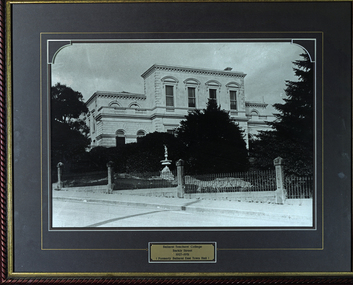
Photograph - Framed photographed, Ballarat Teachers' College Barkly Street
... Primary School in 1926. From 1927-1931 it was conducted at the Ballarat East Town Hall. Returning to Dana Street Primary School in 1946 to 1955, and eventually was held in a costume built facility in Gillies street from 1955 to 1976. In 1976 pre-service teacher training was moved to the Ballarat College of Advanced Education at Mt Helen Campus. This image was hung in the corridor of the School of Education (Mount Helen). It most probably dates from around the time...Primary School in 1926. From 1927-1931 it was conducted at the Ballarat East Town Hall. Returning to Dana Street Primary School in 1946 to 1955, and eventually was held in a costume built facility in Gillies street from 1955 to 1976. In 1976 pre-service teacher training was moved to the Ballarat College of Advanced Education at Mt Helen Campus. This image was hung in the corridor of the School of Education (Mount Helen). It most probably dates from around the time ...The Ballarat Teachers' College opened at Dana Street Primary School in 1926. From 1927-1931 it was conducted at the Ballarat East Town Hall. Returning to Dana Street Primary School in 1946 to 1955, and eventually was held in a costume built facility in Gillies street from 1955 to 1976. In 1976 pre-service teacher training was moved to the Ballarat College of Advanced Education at Mt Helen Campus. This image was hung in the corridor of the School of Education (Mount Helen). It most probably dates from around the time of the transfer of Ballarat Teachers' College to the Mount Helen Campus of the Ballarat College of Advanced Education. Framed black and white photograph with green mount. The photograph shows the Former Ballarat East Town Hall during the era it was used as the Ballarat Teachers' CollegeOn a plaque ' Ballarat Teachers' College, Barkly Street, 1927-1931, (Formerly Ballarat East Town Hall)education, ballarat teachers college, ballarat east town hall, barkly street, ballarat east gardens -
 Flagstaff Hill Maritime Museum and Village
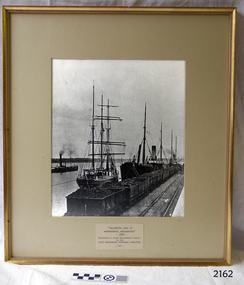
Photograph - Ships, South Warrnambool Primary School Centenary Committee, Unloading coal at Warrnambool Breakwater, 1977
... The photograph is historically significant as it is connected with the local areas of the Warrnambool Breakwater, Lady Bay, and the South Warrnambool Primary School. The scene shows a moment in time when a steamship was unloading a shipment of coal onto tram carts on the Breakwater, which had only just been completed that year. ...This photograph was framed and mounted then presented to the South Warrnambool school by the South Warrnambool Centenary Committee in 1977 on the school's centenary year. The school was decommissioned and closed in the 1990s. In the photograph, people unload the coal from the ship beside the Breakwater and load it into the row of tramway carts. The coal would be sold to businesses and householders for the purpose of fuel for warmth, cooking, heating water and running machinery. The image shows the early days at the Port of Warrnambool. The building of the Warrnambool Breakwater had only just been completed. Steamships and sailing ships were frequent visitors to the port. Steam Navigation companies were plentiful, carrying passengers and freighting cargo such as coal, timber, food, livestock, furniture, hardware and haberdashery between Melbourne and the ports along the southwest coast of Victoria, including Warrnambool. The carts would take their loads into the township for distribution. The ship carrying the coal is thought to be the "S.S. Chillagoe" previously named "Speculant". In 1903 the Chillagoe was registered at the Port of Melbourne, and it sailed between Melbourne and Newcastle, New South Wales, where coal was mined and sold in significant quantities. In March 1890 a tragedy occurred when coal was being unloaded at the Warrnambool Breakwater. A local young man, David Ferrier, was working in the hold of the steamship Kurrara as its delivery of coal was being unloaded. A basket of coal fell from a sling onboard and came down upon Ferrier, breaking his back. He was not expected to live. In September 1890 there was a strike of coal workers but the Geelong Advertiser reported that a Warrnambool firm of coal merchants had recently received some large cargoes from Newcastle.The photograph is historically significant as it is connected with the local areas of the Warrnambool Breakwater, Lady Bay, and the South Warrnambool Primary School. The scene shows a moment in time when a steamship was unloading a shipment of coal onto tram carts on the Breakwater, which had only just been completed that year. The photograph was taken about 13 years after the opening of the South Warrnambool School, which was decommissioned around 20 years after it celebrated its centenary.. Photograph, black and white, in a gilded rectangular wooden frame, behind glass. The maritime scene shows figures on ships beside the Warrnambool Breakwater jetty and figures on the jetty, standing next to rail carts containing coal. There is a steamship further out on Lady Bay. A card below the photograph has an inscription and there is a pencil inscription on the back of the frame. The coal ship is thought to be the SS. Chillagoe. The photograph was taken in 1890 and was presented to the South Warrnambool School in its centenary year, 1977, by the South Warrnambool Centenary Committee.Typewritten on card: "UNLOADING COAL AT WARRNAMBOOL BREAKWATER"- 1890 - "Presented to Sough Warrnambool School by the SOUTH WARRNAMBOOL CENTENARY COMMITTEE - 1977 - " Handwritten in pencil on the back:"Speculant" as "SS Chillagoe" at Breakwater"flagstaff hill, warrnambool, maritime museum, maritime village, great ocean road, shipwreck coast, warrnambool breakwater, 1890, tramway, steamship, sailing ship, coal, cargo, port of warrnambool, unloading coal, chillagoe, speculant, newcastle, kurrana, david ferrier, coal strike -
 Ringwood and District Historical Society
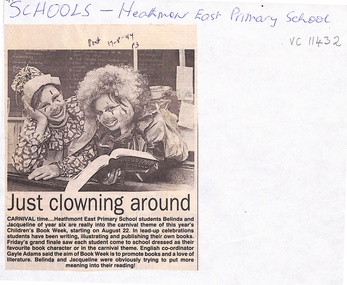
Newspaper, Heathmont East State School - Newspaper article - 2 students dressed up (Belinda and Jacqueline, Year 6)
... Carnival time at Heatmont East Primary Schol - Children's Book Week August 22. Heathmont East State School - Newspaper article - 2 students dressed up (Belinda and Jacqueline, Year 6). ...Newspaper Cutting from Ringwood Post 17-8-1994. "Just clowning around". Carnival time at Heatmont East Primary Schol - Children's Book Week August 22. -
 The Beechworth Burke Museum
Audio - Oral History, Jennifer Williams, Mr Harry Mason, 13th April 2000
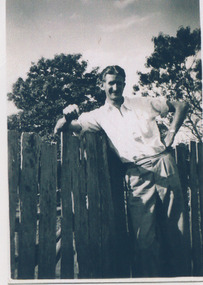
... primary school in Stanley and high school in Beechworth on the mail truck. His family initially moved to the area during the initial Gold Rush period. He moved to Beechworth in 1960. For seven years after school, he worked in the local orchard full time...primary school in Stanley and high school in Beechworth on the mail truck. His family initially moved to the area during the initial Gold Rush period. He moved to Beechworth in 1960. For seven years after school, he worked in the local orchard full time ...Mr Harry Mason was born in Stanley, Victoria, on the 23rd of July 1925, attending the primary school in Stanley and high school in Beechworth on the mail truck. His family initially moved to the area during the initial Gold Rush period. He moved to Beechworth in 1960. For seven years after school, he worked in the local orchard full time before becoming the local gravedigger, responsible for digging the graves of Beechworth residents and Asylum for 23 years. This oral history recording was part of a project conducted by Jennifer Williams in the year 2000 to capture the everyday life and struggles in Beechworth during the twentieth century. This project involved recording seventy oral histories on cassette tapes of local Beechworth residents which were then published in a book titled: Listen to what they say: voices of twentieth-century Beechworth. These cassette tapes were digitised in July 2021 with funds made available by the Friends of the Burke.Mr Harry Mason's account of his life in Beechworth and the local area during the 20th century is historically and socially significant to the cultural heritage of the region. He details important historical events and hardships in the region's history that had a lasting local, regional and national impact, including Australia during war time, economic struggles, and women's societal roles in a rural area. Mr Mason also discusses agricultural and gravedigging practices of the time as well as what it was like growing up in rural Australia. This first-hand account is imperative to our understanding of life during the last century. This oral history account is socially and historically significant as it is a part of a broader collection of interviews conducted by Jennifer Williams which were published in the book 'Listen to what they say: voices of twentieth-century Beechworth.' While the township of Beechworth is known for its history as a gold rush town, these accounts provide a unique insight into the day-to-day life of the town's residents during the 20th century, many of which will have now been lost if they had not been preserved.This is a digital copy of a recording that was originally captured on a cassette tape. The cassette tape is black with a horizontal white strip and is currently stored in a clear flat plastic rectangular container. It holds up 40 minutes of recordings on each side.Mr Harry Madon /listen to what they say, beechworth, oral history, burke museum, harry mason, stanley, orchard, jennifer williams, asylum -
 The Beechworth Burke Museum
Photograph - Lantern Slide, c1900
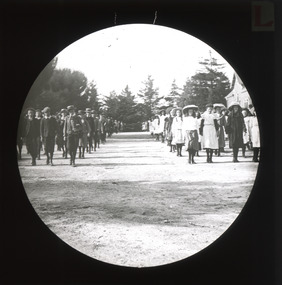
... primary-school age and the education of girls. It also provides insight into the building and design practices used by Government departments at the time. ...This picture shows an angle of Beechworth Primary School (State School number 1560) which is also pictured in the building's entry in the Victorian Heritage Register (VHR record 1718). The school began as a national school in 1858 as an alternative to Wesleyan and Anglican schools already operating in the area. Its name was changed to Common School number 36 in 1862 and the Beechworth Academy prior to being taken over by the Education department in 1873. The new premises were built in 1875 utilising the skills of architect Henry Bastow though the original design may be attributable to the firm Wharton and Vickers. The design was used with modifications for other schools in Victoria, including the Competition School in Errol Street, North Melbourne. The school moved to the building pictured from its original premises in Loch Street, designed by Thomas Dalziel, which later became the office of the Ovens Advertiser. The school was opened on 2 July 1875 by former Beechworth resident G.B. Kerferd, who was then the Premier of Victoria. The image shows approximately ninety older students at the school in approximately 1900. There are approximately equal numbers of boys and girls pictured, with most of the individuals pictured appearing to be between the ages of twelve and fifteen. Although the school had more than 1000 students enrolled at its height, enrolments had declined to 304 in 1890. Also visible is a fringe of sequoia pines which were planted by the school children as a project lasting through to the late 1930s. Lantern slides, sometimes called 'magic lantern' slides, are glass plates on which an image has been secured for the purpose of projection. Glass slides were etched or hand-painted for this purpose from the Eighteenth Century but the process became more popular and accessible to the public with the development of photographic-emulsion slides used with a 'Magic Lantern' device in the mid-Nineteenth Century. Photographic lantern slides comprise a double-negative emulsion layer (forming a positive image) between thin glass plates that are bound together. A number of processes existed to form and bind the emulsion layer to the base plate, including the albumen, wet plate collodion, gelatine dry plate and woodburytype techniques. Lantern slides and magic lantern technologies are seen as foundational precursors to the development of modern photography and film-making techniques.The image is significant because it sheds light on the educational infrastructure present in Beechworth in the early part of the Twentieth Century, including the prevalence of education for students after current-day primary-school age and the education of girls. It also provides insight into the building and design practices used by Government departments at the time. Thin translucent sheet of glass with a circular image printed on the front and framed in a black backing. It is held together by metals strips to secure the edges of the slide.Obverse: L / burke museum, beechworth, lantern slide, slide, glass slide, plate, burke museum collection, photograph, monochrome, schools, education, high school, primary school, common school, state school, state school 1560, common school 36, beechworth academy, g.b. kerferd, thomas dalziel, henry bastow, victorian heritage register, beechworth primary school, girls education, boys education, public schools, education department, pines, trees, sequoias, competition school -
 Mission to Seafarers Victoria
Photograph - Photograph, Sepia, Anne Treverton Goldsmith (nee Lobb), Picnic at Glenfern, King's Birthday 1906, 9 November 1906
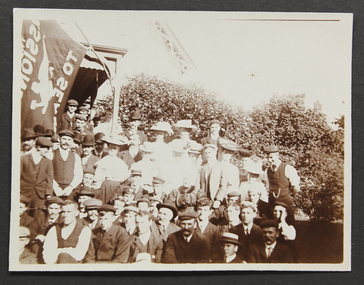
... Mrs Mary Danne daughter of Reverend Kerr Johnston was a widow at the time and was renting Glenfern, the property once owned by the Boyd family, and started a private primary school she called Newington College. ...Mrs Mary Danne daughter of Reverend Kerr Johnston was a widow at the time and was renting Glenfern, the property once owned by the Boyd family, and started a private primary school she called Newington College. ...Gathering of seafarers and MTS clergy and LHLG members, at Glenfern 1906. Mrs Mary Danne daughter of Reverend Kerr Johnston was a widow at the time and was renting Glenfern, the property once owned by the Boyd family, and started a private primary school she called Newington College. A member of the Mission's committee from 1905 to 1926 when she passed away, a bras plaque was made in her memory and placed in the chapel of the Flinders Street Mission. (see item 0690) In the Standard published on Saturday 17 November 1906, page 4 we could read: "In connection with the Victoria Missions to Seamen a successful and pleasant outing, was given to the sailors in port on King's Birth day. Mrs. Danne, of "Glenfern," St. Kilda, threw her house and grounds open tor sports and tea. Cricket, football and sports were enthusiastically pursued, and ample justice was done to the substantial tea provided by Mrs. Danne and her friends. The Misses Danne, Miss Godfrey and other ladies were untiring in their attentions. Mr. Axell, first officer of brig Fairy Rock, in a few appropriate words thanked Mrs. Danne and the ladies, on behalf of the sailors, for their kind hospitality. Snapshots of the party were taken by Mrs. Goldsmith. Mr. C A. Holmes and Mr. Cedric Campbell acted as stewards and starters for the races. On the invitation of the chaplain (Rev. A G. Goldsmith*) ringing cheers were given for Mrs. Danne and the ladies. Before the party broke up Mrs Danne addressed a few kind words to the men and gave them all a shake of the band at the gate. The rest of the evening was spent at the Institute, Beach street, where games and competitions were carried on to the accompaniment of vocal and instrumental music. The prizes won at the sports etc., were distributed, and after singing the National Anthem the party broke up."Thanks to the article in the Standard, Saturday 17 November 1906, page 4, we learn that some of the early sepia photographs were taken by Mrs Gurney Goldsmith herself.Small monochrome photograph depicting a group of seamen and ladies with the Mission's Flagstaff.1906, glenfern, st kilda east, picnic, lhlg, king's birthday, edward vii, mary alice isabelle danne nee johnston, 1851-1926, reverend kerr johnston, 1812-1887, boyd family, sailors, seamen, seafarers, bowler hat, cap, boater hat, snapshots, camera, photographer, sports, cricket, football, ethel augusta godfrey 1861-1935, mr axell, fairy rock, charles arthur holmes (-1947), mrs gurney goldsmith, anne treverton goldsmith (nee lobb), cedric campbell -
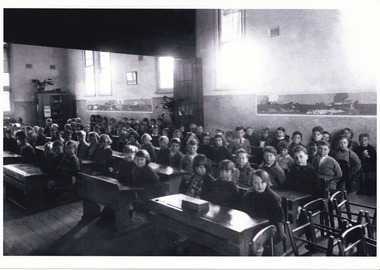 The Beechworth Burke Museum
Photograph, c.1930s
... This photograph depicts a large and crowded classroom at Beechworth Primary School, taken sometime in the 1930s. By that time, primary education in Victoria for children aged 6 to 15 years had been free, secular and compulsory since the Education Act of 1872. ...This photograph depicts a large and crowded classroom at Beechworth Primary School, taken sometime in the 1930s. By that time, primary education in Victoria for children aged 6 to 15 years had been free, secular and compulsory since the Education Act of 1872. ...This photograph depicts a large and crowded classroom at Beechworth Primary School, taken sometime in the 1930s. By that time, primary education in Victoria for children aged 6 to 15 years had been free, secular and compulsory since the Education Act of 1872. Among the students is the owner of the photograph, Jack Schofield. The Beechworth Primary School itself is a reflection of Beechworth's growth from a goldfields town in the 1850s to an administrative centre of northeast Victoria by the 1920s, supported by the presence of courts, hospital, prison and asylums. This photograph has historical significance as it illustrates a typical classroom in 1930s Beechworth. It gives a glimpse of classroom arrangements and student life during this period and also reflects the emphasis placed on public education in regional Victoria. Black and white rectangular photograph printed on matte photographic paper.Reverse: 7699.1beechworth primary school, beechworth elementary school, school, students, education, 1930s classroom -
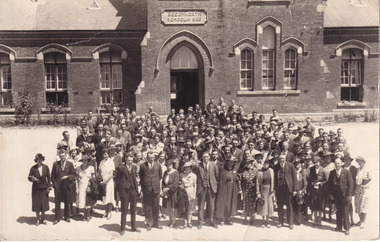 The Beechworth Burke Museum
Postcard
... It was among other large Education Department schools that were being established around the State at that time. It is still used today as the current Beechworth Primary School. ...It was among other large Education Department schools that were being established around the State at that time. It is still used today as the current Beechworth Primary School. ...The photograph depicts a large crowd of adults standing in front of the Beechworth School. The Beechworth School was built in 1875, designed by architect Henry Bastow. It was among other large Education Department schools that were being established around the State at that time. It is still used today as the current Beechworth Primary School. The photo is significant as the Beechworth School building is part of the establishment of Beechworth as an administrative centre in north-east Victoria.Sepia rectangular postcard printed on card.Reverse: N. R. McGEEHAN, (Flashlight Specialist) / 154 HOTHAM ST., ST. KILDA. S. 2. / POST CARD / CORRESPONDENCE / ADDRESS ONLY / KODAK / AUSTRALIA / AUSTRALIA / KODAK / BMM5523beechworth school, beechworth primary school, victorian government’s department of education, henry bastow -
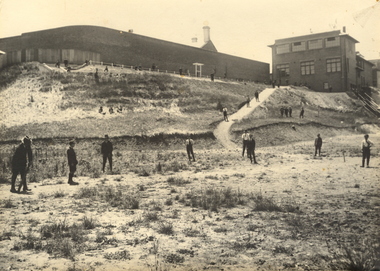 Federation University Historical Collection
Photograph, Ballarat Junior Technical School - outside the Ballarat Gaol Wall, c1921
... school was brought in and this helped for a time. Plans were developed and a two-storied red brick building in the vacinity of the School of Mines was build. An acre of land was reclaimed from the north-east corner of the Ballarat Gaol. The school backed onto the wall of the gaol. The task of landscaping and terracing of the area was to cost a great deal and time. The boys did much of the heavy work. This kept them occupied as the official playground areas were still full of rubble. junior technical school dana street primary ...In February 1913 the Ballarat Junior Technical School opened its doors to its 86 pupils. The old bluestone building in the grounds of the Dana Street Primary School became their temporary home for eight years. In its early years the school offered only a two-year course. The first year was of a general nature giving a thorough grounding in Mathematics and Instrumental Drawing, and introducing students to the various branches of trade work. The second-year students studied for the Junior Technical Certificate and specialized in a course of their choice - either a trade (Woodwork or Fitting and Turning) or a course leading to higher studies at the School of Mines. Increased enrolment - 86 to 110 in the second year. Some applicants were turned away due to lack of space. An abandoned single room school was brought in and this helped for a time. Plans were developed and a two-storied red brick building in the vacinity of the School of Mines was build. An acre of land was reclaimed from the north-east corner of the Ballarat Gaol. The school backed onto the wall of the gaol. The task of landscaping and terracing of the area was to cost a great deal and time. The boys did much of the heavy work. This kept them occupied as the official playground areas were still full of rubble.View from the south-east of the Junior Technical School with the slope from the gaol wall down to the area known as the Battery Paddock. The new school building was a two-storied red brick building along the Education Department style of the 1920s. On 9 September 1921, the Junior Technical School building was officially opened. Much work was needed to terrace and landscape the area. Students shown in various areas of the grounds.junior technical school, dana street primary school, bluestone, mathematics, instrumental drawing, junior technical certificate, woodwork, fitting and turning, school of mines, ballarat gaol, landscaping, terracing, gaol wall, cricket -
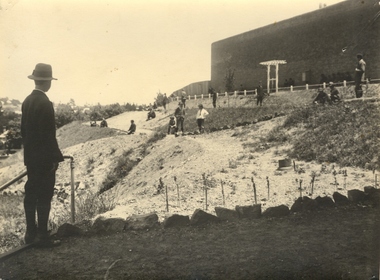 Federation University Historical Collection
Photograph - Black and white photograph, Ballarat Junior Technical School - outside the Gaol wall - 1921, c1921
... school backed onto the wall of the gaol. The task of landscaping and terracing of the area was to cost a great deal and time. The boys did much of the heavy work. This kept them occupied as the official playground areas were still full of rubble. This photograph shows the work that has been done in terracing and landscaping the area. junior technical school dana street primary ...In February 1913 the Ballarat Junior Technical School opened its doors to its 86 pupils. The old bluestone building in the grounds of the Dana Street Primary School became their temporary home for eight years. In its early years the school offered only a two-year course. The first year was of a general nature giving a thorough grounding in Mathematics and Instrumental Drawing, and introducing students to the various branches of trade work. The second-year students studied for the Junior Technical Certificate and specialized in a course of their choice - either a trade (Woodwork or Fitting and Turning) or a course leading to higher studies at the School of Mines. Increased enrolments - 86 to 110 in the second year. Some applicants were turned away due to lack of space. An abandoned single room school was brought in and this helped for a time. Plans were developed and a two-storied red brick building in the vacinity of the School of Mines was build. An acre of land was reclaimed from the north-east corner of the Ballarat Gaol. The school backed onto the wall of the gaol. The task of landscaping and terracing of the area was to cost a great deal and time. The boys did much of the heavy work. This kept them occupied as the official playground areas were still full of rubble. This photograph shows the work that has been done in terracing and landscaping the area.Junior Technical School with the slope from the gaol wall down to the area known as the Battery Paddock. New plantings and rock edging evident in the foreground.junior technical school, dana street primary school, bluestone, mathematics, instrumental drawing, junior technical certificate, woodwork, fitting and turning, school of mines, ballarat gaol, landscaping, terracing, gaol wall -
 Federation University Historical Collection
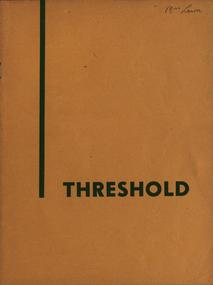
Booklet, Threshold: The Magazine of the Ballarat Girls' Technical School, 1959, 1959
... time in Ballarat, under the Principal of the Ballarat School of Mines. By 1959 it had increased enormously with an enrolment of 284 students, and its own headmistress. The early school took place in the Dana Street Primary...time in Ballarat, under the Principal of the Ballarat School of Mines. By 1959 it had increased enormously with an enrolment of 284 students, and its own headmistress. The early school took place in the Dana Street Primary ...1959 was the first issue of 'Threshold'. In 1951 thirty girls started a junior technical course for the first time in Ballarat, under the Principal of the Ballarat School of Mines. By 1959 it had increased enormously with an enrolment of 284 students, and its own headmistress. The early school took place in the Dana Street Primary School and a large portion of the Ballarat Technical Art School. It was not thought necessary for girls to produce a magazine, but Joan Hood (Kirner) was determined that the girls would have the same opportunity as the boys. “When I went out teaching, I went to Ballarat Girls Tech, where I met [husband] Ron who was at Ballarat Boys Tech. They were seen as tough schools, and I saw the disadvantage faced by these girls who were at the lowest of the low of the education rung – and yet there were some fantastic girls there who needed equal opportunity. So I think it was teaching that cemented in my mind that people don’t get an even go – and in particular girls. It didn’t take me too long to realise blokes were largely empowered. And it was teaching that cemented how equity and empowerment for women could be achieved through education.” Sarah Capper: You graduated from Melbourne University in 1958, and as mentioned, began work as a teacher in Ballarat. You married Ron in 1960 and received one of those government letters asking you to resign - JK: Yes, I think it burnt a hole in my pocket when I brought it home! We were both teachers, and I said to Ron, “Well, you got married – where’s your letter?!” That really clarified that the world wasn’t quite even, even in this profession that I’d always wanted and loved. I didn’t get superannuation – I think I got something like 100 pounds as pay in lieu of permanent service. And that wasn’t just me – that was a whole generation. Fancy that – that’s what it said – “pay in lieu of permanent service”. So that made me livid. If I hadn’t been a feminist before then, I certainly was by then. I realised the distribution of power was different for women and men. http://sheilas.org.au/2014/02/a-bonza-joan-kirner/, accessed 06/06/2015 The four houses of the Ballarat Girls' Technical School were Bass House, Sturt House, Flinders House and Mitchell House. Orange and green soft covered magazine of 24 pages. Includes a message from the headmistress, Fay Moore, and a photograph of the Magazine Committee featuring teacher Joan Hook (later Joan Kirner, Premier of Victoria). Information and a photograph is given for the following personalities: Sandra McHenry, Sylvia Rowe, Heather Young, Beverley Davis, Lorna Robertson, Janice Hunter, Margaret Ayars, Margaret Veal, Heather O'Brien, Hilary Batt, Leone Davies, Marlene Drever, Janet Smith.ballarat girls' technical school, joan hood, joan kirner, fay moore, i.e. harris, faye hilton, marilyn miller, lesley cutts, margaret jones, moira blair, rosemary davies, lorraine button, vivienne guy, lorraine krankovich, loralie crabbe, beverley davis, shirley dean, lorrice campbell, hilary batt, valerie stewat, sandra mchenry, joy henderson -
 Federation University Historical Collection
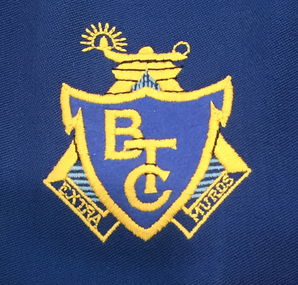
Costume, Ballarat Teachers' College Blazer, c1947
... He was educated at Digby Primary School and Hammilton High and was appointed principle of Paschendale P.S. and Kannagulk P.S. at the age of 17 before he entered the College at Dana Street. He graduated in 1948 and was appointed to the Myrtle Creek school. At the time...He was educated at Digby Primary School and Hammilton High and was appointed principle of Paschendale P.S. and Kannagulk P.S. at the age of 17 before he entered the College at Dana Street. He graduated in 1948 and was appointed to the Myrtle Creek school. At the time ...This blazer was worn by Tom Hill in 1947. He was educated at Digby Primary School and Hammilton High and was appointed principle of Paschendale P.S. and Kannagulk P.S. at the age of 17 before he entered the College at Dana Street. He graduated in 1948 and was appointed to the Myrtle Creek school. At the time of his retirement in 1986 he was principle of Bacchus Marsh P.S. The Ballarat Teachers' College was established after the Victorian State Government and the State Education Department decided to establish two provincial teachers' colleges, at Ballarat and Bendigo. On 04 May 1926 W.H. Ellwood (Principal), Miss A. Bouchier, and Mr A.B. Jones, welcomed the first enrolment of 61 students to undertake the one year course. In 1927 the College moved to the former Ballarat East Town Hall in Barkly Street, which was remodelled for their use. It closed in December 1931 due to the Great Depression. In 1946 Ballarat Teachers' College reopened and relocated to the Dana Street State School. It was originally planned to open as a women's college, for whom the residence at 130 Victoria Street was purchased, but the decision was made to admit resident men from Ballarat. Mr T.W. Turner was appointed as Principal in 1951 and directed the introduction of a two year course for the Trained Primary Teachers' Certificate. The former one year course was terminated at the end of 1951. In 1958 the College was relocated to a custom built facility at Gillies Street, in close proximity to the Ballarat Botanical Gardens. Numbers increased with the introduction of the Trained Infant Teachers' Certificate course under the guidance of Mary Egan. With the introduction of a three year Diploma Course in 1968 accommodation became cramped. The introduction of the Diploma of Teaching (Primary) led to the Trained Infant Teachers' Certificate being discontinued in 1969, and the end of the Trained Primary Teachers' Certificate in 1969. Secondary Art and Craft students began studies at Ballarat Teachers' College in 1969 under Mr Ted Doney. In 1971 Mr D. Watson was appointed Principal. The State College of Victoria was proclaimed by Order in Council on 24 July 1973, and Ballarat Teachers' College became a constituent college of the State College of Victoria, and was known as State College of Victoria, Ballarat. By 1975 the College moved to Mount Helen as part of the Ballarat College of Advanced Education. Pre service teachers currently undertake their studies on the Mount Helen Campus of Federation University. ("Ruffians Attempted to Carry of the School Tent: A History of State Education in Ballarat", 1974, p73-4.)Blue satin lined, wool gabardine Ballarat Teachers' College blazer with embroidered pocket. The jacket has two plain silver coloured buttons at the frontEmbroidered emblem of the Ballarat Teachers College.ballarat teachers' college, blazer, tom hill, thomas hill, costume, uniform, embroidery, textiles -
 Federation University Historical Collection
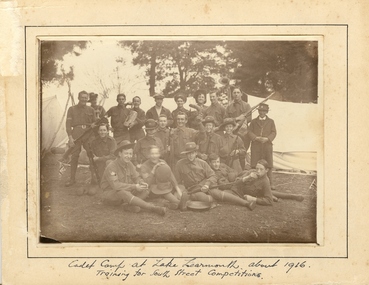
Photograph - Photograph - Sepia, Ballarat School of Mines Cadets, 1916, c1916
... time (referred to as universal training). On 1 January 1911, the Commonwealth Defence Act 1911 (Cth) was passed as law and all males aged 12 to 26 were required to receive military training. Men were divided according to age, with junior cadets comprising boys 12-14 years of age, senior cadets comprising boys 14-18, and young men aged 18-26 assigned to the home militia defence. The support of schools was vital to the success of the scheme, since the system of cadet training began in the primary...time (referred to as universal training). On 1 January 1911, the Commonwealth Defence Act 1911 (Cth) was passed as law and all males aged 12 to 26 were required to receive military training. Men were divided according to age, with junior cadets comprising boys 12-14 years of age, senior cadets comprising boys 14-18, and young men aged 18-26 assigned to the home militia defence. The support of schools was vital to the success of the scheme, since the system of cadet training began in the primary ...Field Marshal Viscount Kitchener of Great Britain was invited by Prime Minister Deakin in 1909 to visit Australia and advise on the best way to provide Australia with a land defence. Kitchener’s report echoed the bill, introduced to Parliament in 1909 and supported by the Opposition Labor Party at its 1908 conference, to introduce compulsory military training in peace time (referred to as universal training). On 1 January 1911, the Commonwealth Defence Act 1911 (Cth) was passed as law and all males aged 12 to 26 were required to receive military training. Men were divided according to age, with junior cadets comprising boys 12-14 years of age, senior cadets comprising boys 14-18, and young men aged 18-26 assigned to the home militia defence. The support of schools was vital to the success of the scheme, since the system of cadet training began in the primary schools, with physical training prescribed by military authorities. Junior cadet training was entirely in the hands of school teachers, who had first been trained by military officers. This early training was less military in nature than focused on physical drill and sport. It also acted to inculcate boys with the notions of loyalty to country and empire. At this age, uniforms were not worn, although there were schools with pre-existing uniformed cadet units, who continued to do so. Senior Cadets were organised by Training Areas, administered by Area Officers. If a school had at least 60 senior cadets, they could form their own units. Unlike their junior counterparts, Senior Cadets were issued uniforms, a rifle, and learned the foundations necessary for service in any arm of the defence forces. Boys and men could be exempted from compulsory training if they lived more than five miles from the nearest training site, or were passed medically unfit. Those who failed to register for training were punished with fines or jail sentences, and the severity of this punishment generated some of the strongest opposition to the scheme. While institutions such as the political parties and most churches generally supported universal training, some in the broader labour movement were less enthusiastic, as evidenced in the Daily Herald newspaper’s editorials and letters. Universal military training persisted after the conclusion of World War 1, with the Junior Cadet scheme the first to go, in 1922. Senior cadets and service with the militia was suspended in November 1929. (http://guides.slsa.sa.gov.au/content.php?pid=575383&sid=4788359, accessed 29/10/2015) According to Neil Leckie, Manager of the Ballarat Ranger Military Museum: * Originally 12 – 14 year olds went to Junior Cadets attached to their school. * From age 14 – 17 they were Senior Cadets attached to the local militia unit. * After 1 July of the year a Cadet turned 18, the Cadet left the Senior Cadets and became a member of the Citizen Military Force. * In October 1918 the AIF, Militia and Cadets were renamed to give some connection to the AIF battalion raised in the area. Ballarat saw: 8th Australian Infantry Regiment comprising: * 8th Battalion AIF renamed 1st Battalion 8th Australian Infantry Regiment * 70th Infantry Militia renamed 2nd Battalion 8th Australian Infantry Regiment * 70th Infantry Cadets renamed 3rd B, 8th Australian Infantry. 39th Australian Infantry Regiment comprising: * 39th Battalion AIF renamed 1st Battalion 39th Australian Regiment * 71st Infantry Militia renamed 2nd Bn, 39th Australian Infantry Regiment * 71st Infantry Cadets renamed 3rd Bn, 39th Australian Infantry Regiment Prior to the reorganisation in 1918 the 18th Brigade was the 70th, 71st and 73rd Infantry. It is thought that the 18th Brigade Cadet units in 1920 were those that came from the old: * 69th Infantry (Geelong/Queenscliff) * 70th Infantry (Ballarat/Colac) * 71st Infantry (Ballarat West) * 72nd Infantry Warrnambool) * 73rd Infantry (NW Vic) The next name change came in 1921!Mounted sepia photograph of 21 young males. They are the Ballarat School of Mines Cadets on a training camp at Lake Learmonth. Back row left to right: Harold Wakeling; ? ; T. Wasley; H. Witter; H.V. Maddison (staff); Lieutenant S.J. Proctor, Joe ? ; ? ; B.C. Burrows. Centre left to right: Howard Beanland; ? ; F.N. Gibbs; H. Siemering; P. Riley; ? : E. Adamthwaite. Front row left to right: Albert E. Williams; Francis Davis (RAAF Dec.); A. Miller; W. Shattock; T. Rees From the Ballarat School of Mines Magazine, 1916 "Our Competition Team, 1916 At a parade, held on the 25th August competition teams were called from from the three colleges - Ballarat College, St Patrick's College, and the School of Mines. In each case, a large muster was obtained, twenty-nine volunteering fro the School of Mines. On account of the number in a team being limited to 21, some had to be weeded out. The team decided to have a camp at Learmonth in the vacation for the benefit of training for the coming competitions. The tents, within our baggage, were brought to the Junior Technical School at 10 a.m. on Monday, 11 September. Everything was carted to the station on a lorry, which was very kindly lent by Mr C. Burrow. ... Arriving at our camp, which was in the Park, we first raised the tents. This was done in record time. Three large tents, A.B.C., were pitched one behind the other. We also pitched a smaller one to act as a provisions tent. The provisions supplied by each cadet were placed in this tent. Dinner was ready by 3.30, and was prepared by the three senior non-coms., who also acted as orderlies. Things went alright Monday night, the two senior non-coms. acting as sentries for the first two hours. On Tuesday morning Reville sounded at 7. There was no need for it, however, as nearly all the cadets were up before daylight, owing to their beds being too hard. After physical exercises were gone through we had breakfast. We then had rifle exercises until Messrs A.W. Steane and F.N. King arrived. The former put the team through the table of physical exercises set down for competition work, many valuable points being obtained. The visitors remained for dinner, afterwards returning to Ballarat. Wednesday was uneventful, until the soldiers arrived at about 11 a.m., stopping at the park for lunch. As we handed over the coppers, etc., to them, our lunch was delayed. Two more visitors arrived after lunch, and after taking a few photos returned home. That night we had a "Sing-a-long" in C Tent until "Lights out" sounded at 9.30. After physical exercises ad breakfast on Thursday, we went for a six mile route march round the lake, doing skirmishing on the way. In the afternoon we practised rifle exercises and the march past. A concert was arranged for that night, the chief singers being cadets H. Siemering and W. Shattock. Supper was served at the end of the entertainment. On Friday, Reveille sounded at 6.30 instead of 7, and, as usual, we had physical exercises before breakfast, after which the team went through skirmishing at the reserve. In the afternoon, section drill and the march past were practised. Friday night, being our last night in camp, leave was granted until 10 p.m., "lights out" sounding at 11. Reveille sounded on Saturday at 4.30, the reason being that all kits, tents, etc., had to be packed away ready to catch the 8.15 train to Balalrat. At 7.30 we were all ready to leave for the station. We had a very enjoyable time in the train, each cadet having a chip in at the patriotic songs. On arriving at Ballarat, we found the lorry awaiting us. The luggage was carted to the Junior Technical School, the team following. The team were here dismissed, everyone feeling that he had had a very good time. F.G. Davis"Written in ink on front 'cadet camp at Lake Learmonth about 1916. Training for South Street Competitions. ballarat school of mines, cadets, ballarat school of mines cadets, lake learmonth, world war one, boomerang, camp, cadet camp, h.g. wakeling, harold wakeling, f.g. davis, albert w. steane, f.n. king, h. siermering, w. shattock, francis davis, harold wakeling, t. wasley, h. witter, h.v. maddison, s.j. proctor, b.c. burrows, howard beanland, f.n. gibbs, h. siemering, p. riley, e. adamthwaite, albert e. williams; francis davis, a. miller, w. shattock, t. rees, photography, foto, boxing gloves -
Marysville & District Historical Society
THE TRIANGLE NEWS-VOL 40 NO 25-JULY 5 2013
... time again...what's on when in july...marysville cricket club agm...the committee of management of the gallipoli park precinct...marysville community market...creative triangle...croydon north too strong for villains...marysville football club...church notices...lakeside fellowship eildon...triangle junior fire brigade...murrindindi shire council...adoption of budget...councillor comment...advertisements...mayor's chair...marysville primary school...marysville victoria australia lions change over time again what's on when in july marysville cricket club agm the committee of management of the gallipoli park precinct marysville community market creative triangle croydon north too strong for villains marysville football club church notices lakeside fellowship eildon triangle junior fire brigade murrindindi shire council adoption of budget councillor comment advertisements mayor's chair marysville primary school movie night coming to lake mountain school holiday white christmas council supports rail trail name change public notice proposed road discontinuance kinglake marysville primary school sponsors needed parents club real estate pool lifeguard positions black spur inn front of house & housekeeping positions 'the weatherman's umbrella' a play adventurous cooks cross country ski hire tender right workshop 'the audience' a play national theatre london former concillor recognised for red gate contribution australian centre for grief and bereavement marysville branch liberal party christmas in july dinner department of environment & primary industries marysville football club reunion premiers 1973 have your say on health and wellbeing of shire marysville villains council adopts budget and council plan marysville golf report another forward step in fire recovery journey municipal public health and wellbeing plan 2013-2017 helicopters sowing alpine ash forest following harrietville fire past photos wanted for marysville primary school 150 years of marysville celebration draft hume regional growth plan have your say council says yes to supporting yes campaign new website brings together agriculture and enviroment community leadership programs clp THE TRIANGLE NEWS-VOL 40 NO 25-JULY 5 2013 ...marysville, victoria, australia, lions change over time again, what's on when in july, marysville cricket club agm, the committee of management of the gallipoli park precinct, marysville community market, creative triangle, croydon north too strong for villains, marysville football club, church notices, lakeside fellowship eildon, triangle junior fire brigade, murrindindi shire council, adoption of budget, councillor comment, advertisements, mayor's chair, marysville primary school, movie night, coming to lake mountain school holiday white christmas, council supports rail trail name change, public notice proposed road discontinuance kinglake, marysville primary school sponsors needed, parents club, real estate, pool lifeguard positions, black spur inn front of house & housekeeping positions, 'the weatherman's umbrella' a play, adventurous cooks, cross country ski hire, tender right workshop, 'the audience' a play, national theatre london, former concillor recognised for red gate contribution, australian centre for grief and bereavement, marysville branch liberal party christmas in july dinner, department of environment & primary industries, marysville football club reunion premiers 1973, have your say on health and wellbeing of shire, marysville villains, council adopts budget and council plan, marysville golf report, another forward step in fire recovery journey, municipal public health and wellbeing plan 2013-2017, helicopters sowing alpine ash forest following harrietville fire, past photos wanted for marysville primary school, 150 years of marysville celebration, draft hume regional growth plan have your say, council says yes to supporting yes campaign, new website brings together agriculture and enviroment, community leadership programs, clp -
Marysville & District Historical Society
THE TRIANGLE NEWS-VOL 2 NO 37-NOVEMBER 25 1977
... time dance crossways...found pup...kitchen tea...tupperware party...for sale...cricket...wanted...narbethong fire brigade...narbethong primary school...marysville victoria australia fire restrictions in force reprint wirreanda fire brigade new year's eve dance spectacular bingo auction footy club notice strawbs for sale bingo & kinder rosters wirreanda meetings christmas olde time dance crossways found pup kitchen tea tupperware party for sale cricket wanted narbethong fire brigade narbethong primary school open day jobs wanted el kanah christian community junior cricket bush walking kindergarten annual dinner vicswim the pumpernickel THE TRIANGLE NEWS-VOL 2 NO 37-NOVEMBER 25 1977 ...marysville, victoria, australia, fire restrictions in force, reprint, wirreanda, fire brigade, new year's eve dance spectacular, bingo, auction, footy club, notice, strawbs for sale, bingo & kinder rosters, wirreanda meetings, christmas olde time dance crossways, found pup, kitchen tea, tupperware party, for sale, cricket, wanted, narbethong fire brigade, narbethong primary school open day, jobs wanted, el kanah christian community, junior cricket, bush walking, kindergarten annual dinner, vicswim, the pumpernickel -
Marysville & District Historical Society
THE TRIANGLE NEWS-VOL 1 NO 19-NOVEMBER 26 1976
... time dance crossways...for sale...senior citizens...bowls...football club...marysville hall...first aid classes...at the primary school...marysville victoria australia burns recovery christmas old time dance crossways for sale senior citizens bowls football club marysville hall first aid classes at the primary school new year's eve vermont lions project it's a fact k mcleod resi art show new ladies' hairdressers for marysville THE TRIANGLE NEWS-VOL 1 NO 19-NOVEMBER 26 1976 ...marysville, victoria, australia, burns recovery, christmas old time dance crossways, for sale, senior citizens, bowls, football club, marysville hall, first aid classes, at the primary school, new year's eve, vermont lions project, it's a fact, k mcleod resi, art show, new ladies' hairdressers for marysville -
Marysville & District Historical Society
THE TRIANGLE NEWS-VOL 2 NO 22-JULY 22 1977
... primary school mothers' club...lost...design award...folk dance...irish roulette...tax...manuel's street stall...indoor bowls...buxton red cross bike-a-thon...taxes...metric time...marysville victoria australia danger on mt gordon flat to rent lions golf marysville primary school mothers' club lost design award folk dance irish roulette tax manuel's street stall indoor bowls buxton red cross bike-a-thon taxes metric time THE TRIANGLE NEWS-VOL 2 NO 22-JULY 22 1977 ...marysville, victoria, australia, danger on mt gordon, flat to rent, lions, golf, marysville primary school mothers' club, lost, design award, folk dance, irish roulette, tax, manuel's street stall, indoor bowls, buxton red cross bike-a-thon, taxes, metric time -
 Flagstaff Hill Maritime Museum and Village
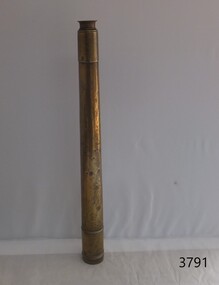
Instrument - Marine Telescope, 1870-1880
... school of medicine. Despite having passed the required examinations, however, he abandoned his plans. Instead, he apprenticed with his father, William Spencer Browning. At the same time, in the late 1840s, he was a student attending the Royal College of Chemistry several days per week. By the early 1870s, practical optics had become John Browning's primary...school of medicine. Despite having passed the required examinations, however, he abandoned his plans. Instead, he apprenticed with his father, William Spencer Browning. At the same time, in the late 1840s, he was a student attending the Royal College of Chemistry several days per week. By the early 1870s, practical optics had become John Browning's primary ...This telescope was amongst various items collected from a sea dive in Port Phillip Bay. The diver was the caretaker of the Port Lonsdale Lighthouse, who dived on various wrecks in the bay during the 1960's. After the caretaker's death, his son sold off many of the shipwreck artefacts. The telescope was purchased from the caretaker's son in the 1990's by a previous owner of the Marine Shop, Queenscliff, Victoria. John Browning was particularly well known for his scientific advances in the fields of spectroscopy, astronomy, and optometry. Between 1856 and 1872, Browning acquired provisional patents for designs of numerous scientific instruments. He was also the recipient of an award at the 1862 International Exhibition held in London. Also recognised for his temperature-compensated aneroid barometer. Browning's scientific instruments were used in physics, chemistry, and biology. The products he designed and manufactured included spectroscopes, telescopes, microscopes, barometers, photometers, cameras, ophthalmologist, and electrical equipment such as electric lamps. John Browning was born around 1831 in Kent, England. His father, William Spencer Browning, was a maker of nautical instruments. John Browning's great-grandfather was also an instrument maker as well as John’s brother Samuel Browning of the firms Spencer & Browning and Spencer, Browning & Rust, who also manufactured navigational instruments. The latter firm was in operation in London from 1784 to 1840 and was succeeded by the firm of Spencer, Browning & Co. John Browning initially intended to follow the medical profession and entered Guy's Hospital, a teaching hospital and a school of medicine. Despite having passed the required examinations, however, he abandoned his plans. Instead, he apprenticed with his father, William Spencer Browning. At the same time, in the late 1840s, he was a student attending the Royal College of Chemistry several days per week. By the early 1870s, practical optics had become John Browning's primary interest, and he listed his occupation as an optician on the census records from 1871 to 1901. He was well known among London's ophthalmic surgeons for his various ophthalmic instruments. He had a large part in reforming the art of crafting spectacles. Other achievements were as an author of the book, How to Use Our Eyes and How to Preserve them by the Aid of Spectacles. Published in 1883, the book included thirty-seven illustrations, including a diagram demonstrating the anatomy of the eye. In 1895, he was one of the founders of the "British Ophthalmology" the first professional organisation for optometry. He was not only its first president but also registered as its first member so many considered him to be the first professional optometrist. Other professional organisations he belonged too was as a member of “The Aeronautical Society of Great Britain”. In 1871 constructing the first wind tunnel located at Greenwich Marine Engineering Works. He was also a member of other scientific organisations, such as the “Microscopical Society of London”, the “Meteorological Society”, and the “Royal”. Then in 1908 the company of W. Watson & Son, opticians and camera makers, took over John Browning's company since 1901 John Browning had been semi-retired but in 1908 he fully retired and moved to Bournemouth in Hampshire. He died in Cheltenham, Gloucestershire in 1925.The telescope is significant for its association with one of the world’s leading scientific instrument makers and inventor of the 19th and early 20th century. It is believed the donation came off a wreck either in Port Philip Bay or between Point Lonsdale and the Nepean Heads making it a significant maritime historical artefact. Its provenance is good given it was taken off a wreck in this area by the Point Lonsdale lighthouse caretaker. Examples of John Browning's telescopes because of their scientific and historical importance are highly valued by collectors.Marine style single draw brass telescope with a sunshade. The single draw has no split and the second cartridge is held in a long brass tube within the single draw, mounted from the objective end. The eyepiece is flat and at the end of the first draw in a very faded engraving that is believed to read "John Browning, 63 Strand, and should read London under the word strand but this is hard to establish given the engravings condition. This interpretation of the engraving has been arrived at by examination of other John Browning telescope engraving examples."John Browning, engraved to the first tube in copper plate style "63 STRAND" Engraved under in capital textflagstaff hill, flagstaff hill maritime museum and village, warrnambool, maritime museum, maritime village, great ocean road, shipwreck coast, shipwreck artefact, port phillip bay, port lonsdale lighthouse, wreck, 1960’s diver, queenscliff marine shop, john browning, telescope, spectroscopy, optometry, scientific instruments, william spencer browning, optician, navigational instrument, microscopical society of london, aeronautical society, marine technology -
 Flagstaff Hill Maritime Museum and Village
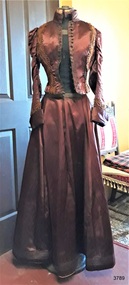
Clothing - Evening Outfit, before April 1874
... My mother [Margaret Jane McLaughlan nee Mitchell], coming home from school in the 1800s, often met blackfellows walking ahead with spears and boomerang, the two lubras – they usually had two – following in the rear, carrying the children or any burdens they had.“ Margaret was probably in primary school at the time she saw these things. Alexander and Eliza had ten children. ...My mother [Margaret Jane McLaughlan nee Mitchell], coming home from school in the 1800s, often met blackfellows walking ahead with spears and boomerang, the two lubras – they usually had two – following in the rear, carrying the children or any burdens they had.“ Margaret was probably in primary school at the time she saw these things. Alexander and Eliza had ten children. ...This amber satin evening outfit was worn by Mrs Isabella Mitchell (nee Russell, 1840 – 1929) at the wedding of her brother Alexander (c.1846–1938) and Eliza (nee Moore, c.1854–1939). The jacket and skirt attach at the waist by joining the metal rings around the base of the jacket, and the metal hooks on the waistband of the skirt. The outfit was donated with its own mannequin and fits it perfectly. In the colonial days, outer clothing was rarely, if ever, washed, due to the expense of fabrics and the difficulty in careful laundering. Clever methods were employed to reduce the occurrence of soiling. The mannequin included with the donation would also help keep the outfit in good shape and ensure a flattering fit. FAMILIES’ HISTORY The families connected with this wedding, where the outfit was worn, are from Warrnambool’s colonial days. Isabella and Alexander’s parents, Robert Russell and Elizabeth (nee Mitchell), were born in 1808 and married about 1830. They were from farming families in Northern Ireland, where they raised their seven children before migrating to Australia in the early colonial days, around 1857. Their graves are in the Tower Hill Cemetery. Alexander’s wife, Eliza (nee Moore, born in 1854), was also from Northern Ireland and migrated to Australia in 1858 with her parents, Thomas and Nancy Moore, in the last voyage of the sailing ship “Chance”. Isabella (Bella) talked with her granddaughter Ruby Akers about her memories of Alexander and Eliza’s wedding and other events in her life. Ruby recorded these memories in a letter. She says, “They were married in the Warrnambool Congregational Church by a pioneer minister, the Reverend Uriah Coombs. The bride wore a pale blue silk wedding gown, which she made herself. Bella was Matron of Honora, and Ian McCasker was best man. In those days, the transport to the church was usually a carriage – similar to a cab – and a pair of white ponies. They would have the reception at home, go for a drive afterwards, and at night there would be a dance. They did all the catering themselves … Eliza carried on farming in the Dennington, Yarpturk and Purnim districts until they moved to Camperdown around 1905…” Ruby’s letter later mentions “[Isabella] could recall seeing a blackfellows’ corroboree being performed near where the Dennington Bridge now stands. It was rather a terrifying experience; they seemed to be in a warlike mood, and one never knew what they would do next. One lubra came running to Granny, crying, Hide me, bad man kill me. She was bleeding from a wound in the head: probably the result of a blow from a waddy. My mother [Margaret Jane McLaughlan nee Mitchell], coming home from school in the 1800s, often met blackfellows walking ahead with spears and boomerang, the two lubras – they usually had two – following in the rear, carrying the children or any burdens they had.“ Margaret was probably in primary school at the time she saw these things. Alexander and Eliza had ten children. One of their daughters, Margaret Jane, was born in Warrnambool in 1879. She married William McCullagh, and they had eleven children. Margaret made headlines in the Warrnambool newspapers for celebrating her 100th birthday. She had lived in the district for 60 years before moving to Melbourne. Alexander passed away at the age of 92, and Eliza passed away six months later, aged 85. Their graves are in the Colac cemetery. Isabella married Ralph Mitchell, and their daughter Margaret Jane married John McLauchlan in 1891. Margaret and John’s daughter, Ruby Elizabeth Jane, married Fredrick Akers in 1938. Fredrick, born in England, was a Boer War veteran and served in the British Army. He migrated to Queensland, Australia, in 1913, and joined the Australian Army to fight in World War I. In 1935, he moved to Warrnambool, where he served in the Volunteer Defence Corps from 1938 to 1945. Both Ruby and Fredrick are buried in the Tower Hill Cemetery.The evening outfit and its accompanying mannequin serve as notable examples of female fashion from the mid to late 1900s. These items reflect the styles and trends that were prevalent during this period, offering insight into the clothing choices and cultural influences that shaped women's attire. Beyond their representation of period fashion, the outfit and mannequin are significant due to their association with colonial pioneer families from Australia, specifically Victoria and Warrnambool. These families played an important role in the development and history of the region, and the items are linked to their legacy. The evening outfit and mannequin are also notable for their connection to a wedding that united two colonial families originating from Northern Ireland. These families immigrated to Australia in the mid-1850s and became influential figures within the Warrnambool district. The wedding marked a significant event, symbolising the merging of two prominent family lineages. Furthermore, the significance of the evening outfit and mannequin extends to their connection with the colonial families’ contact with the indigenous culture of the district. These items represent a period of interaction between the native and European peoples, highlighting the cultural exchanges that occurred within the region. This lady’s evening outfit is made from amber coloured satin fabric. It comprises a short-waisted, long-sleeved jacket and a long skirt, and it has its own neck-to-floor wooden mannequin on a pedestal. The outfit was worn by Mrs Isabella Mitchell (nee Russell) as the Matron of Honour at the wedding of her brother Alexander Russell and his fiancée Eliza Moore in Warrnambool, 29th April 1874.flagstaff hill, warrnambool, shipwrecked coast, flagstaff hill maritime museum, maritime museum, shipwreck coast, flagstaff hill maritime village, great ocean road, evening outfit, wedding outfit, bridesmaid’ outfit, matron of honour outfit, clothing female, clothing late 19th century, clothing wedding late 19th century, clothing bridesmaid late 19th century, clothing antique, clothing ladies, women’s clothing, women’s fashion, alexander russell, eliza russell, eliza moore, isabella mitchell, bella mitchell, bella russell, isabella russell, ralph russell, ian mccusker, ruby akers, fredrick william akers, ruby mclauchlan, margaret jane mclaughlan nee mitchell, margaret jane mclaughlan centenarian, william mclaughlan, robert russell, elizabeth russell nee mitchell, irish immigrants, warrnambool volunteer defence corps 1938-1945, antique satin outfit, warrnambool wedding 1874, congregational church warrnambool, reverend uriah coombs, dennington farmer, yarpturk farmer, purnim district farmer, camperdown resident 1905, dennington bridge, indigenous corroboree in dennington, corroboree in warrnambool, 1880s corroboree in warrnambool, lubra and baby, indigenous corroboree in warrnambool, mccullagh family -
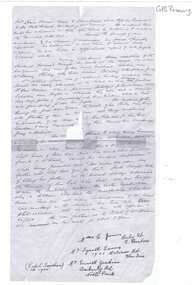 Greensborough Historical Society
Article, Greensborough State School and Mr Amiet, 1896o
... A short history of Mr Louis Amiet's time as headmaster at Greensborough State School (1896-1916) and his close friendships with his students. Unfortunately the author is not identified. greensborough state school greensborough primary school louis amiet Handwritten article (one page) and transcript. ...A short history of Mr Louis Amiet's time as headmaster at Greensborough State School (1896-1916) and his close friendships with his students. Unfortunately the author is not identified.Handwritten article (one page) and transcript.greensborough state school, greensborough primary school, louis amiet -
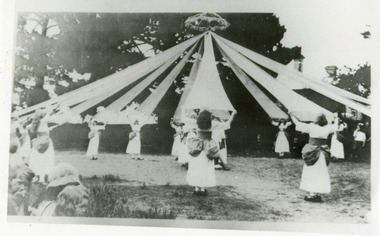 City of Moorabbin Historical Society (Operating the Box Cottage Museum)
Photograph, Black & White x4 Maypole Dance Moorabbin State School 1922, 1922
... time. The main part of the present building dates from 1890. By the early 1900s the school had been extended to the north. . The school contains a plaque for Harry G Hawker, one of the pioneers of aviation, who attended the school in the closing years of the nineteenth century. The school was renamed Moorabbin in 1909.During the 1940s and 1950s population in the area surged and school enrolments peaked to over 800 under head teacher CS Lansell. Enrollments decreased to 470 in 1969. By the 1990s however, enrollments began to increase again. ( G Whitehead KCC Historian) Since 1890 Moorabbin Primary ...In October 1872, State School 1111 Box Rise opened on the corner of Worthing Road and Dane Road. In order for this school to open, School No 442, a Wesleyan School, on the corner of Wickham Road and Chapel Lane, had to agree to close to meet pupil number requirements. Charles Sadgrove was head teacher of the new State School when it opened on October 1st 1872 and he remained until 1878. The school was renamed South Brighton in 1887 to accord with the nearby railway station which opened around that time. The main part of the present building dates from 1890. By the early 1900s the school had been extended to the north. . The school contains a plaque for Harry G Hawker, one of the pioneers of aviation, who attended the school in the closing years of the nineteenth century. The school was renamed Moorabbin in 1909.During the 1940s and 1950s population in the area surged and school enrolments peaked to over 800 under head teacher CS Lansell. Enrollments decreased to 470 in 1969. By the 1990s however, enrollments began to increase again. ( G Whitehead KCC Historian) Since 1890 Moorabbin Primary School No.1111 has been socially significant at a local level providing education for the families of the early settlers in Moorabbin ( South Brighton) Black & White photographs x 4 of pupils at Moorabbin State School Maypole Dancing c1922keys robert, marriott charles, gregg barriecity of moorabbin, county of bourke, moorabbin roads board, parish of moorabbin, shire of moorabbin, henry dendy's special survey 1841, were j.b.; bent thomas, o'shannassy john, king richard, charman stephen, highett william, ormond francis, maynard dennis, methodist church wickham road, box rise state school no.1111, methodist chapel cheltenham, education, early settlers
