
Showing 61 items matching "traditional owners."
-
 Bendigo Historical Society Inc.
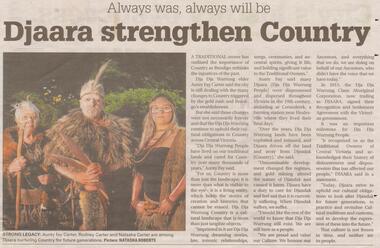
Newspaper - The Djaara traditional owners and the redeveloped Beehive building, July 17 2021
... The Djaara traditional owners and the redeveloped Beehive building...Also attached is a pdf file of an account of the early Djaara People Newspaper The Djaara traditional owners and the redeveloped Beehive building ...The Djaara people's importance to country was impacted by the dramatically imapcted by the development of gold mining in Bendigo. The recently redeveloped Beehive Building played a key role in the development of the Bendigo business sector.Bendigo Advertiser: Two articles, one entitled 'City's history of success', and the other 'Djaara streghten Country'. Also attached is a pdf file of an account of the early Djaara Peoplebendigo, djaara country, beehive building -
 Whitehorse Historical Society Inc.
Document, The Traditional owners of the Whitehorse Region, 1997
... The Traditional owners of the Whitehorse Region...Brief outline of the Wurundjeri people's occupation of the Whitehorse area. The Traditional owners of the Whitehorse Region Document Document ...Brief outline of the Wurundjeri people's occupation of the Whitehorse area.Brief outline of the Wurundjeri people's occupation of the Whitehorse area.Brief outline of the Wurundjeri people's occupation of the Whitehorse area.aborigines, woiworung aboriginal tribe, wurundjeri aboriginal tribe, city of whitehorse -
 Whitehorse Historical Society Inc.
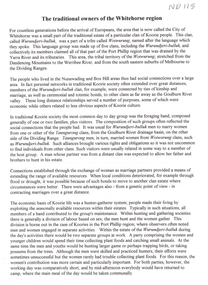
Article, The Traditional owners of the Whitehorse region, 1997
... The Traditional owners of the Whitehorse region....A bibliography is included. 2 pages. The Traditional owners of the Whitehorse region. Article Article ...Article written for Box Hill Historical SocietyArticle written for Box Hill Historical Society describing the Aboriginal (Koorie) inhabitants of the Whitehorse region. This area was part of the estate of the Wurundjeri-bulluk clan of the Woiwurung Tribe. Kinship and marriage links with the people of the Goulburn River area are described. Daily life as hunter gatherers is described and the pattern of movements within the area. Several locations where traces are still found and where people lived after European settlement are listed. A bibliography is included. 2 pages.Article written for Box Hill Historical Societyaborigines, wurundjeri -
Tarnagulla History Archive
News clipping: Our Loddon Valley Aborigines - The Jajowrongs, Our Loddon Valley Aborigines - The Jajowrongs, June 23, 1981
... ...traditional owners...A double page article from The Advertiser (Maryborough) newspaper of June 23, 1981 with article about the Indigenous traditional owners of the region, the Djadjawurung and sites of cultural significance . ...Murray Comrie Collection. central victoria dja dja wurrung djadjawurrung indigenous australians indigenous history traditional owners names naming maryborough area bet bet creek birthing tree talbot rock wells A double page article from The Advertiser (Maryborough) newspaper of June 23, 1981 with article about the Indigenous traditional owners of the region, the Djadjawurung and sites of cultural significance . ...Murray Comrie Collection. A double page article from The Advertiser (Maryborough) newspaper of June 23, 1981 with article about the Indigenous traditional owners of the region, the Djadjawurung and sites of cultural significance . central victoria, dja dja wurrung, djadjawurrung, indigenous australians, indigenous history, traditional owners, names, naming, maryborough area, bet bet creek, birthing tree talbot, rock wells -
 The Beechworth Burke Museum
Geological specimen - Granodiorite, Unknown
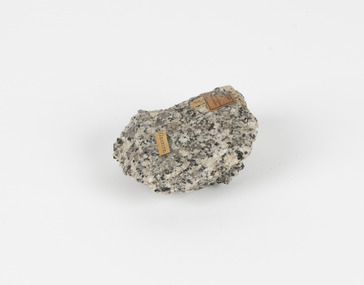
... ...The Traditional owners...In recent times the goldrush origins of the town have been replaced by a district known for apples, cider and wine. The Traditional owners of Harcourt are The Dja Dja Wurrung people. ...In recent times the goldrush origins of the town have been replaced by a district known for apples, cider and wine. The Traditional owners of Harcourt are The Dja Dja Wurrung people. ...This specimen was found in Harcourt, Victoria. Harcourt is a small historic gold rush town located in a valley at the foot of Mount Alexander (741 m) in the Central Highlands of Victoria. In recent times the goldrush origins of the town have been replaced by a district known for apples, cider and wine. The Traditional owners of Harcourt are The Dja Dja Wurrung people. Granodiorite is a coarse-grained intrusive igneous rock similar to granite, but containing more plagioclase feldspar than orthoclase feldspar. Granodiorite has greater than 20% quartz by volume, and between 65% and 90% of the feldspar is plagioclase. This piece is of significance due to its provenance in Harcourt, Vic. Granodiorite is commonly produced in volcanic arcs, and in mountain buildings where it emplaces as large batholiths in mountain roots. Granodiorite is the plutonic equivalent of dacite. This specimen is part of a larger collection of geological and mineral specimens collected from around Australia (and some parts of the world) and donated to the Burke Museum between 1868-1880. A large percentage of these specimens were collected in Victoria as part of the Geological Survey of Victoria that begun in 1852 (in response to the Gold Rush) to study and map the geology of Victoria. Collecting geological specimens was an important part of mapping and understanding the scientific makeup of the earth. Many of these specimens were sent to research and collecting organisations across Australia, including the Burke Museum, to educate and encourage further study.Granodiorite is a coarse-grained intrusive igneous rock similar to granite, but containing more plagioclase feldspar than orthoclase feldspar. According to the QAPF diagram, granodiorite has a greater than 20% quartz by volume, and between 65% and 90% of the feldspar is plagioclase.GRANDIORITE. / Locality: / Harcourt, Victoria / Other label: Geological survey / R S / Loc Harcourt quarries [?] Alexander / 1/4 Sheet. | 4 | Granite /granodiorite, granite, burke museum, harcourt, coarse-grained, igneous, plagioclase feldspar, orthoclase feldspar, quartz, mount alexander, the dja dja wurrung people, the traditional owners, central highlands of victoria, gold rush -
 City of Kingston
Photograph - Colour, Paul Tresize, 1998
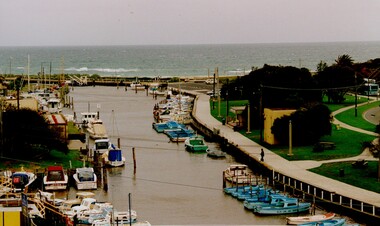
... ...Traditional Owners...The Bunurong Peoples are the Traditional Owners of this area. The name means “high water” or “high creek”. ...The Bunurong Peoples are the Traditional Owners of this area. The name means “high water” or “high creek”. ...The name Mordialloc was derived from the name Moody Yallock, which comes from the Bunurong language. The Bunurong Peoples are the Traditional Owners of this area. The name means “high water” or “high creek”. In 1839, colonial authorities declared the mouth of the creek, and an additional 830 odd acres as an Aboriginal Reserve, although this proclamation was never gazetted. The reserved land included part of the Carrum Carrum Swamp which was abundant with wild life and natural resources. Regular encroachments, including land sales which began in 1863, were made on the land until 1878 when the Reserve was declared closed, and the land was opened up to land sales. Market gardening and suburban house lots quickly began to develop, and Mordialloc became a renowned picnic and holiday site. Mordialloc Creek is a popular bay side destination for local and visitors, and is a site for boating, kayaking, fishing and swimming, along with many other activities.Colour photograph of Mordialloc Creek, looking out to the bay. Many small fishing and leisure craft are moored on either side of the banks of the creek. To the right hand side can be seen parklands, while the left hand side has a small inlet in which more small crafts are moored.mordialloc, bunurong, traditional owners, suburbs, boats, fishing, waterways -
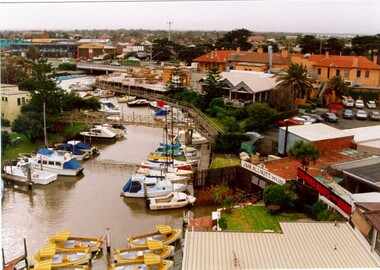 City of Kingston
Photograph - Colour, 1998
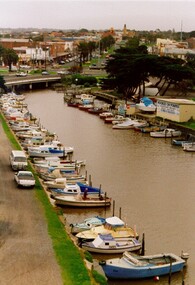
... ...Traditional Owners...The Bunurong Peoples are the Traditional Owners of this area. The name means “high water” or “high creek”. ...The Bunurong Peoples are the Traditional Owners of this area. The name means “high water” or “high creek”. ...The name Mordialloc was derived from the name Moody Yallock, which comes from the Bunurong language. The Bunurong Peoples are the Traditional Owners of this area. The name means “high water” or “high creek”. In 1839, colonial authorities declared the mouth of the creek, and an additional 830 odd acres as an Aboriginal Reserve, although this proclamation was never gazetted. The reserved land included part of the Carrum Carrum Swamp which was abundant with wild life and natural resources. Regular encroachments, including land sales which began in 1863, were made on the land until 1878 when the Reserve was declared closed, and the land was opened up to land sales. Market gardening and suburban house lots quickly began to develop, and Mordialloc became a renowned picnic and holiday site. Mordialloc Creek is a popular bay side destination for local and visitors, and is a site for boating, kayaking, fishing and swimming, along with many other activities.Colour photograph of Mordialloc Creek, looking inland.Small fishing and leisure boats are moored on either side of creek, with a view of the Mordialloc Bridge Hotel in the background.mordialloc, bunurong, traditional owners, suburbs, boats, fishing, waterways, hotel -
City of Kingston
Photograph - Colour, Paul Tresize, 1998
... ...Traditional Owners...The Bunurong Peoples are the Traditional Owners of this area. The name means “high water” or “high creek”. ...The Bunurong Peoples are the Traditional Owners of this area. The name means “high water” or “high creek”. ...The name Mordialloc was derived from the name Moody Yallock, which comes from the Bunurong language. The Bunurong Peoples are the Traditional Owners of this area. The name means “high water” or “high creek”. In 1839, colonial authorities declared the mouth of the creek, and an additional 830 odd acres as an Aboriginal Reserve, although this proclamation was never gazetted. The reserved land included part of the Carrum Carrum Swamp which was abundant with wild life and natural resources. Regular encroachments, including land sales which began in 1863, were made on the land until 1878 when the Reserve was declared closed, and the land was opened up to land sales. Market gardening and suburban house lots quickly began to develop, and Mordialloc became a renowned picnic and holiday site. Mordialloc Creek is a popular bay side destination for local and visitors, and is a site for boating, kayaking, fishing and swimming, along with many other activities.Colour photograph of Mordialloc Creek, looking inland. Boats are moored on either side of the creek and the Bridge Hotel is visible in the background.mordialloc, bunurong, traditional owners, suburbs, boats, fishing, waterways, hotel -
 City of Kingston
Photograph - Colour, Paul Tresize, 1998
... ...Traditional Owners...The Bunurong Peoples are the Traditional Owners of this area. The name means “high water” or “high creek”. ...The Bunurong Peoples are the Traditional Owners of this area. The name means “high water” or “high creek”. ...The name Mordialloc was derived from the name Moody Yallock, which comes from the Bunurong language. The Bunurong Peoples are the Traditional Owners of this area. The name means “high water” or “high creek”. In 1839, colonial authorities declared the mouth of the creek, and an additional 830 odd acres as an Aboriginal Reserve, although this proclamation was never gazetted. The reserved land included part of the Carrum Carrum Swamp which was abundant with wild life and natural resources. Regular encroachments, including land sales which began in 1863, were made on the land until 1878 when the Reserve was declared closed, and the land was opened up to land sales. Market gardening and suburban house lots quickly began to develop, and Mordialloc became a renowned picnic and holiday site. Mordialloc Creek is a popular bay side destination for local and visitors, and is a site for boating, kayaking, fishing and swimming, along with many other activities.Colour photograph of Mordialloc Creek with boats moored on both sides of the street and Pompei's boat yard visible on the right hand side of the creek., Main Street and St Brigid's Catholic Church are visible in backgroundmordialloc, bunurong, traditional owners, suburbs, boats, fishing, waterways, hotel, church -
City of Kingston
Photograph - Colour, Paul Tresize, 1998
... ...Traditional Owners...The Bunurong Peoples are the Traditional Owners of this area. The name means “high water” or “high creek”. ...The Bunurong Peoples are the Traditional Owners of this area. The name means “high water” or “high creek”. ...The name Mordialloc was derived from the name Moody Yallock, which comes from the Bunurong language. The Bunurong Peoples are the Traditional Owners of this area. The name means “high water” or “high creek”. In 1839, colonial authorities declared the mouth of the creek, and an additional 830 odd acres as an Aboriginal Reserve, although this proclamation was never gazetted. The reserved land included part of the Carrum Carrum Swamp which was abundant with wild life and natural resources. Regular encroachments, including land sales which began in 1863, were made on the land until 1878 when the Reserve was declared closed, and the land was opened up to land sales. Market gardening and suburban house lots quickly began to develop, and Mordialloc became a renowned picnic and holiday site. Mordialloc Creek is a popular bay side destination for local and visitors, and is a site for boating, kayaking, fishing and swimming, along with many other activities.Colour photograph of Mordialloc Creek with boats moored on both sides of the street and Pompei's boat yard visible on the right hand side of the creek., Main Street and St Brigid's Catholic Church are visible in background.mordialloc, bunurong, traditional owners, boats, fishing -
Ballarat Heritage Services
Book, Dja Dja Wurrung Dhelkunya Dja Country Plan, 2014-2034
... ...traditional owners...dJA dJA Wurrung Dhelkunya Cultural heritage bushtucker medicine rivers waterways self-determination joint management Crown land Trent Nelson Graham Atkinson Native title traditional owners Dja Dja Wurrung Dhelkunya Dja Country Plan, 2014-2034 Book ...non-fictiondja dja wurrung, dhelkunya, cultural heritage, bushtucker, medicine, rivers, waterways, self-determination, joint management, crown land, trent nelson, graham atkinson, native title, traditional owners -
Ballarat Heritage Services
Book, Dhelkunya Dja Joint Management Plan for the Dja Dja Wurrung Parks: Strategy, 2018
... ...traditional owners...dJA dJA Wurrung Dhelkunya Cultural heritage bushtucker medicine rivers waterways self-determination joint management Crown land Native title traditional owners Language Dhelkunya Dja Joint Management Plan for the Dja Dja Wurrung Parks: Strategy Book ...non-fictiondja dja wurrung, dhelkunya, cultural heritage, bushtucker, medicine, rivers, waterways, self-determination, joint management, crown land, native title, traditional owners, language -
Tarnagulla History Archive
News clipping: Name Is Gaelic - Not Aboriginal, Name Is Gaelic - Not Aboriginal, September 15, 1981
... ...traditional owners...Murray Comrie Collection. tarnagulla waanyarra laanecoorie bet bet central victoria dja dja Wurrung djadjawurrung indigenous australians indigenous history traditional owners names naming A double page from the Castlemaine Mail newspaper of September 15, 1981 with article about the origins of place names in the district. ...Murray Comrie Collection. A double page from the Castlemaine Mail newspaper of September 15, 1981 with article about the origins of place names in the district. Claims that Tarnagulla, Bealiba, Bet Bet, Waanyarra and Laanecoorie are Aboriginal but Tarrengower is Gaelic. Written by non-Indigenous historian John J. Alderson. Discusses Indigenous history of the region. tarnagulla, waanyarra, laanecoorie, bet bet, central victoria, dja dja wurrung, djadjawurrung, indigenous australians, indigenous history, traditional owners, names, naming -
Tarnagulla History Archive
News clipping: The Local Aborigines, The Local Aborigines, July 21, 1981
... ...traditional owners...Murray Comrie Collection. central victoria dja dja wurrung djadja wurrung djadjawurrung indigenous history indigenous australians traditional owners Two copies of a single page of The Advertiser (Maryborough) newspaper of July 21, 1981 with article titled 'The Local Aborigines' by non-Aboriginal historian John J. ...Murray Comrie Collection. Two copies of a single page of The Advertiser (Maryborough) newspaper of July 21, 1981 with article titled 'The Local Aborigines' by non-Aboriginal historian John J. Alderson. central victoria, dja dja wurrung, djadja wurrung, djadjawurrung, indigenous history, indigenous australians, traditional owners -
 Bendigo Historical Society Inc.
Book - "Believing on Upside Down Country" "The Changing Faith-scape of Bendigo", ANU Press, April 2025
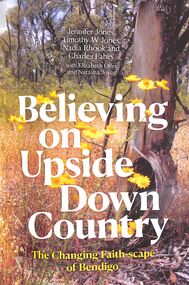
... ...Traditional owners....Bendigo Faith on the goldfields Religion on the Goldfields Customs Rituals Easter Fair Djaara people Traditional owners. Authors: Jennifer Jones, Timothy W Jones, Nadia RhooK and Charles Fahey. ..."Drawing on both oral sources and the objects and spaces of the material culture of religion and belief, the authors provide a fascinating elucidation of past and present meanings of faith, in and around Bendigo, as a lived dimension of experience."Authors: Jennifer Jones, Timothy W Jones, Nadia RhooK and Charles Fahey. With Elizabeth Offer and Natasha Joyce. Published by ANU Press. Softcover book. Front cover has a brown, yellow and green coloured photograph of an Australian bush scene with the title and authors printed in white. The back cover has a description of the contents and biographical details of four authors. 260 pp. Black and white photographs, figures, maps and tables.bendigo, faith on the goldfields, religion on the goldfields, customs, rituals, easter fair, djaara people, traditional owners. -
Clunes Museum
Programme, HEPBURN SHIRE, INAUGURAL WOMEN'S HONOUR ROLL 2005 - HEPBURN SHIRE COUNCIL, 8/03/2005
... SEE 2370.1 ON THE BACK IS AN ACKNOWLEDGEMENT OF THE TRADITIONAL OWNERS THE JAARA PEOPLE....MAY EVELYN LAY B.E.M. local history programs international women's day INAUGURAL WOMEN'S HONOUR ROLL 2005 - HEPBURN SHIRE COUNCIL SEE 2370.1 ON THE BACK IS AN ACKNOWLEDGEMENT OF THE TRADITIONAL OWNERS THE JAARA PEOPLE. THE PROGRAMME FROM THE HEPBURN SHIRE TO LAUNCH ITS INAUGURAL WOMEN'S HONOUR ROLL ON INTERNATIONAL WOMEN'S DAY 2005. ...INAUGURAL WOMEN'S HONOUR ROLL 2005 - HEPBURN SHIRE COUNCILTHE PROGRAMME FROM THE HEPBURN SHIRE TO LAUNCH ITS INAUGURAL WOMEN'S HONOUR ROLL ON INTERNATIONAL WOMEN'S DAY 2005.INAUGURAL WOMEN'S HONOUR ROLL 2005 - HEPBURN SHIRE COUNCILlocal history, programs, international women's day -
 Greensborough Historical Society
Planning Document, Banyule Indigenous Australians Commitment Plan (2012-2016) and 2012-13 Action Plan, 2012-2016
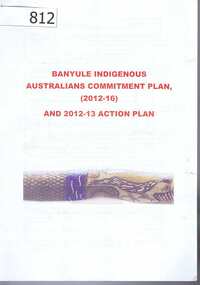
... Contains a short history of the Wurundjeri willam, traditional owners of Banyule. Outlines the Banyule Council's Statement of Commitment to Indigenous members of the community....Contains a short history of the Wurundjeri willam, traditional owners of Banyule. Outlines the Banyule Council's Statement of Commitment to Indigenous members of the community. ...Contains a short history of the Wurundjeri willam, traditional owners of Banyule. Outlines the Banyule Council's Statement of Commitment to Indigenous members of the community.This document contains both historical information and a plan for moving forward in identifying and promoting the culture and heritage of the Wurundjeri willam in Banyule.banyule city council, wurundjeri willam, indigenous heritage in banyule -
 Sunbury Family History and Heritage Society Inc.
Photograph, 18th October 1998
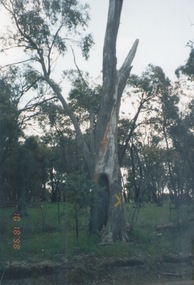
... Redesdale is NW of Melbourne in the Greater Bendigo area. The traditional owners are the Dja Dja Wurrung People....Redesdale is NW of Melbourne in the Greater Bendigo area. The traditional owners are the Dja Dja Wurrung People. ...The Aboriginal scarred tree was growing along the Redesdale Road just north of the Langley State School. Redesdale is NW of Melbourne in the Greater Bendigo area. The traditional owners are the Dja Dja Wurrung People.The scarred tree is evidence of Aboriginal occupation in the area as the bark from such trees was used for many items. A non-digital coloured photograph of a scarred tree with other smaller trees in the background. The tree has a yellow cross painted on its trunk.scarred trees, aboriginal society, aboriginal technology, langley, dja dja wurrung people -
Orbost & District Historical Society
black and white photograph, 1.3.1921
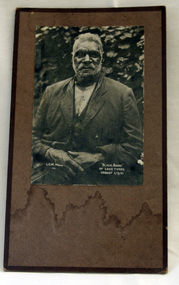
... The peninsula, which has a lake on each side, was known to its traditional owners as Bung Yarnda....The peninsula, which has a lake on each side, was known to its traditional owners as Bung Yarnda. Lake-Tyers Aboriginal-Mission "Black Andy of Lake Tyers ORBOST 1/3/21" L.G.W. photo 741 A black/white photograph of an older bearded Aboriginal man in a suit sitting in front a leafy bush. ...In 1861 the Lake Tyers Mission Station was established by the Church of England missionary Reverend John Bulmer, to house some of the Gunaikurnai survivors of the conflict. The peninsula, which has a lake on each side, was known to its traditional owners as Bung Yarnda.A black/white photograph of an older bearded Aboriginal man in a suit sitting in front a leafy bush. The photograph is glued onto cardboard with a black frame."Black Andy of Lake Tyers ORBOST 1/3/21" L.G.W. photo 741lake-tyers aboriginal-mission -
 Orbost & District Historical Society
black and white photograph, "Black Andy of lake Tyers ORBOST 1/3/21", 1. 2.1921
... The peninsula, which has a lake on each side, was known to its traditional owners as Bung Yarnda....The peninsula, which has a lake on each side, was known to its traditional owners as Bung Yarnda. Lake-Tyers photograph Black Andy of Lake Tyers ORBOST 1/3/21 L.G.W. photo 741 A black and white photograph of an older, bearded Aboriginal man. ...In 1861 the Lake Tyers Mission Station was established by the Church of England missionary Reverend John Bulmer, to house some of the Gunaikurnai survivors of the conflict. The peninsula, which has a lake on each side, was known to its traditional owners as Bung Yarnda.A black and white photograph of an older, bearded Aboriginal man. He is sitting outdoors in front of a leafy bush. He is wearing a suit.Black Andy of Lake Tyers ORBOST 1/3/21 L.G.W. photo 741lake-tyers photograph -
 Greensborough Historical Society
Article - Newspaper Clipping (copy), Jas Blackburn, The locality of Batman's Treaty with the Port Phillip natives, 09/01/1886
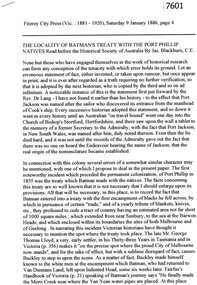
... Discusses Batman's Treaty with the Port Phillip traditional owners and the possible site of the signing - on the east side of the River Plenty, NW of Eltham andd 3 miles above the junction of the Plenty with the Yarra River....Discusses Batman's Treaty with the Port Phillip traditional owners and the possible site of the signing - on the east side of the River Plenty, NW of Eltham andd 3 miles above the junction of the Plenty with the Yarra River. john batman batman's treaty port phillip district plenty river 6p. text. ...Text of a paper read before the Historical Society of Australia by Jas. Blackburn in 1886. Discusses Batman's Treaty with the Port Phillip traditional owners and the possible site of the signing - on the east side of the River Plenty, NW of Eltham andd 3 miles above the junction of the Plenty with the Yarra River.6p. text.john batman, batman's treaty, port phillip district, plenty river -
 The Beechworth Burke Museum
Geological specimen - Ropy Lava
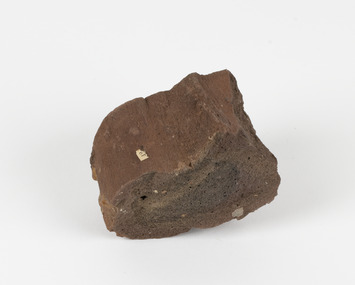
... This area has a rich mineral history and experienced the gold rush in the 1850's. The traditional owners of this area are the Dja Dja Wurrung people....This area has a rich mineral history and experienced the gold rush in the 1850's. The traditional owners of this area are the Dja Dja Wurrung people. ...‘Ropy lava’ is known for its sculptural and layered qualities. It occurs in specific lava flows that are slow moving and slow cooling, allowing for unique formations to be created out of the motion. Ropy Lava is a flow that has a hardened crust with molten material underneath, the tension between these states is what creates its characteristic form. The brown/red hue of the stone is an indication of age, as it is oxidised iron deposits. This rock deposit is thought to be sourced from the area by Talbot, in western Victoria. This area has a rich mineral history and experienced the gold rush in the 1850's. The traditional owners of this area are the Dja Dja Wurrung people.This geological specimen shows the conditions in which the Australian landscape was created as well as provides an indication as to how these events occurred. It is representative of a common natural process that contextualises the formation of Australia with the formation of other landmasses. This specimen is part of a larger collection of geological and mineral specimens collected from around Australia (and some parts of the world) and donated to the Burke Museum between 1868-1880. A large percentage of these specimens were collected in Victoria as part of the Geological Survey of Victoria that begun in 1852 (in response to the Gold Rush) to study and map the geology of Victoria. Collecting geological specimens was an important part of mapping and understanding the scientific makeup of the earth. Many of these specimens were sent to research and collecting organisations across Australia, including the Burke Museum, to educate and encourage further study.Hand sized specimen in brown/red hues42 / victoria, talbot, lava, ropy, ropy lava, mineral, geological specimen, geological, geological heritage, natural stone, natural history -
Bialik College
Flyer (item) - Ngarrgee, 2020
... Invitations sent to school community and running sheets for Ngarrgee events 2020- to acknowledge the traditional owners of the land, Rosh Hashanah, and to welcome the new Year 12 leadership cohort, the Mazkirut. ...Invitations sent to school community and running sheets for Ngarrgee events 2020- to acknowledge the traditional owners of the land, Rosh Hashanah, and to welcome the new Year 12 leadership cohort, the Mazkirut. ...Invitations sent to school community and running sheets for Ngarrgee events 2020- to acknowledge the traditional owners of the land, Rosh Hashanah, and to welcome the new Year 12 leadership cohort, the Mazkirut. 'Ngarrgee' is a Wurundjeri word meaning 'coming together'. The school's RAP Committee advised in 2020: 'Following on from the very successful Welcome to Country smoking ceremony in 2019, which was appropriately aligned with Rosh Hashanah, we are continuing with this new tradition by hosting the same event on Tuesday 15 September at 8.00pm via the ZOOM platform. Adapting to current circumstances, the smoking ceremony will be led by Murrundindi, Ngurungaeta (Head Man) for the Wurundjeri clan, from his property in Healesville. This year, the event will also incorporate the Mazkirut Induction ceremony.' Please contact [email protected] to request access to this record. event, celebration, year 12, 2020s -
Surrey Hills Historical Society Collection
Work on paper - Vertical File, Koori Heritage
... (double sided page) 6. ‘The Traditional Owners of the Whitehorse Region’ Gary Presland 1997 (2 pages) 7. ...(double sided page) 6. ‘The Traditional Owners of the Whitehorse Region’ Gary Presland 1997 (2 pages) 7. ...Koori Heritage 1. The Wurundjeri National Museum of Victoria Education service. Undated (double sided pamphlet) 2. Doncaster and Templestowe Aboriginal Sites of Archaeological Significance. Undated (pamphlet) 3. Kori Sites in the City of Whitehorse. Undated. (pamphlet) 4. Aboriginal use of Water related resources (16 page book undated) 5. Tribes, Clan and Boundaries – Koorie Social Organisation. Undated. (double sided page) 6. ‘The Traditional Owners of the Whitehorse Region’ Gary Presland 1997 (2 pages) 7. Notes from Alan J Holt’s research on ‘Possible Aboriginal Occupation: Camberwell – Box Hill Area’ August 1987. (2 pages) 8. Recollection of Bert Legg re: Beckett Park. Undated (1 page) 9. Photocopy and original of The Age article and map re: location of aboriginal relics around Melbourne. 29 September 1976. (3 pages) 10. Christmas card with 3 aboriginal paintings on bark to Miss Sanger from Ruth Trask. Undated. (1 item) 11. Copy of talk on “Once upon a Koori Time – the Surrey Hills area before white settlement” (23 pages) given by Robin Palton to SHHS on 20 October 1997. koori heritage -
 Victorian Aboriginal Corporation for Languages
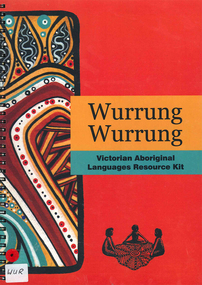
Book, Alexandra Blaszak, Wurrung Wurrung Victorian Aboriginal languages resource kit, 2008
... Concentration Sounds, spellings and symbols Kinship Different things, different words Koorie Garden Timeline Story of Victorian Languages Language on the Mission Role Play Traditional Owners Placenames Graffiti Wall Map References....Concentration Sounds, spellings and symbols Kinship Different things, different words Koorie Garden Timeline Story of Victorian Languages Language on the Mission Role Play Traditional Owners Placenames Graffiti Wall Map References. ...The Wurrung Wurrung Kit is designed to introduce students at all levels to the heritage of Aboriginal languages within the area now known as Victoria. The kit aims to: Create awareness of Victorian Aboriginal languages in the past and present. The kit is not designed for the teaching of languages, Develop students' understanding of the relationship between the languages and culture of Victorian Indigenous people, or Koories, Create awareness of the importance of language to indigenous communities today and to foster respect for these communities and their languages, Highlight the diversity within Aboriginal Victoria and Australia in terms of languages and culture, Provide resources for students and teachers that can be used either as a window into Aboriginal culture generally, or to complement a broader unit of work in indigenous studies. Resources for teachers Purpose of this kit Using this kit Terminology Pronunciation Facts about Aboriginal languages in Victoria Language and Aboriginal culture Revitalizatoin of Aboriginal languages Language Alive in the community Community protocols Understanding the Language Map VELS and Curriculum links Teaching Framework Resources and contacts Activities for students Animal names Colouring in Possum Koala Kangaroo Code breaker What do yo know? Concentration Sounds, spellings and symbols Kinship Different things, different words Koorie Garden Timeline Story of Victorian Languages Language on the Mission Role Play Traditional Owners Placenames Graffiti Wall Map References.maps, b&w photographs, b&w illustrations, colour illustrations, games, referenceswoiwurrung, boonwurrung, gunnai kurnai, djadjawurrung, wathaurong, keerraywoorroong, jardwadjali, wergaia, ladjiladji, taungurung, dhudhuroa, kulin -
 Federation University Art Collection
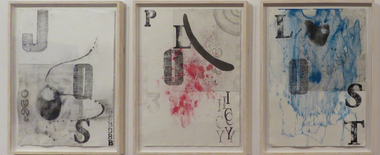
Work on paper, Patrice Mahoney, 'Jobs, Policy and LOST' (tryptich) by Patrice Mahoney, 2014
... This work expresses the artist's frustration with unjust situations experienced by traditional owners of Nganyaywana country. The word 'Policy' refers to White Australia Policy, 'Lost' the hundreds of lost family members, and 'Jobs' highlights the difficulty of Aboriginal peple obtaining work, especially outside Aboriginal positions and policy. ...This work expresses the artist's frustration with unjust situations experienced by traditional owners of Nganyaywana country. The word 'Policy' refers to White Australia Policy, 'Lost' the hundreds of lost family members, and 'Jobs' highlights the difficulty of Aboriginal peple obtaining work, especially outside Aboriginal positions and policy. ...These works are a display of my frustration of hour our family were lucky we were not beheaded, scalped, taken away and impaled as a warning to others not to enter farming lands, which had been traditional lands of the Nganyaywana country. The word 'Policy' represents the White Australia Policy, the word "Lost' stands for those lost including hundreds of family members, 'Jobs' asks why Aboriginal people can only find employment if through Aboriginal positions and policies. The number 3 symbolises myself and my siblings, red is for bloodshed, blue is for secrets and black the family history. Patrice MUTHAYMILES MAHONEY OAM Anewan/Nganyaywan/Dunghutti country. Patrice Mahoney is a printmaker, sculptor, weaver, drawer and painter. Her work challenges mainstream and Aboriginal Australians and is profoundly influenced by space, place and country, taking inspiration from nature, environment and looking forward to a time when she can return to her family's traditional country to make work. In 2012 the artist completed a Bachelor of Visual and Media Arts at Monash University’s Churchill campus (from 2014 Federation University's Churchill Campus). The Victorian Indigenous Art Awards 2014 were exhibited and judged at the Art Gallery of Ballarat.This unique edition triptych involves the techniques of intaglio copper plate, pigment, soft ground, open bite, aquatint, spit-bite, stamping, relief, drawing and burnishing on paper. It was awarded the 2014 Victorian Indigenous Art Awards Federation University Acquisitive Award for for work by a Victorian regional artist. Text, colour, metaphor and Aboriginal symbolism are important components of her work. This work expresses the artist's frustration with unjust situations experienced by traditional owners of Nganyaywana country. The word 'Policy' refers to White Australia Policy, 'Lost' the hundreds of lost family members, and 'Jobs' highlights the difficulty of Aboriginal peple obtaining work, especially outside Aboriginal positions and policy. The number 3 symbolises Patrice Mahoney's siblings, with black used to denote family history. The violently splattered red represents bloodshed, with the blue washing across the work obscuring details and representing secrets. The Selection Panel of the 2014 Victorian Indigenous Art Awards made the following comments on the work: 'The selection panel for the Federation University Acquisitive Award for 2014 were highly impressed by this work and applauded the vigorous use of symbolism and metaphor in a well scripted visual composition. The poignancy of connectedness to the past, memory, place and country is palpable and enhanced by the suggestive employment of text and minimal colour. A provocative and evocative work of art!artist, artwork, patrice mahoney, aboriginal, victorian indigenous awards, jobs, culture, printmaking, drawing, policies, lost, victorian indigenous art awards, available, alumni -
 Melbourne Water
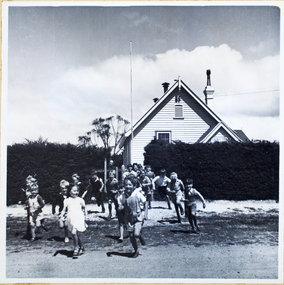
Photograph, North Cocoroc State Primary School, 1950s
... The name 'Cocoroc' means 'frog' in the language of the Wathaurung people — the Traditional Owners of the land the treatment plant was built on. ...The name 'Cocoroc' means 'frog' in the language of the Wathaurung people — the Traditional Owners of the land the treatment plant was built on. ...As the Yarra became unsuitable as a source of water, several attempts were made to find alternative sources for the growing population of Melbourne. It was not until 1891 that the efforts to sewer Melbourne came to fruition with the setting up of the Melbourne Metropolitan Board of Works (MMBW), now known as Melbourne Water. From 1891 until 1992, it was the responsibility of the MMBW to safeguard public health by providing a sewerage system and a safe water supply system. In 1992, The MMBW merged with a number of smaller urban water authorities to form Melbourne Water. The township of Cocoroc was created in 1894 at the Metropolitan Sewage Farm (now the Western Treatment Plant) to house the workers it employed. The name 'Cocoroc' means 'frog' in the language of the Wathaurung people — the Traditional Owners of the land the treatment plant was built on. By the early 1950s there were nearly 100 houses, a town hall, football ground (and team), swimming pool, tennis courts, four schools and a post office, and by the 1970s some 500 people were living in Cocoroc. As it became too expensive for the MMBW to subsidise, Cocoroc was abandoned. By 1973 most of the houses and other buildings were demolished or moved to Werribee. All that is left now of Cocoroc are two small, empty, concrete swimming pools, a few weatherboard sheds and a big iron water tank. This photograph detailing an exterior view of the North Cocoroc State Primary School, is historically significant as it captures children at play within a purpose built community. The School that was one of four was built to educate the children of the MMBW workers. As the school no longer exists, this photograph is the only tangible evidence left of the building, also showcasing the style of buildings in this era. cocoroc, township, school, mmbw, melbourne metropolitan board of works, melbourne water -
 The Beechworth Burke Museum
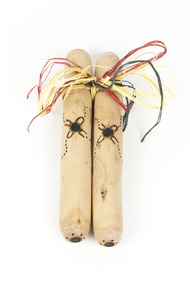
Ceremonial object - Message Sticks, Dja Dja Wurrung
... The Burke Museum is continuing to build relationships and collaborate with traditional owners, Aboriginal communities and the museum sector to ensure culturally appropriate outcomes for the collection, including repatriation of objects to communities of origin. ...The Burke Museum is continuing to build relationships and collaborate with traditional owners, Aboriginal communities and the museum sector to ensure culturally appropriate outcomes for the collection, including repatriation of objects to communities of origin. ...These Message Sticks acknowledge the return of Dja Dja Wurrung Cultural material held by the Burke Museum. The Burke Museum is the current custodian of a significant collection of First Peoples’ cultural material from across South-Eastern Australia. These objects were sold to the Museum by Reynold Everly Johns in 1868. We recognise the harm caused by dispossession of cultural material, and by any inappropriate display and interpretation of this collection over the past 150 years. The Burke Museum is continuing to build relationships and collaborate with traditional owners, Aboriginal communities and the museum sector to ensure culturally appropriate outcomes for the collection, including repatriation of objects to communities of origin. Message sticks are a form of communication between Aboriginal nations, clans and language groups even within clans. Traditional message sticks were made and crafted from wood and were generally small and easy to carry (between 10 and 20 cm). They were carved, incised and painted with symbols and decorative designs conveying messages and information. Some were prepared hastily, like you might create a note left on a friend’s desk or a quick text message; others were prepared with more time to make the markings neat and ornate. There were always marks that were distinctive to the particular group or nation sending the message and often marks identifying the relationship of the carrier to their group. This way it could be identified and authenticated by neighboring groups and by translators when the message stick was taken long distances. Two solid cylindrical shaped pieces of wood bound together with black, red and yellow string. Each stick has etchings with angular lines and dots. dja dja wurrung, message sticks, burke museum, beechworth, beechworth museum, repatriation, reynold everly johns -
 Yarra City Council
Artwork, other - Mural, Ky-ya Nicholson-Ward, Aboriginal Lives Matter, 2021
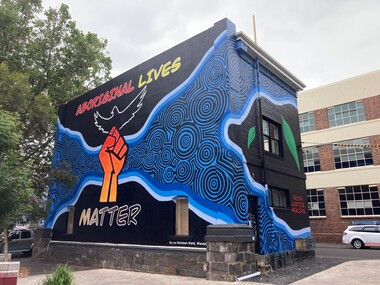
... Selected by Council's Yana Ngargna, Black Lives Matter Working Group the artwork identifies the cultural importance of the local area to the Wurundjeri Woi Wurrung people as the Traditional Owners. With a strong focus on Aboriginal identity the mural outlines the local context of the Black Lives Matter movement, which is connected to racism, policing of Aboriginal and Torres Strait Islander peoples and associated deaths in custody. ...Selected by Council's Yana Ngargna, Black Lives Matter Working Group the artwork identifies the cultural importance of the local area to the Wurundjeri Woi Wurrung people as the Traditional Owners. With a strong focus on Aboriginal identity the mural outlines the local context of the Black Lives Matter movement, which is connected to racism, policing of Aboriginal and Torres Strait Islander peoples and associated deaths in custody. ..."The fist references the Black Lives Matter movement and also represents the strength of Indigenous peoples all over the world and symbolises solidarity and justice for everyone affected by systematic racism. Bunjil (wedge-tailed eagle) is flying high on the building. He is the creator spirit for Wurundjeri people who looks over us and protects us. Bunjil represents healing and power to our people. The blue circles and lines represent revival and waterways; in particular, they depict the Birrarung (Yarra River), which is very significant for the Wurundjeri people. Our people are known as the Manna Gum people. The leaves in the artwork highlight Wurundjeri people and their Country. These leaves also represent the cleansing of negative spirits. The Manna Gum leaf is also an important symbolic offering in our traditional Welcome to Country ceremony. Leaves are offered to visitors as they are granted safe passage through our land. They are made welcome to everything from the tops of the trees to the roots of the earth. We ask that they take care of the land, plants and animals and to respect the protocols and rules of the Traditional Owners whilst on our Country."In 2020 Council declared its support for the global Black Lives Matter (BLM) movement. In consultation with Yarra City Council's Yana Ngargna advisory group a motion was prepared and passed unanimously by all Councillors. A number of actions were generated from this decision; one of which was for Council to commission a large-scale mural that aligned with the movement. Emerging artist Ky-ya Nicholson-Ward, a proud Wurundjeri, Dja Dja Wurrung, Nguarai Illam-Wurrung, German and Irish woman, created the mural installed on a building in Peel Street Park, Collingwood. Selected by Council's Yana Ngargna, Black Lives Matter Working Group the artwork identifies the cultural importance of the local area to the Wurundjeri Woi Wurrung people as the Traditional Owners. With a strong focus on Aboriginal identity the mural outlines the local context of the Black Lives Matter movement, which is connected to racism, policing of Aboriginal and Torres Strait Islander peoples and associated deaths in custody. The artwork acknowledges the ongoing challenges faced by Aboriginal community members and their struggle to survive white systems, policies and institutions. Ky-ya's mural tells the story of Aboriginal resilience, strength and self-determination; and will support the process of healing. It is a celebration of the local Aboriginal and Torres Strait Islander community; the significant Aboriginal history of Fitzroy, Collingwood and surrounds; and community's continuing cultural connection to the area. Importantly, this artwork provides a platform to educate a broader audience about the local context of the Black Lives Matter movement and Aboriginal deaths in custody. The mural will activate this site, enliven the area, promote inclusion, incite conversation and contribute to the creative capital of this locale. A welcoming environment for Aboriginal and non-Aboriginal communities.Aboriginal Lives Matter Ky-ya Nicholson WardOn a black background a hand fist (strength, solidarity and justice) is placed at the centre of the building; Bunjil (wedge-tailed eagle) is depicted flying high on the building; blue circles and lines represent revival and waterways (Birrarung-Yarra River) and the leaves in the artwork highlight Wurundjeri people (cleansing of spirit and welcome to Country)The artist name 'Ky-ya Nicholson Ward' painted in white, low right of the wall facing into Peel Street Park. black lives matter (blm) movement, wurundjeri woi wurrung, bunjil, identity, birrarung, country -
 Bendigo Historical Society Inc.
Book - "Snippets of Bendigo History", 2006
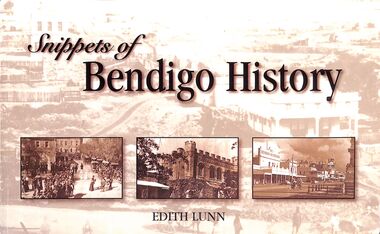
... The city is surrounded by smaller towns such as Castlemaine, Heathcote, Kyneton, Maryborough, Elmore, Rochester, Goornong and Axedale. The traditional owners of the area are the Dja Dja Wurrung (Djaara) people. ...The city is surrounded by smaller towns such as Castlemaine, Heathcote, Kyneton, Maryborough, Elmore, Rochester, Goornong and Axedale. The traditional owners of the area are the Dja Dja Wurrung (Djaara) people. ...Edith Lunn (nee Bishop) was born in Bendigo in July, 1907, and has lived all her life in the city and its immediate environs. Edith long interest and involvement in the community was recognised in 2002 when she was awarded the Order of Australia medal for her services to, and interest in, Bendigo's history. This book records some of her recollections of Bendigo in its earlier days. Bendigo (/ˈbɛndɪɡoʊ/ BEN-dig-oh), formerly known as Sandhurst, is an Australian city in north-central Victoria. The city is located in the Bendigo Valley near the geographical centre of the state and approximately 150 kilometres (93 mi) north-west of Melbourne, the state capital. Bendigo is administered by the City of Greater Bendigo. The council area encompasses roughly 3,000 square kilometres. The city is surrounded by smaller towns such as Castlemaine, Heathcote, Kyneton, Maryborough, Elmore, Rochester, Goornong and Axedale. The traditional owners of the area are the Dja Dja Wurrung (Djaara) people. The discovery of gold on Bendigo Creek in 1851 transformed the area from a sheep station into one of colonial Australia's largest boomtowns. News of the finds intensified the Victorian gold rush, bringing an influx of migrants from around the world, particularly Europe and China. Bendigo became eastern Australia's largest 19th-century gold-mining economy, and the wealth generated during this period is reflected today in the city's Victorian architectural heritage. From 1853 until 1891, Bendigo was officially named Sandhurst. Bendigo's boom period lasted until the early 20th century and after a temporary decline in population and employment, renewed growth occurred from the 1930s as the city consolidated as a manufacturing and regional service centre. Although gold mining continues, recent population growth has been most heavily concentrated in suburban areas. "Snippets of Bendigo History" by Edith Lunn. Soft cover. 65 PP. Sepia historic images of Bendigo on front and back covers. Three small sepia images inset into front cover. Title and authoresses' name on front cover and spine in black. Color and black and white images throughout. This edition 500 copies. gold, edith lunn, view street, pall mall
