
Showing 15 items matching "trip to newcastle"
-
 Federation University Historical Collection
Magazine - booklet, The Magazine of the School of Mines Students Ballarat, 1925, 1926, 1928, 1929, 1925-1929
... ...Trip to Newcastle...Four soft covered School of Mines Students' Magazines .1) 1925 red cover -Editorial, Personal, Answers to Correspondents, Fumes from the Lab, Trip to Newcastle, Arts & Crafts Gossip, Echoes of the Past, Professor Alfred Mica Smith, Sport, The Junior Techs. .2) 1926 orange colour - Editorial, Personal Column, S.M.B. ...Editorial Answers to Correspondents Fumes from the Lab Trip to Newcastle Arts & Crafts Gossip Echoes of the Past Sport r. morrison o. roberts r. begg r. montomery e. rumpff l. hillman g. hopwood a. inglis j. johnson g. neagle a. p. mclean ed. a. brophy dr. j. w. mellor regd. c. callister s. barnett p. trompf e. j. tippett a. t. morrison percy trompf j. bosher j. bell h. steane h. symons s. hillman j. edmunds k. windsor f. craig w. baragwanath l. frees h. jones r. downey h. caddy a. richards c. coster r. andre w. richardson k. mclachlan e. loveland j. alexander j. walters a. fletcher w. watson j. colbourn l. prendergast j. barnett l. clarke m. paul o. dulfer m. norris a. bosher k. kisler ernest h. schache. william baragwanath Alfred Mica Smith obituary excursion to Newcastle Four soft covered School of Mines Students' Magazines .1) 1925 red cover -Editorial, Personal, Answers to Correspondents, Fumes from the Lab, Trip to Newcastle, Arts & Crafts Gossip, Echoes of the Past, Professor Alfred Mica Smith, Sport, The Junior Techs. .2) 1926 orange colour - Editorial, Personal Column, S.M.B. ...Four soft covered School of Mines Students' Magazines .1) 1925 red cover -Editorial, Personal, Answers to Correspondents, Fumes from the Lab, Trip to Newcastle, Arts & Crafts Gossip, Echoes of the Past, Professor Alfred Mica Smith, Sport, The Junior Techs. .2) 1926 orange colour - Editorial, Personal Column, S.M.B. Ball, Eastern Life and Customs, Fumes from the Lab, Chemical Excursions, Organic Evolution, Obituary - Professor Mica Smith, Arts & Crafts Gossip, Echoes of the Past, Sport, The Junior Techs .3) 1928 blue colour - Editorial, List of Course Students' 1929, Notes, S.M.B. Gala and Picture Night, Fumes from the Lab, Arts & Crafts Gossip, Echoes of the Past, Experiences with Malayan Chinese, Sport, The Junior Techs. .4) 1929 pale blue colour - Editorial, List of Course Students' 1929, Notes, S.M.B. Gala and Picture Night, Fumes from the Lab, Arts & Crafts Gossip, Echoes of the Past, Experiences with Malayan Chinese, Sport, The Junior Techs.non-fictionballarat school of mines, students' magazine, magazine, jones-smith, j. maude, h. jolly, f. wert, r. fricke, f. sheahan, r. collins, v. jeffries, m. sydes, b. rogers, l. b. evans, e. van beck, o. cocks, m. timmings, h. brown, theo. e. leonard, dr. j. r. pound, f. x. collins, ernest v. duncan, rex warrillow, edwin a. brophy, e. t. oliver, f.v. middleton, f. larkin, herald shield, harold jolly, g. roberts, e. j. mckissock, jean rodgers, f. sheehan, m. f. timmings, f. ewart, t. e. leonard, jean graham, vera jeffries, m. conlan, j. r. pound, e. n. schache, w. g. coates, jean ronaldson, r. warrillow, v. g. anderson, j. b. robinson, f. v. middleton, professor alfred mica smith, c. a. schache, r. s. russell, g. richmond, r. mcinnes, gordon pearson., editorial, answers to correspondents, fumes from the lab, trip to newcastle, arts & crafts gossip, echoes of the past, sport, r. morrison, o. roberts, r. begg, r. montomery, e. rumpff, l. hillman, g. hopwood, a. inglis, j. johnson, g. neagle, a. p. mclean, ed. a. brophy, dr. j. w. mellor, regd. c. callister, s. barnett, p. trompf, e. j. tippett, a. t. morrison, percy trompf, j. bosher, j. bell, h. steane, h. symons, s. hillman, j. edmunds, k. windsor, f. craig, w. baragwanath, l. frees, h. jones, r. downey, h. caddy, a. richards, c. coster, r. andre, w. richardson, k. mclachlan, e. loveland, j. alexander, j. walters, a. fletcher, w. watson, j. colbourn, l. prendergast, j. barnett, l. clarke, m. paul, o. dulfer, m. norris, a. bosher, k. kisler, ernest h. schache., william baragwanath, alfred mica smith obituary, excursion to newcastle -
Federation University Historical Collection
Booklet, Tulloch & King, Ballarat School of Mines Students' Magazine, 1925, 1925
... Editorial, Personal, Answers to Correspondents, Fumes from the Lab, Trip to Newcastle, Arts & Crafts Gossip, Echoes of the Past, Professor Alfred Mica Smith, Sport, The Junior Techs....Editorial, Personal, Answers to Correspondents, Fumes from the Lab, Trip to Newcastle, Arts & Crafts Gossip, Echoes of the Past, Professor Alfred Mica Smith, Sport, The Junior Techs. ballarat school of mines magazine harold jolly, j. maude, g. roberts, e. j. mckissock, jean rodgers, f. sheehan, m. f. timmings, f. ewart, t. e. leonard, jean graham, vera jeffries, m. conlan, j. r. pound, e. n. schache, w. g. coates, jean ronaldson, r. warrillow, v. g. anderson, j. b. robinson, f. v. middleton, professor alfred mica smith, c. a. schache, r. s. russell, g. richmond, r. mcinnes, gordon pearson. 1925 Signed on front cover "Hessie Darby" 1925 Red soft covered magazine. ...Editorial, Personal, Answers to Correspondents, Fumes from the Lab, Trip to Newcastle, Arts & Crafts Gossip, Echoes of the Past, Professor Alfred Mica Smith, Sport, The Junior Techs.1925 Red soft covered magazine. 1925 Signed on front cover "Hessie Darby" ballarat school of mines, magazine, harold jolly, j. maude, g. roberts, e. j. mckissock, jean rodgers, f. sheehan, m. f. timmings, f. ewart, t. e. leonard, jean graham, vera jeffries,, m. conlan, j. r. pound, e. n. schache, w. g. coates, jean ronaldson, r. warrillow, v. g. anderson, j. b. robinson, f. v. middleton, professor alfred mica smith,, c. a. schache, r. s. russell, g. richmond, r. mcinnes, gordon pearson. -
 Federation University Historical Collection
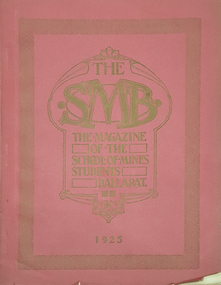
Magazine - Booklet, Tulloch & King, Printers, Ballarat School of Mines Students' Magazine, 1925, 1925
... Editorial, Answers to correspondents, Fumes from the lab, Trip to Newcastle, Arts & Crafts gossip, News items, Echoes of the past, The Mystery of the Atom, Inorganic Evolution, Sport, The Junior Techs. ...Editorial, Answers to correspondents, Fumes from the lab, Trip to Newcastle, Arts & Crafts gossip, News items, Echoes of the past, The Mystery of the Atom, Inorganic Evolution, Sport, The Junior Techs. ballarat school of mines magazine r. s. russell, g. richmond, r. mcinnes C. ...Editorial, Answers to correspondents, Fumes from the lab, Trip to Newcastle, Arts & Crafts gossip, News items, Echoes of the past, The Mystery of the Atom, Inorganic Evolution, Sport, The Junior Techs. Red soft covered magazine.Signed on inside front page by Harold Jolly.ballarat school of mines, magazine, r. s. russell, g. richmond, r. mcinnes, c. j. dennis, junior, j. b. robinson, jas. nunn, doug. cotton, f. v. middleton, professor alfred mica smith, p. montford, r. s. russell, vera jefferies, gordon pearson, g. richmond, r. mcinnes, j. maude, g. roberts, e. j. mckissock, jean rodgers, f. sheehan, m. f. timmings, f. ewart, t. e. leonard, jean graham, vera jeffries, m. conlan, j. r. pound, e. n. schache, w. g. coates, jean ronaldson, r. warrillow, v. g. anderson, c. a. schache -
 Bendigo Historical Society Inc.
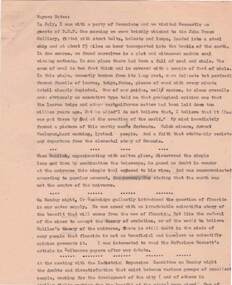
Document - NORMAN OLIVER COLLECTION: MAYOR'S NOTES 1964
... Topics include : a trip to Newcastle, fluoride in the water supply, Industrial Expansion committee, Bendigo Football League, correspondence to council, pig and calf saleyards in Bath Lane, flies in summer and sanitary disposal, and council budgets....Topics include : a trip to Newcastle, fluoride in the water supply, Industrial Expansion committee, Bendigo Football League, correspondence to council, pig and calf saleyards in Bath Lane, flies in summer and sanitary disposal, and council budgets. ...The Norman Oliver collection. Norman Oliver was three times Mayor of Bendigo - 1950-51, 1964-65, 1970-71. Four pages of typed notes, undated, but in sequence labelled 1964. Topics include : a trip to Newcastle, fluoride in the water supply, Industrial Expansion committee, Bendigo Football League, correspondence to council, pig and calf saleyards in Bath Lane, flies in summer and sanitary disposal, and council budgets.bendigo, council, speech notes, norman joseph oliver , councillor norman oliver. mayor of bendigo. fluoride. pig and calf saleyards - bendigo. -
Federation University Historical Collection
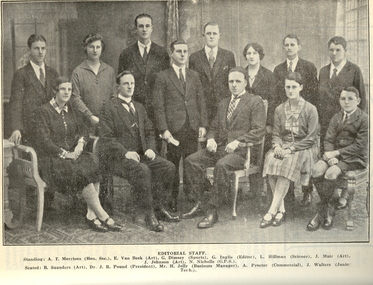
Magazine - Booklet, Ballarat School of Mines Students' Magazine, 1936, 1936
... Hill, Personal Column, Old Boys' Personal, Fumes from the Lab, The Newcastle Trip, War and Women, Arts & Crafts Gossip, Sport, Commercial Notes, The Junior Techs...Hill, Personal Column, Old Boys' Personal, Fumes from the Lab, The Newcastle Trip, War and Women, Arts & Crafts Gossip, Sport, Commercial Notes, The Junior Techs ballarat school of mines magazine allan nye r. rickey a. gordon reg warnock maxwell bayley sylvia wyres m. mcrae albino paganetti victor hunt lila welsh f. g. procter mr. cochrane w. coates d. shore jessie skelton l. hill k. h. wilkie j. pound h. maddern n. pickering john elliott paul f. chaplin w. usebach fergy and p. macgregor j. hammer k. ellwood j. w. muir john menhennett philip harris j. anderson william mcdonald lawrence egan archibald sneddon p. holioake lyle dimsey a. horsfall eoin macdonald james martin jack mole bill walters david flynn william williams dororthy billings clarice mcintosh gladys bilney ida shearer j. brady g. lamb grace gordon elva brimacombe r. hutchinson g. leviston i. mcdonald w. callighan t. jones s. j. chambers russell ewins g. berriman j. walker r. t. hocking f. e. capuano f. w. hassell c. m. reynolds r. davies r. c. white h. f. forrest h. h. evans a. j. ritchie j. g. kittelty w. cornish l. liebhardt r. allender a. pobjoy a. laing w. j. paterson v. e. jukes h. v. bolt l. c. henderson c. f. white nornie gude gilda gude max coward alan nye betty brown leila mclachlan dorothy woolcock verma lynch jessie hopwood jean coates e. prout Signed on front cover by "H. ...List of Full Course Students' 1936, Editorial, Obituary - L. Hill, Personal Column, Old Boys' Personal, Fumes from the Lab, The Newcastle Trip, War and Women, Arts & Crafts Gossip, Sport, Commercial Notes, The Junior TechsYellow soft covered magazine of 60 pages, including advertisements. Artwork * Mr. C - By Albino Paganetti * Bo'sun - By Albino Paganetti * " So then says I ' you can't ask me to do that, boys - its dishonest," - By Jessie Hopwood * come on "(hic)" be serious - By Albino Paganetti * Bill - By Albino Paganetti * Mac - By Albino Paganetti * "I used the fruit bowl this time fro a change" - By Dorothy Woolcock * Mother & Bobby - By Dorothy Woolcock * Ernie - By Nornie Gude * Gateway to the Garden city - By Albino Paganetti * Tip - By Albino Paganetti * Pat - By Jean Coates * Our Dark Horse - By Jean Coates * Moorish Tower, Perth University - By Jessie Hopwood * Sailing Ship Print - By Verma Lynch * Lemon - By Albino Paganetti * Site for the King George memorial - By Gilda Gude * Gladys - By Dorothy Woolcock? * Our Tall Story - By Dorothy Woolcock * Another one today Sylvia - By Nornie Gude * Haze - By Dorothy Woolcock * Commercial Notes - By Leila McLachlan * Fred - By Albino Paganetti * Gordon - By Betty Brown * Gandhi - By Dorothy Woolcock * Ellie - By Gilda Gude * Betty - By Alan Nye * Lost Ball - By E. Prout * Cleaning Ladies - Betty Brown * Rusty - By Gilda Gude * Blondie - By Gilda Gude * Peggy - By Betty Brown * Hocky - By Gilda Gude * Betty - By Gilda Gude * Joan - By Gilda Gude * General - By Max Coward * Twitter - By Gilda Gude * Banjo - By Max Coward * Georgie - By Max Coward * Skinny - By Max Coward * Sydney Jim - By Max Coward * Tommy - By Max Coward * Max - By Max Coward * SOS - By Max Coward * Nipper - By Max Coward * Dasha - By Max Coward * Wee Macgregor - By Albino Paganetti Signed on front cover by "H. Darby".ballarat school of mines, magazine, allan nye, r. rickey, a. gordon, reg warnock, maxwell bayley, sylvia wyres, m. mcrae, albino paganetti, victor hunt, lila welsh, f. g. procter, mr. cochrane, w. coates, d. shore, jessie skelton, l. hill, k. h. wilkie, j. pound, h. maddern, n. pickering, john elliott, paul f. chaplin, w. usebach, fergy and p. macgregor, j. hammer, k. ellwood, j. w. muir, john menhennett, philip harris, j. anderson, william mcdonald, lawrence egan, archibald sneddon, p. holioake, lyle dimsey, a. horsfall, eoin macdonald, james martin, jack mole, bill walters, david flynn, william williams, dororthy billings, clarice mcintosh, gladys bilney, ida shearer, j. brady, g. lamb, grace gordon, elva brimacombe, r. hutchinson, g. leviston, i. mcdonald, w. callighan, t. jones, s. j. chambers, russell ewins, g. berriman, j. walker, r. t. hocking, f. e. capuano, f. w. hassell, c. m. reynolds, r. davies, r. c. white, h. f. forrest, h. h. evans, a. j. ritchie, j. g. kittelty, w. cornish, l. liebhardt, r. allender, a. pobjoy, a. laing, w. j. paterson, v. e. jukes, h. v. bolt, l. c. henderson, c. f. white, nornie gude, gilda gude, max coward, alan nye, betty brown, leila mclachlan, dorothy woolcock, verma lynch, jessie hopwood, jean coates, e. prout -
 Federation University Historical Collection
Booklet - Magazines, Ballarat School of Mines Magazine, 1924-1930, 1924-1930
... Pound * School Literary Society * Ladies in Pharmacy * Musings on Modern Literature - Mainly Drama (W.G. C.) * Trip to Newcastle * Appreciation of the Masterpieces of Art * The Antique Room * Dressmaking * Pottery * Sloyd * The Mystery of the Atom *Inorganic Evolution by R.S. ...Pound * School Literary Society * Ladies in Pharmacy * Musings on Modern Literature - Mainly Drama (W.G. C.) * Trip to Newcastle * Appreciation of the Masterpieces of Art * The Antique Room * Dressmaking * Pottery * Sloyd * The Mystery of the Atom *Inorganic Evolution by R.S. ...The Ballarat School of Mines is a predecessor institution of Federation University Australia. Bound copies of the Ballarat School or Mines Students' Magazine. 1924 * Dr J.R. Pound * Noel Hay Obituary * The History of Chemistry * Literary Society * Herald B. Herbert * Chemistry in Modern Life by Val G. Anderson * Chemistry in Literature by J.R. Pound * School Literary Society * Ladies in Pharmacy * Musings on Modern Literature - Mainly Drama (W.G. C.) * Trip to Newcastle * Appreciation of the Masterpieces of Art * The Antique Room * Dressmaking * Pottery * Sloyd * The Mystery of the Atom *Inorganic Evolution by R.S. Russell * Photography * First Aid Club 1926 * The Trip to Morwell * Chemical Excursions (Yallourn) * Eastern Life and Customs by Rex Warrillow * Organic Evolution by Edwin A. Brophy * Chemistry in the Kitchen * Obituary for Professor Alfred Mica Smith * The Historical Development of Patterns i Silk Fabrics * Pottery * Literary Society * Early Evidence of Metallurgy in Britain * Brief Description of the Magnet Silver Mine, Tasmania * The manufacture of Leather Photographs * SMB Athletics Team, winners of the Herald Shield (M. Timmings, L. Evans, F. Sheahan, R. Collins, A. Murfett, W. Hughes, L. Hillman * SMB Football Team * Ballarat Technical Art School Tennis Four * SMB Girls' Basketball Team * SMB GIrls Hockey Team * Ballarat Junior Technical School Scholarship and Studentship Winners * On Punctuation Advertisements: Sunshine Biscuits, Harris Powell and Sandford, W. Gribble & Co., Gilbert Motors, T.J. Haymes The Wallpaper King, C. Marks and Co., Wilson's Tailors and Mercers, George S. Grant, Miss A. Corin Art Worker, Tunbridges, Felton, Grimwade & Co., Hasten and Ewins, Ballarat Wireless Stores, Fred A. Reed, Suttons, E. Hall-Jones, Stansfield and Smith, Ballarat Gas Company, Richards and Co Studio, F.H. Drew, Adam Scott, R.A. Hudson, Huttons, J.A. Holland, A.E. White, F. Barrow Monumental Sculptor, R. Young, H.A. Evans, Alexandria Tea Rooms, W. Cornell Chemist, Black Cat Tea Rooms, J.A. Reynolds, A.M. Palmer, Morris Cars and Trucks, Mrs Stones, Millers The Clothiers, T.G. Skewes, Wattle TEa Rooms, H.B. Selby, Middleton and Morris, C.P.A. Taylor, Thornton Studios, Fred Irwin, Isaac Abraham, Ballarat Radio Listening-In, Baxter and Stubbs 1927 * Chemists Trip to Melbourne (Mount Lyell Chemical Works, Footscray, Yarraville * Literary Society * Mr J.N. Rowell 1928 * Prohibition in U.S.A. by Ed A. Brophy * Dr. J.W. Mellor and His Work at Stoke, England by Reginald C. Callister * The Science of Chemistry by C.A. Schache * Trip to Yallourn (Brown Coal Deposits, Steam Plant at Yallourn, Switchgear and Transformers, Briquette Factory * Walhalla Past and Present by G.E.B. * The Hand Loom * Precious Stones 1929 * The Old Brewery * The History of Chemistry by J.R. Pound * Occurrence of Mineral Oil in Gippsland * Experiences with Malayan Chinese by R. Warrillow * Organise Colors (Dyestuff Pigments) in Rubber Goods 1930 * News from Chine by Henry Kum Yuen * L'Art Moderne * The Story of Clay by T.H. Trengrove * A Glimpse of England * The Beginnings of Arithmeticballarat school of mines, pottery, ceramics, reginald callister, metallurgy, chemistry, j. pound, alfred mica smith, herald shield, harold herbert, lindsay hillman, john rowell, j.r. pound, noel hay, drawing from antique, yallourn excusion, walhalla, sunshine biscuits, harris powell and sandford, w. gribble & co., gilbert motors, t.j. haymes, the wallpaper king, c. marks and co., wilson's tailors and mercers, george s. grant, miss a. corin art worker, tunbridges, felton, grimwade & co., hasten and ewins, ballarat wireless stores, fred a. reed, suttons, e. hall-jones, stansfield and smith, ballarat gas company, richards and co studio, r.a. hudson, huttons, j.a. holland, a.e. white, f. barrow monumental sculptor, r. young, h.a. evans, alexandria tea rooms, w. cornell chemist, black cat tea rooms, j.a. reynolds, a.m. palmer, morris cars and trucks, mrs stones, millers the clothiers, t.g. skewes, wattle tea rooms, h.b. selby, middleton and morris, c.p.a. taylor, thornton studios, fred irwin, isaac abraham, ballarat radio listening-in, baxter and stubbs, mount lyell chemical works, footscray, c.a. schache, yallourn briquette factory, t.h. trengrove, history of chemistry, excursions, morwell, morwell excursion, women in pharmacy, mt lyall, excursion, slloyd, drawing from the antique, james pound, yallourn, yallourn excursion, ballarat arch of victory, mt macedon, f.h. drew, adam scott, university women -
 Mission to Seafarers Victoria
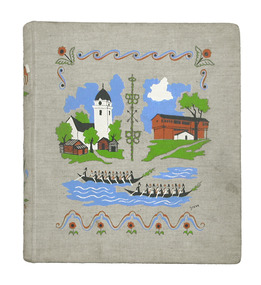
Album - Photographic album, Ports of call with the M/S Mongabarra from December 1st 1949 to July 23rd 1950, 1949
... trip Quinn made to Africa out of Gothenburg. The album preserves a 1950s perspective of a Merchant Seaman and his experience of the respective Ports at that time. The Collection is especially useful when viewed along with contemporary Quinn family correspondence. album photograph ms mongbarra san francisco dunkirk voyages allan quinn barbara quinn seafaring life ww2 seafarer melbourne sydney brisbane san pedro newcastle adelaide port pirie port lincoln cape town las palmas australia south africa canary islands usa United states france antwerp belgium hull england hamburg germany copenhagen denmark gothenburg norway sweden halden malmö On front cover possible designer printed signature in black: "Grane"; On inside front cover on adhered sheet of paper in aqua ink lists intinerary/ index of 20 Ports visited: Title (see above) / "Signed on in San Francisco December 1st 1949 / " then a header line for 4 columns: " PORT COUNTRY ARRIVED DEPARTED / 1. ...The album tells the story of ports visited by Allan Charles Quinn during his service on board the M/S "Mongabarra". He signed on in San Francisco on December 1, 1949. Note this trip overlapped with the Album (00278) which documents the next trip Quinn made to Africa out of Gothenburg. The album preserves a 1950s perspective of a Merchant Seaman and his experience of the respective Ports at that time. The Collection is especially useful when viewed along with contemporary Quinn family correspondence.Album with metal Metal binder rings at spine and beige fabric cover with gouache printed colour design featuring scandinavian buildings. The album contains 25 pages of b/w mounted photographs. Some are missing. The cover is illustrated with colour screenprinted pictures of a white tower on the left and a brown Barn-like building on the right. There are stylised canoe boats containing rowers in the foreground.. On the inside front cover is a handwritten itinerary of the places visited.On front cover possible designer printed signature in black: "Grane"; On inside front cover on adhered sheet of paper in aqua ink lists intinerary/ index of 20 Ports visited: Title (see above) / "Signed on in San Francisco December 1st 1949 / " then a header line for 4 columns: " PORT COUNTRY ARRIVED DEPARTED / 1. San Francisco U.S.A 10-10-49 4-12-49 / ... / 10. ADELAIDE ... 11-4-50 19-4-50 / .../ 20. HALDEN NORWAY 23-7 - 50 25-7-50" ; Most of the photographs in the Album also annotated and dated ; inside back cover has an embossed letter R.album, photograph, ms mongbarra, san francisco, dunkirk, voyages, allan quinn, barbara quinn, seafaring life, ww2, seafarer, melbourne, sydney, brisbane, san pedro, newcastle, adelaide, port pirie, port lincoln, cape town, las palmas, australia, south africa, canary islands, usa, united states, france, antwerp, belgium, hull, england, hamburg, germany, copenhagen, denmark, gothenburg, norway, sweden, halden, malmö -
 Flagstaff Hill Maritime Museum and Village
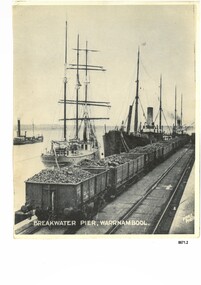
Photograph - Vessels at Breakwater Pier, Warrnambool, Foyle Photographic Studio, circa 1906
... Between 1900 and 1909 the Barrabool was making regular trips along the east coast of Australia, carrying coal to Hobsons Bay (Melbourne) from Newcastle, Bellambi and Sydney. ...Between 1900 and 1909 the Barrabool was making regular trips along the east coast of Australia, carrying coal to Hobsons Bay (Melbourne) from Newcastle, Bellambi and Sydney. ...This photograph was one of ten photographs donated to Flagstaff Hill Maritime Museum and Village by Fred Trewartha. Frederick John Fox Trewartha (Fred) was a well-known Warrnambool businessman. He was born in Beeac near Geelong in 1920 and came to Warrnambool with his family as a very young child. He was apprenticed to his father John, as a saddler and later opened his own shop on Raglan Parade. He then moved into working with tarpaulins and canvases for the trucking industry. Fred was keenly interested in photography (and was a member of the Warrnambool Cine Club), yachting and boat building. He kept his yacht moored at Port Fairy for many years and participated in sailing events locally and interstate. He also built boats with his sons. He had the opportunity to meet many older sailors and it's thought this photo (and others in the set) may have been given to him by one of these men. Fred Trewartha died in 2016 in Warrnambool. The three identifiable ships in this picture are the "Speculant", the "S. S. Barrabool" and the "S. S. Flinders" - coastal trading vessels that regularly came and went from Warrnambool. The steamer on the left hasn't been identified. The barquentine SPECULANT was a steel, three-masted sailing ship built in 1895 in Inverkeithing, Scotland, registered in Warrnambool, Victoria and wrecked at Cape Paton, Victoria, 10th February 1911. The SPECULANT had been involved in the timber trade between the United Kingdom and Russia, until sold to its Warrnambool owners and timber merchants Messrs. P.J. McGennan & Co. (Peter John McGennan) in 1902 for 3000 pounds and had her sailed to Warrnambool as her new port. Peter John McGennan was born in 1844 and worked as a builder and cooper in Holyhead, Anglesea, Wales. He immigrated to Australia in 1869 as a free settler and arrived in Warrnambool in 1871 and undertook management of a property in Grassmere for Mr. Palmer. Peter met his wife Emily in South Melbourne and they married in 1873. They had ten children including Harry who lived to 1965, and Andrew who lived until 1958. (The other children were their four brothers - John who was killed in the Dardenalles aged 35, Frederick who died aged 8, Peter who died aged 28, Frank who died aged 5 weeks - and four sisters - Beatrice who died age 89, Edith who died aged 49, Blanche who died aged 89 and Eveline who died aged 48.) In 1874 Peter starting a boating establishment on the Hopkins River. In 1875 he opened up a Coopers business in Kepler Street next to what was Bateman, Smith and Co., moving to Liebig Street, next to the Victoria Hotel, in 1877. In 1882 he then moved to Lava Street (which in later years was the site of Chandlers Hardware Store). He was associated with the establishment of the Butter Factory at Allansford. He started making Butter Boxes to his own design and cheese batts for the Butter Factory. In 1896 established a Box Factory in Davis Street Merrivale, employing 24 people at its peak, (it was burnt down in 1923); and in Pertobe Road from 1912 (now the Army Barracks building). Peter was a Borough Councillor for Albert Ward from 1885 to 1891, he commenced the Foreshore Trust (including the camping grounds along Pertobe Road), and he was an inaugural Director of the Woollen Mill in Harris Street, buying an extensive share-holding in 1908 from the share trader Edward Vidler. They lobbied the Town Hall to have a formal ‘Cutting’ for the waters of the Merri River to be redirected from its natural opening south of Dennington, to its existing opening near Viaduct Road, in order to have the scourings from the wool at the Woollen Mill discharged into the sea. He sold Butter Boxes around the state, and had to ship them to Melbourne by rail. Peter’s purchase of the SPECULANT in 1902 enabled him to back-load white pine from Kaipara, New Zealand to Warrnambool to make his butter boxes then, to gain profitability, buy and ship potatoes and other primary produce bound to Melbourne. (McGennan & Co. had also owned the LA BELLA, which had traded in timber as well, until she was tragically wrecked with the loss of seven lives, after missing the entrance channel to Warrnambool harbour in 1905. It appears that the SPECULANT was bought to replace the LA BELLA.) In 1911 the SPECULANT had been attempting to depart Warrnambool for almost the entire month of January to undergo docking and overhaul in Melbourne. A month of east and south-easterly winds had forced her to remain sheltered in Lady Bay, Warrnambool apart from one morning of northerlies, when an attempt was made to round Cape Otway; she had to return to shelter in Portland after failing to make any headway. With only 140 tons of sand ballast aboard, the ship would not have been easy to handle. Captain Jacobsen and his crew of nine, mainly Swedes, decided to make for Melbourne, leaving Portland Harbour on 5th February 1911. By the 9th they had reached Cape Otway, where they encountered a moonless night, constant heavy rain, and a heavy sea with a south-easterly wind blowing. After safely rounding Cape Otway the course was changed to east, then north-east to take the vessel to a point six miles off Cape Patton, following the orders of Captain Jacobsen, who told the crew to be very careful with the steering, as the wind and sea was running to leeward. The patent log (used to measure speed) had been out of order for the last four months as no-one in Warrnambool was able to fix it: it was intended to have it repaired in Melbourne. In the meantime the crew measured the vessel's speed by looking over the side and estimating wind strength. This compounded the difficulties of imprecise positioning, as the strong cross wind and sea were acting on the lightly laden vessel to steadily drive it towards the shore. At 3.30am on Friday 10 February 1911 Captain Jacobsen and the first mate were looking over the side of the vessel when they heard the sound of breakers and suddenly struck the rocks. The crew immediately knew they had no chance of getting the SPECULANT off, and attempted to rescue themselves by launching the lifeboat, which was instantly smashed to pieces. One of the crew then volunteered to take a line ashore, and the rest of the crew were all able to drag themselves to shore, some suffering hand lacerations from the rocks. Once ashore they began to walk along the coast towards Lorne, believing it was the nearest settlement. Realising their mistake as dawn broke they returned westwards to Cape Patton, and found a farm belonging to Mr C. Ramsden, who took them in and gave them a change of clothes and food. After resting for a day and returning to the wreck to salvage some of their personal possessions, at 10am on Saturday they set out for Apollo Bay, a voyage that took six hours, sometimes wading through flooded creeks up to their necks. The Age described the wreck as "listed to starboard. All the cabin is gutted and the ballast gone. There is a big rock right through the bottom of her, and there is not the slightest hope of getting her off". A Board of Marine inquiry found that Captain Jacobson was guilty of careless navigation by not taking steps to accurately verify the position of the vessel with respect to Cape Otway when the light was visible and by not setting a safe and proper course with respect to the wind and sea. It suspended his certificate for 6 months and ordered him to pay costs. The location of the wreck site was marked for a long time by two anchors on the shoreline, until in 1970 the larger of the two anchors was recovered by the Underwater Explorers' Club and mounted on the foreshore at Apollo Bay. The bell from the wreck was also donated to the Apollo Bay Surf Lifesaving Club but is recorded to have been stolen. Rusting remains of the wreck can still be found on the shoreline on the southern side of, and directly below Cape Patton. Parts of the SPECULANT site have been buried by rubble from construction and maintenance works to the Great Ocean Road, as well as by naturally occurring landslides. Peter J McGennan passed away in 1920. The Gates in the western wall of the Anglican Church in Henna Street/Koroit St are dedicated to him for his time of community work, which is matched with other prominent Warrnambool citizens; Fletcher Jones, John Younger, J.D.E (Tag) Walter, and Edward Vidler. After Peter J McGennan's death Harry, Andrew and Edith continued to operate the family business until July 11th 1923 when the company was wound up. (Andrew lived in Ryot Street Warrnambool, near Lava Street.) Harry McGennan (Peter and Emily’s son) owned the Criterion Hotel in Kepler Street Warrnambool (now demolished). His son Sid and wife Dot lived in 28 Howard Street (corner of Nelson Street) and Sid managed the Criterion until it was decided by the family to sell, and for he remained Manager for the new owners until he retired. Harry commenced the Foreshore Trust in Warrnambool around 1950. The McGennan Carpark in Pertobe Road is named after Harry and there are Memorial-Stone Gates in his memory. (The Gates were once the original entrance to the carpark but are now the exit.). The Patent Log (also called a Taffrail log) from the SPECULANT, mentioned above, and a number of photographs, are now part of the Collection at Flagstaff Hill Maritime Village.. The S. S. Flinders was built by A. J. Inglis, Ltd, Pointhouse, Glasgow in 1878 for the "Tasmanian Steam Navigation Company', Hobart which merged with the "Union Steamship Company" of New Zealand and it was later sold to the firm "McIlwraith, McEacham and Company". It was built of iron and was 1000 tons and 227 feet, 1 inch long. It was described as "splendidly fitted up for the carriage of passengers and her cargo space was also very large". In the saloon about 130 passengers could be accommodated while the second class had sufficient room for one hundred passengers. In 1890, the S. S. Flinders would leave Melbourne on Mondays and Thursdays at 5 pm and reach Warrnambool the following morning at 8 am. On the return it would leave Warrnambool on Wednesdays and Saturdays at 5 pm and reach Melbourne the following morning. In 1896, the Weekly Times described the "steamer Flinders (otherwise known as "the Warrnambool mailboat") as "as good a sample of a seagoing steamer as there is trading on the Victorian Coast at the present time". In April 1896 newspaper reports noted the S. S. Flinders took 2915 bags of potatoes from Warrnambool to Melbourne (the largest shipment of that season) as well as 50 tons of tinned rabbits from the Hamilton Preserving Factory. It was also noted that particularly during the Christmas period, there were excessive demands for berths from holiday makers wanting to enjoy a holiday in Warrnambool. In May 1903, the S. S. Flinders narrowly escaped destruction when an explosion and subsequent fire occurred during the passage from Melbourne to Warrnambool. A drum (which apparently contained carbide of calcium) exploded and blew off a hatch cover. As the steamer got to within a mile or two of Warrnambool, smoke was seen coming out of the hold and (unknown to the passengers) flames had taken hold. The crew quickly got to work - closing down all the hatches and pumping water into the hold through a hole in the saloon floor. There were 30 or 40 cases of kerosene on board. The Flinders continued on to Warrnambool and berthed at the Breakwater. The passengers all went ashore - many unaware of the danger they had been in. A telephone message was sent to the local Fire Brigade Station however the fire was extinguished before the firemen and their equipment arrived. After the hold was checked, the Flinders was certified as seaworthy and left for Portland. The Flinders continued to transport Western District produce as well as passengers from Warrnambool to Melbourne until 1906 when (due to a decrease in shipping trade during the Winter and the availability of train services) the Flinders was replaced by the smaller steamer "Dawn" and in 1907 when it was sold to the "Adelaide Steamship Company" for use in the Western Australia coastal trade, it was replaced by the "S. S. Barrabool". The S. S. Barrabool was a coastal steamer built by "Palmer Shipbuilding and Iron Company Limited" in Jarrow, Durham in 1874. It was bought by "Howard Smith Ltd" who was a pioneer in the coal trade between Melbourne and Newcastle. Howards Smith's early fleet contained ships named after local hills and mountains -"You Yangs", "Macedon", "Dandenongs" and "Barrabool". Later they extended their fleet to include ships that were well known in Warrnambool including the "Dawn" and the "Edina". The S. S. Barrabool had a chequered start and was nicknamed the "Great Australian Ram" because of the numerous accidents it was involved in. Between 1875 and 1883 it collided with three other vessels - sinking the "Queensland" on August 3rd, 1876, near Wilson's Promontory and sinking the "Bonnie Dundee" on 10th March 1879 off Lake Macquarie, New South Wales (with the loss of five lives). In August 1884 the Barrabool collided with the steamer "Birksgate" in Port Jackson causing considerable damage to "Birksgate". However in a newspaper article published in the "Truth" in March 1899 the S. S. Barrabool was described as "one of the fine old type of vessels" and "still a stout a craft as ever". The article was describing the practice of a "two-mate" system on board many ships (the Barrabool being one) whereby the company only employs two men (a first and second mate who must alternate watches of four hours each) rather than three mates who work four hours on and eight hours off. It was suggested that ships employing the "two-mate" system may find their insurance policies "null and void" should an accident occur. However the writer did note that the Barrabool was "officered by a captain and first and second mates .. whom it would be impossible to find more capable officers amongst the maritime fleet of the colonies". Between 1900 and 1909 the Barrabool was making regular trips along the east coast of Australia, carrying coal to Hobsons Bay (Melbourne) from Newcastle, Bellambi and Sydney. In 1907 it was brought in as a temporary replacement on the Melbourne to Warrnambool route for the S.S. Flinders. In 1912 the S. S. Barrabool ran aground off the Fitzroy River in Queensland and was found to be uneconomic to repair. It was brought back to Sydney and converted into a hulk. In August 1952 it was towed 17 miles off Sydney and scuttled. “Foyle” written on the photograph is the name of Foyle’s Photographic studio - originally owned by James Charles Foyle. He owned “Foyle’s Photo Card Studios” in Liebig St, Warrnambool, which operated between 1889 – 1919 At the time of the photograph the studio was owned by both Charles and Lilian Foyle (sometimes known as Lillian or Lily), either of whom could have taken this photograph. They also worked together at a later date on the photographs, sketches and paintings of the famous and historical Pioneers’ Honour Board.This photograph is a significant record of three of the well-known coastal traders (the "Speculant", the "S. S. Barrabool" and the "S. S. Flinders") that sailed along the southwest coast of Victoria for many years - transporting goods and passengers between Melbourne and Warrnambool.A black and white photograph titled "Breakwater Pier, Warrnambool". A line of coal trucks on rails are on the Breakwater. There are three ships (one sailing ship and two steamers) moored at the pier. In the left side of the picture is another ship. The name of the photographer is printed in the lower right corner. On the back of the photograph are the handwritten names of the moored ships written in blue pen. It also has the handwritten name, town and telephone number of the donor. In the bottom right hand corner is an upside down stamped number in black ink.Front of photograph - "BREAKWATER PIER, WARRNAMBOOL." "FOYLE PHOTO" Back of photograph - "Sailing Ship" "Speculant sail ship" "Barrabool coal ship" "Flinders Passenger ship" Name of donor W'Bool (and telephone number) "K-7148 M" (stamped upside down)flagstaff hill maritime museum and village, warrnambool, great ocean road, shipwreck coast, speculant, barque speculant, p. j. mcgennan, peter john mcgennan, speculant wreck, captain jacobsen, s. s. flinders, steamer flinders, a. j. inglis ltd, tasmanian steam navigation company, mcilwraith mceacham and company, warrnambool mailboat, coastal steamer, s. s. barrabool, howard smith ltd, two-mate system, coal ship, dawn, edina, lady bay, breakwater, warrnambool breakwater, foyle, foyle photographic studio warrnambool -
 Flagstaff Hill Maritime Museum and Village
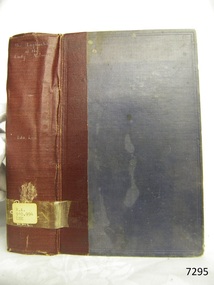
Book, The Logbooks of The Lady Nelson, 1915
... He discovered Port Phillip on Victoria’s coast and explored King Island, he helped establish the first European settlement in Tasmania on the Derwent River, and Port Dalrymple, Newcastle and Port Macquarie. He made several trips from Norfolk Island to Hobart Town. ...He discovered Port Phillip on Victoria’s coast and explored King Island, he helped establish the first European settlement in Tasmania on the Derwent River, and Port Dalrymple, Newcastle and Port Macquarie. He made several trips from Norfolk Island to Hobart Town. ...This hardcover book, The logbooks of the 'Lady Nelson' : with the journal of her first commander, Lieutenant James Grant, R.N., by Ida Lee (Mrs Charles Bruce Marriott) was published over 100 years after the Lady Nelson arrived in Australia to navigate and survey this ‘new colony’. Included in the book are sixteen charts and illustrations from the originals in the Admiralty Library, showing the surveyed land and water. The transcribed Contents, below, summarise the trips of the Lady Nelson during this time. Book’s Content PLUS text of the Chart of ‘Part of Bass Strait’ - Chapter 1: The Lady Nelson built with centreboards. Her voyage to Sydney under James Grant. The first ship to pass through Bass Strait. - Chapter 2: Returns to explore the Strait. Her visits to Jervis Bay and to Western Port in 1801 - Chapter 3: Colonel Paterson and Lieutenant Grant survey Hunter River - Chapter 4: Murray appointed commander of the Lady Nelson. His voyage to Norfolk Island. - Chapter 5: Murray’s exploration of Bass Strait. - Chapter 6: Discovery of Port Phillip. - Chapter 7: The Lady Nelson in company with HMS Investigator examines the North-Eastern shores of Australia. - Chapter 8: The French ships in Bass Strait. The founding of Hobart. - Chapter 9: Symons succeeds Curtoys as commander of the Lady Nelson. His voyages to Tasmania, Port Phillip and New Zealand. - Chapter 10: The Lady Nelson in Tasmania. The founding of Port Dalrymple. - Chapter 11: The Estramina is brought to Sydney. The Lady Nelson visits Norfolk Island and Port Dalrymple. - Chapter 12: Tippahee and his four sons are conveyed to New Zealand in the Lady Nelson. - Chapter 13: The Lady Nelson accompanies HMS Tamar to Melville Island. - Chapter 14: The loss of the Lady Nelson Text included with the ‘Chart of Bass Strait’ … “Part of Bass Strait, including the discoveries made by Acting Lieut. J. Murray, commander of His Majesty’s armed surveying vessel Lady Nelson, between November 1801 and March 1802. By command of His Excellency Governor King.” “This chart, which bears Murray’s autograph, shows his explorations of Western Port, Port Phillip and King Island. It should be noted that Flinders Island is named Grand Capuchin. This is one of the charts referred to as "unfortunately missing” in the Historical Records of N.S. Wales, vol. iv. P. 764” The story of the Lady Nelson In 1798 the British Admiralty ordered a cutter of 60 tons to be built along the design of the armed cutter Trial that was developed by Captain John Schanck, with three sliding keels or centreboards that could be individually raised and lowered, for use on the River Thames. The new cutter was to be named Lady Nelson. Philip Gidley King, prior to taking up his appointment as third Governor of the colony of New South Wales, was in England at the time of the Lady Nelson’s fit-out and was aware of the need for such a ship for survey work in the colony in New South Wales. He convinced Captain Schanck, the Commissioner of Transport in England, to construct and rig the Lady Nelson as a brig rather than a cutter, keeping the feature of the three sliding keels, which would be very useful for mapping in shallow waters. The new Lady Nelson was launched at Deptford, England on the River Thames in November 1798, with the official commission to discover and survey the unknown parts of the coast of New Holland (Australia) and establish British sovereignty over the continent. The Lady Nelson sailed from Portsmouth, England on March 1800 under the command of Lieutenant James Grant. She carried an armament of two original and four extra brass carronade carriage guns and set sail as part of a convoy heading to Port Jackson, in New South Wales, New Holland. After a while she continued to sail on her own. Her journey was troubled with problems at times; damaged and broken keels, troublesome crew and leaking topsides between the waterline and the deck due to poor seals. She arrived at the Cape of Good Hope in July and waited for the winter to pass to avoid the strong winds of the ‘Roaring Forties’. While at the Cape, Grant received a despatch to travel to Port Jackson via the newly discovered Bass Strait, rather than the usual route via the tip of Van Diemen’s Land (Tasmania). This also gave him the opportunity to survey the strait on the way. He departed the Cape in October and in December he made his first sighting of New Holland near Mount Gambier in what is now South Australia. A report by Ecclestone in 2012, ‘The Early Charting of Victoria’s Coastline’, mentions that Grant charted and named Capes Banks and Northumberland, and sighted inland hills that he named Mt Gambier and Mt Schanck, the latter after the designer of his ship. Grant then reached the south-western shores of what is now Victoria on 3-4 December 1800, and from Cape Bridgewater he examined the coast eastward to Cape Patton. Although he had not continuously sighted the coast in the vicinity of Port Fairy and Warrnambool, the western part of Victoria became known as Grant’s Land. The Lady Nelson continued eastward and passed through Bass Strait, becoming the first vessel to reach the east coast of New Holland from the west, and arrived at her destination of Port Jackson later in December 1800. Grant, in the Lady Nelson, then left Port Jackson and began survey work. He discovered Port Phillip on Victoria’s coast and explored King Island, he helped establish the first European settlement in Tasmania on the Derwent River, and Port Dalrymple, Newcastle and Port Macquarie. He made several trips from Norfolk Island to Hobart Town. Governor Macquarie sailed on with him to Van Diemen’s Land for a tour of inspection in 1811. Grant helped establish the first settlement on Melville Island in Northern Australia. The Lady Nelson was used to transport cargo, civilians and convicts and to source pigs from Timor. In February 1825 the Lady Nelson sailed again for Timor and never returned. One report said that “Every soul on board, we regret to state, was cruelly massacred, and the hull of the vessel was seen some time after with the name painted on her stern.” The hull was sighted on the island of Babar, which is almost 200 kilometres east of Timor. This particular copy of the book ... This item is from the ‘Pattison Collection’, a collection of books and records that was originally owned by the Warrnambool Mechanics’ Institute, which was founded in Warrnambool in 1853. By 1886 the Warrnambool Mechanics’ Institute (WMI) had grown to have a Library, Museum and Fine Arts Gallery, with a collection of “… choice productions of art, and valuable specimens in almost every branch and many wonderful national curiosities are now to be seen there, including historic relics of the town and district.” It later included a School of Design. Although it was very well patronised, the lack of financial support led the WMI in 1911 to ask the City Council to take it over. In 1935 Ralph Pattison was appointed as City Librarian to establish and organise the Warrnambool Library as it was then called. When the WMI building was pulled down in 1963 a new civic building was erected on the site and the new Warrnambool Library, on behalf of the City Council, took over all the holdings of the WMI. At this time some of the items were separated and identified as the ‘Pattison Collection’, named after Ralph Pattison. Eventually the components of the WMI were distributed from the Warrnambool Library to various places, including the Art Gallery, Historical Society and Flagstaff Hill. Later some were even distributed to other regional branches of Corangamite Regional Library and passed to and fro. It is difficult now to trace just where all of the items have ended up. The books at Flagstaff Hill Maritime Village generally display stamps and markings from Pattison as well as a variety of other institutions including the Mechanics’ Institute itself. RALPH ERIC PATTISON Ralph Eric Pattison was born in Rockhampton, Queensland, in 1891. He married Maude Swan from Warrnambool in 1920 and they set up home in Warrnambool. In 1935 Pattison accepted a position as City Librarian for the Warrnambool City Council. His huge challenge was to make a functional library within two rooms of the Mechanics’ Institute. He tirelessly cleaned, cleared and sorted a disarrayed collection of old books, jars of preserved specimens and other items reserved for exhibition in the city’s museum. He developed and updated the library with a wide variety of books for all tastes, including reference books for students; a difficult task to fulfil during the years following the Depression. He converted all of the lower area of the building into a library, reference room and reading room for members and the public. The books were sorted and stored using a cataloguing and card index system that he had developed himself. He also prepared the upper floor of the building and established the Art Gallery and later the Museum, a place to exhibit the many old relics that had been stored for years for this purpose. One of the treasures he found was a beautiful ancient clock, which he repaired, restored and enjoyed using in his office during the years of his service there. Ralph Pattison was described as “a meticulous gentleman whose punctuality, floorless courtesy and distinctive neat dress were hallmarks of his character, and ‘his’ clock controlled his daily routine, and his opening and closing of the library’s large heavy doors to the minute.” Pattison took leave during 1942 to 1945 to serve in the Royal Australian Navy, Volunteer Reserve as Lieutenant. A few years later he converted one of the Museum’s rooms into a Children’s Library, stocking it with suitable books for the younger generation. This was an instant success. In the 1950’s he had the honour of being appointed to the Victorian Library Board and received more inspiration from the monthly conferences in Melbourne. He was sadly retired in 1959 after over 23 years of service, due to the fact that he had gone over the working age of council officers. However he continued to take a very keen interest in the continual development of the Library until his death in 1969 This book about the logbooks of the Lady Nelson is locally significant for its association with the brig Lady Nelson, in which Lt. James Grant made the first documented European discovery of the area later known as Warrnambool in December 1800. This book is also nationally significant for its association with Grant in the Lady Nelson being the first to sail from west to east through Bass Strait, opening up a shorter, faster route to the colony of Port Jackson rather than going all the way south around Van Diemen’s Land. The book is nationally significant for its contents of the logbooks of the journeys of the Lady Nelson under various commanders and the copies of the charts created from the surveyed information and the new land of Australia was discovered. This book is also significant for its association with the full-size non-sailing replica of the Lady Nelson from Mount Gambier’s visitor centre, which was restored by Flagstaff Hill’s Master Boat Builder in Warrnambool in 2012, and with a ship mode of the Lady Nelson in our Collection The Pattison Collection, along with other items at Flagstaff Hill Maritime Village, was originally part of the Warrnambool Mechanics' Institute’s collection. The Warrnambool Mechanics’ Institute Collection is primarily significant in its totality, rather than for the individual objects it contains. Its contents are highly representative of the development of Mechanics' Institute libraries across Australia, particularly Victoria. A diversity of publications and themes has been amassed, and these provide clues to our understanding of the nature of and changes in the reading habits of Victorians from the 1850s to the middle of the 20th century. The collection also highlights the Warrnambool community’s commitment to the Mechanics’ Institute, reading, literacy and learning in the regions, and proves that access to knowledge was not impeded by distance. These items help to provide a more complete picture of our community’s ideals and aspirations. The Warrnambool Mechanics Institute book collection has historical and social significance for its strong association with the Mechanics Institute movement and the important role it played in the intellectual, cultural and social development of people throughout the latter part of the nineteenth century and the early twentieth century. The collection of books is a rare example of an early lending library and its significance is enhanced by the survival of an original collection of many volumes. The Warrnambool Mechanics' Institute’s publication collection is of both local and state significance. The Logbooks of The Lady Nelson Author: Ida Lee ( Mrs Charles Bruce Marriott) Publisher: Grafton & Co Date: 1915Label on spine with typed text RA 910.994 LEE Inside front cover has a sticker that reads Warrnambool Mechanics Institute and Free Library shipwrecked-coast, flagstaff-hill, warrnambool, flagstaff-hill-maritime-museum, maritime-museum, shipwreck-coast, flagstaff-hill-maritime-village, shipwrecked-artefact, book, warrnambool library, warrnambool mechanics’ institute, warrnambool city librarian, mechanics’ institute library, victorian library board, warrnambool books and records, warrnambool children’s library, great ocean road, the logbooks of the lady nelson, ida lee, mrs charles bruce marriott, captain john schanck, sliding keels or centreboards, lady nelson, british brig hms lady nelson, lieutennant james grant, bass strait discovery, surveying king island and port phillip bay, philip gidley king, survey map -
 Conservation Volunteers
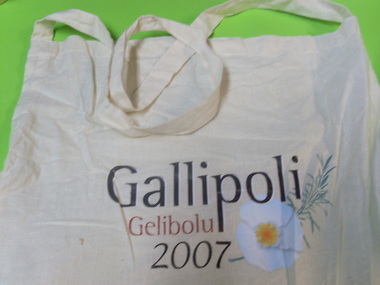
Gallipoli Visitor Welcome Pack 2011, Manufactured and collated for the Australian and New Zealand Governments
... Volunteer Jennie, Newcastle NSW Since 2006 CVA group assisted at the ANZAC Day dawn service and at other remembrance The original idea was Garry Snowden's. Garry has a personal interest in WW1. On his second private trip...Volunteer Jennie, Newcastle NSW Since 2006 CVA group assisted at the ANZAC Day dawn service and at other remembrance The original idea was Garry Snowden's. Garry has a personal interest in WW1. On his second private trip ...Annually since 2006 the Australian Department of Veterans Affairs has invited CVA to arrange a group of volunteers from Australia and New Zealand to travel to Gallipoli as part of the management of the Anzac Day Remembrance event. Announcing the 2011 visit the Commonwealth Minister, Warren Snowdon, said the contribution of volunteers on the ground at Gallipoli is highly valued. “Volunteers are very dedicated. They fund their way there and assist with a range of activities, including site preparation, crowd liaison and the distribution of visitor information packs,” he said. Volunteers appreciate this opportunity to both attend a place significant to many Australians and also to make a contribution to the safe and harmonious running of it. “I would like to thank CVA for the privileged of being involved in the Gallipoli program and would highly recommend it.” Volunteer Jennie, Newcastle NSW Since 2006 CVA group assisted at the ANZAC Day dawn service and at other remembrance The original idea was Garry Snowden's. Garry has a personal interest in WW1. On his second private trip to Gallipoli he noted there was too much litter around the commemorative sites and he had the idea of involving volunteers to play a role in providing a clean environment for visitors. The idea was raised with the Federal Govt (how was this done?). In 2005 there was bad publicity regarding behaviour of visitors and the amount of litter left and the Commonwealth Department of Veterans’ Affairs (DVA) reviewed its management strategy for the event. As an integral part of the strategy CVA was engaged to recruit a group of volunteers who would attend at their own cost, assist the clean up the environs of the main sites prior to Anzac Day while doing orientation and personal sightseeing, and welcome visitors and give them an information pack including a litter bag (see photographs attached. The volunteers do NOT clean up afterwards: that is rightly the work of Turkish contractors. Gallipoli is an iconic site for many Australians and New Zealanders and CVA provides this magnificent opportunity for volunteers to contribute effectively.This is a visitor welcome pack distributed by CVA volunteers to visitors prior to the Anzac Dawn service and other commemorations. It contains three publications, a poncho in the evcent of rain, a rubbish bag and a pin.Gallipoli, Gelibolu 2007anzac, gallipoli, garry, snowden -
 Bendigo Historical Society Inc.
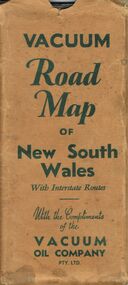
Document - BILL ASHMAN COLLECTION: VACUUM ROAD MAP OF NEW SOUTH WALES
... On the back is Beauty Spots around Sydney, Traffic Hints, Sydney-Melbourne Routes, Short Tours Around Sydney, Outlets of Sydney, Canberra and Newcastle, What to See in Sydney, Vacuum Products, Making Sure of a Trouble-Free Trip, Super Plume or Plume and the front picture of the folded map which has a car with a lady, child and a man at the petrol bowser. ...On the back is Beauty Spots around Sydney, Traffic Hints, Sydney-Melbourne Routes, Short Tours Around Sydney, Outlets of Sydney, Canberra and Newcastle, What to See in Sydney, Vacuum Products, Making Sure of a Trouble-Free Trip, Super Plume or Plume and the front picture of the folded map which has a car with a lady, child and a man at the petrol bowser. ...Vacuum Road Map of New South Wales with Interstate Routes with the Compliments of the Vacuum Oil Company Pty. Ltd. Coloured map of NSW with car, trucks, aeroplane and petrol bowsers around the margin. Has a list of principal Towns and Distances from Sydney. On the back is Beauty Spots around Sydney, Traffic Hints, Sydney-Melbourne Routes, Short Tours Around Sydney, Outlets of Sydney, Canberra and Newcastle, What to See in Sydney, Vacuum Products, Making Sure of a Trouble-Free Trip, Super Plume or Plume and the front picture of the folded map which has a car with a lady, child and a man at the petrol bowser. Map folds up and has a brown card pocket to keep it in.map, bill ashman collection - correspondence, vacuum road map of new south wales, vacuum oil company pty ltd, clive barass -
 Ithacan Historical Society
Document - Newspaper cutting, Family picnic, 1916
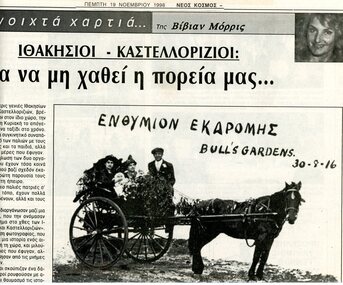
... The newspaper article features a photograph of a very young Nina Black with her mother, Toula Mavrokefalos, taken in 1916 at Bull's Gardens Newcastle during a family trip from Melbourne. The article and photographed was published in Neos Kosmos on 16 November 1998....The newspaper article features a photograph of a very young Nina Black with her mother, Toula Mavrokefalos, taken in 1916 at Bull's Gardens Newcastle during a family trip from Melbourne. The article and photographed was published in Neos Kosmos on 16 November 1998. ...The newspaper article features a photograph of a very young Nina Black with her mother, Toula Mavrokefalos, taken in 1916 at Bull's Gardens Newcastle during a family trip from Melbourne. The article and photographed was published in Neos Kosmos on 16 November 1998.Bull's Garden was located on what is now part of the current suburb of Whitebridge. It was once a major tourist spot of the Newcastle area, drawing thousands of people to visit and picnic. A scanned copy of a newspaper cutting of a photograph of a two ladies nursing little babies and sitting in a open horse-driven cart. A man is standing next to the cart. There is some text also visible.Translation from Greek: Memento of a family outing Bull's Gardens. 30-8-16 -
 Vision Australia
Administrative record - Text, 77th Annual Report Royal Blind Society of N.S.W. (1957), 1957
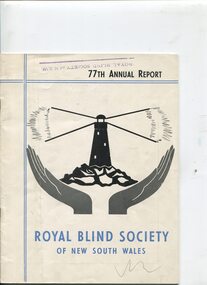
... Articles in the annual report include: the coming opening of the Alexis Albert Hostel for Aged Blind Men in Culdees Road, a property purchased in Burwood Road for Aged Women and Couples, a list of prize winners at the Royal Easter Show for various handicrafts by people who have learned their skill from the Occupational Therapy department, continued output of mats, baskets, brooms and matting in workshops requires demand by conscious consumers, appeal to employ skilled blind people in various industries as switchboard operators, piano tuners, stenographers, etc., aim to create a Youth Hostel due demand, best known of the Society's activities the library continues to provides reading material in Braille and Moon as well as Talking Books, awareness that gramophone discs are no longer being made and investigating the alternatives including tape recorders, regular musical concerts are held in the Society's hall and some musicians compete in the blind category and open category sections in the City of Sydney Eisteddfod, the outpatients clinic continues to provide regular and continuing treatment, families of children at the Victor Maxwell House are encouraged to visit the nursery, take their children home for holidays and weekends or each night - as considered the most beneficial by the Panel, work has begun on a new centre in Newcastle, social cricket matches and usually a bi-annual trip to Brisbane keep the NSW Blind Cricket and Athletics Club in shape, the NSW Blind Bowling Club play both indoor and outdoor bowls with the Balmain Bowling Club helping to organise trips to various clubs, the William Street Womens Bowlers Club invited 4 members from each club to play on the green at Five Dock, next year they intend to organise a similar indoor competition, the Victor Maxwell Nursery benefited greatly from the 2UW Blind Appeal for Blind Babies, Helen Keller Annual Fete, Blind Artists Concert with special guest artists who volunteer their time, thank you to Nellie Sweeney for training the Waimea Singers (Helen Keller hostel choir), '...Articles in the annual report include: the coming opening of the Alexis Albert Hostel for Aged Blind Men in Culdees Road, a property purchased in Burwood Road for Aged Women and Couples, a list of prize winners at the Royal Easter Show for various handicrafts by people who have learned their skill from the Occupational Therapy department, continued output of mats, baskets, brooms and matting in workshops requires demand by conscious consumers, appeal to employ skilled blind people in various industries as switchboard operators, piano tuners, stenographers, etc., aim to create a Youth Hostel due demand, best known of the Society's activities the library continues to provides reading material in Braille and Moon as well as Talking Books, awareness that gramophone discs are no longer being made and investigating the alternatives including tape recorders, regular musical concerts are held in the Society's hall and some musicians compete in the blind category and open category sections in the City of Sydney Eisteddfod, the outpatients clinic continues to provide regular and continuing treatment, families of children at the Victor Maxwell House are encouraged to visit the nursery, take their children home for holidays and weekends or each night - as considered the most beneficial by the Panel, work has begun on a new centre in Newcastle, social cricket matches and usually a bi-annual trip to Brisbane keep the NSW Blind Cricket and Athletics Club in shape, the NSW Blind Bowling Club play both indoor and outdoor bowls with the Balmain Bowling Club helping to organise trips to various clubs, the William Street Womens Bowlers Club invited 4 members from each club to play on the green at Five Dock, next year they intend to organise a similar indoor competition, the Victor Maxwell Nursery benefited greatly from the 2UW Blind Appeal for Blind Babies, Helen Keller Annual Fete, Blind Artists Concert with special guest artists who volunteer their time, thank you to Nellie Sweeney for training the Waimea Singers (Helen Keller hostel choir), ' Royal Blind Society of New South Wales Annual Report Victor Maxwell Kindergarten Helen Keller Hostel Alexis Albert Hostel Employment Black and White Committee Cricket Bowling William Street Blind Women's Bowling Club Goodie Reeve Fundraising Blind musicians Nellie Sweeney Waimea Singers Justice Maxwell Wilfred Reed David Hornibrook Richard Underwood Rotary Club of Burwood 1 volume of text and images 77th Annual Report Royal Blind Society of N.S.W. (1957) Administrative record Text ...Articles in the annual report include: the coming opening of the Alexis Albert Hostel for Aged Blind Men in Culdees Road, a property purchased in Burwood Road for Aged Women and Couples, a list of prize winners at the Royal Easter Show for various handicrafts by people who have learned their skill from the Occupational Therapy department, continued output of mats, baskets, brooms and matting in workshops requires demand by conscious consumers, appeal to employ skilled blind people in various industries as switchboard operators, piano tuners, stenographers, etc., aim to create a Youth Hostel due demand, best known of the Society's activities the library continues to provides reading material in Braille and Moon as well as Talking Books, awareness that gramophone discs are no longer being made and investigating the alternatives including tape recorders, regular musical concerts are held in the Society's hall and some musicians compete in the blind category and open category sections in the City of Sydney Eisteddfod, the outpatients clinic continues to provide regular and continuing treatment, families of children at the Victor Maxwell House are encouraged to visit the nursery, take their children home for holidays and weekends or each night - as considered the most beneficial by the Panel, work has begun on a new centre in Newcastle, social cricket matches and usually a bi-annual trip to Brisbane keep the NSW Blind Cricket and Athletics Club in shape, the NSW Blind Bowling Club play both indoor and outdoor bowls with the Balmain Bowling Club helping to organise trips to various clubs, the William Street Womens Bowlers Club invited 4 members from each club to play on the green at Five Dock, next year they intend to organise a similar indoor competition, the Victor Maxwell Nursery benefited greatly from the 2UW Blind Appeal for Blind Babies, Helen Keller Annual Fete, Blind Artists Concert with special guest artists who volunteer their time, thank you to Nellie Sweeney for training the Waimea Singers (Helen Keller hostel choir), '1 volume of text and imagesroyal blind society of new south wales, annual report, victor maxwell kindergarten, helen keller hostel, alexis albert hostel, employment, black and white committee, cricket, bowling, william street blind women's bowling club, goodie reeve, fundraising, blind musicians, nellie sweeney, waimea singers, justice maxwell, wilfred reed, david hornibrook, richard underwood, rotary club of burwood -
 Victorian Railway History Library
Book, Attenborough, Peter, Byways of Steam 24, 2005
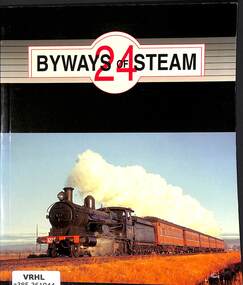
... In this brief trip back, Robert explores the detail around the engine shed. Murphys Law at Hawkmount, by Stephen Halgren. Hawkmount, on the Sydney to Newcastle main line attracted scores of steam enthusiasts during the final years of steam. ...The Richmond Branch, by Peter Attenborough. Peter looks at the history of the Richmond branch and why it was so significant to the fledgling colony in the 1860’s. The expansion of the line and its many wayside stations are reviewed, as are the operational aspects of the branch. A brief insight is also provided into the short-lived extension to Kurrajong with its very different operating practices. Track diagrams and many photographs are included to illustrate the interesting facets of this branch line. Our Railway Heritage: Old Sydney Yard, by Robert Booth. The story of the old Sydney Yard reaches back 150 years into the very early days if the NSWR. In this brief trip back, Robert explores the detail around the engine shed. Murphys Law at Hawkmount, by Stephen Halgren. Hawkmount, on the Sydney to Newcastle main line attracted scores of steam enthusiasts during the final years of steam. However, notoriety visited the revered location on 15 May 1948 when a series of non-injurious derailments and collisions added another chapter to the locations history. This essay details the incidents and the consequences for the men involved. It gives an interesting insight into 1940s trains working over this busy section of track. Newcastle, by Ron Preston. With the closure of the line from Wickham Junction to Newcastle looming, we take a look at some of the history that surrounds the activities on this line that runs along the banks of the Hunter River. Keep Your Hands to Yourself, by Pat Turner. Retired Junee driver Pat Turner recalls an incident at Albury during his days of firing on the Southern Expresses, and how, sometimes it pays to mind your own business.ill, maps, p.136.non-fictionThe Richmond Branch, by Peter Attenborough. Peter looks at the history of the Richmond branch and why it was so significant to the fledgling colony in the 1860’s. The expansion of the line and its many wayside stations are reviewed, as are the operational aspects of the branch. A brief insight is also provided into the short-lived extension to Kurrajong with its very different operating practices. Track diagrams and many photographs are included to illustrate the interesting facets of this branch line. Our Railway Heritage: Old Sydney Yard, by Robert Booth. The story of the old Sydney Yard reaches back 150 years into the very early days if the NSWR. In this brief trip back, Robert explores the detail around the engine shed. Murphys Law at Hawkmount, by Stephen Halgren. Hawkmount, on the Sydney to Newcastle main line attracted scores of steam enthusiasts during the final years of steam. However, notoriety visited the revered location on 15 May 1948 when a series of non-injurious derailments and collisions added another chapter to the locations history. This essay details the incidents and the consequences for the men involved. It gives an interesting insight into 1940s trains working over this busy section of track. Newcastle, by Ron Preston. With the closure of the line from Wickham Junction to Newcastle looming, we take a look at some of the history that surrounds the activities on this line that runs along the banks of the Hunter River. Keep Your Hands to Yourself, by Pat Turner. Retired Junee driver Pat Turner recalls an incident at Albury during his days of firing on the Southern Expresses, and how, sometimes it pays to mind your own business.railroads - nsw - history, steam locomotives - nsw – pictorial -
 Victorian Railway History Library
Book, Dunn, Ian, Byways of Steam 22, 2004
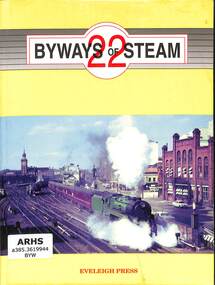
... Newcastle. Driver in a Hurry, by Pat Turner. Pat Turner spent his entire railway career on the main southern line and in this essay recalls a couple of fast trips on the Southern Expresses during the late 1950s. ...Features: The Short North: Fassifern to Newcastle, by Peter Attenborough. The third and concluding essay in the series reviewing the main northern line between Gosford and Newcastle looks in detail at the section of railway between Fassifern and Newcastle. Passing through the southern suburbs of New South Wales’ second largest city, the line plays host to local goods and passenger services, a constant procession of coal trains, as well as the heavy traffic plying between Sydney and Newcastle. Driver in a Hurry, by Pat Turner. Pat Turner spent his entire railway career on the main southern line and in this essay recalls a couple of fast trips on the Southern Expresses during the late 1950s. Useful to Yardmaster, by Leon Oberg. Bob Payne commenced work for the NSWR in Goulburn in 1940 as a useful. Leon Oberg reports on Bob’s varied railway career in the Southern Tablelands town of Goulburn up until the time Bob finished work as a Yard Master. Traffic Officer: Station Master at Coonabarabran, by Russell Bright. In this, the final instalment of his career as an officer in the Traffic Branch of the NSW Railways, Russell describes his duties as Station Master, Coonabarabran during the period 1970 to 1990. This was a time when severe cutbacks were being made in the NSWR, particularly in country areas. Russell takes us through the effects this had on the railway at Coonabarabran during these years of change, as well as his additional responsibility as a union representative involved with the downsizing, closure and staff redundancies at many locations. The last duty he performed was his own redundancy and closure of Coonabarabran station in 1990.ill, maps, p.136.non-fictionFeatures: The Short North: Fassifern to Newcastle, by Peter Attenborough. The third and concluding essay in the series reviewing the main northern line between Gosford and Newcastle looks in detail at the section of railway between Fassifern and Newcastle. Passing through the southern suburbs of New South Wales’ second largest city, the line plays host to local goods and passenger services, a constant procession of coal trains, as well as the heavy traffic plying between Sydney and Newcastle. Driver in a Hurry, by Pat Turner. Pat Turner spent his entire railway career on the main southern line and in this essay recalls a couple of fast trips on the Southern Expresses during the late 1950s. Useful to Yardmaster, by Leon Oberg. Bob Payne commenced work for the NSWR in Goulburn in 1940 as a useful. Leon Oberg reports on Bob’s varied railway career in the Southern Tablelands town of Goulburn up until the time Bob finished work as a Yard Master. Traffic Officer: Station Master at Coonabarabran, by Russell Bright. In this, the final instalment of his career as an officer in the Traffic Branch of the NSW Railways, Russell describes his duties as Station Master, Coonabarabran during the period 1970 to 1990. This was a time when severe cutbacks were being made in the NSWR, particularly in country areas. Russell takes us through the effects this had on the railway at Coonabarabran during these years of change, as well as his additional responsibility as a union representative involved with the downsizing, closure and staff redundancies at many locations. The last duty he performed was his own redundancy and closure of Coonabarabran station in 1990.railroads - nsw - history, steam locomotives - nsw – pictorial
