
Showing 170 items matching "v company"
-
 Alfred Hospital Nurses League - Nursing History Collection
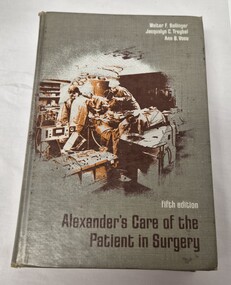
Book - Illustrated textbook, Walter F Ballinger et al, Alexander's care of the patient in surgery, 1972
... ...C V Mosby Company...Authors names and edition printed in white, and title in brown on front cover and spine Alexander's care of the patient in surgery Book Illustrated textbook Walter F Ballinger Jacquelyn C Treybal Ann Vose C V Mosby Company ...This specific edition was widely used as a standard textbook for nurses specializing in operateing theater care during the 1970'sIllustrated textbook with grey binding. Front cover has an illustration of an operating room scene. Authors names and edition printed in white, and title in brown on front cover and spinenon-fictionThis specific edition was widely used as a standard textbook for nurses specializing in operateing theater care during the 1970's nursing study and teaching, operating room nursing-history -
 National Vietnam Veterans Museum (NVVM)
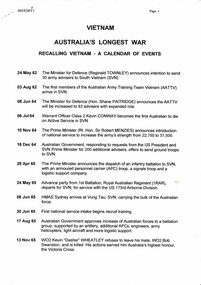
Document, A copy of Vietnam: Australia's Longest War: Recalling Vietnam - A Calendar Of Events. (Copy 2)
... ...V Company...Shane Paitridge (Miniter for Defence) WO2 (Temporary) Kevin George Conway 13097 Royal Australian Infantry Corps SVN 1st Battalion Royal Australian Regiment 1 RAR US 173rd Airborne Brigade HMAS Sydney Vung Tau Australian National Serviceman APC WO2 (Temporary) Kevin Arthur Wheatley 29890 Killed in Action VC Victoria Cross Prime Minister Harold Holt 1st Australian Task Force 1ATF RAAF RAAF IROQUOIS Helicopter Special Air Service Squadron 9 Squadron First Australian Logistic Support Group 1 ALSG 5 RAR Pte Errol Wayne Noack 4717546 Battle of Long Tan D Company 6 Battalion North Vietnam Army VNA Viet Cong 3 Troop 1 APC Sqn Wounded In Action US Presidental Unit Citation Maj Peter John Badcoe 41400 103 Field Battery FARELF V Company Royal New Zealand Regiment 2 Bn RAR 2RAR/NZ/ANZAC 3 Bn RAR Tet Offensive Baria Phuoc Tuy Province A Company Fire support Base Coral 1 Bn RAR Mortar Platoon 102 Field Battery Fire support Base Balmoral Cneturion Tanks WO2 Rayene Steward Simpson 217622 Distinguished Conduct Medal WO Keith Payne Batle of Binh Bah Prime Minister Sir William McMahon Prime Minister Sir John Gorton WO2 Keith Payne 12222 A copy of Vietnam: Australia's Longest War: Rrecalling Vietnam - A Calendar Of Events. ...A copy of Vietnam: Australia's Longest War: Rrecalling Vietnam - A Calendar Of Events. See medai files for more information.reginald townley (minister for defecne), australian army training team vietnam (aattv), hon. shane paitridge (miniter for defence), wo2 (temporary) kevin george conway, 13097, royal australian infantry corps, svn, 1st battalion, royal australian regiment, 1 rar, us 173rd airborne brigade, hmas sydney, vung tau, australian national serviceman, apc, wo2 (temporary) kevin arthur wheatley, 29890, killed in action, vc, victoria cross, prime minister harold holt, 1st australian task force, 1atf, raaf, raaf iroquois helicopter, special air service squadron, 9 squadron, first australian logistic support group, 1 alsg, 5 rar, pte errol wayne noack, 4717546, battle of long tan, d company, 6 battalion, north vietnam army, vna, viet cong, 3 troop, 1 apc sqn, wounded in action, us presidental unit citation, maj peter john badcoe, 41400, 103 field battery, farelf, v company, royal new zealand regiment, 2 bn rar, 2rar/nz/anzac, 3 bn rar, tet offensive, baria, phuoc tuy province, a company, fire support base coral, 1 bn rar, mortar platoon, 102 field battery, fire support base balmoral, cneturion tanks, wo2 rayene steward simpson, 217622, distinguished conduct medal, wo keith payne, batle of binh bah, prime minister sir william mcmahon, prime minister sir john gorton, wo2 keith payne, 12222 -
 National Vietnam Veterans Museum (NVVM)
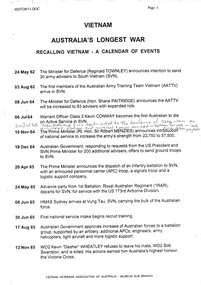
Document, A copy of Vietnam: Australia's Longest War: Recalling Vietnam - A Calendar Of Events. (Copy 1)
... ...V Company...Shane Paitridge (Miniter for Defence) WO2 (Temporary) Kevin George Conway 13097 Royal Australian Infantry Corps SVN 1st Battalion Royal Australian Regiment 1 RAR US 173rd Airborne Brigade HMAS Sydney Vung Tau Australian National Serviceman APC WO2 (Temporary) Kevin Arthur Wheatley 29890 Killed in Action VC Victoria Cross Prime Minister Harold Holt 1st Australian Task Force 1ATF RAAF RAAF IROQUOIS Helicopter Special Air Service Squadron 9 Squadron First Australian Logistic Support Group 1 ALSG 5 RAR Pte Errol Wayne Noack 4717546 Battle of Long Tan D Company 6 Battalion North Vietnam Army VNA Viet Cong 3 Troop 1 APC Sqn Wounded In Action US Presidental Unit Citation Maj Peter John Badcoe 41400 103 Field Battery FARELF V Company Royal New Zealand Regiment 2 Bn RAR 2RAR/NZ/ANZAC 3 Bn RAR Tet Offensive Baria Phuoc Tuy Province A Company Fire support Base Coral 1 Bn RAR Mortar Platoon 102 Field Battery Fire support Base Balmoral Cneturion Tanks WO2 Rayene Steward Simpson 217622 Distinguished Conduct Medal Batle of Binh Bah Prime Minister Sir William McMahon Prime Minister Sir John Gorton WO2 Keith Payne 12222 A copy of Vietnam: Australia's Longest War: Rrecalling Vietnam - A Calendar Of Events. ...A copy of Vietnam: Australia's Longest War: Rrecalling Vietnam - A Calendar Of Events. This has an added date for 20 Jul 64 which is handwritten in pencil. See medai files for more information.reginald townley (minister for defecne), australian army training team vietnam (aattv), hon. shane paitridge (miniter for defence), wo2 (temporary) kevin george conway, 13097, royal australian infantry corps, svn, 1st battalion, royal australian regiment, 1 rar, us 173rd airborne brigade, hmas sydney, vung tau, australian national serviceman, apc, wo2 (temporary) kevin arthur wheatley, 29890, killed in action, vc, victoria cross, prime minister harold holt, 1st australian task force, 1atf, raaf, raaf iroquois helicopter, special air service squadron, 9 squadron, first australian logistic support group, 1 alsg, 5 rar, pte errol wayne noack, 4717546, battle of long tan, d company, 6 battalion, north vietnam army, vna, viet cong, 3 troop, 1 apc sqn, wounded in action, us presidental unit citation, maj peter john badcoe, 41400, 103 field battery, farelf, v company, royal new zealand regiment, 2 bn rar, 2rar/nz/anzac, 3 bn rar, tet offensive, baria, phuoc tuy province, a company, fire support base coral, 1 bn rar, mortar platoon, 102 field battery, fire support base balmoral, cneturion tanks, wo2 rayene steward simpson, 217622, distinguished conduct medal, batle of binh bah, prime minister sir william mcmahon, prime minister sir john gorton, wo2 keith payne, 12222 -
 Bendigo TAFE
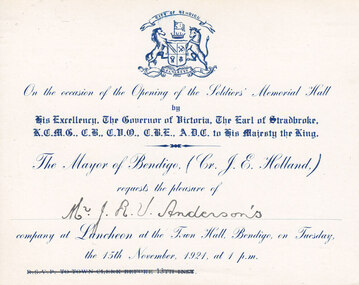
Invitation, 1921
... Holland,) / requests the pleasure of / Mr. J. R. V. Anderson's / company at Luncheon at the Town Hall, Bendigo, on Tuesday, / the 15th November, 1921, at 1 p.m. / R.S.V.P. ...Holland,) / requests the pleasure of / Mr. J. R. V. Anderson's / company at Luncheon at the Town Hall, Bendigo, on Tuesday, / the 15th November, 1921, at 1 p.m. / R.S.V.P. ...An invitation sent to J. R. V. Anderson by the Mayor of Bendigo, Cr. J. E. Holland, in 1921 to attend a luncheon to celebrate the opening of the Soldier's Memorial Hall at the Bendigo Town Hall on Tuesday,15th November, 1921 at 1 pm. This Soldiers' Memorial Hall still stands today in Pall Mall, Bendigo. It is now called the Bendigo RSL Memorial Military Museum.Celebrates the opening of the Soldier's Memorial Hall in Bendigo, as well as indicating the importance of J. R. V. Anderson in the Bendigo community at that time. This significance has been assessed in-house.Personal invitation to Mr. J. R. V. Anderson from the Mayor of Bendigo (Cr. J. E. Holland) to attend a luncheon to celebrate the official opening of the Soldiers' Memorial Hall, Bendigo on the 15th November 1921. Rectangular card in blue print, with the person's name handwritten in black ink.Inscribed on card bearing City of Bendigo emblem is the following: "On the occasion of the Opening of the Soldiers' Memorial Hall / by / His Excellency, The Governor of Victoria, The Earl of Stradbroke, / K.C.M.G., C.B,, C.V.O., C.B.E., A.D.C. to His Majesty the King, / The Mayor of Bendigo, (Cr. J. E. Holland,) / requests the pleasure of / Mr. J. R. V. Anderson's / company at Luncheon at the Town Hall, Bendigo, on Tuesday, / the 15th November, 1921, at 1 p.m. / R.S.V.P. TO TOWN CLERK BEFORE INST." (Last line crossed out in black ink).anderson, j. r. v., bendigo school of mines and industries, soldier's memorial hall, bendigo, 1921 -
 Bendigo Historical Society Inc.
Document - CONNELLY, TATCHELL, DUNLOP COLLECTION: LEGAL PAPERS, 1893 - 95
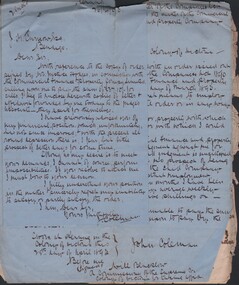
... Court order Commercial Finance & Prosperity Company Limited v Coleman. 2 - 1893 - Canning Esther Isabelle deceased of Golden Square. ...Court order Commercial Finance & Prosperity Company Limited v Coleman. 2 - 1893 - Canning Esther Isabelle deceased of Golden Square. ...Document. Various legal papers. 1 - 1893 - Letters from Coleman John. Court order Commercial Finance & Prosperity Company Limited v Coleman. 2 - 1893 - Canning Esther Isabelle deceased of Golden Square. Husband Canning Thomas. 3 - Canning - Memos as to distribution of estate. Mentions Canning James Nisbet, Canning J N, and Canning Thos. 4 - 1895 - Canning & Co v Holm. Summons from Canning J N & Co to Holm Gustave of Kimbolton re payment of debt for chaff & oats. 5 - 1888 - Draft codicil Will of Bockelmann Heinrich Christian. Mentions Buckholz Paul Emil Emmanuel. 6 - 1895 - Summons to Seymour George (White Hills) re payment of debt.cottage, miners, connelly, tatchell & dunlop, coleman john, commercial finance & prosperity co. ltd., canning esther isabelle, canning thomas, canning james nisbet, canning j n, canning & co, holm gustave, bockelmann heinrich christian, buckholz paul emil emmanuel, seymour g. -
 Flagstaff Hill Maritime Museum and Village
Equipment - Rowing Oar
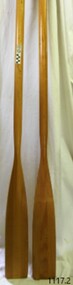
... The joinery company Pelco began by making wooden ladders and was registered as the Palmerston Extension Ladder Company. C V Woodfield, who lived from 1884 -1959, arrived in Palmerston North from Canterbury NZ in the aftermath of the Great Depression to work in construction. ...The joinery company Pelco began by making wooden ladders and was registered as the Palmerston Extension Ladder Company. C V Woodfield, who lived from 1884 -1959, arrived in Palmerston North from Canterbury NZ in the aftermath of the Great Depression to work in construction. ...The family-owned timber manufacturing business Pelco was started by Cecil Victor Woodfield in 1937. The joinery company Pelco began by making wooden ladders and was registered as the Palmerston Extension Ladder Company. C V Woodfield, who lived from 1884 -1959, arrived in Palmerston North from Canterbury NZ in the aftermath of the Great Depression to work in construction. The company got its first step up when Woodfield was asked by a commercial painter to make a ladder, and the founder set up shop in a garage on Ruahine St. According to the company website, Pelco made its name in New Zealand with its Oregon Extension Ladders, and up until its closure, manufactured non-conductive Lamilite Ladders for the electrical supply and service industry worldwide. The company was incorporated as a joinery business in 1946 and continued making high-end cabinetry for seven decades. Under director Geoff Woodfield, in the 1950s, the company embarked on the production of Fleetcraft plywood boats. Another water-related enterprise followed, with the manufacture of oars and paddles. Its branded Gull Superior Oars and Paddles business began exporting in 1972 to Australia and subsequently to the United States, UK and Japan. The company ceased trading in April 2018 and was placed into receivership.This pair of lightweight oars represents the maritime tradition of handmade oar making, which has evolved over the centuries. Their shape is still similar to early oars and continues to serve the same purpose, to steer and propel a boat. Pair of blonde varnished Tasman Fir oars with a flattened paddle at one end. Made by Gull of New Zealand, sold by James Edwards & Sons of Melbourne. Inscriptions on printed labels on the oars."GULL Superior Oars and Paddles, Pelco, Palmerston North NZ" "JAS. EDWARDS & SONS, Boat Builders, Oar and Skull Makers, & Importers, PRINCES BRIDGE MELBOURNE"warrnambool, flagstaff-hill, flagstaff-hill-maritime-museum, maritime-museum, shipwreck-coast, flagstaff-hill-maritime-village, oar, oars, gull oars and paddles, new zealand oars and paddles, jas edwards and sons melbourne, rowing equipment, new zealand oak, paddle, james edwards and sons melbourne, james edwards, tasman fir, gull superior oars, marine equipment, marine technology, ship fitting, boat fitting, rowing oar, boat oar -
 Flagstaff Hill Maritime Museum and Village
Equipment - Rowing Oars
... The joinery company Pelco began by making wooden ladders and was registered as the Palmerston Extension Ladder Company. C V Woodfield, who lived from 1884 -1959, arrived in Palmerston North from Canterbury NZ in the aftermath of the Great Depression to work in construction. ...The joinery company Pelco began by making wooden ladders and was registered as the Palmerston Extension Ladder Company. C V Woodfield, who lived from 1884 -1959, arrived in Palmerston North from Canterbury NZ in the aftermath of the Great Depression to work in construction. ...The family-owned timber manufacturing business Pelco was started by Cecil Victor Woodfield in 1937. The joinery company Pelco began by making wooden ladders and was registered as the Palmerston Extension Ladder Company. C V Woodfield, who lived from 1884 -1959, arrived in Palmerston North from Canterbury NZ in the aftermath of the Great Depression to work in construction. The company got its first step up when Woodfield was asked by a commercial painter to make a ladder, and the founder set up shop in a garage on Ruahine St. According to the company website, Pelco made its name in New Zealand with its Oregon Extension Ladders, and up until its closure, manufactured non-conductive Lamilite Ladders for the electrical supply and service industry worldwide. The company was incorporated as a joinery business in 1946, and continued making high-end cabinetry for seven decades. Under director Geoff Woodfield, in the 1950s, the company embarked on the production of Fleetcraft plywood boats. Another water-related enterprise followed, with the manufacture of oars and paddles Its branded Gull Superior Oars and Paddles business began exporting in 1972 to Australia and subsequently to the United States, UK and Japan. The company ceased trading in April 2018 and was placed into receivership.This pair of lightweight oars represents the maritime tradition of handmade oar making, which has evolved over the centuries. Their shape is still similar to early oars and continues to serve the same purpose, to steer and propel a boat. The oars are associated with a significant family business situated in Palmerston New Zealand that along with making ladders also graduated into making wooden boats and oars.Pair of blonde varnished Tasman Fir oars with a flattened paddle at one end. Made by Gull of New Zealand, sold by James Edwards & Sons of Melbourne. Inscriptions on printed labels on the oars.(1) "GULL Superior Oars and Paddles, Pelco, Palmerston North NZ" (2) "JAS. EDWARDS & SONS, Boat Builders, Oar and Skull Makers, & Importers, PRINCES BRIDGE MELBOURNE"warrnambool, flagstaff-hill, flagstaff-hill-maritime-museum, maritime-museum, shipwreck-coast, flagstaff-hill-maritime-village, oar, oars, gull oars and paddles, new zealand oars and paddles, jas edwards and sons melbourne, rowing equipment, new zealand oak, paddle, james edwards and sons melbourne, james edwards, tasman fir, gull superior oars, marine equipment, marine technology, ship fitting, boat fitting, rowing oar, boat oar -
 Flagstaff Hill Maritime Museum and Village
Print - Vessel, Steamship, A.V. Gregory, SS Casino off Point Lonsdale, ca. 1899-1932
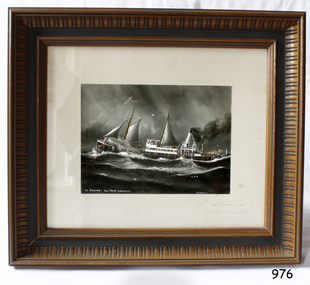
... company...h. sautau and sons...s.s. casino...west coast trader s.s. casino...victorian coastal trader...captain boyd...captain w. robertson...captain chapman...captain middleton...apollo bay shipwreck...s.s. casino at lady bay warrnambool...saltau and osburne...a v...V Gregory’. Some of his original works have been sold for thousands of dollars. The S.S. Casino was a passenger and freight steamer built in Dundee, Scotland, in 1882 for the Newcastle and Hunter River Steam Navigation Company of N.S.W. ...V Gregory’. Some of his original works have been sold for thousands of dollars. The S.S. Casino was a passenger and freight steamer built in Dundee, Scotland, in 1882 for the Newcastle and Hunter River Steam Navigation Company of N.S.W. ...Print of a picture of the S.S. Casino, This print is from an original painting by the Australian marine artist A V Gregory (1867-1957), also known as Arthur Victor Gregory. Gregory lived and worked in South Melbourne. He took over the Gregory Studio owned by his father, George Frederick Gregory, painting actively between 1899 and 1932. He usually signed his works as ‘A V Gregory’. Some of his original works have been sold for thousands of dollars. The S.S. Casino was a passenger and freight steamer built in Dundee, Scotland, in 1882 for the Newcastle and Hunter River Steam Navigation Company of N.S.W. She weighed 425 tons gross with a length of 160.4 feet, beam of 24.1 feet and a depth of 10.2 feet. She had saloon accommodation for 35 people, a fore cabin for 25 more people, and she carried 300 tons of cargo. While on her delivery journey on May 30th 1882 the S.S. Casino called in at the Port of Warrnambool for coal ., narrowly escaping going ashore in gale force winds due to the quick action of the pilot. At that time, still at anchor, she impressed the directors of the Belfast and Koroit Steam Navigation Company so much that they bought her immediately; she was ideal for trade along the West Coast of Victoria. (The Belfast and Koroit Steam Navigation Company was first managed by Messers. Saltau and Osburne and after the passing of Mr. Osburne, by produce merchants Messers H. Sautau and Sons, who had a hay and corn store and shipping agency on the corner of Liebig and Koroit Streets in Warrnambool. ) The S.S. Casino became “the most famous steamer to operate in Victorian waters along the West Coast” by author Jack Loney. Captain Boyd was her first Master, followed by Captain Chapman, who stayed with her from 1890 until 1924. Captain W. Robertson followed for a short term, and then Captain Middleton then took command from 1925 - 1932. The S.S. Casino had several mishaps during her life. One was on 3rd January 1898 when she collided with the S.S. Flinders in Apollo Bay with minor damage. Another was on 24th October 1924 when she grounded on a reef at Point Hawdon near Grey River and most of her cargo (of Christmas goods) had to be dumped into the sea. Then in February 1929 she was ‘holed’ when she struck a submerged object as she entered Lady Bay, Warrnambool. On the morning of 10th July 1932, after attempting to berth at Apollo Bay jetty in heavy seas, Captain Middleton decided to take her out into the bay and wait until the seas abated. It was not realised that the anchor used to steady her as she manoeuvred to her berth had pierced her hull. She put about and headed for the beach but sank. Captain Middleton and nine others lost their lives; nine people were rescued including the two female passengers. Captain Middleton had been in charge of the S.S. Casino for seven years. He was the first ship’s Master to lose his life in a shipwreck in the West Coast trade. In the years following the turn of the century, the S.S. Casino remained the only regular trader with normal passenger accommodation along the West Coast. From 1882 she had made at least 2,500 voyages on the one run. Flagstaff Hill’s collection has a photograph of a portrait of Captain Chapman, , a ship model of the S.S. Casino that shows both forms of power under which she sailed, steam and sail. The ship is painted green and flies three flags. The inscription across the case of the ship model, incorrectly dated, tells the sad story of the wreck of the ship and the loss of lives on July 10th 1932 at Apollo Bay. A print in the Collection shows S.S. Casino underway in the heavy sea off Point Lonsdale, another two photographs show her at the Port of Warrnambool, leaving from the Breakwater in Lady Bay and another identifies the S.S. Casino as a ship from the Belfast and Koroit Steam Navigation Company. (Belfast is the original name for the township of Port Fairy).This print of the S.S. Casino is of significance for its association with the coastal trader S.S. Casino. The wreck of the S.S. Casino is considered an important part of Victorian and Australian cultural heritage and as such has been declared and protected as an Historic Shipwreck under State and Commonwealth Law in the Commonwealth Historic Shipwrecks Act (1976). The detailed image of the vessel depicted in this print shows one of the many sail and steam vessels painted by the renowned Victorian marine artist A V Gregory, whose original works are highly valued today by marine collectors.Print with hand-painted watercolour highlights depicting the port side steamship SS Casinounderway in a heavy sea, merchant flag flying at the stern. Mounted in a decorative wooden frame behind glass. The original painting was by A V Gregory. The title of the picture is repeated in handwritten words on the matte below the artist's signature on the print.Signed "A V Gregory" Hand painted title "SS Casino off Point Lonsdale"flagstaff hill, flagstaff hill maritime museum and village, warrnambool, maritime museum, maritime village, great ocean road, shipwreck coast, newcastle and hunter river steam navigation company, belfast and koroit steam navigation company, h. sautau and sons, s.s. casino, west coast trader s.s. casino, victorian coastal trader, captain boyd, captain w. robertson, captain chapman, captain middleton, apollo bay shipwreck, s.s. casino at lady bay warrnambool, saltau and osburne, a v gregory, arthur victor gregory, melbourne artist -
 Flagstaff Hill Maritime Museum and Village
Machine - Diving Compressor, Siebe Gorman & Co. Ltd, 1880-1890
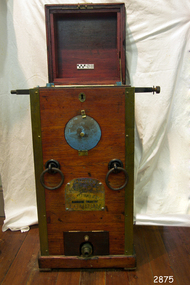
... Close research and development links with the MOD (especially the Admiralty), also provided a lucrative outlet for the company's products. In 1932, Robert Davis was knighted by King George V, principally for his invention of the ‘Davis Submerged Escape Apparatus’ (D.S.E.A.). ...Close research and development links with the MOD (especially the Admiralty), also provided a lucrative outlet for the company's products. In 1932, Robert Davis was knighted by King George V, principally for his invention of the ‘Davis Submerged Escape Apparatus’ (D.S.E.A.). ...This compressor was part of the E.G. Ward Collection. It is connected to the diving suit and boots, also in our collection. Siebe Gorman & Company Ltd was a British company that developed diving equipment and breathing equipment and worked on commercial diving and marine salvage projects. The company advertised itself as 'Submarine Engineers'. It was founded by Augustus Siebe, a German-born British engineer chiefly known for his contributions to diving equipment. Siebe Gorman traded as an engineering firm for over 180 years, from 1819 to 1999. The early success of the business was due to its founder, the Prussian immigrant Christian 'Augustus' Siebe (1788-1872). For business reasons, he applied for and was granted British citizenship in 1856. He was a gifted engineer who was able to translate theoretical problems into practical, working products. During the industrial Victorian period, the business traded as 'A. Siebe's at 145 High Street, Holborn, London, but in 1828, new premises were acquired at 5 Denmark Street, Soho. The family firm produced a wide range of manufactured goods, including paper-making machinery, measuring machinery, water-pumps, refrigeration equipment and diving apparatus. Augustus Siebe specialised in submarine engineering early on, and the company gained a reputation for the manufacture of safe, reliable diving apparatus. Augustus Siebe is best remembered for the development and manufacture of the ‘closed’ Diving Dress based on the ideas of Charles and John Deane, George Edwards and Charles Pasley. Apart from some small modifications to valves and diver communications, the basic 12 bolt ‘closed’ diving dress remained relatively unchanged after the 1870s. Later company successes were also based on innovation, with new products that could be successfully developed and manufactured to high standards. This was largely attributed to the inventive nature, foresight, engineering and entrepreneurial skills of Robert Henry Davis (1870-1965). In 1882, RH Davis joined the company of 'Siebe & Gorman' as a young 11-year-old office boy, and he was to remain with the company until he died in 1965. Augustus Siebe retired in 1869 and handed over the company to a new partnership of Henry H. Siebe (1830-1885) and William A. O'Gorman (1834-1904). The new firm traded as 'Siebe & Gorman' (1870-1879) from premises in and around Mason Street, Westminster Bridge Road, Lambeth, London. The two partners soon recognised the potential of R.H. Davis, and in 1894, aged 24, he became General Manager of Siebe & Gorman. Davis increasingly ran the company until the surviving partner (W.A. Gorman) died in 1904. The firm was disposed of to the Vickers (armaments) family, and a new company, Siebe Gorman & Co. Ltd. (1905-1998) was formed. Under the chairmanship of Albert Vickers, R.H. Davis was kept on as Managing Director, and the company forged ahead. However, after WW1, the Great Depression caused manufacturing output and share prices to slump. In 1924, Robert Davis made a deal with the Vickers Board and acquired control of the company through majority shares. Under his leadership, the Siebe Gorman Company flourished, and in time, four of his sons also joined the firm. The company gained a worldwide reputation for the manufacture of diving apparatus, decompression and observation chambers, and safety breathing apparatus of all types for use on the land, in the air and under the sea (including mine rescue, tunnelling, aircraft, diving, submarine escape and in other hazardous environments). Close research and development links with the MOD (especially the Admiralty), also provided a lucrative outlet for the company's products. In 1932, Robert Davis was knighted by King George V, principally for his invention of the ‘Davis Submerged Escape Apparatus’ (D.S.E.A.). Siebe Gorman essentially remained a family firm from the beginning (under A Siebe) until it became a public company for the first time in 1952. However, following WW2, British manufacturing stagnated through stifled investment and post-war austerity, and there was little innovation. Siebe Gorman's fortunes began to decline as an ageing Sir Robert Davis failed to invest or change the company's business and management practices. In 1959, Siebe Gorman was acquired by the “Fairy Group” and the ailing Sir Robert was made Life President. Consequently, nothing changed, and the slow decline continued until Sir Robert's death in March 1965. Around 1960, Siebe Gorman acquired the diving apparatus manufacturer C E Heinke, and for a brief period, it manufactured some diving equipment under the combined name of Siebe Heinke. Around 1964, Mr E. 'Barry' Stephens was appointed as the new Managing Director to modernise Siebe Gorman. Changes were made, including a move to a new factory in Wales in 1975. The new company concentrated on firefighting breathing apparatus and escape equipment, and the move coincided with the loss of many of the older, traditional craft skills. Between 1985 and 1998, Siebe expanded through acquisitions, and several other companies were acquired. The Siebe Gorman (diving apparatus) company has therefore traded as A. Siebe (1819-1870); Siebe & Gorman (1870-1879); Siebe Gorman & Co (1880-1904); Siebe Gorman & Co. Ltd (1905-1998).The diving compressor, along with associated equipment in the Flagstaff Hill collection, represents a highly significant snapshot of marine history. These items are particularly important in understanding the evolution of diving equipment, with a special focus on their use in salvage operations before and throughout the Second World War. Manufactured by a company renowned for its inventions, development, and innovation in marine engineering, the equipment demonstrates the progression of technology in deep-sea diving. Early helmets and related items produced by this company remain highly sought after by collectors worldwide, highlighting their historical and technological value. The presence of these items within the Flagstaff Hill Maritime Museum allows for a unique insight into the working conditions and methods employed by divers. It also illustrates the considerable dangers they faced while performing such essential and hazardous work, underscoring the critical role played by these professionals in maritime history.A single cylinder divers' pump by Siebe Gorman & Co Ltd, London, eccentric hand cranked in brass, brass-mounted mahogany case with instructions to the underside of the lid, brass-covered pressure gauge and air outlet, brass maker's plaque to the front, water inlet and outlet to the rear, green-painted lifting rings. Machinery has some blue-painted areas on the metal. This compressor is part of the E.G. Ward Collection.Plate on the back 'WATER SUPPLY" "WATER OVERFLOW" "WATER DRAIN-IN" Pressure gauge dial "BOURDON'S PRESSURE GAUGE" STEBE GORMAN & CO. LONDON", "LBS PRESSURE" "FEET OF SALT WATER" Plate on the front " PATENT, Siebe Gorman & Co Ltd Submarine Engineers" below emblem (Lion, Crown, Horse)flagstaff hill, warrnambool, flagstaff-hill, maritime-museum, diving compressor, london, siebe gorman & co ltd, marine technology, life saving, deep sea diving, maritime museum, maritime village, manine history, maritime history, marine engineers, marine diving, deep-sea diving, e g ward, vintage diving compressor, e. g. ward, e.g. ward, edward ward, ted ward -
 Flagstaff Hill Maritime Museum and Village
Functional object - Diving Suit, boots and weight, Early-to-mid 20th century
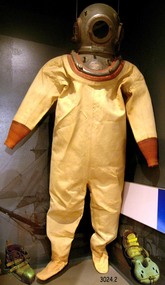
... Close research and development links with the MOD (especially the Admiralty), also provided a lucrative outlet for the company products. In 1932, Robert Davis was knighted by King George V, principally for his invention of the ‘Davis Submerged Escape Apparatus’ (D.S.E.A.). ...Close research and development links with the MOD (especially the Admiralty), also provided a lucrative outlet for the company products. In 1932, Robert Davis was knighted by King George V, principally for his invention of the ‘Davis Submerged Escape Apparatus’ (D.S.E.A.). ...This diving suit with helmet, boots and weight is part of the E. G.Ward collection, along with the diving compressor and a photograph of a diver in this equipment. Siebe Gorman & Company Ltd was a British company that developed diving equipment and breathing equipment and worked on commercial diving and marine salvage projects. The company advertised itself as 'Submarine Engineers'. It was founded by Augustus Siebe, a German-born British engineer chiefly known for his contributions to diving equipment. Siebe Gorman traded as an engineering firm for over 180 years from 1819 to 1999. The early success of the business was due to its founder, the Prussian immigrant Christian 'Augustus' Siebe (1788-1872). For business reasons, he applied for and was granted British citizenship in 1856. He was a gifted engineer who was able to translate theoretical problems into practical, working products. During the industrial Victorian period, the business traded as 'A. Siebe' at 145 High Street Holborn London, but in 1828 new premises were acquired at 5 Denmark Street, Soho. The family firm produced a wide range of manufactured goods including paper-making machinery, measuring machinery, water pumps, refrigeration equipment and diving apparatus. Augustus Siebe specialised in submarine engineering early on and the company gained a reputation for the manufacture of safe, reliable diving apparatus. Augustus Siebe is best remembered for the development and manufacture of the ‘closed’ Diving Dress based on the ideas of Charles and John Deane, George Edwards and Charles Pasley. Apart from some small modifications to valves and diver communications, the basic 12-bolt ‘closed’ diving dress remained relatively unchanged after the 1870s. Later company successes were also based on innovation, with new products that could be successfully developed and manufactured to high standards. This was largely attributed to the inventive nature, foresight, engineering and entrepreneurial skills of Robert Henry Davis (1870-1965). In 1882, RH Davis joined the company of 'Siebe & Gorman' as a young 11-year-old office boy and he was to remain with the company until he died in 1965. Augustus Siebe retired in 1869 and handed over the company to a new partnership of Henry H. Siebe (1830-1885) and William A. O'Gorman (1834-1904). The new firm traded as 'Siebe & Gorman' (1870-1879) from premises in and around Mason Street, Westminster Bridge Road, Lambeth, London. The two partners soon recognised the potential of R.H. Davis and in 1894, aged 24, he became General Manager of Siebe & Gorman. Davis increasingly ran the company until the surviving partner (W.A. Gorman) died in 1904. The firm was disposed of to the Vickers (armaments) family and a new company 'Siebe Gorman & Co. Ltd.' (1905-1998) was formed. Under the chairmanship of Albert Vickers, R.H. Davis was kept on as Managing Director, and the company forged ahead. However, after WW1, the Great Depression caused manufacturing output and share prices to slump. In 1924 Robert Davis made a deal with the Vickers Board and acquired control of the company through majority shares. Under his leadership, the Siebe Gorman Company flourished and within time, four of his sons also joined the firm. The company gained a worldwide reputation for the manufacture of diving apparatus, decompression and observation chambers, and safety breathing apparatus of all types for use on the land, in the air and under the sea (including mine rescue, tunnelling, aircraft, diving, submarine escape and in other hazardous environments). Close research and development links with the MOD (especially the Admiralty), also provided a lucrative outlet for the company products. In 1932, Robert Davis was knighted by King George V, principally for his invention of the ‘Davis Submerged Escape Apparatus’ (D.S.E.A.). Siebe Gorman essentially remained a family firm from the beginning (under A.Siebe) until it became a public company for the first time in 1952. However, following WW2, British manufacturing stagnated through stifled investment and post-war austerity, and there was little innovation. Siebe Gorman fortunes began to decline as an ageing Sir Robert Davis failed to invest, or change the company business and management practices. In 1959, Siebe Gorman was acquired by the “Fairy Group” and the ailing Sir Robert was made Life President. Consequently, nothing changed and the slow decline continued until Sir Robert's death in March 1965. Around 1960, Siebe Gorman acquired the diving apparatus manufacturer C E Heinke, and for a brief period, it manufactured some diving equipment under the combined name of Siebe Heinke. Around 1964, Mr E. 'Barry' Stephens was appointed as the new Managing Director to modernise Siebe Gorman. Changes were made, including a move to a new factory in Wales in 1975. The new company concentrated on fire-fighting breathing apparatus and escape equipment, and the move coincided with the loss of many of the older, traditional craft skills. Between 1985 and 1998, Siebe expanded through acquisitions, and several other companies were acquired. The Siebe Gorman (diving apparatus) company has therefore traded as A. Siebe (1819-1870); Siebe & Gorman (1870-1879); Siebe Gorman & Co (1880-1904); Siebe Gorman & Co. Ltd (1905-1998).The diving suit, helmet, boots, and weights, along with associated equipment in the Flagstaff Hill collection, represent a highly significant snapshot of marine history. These items are particularly important in understanding the evolution of diving equipment, with a special focus on their use in salvage operations before and throughout the Second World War. Manufactured by a company renowned for its inventions, development, and innovation in marine engineering, the equipment demonstrates the progression of technology in deep-sea diving. Early helmets and related items produced by this company remain highly sought after by collectors worldwide, highlighting their historical and technological value. The presence of these items within the Flagstaff Hill Maritime Museum allows for a unique insight into the working conditions and methods employed by divers. It also illustrates the considerable dangers they faced while performing such essential and hazardous work, underscoring the critical role played by these professionals in maritime history.Diving suit including helmet, boots and a weight. Diving suit is made of canvas with knitted cuffs. The helmet is metal. The boots have a thick sole and thick leather upper that is held on with leather straps and buckles. The toe of the boot is heavy metal. The weight is worn next to the trunk of the diver and it has an inscription to mark the front. It is worn with straps and buckles holding it in place. Royal Navy Admiralty Pattern 6 bolt No 3 light Siebe Gorman light diving helmet circa 1960, used by the Royal Navy before and after World War 2. This equipment is part of the E. G. Ward Collection."Siebe Gorman & Co Ltd Marine Engineers London. Patent" with "E G Ward" on front and back plate. On weight "FRONT"flagstaff hill, warrnambool, diving suit, siebe gorman and co ltd., siebe gorman and co ltd marine engineers london, marine engineers, diving helmet, diving boots, diving weight, marine diving, maritimemuseum, maritime village, maritime history, marine technology, life saving, deep sea diving, maritime museum, siebe gorman and co ltd., siebe gorman and co ltd, london, deep-sea diving, e. g. ward, e g ward, e.g. ward, edward ward, ted ward -
 Flagstaff Hill Maritime Museum and Village
Book - Reference/History, W Stanley Macbean Knight, The History of the Great European War Set 1 Vol 1, 1914-1920
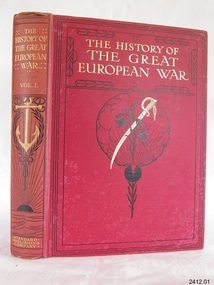
... V–VI: Continue the general campaign narrative through 1916–17. Vols. VII–VIII: Cover the later war years, focusing on 1917–18. Vols. IX–X: These volumes cover the war's final phase and the Armistice. Publication of the last volumes continued into the early 1920s, covering the peace settlement at Versailles and its aftermath. No labels or Library stamps visible. Hard Cover Book. History of The Great European War Set 1 Vol 1 Author: W Stanley Macbean Knight Publisher: The Caxton Publishing Company ...This set is a contemporary and popular narrative history of WWI, written and published while the war was still happening; the preface is dated 1914, but volumes were issued serially as the war progressed, meaning later volumes covering 1917–18 and the peace were released several years after the first. This is a common format for the period — compare rival serials like The Great War (Hammerton & Wilson) or Collier's The Story of the Great War — publishers issued 'instant history' in subscription parts to a public hungry for authoritative-sounding accounts. The volumes in this set cover the following topics during the First World War: Vol. I — Causes and Effects (1914): Its aims are to explain the political and diplomatic background to the war — the alliance system and the July Crisis — with the outbreak of hostilities in August 1914. Vol. II: Continues into the opening campaigns of 1914 (per Internet Archive, 'Vol 2 of 10', contemporary account). Vol. III: Descriptions note it as continuing the story of the campaign of the Allies and their mid-war campaigns. Vol. IV: Covers 1916 and the ongoing 1915–16 campaigns; this volume contains a fold-out colour map of the Serbian Retreat and one of the Italian front, featuring the Balkan and Italian theatres of war. Vols. V–VI: Continue the general campaign narrative through 1916–17. Vols. VII–VIII: Cover the later war years, focusing on 1917–18. Vols. IX–X: These volumes cover the war's final phase and the Armistice. Publication of the last volumes continued into the early 1920s, covering the peace settlement at Versailles and its aftermath.Hard Cover Book. History of The Great European War Set 1 Vol 1 Author: W Stanley Macbean Knight Publisher: The Caxton Publishing Company Ltd Clune House, 161 Surrey St, London W.C. Printer: The Standard Publishing Co. 100 Flinders St, Melbourne. Date: Various Volume Subscription Releases 1914 to 1920 Further Information: Red pictorial cloth gilt-lettered boards, each volume illustrated with a coloured frontispiece, black-and-white photographic plates, and fold-out colour maps of various fronts depending on volume(e.g. the Serbian Retreat, the Italian front etc.). Note there are two sets of this publication in the Flagstaff book collection.non-fictionThis set is a contemporary and popular narrative history of WWI, written and published while the war was still happening; the preface is dated 1914, but volumes were issued serially as the war progressed, meaning later volumes covering 1917–18 and the peace were released several years after the first. This is a common format for the period — compare rival serials like The Great War (Hammerton & Wilson) or Collier's The Story of the Great War — publishers issued 'instant history' in subscription parts to a public hungry for authoritative-sounding accounts. The volumes in this set cover the following topics during the First World War: Vol. I — Causes and Effects (1914): Its aims are to explain the political and diplomatic background to the war — the alliance system and the July Crisis — with the outbreak of hostilities in August 1914. Vol. II: Continues into the opening campaigns of 1914 (per Internet Archive, 'Vol 2 of 10', contemporary account). Vol. III: Descriptions note it as continuing the story of the campaign of the Allies and their mid-war campaigns. Vol. IV: Covers 1916 and the ongoing 1915–16 campaigns; this volume contains a fold-out colour map of the Serbian Retreat and one of the Italian front, featuring the Balkan and Italian theatres of war. Vols. V–VI: Continue the general campaign narrative through 1916–17. Vols. VII–VIII: Cover the later war years, focusing on 1917–18. Vols. IX–X: These volumes cover the war's final phase and the Armistice. Publication of the last volumes continued into the early 1920s, covering the peace settlement at Versailles and its aftermath.flagstaff hill, warrnambool, shipwrecked-coast, flagstaff-hill, flagstaff-hill-maritime-museum, maritime-museum, shipwreck-coast, flagstaff-hill-maritime-village, book, the history of the great european war vol 1 set 1, the history of the great european war, caxton printers -
 Flagstaff Hill Maritime Museum and Village
Print - Lithograph, sea rescue, R.N. Duffield, Australian cruiser “MELBOURNE” (Tons 5600) rescuing crew of sinking four-masted schooner “HELEN B. STERLING” of Halifax NS Canada, Tons 1343 in a gale in the Pacific Ocean, 19-11-1924
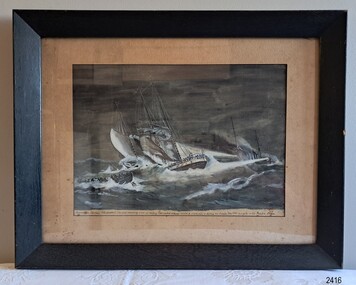
... Company founder’s wife, Helen B Sterling. -The watercolour is coloured and has fine details; the print is monochrome - The A V Gregory signed the watercolour in 1922, on the lower left; the print is signed with the Lithographer’s name on the lower right; “R N Duffield, Nov. 19. 1924” ARTHUR VICTOR GREGORY (1867-1957): - A.V. ...Company founder’s wife, Helen B Sterling. -The watercolour is coloured and has fine details; the print is monochrome - The A V Gregory signed the watercolour in 1922, on the lower left; the print is signed with the Lithographer’s name on the lower right; “R N Duffield, Nov. 19. 1924” ARTHUR VICTOR GREGORY (1867-1957): - A.V. ...This framed lithograph print in watercolour and gouache was produced on November 19th, 1924, by 20th-century marine artist, Mr R.N. Duffield. It depicts the event of a sea rescue that took place two years earlier. The framer was A.L. Frith of Footscray, Melbourne, who actively advertised from 1933 to 1935. The now disbanded Shiplovers' Society of Victoria (1930-2018) donated the print, and it seems likely that this print was framed for that organisation. This graphic image shows the conditions in which the rescue from the wrecked Helen B. Sterling happened. Captain George Harris was master of the American-owned, four-masted windjammer. His wife Edith and their ten-year-old son Leslie were on board, along with a crew of fifteen seamen. The ship set off from Newcastle, NSW, on January 5th, 1922, loaded with a cargo of coal to deliver to the Society Islands and on to San Francisco. Young Leslie later wrote a lively school composition for his teacher about his experiences on board the Helen B Sterling. He tells of a fire that broke out the day after they departed and burned a hole in a beam. Then another troublesome time on the 9th, when a strong gale blew a sail off the ship. Finally, he tells of the highlight of his voyage when, on the 18th January, the ship was right in the path of a strong cyclone, which broke the mainmast. Huge waves crashed over both sides of the deck, meeting in the middle, and the ship began to sink. The rescue from the wreck was an exciting time for the young boy, and even more so when one of his cats survived after being carefully wrapped in a pillowcase and thrown down from the ship for the boy. Reporters later wrote about Leslie’s comments, “... what had grieved him most was the thought that he might never see his two little sisters again”. Captain Harris said in a published statement, “… the gale was the worst he had met in his 12 years’ experience at sea. All went well for the first week. We then encountered a strong blow from the south-east. We tried the gasoline pump, but the engine broke down, and we had to do the pumping by hand. We at once shortened sail, but the sea increased in fury to such an extent that men were washed from the pumps. I was below at 5:30 on Sunday morning [January 22nd, 1922] when the main mast went over the side, … I at once sent out SOS signals, and got word that HMAS Melbourne was coming to our assistance. I had made a mistake with regard to our position, but did not know it until 11:30 o’clock, when I sent out the correct location. This was picked up by the Melbourne and I received the following reply: “We will reach you about 2 am. Keep a good heart. The Melbourne will do all she can.” Our ship was practically awash when we were taken off.” (Ref: the ‘Helen B. Sterling Disaster’, Maitland Weekly Mercury, NSW, 4-2-1922.) Officers from the Royal Australian Navy, Captain Henry J Feakes (later Rear-Admiral) and Commander Wilfrid Ward Hunt, were on board the light cruiser, HMAS Melbourne (1913-1928), when it left Sydney for New Zealand. After the SOS was received, the ship sped at full steam towards the sinking Helen B. Sterling. They found the vessel at about midnight and shone bright search lights on the distressed ship to illuminate the desperate scene. The Melbourne was unable to move close to the schooner, so sixteen seamen, including Commander Hunt, volunteered to man the Melbourne’s lifesaving 12-oared cutter. They rowed the sea boat with great urgency towards the victims of the sinking ship, keen to save lives no matter what the conditions. When the cutter was close to the Sterling, a line was secured between the Sterling and the cutter. The weary, waterlogged and anxious men on board could be rescued, one at a time, in the breeches buoy equipment, which looked like canvas shorts with a lifesaving ring in the waistband. The victims were hauled along the line and pulled aboard by many willing hands. All eighteen crew and passengers were saved, including Captain Harris and his family. The seamen of the Melbourne received a heroes’ welcome when they arrived in New Zealand. The grateful survivors were taken to Auckland, where they received the care and comfort they needed. Melbourne’s Lord Mayor, Cr. Swanston, on behalf of the citizens of Melbourne, formally recognised the heroic rescue efforts of the seamen of the HMAS Melbourne on March 2nd, 1922, at a special presentation. Two large flags, a White Ensign and an Australian “Jack" Flag, were presented to the Captain of HMAS Melbourne, and souvenirs were awarded to the sea boat’s crew and its Commander, Wilfred Ward Hunt. Commander Hunt was also presented with an original watercolour depicting the heroic rescue from the wreck of the Helen B. Sterling, painted just after the event by renowned marine artist Arthur V Gregory (1867-1957), and he received a silver cigarette case bearing the City’s coat of arms and the inscription, "To Commander Ward Hunt from the Citizens of Melbourne as a memento of the rescue of the crew of Helen B. Stirling by H.M.A.S. Melbourne, on 23.1.22". Both the painting and the cigarette case are now treasured items inherited by his grandson; a reminder of “… a very fine naval gentleman who believed in leading by example." R.N. DUFFIELD: - The Lithograph print in our collection by 20th-century English artist R.N. Duffield is dated Nov. 19, 1924. It is very similar to, and possibly created from, the original A V Gregory watercolour presented to Commander Hunt and dated 1922. Mr R.N. Duffield has art works in the Yarmouth Museums, Norfolk Museums Collection; “Orient Liner Otranto …,” and "Convoy of six ships at sea", both painted in watercolour and gouache during the 1940s. Some of his other works, also painted in watercolour and gouache, have been advertised for sale on Internet sites. Some details differ between the original A.V. Gregory and this Lithograph Print: - -the words on the bow on the original watercolour are “Helen B. Sterling, Blain”, which is in Washington, USA, where the Sterling Shipping Company was registered from around 1919; the words on the print are “Helen B. Sterling, Halifax, N S”, for Nova Scotia, Canada, which is the hometown of Sterling Shipping Company founder’s wife, Helen B Sterling. -The watercolour is coloured and has fine details; the print is monochrome - The A V Gregory signed the watercolour in 1922, on the lower left; the print is signed with the Lithographer’s name on the lower right; “R N Duffield, Nov. 19. 1924” ARTHUR VICTOR GREGORY (1867-1957): - A.V. Gregory is a renowned marine artist who worked in watercolour and gouache. He painted actively between 1899 and 1932, creating over 3o0 works. South Melbourne, Victoria, was where he lived and worked. This Lithograph print is significant in that it depicts the rescuing of the passengers and crew of the schooner “Helen B Stirling”. At the time this was a significant event that made most Australian and New Zealand papers because of the involvement of the Australian cruiser “Melbourne”. The image demonstrates the perilous conditions experienced by seafarers. It includes an example of the line and breeches buoy method used to save lives at sea from the 1860s and into the 20th century. It reflects a time in our history when sail and steam ships cruised the world’s seas together, the former trading with a cargo of coal from Newcastle, the latter defending our country in World War I. The print is part of Flagstaff Hill Maritime Museum’s Collection of maritime artworks that depict famous events, vessels and locations, showing the evolution of sea craft, and aiding the interpretation of our maritime history. The Lithograph print is behind glass in a black painted timber frame and mounted under a cream matte. The vivid image depicts a sea rescue in progress. The night scene is illuminated by a light beaming from a steamship, the Cruiser HMAS Melbourne. It reveals figures on the deck of a sinking sailing ship, the schooner Helen B. Sterling, as foaming waves roll across it. The stricken ship has a broken main mast, and a sail has been detached. A small figure is floating in the choppy sea, secured in a breeches buoy that is attached to a rescue line between a lifesaving cutter and the sailing ship. The crewmen in the cutter are ready to haul the shipwrecked victim aboard, while the figures on the foundering ‘Sterling’ watch them. The print’s paper-covered wooden backboard is attached to the frame with small tacks. A metal hanging wire is secured to two dissimilar eyelet screws. Inscriptions include text on the bow of the sinking vessel, a handwritten title below the picture, and a handwritten name in the print’s lower right corner. On the reverse are two oval, black ink stamps and a round cream label with printed text. The hand-painted print was reproduced from a lithograph, signed in the lower right, by R.N. Duffield of England, on November 19th, 1924. A Frith of Footscray, Melbourne framed it. Painted on the ship’s bow: “HELEN B. STERLING / HALIFAX N S” [Nova Scotia, Canada] Handwritten below the print: “AUSTRALIAN CRUISER “MEMBOURNE” (Tons 5600) rescuing crew of sinking four-masted schooner “HELEN B. STERLING” of Halifax NS Canada, Tons 1343 in a gale in the Pacific Ocean.” Handwritten on lower right: “R.N. DUFFIELD / Nov. 19. 1924” (underlined) On paper label: “Phone: / Footscray 398 [some of the text has torn off] / “A. FRITH / PICTURE FRAMER / Manufacturer / 17 Paisley Street / Footscray.“ On both oval stamps: “SHIPLOVERS SOCIETY OF VICTORIA / LIBRARY” flagstaff hill, flagstaff hill maritime museum and village, warrnambool, maritime museum, maritime village, great ocean road, shipwreck coast, lithograph, lithograph print, reproduction print, helen b. sterling, the sterling, american owned schooner, halifax, halifax n s, halifax nova scotia, nova scotia, halifax n s canada, schooner, windjammer, sailing ship, four-masted ship, captain george harris, george harris, edith harris, leslie harris, sterling shipping line, hmas melbourne, hmas melbourne (1), cruiser hmas melbourne, the melbourne, australian cruiser, captain henry j feakes, commander wilfred ward hunt, sinking ship, shipwreck, sea rescue, gale, cyclone, 1922 rescue, shipwreck rescue, breeches buoy, line rescue, rescue line, lifesaving, cutter, cutter melbourne, sea boat, lifesaving crew, 12-oar cutter, shipwreck victim, r.n. duffield, marine artist, nov. 19. 1924, 20th century artist, a frith, footscray picture framer, shiplovers’ society of victoria, shiplovers’ society library, watercolour, a v gregory, arthur victor gregory, melbourne artist, newcastle coal, newcastle nsw, society islands, san fracisco, aukland new zealand, school composition, ship’s cat, sos signal, lord mayor cr. swanston, heroes, cigarette case -
 Federation University Historical Collection
Booklet, The School of Mines Ballaarat: Descriptive papers relating to the institution by the special reporter of "The Ballarat Star", 1875 (exact)
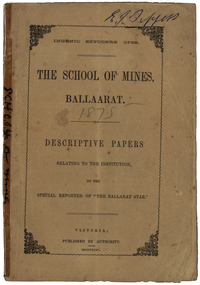
... V mentions the School Council, lack of funds, future directions, mining laboratory. Vi- Describes the land and out buildings, and the proposed building for metal and wood turning, brass foundry, blacksmith, working engine, etc. This section describes some large donations to the school - 50 pounds from the Misses Meglin of Melbourne, 10 pounds 10 shillings to the 'Pyrites fund' by the Walhalla and Long Tunnel Companies in Gippsland. ...V mentions the School Council, lack of funds, future directions, mining laboratory. Vi- Describes the land and out buildings, and the proposed building for metal and wood turning, brass foundry, blacksmith, working engine, etc. This section describes some large donations to the school - 50 pounds from the Misses Meglin of Melbourne, 10 pounds 10 shillings to the 'Pyrites fund' by the Walhalla and Long Tunnel Companies in Gippsland. ...The booklet comprises of a series of papers published in the Ballarat Star, with some revisions. The Administrative Council hoped the publication would increase interest in Technical Education, especially the Art of Mining. He would also hope the public would recognise the Ballarat School of Mines as an institution adapted to supply technical education. The Ballarat School of Mines Council listed at the front of the book includes: Redmond Barry (President and Trustee), Judge Rogers (Vice-President), Somerville Livingstone Learmonth (Trustee), Rivett Henry Bland (Trustee), Charles Gavan Duffy, John A. MacPherson (MLA), William McLellan (MLA), Duncan Gillies (MLA), F. McCoy (University of Melbourne), John I. Bleasdale, W.H. Barnard, James M. Bickett, Henry Richards Caselli, P. Chauncy, J.M. Davey, Joseph Flude, R.F. Hudson, Robert Lewis, James Oddie, Robert M. Serjeant, J. F. Usher, John Walker, J. Williamson, Mayor of the City of Ballaarat, chairman (for the time being) of each of the seven Mining Boards of Victoria. The President of Examiners was Judge Rogers, and the Honorary Auditor was Richard Ford.Stapled, brown soft covered booklet of 48 pages. Section I outlines the establishment of the Ballarat School of Mines, the buildings and land used by the school, describes in detail the former Ballarat Circuit Court and describes the lecture rooms. Section II describes the Ballarat School of Mines Museum, including a description of exhibits. Section III describes the lecture hall, and the apartments on either side of the hall, including the office of the registrar W.H. Barnard, mathematical classroom, chemical laboratory, and metallurgical laboratory. Section IV outlines the subjects offered by the Ballarat School of Mines, including Mathematics taught by John Victor of Grenville College, who had been educated at Trinity College Dublin. Mining and Land Surveying was taught by C.W. Thomas. Mr Croll taught mechanical drawing, followed by Jonathan Robinson of the Union Foundry, and finally S. Keast. It then lists some text books used in the school. Section V mentions the School Council, lack of funds, future directions, mining laboratory. Vi- Describes the land and out buildings, and the proposed building for metal and wood turning, brass foundry, blacksmith, working engine, etc. This section describes some large donations to the school - 50 pounds from the Misses Meglin of Melbourne, 10 pounds 10 shillings to the 'Pyrites fund' by the Walhalla and Long Tunnel Companies in Gippsland. Section VII covers the teaching of chemistry by Joseph Flude. Section VIII outlines the metallurgy classes and the process of assaying. Section IX covers telegraphy taught by Mr Bechervaise Section X describes the examination process at the Ballarat School of Mines. Examiners in mathematics were G.J. Russell (Buninyong) and John Lynch (Smythesdale), mining and land surveying John Lynch and P.C. Fitzpatrick (Ballarat), Principles and Practice of Mining R.M. Serjeant (Band and Albion Consols), Mechanical Engineering John Lewis (New North Company Clunes, Mineralogy and Geology G.H. F. Ulrich, Assayign and Chemistry J. Cosmo Newberry, and Telegraphy R.L.J. Ellery (government astronomer) and Sam W. Macgowan. Underground managers and captains in quart mining was examined by Henry Rosales (Walhalla Company), and alluvial mines by Messrs Bockett, Kent, Martin and Mitchell. Engineers and Engine driving was examined by W.H. Keast,Peter Matthews, Jonathan Robinson and J.M. Troup. Section XI - Covers Annual reports of the school, and honorary correspondents of the school including: John Day (Geelong); R. Evan Day (London); W.W. Evans, M.J.C.E. of New York; J.Y. Fishburne, M.B. of Ararat; Felice Giordano, Inspector of Mines, Italy; Julius Von Haast, Ph. D.F.R.S., Government Geologist of Canterbury; James Hector, M.D., F.R.S., Government Geologist of Wellington, New Zealand, W.F. Hopkins (Grant); Charles A. La Trobe, C.E. (Engineer-in-Chief International Railway Plant, London); Archibald Liversidge, F.G.S. (Professor of Mineralogy and Reader in geology at Sydney University; J.J. Macgregor, M.D. (Creswick); J.T. McKenna (1st class of SMB underground management - Northern Territory); Henry Rosales, M.E. and M. (Walhalla); Harrie Wood (SMB founder and Under-secretary for Mines, Sydney); John Walthew (Stockport, England) .2) Signed 'E.J. Tippett', former President of the Ballarat School of Mines Council melbourne, mla, ballarat school of mines, redmond barry, j f usher, james bickett, w f hopkins, rivett henry bland, s m b, judge rogers, somerville learmonth, charles gavan duffy, gavan duffy, john macpherson, william mclellan, duncan gillies, f mccoy, university, john bleasdale, henry richards caselli, henry caselli, p chauncy, j m davey, joseph flude, r f hudson, robert lewis, james oddie, robert m serjeant, john walker, j williamson, richard ford, ballarat court house, assay, john victor, grenville college, trinity college dublin, c w thomas, jonathan robinson, union foundry, s keast, blessdale, john day, r evan day, w w evans, j y fishburne, felice giordano, julius von haast, james hector, charles a la, trobe, archibald liversidge, j j macgregor, j t mckenna, henry rosales, harrie wood, john walthew, fees, frederick mccoy, w.h. barnard -
 Federation University Historical Collection
Book, Guide to Ballarat the Beautiful, 1923, 1923
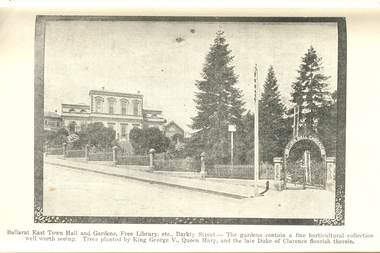
... v. mckay...sunshine harvester...gordon brothers...central business college...george hotel...edwards pyrites furnace...long's biscuits...ballarat eisteddfod...george farmer...ballarat botanical gardens...eureka stockade...lake wendouree...ballarat school of mines...moorabool falls...kirks reservoir...ballarat post office...hepburn lagoon...star of the east mine...emu river...ballarat observatory...statues...angus' rialto cafe...carlyon's hotel...clarendon ladies' college...j.e, sang...ballarat coffee palace...stansfield and smith...ballaray brewing company...In 2010 it was used as Cuthberts law firm. ballarat cuthberts ballarat trustees sturt street tram trams ballarat town hall crag's hotel sun foundry eureka aerated waters and brewing co d. lem chinese practioner chinese herbalist hugh v. mckay sunshine harvester gordon brothers central business college george hotel edwards pyrites furnace long's biscuits ballarat eisteddfod george farmer ballarat botanical gardens eureka stockade lake wendouree ballarat school of mines moorabool falls kirks reservoir ballarat post office hepburn lagoon star of the east mine emu river ballarat observatory statues angus' rialto cafe carlyon's hotel clarendon ladies' college j.e, sang ballarat coffee palace stansfield and smith ballaray brewing company phoenix brewery rotal standard brewery john macleod co robert sim and co cobb and co\eagle foundry j.j. goller and co. mt buninyong lookout ballarat town hall ballarat east gardens hot house glass house statuary pavilion new imperial gold mining co., art gallery of ballarat st patrick's college ballarat agricultural high school lake wendouree steamer grass trees at mt clear mount clear lake burrumbeet newlyn reservoir trout lal lal falls grosvenor square netherby ramelli's motor garage buninyong gold obelisk memorial imperial gold mine botanical gardens lily pond and fernery Grey/green soft covered book. ...The image of Ballarat Trustees relates to a building on the corner of Mair and Lydiard Streets. In 2010 it was used as Cuthberts law firm.Grey/green soft covered book. Includes photographs and map. Themes include: Ballarat History pre gold, mining, Eureka Stockade, Lake Wendouree, South Street, Grand National Eisteddfod of Australasia, schools, Black Hill, Lake Burrumbeet, Creswick, Buninyong. Illustrations and advertisement include: Sturt Street,James Smith, Ballarat Town Hall, Ballarat East Town Hall, Rowlands, Ballarat brewing Co., Royal Standard Brewery, steam train, Lake Wendouree, J.S. Vickery & Son, trout, Berry, Anderson & co., Ballarat Botanical Gardens and hot houses, Claxton Memorial Fountain, statues, New Imperial Gold Mine, Art Gallery of Ballarat, St Patrick's College, Ballarat Grammar School, Ballarat School of Mines, Ballarat College, Sunnyside Woollen Mills, Ballarat Agricultural High School, Passenger Steamer on Lake Wendouree, Moorabool Falls, Lal Lal Falls, Grosvenor Square, Netherby, Buninyong, Ballarat Motor Garage.ballarat, cuthberts, ballarat trustees, sturt street, tram, trams, ballarat town hall, crag's hotel, sun foundry, eureka aerated waters and brewing co, d. lem, chinese practioner, chinese herbalist, hugh v. mckay, sunshine harvester, gordon brothers, central business college, george hotel, edwards pyrites furnace, long's biscuits, ballarat eisteddfod, george farmer, ballarat botanical gardens, eureka stockade, lake wendouree, ballarat school of mines, moorabool falls, kirks reservoir, ballarat post office, hepburn lagoon, star of the east mine, emu river, ballarat observatory, statues, angus' rialto cafe, carlyon's hotel, clarendon ladies' college, j.e, sang, ballarat coffee palace, stansfield and smith, ballaray brewing company, phoenix brewery, rotal standard brewery, john macleod co, robert sim and co, cobb and co\eagle foundry, j.j. goller and co., mt buninyong lookout, ballarat town hall ballarat east gardens, hot house, glass house, statuary pavilion new imperial gold mining co.,, art gallery of ballarat, st patrick's college, ballarat agricultural high school, lake wendouree steamer, grass trees at mt clear, mount clear, lake burrumbeet, newlyn reservoir trout, lal lal falls, grosvenor square, netherby, ramelli's motor garage, buninyong gold obelisk, memorial, imperial gold mine, botanical gardens lily pond and fernery -
 Flagstaff Hill Maritime Museum and Village
Equipment - Diving compressor and helmet, 1944
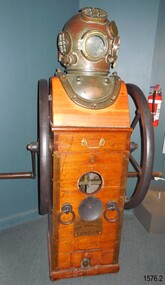
... Close research and development links with the MOD (especially the Admiralty), also provided a lucrative outlet for the company products. In 1932, Robert Davis was knighted by King George V, principally for his invention of the ‘Davis Submerged Escape Apparatus’ (D.S.E.A.). ...Close research and development links with the MOD (especially the Admiralty), also provided a lucrative outlet for the company products. In 1932, Robert Davis was knighted by King George V, principally for his invention of the ‘Davis Submerged Escape Apparatus’ (D.S.E.A.). ...Siebe Gorman & Company Ltd was a British company that developed diving equipment and breathing equipment and worked on commercial diving and marine salvage projects. The company advertised itself as 'Submarine Engineers'. It was founded by Augustus Siebe, a German-born British engineer chiefly known for his contributions to diving equipment. Siebe Gorman traded as an engineering firm for over 180 years from 1819 to 1999. The early success of the business was due to its founder, the Prussian immigrant Christian 'Augustus' Siebe (1788-1872). For business reasons, he applied for and was granted British citizenship in 1856. He was a gifted engineer who was able to translate theoretical problems into practical, working products. During the industrial Victorian period, the business traded as 'A. Siebe' at 145 High Street Holborn London, but in 1828 new premises were acquired at 5 Denmark Street, Soho. The family firm produced a wide range of manufactured goods including paper-making machinery, measuring machinery, water pumps, refrigeration equipment, and diving apparatus. Augustus Siebe specialised in submarine engineering early on and the company gained a reputation for the manufacture of safe, reliable diving apparatus. Augustus Siebe is best remembered for the development and manufacture of the ‘closed’ Diving Dress based on the ideas of Charles and John Deane, George Edwards, and Charles Pasley. Apart from some small modifications to valves and diver communications, the basic 12 bolt ‘closed’ diving dress remained relatively unchanged after the 1870s. Later company successes were also based on innovation, with new products that could be successfully developed and manufactured to high standards. This was largely attributed to the inventive nature, foresight, engineering, and entrepreneurial skills of Robert Henry Davis (1870-1965). In 1882, RH Davis joined the company of 'Siebe & Gorman' as a young 11-year-old office boy and he was to remain with the company until he died in 1965. Augustus Siebe retired in 1869 and handed over the company to a new partnership of Henry H. Siebe (1830-1885) and William A. O'Gorman (1834-1904). The new firm traded as 'Siebe & Gorman' (1870-1879) from premises in and around Mason Street, Westminster Bridge Road, Lambeth, London. The two partners soon recognised the potential of R.H. Davis and in 1894, aged 24, he became General Manager of Siebe & Gorman. Davis increasingly ran the company until the surviving partner (W.A. Gorman) died in 1904. The firm was disposed of to the Vickers (armaments) family and a new company 'Siebe Gorman & Co. Ltd.' (1905-1998) was formed. Under the chairmanship of Albert Vickers, R.H. Davis was kept on as Managing Director, and the company forged ahead. However, after WW1, the Great Depression caused manufacturing output and share prices to slump. In 1924 Robert Davis made a deal with the Vickers Board and acquired control of the company through majority shares. Under his leadership, the Siebe Gorman Company flourished and within time, four of his sons also joined the firm. The company gained a worldwide reputation for the manufacture of diving apparatus, decompression and observation chambers, and safety breathing apparatus of all types for use on the land, in the air, and under the sea (including mine rescue, tunneling, aircraft, diving, submarine escape and in other hazardous environments). Close research and development links with the MOD (especially the Admiralty), also provided a lucrative outlet for the company products. In 1932, Robert Davis was knighted by King George V, principally for his invention of the ‘Davis Submerged Escape Apparatus’ (D.S.E.A.). Siebe Gorman essentially remained a family firm from the beginning (under A.Siebe) until it became a public company for the first time in 1952. However, following WW2, British manufacturing stagnated through stifled investment and post-war austerity, and there was little innovation. Siebe Gorman's fortunes began to decline as an aging Sir Robert Davis failed to invest, or change the company's business and management practices. In 1959, Siebe Gorman was acquired by the “Fairy Group” and the ailing Sir Robert was made Life President. Consequently, nothing changed and the slow decline continued until Sir Robert's death in March 1965. Around 1960, Siebe Gorman acquired the diving apparatus manufacturer C E Heinke, and for a brief period, it manufactured some diving equipment under the combined name of Siebe Heinke. Around 1964, Mr E. 'Barry' Stephens was appointed as the new Managing Director to modernise Siebe Gorman. Changes were made, including a move to a new factory in Wales in 1975. The new company concentrated on fire-fighting breathing apparatus and escape equipment, and the move coincided with the loss of many of the older, traditional craft skills. Between 1985 and 1998, Siebe expanded through acquisitions, and several other companies were acquired. The Siebe Gorman (diving apparatus) company has therefore traded as A. Siebe (1819-1870); Siebe & Gorman (1870-1879); Siebe Gorman & Co (1880-1904); Siebe Gorman & Co. Ltd (1905-1998). (For information regards the diving helmet & Frank King see Notes Section at the end of this document)The items are very significant as a snapshot into marine history and the development of diving equipment generally especially that used for salvage operations before and during WW2. The company that made the equipment was a leading inventor,developer and innovator of marine equipment with its early helmets and other items eagerly sought after today for collections around the world. The items in the Flagstaff Hill collection give us an insight as to how divers operated and the dangers they faced doing a very necessary and dangerous job. Frank Kings' diving helmet and compressor (communication pipe stored separately). Compressor is hand cranked. US Navy diving helmet, Mark V. Two maker's plates attached. Made in 1944.On rear "WATER SUPPLY" On front 'PATENT" " Logo: Images (Lion, Crown, Horse, Shield within an oval) "SIEBE, GORMAN & Co. Ltd. SUBMARINE ENGINEERS, LONDON.flagstaff hill, warrnambool, maritime museum, great ocean road, us navy diving helmet, commonwealth government salvage, diving helmet, marine salvage, frank king, diver, siebe. gorman & co ltd, submarine equipment, diving equipment, communication under water, hand cranked, diving compressor -
 Flagstaff Hill Maritime Museum and Village
Postcard - Coastal Scene, Joseph Jordan Photographic Studio, Breakwater, Warrnambool, circa 1907
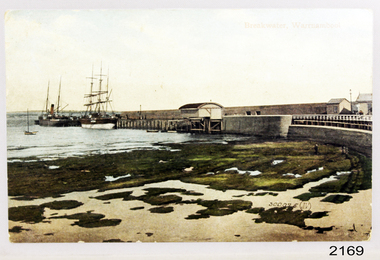
... Company Pty. Ltd. Valentine and Sons was a printing and photography business based in Dundee, Scotland and Canada. In the early 1900's, at the height of the postcard craze, they published large numbers of postcards in the U.K., Canada, U.S., Australia and South Africa. Valentine postcards have a 6 digit serial number on the view side with the initials "J. V...Company Pty. Ltd. Valentine and Sons was a printing and photography business based in Dundee, Scotland and Canada. In the early 1900's, at the height of the postcard craze, they published large numbers of postcards in the U.K., Canada, U.S., Australia and South Africa. Valentine postcards have a 6 digit serial number on the view side with the initials "J. V ...The Port of Warrnambool - In the early years the Port of Warrnambool was a busy port. Steamships and sailing ships were frequent visitors to the port. Steam navigation companies were plentiful, carrying passengers and freighting cargo such as coal, timber, food, livestock, furniture, hardware and haberdashery between Melbourne and the ports along the southwest coast of Victoria, including Warrnambool. The carts would take their loads into the township for distribution. The Breakwater was built (using 32 ton blocks of concrete) between 1874 and 1890 to provide ships with greater protection from the Southern Ocean. The Lifeboat and Rocket House - The coastline of South West Victoria has had over 600 shipwrecks and many lost lives; even in Warrnambool’s Lady Bay there were around 16 known shipwrecks between 1850 and 1905, with eight lives lost. In 1859 the first Government-built lifeboat arrived at Warrnambool Harbour and a shed was soon built to house it, followed in 1864 by a rocket house to safely store the Rocket Rescue equipment. In 1878 the buildings were moved to the Breakwater area, and in 1910 the new Lifeboat Warrnambool arrived with its ‘self-righting’ design. For almost one hundred years the lifeboat and rocket crews, mostly local volunteers, trained regularly to maintain and improve their skills, summoned when needed by alarms, gunshots, ringing bells and foghorns. Some became local heroes but all served an important role. By the end of the 1950s the lifeboat and rescue equipment had become obsolete. Joseph Jordan - Joseph Jordan was born in 1841 in Leicester England. When he was 16 he joined the 7th Queen's Own Hussars and was sent to India at the outbreak of the mutiny. He took part in the relief of Lucknow and remained in India for eleven years. It was during this time, he became interested in photography. He was posted to New Zealand and later came to Victoria, becoming a sergeant major of the Mounted Rifles. In the mid 1880s he came to the Western district where he was responsible for establishing units of the Mounted Rifles in various country towns such as Dunkeld, Mortlake, Panmure, Bushfield, Koroit etc. He resigned from the army in 1889 and set up a professional photography studio in Liebig Street, Warrnambool. He became very well known in the Western District for family photographs, official photographs of local councillors and groups as well as views of local scenery. In 1891 he photographed the wrecked barque "Fiji" at "Wrecks Beach" near Princetown. His business was taken over by his son Arthur around 1917. Joseph was a keen rifle shot and in 1924 he donated the "Jordan Shield" as a prize to the Victorian Rifle Association. He was made a "Life Honorary Member" of the Warrnambool Returned Soldiers League and in 1933 he was recognised as being the oldest living soldier in Victoria. Joseph died in 1935 aged 95. Valentine Publishing Company Pty. Ltd. Valentine and Sons was a printing and photography business based in Dundee, Scotland and Canada. In the early 1900's, at the height of the postcard craze, they published large numbers of postcards in the U.K., Canada, U.S., Australia and South Africa. Valentine postcards have a 6 digit serial number on the view side with the initials "J. V." in a circle adjacent to the number. The 300,000's related to views of Australia. From around 1900 (or earlier) the firm bought many images for their postcards from local and national photographers who sold publishing rights to Valentines.This postcard is significant for its association with the Port of Warrnambool and the Warrnambool Breakwater as it shows a point in time when shipping activities were an important part of Warrnambool's commerce and social development. It is also a record of the Warrnambool Lifeboat and Rocket house which was important in aiding ordinary citizens, harbour employees and the volunteer boat and rescue crew in saving the lives of sailors and passengers due to the high number of shipwrecks that occurred along the coastline. Joseph Jordan is a significant figure in Warrnambool history as he helped to establish early units of the Mounted Rifles (G Company) in local towns during the late 1880's and later, photographed local scenes, groups and citizens of early Warrnambool. It is also a culturally significant example of the type of postcards that were very popular in the early part of the 20th century.Photograph of breakwater from beachFront of card - Breakwater, Warrnambool / 300,025 J.V [in a circle] Back of card - POSTCARD / VALENTINE'S SERIES / - This space may be used for communication / The address only to be written here - Miss Alice Griffen / Howard St / Warrnambool - How are you enjoying your holiday we are grand. / from / Dodo, Dodo, Dodo with love - Leura? / Marjory Craig? / BL006 / R99A / REG NO 2169flagstaff hill, warrnambool, shipwrecked-coast, flagstaff-hill, flagstaff-hill-maritime-museum, maritime-museum, photograph, warrnambool breakwater, breakwater, shipwreck-coast, flagstaff-hill-maritime-village, warrnambool harbour, postcard, joseph jordan, valentine and sons, valentine publishing company, lady bay, life boat house, rocket house, steam ship, barque, jordan photography -
 Flagstaff Hill Maritime Museum and Village
Photograph - Vessels, Sail and Steam Ships, A.V. Gregory, Australian Rivals - Past and Present, 1899-1932
... V Gregory’. Some of his original works have been sold for thousands of dollars. These mounted photographs, by A.V. Gregory, show both steam and sailing ships sailing in the Tea Race from China to London in 1872. The information included with the photographs has the following text: “Tea Clippers “ Well done Cutty Sark, by Bobbie Burns The CUTTY SARK and THERMOPYLAE. The start of the 1872 Tea Race from China to London. The “Cutty Sark” first away, followed closely by the “Thermopylae”, finally parting after several days’ company...V Gregory’. Some of his original works have been sold for thousands of dollars. These mounted photographs, by A.V. Gregory, show both steam and sailing ships sailing in the Tea Race from China to London in 1872. The information included with the photographs has the following text: “Tea Clippers “ Well done Cutty Sark, by Bobbie Burns The CUTTY SARK and THERMOPYLAE. The start of the 1872 Tea Race from China to London. The “Cutty Sark” first away, followed closely by the “Thermopylae”, finally parting after several days’ company ...These photographs are copies of original paintings by the Australian marine artist A V Gregory (1867-1957), also known as Arthur Victor Gregory. Gregory lived and worked in South Melbourne. He took over the Gregory Studio owned by his father, George Frederick Gregory, painting actively between 1899 and 1932. He usually signed his works as ‘A V Gregory’. Some of his original works have been sold for thousands of dollars. These mounted photographs, by A.V. Gregory, show both steam and sailing ships sailing in the Tea Race from China to London in 1872. The information included with the photographs has the following text: “Tea Clippers “ Well done Cutty Sark, by Bobbie Burns The CUTTY SARK and THERMOPYLAE. The start of the 1872 Tea Race from China to London. The “Cutty Sark” first away, followed closely by the “Thermopylae”, finally parting after several days’ company. On this race the “Cutty Sark” lost her rudder in the Indian Ocean, putting her hopelessly out of the race, and enabling the “Thermopylae” to pass her and reach London on 11th October, 115 days out, the “Cutty Sark” limping home seven days later. The credit of the race was given to the “Cutty Sark” by the shipping world. Copies of the pictures may be had from A.V. Gregory, 326 Albert Road, South Melbourne."The detailed images of the vessels depicted in this photographs shows some of the many sail and steam vessels painted by the renowned Victorian marine artist A V Gregory, whose original works are highly valued today by marine collectors. The pictures and document are significant for their association with the Tea Clippers, famous for racing across the world to arrive in Australia with the fastest time.Photographs of paintings of sail and steamships, three photographs mounted together side by side, titled "Australian Rivals - Past and Present". The centre shows the sailing ships Thermopylae and Cutty Sark. It is flanked on each side by a photograph of a steamship. The document with the photographs gives the history of the famous Tea Race from China to London in 1872.Title: "Australian Rivals - Past and Present". Handwritten on Left photograph "A.V. GREGORY - SS KATOOMBA" Handwritten on Centre photograph; "THERMOPLAE - A.V. GREGORY - CUTTY SARK - FIRST AWAY" Handwritten on Right photograph; "CANBERRA - A/V/ GREGORY" Handwritten on accompanying card is the story of the Tea Clippers.flagstaff hill, flagstaff hill maritime museum and village, warrnambool, maritime museum, maritime village, great ocean road, shipwreck coast, ss katoomba, thermopylae, cutty sark, tea race, tea race china to london 1872, canberra, tea clippers, a v gregory, commercial trading vessel, cargo vessel, sailing vessel, steam vessel, clipper races, australian export, china tea trade -
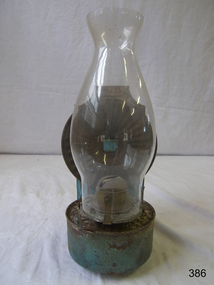 Flagstaff Hill Maritime Museum and Village
Domestic object - Lamp, Valor Co. Ltd, 1920-1936
... V inside a clover...Veritas...British made...lamp reflector...lighting...lamp...The Valor Company...company that brought it out for a short time. Similar lamps are still available today, usually with gas for fuel. Warrnambool Shipwreck Coast Flagstaff Hill Flagstaff Hill Maritime Museum Flagstaff Hill Maritime Village oil lamp table lamp Kerosene Lamp Valor Co. Ltd V ...This trade mark (V inside a clover) was German. It was used by the lamp makers Veritas Efsca Works in Birmingham, and for a time by Valor Co. Ltd. which took over Veritas. Valor Co. Ltd. was established in Birmingham in 1890 and produced oil containers for the Anglo-American Oil Com. In 1901 the firm advertised themselves as Stampers And Pieces. Later it was named 'The Valor Co. and was associated with the Aston Brass Co., and advertised as makers of oil lamps and stoves. Valor became a maker of oil heaters cookers and many other products that were fueled by oil. Later it sold gas heaters and ovens. In 1936 Valor Co. Ltd. was made a Public Company and operated under the name The Velor Company Ltd. The company changed names over the years and it was still operating under Velor Fires in January 2002.Oil or kerosene lamps were the means of lighting for homes, farms and industry in the late 19th and early-to-mid 20th centuries. Lamps like these were important as Lighthouse Keepers and Assistant Keepers' equipment. They were in common use in until the lighting was powered by gas and electricity. The reflector at the back of the lamp makes it of greater significance as most lamps don't have this feature. The logo is also interesting as it originated in Germany and was used with permission by a British company and the company that brought it out for a short time. Similar lamps are still available today, usually with gas for fuel. Kerosene lamp; blue painted metal fuel can and metal rear reflector support. and a round corrugated reflector at the rear. The mid-section wick is made of brass. The glass cover or chimney is bulbous in shape. Inscriptions include a trademark "V" inside a clover. It is British-made in Birmingham by either Veritas Efsca Works or Veritas Valor.Trademark; "[clover symbol] surrounding a "V" Stamp: "BRITISH MADE" Marked on adjusting device: "English Made 1 in w" Marked on support of deflector shield - "British Made" and symbolwarrnambool, shipwreck coast, flagstaff hill, flagstaff hill maritime museum, flagstaff hill maritime village, oil lamp, table lamp, kerosene lamp, valor co. ltd, v inside a clover, veritas, british made, lamp reflector, lighting, lamp, the valor company ltd -
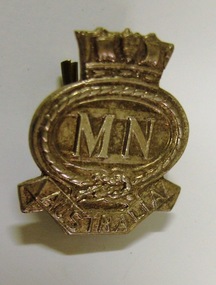 Mission to Seafarers Victoria
Badge, Wallace Bishop, MN Australia, circa 1940
... company called Bishop also manufactured badges in Melbourne . Intended as a form of service badge for Australian Merchant Seafarers especially those perhaps serving on the newly armed civilian craft. The term Merchant Navy was coined by King George V ...WW2 Merchant Navy Australia, issued by the Commonwealth Government 1940 MN War Service officially-numbered silver lapel badge. A company called Bishop also manufactured badges in Melbourne .Intended as a form of service badge for Australian Merchant Seafarers especially those perhaps serving on the newly armed civilian craft. The term Merchant Navy was coined by King George V in 1919, as recognition of the sacrifice made by merchant seafarers during the First World War.WW2 Merchant Navy war service solid (silver) badge. Initials ‘MN’ enclosed by oval rope motif with crown above. The word ‘Australia’ (UC) displayed beneath. Retains original two-loop lapel fixtures. Officially-numbered 10910 on the back. Inscribed "issued by the Commonwealth Government 1940". "Wallace-Bishop Brisbane".ww2, merchant navy, commonwealth government 1940, badge, war service, australia, mn -
 Mission to Seafarers Victoria
Letter - Correspondence, Stanley Quinn et al, 1949
... Letter 0817a is written on the reverse side of three pages of the Melbourne Stevedoring Company's Cargo Tally sheets. The envelope is pre-stamped with an embossed profile of King George V and a crown in white on a red, oval background. ...Quinn Collection letters-from-abroad quinn 1949 stanley quinn coal strike, australia Letter 0817a is written on the reverse side of three pages of the Melbourne Stevedoring Company's Cargo Tally sheets. The envelope is pre-stamped with an embossed profile of King George V and a crown in white on a red, oval background. ...Letter 0817a; the writer refers to Allan's 21st birthday and his recent letter from Rio. He also writes of prices rising in Australia, the coal strike, and that 'Sydney especially is badly hit'. He also recommends Allan see a film called 'The Secret Land', a record of an American Naval Expedition to the South Pole, if he gets the opportunity. Letter is signed 'Your loving Dad, Stanley Quinn'. Writer of 0817d also refers to Allan's 21st birthday and the coal strike which has affected manufacturing and the availability of materials, especially bricks as all the brickworks are closed down. The letter is signed 'Your Pal Norm'.Quinn CollectionThree-page letter written to Allan (0817.a1-3) from his father, Stanley Quinn, on three sheets of lined cream-coloured paper, headed Liddesdale Avenue, Frankston and dated 25.07.49. The envelope (0817.b) is buff-coloured. Also found in this envelope is a single-sided, two-page letter written on thin off-white lined paper (0817.c1-2) to Allan from his friend Norm headed 1 Selwyn Street, Artarmon, dated 27.07.49. Enclosed with 0817.c are two small black and white photographs (0817.d1-2). 0817.d1 shows a small boy with a model airplane and 0817.d2 the model airplane from a different angle.Letter 0817a is written on the reverse side of three pages of the Melbourne Stevedoring Company's Cargo Tally sheets. The envelope is pre-stamped with an embossed profile of King George V and a crown in white on a red, oval background. Postage is two and a half pence. Envelope is addressed to Allan C/- Swedish Seaman's Union, 156 Montague Street, Brooklyn, New York, USA. The postmark is torn. There is a blue air-mail sticker on the upper left-hand corner. 0817d; On the left wing of the model airplane is printed MAA, on the right wing - 17. There are pencilled marks on the back of each photograph. letters-from-abroad, quinn, 1949, stanley quinn, coal strike, australia -
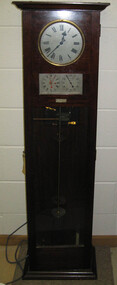 Federation University Historical Collection
Object, Synchronome Co. Ltd, Synchronome Frequency Checking Master Clock No. 2191, c1930
... A rectifier is a device that is used to convert AC power to more stable DC current. synchronome frequency checking master clock electricity state electricity commission wendouree parade power station secv clock time pendulum electric supply company of victoria norman f. dalton ballarat power station rectifier slave clock Front below main clock face on front of case: "Patented Sychronome Brisbane" Lower left-hand clock face: "Frequency time" Lower right-hand clock face: "Standard Seconds" Synchronous electric clock mechanism on door (Frequency time clock): >200/250 V. 50~ >"Synchronomains" Made in England >Direction indicator for clock starting switch >"To start move lever in direction of arrow and release" >"Patent applied for" Mechanism for "standard seconds" clock: >"English Made" >"Patented" >Serial number "321" >0 above right-hand pillar on front-plate Mechanism for "standard seconds" clock: >"English Made" >"Patented" >Serial number "321" >0 above right-hand pillar on front-plate Mechanism for main clock face: >"English Made" >"Patented" >Serial number "8751" >0 above right-hand pillar on front-plate Inside case, back panel, top enamel plate: >Seconds Battery + Pos ...Information from Norman F. Dalton: Ballarat had a reticulated DC supply in the early part of last century and in 1905 had sufficient generating capacity to enable the trams to be changed from horse drawn to DC electricity. The use of electricity increased with the main power station located on Wendouree Parade, near Webster Street, under the ownership of The Electric Supply Company of Victoria. AC generating plant was installed in 1925 and conversion to AC proceeded. In 1934 the company was taken over by the State Electricity Commission Victoria (SECV) and more AC generation was installed and the changeover of customers was accelerated. This is around the time that the Synchronome Frequency Checking Mast Clock was installed at the Wendouree Parade Power Station. The SECV Annual Report of 1921 states: ::Section 11 of the act directed the COmmission to enquire into the question of securing the adoption of such standards of plant and equipment of a system, frequency and pressure for the generation and distribution of electricity as will admit of the efficient interconnection of undertakings throughout the State. In 1934 when the SECV took over the Ballarat operations the question of linking with the State grid had been a planned operation for some years but due to financial considerations had hindered it and in fact would continue to do so for a further 10 years. So while the need for close frequency control for interconnection was hardly an issue, the need to keep electric clocks correct was important, particularly as this item was a frequent sales point to cover the inconvenience and sometimes expense of converting from DC to AC. The clock is a very accurate pendulum clock with provision for varying effective length during operation for precise time regulation. There are two normal time dials and one is controlled by the pendulum and the other is operated by the system frequency. When the clock was in use it was installed by the MEter and Tests Laboratory and the time was checked daily by radio time signals. The two dials were repeated in the operators control panel in the Power Station. A maximum deviation between the two dials was set in the operating instructions (eg 5 seconds) and the operator would correct this when necessary by remote manual alteration of the turbine governor set point. The clock was used to drive and regulate a system of "slave" clocks which were used to display the time in various locations around the power station. A slave clock is a simple clock which is driven by a small electric motor, its accuracy is regulated by the master clock every 30 seconds to ensure that it and all the other slave clocks in the station are on exactly the right time; slave clocks were placed in various locations, from common rooms to workshops. A master clock could potentially run thousands of slave clocks at one plant. The clock also contains a rectifier. A rectifier is a device that is used to convert AC power to more stable DC current.Two clocks in a timber case. Both are electric, one is powered by the main pendulum mechanism, the other is a self contained electric clock. The main mechanism is of the gravity arm and roller type, which sends an impulse to the slave clocks every 30 seconds. The This Synchronome Frequency Checking Master Clock was used at the Ballarat Power Station. Below the main section of the case is a smaller cabinet containing a rectifier to provide consistent DC power for the clock. The rectifier was made by the Victorian company Hilco, which was located in Burwood. There is a high chance this is not the original rectifier from this clock as there appears to be brackets to hold a larger device in the space the rectifier occupies.Front below main clock face on front of case: "Patented Sychronome Brisbane" Lower left-hand clock face: "Frequency time" Lower right-hand clock face: "Standard Seconds" Synchronous electric clock mechanism on door (Frequency time clock): >200/250 V. 50~ >"Synchronomains" Made in England >Direction indicator for clock starting switch >"To start move lever in direction of arrow and release" >"Patent applied for" Mechanism for "standard seconds" clock: >"English Made" >"Patented" >Serial number "321" >0 above right-hand pillar on front-plate Mechanism for "standard seconds" clock: >"English Made" >"Patented" >Serial number "321" >0 above right-hand pillar on front-plate Mechanism for main clock face: >"English Made" >"Patented" >Serial number "8751" >0 above right-hand pillar on front-plate Inside case, back panel, top enamel plate: >Seconds Battery + Pos. > Battery Common or - Neg. >1/2 min dials Inside case, back panel, bottom enamel plate: external seconds dial Inside case, right hand side, electrical knobs: two switches, both "A.C. mains" Pendulum rod, below suspension spring: Serial number (?) 0000005 Rectifier in bottom cabinet: >"Hilco Rectifier" >"A.C. Volts 230/240" >"Model 1060/S" >"A.C. Amperes" >"Serial No. 1060/S >"Phases 1" >"D.C. Volts 6" >"C.P.S. 50" >"D.C. Amperes 1" >"Made in Australia by Hilco Transformers McIntyre St., Burwood, Victoria." Bakelite electrical plug: makers mark Lower cabinet, RH side panel, pressed tin plate: "AC" (upside down) Brass speed adjustment, outer right RH side: "S" and "F" Ivory and wood pendulum beat ruler: >Ruler, with 0 in centre and numbers 1-5 in ascending order from centre on left and right. > "Synchronome Patent." Steel plate, back panel, inside case, right hand side: >N R A" (descending) >"2191" serial number/part number Face of main clock: "Synchronome Electric" synchronome frequency checking master clock, electricity, state electricity commission, wendouree parade power station, secv, clock, time, pendulum, electric supply company of victoria, norman f. dalton, ballarat power station, rectifier, slave clock -
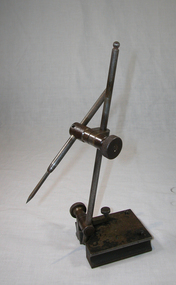 Federation University Historical Collection
Object, Brown and Sharpe Manufacturing Co, Universal Surface Gauge
... V’ groove in the base, or by pushing down the two gauge pins. It can be brought square with an edge or T slot. gauge tool trade Brown and Sharp Manufacturing Company Metal gauge tool Universal Surface Gauge Object Brown and Sharpe Manufacturing Co. ...Used to lay out Machine work, or to set up pieces on a planer, radial drill, milling machine or boring machine. To set the Scriber the spindle swivels down or up into any position where it is clamped by the knurled nut. There is a fine screw adjustment for the Scriber point (note: this is not original Scriber supplied with this instrument). The base on this Surface Gauge can be set on cylindrical work, using the ‘V’ groove in the base, or by pushing down the two gauge pins. It can be brought square with an edge or T slot. Metal gauge toolgauge, tool, trade, brown and sharp manufacturing company -
Federation University Historical Collection
Document, Dianne Campbell, Ballarat Lawyers 1853-1895 Research Folders, c2000-2021
... Company, Henry R. Nicholls, Francis Ham, Richard T. Harvey, Edward Heady, Peter Heinz, T.t. Hollway. Thomas tuke hollway, William Higgins, James V.M. Hitchins, frederick Hitchins, James Hitchins, Edward Hockley, Robert W. Holmes, Catherine Kain, JOhn Ireland, Richard D. Ireland, Peter Jacobs) .6) T.C. Williams, John Kidahl, Arthur W. King, Pendrell family, M.A. Lazarus, Edward Lewis, W.H. McCormick, Soho Foundry, Henry S, Ochiltree, James V...Company, Henry R. Nicholls, Francis Ham, Richard T. Harvey, Edward Heady, Peter Heinz, T.t. Hollway. Thomas tuke hollway, William Higgins, James V.M. Hitchins, frederick Hitchins, James Hitchins, Edward Hockley, Robert W. Holmes, Catherine Kain, JOhn Ireland, Richard D. Ireland, Peter Jacobs) .6) T.C. Williams, John Kidahl, Arthur W. King, Pendrell family, M.A. Lazarus, Edward Lewis, W.H. McCormick, Soho Foundry, Henry S, Ochiltree, James V ...Folders of research notes on Ballarat Lawyers, including newspaper clippings, website information, etc. .1) Ballarat Lawyers - A (Australian Law Firm histories, Jamaican in Australia, History of the Court System, University of Melbourne Law Students c1870s, Melanie Senior, Cinque Oakley Senior Lawyers, 19th Century Castlemaine Police Courts, New Victorian County Court, Scots and the Law in Scotland, Solicitor online encyclopedia, Alfred Akehurst, Artur Akehurst, J.T. Ansdell, Butler Cole Aspinall, Alfred James Bailey, Henry Stephen Bailey, Matthew Baird, Hugh Sutherland Barrett, William Field Barrett, Redmond Barry, George Elliott Barton, George Frederick Bartrop, John Bell, Thomas Bellas, George Booker) .2) Ballarat Lawyers B (Hugh Sunderland Barrett, Peter Beckford, William Beckford, John T.F. Bowker, William Box, George Boyd, William Boykett, B. Browne, Richard Archer Burton, Alfred Butler) .3) Ballarat Lawyers C-E (Thomas B.S. Carwithen, J.B. Cathcart, John Alfred Chalk, David Clarke, John Collins, Matthew Combe, Thomas Spemcer Cope, Richard. Crouch, Charles Curwan-Walker, Frank H. Cole, John Rowland Davies, Charles J. Dawson, Christopher John Dease, J.E. Dixon, Robert Willian Dobson, Roy Dobson, Edward Doward, Charles R. Doward, Edgar R. Doward,) .4) Ballarat Lawyers F-G (Charles B. Finlayson, Peter T. Finn, John Findlay, John Fitzgerald, John Olsen Foss, Alexander Fraser, J.A. Doane, Andrew Garran, George Garrard, David Gaunson, William Gaunt, MAry Gaunt, F.T. Gell) .5) Ballarat Lawyers H-J: (Frederick Ham, Jeremy Harper, John H. Harris, solicitors, Amelia Harris, J. Henry Harris, Peter Blake, Henry Plomer, Arthur Plomer, Ballarat Chamber of Commerce, Freemasons, White Flat Drainage and Mining Company, Henry R. Nicholls, Francis Ham, Richard T. Harvey, Edward Heady, Peter Heinz, T.t. Hollway. Thomas tuke hollway, William Higgins, James V.M. Hitchins, frederick Hitchins, James Hitchins, Edward Hockley, Robert W. Holmes, Catherine Kain, JOhn Ireland, Richard D. Ireland, Peter Jacobs) .6) T.C. Williams, John Kidahl, Arthur W. King, Pendrell family, M.A. Lazarus, Edward Lewis, W.H. McCormick, Soho Foundry, Henry S, Ochiltree, James V. McCormick, McDonnell, Townsend MacDermott, Morgan McDOnnell, Percy McDonnell, Cyprian McDonnell, John McFarland, Samuel W, McGowan, Bill McGregor, David Madden, Charles Holthouse, J. Madden, Samuel Mann, Samuel F. Mann, Tobias Furneaux, Samuel Mann, Agar Wynne, thomas Mann, Henry MacDermott, Archibald Midnie, Arthur Nevett, Arthur H. Nevett, Alfred Mitchell, William Mitchell, H.W. Morrow, William Mitchell, Norman P. Must, George F. Oakley.) .7) Ballarat Lawyer Q-R (Henry S. Ochiltree, W.B. Ochiltree, Edward G. Ochiltree, J.J.P. O'Dee, Bernard O'Dowd, John Ogier, Cornish Lawyers in Central Victoria Q-R, John Bateman Paynter, J.B. Pearson, Mondle Emmanuel Phillips, Robert King Piers, Robert King Piers, Pinkerton, Frank Pinkerton, Martha Pinkerton, Charles Purcell, R.H. Ramsay, Henry Randall, James Randall, Thomas Randall, John Warrington Rogers, John M. S. Rodd, George Rutler) .8) Lawyers in Central Victoria S-W (Charles Salter, H. Holmes, George Staveley, Charles Salter, George T. Boyd, Edward Sandford, Henry G. Shaw, Thomas W. Snape, Thomas S. Standish, Charles Snape, Frederick C. Standish, Edith Snape, James Snape, Thomas Snape, Philip Snape, George Staveley, John G. Stoker, William Stone, Henry Sturt, Matthew W. Taylor, Bread and Cheese Club, R.D. Thompson, Roger D. Thompson, R.H. Ramsay, R.G. Turner, F.H. Tuthill, W.M.K. Vale, William Vale, May Vale, William L. Vardy, Gordon Vardy, William S. Vardy, Charles Von Ende) .9) Lawyers in Central Victoria W-Z (Henry Walker, Andrew Wallace, John Wellesley, Brereton Watson, C.G.M. Watson, James Watson, George Armytage, Thomas Watson, Patricius Welsh, John Westmore, Theodore Whipham, Arthur Whipham, Thomas H. Whipham, Frances Whipham, Thomas Bellas, James L. Willoughby, John Noble Williams, James Wisewould, Horace Wright, H.M. Wright, William Wright, Henry J. Wrixon, Agar Wynne, Samuel Young) . ballarat lawyers, ballarat, dianne campbell goldfields lawyers collection -
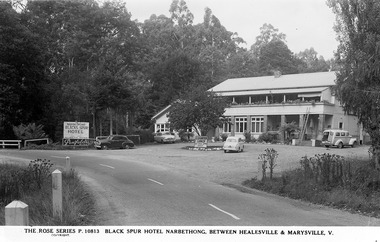 Marysville & District Historical Society
Postcard (Item) - Black and white postcard, Rose Stereograph Company, BLACK SPUR HOTEL, NARBETHONG, BETWEEN HEALESVILLE AND MARYSVILLE, V, 1913-1967
... V. Postcard Black and white postcard Rose Stereograph Company ...A digital copy of a black and white postcard of the Black Spur Hotel in Narbethong. This postcard was produced by The Rose Stereograph Company as a souvenir of Narbethong.A digital copy of a black and white postcard of the Black Spur Hotel in Narbethong.THE ROSE SERIES P. 10813/ COPYRIGHT. BLACK SPUR HOTEL NARBETHONG, BETWEEN HEALESVILLE & MARYSVILLE, V.narbethong, victoria, australia, black spur hotel, accommodation, black spur inn, blacks' spur inn, blacks' spur hotel, rose stereograph company, postcard, souvenir, p. 10813 -
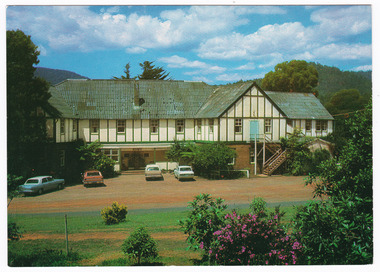 Marysville & District Historical Society
Postcard (item) - Colour postcard, Rose Stereograph Company, 1913-1967
... The postcard was produced by the Rose Stereograph Company as a souvenir of Marysville. marysville victoria australia mary chain guest houses marylyn eric dowdle postcard souvenir rose stereograph company rose series colorview rose series colorview no. 987 POST CARD The "Rose" Series/ De Luxe Produced in Australia Rose Series Colorview No. 987. Copyright/ Published by the Rose Stereograph co., Glen Waverley, Victoria "Mary-lyn" The holiday home of Marysville - excellent/ family accommodation./ Telephone: 059 633206. F. V ...A colour postcard from Mary-Lyn Guest House in Marysville. Mary-Lyn was a part of the Mary Chain of guest houses built by Eric Dowdle in the Depression years. The postcard was produced by the Rose Stereograph Company as a souvenir of Marysville.A colour postcard from Mary-Lyn Guest House in Marysville. Mary-Lyn was a part of the Mary Chain of guest houses built by Eric Dowdle in the Depression years. The postcard was produced by the Rose Stereograph Company as a souvenir of Marysville.POST CARD The "Rose" Series/ De Luxe Produced in Australia Rose Series Colorview No. 987. Copyright/ Published by the Rose Stereograph co., Glen Waverley, Victoria "Mary-lyn" The holiday home of Marysville - excellent/ family accommodation./ Telephone: 059 633206. F. V. Fiske.marysville, victoria, australia, mary chain guest houses, marylyn, eric dowdle, postcard, souvenir, rose stereograph company, rose series colorview, rose series colorview no. 987 -
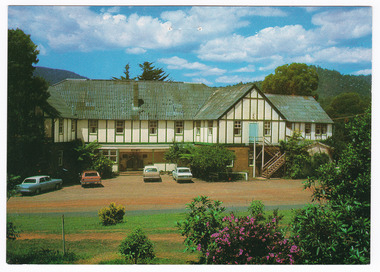 Marysville & District Historical Society
Postcard (item) - Colour postcard, Rose Stereograph Company, 1913-1967
... The postcard was produced by the Rose Stereograph Company as a souvenir of Marysville. marysville victoria australia mary chain guest houses marylyn eric dowdle postcard souvenir rose stereograph company rose series colorview rose series colorview no. 987 POST CARD The "Rose" Series/ De Luxe Produced in Australia Rose Series Colorview No. 987. Copyright/ Published by the Rose Stereograph co., Glen Waverley, Victoria "Mary-lyn" The holiday home of Marysville - excellent/ family accommodation./ Telephone: 059 633206. F. V ...A colour postcard from Mary-Lyn Guest House in Marysville. Mary-Lyn was a part of the Mary Chain of guest houses built by Eric Dowdle in the Depression years. The postcard was produced by the Rose Stereograph Company as a souvenir of Marysville.A colour postcard from Mary-Lyn Guest House in Marysville. Mary-Lyn was a part of the Mary Chain of guest houses built by Eric Dowdle in the Depression years. The postcard was produced by the Rose Stereograph Company as a souvenir of Marysville.POST CARD The "Rose" Series/ De Luxe Produced in Australia Rose Series Colorview No. 987. Copyright/ Published by the Rose Stereograph co., Glen Waverley, Victoria "Mary-lyn" The holiday home of Marysville - excellent/ family accommodation./ Telephone: 059 633206. F. V. Fiske.marysville, victoria, australia, mary chain guest houses, marylyn, eric dowdle, postcard, souvenir, rose stereograph company, rose series colorview, rose series colorview no. 987 -
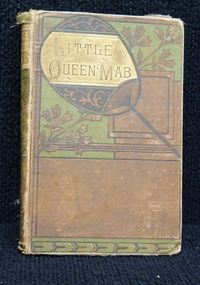 Ballarat Clarendon College
Book, L. C. Silke, Little Queen Mab, 1883
... V. Gay/ 1935" Bound in brown and green cloth with gilt lettering and floral decorations on front cover and spine. Detached spine and pages, black and white illustrations throughout. 144 pages (several pages missing at the end of book.) Little Queen Mab. Book Cassell & Company ...This book was awarded to Florence Groves for first prize in arithmetic in 1885. Florence enrolled at Clarendon Ladies' College with her sister Blanche on 30/07/1884 at the age of 14. Father's Christian name listed in the original register as Daniel Barton residing at 18 Mc Carthur street, Ballarat. It also lists his employment as Commercial traveller.Presbyterian educators placed great value on a classical education matched with diligence in study. Book prizes were highly regarded and academic success admired. In the school’s early years prizes were ordered direct from London and had the school crest embossed in gold on the front or back cover. Many of the prizes given in early years were returned to the school to equip the Weatherly Library when it opened in 1936.Bound in brown and green cloth with gilt lettering and floral decorations on front cover and spine. Detached spine and pages, black and white illustrations throughout. 144 pages (several pages missing at the end of book.)Book plate inside front cover: CLARENDON LADIES' COLLEGE./ BALLARAT./ First PRIZE,/ VI Arithmetic Div II./ AWARDED TO/ Florence Groves./ 19th December, 1885. Handwritten on fly leaf "V. Gay/ 1935"florence-groves, book-prize, 1885, clarendon-ladies'-college, blanche-groves, daniel-barton. -
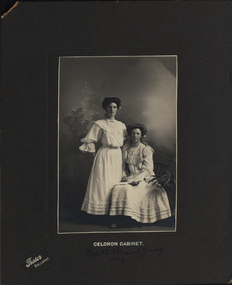 Federation University Historical Collection
Photograph - Photograph - Black and White, Jas. Brown et al, Edith and Maud Yung and Yung Family, 1 1909
... V Bishop of Ballarat. S.P.C.K. Riddle & Couchman Lith, London .4 Front bottom: Copies may be obtained. Melbourne Photographic company, *Bridge Street Ballarat*. ...V Bishop of Ballarat. S.P.C.K. Riddle & Couchman Lith, London .4 Front bottom: Copies may be obtained. Melbourne Photographic company, *Bridge Street Ballarat*. ....7 Richard Henry Watson was Edith Emma Watson's (nee Yung) son. Edith Emma was also the mother of Alice Watson, artist and dressmaker, who trained at the Ballarat School of Mines in the 1930's. .1 Black and white photograph of two women, one standing and the one seated, on a grey background 1909 .2 Black and white photograph of a reverend and seven altar boys, on and dark cream background, within folder c1897 .3. First Confirmation Certificate, with prayer,1902 .4 Sepia photograph on cream background of young boy,1917 .5 Small black and white photograph with black border of young male .6 Black and white circular photograph of a woman and girl, on cream background postcard,1908 .7 Black and white photograph with white border of bride and bridesmaid,1946.1 Front: Celoron Cabinet, Edith and Maud Yung 1910. Versa: Nanna and Aunty Maud .2 Front: Rev Greenham + choir boys.Versa: 2nd from left is William John Yung (John) died at age 8 1897. Nhill, William Yung. John (second from left, died young aged 8 in Allendale. Parents John Yung and Mary Ann Sudweeks .3 Baptised Ethel Emma Yung; Confirmed 14th December 1902; First Communion 25th December 1902; Signed by C Allanby; A Daily Prayer (eight lines); Confirmed by Arthur(?) V Bishop of Ballarat. S.P.C.K. Riddle & Couchman Lith, London .4 Front bottom: Copies may be obtained. Melbourne Photographic company, *Bridge Street Ballarat*. Verso: G.A. Yung died at Ypres, Belguim 1917 .5 Front bottom:Willetts Elite Studio. RHS H. Yung. Verso: Elite Photographic Studio. Patronised by the Royal Princes and Suite. Special photographer to His Excellency the Govenor. Willetts Bridge Street Ballarat. Paper note with photo: Henry( Harrie) Yung ( George Edgar's brother) was born at Loch in Gippsland and became a railway worker. Richard Henry (Harry) Watson Edie Watson's (nee Yung) son was named after him. .6 Front: Lena and Ethel Yung Verso:Postcard: a note to her sister Miss E Yung Yendon from Lena Yung - "Dear Edie, Received PC(?) I don't know whether you know anyone here. This is Mother's cousin with me. She was up on holiday. Hoping you are all well. Love to all. I remain yours Lena." 1908. Pink postage stamp showing RAT 08 (Alice Watson, Murtoa) .7 Verso: Elite Photos 278 Flinders Lane Melbourne C.5540 Beryl Yung - bride Margaret Middleton - maid, 9th Feb 1946 POST Correspondence 4213 celeron cabinet, edith yung, reverend greenham, choir boys, john yung, william yung, mary sudweeks, nhill, allandale, ethol emma yung, c allanby, arthur b, h.yung, beryl yung, margaret middleton, elite photos, g a yung, willetts studio, elite photographic studio ballarat, confirmation certificate 1902, millinery, bride, bridesmaid -
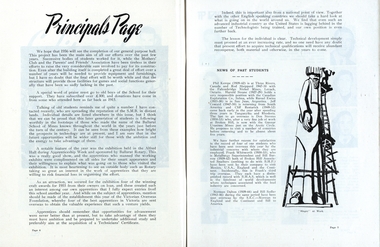 Federation University Historical Collection
Magazine, Ballarat School of Mines Students' Magazine, 1956
... v. hancock...geoff biddington...norman leckie...phil kempe...norman dalton...hor khoo...brian tozer...worshipful company...ballarat school of mines dick richards r.w> richards hec yates v. hancock geoff biddington norman leckie phil kempe norman dalton hor khoo brian tozer worshipful company of plumbers plumbing alfred hall malayan merdeka malayan independence john benn north junior technical school Grey covered magazine Ballarat School of Mines Students' Magazine, 1956. ...Grey covered magazineballarat school of mines, dick richards, r.w> richards, hec yates, v. hancock, geoff biddington, norman leckie, phil kempe, norman dalton, hor khoo, brian tozer, worshipful company of plumbers, plumbing, alfred hall, malayan merdeka, malayan independence, john benn, north junior technical school -
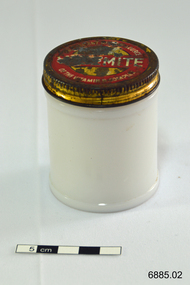 Flagstaff Hill Maritime Museum and Village
Jar, c. 1930's
... Flagstaff Hill Warrnambool Shipwrecked coast Flagstaff Hill Maritime Museum Maritime Museum Shipwreck coast Flagstaff Hill Maritime Village Great Ocean Road Dr W R Angus Warrnambool Base Hospital Nhill Base Hospital Mira hospital Flying Doctor Vegemite jar Australian Food Manufacturer Fred Walker Company Lid has remnants of words “VEGEMITE - - - source of vitamin B comples". Base stamped into glass "[logo] / VEGEMITE / v 906 / 19” Vegemite jar, empty. ...This empty Vegemite jar was donated to Flagstaff Hill Maritime Village by the family of Doctor William Roy Angus, Surgeon and Oculist. It is part of the “W.R. Angus Collection” that includes historical medical equipment, surgical instruments and material once belonging to Dr Edward Ryan and Dr Thomas Francis Ryan, (both of Nhill, Victoria) as well as Dr Angus’ own belongings. The Collection’s history spans the medical practices of the two Doctors Ryan, from 1885-1926 plus that of Dr Angus, up until 1969. ABOUT THE “W.R.ANGUS COLLECTION” Doctor William Roy Angus M.B., B.S., Adel., 1923, F.R.C.S. Edin.,1928 (also known as Dr Roy Angus) was born in Murrumbeena, Victoria in 1901 and lived until 1970. He qualified as a doctor in 1923 at University of Adelaide, was Resident Medical Officer at the Royal Adelaide Hospital in 1924 and for a period was house surgeon to Sir (then Mr.) Henry Simpson Newland. Dr Angus was briefly an Assistant to Dr Riddell of Kapunda, then commenced private practice at Curramulka, Yorke Peninsula, SA, where he was physician, surgeon and chemist. In 1926, he was appointed as new Medical Assistant to Dr Thomas Francis Ryan (T.F. Ryan, or Tom), in Nhill, Victoria, where his experiences included radiology and pharmacy. In 1927 he was Acting House Surgeon in Dr Tom Ryan’s absence. Dr Angus had become engaged to Gladys Forsyth and they decided he further his studies overseas in the UK in 1927. He studied at London University College Hospital and at Edinburgh Royal Infirmary and in 1928, was awarded FRCS (Fellow from the Royal College of Surgeons), Edinburgh. He worked his passage back to Australia as a Ship’s Surgeon on the on the Australian Commonwealth Line’s T.S.S. Largs Bay. Dr Angus married Gladys in 1929, in Ballarat. (They went on to have one son (Graham 1932, born in SA) and two daughters (Helen (died 12/07/1996) and Berenice (Berry), both born at Mira, Nhill ) According to Berry, her mother Gladys made a lot of their clothes. She was very talented and did some lovely embroidery including lingerie for her trousseau and beautifully handmade baby clothes. Dr Angus was a ‘flying doctor’ for the A.I.M. (Australian Inland Ministry) Aerial Medical Service in 1928 . Its first station was in the remote town of Oodnadatta, where Dr Angus was stationed. He was locum tenens there on North-South Railway at 21 Mile Camp. He took up this ‘flying doctor’ position in response to a call from Dr John Flynn; the organisation was later known as the Flying Doctor Service, then the Royal Flying Doctor Service. A lot of his work during this time involved dental surgery also. Between 1928-1932 he was surgeon at the Curramulka Hospital, Yorke Peninsula, South Australia. In 1933 Dr Angus returned to Nhill and purchased a share of the Nelson Street practice and Mira hospital (a 2 bed ward at the Nelson Street Practice) from Dr Les Middleton one of the Middleton Brothers, the current owners of what previously once Dr Tom Ryan’s practice. Dr Tom and his brother had worked as surgeons included eye surgery. Dr Tom Ryan performed many of his operations in the Mira private hospital on his premises. He had been House Surgeon at the Nhill Hospital 1902-1926. Dr Tom Ryan had one of the only two pieces of radiology equipment in Victoria during his practicing years – The Royal Melbourne Hospital had the other one. Over the years Dr Tom Ryan had gradually set up what was effectively a training school for country general-practitioner-surgeons. Each patient was carefully examined, including using the X-ray machine, and any surgery was discussed and planned with Dr Ryan’s assistants several days in advance. Dr Angus gained experience in using the X-ray machine there during his time as assistant to Dr Ryan. When Dr Angus bought into the Nelson Street premises in Nhill he was also appointed as the Nhill Hospital’s Honorary House Surgeon 1933-1938. His practitioner’s plate from his Nhill surgery is now mounted on the doorway to the Port Medical Office at Flagstaff Hill Maritime Village, Warrnambool. When Dr Angus took up practice in the Dr Edward and Dr Tom Ryan’s old premises he obtained their extensive collection of historical medical equipment and materials spanning 1884-1926. A large part of this collection is now on display at the Port Medical Office at Flagstaff Hill Maritime Village in Warrnambool. In 1939 Dr Angus and his family moved to Warrnambool where he purchased “Birchwood,” the 1852 home and medical practice of Dr John Hunter Henderson, at 214 Koroit Street. (This property was sold in1965 to the State Government and is now the site of the Warrnambool Police Station. and an ALDI sore is on the land that was once their tennis court). The Angus family was able to afford gardeners, cooks and maids; their home was a popular place for visiting dignitaries to stay whilst visiting Warrnambool. Dr Angus had his own silk worm farm at home in a Mulberry tree. His young daughter used his centrifuge for spinning the silk. Dr Angus was appointed on a part-time basis as Port Medical Officer (Health Officer) in Warrnambool and held this position until the 1940’s when the government no longer required the service of a Port Medical Officer in Warrnambool; he was thus Warrnambool’s last serving Port Medical Officer. (Masters of immigrant ships arriving in port reported incidents of diseases, illness and death and the Port Medical Officer made a decision on whether the ship required Quarantine and for how long, in this way preventing contagious illness from spreading from new immigrants to the residents already in the colony.) Dr Angus was a member of the Australian Medical Association, for 35 years and surgeon at the Warrnambool Base Hospital 1939-1942, He served as a Surgeon Captain during WWII 1942-45, in Ballarat, Victoria, and in Bonegilla, N.S.W., completing his service just before the end of the war due to suffering from a heart attack. During his convalescence he carved an intricate and ‘most artistic’ chess set from the material that dentures were made from. He then studied ophthalmology at the Royal Melbourne Eye and Ear Hospital and created cosmetically superior artificial eyes by pioneering using the intrascleral cartilage. Angus received accolades from the Ophthalmological Society of Australasia for this work. He returned to Warrnambool to commence practice as an ophthalmologist, pioneering in artificial eye improvements. He was Honorary Consultant Ophthalmologist to Warrnambool Base Hospital for 31 years. He made monthly visits to Portland as a visiting surgeon, to perform eye surgery. He represented the Victorian South-West subdivision of the Australian Medical Association as its secretary between 1949 and 1956 and as chairman from 1956 to 1958. In 1968 Dr Angus was elected member of Spain’s Barraquer Institute of Barcelona after his research work in Intrasclearal cartilage grafting, becoming one of the few Australian ophthalmologists to receive this honour, and in the following year presented his final paper on Living Intrasclearal Cartilage Implants at the Inaugural Meeting of the Australian College of Ophthalmologists in Melbourne In his personal life Dr Angus was a Presbyterian and treated Sunday as a Sabbath, a day of rest. He would visit 3 or 4 country patients on a Sunday, taking his children along ‘for the ride’ and to visit with him. Sunday evenings he would play the pianola and sing Scottish songs to his family. One of Dr Angus’ patients was Margaret MacKenzie, author of a book on local shipwrecks that she’d seen as an eye witness from the late 1880’s in Peterborough, Victoria. In the early 1950’s Dr Angus, painted a picture of a shipwreck for the cover jacket of Margaret’s book, Shipwrecks and More Shipwrecks. She was blind in later life and her daughter wrote the actual book for her. Dr Angus and his wife Gladys were very involved in Warrnambool’s society with a strong interest in civic affairs. He had an interest in people and the community They were both involved in the creation of Flagstaff Hill, including the layout of the gardens. After his death (28th March 1970) his family requested his practitioner’s plate, medical instruments and some personal belongings be displayed in the Port Medical Office surgery at Flagstaff Hill Maritime Village, and be called the “W. R. Angus Collection”. The W.R. Angus Collection is significant for still being located at the site it is connected with, Doctor Angus being the last Port Medical Officer in Warrnambool. The collection of medical instruments and other equipment is culturally significant, being an historical example of medicine, administration, household equipment and clothing from late 19th to mid-20th century. Dr Angus assisted Dr Tom Ryan, a pioneer in the use of X-rays and in ocular surgery. Vegemite jar, empty. White glass base with metal lid. Part of the W.R. Angus Collection. Jar is dated c.1930’s. Lid has remnants of words "Vegemite - source of vitamin B comples". Base has logo of Vegemite and numeric code stamped into glass.Lid has remnants of words “VEGEMITE - - - source of vitamin B comples". Base stamped into glass "[logo] / VEGEMITE / v 906 / 19” flagstaff hill, warrnambool, shipwrecked coast, flagstaff hill maritime museum, maritime museum, shipwreck coast, flagstaff hill maritime village, great ocean road, dr w r angus, warrnambool base hospital, nhill base hospital, mira hospital, flying doctor, vegemite jar, australian food manufacturer, fred walker company
