
Showing 140 items matching "war time information"
-
 Dandenong & District Historical Society
Book, In the Wake of the Pack Tracks, 19 August 2026
... ...War time information...In the Wake of the Pack Tracks- A Timely Tribute People Land & maps War time information A History of the Shire of Berwick and the Shire of Pakenham Titles & Sub Titles and Compilted by Berwick-Pakenham Historical Society Cover printed 4 Colour Process on outer only. ...A History of the Shire of Berwick and the Shire of PakenhamCover printed 4 Colour Process on outer only. Innner Text & Pictures Black only.non-fictionA History of the Shire of Berwick and the Shire of Pakenhampeople, land & maps, war time information -
 Flagstaff Hill Maritime Museum and Village
Container - Jug, Hoffman Pottery Pty, Ltd, Circa 1929
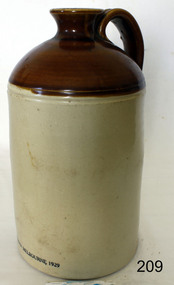
... During the 1920s and 1930s, the works gradually ran down, and following the Second World War, production reached an all-time low. The No.1 works were stripped and sold. (For further information regards Hoffman Kilns see note section of this document.) ...During the 1920s and 1930s, the works gradually ran down, and following the Second World War, production reached an all-time low. The No.1 works were stripped and sold. (For further information regards Hoffman Kilns see note section of this document.) ...The Hoffman company was established in 1870 to mass-produce bricks using the Hoffman patent kiln and the Bradley and Craven brick press. Once established the company entered a period of expansion aided by Melbourne's building boom from 1870 to 1890. During this time approximately ten brick machines were in operation producing some 18,000 bricks per hour. An extensive pottery works were established initially supplying mainly tiles and drainpipes and later domestic pottery such as the company's Melrose ware. The company even had its locomotive shunt the works siding which connected with the Victorian Railways at South Brunswick. By 1890 Hoffman was the largest brick and pottery works in Victoria, however, the 1890s depression halted company expansion. The company joined the Brick Co-operative when it was formed in 1896. The cooperative regulated prices and output from member brickworks. As the depression ended business picked up and the works were expanded to increase the production of stoneware pottery, especially domestic wares. The brickworks, however, never recovered the momentum of the early period. During the 1920s and 1930s, the works gradually ran down, and following the Second World War, production reached an all-time low. The No.1 works were stripped and sold. (For further information regards Hoffman Kilns see note section of this document.) An item made in Melbourne by at the time the largest pottery works in Australia making industrial and domestic wares for the home and building industries. Stoneware Demijohn jug with cream and brown glaze. Printed around base of jug, MELBOURNE, 1929"flagstaff hill, warrnambool, shipwrecked coast, flagstaff hill maritime museum, maritime museum, shipwreck coast, flagstaff hill maritime village, great ocean road, jug, melbourne, 1929, stoneware jug, hoffman potteries -
 Flagstaff Hill Maritime Museum and Village
Equipment - Balance Scale, Rebure Germany, 1930s
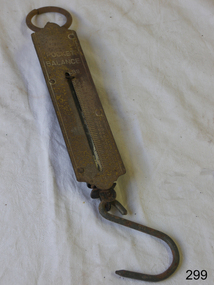
... The subject item at this time cannot be associated with an historical event or person It is believed the item was manufactured in Germany pre World War ll, in the 1930s, as other examples from the period are on a number of internet sale & auction sites. This item is regarded as a collectors piece however information ...A mass produced utilitarian item made for domestic use, there is no history or manufacturing provenance currently available.The subject item at this time cannot be associated with an historical event or person It is believed the item was manufactured in Germany pre World War ll, in the 1930s, as other examples from the period are on a number of internet sale & auction sites. This item is regarded as a collectors piece however information and company history regards the manufacturer "Rebure" has not yet been established. Balance spring scale elongated brass graduation scale to 100 Lbs hook at one end and a ring the otherRebure Pocket Balance. Made in Germany measures from 0 to 100LBSflagstaff hill, warrnambool, flagstaff-hill-maritime-museum, maritime-museum, shipwreck-coast, flagstaff-hill-maritime-village, spring balance scale, rebure scale company, rebure germany, domestic item, kitchen weighing scale -
 St Arnaud and District Historical Society
Book. Coonooer Bridge Memorial, Coonooer Bridge Memorial to those who served their Country in Wartime
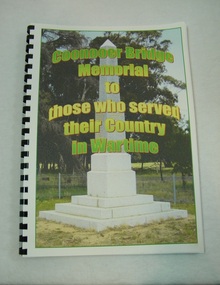
... war time were placed on the monument. After the 2nd World War the names of the local men and women who once again were asked to serve their country were added to the memorial to honour and remember the sacrifice that they made.This book was compiled to honour and enable families and future generations to remember those who served. This is the only book listing these servicemen that served from the Coonooer Bridge Area. Dedicated to the people of Coonooer Bridge. Spiral plastic bound book.Clear perspex cover. Coloured pages.Includes photographs of servicemen, medals and war service information ...Following the Great War of 1914-18 the people who lived in the general area around Coonooer Bridge , (18 kms from St.Arnaud ) erected a Monument in honour of those men and women who served their country in a time of war. In 1920 the monument was erected across from the hall, situated in a small pine plantation which was also planted by community members. The names of those that served their country during war time were placed on the monument. After the 2nd World War the names of the local men and women who once again were asked to serve their country were added to the memorial to honour and remember the sacrifice that they made.This book was compiled to honour and enable families and future generations to remember those who served.This is the only book listing these servicemen that served from the Coonooer Bridge Area.Spiral plastic bound book.Clear perspex cover. Coloured pages.Includes photographs of servicemen, medals and war service information.Dedicated to the people of Coonooer Bridge. -
 Federation University Historical Collection
Equipment, Elwell-Powell, Elwell-Parker AC Generator
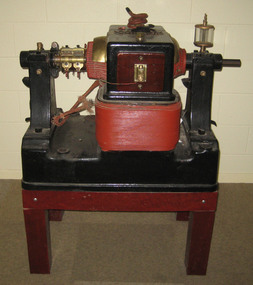
... War Two. James Oddie of Ballarat has an association with Thomas Parker of Elswell-Parker. In early 1887 Oddie arrived in England seeking information on electrical knowledge and its developments. At this time...War Two. James Oddie of Ballarat has an association with Thomas Parker of Elswell-Parker. In early 1887 Oddie arrived in England seeking information on electrical knowledge and its developments. At this time ...This AC generator operated for the State Electricity Commission in the Ballarat North Power Station prior to World War Two. James Oddie of Ballarat has an association with Thomas Parker of Elswell-Parker. In early 1887 Oddie arrived in England seeking information on electrical knowledge and its developments. At this time Henry Sutton was teaching Electricity and Magnetism at the Ballarat School of Mines. Oddie stayed in the United Kingdom for around three years and during that time became a close friend of Thomas Parker and his family. The two first met at the first official running of the Blackpool tram, and Oddie was invited to visit Parker at Wolverhampton. Over the years Thomas Parker kept newspaper cuttings (mainly Australian) relating to James Oddie and his work. The following article is a description of the Wolverhampton works by James Oddie, and was collected by Thomas Parker. After the dinner at Blackpool, Mr. Parker visited me, and cordially invited me to see his extensive works at Wolverhampton, an invitation I was not slow to avail myself of. This was the keynote of the best friendship I made in England. I went shortly afterwards and stayed several days, visiting the works daily, as Mr. Parker gave me the run of the whole works. There I ordered the installation of a 60 light dynamo, with a 28 cell storage battery and paraphernalia, now doing duty at the Observatory. I subsequently visited the works frequently, sometimes for a week at a time, and I regard it as the brightest spot in my English constellation. Mr. Parker started his works in 1880, with one man beside himself. He never had a single day’s instruction in electricity in his life; now he daily instructs between 300 and 400 employees, who worship him as a father. He is said to be now the most practical electrical engineer and mechanist in Europe. During one of my visits I took with me an artist, who is painting for me a portrait, 6 feet by 5 feet, of Mr. Parker, surrounded by dynamos, secondary batteries, measuring instruments etc. Electric tram cars are going to be a big thing in England. Parker’s Company Limited, is now, with three other companies, in the hands of the Electric Construction Company, with Mr. Parker as manager of the lot. The whole of the works will be taken to Wolverhampton. Before I left, a tender for £50,000 was accepted for the construction of new works.AC Generator painted read and black on a stand. This AC generator operated for the State Electricity Commission in the Ballarat North Power Station prior to World War Twogenerator, ac generator, elwell-parker ltd, state electricity commission, sec, ballarat north power station, james oddie, wolverhampton -
 Lara RSL Sub Branch
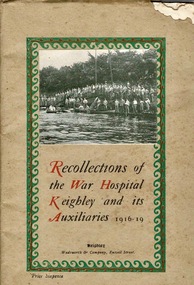
Booklet, Wadsworth & Company, Recollections of the War Hospital Keighley and its Auxiliaries 1916-19, circa 1920
... war who were being held locally and required treatment from time to time, notably from the influenza epidemic. Morton Banks had 746 beds. The book records the details of the hospital between 1916-19 including staff, hospital layout and departments, the Auxiliary Hospitals, Discipline, Recreation, Education, Comforts Committee and Affiliated Associations. Document of Military Hospital in Keighley, U.K. during WW1. Contains significant information ...Keighley War Hospital at Morton Banks was originally The Morton Banks Fever Hospital and after local funds were raised, extra wards were built to turn it into a War Hospital. It opened in time to take some of the first casualties from the Battle of the Somme in July 1916 and continued until the end of the war. The War Hospital Register archived at Keighley Library contains 13,214 names of servicemen who were treated there. It also contains the names of German prisoners of war who were being held locally and required treatment from time to time, notably from the influenza epidemic. Morton Banks had 746 beds. The book records the details of the hospital between 1916-19 including staff, hospital layout and departments, the Auxiliary Hospitals, Discipline, Recreation, Education, Comforts Committee and Affiliated Associations.Document of Military Hospital in Keighley, U.K. during WW1. Contains significant information on staff and different departments at the hospital.Carboard and paper booklet of 48 pages. The cover is beige with green border with black and red writing. Silverfish have eaten top right corner of cover.On front cover is publisher Wadsworth & Company, Russell Street, Keighley, (also known as Rydal Press) title and cost of Sixpence. Inside first blank page is written 'With kind regards from Willie To Jack'. 'Jack' refers to J.L.McIntyreworld war 1, ww1, military hospital, army hospital, keighley war hospital, morton banks, morton banks fever hospital, keighley -
 Lara RSL Sub Branch
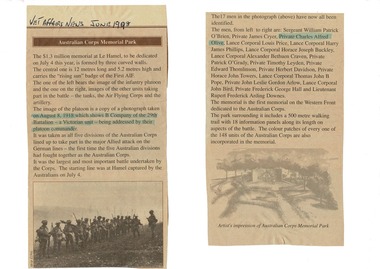
Veteran Affairs Newspaper article dated June 1998, Australian Corps Memorial Park - $1.3 million memorial at La Hamel for Australian World War 1 Soldiers
... War 2. The photograph included in the article was taken on August 8, 1918 which shows B company of the 29th Battalion - a Victorian Unit - being addressed by their platoon Commander. All 5 Australian Divisions took part in the major Allied attack on the German Lines - the first time the five Australian Divisions had fought together as the Australian Corps. (Under Australian Command) It is the First memorial on the Western Front dedicated to the Australian Corps. The park surrounding it includes a 500 meter walking tril with 18 information...War 2. The photograph included in the article was taken on August 8, 1918 which shows B company of the 29th Battalion - a Victorian Unit - being addressed by their platoon Commander. All 5 Australian Divisions took part in the major Allied attack on the German Lines - the first time the five Australian Divisions had fought together as the Australian Corps. (Under Australian Command) It is the First memorial on the Western Front dedicated to the Australian Corps. The park surrounding it includes a 500 meter walking tril with 18 information ...Article of World War 1 Refer to carved life size soldier with machine gun in foyer and photograph at its feet.A4 sheet of white paper has two cut-out sections of Veteran Affairs Newspaper article dated June 1998 glued on. Title Australian Corps Memorial Park. Article covers a Memorial cost $1.3 million dollars for dedication on 4th July 1998 consisting of three curved memorial walls for Australian soldiers that died during Wold War 2. The photograph included in the article was taken on August 8, 1918 which shows B company of the 29th Battalion - a Victorian Unit - being addressed by their platoon Commander. All 5 Australian Divisions took part in the major Allied attack on the German Lines - the first time the five Australian Divisions had fought together as the Australian Corps. (Under Australian Command) It is the First memorial on the Western Front dedicated to the Australian Corps. The park surrounding it includes a 500 meter walking tril with 18 information panels along its length on aspects of the battle.Article was found in Veteran Affairs News dated June 1998, heading - Australian Corps Memorial Park.veteran affairs news article, a4 paper sheet -
 Flagstaff Hill Maritime Museum and Village
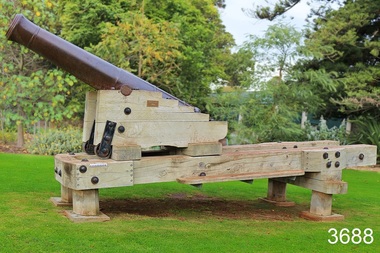
Weapon - Cannon, 1813
... It was obsolete by the time of the 1887 fortifications, and was moved from the Warrnambool Fortifications to the Botanic Gardens in 1910, when the Fortifications were declared obsolete. HISTORIC INFORMATION ABOUT THE CANNON IN THE WARRNAMBOOL AREA In the years following the Crimean War (1854-1857J) there was a great concern in the Colony that Imperial Russia would attempt an invasion. ...It was obsolete by the time of the 1887 fortifications, and was moved from the Warrnambool Fortifications to the Botanic Gardens in 1910, when the Fortifications were declared obsolete. HISTORIC INFORMATION ABOUT THE CANNON IN THE WARRNAMBOOL AREA In the years following the Crimean War (1854-1857J) there was a great concern in the Colony that Imperial Russia would attempt an invasion. ...This 1813 cannon is classified as a carronade, having been made by the Carron Ironworks foundry in Stirling, Scotland in 1813. It is a large calibre, short range, gun mainly used on ships. The carronade model of cannon was first used when introduced into the British Royal Navy in the American War of the Revolution (1775-1883). This cannon was originally a 28pdr, 48cwt, 8ft gun. The date ‘1837’ on the barrel probably indicates the date that the Board of Ordinance accepted the change in size to a 32pdr. It may originally have been a naval gun and the conversion undertaken when it was brought ashore. It is very probably one of the 15 guns that are known to have constituted the defences of Victoria in 1860. This group of 32pdrs was the shorter model of the 4800width and 8ft length cannon and as such are different from the 32pdrs found in NSW. It was originally located on Cannon Hill in Warrnambool when it was the site of the Warrnambool Battery Western Artillery, formed in 1866. It was obsolete by the time of the 1887 fortifications, and was moved from the Warrnambool Fortifications to the Botanic Gardens in 1910, when the Fortifications were declared obsolete. HISTORIC INFORMATION ABOUT THE CANNON IN THE WARRNAMBOOL AREA In the years following the Crimean War (1854-1857J) there was a great concern in the Colony that Imperial Russia would attempt an invasion. Coastal defences in the colony of Victoria were greatly strengthened by the Government as a result. Warrnambool was originally protected by cannons at Cannon Hill, approximately 1 kilometer west of the Flagstaff Hill Fortifications. The cannons included two 1866 guns, both 80 Pound Rifled Muzzle Loaders (RML) purchased by Victoria’s Colonial Government. They were part of a shipment of 26 such guns sent from England in December 1866. They are registered as No. 23 (80cwt-2qr-0lbs) - Gun 1, and No.13 (81cwt-1qr-12lbs) - Gun 2. They were cast at the Royal Gun Factory, Woolwich Arsenal, in 1866 and have a 6.3 inch bore. Both barrels carry the Royal Cypher of Queen Victoria, Insignia of the Royal Engineers, within the Garter and Motto surmounted by the Crown, with the Royal Cypher of Queen Victoria within the Garter (letters in centre “VR”, motto “HONI SOIT QUI MAL Y PENSE”, "Shame be to him who thinks evil of it."). The guns were originally supplied with wooden carriages. (The Royal Arsenal at Woolwich, England, was established eleven years after the Restoration of King Charles II. It was the principal supplier of armaments to the British and Empire Governments. At the height of its operations during World War One the factory covered 1300 acres and employed very nearly 80,000 workers. Woolwich was the Headquarters of the Royal Artillery since the raising of that Regiment in 1716. The Arsenal was closed in the late 1960’s.) The two 80pdr cannons were transferred to the Warrnambool Garrison Artillery Battery Fortifications erected at Flagstaff Hill in 1887 as part of Victoria’s Coastal Defences. The original wooden carriages were subsequently replaced with the present iron garrison carriages in 1888. They are a “C” pivot. The ‘racers’ or curved track set into the floor of the gun emplacement (which enabled the guns to be traversed more quickly) are as specified for guns up to 10 inch, being of wrought iron 2.78 inches wide. A temporary third gun, now no longer on Flagstaff Hill’s site, was a 5 inch Rifled Breech Loading (BL) Armstrong gun mounted on an Elswick hydro pneumatic disappearing carriage It was faster to load and fire than the 80 pound RMLs and its arrival spelt the end of the older 80 pound guns’ useful life, apart from being used for practice sessions. The 5 inch BL gun was the main defensive weapon of the Warrnambool Battery until the Battery was downgraded in importance and the gun was recalled to Melbourne in 1910. The gun emplacement still remains in place set between the 2 80pdr cannon. The State of Victoria took over the ownership of the guns at the time of Australian Federation in 1901. In about 1901/1902 the Garrison Battery was converted to the Warrnambool Battery of the Australian Field Artillery (No 4 Field Battery). It was equipped with 4.7 inch naval guns mounted on field carriages. They were now a mobile unit but continued to use the Warrnambool Garrison area at Flagstaff Hill for practice. When the Fortifications were declared obsolete the two 80 Pounder RML were relocated to Cannon Hill in 1910. On the outbreak of World War 1 the 4.7 inch guns were recalled to Melbourne, and the Battery was disbanded. Most of the personnel probably re-enlisted in the local 4th Australian Light Horse Regiment. The two 80 Pounder RML were moved back to the Fortifications in 1973. They were both fully restored by Army First Year Apprentices at the Ordinance Factory in Bendigo in time for the centenary year of the fortifications in 1987. The guns are capable of firing 80 pound (32.3kg) armour piercing exploding shells 3.65kms out to sea. They were original manned by volunteers before a paid Garrison was established. Now the Guns are again fired by volunteers on Special Event days. Since restoration the Gun Number 1 had been fired on a regular basis but Gun Number 2 hadn’t been fired since the mid 1990’s. In April 2015 Gun Number 2 was serviced in preparation for the firing of both cannons on the ANZAC Centenary commemorations on April 25th 2015. Other guns from the original Cannon Hill location were obsolete by the time the 1887 Warrnambool Garrison Artillery Battery was built. These guns are (1) a 32 Pounder Muzzle Loading Smooth Bore (SB) cast in 1813 at the famous Carron Foundry, number 80837 and now located in the Warrnambool Botanic Gardens. It is now mounted on a replica carriage due to the original carriage being in a fragile condition (the original carriage stored under cover at Flagstaff Hill). (2) a 68 Pounder Muzzle Loading Smooth Bore cast in 1861 at the equally august Low Moor Foundry, number 10310 and now located on the lawn area at the entrance to Flagstaff Hill Maritime Village. It is still mounted on its original wooden garrison carriage. Its wooden slide compressor mechanism is fragile and now kept in Flagstaff Hill’s storage. There are only seven 32 Pounder SB made by Carron and fifteen 68 Pounder SB made at Low Moor known to exist in the State of Victoria Plaque attached to the carriage “This replica carriage was constructed by the Warrnambool Tritan Woodworkers club in conjunction with the generosity of local businesses and the Warrnambool community. The original carriage (circa 1860) was removed for restoration and is now located at Flagstaff Hill Maritime Village. The timber used for the replica carriage is Monterey Cypress, which was an early planting in the gardens. 2010 marked the centenary of the cannon’s relocation in the Warrnambool Botanic Gardens.” (Reference; Victorian Guns and Cannons, South Western Victoria Assessment, May 2008, item W/B/01; Flagstaff Hill Maritime Village datasheets and archives). There are only seven 32 Pounder SB made by Carron known to exist in the State of Victoria and this is one of them. On a world level, this cannon represents a high level of rarity. Further, as it has been modified (bored up) it is representative of the historical process of amending artillery in order to ensure a longer usefulness of each piece despite rapidly advancing artillery technology. The number of surviving carriages with traversing slides in this group in South Western Victoria is unique in Australia and probably in the World. Out of 10 such platforms surviving in Australia, the South Western Victorian group has half. Several survive around the world but probably not in such a large group. The wooden sliding compressor mechanism belonging to this cannon is extremely rare, and the only one in this South Western Victorian group of Guns and Cannons. As a whole, this cannon has undergone very little restoration or modification, giving it a high level of integrity. The City of Warrnambool is one of several custodians of a collection of artillery pieces of heritage significance at a state, national and international level. These pieces are directly related to the defence of south-west Victoria in the 19th century. The care and preservation come under the Heritage Act 1995. (Reference; Victorian Guns and Cannons, South Western Victoria Assessment, May 2008).Cannon, or carronade, 32pdr with wheels. Muzzle loading smooth bore (SB) cannon. Cannon has original wooden Burmese Teak carriage and slide with wrought iron fittings and iron wheels. Manufactured by Carron in Scotland, in 1813. It has been converted from a 28pdr. There is a loop for a rope on the cascabel, which was part of the original casting. Re-bored in 1837. Marks include Serial Number, Royal Cypher of King George III, broad arrow of proofing, and numbers to represent the weight. NOTE: The cannon is displayed in the Warrnambool Botanic Gardens and is mounted on a replica wooden carriage; the original wooden carriage is now stored under cover at Flagstaff Hill Maritime Village. This carriage has 4 wheels on swivel attachments and a central gear that allows the wheels to turn on rails. Pressed into left trunnion “80837 / CARRON / 1813”, cast on barrel“symbol (Royal Cypher of King George III”, “symbol (broad arrow of proofing)” and numbers “45-3-24 / 1837” . Cascable “CV” and marks with gradations from nought to three in quarters on each side, On the carriage the end of one of the main slide members carries the mark “W symbol (broad arrow) D” incised into the timber. Plaque attached to the carriage by the Warrnambool Tritan Woodworkers club, 2010, marking the centenary of the cannon’s relocation in the Warrnambool Botanic Gardens and the addition of the replica carriage. flagstaff hill, warrnambool, shipwrecked coast, flagstaff hill maritime museum, maritime museum, shipwreck coast, flagstaff hill maritime village, great ocean road, victoria’s coastal defences, warrnambool fortification, warrnambool garrison battery, ordinance, armaments, cannon hill fortifications, victorian colonial government, carron ironwroks foundary, 32pdr smooth bore cannon, 28pdr smooth bore cannon, 1813 cannon, carronade -
 Flagstaff Hill Maritime Museum and Village
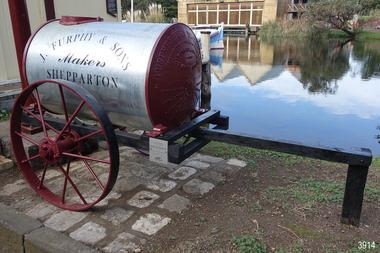
Vehicle - Furphy Water Cart, J. Furphy & Sons, c. 1942
... War (1914-1918), the water cart was used by the Australian militarily at a large AIF (Australian Imperial Force) camp in Broadmeadows (Melbourne) where thousands of men were camped for months, before being transported aboard. Furphy Water Carts provided water to the troops, and were usually placed near the camp latrines, which was one of the few places the troops could share gossip and tall tales away from the prying eyes and ears of their officers. The water cart drivers were also notorious sources of information, despite most of their news being hearsay, or totally unreliable. By the time...War (1914-1918), the water cart was used by the Australian militarily at a large AIF (Australian Imperial Force) camp in Broadmeadows (Melbourne) where thousands of men were camped for months, before being transported aboard. Furphy Water Carts provided water to the troops, and were usually placed near the camp latrines, which was one of the few places the troops could share gossip and tall tales away from the prying eyes and ears of their officers. The water cart drivers were also notorious sources of information, despite most of their news being hearsay, or totally unreliable. By the time ...This horse-drawn, two-wheeled cart with a tank, is known as a Furphy Farm Water Cart that was made in Shepparton, northern Victoria, c. 1942. John Furphy (1842-1920) was born in Moonee Ponds, in 1842 to Irish immigrant parents and subsequently raised in the Yarra Valley before the family moved to Kyneton in central Victoria, where he completed an apprenticeship with the firm Hutcheson and Walker. Murphy began operations of his own at a site on Piper Street in Kyneton in 1864. He relocated for a business opportunity and founded the first blacksmiths and wheelwrights shop in the newly surveyed town of Shepparton in 1873. Furphy invented many farming tools and machines including a patented grain-stripper, and won awards at the 1888-89 Melbourne International Exhibition. His most famous invention is the Furphy Farm Water Cart, designed in the 1880s, at a time when water for most households and farms was carted on wagons in wooden barrels. The Furphy’s water cart is a single item that combines a water metal tank and a cart. The design of the cart was simple yet effective, and became popular very quickly and established itself as a vital piece of farming equipment. The water cart has had a number of words cast into its ends over many years. References to the foundry’s location in Shepparton, as well as advertising of other products also manufactured by J. Furphy & Sons were present on the ends. However, the most significant set of words to feature on the tank, was a poem encouraging continual improvement: ‘Good Better Best, Never Let it Rest, Until your Good is Better, And your Better Best’. During The Great War (1914-1918), the water cart was used by the Australian militarily at a large AIF (Australian Imperial Force) camp in Broadmeadows (Melbourne) where thousands of men were camped for months, before being transported aboard. Furphy Water Carts provided water to the troops, and were usually placed near the camp latrines, which was one of the few places the troops could share gossip and tall tales away from the prying eyes and ears of their officers. The water cart drivers were also notorious sources of information, despite most of their news being hearsay, or totally unreliable. By the time the men of the AIF were in engaged in combat on the Gallipoli Peninsula and the Western Front, the carts used for water supply had no markings and became simply referred to as Furphys. This owed as much to the coining of the term ‘Furphy’, Australian slang for suspect information or rumour. After a number of decades as principally a soldier’s word, 'Furphy' entered the broader Australian vernacular and was used mainly by the political class until recently when the term was taken up by a Australian brewer as a beer brand. This Furphy Water Cart was purchased by Friends of Flagstaff Hill in 2014. The support of local individuals, organisations and businesses enabled its restoration and later its installation alongside the existing late-19th century water pipe stand and 1940s hand pump The Furphy Farm Water Cart is of historical significance as it represents a famous Australian time-saving and energy-saving invention of the 1880s, replacing the labour intensive activity of collecting and dispensing water from barrels and casks on the back of carts. The water cart’s connection with manufacturing companies J. Furphy & Sons and Furphy Foundry are significant for being early Australian businesses that are still in operation today. Furphy carts are of military significance for the role they played during The Great War (1914-1918) in Australian army camps, and theatres of war in Europe and the Middle East, to supply the AIF troops with fresh water. A wooden framed, two-wheeled, horse-drawn cart, fitted with a horizontally mounted, cylindrical metal tank. The tank is made of rolled, sheet steel with a riveted seam, and cast iron ends with cast iron ends. The spoked metal wheels have fitted flat iron tyres and metal hubs. A metal pipe is joined to the outlet. The tank is silver coloured, the ends, wheels and trims are crimson, and the script lettering on tank sides is black. There are inscriptions on the tank, ends, and hubs. The water tank was made in 1942 in Shepparton, Australia, by J. Furphy & Sons and has a capacity of 180 gallons (848 litres). Hub perimeter, embossed “J. FURPHY & SONS” “KEEP THE / BOLTS TIGHT” Hub centre embossed [indecipherable] Tank, each side, painted “J. FURPHY & SONS / Makers / SHEPPARTON” Tank ends, embossed – “FURPHY’S FARM WATER CART” “BORN ABOUT 1880 – STILL ‘GOING STRONG’ 1942” “j. FURPHY & SONS / MAKERS / SHEPPARTON - VIC “ “S - - - - - L MANUFACTURERS” [SPECIAL] “SPIKE ROLLERS” “SINGLE TREES” “PLOUGH WHEELS” “IRON CASTINGS” “LAND GRADERS” “STEEL DELVERS” “CAST IRON PIG” “CHAIN YOKES” “GOOD – BETTER – BEST / NEVER LET IT REST / TILL YOUR GOOD IS BETTER / AND YOUR BETTER – BEST” Image [Stork carrying a baby] above shorthand, transcribed "Produce and populate or perish" Image [Furphy Pig Feeder] beside ‘Cast Iron Pig’ Shorthand, transcribed “"Water is the gift of God but beer and whiskey are concoctions of the Devil, come and have a drink of water"warrnambool, flagstaff hill maritime museum, water cart, furphy cart, furphy tank, furphy farm water cart, furphy, john furphy, john furphy & sons, furphy foundry, kyneton, shepparton, mobile water tank, jinker, hutchinson & walker, blacksmith, farm equipment, implement maker, tool maker, horse drawn, stork and baby, good, better, best, barrel, tank, first world war, wwi, eastern front, gallipoli, j furphy & sons -
 Flagstaff Hill Maritime Museum and Village
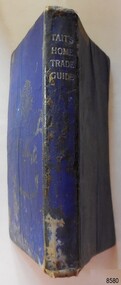
Book - Technical Reference, James Tait, Extra Master and Author et al, Tait's Home Trade Guide to the Board of Trade Examinations for Mates and Masters, 1943
... information during World War II. It was to be used by Examiners to assess whether students qualified to be a Ship's Mate or Ship's Master. The contents of the book were based on maritime knowledge gained over centuries. It is an aid to understanding the navigational methods of the time ...The book includes navigational information, tables and maps, diagrams and formulas. It was written for Examiners and Students studying for their nautical Mates and Masters marine qualifications— notes have been handwritten inside the front and back covers. Notes in point form: 1. I have seen the back of a torpedo EBoat or UBoat in my starboard side 2. I _ _ _ to - - - - - - - - - Port side 3. at a distance ----------- 4. Enemy surface vessel in sight __________ 5. suspicious vessel in sight 6. enemy (undecipherable) 7. I have cut a _ _ _ adrift with my _ _ 8. FI_ _ WISE _ _ _ 9. STARWISE 0. OPEN FIREThis relatively rare book provided up-to-date navigational information during World War II. It was to be used by Examiners to assess whether students qualified to be a Ship's Mate or Ship's Master. The contents of the book were based on maritime knowledge gained over centuries. It is an aid to understanding the navigational methods of the time and the changes and improvements in more recent history.Title: Tait's Home Trade Guide: to the Board of Trade Examinations for Mates and Masters Author: James Tait, Extra Master Publisher: Brown, Son and Ferguson, Ltd. Glasgow, Great Britain Date: Revised Edition 1943 Further Information: Fourteenth Edition 1941, Reprinted Edition 1943. Revised and brought up to date by Captain H. T. Jefferys, Extra Master Printed by Nautical Press, Brown, Son & Ferguson, Limited, 52-58 Darnley Street, Glasgow Hardcover, small book, royal blue cover, silver embossed text on spine. Textbook for Mariners. Includes tables and maps, diagrams and formulas, and navigational information. The inside covers of this book contain handwritten calculations, diagrams and notes that refer to navigation. Notes inside the back cover refer to an enemy vessel and OPEN FIRE.Spint, in silver embossing "TAIT'S HOME TRADE GUIDE" Handwritten inside the back cover "R.A.D. / MOORE / PT. WELCH" Included with the text inside the back cover "Gascoyne" "506" and "RCM"flagstaff hill, warrnambool, shipwrecked coast, flagstaff hill maritime museum, maritime museum, shipwreck coast, flagstaff hill maritime village, great ocean road, james tait, brown, son and ferguson limited, torpedo, open fire, pt welch, vessel gascoyne, e-boat, u-boat, marine technology, world war ii, wwii, ww2, navigation exams, ship's mate, ship's master, wwii textbook, nautical textbook, navigational textbook, examination textbook, world war ii textbook, 1943 nautical textbook -
 Greensborough Historical Society
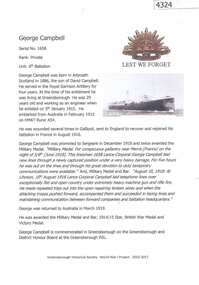
Article, Greensborough Historical Society et al, George Campbell, 1914-1918
... War 1. At the time of George Campbell's enlistment, he was living at Greensborough. Updated 2021 with information from George's grandson....War 1. At the time of George Campbell's enlistment, he was living at Greensborough. Updated 2021 with information from George's grandson. world war 1 project george campbell 1 Page, text and colour images. ...A short article about George Campbell and his service in World War 1. At the time of George Campbell's enlistment, he was living at Greensborough. Updated 2021 with information from George's grandson.1 Page, text and colour images.world war 1 project, george campbell -
 Orbost & District Historical Society
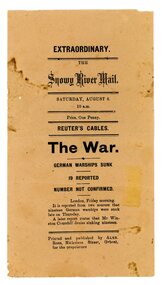
Pamphlet - The War, Snowy River lMail, 1914-1918
... War 1, printed in Orbost by the Snowy River Mail. The exact date is not stated, apart from Saturday 8 August at 10am. It could be advertising the time and date of an edition of the S R Mail with special reports on the War in Europe. These reports were provided by Reuters and compiled by the S R Mail. The S R Mail was an important link for Orbost district citizens with the outside world, and provided information...War 1, printed in Orbost by the Snowy River Mail. The exact date is not stated, apart from Saturday 8 August at 10am. It could be advertising the time and date of an edition of the S R Mail with special reports on the War in Europe. These reports were provided by Reuters and compiled by the S R Mail. The S R Mail was an important link for Orbost district citizens with the outside world, and provided information ...This is an intriguing small pamphlet from World War 1, printed in Orbost by the Snowy River Mail. The exact date is not stated, apart from Saturday 8 August at 10am. It could be advertising the time and date of an edition of the S R Mail with special reports on the War in Europe. These reports were provided by Reuters and compiled by the S R Mail. The S R Mail was an important link for Orbost district citizens with the outside world, and provided information on the conduct of World War I. Also, the district provided a number of local men and boys as volunteers to the War and news was really vital. This pamphlet is significant because it relates to the importance of the Snowy River Mail in providing essential updates on the conduct of World War I.A single sheet of cream/yellowish paper with black printing. EXTRAORDINARY Snowy River Mail Price one penny REUTERS CABLES THE WAR Saturday August 8th German Warships Sunk Printed and published by Alex Ross, Nicholson Street, Orbost for the proprietors world war i, snowy river mail -
 Mission to Seafarers Victoria
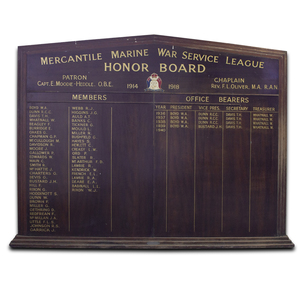
Memorabilia - Honor Board, Mercantile Marine War Service League, Early 20th Century
... While there are some references from time to time to a war memorial fund in both Mission Annual reports from the 1930s and news clippings the actual organisation has not been well researched. More information...While there are some references from time to time to a war memorial fund in both Mission Annual reports from the 1930s and news clippings the actual organisation has not been well researched. More information ...While there are some references from time to time to a war memorial fund in both Mission Annual reports from the 1930s and news clippings the actual organisation has not been well researched. More information is needed about formation and member details. As the board primarily was designed for WW1 it may have fallen out of use post WW2. This War memorial fund may have been superseded by a national organisation see links above. JM 2020.The Katoomba crews led by Captain E. Moodie-Heddle were regular visitors to the Mission from 1914 onwards and assisted with fundraising events and collections.Large Honour board with angled top in dark red stained wood and gilt lettering Patron: Captain E. Moodie Heddle showing member names, president, Vice President, treasurer and Rev Oliver's name at far rightprimarily dedicated to the Merchant seamen of Great war of 1914-1918. see imagecaptain e.l. moodie heddle, s.s. katoomba, frank oliver, honour boards, war memorials -
 Greensborough Historical Society
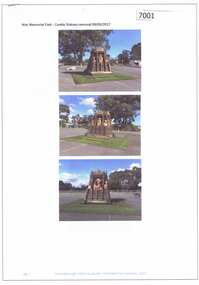
Article and Photograph, Greensborough War Memorial Park, removal of chainsaw sculptures, 2017_
... War Memorial Park on 09/09/2017. These original statues had become weather damaged over time and were replaced by the Homefront Project chainsaw sculptures. Photographs from Homefront Facebook page. This text and photographs were copied from a Facebook site. Members are people who lived in the Greensborough area and share their reminiscences of the area with others. The site is administered by a GHS member but is not officially affiliated with the Society. Any information ...Photographs of the burning of the Conkie chainsaw sculptures at Greensborough War Memorial Park on 09/09/2017. These original statues had become weather damaged over time and were replaced by the Homefront Project chainsaw sculptures. Photographs from Homefront Facebook page.This text and photographs were copied from a Facebook site. Members are people who lived in the Greensborough area and share their reminiscences of the area with others. The site is administered by a GHS member but is not officially affiliated with the Society. Any information is the opinion of the contributor. Photographs and text sourced from social media.chainsaw sculptures, greensborough war memorial park, leigh conkie, homefront project -
 Australian Commando Association - Victoria
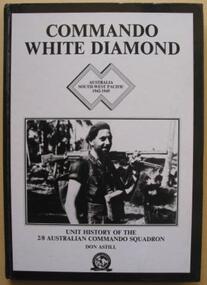
Book, Commando White Diamond: Unt History of the 2/8th Australian Commando Squadron
... time. After securing the Jaba River, they moved inland, first to Sovele Mission, then the villages of Opai, Nihero and Morokaimoro. They had reached Kilipaijino by the end of the war. Each village taken became a patrol base. Patrols were usually limited to two sections, although up to six sections could be operating at a time. Patrols generally lasted four to six days, but nine-day patrols were not unknown. The squadron collected and collated track information ...The detailed history of the No.8 Independent Commando Company during World War II. Plastic protective cover over the book. The 2/8th Independent Company was formed at Wilson’s Promontory, Victoria, in July 1942 and travelled to Yandina, in Queensland, in September. While the other seven independent companies saw action in the islands off Australian and in New Guinea, the 2/8th spent most of the next two years based at Adelaide River, in the Northern Territory. While it was in the Territory, the independent companies underwent a series of reorganisations and the name of the 2/8th was changed from the 2/8th Independent Company to the 2/8th Cavalry (Commando) Squadron. This name was later simplified to just commando squadron. In July 1944, after years of waiting, the squadron left the Territory and sailed from Townsville to Lae, via Milne Bay. While at Lae, the squadron received an intake of 70 men from the 2/8th from the 2/3rd, 2/5th and 2/6th Cavalry (Commando) Squadrons, many of whom were veterans of the earlier New Guinea campaigns. Their experience was no doubt a useful reserve that would have been called upon during the 2/8th’s subsequent campaign in Bougainville. Others though, were able to implement some of their commando training when a small group from the 2/8th they made a secret landing on New Britain. Towards the end of the 1944 the 5th Division was preparing to make a landing at Jacquinot Bay in New Britain. Part of these preparations included landing a small group of officers from the division at Jacquinot Bay to make a secret reconnaissance of the potential landing site. As Jacquinot Bay was still in Japanese controlled territory, ‘C’ Troop from the 2/8th provided the protection for the reconnaissance party by establishing a position on the beach and by patrolling the surrounding country. Everything went well and the 5th Division later landed at Jacquinot Bay in November. The squadron too was on the move, and in October it sailed to Torokina, the main Australian base on Bougainville, where it joined the II Australian Corps. The campaign on Bougainville was dived into three areas, the Central, Northern and Southern Sectors. The 2/8th served in the latter two areas. The 2/8th made the first move of the Australian campaign in the Northern Sector, by patrolling from Torokina to Kuraio Mission and Amun once a week. The squadron did this from the second week of November unit the second week of December. The 2/8th was then transferred to the Southern Sector. The main battle for Bougainville was fought in the Southern Sector, as the 3rd Division advanced towards Buin – the main Japanese base on the island. As the division’s infantry brigades advanced along the coast, the 2/8th’s task was to protect their flank by conducting forward reconnaissance patrols, harassing the Japanese with raids and ambushes and conducting a form of guerrilla warfare. The squadron had a long campaign. For nine months, from the end of December until August 1945, the troopers were in action the whole time. After securing the Jaba River, they moved inland, first to Sovele Mission, then the villages of Opai, Nihero and Morokaimoro. They had reached Kilipaijino by the end of the war. Each village taken became a patrol base. Patrols were usually limited to two sections, although up to six sections could be operating at a time. Patrols generally lasted four to six days, but nine-day patrols were not unknown. The squadron collected and collated track information, terrain reports and located the enemy. Once patrols had gathered information, they were free to make a ‘strike’ against the Japanese by setting an ambush or taking a prisoner. These raids were very effective, as they forced the Japanese to deploy troops to their rear areas, removing men from the front created by the infantry. Following Japan’s surrender and the end of the war, the ranks of the squadron thinned quickly as men were discharged or were transferred to other units. For those who were left, the squadron returned to Australia at the end of December. In mid January 1946, at Liverpool, the 2/8th Commando Squadron was disbanded.non-fictionThe detailed history of the No.8 Independent Commando Company during World War II. Plastic protective cover over the book. The 2/8th Independent Company was formed at Wilson’s Promontory, Victoria, in July 1942 and travelled to Yandina, in Queensland, in September. While the other seven independent companies saw action in the islands off Australian and in New Guinea, the 2/8th spent most of the next two years based at Adelaide River, in the Northern Territory. While it was in the Territory, the independent companies underwent a series of reorganisations and the name of the 2/8th was changed from the 2/8th Independent Company to the 2/8th Cavalry (Commando) Squadron. This name was later simplified to just commando squadron. In July 1944, after years of waiting, the squadron left the Territory and sailed from Townsville to Lae, via Milne Bay. While at Lae, the squadron received an intake of 70 men from the 2/8th from the 2/3rd, 2/5th and 2/6th Cavalry (Commando) Squadrons, many of whom were veterans of the earlier New Guinea campaigns. Their experience was no doubt a useful reserve that would have been called upon during the 2/8th’s subsequent campaign in Bougainville. Others though, were able to implement some of their commando training when a small group from the 2/8th they made a secret landing on New Britain. Towards the end of the 1944 the 5th Division was preparing to make a landing at Jacquinot Bay in New Britain. Part of these preparations included landing a small group of officers from the division at Jacquinot Bay to make a secret reconnaissance of the potential landing site. As Jacquinot Bay was still in Japanese controlled territory, ‘C’ Troop from the 2/8th provided the protection for the reconnaissance party by establishing a position on the beach and by patrolling the surrounding country. Everything went well and the 5th Division later landed at Jacquinot Bay in November. The squadron too was on the move, and in October it sailed to Torokina, the main Australian base on Bougainville, where it joined the II Australian Corps. The campaign on Bougainville was dived into three areas, the Central, Northern and Southern Sectors. The 2/8th served in the latter two areas. The 2/8th made the first move of the Australian campaign in the Northern Sector, by patrolling from Torokina to Kuraio Mission and Amun once a week. The squadron did this from the second week of November unit the second week of December. The 2/8th was then transferred to the Southern Sector. The main battle for Bougainville was fought in the Southern Sector, as the 3rd Division advanced towards Buin – the main Japanese base on the island. As the division’s infantry brigades advanced along the coast, the 2/8th’s task was to protect their flank by conducting forward reconnaissance patrols, harassing the Japanese with raids and ambushes and conducting a form of guerrilla warfare. The squadron had a long campaign. For nine months, from the end of December until August 1945, the troopers were in action the whole time. After securing the Jaba River, they moved inland, first to Sovele Mission, then the villages of Opai, Nihero and Morokaimoro. They had reached Kilipaijino by the end of the war. Each village taken became a patrol base. Patrols were usually limited to two sections, although up to six sections could be operating at a time. Patrols generally lasted four to six days, but nine-day patrols were not unknown. The squadron collected and collated track information, terrain reports and located the enemy. Once patrols had gathered information, they were free to make a ‘strike’ against the Japanese by setting an ambush or taking a prisoner. These raids were very effective, as they forced the Japanese to deploy troops to their rear areas, removing men from the front created by the infantry. Following Japan’s surrender and the end of the war, the ranks of the squadron thinned quickly as men were discharged or were transferred to other units. For those who were left, the squadron returned to Australia at the end of December. In mid January 1946, at Liverpool, the 2/8th Commando Squadron was disbanded. -
 Orbost & District Historical Society
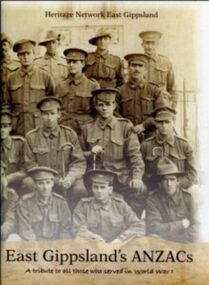
book, East Gippsland's ANZACS a tribute to those who served in World War 1, 2016
... information and a CD with the details of each man - name; rank; service number and unit. Almost 2500 names have been traced. For current Australians, the Anzac Centenary is one of the most significant commemorations to take place during their lifetime. It was a time to contemplate the legacy of those who served in World war ...This book was produced as a project for the 1915 ANZAC centenary. The book became too unwieldy and was then divided into written information and a CD with the details of each man - name; rank; service number and unit. Almost 2500 names have been traced. For current Australians, the Anzac Centenary is one of the most significant commemorations to take place during their lifetime. It was a time to contemplate the legacy of those who served in World war 1 and those who never returned to their families or friends. This book records that time and especially honours those from East Gippsland.A paper back book, titled "East Gippsland's ANZACS a tribute to those who served in World War 1". On the front cover is a sepia photograph of "Thirty East Gippsland Boys" taken in early 1916 during training at Heliopolis (Greece) before embarkation for France. The book contains a selection of stories from those who served, along with a CD of the names and service records of all of those known to have enlisted from East Gippsland.anzac ww1 military-history--east-gippsland -
 Orbost & District Historical Society
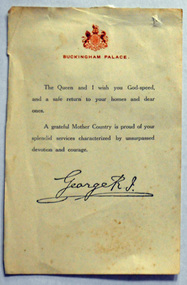
letter/certificate, George V, after WW1
... information : These certificates were given to Dominion and Empire troops from Canada, New Zealand, Australia & etc., who had survived the Great War as it was then known. These documents were an Empire issue, not an issue for British service persons. R I is short for Rex Imperator which is Latin for King & Emperor. The document was sent to Colonial, Empire & Dominion troops only. This personal document gives an insight into the human element of World War 1 ensuring that those who were part of the Orbost community and died while playing a vital role during this time ...The RI stands for Rex Imperator. This letter / certificate was given to Don Dunoon (father of Lynn Brown) who served in World War 1. He later came to Orbost and married into the Lynn family - Mary Ellen Lynn. This certificate was given to all servicemen who survived the war. A World War I demobilization certicate / letter from Buckingham Palace to those who served in the Great War. At the head of the letter is the royal coat of arms and 'Buckingham Palace' letterhead in red printed ink. The text reads: 'The Queen and I wish you God-speed, and a safe return to your homes and dear ones. A grateful mother country is proud of your splendid services characterized by unsurpassed devotion and courage' Below is the ink printed signature of King George V - 'George R. I.' Additional information : These certificates were given to Dominion and Empire troops from Canada, New Zealand, Australia & etc., who had survived the Great War as it was then known. These documents were an Empire issue, not an issue for British service persons. R I is short for Rex Imperator which is Latin for King & Emperor. The document was sent to Colonial, Empire & Dominion troops only. This personal document gives an insight into the human element of World War 1 ensuring that those who were part of the Orbost community and died while playing a vital role during this time are remembered.A certicate / letter from Buckingham Palace to those who served in W W 11. At the top is the royal coat of arms and Buckingham Palace in red print. Print is black and it is signed by "George R.I."ww1 georgev dunoon-don -
 Orbost & District Historical Society
death notice/scroll, after 1919
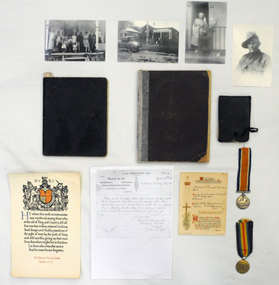
... information on his grave until 1925. These personal documents, medals, photographs and books give an insight into the human element of World War 1 ensuring that those who were part of the Orbost community and died while playing a vital role during this time are remembered. lawless-family certificate death-scroll ww1 At the bottom - Pte. ...In 1922 a Memorial Scroll was presented to the next of kin of those soldiers, sailors, and nurses who died while serving in the Australian Imperial Force or Royal Australian Navy during the First World War. Later they were presented with a Next of Kin Memorial Plaque. This was presented to Edward Lawless' mother, Elizabeth Lawless. This certificate is part of the Lawless Collection. The Lawless family lived in Orbost from 1907 - c 1920. John Francis Lawless had a saddlery shop. He died at an early age - 47 years - June 7 1912, leaving his wife, Elizabeth and seven children. The eldest son, Victor Rowland lawless volunteered for serv ice in WW1 but did not leave Australia because of illness. The second son, Edward Vincent Lawless (b 1895 d 1917) worked for McCoy & Co. in Orbost, coachbuilding, undertakers, general blacksmiths and farriers, prior to enlisting in WW!. He was trained as a signaller and was sent to France where he was killed in action on 9.10.1917. Elizabeth Lawless worked as a ladies' nurse (midwife) in Orbost prior to leaving the district in 1920. She lived to 6.6.1975 aged 104 years. On October 9, he was first recorded as missing in action and then confirmed killed in action. He was initially buried at Tyne Cot British Cemetry and then exhumed and buried at Passchendaele New British Cemetry, Plot 14, Row 2, Grave 2. Correspondence in his file dated April 7, 1925 providing the grave details show that his mother was still seeking that information. It was possibly due to the fact that his body was exhumed and reburied. While there is no correspondence to his mother about this move on file, the correspondence that is there indicates she had not received the specific information on his grave until 1925.These personal documents, medals, photographs and books give an insight into the human element of World War 1 ensuring that those who were part of the Orbost community and died while playing a vital role during this time are remembered.A death notice or memorial scroll which has the British Coat of Arms at the top and a message paying tribute to the soldiers who gave up "their own lives that others might live in freedom". The text is printed in calligraphic script beneath the Royal Crest followed by the name of the commemorated serviceman giving his rank, name and regiment. The scroll was sent on December 20, 1921. At the bottom - Pte. Edward Vincent Lawless 21st Ba. A.I.F.lawless-family certificate death-scroll ww1 -
 Orbost & District Historical Society
book, Grandma's Recipe Book, 2003
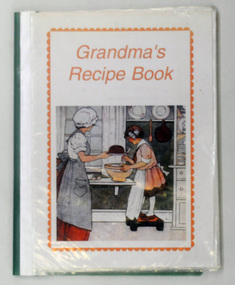
... Information Centre). The book was a "Back To" souvenir. This book reflects the kinds of foods / recipes used in the 1930's. These books often had to include cheap dishes during the wars and hard times that dominated long periods of the first half of the 20th century. Recipes in this book contain common ingredients found in rural kitchens of that time ...This item was made by and used in the Slab Hut (Orbost Information Centre). The book was a "Back To" souvenir.This book reflects the kinds of foods / recipes used in the 1930's. These books often had to include cheap dishes during the wars and hard times that dominated long periods of the first half of the 20th century. Recipes in this book contain common ingredients found in rural kitchens of that time.A loose leaf folder from which a book was printed. It contains recipes, advertisements from 1930's and hints. The cover has a coloured picture od two women, one older, in a kitchen cooking. Print is orange and an orange border surrounds the picture and title,:Grandma's Recipe Book". -
 Eltham District Historical Society Inc
Post Card, Post Card sent to Private K.J. Arrowsmith, VX54102, 6th Line Section, 8 Div, Malaya via Prisoner of War Post, 8 August 1944 (received 14 June 1945), 8 Aug 1944
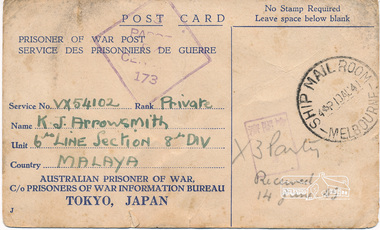
... War, C/o Prisoners of War Information Bureau Tokyo, Japan from his sister Polly (Mercia Castledine). “After the cholera had been evidence for a few days, the Nips decided that the works on the railway had to be carried on and so isolated all the cases (a number more had developed since we were first quarantined) and sent all other men back to work. By this time...War, C/o Prisoners of War Information Bureau Tokyo, Japan from his sister Polly (Mercia Castledine). “After the cholera had been evidence for a few days, the Nips decided that the works on the railway had to be carried on and so isolated all the cases (a number more had developed since we were first quarantined) and sent all other men back to work. By this time ..."Dear Kevin, Everybody home here is well, hope you and Bobby are well. Sid, Laurie home, hear regular from Eddie. Lots love Polly DAD" Post Card sent to Private K.J. Arrowsmith, VX54102, 6th Line Section, 8 Div, Malaya via Prisoner of War Post, Australian Prisoners of War, C/o Prisoners of War Information Bureau Tokyo, Japan from his sister Polly (Mercia Castledine). “After the cholera had been evidence for a few days, the Nips decided that the works on the railway had to be carried on and so isolated all the cases (a number more had developed since we were first quarantined) and sent all other men back to work. By this time, the number of men unfit for work had increased tremendously and the medical officer and medical orderlies were hopelessly overworked. Volunteers were called for to assist in this cholera ward; a disease highly contagious and with a terrific death rate. This meant isolation, but did not deter many men from offering their services, Bob and Kevin Arrowsmith being selected.” - Through the Burma-Thailand Railway, pp234-5, author unknown This post card is significant for its rarity as very few ever made it through and were saved. In these instances the information provided by Polly was cryptic informing Kevin and Bob Arrowsmith that brother Eddie and brothers-in-law, Laurie Mears and Sid Castledine were all still alive.Digital image of original held in private collection of Joan Castledine, daughter of Sid and Polly (nee Arrowsmith) Castledine.bob arrowsmith, burma-thailand railway, eddie arrowsmith, joan castlemaine, kevin j. arrowsmith, laurie mears, lucy mears (nee arrowsmith), mercia (polly) castledine (nee arrowsmith), postcards, prisoner of war post, sid castledine -
 Eltham District Historical Society Inc
Post Card, Post Card sent to Private K.J. Arrowsmith, VX54102, 6th Line Section, 8 Div, Malaya via Prisoner of War Post, 16 June 1944 (received 14 June 1945), 16 Jun 1944
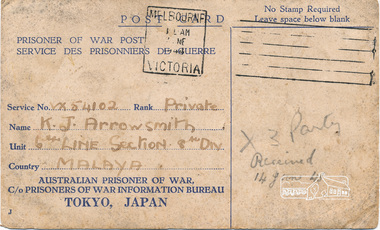
... War, C/o Prisoners of War Information Bureau Tokyo, Japan from his sister Polly (Mercia Castledine). “After the cholera had been evidence for a few days, the Nips decided that the works on the railway had to be carried on and so isolated all the cases (a number more had developed since we were first quarantined) and sent all other men back to work. By this time...War, C/o Prisoners of War Information Bureau Tokyo, Japan from his sister Polly (Mercia Castledine). “After the cholera had been evidence for a few days, the Nips decided that the works on the railway had to be carried on and so isolated all the cases (a number more had developed since we were first quarantined) and sent all other men back to work. By this time ..."Dear Kevin, Hope you are both well, everybody well home here, constantly thinking of you, hear regular, Eddie, Laurie, Sid. Lots love Polly Dad" Post Card sent to Private K.J. Arrowsmith, VX54102, 6th Line Section, 8 Div, Malaya via Prisoner of War Post, Australian Prisoners of War, C/o Prisoners of War Information Bureau Tokyo, Japan from his sister Polly (Mercia Castledine). “After the cholera had been evidence for a few days, the Nips decided that the works on the railway had to be carried on and so isolated all the cases (a number more had developed since we were first quarantined) and sent all other men back to work. By this time, the number of men unfit for work had increased tremendously and the medical officer and medical orderlies were hopelessly overworked. Volunteers were called for to assist in this cholera ward; a disease highly contagious and with a terrific death rate. This meant isolation, but did not deter many men from offering their services, Bob and Kevin Arrowsmith being selected.” - Through the Burma-Thailand Railway, pp234-5, author unknown This post card is significant for its rarity as very few ever made it through and were saved. In these instances the information provided by Polly was cryptic informing Kevin and Bob Arrowsmith that brother Eddie and brothers-in-law, Laurie Mears and Sid Castledine were all still alive.Digital image of original held in private collection of Joan Castledine, daughter of Sid and Polly (nee Arrowsmith) Castledine.bob arrowsmith, burma-thailand railway, eddie arrowsmith, joan castlemaine, kevin j. arrowsmith, laurie mears, lucy mears (nee arrowsmith), mercia (polly) castledine (nee arrowsmith), postcards, prisoner of war post, sid castledine -
 Warrnambool and District Historical Society Inc.
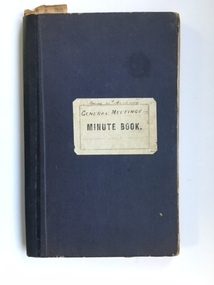
Document - Minutes Books, Woollen Mills 1909- 1923 1933-1945, C 1909 C 1933-1945
... War. In 1955 the Warrnambool Woollen Mill formed a partnership with the Wangaratta Woollen Mills. Dunlop bought the mill in 1968. From that time until its closure in 2000 it had a number of different owners, the last being the Smith Family Industries. These minutes books hold an important information ...The minutes book of the Warrnambool Woollen Mill are an important record of the beginnings of one of Warrnambool's major industries for close to one hundred years. They record the struggle in the early days of 1909 and 1910 to raise the capital. Also mentioned is the support which had been given by local people of small means who were prepared to back the enterprise while those with financial means had been rather more reserved. Apart from a Mr Vidler all the initial directors were initially working in an honorary capacity. They lamented the fact that local banks held half a million pounds on fixed interest so there was no shortage of money. The first directors were appointed in March 1909 : Jas. Worland, W H Philpott, G S Mackay, E H Price, S McDonald, J C Beeching, W Rogers ,J Marfell, J Deany, Jas Duirs, Jas. Ponting, H Jessen, S Nettleton, J Blain, J Gooden, Drs. Holmes, Henderson and Powell. Mr J E Bennett was secured as first manager of the mill in 1910 Over the ten year period of this book there is much discussion on possible returns and share prices as well as decisions relating to the operation of and production from the mill. Within four years they were using more yarn than they were producing. Electricity was connected around 1914 and by 1915 shareholders were receiving eight percent return on their investment and were also contributing to the first world War effort by supplying blankets. Assets continued to accumulate and building was also continued with sandstone being quarried from the site and rain water tanks and asphalt floors installed, all contributing to savings. By 1917 The Warrnambool Woollen Mill was considered to be one of the states best investments and it continued to prosper through the years. The second minutes book likewise records similar events and circumstances for the period 1933-1945. This like wise is an interesting period, covering the period of the second World War. In 1955 the Warrnambool Woollen Mill formed a partnership with the Wangaratta Woollen Mills. Dunlop bought the mill in 1968. From that time until its closure in 2000 it had a number of different owners, the last being the Smith Family Industries. These minutes books hold an important information regarding the establishment and early operation of one of Warrnambool's major industries. The mill itself has strong connection to the Warrnambool community and many of the names mentioned as directors and shareholders have held positions within the community as businessmen and city officials. These minutes add another dimension to their contribution to Warrnambool..1Navy blue hard card cover with cloth spine. White label glued to front cover.186 pages.There are handwritten entries in black ink which are interspersed with reports from newspaper. .2 Pale grey cloth cover on early Kalamazoo filing system 612 pages of typed minutes . .1There are dates from 1910 through to 1923. Minutes have been signed by chairman of directors, M Saltau.label on front cover has blue stamp, The Warrnambool Woollen Mill Company. hand written above in black ink "opened 24th March 1909." .2 dated from May 1933 to September 1945. Signatures include M Saltau, James Disckson and Fletcher Jones.warrnambool, warrnambool woollen mill, first minutes book warrnambool woollen mill, minutes book, warrnambool woollen mill 1909, minutes book warrnambool woollen mill 1945 -
Warrnambool and District Historical Society Inc.
Album, Alexandrie
... War One. The cards have been sent to Miss May Harvey of Naringal. No information has been found on either the sender of the post cards or the recipient. This album is of considerable interest as it is a local souvenir of World War One, a set of post cards sent to Miss May Harvey who lived in Naringal at the time (about 1916). world war one history of naringal miss may harvey warrnambool history Front Cover: ‘E. ...These post cards of Alexandria, Egypt have been sent by an Australia soldier on active service, probably in Egypt, during World War One. The cards have been sent to Miss May Harvey of Naringal. No information has been found on either the sender of the post cards or the recipient. This album is of considerable interest as it is a local souvenir of World War One, a set of post cards sent to Miss May Harvey who lived in Naringal at the time (about 1916). This is a packet of 24 detachable post cards –black and white photographs of Alexandria, Egypt, produced during World War One. The post cards are intact and have tissue paper protecting each card. The cover is red with gold and black lettering and a black and gold stamped ornamental badge with a circle containing the initials, ‘L. C.’ The post cards have been stapled into the packet. Each post card is labelled in French, as is the title on the front.Front Cover: ‘E. Reed (or Reid)’ ‘Alexandrie, 24 Detachable Phototype Post Cards, Series, N.6’ Back Cover: ‘On Active Service’ ‘Miss May Harvey Naringal P.O. Via Allansford Victoria Australia’ world war one, history of naringal, miss may harvey, warrnambool history -
 Eltham District Historical Society Inc
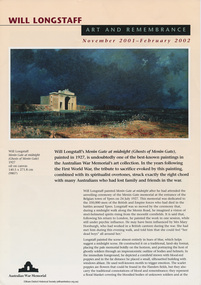
Work on paper - Folder, Wil Longstaff, 2010
... Information relating to artist William Longstaff, one-time Eltham resident, famous for his painting Menin Gate (held at the Australian War Memorial) ...Information relating to artist William Longstaff, one-time Eltham resident, famous for his painting Menin Gate (held at the Australian War Memorial) harry gilham collection william longstaff Kangaroo Ground Menin Gate at Midnight Shire of Eltham War Memorial Artist Colour Brochure: Will Longstaff: Art and Remembrance November 2001-February 2002 (Australian War Memorial) 4 pages. ...Information relating to artist William Longstaff, one-time Eltham resident, famous for his painting Menin Gate (held at the Australian War Memorial) Colour Brochure: Will Longstaff: Art and Remembrance November 2001-February 2002 (Australian War Memorial) 4 pages. Copy of Letter from C. Pell to Mr (Clem) Christesen re research on Longstaff and residents of the property Stanhope, 1984 Copy of press cutting from The Sun news pictorial January 20, 1928 Photocopy From "Kangaroo Ground: A highland taken" by Mick Woiwod with reference to Longstaff enlisting from Kangaroo Ground Photocopy of news clipping “Captain honours lost soldiers with his art” by Brittany Shanahan, Diamond Valley Leader, Wednesday, April 22, 2015 Photocopy from book about Longstaff, possibly "Encyclopedia of Australian Art" by Alan McCulloch. Newspaper article: “Stepping into the breach” by Mark Barker, The Sunday Age, Extra. January 27, 2013, p21 with references to Longstaff’s Menin Gate painting Copy of article from journal possibly from the Australian War Memorial, September 1987 re art works at AWM, “Menin Gate at Midnight” by John Connor, (page 390) Misc. hand written biographical notes by Harry Gilham harry gilham collection, william longstaff, kangaroo ground, menin gate at midnight, shire of eltham war memorial, artist -
 Bendigo Military Museum
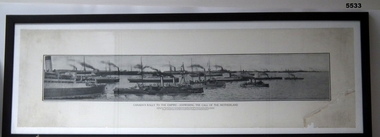
Poster - POSTER, FRAMED, "The Family Herald and The Weekly Star", Montreal Canada, " CANADA RALLY TO THE EMPIRE - ANSWERING THE CALL OF THE MOTHERLAND", 1914
... information - "The poster was sent to my Grandmother's father (John Garriock) from Canada. It was a giveaway in a Canadian farming magazine of the time. My Grandmother (Barbara Ross) and Grandfather (Robert Heddle Ross) kept the poster and it eventually came to me. I wish to donate it as a way of remembering them". Framed item Poster Canada 1914 Poster - panoramic poster, paper, black and white, depicts the "Canadian Army setting sail to join British Forces operating against Germany in the War ...From relevant information - "The poster was sent to my Grandmother's father (John Garriock) from Canada. It was a giveaway in a Canadian farming magazine of the time. My Grandmother (Barbara Ross) and Grandfather (Robert Heddle Ross) kept the poster and it eventually came to me. I wish to donate it as a way of remembering them".Poster - panoramic poster, paper, black and white, depicts the "Canadian Army setting sail to join British Forces operating against Germany in the War of Nations". Collection of ships setting sail. Print below illustration. Frame - timber, brown/black stain/paint, cardboard backing to poster, cardboard backing. Glass front.framed item, poster, canada, 1914 -
 Kiewa Valley Historical Society
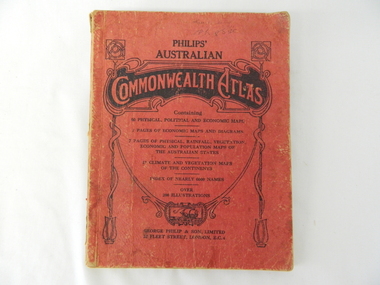
Atlas Australian Commonwealth, Philips' Australian Commonwealth Atlas, 1944
... War II can be clearly identified for example , Israel (the Jewish homeland). The various prewar colonies of major European nations. This atlas was used by children of a Kiewa Valley family and shows the value and the general educational exposure that these children had at this time. The rural setting and within the backdrop of a world war did not severely alter the life style of children in this region. The "news reels" shown in cinemas of cities and larger towns were the only visual realisations of major events of global significance available to these children. The information ...This atlas, printed in 1944, details not only the geographic and political boundaries of the world as it was at that time but also the snap shot of life of the time. This snap shot in time covers the major Australian cities, the major farming, grazing, industrial and sporting/recreational activities. Also there are snap shots of similar activities from other global areas. The period also covered World War II, detailed by a photo of "shell making", munitions, required by Australian soldiers. The great political and territorial changes made as a result of World War II can be clearly identified for example , Israel (the Jewish homeland). The various prewar colonies of major European nations.This atlas was used by children of a Kiewa Valley family and shows the value and the general educational exposure that these children had at this time. The rural setting and within the backdrop of a world war did not severely alter the life style of children in this region. The "news reels" shown in cinemas of cities and larger towns were the only visual realisations of major events of global significance available to these children. The information provided by this atlas allowed students to glimpse at what the "outside world" was. The majority of these students would possibly never see these regions for themselves. The great communication facilities of the late 1900s and beyond, was still only science fiction.This atlas has a thick (350 g/m) red cardboard cover with bold black lettering and shading. The cover is set out within a shield like frame. The shield is held up by two square markings, each with a four part circular pattern and a cord entwining two pendulum structures ending with a bowl figure at the bottom. There is a semi circular form enclosing a printed book contents list. The inside cover has the atlas title and contents and the publisher details. The atlas contain 56 pages of world and Australian maps, vegetation and rainfall maps. Within this atlas there are 27 double sided pages of black and white photographs depicting life styles, buildings, landscapes and prominent and significant to Australia males from 1652 to 1944. The pages are of approximately 200 g/m and have the yellow aged appearance.On front cover "Philips' Australian COMMONWEALTH ATLAS" and underneath "Containing" underneath "60 PHYSICAL, POLITICAL AND ECONOMIC MAPS". Publisher George Philip & Son, Limited 32 Fleet Street, London E.C. 4. Inside cover are: written, in freehand and in ink the following names and dates; "J.Muller Form V 1945", "L L Muller Form IV 1946", "N.J. Muller Form I + II + III 1948 +49 + 50" and "D Muller Form I 1949". also handwritten and in pencil is "Peter Leslie". On the last page is a small freehand sketch of Australia in biro.1940s school curriculum, rural education, 1940s atlas, australian atlas -
 Warrnambool and District Historical Society Inc.
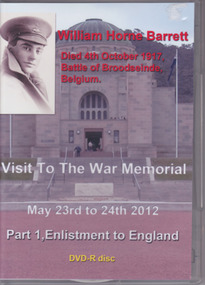
Film - DVD, Newell Barrett, Tower Hill, W. H Barrett, 2012
... information on a World War One soldier who was connected to the Warrnambool area through his mother, a member of the Horne family who were farmers in the Allansford/Nullawarre area. It will be useful for researchers. world war one horne family william horne barrett Front Cover: ‘William Horne Barrett, died 4th October 1917, Battle of Broodseinde, Belgium, Visit to the War Memorial, May 23rd to 24th 2012, Part One, Enlistment to England’. This is a DVD-R disc of the enlistments and embarkation details of William Horne Barrett (World War One). The running time ...William Horne Barrett was the great uncle of the donor and maker of the DVD, Newell Barrett. The DVD contains photographs of Barrett’s enlistment and embarkation for England and the photographs are accompanied by a commentary and text. Sergeant William Barrett enlisted in the 39th Battalion, C Company in 1916, and, although he came from Ballarat, his name is on the Warrnambool War Memorial as a local enlistment. His mother was Mary Ann Horne and the Hornes were farmers in the Allansford/Nullawarre area. Barrett was killed in action in October 1917 at Broodseinde, Belgium. He was buried near the trench he was occupying and today has no known grave. This DVD is of some significance as it contains information on a World War One soldier who was connected to the Warrnambool area through his mother, a member of the Horne family who were farmers in the Allansford/Nullawarre area. It will be useful for researchers.This is a DVD-R disc of the enlistments and embarkation details of William Horne Barrett (World War One). The running time is 56 minutes. The cover has two photographs of the Canberra Australian War Memorial in muted colour and an inset photograph of William Barrett. Front Cover: ‘William Horne Barrett, died 4th October 1917, Battle of Broodseinde, Belgium, Visit to the War Memorial, May 23rd to 24th 2012, Part One, Enlistment to England’. world war one, horne family, william horne barrett -
 Monbulk RSL Sub Branch
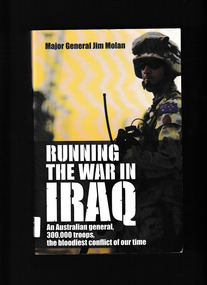
Book, HarperCollins, Running the war in Iraq : an Australian general, 300,000 troops, the bloodiest conflict of our time, 2008
... information, economic and reconstruction sectors into line with the military side. In this book he describes his background and military career, but focuses on describing key aspects of his time in Iraq. Ill, map, p.352. Running the war ...Jim Molan is the Australian General who served in Iraq with the Coalition during 2004-05. Initially, under General Ricardo Sanchez, he worked on infrastructure: trying to restore/maintain the provision of water, power and rail services. Under General George W. Casey, he became Deputy Chief of Staff for Strategic Operations with the Multi National Forces Iraq and ran the operations for all the US and Coalition forces assigned to the Iraqi area of operations. He had to interact with the new interim Iraqi government, bringing the political, diplomatic, information, economic and reconstruction sectors into line with the military side. In this book he describes his background and military career, but focuses on describing key aspects of his time in Iraq.Ill, map, p.352.non-fictionJim Molan is the Australian General who served in Iraq with the Coalition during 2004-05. Initially, under General Ricardo Sanchez, he worked on infrastructure: trying to restore/maintain the provision of water, power and rail services. Under General George W. Casey, he became Deputy Chief of Staff for Strategic Operations with the Multi National Forces Iraq and ran the operations for all the US and Coalition forces assigned to the Iraqi area of operations. He had to interact with the new interim Iraqi government, bringing the political, diplomatic, information, economic and reconstruction sectors into line with the military side. In this book he describes his background and military career, but focuses on describing key aspects of his time in Iraq.australian army - iraq war - 2003, iraq war - personal narratives -
 Monbulk RSL Sub Branch
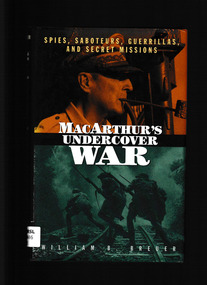
Book, William B. Breuer, MacArthur's undercover war : spies, saboteurs, guerrillas, and secret missions, 1995
... war General Douglas MacArthur waged against Japanese forces in the Pacific arena was the largest undercover operation ever undertaken. Here, for the first time, is the complete story of the legendary exploits and heroism of the thousands of courageous individuals who fought as spies, guerrillas, propagandists, and saboteurs behind enemy lines. In an action-packed narrative, MacArthur's Undercover War tells of thrilling feats of valor and derring-do - impossible missions to blow up harbors, kidnap heads of state, undermine currency, and arrange prison escapes, all deep within enemy territory. Firsthand interviews with veterans and information ...The covert war General Douglas MacArthur waged against Japanese forces in the Pacific arena was the largest undercover operation ever undertaken. Here, for the first time, is the complete story of the legendary exploits and heroism of the thousands of courageous individuals who fought as spies, guerrillas, propagandists, and saboteurs behind enemy lines. In an action-packed narrative, MacArthur's Undercover War tells of thrilling feats of valor and derring-do - impossible missions to blow up harbors, kidnap heads of state, undermine currency, and arrange prison escapes, all deep within enemy territory. Firsthand interviews with veterans and information from previously unpublished documents reveal a riveting tale of World War II that has never been fully told.Index, ill, maps, p.258.non-fictionThe covert war General Douglas MacArthur waged against Japanese forces in the Pacific arena was the largest undercover operation ever undertaken. Here, for the first time, is the complete story of the legendary exploits and heroism of the thousands of courageous individuals who fought as spies, guerrillas, propagandists, and saboteurs behind enemy lines. In an action-packed narrative, MacArthur's Undercover War tells of thrilling feats of valor and derring-do - impossible missions to blow up harbors, kidnap heads of state, undermine currency, and arrange prison escapes, all deep within enemy territory. Firsthand interviews with veterans and information from previously unpublished documents reveal a riveting tale of World War II that has never been fully told. world war 1939-1945 - campaigns - south west pacific, douglas macarthur 1880-1964 -
 Bendigo Historical Society Inc.
Document - NORMAN OLIVER COLLECTION: MAYOR SPEAKS, UNDATED
... On Anzac Eve at the 9PM ritual to the Fallen, the bugle will be used for the first time since the first war ..by Bugler John Murphy of Southern Command.' The HMAS Bendigo Assoc. reunion and information....On Anzac Eve at the 9PM ritual to the Fallen, the bugle will be used for the first time since the first war ..by Bugler John Murphy of Southern Command.' The HMAS Bendigo Assoc. reunion and information. ...The Norman Oliver collection. Norman Oliver was three times Mayor of Bendigo - 1950-51, 1964-65, 1970-71. Three typed pages of speech notes. Undated but information suggests 1965. Corrections made in blue and red ink. Mentions that the Easter Fair has recently ended. Topics discussed : the Cancer Campaign success and recent advances in treatment and facilities, a discussion with a Mr Larritt, the grandson of Bendigo's first surveyor, and the work his grandfather performed, especially regarding the reservations chosen for the Hospital and the Home and Hospital for the Aged, the Art Gallery's Dobell exhibition, Commonwealth Youth Sunday on May 2nd, the promotion of Bendigo by the Victorian Promotion Committee, and Anzac Day business. Oliver states that 'in 1914 the citizens of Bendigo presented the 7th Bn AIF with a set of bugles. One of the bugles used by 'Pompey' Simpson in the landing of Gallipoli and in France until he was wounded in 1917, when it was used by Wally Granland until the Armistice. On Anzac Eve at the 9PM ritual to the Fallen, the bugle will be used for the first time since the first war ..by Bugler John Murphy of Southern Command.' The HMAS Bendigo Assoc. reunion and information.bendigo, council, speech notes, norman joseph oliver , councillor norman oliver. mayor of bendigo. anti-cancer appeal. victorian inland meat authority. anzac day.
