
Showing 265 items matching "war workers"
-
 Ringwood and District Historical Society
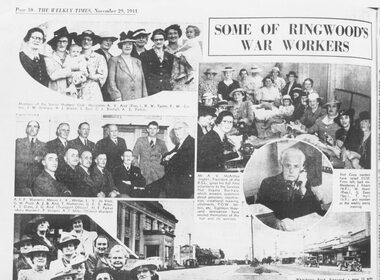
Photograph, Some of Ringwood's War Workers (photo collages) 1944
... Some of Ringwood's War Workers (photo collages) 1944...Article includes a number of images depicting "Some of Ringwood's War Workers"....Article includes a number of images depicting "Some of Ringwood's War Workers". Copy of newspaper clipping from 'The Weekly Times, November 29, 1944. (2 images) Some of Ringwood's War Workers (photo collages) 1944 Photograph ...Copy of newspaper clipping from 'The Weekly Times, November 29, 1944. (2 images)Article includes a number of images depicting "Some of Ringwood's War Workers". -
 Ringwood and District Historical Society
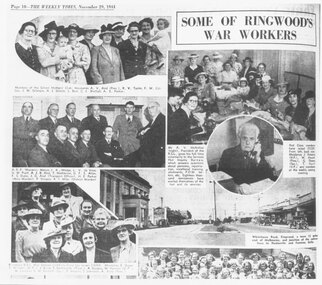
Photograph, Some of Ringwood's War Workers - Weekly Times Article 1944
... Some of Ringwood's War Workers - Weekly Times Article 1944...Black and white copy of page from Weekly Times, November 29, 1944 headlined "Some of Ringwood's War Workers". (2 copies)...Black and white copy of page from Weekly Times, November 29, 1944 headlined "Some of Ringwood's War Workers". (2 copies) Some of Ringwood's War Workers - Weekly Times Article 1944 Photograph ...Black and white copy of page from Weekly Times, November 29, 1944 headlined "Some of Ringwood's War Workers". (2 copies)Article shows images of the following groups: Schools Mothers Club, A.R.P. Wardens, Mr A.V. McArthur President of Ringwood RSL, Red Cross Members, Ringwood RSL War Service Comforts Fund members, with names of members of the individual groups. -
 Kew Historical Society Inc
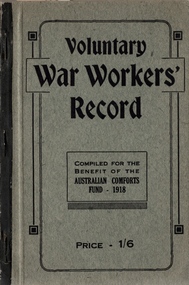
Booklet, Australian Comforts Fund (Victorian Divsion), Voluntary War Workers Record, 1918
... Voluntary War Workers Record...Voluntary War Workers Record, compiled for the benefit of the Australian Comforts Fund - 1918. ...Price - 1/6. the publication includes sections on Kew. Voluntary War Workers Record Booklet Booklet Australian Comforts Fund (Victorian Divsion) ...The Australian Comforts Fund was established in August 1916 to co-ordinate the activities of the state based patriotic funds, which were established earlier in World War I. Mainly run by women, they provided and distributed free comforts to the Australian 'fit' fighting men in all the battle zones. They became divisions of the Australian Comforts Fund. The Council of the Fund comprised two delegates from New South Wales, Victoria and Queensland and one from the states of Western Australia, South Australia and Tasmania. The Executive headquarters was located in Sydney. It ceased operation on 10 April 1920 and was reconstituted in World War II in June 1940 and ceased operation again on 27 June 1946. The state bodies in World War I were: New South Wales: the 'Citizens' 'War Chest' Fund; Queensland Patriotic Fund; South Australia: League of Loyal Women; Tasmania: 'On Active Service Fund'; Australian Comforts Fund, Victorian Division; Victoria League of Western Australia. During World War II the state bodies were called : The Lord Mayor's Patriotic and War Fund of New South Wales; the Australian Comforts Fund, Victorian Division; the Australian Comforts Fund, Queensland Division; the Australian Comforts Fund, Tasmanian Division; the Fighting Forces Comforts Fund SA Inc; the Victoria League Camp Comforts Fund ( W A ) Australian Comforts Fund commissioners conducted its activities in the field, holding honorary rank as officers of the Army or Air Force.World War 1 publication for the home front with Kew listingsVoluntary War Workers Record, compiled for the benefit of the Australian Comforts Fund - 1918. Price - 1/6. the publication includes sections on Kew.australian comforts fund, australian comforts fund (victoria) -
 Vision Australia
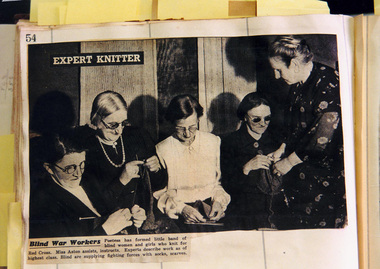
Photograph - Image, Blind war workers newspaper article, 1938-1945
... Blind war workers newspaper article...Expert knitter. Blind War Workers. Poetess has formed little band of blind women and girls who knit for Red Cross. ...Copy of newspaper photograph with negative Blind war workers newspaper article Photograph Image ...Four ladies sitting in a row all wearing glasses and knitting whilst Tilly Aston stands and the end assisting one of them. Copy of newspaper photograph with negativeExpert knitter. Blind War Workers. Poetess has formed little band of blind women and girls who knit for Red Cross. Miss Aston assists, instructs. Experts describe work as of highest class. Blind are supplying fighting forces with socks and scarves.tilly aston, association for the advancement of the blind -
 Mont De Lancey
Booklet - Knitting Patterns, The Country Womens Associaotion of Victoria, War Workers' Woolcraft, c.1940's
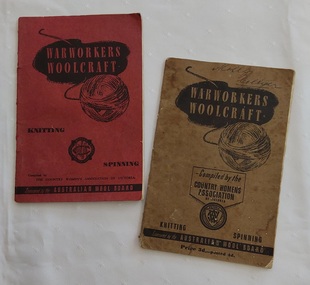
... War Workers' Woolcraft...Two small copies of War Workers' Woolcraft - Knitting and Spinning books: one with a red paper cover and the other with a faded khaki coloured paper cover. 1. ...Both have advertising on the last few pages. War Workers' Woolcraft Booklet Knitting Patterns The Country Womens Associaotion of Victoria ...The red covered book is compiled by The Country Women's Association of Victoria and sponsored by the Australian Wool Board. On the back of the front cover is an Introduction by the Chairman of the Australian Wool Board, Sir Dalziel Kelly, K.B., L.L.B. explaining the reason for these books encouraging the use of Australian wool to support the Empire Forces. The Foreward promotes the CWA in a similar vein. The book has knitting hints, patterns useful for war service members in the navy, army and air force patterns for clothing.The khaki covered book is similar, but is compiled by the Country Women's Association of Victoria. It is a Third Edition.Two small copies of War Workers' Woolcraft - Knitting and Spinning books: one with a red paper cover and the other with a faded khaki coloured paper cover. 1. The red front cover book shows the title printed inside a black cloud shape with a black lined illustration of a ball of wool underneath. The Country Women's Assoc. South Aust. is printed on the cover inside a round shaped black crest. It is compiled by The Country Women's Association of Victoria and sponsored by the Australian Wool Board. Inside on the back of the front cover is an Introduction by the Chairman of the Australian Wool Board, Sir Dalziel Kelly, K.B., L.L.B. explaining the reason for these books encouraging the use of Australian wool to support the Empire Forces. The Foreward promotes the CWA in a similar vein. The book has knitting hints, patterns useful for war service members in the navy, army and air force patterns for clothing - caps, sleeveless pullover, waistcoat muffler, armlets, man's socks and mittens, kneecaps, hot water bottle covers and scarves. Inside the back cover is advice on checking your tape measure against the 6 Inch one printed on the page. 2. The khaki covered book is similar, but is compiled by the Country Women's Association of Victoria with Price 3d.- posted 4d. at the bottom of the cover. It is a Third Edition. Both have advertising on the last few pages.non-fictionThe red covered book is compiled by The Country Women's Association of Victoria and sponsored by the Australian Wool Board. On the back of the front cover is an Introduction by the Chairman of the Australian Wool Board, Sir Dalziel Kelly, K.B., L.L.B. explaining the reason for these books encouraging the use of Australian wool to support the Empire Forces. The Foreward promotes the CWA in a similar vein. The book has knitting hints, patterns useful for war service members in the navy, army and air force patterns for clothing.The khaki covered book is similar, but is compiled by the Country Women's Association of Victoria. It is a Third Edition. knitting, knitting patterns, knitting equipment -
 Unions Ballarat
Stop the ABCC: Turnbull's War on Workers (bumper sticker), 2018
... Stop the ABCC: Turnbull's War on Workers (bumper sticker)...Stop the ABCC: Turnbull's War on Workers Subtext: exploits workers; destroys jobs; lies; attacks safety; ignores big business; union bashing; CFMEU....Stop the ABCC: Turnbull's War on Workers (bumper sticker) CFMEU CFMEU ...The ABCC (Australian Building and Construction Commission) was first created during the government of John Howard (LNP). The ABCC claims to, "ensuring that building work in Australia is carried out fairly, efficiently and productively—for the benefit of all employers and workers in the industry, and for the benefit of the Australian economy as a whole." Conversely, the organisation has been claimed by unions and workers to be anti-union and detrimental to the working conditions of employees. A fact sheet from the CFMMEU is attached to this entry. Malcolm Turnbull was Prime Minister from 2015 to 2018. He became Prime Minister after deposing Tony Abbott, in a leadership challenge. The bumper sticker was produced by CFMMEU during the Turnbull Prime Ministership (2015-2018). The CFMMEU is one of the largest unions; membership coverage includes construction, forestry, maritime, mining, energy, textile, clothing and footwear production. Relevant to government, industrial relations and trade unions in Australia.Bumper sticker: colour picture of Malcolm Turnbull; red and white lettering. Stop the ABCC: Turnbull's War on Workers Subtext: exploits workers; destroys jobs; lies; attacks safety; ignores big business; union bashing; CFMEU.btlc, ballarat trades hall, ballarat trades and labour council, cfmeu, turnbull, malcolm, prime ministers - australia, liberal party australia, abcc, australian building and construction commission, industrial relations, cfmmeu, construction, forestry, maritime, mining and energy union, construction, forestry, mining and energy union, trade unions - australia -
 Ringwood and District Historical Society
Envelope, Packet: War Workers (WW2) - Fall of Singapore, Burma Railway Map, Special Editions of Newspapers 1992-993
... Packet: War Workers (WW2) - Fall of Singapore, Burma Railway Map, Special Editions of Newspapers 1992-993...World War II - Newspapers - 50th anniversary editions; The Australian - Special edition "The Fall of Singapore", "The Day Destiny Struck", Australia at War, Map of Burma Railway Packet: War Workers (WW2) - Fall of Singapore, Burma Railway Map, Special Editions of Newspapers 1992-993 Envelope ...World War II - Newspapers - 50th anniversary editions; The Australian - Special edition "The Fall of Singapore", "The Day Destiny Struck", Australia at War, Map of Burma Railway -
 Bendigo Military Museum
Badge - FEMALE RELATIVE BADGE, WAR WORKER MEDALLION, 1940
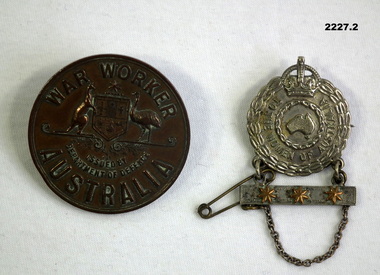
... FEMALE RELATIVE BADGE, WAR WORKER MEDALLION......war workers....1) Badge, brassround with 2 lugs on rear. Front has "War Worker Australia". Centre is coat of arms. ...Badge FEMALE RELATIVE BADGE, WAR WORKER MEDALLION ...The badge (on the right) is a Female Relatives Badge from the Second World War and the stars represent the number of serving individuals related to the holder of the badge. A number of the back appears in a register that records the name of the holder. .2) Three stars denotes 3 members of the family in the army in 1939 - 1945..1) Badge, brassround with 2 lugs on rear. Front has "War Worker Australia". Centre is coat of arms. On rear is "Navies & Labourers". Stamped numbered badge. .2) Female relative badge. Metal, silver colour, round shape with crown. wreath arrangement with map of Australia centre. Rear has pin attached. Attached by two small chains is a clasp with 3 small bronze stars. Rear of badge is stamped..1) :"Issued by the department of defence, 618. .2) Front "To the Women of Australia" Rear "Issued by the C/Weath Govt. A6800badages, medallions, female, relative, war workers -
 Bendigo Historical Society Inc.
Newspaper - LONG GULLY HISTORY GROUP COLLECTION: BENDIGO'S CENTURY VOLUME FIVE: 1940 - 1949
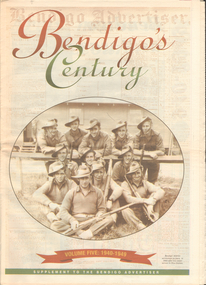
... ... Commonwealth War Workers Housing Trust Scheme...BENDIGO History long gully history group The Long Gully History Group - Bendigo's Century - Volume Five: 1940 - 1949 Bendigo Advertiser Central Deborah Mine Jackie Lewis Bob Johnson W Landy Ryga Yates Les Johnson Central Nell Gwynne Department of Defence Bendigo Jockey Club 8th Division Robert Menzies Deborah Mine Bendigo Decentralisation Vigilance Committee Cr W H Taylor Bendigo War Funds Organisation The Easter Fair Society Bendigo Agricultural Show Committee Mr E G Ham Mr J V Fairbairn Cr A Staples The Bendigo Chamber of Commerce Richard Hartley Smith Abbott Captain Harley Abbott Bendigo Art Gallery Bill Woodfull Bendigo High School North Deborah Mine Boardwalk Toni Riley Pharmacy Windermere Hotel Cr G A Pethard Coliban System North Deborah Mine Bendigo Pottery Bendigo Trades Hall Council Private Lawrence Burstall Major-General G J Rankin MHR Andrew Dunstan Ordnance Factory Royal Australian Navy HMAS Bendigo SEC Offices MUIOOF YMCA Georger Addlem Fred Addlem Cr A J Anderson Pauline Buvhan Thompson Leslie Thompson Edward Joseph Leonski Bendigo Football League Mr J Dedman William Stephens Forest Street Methodist Church Pte Charles Phillips Pte W E durward Pte T Foley William John Stephens Central Nell Gwynne Air Chief Marshall Sir Arthur Tedder Cr Taylor United Nations Flying Officer R Bruce Tuff Flight Lieutenant Owens Royal Air Force Commonwealth War Workers Housing Trust Scheme Mr S McKinnon Bendigo Decentralised Vigilance Committee Ravenswood Estate John Lienhop MLC Margaret (Peggy) Brennan Strathfieldsaye Shire Council School of Mines Bendigo Base Hospital William George Ashman Ashman's Tailors Bendigo Jockey Club Victorian Football Association Bendigo East Swimming Pool Deborah Anticline Specimen Hill Methodist Church North Deborah Adolf Hitler Benito Mussolini Australian 7th Division Cr Galvin Bendigo War Funds Organisation HMAS Bendigo Lt-Commander Jackson Bendigo Football League Central Deborah Mine Victoria Day Cr Truscott Bendigo Gaol Lansellstowe AWAS Barracks Bendigo Citizens Committee John Cain Snr Ordnance Factory Bendigo Agricultural Society The Duke of Gloucester Duchess of Gloucester Bendigo Tennis Association North Deborah Gillies Famous Pies Aids & Appliance Shop Mrs Georgina Scott Dr J A Neptune Scott Alfred Sisley Corot Daubigney Louis Sonnenberg Gas Employees' Union John Lienhop Soldier Settlement Commission Burnewang Estate King George VI Princess Elizabeth Lt Philip Mountbatten Mr E J W Herbert Ansett Airways Reg Ansett Most Rev Dr John McCarthy Dr Bernard Stewart Michael Giudice Bendigo United Breweries Bendigo Lyric Photo Plays Bendigo Sun Newspaper Shamrock Hotel West Bendigo Progress Association Alan McDonald South Bendigo Football Club Albert Collier J T Webbo Mervyn Tresize State Rivers and Water Supply Commission Eppalock Reservoir Public Works Committee Bendigo Rotary Club John Edgar Bendigo Base Hospital Albert Dunstan Benevolent Home Magetti's Wine Hall Wallace Reef Wine Hall Magetti Family Albert Magetti Lance Galvin Bradford Cotton Spinnings (Victoria) Pty Otd Arthur Syer Stanley Crossman Albert Arthur Dunstan Rev Dr Henry Backhaus City Family Hotel Lyric Theatre Bank of Australasia City Club HotelColonial Mutual Building R Matchett & Co Lansellstowe Leonard Lansell Bendigo Bas Hospital Australian Women's Army Service Mr Hollway Kenworth (Aust) Ltd Foggitt Jones's Bacon Factory Gordon Sayers Sandhurst Trustees Dr John Drowley Alexander Hislop Royal Mint North Deborah Mine Ironbark South Mining Company Central Nell Gwynne Company New Chum Syncline Newspaper supplement titled Bendigo's Century Volume Five: 1940 - 1949. ...Newspaper supplement titled Bendigo's Century Volume Five: 1940 - 1949. Each year has heading of Who's Who, Weather, Sport and Business. Front page is titled Bendigo's Century and has a photo of a group of soldiers in uniform and with rifles. They were district servicemen on leave in 1944. Each year has heading of Who's Who, Weather, Sport and Business. First years are 1940 - 1949 titled Bendigo as it was. It has two photos of women wading through the 1949 Pall Mall flood waters and one of Miners in the crib room of the Central Deborah Mine. They are Jackie Lewis, Bob Johnson, W Landy, Ryga Yates and Les Johnson. 1940 - Army moves in to racecourse, 1941 - Devastating fire at pottery, 1942 - Forces expand, 1943 - Nation's eyes on Bendigo, 1944 - News dawns of D-day landing, 1945 - City cheers the end of the war, 1946 - Celebrations begin in city, 1947 - Gallery gets top paintings, 1948 - Water plan looks good and 1949 - Flood takes a toll on city.bendigo, history, long gully history group, the long gully history group - bendigo's century - volume five: 1940 - 1949, bendigo advertiser, central deborah mine, jackie lewis, bob johnson, w landy, ryga yates, les johnson, central nell gwynne, department of defence, bendigo jockey club, 8th division, robert menzies, deborah mine, bendigo decentralisation vigilance committee, cr w h taylor, bendigo war funds organisation, the easter fair society, bendigo agricultural show committee, mr e g ham, mr j v fairbairn, cr a staples, the bendigo chamber of commerce, richard hartley smith abbott, captain harley abbott, bendigo art gallery, bill woodfull, bendigo high school, north deborah mine, boardwalk, toni riley pharmacy, windermere hotel, cr g a pethard, coliban system, north deborah mine, bendigo pottery, bendigo trades hall council, private lawrence burstall, major-general g j rankin mhr, andrew dunstan, ordnance factory, royal australian navy, hmas bendigo, sec offices, muioof, ymca, georger addlem, fred addlem, cr a j anderson, pauline buvhan thompson, leslie thompson, edward joseph leonski, bendigo football league, mr j dedman, william stephens, forest street methodist church, pte charles phillips, pte w e durward, pte t foley, william john stephens, central nell gwynne, air chief marshall sir arthur tedder, cr taylor, united nations, flying officer, r bruce tuff, flight lieutenant owens, royal air force, commonwealth war workers housing trust scheme, mr s mckinnon, bendigo decentralised vigilance committee, ravenswood estate, john lienhop mlc, margaret (peggy) brennan, strathfieldsaye shire council, school of mines, bendigo base hospital, william george ashman, ashman's tailors, bendigo jockey club, victorian football association, bendigo east swimming pool, deborah anticline, specimen hill methodist church, north deborah, adolf hitler, benito mussolini, australian 7th division, cr galvin, bendigo war funds organisation, hmas bendigo, lt-commander jackson, bendigo football league, central deborah mine, victoria day, cr truscott, bendigo gaol, lansellstowe, awas barracks, bendigo citizens committee, john cain snr, ordnance factory, bendigo agricultural society, the duke of gloucester, duchess of gloucester, bendigo tennis association, north deborah, gillies famous pies, aids & appliance shop, mrs georgina scott, dr j a neptune scott, alfred sisley, corot, daubigney, louis sonnenberg, gas employees' union, john lienhop, soldier settlement commission, burnewang estate, king george vi, princess elizabeth, lt philip mountbatten, mr e j w herbert, ansett airways, reg ansett, most rev, dr john mccarthy, dr bernard stewart, michael giudice, bendigo united breweries, bendigo lyric photo plays, bendigo sun newspaper, shamrock hotel, west bendigo progress association, alan mcdonald, south bendigo football club, albert collier, j t webbo, mervyn tresize, state rivers and water supply commission, eppalock reservoir, public works committee, bendigo rotary club, john edgar, bendigo base hospital, albert dunstan, benevolent home, magetti's wine hall, wallace reef wine hall, magetti family, albert magetti, lance galvin, bradford cotton spinnings (victoria) pty otd, arthur syer, stanley crossman, albert arthur dunstan, rev dr henry backhaus, city family hotel, lyric theatre, bank of australasia, city club hotelcolonial mutual building, r matchett & co, lansellstowe, leonard lansell, bendigo bas hospital, australian women's army service, mr hollway, kenworth (aust) ltd, foggitt jones's bacon factory, gordon sayers, sandhurst trustees, dr john drowley, alexander hislop, royal mint, north deborah mine, ironbark south mining company, central nell gwynne company, new chum syncline -
Port Melbourne Historical & Preservation Society
Letter - Applications for positon of Dog Registration Officer, Port Melbourne Council, Documents - letters, 1919
... War I...Workers...Port Melbourne applicants have been added to the WWI Centenary Project website Local Government - Town of Port Melbourne War - World War I Workers Utilities - Electricity Domestic Life - Pets and Pests James Gilbert ADAIR Sydney R C CARNS Leslie Walter CASEY Thomas William CLELAND John COOK Robert DUNBAR Vincent 'Ben' EDWARDS Clarence Rupert FARMER Walter GOTZ J W HART Sydney Hercules HOLMES William Thomas HOWLETT John KING Thomas P LACEY John LUMSDEN W WEST L C WILMOT Arthur Victor HEATH Town Clerks Dogs A file of mostly handwritten applications and references for position of Dog Registration Officer, Meter Reader and Assistant Collector, Port Melbourne Council 1919. ...May 2016 David THOMPSON compiled the attached alphabetical list, including names and addresses service in WWI status and blue number. Port Melbourne applicants have been added to the WWI Centenary Project website A file of mostly handwritten applications and references for position of Dog Registration Officer, Meter Reader and Assistant Collector, Port Melbourne Council 1919. Over 100 applications from all over Victoria, many from Returned Soldiers since the advert in the Standard newspaper for the position stated that they were to be given preference. Sydney R C CARNS from Evans Street, a Returned Soldier who has lost his right hand during the war, was the successsful applicant according to a report in the Standard. Others from Port Melbourne who applied were James Gilbert ADAIR, Leslie Warner CASEY, Thomas William CLELAND, John COOK, Robert Dunbar, Vincent EDWARDS, Clarence Rupbert FARMER, Walter GOTZ, J W HART, Sydney Hercules HOLMES, William Thomas HOWLETT, John KING, Thomas P LACEY, John LUMSDEN, George MA?, W WEST and J C WILMOT. 112 letters in 3 batches, applications have large blue numbers added.local government - town of port melbourne, war - world war i, workers, utilities - electricity, domestic life - pets and pests, james gilbert adair, sydney r c carns, leslie walter casey, thomas william cleland, john cook, robert dunbar, vincent 'ben' edwards, clarence rupert farmer, walter gotz, j w hart, sydney hercules holmes, william thomas howlett, john king, thomas p lacey, john lumsden, w west, l c wilmot, arthur victor heath, town clerks, dogs -
Port Melbourne Historical & Preservation Society
Film - DVD, Janet Bolitho et al, "Postcards from Port Melbourne", 2014
... war...pioneers...housing...workers...armed services transport education built environment immigration industry maritime natural environment war pioneers housing workers schools recreation world war i world war ii boer war post world war ii immigration liardet family government aircraft factory gaf garden city swallow & ariell ltd Postcards from Port Melbourne . ...Plastic DVD case with pale yellow insert photo of "Australis" at Station Pier with family wavingPostcards from Port Melbourne . An audiovisual retrospective of Port Melbournearmed services, transport, education, built environment, immigration, industry, maritime, natural environment, war, pioneers, housing, workers, schools, recreation, world war i, world war ii, boer war, post world war ii immigration, liardet family, government aircraft factory, gaf, garden city, swallow & ariell ltd -
 Bendigo Military Museum
Award - BADGES, VARIOUS, Unknown
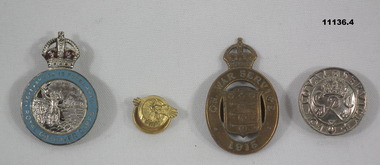
... Jenkins Birmingham for people on Essential War Work - Munitions workers etc"....Jenkins Birmingham for people on Essential War Work - Munitions workers etc". Four medals unmounted, no ribbons. 1. ...1. R.O.C. Lapel Badge - Issued to Civilian Volunteers who tracked aircraft during World Wars and Col War. 2. Ruptured Duck is nickname of the Honorable Service Lapel Button issued to US Servicemen honorably discharged during WW2. 3. WW1 War Service Badge was given to Civilians and discharged personnel to show they were doing vital work or had served honourably. 4. Loyal Service Medal awarded for personnel who did not qualify for other WW2 Service medals, who had been invalided out of the Services.Four medals unmounted, no ribbons. 1. Royal Observer Corps Metal Lapel Badge with button hole fitting. 2. Ruptured Duck World War 2 Veteran Medal with pin. 3. WW1 War Service Badge 1915. 4. WW2 GRVI Kings Badge for Loyal Service.1. Front says "Royal Observer Corps - Forewarned is Forearmed" 2. No Inscriptions. 3. Inscribed "On War Service - named "99828 Made by H. Jenkins Birmingham for people on Essential War Work - Munitions workers etc".ron mills collection, medals -
 Mont De Lancey
Tin, Swallow & Ariell, Ltd
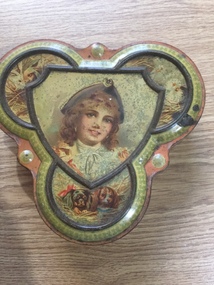
... At the height of the South African war it employed 1900 workers but even in 1991 it employed 450 people....At the height of the South African war it employed 1900 workers but even in 1991 it employed 450 people. biscuit tins tins Inside the lid: "Swallow & Ariell, Ltd. ...Biscuit tin: late 19th century Swallow & Ariell operated continuously in Port Melbourne from 1858 to 1991. The former Swallow & Ariell’s factory buildings, now The Anchorage, continue to add interest and pleasure along Stokes, Rouse and Princes Streets. Thomas Swallow, born in Reading, travelled to California and Ballarat before setting up a business making ships biscuits in Port Melbourne. His business partner Ariell died in 1877. He then went into partnership with Frederick Derham, his son in law. Company farms around Shepparton provided much of its wheat, and after 1889 most was ground into flour on the Port Melbourne premises. For the year ending 1 May 1920, the factory used 51 tons of butter, 2,740 eggs and produced more than 66 lines of biscuits. They also made puddings, elaborate cakes and ice cream. S & A was a significant employer – locally referred to as S & A College. At the height of the South African war it employed 1900 workers but even in 1991 it employed 450 people.Pink and brown clover-shaped ornamental biscuit tin decorated with pictures of a girl (central panel), 2 dogs (lower section), 2 rabbits (upper left-side panel) and 2 birds (upper right-hand panel. It has floral designs around the outer edges of both the tin and the lid which is hinged at the top of the tin.Inside the lid: "Swallow & Ariell, Ltd. Biscuit Manufacturers, Port Melbourne. Prizes received at all international & inter-colonial exhibitions"biscuit tins, tins -
 Australian Nursing & Midwifery Federation
Australian Nursing Federation WorkChoices protest badge, 2006
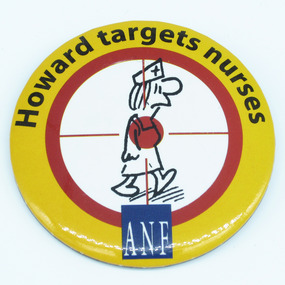
... The illustration by The Age cartoonist Ron Tandberg made reference to John Howard's involvement in wars in the Middle East throughout the early 2000s, and linked this to the 'war' on unions and worker rights....The illustration by The Age cartoonist Ron Tandberg made reference to John Howard's involvement in wars in the Middle East throughout the early 2000s, and linked this to the 'war' on unions and worker rights. nursing nurses protest campaign activism activists unions unionism buttons badges pins campaigning john howard ron tandberg labour history australian nursing federation workchoices workplace relations industrial relations Circular yellow, red and white badge. ...Button distributed to and worn by Australian Nursing Federation (ANF) members and staff as part of a 2006 campaign protesting the controversial 'WorkChoices' federal industrial relations laws that were introduced by the Liberal John Howard government in 2005-2007. These laws saw the weakening of unfair dismissal laws, giving employers significantly more powers to strip existing rights and wages away. The laws were repealed following the election of an opposition Labor government in 2007 under Kevin Rudd. The 'Howard Target Nurses' campaign was featured in ANF Victorian Branch newsletters around late 2006. During this period, a number of enterprising bargaining agreements were set to soon expire, leaving nurses vulnerable to have rights stripped away under the new IR legislation. A large campaign began, with rallies across the state of Victoria. The August 2006 Branch newsletter featured images of the Tandberg 'Howard targets nurses' design on placards, shirts and badges worn by nurses at these rallies. The illustration by The Age cartoonist Ron Tandberg made reference to John Howard's involvement in wars in the Middle East throughout the early 2000s, and linked this to the 'war' on unions and worker rights.Circular yellow, red and white badge. Silver metal, plastic-coated, with safety pin fastener adhered to back. Badge printed with a blue and white ANF [Australian Nursing Federation] logo, the black text '[then-Prime Minister John] Howard targets nurses' and a Ron Tandberg cartoon of a nurse with a 'sniper target' overlay.nursing, nurses, protest, campaign, activism, activists, unions, unionism, buttons, badges, pins, campaigning, john howard, ron tandberg, labour history, australian nursing federation, workchoices, workplace relations, industrial relations -
 The Beechworth Burke Museum
Photograph, 25 October 1930
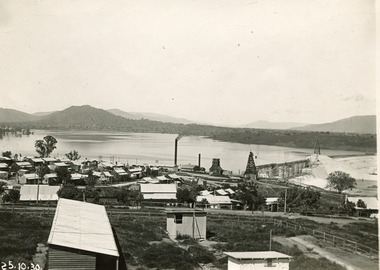
... Some of the Dam workers consisted of World War I veterans. Dam workers often settled their families in Mitta Junction Village and Wodonga. ...Some of the Dam workers consisted of World War I veterans. Dam workers often settled their families in Mitta Junction Village and Wodonga. ...Taken on 25 October 1930, various houses with the Hume Dam under construction are depicted in the background. The construction of the Hume Dam took place from 1919 to 1936. At the time of construction, it was the second largest dam in the world. It was also one of the earliest civil projects developed after the Federation. Some of the Dam workers consisted of World War I veterans. Dam workers often settled their families in Mitta Junction Village and Wodonga. Archaeological surveys were completed by Austral Archaeology, which was done when the Department of Land & Water Conservation was doing work to improve Hume Dam. The archaeological report that came out of the survey recommended three sites of interest where archaeological excavation should be done: Camp Ganger’s Quarters, Stableman’s Quarters, and the Industrial Dump. The excavation uncovered artefacts. Mitta Mitta: Mitta Mitta is situated between Mount Welcome and Mount Misery. It is named after the river that explorers Hume and Hovell discovered in 1824. The town would eventually become a huge gold mining town. Mitta Mitta is called Midamodunga by the local Indigenous peoples Wodonga: Wodonga is situated on the Murray River and is part of North East Victoria. Hume and Hovell: Hamilton Hume (1979-1873) and William Hilton Hovell (1786-1875). W. H. Hovell was born in Norfolk England and Hume was born in Parramatta, New South Wales Hovell and Hume undertook an exploration journey in 1824 and thought they discovered a river, which turned out to be the Murray River. They returned home in 1825, but returned to the area in 1826 and discovered coal in the area. This photo is historically significant as it shows the Hume Dam under construction in 1930. The Dam was named after Hamilton Hume, who is an important historical figure for this area as he helped discover the area where resources were found. Black and white rectangular photograph printer unmountedReverse: 1997.3145/ 84-20-2construction, houses, veterans, mitta junction village, hume dam, world war i, federation, wodonga, archaeological survey, excavation, austral archaeology, department of land & water conservation, camp ganger's quarter's, stableman's quarters, industrial dump, artefacts, mitta mitta, mount welcome, mount misery, murray river, hamilton hume, william hilton hovell, hume and hovell expedition -
 The Beechworth Burke Museum
Photograph
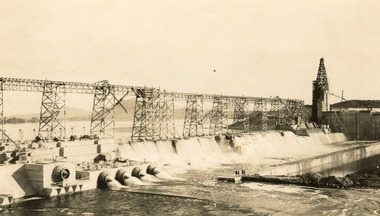
... Some of the Dam workers consisted of World War I veterans. Dam workers often settled their families in Mitta Junction Village and Wodonga. ...Some of the Dam workers consisted of World War I veterans. Dam workers often settled their families in Mitta Junction Village and Wodonga. ...Taken on 25 October 1930, various houses with the Hume Dam under construction are depicted in the background. The construction of the Hume Dam took place from 1919 to 1936. At the time of construction, it was the second largest dam in the world. It was also one of the earliest civil projects developed after the Federation. Some of the Dam workers consisted of World War I veterans. Dam workers often settled their families in Mitta Junction Village and Wodonga. Archaeological surveys were completed by Austral Archaeology, which was done when the Department of Land & Water Conservation was doing work to improve Hume Dam. The archaeological report that came out of the survey recommended three sites of interest where archaeological excavation should be done: Camp Ganger’s Quarters, Stableman’s Quarters, and the Industrial Dump. The excavation uncovered artefacts. Mitta Mitta: Mitta Mitta is situated between Mount Welcome and Mount Misery. It is named after the river that explorers Hume and Hovell discovered in 1824. The town would eventually become a huge gold mining town. Mitta Mitta is called Midamodunga by the local Indigenous peoples Wodonga: Wodonga is situated on the Murray River and is part of North East Victoria. Hume and Hovell: Hamilton Hume (1979-1873) and William Hilton Hovell (1786-1875). W. H. Hovell was born in Norfolk England and Hume was born in Parramatta, New South Wales Hovell and Hume undertook an exploration journey in 1824 and thought they discovered a river, which turned out to be the Murray River. They returned home in 1825, but returned to the area in 1826 and discovered coal in the area. This photo is historically significant as it shows the Hume Dam under construction in 1930. The Dam was named after Hamilton Hume, who is an important historical figure for this area as he helped discover the area where resources were found.Sepia rectangular photograph printed unmountedReverse: 84-19-5 / 1997.3185/ Values & spillway. / When completed the wall / will be as high as the / scaffolding. [featuring trademark: kodak print]construction, houses, veterans, mitta junction village, hume dam, world war i, federation, wodonga, archaeological survey, excavation, austral archaeology, department of land & water conservation, camp ganger's quarter's, stableman's quarters, industrial dump, artefacts, mitta mitta, mount welcome, mount misery, murray river, hamilton hume, william hilton hovell, hume and hovell expedition -
 The Beechworth Burke Museum
Photograph, c1930
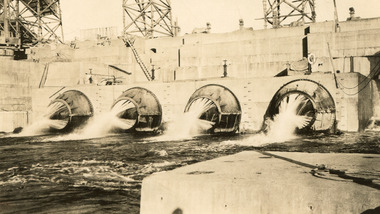
... Some of the Dam workers consisted of World War I veterans. Dam workers often settled their families in Mitta Junction Village and Wodonga. ...Some of the Dam workers consisted of World War I veterans. Dam workers often settled their families in Mitta Junction Village and Wodonga. ...Taken on 25 October 1930, various houses with the Hume Dam under construction are depicted in the background. The construction of the Hume Dam took place from 1919 to 1936. At the time of construction, it was the second largest dam in the world. It was also one of the earliest civil projects developed after the Federation. Some of the Dam workers consisted of World War I veterans. Dam workers often settled their families in Mitta Junction Village and Wodonga. Archaeological surveys were completed by Austral Archaeology, which was done when the Department of Land & Water Conservation was doing work to improve Hume Dam. The archaeological report that came out of the survey recommended three sites of interest where archaeological excavation should be done: Camp Ganger’s Quarters, Stableman’s Quarters, and the Industrial Dump. The excavation uncovered artefacts. Mitta Mitta: Mitta Mitta is situated between Mount Welcome and Mount Misery. It is named after the river that explorers Hume and Hovell discovered in 1824. The town would eventually become a huge gold mining town. Mitta Mitta is called Midamodunga by the local Indigenous peoples Wodonga: Wodonga is situated on the Murray River and is part of North East Victoria. Hume and Hovell: Hamilton Hume (1979-1873) and William Hilton Hovell (1786-1875). W. H. Hovell was born in Norfolk England and Hume was born in Parramatta, New South Wales Hovell and Hume undertook an exploration journey in 1824 and thought they discovered a river, which turned out to be the Murray River. They returned home in 1825, but returned to the area in 1826 and discovered coal in the area.This photo is historically significant as it shows the Hume Dam under construction in 1930. The Dam was named after Hamilton Hume, who is an important historical figure for this area as he helped discover the area where resources were found.Sepia rectangular photograph printed unmountedReverse: 84-19-2/ 1997.3188/ These are the four / release valves they are / not always open (illegible) this / when closed the water flows / over the spillway. [featuring trademark: kodak print] photograph number: 354construction, houses, veterans, mitta junction village, hume dam, world war i, federation, wodonga, archaeological survey, excavation, austral archaeology, department of land & water conservation, camp ganger's quarter's, stableman's quarters, industrial dump, artefacts, mitta mitta, mount welcome, mount misery, murray river, hamilton hume, william hilton hovell, hume and hovell expedition -
 The Beechworth Burke Museum
Photograph, 25 October 1930
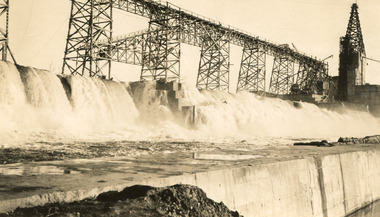
... Some of the Dam workers consisted of World War I veterans. Dam workers often settled their families in Mitta Junction Village and Wodonga. ...Some of the Dam workers consisted of World War I veterans. Dam workers often settled their families in Mitta Junction Village and Wodonga. ...Taken on 25 October 1930, various houses with the Hume Dam under construction are depicted in the background. The construction of the Hume Dam took place from 1919 to 1936. At the time of construction, it was the second largest dam in the world. It was also one of the earliest civil projects developed after the Federation. Some of the Dam workers consisted of World War I veterans. Dam workers often settled their families in Mitta Junction Village and Wodonga. Archaeological surveys were completed by Austral Archaeology, which was done when the Department of Land & Water Conservation was doing work to improve Hume Dam. The archaeological report that came out of the survey recommended three sites of interest where archaeological excavation should be done: Camp Ganger’s Quarters, Stableman’s Quarters, and the Industrial Dump. The excavation uncovered artefacts. Mitta Mitta: Mitta Mitta is situated between Mount Welcome and Mount Misery. It is named after the river that explorers Hume and Hovell discovered in 1824. The town would eventually become a huge gold mining town. Mitta Mitta is called Midamodunga by the local Indigenous peoples Wodonga: Wodonga is situated on the Murray River and is part of North East Victoria. Hume and Hovell: Hamilton Hume (1979-1873) and William Hilton Hovell (1786-1875). W. H. Hovell was born in Norfolk England and Hume was born in Parramatta, New South Wales Hovell and Hume undertook an exploration journey in 1824 and thought they discovered a river, which turned out to be the Murray River. They returned home in 1825, but returned to the area in 1826 and discovered coal in the area.This photo is historically significant as it shows the Hume Dam under construction in 1930. The Dam was named after Hamilton Hume, who is an important historical figure for this area as he helped discover the area where resources were found.Sepia rectangular photograph printed unmountedReverse: 84-19-6/ 1997.3187/ The spillway [featuring trademark: kodak print] construction, houses, veterans, mitta junction village, hume dam, world war i, federation, wodonga, archaeological survey, excavation, austral archaeology, department of land & water conservation, camp ganger's quarter's, stableman's quarters, industrial dump, artefacts, mitta mitta, mount welcome, mount misery, murray river, hamilton hume, william hilton hovell, hume and hovell expedition -
 The Beechworth Burke Museum
Photograph, 25 October 1930
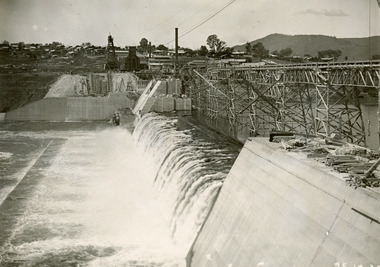
... Some of the Dam workers consisted of World War I veterans. Dam workers often settled their families in Mitta Junction Village and Wodonga. ...Some of the Dam workers consisted of World War I veterans. Dam workers often settled their families in Mitta Junction Village and Wodonga. ...Taken on 25 October 1930, various houses with the Hume Dam under construction are depicted in the background. The construction of the Hume Dam took place from 1919 to 1936. At the time of construction, it was the second largest dam in the world. It was also one of the earliest civil projects developed after the Federation. Some of the Dam workers consisted of World War I veterans. Dam workers often settled their families in Mitta Junction Village and Wodonga. Archaeological surveys were completed by Austral Archaeology, which was done when the Department of Land & Water Conservation was doing work to improve Hume Dam. The archaeological report that came out of the survey recommended three sites of interest where archaeological excavation should be done: Camp Ganger’s Quarters, Stableman’s Quarters, and the Industrial Dump. The excavation uncovered artefacts. Mitta Mitta: Mitta Mitta is situated between Mount Welcome and Mount Misery. It is named after the river that explorers Hume and Hovell discovered in 1824. The town would eventually become a huge gold mining town. Mitta Mitta is called Midamodunga by the local Indigenous peoples Wodonga: Wodonga is situated on the Murray River and is part of North East Victoria. Hume and Hovell: Hamilton Hume (1979-1873) and William Hilton Hovell (1786-1875). W. H. Hovell was born in Norfolk England and Hume was born in Parramatta, New South Wales Hovell and Hume undertook an exploration journey in 1824 and thought they discovered a river, which turned out to be the Murray River. They returned home in 1825, but returned to the area in 1826 and discovered coal in the area.This photo is historically significant as it shows the Hume Dam under construction in 1930. The Dam was named after Hamilton Hume, who is an important historical figure for this area as he helped discover the area where resources were found.Black and white rectangular photograph printer unmountedReverse: 84-20-1/ 1997.3147construction, houses, veterans, mitta junction village, hume dam, world war i, federation, wodonga, archaeological survey, excavation, austral archaeology, department of land & water conservation, camp ganger's quarter's, stableman's quarters, industrial dump, artefacts, mitta mitta, mount welcome, mount misery, murray river, hamilton hume, william hilton hovell, hume and hovell expedition -
 Flagstaff Hill Maritime Museum and Village
Weapon - Cannon, 1866
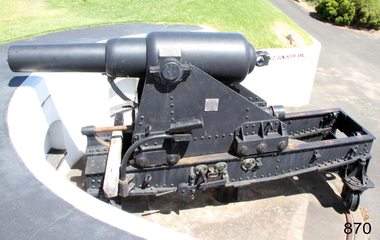
... At the height of its operations during World War One the factory covered 1300 acres and employed very nearly 80,000 workers. ...At the height of its operations during World War One the factory covered 1300 acres and employed very nearly 80,000 workers. ...In the years following the Crimean War (1854-1857J) there was a great concern in the Colony that Imperial Russia would attempt an invasion. Coastal defences in the colony of Victoria were greatly strengthened by the Government as a result. Warrnambool was originally protected by cannons at Cannon Hill, approximately 1 kilometer west of the Flagstaff Hill Fortifications. These cannons included two 1866 guns, both 80 Pound Rifled Muzzle Loaders (RML) purchased by Victoria’s Colonial Government. They were part of a shipment of 26 such guns sent from England in December 1866. They are registered as No. 23 (80cwt-2qr-0lbs) - Gun 1, and No.13 (81cwt-1qr-12lbs) - Gun 2. They were cast at the Royal Gun Factory, Woolwich Arsenal, in 1866 and have a 6.3 inch bore. Both barrels carry the Royal Cypher of Queen Victoria, Insignia of the Royal Engineers, within the Garter and Motto surmounted by the Crown, with the Royal Cypher of Queen Victoria within the Garter (letters in centre “VR”, motto “HONI SOIT QUI MAL Y PENSE”, "Shame be to him who thinks evil of it."). The guns were originally supplied with wooden carriages. (The Royal Arsenal at Woolwich, England, was established eleven years after the Restoration of King Charles II. It was the principal supplier of armaments to the British and Empire Governments. At the height of its operations during World War One the factory covered 1300 acres and employed very nearly 80,000 workers. Woolwich was the Headquarters of the Royal Artillery since the raising of that Regiment in 1716. The Arsenal was closed in the late 1960’s.) These two cannons were transferred to the Warrnambool Garrison Artillery Battery Fortifications erected at Flagstaff Hill in 1887 as part of Victoria’s Coastal Defences. The original wooden carriages were subsequently replaced with the present iron garrison carriages in 1888. They are a “C” pivot. The ‘racers’ or curved track set into the floor of the gun emplacement (which enabled the guns to be traversed more quickly) are as specified for guns up to 10 inch, being of wrought iron 2.78 inches wide. A temporary third gun, now no longer on Flagstaff Hill’s site, was a 5 inch Rifled Breech Loading (BL) Armstrong gun mounted on an Elswick hydro pneumatic disappearing carriage It was faster to load and fire than the 80 pound RMLs and its arrival spelt the end of the older 80 pound guns’ useful life, apart from being used for practice sessions. The 5 inch BL gun was the main defensive weapon of the Warrnambool Battery until the Battery was downgraded in importance and the gun was recalled to Melbourne in 1910. The State of Victoria took over the ownership of the guns at the time of Australian Federation in 1901. In about 1901/1902 the Garrison Battery was converted to the Warrnambool Battery of the Australian Field Artillery (No 4 Field Battery). It was equipped with 4.7 inch naval guns mounted on field carriages. They were now a mobile unit but continued to use the Warrnambool Garrison area at Flagstaff Hill for practice. When the Fortifications were declared obsolete, the two 80 Pounder RML were relocated to Cannon Hill in 1910. On the outbreak of World War One the 4.7 inch guns were recalled to Melbourne, and the Battery was disbanded. Most of the personnel probably re-enlisted in the local 4th Australian Light Horse Regiment. The two 80 Pounder RML were moved back to the Fortifications in 1973. They were both fully restored by Army First Year Apprentices at the Ordinance Factory in Bendigo in time for the centenary year of the fortifications in 1987. The guns are capable of firing 80 pound (32.3kg) armour piercing exploding shells 3.65kms out to sea. They were original manned by volunteers before a paid Garrison was established. Now the Guns are again fired by volunteers on Special Event days. Since restoration the Gun Number 1 had been fired on a regular basis but Gun Number 2 hadn’t been fired since the mid 1990’s. In April 2015 Gun Number 2 was serviced in preparation for the firing of both cannons on the ANZAC Centenary commemorations on April 25th 2015. Other guns from the original Cannon Hill location were obsolete by the time the 1887 Warrnambool Garrison Artillery Battery was built. These guns are (1) a 32 Pounder Muzzle Loading Smooth Bore (SB) cast in 1813 at the famous Carron Foundry, number 80837 and now located in the Warrnambool Botanic Gardens (2) a 68 Pounder Muzzle Loading Smooth Bore cast in 1861 at the equally august Low Moor Foundry, number 10310 and now located on the lawn area at the entrance to Flagstaff Hill Maritime Village. Both of these guns are mounted on their original wooden garrison carriages. There are only seven 32 Pounder SB made by Carron and fifteen 68 Pounder SB made at Low Moor known to exist in the State of Victoria. Funding was received to repair Cannon No.2 and its iron carriage. After completion, both Cannon No 1 and No. 2 were 'fired' in a public re-enactment on April 4th, 2026. (Conservation Management Plan for Victorian Guns and Cannon, South Western Victoria, May 2008, ref W/F/05)The Warrnambool Garrison has been added to the Victorian Heritage Register H1250 “for its intact battery and guns, a strong reminder of Victoria’s wealth and determination to protect itself from the perceived threat of invasion in the 1880’s.” The City of Warrnambool is one of several custodians of a collection of artillery pieces of heritage significance at a state, national and international level. These pieces are directly related to the defence of south-west Victoria in the 19th century. The care and preservation come under the Heritage Act 1995. Cannon. 80 Pound Rifled Muzzle Loading (RML) Gun on iron carriage and slide, installed in the Battery at Flagstaff Hill’s Fortifications. Made in 1866 at the Royal Gun Factory (R-G-F), Woolich, England. Gun Reg No 13. Flagstaff Hill Garrison Gun 2 (Gun No. 2). Insignia of the Royal Engineers, and the weight of the gun, stamped on top of the gun’s barrel. There is a brass plate on the side of the gun with the details of 1987 restoration.Stamped into the metal on top of the barrel, Insignia of the Royal Engineers; Garter and Motto “HONI SOIT QUI MAL Y PENSE”, surmounted by the Crown, with the Royal Cypher of Queen Victoria “VR” within the Garter. Also stamped on top of the gun are 2 inward pointing arrows above the weight ”81-1-12”. Brass plate “RESTORATION / BY / FIRST YEAR / APPRENTICES / ORDANANCE FACTORY / BENDIGO 1987”flagstaff hill, warrnambool, shipwrecked coast, flagstaff hill maritime museum, maritime museum, shipwreck coast, flagstaff hill maritime village, great ocean road, colonial defences, victoria’s coastal defences, warrnambool fortification, warrnambool garrison battery, warrnambool volunteer corps, ordinance, armaments, cannon hill fortifications, 4th australian light horse regiment, no 4 field battery, 80 pound cannon rifled muzzle loaders (rml), victorian colonial government, royal gun factory england, woolwich arsenal, royal cypher of queen victoria, garrison gun -
 Flagstaff Hill Maritime Museum and Village
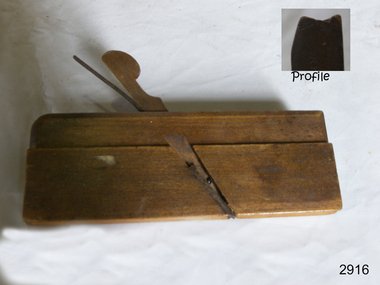
Tool - Wood Moulding Plane, 1869-1920
... worker to pull the plane ahead of the master who guided it. All we known about Richard Routledge is that he was a tool maker and retailer that operated a business at either 23 or 64 Bull St Birmingham between 1869 to sometime in the early 20th century. There are many of his tools including decorative moulding planes of all sizes and designs for sale around the world and that his tools in particular moulding planes are well sought after by collectors of vintage tools. A vintage tool used before routers and spindle moulders came into use after World War ...A moulding plane is a specialised plane used for making the complex shapes found in wooden mouldings that are used to decorate furniture or other wooden object. Traditionally, moulding planes were blocks of wear resistant hardwood, often beech or maple, which were worked to the shape of the intended moulding. The blade, or iron was likewise formed to the intended moulding profile and secured in the body of the plane with a wooden wedge. A traditional cabinetmakers shop might have many, perhaps hundreds, of moulding planes for the full range of work to be performed. Large crown mouldings required planes of six or more inches in width, which demanded great strength to push and often had additional peg handles on the sides, allowing the craftsman's apprentice or other worker to pull the plane ahead of the master who guided it. All we known about Richard Routledge is that he was a tool maker and retailer that operated a business at either 23 or 64 Bull St Birmingham between 1869 to sometime in the early 20th century. There are many of his tools including decorative moulding planes of all sizes and designs for sale around the world and that his tools in particular moulding planes are well sought after by collectors of vintage tools. A vintage tool used before routers and spindle moulders came into use after World War ll, a time when to produce a decorative moulding for a piece of furniture was done by hand using one of these types of plane. A significant item from the mid to late 19th century that today is quite rare and sought after by collectors. It gives us a snapshot of how furniture was made predominately by hand and with tools that were themselves hand made shows the craftsmanship used to make such a unique item. Moulding Plane Hollow type Marked Routledge No.8 Blade Stamped JAS Burden (owner). flagstaff hill, warrnambool, shipwrecked-coast, flagstaff-hill, flagstaff-hill-maritime-museum, maritime-museum, shipwreck-coast, flagstaff-hill-maritime-village -
 Flagstaff Hill Maritime Museum and Village
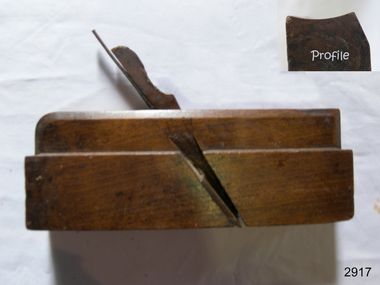
Tool - Wood moulding Plane, Between 1869 early 20th century
... worker to pull the plane ahead of the master who guided it. All we known about Richard Routledge is that he was a tool maker and retailer that operated a business at either 23 or 64 Bull St Birmingham between 1869 to sometime in the early 20th century. There are many of his tools including decorative moulding planes of all sizes and designs for sale around the world and that his tools in particular moulding planes are well sought after by collectors of vintage tools. A vintage tool used before routers and spindle moulders came into use after World War ...A moulding plane is a specialised plane used for making the complex shapes found in wooden mouldings that are used to decorate furniture or other wooden object. Traditionally, moulding planes were blocks of wear resistant hardwood, often beech or maple, which were worked to the shape of the intended moulding. The blade, or iron was likewise formed to the intended moulding profile and secured in the body of the plane with a wooden wedge. A traditional cabinetmakers shop might have many, perhaps hundreds, of moulding planes for the full range of work to be performed. Large crown mouldings required planes of six or more inches in width, which demanded great strength to push and often had additional peg handles on the sides, allowing the craftsman's apprentice or other worker to pull the plane ahead of the master who guided it. All we known about Richard Routledge is that he was a tool maker and retailer that operated a business at either 23 or 64 Bull St Birmingham between 1869 to sometime in the early 20th century. There are many of his tools including decorative moulding planes of all sizes and designs for sale around the world and that his tools in particular moulding planes are well sought after by collectors of vintage tools. A vintage tool used before routers and spindle moulders came into use after World War ll, a time when to produce a decorative moulding for a piece of furniture was done by hand using one of these types of plane. A significant item from the mid to late 19th century that today is quite rare and sought after by collectors. It gives us a snapshot of how furniture was made predominately by hand and with tools that were themselves hand made shows the craftsmanship used to make such a unique item. Plane, Moulding, Hollow Size No 18 Routledge Maker (Owner "J.A.S.Burden")flagstaff hill, warrnambool, shipwrecked-coast, flagstaff-hill, flagstaff-hill-maritime-museum, maritime-museum, shipwreck-coast, flagstaff-hill-maritime-village -
 Flagstaff Hill Maritime Museum and Village
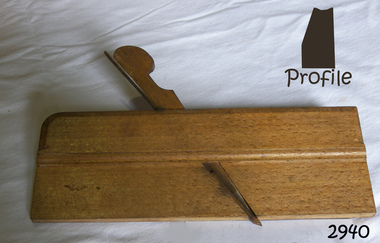
Tool - Moulding Plane, Late 19th Century
... worker to pull the plane ahead of the master who guided it. All we known about Richard Routledge is that he was a tool maker and retailer that operated a business at either 23 or 64 Bull St Birmingham between 1869 to sometime in the early 20th century. There are many of his tools including decorative moulding planes of all sizes and designs for sale around the world and that his tools in particular moulding planes are well sought after by collectors of vintage tools. A vintage tool used before routers and spindle moulders came into use after World War ...A moulding plane is a specialised plane used for making the complex shapes found in wooden mouldings that are used to decorate furniture or other wooden object. Traditionally, moulding planes were blocks of wear resistant hardwood, often beech or maple, which were worked to the shape of the intended moulding. The blade, or iron was likewise formed to the intended moulding profile and secured in the body of the plane with a wooden wedge. A traditional cabinetmakers shop might have many, perhaps hundreds, of moulding planes for the full range of work to be performed. Large crown mouldings required planes of six or more inches in width, which demanded great strength to push and often had additional peg handles on the sides, allowing the craftsman's apprentice or other worker to pull the plane ahead of the master who guided it. All we known about Richard Routledge is that he was a tool maker and retailer that operated a business at either 23 or 64 Bull St Birmingham between 1869 to sometime in the early 20th century. There are many of his tools including decorative moulding planes of all sizes and designs for sale around the world and that his tools in particular moulding planes are well sought after by collectors of vintage tools. A vintage tool used before routers and spindle moulders came into use after World War ll, a time when to produce a decorative moulding for a piece of furniture was done by hand using one of these types of plane. A significant item from the mid to late 19th century that today is quite rare and sought after by collectors. It gives us a snapshot of how furniture was made predominately by hand and with tools that were themselves hand made shows the craftsmanship used to make such a unique item. Moulding Plane. Stamped JAS Burden (owner) also No 2flagstaff hill, warrnambool, shipwrecked-coast, flagstaff-hill, flagstaff-hill-maritime-museum, maritime-museum, shipwreck-coast, flagstaff-hill-maritime-village -
 Flagstaff Hill Maritime Museum and Village
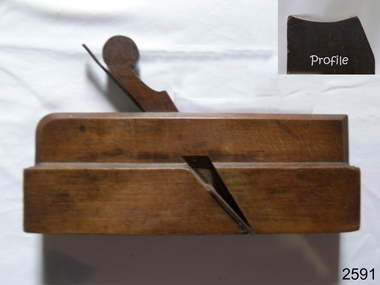
Tool - Moulding Plane, J Hastie, 1766-1802
... Large crown mouldings required planes of six or more inches in width, which demanded great strength to push and often had additional peg handles on the sides, allowing the craftsman's apprentice or other worker to pull the plane ahead of the master who guided it. A vintage tool used before routers and spindle moulders came into use after World War ll, a time when to produce a decorative moulding for a piece of furniture was done by hand using one of these types of plane. ...A moulding plane is a specialised plane used for making the complex shapes found in wooden mouldings that are used to decorate furniture or other wooden object. Traditionally, moulding planes were blocks of wear resistant hardwood, often beech or maple, which were worked to the shape of the intended moulding. The blade, or iron was likewise formed to the intended moulding profile and secured in the body of the plane with a wooden wedge. A traditional cabinetmakers shop might have many, perhaps hundreds, of moulding planes for the full range of work to be performed. Large crown mouldings required planes of six or more inches in width, which demanded great strength to push and often had additional peg handles on the sides, allowing the craftsman's apprentice or other worker to pull the plane ahead of the master who guided it.A vintage tool used before routers and spindle moulders came into use after World War ll, a time when to produce a decorative moulding for a piece of furniture was done by hand using one of these types of plane. A significant item from the mid to late 19th century that today is quite rare and sought after by collectors. It gives us a snapshot of how furniture was made predominately by hand and with tools that were themselves hand made shows the craftsmanship used to make such a unique item. Moulding Plane Hollow type No15 J Hastie Stamped EG W.M flagstaff hill, warrnambool, shipwrecked-coast, flagstaff-hill, flagstaff-hill-maritime-museum, maritime-museum, shipwreck-coast, flagstaff-hill-maritime-village -
 Flagstaff Hill Maritime Museum and Village
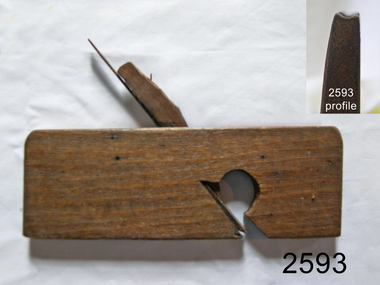
Tool - Wood moulding Plane, 1890-1920
... worker to pull the plane ahead of the master who guided it. A vintage tool made by an unknown company, this item was made commercially for firms and individuals that worked in wood and needed a tool that could produce a ornamental finish to timber. The tool was used before routers and spindle moulders came into use after World War ...A moulding plane is a specialised plane used for making the complex shapes found in wooden mouldings that are used to decorate furniture or other wooden object. Traditionally, moulding planes were blocks of wear resistant hardwood, often beech or maple, which were worked to the shape of the intended moulding. The blade, or iron was likewise formed to the intended moulding profile and secured in the body of the plane with a wooden wedge. A traditional cabinetmakers shop might have many, perhaps hundreds, of moulding planes for the full range of work to be performed. Large crown moulding required planes of six or more inches in width, which demanded great strength to push and often had additional peg handles on the sides, allowing the craftsman's apprentice or other worker to pull the plane ahead of the master who guided it.A vintage tool made by an unknown company, this item was made commercially for firms and individuals that worked in wood and needed a tool that could produce a ornamental finish to timber. The tool was used before routers and spindle moulders came into use after World War ll, a time when to produce a decorative moulding for a piece of furniture, door trims etc. or other items had to be accomplished using hand tools and in particular one of these types of planes. These profiled planes came in various shapes and sizes to achieve a decorative finish. A significant tool from the mid to late 19th century that today is quite rare and sought after by collectors. It gives us a snapshot of how furniture and other decorative finishes were created on timber by the use of hand tools. Tools that were themselves hand made shows the craftsmanship used during this time not only to make a tool such as the subject item but also the craftsmanship needed to produce a decorative finish that was needed to be made for any timber item. Wood Moulding, plane Rabbet Hollow type Noneflagstaff hill, warrnambool, shipwrecked-coast, flagstaff-hill, flagstaff-hill-maritime-museum, maritime-museum, shipwreck-coast, flagstaff-hill-maritime-village -
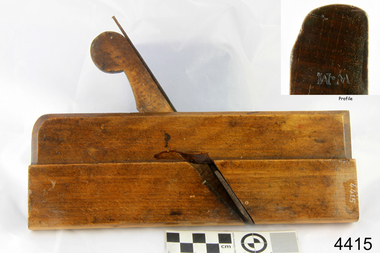 Flagstaff Hill Maritime Museum and Village
Tool - Plane, James Hastie, Late 19th to Early 20th Century
... Large crown mouldings required planes of six or more inches in width, which demanded great strength to push and often had additional peg handles on the sides, allowing the craftsman's apprentice or other worker to pull the plane ahead of the master who guided it. A vintage tool used before routers and spindle moulders came into use after World War ll, a time when to produce a decorative moulding for a piece of furniture was done by hand using one of these types of plane. ...A moulding plane is a specialised plane used for making the complex shapes found in wooden mouldings that are used to decorate furniture or other wooden object. Traditionally, moulding planes were blocks of wear resistant hardwood, often beech or maple, which were worked to the shape of the intended moulding. The blade, or iron was likewise formed to the intended moulding profile and secured in the body of the plane with a wooden wedge. A traditional cabinetmakers shop might have many, perhaps hundreds, of moulding planes for the full range of work to be performed. Large crown mouldings required planes of six or more inches in width, which demanded great strength to push and often had additional peg handles on the sides, allowing the craftsman's apprentice or other worker to pull the plane ahead of the master who guided it.A vintage tool used before routers and spindle moulders came into use after World War ll, a time when to produce a decorative moulding for a piece of furniture was done by hand using one of these types of plane. A significant item from the mid to late 19th century that today is quite rare and sought after by collectors. It gives us a snapshot of how furniture was made predominately by hand and with tools that were themselves hand made shows the craftsmanship used to make such a unique item. Moulding Plane with metal blade attached. Made by J Hastie. Inscriptions stamped into wood. "J Hastie" "E G" "W.M" "EG" "11"flagstaff hill, warrnambool, shipwrecked-coast, flagstaff-hill, flagstaff-hill-maritime-museum, maritime-museum, shipwreck-coast, flagstaff-hill-maritime-village, j hastie, plane, wood working tool, hand tool -
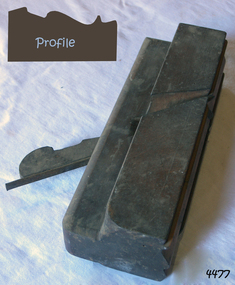 Flagstaff Hill Maritime Museum and Village
Tool - Plane, Mid to late 19th Century
... worker to pull the plane ahead of the master who guided it. A vintage tool made by an unknown company, this item was made commercially for firms and individuals that worked in wood and needed a tool that could produce a ornamental finish to timber. The tool was used before routers and spindle moulders came into use after World War ...A moulding plane is a specialised plane used for making the complex shapes found in wooden mouldings that are used to decorate furniture or other wooden object. Traditionally, moulding planes were blocks of wear resistant hardwood, often beech or maple, which were worked to the shape of the intended moulding. The blade, or iron was likewise formed to the intended moulding profile and secured in the body of the plane with a wooden wedge. A traditional cabinetmakers shop might have many, perhaps hundreds, of moulding planes for the full range of work to be performed. Large crown mouldings required planes of six or more inches in width, which demanded great strength to push and often had additional peg handles on the sides, allowing the craftsman's apprentice or other worker to pull the plane ahead of the master who guided it.A vintage tool made by an unknown company, this item was made commercially for firms and individuals that worked in wood and needed a tool that could produce a ornamental finish to timber. The tool was used before routers and spindle moulders came into use after World War ll, a time when to produce a decorative moulding for a piece of furniture, door trims etc or other items had to be accomplished using hand tools and in particular one of these types of planes. These profiled planes came in various shapes and sizes to achieve a decorative finish. A significant tool from the mid to late 19th century that today is quite rare and sought after by collectors. It gives us a snapshot of how furniture and other decorative finishes were created on timber by the use of hand tools. Tools that were themselves hand made shows the craftsmanship used during this time not only to make a tool such as the subject item but also the craftsmanship needed to produce a decorative finish that was needed to be made for any timber item. Moulding Plane 4 screws attached to wood bottom plateJ Heath. 1/2 inch on opposite end.flagstaff hill, warrnambool, shipwrecked-coast, flagstaff-hill, flagstaff-hill-maritime-museum, maritime-museum, shipwreck-coast, flagstaff-hill-maritime-village, plane moulding, j heath -
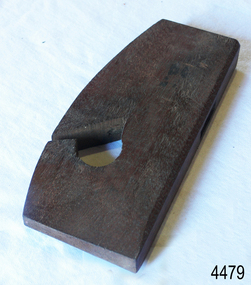 Flagstaff Hill Maritime Museum and Village
Tool - Plane, Mid to late 19th Century
... worker to pull the plane ahead of the master who guided it. A vintage tool made by an unknown company, this item was made commercially for firms and individuals that worked in wood and needed a tool that could produce a ornamental finish to timber. The tool was used before routers and spindle moulders came into use after World War ...A moulding plane is a specialised plane used for making the complex shapes found in wooden mouldings that are used to decorate furniture or other wooden object. Traditionally, moulding planes were blocks of wear resistant hardwood, often beech or maple, which were worked to the shape of the intended moulding. The blade, or iron was likewise formed to the intended moulding profile and secured in the body of the plane with a wooden wedge. A traditional cabinetmakers shop might have many, perhaps hundreds, of moulding planes for the full range of work to be performed. Large crown mouldings required planes of six or more inches in width, which demanded great strength to push and often had additional peg handles on the sides, allowing the craftsman's apprentice or other worker to pull the plane ahead of the master who guided it.A vintage tool made by an unknown company, this item was made commercially for firms and individuals that worked in wood and needed a tool that could produce a ornamental finish to timber. The tool was used before routers and spindle moulders came into use after World War ll, a time when to produce a decorative moulding for a piece of furniture, door trims etc or other items had to be accomplished using hand tools and in particular one of these types of planes. These profiled planes came in various shapes and sizes to achieve a decorative finish. A significant tool from the mid to late 19th century that today is quite rare and sought after by collectors. It gives us a snapshot of how furniture and other decorative finishes were created on timber by the use of hand tools. Tools that were themselves hand made shows the craftsmanship used during this time not only to make a tool such as the subject item but also the craftsmanship needed to produce a decorative finish that was needed to be made for any timber item. Circular moulding Rabbet Plane Noneflagstaff hill, warrnambool, shipwrecked-coast, flagstaff-hill, flagstaff-hill-maritime-museum, maritime-museum, shipwreck-coast, flagstaff-hill-maritime-village, circular rabbet plane, plane -
 Flagstaff Hill Maritime Museum and Village
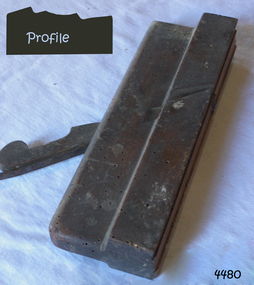
Tool - Moulding Plane, Mid to late 19th Century
... worker to pull the plane ahead of the master who guided it. A vintage tool made by an unknown company, this item was made commercially for firms and individuals that worked in wood and needed a tool that could produce a ornamental finish to timber. The tool was used before routers and spindle moulders came into use after World War ...A moulding plane is a specialised plane used for making the complex shapes found in wooden mouldings that are used to decorate furniture or other wooden object. Traditionally, moulding planes were blocks of wear resistant hardwood, often beech or maple, which were worked to the shape of the intended moulding. The blade, or iron was likewise formed to the intended moulding profile and secured in the body of the plane with a wooden wedge. A traditional cabinetmakers shop might have many, perhaps hundreds, of moulding planes for the full range of work to be performed. Large crown mouldings required planes of six or more inches in width, which demanded great strength to push and often had additional peg handles on the sides, allowing the craftsman's apprentice or other worker to pull the plane ahead of the master who guided it.A vintage tool made by an unknown company, this item was made commercially for firms and individuals that worked in wood and needed a tool that could produce a ornamental finish to timber. The tool was used before routers and spindle moulders came into use after World War ll, a time when to produce a decorative moulding for a piece of furniture, door trims etc or other items had to be accomplished using hand tools and in particular one of these types of planes. These profiled planes came in various shapes and sizes to achieve a decorative finish. A significant tool from the mid to late 19th century that today is quite rare and sought after by collectors. It gives us a snapshot of how furniture and other decorative finishes were created on timber by the use of hand tools. Tools that were themselves hand made shows the craftsmanship used during this time not only to make a tool such as the subject item but also the craftsmanship needed to produce a decorative finish that was needed to be made for any timber item. Moulding Plane H Heathflagstaff hill, warrnambool, shipwrecked-coast, flagstaff-hill, flagstaff-hill-maritime-museum, maritime-museum, shipwreck-coast, flagstaff-hill-maritime-village, plane moulding, plane -
 Federation University Historical Collection
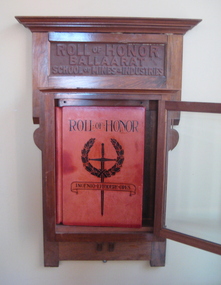
Book - Honour Board (hanging bookcase), Ballarat School of Mines Honor Book and Bookcase, c1920
... The School also designed the certificates for the Young Workers' Patriotic Guild, the 'Herald" Shield for perpetual competition at the technical Schools' athletic meetings, the "Hansen" Shield for competition among the Northern District High Schools, two metal tablets for the Castlemaine high School, and a certificate for the Grampians Secondary Schools' Association. Numerous Honor Books and Mural cases have also been designed for State Schools.' Over 400 former students and staff of the Ballarat School of Mines served during World War...The School also designed the certificates for the Young Workers' Patriotic Guild, the 'Herald" Shield for perpetual competition at the technical Schools' athletic meetings, the "Hansen" Shield for competition among the Northern District High Schools, two metal tablets for the Castlemaine high School, and a certificate for the Grampians Secondary Schools' Association. Numerous Honor Books and Mural cases have also been designed for State Schools.' Over 400 former students and staff of the Ballarat School of Mines served during World War ...The Ballarat Technical Art School made many honour boards for schools and organisation in Victoria and interstate. Their own was made, but the names were not listed. The Ballarat School of Mines Annual Report for 1921 states: 'It has been decided, for the present, to record the names of our students who served in the warm, in an Honor Book, and to defer the erection of an Honor Board until we can feel assured that the Roll is complete. the wide spread occupations of our students has rendered it very difficult for us to secure detailed information of their service. A handsome Honor Book and Case has been designed and executed by the staff and students of the Technical Art School, and the engrossing of the names and military records will be proceeded with as soon as possible. The Technical Art School was quite busy with commissions. The SMB Annual Report of 1918 states: 'under the direction of the Art principal (Mr H.H. Smith), the work of the Art School continues to receive wide public recognition. Handsome Honor Boars have been designed and executed for the Sydney Sports' Club, the St Arnaud High School, the Birregurra State School, the Wendouree State School and the Ballarat Old Colonists' Club. The School also designed the certificates for the Young Workers' Patriotic Guild, the 'Herald" Shield for perpetual competition at the technical Schools' athletic meetings, the "Hansen" Shield for competition among the Northern District High Schools, two metal tablets for the Castlemaine high School, and a certificate for the Grampians Secondary Schools' Association. Numerous Honor Books and Mural cases have also been designed for State Schools.' Over 400 former students and staff of the Ballarat School of Mines served during World War One. The 1920 SMb Students' Magazine said' 'Many students left Australia with the first Contingent, and since then, the School has been represented on every field where Australians have fought, from the first landing at Gallipoli to the decisive victory on the 8 August 1918.' The influence of the school was appropriately shown in the fact that at least 13 of its students were officers in the Australian Mining Corps. The title page has the initials 'D.J.' which most probably stands for Donald I. Johnston, a teacher with the Ballarat Technical Art school from 1920 to 1949. The Ballarat School of Mines World War 1 Honor Book remained uncompleted for more than 90 years. The names of over 400 SMB staff and students who served their country were not inscribed until 2012, despite names, ranks and service records being compiled. A restoration project was instigated as part of the 140th anniversary of the Ballarat School of Mines in 2010. Names were inscribed into the book by Calligrapher Lyn Forrester. The University of Ballarat believed this project is important not only to SMB's history, but the families and descendants of those who served while studying or teaching at SMB. The restoration project involved names being hand written in calligraphy into the Honor Book and was funded with the assistance of the 'Restoring Community War Memorial Grant'. The memorial was designed and made by the staff and students of the Ballarat School of Mines Technical Art School under the direction of Principal Herbert H. Smith. In 1921 the Ballarat School of Mines Annual Report recorded: "It has been decided, for the present, to record the names of our students who served in the war, in an Honor Book, and to defer the erection of an Honor Board until we can feel assured that the roll is complete. The wide spread occupations of our students has rended it very difficult for us to secure detailed information of their service. A handsome Honor Book and case has been designed and executed by the staff and students of the Technical Art School, and the engrossing of the names and miliatary records will proceed with as soon as possible. The Ballarat Technical Art School and was involved with the design and manufacture of numerous WW1 memorials. When it came time to complete their own memorial, the Principal died, and the Honor Roll must have been overlooked in the confusion that ensued. There have been numerous theories about why the Honor Roll was never completed, one being that it was because the SMB Principal, Maurice Copland, literally worked himself to death organising repatriation classes for ex-soldiers who attended SMB. The Courier of 18 November 1922 said of Maurice Copland: “He put his very best into the work for the welfare of the soldiers; in fact, he did too much for the good of his physique, for he wore himself out in the services of the returned men. If ever there was a war victim the late Mr Copland was one. But for the stress of work entailed by those repatriation classes and the amount of general war work which he performed Mr Copland would probably have been with them today." Understandably, SMB was thrown into some disarray by their Principal's death and the Honor Book was not completed. The University of Ballarat would like to finally honor its SMB war veterans by completing the Honor Book and as a further mark of respect, dedicate the project to Maurice Copland. The Ballarat Technical Art School undertook many honor boards. The Ballarat School of Mines Annual Report 1918 states: "Under the direction of the Art Principal (Mr H.H. Smith), the work of the Art School continues to receive a wide public recognition. handsome Honor Boards have been designed and executed for the Sydney Sports' Club, the St Arnaud High School, the Birregurra State School, the wendouree State School and the Ballarat Old Colonists' Club. The School also designed certificates for the Young Workers' patriotic Guild, the "Herald" Shield for perpetual Competition at the Technical schools athletics meetings, the "Hansen" Shield for competition in the northern District High Schools, two metal tablets for the Castlemaine High School, and a certificate for the Grampians Secondary Schools' Association. Numerous Honor Gooks and mural cases have also been designed for State Schools." The 1920 Ballarat School of Mines Annual Report stated: Public appreciation of the High standard of design and artistic craft work produced by the students of the Art School, under the direction of the Principal (Mr Herbert H. Smith), continues to be demonstrated by the lage number of important commissions entrusted to the school, not only by the public bodies and business firms by the Education Department and public bodies all over the State." "Amongst the important local commissions received during the year was the designing and supplying of the Municipal Council's Address of Welcome Casket for presentation to His Royal Highness the Prince of Wales, the designing and supervising of a large four-light stained glass window for the Lydiard Street Methodist Church, ... and supply numerous honor books, honor boards, etc., for public institutions and school." "The School has been honored by, and has acceded to the request of the Education Department to supply designs for the title page, chapter headings and initial letters for the War Service Book which it is about to publish, Mr F. Tate, director of Education, recognising the students' work in this direction by an appreciative letter of thanks. The Education Department has also been instrumental in directing to the School applications from all parts of the State, including Melbourne, for the School to supply competitive sports shields, honor boards, books and designs for certificates, and various decorative objects. The School has therefor been responsible for much work coming to local Ballarat firms which would otherwise have found its way to Melbourne or other centres. In 2011, as the result of a 'Restoring Community War Memorials Grant' calligrapher Lynton Forrester was commissioned to record over 400 names into the honor book. A Victorian Blackwood World War I Honor Board holds a red leatherbound Ballarat School of Mines Honor Book. The book includes a title page relating to the Ballarat School of Mines and Industries. The Ballarat School of Mines Honor Book and case was not finally inscribed with names until 2012. world war one, ww1, ballarat school of mines, world war 1, world war i, honour roll, calligraphy, don johnston, honor book, honor roll, copeland, maurice copeland, honour book, roll of honour, percy coltman, arthur e. tandy, leslie coulter
