
Showing 19 items matching "wartime rationing"
-
 Port Melbourne Historical & Preservation Society
Document - Clothing ration card, Perc MAY, 1948
... ...Wartime Rationing...Piers and Wharves - Waterside Workers Percy Allan MAY War - World War II Wartime Rationing P A May 128 Clark St SC7 Clothing ration card for Perc MAY Document Clothing ration card, Perc MAY ...Clothing ration card for Perc MAYP A May 128 Clark St SC7piers and wharves - waterside workers, percy allan may, war - world war ii, wartime rationing -
Port Melbourne Historical & Preservation Society
Document - Ration ticket, Motor Spirit Ration Ticket Series B, Australian Government, 1940s
... ...Wartime Rationing...War - World War II Percy Allan May Transport - Motor Vehicles Wartime Rationing Two red printed petrol ration tickets, still attached to each other. ...Two red printed petrol ration tickets, still attached to each other. "Motor Spirit Ration Ticket Series B" for one gallon.war - world war ii, percy allan may, transport - motor vehicles, wartime rationing -
Port Melbourne Historical & Preservation Society
Document - Ration application, Liquid fuel, WWII
... ...Wartime Rationing...Transport - Motor Vehicles Percy Allan MAY War - World War II Wartime Rationing two copies of the Application for Ration Tickets (for liquid fuel) during World War 2 Document Ration application, Liquid fuel, WWII ...two copies of the Application for Ration Tickets (for liquid fuel) during World War 2transport - motor vehicles, percy allan may, war - world war ii, wartime rationing -
 Wangaratta RSL Sub Branch
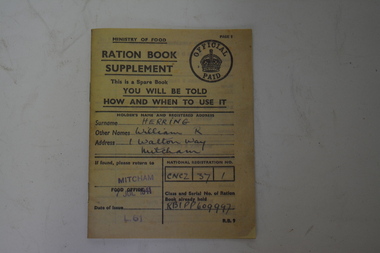
Souvenir - Ration Book, 1988
... Reproduction of a wartime Ration Book from magazine entitled Images of War 1939-1945 The Real Story of World War II - A Marshall Cavendish Collection in association with the Imperial War Museum. ...Reproduction of a wartime Ration Book from magazine entitled Images of War 1939-1945 The Real Story of World War II - A Marshall Cavendish Collection in association with the Imperial War Museum. ...Reproduction of a wartime Ration Book from magazine entitled Images of War 1939-1945 The Real Story of World War II - A Marshall Cavendish Collection in association with the Imperial War Museum. Issue 1 Volume 1Yellowing book with seal on top right hand corner saying "Official Paid". "Ration Book Supplement" on top left hand corner.Ministry of Food, Ration Book Supplement in the name William R. Herring, 1 Walton Way Mitcham 7 July 1941. Class & Serial No: RBIPP609997.ration book, wwii, world war 2 -
 City of Melbourne Libraries
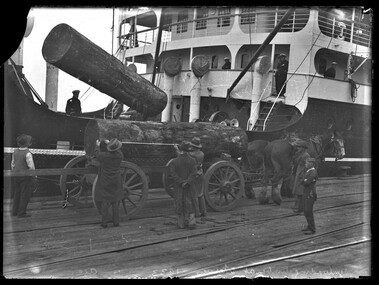
Photograph (item), Bull, Hugh Jones, 1897-1993, Unloading timber at Victoria Dock, 1933
... After the 1930s their numbers decreased due to the onset of WWI and mechanisation. Wartime petrol rationing led to a brief revival for the working horse, as suburban tradesmen, now used to motor delivery, took their old jinkers out of mothballs. ...After the 1930s their numbers decreased due to the onset of WWI and mechanisation. Wartime petrol rationing led to a brief revival for the working horse, as suburban tradesmen, now used to motor delivery, took their old jinkers out of mothballs. ...Photographer notations on slide: "Unloading Timber at Wharves 1933 Age B5" Published: Age (Melbourne, Vic.: 1854- ), Tuesday 15 August 1933 MAHOGANY FROM MANILA. (1933, August 15). The Age (Melbourne, Vic. : 1854 - 1954), p. 11. Retrieved January 16, 2026, from http://nla.gov.au/nla.news-article204377024 Published title: MAHOGANY FROM MANILA Published Caption: Age Tue 15 Aug 1933 Caption: Unloading Mahogany Logs brought from Manila, Philippine Islands, by the steamer Taiping, which berthed yesterday at Victoria Dock. The vessel discharged twenty logs, each weighing three tons, the first shipment of this type of timber landed in Melbourne. Research by Project Volunteer, Louise McKenzie: This photograph in many ways epitomises Melbourne in the 1930s. It is a time of enormous growth, development and change. But before delving into that, the photo itself is very powerful. The huge mahogany logs being unloaded appear to be so heavy that the ship itself seems to list to port as they are craned over the side. They are being levered into a cart to which two large and sturdy Clydesdale horses are hitched. In contrast to the traditional horses, the wharf is crisscrossed with modern railway tracks. Unloading is both mechanical and manual, and the scene is one of intense interest to a young boy bystander. The ship appears to be squat and solid, but the whole image also gives a feeling of movement and intensity. The mahogany being delivered to Melbourne would be intended for high quality furniture. In the 1930s Australia actually had a growing timber industry, but much of the eucalyptus wood was being utilised for mass produced furniture, and much of this furniture would then have had a veneer applied to it. The fact that it was economic to import this timber from the “Philippine Islands” – not a traditional trading market for Australia – reflects a Victorian economy that was strong enough to support a growing demand for good quality furniture Mahogany was described as a classic, strong hardwood, often used for dark opulent furniture. In the 1930s the importation of timber from Manila (Philippines) to Australia was a notable trade, particularly in Philippine Lauan (often referred to as Philippine Mahogany), which was used as a cheaper alternative to other hardwoods. 1930s furniture, dominated by the art deco style, used a mix of luxurious exotic woods like mahogany, macassar and ebony for high-end pieces, often veneered over less expensive woods such as walnut, birch and poplar, and with plywood, chrome and lacquer also popular for more practical, streamlined designs during the Depression era. By the mid 1930s timber mills were being relocated away from the immediate dock area, but the fact that these logs were being transported by horse-drawn cart implies that the load would not have had to be taken too far for milling. 1885 the Melbourne Harbour Trust Commissioners had decided that land in or near the city was far too valuable to be used as timber yards. Furthermore, large stacks of timber posed a fire risk. The Trust asked the Victorian Government to reserve a site on the east side of the Yarra River opposite Yarraville and Spotswood. Here, in 1889, the Trust began building six jetties and a wharf specifically for the landing of timber. Clydesdale horses were initially brought to Victoria from Tasmania in the 1830s, and with the 1850s gold rush they were imported direct from Scotland. Melbourne was from its earliest years an important centre of horse-breeding from both imported and colonial-bred stock, providing the well-built draught horse for pulling heavily loaded wagons, the harness horse for delivery work and drawing coaches, and the saddle-horse used for riding. Stud breeding facilities were advertised from the early 1840s. By the 1870s the horse export trade was thriving, and the Port of Melbourne was the country's busiest exporter of horses to Indian, Asian and New Zealand markets. Kirk's Melbourne Horse and Carriage Bazaar in Bourke Street first advertised for business in 1840, and by the 1850s Bourke Street West was famed for its horse bazaars and saleyards. The Victorian Clydesdale Horse Society reports that Clydesdale working horses were a vital part of Melbourne's infrastructure and agricultural industry in the 1930s, when they reached the peak of their popularity despite the increasing competition from mechanization. Their main roles and usage at this time were: • City Delivery: Clydesdales were a common sight for metropolitan deliveries, particularly for breweries (such as Carlton & United Breweries), milk runs, and bread deliveries. • Industrial Work: They were heavily used for hauling cargo at the docks, in construction, and at specialized sites like the Truganina Explosives Reserve, where they pulled wagons. • Agriculture: In surrounding rural areas, they were the primary power source for ploughing and agricultural machinery. • Specialization: By the 1930s, the Clydesdale was smaller and more compact than the Shire or Percheron breeds, making them ideal for navigation in urban environments. After the 1930s their numbers decreased due to the onset of WWI and mechanisation. Wartime petrol rationing led to a brief revival for the working horse, as suburban tradesmen, now used to motor delivery, took their old jinkers out of mothballs. By 1947, however, only 1.5% of city traffic was horse-drawn. In 1952 the large horse cartage company A. Kellet Pty Ltd sold its 250 horses and converted its Richmond stables to storage. In the 1950s at Station and Princes piers, wharf labourers refused to work with the six draught horses still being used to haul trolleys and which were soon superseded by the fork lift, semi-trailer and mobile crane. Where carefully trained horses had once shunted trains in city goods yards, a few hundred a week were now being killed at the abattoirs for pet and human consumption. The last MCC dray horse was withdrawn from service in 1958, but some of the few remaining working animals are used by the mounted police for crowd control at demonstrations and football games. The death knell had also sounded for the associated trades of farrier, saddler and blacksmith. Our photo, therefore, showing the wharf with both the haulage Clydesdales and the rail lines, is a strong visual summary of the social and economic changes experienced in Victoria in the 1930s and on towards the 1950s. Our photo is located at Victoria Dock (also known as Victoria Harbour) which is still an active component of Melbourne’s port system. In 1892 the West Melbourne Dock (later Victoria Dock) was opened, downstream and immediately west of the Spencer Street railway shunting yards. It contained a swing basin for ships, replacing the one which had been provided on the south side of the river, later to be the Duke and Orr dry dock, west of the Charles Grimes Bridge. Further west was the South Wharf along the river bank. The history of Victoria Dock is extremely well described by Ashley Smith in his 2 March 2022 article in Docklands News, and its accompanying aerial photo of the Dock taken in 1934. He writes: "In the early 1930s Victoria Dock was one of the biggest sites for trade and export in Melbourne. A constant queue of ships sailed in, unloaded their cargo, recharged and reloaded, then left for the next port. Around the time this photo was taken (found in a 1934 photo book), the trapezium-shaped basin had been through some changes since its construction in the 1890s. The 497-metre-long Central Pier, finished in 1919, now featured six sheds to house the ever-increasing volume of cargo. The entrance had also been widened in the 1920s to allow better access. Some of the berths featured three-ton jib electric cranes to help with loading cargo and a rail network connected to the State Railway service. By the time construction was completed, the dock was 39 hectares and hailed as the second-largest dock in the world (behind Cavendish Dock, Barrow-in-Furness). To further save costs, excavations were dug to a more reasonable seven metres below low water, instead of British engineer Sir John Coode’s recommended 8.3 metres. Even then, the costs were still around £900,000. It was envisaged, with the extra wharfage, that around thirty 90-metre ships could berth inside. On March 22, 1892, Victoria Dock was opened by Victoria’s Governor, the Earl of Hopetoun (later Australia’s first Governor-General) who opened the sluice to let the Yarra in. It took six days to fill the basin with The Leader newspaper estimating that it would take another six months to completely fill (March 26, 1892). In the end, it took nearly a year before the first ship was allowed to enter on February 20, 1893, when the steamer Hubbuck sailed in to unload 1200 tonnes of cargo in 15 hours. The Argus (February 23, 1893) reported that the ship’s captain, J. R. Brodie, called the Yarra “better than the Thames”, and compared Victoria Dock favourably to the Albert Dock (Liverpool)." This would be a good time to move our focus on to the Taiping, which is the transporter of these giant mahogany logs. The Taiping was a steel-hulled, single-screw passenger-cargo Chinese steamer, which today has the dubious legacy of being involved in a collision headlined as “The Chinese Titanic”. It was constructed by the Hong Kong and Shampoa Dock Company at its facility in Hong Kong, with completion in 1926 for service under the Australia Oriental Line. Her gross register tonnage measured 4,324 tons, reflecting her design for inter-island and coastal trade routes, accommodating both passengers and freight. She operated routes connecting Australian ports with East Asian destinations. As World War II approached, Taiping continued predominantly working the trade routes between China and Australia, until December 1941, when she evacuated women and children from Hong Kong to Manila just before Japanese forces overran the region. She then safely reached Australia despite enemy air raids. Taiping was then requisitioned by the Royal Navy and repurposed as a victualling stores issuing ship for the Eastern Fleet, supporting logistical needs in the Pacific and Indian oceans. Returned to the Australian Oriental Line in 1947, she underwent refitting and by mid-1948 was chartered to the Shanghai Shipping Company, and modified for greater passenger accommodation – approximately 500 passengers. In 1948/49 the Chinese Civil War took place. The Taiping departed Shanghai on 26 January 1949 as one of the final vessels evacuating civilians from to Keelung Harbour in Taiwan. Reports indicate that the Taiping carried double the rated capacity of passengers i.e. 1000. The ship carried families, military personnel, civilians, carrying personal belongings, gold and valuables in hope of resettlement in Nationalist Taiwan. It also held heavy cargo in the form of silver and gold bullion loaded by the Central Bank of China. Because of the risk of patrols, and to conserve fuel, the Captain took the ship away from the usual open-sea passage, and instead navigated along the coast. He also extinguished navigation lights to avoid detection. Shortly after midnight on 27 January 1949 the Taiping collided with the smaller cargo steamer Chien Yuan in the East China Sea near the Zhoushan Archipelago. The Chien Yuan was also operating in darkness. The subsequent collision was catastrophic. The Chien Yuan sank with in 5 minutes, with the loss of 72 of its 74 crew. The Taiping sustained severe structural compromise from the broadside strike and initially remained afloat, then made a swift descent into the freezing water, with no attempt at an organised evacuation. No formal recovery process was instigated, however a distress signal went out. 32 survivors were picked up by the Australian destroyer HMAS Warramunga (on patrol nearby), a passing US vessel found 2 more, and local Zhoushan fishermen retrieved others. In the end, only 37 people survived. The event is remembered as a poignant moment in the mass migration to Taiwan, with families tragically separated. A memorial to the disaster exists at the Keelung Harbour naval base on Taiwan. With its total of over 1,500 deaths, it constituted one of the worst peacetime maritime losses. It is sometimes referred to as the “Oriental Titanic” because of the similarly large loss of life and speed of demise with the RMS Titanic in 1912. A fictional depiction of this event appears in the John Woo movies “The Crossing (Part 1) (2014), and The Crossing II (2015), known in Chinese as “Taiping Wheel”. The narrative weaves a story around pre-disaster romances and wartime turmoil among passengers, culminating in the ship’s rapid sinking. “The production, a high-budget Sino-Taiwanese-Hong Kong co-effort, portrays the event as a microcosm of the 1940s Sino-Japanese and civil war legacies, though critics noted the melodramatic style prioritizing spectacle over historical precision.” In conclusion, it is nice to return to our photo, and observe the people involved in this moment. The dockworkers are, so typical of the 1930s, dressed in what looks to us like formal clothing – dark suits or coats, white shirts, and black hats. I am particularly drawn to the young boy, bare-headed, arms crossed, and so intent on the unloading process. He too is wearing a white shirt, black trousers and jacket, and black shoes. This is 1933 Melbourne – but the haircut he is sporting is now very “hipster” and modern in 2026 Melbourne. References: MAHOGANY FROM MANILA. (1933, August 15). The Age (Melbourne, Vic. : 1854 - 1954), p. 11. Retrieved January 30, 2026, from http://nla.gov.au/nla.news-article204377024 Wikipedia, Taiping steamer, https://en.wikipedia.org/wiki/Taiping_(steamer) Wikipedia, Victoria Dock, https://en.wikipedia.org/wiki/Victoria_Dock_(Melbourne) Docklands News, Ashley Smith, 2 Mar 2022, https://www.docklandsnews.com.au/victoria-dock/ Living Histories: Heritage Council of Victoria, Jill Barnard, 2008, Jetties and Piers, https://livinghistories.net.au/wp-content/uploads/2015/11/Jetties-ONL-intro_Part-1.pdf eMelbourne, Wharves and Docks, https://www.emelbourne.net.au/biogs/EM01612b.htm Australian Academy of Technological Sciences – Harvesting Wood, https://www.austehc.unimelb.edu.au/tia/225.html Old Treasury Building, On the Water – The Docks, https://tinyurl.com/3wkbk66m Old Treasury Building, On The Road, https://tinyurl.com/dw44yr3t Port of Melbourne, Victorian Places, https://www.victorianplaces.com.au/port-of-melbourne Docklands Heritage Study - Environmental History, https://mvga-prod-files.s3.ap-southeast-4.amazonaws.com/public/2024-05/docklands-heritage-review-thematic-environmental-history-1991.pdf eMelbourne, Horses, https://www.emelbourne.net.au/biogs/EM00723b.htm Victorian Clydesdale Horse Society, https://www.clydesdalesvic.org.au/history The Crossing, https://letterboxd.com/film/the-crossing-i/Photographer notations on slide: "Unloading Timber at Wharves 1933 Age B5"ships, shipping, timber industry, shipwrecks, horses, docks, wharves, 1930-1939, wars, docklands -
 Lara RSL Sub Branch
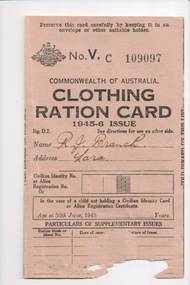
Ration Card, Clothing Ration card
... Ration cards were issued to Australian citizens for food &I clothing during wartime and for a time following.Clothing ...Ration cards were issued to Australian citizens for food &I clothing during wartime and for a time following.Clothing A fair and equal way to apportion necessary supplies for daily living. ...Ration cards were issued to Australian citizens for food &I clothing during wartime and for a time following.Clothing A fair and equal way to apportion necessary supplies for daily living.Clothing Ration Card 1945-6 - R.J. BranchC.109097 serial no. Sig.R.J.Branch.H E. DAW.Gov.Print.Melb. -
 Orbost & District Historical Society
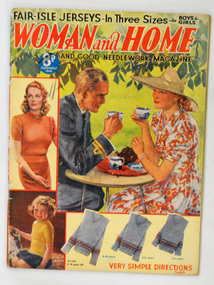
magazine, Woman and Home, September 1940
... wartime. Articles as well as advertisements presented information on “product rationing, tips on keeping the family healthy, guidelines for thrifty shopping and advice on how to look good through it all....wartime. Articles as well as advertisements presented information on “product rationing, tips on keeping the family healthy, guidelines for thrifty shopping and advice on how to look good through it all. ...Women’s magazines during WWII played a “reflecting role,” meaning they cooperated with government agendas while still including topics of readers’ interests Women’s employment rate skyrocketed during WWII. However, even though the number of women working outside the home grew rapidly most of them were still engaged entirely in homemaking. Therefore women’s magazines centered mostly on the stresses and shortages of wartime. Articles as well as advertisements presented information on “product rationing, tips on keeping the family healthy, guidelines for thrifty shopping and advice on how to look good through it all.This is an example of an English women's magazine published during WW11.It gives practical advice on needlework / knitting and evidences the widespread interest in contemporary fashion. In doing so it shows what were the fashionable, but broadly affordable, women's and children's clothing styles of their day. These magazines also reflect women's interests.A 64 pp magazine, titled Woman and Home and Good Needlework Magazine. The front cover has a a coloured picture of a man in a uniform and woman sitting at a round table drinking tea and photographs of knitted jumpers, the patterns of which are inside the magazine.Handwritten on front cover in pencil -Mehlert -
 Orbost & District Historical Society
magazine, Woman and Home, October 1951
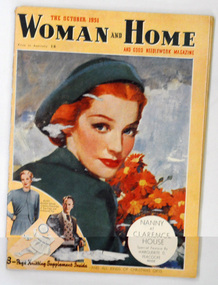
... wartime. Articles as well as advertisements presented information on “product rationing, tips on keeping the family healthy, guidelines for thrifty shopping and advice on how to look good through it all....wartime. Articles as well as advertisements presented information on “product rationing, tips on keeping the family healthy, guidelines for thrifty shopping and advice on how to look good through it all. ...Women’s magazines just after WWII played a “reflecting role,” meaning they cooperated with government agendas while still including topics of readers’ interests Women’s employment rate had skyrocketed during WWII. However, even though the number of women working outside the home grew rapidly most of them were still engaged entirely in homemaking. Therefore women’s magazines centered mostly on the stresses and shortages of wartime. Articles as well as advertisements presented information on “product rationing, tips on keeping the family healthy, guidelines for thrifty shopping and advice on how to look good through it all.This is an example of an English women's magazine published post WW11.It gives practical advice on needlework / knitting and evidences the widespread interest in contemporary fashion. In doing so it shows what were the fashionable, but broadly affordable, women's and children's clothing styles of their day. These magazines also reflect women's interests.A 64 pp magazine, titled Woman and Home and Good Needlework Magazine. On the front cover is a coloured drawing of a fashionably dressed and made-up woman with red hair and holding a bunch of similarly coloured flowers (gerberas?) At the bottom left are knitted baby clothes - pattern inside - as well as a man and woman wearing fashionable clothing - suggesting patterns are inside the magazine. The magazine cost 1/6 and is dated October 1951.magazine-woman-and-home -
 Orbost & District Historical Society
magazine, Woman and Home July 1944, July 1944
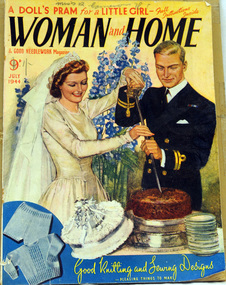
... wartime. Articles as well as advertisements presented information on “product rationing, tips on keeping the family healthy, guidelines for thrifty shopping and advice on how to look good through it all. ...wartime. Articles as well as advertisements presented information on “product rationing, tips on keeping the family healthy, guidelines for thrifty shopping and advice on how to look good through it all. ...This magazine belonged to Roma Cameron, who was the daughter of Harry Purchase Cameron and Lilian Gladys (nee Harding). Roma married Ronald Richard Smith in 1944 and is the mother of Lorraine (Mrs Peter Coulton) and Margaret Smith. Harry's father, James Cameron, came to Bellagoogan on Majors Creek in 1882. Bellagoogan was on Majors Creek near Orbost and was the site of the first race course. Like many others at the time, the Camerons bred race horses.Harry died in 1964 aged 75. Roma was the youngest of three siblings: Jean (Mrs John Gavin (Jack) Ralston) and James (Jim) (m. Joan Hossack). Women’s magazines during WWII played a “reflecting role,” meaning they cooperated with government agendas while still including topics of readers’ interests Women’s employment rate had skyrocketed during WWII. However, even though the number of women working outside the home grew rapidly most of them were still engaged entirely in homemaking. Therefore women’s magazines centered mostly on the stresses and shortages of wartime. Articles as well as advertisements presented information on “product rationing, tips on keeping the family healthy, guidelines for thrifty shopping and advice on how to look good through it all. This is an example of an English women's magazine published during WW11.It gives practical advice on needlework / knitting and evidences the widespread interest in contemporary fashion. In doing so it shows what were the fashionable, but broadly affordable, women's and children's clothing styles of their day. These magazines also reflect women's interests An English magazine published monthly. It is titled Woman and Home & Good Needlework Magazine, July 1944. On the front cover is a picture of a bride and groom cutting a wedding cake. The groom is dressed in military uniform. the price 9D has been crossed out and 1/- is below it. The magazine contains advertisements, stories, needlework patters and news articles.On front cover handwritten in pen : Miss R. Cameronmagazine-woman-and-home magazines-women's cameron -
 Monbulk RSL Sub Branch
Book, Weldon Publishing, The Home front family album : remembering Australia 1939-1945, 1991
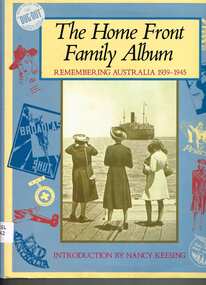
... Australia 1939-1945 - Social conditions World war 1939-1945 - Social aspects Rationing - Red Cross - Women's role in wartime - Japanese midget submarines - Clothes rationing - Coalminers' strike - Censorship - Ration books. ...Rationing - Red Cross - Women's role in wartime - Japanese midget submarines - Clothes rationing - Coalminers' strike - Censorship - Ration books.Index, ill, p.208.non-fictionRationing - Red Cross - Women's role in wartime - Japanese midget submarines - Clothes rationing - Coalminers' strike - Censorship - Ration books.australia 1939-1945 - social conditions, world war 1939-1945 - social aspects -
 Bendigo Historical Society Inc.
Document - Knitting Patterns
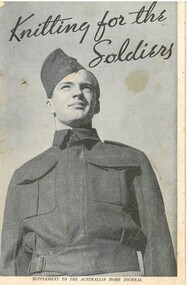
... In WW2 this was not as successful as during WW1 because a) women had a wider range of wartime jobs that limited their time for knitting and b.) Knitting wool was rationed. ...In WW2 this was not as successful as during WW1 because a) women had a wider range of wartime jobs that limited their time for knitting and b.) Knitting wool was rationed. ...Women at home were encouraged to knit "comforts" for servicemen. In WW2 this was not as successful as during WW1 because a) women had a wider range of wartime jobs that limited their time for knitting and b.) Knitting wool was rationed. The Comforts Fund produced its own pattern book that included patters for various socks, stockings, pullovers, scarves, balaclavas suitable for all branches of the armed services.Knitting for Soldiers Knitting Patterns. Fifteen page booklet, supplement to the Australian Home Journal; contains knitting patterns for soldiers WW2. Black and white illustrations. Incudes patterns for socks, gloves, mittens, pullover and head wear.lydia chancellor collection, history, knitting, ww2, australian home journal -
 Bendigo Historical Society Inc.
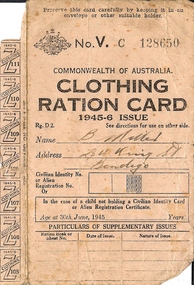
Document - BASIL MILLER COLLECTION: CLOTHING RATION CARD, (WARTIME), 1945-6
... BASIL MILLER COLLECTION: CLOTHING RATION CARD, (WARTIME)...Document BASIL MILLER COLLECTION: CLOTHING RATION CARD, (WARTIME) ...Commonwealth of Australia clothing ration book with 7 coupons. One has been clipped out. Number V.c 128650. Made out in the name of B. Miller, 284 King Street Bendigo, Victoria.Commonwealth of Australia.person, individual, basil miller -
 Bendigo Historical Society Inc.
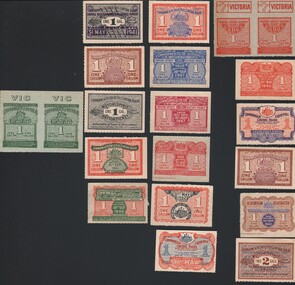
Document - WES HARRY COLLECTION: PETROL RATION TICKETS, 1939 - 1948
... Collection of nineteen Wartime (World War II) petrol ration tickets. There are 1 gallon and 2-gallon tickets, the colours and the styles vary slightly according to the date. ...TOPIC Rationing World War two petrol rationing Commonwealth Government Collection of nineteen Wartime (World War II) petrol ration tickets. ...Collection of nineteen Wartime (World War II) petrol ration tickets. There are 1 gallon and 2-gallon tickets, the colours and the styles vary slightly according to the date. Most of them are made out to G. Alice Jones.Commonwealth Governmenttopic, rationing, world war two, petrol rationing -
 Otway Districts Historical Society
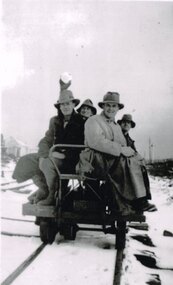
Photograph, R. Preston, Beech Forest: Track gang in snow, c.1940, c.1940
... rationing provided a boost to the line. The 1939 bushfire killed a great deal of timber which had to transported out of the Otways, and the commencement of a vigorous wartime pulp wood traffic from Beech Forest meant that only the railway could efficiently handle the volume of traffic. ...rationing provided a boost to the line. The 1939 bushfire killed a great deal of timber which had to transported out of the Otways, and the commencement of a vigorous wartime pulp wood traffic from Beech Forest meant that only the railway could efficiently handle the volume of traffic. ...The railway track was maintained initially by seven three-man gangs headed by a ganger. The gangers tended to be promoted into the Otways but many of their subordinate staff of repairers were local recruits. There were two track gangs at Beech Forest until 1954, so a large number of gangers and repairers was present over the years. World War 2 with petrol and rubber rationing provided a boost to the line. The 1939 bushfire killed a great deal of timber which had to transported out of the Otways, and the commencement of a vigorous wartime pulp wood traffic from Beech Forest meant that only the railway could efficiently handle the volume of traffic. By early 1940 not only the Garratt was running a daily train to Beech Forest but an NA goods train was scheduled to run at night. As a result the track gangs were also particularly busy at the same time.B/W. In snow at Beech Forest, a track gang on a trolley at the entrance to the Way and Works shed, comprising G. Newland, Ned Hewing, Bill Taylor, Jim Gowty, and Buck.beech forest; railways; g. newland; ned hewing; bill taylor; jim gowty; snow; track gang; -
Port Melbourne Historical & Preservation Society
Document - Application for liquid fuel ration tickets
... Folder 5 has wartime and other general interest papers. Application for liquid fuel ration tickets...Folder 5 has wartime and other general interest papers. Application for liquid fuel ration tickets Document Application for liquid fuel ration tickets ...The Mathews family have been in continuous ownership of 395 Howe Parade (was 8 Howe Parade until 1964 when addresses re-assigned), Port Melbourne from 1938 to the present (Sept 2019)Six folders of assorted documents relating to the life of Alan Mathews and his family. Employment documents. Folder 5 has wartime and other general interest papers. Application for liquid fuel ration ticketstransport - motor vehicles, alan mathews -
Port Melbourne Historical & Preservation Society
Document - Victoria Motor Spirit Ration Tickets
... Folder 5 has wartime and other general interest papers. Victoria Motor Spirit Ration tickets -valid in all states...Folder 5 has wartime and other general interest papers. Victoria Motor Spirit Ration tickets -valid in all states Document Victoria Motor Spirit Ration Tickets ...The Mathews family have been in continuous ownership of 395 Howe Parade (was 8 Howe Parade until 1964 when addresses re-assigned), Port Melbourne from 1938 to the present (Sept 2019)Six folders of assorted documents relating to the life of Alan Mathews and his family. Employment documents. Folder 5 has wartime and other general interest papers. Victoria Motor Spirit Ration tickets -valid in all statestransport - motor vehicles, alan mathews -
 Melbourne Legacy
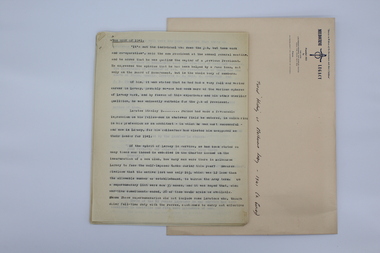
Document, The Work of 1941, 1941
... Mention is made of the restrictions and difficulties (petrol rationing, scarcity of paper to name some) that occurred with running a wartime economy, and trying to implement the social welfare programme of Legacy. ...Mention is made of the restrictions and difficulties (petrol rationing, scarcity of paper to name some) that occurred with running a wartime economy, and trying to implement the social welfare programme of Legacy. ...The document covers the year of 1941. Mention is made of the restrictions and difficulties (petrol rationing, scarcity of paper to name some) that occurred with running a wartime economy, and trying to implement the social welfare programme of Legacy. In particular, The Welfare Committee. Despite the difficulties of the time, Legacy not only continued its work but expanded the programme e.g. the establishment of a Legacy Dental Clinic in Collins St, Melbourne. The document also notes with some sadness the death of some Junior Legatees due to war service, and the realisation that the work of Legacy will need to be expanded due to World War 2. Legacy Probation Officers paid tribute to the never failing support of the Police department. To quote, "In all cases the Police were just as anxious as we to save the boys from the Reformatory of Gaol." There are many documents styled as 'The work of 19XX' so it was a way legatees reported the main events of the year. Many were put into the original archive started by Frank Doolan and were labelled with the letter 'H' to signify History.A record that Legatees were recording the major events of the year in a report for future reference. Significant in that the Law Courts valued the work Legacy was doing to reform their Junior Legatees who had appeared before the courts.White quarto paper, black type. Pages held together by a sewing pin. Pages numbered in pencil, top right hand corner. The documents are enclosed in a Melbourne Legacy badged envelope, stating the title written in black biro.annual summary, history -
 Linton and District Historical Society Inc
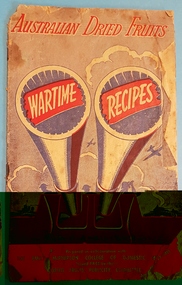
Recipe book, Australian Dried Fruits Wartime Recipes
... rationing. Prepared in collaboration with the Emily McPherson College of Domestic Economy. Pages 16 Australian Dried Fruits Wartime Recipes Recipe book ...16-page recipe booklet, no illustrations. Produced during World War II by the Dried Fruits Publicity Committee (acting on behalf of various Australian dried fruits industry bodies) "to assist the housewife in the preparation of attractive cakes, puddings etc", at a time when supplies of foodstuffs were restricted through rationing. Prepared in collaboration with the Emily McPherson College of Domestic Economy. Pages 16recipe books, cookery books, recipes, dried fruits, world war 1939-1945, rationing -
 Bacchus Marsh & District Historical Society
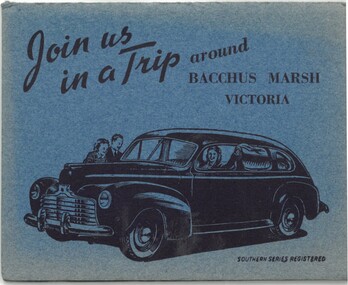
Postcard, Join us in a trip around Bacchus Marsh Victoria
... The general purpose of the images to promote tourism suggests the collection may date from the post war period of the late 1940s or early 1950s when petrol rationing and other wartime restrictions were being discontinued. ...The general purpose of the images to promote tourism suggests the collection may date from the post war period of the late 1940s or early 1950s when petrol rationing and other wartime restrictions were being discontinued. ...This fold out series of black and white images shows scenes of Bacchus Marsh in the late 1930s or during the 1940s. The date of the set of images is not stated but it shows the Bacchus Marsh Swimming Pool constructed in 1938. The general purpose of the images to promote tourism suggests the collection may date from the post war period of the late 1940s or early 1950s when petrol rationing and other wartime restrictions were being discontinued. The eight scenes are: Railway Station Bacchus Marsh; Bacchus Marsh Post Office; Main Street Bacchus Marsh; The Avenue Bacchus Marsh; Maddingley Bridge; Swimming Pool Bacchus Marsh; Rustic Bridge Maddingley Park; View Across Maddingley Flats. The cover illustration of the fold out envelope shows a happy family in a new model car. The message of the image clearly being to encourage people to travel by motor car to places like Bacchus Marsh for recreation and to engage in the general pastime of tourism.One set of 8 fold out black and white photos showing various scenes of Bacchus, with a cover illustration of a family traveling in a motor car. Measurements: 112 x 90 mm folded; 112 x 750 mm unfoldedSouthern Series Registeredbacchus marsh history, bacchus marsh views, bacchus marsh postcards
