
Showing 27 items matching "wodonga anniversary"
-
 Wodonga & District Historical Society Inc
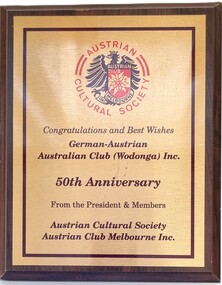
Plaque - German-Austrian Club Wodonga 50th Anniversary, 2010
... German-Austrian Club Wodonga 50th Anniversary...German-Austrian Club Wodonga 50th Anniversary...Congratulations and Best Wishes German-Austrian Australian Club (Wodonga) Inc. 50th Anniversary From the President & Members Austrian Cultural Society Austrian Club Melbourne Inc....German-Austrian Club Wodonga 50th Anniversary Plaque German-Austrian Club Wodonga 50th Anniversary ...Thousands of German migrants started a new life at Bonegilla, Victoria in the 1950s. Among them were five men who met each other in Wodonga, became friends and decided to form a German Austrian Club, where they could enjoy the company of likeminded individuals. They were Kurt Mueller, Willi Klimt, Toni Krischa and Erwin Klein from Germany and Manfred Teissl from Austria. On the 16th July 1960, after advertising in the Border Morning Mail the German Austrian Club in Wodonga was born. Office bearers were Paul Peters as President. Gerhard Ziermann as Secretary and Günter Schmehl as Treasurer. Their aim was "To promote the upkeep of the German language in written and spoken form and to promote good German fellowship, while enjoying functions of a cultural and entertaining nature". By 1963 the Club boasted 40 members, holding meetings at the RSL Clubrooms and other suitable locations before they found a house in Hovell Street, Wodonga. It was used for meetings, Skat meetings, film nights and Sonnabendschule” or Saturday school where children of members could continue to learn German. The Committee organised a wide range of activities and functions in their small rooms but dreamed of having a bigger home. This became reality in July 1979, when the Committee purchased land from the Albury Wodonga Development Corporation at 5 McFarland Road, Wodonga. The first brick was laid on the Club's land in May 1980, and the double-story brick building was completed within 12 months voluntarily by Club members. At the same time members supported other organisations and charities in the Wodonga and wider community. The first Oktoberfest in Wodonga was held in 1975, drawing 4,000 attendees. The event was organized to promote German culture, and the profits from the first year were donated to the Wodonga District Hospital, raising $20,000. In 2001 the German Austrian Club was presented with the Certificate of Meritorious Service by the Government of Victoria for Community Works in Wodonga and district. The Club raised $23,000 for the Wodonga Hospital, had numerous fundraisers to assist in bushfires and drought situations and was involved in the Red Cross Calling campaign for many years. After much fundraising, hard work and making their way through extensive government red tape, the Club moved to its new premises in McFarland Road on 1st August 1981. The members continued to make necessary internal adjustments and sought an alcohol licence. The building was officially opened in May 1983. The Club prospered and had 300 members, making it necessary for new applicants to be put on a waiting list to be accepted as members. Interest groups formed consisted of Competition Air Rifle Shooting Group, a Skat (German Card game) Group, Folk Dancing Group, Ladies Group, Table Tennis Group, Darts Group, Chess Group and the Billiard Group. In later years, as so many Australians became members, the Club’s name was changed to the German Austrian Australian Club. Over recent years patronage and interest in the Club and its activities changed. Children of the original members had become “real Aussies” and did not always want to carry on traditions. Aging membership and lack of volunteers forced the Club to disband in 2025. The Club building has been gifted to the Albury Wodonga Theatre Company.This item is significant because it is representative of an important cultural organisation which operated in Wodonga for over 60 years.A small metal plaque on a wooden backing with red text. It includes the insignia of the Austrian Cultural Society of Melbourne.Congratulations and Best Wishes German-Austrian Australian Club (Wodonga) Inc. 50th Anniversary From the President & Members Austrian Cultural Society Austrian Club Melbourne Inc.german austrian australian club, german migrants wodonga -
 Wodonga & District Historical Society Inc
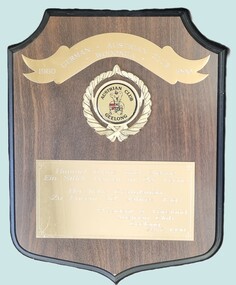
Plaque - German-Austrian Club Wodonga 30th Anniversary, 1990
... German-Austrian Club Wodonga 30th Anniversary...German-Austrian Club Wodonga 30th Anniversary...This plaque was presented by the German Austrian Club of Geelong on the occasion of the 30th Anniversary of the Wodonga Club and bears its insignia....German-Austrian Club Wodonga 30th Anniversary Plaque German-Austrian Club Wodonga 30th Anniversary ...Thousands of German migrants started a new life at Bonegilla, Victoria in the 1950s. Among them were five men who met each other in Wodonga, became friends and decided to form a German Austrian Club, where they could enjoy the company of likeminded individuals. They were Kurt Mueller, Willi Klimt, Toni Krischa and Erwin Klein from Germany and Manfred Teissl from Austria. On the 16th July 1960, after advertising in the Border Morning Mail the German Austrian Club in Wodonga was born. Office bearers were Paul Peters as President. Gerhard Ziermann as Secretary and Günter Schmehl as Treasurer. Their aim was "To promote the upkeep of the German language in written and spoken form and to promote good German fellowship, while enjoying functions of a cultural and entertaining nature". By 1963 the Club boasted 40 members, holding meetings at the RSL Clubrooms and other suitable locations before they found a house in Hovell Street, Wodonga. It was used for meetings, Skat meetings, film nights and Sonnabendschule” or Saturday school where children of members could continue to learn German. The Committee organised a wide range of activities and functions in their small rooms but dreamed of having a bigger home. This became reality in July 1979, when the Committee purchased land from the Albury Wodonga Development Corporation at 5 McFarland Road, Wodonga. The first brick was laid on the Club's land in May 1980, and the double-story brick building was completed within 12 months voluntarily by Club members. At the same time members supported other organisations and charities in the Wodonga and wider community. The first Oktoberfest in Wodonga was held in 1975, drawing 4,000 attendees. The event was organized to promote German culture, and the profits from the first year were donated to the Wodonga District Hospital, raising $20,000. In 2001 the German Austrian Club was presented with the Certificate of Meritorious Service by the Government of Victoria for Community Works in Wodonga and district. The Club raised $23,000 for the Wodonga Hospital, had numerous fundraisers to assist in bushfires and drought situations and was involved in the Red Cross Calling campaign for many years. After much fundraising, hard work and making their way through extensive government red tape, the Club moved to its new premises in McFarland Road on 1st August 1981. The members continued to make necessary internal adjustments and sought an alcohol licence. The building was officially opened in May 1983. The Club prospered and had 300 members, making it necessary for new applicants to be put on a waiting list to be accepted as members. Interest groups formed consisted of Competition Air Rifle Shooting Group, a Skat (German Card game) Group, Folk Dancing Group, Ladies Group, Table Tennis Group, Darts Group, Chess Group and the Billiard Group. In later years, as so many Australians became members, the Club’s name was changed to the German Austrian Australian Club. Over recent years patronage and interest in the Club and its activities changed. Children of the original members had become “real Aussies” and did not always want to carry on traditions. Aging membership and lack of volunteers forced the Club to disband in 2025. The Club building has been gifted to the Albury Wodonga Theatre Company.This item is significant because it is representative of an important cultural organisation which operated in Wodonga for over 60 years.A wooden plaque with metal insignia and a plate with text in German. This plaque was presented by the German Austrian Club of Geelong on the occasion of the 30th Anniversary of the Wodonga Club and bears its insignia.Himmel Glanz und Sterne Ein Stuck Heimat in Der Fern Herzliche Gratulation Zu Eurem 30 Jahres Tag President and Vorstand Translation Sky, splendour and stars A piece of home away from home Congratulations On your 30th anniversary President and Board of Directorsgerman austrian australian club, german migrants wodonga -
 Wodonga & District Historical Society Inc
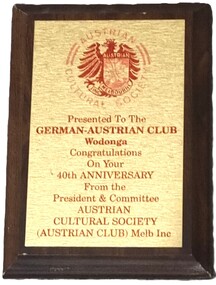
Plaque - German-Austrian Club Wodonga 40th Anniversary, 2000
... German-Austrian Club Wodonga 40th Anniversary...German-Austrian Club Wodonga 40th Anniversary...Presented To The GERMAN-AUSTRIAN CLUB Wodonga Congratulations On Your 40th ANNIVERSARY From the President & Committee AUSTRIAN CULTURAL SOCIETY (AUSTRIAN CLUB) Melb Inc...German-Austrian Club Wodonga 40th Anniversary Plaque German-Austrian Club Wodonga 40th Anniversary ...Thousands of German migrants started a new life at Bonegilla, Victoria in the 1950s. Among them were five men who met each other in Wodonga, became friends and decided to form a German Austrian Club, where they could enjoy the company of likeminded individuals. They were Kurt Mueller, Willi Klimt, Toni Krischa and Erwin Klein from Germany and Manfred Teissl from Austria. On the 16th July 1960, after advertising in the Border Morning Mail the German Austrian Club in Wodonga was born. Office bearers were Paul Peters as President. Gerhard Ziermann as Secretary and Günter Schmehl as Treasurer. Their aim was "To promote the upkeep of the German language in written and spoken form and to promote good German fellowship, while enjoying functions of a cultural and entertaining nature". By 1963 the Club boasted 40 members, holding meetings at the RSL Clubrooms and other suitable locations before they found a house in Hovell Street, Wodonga. It was used for meetings, Skat meetings, film nights and Sonnabendschule” or Saturday school where children of members could continue to learn German. The Committee organised a wide range of activities and functions in their small rooms but dreamed of having a bigger home. This became reality in July 1979, when the Committee purchased land from the Albury Wodonga Development Corporation at 5 McFarland Road, Wodonga. The first brick was laid on the Club's land in May 1980, and the double-story brick building was completed within 12 months voluntarily by Club members. At the same time members supported other organisations and charities in the Wodonga and wider community. The first Oktoberfest in Wodonga was held in 1975, drawing 4,000 attendees. The event was organized to promote German culture, and the profits from the first year were donated to the Wodonga District Hospital, raising $20,000. In 2001 the German Austrian Club was presented with the Certificate of Meritorious Service by the Government of Victoria for Community Works in Wodonga and district. The Club raised $23,000 for the Wodonga Hospital, had numerous fundraisers to assist in bushfires and drought situations and was involved in the Red Cross Calling campaign for many years. After much fundraising, hard work and making their way through extensive government red tape, the Club moved to its new premises in McFarland Road on 1st August 1981. The members continued to make necessary internal adjustments and sought an alcohol licence. The building was officially opened in May 1983. The Club prospered and had 300 members, making it necessary for new applicants to be put on a waiting list to be accepted as members. Interest groups formed consisted of Competition Air Rifle Shooting Group, a Skat (German Card game) Group, Folk Dancing Group, Ladies Group, Table Tennis Group, Darts Group, Chess Group and the Billiard Group. In later years, as so many Australians became members, the Club’s name was changed to the German Austrian Australian Club. Over recent years patronage and interest in the Club and its activities changed. Children of the original members had become “real Aussies” and did not always want to carry on traditions. Aging membership and lack of volunteers forced the Club to disband in 2025. The Club building has been gifted to the Albury Wodonga Theatre Company.This item is significant because it is representative of an important cultural organisation which operated in Wodonga for over 60 years.A small metal plaque on a wooden backing with red text. It includes the insignia of the Austrian Cultural Society of Melbourne.Presented To The GERMAN-AUSTRIAN CLUB Wodonga Congratulations On Your 40th ANNIVERSARY From the President & Committee AUSTRIAN CULTURAL SOCIETY (AUSTRIAN CLUB) Melb Incgerman austrian australian club, german migrants wodonga -
 Wodonga & District Historical Society Inc
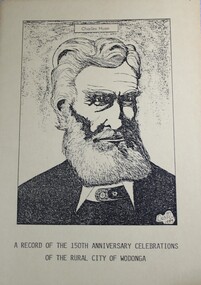
Booklet - A Record of the 150th Anniversary Celebrations of the Rural City of Wodonga, Rosemary Boyes, 1987
... A Record of the 150th Anniversary Celebrations of the Rural City of Wodonga...A Record of the 150th Anniversary Celebrations of the Rural City of Wodonga......wodonga anniversary...This item is significant because it documents an important milestone in the history of Wodonga. wodonga history charles huon wodonga european settlement wodonga anniversary A record showing how in 1986 Wodonga honoured the 150th anniversary of the first settlement by Charles Huon of the district that was to become Wodonga. ...A record showing how in 1986 Wodonga honoured the 150th anniversary of the first settlement by Charles Huon of the district that was to become Wodonga. It outlines the history of the Huon family and documents the celebrations which took place.A small booklet of 20 pages including sketches by Desmond Martin.non-fictionA record showing how in 1986 Wodonga honoured the 150th anniversary of the first settlement by Charles Huon of the district that was to become Wodonga. It outlines the history of the Huon family and documents the celebrations which took place.wodonga history, charles huon, wodonga european settlement, wodonga anniversary -
 Wodonga & District Historical Society Inc
Medal - Antique Aeroplane Association Wodonga Air Show Medallion, 1980
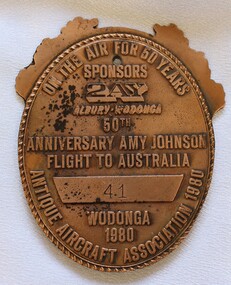
... Wodonga, Victoria. The event included a fly-in by members of the Antique Aeroplane Association which attracted 105 vintage planes from all parts of Australia. The show incorporated the Amy Johnson memorial rally to recognise the 50th anniversary of Amy Johnson's flight from England to Australia in 1930. ...In the centre "SPONSORS/ 3AY/ALBURY-WODONGA/50th/ANNIVERSARY AMY JOHNSON/FLIGHT TO AUSTRALIA/41/WODONGA 1980" On reverse: a depiction of Amy Johnson with wings inscribed "JOHNNIE 1930"...In the centre "SPONSORS/ 3AY/ALBURY-WODONGA/50th/ANNIVERSARY AMY JOHNSON/FLIGHT TO AUSTRALIA/41/WODONGA 1980" On reverse: a depiction of Amy Johnson with wings inscribed "JOHNNIE 1930" A medallion produced to commemorate the Antique Aeroplane Association of Australia's fourth annual air show held at Wodonga on June 14 and 15, 1980 Antique Aeroplane Association Wodonga Air Show Medallion Medal Antique Aeroplane Association Wodonga Air Show Medallion ...This medallion was produced to commemorate the Antique Aeroplane Association of Australia's fourth annual air show which was held at Wodonga on June 14 and 15, 1980. It took place at Joe Drage's Air World Museum in Wodonga, Victoria. The event included a fly-in by members of the Antique Aeroplane Association which attracted 105 vintage planes from all parts of Australia. The show incorporated the Amy Johnson memorial rally to recognise the 50th anniversary of Amy Johnson's flight from England to Australia in 1930. Radio 2AY, the sponsor of the annual air show began broadcasting in 1930. This medallion and 2 other linked medallions were owned by Mr. Clive Cossor. He spent a lot of time at Drage's Historical Aircraft Museum and also helped transport gliders. He was also at the Albury racecourse as a teenager to assist in moving the Uiver when it was forced to land in a storm during the MacRobertson Trophy Air Race from London to Melbourne in October 1934.This medallion is significant as it records an important event recognising aviation in Australia and recognises Amy Johnson, the first woman to fly solo from England to Australia.A medallion produced to commemorate the Antique Aeroplane Association of Australia's fourth annual air show held at Wodonga on June 14 and 15, 1980 On the front around the medallion: "ON THE AIR FOR 50 YEARS/ANTIQUE AIRCRAFT ASSOCIATION 1980" . In the centre "SPONSORS/ 3AY/ALBURY-WODONGA/50th/ANNIVERSARY AMY JOHNSON/FLIGHT TO AUSTRALIA/41/WODONGA 1980" On reverse: a depiction of Amy Johnson with wings inscribed "JOHNNIE 1930"aviation history, antique aeroplane association of australia, joe drage airworld, airshow wodonga, amy johnson -
 Wodonga & District Historical Society Inc
Award - Royal Victoria Institute for the Blind, Wodonga Auxiliary Service Awards
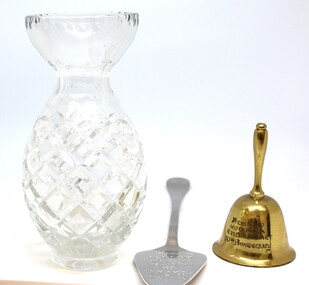
... On the bell: 'Presented to Wodonga R.V.I.B. Auxiliary 50th Anniversary" Around the middle of the vase: 'Presented to RVIB Wodonga Auxiliary 60th Anniversary, 1992" On the cake server: "Presented to RVIB Wodonga Auxiliary for 70 years service March 1932 to March 2002" On back of cake server:" 18/10 and initials FK inside 2 circles....Royal Victorian Institute for the Blind RVIB Wodonga Auxiliary On the bell: 'Presented to Wodonga R.V.I.B. Auxiliary 50th Anniversary" Around the middle of the vase: 'Presented to RVIB Wodonga Auxiliary 60th Anniversary, 1992" On the cake server: "Presented to RVIB Wodonga Auxiliary for 70 years service March 1932 to March 2002" On back of cake server:" 18/10 and initials FK inside 2 circles. 3 awards received by the RVIB Wodonga Auxiliary for recognition of their service. ...The 3 items in this display - bell, crystal vase and cake server- were presented to the Wodonga Auxiliary of the Royal Victorian Institute for the Blind (RVIB) marking 50, 60 and 70 years of service respectively. This auxiliary was formed in March 1932 with K.D. Watson as the Inaugural President. Its purpose was to raise funds to assist blind and visually impaired people across the state of Victoria. The volunteers over 70 years spent countless hours door knocking in the annual fundraiser, and selling raffle tickets at street stalls. As the City of Wodonga expanded the areas to be door-knocked increased, creating a challenge for the mainly elderly members of the Auxiliary. Eventually it closed down in 2002 when the RVIB amalgamated with Vision Australia. The longest serving member of the Auxiliary was Mrs. Jean Burbidge.These items have local and state significance as they represent the work carried out by a local group of volunteers to support an important state wide institution.3 awards received by the RVIB Wodonga Auxiliary for recognition of their service. They include a crystal vase, a gold bell and a silver cake server. 18/10 is stamped on the reverse of the cake slicer. This relates to the percentage of chrome and nickel within the steel.On the bell: 'Presented to Wodonga R.V.I.B. Auxiliary 50th Anniversary" Around the middle of the vase: 'Presented to RVIB Wodonga Auxiliary 60th Anniversary, 1992" On the cake server: "Presented to RVIB Wodonga Auxiliary for 70 years service March 1932 to March 2002" On back of cake server:" 18/10 and initials FK inside 2 circles.royal victorian institute for the blind, rvib wodonga auxiliary -
 Wodonga & District Historical Society Inc
Badge - Back to Wodonga Celebrations 1951
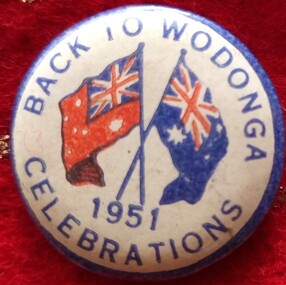
... 1951 was a year of celebration in Victoria. 9th May 1951 marked the 50th anniversary of the opening of the Australian Federal Parliament in 1901, which at that time met in Melbourne, Victoria. 13th November marked the Centenary of the opening of the first Victorian Parliament. Cities and towns held activities and celebrations to recognise the occasion. A "Back to Wodonga...1951 was a year of celebration in Victoria. 9th May 1951 marked the 50th anniversary of the opening of the Australian Federal Parliament in 1901, which at that time met in Melbourne, Victoria. 13th November marked the Centenary of the opening of the first Victorian Parliament. Cities and towns held activities and celebrations to recognise the occasion. A "Back to Wodonga ...1951 was a year of celebration in Victoria. 9th May 1951 marked the 50th anniversary of the opening of the Australian Federal Parliament in 1901, which at that time met in Melbourne, Victoria. 13th November marked the Centenary of the opening of the first Victorian Parliament. Cities and towns held activities and celebrations to recognise the occasion. A "Back to Wodonga" was held from Friday 9th to Saturday 7th November 1951. Friday: Children’s Sport and Children’s Concert. Saturday: Welcome to Visitors, Official Luncheon, Gymkhana, Official Opening and Barbecue. Sunday: Church services, various denominations. Monday: Ladies’ Day (Bowls, Tennis, Croquet etc.) Afternoon Garden Parties, Boxing Tournament. Tuesday: Procession, Basket Lunch, Apex Sports Carnival, 50-50 Dance. Wednesday: Tour of district and visit to factories. Re-unions of various organisations. Thursday: All-day Street Fair and Carnival. Friday: Back to School (Higher Elementary School), Wodonga Hospital Ball. Saturday: Bonegilla Race Club meeting, Competition Sports, (Cricket, Bowls, Tennis, etc.) Farewell Parties by various organisations.This Badge is significant because it is a memento of an important community celebration in Wodonga.A small enamel badge featuring both the blue and red Australian ensigns in the centre on a white background surrounded by blue text.Around the edge; BACK TO WODONGA CELEBRATIONS 1951back to wodonga 1951, opening victorian parliament, australian federal parliament opening -
 Wodonga & District Historical Society Inc
Certificate - Freedom of the City of Wodonga, August 2003
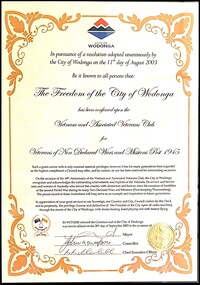
... This Certificate commemorates the granting of Freedom of the City of Wodonga on the occasion of the 10th Anniversary of the Vietnam and Associated Veterans Club which was accompanied by a military parade on 11th August 2003. ...This Certificate commemorates the granting of Freedom of the City of Wodonga on the occasion of the 10th Anniversary of the Vietnam and Associated Veterans Club which was accompanied by a military parade on 11th August 2003. ...The Right, Title, Privilege, Honour and Distinction of marching through the streets of a city on all ceremonial occasions with bayonets fixed, drums beating, bands playing and colours flying is one of the most interesting of the Military Traditions. The tradition of Freedom of Entry to a city stems from a custom observed by British Regiments in marching through the city of London. The fathers of the city of London claimed that they had the right to forbid bodies of Armed Forces from marching through the city precincts with bayonets fixed, colours flying and music playing, basing this claim on 'Ancient Privileges' which appear to have originated shortly after Charles Il became King in 1660. Military units were then only allowed to enter the city by invitation. The custom has been adopted by many Australian cities and shires. The privilege is usually only extended to Units which have a close association with the city and provides a means of honouring an Army Corps. The Freedom of the City of Wodonga has been conferred on different units based at Bandiana on several occasions. This Certificate commemorates the granting of Freedom of the City of Wodonga on the occasion of the 10th Anniversary of the Vietnam and Associated Veterans Club which was accompanied by a military parade on 11th August 2003. This Certificate is significant because it recognises the relationship between the City of Wodonga and the military forces which have served in the district.A framed certificate declaring the granting of Freedom of the City of Wodonga to Veterans, Ex-service and Service men and women of Australia who served Australia since the cessation of hostilities of the second World War. It bears the common seal of the City of Wodonga and was signed by Mayor Lisa Mahood, Councillor John Watson and Chief Executive Officer Peter Marshall.freedom of the city wodonga, military wodonga -
 Wodonga & District Historical Society Inc
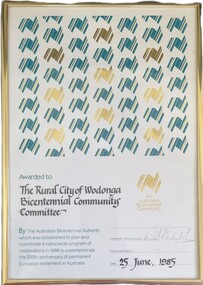
Certificate - Bicentennial Community Committee
... Awarded to The Rural City of Wodonga Bicentennial Community Committee By the Australian Bicentennial Authority which was established to plan and coordinate a nationwide program of celebrations in 1988 to commemorate the 200th anniversary of permanent European settlement in Australia....Australian Bicentennial Wodonga Bicentennial Committee Awarded to The Rural City of Wodonga Bicentennial Community Committee By the Australian Bicentennial Authority which was established to plan and coordinate a nationwide program of celebrations in 1988 to commemorate the 200th anniversary of permanent European settlement in Australia. ...Bicentennial celebrations were held throughout Australian in 1988. The Australian Bicentennial Authority was established in 1979, and the Victorian Council was appointed in 1986. Its role was to plan and coordinate state-based activities for Australia's 1988 Bicentenary. The Council was jointly funded by the State and Commonwealth governments and was responsible for developing programs that celebrated the nation's cultural heritage and addressed community needs. A major part of the celebrations was the Bicentennial Travelling Exhibition which was launched on 1st January 1988 at Wodonga Racecourse . The Exhibition focused on the concept "Living Together" through different modules based on themes of Journeys, Environment, Together, Identity, Today and Futures. The Travelling Exhibition was hauled by 29 pantechnicons specially designed for the task by Daryl Jackson Pty Ltd of Melbourne. These vehicles also acted as large tent pegs, holding the large display tents in position. The Exhibition in Wodonga ran for five days and was forecast to attract a crowd of 18,000 per day. Two days were required to set the Exhibition up and another two days were needed to dismantle it. The dominating feature of the Exhibition was a 600-seat Bicentennial Theatre. Other displays were set up in each area to reflect the local community. From Wodonga the Exhibition travelled to 34 Australian cities and towns across all States and Territories. It featured a range of displays which travelled the entire journey of more than 30,000 kilometres on land as well as sea travel to Tasmania. This certificate was awarded in to the Wodonga Community Committee.This item is significant because it acknowledges the role played by the Wodonga Bicentennial Committee in the Australian Bicentennial celebrations.A framed certificate bearing green and gold stylised maps of Australia which featured in the Bicentennial Logo. This certificate was awarded to the Wodonga Bicentennial Community Committee.Awarded to The Rural City of Wodonga Bicentennial Community Committee By the Australian Bicentennial Authority which was established to plan and coordinate a nationwide program of celebrations in 1988 to commemorate the 200th anniversary of permanent European settlement in Australia.australian bicentennial, wodonga bicentennial committee -
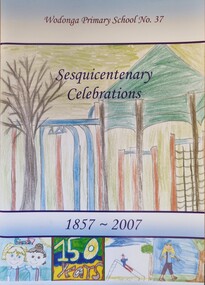 Wodonga & District Historical Society Inc
Booklet - Wodonga Primary School NO 37, Sesquicenentary Celebrations, 2007
... This booklet is significant because it was produced for celebration of the 150th anniversary of Wodonga Primary School. Wodonga Primary School. ...Wodonga township’s first school was conducted in a small rented wooden cottage from September 1857. It was called the Belvoir National School. The building of a new schoolhouse, No. 378, began in October the same year near the corner of High and South Streets. In 1872 it changed to No. 37 Wodonga. The name was changed to Wodonga State School in 1875. This name remained until which remained until 1938 when it became a Higher Elementary School. In 1951 the Victorian Education Department purchased 12 acres of land in Ariel Street for the purpose of re-siting the State School. At this stage there were 600 pupils attending the school of which 170 were in the secondary section. Initially the Infant department moved into pre-fabricated classroom on the new site and by 1954 the whole primary school had been transferred. This booklet was created for the celebration of the school's 150th anniversary in 2007.A small booklet of 24 pages including images, text and lists of student names attending Wodonga Primary School in 2007.Wodonga township’s first school was conducted in a small rented wooden cottage from September 1857. It was called the Belvoir National School. The building of a new schoolhouse, No. 378, began in October the same year near the corner of High and South Streets. In 1872 it changed to No. 37 Wodonga. The name was changed to Wodonga State School in 1875. This name remained until which remained until 1938 when it became a Higher Elementary School. In 1951 the Victorian Education Department purchased 12 acres of land in Ariel Street for the purpose of re-siting the State School. At this stage there were 600 pupils attending the school of which 170 were in the secondary section. Initially the Infant department moved into pre-fabricated classroom on the new site and by 1954 the whole primary school had been transferred. This booklet was created for the celebration of the school's 150th anniversary in 2007.wodonga primary school. primary school no 37, education wodonga -
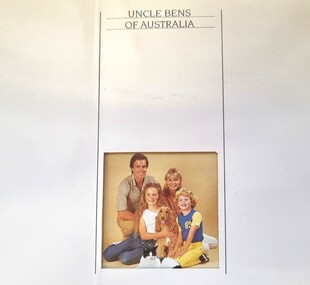 Wodonga & District Historical Society Inc
Booklet - Uncle Bens of Australia, 1984
... Wodonga construction began in 1965 with production starting in March 1967. It was led by the vision of Dr Henry Nowik, a passionate believer in the need for decentralisation of Australian industry. The plant launched with a production run of 1,000 cans of pet food daily and an initial workforce of approximately 200 employees. By 1991, the site was producing 2 million cans of pet food daily. By its 30th anniversary ...The world-wide Mars Group built its first Australian manufacturing plant, Uncle Bens of Australia in Wodonga. From humble beginnings in a small house in Hovell Street Wodonga construction began in 1965 with production starting in March 1967. It was led by the vision of Dr Henry Nowik, a passionate believer in the need for decentralisation of Australian industry. The plant launched with a production run of 1,000 cans of pet food daily and an initial workforce of approximately 200 employees. By 1991, the site was producing 2 million cans of pet food daily. By its 30th anniversary in 1997, annual sales reached $700 million, with 30% consisting of exports. When the company celebrated its 30th year of production in 1997, it employed 530 people in manufacturing and 230 in support services and the national office. Now know as Mars Petcare Australia, the Wodonga plant has undergone a major expansion in 2025 to implement new production lines and advances in technology. This will enable it to become the first large-scale steam-based manufacturing site in Australia to deploy a 100% renewable energy solution for its operation.A publication of 38 pages including coloured photographs, illustrations and text. non-fictionThe world-wide Mars Group built its first Australian manufacturing plant, Uncle Bens of Australia in Wodonga. From humble beginnings in a small house in Hovell Street Wodonga construction began in 1965 with production starting in March 1967. It was led by the vision of Dr Henry Nowik, a passionate believer in the need for decentralisation of Australian industry. The plant launched with a production run of 1,000 cans of pet food daily and an initial workforce of approximately 200 employees. By 1991, the site was producing 2 million cans of pet food daily. By its 30th anniversary in 1997, annual sales reached $700 million, with 30% consisting of exports. When the company celebrated its 30th year of production in 1997, it employed 530 people in manufacturing and 230 in support services and the national office. Now know as Mars Petcare Australia, the Wodonga plant has undergone a major expansion in 2025 to implement new production lines and advances in technology. This will enable it to become the first large-scale steam-based manufacturing site in Australia to deploy a 100% renewable energy solution for its operation. uncle bens wodonga, manufacturing industries wodonga -
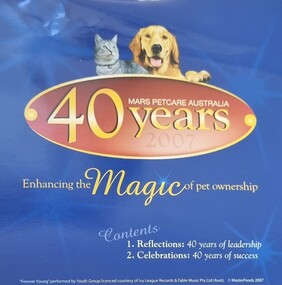 Wodonga & District Historical Society Inc
Mixed media - Mars Petcare Australia 40 years
... Wodonga construction began in 1965 with production starting in March 1967. It was led by the vision of Dr Henry Nowik, a passionate believer in the need for decentralisation of Australian industry. The plant launched with a production run of 1,000 cans of pet food daily and an initial workforce of approximately 200 employees. By 1991, the site was producing 2 million cans of pet food daily. By its 30th anniversary...It was produced to celebrate the 40th anniversary of Mars Petcare in Wodonga in 2007. The DVD is accompanied by a letter from David Ansell, Vice President - Petcare at Wodonga....MARS PETCARE Wodonga Uncle Bens Wodonga Manufacturing Industries Wodonga MARS PETCARE AUSTRALIA 40 Years 2007 Enhancing the MAGIC of pet ownership A DVD containing two short videos 1. "Reflections - 40 Years of Leadership and 2. "Celebrations - 40 Years of Success". It was produced to celebrate the 40th anniversary ...The world-wide Mars Group built its first Australian manufacturing plant, Uncle Bens of Australia in Wodonga. From humble beginnings in a small house in Hovell Street Wodonga construction began in 1965 with production starting in March 1967. It was led by the vision of Dr Henry Nowik, a passionate believer in the need for decentralisation of Australian industry. The plant launched with a production run of 1,000 cans of pet food daily and an initial workforce of approximately 200 employees. By 1991, the site was producing 2 million cans of pet food daily. By its 30th anniversary in 1997, annual sales reached $700 million, with 30% consisting of exports. When the company celebrated its 30th year of production in 1997, it employed 530 people in manufacturing and 230 in support services and the national office. This DVD was created in 2007 to celebrate 40 years of the company it Wodonga. It looks back at people instrumental in the company's development over that period. 2007 was also a time of celebration with the opening of a new, more extensive manufacturing plant officially opened on 6th February 2007 by The Honourable John Brumby, Treasurer of Victoria and Linda Mars.This item is significant because it was to produce to record and celebrate 40 years of a major manufacturing industry in Wodonga.A DVD containing two short videos 1. "Reflections - 40 Years of Leadership and 2. "Celebrations - 40 Years of Success". It was produced to celebrate the 40th anniversary of Mars Petcare in Wodonga in 2007. The DVD is accompanied by a letter from David Ansell, Vice President - Petcare at Wodonga.MARS PETCARE AUSTRALIA 40 Years 2007 Enhancing the MAGIC of pet ownershipmars petcare wodonga, uncle bens wodonga, manufacturing industries wodonga -
 Wodonga & District Historical Society Inc
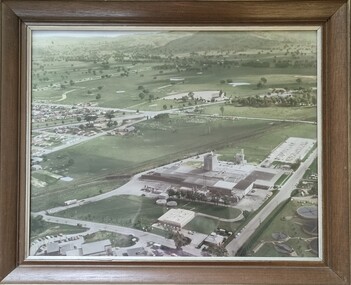
Photograph - Uncle Bens of Australia, c1970
... Wodonga construction began in 1965 with production starting in March 1967. It was led by the vision of Dr Henry Nowik, a passionate believer in the need for decentralisation of Australian industry. The plant launched with a production run of 1,000 cans of pet food daily and an initial workforce of approximately 200 employees. By 1991, the site was producing 2 million cans of pet food daily. By its 30th anniversary...Wodonga construction began in 1965 with production starting in March 1967. It was led by the vision of Dr Henry Nowik, a passionate believer in the need for decentralisation of Australian industry. The plant launched with a production run of 1,000 cans of pet food daily and an initial workforce of approximately 200 employees. By 1991, the site was producing 2 million cans of pet food daily. By its 30th anniversary ...The world-wide Mars Group built its first Australian manufacturing plant, Uncle Bens of Australia in Wodonga. From humble beginnings in a small house in Hovell Street Wodonga construction began in 1965 with production starting in March 1967. It was led by the vision of Dr Henry Nowik, a passionate believer in the need for decentralisation of Australian industry. The plant launched with a production run of 1,000 cans of pet food daily and an initial workforce of approximately 200 employees. By 1991, the site was producing 2 million cans of pet food daily. By its 30th anniversary in 1997, annual sales reached $700 million, with 30% consisting of exports. When the company celebrated its 30th year of production in 1997, it employed 530 people in manufacturing and 230 in support services and the national office. Now know as Mars Petcare Australia, the Wodonga plant has undergone a major expansion in 2025 to implement new production lines and advances in technology. This will enable it to become the first large-scale steam-based manufacturing site in Australia to deploy a 100% renewable energy solution for its operation.This photo is signifivant because it captures the early stages of the development of Uncle Bens Wodonga, a major manufacturer in Wodonga from the late 1960s until the present.A large coloured aerial photograph of the Uncle Bens of Australia site in Wodonga. The photograph has a wooden frame and is behind glass.uncle bens wodonga, wodonga industries -
 Rutherglen Historical Society
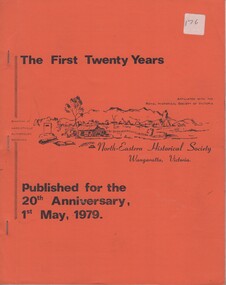
Book, The First Twenty Years : North-Eastern Historical Society, Wangaratta, Victoria, 1979
... This history of the North-Eastern Historical Society (based in Wangaratta Victoria, with branches in Harrietville, Rutherglen and Wodonga) was published for that society's 20th anniversary, 1st May, 1979. ...This history of the North-Eastern Historical Society (based in Wangaratta Victoria, with branches in Harrietville, Rutherglen and Wodonga) was published for that society's 20th anniversary, 1st May, 1979. ...This history of the North-Eastern Historical Society (based in Wangaratta Victoria, with branches in Harrietville, Rutherglen and Wodonga) was published for that society's 20th anniversary, 1st May, 1979. The author was A O Smith, the President of the Society at that time.Book printed on paper with an orange paper cover. Book is stapled together and pages printed on one side onlynorth east victoria, wangarratta, harrietville, rutherglen, wodonga, historical societies -
 8th/13th Victorian Mounted Rifles Regimental Collection
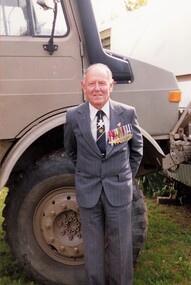
Photograph - McDermott
... VMR McDermott Wodonga Colour photograph of Major Reg McDermott at 8/13 Victorian Mounted Rifles 105th Anniversary Parade, Buna Barracks, Albury, 29 April 1990. ...Major McDermott was a former Squadron Commander, C Squadron, 8/13 Victorian Mounted Rifles.Colour photograph of Major Reg McDermott at 8/13 Victorian Mounted Rifles 105th Anniversary Parade, Buna Barracks, Albury, 29 April 1990.vmr, mcdermott, wodonga -
 Wodonga & District Historical Society Inc
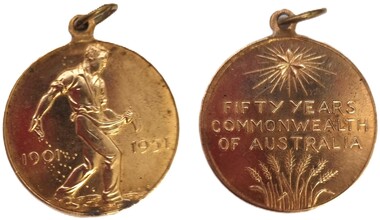
Medal - Commonwealth of Australia 50th Anniversary
... Wodonga. Federation of Australia Australian Commemorative Medals Front (obverse) Man advancing towards the right sowing seeds by hand. At left 1901, at right 1951. In very small letters near ground right, J.W.E Back (reverse) At top a star. In centre FIFTY YEARS / COMMONWEALTH / OF AUSTRALIA At bottom seven ears of wheat representing the States and Northern Territory A bronze Commemorative medal issued to Australian school children to mark the 50th anniversary of the Federation of Australia. ...This medal was awarded to the school children of Australia in 1951 to mark the fiftieth anniversary of the Federation of Australia. The design was chosen after a competition, with the valuable cash prize of two hundred guineas. It was won by John Wolfgang Elischer for his depiction of a man hand-sowing wheat. The wheat has grown to represent the seven States of Australia on the other side of the medal. Elischer was an Austrian sculptor and an Associate of the Royal Academy who arrived in Australia in 1935. During his first year he was an industrial designer for pottery. Elischer, P. Hurry and John Farmer together held an exhibition of works at the Athenaeum, Melbourne, in June 1937. Elischer later received commissions for sculptures including the King George V Memorial in Bendigo (1938), a bronze fountain for Sir Russell Grimwade in Toorak and a bust of Archbishop Mannix for Newman College, University of Melbourne. Elischer died in 1966.This item is significant because it was issued to all Australian school children, including those in Wodonga.A bronze Commemorative medal issued to Australian school children to mark the 50th anniversary of the Federation of Australia. It is a round medal with a loop at the top.Front (obverse) Man advancing towards the right sowing seeds by hand. At left 1901, at right 1951. In very small letters near ground right, J.W.E Back (reverse) At top a star. In centre FIFTY YEARS / COMMONWEALTH / OF AUSTRALIA At bottom seven ears of wheat representing the States and Northern Territoryfederation of australia, australian commemorative medals -
 Wodonga & District Historical Society Inc
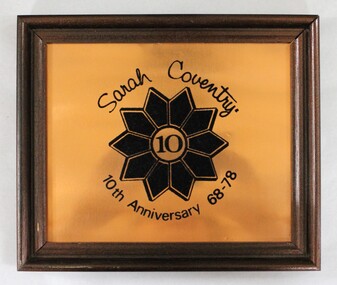
Memorabilia - Framed Sarah Coventry 10th Anniversary plaque for 1968-1978
... The direct selling party-plan business model Sarah Coventry was based on is also considered the first of its kind for jewellery. sarah coventry jewellery wodonga costume jewellery vintage fashion jewellery copper plaque commemorative plaque "Sarah Coventry. / 10 / 10th Anniversary 68-78" Copper metal plaque commemorating 10 years of the Sarah Coventry Pty. ...Sarah Coventry Pty. Ltd. was a North American jewellery company that was established in 1949 by the Stuart family as part of Emmons Jewelry, Inc. It began operations in England and Australia in 1968, and in Australia it moved from Carlton in Melbourne to Wodonga in 1969. The premises were originally on High Street in Wodonga, but a new warehouse was built in Melbourne Road later in 1969. It was a direct selling jewellery business using a party-plan model similar to Tupperware and Avon. The sales reps or 'Hostesses' were provided with jewellery samples in demonstration kits, which they displayed at jewellery parties in their homes. The designs for jewellery such as brooches, necklaces, earrings, chokers and bracelets were purchased from freelance designers and jewellery manufacturers rather than in-house designers. In 1979 Sarah Coventry Pty. Ltd. in Wodonga was bought by three Australian businessmen, including Wodonga local Jim Sawyer, and continued to sell jewellery under the name "Sargem Pty. Ltd”, for several more years in the 1980s. As part of the Sarah Coventry collection, the plaque has local significance with the decentralised commercial development of regional centres such as Wodonga in NE Victoria, as well as national and international significance from the perspective of social and economic developments for women after World War II. The direct selling party-plan business model Sarah Coventry was based on is also considered the first of its kind for jewellery.Copper metal plaque commemorating 10 years of the Sarah Coventry Pty. Ltd. jewellery company from 1968 to 1978, in a brown wooden fame. The inscription is in black and flock printed on the copper plaque with '10' in the central of a flower motif."Sarah Coventry. / 10 / 10th Anniversary 68-78"sarah coventry, jewellery, wodonga, costume jewellery, vintage fashion jewellery, copper plaque, commemorative plaque -
 Wodonga & District Historical Society Inc
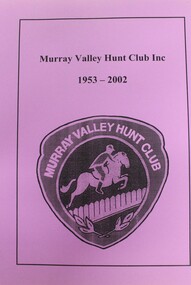
Booklet - Murray Valley Hunt Club Inc. 1953- 2002, Cheryl Cole-Peeters & Gerard Peeters
... Although it was another seven years before the Club was formed it has played a significant part in the history of Wodonga, Albury and district, especially the history related to equestrian activities. This publication was compiled to celebrate its 50th anniversary. ...The Murray Valley Hunt Club Inc. stemmed from a conversation in the Member’s Bar at Melbourne Royal Show in 1946 between Des Martin, Wodonga, Victoria and Ken Crawford, Holbrook NSW. Although it was another seven years before the Club was formed it has played a significant part in the history of Wodonga, Albury and district, especially the history related to equestrian activities. This publication was compiled to celebrate its 50th anniversary.non-fictionThe Murray Valley Hunt Club Inc. stemmed from a conversation in the Member’s Bar at Melbourne Royal Show in 1946 between Des Martin, Wodonga, Victoria and Ken Crawford, Holbrook NSW. Although it was another seven years before the Club was formed it has played a significant part in the history of Wodonga, Albury and district, especially the history related to equestrian activities. This publication was compiled to celebrate its 50th anniversary.murray valley hunt club, equestrian events wodonga -
 Wodonga & District Historical Society Inc
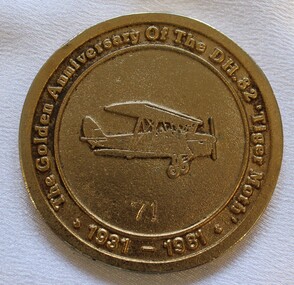
Medal - Antique Aeroplane Association Wodonga Air Show Medallion, 1981
... It took place at Joe Drage's Air World Museum in Wodonga, Victoria. It recognised the 50th anniversary of the manufacture of the first De Haviland 82 Tiger Moth in 1931. ...On the front around the medallion surrounding an image of a Tiger Moth aircraft: "The Golden Anniversary of the DH. 82 "Tiger Moth" 1931-1981" Numbered 71 On reverse around the edge: "Antique Aeroplane Association of Australia/ WODONGA 1981". ...Aviation history Antique Aeroplane Association of Australia Joe Drage Airworld airshow Wodonga DH Tiger Moth On the front around the medallion surrounding an image of a Tiger Moth aircraft: "The Golden Anniversary of the DH. 82 "Tiger Moth" 1931-1981" Numbered 71 On reverse around the edge: "Antique Aeroplane Association of Australia/ WODONGA 1981". ...This medallion was produced to commemorate the Antique Aeroplane Association of Australia's annual air show which was held at Wodonga in 1981. It took place at Joe Drage's Air World Museum in Wodonga, Victoria. It recognised the 50th anniversary of the manufacture of the first De Haviland 82 Tiger Moth in 1931. This medallion and 2 other linked medallions were owned by Mr. Clive Cossor. He spent a lot of time at Drage's Historical Aircraft Museum and also helped transport gliders. He was also at the Albury racecourse as a teenager to assist in moving the Uiver when it was forced to land in a storm during the MacRobertson Trophy Air Race from London to Melbourne in October 1934.This medallion is significant as it records an important event recognising aviation in Australia and recognises the development of the Tiger Moth aircraft.A medallion produced to commemorate the Antique Aeroplane Association of Australia's annual air show held at Wodonga in 1981On the front around the medallion surrounding an image of a Tiger Moth aircraft: "The Golden Anniversary of the DH. 82 "Tiger Moth" 1931-1981" Numbered 71 On reverse around the edge: "Antique Aeroplane Association of Australia/ WODONGA 1981". In the centre: "SPONSORS/2AY/ALBURY-WODONGA"aviation history, antique aeroplane association of australia, joe drage airworld, airshow wodonga, dh tiger moth -
 Wodonga & District Historical Society Inc
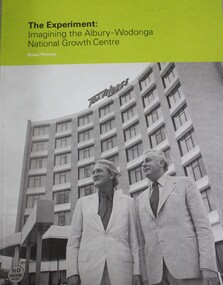
Booklet - THE EXPERIMENT : Imagining the Albury - Wodonga National Growth Centre, Bruce J Pennay, 2013
... Wodonga Growth Centre experiment was hailed as a novel and imaginative project. It was a "pilot scheme" that was expected to influence the urban settlement pattern in Australia. It was a "bold venture", a "brave attempt" to solve a longstanding problem. It involved three governments embarking on an "exciting adventure". This short book length catalogue essay (51 pages) provides an illustrated guide to the social history and visual arts exhibitions mounted for the 40th anniversary ...Introductory Abstract - "On its instigation in 1973, the Albury-Wodonga Growth Centre experiment was hailed as a novel and imaginative project. It was a "pilot scheme" that was expected to influence the urban settlement pattern in Australia. It was a "bold venture", a "brave attempt" to solve a longstanding problem. It involved three governments embarking on an "exciting adventure". This short book length catalogue essay (51 pages) provides an illustrated guide to the social history and visual arts exhibitions mounted for the 40th anniversary in 2013 of the inauguration of the Albury-Wodonga National Growth Centre experiment. The essay served as rationale and support for two council exhibitions at the Albury Library Museum and the Arts Space Wodonga in October and November 2013. The background story and the exhibitions are about place-making. They ask about the kind of place that has been made at Albury-Wodonga. How was it imagined, promoted, grown? They examine the experiment of developing Albury and Wodonga jointly and rapidly, and ask how that experiment relates to the place now and in the future. It assesses and gives a broad contextual account of the National Growth Centre experiment at Albury-Wodonga and traces important aspects of the story with emphasis on a local point of view. " Bruce Pennaynon-fictionIntroductory Abstract - "On its instigation in 1973, the Albury-Wodonga Growth Centre experiment was hailed as a novel and imaginative project. It was a "pilot scheme" that was expected to influence the urban settlement pattern in Australia. It was a "bold venture", a "brave attempt" to solve a longstanding problem. It involved three governments embarking on an "exciting adventure". This short book length catalogue essay (51 pages) provides an illustrated guide to the social history and visual arts exhibitions mounted for the 40th anniversary in 2013 of the inauguration of the Albury-Wodonga National Growth Centre experiment. The essay served as rationale and support for two council exhibitions at the Albury Library Museum and the Arts Space Wodonga in October and November 2013. The background story and the exhibitions are about place-making. They ask about the kind of place that has been made at Albury-Wodonga. How was it imagined, promoted, grown? They examine the experiment of developing Albury and Wodonga jointly and rapidly, and ask how that experiment relates to the place now and in the future. It assesses and gives a broad contextual account of the National Growth Centre experiment at Albury-Wodonga and traces important aspects of the story with emphasis on a local point of view. " Bruce Pennayalbury-wodonga, decentralisation, urban settlement australoa -
 Wodonga & District Historical Society Inc
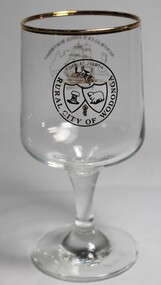
Memorabilia - Bicentennial Commemorative Wine Glass, Rural City of Wodonga, 1988
... A wide range of objects was created throughout Australia to commemorate 200th anniversary of the European settlement of Australia This glass reflects the manner in which the Bicentennial of European settlement in Australia was depicted and commemorated both on a national and local level. australia bicentennary wodonga council Emblem of the Rural City of Wodonga On the opposite side image including a sailing ship, an outline of Australia, Above the image "AUSTRALIA'S 200th BIRTHDAY" and below the image "1788-1988" A wine glass produced for the Rural City of Wodonga to commemorate the bicentennial of European settlement in Australia Bicentennial Commemorative Wine Glass, Rural City of Wodonga Memorabilia Bicentennial Commemorative Wine Glass, Rural City of Wodonga ...A wide range of objects was created throughout Australia to commemorate 200th anniversary of the European settlement of AustraliaThis glass reflects the manner in which the Bicentennial of European settlement in Australia was depicted and commemorated both on a national and local level.A wine glass produced for the Rural City of Wodonga to commemorate the bicentennial of European settlement in AustraliaEmblem of the Rural City of Wodonga On the opposite side image including a sailing ship, an outline of Australia, Above the image "AUSTRALIA'S 200th BIRTHDAY" and below the image "1788-1988"australia, bicentennary, wodonga council -
 Wodonga & District Historical Society Inc
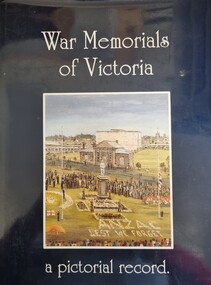
Book - War Memorials of Victoria, Max Parsons, Harold Bradley, 1994
... anniversary of Victory in the Pacific. “Australia Remembers” activities took place around in Australia including Wodonga. ...This book was produced as part of the “Australia Remembers, 1945-1995” activities organised in conjunction with the Commonwealth Government of Australia to commemorate the 50th anniversary of the end of the Second World War and culminated in key national ceremonies held in Brisbane on 15 August 1995 to mark the 50th anniversary of Victory in the Pacific. “Australia Remembers” activities took place around in Australia including Wodonga. The major event in Wodonga was the installation and dedication of the official commemorative plaque at the Wodonga War Memorial located in Woodland Grove.A large volume of 240 pages featuring photographic images of 1,100 war memorials throughout Victoria. An inscription is written on the frontpage.non-fictionThis book was produced as part of the “Australia Remembers, 1945-1995” activities organised in conjunction with the Commonwealth Government of Australia to commemorate the 50th anniversary of the end of the Second World War and culminated in key national ceremonies held in Brisbane on 15 August 1995 to mark the 50th anniversary of Victory in the Pacific. “Australia Remembers” activities took place around in Australia including Wodonga. The major event in Wodonga was the installation and dedication of the official commemorative plaque at the Wodonga War Memorial located in Woodland Grove. victorian war memorials, australian world war ii -
 Wodonga & District Historical Society Inc
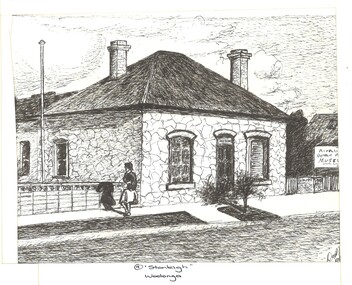
Work on paper - Stonleigh, Wodonga - Home of Paul Huon, Des Martin, 1987
... Anniversary Celebrations...Huon Family...Early Wodonga...On 3rd October 1986 the Wodonga community celebrated the 150th anniversary of the first settlement by Charles Huon of the district that was to become Wodonga. ...Part of a set of original sketches by Des Martin for "A Record of the 150th Anniversary" Celebrations of the Rural City of Wodonga held on 30th October 1986....Stonleigh in Wodonga was once owned by Paul Huon. This item is significant because it recognises the 150th anniversary of the first permanent settlement by European settlers in Wodonga with the construction of the Huon Family home. 150th Anniversary Celebrations Huon Family Early Wodonga Stonleigh Wodonga Part of a set of original sketches by Des Martin for "A Record of the 150th Anniversary" Celebrations of the Rural City of Wodonga held on 30th October 1986. ...Gabriel Louis Marie Huon de Kerilleau was born to a French aristocratic family in 1769. He escaped to England during the French Revolution and enlisted in the New South Wales Corps. He married in Parramatta to Louisa Emmanuel Le Sage. They had five children who took the name of Huon – Elizabeth, Paul, Jean Francois, Aime Augustus and Charles. Paul and Charles were to become the “founders’ of the Wodonga District. In 1824 Hamilton Hume and William Hovell discovered the Hume River, later renamed to the Murray River and the rich land surrounding it. By 1835, squatters began arriving at the Hume River. During the following year, Paul Huon arrived at the Hume (Murray) River, then "taking up" 40,000 acres on the south side of the river bank. To this property he gave the name WOODONGA RUN. Charles Huon, younger brother of Paul, was sent to manage the "Run" until Paul's son, William, became old enough to take over management. Charles Huon built a mud brick home on the eastern side of a rise south of the now Wodonga Creek. Thus was Charles the first permanent settler in the district. He was a great admirer of the English Lord Belvoir hence "Belvoir" was the name Charles Huon gave to the first permanent home on Woodonga Run. By the 1857, residents numbered fifty, and the Government had surveyed a township area, proclaiming it "Belvoir" in the new State of Victoria. However, the residents wanted their own choice of a name for the town. A battle lasting thirteen years followed over the name of the town until the residents won in 1874 when the Victorian Government dropped the name "Belvoir" and proclaimed the town's name as "Wodonga." A local government Shire formed two years later became the Shire of Wodonga. The Huon name features in the town today including Huon Hill, Huon Creek, Huon Street and the former township and railway siding at Huon. The name "Belvoir" is used today by organisations and locations in Wodonga including Belvoir Park formerly known as Huon’s Lagoon. On 3rd October 1986 the Wodonga community celebrated the 150th anniversary of the first settlement by Charles Huon of the district that was to become Wodonga. These drawings were completed by Desmond Martin as part of a booklet produced to record the event. Stonleigh in Wodonga was once owned by Paul Huon.Donated by Des Martin & Rosemary BoyesPart of a set of original sketches by Des Martin for "A Record of the 150th Anniversary" Celebrations of the Rural City of Wodonga held on 30th October 1986.150th anniversary celebrations, huon family, early wodonga, stonleigh wodonga -
 Wodonga & District Historical Society Inc
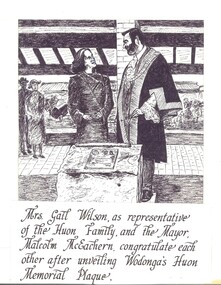
Work on paper - 150th Anniversary Celebrations of the Rural City of Wodonga, Des Martin, 1987
... 150th Anniversary Celebrations of the Rural City of Wodonga...150th Anniversary Celebrations of the Rural City of Wodonga...On 3rd October 1986 the Wodonga community celebrated the 150th anniversary of the first settlement by Charles Huon of the district that was to become Wodonga. ...Part of a set of original sketches by Des Martin for "A Record of the 150th Anniversary" Celebrations of the Rural City of Wodonga held on 30th October 1986....On 3rd October 1986 the Wodonga community celebrated the 150th anniversary of the first settlement by Charles Huon of the district that was to become Wodonga. ...Gabriel Louis Marie Huon de Kerilleau was born to a French aristocratic family in 1769. He escaped to England during the French Revolution and enlisted in the New South Wales Corps. He married in Parramatta to Louisa Emmanuel Le Sage. They had five children who took the name of Huon – Elizabeth, Paul, Jean Francois, Aime Augustus and Charles. Paul and Charles were to become the “founders’ of the Wodonga District. In 1824 Hamilton Hume and William Hovell discovered the Hume River, later renamed to the Murray River and the rich land surrounding it. By 1835, squatters began arriving at the Hume River. During the following year, Paul Huon arrived at the Hume (Murray) River, then "taking up" 40,000 acres on the south side of the river bank. To this property he gave the name WOODONGA RUN. Charles Huon, younger brother of Paul, was sent to manage the "Run" until Paul's son, William, became old enough to take over management. Charles Huon built a mud brick home on the eastern side of a rise south of the now Wodonga Creek. Thus was Charles the first permanent settler in the district. He was a great admirer of the English Lord Belvoir hence "Belvoir" was the name Charles Huon gave to the first permanent home on Woodonga Run. By the 1857, residents numbered fifty, and the Government had surveyed a township area, proclaiming it "Belvoir" in the new State of Victoria. However, the residents wanted their own choice of a name for the town. A battle lasting thirteen years followed over the name of the town until the residents won in 1874 when the Victorian Government dropped the name "Belvoir" and proclaimed the town's name as "Wodonga." A local government Shire formed two years later became the Shire of Wodonga. The Huon name features in the town today including Huon Hill, Huon Creek, Huon Street and the former township and railway siding at Huon. The name "Belvoir" is used today by organisations and locations in Wodonga including Belvoir Park formerly known as Huon’s Lagoon. On 3rd October 1986 the Wodonga community celebrated the 150th anniversary of the first settlement by Charles Huon of the district that was to become Wodonga. These drawings were completed by Desmond Martin as part of a booklet produced to record the event. Donated by Des Martin & Rosemary BoyesPart of a set of original sketches by Des Martin for "A Record of the 150th Anniversary" Celebrations of the Rural City of Wodonga held on 30th October 1986.150th anniversary celebrations, huon family -
 Wodonga & District Historical Society Inc
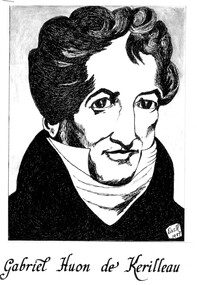
Work on paper - Huon Family Portraits, Des Martin, 1987
... On 3rd October 1986 the Wodonga community celebrated the 150th anniversary of the first settlement by Charles Huon of the district that was to become Wodonga. ...On 3rd October 1986 the Wodonga community celebrated the 150th anniversary of the first settlement by Charles Huon of the district that was to become Wodonga. ...Gabriel Louis Marie Huon de Kerilleau was born to a French aristocratic family in 1769. He escaped to England during the French Revolution and enlisted in the New South Wales Corps. He married in Parramatta to Louisa Emmanuel Le Sage. They had five children who took the name of Huon – Elizabeth, Paul, Jean Francois, Aime Augustus and Charles. Paul and Charles were to become the “founders’ of the Wodonga District. In 1824 Hamilton Hume and William Hovell discovered the Hume River, later renamed to the Murray River and the rich land surrounding it. By 1835, squatters began arriving at the Hume River. During the following year, Paul Huon arrived at the Hume (Murray) River, then "taking up" 40,000 acres on the south side of the river bank. To this property he gave the name WOODONGA RUN. Charles Huon, younger brother of Paul, was sent to manage the "Run" until Paul's son, William, became old enough to take over management. Charles Huon built a mud brick home on the eastern side of a rise south of the now Wodonga Creek. Thus was Charles the first permanent settler in the district. He was a great admirer of the English Lord Belvoir hence "Belvoir" was the name Charles Huon gave to the first permanent home on Woodonga Run. By the 1857, residents numbered fifty, and the Government had surveyed a township area, proclaiming it "Belvoir" in the new State of Victoria. However, the residents wanted their own choice of a name for the town. A battle lasting thirteen years followed over the name of the town until the residents won in 1874 when the Victorian Government dropped the name "Belvoir" and proclaimed the town's name as "Wodonga." A local government Shire formed two years later became the Shire of Wodonga. The Huon name features in the town today including Huon Hill, Huon Creek, Huon Street and the former township and railway siding at Huon. The name "Belvoir" is used today by organisations and locations in Wodonga including Belvoir Park formerly known as Huon’s Lagoon. On 3rd October 1986 the Wodonga community celebrated the 150th anniversary of the first settlement by Charles Huon of the district that was to become Wodonga. These drawings were completed by Desmond Martin as part of a booklet produced to record the event.Donated by Des Martin & Rosemary BoyesThree portraits of members of the Huon De Kerilleau Family, pioneers of Wodonga in Victoria. charles huon, huon de kerilleau, wodonga pioneers -
 Wodonga & District Historical Society Inc
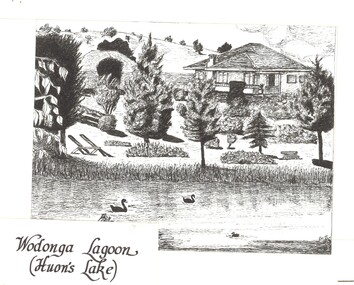
Work on paper - Wodonga Lagoon (Huon's Lake), Des Martin, 1987
... Part of a set of original sketches by Des Martin for "A Record of the 150th Anniversary" Celebrations of the Rural City of Wodonga held on 30th October 1986....Wodonga. This item is significant because it recognises the 150th anniversary of the first permanent settlement by European settlers in Wodonga with the construction of the Huon Family home. ...Gabriel Louis Marie Huon de Kerilleau was born to a French aristocratic family in 1769. He escaped to England during the French Revolution and enlisted in the New South Wales Corps. He married in Parramatta to Louisa Emmanuel Le Sage. They had five children who took the name of Huon – Elizabeth, Paul, Jean Francois, Aime Augustus and Charles. Paul and Charles were to become the “founders’ of the Wodonga District. In 1824 Hamilton Hume and William Hovell discovered the Hume River, later renamed to the Murray River and the rich land surrounding it. By 1835, squatters began arriving at the Hume River. During the following year, Paul Huon arrived at the Hume (Murray) River, then "taking up" 40,000 acres on the south side of the river bank. To this property he gave the name WOODONGA RUN. Charles Huon, younger brother of Paul, was sent to manage the "Run" until Paul's son, William, became old enough to take over management. Charles Huon built a mud brick home on the eastern side of a rise south of the now Wodonga Creek. Thus was Charles the first permanent settler in the district. He was a great admirer of the English Lord Belvoir hence "Belvoir" was the name Charles Huon gave to the first permanent home on Woodonga Run. By the 1857, residents numbered fifty, and the Government had surveyed a township area, proclaiming it "Belvoir" in the new State of Victoria. However, the residents wanted their own choice of a name for the town. Huon’s first home overlooked a lagoon which was often referred to as Huon’s Lagoon. It has borne several names since then including Lake Huon and Belvoir Lagoon. After much redevelopment and many roles including the location of sporting fields and the Wodonga Golf Course, it is now known as Belvoir Park, a major parkland and recreation area in Wodonga.Donated by Des Martin & Rosemary BoyesPart of a set of original sketches by Des Martin for "A Record of the 150th Anniversary" Celebrations of the Rural City of Wodonga held on 30th October 1986.huon family, belvoir park wodonga, huon's lagoon -
 Wodonga & District Historical Society Inc
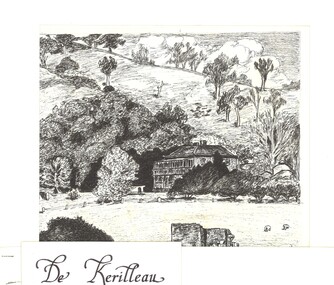
Work on paper - de Kerilleau Homestead, Wodonga, Des Martin, 1987
... Part of a set of original sketches by Des Martin for "A Record of the 150th Anniversary" Celebrations of the Rural City of Wodonga held on 30th October 1986....Huon Family Early Wodonga Part of a set of original sketches by Des Martin for "A Record of the 150th Anniversary" Celebrations of the Rural City of Wodonga held on 30th October 1986. de Kerilleau Homestead, Wodonga Work on paper de Kerilleau Homestead, Wodonga Des Martin ...Paul Huon's son, William, arrived at "Belvoir Homestead" on the Woodonga Run in 1857 to learn the management of the Run so he could take over the role from his Uncle Charles. He spent five years residing at "Belvoir." In 1862 he built a new stone home on Wodonga Creek at the base of Huon's Hill. William gave this home the family traditional name " De Kerilleau." In the 1870s, William built the "de Kerilleau" homestead that still stands today. The first "De Kerilleau" homestead was almost completely demolished in 1907. It is a solid two storey red brick building with cream brick flat window arches. The main feature of the house is its two-storey cast-iron verandah which has been restored to its original condition. When the Governor, Sir George Bowen, his wife and two daughters needed accommodation overnight after having taken part in the celebration of the railway in Wodonga in 1873, they stayed at de Kerilleau. Sir George planted a Moreton Bay fig tree in the grounds and it still stands today. The historic homestead became the property of the Watson family in 1922 and again changed hands in recent years. It is listed by the National Trust.Donated by Des Martin & Rosemary BoyesPart of a set of original sketches by Des Martin for "A Record of the 150th Anniversary" Celebrations of the Rural City of Wodonga held on 30th October 1986.huon family, early wodonga
