
Showing 331 items matching "women's education"
-
 University of Melbourne, Burnley Campus Archives
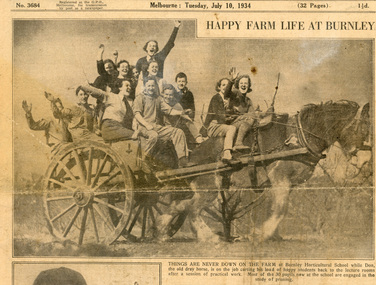
Newspaper - Newspaper Cutting, The Sun News-Pictorial, Happy farm life at Burnley, 1934
... ...women's education...Found in a file entitled, "Women's Education, 1930's," in 1991...Found in a file entitled, "Women's Education, 1930's," in 1991 the sun news-pictorial students students working outside female students horses women's education draught horses don pruning Two pages of The Sun News-Pictorial, July 10, 1934. ...Found in a file entitled, "Women's Education, 1930's," in 1991Two pages of The Sun News-Pictorial, July 10, 1934. A large photo of many students crowded into a dray and sitting on a draught horse with the caption: "Things are never down on the farm at Burnley Horticultural School while Don, the old dray horse, is on the job carting his load of happy students back to the lecture rooms after a session of practical work. Most of the 30 pupils now at the school are engaged in the study of pruning."the sun news-pictorial, students, students working outside, female students, horses, women's education, draught horses, don, pruning -
 University of Melbourne, Burnley Campus Archives
Newspaper - Newspaper Cutting, Learn how to prune like an expert, c. 1930
... ...women's education...Appeared during 1991 Centenary celebrations. had been kept in someone else's files entitled, "Women's Education, 1930's."...Appeared during 1991 Centenary celebrations. had been kept in someone else's files entitled, "Women's Education, 1930's." jennifer brasch horticulturalist pruning centenary women's education dept of agriculture secateurs long-handled pruners pruning saw A newspaper cutting of an article advertising a pruning demonstration to be given by Mrs Jennifer Brasch (a qualified horticulturalist) - probably associated with the Department of Agriculture. ...Appeared during 1991 Centenary celebrations. had been kept in someone else's files entitled, "Women's Education, 1930's."A newspaper cutting of an article advertising a pruning demonstration to be given by Mrs Jennifer Brasch (a qualified horticulturalist) - probably associated with the Department of Agriculture. Mrs Brasch is pictured, as are 3 pruning tools: secateurs, long handled pruners and a pruning saw. There is a list of pruning implements, their countries of production and prices.jennifer brasch, horticulturalist, pruning, centenary, women's education, dept of agriculture, secateurs, long-handled pruners, pruning saw -
 University of Melbourne, Burnley Campus Archives
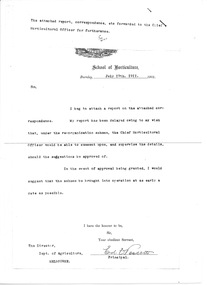
Document, Female Education in Horticulture, 1911?-1918
... Correspondence, newpaper articles, reports re women's education in horticulture. Photocopies - refer to paper catalogue...horticulture burnley female education Correspondence, newpaper articles, reports re women's education in horticulture. Photocopies - refer to paper catalogue Female Education in Horticulture Document ...Correspondence, newpaper articles, reports re women's education in horticulture. Photocopies - refer to paper cataloguehorticulture, burnley, female education -
 Warrnambool and District Historical Society Inc.
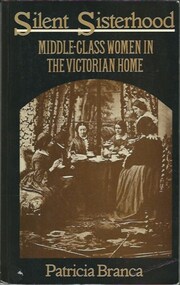
Book, Printed in England by Redwood Burn Ltd, Trowbridge and Esher. ISBN 0-85664-698-9, Silent Sisterhood. Middle-class Women in the Victorian Home. Author Patricia Branca, Printed 1977
... women...nineteenth century...women’s health education...The relevant period of history which it examines, was a time of change for women with the granting of the vote giving them a political voice. victorian middle-class women nineteenth century women’s health education modernization Warrnambool Study of the place and life of middle-class Victorian era women. ...Study of the place and life of middle-class Victorian era women.Black paperback with gold text. Front cover depicts Sepia toned photograph of six women having tea. Back cover is black with recommendations and information about contents of the book.non-fictionStudy of the place and life of middle-class Victorian era women.victorian, middle-class, women, nineteenth century, women’s health education, modernization, warrnambool -
 Sunshine and District Historical Society Incorporated
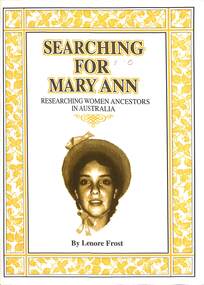
Book - Searching for Mary Ann: Researching Women Ancestors in Australia, Lenore Frost, 1994
... Includes tools, references, and major collections of documents and sources of information on women's education, marriage, property and deaths. ...Includes tools, references, and major collections of documents and sources of information on women's education, marriage, property and deaths. ...A basic guide to researching women ancestors in Australia.Soft cover booknon-fictionA basic guide to researching women ancestors in Australia. women, genealogy, australia -
 Federation University Historical Collection
Book, John Vail, Government Printer, University of Tasmania Calendar, 1907-1908, 1907
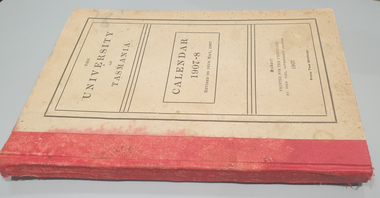
... ...education...women's...university of tasmania tasmania education women's university union oxford university Brown hardcovered book with read tape spine. ...Brown hardcovered book with read tape spine. The book includes: Tasmanian University Actm 1890, High School Vesting Act, Statutes, Regulations, Rules, Public Examinations, Local Examinations in Music, Association with the University of Oxford, University Council, Graduates, Matriculated Students, Records and Close Lists, Annual Report for 1906, Benefaction and Donations, Rhodes SCholarship, Bequests, Women's University Union university of tasmania, tasmania, education, women's university union, oxford university -
Glen Eira Historical Society
Document - Bell, Agnes Paton
... Women's Weekly... Adult Education...Australian Women's Weekly Adult Education Students Tertiary Education Templeton William J.P. ...This file contains 3 items relating to Caulfield historian Agnes Paton Bell: 1/Newspaper article (undated and unsourced) on a history of Caulfield, written by Mrs George Bell to mark the Centenary of Caulfield. This was published prior to 14/02/1966 as the reverse shows prices in pounds sterling. 2/Research notes by GEHS volunteer, dated 11/07/2014, listing items held in the GEHS collection written by Agnes Paton Bell regarding the histories of Melbourne and Caulfield. 3/Copy of an article from the Australian Women's Weekly, dated 27/10/1965 titled 'History is Her Hobby', obtained from the National Library of Australia. The article details Bell's university studies, her historical work, including about the history of Caulfield, and her childhood in Scotland. The article includes two photos - one of Bell at her desk, the other of her and her husband George Bell in his woodworking workshop.glen eira, crotonhurst, rosecraddock, caulfield, caulfield military hospital, harleston, grimwade house, centenary of caulfield, mansions, bell george mrs, bell agnes paton, nelson h g, grimwade, caulfield john, ricketson, webb, langdon, webb-langdon violet, 'melbourne - john batman's village', 'the victorian historical magazine', caulfield road, 'the origin of the name of caulfield', 'naming of caulfield', kilpatrick anne, university of melbourne, bell gavin, 'road district', bell nan dr., australian women's weekly, adult education, students, tertiary education, templeton william j.p., melbourne harbour trust, elsternwick, historical writing, suffragettes, bell george mrs -
 Kiewa Valley Historical Society
Framed Map - CWA- Tawonga
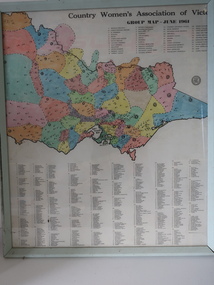
... The CWA aimed to improve health welfare, and education for women and children living in the country....The CWA aimed to improve health welfare, and education for women and children living in the country. ...CWA of Victoria was a popular widely known organisation throughout Australia. The CWA aimed to improve health welfare, and education for women and children living in the country.Each town / area in the Kiewa Valley had an active CWA. The Tawonga branch commenced in Feb. 1946 and often combined activities with other branches of the Kiewa Valley.Country Women's Association of Victoria Group Map, June 1961. each area is colored ad each wit a letter of the alphabet. each group has a number and is listed. eg. blue, 'N' and "Tawonga 14' country women's association, map of cwa groups, tawonga cwa -
 Kiewa Valley Historical Society
Tablecloth - CWA
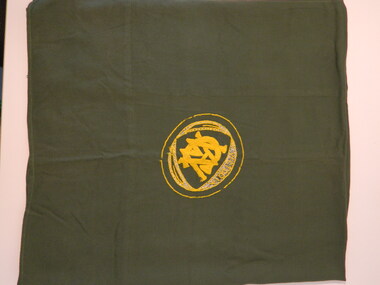
... The Country Women's Association of Victoria was a popular widely known organisation throughout Australia. The CWA aimed to improve health, welfare and education for women and children in the country....The Country Women's Association of Victoria was a popular widely known organisation throughout Australia. The CWA aimed to improve health, welfare and education for women and children in the country. ...The Country Women's Association of Victoria was a popular widely known organisation throughout Australia. The CWA aimed to improve health, welfare and education for women and children in the country.Each town / area in the Kiewa Valley had an active CWA. The Tawonga branch commenced in Feb. 1946 and often combined activities with other branches in the Kiewa Valley. One of their activities may have been to play cards.Green cotton square tablecloth for a fold-up card table. It has an yellow with a little bit of white embroidered circle / emblem in one corner. Inside the circle is "Victoria' and CWA (on top of each other as per the CWA emblem.) The edges are hemmed and a seam runs around all edges so that the square sits correctly on the table.Victoria CWAcountry women's association, tablecloth, community, volunteers, women, charity -
 Kiewa Valley Historical Society
Journals - C.W.A, Victorian Country Woman for Country & City Women
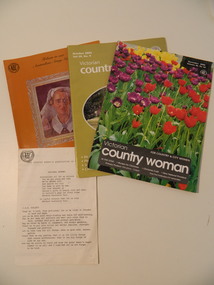
... Country Women's Association of Victoria was a popular widely known organisation throughout Australia. The CWA aimed to improve health, welfare and education for women and children in the country....Country Women's Association of Victoria was a popular widely known organisation throughout Australia. The CWA aimed to improve health, welfare and education for women and children in the country. ...Country Women's Association of Victoria was a popular widely known organisation throughout Australia. The CWA aimed to improve health, welfare and education for women and children in the country.Each town / area in the Kiewa Valley had an active CWA. The Tawonga branch commenced in Feb. 1946 and often combined activities with other branches in the Kiewa Valley.1. Nov. 2000, Vol. 46, No. 10. Cover: Purple & red tulips 2. October 2004 Vol. 50, No. 9 x2 Cover: Olive Green surrounding oval shaped photo 'The Log Cabin' 3. April 2001, Vol. 47, No. 3 Cover: Mustard surrounding square portrait of 'Nursing Sister Atherton, N. Qld.' 4. Agenda for the Annual Conference of the Kiewa Valley Group of the CWA of Vic.Also includes National Anthem, CWA Collect & Mottocountry women's association, journals, kiewa valley group of cwa -
 Kiewa Valley Historical Society
Towel Tea CWA
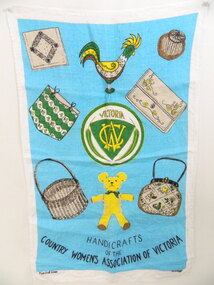
... The C.W.A. aimed to improve health, welfare and education for women and children in the country....The C.W.A. aimed to improve health, welfare and education for women and children in the country. Women living in Tawonga were mostly on farms and, in 1946, when the branch commenced would have been feeling more remote with WW11 having had an effect of available workers and the well being of the women and children. ...The Tawonga branch of the C.W.A. commenced on the 7th Feb. 1946 and often combined activities with the other branches in the Kiewa Valley. The C.W.A. aimed to improve health, welfare and education for women and children in the country.Women living in Tawonga were mostly on farms and, in 1946, when the branch commenced would have been feeling more remote with WW11 having had an effect of available workers and the well being of the women and children. This tea towel would have been used at a later date possibly for fund raising as the group continued to meet and work together.This large blue green, yellow, brown and black with a white border, linen, tea towel has the CWA logo in the middle with pictures of handcrafted items surrounding it. Along the bottom is printed: "Handicrafts / of the / Country Women's Association of Victoria."Handicrafts / of the / Country Women's Association of Victoria - along the bottom Pure Irish Linen - bottom left Dummay - bottom righttea towel, cwa, tawonga, kitchen, linen -
 Kiewa Valley Historical Society
Book - Country Women's Association of Victoria, Recipes
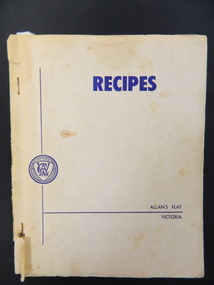
... The Country Women's Association of Victoria aimed to improve the health, welfare and education for women and children in the country. ...The Country Women's Association of Victoria aimed to improve the health, welfare and education for women and children in the country. ...The Country Women's Association of Victoria aimed to improve the health, welfare and education for women and children in the country. Many groups in country Victoria existed including one at Allan's Flat in the north east.The ladies of the Tawonga CWA branch supported the Allan's Flat branch as this book was amongst a Tawonga member's belongings. The visiting and communication between other branches supported the aims of the CWA organisation.White book with 36 pages held together with 2 rusting staples. In dark blue the title, CWA logo and Allan's Flat / Victoria are written. The recipes are typed in blue.cwa. recipes. allan's flat. cooking. -
 Kiewa Valley Historical Society
Badge - Country Women's Association of Victoria. x3
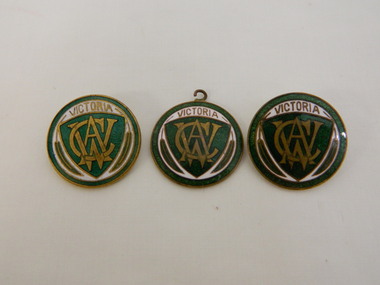
... The C.W.A. aimed to improve health, welfare and education for women and children in the country. ...The C.W.A. aimed to improve health, welfare and education for women and children in the country. Women living in Tawonga were mostly on farms and, in 1946, when the branch commenced would have been feeling more remote with WW11 having an effect on available workers and the well being of the women and children. tawonga. country woman's association of victoria. badge. cwa logo. ...The Tawonga branch of the C.W.A. commenced on the 7th Feb. 1946 and often combined activities with the other branches in the Kiewa Valley. The C.W.A. aimed to improve health, welfare and education for women and children in the country. Women living in Tawonga were mostly on farms and, in 1946, when the branch commenced would have been feeling more remote with WW11 having an effect on available workers and the well being of the women and children.Round green and white badge with the CWA logo in the centre of a green triangular shield. The logo is in gold. Around the triangular shape it is white with Victoria in gold at the top and 2 slim leaves on each side of the other sides. The badge has a green border. The back is gold and two of them have a pin attached. The third has a ring attached at the top. On the back each one has a different inscription and all are hard to read. Each badge is very slightly different in texture and depth of colour perhaps indicating that they were made at different times."Victoria / CWA" On the back - 1. Inscribed in oval shape 'Morgan Swann' but upside down to each other. 2. Inscribed - 'Stoker' 3. Inscribed - 'Stokes' or 'Stones'tawonga. country woman's association of victoria. badge. cwa logo. -
 Kiewa Valley Historical Society
Badge - Country Women's Association of Victoria
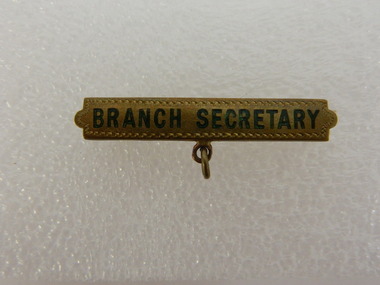
... The C.W.A. aimed to improve health, welfare and education for women and children in the country. ...The C.W.A. aimed to improve health, welfare and education for women and children in the country. Women living in Tawonga were mostly on farms and, in 1946, when the branch commenced would have been feeling more remote with WW11 having an effect on available workers and the well being of the women and children. tawonga. country woman's association of victoria. cwa. badge. branch secretary. ...The Tawonga branch of the C.W.A. commenced on the 7th Feb. 1946 and often combined activities with the other branches in the Kiewa Valley. The C.W.A. aimed to improve health, welfare and education for women and children in the country. Women living in Tawonga were mostly on farms and, in 1946, when the branch commenced would have been feeling more remote with WW11 having an effect on available workers and the well being of the women and children.Slim rectangular shaped gold badge with a 'v' shape at each end. Its border is wavy. The writing is in green capital letters. At the top in the middle there is a 2 link chain. On the back is a pin.Branch Secretarytawonga. country woman's association of victoria. cwa. badge. branch secretary. -
 Kiewa Valley Historical Society
Case - C.W.A. Collection
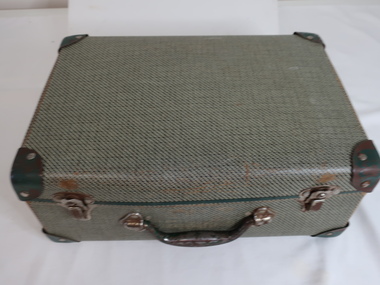
... The Tawonga branch of the Country Women's Association commenced on the 7th February 1946 and often combined activities with the other branches in the Kiewa Valley. The C.W.A. aimed to improve the health, welfare and education for women and children in the country....The Tawonga branch of the Country Women's Association commenced on the 7th February 1946 and often combined activities with the other branches in the Kiewa Valley. The C.W.A. aimed to improve the health, welfare and education for women and children in the country. ...The Tawonga branch of the Country Women's Association commenced on the 7th February 1946 and often combined activities with the other branches in the Kiewa Valley. The C.W.A. aimed to improve the health, welfare and education for women and children in the country.Women living in Tawonga were mostly on farms and in 1946, when the branch commenced, would have been feeling more remote with WWII having had an effect on available workers and the well being of the women and children.Black and white case with reinforced corners on the lid an container, metal handle and metal clip fasteners. A hard case of reinforced cardboard. Includes: C,W.A. magazines from the hears 2000 onwards. Recipe book 1978, badges, Inside the lid "Tawonga CWA Secretary's Case"country women's association, tawonga cwa -
 Kiewa Valley Historical Society
Book - Country Women's Association of Victoria, Handbook of Country Crafts, 1973
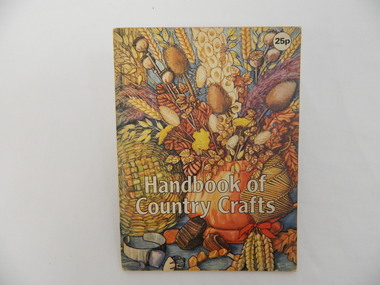
... The C.W.A. aimed to improve health, welfare and education for women and children in the country. The members achieved these aims by being involved in handcrafts of all kinds....The C.W.A. aimed to improve health, welfare and education for women and children in the country. The members achieved these aims by being involved in handcrafts of all kinds. ...The Tawonga branch of the C.W.A. commenced on the 7th Feb. 1946 and often combined activities with the other branches in the Kiewa Valley. The C.W.A. aimed to improve health, welfare and education for women and children in the country. The members achieved these aims by being involved in handcrafts of all kinds.Women living in Tawonga were mostly on farms and, in 1946, when the branch commenced would have been feeling more remote with WW11 having an effect on available workers and the well being of the women and children.The book has a cover with Autumn colours of flowers in a vase with the title in block letters of pale yellow. It has 47 pages bound by 2 staples. The crafts involve the use of plants in creating decorations.tawonga. country woman's association of australia. crafts. plant crafts.c.w.a. -
 Kiewa Valley Historical Society
Book - Country Women's Association of Victoria, Victoria C.W.A. / For Country and City Women
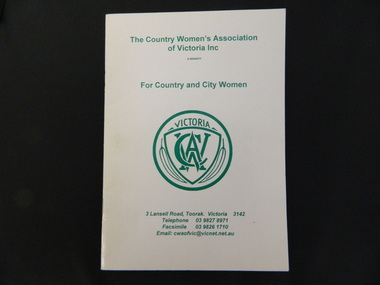
... The C.W.A. aimed to improve health, welfare and education for women and children in the country ....The C.W.A. aimed to improve health, welfare and education for women and children in the country . ...Historical: This book covers all aspects of the C.W.A. including its history. The Tawonga branch of the C.W.A. commenced on the 7th Feb. 1946 and often combined activities with the other branches in the Kiewa Valley. The C.W.A. aimed to improve health, welfare and education for women and children in the country .Women living in Tawonga were mostly on farms and, in 1946, when the branch commenced, would have been feeling more remote with WW11 having had an effect on available workers and the well being of the women and children.Small 17 page book with white cardboard cover and green writing. Pages are held together with 2 staples. Cover: "The Country Women's Association / of Victoria Inc. / For Country and City Women / Victoria (with logo underneath) Address and contact details beneathcountry women's association of victoria. c.w.a.. tawonga. -
 Kiewa Valley Historical Society
Book - Country Women's Association of Victoria, Myart Knit & Crochet
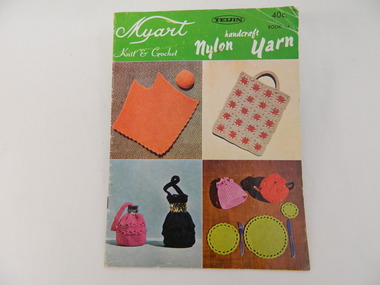
... The C.W.A. aimed to improve health, welfare and education for women and children in the country....The C.W.A. aimed to improve health, welfare and education for women and children in the country. Women living in Tawonga were mostly on farms and, in 1946, when the branch commenced would have been feeling more remote with WW11 having had an effect on available workers and the well being of the women and children. country women's association of victoria. tawonga. handcrafts. knitting. crocheting. ...This book was used by members of the Tawonga C.W.A.. The group exhibited their handicrafts and made items for charity. The Tawonga branch of the C.W.A. commenced on the 7th Feb. 1946 and often combined activities with the other branches in the Kiewa Valley. The C.W.A. aimed to improve health, welfare and education for women and children in the country.Women living in Tawonga were mostly on farms and, in 1946, when the branch commenced would have been feeling more remote with WW11 having had an effect on available workers and the well being of the women and children.Small coloured 16 page book with a cover showing 4 squares of knitted and crocheted items. At the top the book has a light green background with white writing and some black writing. The back cover is similar with 4 different items. The book is bound with 2 staples. The book has patterns with instructions for knitted & crocheted items.Cover: 'Myart / Knit & Crochet' - on left. 'Handcraft / Nylon Yarn' - on right. 'Teijin 40c / Book 14' - top right in blackcountry women's association of victoria. tawonga. handcrafts. knitting. crocheting. -
 Kiewa Valley Historical Society
Photo Album - Country Women's Association of Victoria, 1990's
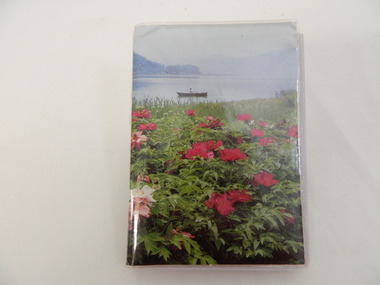
... The C.W.A. aimed to improve health, welfare and education for women and children in the country. The Tawonga ladies competed in Handicraft and Home Industries Exhibitions during the 1990's and were very successful. ...The C.W.A. aimed to improve health, welfare and education for women and children in the country. The Tawonga ladies competed in Handicraft and Home Industries Exhibitions during the 1990's and were very successful. ...The Tawonga branch of the C.W.A. commenced on the 7th Feb. 1946 and often combined activities with the other branches in the Kiewa Valley. The C.W.A. aimed to improve health, welfare and education for women and children in the country. The Tawonga ladies competed in Handicraft and Home Industries Exhibitions during the 1990's and were very successful. Women living in Tawonga were mostly on farms and, in 1946, when the branch commenced would have been feeling more remote with WW11 having had an effect on available workers and the well being of the women and children.Small photo album with Country Women's Association Prize Cards for handicraft and Home Industries Exhibition enclosed. Each Prize Card is filled out with (Third) Prize; Name; No.; Section; Branch - all Tawonga; and points. Some of the cards have been won from other CWA groups displays e.g.. Yackandandah. The album has several blank pages left over. The cover is a picture of a boat on a lake with red flowers in the foreground.country women's association of victoria. tawonga. handicraft. home industries. exhibition. kiewa valley group.c.w.a. -
 Kiewa Valley Historical Society
Book - Country Women's Association of Victoria, Glove-Making at Home by Frances Staite, 1927
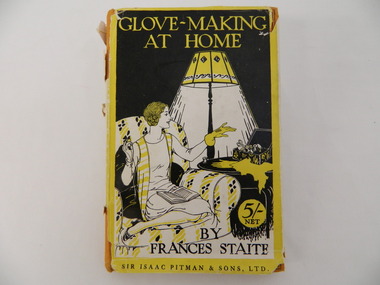
... The C.W.A. aimed to improve health, welfare and education for women and children in the country. Doing craft helped the women achieve these aims as they would get together and learn from each other. ...The C.W.A. aimed to improve health, welfare and education for women and children in the country. Doing craft helped the women achieve these aims as they would get together and learn from each other. ...The Tawonga branch of the C.W.A. commenced on the 7th Feb. 1946 and often combined activities with the other branches in the Kiewa Valley. The C.W.A. aimed to improve health, welfare and education for women and children in the country. Doing craft helped the women achieve these aims as they would get together and learn from each other. Women living in Tawonga were mostly on farms and, in 1946, when the branch commenced would have been feeling more remote with WW11 having an effect on available workers and the well being of the women and children.Hard covered book with a yellow and black sleeve. The sleeve has a picture of a lady sitting on a lounge chair under a lamp admiring her glove. Inserted in the book is a page with further instructions on glove making. The book is bound and has 90 pages. The first and last 3 pages consist of advertising.Cover page "Country Womens' Association / of Victoria" stamp with purple ink Title: Clove-Making / At Home / by Frances Staite / Sir Isaac Pitman & Sons, Ltd 5/- net.tawonga. cwa. gloves. craft. country women's association of victoria -
 Kiewa Valley Historical Society
Book - Country Women's Association of Victoria, Country Crafts - CWA, 1950
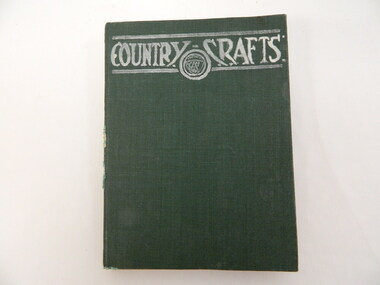
... The C.W.A. aimed to improve health, welfare and education for women and children in the country....The C.W.A. aimed to improve health, welfare and education for women and children in the country. Women living in Tawonga were mostly on farms and, in 1946, when the branch commenced would have been feeling more remote with WW11 having had an effect on available workers and the well being of the women and children. country women's association of victoria. country crafts. tawonga. c.w.a. ...This book is a periodical that the Tawonga C.W.A. group received each year with news, hints, ideas etc. of all CWA groups in Victoria. The Tawonga branch of the C.W.A. commenced on the 7th Feb. 1946 and often combined activities with the other branches in the Kiewa Valley. The C.W.A. aimed to improve health, welfare and education for women and children in the country.Women living in Tawonga were mostly on farms and, in 1946, when the branch commenced would have been feeling more remote with WW11 having had an effect on available workers and the well being of the women and children.Hard covered bound green book with 345 slightly yellowing pages. 1949 periodical book Vol. XIX No.1 (- 12) 1st January 1949 - (December) reporting on activities of C.W.A. clubs in Victoria. It is set out month by month but isn't indexed. Subscription: 4/- per annum; 5/- per year, posted; 4d. per Copy, 5 and a half pence postedCover: "Country Crafts with CWA logo."country women's association of victoria. country crafts. tawonga. c.w.a. -
 Kiewa Valley Historical Society
Plaque - Country Women's Association of Victoria, Tawonga Branch of the C.W.A, 1960's
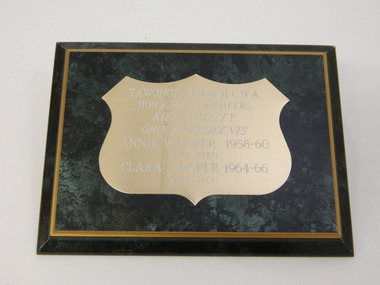
... The C.W.A. aimed to improve health, welfare and education for women and children in the country. The Roper family were very involved for many years in the activities of the branch. ...The C.W.A. aimed to improve health, welfare and education for women and children in the country. The Roper family were very involved for many years in the activities of the branch. ...The Tawonga branch of the C.W.A. commenced on the 7th Feb. 1946 and often combined activities with the other branches in the Kiewa Valley. The C.W.A. aimed to improve health, welfare and education for women and children in the country. The Roper family were very involved for many years in the activities of the branch. Clare Roper collected and documented the history of the Tawonga C.W.A. and the Kiewa Valley C.W.A.. Women living in Tawonga were mostly on farms and, in 1946, when the branch commenced would have been feeling more remote with WW11 having had an effect of available workers and the well being of the women and children.Black wooden plaque sloped to a narrow gold coloured border surrounding a black surface with a gold badge shaped plaque. The plaque has writing etched into it and painted white.Tawonga Branch C.W.A. / honours its Members / Kiewa Valley / Group Presidents / Annie V. Roper 1958 - 60 / (Mrs Bert) / Clara J. Roper 1964 - 66 / (Mrs Jack)tawonga. country woman's association of victoria. clara roper. annie roper. -
Vision Australia
Audio (item) - Sound recording, Royal Victorian Institute for the Blind, Around the Institute: September 19, 2000
... September 19: WBU Women’s Forum – Maryanne Diamond, education services – Maree Littlepage. ...September 19: WBU Women’s Forum – Maryanne Diamond, education services – Maree Littlepage. ...Around the Institute was a weekly program designed to keep clients and staff informed of events, activities and thoughts relating to low vision and blindness. It consisted of interviews undertaken by Jo Matthews, with sound engineer Ed Gamble, designed to inform, educate and explore on a variety of topics. September 19: WBU Women’s Forum – Maryanne Diamond, education services – Maree Littlepage. royal victorian institute for the blind, radio shows -
 Kiewa Valley Historical Society
Scrap Book - C.W.A. Tawonga, C. W. A. Tawonga by Clare Roper, Dec. 1995
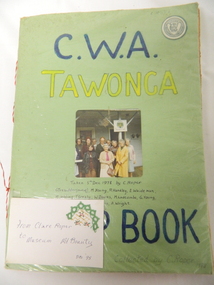
... The C.W.A. aimed to improve the health, welfare and education of women and children in the country. The book gives examples of all activities the members were involved in over the years and their involvement with other CWA groups in the North East of Victoria. ...The C.W.A. aimed to improve the health, welfare and education of women and children in the country. The book gives examples of all activities the members were involved in over the years and their involvement with other CWA groups in the North East of Victoria. ...CWA Tawonga 1946 - 1988 collection of its written history. The C.W.A. aimed to improve the health, welfare and education of women and children in the country. The book gives examples of all activities the members were involved in over the years and their involvement with other CWA groups in the North East of Victoria. Through the photos it also gives a good example of women's fashions over the years.History of CWA Tawonga by Clare Roper, President, founding member and local resident. Women in Tawonga were mostly on farms and in 1946 felt remote after WWII as it affected available workers and the well being of children. The Country Women's Association improved the living conditions and well being of members in the Kiewa Valley community.Scrap book with block handwritten and coloured heading. Cover: Centre middle has a coloured photo of 10 ladies standing below a CWA logo. Covered with clear plastic. Consists of photos, newspaper clippings and typed sheets."CWA Tawonga from 1946 collected by C. Roper" - top of front pagecountry women's association; clare roper; tawonga; -
 Kiewa Valley Historical Society
Book - Country Women's Association of Victoria, The Official Annual of The Country Women's Association of Victoria, 1971
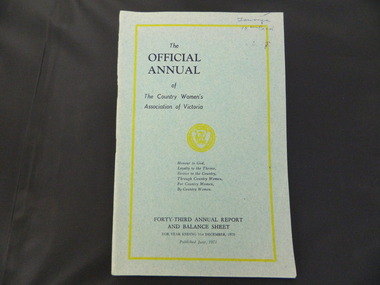
... The C.W.A. aimed to improve the health, welfare and education for women and children in the country....The C.W.A. aimed to improve the health, welfare and education for women and children in the country. Women living in Tawonga were mostly on farms and, in 1946, when the branch commenced would have been feeling more remote with WW11 having had an effect on available workers and the well being of the women and children. country women's association of victoria. c.w.a.. tawonga. ...The Tawonga branch of the C.W.A. was formed on the 7th Feb. 1946. They had 45 members by the end of the year. A scrap book (KVHS 0750) exists with a list of names of members for each year up to 1988 and articles from the newspaper. The Tawonga branch often combined activities with the other branches in the Kiewa Valley. The C.W.A. aimed to improve the health, welfare and education for women and children in the country.Women living in Tawonga were mostly on farms and, in 1946, when the branch commenced would have been feeling more remote with WW11 having had an effect on available workers and the well being of the women and children.Small green cardboard covered book with yellow border and logo (in middle) and with black printing. It has 48 pages.Cover: "The Official Annual of the Country Women's Association of Victoria." Also their Motto and "Forty Third Annual Report / and Balance Sheet / for the Year ending 31st December 1970 / Published 1971 Handwritten on cover: "Tawonga 15 cents each" Inside on cover sheet: handwritten: "30 c to pay to Mrs Courtney"country women's association of victoria. c.w.a.. tawonga. -
 Kiewa Valley Historical Society
Book - Craft, Dressmaking Made Easy, 1958
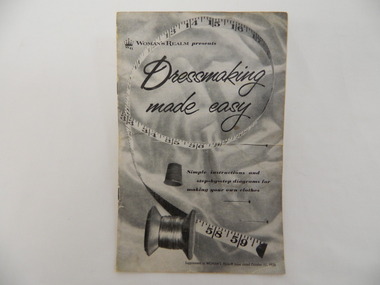
... The C.W.A. aimed to improve health, welfare and education for women and children in the country. This was achieved by getting together and exchanging ideas on dressmaking while providing for their families and the local community, possibly selling their products at fetes....The C.W.A. aimed to improve health, welfare and education for women and children in the country. This was achieved by getting together and exchanging ideas on dressmaking while providing for their families and the local community, possibly selling their products at fetes. ...Tawonga C.W.A. was involved in dressmaking and other home industries.The Tawonga branch of the C.W.A. commenced on the 7th Feb. 1946 and often combined activities with the other branches in the Kiewa Valley. The C.W.A. aimed to improve health, welfare and education for women and children in the country. This was achieved by getting together and exchanging ideas on dressmaking while providing for their families and the local community, possibly selling their products at fetes.Women living in Tawonga were mostly on farms and, in 1946, when the branch commenced would have been feeling more remote with WW11 having an effect on available workers and the well being of the women and children.Small white and grey book with picture of tape measure and cotton reel on the cover. It has 15 pages including the cover which is printed on too. It has general instructions for sewing. Held by 2 staplesCover: Woman's Realm presents / Dressmaking / made easy / Simple instructions and / step-by-step diagrams for / making your own clothes tawonga. country woman's association of victoria. dressmaking. woman's realm. c.w.a. -
 Orbost & District Historical Society
darning mushroom, 1950's
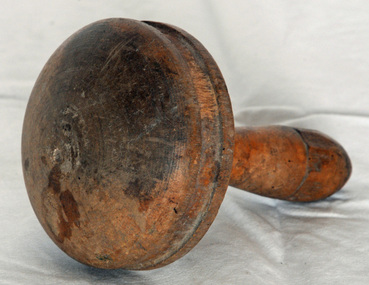
... Darning would have been considered a necessary skill for girls and young women, part of their education as future wives and mothers. ...Darning would have been considered a necessary skill for girls and young women, part of their education as future wives and mothers. ...The darning mushroom would have been an essential tool in an era when women were constantly repairing worn socks.Before the common use of synthetic materials, socks and other items of clothing were in constant need of repair. Darning would have been considered a necessary skill for girls and young women, part of their education as future wives and mothers. The mushroom was used to make repairs to clothing and bed linen.This darning tool was an essential item in 19th and early 20th century household as self-reliant women often had to make and repair all their clothing.A mushroom-shaped piece of smooth wood used to stretch and support material being darned.darning-mushroom needlework handicraft domestic -
 Kiewa Valley Historical Society
Book - Country Women's Association of Victoria, Warworkers Woolcraft - Compiled by the CWA of Victoria, c1940's
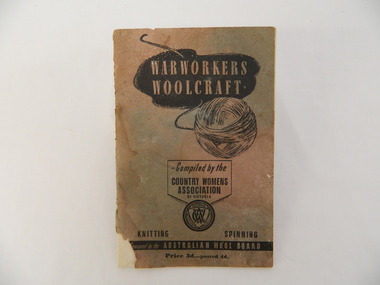
... The C.W.A. aimed to improve health, welfare and education for women and children in the country. Getting together for the war effort would have succeeded in this aim perhaps encouraging the women to continue meeting under the banner of C.W.A....The C.W.A. aimed to improve health, welfare and education for women and children in the country. Getting together for the war effort would have succeeded in this aim perhaps encouraging the women to continue meeting under the banner of C.W.A. ...Tawonga CWA branch commenced on 7th Feb. 1946. Prior to this the ladies would have been involved in supporting the war effort with knitted and spun items as described in this book. The branch often combined activities with the other branches in the Kiewa Valley. The C.W.A. aimed to improve health, welfare and education for women and children in the country. Getting together for the war effort would have succeeded in this aim perhaps encouraging the women to continue meeting under the banner of C.W.A.The Tawonga ladies would have been involved in assisting the war effort from home. Most of the ladies lived on remote farms so they may have got together, learnt together and felt happier while contributing to the war effort and supporting the men fighting overseas. Wool was available and easily made into useful items that could be shipped overseas. After the war, the ladies may have wanted to continue meeting and hence decided to form a C.W.A. branch.Small brown book with black writing. 32 pages held by 2 rusty staples.The book gives patterns and instructions for making woolcraft (knitting & spinning) eg. socks & scarves, for the Airforce, Navy and Army with specific colours, thickness of wool and notes eg. no frills. Price 3d. posted 4d. Sponsored by the Australian Wool BoardCover: Warworkers Woolcraft / Compiled by the CWA / Knitting Spinning / Sponsored by the Australian Wool Boardww11. warworkers. tawonga. country women's association of victoria. woolcraft. australian wool board. c.w.a. -
 Federation University Historical Collection
Article - Article - Women, Ballarat Teachers' College: Women of Note; Isobel Dowling, Educator, d.2013
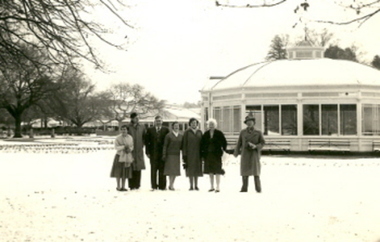
... career in higher education for women...One of her greatest achievements involved pioneering work towards forging a career in higher education for women. An inaugural listing on "Ballarat's Great Women Honour Roll' in 2008, Isobel Dowling died in 2013....One of her greatest achievements involved pioneering work towards forging a career in higher education for women. An inaugural listing on "Ballarat's Great Women Honour Roll' in 2008, Isobel Dowling died in 2013. isobel dowling women of note tertiary educator ballarat teachers' college ballarat college of advanced education university of ballarat sociology and politics steve bracks premier of victoria career in higher education for women honour roll in 2008 Ballarat Teachers' College: Women of Note; Isobel Dowling, Educator, d.2013. ...Isobel Dowling began her career in tertiary education in Ballarat at the Teachers' College. This merged with the Ballarat College of Advanced Education in 1976. More name changes and she finished her career as a lecturer in Sociology and Politics at the University of Ballarat. One of her students was Steve Bracks who became Premier of Victoria. One of her greatest achievements involved pioneering work towards forging a career in higher education for women. An inaugural listing on "Ballarat's Great Women Honour Roll' in 2008, Isobel Dowling died in 2013.isobel dowling, women of note, tertiary educator, ballarat teachers' college, ballarat college of advanced education, university of ballarat, sociology and politics, steve bracks, premier of victoria, career in higher education for women, honour roll in 2008 -
 Kiewa Valley Historical Society
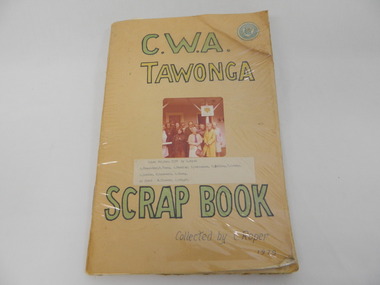
Scrapbook - C.W.A. Tawonga, C.W.A. Scrapbook Collected by C.Roper, 1945 to 1988
... The C.W.A. aimed to improve health, welfare and education for women and children in the country. The book gives examples of all the activities the members were involved in over the years and their involvement with other C.W.A. groups in North East Victoria and Victoria. ...The C.W.A. aimed to improve health, welfare and education for women and children in the country. The book gives examples of all the activities the members were involved in over the years and their involvement with other C.W.A. groups in North East Victoria and Victoria. ...The Tawonga C.W.A. formed on 7th Feb. 1946. It was a very active group with 45 members in that year. Numbers fluctuated throughout the years and totalled 26 members in 1988. The Tawonga C.W.A. often combined activities with the other branches in the Kiewa Valley. The C.W.A. aimed to improve health, welfare and education for women and children in the country. The book gives examples of all the activities the members were involved in over the years and their involvement with other C.W.A. groups in North East Victoria and Victoria. There are many photos of members and their activities too. These photos give a good representation of what womens fashions were during the mid part of the 20 century. Historical: Women living in Tawonga were mostly on farms and, in 1946, when the branch commenced would have been feeling more remote with WW11 having had an effect on available workers and the well being of the women and children. This scrap book was complied by Claire Roper one of the founding members of the CWA. It traces the history of the Tawonga branch of the CWA, its members and what they did which improved the living conditions for their community. Large scrap book held together by 3 large staples originally with blank pages. The pages have been written on and newspaper articles have been pasted in. The book was covered with light brown paper, the heading has been handwritten using block letters coloured in green with black outline. Centre front of the book has a photo of ladies dated 1978. Their names are typed in underneath. The book has then been covered by clear plastic.The title: "C.W.A. / Tawonga / Scrap Book / Collected by C. Ropercountry women's association of victoria. tawonga. clare roper.
