
Showing 32 items matching "women's prison"
-
 Sunbury Family History and Heritage Society Inc.
Photograph, 7th June 2025
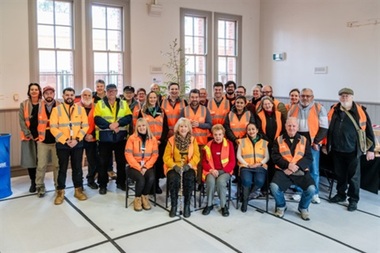
... ...Women's Prison...The building was the former Women's Prison in the Sunbury Asylum complex. After the tree planting ceremony, guests were served a delicious morning tea....The building was the former Women's Prison in the Sunbury Asylum complex. After the tree planting ceremony, guests were served a delicious morning tea. ...On the 7th June 2025 a number of community volunteers were invited to join with councillors and the local state and federal parliamentarians to witness the tree planting ceremony in the garden of the Sunbury Arts and Cultural centre building, which is being restored. The building was the former Women's Prison in the Sunbury Asylum complex. After the tree planting ceremony, guests were served a delicious morning tea.A coloured photograph of a gathering of people wearing work safety vests standing in front of windows in a large room. tree planting, sunbury arts and cultural centre, sunbury asylum, women's prison -
 The Beechworth Burke Museum
Audio - Oral History, Jennifer Williams, Barry Pope, 26/6/2000
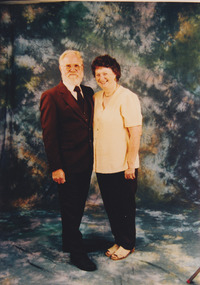
... ...Fairlea Women's Prison...Taking up new opportunities to advance his career and earning potential, he trained as a prison officer, working for several months at Pentridge Prison and Fairlea Women's Prison in Melbourne. He then returned to Beechworth to work in the prison system. ...Taking up new opportunities to advance his career and earning potential, he trained as a prison officer, working for several months at Pentridge Prison and Fairlea Women's Prison in Melbourne. He then returned to Beechworth to work in the prison system. ...Barry Pope left Melbourne at the intentions of travelling around Australia, met a local girl in Beechworth and decided to stay. He worked firstly in logging operations at the mill in Stanley, had some bartending jobs at Beechworth hotels, then got a job as a kitchen-hand at the Mayday Hill Hospital. Taking up new opportunities to advance his career and earning potential, he trained as a prison officer, working for several months at Pentridge Prison and Fairlea Women's Prison in Melbourne. He then returned to Beechworth to work in the prison system. In his story Mr Pope discusses many aspects of prison life for both prisoners and prison officers, from the food and daily routine, attitudes to discipline and rehabilitation, industries and opportunities available to prisoners and how prisoners were viewed in society after their period in prison was finished. This oral history recording was part of a project conducted by Jennifer Williams in the year 2000 to capture the everyday life and struggles in Beechworth during the twentieth century. This project involved recording seventy oral histories on cassette tapes of local Beechworth residents which were then published in a book titled: Listen to what they say: voices of twentieth century Beechworth. These cassette tapes were digitised in July 2021 with funds made available by the Friends of the Burke.Barry Pope's account of his career is historically and socially significant as it details practices within the prison industry in the Twentieth Century as well as the operations of regional hospitals. This oral history account is socially and historically significant as it is a part of a broader collection of interviews conducted by Jennifer Williams which were published in the book 'Listen to what they say: voices of twentieth-century Beechworth.' While the township of Beechworth is known for its history as a gold rush town, these accounts provide a unique insight into the day-to-day life of the town's residents during the 20th century, many of which will have now been lost if they had not been preserved.This is a digital copy of a recording that was originally captured on a cassette tape. The cassette tape is black with a horizontal white strip and is currently stored in a clear flat plastic rectangular container. It holds up 40 minutes of recordings on each side.Barry Pope /beechworth, 1960s, 1970s, 1980s, stanley mill, logging, hotel wentworth, oral history, hospital garden, mayday hill hospital, met hospital, social welfare department, loyola, lyolla, pentridge prison, fairlea women's prison, prison officer training, drug crimes, prison daily life, prison farm, prison wood workshop, prison industry, prison escapes, beechworth prison, prison suicides, prison violence, prisoner attitudes to crime, mental health, isolation cells, walking dog scheme, guide dogs, prison concerts, prison plays, george smee, prison food, prison officer accommodation -
 Kew Historical Society Inc
Book, Outcasts, Mists & Shadows: a short history of institutional care around Yarra Bend, Melbourne / by Colin Briton, 2017, 2017
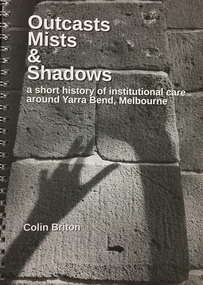
... merri creek protectorate station and aboriginal school (1841-51), yarra bend lunatic asylum (1848-1925), fairfield infectious diseases hospital (1904-96), fairhaven (1927-51), fairlea women's prison (1956-96), thomas embling hospital (2000- ), abbotsford convent (1863-1975), kew lunatic asylum / willsmere hospital (1872-1988), kew cottages (1887-2008), caritas christi hospice (1938- ), villa alba / henry pride hospital services (1954-98), royal talbot rehabilitation centre (at kew since 1961), national guide dog training centre / guide dogs victoria (1962- )...Self-published book on institutional care around Yarra Bend, Melbourne, including sections on: Merri Creek Protectorate Station and Aboriginal School (1841-51), Yarra Bend Lunatic Asylum (1848-1925), Fairfield Infectious Diseases Hospital (1904-96), Fairhaven (1927-51), Fairlea Women's Prison (1956-96), Thomas Embling Hospital (2000- ), Abbotsford Convent (1863-1975), Kew Lunatic Asylum / Willsmere Hospital (1872-1988), Kew Cottages (1887-2008), Caritas Christi Hospice (1938- ), Villa Alba / Henry Pride hospital services (1954-98), Royal Talbot Rehabilitation Centre (at Kew since 1961), National Guide Dog Training Centre / Guide Dogs Victoria (1962- ). ...merri creek protectorate station and aboriginal school (1841-51), yarra bend lunatic asylum (1848-1925), fairfield infectious diseases hospital (1904-96), fairhaven (1927-51), fairlea women's prison (1956-96), thomas embling hospital (2000- ), abbotsford convent (1863-1975), kew lunatic asylum / willsmere hospital (1872-1988), kew cottages (1887-2008), caritas christi hospice (1938- ), villa alba / henry pride hospital services (1954-98), royal talbot rehabilitation centre (at kew since 1961), national guide dog training centre / guide dogs victoria (1962- ) "Donated by the author March 2017" Self-published book on institutional care around Yarra Bend, Melbourne, including sections on: Merri Creek Protectorate Station and Aboriginal School (1841-51), Yarra Bend Lunatic Asylum (1848-1925), Fairfield Infectious Diseases Hospital (1904-96), Fairhaven (1927-51), Fairlea Women's Prison (1956-96), Thomas Embling Hospital (2000- ), Abbotsford Convent (1863-1975), Kew Lunatic Asylum / Willsmere Hospital (1872-1988), Kew Cottages (1887-2008), Caritas Christi Hospice (1938- ), Villa Alba / Henry Pride hospital services (1954-98), Royal Talbot Rehabilitation Centre (at Kew since 1961), National Guide Dog Training Centre / Guide Dogs Victoria (1962- ). ...Self-published book on institutional care around Yarra Bend, Melbourne, including sections on: Merri Creek Protectorate Station and Aboriginal School (1841-51), Yarra Bend Lunatic Asylum (1848-1925), Fairfield Infectious Diseases Hospital (1904-96), Fairhaven (1927-51), Fairlea Women's Prison (1956-96), Thomas Embling Hospital (2000- ), Abbotsford Convent (1863-1975), Kew Lunatic Asylum / Willsmere Hospital (1872-1988), Kew Cottages (1887-2008), Caritas Christi Hospice (1938- ), Villa Alba / Henry Pride hospital services (1954-98), Royal Talbot Rehabilitation Centre (at Kew since 1961), National Guide Dog Training Centre / Guide Dogs Victoria (1962- ). ISBN: 978-0-6480223-0-5"Donated by the author March 2017"merri creek protectorate station and aboriginal school (1841-51), yarra bend lunatic asylum (1848-1925), fairfield infectious diseases hospital (1904-96), fairhaven (1927-51), fairlea women's prison (1956-96), thomas embling hospital (2000- ), abbotsford convent (1863-1975), kew lunatic asylum / willsmere hospital (1872-1988), kew cottages (1887-2008), caritas christi hospice (1938- ), villa alba / henry pride hospital services (1954-98), royal talbot rehabilitation centre (at kew since 1961), national guide dog training centre / guide dogs victoria (1962- ) -
 Uniting Church Archives - Synod of Victoria
Uniform - Hat, Methodist Deaconess
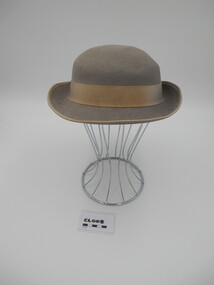
... She was also Chaplain of Fairfield Sanitorium and then later was appointed to Fairlea Prison for Women....She was also Chaplain of Fairfield Sanitorium and then later was appointed to Fairlea Prison for Women. Methodist Deaconess Hilda Fisher Deaconess Hilda Fisher Methodist Deaconess CL008 and CL009 Grey felt bowler style winter hats with light grey grosgrain band and flat bow at the back. ...Deaconess Hilda Fisher was Warden of the Methodist Deaconess Order of Victoria and Tasmania. She was also Chaplain of Fairfield Sanitorium and then later was appointed to Fairlea Prison for Women.CL008 and CL009 Grey felt bowler style winter hats with light grey grosgrain band and flat bow at the back. The hat has light grey grosgrain edging at the brim and an elastic strap.methodist deaconess hilda fisher, deaconess hilda fisher, methodist deaconess -
 Uniting Church Archives - Synod of Victoria
Uniform - Hat, Methodist Deaconess
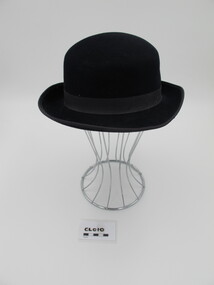
... She was also Chaplain of Fairfield Sanitorium and then later was appointed to Fairlea Prison for Women....She was also Chaplain of Fairfield Sanitorium and then later was appointed to Fairlea Prison for Women. Methodist Deaconess Hilda Fisher Deaconess Hilda Fisher Methodist Deaconess Black felt bowler style winter hat with black grosgrain band and flat bow at the back. ...Deaconess Hilda Fisher was Warden of the Methodist Deaconess Order of Victoria and Tasmania. She was also Chaplain of Fairfield Sanitorium and then later was appointed to Fairlea Prison for Women.Black felt bowler style winter hat with black grosgrain band and flat bow at the back. The hat has black grosgrain edging at the brim.methodist deaconess hilda fisher, deaconess hilda fisher, methodist deaconess -
 Uniting Church Archives - Synod of Victoria
Uniform - Hat, Panama Nylon Breezly, Methodist Deaconess
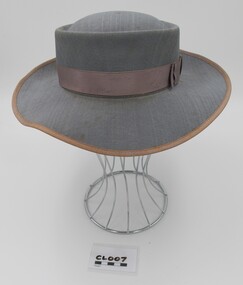
... She was also Chaplain of Fairfield Sanitorium and then later was appointed to Fairlea Prison for Women....She was also Chaplain of Fairfield Sanitorium and then later was appointed to Fairlea Prison for Women. Methodist Deaconess Hilda Fisher Deaconess Hilda Fisher Methodist Deaconess Grey nylon Panama summer hat with brim. ...Deaconess Hilda Fisher was Warden of the Methodist Deaconess Order of Victoria and Tasmania. She was also Chaplain of Fairfield Sanitorium and then later was appointed to Fairlea Prison for Women.Grey nylon Panama summer hat with brim. The hat has grey grosgrain ribbon with a flat side bow and grey grosgrain edging at the brim. The hat has thin elastic strap.methodist deaconess hilda fisher, deaconess hilda fisher, methodist deaconess -
 Uniting Church Archives - Synod of Victoria
Photograph, 1975
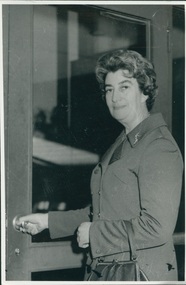
... She was also Chaplain of Fairfield Sanitorium and then later was appointed at Fairlea Prison for Women....She was also Chaplain of Fairfield Sanitorium and then later was appointed at Fairlea Prison for Women. Methodist Deaconess Deaconess Hilda Fisher Semi-gloss, back and white, 3/4 photograph of Deaconess Hilda Fisher. ...Deaconess Hilda Fisher was Warden of the Methodist Deaconess Order of Victoria and Tasmania. She was also Chaplain of Fairfield Sanitorium and then later was appointed at Fairlea Prison for Women.Semi-gloss, back and white, 3/4 photograph of Deaconess Hilda Fisher.methodist deaconess, deaconess hilda fisher -
 Uniting Church Archives - Synod of Victoria
Photograph, C. 1960
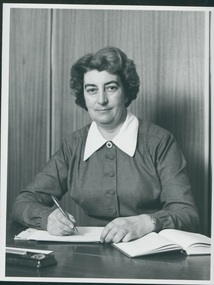
... She was also Chaplain of Fairfield Sanitorium and then later was appointed to Fairlea Prison for Women....She was also Chaplain of Fairfield Sanitorium and then later was appointed to Fairlea Prison for Women. Deaconess Hilda Fisher Gloss black and white portrait of Deaconess Hilda Fisher. ...Deaconess Hilda Fisher was Warden of the Methodist Deaconess Order of Victoria and Tasmania. She was also Chaplain of Fairfield Sanitorium and then later was appointed to Fairlea Prison for Women.Gloss black and white portrait of Deaconess Hilda Fisher.deaconess hilda fisher -
 Sunshine and District Historical Society Incorporated
Archive - Prisons
... Newspaper Article The Age 22 June 1996 Theres profit to be made with picture of Dame Phyllis Frost|Newspaper Article The Leader 11 December 2001 Sense of pride blooms behind a prisons bars|Newspaper Article The Age 8 March 2001 Deer Park jail renamed from Metrolopolitan Womens correctional Centre to Dame Phyllis Frost Centre|Newspaper Article The Leader 18 September 2001 Jail plans wrangle|Newspaper Article The Advocate 22 October 1997 More prison strife|Newspaper Article The Leader 12 March 2002 Tear gas used in prison|Newspaper Article The Advocate 12 March 2002 Brutal Gas|Flyer Women are dying in the Deer Park Private Womens Prison 16 June 1997|Typed Objection letter from Ciro Lombardi regarding the proposed mens prison 26 May 1995...Prisons Newspaper Article The Age 22 June 1996 Theres profit to be made with picture of Dame Phyllis Frost|Newspaper Article The Leader 11 December 2001 Sense of pride blooms behind a prisons bars|Newspaper Article The Age 8 March 2001 Deer Park jail renamed from Metrolopolitan Womens correctional Centre to Dame Phyllis Frost Centre|Newspaper Article The Leader 18 September 2001 Jail plans wrangle|Newspaper Article The Advocate 22 October 1997 More prison strife|Newspaper Article The Leader 12 March 2002 Tear gas used in prison|Newspaper Article The Advocate 12 March 2002 Brutal Gas|Flyer Women are dying in the Deer Park Private Womens Prison 16 June 1997|Typed Objection letter from Ciro Lombardi regarding the proposed mens prison 26 May 1995 Collection of documents on prisons in the district and surrounding area Archive Prisons ...Newspaper Article The Age 22 June 1996 Theres profit to be made with picture of Dame Phyllis Frost|Newspaper Article The Leader 11 December 2001 Sense of pride blooms behind a prisons bars|Newspaper Article The Age 8 March 2001 Deer Park jail renamed from Metrolopolitan Womens correctional Centre to Dame Phyllis Frost Centre|Newspaper Article The Leader 18 September 2001 Jail plans wrangle|Newspaper Article The Advocate 22 October 1997 More prison strife|Newspaper Article The Leader 12 March 2002 Tear gas used in prison|Newspaper Article The Advocate 12 March 2002 Brutal Gas|Flyer Women are dying in the Deer Park Private Womens Prison 16 June 1997|Typed Objection letter from Ciro Lombardi regarding the proposed mens prison 26 May 1995prisons -
 Uniting Church Archives - Synod of Victoria
Portable communion set, c1949
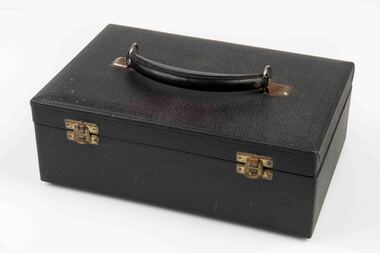
... ...Fairlea Prison for Women...She was also Chaplain of Fairfield Sanitorium and was later appointed to Fairlea Prison for Women....She was also Chaplain of Fairfield Sanitorium and was later appointed to Fairlea Prison for Women. Methodist Deaconess Hilda Fisher Hospital Chaplaincy Fairfield Sanitorium Fairlea Prison for Women Dimpled black leather covered timber box with red velvet lining. ...This portable communion set was used by Hilda Fisher (nee Graham). Deaconess Hilda Fisher was Warden of the Methodist Deaconess Order of Victoria and Tasmania. She was also Chaplain of Fairfield Sanitorium and was later appointed to Fairlea Prison for Women.Dimpled black leather covered timber box with red velvet lining. The box contains two silver screw top bottles, three glass communion glasses, a silver communion cup, a small silver paten and wafer box. The box has a carry handle on the top of the lid and two securing latches on the side. All the pieces are in fitted compartments.methodist deaconess hilda fisher, hospital chaplaincy, fairfield sanitorium, fairlea prison for women -
 Federation University Historical Collection
Booklet - Annual Review, Ballarat School of Mines Annual Review, 1986 -1991
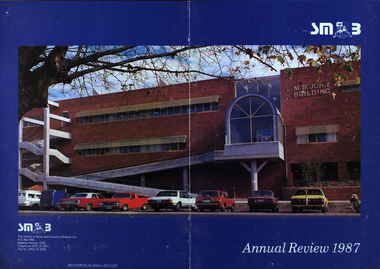
... Tippett Learning Resource Centre (Library), Refurbishment of the Administration Building, Food Service Building (Prospects), Court House Theatre, Enrolment centre, Museum, Creche, Women's Trade technical Program, Rural Education Program, Ararat Prison Program, Community Studies Section, Ararat Adult Literacy Group. ...Tippett Library opening Carpentry and joinery Women's Trade and Technical Program rural education program Ararat Prison Program barometer oil seed research . ...The Ballarat School of Mines was established in 1870 through the initiatives of the Ballarat Mining Board making it the oldest site of technical education in Australia. The Board was concerned with the shortage of mine managers for the goldfields. Classes began in surveying, mathematics, and chemistry and a decade later they included metallurgy , assaying and geology. With the decline in goldmining the direction of the college changed and broadened, the art School was established and the Ballarat Junior Technical School developed. In 1976, the tertiary sector seperated from the School of Mines and Industries Ballarat to form the Ballarat College of Advanced Education. In the 1980s SMB was a Community College of Technical Education and Further Education (TAFE) offering a wide range of vocational, enrichment and preparatory programs. It is continuing the tradition of providing for the educaiton needs of people within the Central Highlands. During the 1970s and 80s it acquired and refurbished old buildings and developed new facilities to keep up with the needs of an expanding curriculum and student population. The era of these annual reports is just before the merger with the University of Ballarat.A number of soft card covered annual report for the Ballarat School of Mines. .1) 12 page black covered report featuring an image of the E.J. Tippett Library. Includes information on death of E.J. Tippett, disability policy, Peter Quinn, Patti McNulty, Bob Feary, Shane Everand, Integration, Fiona Watson, retirement of Robert Morgan, Opening of the carpentry and Joinery Facility in Davey Street, formation of the School of Business and Information Technology, Melissa Bone, opening of the E.J. T. Tippett Learning Resource Centre (Library), Refurbishment of the Administration Building, Food Service Building (Prospects), Court House Theatre, Enrolment centre, Museum, Creche, Women's Trade technical Program, Rural Education Program, Ararat Prison Program, Community Studies Section, Ararat Adult Literacy Group. Literacy Assistance for Undergraduates, Fire training, fitness, open Learning, Training & Employment Group, Awards, Filipino Visitors, oil Seed Research, Brunei, Barometer (gift) for Horticulture, Special Equipment (guillotine and brake press; programmable logic Controller; theodolite: laser lever; Universal testing Machine; Atomic Absorption Spectrophotometer)., organisational Structure. Photos include Ken Flecknoe, Peter Quinn, Patti McNulty, Bob Feary, Shane Everard, Fiona Watson,Linda Bland, Robert Morgan, David McCaughey, E.J. Tippett, Frank Sheehan, Julie Baulch, Jo Reeves, Col McCurry, Jenny Garnham .3) Blue covered book with a photograph of the M.B. John Building taken from Albert Street on the cover. Topics include: Ken Flecknoe, Peter Shiells, Ararat Campus, David Haddow, Kevin Martin, Rendle Hannah, Gary Eason, Geoff Pope, Albert Peart, M.B. John building opened, Hairdressing Salon, Community Centre, Creche, closure of Lydiard Street, Museum, Jenny Levison, Inskill, Small Business Training, Ballarat Eat free Library, Barkly Street, Wormalds Valve Group, Aboriginal Programs, Horticulture Center, Awards, Country fire Authority, tractor Donation, Women's Policy. Special purchases included surveying equipment with data recorder, test rig , CDT MIG welder, compact gas chromatograph with FID and single pen recorder, Olivetti stand-alone word processing unit. Images include Ken Flecknoe. Peter Shiells, John Crowe, Trevor Slater, Brian McLennan, Kerrie Cross, Albert Peart, John Cain, M.B. John, Enrollment Centre, Museum, Jo Watson, Wormalds, Brian Webber, Dianna Nikelson, Ian Aitken, Brendan B, Chez Dichiera, Heather Dixon, Julie Broadbent .4) 1993 - Brown and white soft covered annual review featuring students of the Ballarat School of Mines at work. Bill Gribble, Brian McLennan, Peter Shiells Retirement, Robert C. Lovett, Steven Mendelson, Max Palmer, Jenny Gough, Mary Molloy, Barrie Firth, Colin McCurry, Dora Hormann, Organisation Structure, Brewery Acquisition, Humffray Street Primary School, Grant Street Retaining Wall, Neville Bunning Plaque, VCE Plus, Ballarat Small Business centre, Ararat Prison, Ballarat Showgrounds Rotunda, .6) Green covered annual review with an aerial photograph over Albert Street, Ballarat. Content include Kerrie Cross, Peter Shiells. Kenneth Flecknoe Obituary, Ian Pimblett, Keith Boast, David Nicholson, Max Palmer, Brian Webber, Bob Lovett, Linda Bland, Prospects, Training restaurant, 3BBB, Malcolm Vallance, Aboriginal Programs, Ian Cathie, Koorie Support Unit, Caroline Hogg, 'Trained Men Make Their Own Terms' exhibition at the Gold Museum, Ricky Hains, Stephen Hughes, Jeff White, Dennis Bolster .8) Blue covered review for 1989. The contents include: Kerrie Cross, Peter Shiells, Ann McCaffrey, Kevin Alsop, Mary Molloy, Ross Furness, Robert Lovett, Victoria Street Student Hostel, Hugh Beggs, Ballarat Small Business Centre, Inskill, Ararat Campus, Hospitality and Tourism, Koorie Support Unit, Fiona Warsn, Bruce Staley, Terry Moran, Anthony Wonish, Ivan Deveson, Leo Shannon Memorial Award, Bryan Crebbin, Geoff Howard, R.C.W. Burdett, Jeff White, Ian Harris, Tom Wiseman, Bill Gribble, Allison Kay, Steven Mendelson, Keith Boast. .9) Grey covered book with a coloured photo of the Victoria Street Student Residence. Contents include: Kerry Cross, Peter Shiells, Morgan Bevan John Illuminated address. Jean Phillips, Koorie Support Unit, Andrew Sullivan, Victoria Street Student Residence, Horticulture, Inskill, Tertiary Awareness Project, Adult Education, Ivan Deveson, Brian Howe, Barry Jones, Joan Kirner, Andrew Trigg, Warren Perry, Murrell Rock Collections, Gwyn Hanssen-Piggott, Disability Awareness Day, Sebastopol Borough Logo, Phoebe Rimmer, Russell Jackson, R.J. Young Scholarship, Peter Muir, Founders Day Cake, Morgan John. .11) Black card covered booklet with five images of exteriors of the Ballarat School of Mines. the contents include: Jack Barker, Peter Shiells, Peter Ellyard, Ian Stoney, Terry Moran, Wayne Strong, David Ince, Simone Titheridge, Ian Aitken,Kevin Alsop, Bill Bridges, Clive Carmichael, Bob Feary, Rendle hannah, Roly Parfenovics, Graham Snibson, Kevin Stockdale, Len Wilson, Child Care Centre opening, Student accommodation, Victoria Street, Brewery site. naming buildings, E.J. barker. A.W. Steane K.J. Flecknow, Carpentry and joinery, Inskill, Hospitality, Pottery, ceramics, Founders' Day, Warren Perry, Agreement between Ballarat School of Mines and Ballarat university College, merger, Peter Baldwin, Awards, obituary Lindsay Hillman. Images include: Wayne Strong, David Ince, Simone Titheridge, kerrie Cross, Joan Kirner, Frank Sheehan, Bill Gribble Ros Wilkie, Judi O'Loughlin, Tony Leonard, Gemma Hearnes, Brendan Hill, Joanne Bell, Karl Moon, Stella Savy, Shirley Falkinder, Peter Baldwin, Jack Barker, Michael Ronaldson, David Kemp, Peter Shiells, Margot Healey, Sharon McLennan, Kerrie Firns, Petrena Brookers, Deb Goudappel, Claire Bond, Administration Building Lindsay Hillman. .13 ) Brown covered report with photographic images. Content includes: Pam Merrett. , Peter Shiells, Robert Lovett, Steven Mendelson, Max Palmer, Jenny Gough, Barrie Firth .14) Brown covered report with photographic images. Content includes: .15) Green covered report with photographic images. The blond woman standing on the right looking at a computer screen is Pam Merrett. Content includes: Bill Gribble, Ron Wild, Doug Sarah, Martin Hill, John Kemp, David Manterfield, Leslie Comy, Linette Penhall, Glen Martland. Virginia Fenelon. Michael Bracher, Brewery Building. Child care centre, Prospects Cafe Opening, Horticulture Training Centre, Retaining Wall, The Gordon, University of Ballarat and Ballarat School of Mines affiliation, Geoffrey Blainey, Ararat Community College Memo of understanding, Brian McLennan. Founders Day (Hadden Storey), Gwyn Hanssen-Pigott, Ken Latta, Neville Bunning Outstanding Achievement Award, Valerie Wilson, Jack Barker, John Sharpham, Jack Barker Resignation.ballarat school of mines, university of ballarat, integration, shane everard, robery morgan, linda bland, ballarat junior technical school, former court house, ken flecknoe, bruce muir, lindsay hillman, neil crouch, jack barker, keith boast, rex hollioake, m.b. john, bob lovett, brian mclennan, peter shiells, bruce tanner, jeff white, bryan crebbin, kerrie cross, ric dunlop, tom wiseman, barbara hughes, chris matheson, morgan b. john, albert street, steven mendelson, john crowe, ann mccaffrey, kevin alsop, mary molloy, ross furness, robert lovett, victoria street student hostel, student residences, hugh beggs, ballarat small business centre, inskill, ararat campus, hospitality and tourism, koorie support unit, fiona watson, bruce staley, terry moran, anthony wonish, ivan deveson, leo shannon memorial award, geoff howard, r.c.w. burdett, ian harris, bill gribble, allison kay, liz eddy, pam merrett, doug sarah, martin hill, john kemp, david manterfield, leslie comy, linette penhall, glen martland, virginia fenelon, michael bracher, brewery building, child care centre, prospects cafe, horticulture training centre, retaining wall, the gordon, university of ballarat and ballarat school of mines affiliation, geoffrey blainey, ararat community college memo of understanding, founders day, hadden storey, gwyn hanssen-pigott, ken latta, neville bunning outstanding achievement award, valerie wilson, john sharpham, kerry cross, morgan bevan john illuminated address, jean phillips, andrew sullivan, victoria street student residence, horticulture, inskill, tertiary awareness project, adult education, brian howe, barry jones, joan kirner, andrew trigg, warren perry, murrell rock collections, gwyn hanssen-piggott, disability awareness day, sebastopol borough logo, phoebe rimmer, russell jackson, r.j. young scholarship, peter muir, kenneth flecknoe obituary, ian pimblett, david nicholson, brian webber, prospects, training restaurant, 3bbb, malcolm vallance, aboriginal programs, ian cathie, caroline hogg, 'trained men make their own terms' exhibition at the gold museum, ricky hains, stephen hughes, dennis bolster, aboriginal education, e.j. tippett obituary, patti mcnulty, bob feary, equal opportunity officer, robert c. morgan, school of business and information technology, e.j. tippett library, e.j. tippett library opening, carpentry and joinery, women's trade and technical program, rural education program, ararat prison program, barometer, oil seed research, . bill gribble, peter shiells retirement, robert c. lovett, max palmer, jenny gough, barrie firth, colin mccurry, dora hormann, organisation structure, brewery acquisition, humffray street primary school, grant street retaining wall, neville bunning plaque, vce plus, ararat prison, ballarat showgrounds rotunda -
 Flagstaff Hill Maritime Museum and Village
Wood Sample, 1840
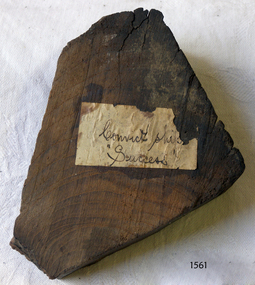
... Over its lifetime of 106 years, it was used to trade in the Indian subcontinent, to transport free emigrants to Australia, as a prison hulk in the Port of Melbourne for both hardened criminals, and later for women and boys, as a storage vessel for ammunition, a reformatory, and as a floating museum sent around the world to tell the tale of the convict era. ...Over its lifetime of 106 years, it was used to trade in the Indian subcontinent, to transport free emigrants to Australia, as a prison hulk in the Port of Melbourne for both hardened criminals, and later for women and boys, as a storage vessel for ammunition, a reformatory, and as a floating museum sent around the world to tell the tale of the convict era. ...This shipwreck artefact is a section of wood from the vessel “Success, a former immigrant ship, and later a convict hulk at Melbourne. The sailing ship “Success” was a teakwood vessel built in Natmoo (Natmaw), Tenasserim, Burma (now Myanmar) in 1840 for Cockerell & Co., Calcutta. Over its lifetime of 106 years, it was used to trade in the Indian subcontinent, to transport free emigrants to Australia, as a prison hulk in the Port of Melbourne for both hardened criminals, and later for women and boys, as a storage vessel for ammunition, a reformatory, and as a floating museum sent around the world to tell the tale of the convict era. During the time “Success” was used as a museum, pamphlets were distributed to paying customers advertising erroneously, that the “Success” was the oldest ship in the world. The “Success” sank and was re-floated twice: the first in Sydney in 1885, the second in the USA in 1918, before it was finally burned and sank July 4, 1946 in Lake Erie, near Sandusky, Ohio in 1946. Although the “Success” was home to prisoners while berthed in the Port of Melbourne, it was not used as convict transport. There has been speculation that Ned Kelly’s infamous armour was displayed on the “Success”, but this cannot be verified. Another link to Ned Kelly is Henry Johnson, an Irish prisoner on the Success, who was implicated in the murder of the ship’s warder, and later Johnson was supposedly a bushranger with Ned Kelly. It is also rumoured that Ned Kelly’s father John was a passenger on the Success, but this is also unverified. There are over 16 other ships named “Success”, although one in particular causes some confusion when researching “Success” in Australia. This other ship – the “HMS Success” was a 28 gun frigate built in1823, which was broken up in 1849. It also sailed to Australia. Statement of Significance: This piece of wood from the “Success” is connected to the ship Success, built in Burma in 1840. The “Success” is connected to the history of Australia because she was used as a merchant ship to transport immigrants to Australia, as a prison ship in Melbourne, a storage vessel, and as a floating “convict” museum, which travelled the world. Section of wood from ship “Success”. Wood appears to have been partially burnt, saw marks faintly visible on wood, remnant of a label with handwriting in black inklabel marked in script handwriting “Convict ship / “Success””flagstaff hill, warrnambool, shipwrecked-coast, flagstaff-hill, flagstaff-hill-maritime-museum, maritime-museum, shipwreck-coast, flagstaff-hill-maritime-village, sailing vessel success, wood sample of sailing ship success, cockerell & co. calcutta -
 The Beechworth Burke Museum
Audio - Oral History, Jennifer Williams, Sister Elizabeth McGovern, Sister Mary Lacey, Sister Mary Griffiths, Sister Gerardus Thistlewaite, 18th March 2000
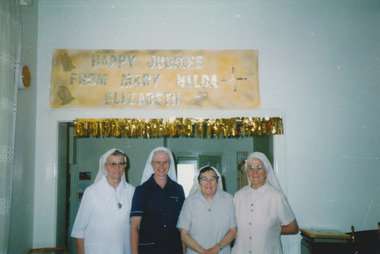
... Listen to what they say Listen to what they say: voices of twentieth century Beechworth nuns brigidine sisters brigidine convent school religion prison boarding school modernization food women's history teaching teachers Education hospitals beechworth hospital charity old priory Father Stockdale easter Beechworth 1950s Sister Elizabeth McGovern, Sister Mary Lacey, Sister Mary Griffiths, Sister Gerardus Thistlewaite This is a series of digital recordings that were originally recorded on multiple cassette tapes. ...Sister Elizabeth McGovern, Sister Mary Lacey, Sister Mary Griffiths, and Sister Gerardus Thistlewaite were all nuns of the Brigidine Order in Beechworth in the second half of the twentieth century. They had backgrounds in teaching and office work. As nuns, their contributions to the community included teaching, running camps, being there for community members wishing to talk to them or pray, and visiting prisons and hospitals. During their time in the order, the role of the nuns in Beechworth shifted due to the closing down of the Priory School, and changes in where housing for nuns was provided. The oral history also includes stories of boarding at the convent in the 1950s, and reflections on how the experience of being a nun has changed due to increasing immersion in the modern world, and the move from convent to house. This oral history recording was part of a project conducted by Jennifer Williams in the year 2000 to capture the everyday life and struggles in Beechworth during the twentieth century. This project involved recording seventy oral histories on cassette tapes of local Beechworth residents which were then published in a book titled: Listen to what they say: voices of twentieth century Beechworth. These cassette tapes were digitised in July 2021 with funds made available by the Friends of the Burke.Sister Elizabeth McGovern, Sister Mary Lacey, Sister Mary Griffiths, and Sister Gerardus Thistlewaite's interview with Jennifer Williams is revealing of the history of the Brigidine order in Beechworth, and the role religion and nuns played in the wellbeing, education, and life of the community in the latter half of the twentieth century. It is significant both for what it illustrates about the lives and motivation of the Sisters, and for what it tells us about how the role of religious education and figures shifted in Beecjhworth from 1950 onward. It is especially illuminating about the experience of women in education. This oral history account is socially and historically significant as it is a part of a broader collection of interviews conducted by Jennifer Williams which were published in the book 'Listen to what they say: voices of twentieth-century Beechworth.' While the township of Beechworth is known for its history as a gold rush town, these accounts provide a unique insight into the day-to-day life of the town's residents during the 20th century, many of which will have now been lost if they had not been preserved.This is a series of digital recordings that were originally recorded on multiple cassette tapes. The cassette tapes are black with a horizontal white strip and are currently stored in a clear flat plastic rectangular container. They up to 40 minutes of recordings on each side.Sister Elizabeth McGovern, Sister Mary Lacey, Sister Mary Griffiths, Sister Gerardus Thistlewaitelisten to what they say, listen to what they say: voices of twentieth century beechworth, nuns, brigidine sisters, brigidine convent, school, religion, prison, boarding school, modernization, food, women's history, teaching, teachers, education, hospitals, beechworth hospital, charity, old priory, father stockdale, easter, beechworth 1950s -
 Flagstaff Hill Maritime Museum and Village
Equipment - Ship's Wheel, 1840
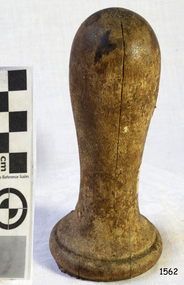
... Over its lifetime of 106 years, it was used to trade in the Indian subcontinent, to transport free emigrants to Australia, as a prison hulk in the Port of Melbourne for both hardened criminals, and later for women and boys, as a storage vessel for ammunition, a reformatory, and as a floating museum sent around the world to tell the tale of the convict era. ...Over its lifetime of 106 years, it was used to trade in the Indian subcontinent, to transport free emigrants to Australia, as a prison hulk in the Port of Melbourne for both hardened criminals, and later for women and boys, as a storage vessel for ammunition, a reformatory, and as a floating museum sent around the world to tell the tale of the convict era. ...This wooden spoke handle is from the wheel of the sailing ship “Success”, a former immigrant ship and later a convict hulk at Melbourne. The sailing ship “Success” was a teakwood vessel built in Natmoo (Natmaw), Tenasserim, Burma (now Myanmar) in 1840 for Cockerell & Co., Calcutta. Over its lifetime of 106 years, it was used to trade in the Indian subcontinent, to transport free emigrants to Australia, as a prison hulk in the Port of Melbourne for both hardened criminals, and later for women and boys, as a storage vessel for ammunition, a reformatory, and as a floating museum sent around the world to tell the tale of the convict era. During the time “Success” was used as a museum, pamphlets were distributed to paying customers advertising erroneously, that the “Success” was the oldest ship in the world. The “Success” sank and was re-floated twice: the first in Sydney in 1885, the second in the USA in 1918, before it was finally burned and sank on July 4, 1946 in Lake Erie, near Sandusky, Ohio, in 1946. Although the “Success” was home to prisoners while berthed in the Port of Melbourne, it was not used as convict transport. There has been speculation that Ned Kelly’s infamous armour was displayed on the “Success”, but this cannot be verified. Another link to Ned Kelly is Henry Johnson, an Irish prisoner on the vessel Success, who was implicated in the murder of the ship’s warder. and later, Johnson was supposedly a bushranger with Ned Kelly. It is also rumoured that Ned Kelly’s father John was a passenger on the Success, but this is also unverified. There are over 16 other ships named “Success”, although one in particular causes some confusion when researching “Success” in Australia. This other ship – the “HMS Success” - was a 28 gun frigate built in1823, which was broken up in 1849. It also sailed to Australia.Thiswooden ship's wheel handle was once part of the ship’s wheel of the sailing ship “Success” , which was, built in Burma in 1840. The “Success” is connected to the history of Australia because she was used as a merchant ship to transport immigrants to Australia, and was also used as a prison ship in Melbourne, a storage vessel, and as a floating “convict” museum, which travelled the world. Ship's wheel handle. Hndle from the wheel of sailing ship, the “Success”. The shaped handle is domed at one end, becoming narrower towards the other end, then flattened out into a beveled circle. The handle has an inscription written in pencil."Success"flagstaff hill maritime museum, maritime museum, sailing ship success, ship's wheel spoke, ship's steering wheel, prison ship, prison hulks, convict ship, spoke handle, ship's wheel, navigation equipment, steering wheel -
 Eltham District Historical Society Inc
Photograph, Peter Pidgeon, Graves of Mary Josephine Swallow, John Swallow (unmarked) and Patricia Catherine Hill, Eltham Cemetery, Victoria, 5 April 2021
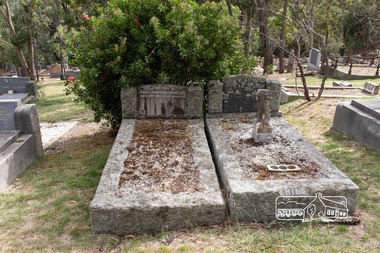
... women had been attacked by the same weapon, a large hammer, or sledge hammer as reported by the newspapers. John was also discovered in the house, bleeding from self-inflicted wounds from the razor, and had attempted to ingest caustic soda. Patricia was taken to St Vincent’s hospital, but died the following day, the 30th of May. John was also taken to St Vincent’s, where he remained under constant police guard for several months while he recovered from his injuries, at least the physical. He was eventually well enough to be taken to the City Watch House and then Pentridge Prison...women had been attacked by the same weapon, a large hammer, or sledge hammer as reported by the newspapers. John was also discovered in the house, bleeding from self-inflicted wounds from the razor, and had attempted to ingest caustic soda. Patricia was taken to St Vincent’s hospital, but died the following day, the 30th of May. John was also taken to St Vincent’s, where he remained under constant police guard for several months while he recovered from his injuries, at least the physical. He was eventually well enough to be taken to the City Watch House and then Pentridge Prison ...On the 29th of May 1954, a local Eltham carpenter by the name of John Swallow, committed a double murder at his home on New Street. This happened on the same day as the federal election of that year. John 48, his wife Mary 47, and stepdaughter Patricia 25, all went to the Eltham Courthouse on Main Road to cast their vote in the election that Saturday. After voting they returned home to their New Street house around midday. Patricia would later recall to ambulance officers, that she was feeling unwell, and so went to lay down when she heard an argument erupt over voting between her mother Mary and stepfather John. A concerned neighbour heard loud thudding noises and yelling coming from John and Mary’s house, he went to investigate. When he arrived at the house he was met by John at the front door. He would later describe John as “having a frantic look upon his face, and manic eyes”. John must have been a sight, bleeding and clutching a cut throat razor by his side. He then announced to the neighbour, “they voted commie!” before turning and going back inside. The distressed neighbour immediately raced home to call the Police. When the police arrived, they found Mary dead on the kitchen floor from catastrophic head injuries; her daughter, Patricia, clinging to life, slumped on her bed. Both women had been attacked by the same weapon, a large hammer, or sledge hammer as reported by the newspapers. John was also discovered in the house, bleeding from self-inflicted wounds from the razor, and had attempted to ingest caustic soda. Patricia was taken to St Vincent’s hospital, but died the following day, the 30th of May. John was also taken to St Vincent’s, where he remained under constant police guard for several months while he recovered from his injuries, at least the physical. He was eventually well enough to be taken to the City Watch House and then Pentridge Prison before his trial in October of the same year. When it came time for John to face the courts, the Judge called a mistrial, the Crown would not prosecute on the grounds of insanity. John was led away from the dock of The Magistrates Court and taken directly to Willsmere, the Kew Mental Asylum. On the 9th of August 1962, John Mervyn Swallow died of heart failure, he was 57. He had been a resident of Kew for four years. John’s body was returned to Eltham Cemetery and buried in the same grave as Mary. There is no mention of his name on the head stone. Patricia’s grave is next to Mary and John. A sad irony has an angel upon her grave, “its head missing”, possibly vandals or just an accident of time and events. What became of the home where all of this took place on New Street shall remain a mystery but within six months of this horrific event, the street had been re-named to Lavender Park Road after the original property near the end of the road, Lavender Park. In Memory Of Mary Josephine Swallow Died 29th May 1954 aged 47 Also Patricia Cathryn Hill Dearly beloved wife of Kel Called home 30th May 1954 Aged 25 yearsBorn Digitaleltham cemetery, gravestones, mary josephine swallow, patricia catherine hill, john swallow -
 Bendigo Military Museum
Book - BOOK POW WW2, The Changi Brownlow
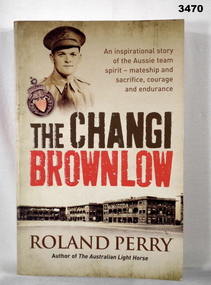
... In the harshness and brutality of Changi prison a group of Australian POW's dug deep and fought to maintain their spirit in the best way they knew how - Australian Rules football. Book changi brownlow Pow’s Handwritten in lead pencil on front top right of fly leaf: “R Jones” Handwritten in black ink on front fly leaf, black / white photo of women & soldier in uniform: “DULCIE JONES & ALFIE PROWSE COUSINS DURING WWII. ...The Changi Brownlow, an inspirational story of the Aussie team spirit - mateship and sacrifice, courage and endurance. In the harshness and brutality of Changi prison a group of Australian POW's dug deep and fought to maintain their spirit in the best way they knew how - Australian Rules football.Soft cardboard cover, black, brown, red print front, spine & back. Front cover background beige, with sepia portrait photo at top left & buildings at the bottom. Sepia photo of an Australian Rules football scene. 376 pages, cut, plain, white, illustrated black / white photos.Handwritten in lead pencil on front top right of fly leaf: “R Jones” Handwritten in black ink on front fly leaf, black / white photo of women & soldier in uniform: “DULCIE JONES & ALFIE PROWSE COUSINS DURING WWII. ALFIE WAS PETER CHITTY'S BROTHER IN LAW”book, changi, brownlow, pow’s -
 Waverley RSL Sub Branch
Poster, Changi Chapel
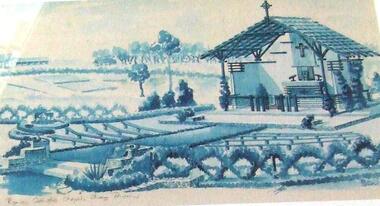
... Also in the museum is a collection of watercolour paintings by Mary Angela Bateman who was among the thousands of women and children held at Changi Prison for more than three years during the war.[1]...Also in the museum is a collection of watercolour paintings by Mary Angela Bateman who was among the thousands of women and children held at Changi Prison for more than three years during the war.[1] Changi Changi Chapel Changi History Poster produced by Australian War Memorial detailing the history of The Changi Chapel Framed Changi Chapel Poster ...The Changi Museum is a museum dedicated to Singapore's history during the Second World War. The original chapel has been re-erected at Duntroon Military Academy and is on public display as a memorial to the P.O.W's In 1988, Singapore built a replica Chapel and Museum next to the Changi Prison. When Changi Prison was expanded in 2001, the Chapel and Museum was relocated to a new site 1 km away and the Changi Chapel and Museum was officially established on 15 February 2001. Bernard Stogden, the son of Sgt. Harry Stogden, was invited to place the cross that his father made onto the wreathed altar in the new Chapel. He was claimed to have cried while doing so, as this was one of the only chances he got to interact with his father(through his work) as "Harry" Stogden died during the war. The Museum has a collection of paintings, photographs and personal effects donated by former POWs. Among the collection is a series of paintings and sketches by a POW named William Haxworth which provide valuable insight on the daily life of the internees during the occupation. In 1986, Haxworth's wife donated a collection of over 400 paintings and sketches to the National Archives of Singapore. Also in the museum is a collection of watercolour paintings by Mary Angela Bateman who was among the thousands of women and children held at Changi Prison for more than three years during the war.[1]Poster produced by Australian War Memorial detailing the history of The Changi Chapel Framedchangi, changi chapel, changi history -
 Monbulk RSL Sub Branch
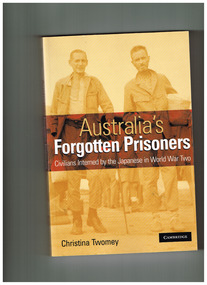
Book, Cambridge, Australia's forgotten prisoners: Civilians interred by the Japanese in World War Two, 2007
... prison-like camps throughout the Asia-Pacific region. Civilian internees - though not members of the armed forces - endured hardship, privation and even death at the hands of the enemy." "This book tells the stories of Australian civilians interned by the Japanese in World War II. By re-creating the daily lives and dramas within internment camps, it explores how captivity posed different dilemmas for the men, women ...The Japanese captured 1500 Australian civilians during World War II. They spent the war interned in harsh, prison-like camps throughout the Asia-Pacific region. Civilian internees - though not members of the armed forces - endured hardship, privation and even death at the hands of the enemy." "This book tells the stories of Australian civilians interned by the Japanese in World War II. By re-creating the daily lives and dramas within internment camps, it explores how captivity posed different dilemmas for the men, women and children held there.Ill, bib, index, notes, p.207.non-fictionThe Japanese captured 1500 Australian civilians during World War II. They spent the war interned in harsh, prison-like camps throughout the Asia-Pacific region. Civilian internees - though not members of the armed forces - endured hardship, privation and even death at the hands of the enemy." "This book tells the stories of Australian civilians interned by the Japanese in World War II. By re-creating the daily lives and dramas within internment camps, it explores how captivity posed different dilemmas for the men, women and children held there.japan - prisons and prisoners of war, world war 1939-1945 - prisoners of war - japan -
 Alfred Hospital Nurses League - Nursing History Collection
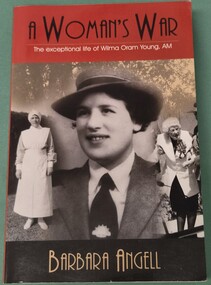
Book - Illustrated book, Barbara Angell 1935, A woman's war; the exceptional life of Wilma Oram Young, AM, 2003
... Wilma Oram Young Nurses-Australia-Biography World Ward 1939-1945-prisoners and prisons-Japaneses This is the story of one of Australia's most remarkable women. ...This is the story of one of Australia's most remarkable women. As a prisoner of war for three and a half years during World War II, Wilma Oram, a young Australian nurse experienced the very worst of human brutality: starvation, deprivation and degradation. Yet, through the comradeship of her fellow prisoners, she also experienced humankind at its best. Following her return to Australia, Wilma was inspired to help her fellow ex-POWs and war veterans through her tireless work with the RSL.Illustrated book, with three black and white photographs of Wilma Oram Young (as student nurse, in army uniform and in older age). There is a mid-brown band above this photo on which the title is printed in black and white, below the photos there is a black band on which the author's name is printed in light brown. Spine has mid brown background with title printed in black, author's name in light brown, and publisher's mark in white. The back cover has a summary of the book printed in black ink on a light brown background.non-fictionThis is the story of one of Australia's most remarkable women. As a prisoner of war for three and a half years during World War II, Wilma Oram, a young Australian nurse experienced the very worst of human brutality: starvation, deprivation and degradation. Yet, through the comradeship of her fellow prisoners, she also experienced humankind at its best. Following her return to Australia, Wilma was inspired to help her fellow ex-POWs and war veterans through her tireless work with the RSL.wilma oram young, nurses-australia-biography, world ward 1939-1945-prisoners and prisons-japaneses -
 Alfred Hospital Nurses League - Nursing History Collection
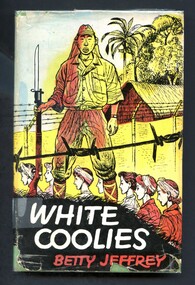
Book - Illustrated Book, Betty Jeffrey 1908-2000 et al, White Coolies, 1954
... Dust jacket has multicoloured illustration by J.P.L Kickhefer on front and spine: group of women, some with head scarves walking behind a ?prison guard, barbed wire topped fence in front of and behind group. ...Dust jacket has multicoloured illustration by J.P.L Kickhefer on front and spine: group of women, some with head scarves walking behind a ?prison guard, barbed wire topped fence in front of and behind group. ...In 1942 a group of sixty-five Australian Army nursing sisters was evacuated from Malaya aboard the Vyner Brooke, a few days before the fall of Singapore. Two days later their ship was bombed and sunk by the Japanese. Of the fifty-three survivors who scrambled ashore, twenty-one were murdered and the remaining thirty-two were taken prisoner. The book is the engrossing record kept by one of the sisters, Betty Jeffrey, during the three grueling years of imprisonment that followed. It is an amazing story of survival and deprivation in the harshest of conditions.Illustrated book with dustjacket. Book has a light green cover, with an image of a compass embossed in gold. on the front. The tile author's surname and publisher's name are embossed in gold on the spine. Dust jacket has multicoloured illustration by J.P.L Kickhefer on front and spine: group of women, some with head scarves walking behind a ?prison guard, barbed wire topped fence in front of and behind group. In the background is a hut and tropical plants. Title (white print) and authors name (red print) appear on a black background at base of front of dustjacket. Title, author's and publisher's names are printed in black on spinenon-fictionIn 1942 a group of sixty-five Australian Army nursing sisters was evacuated from Malaya aboard the Vyner Brooke, a few days before the fall of Singapore. Two days later their ship was bombed and sunk by the Japanese. Of the fifty-three survivors who scrambled ashore, twenty-one were murdered and the remaining thirty-two were taken prisoner. The book is the engrossing record kept by one of the sisters, Betty Jeffrey, during the three grueling years of imprisonment that followed. It is an amazing story of survival and deprivation in the harshest of conditions.world war 1939-1945 prisoners of war, betty jeffrey -
 Port Melbourne Historical & Preservation Society
Photograph - Jennie Baines being released from English prision, c. 1908
... Women Police Sarah Jane 'Jennie' BAINES nee HUNT Laser copy of photograph of Jennie BAINES being released from English prison (a Police record photo) Photograph Jennie Baines being released from English prision ...Laser copy of photograph of Jennie BAINES being released from English prison (a Police record photo)women, police, sarah jane 'jennie' baines nee hunt -
 Alfred Hospital Nurses League - Nursing History Collection
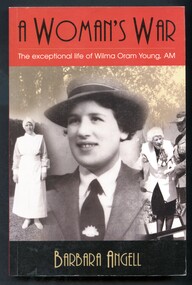
Book - Illustrated book, Barbara Angell 1935, A woman's war; the exceptional life of Wilma Oram Young, AM, 2003
... Wilma Oram Young Nurses-Australia-Biography World Ward 1939-1945-prisoners and prisons-Japaneses This is the story of one of Australia's most remarkable women. ...This is the story of one of Australia's most remarkable women. As a prisoner of war for three and a half years during World War II, Wilma Oram, a young Australian nurse experienced the very worst of human brutality: starvation, deprivation and degradation. Yet, through the comradeship of her fellow prisoners, she also experienced humankind at its best. Following her return to Australia, Wilma was inspired to help her fellow ex-POWs and war veterans through her tireless work with the RSL.Illustrated book, with three black and white photographs of Wilma Oram Young (as student nurse, in army uniform and in older age). There is a mid-brown band above this photo on which the title is printed in black and white, below the photos there is a black band on which the author's name is printed in light brown. Spine has mid brown background with title printed in black, author's name in light brown, and publisher's mark in white. The back cover has a summary of the book printed in black ink on a light brown background.non-fictionThis is the story of one of Australia's most remarkable women. As a prisoner of war for three and a half years during World War II, Wilma Oram, a young Australian nurse experienced the very worst of human brutality: starvation, deprivation and degradation. Yet, through the comradeship of her fellow prisoners, she also experienced humankind at its best. Following her return to Australia, Wilma was inspired to help her fellow ex-POWs and war veterans through her tireless work with the RSL.wilma oram young, nurses-australia-biography, world ward 1939-1945-prisoners and prisons-japaneses -
 Alfred Hospital Nurses League - Nursing History Collection
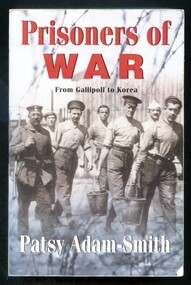
Book - Illustrated book, Patsy Adam-Smith 1924-2001, Prisoners of war: from Gallipoli to Korea, 1998
... Prisoners of war-Australia World War 1914-1918-prisoners and prisons World War 1939-1945-prisoners and prisons Korean War 1950-1953 - prisoners and prisons This book has not been written for ex-prisoners: they know the homesickness of exile, the tyranny of bondage; it was written for those people of today who know little of the experiences of these men and women, of their courage, endurance and pain. ...This book has not been written for ex-prisoners: they know the homesickness of exile, the tyranny of bondage; it was written for those people of today who know little of the experiences of these men and women, of their courage, endurance and pain. It has been written for the generations to come.Illustrated book. The front cover and spine have the same black and white photograph of six men walking ("the guards were old, the soldiers young. Bertie Giles is third from left) Front cover has full title in red and black print, authors name in white print. Spine has abbreviated title in red print, authors name in black and white print and publishers name in black print. Back cover has a black and white photograph of a group of women (Australian nurses, (civilian and army) after being held POW for almost three and a half years by the Japanese). Under this photograph is a summary of the book and information about the author.non-fictionThis book has not been written for ex-prisoners: they know the homesickness of exile, the tyranny of bondage; it was written for those people of today who know little of the experiences of these men and women, of their courage, endurance and pain. It has been written for the generations to come.prisoners of war-australia, world war 1914-1918-prisoners and prisons, world war 1939-1945-prisoners and prisons, korean war 1950-1953 - prisoners and prisons -
 Alfred Hospital Nurses League - Nursing History Collection
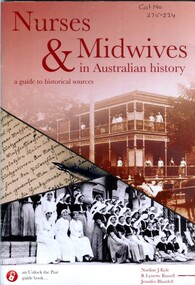
Booklet - Illustrated booklet, Noeline J Kyle 1940- et al, Nurses & Midwives in Australian History: a guide to historical resources, 2015
... This book, written by experts in nursing history, women's history and family history, provides practical advice on how to research the lives of nurses and midwives, the hospitals they trained and worked in, and is a guide to the many public and private repositories where sources are found in Australia, New Zealand and the United Kingdom. Nurses and midwives worked in hospitals, refuges, asylums, prisons ..."Nursing and midwifery have been the occupations of women for centuries and almost every one of us will find an ancestor who engaged in these traditional feminine pursuits. This book, written by experts in nursing history, women's history and family history, provides practical advice on how to research the lives of nurses and midwives, the hospitals they trained and worked in, and is a guide to the many public and private repositories where sources are found in Australia, New Zealand and the United Kingdom. Nurses and midwives worked in hospitals, refuges, asylums, prisons, charitable institutions and were pioneers of bush nursing, established maternity hospitals and were often important health providers in small communities in past decades. The records of their lives are found in a wide range of places, and as well as online and digitised records, this book also points the researcher toward the myriad of documentary and private records which are useful for writing their lives"--back cover.Illustrated booklet with brown, black and white cover, front cover has title, authors and series names, along with three historical photos, nurses standing under the verandah of a building, handwriting witl a metal nib pen, and a group of nurses wearing capes and veils. Back cover has a summary of the book along with a small black and white photograph of a nurses in uniform with long sleeves, apron and capnon-fiction"Nursing and midwifery have been the occupations of women for centuries and almost every one of us will find an ancestor who engaged in these traditional feminine pursuits. This book, written by experts in nursing history, women's history and family history, provides practical advice on how to research the lives of nurses and midwives, the hospitals they trained and worked in, and is a guide to the many public and private repositories where sources are found in Australia, New Zealand and the United Kingdom. Nurses and midwives worked in hospitals, refuges, asylums, prisons, charitable institutions and were pioneers of bush nursing, established maternity hospitals and were often important health providers in small communities in past decades. The records of their lives are found in a wide range of places, and as well as online and digitised records, this book also points the researcher toward the myriad of documentary and private records which are useful for writing their lives"--back cover. nurses-australia-history, midwives-australia-history, obstetrics-australia-history, australia-genealogy-sources -
 Kew Historical Society Inc
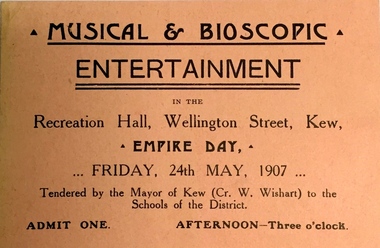
Card - Ticket, Musical and Bioscopic Entertainment, 1907
... He was a strong advocate for women’s rights, believed in compulsory voting, favoured prison reform, opposed religious instruction in State schools, betting including horse racing, Home Rule, alcohol and sought to establish a tourist bureau. ...He was a strong advocate for women’s rights, believed in compulsory voting, favoured prison reform, opposed religious instruction in State schools, betting including horse racing, Home Rule, alcohol and sought to establish a tourist bureau. ...Considered a ‘worthy’ councillor, William [Bill] Wishart was ‘blunt’ in words and actions during his period of civic service. He was concerned with a picturesque Kew. This included street lighting, macadamised roads and improved access to Melbourne. Often accused of being German, he asserted his Australian birth and Scottish heritage. He was a strong advocate for women’s rights, believed in compulsory voting, favoured prison reform, opposed religious instruction in State schools, betting including horse racing, Home Rule, alcohol and sought to establish a tourist bureau. Cr. Wishart was ‘unanimously’ supported to nominate for the vacated seat of Richmond in Victoria’s Legislative Council. He narrowly lost the vote. After a sudden death, he was buried with Presbyterian rites in the Boroondara General Cemetery.Arthur Henry Dear was an employee of the City of Kew, acting as Hall Keeper of the Kew Recreation Hall in Wellington Street, and later the new Kew City Hall in Cotham Road. The Arthur Dear Collection contains memorabilia - tickets, programmes, invitations - as well as his identification badge.Admission ticket to a musical and bioscopic entertainment in the Recreation Hall, Wellington Street, Kew, on Empire Day, Friday 24 May 1907. The ticket was tendered to schools of the district, presumably students and teachers, by the Mayor of Kew, Cr. W. Wishart.arthur dear collection, empire day - kew (vic.), kew recreation hall -- wellington street -- kew (vic.), cr william wishart, mayors of kew -
 Returned Nurses RSL Sub-branch
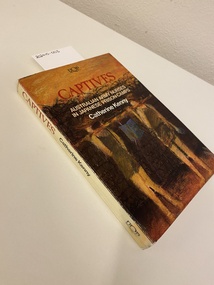
Book, Catherine Kenny et al, Captives : Australian army nurses in Japanese prison camps
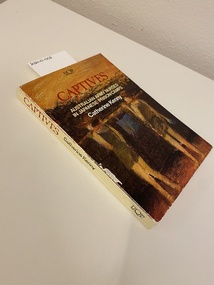
... prison camps. Another group captured in Rabaul were held in Japan, where the cold was as bitter as their hunger. This is the dramatic account of those Australian nurses, of their struggles and their support for each other through the long years of war and captivity. In includes the horrifying story of Vivian Bullwinkel, the sole survivor of the callous massacre on Banka Island where twenty-three women ..."Hunger and humiliation were just some of the privations endured by those members of the Australian Army Nursing Service who were captives of the Japanese during World War II. Of the thirty-two held in Sumatra and on Banka Island, twenty-four survived the severe physical conditions in the prison camps. Another group captured in Rabaul were held in Japan, where the cold was as bitter as their hunger. This is the dramatic account of those Australian nurses, of their struggles and their support for each other through the long years of war and captivity. In includes the horrifying story of Vivian Bullwinkel, the sole survivor of the callous massacre on Banka Island where twenty-three women were ordered into the sea and shot. It records the degradation of the daily 'tenko', the starvation and appalling lack of hygiene, but also tells how the women were at times able to rise above these miseries through their concerts and the soaring harmonies of the voice choir. Catherine Kenny interviewd many of the nurses and collected photographs, diaries and letters from the Australian War Memorial as well as from the women themselves." Blurb on back cover of book.Colour front cover, drawn image of people carrying a pole with a rectangular bucket suspended on the pole, the people wear hats and the sky is an orangey colour. Back cover has some quotes from nurses featured in the book as well as a blurb describing the book. Book is covered in clear contact.non-fiction"Hunger and humiliation were just some of the privations endured by those members of the Australian Army Nursing Service who were captives of the Japanese during World War II. Of the thirty-two held in Sumatra and on Banka Island, twenty-four survived the severe physical conditions in the prison camps. Another group captured in Rabaul were held in Japan, where the cold was as bitter as their hunger. This is the dramatic account of those Australian nurses, of their struggles and their support for each other through the long years of war and captivity. In includes the horrifying story of Vivian Bullwinkel, the sole survivor of the callous massacre on Banka Island where twenty-three women were ordered into the sea and shot. It records the degradation of the daily 'tenko', the starvation and appalling lack of hygiene, but also tells how the women were at times able to rise above these miseries through their concerts and the soaring harmonies of the voice choir. Catherine Kenny interviewd many of the nurses and collected photographs, diaries and letters from the Australian War Memorial as well as from the women themselves." Blurb on back cover of book.wwii, world war 2, world war two, japan, pow, pows, prisoners of war, prisoner of war, australian army nursing service, mitliary nursing, australian army -
 Returned Nurses RSL Sub-branch
Book, Catherine Kenny et al, Captives : Australian army nurses in Japanese prison camps
... women themselves." Blurb on back cover of book. Colour front cover, drawn image of people carrying a pole with a rectangular bucket suspended on the pole, the people wear hats and the sky is an orangey colour. Back cover has some quotes from nurses featured in the book as well as a blurb describing the book. Captives : Australian army nurses in Japanese prison ..."Hunger and humiliation were just some of the privations endured by those members of the Australian Army Nursing Service who were captives of the Japanese during World War II. Of the thirty-two held in Sumatra and on Banka Island, twenty-four survived the severe physical conditions in the prison camps. Another group captured in Rabaul were held in Japan, where the cold was as bitter as their hunger. This is the dramatic account of those Australian nurses, of their struggles and their support for each other through the long years of war and captivity. In includes the horrifying story of Vivian Bullwinkel, the sole survivor of the callous massacre on Banka Island where twenty-three women were ordered into the sea and shot. It records the degradation of the daily 'tenko', the starvation and appalling lack of hygiene, but also tells how the women were at times able to rise above these miseries through their concerts and the soaring harmonies of the voice choir. Catherine Kenny interviewd many of the nurses and collected photographs, diaries and letters from the Australian War Memorial as well as from the women themselves." Blurb on back cover of book.Colour front cover, drawn image of people carrying a pole with a rectangular bucket suspended on the pole, the people wear hats and the sky is an orangey colour. Back cover has some quotes from nurses featured in the book as well as a blurb describing the book. non-fiction"Hunger and humiliation were just some of the privations endured by those members of the Australian Army Nursing Service who were captives of the Japanese during World War II. Of the thirty-two held in Sumatra and on Banka Island, twenty-four survived the severe physical conditions in the prison camps. Another group captured in Rabaul were held in Japan, where the cold was as bitter as their hunger. This is the dramatic account of those Australian nurses, of their struggles and their support for each other through the long years of war and captivity. In includes the horrifying story of Vivian Bullwinkel, the sole survivor of the callous massacre on Banka Island where twenty-three women were ordered into the sea and shot. It records the degradation of the daily 'tenko', the starvation and appalling lack of hygiene, but also tells how the women were at times able to rise above these miseries through their concerts and the soaring harmonies of the voice choir. Catherine Kenny interviewd many of the nurses and collected photographs, diaries and letters from the Australian War Memorial as well as from the women themselves." Blurb on back cover of book.wwii, world war 2, world war two, japan, pow, pows, prisoners of war, prisoner of war, australian army nursing service, mitliary nursing, australian army -
Linton Mechanics Institute and Free Library Collection
Book - Novel, Burroughs, Edgar Rice, The warlord of Mars, 1921
... Fiction Science Fiction Edgar Rice Burroughs The Martian Series The Barzoom Series After the battle at the end of the previous book, which ended with the destruction of the religion of Issus, John Carter's wife and two other women were locked in a slowly rotating prison attached to the Temple of the Sun, each of whose hundreds of cells are only open to the outside world once every year. ...After the battle at the end of the previous book, which ended with the destruction of the religion of Issus, John Carter's wife and two other women were locked in a slowly rotating prison attached to the Temple of the Sun, each of whose hundreds of cells are only open to the outside world once every year. In the meantime, Carter's friend Xodar has become the new Jeddak (chief or king) of the black Martian First Born, and those white Martian therns who reject the old religion likewise gain a new unnamed leader, but there are still some who wish to keep the old discredited religion going, including the therns' erstwhile leader, the Holy Hekkador Matai Shang221p. ; crimson cover with black embossed print and boarderfictionAfter the battle at the end of the previous book, which ended with the destruction of the religion of Issus, John Carter's wife and two other women were locked in a slowly rotating prison attached to the Temple of the Sun, each of whose hundreds of cells are only open to the outside world once every year. In the meantime, Carter's friend Xodar has become the new Jeddak (chief or king) of the black Martian First Born, and those white Martian therns who reject the old religion likewise gain a new unnamed leader, but there are still some who wish to keep the old discredited religion going, including the therns' erstwhile leader, the Holy Hekkador Matai Shangfiction, science fiction, edgar rice burroughs, the martian series, the barzoom series -
 Returned Nurses RSL Sub-branch
Newspaper - Newspaper clipping, Natalia Cuthbertson, Courage and care behind the lines, [24/8/95]
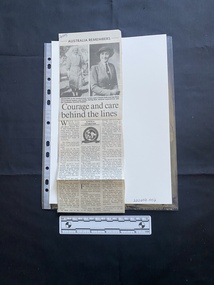
... Prison. Prisoners of War Army Nurses WW2 WWII World War Two Stonnington Moratai TobrukRats Palestine German Jerusalem Syrian Queensland New Guinea Borneo Labuan Island Japan Singapore Alexandria Nazareth India 3UZ Baby Health Centre '24/8/95.' [black ink, top left corner] A newspaper clipping with three columns of text and a title underneath two black and white photos, both of young women ...When talking about World War II, Sisters Gay Mole and Jean Crameri both recall tent hospitals, epidemics, bombs and nursing without hot water and electricity. They also recall hard work, comradeship and bravery. The two women were among the3000 nurses who formed the Australian General Hospital (AGH) during the war. Sister Jean Crameri was working at the Royal Women's Hospital when she volunteered and joined the 2/9th unit of the AGH. She served in the Middle East, nursed survivors of the Kokoda Trail and saw the Commander-in-Chief if the Australian Army, Field Marshall Blamey declare peace in the South West Pacific. Sister Gay Mole was in the Nurses Army Reserve in 1939 in the 2/9th unit, with her war service starting her in Puckapunyal then on to the Middle East. After a several months on Ceylon she was back in Australia before sailing to the Pacific, where she was among the first medical staff into Changi Prison. A newspaper clipping with three columns of text and a title underneath two black and white photos, both of young women in nurse's uniforms.'24/8/95.' [black ink, top left corner]prisoners of war, army nurses, ww2, wwii, world war two, stonnington, moratai, tobrukrats, palestine, german, jerusalem, syrian, queensland, new guinea, borneo, labuan island, japan, singapore, alexandria, nazareth, india, 3uz baby health centre -
 Returned Nurses RSL Sub-branch
Book - Hardcover book, Jessie Elizabeth Simons, While history passed: the story of the Australian Nurses who were prisoners of the Japanese for three and a half years, 1954
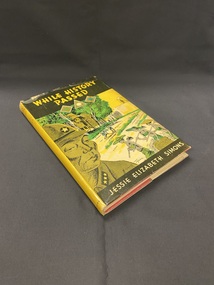
... 'Of historical importance' [taken from back cover] Women prisoners Prisoners of War Australian Nurses World War 2 World War II WWII WW2 Japanese Vyner Brooke Sister Jessie Elizabeth Simons Sister Jessie Elizabeth Simons tells the story of the sixty-five members of the Australian Army Nursing Service who were evacuated from Singapore just before the arrival of the Japanese, their ship was bombed and sunk and they were captured by the Japanese soldiers and held in prison camps until the day of liberation. ...Sister Jessie Elizabeth Simons tells the story of the sixty-five members of the Australian Army Nursing Service who were evacuated from Singapore just before the arrival of the Japanese, their ship was bombed and sunk and they were captured by the Japanese soldiers and held in prison camps until the day of liberation.Hardcover book with a dustjacket firmly attached. There is a black panel across the top with the title in yellow print and another thinner black panel across the bottom with the author's name in cream coloured print. The front cover shows an illustration of a Japanese soldier in the foreground and behind him are eight women working in a field, they are being watched by an armed soldier stationed at a lookout on a wall behind them. The image is in black, green and yellow.non-fictionSister Jessie Elizabeth Simons tells the story of the sixty-five members of the Australian Army Nursing Service who were evacuated from Singapore just before the arrival of the Japanese, their ship was bombed and sunk and they were captured by the Japanese soldiers and held in prison camps until the day of liberation.women prisoners, prisoners of war, australian nurses, world war 2, world war ii, wwii, ww2, japanese, vyner brooke, sister jessie elizabeth simons
