
Showing 51 items matching "women’s health education"
-
 Warrnambool and District Historical Society Inc.
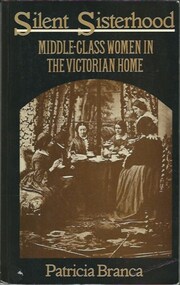
Book, Printed in England by Redwood Burn Ltd, Trowbridge and Esher. ISBN 0-85664-698-9, Silent Sisterhood. Middle-class Women in the Victorian Home. Author Patricia Branca, Printed 1977
... women...nineteenth century...women’s health education...women of the Victorian Era. It examines health and domestic matters such as budgeting, child rearing, infant health and contraception. The relevant period of history which it examines, was a time of change for women with the granting of the vote giving them a political voice. victorian middle-class women nineteenth century women’s health education modernization Warrnambool Study of the place and life of middle-class Victorian era women. ...Study of the place and life of middle-class Victorian era women.Black paperback with gold text. Front cover depicts Sepia toned photograph of six women having tea. Back cover is black with recommendations and information about contents of the book.non-fictionStudy of the place and life of middle-class Victorian era women.victorian, middle-class, women, nineteenth century, women’s health education, modernization, warrnambool -
 Federation University Historical Collection
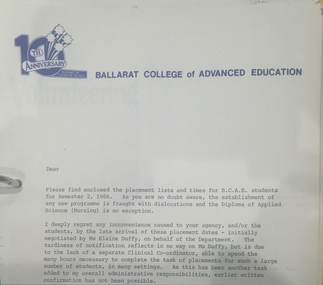
Document - Folder, Margaret Stevens Nursing (Clinical Experience) Folder, 1981-1986
... Health, and was identified as follows R.N.; B.App.Sc (Nursing); Post Basic: DipEd(N); Kellogg Fellow (USA 1984-85), M.Ed. (USA) & 1st program of M.Ethics nursing anniverary letterhead ballarat college of advanced education elaine duffy jan drennan University Women Grey lever arch folder of notes, faxes and timetables relating to the teaching of the Diploma pf Applied Science (Nursing) at Ballarat College of Advanced Education (now Federation University Australia). ...Margaret Stevens was the inaugural Head of Nursing at the Ballarat College of Advanced Education from June 1985 until her retirement in 1989. During the 1980s there was a growing acceptance around Australia that Nurse Education needed to be more science based to allow nurses to cope with the vastly increased appearance of technological devices in the hospital wards. The response was to shift such training into Higher Education institutions. The State Government decided that Nurse Training in Ballarat should move from the Hospital to Ballarat College of Advanced Education. in 1986. Margaret Stevens had been a senior Nurse Educator at the Ballarat Base Hospital for many years and was selected by mutual agreement between the two institutions to devise the new course and plan its implementation so that it would gain the approval of the Nurse Registration authority. In addition to consulting widely with other Nurse Education specialists and supporting departments in Ballarat College of Advanced Education, Margaret negotiated with over 70 medical establishments to work out arrangements by which the students would be placed in work experience as required by the course. She was also involved in the required additional staff appointments and in planning for a new building on Campus. The course was commenced in 1986 and the transition successfully achieved, thanks largely to Margaret's diligence. In 1987 the Review of Registration of Health Practitioners interim report was published by the Health Department Victoria. Margaret Stevens was appointed by the Health Minister to represent the College of Nursing, Australia. This was a landmark review with long-reaching implications. At the time of her death on 23 March 2015 she was a member of the Board of Ballarat Community Health, and was identified as follows R.N.; B.App.Sc (Nursing); Post Basic: DipEd(N); Kellogg Fellow (USA 1984-85), M.Ed. (USA) & 1st program of M.Ethics Grey lever arch folder of notes, faxes and timetables relating to the teaching of the Diploma pf Applied Science (Nursing) at Ballarat College of Advanced Education (now Federation University Australia). Includes a letter of Ballarat College on Advanced Education 10th Anniversary letterhead, student lists, student placement, timetablesnursing, anniverary, letterhead, ballarat college of advanced education, elaine duffy, jan drennan, university women -
 Federation University Historical Collection
Article - Article - Women, Federation University: Women of Note; Dr Doris Paton, Academic and Aboriginal Elder
... Health Professionals. Her work has been presented at conferences including the World Indigenous Peoples Conference on Education, and recognised with several awards including the GippsTAFE Staff Excellence Awards in the Community Development, and Personal Achievement categories, The Wurreker Award for Community Based Employee, and the Parks Victoria Regional Achiever Award. women of note federation university doris paton aboriginal elder academic aboriginal languages monash university gippsland graduate diploma education bachelor of arts master of education phd philosophy victorian aboriginal languages corporation vacl councillor Federation University: Women of Note; Dr Doris Paton, Academic and Aboriginal Elder. ...Dr Doris Paton is an accomplished academic and respected Aboriginal Elder with a passion for the advancement of First Nations People through education, and the reclamation and revival of Aboriginal languages across Australia. She graduated with a Bachelor of Arts (Social Science) from Monash University, Gippsland campus in 1993, and went on to complete a Graduate Diploma Education (Secondary); Master of Education Studies (Aboriginal Education); Master of Education (Aboriginal Education); and a PhD Philosophy (Education). Her skill and expertise have been acknowledged through roles as Director Vice-Chairperson of the Victorian Aboriginal Languages Corporation (VACL) and as Chairperson of the Victorian Indigenous Languages Implementation Reference Group, Victorian Curriculum Assessment Authority, where she developed the framework to accredit “Indigenous Languages of Victoria: Revival and Reclamation”, a VCE accredited subject contributing toward the preservation of Indigenous languages across Australia. A Federation University Council Member since 2020, Doris is also long-serving Director of the Nindi Ngujarn Ngarigo Monero Aboriginal Corporation; and has served on boards for Parks Victoria, the Victorian Aboriginal Heritage Council, and the East Gippsland School for Aboriginal Health Professionals. Her work has been presented at conferences including the World Indigenous Peoples Conference on Education, and recognised with several awards including the GippsTAFE Staff Excellence Awards in the Community Development, and Personal Achievement categories, The Wurreker Award for Community Based Employee, and the Parks Victoria Regional Achiever Award.women of note, federation university, doris paton, aboriginal elder, academic, aboriginal languages, monash university gippsland, graduate diploma education, bachelor of arts, master of education, phd philosophy, victorian aboriginal languages corporation, vacl, councillor -
Federation University Historical Collection
Article - Article - Women, Ballarat College of Advanced Education: Women of Note; Dulcie Brooke (1927 - 2023)
... women of note...dulcie brooke...science...librarian...institute of occupational safety and health...viosh...ballarat college of advanced education...women in 1979. Dulcie was one of those who are thought to be among the original members for Wendouree. Ballarat College of Advanced Education established a Health and Safety course.This became known as the Victorian Institute of Occupational Safety and Health, Australia (VIOSH) beginning in 1979. ...Education and became part of the initial group in presenting the course. Dulcie had science qualifications and was a bacteriologist. She was involved with the library aspect of the course and informed on the selecting of resources. In the early 1990s, Max became ill and Dulcie retired to care for him. Max died in 1992 and Dulcie established the Max Brooke Memorial Shield in his memory. This was presented by Dulcie to the winner of the Award at the Presentation Dinner every year from 1993 to 2010. women of note dulcie brooke science librarian institute of occupational safety and health ...Dulcie Brooke (nee Hoffman) was born in 1927. The history of women and the Wendouree Amateur Athletic Club seems to be very closely linked to that of women's athletics in Ballarat. Club photos of the 1953/54 season are the first to show women to be represented among the numbers who competed for Wendouree. However the Kevin Ruddick book, Always Striving - The Ballarat Harriers First 100 Years, notes that a Ballarat Harriers Women's Club was formed in September 1952 to compete against a Wendouree team and also mentions the Harriers women winning the premiership of 1953. Whatever the chronology, what is for certain is that Wendouree was at the forefront of the development of women's athletics in Ballarat and continued to be so until the unification of the sport for both men and women in 1979. Dulcie was one of those who are thought to be among the original members for Wendouree. Ballarat College of Advanced Education established a Health and Safety course.This became known as the Victorian Institute of Occupational Safety and Health, Australia (VIOSH) beginning in 1979. Max and Dulcie Brooke were members of Staff at Ballarat Institute of Advanced Education and became part of the initial group in presenting the course. Dulcie had science qualifications and was a bacteriologist. She was involved with the library aspect of the course and informed on the selecting of resources. In the early 1990s, Max became ill and Dulcie retired to care for him. Max died in 1992 and Dulcie established the Max Brooke Memorial Shield in his memory. This was presented by Dulcie to the winner of the Award at the Presentation Dinner every year from 1993 to 2010.women of note, dulcie brooke, science, librarian, institute of occupational safety and health, viosh, ballarat college of advanced education, university of ballarat, max brooke, max brooke memorial shield, wendouree amateur athletica club, women of wendouree, dulcie hoffman, 1927-2023, 1979, bacteriologist -
 Federation University Historical Collection
Article - Article - Women, Ballarat School of Mines: Women of Note; Kerrie Cross, Councillor, 1987
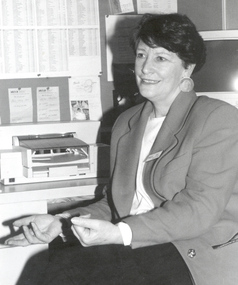
... women of note...ballarat school of mines...school council...first female senior vice president...regional manager...department of community services...assistant regional director...department of health...central highlands...wimmera...technical and further education...Health in the Central Highlands/Wimmera region. She has stated she is particularly interested in the development of SMB as a community college and its increasing accessibility to Technical and Further Education for all groups. . women of note ballarat school of mines school council first female senior vice president regional manager department of community services assistant regional director department of health central highlands wimmera technical and further education for all groups equal opportunity committee Ballarat School of Mines: Women of Note; Kerrie Cross, Councillor, 1987 Article Article - Women ...Kerrie Cross was a member of the Ballarat School of Mines Council from 1985 to 1992. In 1987 she was appointed as the first female senior vice president of the School of Mines Council. She was the President from 1988 to 1991. Prior to this she chaired the equal opportunity committee at the school. Kerrie has been the regional manager of the Department of Community Services and now the assistant regional director for the Department of Health in the Central Highlands/Wimmera region. She has stated she is particularly interested in the development of SMB as a community college and its increasing accessibility to Technical and Further Education for all groups. .women of note, ballarat school of mines, school council, first female senior vice president, regional manager, department of community services, assistant regional director, department of health, central highlands, wimmera, technical and further education for all groups, equal opportunity committee -
Federation University Historical Collection
Book - Book - Scrapbook, Ballarat College of Advanced Education: Scrapbook of newspaper cutting, Book 12; November 1982 to May 1983
... women turn to tertiary study...health safety factors in new technology...screen based equipment...breaking the sound barrier...euan pescott achievements despite deafness...mars factory to use wind power...foundry way ceramics display...data bank in ballarat...trading hours truths exposed...fashion and fabric design...greg mannix formerly of ballarat...science courses could be tougher...farmer-turned-teacher...barrymacklin...teachers urged to encourage students...drawn into war...geoff mainwarring...when people need help...anz bank gives new computer...deans meet in ballarat...mining education...The cuttings cover the period from 30 November 1982 to 19 May 1983. . employment advertisements application for enrolment outline of courses new technology special concerts in founders hall spiros rantos exhibition by students new computer course electrical engineeringto the fore beaufort house to remain open bogus surveys warning young potters show wares adolescent drinking sheryl upton research ballarat leads in industrial safety marooned in antarctica dick richards student accommodation second priority victor edward greenhalgh ballarat sculptor myths about pocket money rosemary selkirk women turn to tertiary study health safety factors in new technology screen based equipment breaking the sound barrier euan pescott achievements despite deafness mars factory to use wind power foundry way ceramics display data bank in ballarat trading hours truths exposed fashion and fabric design greg mannix formerly of ballarat science courses could be tougher farmer-turned-teacher barrymacklin teachers urged to encourage students drawn into war geoff mainwarring when people need help anz bank gives new computer deans meet in ballarat mining education returns 'home' bcae centre of mining engineering high technology not a solution printmaker buys rare old press Book with beige cover, front. ...Newspaper cuttings relating to Ballarat College of Advanced Education. These are from various newspapers and include The Age, Ballarat Courier, The Australian, The Herald. The cuttings cover the period from 30 November 1982 to 19 May 1983. . Book with beige cover, front. Spiral bound.employment advertisements, application for enrolment, outline of courses, new technology, special concerts in founders hall, spiros rantos, exhibition by students, new computer course, electrical engineeringto the fore, beaufort house to remain open, bogus surveys warning, young potters show wares, adolescent drinking, sheryl upton research, ballarat leads in industrial safety, marooned in antarctica, dick richards, student accommodation second priority, victor edward greenhalgh ballarat sculptor, myths about pocket money, rosemary selkirk, women turn to tertiary study, health safety factors in new technology, screen based equipment, breaking the sound barrier, euan pescott achievements despite deafness, mars factory to use wind power, foundry way ceramics display, data bank in ballarat, trading hours truths exposed, fashion and fabric design, greg mannix formerly of ballarat, science courses could be tougher, farmer-turned-teacher, barrymacklin, teachers urged to encourage students, drawn into war, geoff mainwarring, when people need help, anz bank gives new computer, deans meet in ballarat, mining education returns 'home', bcae centre of mining engineering, high technology not a solution, printmaker buys rare old press, -
Federation University Historical Collection
Book - Book - Scrapbook, Ballarat School of MInes: Scrapbook of Newspaper Cuttings, Book 32, July 1987 to October 1987
... education and health...increase student places at smb...dennis else speaks to u 3 a group...silence is not always golden...hearing help card...hospitality - boom industry...illiteracy 'life of deception'...flauto dolce recorder ensemble...michelle carra hairdressing winner...aboriginal women's program...self-awareness program...jack barker retirement...aboriginal studies in primary schools...pat watson welding course...brendan broadbent farming apprentice...new directions at bcae...dr john sharpham...basic electronics for women...The papers concerned are The Courier, Ballarat, The Australian, The Age over the period of 22 July to 3 October 1987. teaching positions advertised pre-employment courses courses available smb workshops on welfare industry ballarat mayoe jim reeves presentations to apprentices cut-price cuts to help campus hair-athon ballarat east recreation centre new course for single parents at smb community radio in smb complex jodi jobling fights jobless vicious circle fix it yourself workshop debra medwell awarded real estate scholarship ballarat east free library back in use by smb $1.2 million for building upgrade at smb bcae nursing education apprentices win crop award david loader greg taylor brett gervason mark clementson damian leonard lecturer john taylor grants for education and health increase student places at smb dennis else speaks to u 3 a group silence is not always golden hearing help card hospitality - boom industry illiteracy 'life of deception' flauto dolce recorder ensemble michelle carra hairdressing winner aboriginal women's program self-awareness program jack barker retirement aboriginal studies in primary schools pat watson welding course brendan broadbent farming apprentice new directions at bcae dr john sharpham basic electronics for women at smb Book with green cover, front, spiral bound. ...Collection of newspaper articles related to Ballarat School Of Mines.They cover activities and advertisements for staff. The papers concerned are The Courier, Ballarat, The Australian, The Age over the period of 22 July to 3 October 1987.Book with green cover, front, spiral bound. teaching positions advertised, pre-employment courses, courses available, smb workshops on welfare industry, ballarat mayoe jim reeves, presentations to apprentices, cut-price cuts to help campus, hair-athon, ballarat east recreation centre, new course for single parents at smb, community radio in smb complex, jodi jobling fights jobless vicious circle, fix it yourself workshop, debra medwell awarded real estate scholarship, ballarat east free library back in use by smb, $1.2 million for building upgrade at smb, bcae nursing education, apprentices win crop award, david loader, greg taylor, brett gervason, mark clementson, damian leonard, lecturer john taylor, grants for education and health, increase student places at smb, dennis else speaks to u 3 a group, silence is not always golden, hearing help card, hospitality - boom industry, illiteracy 'life of deception', flauto dolce recorder ensemble, michelle carra hairdressing winner, aboriginal women's program, self-awareness program, jack barker retirement, aboriginal studies in primary schools, pat watson welding course, brendan broadbent farming apprentice, new directions at bcae, dr john sharpham, basic electronics for women at smb -
 Greensborough Historical Society
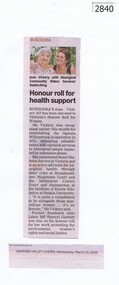
Newspaper Clipping, Diamond Valley Leader, Honour roll for health support, 23/03/2016
... Bundoora woman Joan Vickery was elevated to Victoria's Honour Roll for Women for her work in Aboriginal health and education....Bundoora woman Joan Vickery was elevated to Victoria's Honour Roll for Women for her work in Aboriginal health and education. joan vickery News clipping, black text, colour image. ...Bundoora woman Joan Vickery was elevated to Victoria's Honour Roll for Women for her work in Aboriginal health and education.News clipping, black text, colour image.joan vickery -
 Kiewa Valley Historical Society
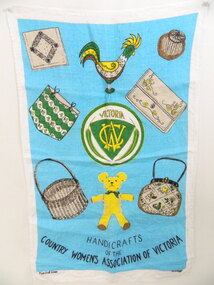
Towel Tea CWA
... The C.W.A. aimed to improve health, welfare and education for women and children in the country....The C.W.A. aimed to improve health, welfare and education for women and children in the country. ...The Tawonga branch of the C.W.A. commenced on the 7th Feb. 1946 and often combined activities with the other branches in the Kiewa Valley. The C.W.A. aimed to improve health, welfare and education for women and children in the country.Women living in Tawonga were mostly on farms and, in 1946, when the branch commenced would have been feeling more remote with WW11 having had an effect of available workers and the well being of the women and children. This tea towel would have been used at a later date possibly for fund raising as the group continued to meet and work together.This large blue green, yellow, brown and black with a white border, linen, tea towel has the CWA logo in the middle with pictures of handcrafted items surrounding it. Along the bottom is printed: "Handicrafts / of the / Country Women's Association of Victoria."Handicrafts / of the / Country Women's Association of Victoria - along the bottom Pure Irish Linen - bottom left Dummay - bottom righttea towel, cwa, tawonga, kitchen, linen -
 Kiewa Valley Historical Society
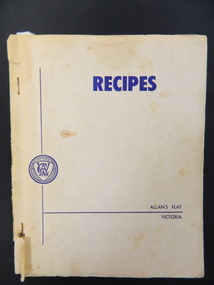
Book - Country Women's Association of Victoria, Recipes
... The Country Women's Association of Victoria aimed to improve the health, welfare and education for women and children in the country. ...The Country Women's Association of Victoria aimed to improve the health, welfare and education for women and children in the country. ...The Country Women's Association of Victoria aimed to improve the health, welfare and education for women and children in the country. Many groups in country Victoria existed including one at Allan's Flat in the north east.The ladies of the Tawonga CWA branch supported the Allan's Flat branch as this book was amongst a Tawonga member's belongings. The visiting and communication between other branches supported the aims of the CWA organisation.White book with 36 pages held together with 2 rusting staples. In dark blue the title, CWA logo and Allan's Flat / Victoria are written. The recipes are typed in blue.cwa. recipes. allan's flat. cooking. -
 Kiewa Valley Historical Society
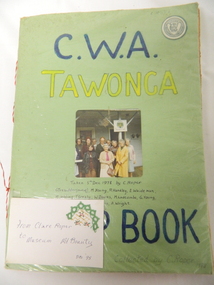
Scrap Book - C.W.A. Tawonga, C. W. A. Tawonga by Clare Roper, Dec. 1995
... The C.W.A. aimed to improve the health, welfare and education of women and children in the country. ...The C.W.A. aimed to improve the health, welfare and education of women and children in the country. ...CWA Tawonga 1946 - 1988 collection of its written history. The C.W.A. aimed to improve the health, welfare and education of women and children in the country. The book gives examples of all activities the members were involved in over the years and their involvement with other CWA groups in the North East of Victoria. Through the photos it also gives a good example of women's fashions over the years.History of CWA Tawonga by Clare Roper, President, founding member and local resident. Women in Tawonga were mostly on farms and in 1946 felt remote after WWII as it affected available workers and the well being of children. The Country Women's Association improved the living conditions and well being of members in the Kiewa Valley community.Scrap book with block handwritten and coloured heading. Cover: Centre middle has a coloured photo of 10 ladies standing below a CWA logo. Covered with clear plastic. Consists of photos, newspaper clippings and typed sheets."CWA Tawonga from 1946 collected by C. Roper" - top of front pagecountry women's association; clare roper; tawonga; -
 Kiewa Valley Historical Society
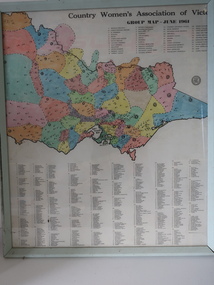
Framed Map - CWA- Tawonga
... The CWA aimed to improve health welfare, and education for women and children living in the country....The CWA aimed to improve health welfare, and education for women and children living in the country. ...CWA of Victoria was a popular widely known organisation throughout Australia. The CWA aimed to improve health welfare, and education for women and children living in the country.Each town / area in the Kiewa Valley had an active CWA. The Tawonga branch commenced in Feb. 1946 and often combined activities with other branches of the Kiewa Valley.Country Women's Association of Victoria Group Map, June 1961. each area is colored ad each wit a letter of the alphabet. each group has a number and is listed. eg. blue, 'N' and "Tawonga 14' country women's association, map of cwa groups, tawonga cwa -
 Kiewa Valley Historical Society
Case - C.W.A. Collection
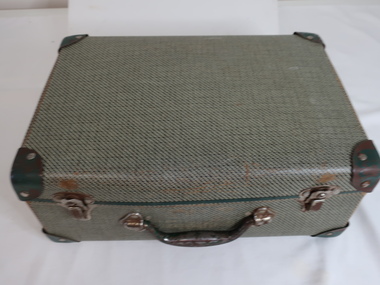
... The Tawonga branch of the Country Women's Association commenced on the 7th February 1946 and often combined activities with the other branches in the Kiewa Valley. The C.W.A. aimed to improve the health, welfare and education for women and children in the country....The Tawonga branch of the Country Women's Association commenced on the 7th February 1946 and often combined activities with the other branches in the Kiewa Valley. The C.W.A. aimed to improve the health, welfare and education for women and children in the country. ...The Tawonga branch of the Country Women's Association commenced on the 7th February 1946 and often combined activities with the other branches in the Kiewa Valley. The C.W.A. aimed to improve the health, welfare and education for women and children in the country.Women living in Tawonga were mostly on farms and in 1946, when the branch commenced, would have been feeling more remote with WWII having had an effect on available workers and the well being of the women and children.Black and white case with reinforced corners on the lid an container, metal handle and metal clip fasteners. A hard case of reinforced cardboard. Includes: C,W.A. magazines from the hears 2000 onwards. Recipe book 1978, badges, Inside the lid "Tawonga CWA Secretary's Case"country women's association, tawonga cwa -
 Kiewa Valley Historical Society
Papers - Certificates - Edward Maddison
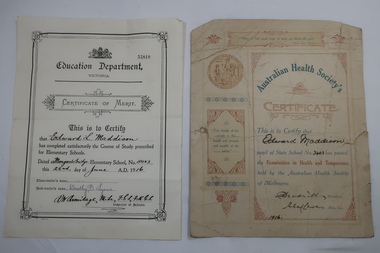
... Health Society was formed in Melbourne in 1875 at the instigation of Unitarian Minister MarthaTurner. It promoted hygiene and comprised of doctors, prominent citizens and politicians. It targeted poorer districts and women. Schools were pressured to place health education...Health Society was formed in Melbourne in 1875 at the instigation of Unitarian Minister MarthaTurner. It promoted hygiene and comprised of doctors, prominent citizens and politicians. It targeted poorer districts and women. Schools were pressured to place health education ...The Australian Health Society was formed in Melbourne in 1875 at the instigation of Unitarian Minister MarthaTurner. It promoted hygiene and comprised of doctors, prominent citizens and politicians. It targeted poorer districts and women. Schools were pressured to place health education on the curriculum. Society stalwarts made an annual examination in state schools. Mongan's Bridge No. 3403 opened in 1902. It was located beside the Kiewa river and operated part-time with nearby schools on occasions as well as full time. As numbers fluctuated it was also closed on occasions and then re-opened.Edward Maddison's family were farmers in the Kiewa Valley and the children attended the local school.Two certificates belonging to Edward Maddison 1. 1916 Pupil of State School No 3403 (Mongan's Bridge) - passed the Examination in Health and Temperance held by the Australian Health Society of Melbourne 2. 1916 Completed satisfactorily the Course of Study prescribed for Elementary Schools.- Mongan's Bridge Elementary School No. 3403edward maddison, australian health society, mongan's bridge school -
 Kiewa Valley Historical Society
Tins - Tobacco (Lucky Hit) x4, Mid to late 1900s Possibly c1910
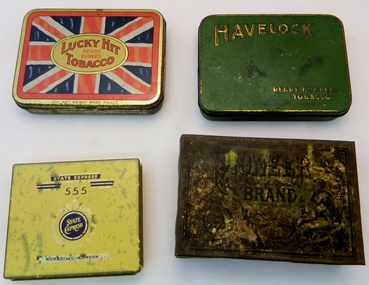
... women. Cigarette smoking before the 1900s was seen as rough and uncouth (socially frowned upon), however after the introduction of overseas films (U.K. and U.S.A.) and film stars presenting smoking as socially acceptable the rise of smoking cigarettes, especially roll you own (American western movies) in rural areas was an accepted way of life. Things however started to change in the mid 1900s when medical evidence pointed to the health problems of regular smokers. Governments were now implementing non smoking education...women. Cigarette smoking before the 1900s was seen as rough and uncouth (socially frowned upon), however after the introduction of overseas films (U.K. and U.S.A.) and film stars presenting smoking as socially acceptable the rise of smoking cigarettes, especially roll you own (American western movies) in rural areas was an accepted way of life. Things however started to change in the mid 1900s when medical evidence pointed to the health problems of regular smokers. Governments were now implementing non smoking education ...The British Australasian Tobacco Co. (based in Melbourne and Sydney. The parent company was founded in England, circa 1902). This item "Lucky Hit" was the fore runner of the "Lucky Strike" brand name. The ready rubbed tobacco held within the tin was mainly used by those smokers who rolled their own cigarettes. These smokers would have mainly used their palm and formed a cup then placing their choice of the amount of tobacco to be rolled. This would then be placed on the fine cigarette paper and rolled and sealed (using saliva in the mouth) into the required shape. There were mechanical "roll you own" gadgets on the market but most rural users, especially males used their palms. The quantity of tobacco used to make up the cigarette was up to the individual user. The thinner that the cigarette was rolled the longer and more economical did the supply last. The by -products of this method were nicotine stained fingers and hands. "Chain" smokers were easily identified and could therefore be discriminated against obtaining smoke sensitive employment. The two world wars (1914-18 and1939-45) produced a significant rise in the consumption of cigarette use by men and the eventual overflow to women. Cigarette smoking before the 1900s was seen as rough and uncouth (socially frowned upon), however after the introduction of overseas films (U.K. and U.S.A.) and film stars presenting smoking as socially acceptable the rise of smoking cigarettes, especially roll you own (American western movies) in rural areas was an accepted way of life. Things however started to change in the mid 1900s when medical evidence pointed to the health problems of regular smokers. Governments were now implementing non smoking education material. Restrictions on where and when smoking was permitted and acceptable started to creep into all areas of society whether city or rural. This was the era that highlighted the use of roll your own cigarettes, especially when the costs of "tailor made" cigarettes were taxed at an increasing amount. Roll your own cigarettes also provided an avenue for the consumption of illicit drug use.The significance of this ready rubbed tobacco tin to this rural region is, stems from how much influence that the Western novels and overseas films (portraying rural lifestyles) played in shaping the rural social and working mores of the Kiewa Valley. The post war depression (financially) resulted in more smokers turning away from expensive machine (tailor) made cigarettes to the roll your own, using ready rubbed tobacco. This tobacco tin relays a long ago era, when personal contact, and not something that has been written down by some "unknown", was valued as the true appraisal of a member of the community. This was especially relevant in a small regional area such as the Kiewa Valley. Although social networking was not as fast then as the internet provides now, appearances, manners, fashion and etiquette with first impressions high on the order of evaluating someone in the community. Pointer such as the brand of tobacco smoked was part of the rural assessment method. Up until the demise of the Australian Tobacco Industry, circa 2004, the Kiewa Valley and surrounding district was part of a vibrant producer of tobacco leaves. The remnants of this industry still remain today but the drying sheds (for tobacco leaves) are now used to store hay for the valley's dairy and beef cattle industries. Tins 2,3 and 4 were found (in 2009) at Wallace's Hut on the Bogong High Plains. This tobacco tin is constructed from tin plated thin rolled steel. The lid is attached by two pressed and formed (from the main frame) hinges using the nip and tuck construction method. The lid and outside frame have been gold & silver anodised. Tins 2,3 and 4 have the Union Jack on the front lid. One is too rusty to read. The other two have "A blend containing choice selected Australian grown leaf" in white across the bottom on the red border and above the "2oz net weight when packed". In the centre and on the outside of the lid and surrounded by a reproduction of the "Union Jack" is stamped, "Lucky Hit Tobacco" within these words are also stamped "Ready Rubbed". The bottom of the lid is stamped (in smaller script) "2oz NET WEIGHT WHEN PACKED" and underneath this and on the rim of the lid is "THE BRITISH AUSTRALASIAN TOBACCO CO. PTY. LTD. MELBOURNE" on the inside of the lid and stamped in black print on a gold anodised lid is " NOTICE "(underlined) "Every tin of genuine "Lucky Hit has the name of the Manufacturing Company printed on wax paper lining; also on the band or wrapper with which the tin is sealed. THE BRITISH-AUSTRALIAN TOBACCO CO. PTY. LTD., MELBOURNE" and underneath this and underlined is " None genuine without the band or wrapper" On the hinge side of the lid is "LUCKY HIT READY RUBBED TOBACCO" Tins 2,3 and 4 Vary to the above inscription.roll your own, cigarette tins, smoking accessories, personal effects, tobacco containers, tobacco -
 Kiewa Valley Historical Society
Tin Tobacco, Mid to late 1900s
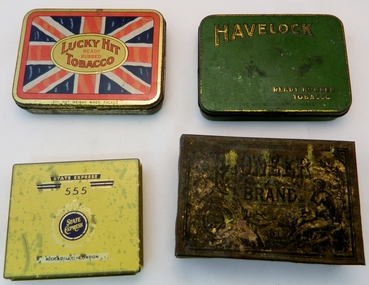
... women. Cigarette smoking before the 1900s was seen as rough and uncouth (socially frowned upon), however after the introduction of overseas films (U.K. and U.S.A.) and film stars presenting smoking as socially acceptable, the rise of smoking cigarettes, especially roll you own (American western movies) in rural areas was an accepted way of life. Things however started to change in the mid 1900s when medical evidence pointed to the health problems of regular smokers. Governments were now implementing non smoking education...women. Cigarette smoking before the 1900s was seen as rough and uncouth (socially frowned upon), however after the introduction of overseas films (U.K. and U.S.A.) and film stars presenting smoking as socially acceptable, the rise of smoking cigarettes, especially roll you own (American western movies) in rural areas was an accepted way of life. Things however started to change in the mid 1900s when medical evidence pointed to the health problems of regular smokers. Governments were now implementing non smoking education ...The British Australasian Tobacco Co. (based in Melbourne and Sydney. The parent company was founded in England, circa 1902). This item "HAVELOCK" is one of many ready rubbed tobacco tins produced by the British Australasian Tobacco Company.The ready rubbed tobacco held within the tin was mainly used by those smokers who rolled their own cigarettes. These smokers would have mainly used their palm and formed a cup then placing their choice of the amount of tobacco to be rolled. This would then be placed on the fine cigarette paper and rolled and sealed (using saliva in the mouth) into the required shape. There were mechanical "roll you own" gadgets on the market but most rural users, especially males used their palms. The quantity of tobacco used to make up the cigarette was up to the individual user. The thinner that the cigarette was rolled the longer and more economical did the supply last. The by -products of this method were nicotine stained fingers and hands. "Chain" smokers were easily identified and could therefore be discriminated against obtaining smoke sensitive employment. The two world wars (1914-18 and1939-45) produced a significant rise in the consumption of cigarette use by men and the eventual overflow to women. Cigarette smoking before the 1900s was seen as rough and uncouth (socially frowned upon), however after the introduction of overseas films (U.K. and U.S.A.) and film stars presenting smoking as socially acceptable, the rise of smoking cigarettes, especially roll you own (American western movies) in rural areas was an accepted way of life. Things however started to change in the mid 1900s when medical evidence pointed to the health problems of regular smokers. Governments were now implementing non smoking education material. Restrictions on where and when smoking was permitted and acceptable started to creep into all areas of society whether city or rural. This was the era that highlighted the use of roll your own cigarettes, especially when the costs of "tailor made" cigarettes were taxed at an increasing amount. Roll your own cigarettes also provided an avenue for the consumption of illicit drug use.The significance of this ready rubbed tobacco tin to this rural region is, stems from how much influence that the Western novels and overseas films (portraying rural lifestyles) played in shaping the rural social and working mores of the Kiewa Valley. The post war depression (financially) resulted in more smokers turning away from expensive machine (tailor) made cigarettes to the roll your own, using ready rubbed tobacco. This tobacco tin relays a long ago era, when personal contact, and not something that has been written down by some "unknown", was valued as the true appraisal of a member of the community. This was especially relevant in a small regional area such as the Kiewa Valley. Although social networking was not as fast then as the internet provides now, appearances, manners, fashion and etiquette with first impressions high on the order of evaluating someone in the community. Pointer such as the brand of tobacco smoked was part of the rural assessment method. Up until the demise of the Australian Tobacco Industry, circa 2004, the Kiewa Valley and surrounding district was part of a vibrant producer of tobacco leaves. The remnants of this industry still remain today but the drying sheds (for tobacco leaves) are now used to store hay for the valley's dairy and beef cattle industries.This tobacco tin is constructed from tin plated thin rolled steel. The lid is attached by two pressed and formed (from the main frame) hinges using the nip and tuck construction method.The lid and outside frame have had a green "weave" pattern anodised to the metal.On the outside of the lid and at the top left is stamped, in gold coloured letters "HAVELOCK". The bottom of the lid is stamped (in smaller script) "READY RUBBED TOBACCO" and below this in smaller lettering "2oz NET WEIGHT WHEN PACKED". On the rim of the lid is "THE BRITISH AUSTRALASIAN TOBACCO CO. PTY. LTD." Inside of the lid and stamped in black print on a gold anodised lid is "Every tin of genuine HAVELOCK Ready Rubbed Tobacco has the mane Havelock printed on the paper lining, and also on the band or wrapping sealing the tin. On the hinge side of the lid is "HAVELOCK READY RUBBED"roll your own, cigarette tins, smoking accessories, personal effects, tobacco containers -
 Kiewa Valley Historical Society
Book - Country Women's Association of Victoria, Victoria C.W.A. / For Country and City Women
... The C.W.A. aimed to improve health, welfare and education for women and children in the country ....The C.W.A. aimed to improve health, welfare and education for women and children in the country . ...Historical: This book covers all aspects of the C.W.A. including its history. The Tawonga branch of the C.W.A. commenced on the 7th Feb. 1946 and often combined activities with the other branches in the Kiewa Valley. The C.W.A. aimed to improve health, welfare and education for women and children in the country .Women living in Tawonga were mostly on farms and, in 1946, when the branch commenced, would have been feeling more remote with WW11 having had an effect on available workers and the well being of the women and children.Small 17 page book with white cardboard cover and green writing. Pages are held together with 2 staples. Cover: "The Country Women's Association / of Victoria Inc. / For Country and City Women / Victoria (with logo underneath) Address and contact details beneathcountry women's association of victoria. c.w.a.. tawonga. -
 Kiewa Valley Historical Society
Book - Country Women's Association of Victoria, The Official Annual of The Country Women's Association of Victoria, 1971
... The C.W.A. aimed to improve the health, welfare and education for women and children in the country....The C.W.A. aimed to improve the health, welfare and education for women and children in the country. ...The Tawonga branch of the C.W.A. was formed on the 7th Feb. 1946. They had 45 members by the end of the year. A scrap book (KVHS 0750) exists with a list of names of members for each year up to 1988 and articles from the newspaper. The Tawonga branch often combined activities with the other branches in the Kiewa Valley. The C.W.A. aimed to improve the health, welfare and education for women and children in the country.Women living in Tawonga were mostly on farms and, in 1946, when the branch commenced would have been feeling more remote with WW11 having had an effect on available workers and the well being of the women and children.Small green cardboard covered book with yellow border and logo (in middle) and with black printing. It has 48 pages.Cover: "The Official Annual of the Country Women's Association of Victoria." Also their Motto and "Forty Third Annual Report / and Balance Sheet / for the Year ending 31st December 1970 / Published 1971 Handwritten on cover: "Tawonga 15 cents each" Inside on cover sheet: handwritten: "30 c to pay to Mrs Courtney"country women's association of victoria. c.w.a.. tawonga. -
 Kiewa Valley Historical Society
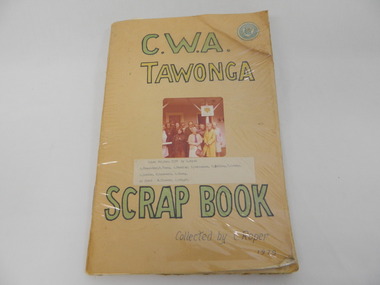
Scrapbook - C.W.A. Tawonga, C.W.A. Scrapbook Collected by C.Roper, 1945 to 1988
... The C.W.A. aimed to improve health, welfare and education for women and children in the country. ...The C.W.A. aimed to improve health, welfare and education for women and children in the country. ...The Tawonga C.W.A. formed on 7th Feb. 1946. It was a very active group with 45 members in that year. Numbers fluctuated throughout the years and totalled 26 members in 1988. The Tawonga C.W.A. often combined activities with the other branches in the Kiewa Valley. The C.W.A. aimed to improve health, welfare and education for women and children in the country. The book gives examples of all the activities the members were involved in over the years and their involvement with other C.W.A. groups in North East Victoria and Victoria. There are many photos of members and their activities too. These photos give a good representation of what womens fashions were during the mid part of the 20 century. Historical: Women living in Tawonga were mostly on farms and, in 1946, when the branch commenced would have been feeling more remote with WW11 having had an effect on available workers and the well being of the women and children. This scrap book was complied by Claire Roper one of the founding members of the CWA. It traces the history of the Tawonga branch of the CWA, its members and what they did which improved the living conditions for their community. Large scrap book held together by 3 large staples originally with blank pages. The pages have been written on and newspaper articles have been pasted in. The book was covered with light brown paper, the heading has been handwritten using block letters coloured in green with black outline. Centre front of the book has a photo of ladies dated 1978. Their names are typed in underneath. The book has then been covered by clear plastic.The title: "C.W.A. / Tawonga / Scrap Book / Collected by C. Ropercountry women's association of victoria. tawonga. clare roper. -
 Kiewa Valley Historical Society
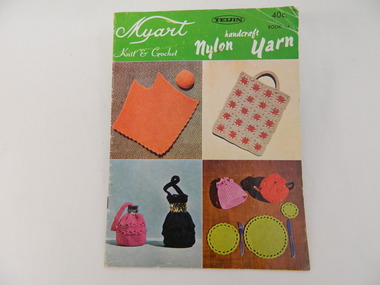
Book - Country Women's Association of Victoria, Myart Knit & Crochet
... The C.W.A. aimed to improve health, welfare and education for women and children in the country....The C.W.A. aimed to improve health, welfare and education for women and children in the country. ...This book was used by members of the Tawonga C.W.A.. The group exhibited their handicrafts and made items for charity. The Tawonga branch of the C.W.A. commenced on the 7th Feb. 1946 and often combined activities with the other branches in the Kiewa Valley. The C.W.A. aimed to improve health, welfare and education for women and children in the country.Women living in Tawonga were mostly on farms and, in 1946, when the branch commenced would have been feeling more remote with WW11 having had an effect on available workers and the well being of the women and children.Small coloured 16 page book with a cover showing 4 squares of knitted and crocheted items. At the top the book has a light green background with white writing and some black writing. The back cover is similar with 4 different items. The book is bound with 2 staples. The book has patterns with instructions for knitted & crocheted items.Cover: 'Myart / Knit & Crochet' - on left. 'Handcraft / Nylon Yarn' - on right. 'Teijin 40c / Book 14' - top right in blackcountry women's association of victoria. tawonga. handcrafts. knitting. crocheting. -
 Kiewa Valley Historical Society
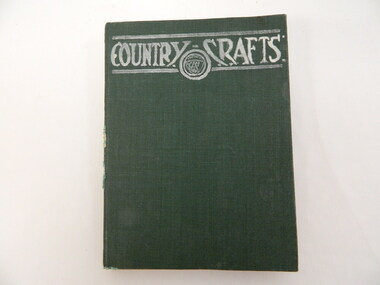
Book - Country Women's Association of Victoria, Country Crafts - CWA, 1950
... The C.W.A. aimed to improve health, welfare and education for women and children in the country....The C.W.A. aimed to improve health, welfare and education for women and children in the country. ...This book is a periodical that the Tawonga C.W.A. group received each year with news, hints, ideas etc. of all CWA groups in Victoria. The Tawonga branch of the C.W.A. commenced on the 7th Feb. 1946 and often combined activities with the other branches in the Kiewa Valley. The C.W.A. aimed to improve health, welfare and education for women and children in the country.Women living in Tawonga were mostly on farms and, in 1946, when the branch commenced would have been feeling more remote with WW11 having had an effect on available workers and the well being of the women and children.Hard covered bound green book with 345 slightly yellowing pages. 1949 periodical book Vol. XIX No.1 (- 12) 1st January 1949 - (December) reporting on activities of C.W.A. clubs in Victoria. It is set out month by month but isn't indexed. Subscription: 4/- per annum; 5/- per year, posted; 4d. per Copy, 5 and a half pence postedCover: "Country Crafts with CWA logo."country women's association of victoria. country crafts. tawonga. c.w.a. -
 Kiewa Valley Historical Society
Photo Album - Country Women's Association of Victoria, 1990's
... The C.W.A. aimed to improve health, welfare and education for women and children in the country. ...The C.W.A. aimed to improve health, welfare and education for women and children in the country. ...The Tawonga branch of the C.W.A. commenced on the 7th Feb. 1946 and often combined activities with the other branches in the Kiewa Valley. The C.W.A. aimed to improve health, welfare and education for women and children in the country. The Tawonga ladies competed in Handicraft and Home Industries Exhibitions during the 1990's and were very successful. Women living in Tawonga were mostly on farms and, in 1946, when the branch commenced would have been feeling more remote with WW11 having had an effect on available workers and the well being of the women and children.Small photo album with Country Women's Association Prize Cards for handicraft and Home Industries Exhibition enclosed. Each Prize Card is filled out with (Third) Prize; Name; No.; Section; Branch - all Tawonga; and points. Some of the cards have been won from other CWA groups displays e.g.. Yackandandah. The album has several blank pages left over. The cover is a picture of a boat on a lake with red flowers in the foreground.country women's association of victoria. tawonga. handicraft. home industries. exhibition. kiewa valley group.c.w.a. -
 Kiewa Valley Historical Society
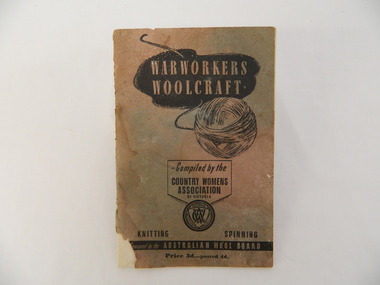
Book - Country Women's Association of Victoria, Warworkers Woolcraft - Compiled by the CWA of Victoria, c1940's
... The C.W.A. aimed to improve health, welfare and education for women and children in the country. ...The C.W.A. aimed to improve health, welfare and education for women and children in the country. ...Tawonga CWA branch commenced on 7th Feb. 1946. Prior to this the ladies would have been involved in supporting the war effort with knitted and spun items as described in this book. The branch often combined activities with the other branches in the Kiewa Valley. The C.W.A. aimed to improve health, welfare and education for women and children in the country. Getting together for the war effort would have succeeded in this aim perhaps encouraging the women to continue meeting under the banner of C.W.A.The Tawonga ladies would have been involved in assisting the war effort from home. Most of the ladies lived on remote farms so they may have got together, learnt together and felt happier while contributing to the war effort and supporting the men fighting overseas. Wool was available and easily made into useful items that could be shipped overseas. After the war, the ladies may have wanted to continue meeting and hence decided to form a C.W.A. branch.Small brown book with black writing. 32 pages held by 2 rusty staples.The book gives patterns and instructions for making woolcraft (knitting & spinning) eg. socks & scarves, for the Airforce, Navy and Army with specific colours, thickness of wool and notes eg. no frills. Price 3d. posted 4d. Sponsored by the Australian Wool BoardCover: Warworkers Woolcraft / Compiled by the CWA / Knitting Spinning / Sponsored by the Australian Wool Boardww11. warworkers. tawonga. country women's association of victoria. woolcraft. australian wool board. c.w.a. -
 Kiewa Valley Historical Society
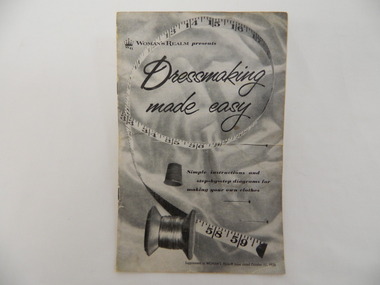
Book - Craft, Dressmaking Made Easy, 1958
... The C.W.A. aimed to improve health, welfare and education for women and children in the country. ...The C.W.A. aimed to improve health, welfare and education for women and children in the country. ...Tawonga C.W.A. was involved in dressmaking and other home industries.The Tawonga branch of the C.W.A. commenced on the 7th Feb. 1946 and often combined activities with the other branches in the Kiewa Valley. The C.W.A. aimed to improve health, welfare and education for women and children in the country. This was achieved by getting together and exchanging ideas on dressmaking while providing for their families and the local community, possibly selling their products at fetes.Women living in Tawonga were mostly on farms and, in 1946, when the branch commenced would have been feeling more remote with WW11 having an effect on available workers and the well being of the women and children.Small white and grey book with picture of tape measure and cotton reel on the cover. It has 15 pages including the cover which is printed on too. It has general instructions for sewing. Held by 2 staplesCover: Woman's Realm presents / Dressmaking / made easy / Simple instructions and / step-by-step diagrams for / making your own clothes tawonga. country woman's association of victoria. dressmaking. woman's realm. c.w.a. -
 Kiewa Valley Historical Society
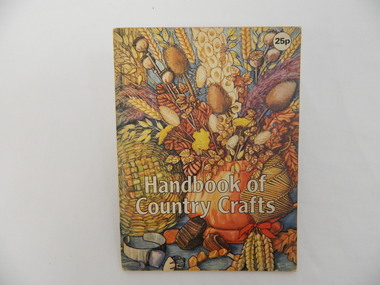
Book - Country Women's Association of Victoria, Handbook of Country Crafts, 1973
... The C.W.A. aimed to improve health, welfare and education for women and children in the country. ...The C.W.A. aimed to improve health, welfare and education for women and children in the country. ...The Tawonga branch of the C.W.A. commenced on the 7th Feb. 1946 and often combined activities with the other branches in the Kiewa Valley. The C.W.A. aimed to improve health, welfare and education for women and children in the country. The members achieved these aims by being involved in handcrafts of all kinds.Women living in Tawonga were mostly on farms and, in 1946, when the branch commenced would have been feeling more remote with WW11 having an effect on available workers and the well being of the women and children.The book has a cover with Autumn colours of flowers in a vase with the title in block letters of pale yellow. It has 47 pages bound by 2 staples. The crafts involve the use of plants in creating decorations.tawonga. country woman's association of australia. crafts. plant crafts.c.w.a. -
 Kiewa Valley Historical Society
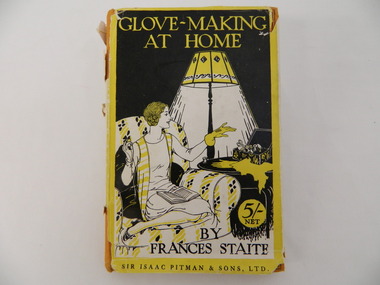
Book - Country Women's Association of Victoria, Glove-Making at Home by Frances Staite, 1927
... The C.W.A. aimed to improve health, welfare and education for women and children in the country. ...The C.W.A. aimed to improve health, welfare and education for women and children in the country. ...The Tawonga branch of the C.W.A. commenced on the 7th Feb. 1946 and often combined activities with the other branches in the Kiewa Valley. The C.W.A. aimed to improve health, welfare and education for women and children in the country. Doing craft helped the women achieve these aims as they would get together and learn from each other. Women living in Tawonga were mostly on farms and, in 1946, when the branch commenced would have been feeling more remote with WW11 having an effect on available workers and the well being of the women and children.Hard covered book with a yellow and black sleeve. The sleeve has a picture of a lady sitting on a lounge chair under a lamp admiring her glove. Inserted in the book is a page with further instructions on glove making. The book is bound and has 90 pages. The first and last 3 pages consist of advertising.Cover page "Country Womens' Association / of Victoria" stamp with purple ink Title: Clove-Making / At Home / by Frances Staite / Sir Isaac Pitman & Sons, Ltd 5/- net.tawonga. cwa. gloves. craft. country women's association of victoria -
 Kiewa Valley Historical Society
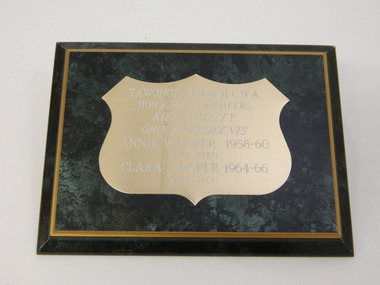
Plaque - Country Women's Association of Victoria, Tawonga Branch of the C.W.A, 1960's
... The C.W.A. aimed to improve health, welfare and education for women and children in the country. ...The C.W.A. aimed to improve health, welfare and education for women and children in the country. ...The Tawonga branch of the C.W.A. commenced on the 7th Feb. 1946 and often combined activities with the other branches in the Kiewa Valley. The C.W.A. aimed to improve health, welfare and education for women and children in the country. The Roper family were very involved for many years in the activities of the branch. Clare Roper collected and documented the history of the Tawonga C.W.A. and the Kiewa Valley C.W.A.. Women living in Tawonga were mostly on farms and, in 1946, when the branch commenced would have been feeling more remote with WW11 having had an effect of available workers and the well being of the women and children.Black wooden plaque sloped to a narrow gold coloured border surrounding a black surface with a gold badge shaped plaque. The plaque has writing etched into it and painted white.Tawonga Branch C.W.A. / honours its Members / Kiewa Valley / Group Presidents / Annie V. Roper 1958 - 60 / (Mrs Bert) / Clara J. Roper 1964 - 66 / (Mrs Jack)tawonga. country woman's association of victoria. clara roper. annie roper. -
 Kiewa Valley Historical Society
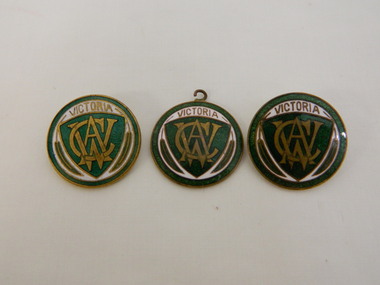
Badge - Country Women's Association of Victoria. x3
... The C.W.A. aimed to improve health, welfare and education for women and children in the country. ...The C.W.A. aimed to improve health, welfare and education for women and children in the country. ...The Tawonga branch of the C.W.A. commenced on the 7th Feb. 1946 and often combined activities with the other branches in the Kiewa Valley. The C.W.A. aimed to improve health, welfare and education for women and children in the country. Women living in Tawonga were mostly on farms and, in 1946, when the branch commenced would have been feeling more remote with WW11 having an effect on available workers and the well being of the women and children.Round green and white badge with the CWA logo in the centre of a green triangular shield. The logo is in gold. Around the triangular shape it is white with Victoria in gold at the top and 2 slim leaves on each side of the other sides. The badge has a green border. The back is gold and two of them have a pin attached. The third has a ring attached at the top. On the back each one has a different inscription and all are hard to read. Each badge is very slightly different in texture and depth of colour perhaps indicating that they were made at different times."Victoria / CWA" On the back - 1. Inscribed in oval shape 'Morgan Swann' but upside down to each other. 2. Inscribed - 'Stoker' 3. Inscribed - 'Stokes' or 'Stones'tawonga. country woman's association of victoria. badge. cwa logo. -
 Kiewa Valley Historical Society
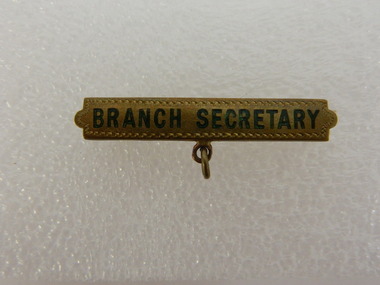
Badge - Country Women's Association of Victoria
... The C.W.A. aimed to improve health, welfare and education for women and children in the country. ...The C.W.A. aimed to improve health, welfare and education for women and children in the country. ...The Tawonga branch of the C.W.A. commenced on the 7th Feb. 1946 and often combined activities with the other branches in the Kiewa Valley. The C.W.A. aimed to improve health, welfare and education for women and children in the country. Women living in Tawonga were mostly on farms and, in 1946, when the branch commenced would have been feeling more remote with WW11 having an effect on available workers and the well being of the women and children.Slim rectangular shaped gold badge with a 'v' shape at each end. Its border is wavy. The writing is in green capital letters. At the top in the middle there is a 2 link chain. On the back is a pin.Branch Secretarytawonga. country woman's association of victoria. cwa. badge. branch secretary. -
 J. Ward Museum Complex
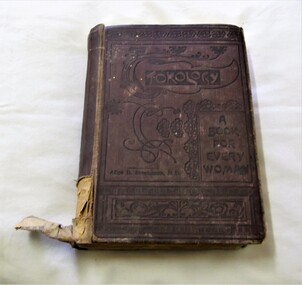
Book - Medical Book, Tokology: A Book for Every Woman
... women of a variety of socioeconomic backgrounds to have access to information that was often only accessible to those who had access to physicians and the knowledge they possessed. Tokology made progress in helping demonstrate the confidence that comes from being aware of how to maintain one’s own health instead of being subject to the fear that comes from the lack of knowledge. Tokology is more than just a book for every woman; it is an example of the power of education...women of a variety of socioeconomic backgrounds to have access to information that was often only accessible to those who had access to physicians and the knowledge they possessed. Tokology made progress in helping demonstrate the confidence that comes from being aware of how to maintain one’s own health instead of being subject to the fear that comes from the lack of knowledge. Tokology is more than just a book for every woman; it is an example of the power of education ...Originally written in 1885 by Alice Bunker Stockham, an obstetrician and gynaecologist who practiced in the late nineteenth century. “Tokology” refers to the study of childbirth, midwifery, and obstetrics. Stockham wrote Tokology for women to give them knowledge about issues related to childbirth and maintaining their own health. Empowering women by informing them about their own bodies, the book gives women details that they may not have talked to their doctors about considering the lack of female doctors at the time of publication. Wide distribution allowed for women of a variety of socioeconomic backgrounds to have access to information that was often only accessible to those who had access to physicians and the knowledge they possessed. Tokology made progress in helping demonstrate the confidence that comes from being aware of how to maintain one’s own health instead of being subject to the fear that comes from the lack of knowledge. Tokology is more than just a book for every woman; it is an example of the power of education and distributing knowledge to a population to promote the health of a community. In some cultures, though, this book was also seen as taboo – hence the reason the illustrated plates were “hidden” within the inner back cover as is seen with this book.The book is significant is representing the thoughts and concepts surrounding female reproductive and child health in the late 19th century. Leather bound hardcover. Dark brown cover with black embossed print and borders. 386 pages. Pages show wear and ttear through use. Some pages are torn but the majority are good. Foxing on pages. Base of spine is torn away. Illustration plates in excellent condition. Publisher: Pater & Co. Melbourne 1898Inside front cover - T1 (scribbled out) T8 in blue ballpoint ink gynecology, obstetrics, mentalhealth, childbirth, reproductivehealth, womenshealth
